e99 Online Shopping Mall

Geometry.Net - the online learning center Help  
Home  - Artists - Gerome Jean Leon (Books)

  1-20 of 24 | Next 20
A  B  C  D  E  F  G  H  I  J  K  L  M  N  O  P  Q  R  S  T  U  V  W  X  Y  Z  

click price to see details     click image to enlarge     click link to go to the store

$103.00
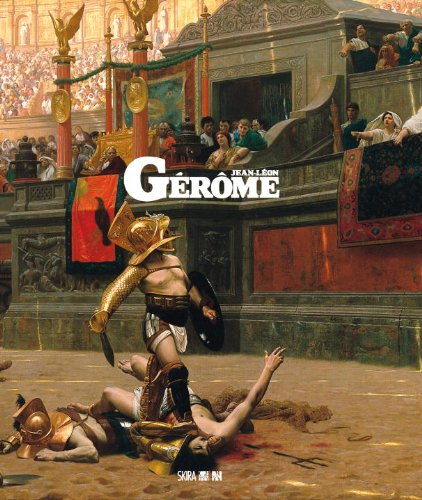
1. Jean-Leon Gerome: Monographie
$27.00
2. Jean-Leon Gerome: His Life, his
 
3. Jean-Leon Gerome, (1824-1904).
 
4. The Life and Work of Jean-Leon
$27.00
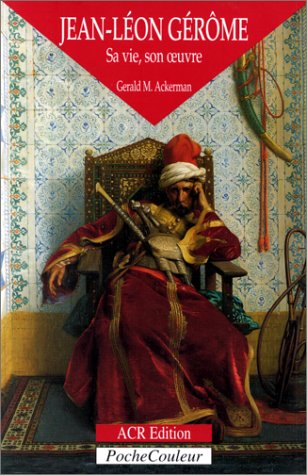
5. Jean-Leon Gerome, sa vie, son
$285.00
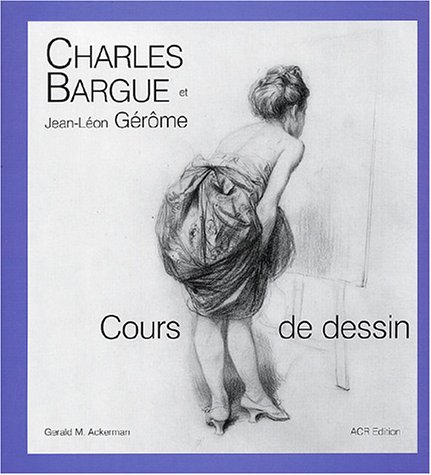
6. Charles Bargue and Jean-Leon Gerome:
 
$1,425.00
7. Charles Bargue with the Collaboration
 
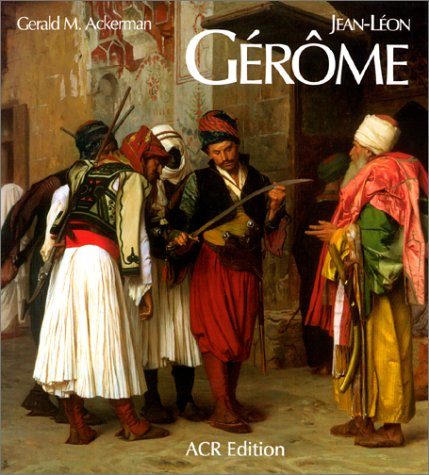
8. Jean-Leon Gerome 1824-1904
 
9. Jean Leon Gerome Ferris, 1863-1930:
 
10. JEAN-LEON GEROME 1824-1904
 
11. Jean Léon Gérome
 
12. The American Pupils of Jean-Leon
 
13. jean-leon gerome (1824-1904)
$92.00
14. Charles Bargue Et Jean-Leon Gerome:
 
15. Jean-Leon Gerome (1824-1904)
 
16. Gerome: A Collection of the Works
 
17. Jean-Leon Gerome (1824-1904)
 
18. Jean-Leon Gerome (Les Orientalistes)
 
19. Life and Work of Jean-Leon Gerome
 
20. Jean Leon Gerome: Sculpteur et

1. Jean-Leon Gerome: Monographie revisee, catalogue raisonne mis a jour (Les orientalistes) (Les orientalistes)
by Gerald M Ackerman
Hardcover: 420 Pages (2000-01-01)
list price: US$156.00 -- used & new: US$103.00
(price subject to change: see help)
Asin: 2867701376
Average Customer Review: 5.0 out of 5 stars
Canada | United Kingdom | Germany | France | Japan

Customer Reviews (2)

5-0 out of 5 stars Jean Leon Gerome by Gerald M. Ackerman
The book was delivered very quickly and in excellent condition.The book itself is excellent, I only wish in the description it had been mentioned that it was a French version, I did not see the fine print that it was in French.I purchased the book for my art school unfortunately I am the only French speaking person there.I would not have purchased it had I known.

5-0 out of 5 stars Jean Leon Gerome by Gerald M. Ackerman
The book was delivered very quickly and in excellent condition.THe book itself is excellent, I only wish the description had mentioned that it was a French version.I purchased the book for my art school unfortunately I am the only French speaking person there.I would not have purchased it had I known. ... Read more


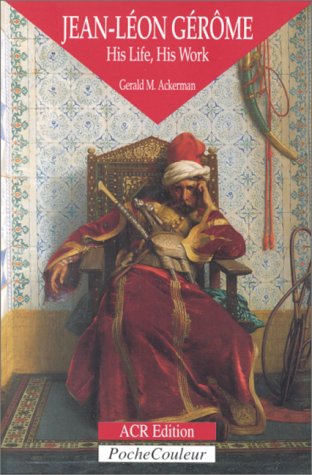
2. Jean-Leon Gerome: His Life, his Work
by Gerald M. Ackermann
Paperback: 192 Pages (1997-03-01)
list price: US$27.00 -- used & new: US$27.00
(price subject to change: see help)
Asin: 2867701015
Average Customer Review: 2.0 out of 5 stars
Canada | United Kingdom | Germany | France | Japan

Customer Reviews (1)

2-0 out of 5 stars kinda small...
i was a little surprised when this arrived in the mail, and i found it was only five by seven and a half inches.to my mind this defeats the purpose of an art book, especially on someone like gerome.its a dense little book with plenty of illustrations, and to my knowledge, the only affordable book on the artist, but if i were you, id kick down another twenty bucks and buy 'the orientalists' by kristian davies instead. ... Read more


3. Jean-Leon Gerome, (1824-1904).
by Jean-Leon. Gerome
 Hardcover: Pages (1972)

Asin: B000ROQ6NE
Canada | United Kingdom | Germany | France | Japan

4. The Life and Work of Jean-Leon Gerome
by Gerald M. Ackerman
 Hardcover: 352 Pages (1986-08)
list price: US$95.00
Isbn: 0856673110
Canada | United Kingdom | Germany | France | Japan

5. Jean-Leon Gerome, sa vie, son oeuvre (Les orientalistes) (Les orientalistes)
by Gerald M Ackerman
Paperback: 192 Pages (1997-01-01)
list price: US$27.00 -- used & new: US$27.00
(price subject to change: see help)
Asin: 2867701007
Canada | United Kingdom | Germany | France | Japan

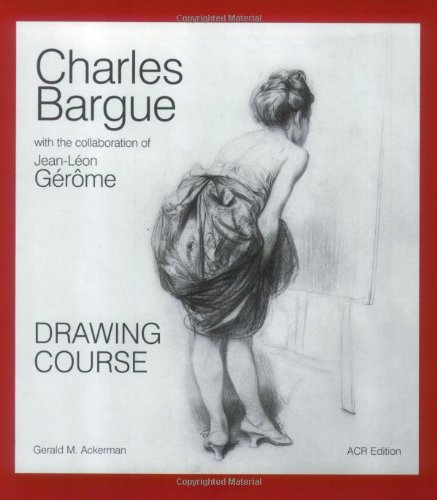
6. Charles Bargue and Jean-Leon Gerome: Drawing Course
by Gerald Ackerman
Paperback: Pages (2003)
-- used & new: US$285.00
(price subject to change: see help)
Asin: B000LA0TH8
Canada | United Kingdom | Germany | France | Japan

7. Charles Bargue with the Collaboration of Jean-Léon Gérôme: Drawing Course
by Gerald; Bargue , Charles and Gerome, Jean-Leon Ackerman
 Hardcover: Pages (2003)
-- used & new: US$1,425.00
(price subject to change: see help)
Asin: B0013PY0ZM
Canada | United Kingdom | Germany | France | Japan
Editorial Review

Product Description
Text in English. This book is essential for those students who wish to study art seriously, and to make themselves capable enough draftmen in order to paint. It is a complete reproduction of the "fabled but rare" drawing course used in Gerome's studio in nineteenth century Paris, comprising multiple levels of cast drawings, master-copies and linear life-drawings designed specifically to train the student's eye for painting. Here are multiple levels of cast drawings, master-copies and linear life-drawings designed specifically to train the student's eye for painting. Contains nearly 200 plates meant for study, to be copied as an introduction to the academic drawing process, and also to serve as an artistic and anatomical reference for showing what is essential in form. Also includes abundant color and black and white images of sculpture, paintings and drawings illustrating principles of realistic drawing based on the observation of nature. For art historians, the longstanding tradition of accurate draftsmanship prized by the late nineteenth-century figure painters is documented. ... Read more


8. Jean-Leon Gerome 1824-1904
by RichardIntroduction & Commentaries by Gerald M. Ackerman Ettinghausen
 Paperback: Pages (1972)

Asin: B0013RKM84
Canada | United Kingdom | Germany | France | Japan

9. Jean Leon Gerome Ferris, 1863-1930: American painter historian
by Barbara J Mitnick
 Paperback: Pages (1985)

Asin: B0006EIFCA
Canada | United Kingdom | Germany | France | Japan

10. JEAN-LEON GEROME 1824-1904
by Bruce Evans
 Paperback: Pages (1972)

Asin: B000JVEMTA
Canada | United Kingdom | Germany | France | Japan

11. Jean Léon Gérome
by Lafont
 Paperback: 136 Pages (2011-10-11)

Isbn: 273350312X
Canada | United Kingdom | Germany | France | Japan

12. The American Pupils of Jean-Leon Gerome (Anne Burnett Tandy Lectures in American Civilization, No 5)
by H. Barbara Weinberg
 Hardcover: 112 Pages (1985-07)
list price: US$24.95
Isbn: 0883600498
Canada | United Kingdom | Germany | France | Japan

13. jean-leon gerome (1824-1904)
 Paperback: Pages (1973)

Asin: B00126XX7I
Canada | United Kingdom | Germany | France | Japan
Editorial Review

Product Description
This is about the exhibit held on April 6-May 20, 1973 by the Walters Art Gallery. ... Read more


14. Charles Bargue Et Jean-Leon Gerome: Drawing Course
by Gerald Ackerman
Hardcover: 324 Pages (2007-10-31)
list price: US$92.00 -- used & new: US$92.00
(price subject to change: see help)
Asin: 286770166X
Average Customer Review: 5.0 out of 5 stars
Canada | United Kingdom | Germany | France | Japan
Editorial Review

Product Description
The Bargue-Gérôme Drawing Course is a complete reprint of a famous, late nineteenth century drawing course. It contains a set of almost two hundred masterful lithographs of subjects for copying by drawing students before they attempt drawing from life or nature. Consequently it will interest artists, art students, art historians, and lovers and collectors of drawings. ... Read more

Customer Reviews (14)

5-0 out of 5 stars incredible
This is the best learning tool out there short of having an actual teacher.Hundreds of drawings waiting to be imitated in order to correct ones vision of what one sees.Finish this book and you'll know how to draw. Method used by many artists in the past including van gogh.This is my favorite of the dozens of art books I own.Am also glad someone mentioned buying it from the museum rather that the overpriced vendors offers.

5-0 out of 5 stars DO NOT BUY THIS BOOK for anything over $100
The Dahesh Museum of Art is taking orders right now (Sept. 2007) for a new printing of the hardcover English version of the book, to be shipped at the end of October.I just put in my order, the new price is $95 (it was $90 at the first printing).For those who have been waiting to purchase this book for months, the new printing is only a few weeks away.

5-0 out of 5 stars A definitive statement of ideals
I've heard many times that students of drawing used to draw from master drawings and plaster casts before being allowed to work from life, but I was not aware that courses were in place to direct such study. One course that came into existence under the direction of academic artists Charles Bargue and Jean-Léon Gérôme, at once a definitive statement of ideals and a last hurrah for the academic tradition, was edited by Gerald Ackerman and published a few years ago.

Ackerman writes:
"The abandonment of the study of the classical ideal in the last quarter of the nineteenth century was a serious break in an established yet vital artistic tradition. After all, Western art is an artificial activity that became self-conscious in antiquity and again in the Italian Renaissance, each time articulating an intellectual, apologetic theory of art that continued to influence the creation and teaching of painting over the centuries".

"The twentieth-century break in this developed tradition is problematic for young, contemporary artists who may not be attracted by the many schools and movements of modernism but are instead drawn to the imitation of nature. Without access to the rich lore and methods of humanist figure painting, they find themselves untrained and underequipped for many of the technical problems that confront them as Realists. Without help, today's young Realist artists may end up uncritically copying superficial appearances, randomly selecting from nature, and unwittingly producing clumsy and incoherent figures".

I've pointed out before that our present situation in art is not characterized by pluralism, but by false pluralism. Real pluralism would provide for a situation in which both the realists and the various modernists could flourish together. Instead, realism as it would have been understood by Gérôme is not generally taken seriously by art professionals and not commonly taught at schools.

The change has been good for the various modernists - I feel like I came out okay - but bad for the realists. The above is one of the first acknowledgments I've seen that the tradition of painting and sculpture requires a community of like-minded people for sustenance. The realists have it especially hard because their craft is so difficult.

No doubt about it - if you copied every plate in the course, as is recommended, you would become a champion renderer. You might also die of boredom; I doubt that each and every plate is necessary to get the fundamentals across. You might also find yourself at a loss when faced with the female model, as not a single plate in the last series, which pictures the figure in schematic sketches, is an image of a woman.

But it's clear that realists need a particular kind of education, and I think it would do the modernists no harm to revive parts of the traditional curriculum. It didn't interfere with the progress of the Impressionists, the Cubists, or the early abstractionists. Ackerman's book provides an important look into the past, and suggests constructive ideas about how art could be nurtured in the future.

5-0 out of 5 stars Charles Bargue Et Jean-Leon Gerome: Drawing Course
The book is a complete reprint of the fabled but rareDrawing Course("Cours de Dessin")of Charles Bargue and Jean-Leon Gérôme, published in Paris in the 1860s and 1870s.For most of the next half-century, this set of nearly 200 masterful lithographs was copied by art students worldwide before they attempted to draw from a live model.This book will be valuable to a wide range of artists, students, art historians and collectors, even as it introduces them to the hitherto-neglected master, Charles Bargue.

The Drawing Course is separated into three sections, in an ascending order of difficulty.The first section consists of lithographs by Bargue after casts of sculptures, mostly antique examples that present the structure of the human body with remarkable clarity and intelligence.The second part contains the lithographs that Bargue made after master drawings by Renaissance and modern artists, and the third section almost 60 exemplary drawings of nude male models.

The first two sections were for use in commercial or design schools to teach the principles of good taste based on classical form, the better to turn out competitive goods for commerce and industry. The last section, drawing from live models, was reserved for fine-art academies, opinion being that such training was beyond the grasp or need of humble commercial artists.

By and large the subjects for the plates are quite elevated. A prettily turned foot is taken from the first-century Medici Venus at the Uffizi in Florence; a sinewy shoulder and arm from Michelangelo's ''Moses'' at San Pietro in Vincoli, Rome; and the serenely spiritual-looking head of Anne of Brittany, wife of Louis XII, from her recumbent tomb figure by Giovanni Giusti (1515-22) in the Cathedral of Saint-Denis in Paris.

This portrait was a subject of fascination for van Gogh during a period when he was studying for the ministry. ''The expression of Anne of Brittany's face is noble, and reminds one of the sea and rocky coasts,'' he wrote to his brother in 1877, mentioning that he had hung the plate with her likeness in his room.

Experienced artists will recognize the skill and insight with which Bargue solved problems of drawing from nature; they will want to copy these plates to sharpen their professional skills.For art students, the Drawing Course is a practical introduction to realistic drawing based on the observation of nature, a course blissfully free of the usual charts and schemata requiring memorization and often productive of stultification.

For art historians, the Drawing Course documents the longstanding tradition of accurate draftsmanship prized by the late nineteenth-century figure painters who stood at the convergence of classicism and realism.

This volume concludes with a biography of Charles Bargue and a preliminary catalogue of his paintings, accompanied by reproductions of works both located and lost.Bargue started his career as a lithographer reproducing the drawings of commercial illustrators for a popular market in comic, sentimental and erotic subjects.

By working with Gérôme, and by preparing the plates for this Drawing Course, Bargue was transformed into a master painter, equipped with the skills to match his taste, talent and ideas.He became a master of telling details and exquisite tonal harmonies.

5-0 out of 5 stars The Drawing Course (Cours de dessin)
The Drawing Course(Cours de dessin); produced with the collaboration of Jean-Léon Gérôme (1824-1904), France's greatest academic master; and designed to prepare beginning art students to draw from "nature", that is, objects, both natural and man-made, inthe real world. When the Drawing Course was first published (Parts I and II beginning in 1868; Part III in 1871) it was assumed that the imitation of nature was the primary goal of the artist, and that the most important subject was the human body.

The original Drawing Course contained 197 loose-leaf lithographic plates of drawings after casts, master drawings, and male models. These sheets, which were widely disseminated and very affordable when first published in the late 19th century (either individually or bound) are now quite rare. The 160 original plates featured in the exhibition have been generously loanedby Bordeaux's Musée Goupil, which possesses two complete sets of the Course.

Bargue's own paintings and drawings confirm his skills as a master artist, skills which he himself refined as he produced the Course. Bargue, therefore, can justly be called the first graduate of the Bargue-Gérôme Drawing Course. A Crisis in Art Education The Drawing Course was a response to widespread dissatisfaction with the skills of French commercial art students in the mid-19th century. The root of the problem was believed to be a deficiency of taste--which in turn reflected the inferiority of models that students had been given to copy, a basic element in drawing education. In 1865, French critics called for "a complete reorganization of the teaching of drawing" that would explicitly redress the dearth of appropriate models, and help French students of industrial design and decorative arts compete in an international market. Goupil & Cie, Paris, the most important art dealer and publisher of its time, seized the opportunity to develop a new curriculum for this market and quickly developed the Drawing Course, a series of lithographic plates that would foster the evolution of taste through the study of classical form, which was defined by the style of antique statuary. The work was advertised as a collaboration between Jean-Léon Gérôme andCharles Bargue. While Gérôme certainly contributed his celebrity to the enterprise, his actual role may have been supervisory. The drawings were executed by members of the Gérôme circle, and all were copied onto stone by Bargue.

The three parts of the Drawing Course correspond to a widely accepted sequence of art education in the 19th century. Part I, Drawing After Casts (Modeles D'Apres la Bosse) and Part II, Copying Master Drawings (Modeles d'Apres Les Maîtres), began publication in 1868 and were intended for students of industrial and decorative arts--the very ones whose deficiencies argued so forcefully for the Course's necessity--as well as beginning fine arts students. Part III, Charcoal Exercises in Preparation for Drawing the Male Academic Nude or Académie (Exercices au Fusain Pour Preparer a l'Etude de l'Academie d'Après Nature)presented charcoal sketches of the male nude.

It was completed in 1871 and intended for fine art students only--drawing live models was discouraged if not forbidden in most European and American schools of design. Published without instructive text because they were meant to be used primarily in art schools, the Drawing Course sold briskly from its first publication, and continued to do well for at least three decades, with individual plates made available by Goupil & Cie and its successors until the firm's final dissolution in 1921. Its primary purchasers were institutions: the city of Paris ordered a special printing for its schools almost immediately after the first plates were finished, and the Drawing Course was adopted in Great Britain by the extensive system of schools and academies supervised by the South Kensington Museum (now the Victoria and Albert Museum).

Its influence was also widespread in America -- the Pennsylvania Academy of the Fine Arts, for example, bought Parts I and II of the Drawing Course in 1876, the year Thomas Eakins began teaching there. Self-trained artists could also easily make use of the plates, progressing in an orderly, rational sequence through a program designed to develop their technical skills, while mature artists would use the plates to hone their skills, as a trained pianist might return to the discipline of Czerny's piano exercises.

Mirroring the selection of casts found in the collections of the best European and American art schools, most plates in Part I of the Drawing Course are copies after famous antique sculptures. They were meant to guide a student through a pedagogically-grounded sequencefrom plates depicting separate body parts -- eyes, ears, noses, feet, arms, and legs, with great emphasis on the head - to partial, and then complete male and female figures. Key to understanding this section are Bargue's angular schemata that lie to the left of the finisheddrawings in most of these plates, simplifying the composition of the cast, suggesting reference lines and geometric configurations that the student might use in organizing the contours of his own drawing.

Several of Pablo Picasso's student copies of Part I are reproduced in this section of the exhibition. Nineteenth-century art schools considered a collection of plaster casts a necessity; students were required to draw from them before they were allowed to turn their attention to livemodels. Museums likewise considered such collections essential to their mission. Within 30 years of its founding in 1870, the Metropolitan Museum of Art had amassed more than 2,000 plaster casts, which they kept on continuous view until the late 1930's. For pedagogical purposes, casts offered ideal drawing models for the student. They were immobile, and their white or light coloration allowed easy reading of light and shadow.

The drawings in Part II were selected both for their aesthetic value and their demonstration of specific techniques that could be learned in practice. Bargue made most of the plates for this part of the Drawing Course from copies rendered by artists again chosen by Gérôme from among his colleagues and students. The originals include works of the Old Masters--Michelangelo, Raphael, Filippino Lippi, and Hans Holbein the Younger, among them--as well as Bargue's contemporaries -- academic luminaries such as Gérôme, his teachers Paul Delaroche and Charles Gleyre, and other artists represented or employed by Goupil & Cie.

The copying of drawings by distinguished artists had a long history. Under the guild system that predated the French Revolution, apprentices copied drawings, studies, and travelnotations from their masters' portfolios. Beyond its advantages to the master--students thus trained could assist in his projects without noticeable discrepancies in style--the practice allowed the apprentice to develop a personal repertoire of subjects and poses for eventual use in his own work. This practice continued in the studios of the academic masters of the nineteenth century, and, of course, was famously reinterpreted a century later in AndyWarhol's "Factory". Twenty-eight of the 70 drawings are after Hans Holbein the Younger (1497/98-1543), said to be a favorite of Gérôme's.

Like all Old Master drawings in Part II, these are "interpretations" of Holbein, rather than precise facsimiles. They have beenfreshened and made whole: faded lines have been strengthened and fading coloration translated into lines so that they are easier to copy.

Part III: Drawing the Nude Charcoal Exercises in Preparation for Drawing the Male Academic Nude or Académie (Exercices au Fusian Pour Preparer a L'etude de L'Académie d'Après Nature) or Part III ofthe Drawing Course, contained 60 plates. Published in 1871, it is Bargue's work alone. As the plates of Part I prepared the student to work from plaster casts, the drawings in Part III represent the final step before depicting the nude male model in a "noble and classic" pose. (As the most representative product of the academic curriculum, such drawings, or academies,became synonymous with their institutions.)

Seen as preparatory notations to assist in the creation of polished drawings, rather than finished works themselves, these plates show the student how to capture a figure's most salient points. The models assume traditional poses that express a catalogue of human emotions -- thinking, beseeching, sincerity, melancholy, despair -- emotions that all academically trained artists were taught to render through specific poses and expressions. Such poses as taught by Bargue were often reused by figurative painters throughout their careers.

Vincent van Gogh, for example, copied the plates of Part III many times during his career. Excerpts from his letters to his brother Theo, reproduced in the exhibition's wall text, underscore the hold that the "Bargues" had on the artist. In 1881, he wrote to Theo, "Careful study & repeated copying of Bargue's Exercises au fusain have given me a better insight into figure-drawing. I have learned to measure and to see and to look for the broad outlines so that, thank God, what seemed utterly impossible to me before is gradually becoming possible to me now...I no longer stand as helpless before nature as I used to do.

Little is known of Bargue's early life, although it seems likely that he received much of his training at home, within a family of professional lithographers. While working as a lithographer for Goupil & Cie, he became acquainted with Gérôme and his circle, and was soon included in a group of talented painters employed to make smaller copies ("reductions") of popular paintings. After Bargue received the commission for the Drawing Course, the next five years of his life, from 1865-1870, were almost entirely devoted to that single project.

While the teaching of traditional academic practices almost died out between 1880 and 1950, Bargue's curriculum helps us reconstruct what generations of traditionally trained representational artists were taught to copy and admire. But the Drawing Course is no mere dusty artifact in the archeology of art education. The explosion of figurative work being made today by young artists; the energy of new academies, ateliers, and other institutions for training artists; and the growing critical appreciation of the importance of drawing for artists, illustrators, and even animators, promise a new life for Bargue's comprehensive curriculum. With the republication of this groundbreaking work, a rich and vibrant tradition will be sustained. ... Read more


15. Jean-Leon Gerome (1824-1904)
by Jean Leon Gerome
 Unknown Binding: 104 Pages (1972)

Asin: B0006C5SUY
Canada | United Kingdom | Germany | France | Japan

16. Gerome: A Collection of the Works of J.L. Gerome in One Hundred Photogravur es
by Jean Leon] Strahan, Edward, editor [Gerome
 Hardcover: Pages (1881)

Asin: B000KVCV4W
Canada | United Kingdom | Germany | France | Japan

17. Jean-Leon Gerome (1824-1904)
by Barbara Mitnick
 Paperback: 104 Pages (1973)

Asin: B000J2GWYM
Canada | United Kingdom | Germany | France | Japan

18. Jean-Leon Gerome (Les Orientalistes)
by Gerald Ackerman
 Hardcover: 420 Pages (2000-05-01)
list price: US$125.00
Isbn: 2867700159
Average Customer Review: 5.0 out of 5 stars
Canada | United Kingdom | Germany | France | Japan

Customer Reviews (1)

5-0 out of 5 stars Stunning
Two of my favoirte paintings in the Minneapolis Art Institute have always been the Rug Market and Young Greeks at the Mosque by Jerome.I have since seen other works in a similar style by other artists working in the Middle East and have become quite enamoured of the intensity of their works.Jerome's Middle East works have the vividness and in-your-face-reality of artists of our own American Southwest, like Reynolds and Remington.The character of the native people, the earthy reality of their lives, the heat and diffuse light of their environment are dipicted masterfully in "Arabs Crossing the Desert".What I found most informative in reading the volume, however, was the incredible variety of subjects, settings and styles chosen by the artist.Because of my own interest in the Middle East, his work there was familiar to me--I have postcard copies of some of his paintings of various buildings in Cairo--but his other work was less so.His animal studies, like "Lioness and her Cubs," and "Thirst" (depicting a male lion drinking the last of a dwindling source of water in a vast desert), and "Tiger and Cubs" are amazing in their detail.The more classical work "Pygmalion and Galatea" with its almost Vermeer like light, and "Venus Rising" a study much like that of Boticceli though derivative have their own unique spirit.The fierce ocean scene "Vision of the Captive of St Helena" has an intensity, a sense that one has happened into a drama just as it is occuring.Quintescentially representative of this awareness of the moment is my favorite of his works, "Duel After the Ball," depicting the death of Harlequin in a snowy mist shouded wood.Certainly a brilliant if not necessarily well known artist.This is probably one of my favorite art books. ... Read more


19. Life and Work of Jean-Leon Gerome
by Gerald M. Ackerman
 Hardcover: Pages (1986)

Asin: B000OJREZQ
Canada | United Kingdom | Germany | France | Japan

20. Jean Leon Gerome: Sculpteur et Peintre de L'Art Officiel
 Hardcover: Pages (1974)

Asin: B000EXB36I
Canada | United Kingdom | Germany | France | Japan

  1-20 of 24 | Next 20
A  B  C  D  E  F  G  H  I  J  K  L  M  N  O  P  Q  R  S  T  U  V  W  X  Y  Z  

Prices listed on this site are subject to change without notice.
Questions on ordering or shipping? click here for help.

site stats