e99 Online Shopping Mall

Geometry.Net - the online learning center Help  
Home  - Artists - Picasso Pablo (Books)

  Back | 21-40 of 100 | Next 20
A  B  C  D  E  F  G  H  I  J  K  L  M  N  O  P  Q  R  S  T  U  V  W  X  Y  Z  

click price to see details     click image to enlarge     click link to go to the store

$38.10
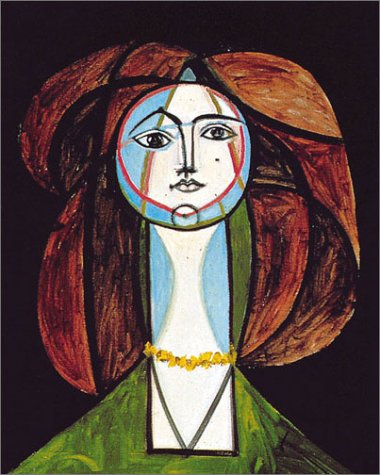
21. Pablo Picasso: The Time With Francoise
$14.00
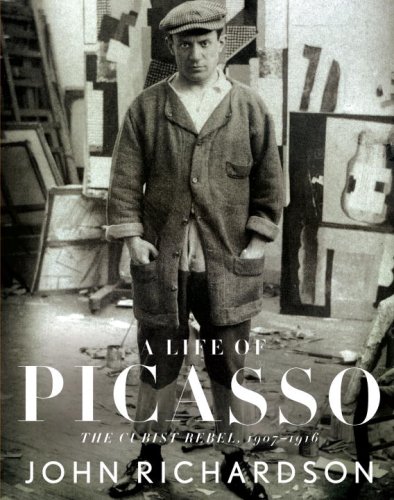
22. A Life of Picasso: The Cubist
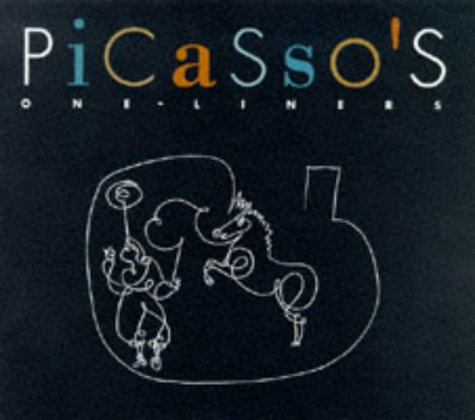
23. Picasso's One-Liners
 
24. Pablo Picasso (Art for Children)
$6.00
25. Picasso on Art PB (Da Capo Paperback)
$34.56
26. Picasso: Bathers
$3.15
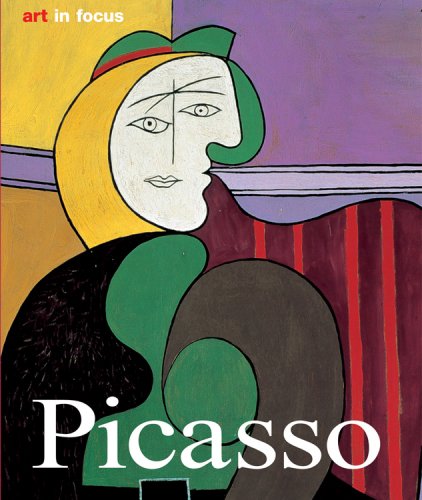
27. Picasso
$18.78
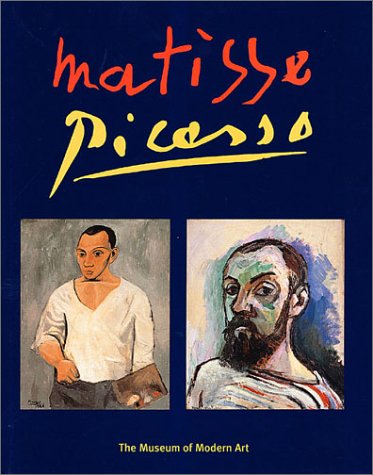
28. Matisse Picasso
 
$139.34
29. The Blue Guitar: Etchings by David
$19.56
30. Picasso and the War Years: 1937-1945
$50.00
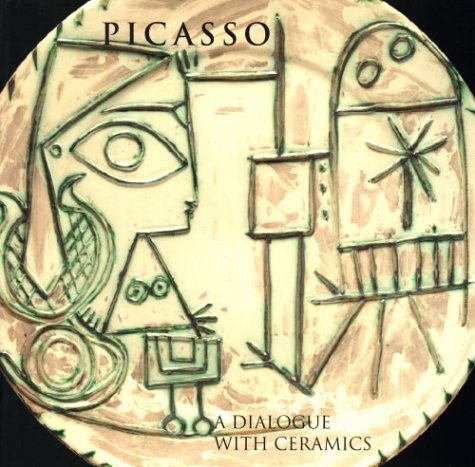
31. Picasso: A Dialogue with Ceramics:
$17.88
32. Picasso's Vollard Suite (Painters
$18.05
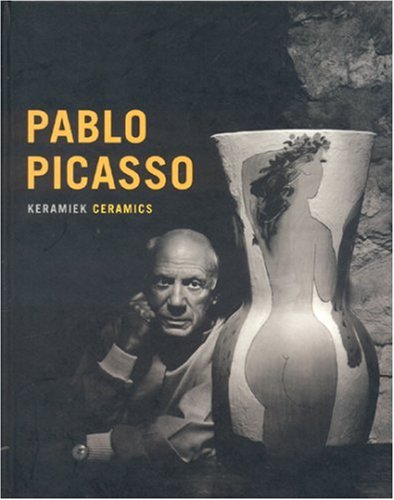
33. Pablo Picasso: Ceramics
$70.00
34. Picasso Erotique (Art & Design)
 
35. Late Picasso: Paintings, sculpture,
 
36. Pablo Picasso: A Retrospective.
 
37. Picasso: The Vollard Suite: The
38. A Life of Picasso, Volume II:
 
$11.04
39. Peace and Joy Pablo Picasso 2008
 
40. Picasso : Collected Writings (French

21. Pablo Picasso: The Time With Francoise Gilot
by Pablo Picasso
Hardcover: 240 Pages (2003-02-02)
list price: US$55.00 -- used & new: US$38.10
(price subject to change: see help)
Asin: 3933040957
Canada | United Kingdom | Germany | France | Japan
Editorial Review

Book Description
Picasso met Fran oise Gilot, the young French student who was to become his muse and favorite model, while waiting out the war years in Paris. She appeared again and again in his works of the 1940s and 50s, often with her face stylized to recall the sun or a plant. It was also during this period--known as his Pariode Fran oise--that Picasso employed a cheerful palette not seen before in his work. His concurrent interest in the motifs of Mediterranean antiquity and mythology, from dancing centaurs to music-making fauns, is attributed to a stay in the Cap d'Antibes on the Cute d'Azur in 1946. In this volume, internationally recognized French and German Picasso scholars consider the different facets of the artist's work during this period. Rich illustrations illuminate the connections between the motifs of his paintings and sculptural and graphic work. Also included are reproductions of Fran oise Gilot's own work, thus allowing entry into the artistic dialogue that occurred between Picasso and his young partner, who separated from him in 1953. ... Read more


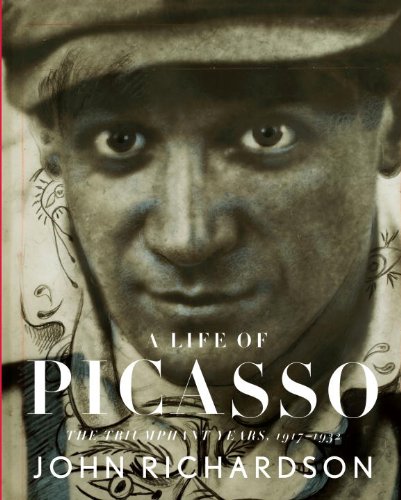
22. A Life of Picasso: The Cubist Rebel, 1907-1916 (Borzoi Books)
by John Richardson
Paperback: 512 Pages (2007-10-16)
list price: US$30.00 -- used & new: US$14.00
(price subject to change: see help)
Asin: 0375711503
Average Customer Review: 5.0 out of 5 stars
Canada | United Kingdom | Germany | France | Japan
Editorial Review

Book Description

In The Cubist Rebel, 1907–1916, the second volume of his Life of Picasso, John Richardson reveals the young Picasso in the Baudelairean role of “the painter of modern life”—a role that stipulated the brothel as the noblest subject for a modern artist. Hence his great breakthrough painting, Les Demoiselles d’Avignon, with which this book opens. As well as portraying Picasso as a revolutionary, Richardson analyzes the more compassionate side of his genius. The misogynist of posthumous legend turns out to have been surprisingly vulnerable—more often sinned against than sinning. Heartbroken at the death of his mistress Eva, Picasso tried desperately to find a wife. Richardson recounts the untold story of how his two great loves of 1915–17 successively turned him down. These disappointments, as well as his horror at the outbreak of World War I and the wounds it inflicted on his closest friends, Braque and Apollinaire, shadowed his painting and drove him off to work for the Ballets Russes in Rome and Naples—back to the ancient world.

In this volume we see the artist’s life and work during the crucial decade of 1907–17, a period during which Picasso and Georges Braque devised what has come to be known as cubism and in doing so engendered modernism. Thanks to the author’s friendship with Picasso and some of the women in his life, as well as Braque and their dealer, D. H. Kahnweiler, and other associates, he has had access to untapped sources and unpublished material. In The Cubist Rebel, Richardson also introduces us to key figures in Picasso’s life who have been totally overlooked by previous biographers. Among these are the artist’s Chilean patron, collector, and mother figure, Eugenia Errázuriz, as well as two fiancées: the loveable Geneviève Laporte and the promiscuous bisexual painter Irène Lagut.

By harnessing biography to art history, he has managed to crack the code of cubism more successfully than any of his predecessors. And by bringing fresh light to bear on the artist’s private life, he has succeeded in coming up with a new view of this paradoxical man and of his paradoxical work. Never before have Picasso’s revolutionary vision, technical versatility, prodigious achievements, and, not least, his sardonic humor been analyzed with such clarity.

... Read more

Customer Reviews (1)

5-0 out of 5 stars Picasso : The Cubist Rebel is the second volume in the projected four volume magisterial biography by John Richardson
Pablo Picasso (1881-1973) was an amorous Andalusian who spent most of his life in Paris. Picasso is the greatest artistic genius of the twentieth century. In this second volume of his sine qua non biography of the complex painter his friend John Richardson does a superb job of looking at his life from 1917-1932. The small print text of over 400 pages is complimented by the works of the master which are being discussed in the text. I love this technique! It makes Richardson's astute analysis of the artwork much easier to understand!
This era in Picasso's career is concerned with his invention of CUBISM a revolutionary avant-garde movement which changed the way we see and interpret art! Picasso drew on his love of Cezanne, El Greco and others to move from his blue and red period into the wild world of cubism.Cubism breaks down pictorial forms into angles and presents them to our eye as two-dimensional. Cubism makes use of cubes and lines, cones and
spheres to entice us into seeing reality in a new way. The movement was launched with Picasso's great 1907 masterpiece: "Les Madimoiselles d' Avignon." Picasso along with his best friend Georges Braque and lesser lights such as Juan Gris were in the vanguard of the burgeoning movement sweeping all aside! Cubism would be virulently attacked during World War I by French chauvinists who believed the movement was German and led by spies and decadents. As the war ended we see Picasso moving to neoclassicism. It was also in these years that he moved from a bohemian life to one of wealth and renown in the art world.
During these years Picasso lost his father and found several art dealers (especially in Germany and Russia) who purchased his art at high prices. His friendship with Gerturde and Leo Stein led to his being known in the United States. During this time we learn of his friendships with the eccentric poet Apollinaire and Max Jacob a Jewish convert to Catholicism who was a writer and worshipper at the great artist's throne.
As always we see Picasso falling in and out of love. He broke with his live in lover Ferdinand Oliver and almost wed a woman named Eva. He had torrid affairs with the lesbian bisexual Irene Legut and a woman named Gaby who refused to wed the mecurial quick-tempered moody Spaniard. The book ends with Picasso working on the art work curtains for the ballet
"Parade" produced for Serge Diagheliv's ballet company. It was then he got to know Stravinksy and Erik Satie as well as Jean Cocteau who became a big fan of Picasso.It was while working on the ballet in Rome that P:icasso met his first wife the lovely Olga Khoklova who was a ballerina with the company.
Picasso is an enigma entwined in a mystery! He could be generous and parsiminous, violent and gentle, loving and sadistic. I applaud his pacificsm during World War I. Browsing through these many pages one is astounded at the range and breadth of this artist's oeuvre. Only Henri Matisse can compete with the Andalusian bull.
No one can understand Picasso without devouring these volumes by Richardson. As Picasso changed the way we see so too does Richardson alter our perception and understanding of Picasso and Cubism. ... Read more


23. Picasso's One-Liners
by Pablo Picasso
Hardcover: 80 Pages (1997-01-05)
list price: US$14.95
Isbn: 188518378X
Average Customer Review: 4.5 out of 5 stars
Canada | United Kingdom | Germany | France | Japan
Editorial Review

Book Description
Picasso's "one-liners" constitute a small but delightful contribution to the artist's great body of drawings. His preeminence as a draughtsman has long been recognized, but the unique nature of his one-liners has never been fully examined, or collected together in a single volume. Picasso's One-Liners, featuring fifty drawings, offers a fascinating look at this whimsical side of Picasso's work.

Defined simply, one-liners are drawings in which the artist's drawing implement touches the paper and is not lifted until the drawing is finished. Picasso worked this way in a variety of media, including pencil, pen and ink, brush, and crayon and his subjects included harlequins, musicians, circus scenes, and animals. Each drawing is worth careful study, for by following the vibrant line closely, one's eyes take a wonderful rollercoaster ride.

Along with the "one-liner" art are quotes taken from Picasso's writing, giving full flavor to the influence of the art and the man. ... Read more

Customer Reviews (3)

4-0 out of 5 stars Amazon's False Advertising
I ordered this from Amazon two months before Christmas as a gift, and was told that it would arrive on time. Amazon later informed me that the book would not arrive until February. When February finally came, they sent an email to say that I would not be receiving the book at all because they could not find a copy of it anywhere.

Amazon is showing this item for sale but does NOT have it available -- don't waste your time ordering from here!

(By the way, the book is absolutely wonderful, as I have been fortunate enough to read through it before; I would give the book itself 5 stars but Amazon 1 star for false advertising. Hence, 4 stars.)

5-0 out of 5 stars Picasso's lesser known drawings
This little book consists of Picasso's pen and ink drawings that he completed with one line (never picking the pen up off of the paper.Matadors, bulls and harlequins are among the subject matter of the drawings.There are occaional quotes interspersed throughout the book.This a cute little book that would make a fun gift for a Picasso fan.

5-0 out of 5 stars Delightful!
This little book is a real joy, and it should have a wide appeal.Seeing what vital fun Picasso can have by putting his pen down on the paper for just one long line is a great way to enter into what drawing and art are all about.In my opinion, this book makes a great gift--though small, it is unlike many "coffee table books" people are always giving, in that the quantity of sheer fun on every page (also through Picasso's verbal one-liners) keeps beckoning you to open it up, the way you might put a favorite CD on the stereo.A great little book full of artistic delight! ... Read more


24. Pablo Picasso (Art for Children)
by Ernest Lloyd Raboff
 Hardcover: Pages (1987-09)
list price: US$11.95
Isbn: 0397322240
Canada | United Kingdom | Germany | France | Japan

25. Picasso on Art PB (Da Capo Paperback)
by Pablo Picasso
Paperback: 220 Pages (1988-10-01)
list price: US$16.95 -- used & new: US$6.00
(price subject to change: see help)
Asin: 0306803305
Average Customer Review: 4.5 out of 5 stars
Canada | United Kingdom | Germany | France | Japan

Customer Reviews (3)

4-0 out of 5 stars Absolutely Entertaining
Picasso is quite a personality and that comes through in this book.I would recommend reading this book along with Gertrude Stein's book on him.

5-0 out of 5 stars Understanding art
"Everyone wants to understand art," reflects Picasso early in this book. "Why not try to understand the songs of a bird?" It is a playful observation, and one that can only emanate, we imagine, from the mind of an artist throughly engaged with the material on palette. Picasso's witty comparison suggests art's elusive form and implies a truism which the reader will discover to be a driving force throughout these pages: The audience to a work of art, like its creator, succeeds by embracing rather than understanding the rendered object.

It is the artist's full embrace which resolves itself into an all-encompassing vision, the very contradictions inherent in that panoramic view requiring for their complete rendition an array of angled planes that can only be created by the shattering of constructive materials. Hence arises that formal abstraction that so often mystifies those who seek understanding through simple assertion. How many individuals, indeed, feel that certain works by Picasso misrepresent rather than render the real? "We all know that Art is not truth," muses Picasso in acknowledgment of this confusion. "Art is a lie that makes us realize truth, at least the truth that is given us to understand."

The truth that is so realized, adds Picasso, is something different from the artist's original vision, for the truly rendered subject, in a paradox, evaporates. Picasso recalls an effort to paint the portraits of two people; by the time his work was done his subjects existed no longer. In the artist's words: "The `vision' of them gave me a preliminary emotion; then little by little their actual presences became blurred; they developed into a fiction and then disappeared altogether, or rather they were transformed into all kinds of problems. They are no longer two people, you see, but forms and colors: forms and colors that have taken on, meanwhile, the idea of two people and preserve the vibrations of their life." So Picasso's human beings become real by disappearing from view, just as Isabel Archer becomes fully realized by vanishing at the conclusion of Henry James's novel.

Art reveals truth by lying. Subjects become realized by disappearing. Any reader witness to this book's magical paradoxes, arising as they do from that hidden place where the creative flint strikes steel, can only view Picasso's observations as lending to our vision of artistic discourse a rich chiaroscuro. We cannot say this book will deepen the reader's understanding of art, unless by that understanding one means an embrace of the imaginative machine's secret pistons.

4-0 out of 5 stars Engaging
An engaging, if not wholly cohesive, account of Picasso's sayoing and writings about art, but more.The strength of the book comes when he speaks on art.The ancilliary issues that come up serve to round out the figure of Picasso more, but may not quite be the art treatise you're looking for. ... Read more


26. Picasso: Bathers
by Dominique Dupuis-LabbE, Guido Messling, Anke Sp tter, Pablo Picasso
Hardcover: 256 Pages (2005-08-15)
list price: US$55.00 -- used & new: US$34.56
(price subject to change: see help)
Asin: B000V5WL7Y
Average Customer Review: 5.0 out of 5 stars
Canada | United Kingdom | Germany | France | Japan
Editorial Review

Book Description
No 20th-century artist enjoys greater popularity than Pablo Picasso, and none has been exhibited more often or studied so intensely. Yet there remains uncharted territory on the map of the master's extensive oeuvre, which spanned one of the most tumultuous, experimental periods of art history: the seaside figural scenes that fascinated Picasso throughout his life. From his early Cubist period in the first years of the century through his classicizing phase and into his late work of the 1960s, Picasso returned again and again to this sand-and-sea theme. Even in 1937, when he was so powerfully engaged with the horrors of the Spanish Civil War, sketching preparatory drawings for Guernica, he was also busy executing a group of decidedly non-political works representing bathers. The resulting paintings, including On the Beach(also known as Girls with a Toy Boat) recall his earlier Three Bathers from 1920. Here as elsewhere, Picasso developed a series of novel approaches to form and content, methods whose richness and radical unconventionality derive from the artist's observations of the uninhibited movements of bodies in open air. The subject of bathers, so close to the heart of many of the 20th century's most important artists, is illuminated in this richly illustrated volume. Full-color reproductions present some 130 works from across Picasso's creative periods. Completing the panorama are comparable works by artists known to have inspired Picasso, among them Cazanne, Matisse, Renoir, Andra Derain, Georges Braque, Fernand Lager, and Miro. ... Read more

Customer Reviews (1)

5-0 out of 5 stars Beautiful Book
I gave this book to a friend and she really appreciates the quality of the book and its contents.Well written with beautiful illustrations, the book is superior! ... Read more


27. Picasso
by Gertrude Stein
Paperback: 128 Pages (1984-09-01)
list price: US$6.95 -- used & new: US$3.15
(price subject to change: see help)
Asin: 0486247155
Average Customer Review: 4.5 out of 5 stars
Canada | United Kingdom | Germany | France | Japan
Editorial Review

Book Description

Intimate, revealing memoir of Picasso as man and artist by influential literary figure. Highly readable amalgam of biographical fact, artistic and aesthetic comments: Picasso as founder of Cubism, associate of Apollinaire, Braque, Derain, other notables; titanic, creative spirit. One of Stein's most accessible works. 61 black-and-white illustrations. Index.
... Read more

Customer Reviews (3)

5-0 out of 5 stars Stein and Picasso: ..., Getting Modernism: Priceless
In this epochal gem originally published in London in 1938, Gertrude Stein tells of the arrival and rise of Picasso, and through him, Modernism and the 20th century, filtered through her own performance art.By "filtered" I am not suggesting that it is fiction or distorts its subject; in fact, it's a live action postcard from the epicenter of the man and movement.Not only does it inform with fact, it informs with form.

Stein says with characteristic self assurance that she alone understood Picasso and compared what he did in art to what she did with words, and there is merit in the comparison.Picasso, influenced by the Spaniards, came to believe that truth existed in the conceptual realm, it did not come from the material world.Whereas proceeding generations accepted what they saw before them as truth and responded realistically, Picasso chose to portray his inner vision on canvas and backed away from using models.Cubism became his way of signifying how he experienced the significance of the still life or human form.A person, a tableau was not perceived as the whole but as parts, some of them standing out more prominently than others.Similarly, Stein orders her information according to emphasis, with her characteristic tic of repetition--remember, this is the person who gave us lines like "A rose is a rose is a rose" and "there is no there, there."

Stein does not overindulge herself, however, and imparts a generous amount of lucid thought on how Picasso created and from what and whom he drew his influences.She progresses chronologically through his periods-the blue, the rose, the harlequin, Cubist, calligraphic, etc., up to the point she was writing. This plus salient insights into society, war, creative artists and the 20th century in general make the volume quite a deal in a small package.

5-0 out of 5 stars Seeing The World Through The Eyes Of An Infant
As has been written elsewhere (Try Hemingway's A MOVEABLE FEAST, for instance) Gertrude Stein possessed a tremendous ego.She did not express opinions, she stated facts even when the basis for her facts existed onlyin her head.She also had the irksome habit of repeating the sameinformation many times, often approaching it from slightly differentdirections.Again, I am certainly not the first to comment on thispeculiarity of her writing.That this book is filled with examples of bothof the above does not take away from its excellence in revealing much aboutPicasso and his art.

Stein's fame comes more from her position in theintellectual and artistic community of early to mid twentieth century Paristhan from her ability as a writer or poet.It was because of this positionthat she came to know Picasso so well, and it was as an outgrowth of thispersonal relationship that this book came to be written.

One area that Ifound very informative in PICASSO was Stein's analysis of the alternatinginfluences of Picasso's Spanish soul, Paris, and Spain itself, on thevarious periods of Picasso's artistic development.In this respect, Steincontrasts Spain and France in the following manner:Spain was a sadcountry with a monotony of coloring while France was the country ofToulouse-Lautrec with vivid colors and images.

With that as a background,she introduced Picasso, as a young man in Spain, painting realistic worksin the late nineteenth century manner.This was followed by his firstvisit to Paris during which he was influenced by the paintings ofToulouse-Lautrec.(See illustration #3, "In the Cafe")He thenreturned to Spain in 1902, staying until 1904.During this period, histemperament returned to that of his native Spain and he produced thedarker, more somber paintings of his "blue period."This periodended with his return to Paris in 1904.Throughout the balance of PICASSO,Stein traced his painting cycles and the people and experiences thatinfluenced them.

Picasso revealed to Stein, and she passed on to us, oneof the main secrets of his later styles.He saw as a very young child saw,and painted what he saw through those infantile eyes.An infant sees whatit sees from very close up and, consequently, only sees one or two of itsmother's features at a time.An infant can't focus at a distance andprobably couldn't recognize its own mother from across a room.That infantwould probably recognize an eye or a nose, or one or two other features. That same child would probably only recognize its mother in profile, andonly from one side at that, i.e., left or right profile, but not both. This was the vision that Picasso brought to his art:a recognizable eye, anose in profile, and these not necessarily connected in any way that makessense to the eye of an adult viewer.It was one of the geniuses of Picassothat he could utilize this vision in his art, and it was as a gift thatGertrude Stein let us in on the secret.

I have visited the Picassomuseums in Barcelona and Paris, and through their displays, have tracedPicasso's evolution as an artist.Neither museum was as instructiverelative to Picasso's thought processes as was this small book with itsmany black and white illustrations.For having providing these insights, Ican forgive Gertrude Stein for all her mannerisms and displays ofego.

Much more information about Picasso and the literary and artisticpersonages of his era can be gained by reading this book.I do recommendit.

4-0 out of 5 stars A brief life of Picasso by the gatekeeper of Modernism
Gertrude Stein's fifty-odd page remembrance of Pablo Picasso is brief in page length only.Her convolved writing style challenges the reader to think within the context of Picasso's own creative processes.This is nota quick read, but I was struck by how Stein had her finger on the pulse ofPicasso's drive and desire in painting.Her scope is concerned with theRed and Blue Periods and the start of Picasso's role in the invention ofCubism.As much of a literary challenge as it is a close reading ofseveral important Picasso paintings, including Stein's own famous portrait. ... Read more


28. Matisse Picasso
by Anne Baldassari, Elizabeth Cowling, John Golding, Isabelle Monod-Fontaine, Henri Matisse, Pablo Picasso
Hardcover: 368 Pages (2002-09-15)
list price: US$60.00 -- used & new: US$18.78
(price subject to change: see help)
Asin: 0870700081
Average Customer Review: 5.0 out of 5 stars
Canada | United Kingdom | Germany | France | Japan
Editorial Review

Book Description
Henri Matisse and Pablo Picasso have long been seen as the twin giants of modern art, as polar opposites but also as complementary figures. Between them they are the originators of many of the most significant innovations of 20th-century painting and sculpture, but their relationship has rarely been explored in all of its closeness and complexity. In spite of their initial rivalry, the two masters eventually acknowledged one another as equals, becoming, in their old age, increasingly important to one another both artistically and personally. From the time of their initial encounters in 1906 in Gertrude and Leo Stein's Paris studio until 1917, they individually produced some of the greatest art of the 20th century and maintained an openly competitive relationship brimming with intense innovation. This period saw them create such works as Picasso's majestic "Woman with a Fan" of 1908 and Matisse's great portrait of his wife of 1913. Matisse responds to Synthetic Cubism in his "Piano Lesson" of 1916 and Picasso comes back in turn with a new, more decorative Cubism in "Three Musicians" of 1921. The 20s saw them grow apart, as Matisse moved from Paris to Nice and Picasso became involved with the Surrealists, but the 30s brought them together again, through their sheer fame and devotion to reality-based art. Their story continues until Matisse's death in 1954, when Picasso paid his friend and colleague tribute in his series Women of Algiers, of which he said, "When Matisse died, he left his odalisques to me as a legacy." Matisse Picasso presents the artists' oeuvres in groupings that reveal the affinities but also the extreme contrasts of their artistic visions. Published to accompany the landmark exhibition, a joint effort of The Museum of Modern Art, New York; the Tate Modern, London; the Raunion des musaes nationaux/Musae Picasso and the Musae national d'art moderne/Centre Georges Pompidou, Paris; Matisse Picasso is the first major examination of the fascinating relationships between their art, their careers, and their lives. Thirty-four essays, each by a member of the exhibition's curatorial team, focus on a particular moment in the artists' evolving relationship. The authors present in-depth analyses of specific aspects of the unique artistic dialogue between Matisse and Picasso as reflected in selected juxtapositions of each artist's works. These texts are accompanied by an introductory history, commentary on the public perception of important artistic relationships, and an extensive chronology. ... Read more

Customer Reviews (3)

5-0 out of 5 stars Excellent Book
A perfect (necessary) match for Jack Flam bookMatisse and Picasso: The Story of Their Rivalry and Friendship (Icon Editions)

5-0 out of 5 stars Blockbuster
A blockbuster exhibition and a blockbuster catalogue. This book is hugely informative, very well organized, chronologically, with a constant comparison of both masters. Every masterpiece by Picasso is followed by one by Matisse and vice-versa. It is a break-through study on the mutual influence of both artists, an attempt once tried by the critic Yves-Alain Bois with less success. This book is required material for any arts library. The authors are all authorities in this particular field and vouch for the quality of the acompanying text.

5-0 out of 5 stars Whew!
Huge, very heavy book of almost 400 pages.Wonderful reproductions in color of their work, and, for the most part, easily understood prose.I think I learned a lot.I know I learned that I like Picasso better than Matisse, whom I found to be basically cold and severe, too intellectual in his art.How he was personally this book does not say.You do get a little more sense of Picasso than Matisse.The book focuses on how these two artists played off each other's work almost all their artistic lives.And as such, it definitely succeeds.It was actually printed in conjunction with a major exhibition of these two, in Paris, London, and New York.A must for all art lovers. ... Read more


29. The Blue Guitar: Etchings by David Hockney Who Was Inspired by Wallace Stevens Who Was Inspired by Pablo Picasso
by Wallace Stevens, David Hockney
 Hardcover: 51 Pages (1977-01-01)
-- used & new: US$139.34
(price subject to change: see help)
Asin: 0902825038
Average Customer Review: 5.0 out of 5 stars
Canada | United Kingdom | Germany | France | Japan

Customer Reviews (1)

5-0 out of 5 stars Art from Art from Art
THE BLUE GUITAR is one of the most sensitive 'collaborations' or 'appropriations' or 'responsive inspirations' that has been published.Wallace Stevens wrote THE MAN WITH THE BLUE GUITAR in 1936 as a response to the famous painting by Pablo Picasso called 'The Old Guitarist 1903'.David Hockney discovered the poem and readdressed the Picasso in 1976 and the result of his encounter resulted in the 20 etchings he created. The work of all three artists is presented in this small book which feels more like a bibliophile edition than a standard text.No need for explantion or essay or evaluation, this sensitve little tome speaks volumes.A stunning publication. ... Read more


30. Picasso and the War Years: 1937-1945
by Pablo Picasso
Hardcover: 255 Pages (1998-10)
list price: US$29.95 -- used & new: US$19.56
(price subject to change: see help)
Asin: 0500092745
Average Customer Review: 4.5 out of 5 stars
Canada | United Kingdom | Germany | France | Japan
Editorial Review

Book Description
Arguably the most important artist of the twentieth century, Pablo Picasso has been the object of innumerable exhibitions and publications. This absorbing book draws upon new research and works that, in some cases, were held out of public view in Picasso's own collection to explore the critically important--but still under-studied--period of his life from the time of the Spanish Civil War through World War II and the Nazi occupation of France. This span of years is marked by some of the most intensely personal and expressive work of his long and diverse career. By the 1930s Picasso stood secure in his preeminence, a symbol of modernism and a model of inventiveness and self-renewal. The darkening political situation in Europe, however, began to intrude into his world of creativity, and by 1935 new themes of unrest were emerging in his work. With the outbreak of the civil war in Spain, political crisis became personal crisis, and the formerly autobiographical, even hermetic outlook in Picasso's art expanded to embrace a new political and social consciousness. During this period of his life, the subjects he painted changed dramatically in direct response first to the horrors of war and then to the dangers and privations of life in occupied Paris, where he chose to remain until the Liberation. While it is true, as Picasso himself stated, that he did not directly paint the events of war, except perhaps in the powerful mural Guernica, their presence is felt as a steady and oppressive theme through the use of personalized signs and symbols and a distinctive stylistic language. It is a dark and moving pictorial record that finds parallels in depth of feeling and visual impact only in the war-related imagery of Picasso's great Spanish forerunner Francisco de Goya. Through his own inward voyage, Picasso created a portrait of an era, witnessed firsthand from the position of a foreign "degenerate" artist living under Nazi surveillance. The book traces Picasso's responses to the cataclysm of war as manifested in a lengthy series of figure paintings, still lifes, portraits, and cityscapes, amplified by photographs, letters, manuscripts, and illustrated books by the artist, drawn from collections all around the world. At a time when many artists internationally are looking for languages to express social and political criticism, it is more instructive than ever to consider the give-and-take between art and history in Picasso's work. With contributions by: Brigitte Baer, Michle Cone, Michael FitzGerald, Lydia Csat Gasman, Robert Rosenblum, Gertje Utley. ... Read more

Customer Reviews (2)

4-0 out of 5 stars An Amazing Catalog of an Amazing Exhibit
I saw this exhibit when it came to San Francisco's Palace of the Legion of Honor, and saw fit to buy the catalog two years later, it madde such an impact.

This is not a collection of Picasso's best or most famous work. Rather it collects unknown and semi-distinguished pieces all produced during the political upheaval of WWII. As such it tells the story of the occcupation of France through the perceptions of one artist who survived it, and transformed the experience for the world to see through his art.

While it gathers some curiosities, like developmental sketchs for the classic Guernica, the real star of this exhibit are lesser known classics like Night Fishing at Antibes.

Don't buy this for a general introduction to Picasso's art. Think of it as a kind of emotional history in pictures.

5-0 out of 5 stars A brilliant chronicle of an astonishing exhibition!
"Picasso and the War Years" surveys his art during his years of isolation in Occupied Paris, as well as the three years leading up to the cataclysm.Although several exhibitions have been held on this samesubject in Europe, this is the first such survey of Picasso's wartimeproduction to take place in the United States.A series of outstandingessays by several prominent critics explore the complex political, social,and personal circumstances which inspired these still-challengingpaintings, and the initial reactions to them.A warning: this book is notfor everyone.If you are disturbed by violent and harsh art, forget it. These images still retain their power to shock, disorient, disgust andsadden, even if sixty years have gone by since their creation.Yet all thepictures possess a deep geometric structure, formal balance, and intenseaffect which engraves them on the viewer's mind.The sorrowful, neurotic,and unforgettable face of Dora Maar, Picasso's mistress and model duringthese tragic years, is transformed in these paintings into a symbol of aworld gone mad. This is definitely one of the most significant art booksproduced this year. ... Read more


31. Picasso: A Dialogue with Ceramics: Ceramics from the Marina Picasso Collection
by Pablo Picasso, Kosme De Baranano, Kosme de Baranano, Patrick Goetelen, Sigrid Asmus, Jennifer Beach, Marisol Melandez, Josephine Watson
Paperback: 226 Pages (1998-09-01)
list price: US$60.00 -- used & new: US$50.00
(price subject to change: see help)
Asin: 8489413363
Canada | United Kingdom | Germany | France | Japan
Editorial Review

Book Description
The art of ceramics, the use of fired clay to create everyday utensils and art objects, goes back to the dawn of time. Since then, the many civilizations that have inhabited the shores of the Mediterranean have used the potter's wheel to produce a great variety of beautiful pieces.The work of Pablo Picasso emerged within the framework of this tradition. Those who love his genius-most seen in his paintings, sculptures, and prints-will be beguiled by this publication which comprehensively documents an exhibition of pieces whose everyday shapes were transformed by the artist's magic touch.

The lushly-designed book is a definitive guide to Picasso's ceramic work done at the Madoura Workshop in Vallauris-an area of his artistry is only now being fully explored.Not just for experts, it is designed for broader understanding and enjoyment of ceramics created by one of the world's most celebrated artists.It features a critical essay by the distinguished Spanish curator and art historian Kosme de Baraano, a section offering seven artists' perspectives on Picasso's work as a ceramist, a catalogue of sixty-three pieces fully-illustrated in color-many with multiple views, and an extensive glossary of terms that provides an explanation of ceramic techniques.Illustrations cover almost the whole range of forms and styles produced by the artist and include enlarged details of work; related sketches and drawings; photographs of the artist and his studio; and examples of Greek, Egyptian, and Mediterranean antiquities that inspired the artist's oeuvre. ... Read more


32. Picasso's Vollard Suite (Painters & Sculptors)
Paperback: 128 Pages (1995-04-04)
list price: US$19.95 -- used & new: US$17.88
(price subject to change: see help)
Asin: 0500271003
Canada | United Kingdom | Germany | France | Japan
Editorial Review

Book Description
"Picasso's most memorable etchings...an extremely important as well as moving group of pictures." —Art Review

"As a graphic artist, Picasso never rose to greater heights...Picasso at his most classical, his most personal, most touching."—Sunday Telegraph

The 100 superb etchings made by Picasso between 1930 and 1937 for the great art critic and dealer Ambroise Vollard, who commissioned and published them, have long been recognized as one of the supreme productions of the master's hand. Arising from Picasso's artistic caprice, from his working experience, or from the very depths of his unconscious, these plates show, more than any of his other works, a man at once inspired by and prey to his dazzling imagination and the demands of his inner demon. 100 illustrations. ... Read more


33. Pablo Picasso: Ceramics
by Waanders Publishers
Hardcover: 96 Pages (2007-10-25)
list price: US$30.00 -- used & new: US$18.05
(price subject to change: see help)
Asin: 9040083150
Canada | United Kingdom | Germany | France | Japan
Editorial Review

Book Description
Pablo Picasso , father of Cubism, painter of 'Guernica', but chiefly an artist of 'Eros and Tanathos': women, bullfights, culinary pleasure, the sun and the sea. A gifted man, thoroughly down to Earth, and blessed with an indomitable lust for life. With half of his career already behind him and at the peak of his fame, he began working in clay. The sensuality and pliability of the material made the Master passionate for the medium. In barely ten years he modelled, scratched, indented and distorted to create an extensive body of ceramic work. This book reveals how Picasso conjured up animals, women, flowers and entire bull-fighting arenas out of plates, pitchers, vases and dishes. Each subject depicted on canvas or paper now appeared in clay, but even more intense as he already saw a female form in the vase itself, or a face in a plate, or a sun-drenched arena in a dish. Ceramic is Picasso in 3D - painting and sculpture come together. The illusion of the flat plane dissolves into the three-dimensiona ... Read more


34. Picasso Erotique (Art & Design)
by Pablo Picasso
Hardcover: 365 Pages (2001-06-14)
list price: US$70.00 -- used & new: US$70.00
(price subject to change: see help)
Asin: 3791325612
Average Customer Review: 5.0 out of 5 stars
Canada | United Kingdom | Germany | France | Japan
Editorial Review

Book Description
The career of the greatest painter of the twentieth century was played out in the shadow of Eros -- and of Thanatos.At the age of eight, Picasso's first drawings already displayed a precocious interest in the female form, and in the days leading up to his death he was still working obsessively on sketches of the female sex. ... Read more

Customer Reviews (2)

5-0 out of 5 stars Investigating Picasso's Obsessions with Erotica
The fine book from Prestel serves as a significant addition to the burgeoning library on Pablo Picasso, the most popular 20th Century artist in the world.While much of his output (and his output was gargantuan!) is secondary to his acknowledged masterpieces, when grouped as in the manner in which Jean Clair, Director of the Muse Picasso in Paris has done for the purposes of a traveling exhibition, the ingenuity as well as the personal psychosocial issues of the artist become far more focused.

That Picasso was a slave to Eros is well known: that he lived a second life in the bordellos of Barcelona is less well known until now!The book abounds in over 450 images in color and in black and white of his voyeuristic tendencies and his celebration of the female form.These sketches and finished works span his early periods, his cubism, and his later life return to representation.They are a joy to view and review in this beautifully presented book.

Accompanying the images are informative and enjoyably readable essays by Jean Clair himself, Annie Le Brun, Marie-Noelle Delorme, Pascal Quignard, Jean-Jacques Lebel, Patrick Roegiers, and Malen Gual.PICASSO EROTIQUE is one of those art books that actually merits careful reading s well as being entertained by the wonderful visuals.Highly recommended.Grady Harp, October 05

5-0 out of 5 stars Picasso as life force
In their Preface to this remarkable book (published to accompany exhibitions in Paris, Montreal, and Barcelona) Guy Cogeval, Jean Clair, and Maria Teresa Ocana assert that all of the art of Pablo Picasso - whether visual or literary - was "guided by a specifically Spanish eroticism, a medley of sensuality and tenderness, of scatology and gluttony." Curator and editor Clair has assembled a group of erudite and sometimes thrilling essayists, and 350 or so plates of Picasso's most obviously erotic topics, whether sketches, paintings, sculpture - from his entire art-producing life (beginning at age 9!). Mythology, religion, linguistics, classical influences, and Picasso's upbringing and circumstances and adult life (among many other things)are all explored in the dozen essays that make this book such great reading.

Clair's own "The School of Darkness" is a heady and passionate appreciation of Picasso. He contributes right off to the decades-old debate regarding Picasso's view and treatment of women. He defends the artist and the man,rejecting portrayals of Picasso as " the ogre, the dark demon, the wife-eating Minotaur," quoting writer Micheline Sauvage's words on Don Juan: "Not the profaner of love, but the hero of profane love." Picasso possessed energy and drive that included prodigious eating, drinking, sexual expression, writing, the production of art, and more art.

Housekeeping out of the way, Clair'sessay grows into something remarkable: part biography, part chant. If you read it aloud you might well amaze and delight yourself and your listener.

Annie Le Brun's "Painting in the Bedroom" successfully places Picasso's erotic sensibilities and drivein context and in comparison to other painters, whom she asserts (and proves) shared traits with Picasso. 'Diamond Made of All the Love of the Loves of Blood,' (the title comes from a diary entry ofthe artist) by Marie-Noelle Delorme is a fabulous compilation, effectively and subtlely organized, that shows Picasso the energetic and larger-than-life diarist - a passionate and powerful writer on love, bodies, intimate landscapes, and much more.

The illustrations - a "Chronological Catalogue of Exhibited Works,"fill over 200 pages. The layout and the colors are good and the plates are big enough. There are oil paintings, etchings, drawings in pencil, colored pencil, chalk, ink, and charcoal;aquatint, drypoint, etchings; sculptures in wood, plaster, clay and bronze - and more. The earliest drawing is a copulation scene, "Donkey and She-Ass," done by a nine-year old Picasso - who as a schoolboy was already drawing confidently and well and, it can be argued, had already found his voice.

The works are of men, women, animals together, animals with people, blind men, lovers, voyeurs, brothel scenes, outsized genitalia,mythological beasts and people, nudes in classical poses, Cubist paintings on erotic themes, sketches of solicitude and tenderness and caring, playfully altered pin-ups from the 50's, visions of sexuality altered but undimmed by old age, and much more.

By virtue of its twelve strong, smart, passionate essays, and its 300 plates,thisbook becomes much more than the sum of its parts.Very worthwhile, and a great read. ... Read more


35. Late Picasso: Paintings, sculpture, drawings, prints, 1953-1972
by Pablo Picasso
 Paperback: 311 Pages (1988)

Isbn: 0946590893
Canada | United Kingdom | Germany | France | Japan

36. Pablo Picasso: A Retrospective. (Edited by William Rubin)
by Pablo] [Picasso
 Hardcover: Pages (1980)

Asin: B000L6120K
Canada | United Kingdom | Germany | France | Japan

37. Picasso: The Vollard Suite: The 347 Engravings (A Selective Comparison)
by Pablo Picasso
 Paperback: Pages (1984)

Asin: B000J0KQ50
Canada | United Kingdom | Germany | France | Japan

38. A Life of Picasso, Volume II: 1907-1917 - The Painter of Modern Life
by John Richardson
Hardcover: 500 Pages (1996-11-05)
list price: US$14.99
Isbn: 0394559185
Average Customer Review: 5.0 out of 5 stars
Canada | United Kingdom | Germany | France | Japan
Editorial Review

Amazon.com
This second volume in Richardson's exhaustive and intense biography of the twentieth century's greatest artist covers the ten years from 1907, where volume one ended its epic story of youthful Bohemian struggle. Picasso was then 26; the decade covered here displays a journey to adulthood through astonishing artistic innovation, a growing renown, and the artist's turbulent sexual relations. Richardson details Picasso's public career, including the impact of Cubism, and his complex personal life, notably the artist's passionate and callous treatment of his wives and mistresses ("deification followed by a degrading process of psychosexual dissection"). Through perceptive analysis of Picasso's paintings, Richardson also offers a deep understanding of the inner demons that shaped his remarkable outer life.Book Description
In the second volume of his definitive biography of Pablo Picasso, John Richardson draws on the same combination of lively writing, critical astuteness, exhaustive research and personal experience that made a bestseller out of the first volume and vividly re-creates the artist's life and work during the crucial decade of 1907-1917--a period during which Picasso and Georges Braque invented cubism and to that extent engendered modernism. Thanks to his friendship with Picasso and his family, mistresses, friends, dealers and other associates, Richardson has had unique access to untapped sources and unpublished material. By harnessing biography to art history, he has managed to crack the code of cubism more successfully than any of his predecessors. And by bringing fresh light to bear on the artist's too often sensationalized private life, he has succeeded in coming up with a totally new view of this paradoxical man and of his paradoxical work. Never before has Picasso's prodigious technique, his incisive vision and, not least, his sardonic humor been analyzed with such clarity.

Richardson reveals that the young Picasso saw himself in the Baudelairean role of "the painter of modern life"--a role that stipulated the brothel as the noblest subject for a modern artist. Hence his great innovative painting Les Demoiselles d'Avignon, with which this book opens. As well as portraying Picasso as a revolutionary, the author analyzes the more compassionate side of his genius. The misogynist of posthumous legend turns out to have been surprisingly vulnerable--more often sinned against than sinning. Heartbroken at the death of his mistress Eva, the artist tried desperately to find a wife. Richardson recounts the untold story of how his two great loves of 1915-1917 successively turned him down; and how these disappointments, as well as his horror at the outbreak of World War I and the wounds it inflicted on his closest friends, Braque and Apollinaire, shadowed his painting and drove him off to Rome--back to the ancient world.

For Picasso, art would always have a magic function. As Richardson reveals, the artist saw himself as a shaman who could use his art to cast spells, both good and bad, and play all manner of ingenious and sardonic games. This greatest of modern artists knew better than anyone how to outrage us, also how to fascinate, puzzle and disturb us. Above all, he makes us perceive reality afresh by re-energizing our minds as well as our eyes. ... Read more

Customer Reviews (4)

5-0 out of 5 stars The Best Picasso
I've read several books on Picasso and this is easily the best. I think that's because it focuses on a specific finite period of 10 years. I wish the other books had taken this tact.

If you're a fan of Pablo's, or a lover of fine art, this is a must read.

5-0 out of 5 stars Richardson Deserves Praise
This is the best biography I have ever read. It was absolutely brilliant. If you have ever wondered what it was like to live in Paris in the early twentieth century, as an emerging artist (what a cool daydream, right?) this is the book for you. All of those tales of Hemingway and Fitzgerald on the French Riviera, the women, the cafes; Richardson captures it here: the life of an artist realizing his potential as an artist -- it is truly amazing. His explanations accompanying each painting, the way they came to fruition, the stories behind the early masterworks, the market (Les Demoiselles [i.e., the 'most studied painting of the 20th Century' Richardson opines, and arguably the first cubist painting, so upset Picasso and unsettled his friends that he kept it virtually hidden for a decade [this was a young Picasso before his artwork {and ego} commanded millions] and it was touching to read and see this side of young Pablo). Sure, recent trends have tended to treat Picasso with great disdain, and while this IS only a biography, it is the most incisive biography into one of the most celebrated creative minds of the twentieth century that I have ever read. Honestly. The biography itself is an intense revelation -- thoroughly, exhaustively researched and written, and a credit to John Richardson as a human being, a researcher, and a biographical author -- an artist in his own right.

5-0 out of 5 stars A Perfect Biography
I agree largely with the other review. One of the things worth mentioning is that this book is also one of the best descriptions of cultural life in France in the first and second decades of the 20 th century I have ever read. You meet people like Appolinaire, Gide, Max Jacob, Kahnweiler,Vollard, Gris, Matisse and Bracque and begin to understand the particular,immensely productive environment of pre-war France. It was also of hugeinterest to read about the real friendship between Bracque and Picasso andhow this lead to such wonderful, very similar pictures like "LePortugais" (Bracque) and "Man with Mandolin" (Picasso). Ilook forward indeed to the next volume and aim to read the first oneimmediately.

5-0 out of 5 stars I inhaled the book
Please allow me to gush.I usually labor through biographies, but the two Richardson volumes are so well written and thoroughly researched that I was done before I knew it.The illustrations are black and white, but it waslittle trouble to go to my Picasso catalogs to see the things in color. Iwas quite disappointed when I was through with each volume.I enjoyed thesecond even though I'm not thrilled with Cubism.I can hardly wait for thethird volume.I'm also interested in Richardson himself showing up in thebiography.At the risk of sounding morbid, I pray to God John Richardsonis in good health.I'm looking forward to the volumes dealing with Picassoin the 1920's and 1950's. ... Read more


39. Peace and Joy Pablo Picasso 2008 Calendar
 Calendar: Pages (2007-06-30)
list price: US$12.99 -- used & new: US$11.04
(price subject to change: see help)
Asin: 0767144651
Canada | United Kingdom | Germany | France | Japan

40. Picasso : Collected Writings (French Language Edition)
by Michel Leiris, Marie-Laure Bernadac, Christine Piot, Pablo Picasso
 Hardcover: 454 Pages (1989-10)
list price: US$70.00
Isbn: 1558590455
Canada | United Kingdom | Germany | France | Japan

  Back | 21-40 of 100 | Next 20
A  B  C  D  E  F  G  H  I  J  K  L  M  N  O  P  Q  R  S  T  U  V  W  X  Y  Z  

Prices listed on this site are subject to change without notice.
Questions on ordering or shipping? click here for help.

site stats