e99 Online Shopping Mall

Geometry.Net - the online learning center Help  
Home  - Artists - Pollock Jackson (Books)

  1-20 of 100 | Next 20
A  B  C  D  E  F  G  H  I  J  K  L  M  N  O  P  Q  R  S  T  U  V  W  X  Y  Z  

click price to see details     click image to enlarge     click link to go to the store

$46.50
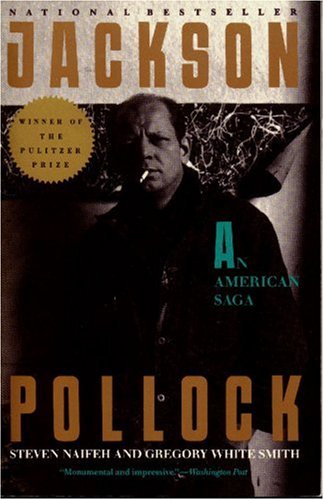
1. Jackson Pollock: An American Saga
 
$3.24
2. Jackson Pollock (Getting to Know
$36.34
3. Jackson Pollock
$3.24
4. Action Jackson (Robert F. Sibert
$3.33
5. Jackson Pollock (Artists in Their
$4.83
6. Jackson Pollock: Energy Made Visible
$11.96
7. Visions: Paintings by Jackson
$26.40
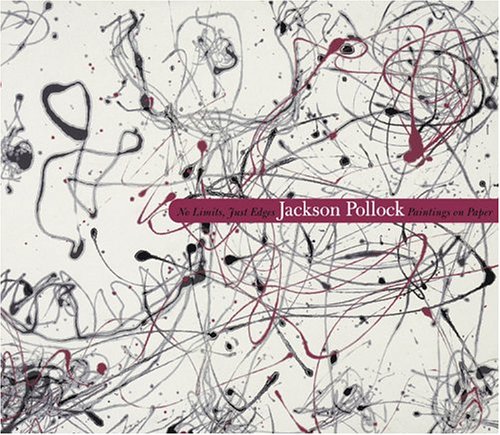
8. No Limits, Just Edges: Jackson
$9.44
9. Jackson Pollock (Portfolio (Taschen))
$74.99
10. Jackson Pollock: Works from the
 
11. Jackson Pollock
 
$7.22
12. The Essential: Jackson Pollock
$2.89
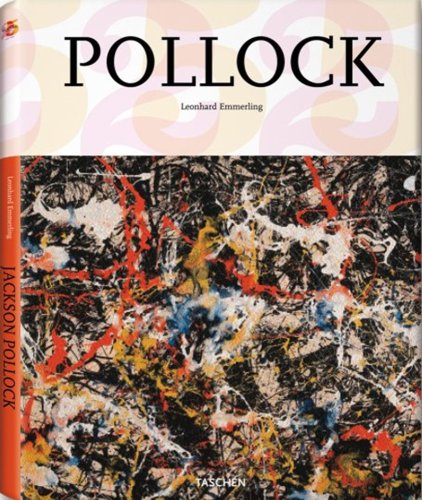
13. Jackson Pollock: 1912-1956 (Taschen
$2.18
14. Jackson Pollock: Memories Arrested
$8.66
15. Jackson Pollock and Lee Krasner
16. Jackson Pollock: New Approaches
$174.98
17. Jackson Pollock
$9.86
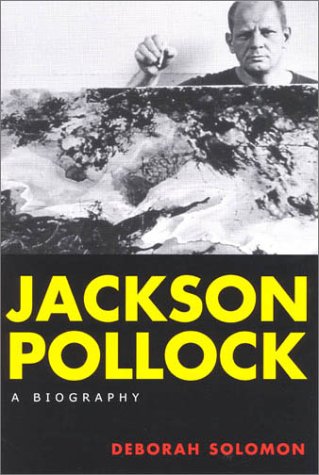
18. Jackson Pollock: A Biography
$19.44
19. I Am Not Jackson Pollock: Stories
$15.56
20. Jackson Pollock: Key Interviews,

1. Jackson Pollock: An American Saga
by Steven Naifeh, Gregory White Smith
Paperback: 934 Pages (1998-09-01)
list price: US$25.00 -- used & new: US$46.50
(price subject to change: see help)
Asin: 0913391190
Average Customer Review: 4.5 out of 5 stars
Canada | United Kingdom | Germany | France | Japan
Editorial Review

Book Description
Jackson Pollock was more than a great artist, he was a creative force of nature. He changed not only the course of Western art, but our very definition of "art." He was the quintessential tortured genius, an American Vincent van Gogh, cut from the same unconforming cloth as his contemporaries Ernest Hemingway and James Dean--and tormented by the same demons; a "cowboy artist" who rose from obscurity to take his place among the titans of modern art, and whose paintings now command millions of dollars.

Here, for the first time, is the life behind that extraordinary achievement--the disjointed childhood, the sibling rivalry, the sexual ambiguity, and the artistic frustration out of which both artist and art developed.

Based on more than 2,000 interviews with 850 people, Jackson Pollock is the first book to explore the life of a great artist with the psychological depth that marks the best biographies of literary and political figures. In eight years of research the authors have uncovered previously unknown letters and documents, gained access to medical and psychiatric records, and interviewed scores of the artist's friends and acquaintances whose stories had never been told. They were also the first biographers in twenty years to benefit from the cooperation of Pollock's widow, Lee Krasner.

The results of these unprecedented efforts lie before you: a rich, sprawling, landmark biography of one of the most compelling figures in all of American culture; a brilliant, explosive "portrait of the artist," intimately detailed, abundantly illustrated (with more than 200 photographs from Pollock's life and work, many of them never before published), and filled with new information and new insights.

In a style as richly textured, engrossing, and poignant as the best of contemporary literature, Steven Naifeh and Gregory White Smith give us the family crucible out of which the artist and his art emerged. Beginning with Jackson's birth on a sheep ranch in Wyoming, we follow the Pollock family on a relentless trek across the American West, as their dreams of a better life somewhere else are repeatedly frustrated. We see the young Jack Pollock as a struggling art student in New York, escaping into drunken rages or throwing himself into the Hudson River in one of several attempts at suicide.

Later, we see Pollock, by turns, gently affectionate and outrageously cruel, creatively bankrupt and heroically productive. We see him alternately fascinated and intimidated by his contemporaries: Clement Greenberg, Franz Kline, Willem de Kooning, Robert Motherwell, Barnett Newman, Harold Rosenberg, Clyfford Still, Tennessee Williams. We see him enter into a tumultuous marriage with the painter Lee Krasner, creating a powerful alliance that will lead first to triumph, then to decline, and finally to death when, with his mistress at his side, Pollock smashes his car into a tree.

But Jackson Pollock is more than the epic story of a tormented man and his sublime art, it is also a compulsively readable, sweeping saga of America's cultural coming of age. From frontier Iowa to the dust bowl of Arizona, from the twilight of the Wild West to the desolation of Depression-era New York, from the excitement and experimentation of the Mexican muralists to the fanfare of the Surrealists' visit to America, from the arts projects of the WPA to the explosion of interest and money that marked the beginning of the modern art world, Pollock's story unfolds against the dramatic landscape of American history.

Here then is a definitive record of the journey of an artist, filled with piercing psychological insights, that brings us to a truer understanding of the power and pathos of creative genius. ... Read more

Customer Reviews (15)

4-0 out of 5 stars profound, beautiful, fascinating writing--lags at the end
Must admit that when I received this tome in the mail, it took me weeks even to pick it up and look at it, as it seemed just well over-the-top in length and weight for the story of this one man or for a summer read. But as soon as I began, I was off.The writers carry you along like the best fiction writers, and in the meantime you get an inside peak at an entire era -- the times, the mood, the other people around and active in the American modern art movement. It almost seems impossible that the authors were able to gather so much detail to make this so vivid!I became attached to it like a favored novel.Only one criticism--the last multiple chapters are all about his post-production, post-return to drinking, destructive downhill spiral.After a while, this portion became repetitive as in "enough already, I don't need to hear about his destroying yet another set of lawn furniture."At some point well before the end, I the reader wanted to jump in the book and put him out of his misery.Still -- what an American tragedy and must read.

5-0 out of 5 stars Comprehensive and detailed
Whenever I hear the phrase "exhaustively researched," I will think of this book. The authors interviewed over 800 people! The notes section is extensive and detailed, so if you wonder where they (Naifeh/Smith) got a quote, go to the back of the book and find out. I have been lugging this book around for about three weeks (the hardcover copy is over 800 pages and must weigh over 5 lbs), ever since I saw the movie "Pollock"with Ed Harris and decided to read the book it was based on. This is a thorough biography of Jackson Pollock. It starts with his grandparents to give you a good idea of how Jackson came to be. I am not an artsy person (at least, I don't pay much attention to artwork) and don't know much about artists (aside from the music appreciation class I took in college, which I enjoyed), so this was an eye-opener for me. The only Pollock painting I had ever seen before reading this book was the one briefly shown an episode of "Sex and the City." I very much enjoyed this book. It clearly showed the connection between Pollock's art and his life. His childhood deeply affected him and the trauma he still felt (along with repressed homosexuality) came out in his art--when he would let it. Although I didn't enjoy the overview of Jungian psychology, it was necessary to know the basics to understand how Pollock's interaction with a Jungian psychologist helped his art, if not his emotional trauma. The book is competently written, which is good considering its length and complexity. A few things I found somewhat irritating and distracting from the main focus of the book was the embellished or fictionalized accounts of Pollock and what he may have been thinking or thought. How do they (writers) know? They should have stuck to the research, and not included how they imagined something happened or how Pollock thought--that takes away from the seriousness of the book. The end of the book, when Pollock is driving drunk and crashes the car, is a good example of that. It reads like a novel: "For an instant, everything was silent--except the air rushing by. Escape velocity: he had finally reached it." Although I like the imagery, I am not sure if an extensively researched biography is the place for it. Also, that sentence (and ones preceding and following it) seem to imply that Jackson knew what he was doing and killed himself. This could be true, since Pollock had a fascination for driving fast (and drunk) and not caring about the consequences, but whether it was accident or he meant to die is unknown, and the writers shouldn't imply one over the other. The other thing that bugged me was the extent of the information. That is, not only do we get mini-biographies of people who influenced Pollock, but we get mini-biographies of the people who influenced the people who influenced Pollock! It got to be a little crazy, trying to digest (and remember) all this information. Overall, though, I enjoyed the book. It was an intellectually stimulating and sad story of misunderstood artist. I wish I had read this book before seeing the Pollock painting (one of his big "drip" ones)at Ontario Museum of Arts (I think that is what it was) in Toronto. I would have appreciated it more.

5-0 out of 5 stars I love this book.
This is one of the most interesting biographies I've read in a long time. I think Pollock is mostly misunderstood. He was a very good painter, but he's a simple guy, looking to be famous to make a few bucks, have a few kids, and remain relatively on the level, but Lee Krasner knew better.Pollock hated "phonies" and felt he had became one after the Look article, etc.. Here you'll find all those wonderful Pollock stories in fine detail. Like him pissing into peggy Guggenhiem's fireplace during a cocktail party. This book will give you the history of that period like no other, and a feel for what it's like to be an ambitious artist in the New York art world. Great supporting cast in Lee Krasner, Clement Greenberg, Peggy Guggenhiem, and all those painters!

2-0 out of 5 stars Commits almost all of the sins of the biographer's craft
The Naifeh/White Smith biography of Jackson Pollock is extensively researched, and it's also (for what it's worth) fairly readable. But it's a pretty bad biography. The writers feel free to let their imaginations run riot, and indulge in weak psychobiographic speculation with little proof or justification, and they seem intent on "reading" Pollock's life as if it were a coherent and pre-written text (the most offensive example of this is at the end, when they seem to suggest Jackson's death, and his attendent criminally negligent killing of Edith Metzger, were somehow part of his artist's journey). I think a major artist like Pollock deserves a better and more responsible biography.

5-0 out of 5 stars Who cares how many pages it is?
I read this book when it first was published.
This book made me want to see the new movie!
I balked at it's cost but it is the best biography I have ever read.
It is well researched and written.
Things from the book at linger in my memory after all this time?
His hell raising at the Canal Bar,dealing with Peggy Guggenheim, his death and the strange notion that he claimed he would supposedly "know" when a woman had her period.

Read this book, I'm going to again! ... Read more


2. Jackson Pollock (Getting to Know the World's Greatest Artists)
by Mike Venezia
 Paperback: 32 Pages (1994-09)
list price: US$6.95 -- used & new: US$3.24
(price subject to change: see help)
Asin: 0516422987
Average Customer Review: 5.0 out of 5 stars
Canada | United Kingdom | Germany | France | Japan
Editorial Review

Book Description
Presents a biography of Jackson Pollock ... Read more

Customer Reviews (3)

5-0 out of 5 stars Great for teachers!
Informative book about the late author for elementary school level children. Also a great artist to study and try to replicate. My students have a blast learning about Jackson Pollock then creating their own splattered masterpiece!

5-0 out of 5 stars Mike Venezia has lots of fun teaching young kids about the art of Jackson Pollock
Mike Venezia's Getting to Know the World's Greatest Artists series is dedicated to the principle of introduction children to art and artists in fun ways.His primary way of doing that is to draw engaging cartoons that highlight not only biographical information about his subjects, but which also focus on key elements of the artist's work.That means this book about Jackson Pollock plays to Venezia's strengths, and he gets to do two jokes about using an eggbeater.If you count the front and back covers, Venezia gets to do nine of his cartoons, which may not be a record but it sure seems like one for this series, which also provides solid introductions to great artists from Da Vinci to Dali.

This book begins by pointing out that Pollock was one of hte greatest artists of the 20th century and that he was best known for huge paintings made by slapptering, throwing, and dripping paint onto this canvases.Then Venezia spends the rest of this informative and entertaining volume explaining how the latter leads to the former.Young readers learn how Pollock painted, what his work was called (Abstract Expressionism) versus what he called it (Action Painting), and how they emphasized emotions and energey rather than recognizable objects.The middle part of the books covers the key aspects of Pollock's life, but the best part is when Venezia details how Pollock developed his style, because that is where young readers are going to get a mini-education in art history.

Early on Pollock was trying to paint like Thomas Hart Benton, and Venezia contrasts Benton's "Arts of the West" with Pollock's "Going West," to show how that did not really work out.Paintings by Jose Clemente Oroczco and Pablo Picasso's "Guernica" also become reference points as Venezia traces the evolution of Pollock's art, culminating in "Blue Poles."The book touches on Pollock's unhappinesss without getting into detail, but that is appropriate for an introductory look at his life and art.In the end, Venezia underscores how Pollock was not just throwing paint around and that he knew exactly what he was doing.It is suggested that seeing Jackson Pollock's paintings in person is a good thing, so it is helpful that Venezia explains where the paintings in this book come from so you have an idea of where to go to see some of them (but be careful, because some of these references are for the works by the other artists).

5-0 out of 5 stars Pollock for kids.
I took last summer my two daugthers, age 6 and 9 to the Museum of Modern Art in New York. They loved it and each one choose her favorita artist. The younger one, Isabel, loved Picasso. Who doesn't?. My older daughter, Camila loved the american artist Jackson Pollock, she sat in front of his masterpiece One, admiring all that aparently no-sense. Its beautiful, she told me, and I sure can do that. She's not very good inart class and she felt identified with this painter's work. Wanting to explain his art I found a wonderful book, part of a series written by Mike Venezia about the great artists. In the case of Jackson Pollock, the author mixing words, comics and paintings explains in a fun way the wonders of the work of this artist. Pollock was the brother of a painter and went to study art as his brother did in New York, he tought he wasn't very good at it. But working and studyng with contemporary painters helped to create his personal style making him one of America's biggest contemporary artist. Try explaining that to your kid, don't bother. Mike Venezia will do the job. ... Read more


3. Jackson Pollock
by Ellen G. Landau
Paperback: 284 Pages (2005-09-30)
-- used & new: US$36.34
(price subject to change: see help)
Asin: 0500285845
Average Customer Review: 4.5 out of 5 stars
Canada | United Kingdom | Germany | France | Japan
Editorial Review

Book Description
Pollock's large, bold canvases revolutionized the world of art; more than100 are reproduced here in full color to capture the brilliance of his palette, and six gatefolds show his vast horizontal works without distortion.

270 illustrations, 120 in full color, 6 gatefolds, 11 3/4x 10" ... Read more

Customer Reviews (3)

5-0 out of 5 stars "Jack The Dripper"Enchants and Excites the Art World
This beautiful book with an anthology of Pollock's work; along with the details of his life, was very engrossing.I was unfamiliar with his work; although I do collect some artwork.When I saw and read the book from the coffee table of a friend's home over the holidays; I couldn't wait to order from Amazon.com for my copy.A recent find of Pollock's work was shown on David Letterman.It sold for millions after being locked away in a closet for many years.Beautiful book for a fantastic artist.

4-0 out of 5 stars strong text, inconsistent reproduction quality
Before Varnedoe and Karmel's Pollock monograph, which accompanied the MOMA / Tate retrospective a few yeas ago, this was the best available text-and-plates book about Pollock. In terms of its text, this book is still relevant and insightful.Like Elizabeth Frank, Landau does a lot of truly eye-opening comparison work throughout her book.She'll reprint a work by Picasso, say, or a Native American artifact, or a Pollock sketch, and then analyze the influence it exerted on one of Pollock's key canvases.

And unlike the Varnedoe/Karmel book, this volume reprints these several kinds of works in close proximity, often on the same or a facing page, a useful feature.Landau's remarks about Pollock's sources, outcomes, growth and directions are always at least provocative and often really instructive, particularly in her coverage of the late black paintings.Indeed, Landau's analysis is regularly listed and praised in other authors' bibliographies.

The drawbacks of the book are its numerous poor reproductions, and plates after all make the primary reason for buying an artist monograph.Many of the plates are excellent and crisp--"Lucifer," "Pasiphae," "Autumn Rhythm," the colorful, playful works following Pollock's marriage.But too many of the plates and fold-outs are muddy, and Pollock's use of silver or aluminum paint is simply beyond this book's ability--as with the gaudy and over-exposed looking gatefold that opens the book."Blue Poles" and "Stenographic Figure" are among the book's other poor reprints.Until I saw the Varnedoe/Karmel reprint of "One:Number 31, 1950," and then again in "person" at the MOMA, I just flatly didn't understand how Pollock had approached it.It looks "ok" in Landau, but with a lessened resolution that just slightly confuses the webbing throughout.

Still, I value the book and particularly its text.As for the reproduction quality, I did buy a second copy to cannibalize it; I've posted many laminated pages throughout my classroom.But I got that copy at remaindered prices.At full cost, this is a 3 1/2 or 4 star book.At bargain prices, the book rates 4 or 4 1/2 stars.Varnedoe/Karmel is just visually superior.

5-0 out of 5 stars A gorgeous retrospective of a brilliant body of work
This intelligent and lavishly illustrated volume, which first appeared in a 1989 hardcover edition, covers Pollock's entire career, his early influences, and the progression of the themes, techniques, and accomplishments of his life as an artist.Ellen Landau's text is enlightening, but the best part of this book is, inevitably, the illustrations themselves, which are an unparalleled feast for the eyes.For those who want to experience and understand Pollock's art (rather than dwell on his personal problems) this is an excellent choice. ... Read more


4. Action Jackson (Robert F. Sibert Honor Books)
by Jan Greenberg, Sandra Jordan
Paperback: 32 Pages (2007-04-17)
list price: US$6.95 -- used & new: US$3.24
(price subject to change: see help)
Asin: 0312367511
Average Customer Review: 5.0 out of 5 stars
Canada | United Kingdom | Germany | France | Japan
Editorial Review

Book Description
Jackson Pollock, known as Action Jackson, because of the amount of movement and emotion he expressed in his paintings, did not paint like a normal artist. He neglected the easel and chose house paint over oils or watercolors. Some liked his modern style and some didnt. But everyone agreed he was a true original. ... Read more

Customer Reviews (3)

5-0 out of 5 stars Well done
This book is an unusual children's book and about a character whose artwork will appeal to children.Although his life is not an uplifting story, the book picks up on the important parts and gives a feeling for what "Action Jackson" was all about.His freedom to create what he wanted and put his feeling on canvas is an important message to children who need to know that there are many way to be creative.That is it is OK to put their feeling into their art without worrying about whether it is "right" or "good".It is a quiet book about an artist who was quiet but whose life was certainly active as was his art.

5-0 out of 5 stars a brilliant book for kids
This book is so very well done -- lots of biographical facts woven into a beautifully illustrated story from the most peaceful and productive phase of Pollock's life. Just right for younger elementary school students -- and also good for older ones when you add the fuller biography in the back. A really wonderful book about an important artist and about making art.

5-0 out of 5 stars Meet Jackson Pollack.....
Award winning authors, Jan Greenberg and Sandra Jordan introduce a whole new generation to the brillance of painter, Jackson Pollock as they focus on just two months in the artist's life, and the creation of one of his most famous paintings, No. 1, 1950 (Lavender Mist).Based on firsthand accounts from friends and family, and often using the painter's own words and quotes, this well researched and enlightening picture book biography lets the reader get into Pollock's head, hear his thoughts, feel his energy and joy as he works, and actually peek over his shoulder as he paints."An athlete with a paintbrush, he uses his whole body to make the painting.Layers build with each gesture, new colors emerging, blending, and disappearing into the wet surface.He swoops and leaps like a dancer, paint trailing from a brush that doesn't touch the canvas..."Their eloquent and lyrical prose is engaging and complemented by Robert Andrew Parker's bold, bright, and busy watercolors.Together word and art paint a dazzling and evocative portrait of the artist, his work, and his times."Some people will be shocked when they see what he has created.Some Angry.Some confused.Some excited.Some filled with a happiness they can hardly explain.But everyone will agree- Jackson Pollock is doing something original, painting in a way that no one has ever seen before..."Perfect for youngsters 7-11, Action Jackson includes a short biographical sketch at the end to augment the story and fascinating notes and sources about his life and paintings.This is non-fiction at its very best.Kudos to Greenberg, Jordan, and Parker ... Read more


5. Jackson Pollock (Artists in Their Time)
by Clare Oliver
Paperback: 48 Pages (2003-03)
list price: US$6.95 -- used & new: US$3.33
(price subject to change: see help)
Asin: 0531166449
Average Customer Review: 4.0 out of 5 stars
Canada | United Kingdom | Germany | France | Japan

Customer Reviews (1)

4-0 out of 5 stars Pollock's work
American artist Jackson Pollock lived a sometimes troubled and ultimately tragic life, despite his success in popularizing revolutionary methods of creating art. Clare Oliver's contribution to Scholastic's "Artists In Their Time" series does not sugar-coat or contradict the reality of that life, one of frequent reclusion and alcohol addiction but also containing periods of both failure and success. It also does its best to make the abstract expressionist movement understandable and accessible to young readers without passing any sort of judgment on its merit. Instead, the reader is given a clear picture of the place Pollock's innovations held in the history of art. Background information on the era in which Pollock lived and worked is helpful, but not intrusive. Illustrations are excellent. ... Read more


6. Jackson Pollock: Energy Made Visible
by B. H. Friedman
Paperback: 372 Pages (1995-09-01)
list price: US$18.00 -- used & new: US$4.83
(price subject to change: see help)
Asin: 0306806649
Average Customer Review: 4.0 out of 5 stars
Canada | United Kingdom | Germany | France | Japan

Customer Reviews (4)

3-0 out of 5 stars Good for its time
This may have been one of the better Pollack books when it came out in 1972, but now I think its main use is for die hards who want every detail.And the details are exhausting:galleries, museums, who what where - too much for me.What I was looking for was more process/personal/mindset stuff, and there is some but you have to go through a lot to get to the little of it there is.I recommend "Jackson Pollack" by Ellen G. Landau.Great reproductions and good text.

5-0 out of 5 stars Connections
I was wowed reading this energetic, straightforward book, mainly by the many connections made--how Pollocks studies with the great Mexican muralist Orosco who used used/taught a dripping splashing underpainting technique can logically link to how Pollock got splashing and painting on large scale canvases---to the influence of other artists, such as Picasso, on the early works of Jackson Pollock, to the revelation of Pollock's love of and use of found natural forms...

4-0 out of 5 stars still reading it
I am just beginning to explore pollacks work - book is well laid out

4-0 out of 5 stars Good review of Jackson Pollock's work, but not personal enou
This book is a thorough review of Jackson Pollock's work and his professional life; however I would have enjoyed it more if there had been more indepth reporting of his personal life.HIs relationship with hiswife, parents and brothers would have made for a more insightful view ofthe artist as a man. ... Read more


7. Visions: Paintings by Jackson Pollock, Mark Rothko, Chang Dai-chien, Georgia O'Keeffe and California Impressionists Seen Through the Optic of Poetry
by Marc Elihu Hofstadter
Paperback: 72 Pages (2001-09-19)
list price: US$14.00 -- used & new: US$11.96
(price subject to change: see help)
Asin: 0967022452
Average Customer Review: 1.0 out of 5 stars
Canada | United Kingdom | Germany | France | Japan
Editorial Review

Book Description
Visions is a collection of poems inspired by twentieth-century paintings. ... Read more

Customer Reviews (1)

1-0 out of 5 stars Poetry? No.
Marc Elihu Hofstadter, Visions: Paintings Seen Through the Optic of Poetry (Scarlet Tanager Books, 2001)

After I'd read a few pages of this, I was relatively sure I'd read it before; however, I couldn't find a review of it, so I figured I was just caught in a case of deja vu. Turns out that, no, I did read it back in 2004. But my review seems to have slipped through the cracks, so here I am again, having wasted another four hours of my existence on this godawful mess. You can be sure that this time it's headed off to Half-Price Books so I don't make the same mistake again.

There are a great many aspiring poets who don't understand that poetry is not just prose chopped up into little lines. Thankfully, you see this trend a great deal less among the published set, but there are still times when it rears its ugly head:

"I'm an artist trying to make a work
I've learned to draw well
so I put this white line here,
shade this yellow rectangle just so
and make the orange glow
But it's not quite right
It expresses my soul
but not all of it"
("No. 19, 1949")

I'm not even sure where to start with all that's wrong with that poem. However, it's pretty easy to illustrate what I'm talking about: write it out yourself, taking out all the line breaks, as a paragraph, inserting the necessary punctuation. Do you find it notably changed when you read it that way? If not, then what's the justification for making it poetry and not prose?

An awful book from front to back. I guess the reason I read it again is because I'd blocked it out of my head the first time; I shall endeavor to do so again immediately. *
... Read more


8. No Limits, Just Edges: Jackson Pollock
by David Anfam, Susan Davidson, Margaret Ellis
Paperback: 140 Pages (2005-04-15)
list price: US$40.00 -- used & new: US$26.40
(price subject to change: see help)
Asin: 0892073268
Average Customer Review: 5.0 out of 5 stars
Canada | United Kingdom | Germany | France | Japan
Editorial Review

Book Description
While legendary artist Jackson Pollock has been comprehensively investigated in recent shows, a focused exhibition examining his drawings has not been organzied since 1980. No Limits, Just Edges: Jackson Pollock Paintings on Paper features a compelling group of 75 artworks drawn from the holdings of institutions and private collections worldwide. This long-awaited exhibition to be held at the Deutsche Guggenheim, Berlin, Guggenheim Bilbao, and the Peggy Guggnheim Collection, Venice and curated by Susan Davidson considers the artist's works on paper as an essential component in his signature transformation of the traditional figurative line into a non-figurative graphic expression. This catalogue of the exhibiton begins chronologically with Pollock's early sketchbook studies based on old master paintings by Michelangelo and El Greco, as well as those influenced by his contemporaries, mainly the Mexican muralists Jose Clemente Orozco and David Alfaro Siqueiros. These early works reveal a figurative quality that Pollock ultimately rejected as he moved at first toward pieces that mirrored his advancements in painting, and eventually, by late 1947, to abstract compositions. Throughout his career, Pollock experimented with different media on paper, alternating the same themes on watercolor and lithography, and later adding gouache to engravings to provide interesting variations. In the last years of his life, Pollock's fascination with different types of paper led him to special hand-made sheets that allowed the paint to permeate below the main layer thus achieving fortuitous variations of his well-known poured painting technique. This fully illustrated catalogue, which shows the full range of Pollock's works on paper, includes a reassessment of his skills as a draftsman, authored by Dr. David Anfam, a noted scholar of Abstract Expressionism. Susan Davidson contributes a text that focuses on Pollock's stylistic development and the reception of his works on paper during his lifetime. A technical analysis of Pollock's working method is provided by Margaret Hoben Ellis. ... Read more

Customer Reviews (1)

5-0 out of 5 stars development of Pollock's art style
The German subtitle translates "works on papers." The three essays in German discuss the tools, materials, and techniques Pollock used for his art works on paper. The third essay has photographs of pencils, felt-tip pens, and eye droppers this major modern artist used in creating such works. Seventy-eight are pictured in color one per page in chronological order in one gallery-like section of this larger, rectangular-shaped book. Pollock's works are familiar, and need no general commentary. The more-focused, particularly revealing artistic theme of the essays is Pollock's liberty with lines, or edges. As the numerous works on paper show, his progress in this technique and impulse gave him unprecedented freedom and novelty as an artist. One follows the expansion of Pollock's liberty with line and corresponding new dimensions of artistic freedom over the course of this time. Early, roughly representational works and others indicating the probable influence of Miro and de Kooning lead to the more complex, abstract art that is regarded as typifying Pollock. The chronological presentation and analytic essays (in German) allow one to gain a particularly revealing understanding of the artistic achievement of this groundbreaking modern artist. The work is the catalog for an exhibition of these works of Pollock's that was in Germany and is in New York until the Fall 2005. ... Read more


9. Jackson Pollock (Portfolio (Taschen))
Paperback: 32 Pages (2006-03-01)
list price: US$14.99 -- used & new: US$9.44
(price subject to change: see help)
Asin: 3822831646
Average Customer Review: 5.0 out of 5 stars
Canada | United Kingdom | Germany | France | Japan
Editorial Review

Book Description
TASCHEN portfolios feature high quality prints that beg to be framed. Tucked in each portfolio are 14 large-format reproductions, each with a brief description. Guaranteed to brighten any day, they also make great gifts for art lovers! ... Read more

Customer Reviews (1)

5-0 out of 5 stars A good portfolio
This portfolio contains many of his major works, and the pictures are high quality and glossy. My only complaint is that the ink is a little too glossy. It includes works from early to late, highlighting the progression of his artistic style. ... Read more


10. Jackson Pollock: Works from the Museum of Modern Art, New York, and from European Collections
by Kehrer Verlag Heidelberg
Hardcover: 88 Pages (2003-05)
list price: US$30.00 -- used & new: US$74.99
(price subject to change: see help)
Asin: 393325793X
Canada | United Kingdom | Germany | France | Japan
Editorial Review

Book Description

"On the floor I am more at ease, I feel nearer, more a part of the painting, since this way I can walk around in it, work from the four sides and be literally 'in' the painting."-Jackson Pollock, 1947

Jackson Pollock (1912–1956) was the commanding figure of American Abstract Expressionism. By the mid-1940s, he was painting in a completely abstract manner, and the "drip and splash" style for which he is best known emerged rather abruptly in 1947. This manner of Action Painting had in common with Surrealist theories of automatism that artists and critics alike supposed it to -result in a direct expression or revelation of the unconscious moods of the artist. Advanced critics strongly supported Pollock, but he was also subject to much abuse and sarcasm; in 1956, Time magazine called him "Jack the Dripper." By the 1960s, however, he was generally recognized as the most important figure in this century's most important movement in American painting. His unhappy personal life and his premature death in a car crash contributed to his legendary status.

This catalogue book was first published on the occasion of a noted exhibition at the Kunstsammlung Nordrhein-Westfalen in Dusseldorf, Germany. It presents important paintings as well as graphic works from the New York Museum of Modern Art and from several European collections, for example, the Stedelijk Museum, Amsterdam, and the Staatsgalerie Stuttgart.

Volkmar Essers is curator at the museum Kunstsammlung Nordrhein-Westfalen in Dusseldorf. He specializes in and has published on Abstract Expressionism.

... Read more

11. Jackson Pollock
by Francis V. & Moma Museum Of Modern Art. O'Connor
 Paperback: Pages (1967)

Asin: B000ODE6SK
Canada | United Kingdom | Germany | France | Japan

12. The Essential: Jackson Pollock (Essentials)
by Abrams
 Hardcover: 112 Pages (1998-09-15)
list price: US$12.95 -- used & new: US$7.22
(price subject to change: see help)
Asin: 0810958090
Average Customer Review: 4.5 out of 5 stars
Canada | United Kingdom | Germany | France | Japan
Editorial Review

Amazon.com
This small, square, pocket-sized book gives readers all they need to know in order to stand in front of one of Jackson Pollock's drip paintings and resist the impulse to say, "My kid could do that." It puts the man, the myth, and the paintings in context of both pre- and post-war America. One of the Essentials series (which includes similar little books on Edward Hopper, Salvador Dali, and Vincent Van Gogh), the book presents many bright, colorful reproductions; cutesy, but quick and painless lessons in art talk--"new for this year: gestural automatism (huh?)"; and readymade underlinings with important words and phrases italicized for the hurried reader who only has time to skim the text.

Writer Justin Spring settles into Pollock's biography with narrative ease. By the end of the book he has made good on his promise to show us that it "isn't hard" to understand Pollock. He thoroughly but respectfully describes the artist's fatal alcoholism (he died in a car crash that also killed another passenger), his womanizing, his dependence on his wife, painter Lee Krasner, and his groundbreaking art. The Abstract Expressionists were an earnest bunch, Pollock especially. His unstable psyche and his drinking, intertwined, were his Achilles heel, but he emerges as the brilliant, voraciously curious cowboy-intellectual that he was. As Spring writes, Pollock created "a distinctive identity for American postwar art," for which he "endured poverty, loneliness, ridicule, and immense psychic anguish." --Peggy Moorman ... Read more

Customer Reviews (4)

5-0 out of 5 stars Cliff Notes on Pollack is a good introduction
The author gives us the fundamentals on Pollock, the man, the painter, the influences, the critics, contemporary painters, plus Pollock's wife Lee Krasner and other supporters.I enjoyed it quite a bit.

3-0 out of 5 stars Interesting, but unfortunately, annoying
Um...Like...underline...superficial...as if! This book is cute but it's so simple and silly, it made me feel like I was hearing the story of a great and influential artist, being told by a pretentious poser. The points itcovers really are interesting and important but I think this book is a bitannoying.

5-0 out of 5 stars Teaches and Entertains!
This book is a great first step in learning about the artist's life and understanding his work. It is a quick read, and you will learn much about Pollock and how his style was developed without overloading you onunneccessary detail. Um...Like...Buy The Book!!!

5-0 out of 5 stars Totally great book!
Wow, now I GET what this guy's all about.Who knew?Can't wait to go to New York and see the Pollock exhibition now.It's very cool that he was sometimes so drunk he used the palm of his hand to "sign" hispaintings! ... Read more


13. Jackson Pollock: 1912-1956 (Taschen Basic Art)
by Leonhard Emmerling
Paperback: 96 Pages (2003-11-01)
list price: US$9.99 -- used & new: US$2.89
(price subject to change: see help)
Asin: 3822821322
Canada | United Kingdom | Germany | France | Japan
Editorial Review

Book Description
A TRAGIC ICON OF ABSTRACT EXPRESSIONISM, JACKSON POLLOCK (1912-1956) TOOK INFLUENCES FROM PICASSO AND MEXICAN SURREALISM AND DEVELOPED HIS OWN WAY OF SEEING, INTERPRETING, AND EXPRESSING. THOUGH HIS NAME INEVITABLY CONJURES UP IMAGES OF THE DRIP PAINTINGS FOR WHICH HE IS MOST FAMOUS, THIS TECHNIQUE WAS ONLY DEVELOPED MIDWAY THROUGH HIS CAREER. THE PROGRESSION FROM HIS EARLIER WORK TO HIS FINAL "ACTION" PAINTINGS--A VERITABLE REVOLUTION OF PAINTING AS A CONCEPT--REVEALS THE GENIUS OF THIS TORTURED ARTIST WHOM MANY CALL THE GREATEST MODERN AMERICAN PAINTER. ... Read more


14. Jackson Pollock: Memories Arrested in Space
by Martin Gray
Paperback: 216 Pages (2004-01-01)
list price: US$14.95 -- used & new: US$2.18
(price subject to change: see help)
Asin: 1891661329
Average Customer Review: 5.0 out of 5 stars
Canada | United Kingdom | Germany | France | Japan
Editorial Review

Book Description

This epic biographical poem chronicles the life of the dynamic and controversial American painter Jackson Pollock. The magnificent narrative chronicles Pollock's reckless, adventurous, and often desperate life, from his beginnings in the American northwest through his pioneering of a revolutionary new painting technique that came to be known as Abstract Expressionism to his death behind the wheel of a car on Long Island when he was only 44 years old. Written entirely in iambic trimeter, the poem captures the essence of the brilliant yet tortured artist in language that is as breathtaking as a Pollock painting: spontaneous, beautiful, and haunting, with bursts of energy that touch the soul and make it soar.
... Read more

Customer Reviews (1)

5-0 out of 5 stars Blazing comet burning out!
This book was a revelation to me! I've always loved the strength
and delicacy of Pollock's works, without ever being able to place the undercurrent of violence and black rage in it. Now I understand. What a fascinating picture of how an artist can turn
what to others would be crippling limitations into lasting beauty!
Thank you, Martin Gray, for opening my eyes. ... Read more


15. Jackson Pollock and Lee Krasner (Pegasus Library)
by Ines Janet Engelmann
Paperback: 95 Pages (2007-10-20)
list price: US$14.95 -- used & new: US$8.66
(price subject to change: see help)
Asin: 379133882X
Canada | United Kingdom | Germany | France | Japan
Editorial Review

Book Description
This dual portrait examines the art and lives of thesetalented artists and their productive, yet tempestuous relationship.

For more than a decade Jackson Pollock and Lee Krasner devoted theirlives to each other, serving in turn as muse, critic, companion, lover,friend, and alter ego. Their romance was stormy--their raucous argumentsare the stuff of legend--and their talents were prodigious. Filling thepages of this book are examples of the contributions both artists made tothe world of modern art. Readers will learn how Pollock and Krasner'sartistry evolved and how they influenced each other's success. Recentdevelopments, such as a revealing biopic and the art world's designation ofPollock as the most expensive artist in the world, bring their portraitfully up to date. While the author acknowledges history'ssensationalization of their lives, it is the paintingsthemselves--revolutionary, innovative, and daring--that tell the mostcompelling story. ... Read more


16. Jackson Pollock: New Approaches (Museum of Modern Art Books)
Paperback: 248 Pages (2000-07)
list price: US$24.95
Isbn: 0810962020
Canada | United Kingdom | Germany | France | Japan
Editorial Review

Book Description
Presenting nine critical essays by leading scholars--among them T.J. Clark, Robert Storr, James Coddington, Rosalind Krauss, and Kirk Varnedoe--this collection offers dramatically different ways of understanding Jackson Pollock's art and influence. Revealing not just the richness of Pollock's work, but also the vitality and diversity of contemporary criticisms, these texts discuss the crisis of easel painting, Pollock's relationship with his wife, artist Helen Frankenthaler, the Americanization of Europe, and the place of chaos in Pollock's work. Based on a symposium held in 1999 during The Museum of Modern Art, New York's retrospective exhibition of Pollock's oeuvre, this volume is a companion to Jackson Pollock: Key Interviews, Articles, and Reviews, a collection of older texts by or about the artist. ... Read more


17. Jackson Pollock
by Glenn Lowry, Jackson Pollock
Hardcover: 336 Pages (2002-06-15)
list price: US$75.00 -- used & new: US$174.98
(price subject to change: see help)
Asin: 0870700685
Average Customer Review: 5.0 out of 5 stars
Canada | United Kingdom | Germany | France | Japan
Editorial Review

Amazon.com
The almost mythic Jackson Pollock--a roughshod, ill-mannered, prodigiously ambitious, aggressive, alcoholic, tormented artist--is alive and unwell in this book. But Kirk Varnedoe and Pepe Karmel, the chief curator and adjunct assistant curator, respectively, of the Museum of Modern Art's Department of Painting and Sculpture, also go deeply into Pollock's art in eye-opening ways. This book is the catalog for the retrospective of Pollock's art-shattering oeuvre at the Museum of Modern Art in the fall of 1998 and includes many biographical pictures as well as color plates of Pollock's paintings, from the awkward but earnest early works to the late, great, famous canvasses. Varnedoe's essay, aptly titled "Comet: Jackson Pollock's Life and Work," deftly invites the reader into Pollock's world, starting with his country studio: "The structure, often called a barn, is in fact more like a glorified tool shed." Karmel's essay, "Pollock at Work: The Films and Photographs of Hans Namuth," is a truly groundbreaking exploration of Pollock's technique. Karmel has scrutinized every frame of every piece of film, still or moving, ever taken of Pollock painting. He arrives at absolutely original conclusions: Pollock's all-over swirls of dripped and flung paint often began as figurative works and clearly relate to such all-American stalwarts as Thomas Hart Benton. Karmel makes countless other sharp observations, noting the difference, for example, between fast-looking marks and the slow, deliberate movements with which they were made (and vice versa). His essay is a work of brilliant scholarship, written thrillingly, and it will forever change the way any serious viewer looks at Pollock's paintings. It makes this volume absolutely essential for understanding the work of this great, sad artist. --Peggy Moorman Book Description
Jackson Pollock is widely considered the most challenging and influential American artist of the 20th century. In his revolutionary paintings of the late 1940s, he dripped paint into complex webs of interlacing lines, rhythmically punctuated by pools of color. With their allover composition, apparent abstraction, and spontaneous but controlled paint handling, these powerful works announced the emergence of Abstract Expressionism. This sumptuously illustrated book offers a fresh overview of his achievement, reinterpreted for a new generation and features a complete visual record of the artist's work, including over 200 color reproductions of paintings, drawings, and prints, enhanced by life-sized details, foldouts, and documentary photographs. An essay by Kirk Varnedoe explores Pollock's life, the mythology that so quickly grew up around him as the prototypical "action painter", and the different critical schools that have tried to lay claim to his legacy. Pepe Karmel offers new insight into Pollock's famous "drip" technique, as revealed by an intensive, computer-assisted study of photographs and films of Pollock at work. This volume was published to accompany the first major survey of the artist's career since 1967, held in 1998 at The Museum of Modern Art, New York. ... Read more

Customer Reviews (6)

5-0 out of 5 stars Pollock, only Pollock, nothing else but Pollock
This is the catalogue for the landmark Pollock exhibition held at the Moma and the Tate in 1998-1999. Considering the steep rise in the insurance value of Pollock's paintings, such a comprehensive retrospective is not likely to be repeated in the near future and we are therefore fortunate to have such a brilliant book to help us remember it. The late Kirk Varnedoe was one of the best interpreters of contemporary American art and his text, never anecdotical and always informative without being pedantic, does justice to the masterpieces without falling into any of the cliches that often pollute our view of this great artist.

Beautiful illustrations make this book an indispensable presence in any arts library.

5-0 out of 5 stars THIS BOOK OFFERS GREAT INSIGHT INTO POLLOCK'S ARTISTIC MIND
________________________________________________________________________________________________

I purchased this book when it first came out and refer back to it often.A person could spend hours at a time pouring over the plates and fold-out pictures (pun intended).Not only does this particular book provide the best collection of absolutely superb quality Jackson Pollock reproductions that I'm aware of, but the narrative is extremely well written and essential to understanding many things regarding Pollock's thought process and artistic technique.

Pepe Karmel's chapter imparticular, in which he analyzes Hans Namuth's photographs, is nothing less than brilliant detective work.I found it fascinating to find that underlying the lacy layers of at least one of Pollock's drip paintings are figurative images which he made within a narrative context.Although the complete details of this "narrative" may never be fully known, Pepe speculates that Pollock may have been acting out the destruction of some of his inward demons by first physically acknowledging and creating them and then systematically covering them within the confines of the finished painting.I'll leave it to you to get the book and both read and see for yourself all of the findings which include the deciphering of some of the figures and their meanings.With this discovery, the creation of the painting involved (Number 27, 1950) becomes not only a very strenuous and at once both spontaneous and preplanned action - but a true "ritual."Was he destroying these figures or merely absorbing them into a larger and more complex environment?We'll probably never know all the details.I wonder if Pollock would have disclosed answers to these questions had he been confronted with them during his life?Perhaps this would have been too personal.But maybe he did confide the details of what he was doing to someone and another good researcher might come across a total revelation in a hidden diary someday.I'm sure this is just wishful thinking on my part, but how I love a good mystery!

5-0 out of 5 stars simply the best
This breathtaking catalogue is simply the best single volume available on Jackson Pollock, and this is primarily--but not only--because of the number and quality of the reproductions it offers. Almost every one of the dozen or so Pollock books in my library contains a painting not available in the others, but this book collects and beautifully photographs the greatest number and variety of his canvases--outside of a catalogue raisonee.

As the other reviewers state, there are many generously-sized fold-out pages here, and the crispness and resolution of these big reprints and of the more modest pages are simply amazing. To take two essential examples, this book's reprints of "One: Number 31, 1950" and "Blue Poles: Number 11, 1952" are astoundingly clear, better than any of the many other versions I've seen in art books, even in Ellen Landau's large-format survey, a book which also includes gatefolds.

(Another reviewer, by the by, states that "Lucifer" is not available in any other book, which is not true. Among other places, it appears in Landau, in Elizabeth's Frank's concise volume, and as the sole color reproduction in the book for the 1965 MOMA retrospective. Anyway, it gets terrific treatment here.)

Another invaluable inclusion in this book is a great number of full-sized detail photos of the canvases. For example, on a page adjacent to "Lucifer" and "Autumn Rhythm" and "Full Fathom Five," we see another photo of just one small section of that same painting but in 1-to-1 scale; these details reveal much of the dynamic, kinetic, urgent quality of these works, their encrustations of sand, glass, pennies, paint caps--traits which even this book could otherwise never offer a livingroom Pollock-viewer.

Further, having seen the exhibit in January of 1999, I can attest to the generally excellent fidelity of the color-balance. (Curiously, no one seems to be able to capture "Autumn Rhythm"'s grey-teal passages in a book, but if you were at this show or have viewed the painting at the Met you've seen them.)

The accompanying articles are excellent. Kirk Varnedoe overviews of Pollock's life, artistic aims, his accomplishments, all illustrated with family and archival photographs and drawing on Pollock quotations. Pepe Karmel uses the extensive photographic and film record of Pollock painting to analyze Pollock's physical movements. Most wonderful are Karmel's computer reconstructions of early states of the painting "Autumn Rythm," based on Hans Namuth's photos of Pollock at work.

In sum, this book gives the finest, fullest offering of both Pollock's life and art.

5-0 out of 5 stars Best Reproductions and Most Complete
I picked this book up at the MOMA Pollock retrospective a couple years ago and have used it extensively.Having seen many of the paintings in this book firsthand, I can say that these are some of the best reproductions offerred in book form on Pollock's work.Another plus is that several paintings are printed on fold-out pages, so that the work doesn't cross the book's seam.So many of his paintings are extremely wide that this makes a lot of sense (otherwise, there would be hardly any resolution in the height dimension).

If you're interested in Pollock and need to refer to the reproductions, I absolutely recommend this book above all others out there.

5-0 out of 5 stars Pollock Without the Boring Mythologizing
Excellent companion piece to the MOMA show (which traveled to London's Tate) goes beyond all other Pollock explorations.A "must" for students of modern American art as well as those just wanting to get abetter understanding of what Pollock was REALLY DOING.

Large formatfeatures fold-out reproductions of breathtakingly high quality.Amongthese, incredibly, are paintings not found in any other published sources. (The incomparable Lucifer (1947) is one such work).

The text isscholarly but readable, and although there is a considerable amount of it,each open page of writing offers at least a couple relevant and highlyinteresting photos or other illustrations.The many large color plateswould certainly make a gorgeous and impressive coffee table book for anyonewho doesn't choose to read it.

Kirk Varnedoe writes definitively aboutPollock's mercurial life & career.Varnedoe's nearly 75 pages ofbiographical analysis are a welcome alternative to the kind of misguidedmythologizing about Pollock that has for a long time colored the artist asan overrated art "star."

Pepe Karmel's contribution to thisbook is an amazing analysis of Pollock's painting process through anexhaustive examination of the famous films and photographs of Pollock atwork.This was a fascinating, ground-breaking part of the exhibition, andis equally wonderful in the book.

Well worth the price. ... Read more


18. Jackson Pollock: A Biography
by Deborah Solomon
Paperback: 312 Pages (2001-09-25)
list price: US$17.95 -- used & new: US$9.86
(price subject to change: see help)
Asin: 0815411820
Average Customer Review: 3.0 out of 5 stars
Canada | United Kingdom | Germany | France | Japan
Editorial Review

Book Description
Deborah Solomon interviewed the people who knew Abstract-Expressionist painter Jackson Pollock (1912-1956) for this insightful portrait. ... Read more

Customer Reviews (2)

5-0 out of 5 stars A most critical and detail-filled look
Jackson Pollock is the fascinating and well crafted biography of a truly remarkable and influential American painter who held himself to the most demanding standards. Biographer Deborah Solomon interviewed more than two hundred people to reconstruct Pollock's brilliant yet contrary and sometimes self-destructive life. A most critical and detail-filled look at a very complicated artist and a highly recommended addition to personal, academic, and community library art history and biography collections.

1-0 out of 5 stars Manages to make Pollock Dull
I checked this book out at the local library along with a text on how to transfer course units from a business major into psychology. This book made the reference text read like a novel. Truly dreadful. Avoid this even if it's free. ... Read more


19. I Am Not Jackson Pollock: Stories
by John Haskell
Hardcover: 192 Pages (2003-04-16)
list price: US$20.00 -- used & new: US$19.44
(price subject to change: see help)
Asin: B000C4SQIC
Average Customer Review: 4.0 out of 5 stars
Canada | United Kingdom | Germany | France | Japan
Editorial Review

Book Description

A bewitching collection of short fiction—haunting and hypnotic meditations on art, movies, literature, and life

A circus elephant named Topsy was executed at Coney Island in the year 1900 for killing a man. That’s true. So is the life of Saartjie (Sar-key) Baartman, the Hottentot Venus, who was herself a circus act in the first half of the nineteenth century. What is myth is the Indian god Ganesha, whose head was lopped off by his father, Shiva, and replaced—with an elephant’s head—by his disconsolate mother, Parvati. In John Haskell’s expert hands, these three curious strands are ingeniously woven together in one story called “Elephant Feelings.”

And so it goes with the rest of these dreamy meditations on the lives of artists, actors, writers, and musicians who are at once painfully human and larger than life. In “Dream of a Clean Slate,” Jackson Pollock the man struggles with the separation he feels from Jackson Pollock the artist; in “The Judgment of Psycho,” Haskell probes the sexual dynamic of Janet Leigh and Anthony Perkins in Psycho, and then delves into a different relationship, the one between Hector and Paris in the Iliad; Orson Welles presides over the long story “Crimes at Midnight,” a tense evocation of desire and its consequences. Haskell has written a series of myths for modern times, stories about the ways in which we are distant from ourselves and about the way art can sometimes help us imagine other worlds and other possibilities. It is an astonishing debut.
... Read more

Customer Reviews (4)

5-0 out of 5 stars Best Book I've Read This Year
Believe the review on this page that says the book is astonishing. I've never read anything quite like it. Why would anyone who read it call it "senseless" - ? That reader really missed the mark. This is fascinating writing - the author is a master at seeing similarities between things which, on the surface, are dissimilar. From high culture to low, Haskell brings it all together into one frame. I recommend it wholeheartedly to anyone interested in ficition that isn't dead in the water. If you're tired of formulaic writing, this one will wake you up. This is infused with motion and risk. A lovely book, my favorite of many read in the last year.

4-0 out of 5 stars Vagaries in the search of reality
John Haskell is a writer new to the reading (though not the performing) world and his voice is one that stirs interest, primarily because it is unique. He tells these nine 'short stories' - they seem more like extended meditations or themes and fugues - in a manner that combines known public figures (a particular penchant for old movie stars and old movies) with imaginary cast members to explore the thin line of reality vs fiction. He makes bizarre choices in combining such people as Orson Welles, Joseph Coton, Falstaff, Prince Hal and Janet Leigh to ponder self perception:"...once we think we know who we are, to change who we are means giving up what we love, even if we hate it." The haiku poet Basho is intertwined with thoughts about John Keats;Keats falls short of relating to Fanny Brawne until he faces his moment of death; Basho confesses he "...wants to find beauty and harmony, but something is always distracting him - people usually - pulling him off the road."Mercedes McCambridge, the devil voice of Linda Blair in "The Exorcist", struggles with alcoholism, Joan of Arc is recallled historically and through the various guises of the actress who portrayed her in the film.Sound confusing?Well it is, and sometimes the obtuseness of Haskell's technique borders on not the absurd, but the senseless.I think we're seeing the early work of a mind that is rich in fluid imagination. I feel as though this author has a lot to say but is hiding behind the likes of Jackson Pollock and Joan of Arc and Ganesha for fear of not being noticed.I don't think he needs this gimmick and I eagerly await his next novel. He WILL be noticed on his own rights.

4-0 out of 5 stars An author to watch
Publisher's Weekly (editorial reviews) describes the nature of this book far better than the previous customer review. Haskell is ambitious, knows this work is perversely anomalous, but isn't motivated by difference for its own sake.He's winnowed down what really interests him in fiction and is relying on myth, news accounts, and film scenarios the way a composer might riff on familiar melodies.

None of these pieces (though in a sense the complete book has an inviolate structure of its own) was transcendent, however.I was interested but not rapt.No sirens or fireworks went off.But Haskell is nonetheless an artist in the best sense;he is after something beyond the familiar confines of fiction, is following his own muse without apology or a need to ingratiate himself with the reader, and I have a strong hunch that his best efforts lie ahead.He is original, focused, and definitely a writer to watch.

4-0 out of 5 stars Terrific premise with very good execution.
John Haskell's first short story collection takes key figures from history, identifies them at defining moments in their existence and builds a story around them to explain their significance. It's an interesting take on the short story, which some say is a dying art, and Haskell does good work, for the most part.

His premise, though, turns the "stories" into more analysis of moment than a narrative. Occasionally, the stories become bogged down and feel like essays, though this is itself is intellectually stimulating.

He gives the reader a look inside Jackson Pollock's head in one piece, granting you the opportunity to follow Pollock's reasoning.

In "Elephant Feelings," the best of the stories, Haskell takes three figures from culture and history and draws parallels between them. (It feels like a shorter version of "The Hours," even, except with mythical characters and an elephant playing the Virginia Woolf part.) But not enough is done with the premise, in my opinion.

As with all the stories, I felt like the characters and moments were well-drawn. But, to justify going into all this detail, I wished it'd featured less analysis and more plot. ... Read more


20. Jackson Pollock: Key Interviews, Articles, and Reviews
by Jackson Pollock
Paperback: 284 Pages (2002-07-15)
list price: US$19.95 -- used & new: US$15.56
(price subject to change: see help)
Asin: 0870700375
Average Customer Review: 3.0 out of 5 stars
Canada | United Kingdom | Germany | France | Japan
Editorial Review

Book Description
This anthology surveys five decades of critical response to Jackson Pollock, bringing together essential and hard-to-find texts from newspapers, journals, and catalogues. It includes all of Pollock's statements about his art as well as interviews with his wife, painter Lee Krasner, providing firsthand testimony about his goals and methods. Reviews of Pollock's early exhibitions reveal the intense interest his work aroused even before he arrived at his famous technique of "dripping" paint. Later articles trace the growth of Pollock's myth after his death in 1956 and document the continuing debate over psychological and mythological interpretations of Pollock's work. ... Read more

Customer Reviews (3)

4-0 out of 5 stars The Norton Critical Edition of Jackson Pollock
The intended and proper audience for this terrific book is the deeply engaged Pollock student (or acolyte). Further, the volume has no artwork or pictures at all; if you're looking for a good edition of his paintings, try the wonderful MOMA exhibition catalogue, edited by Kirk Varnedoe. What this volume offers is a rich and engaging range of Pollock statements, interviews, art reviews, criticism, analysis, and aesthetic speculation. Together with a good book of his paintings, this book would give you a sort of "Norton Critical Edition" of Pollock's work--you'd have the paintings and then this record of decades of analysis.
Now, in a few cases the lack of pictures does actually hinder one's ability to follow all of the comparisons and insights these essays offer. This is especially true in this book's generous reprint of William Rubin's seminal "Jackson Pollock and the Modern Tradition", originally serialized with copious illustrations. Nonetheless this book presents, chronologically, a tremendous overview of the 20th century's evolving reception and understanding of Pollock's art, from his own published or radio-broadcast commentary to Life magazine's ambiguous (but myth-making) "Is He the Greatest Living Painter in America?" to Clement Greenberg to psychoanalytical writings to Elizabeth Langhorne's allusive and speculative examination of a single painting, "The Moon Woman Cuts the Circle." It's a great book to just pick at, what with its variety and scope, and each page poses something for consideration or debate--to the person who really knows Pollock's work and its underpinnings well. I wish this book had included something from John Berger; what the book "Such Desperate Joy" includes from him is really provocative and efficient. But I suppose that's a petty criticism in light of what this book does assemble, making availiable in one place all of this critical investigation into one of the 20th century's great artists.

4-0 out of 5 stars A Great Supplement
This book is the type of art book that is the exception to the picture rule.The fact that there are no pictures doesn't detract a bit from the abundant amount of information it contains.I suspect greatly that this is the type of book that only those initiated into the Pollock milieu (and his work) would want to read anyhow.A fantastic source of nostalgia and information that allows the informed reader the opportunity to fill in some blanks on his own.

1-0 out of 5 stars Very disappointed!
Image, a book about a famous artist, will all kinds of information, but ZERO pictures of either him or his paintings. Other Pollock books are better.If you must have every book about this artist, ok, get it, but put it at the bottom of your wish list. ... Read more


  1-20 of 100 | Next 20
A  B  C  D  E  F  G  H  I  J  K  L  M  N  O  P  Q  R  S  T  U  V  W  X  Y  Z  

Prices listed on this site are subject to change without notice.
Questions on ordering or shipping? click here for help.

site stats