e99 Online Shopping Mall

Geometry.Net - the online learning center Help  
Home  - Authors - Abbey Edward (Books)

  1-20 of 100 | Next 20
A  B  C  D  E  F  G  H  I  J  K  L  M  N  O  P  Q  R  S  T  U  V  W  X  Y  Z  

click price to see details     click image to enlarge     click link to go to the store

 
$29.65
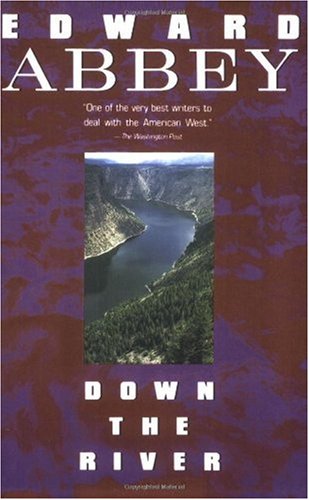
1. Down The River
$5.98
2. Fire on the Mountain
$9.49
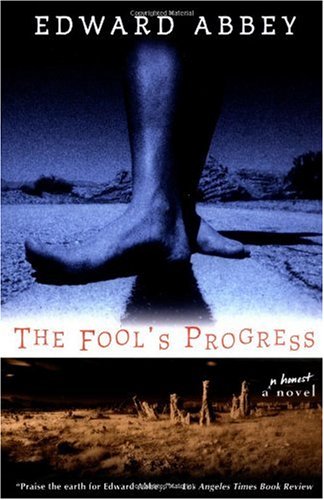
3. The Fool's Progress: An Honest
$8.60
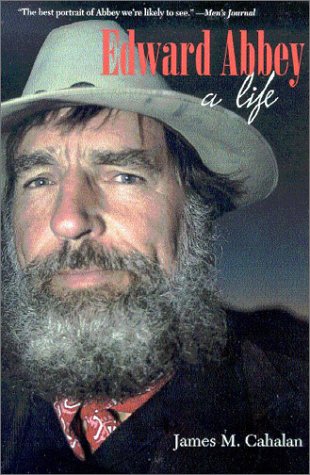
4. Edward Abbey: A Life
$6.98
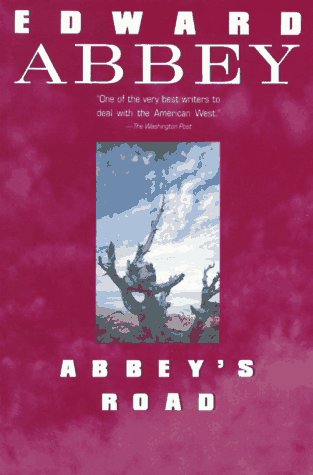
5. Abbey's Road
 
$9.25
6. Beyond the Wall: Essays from the
$4.99
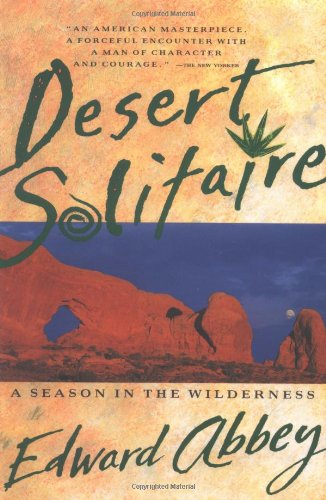
7. Desert Solitaire
$6.68
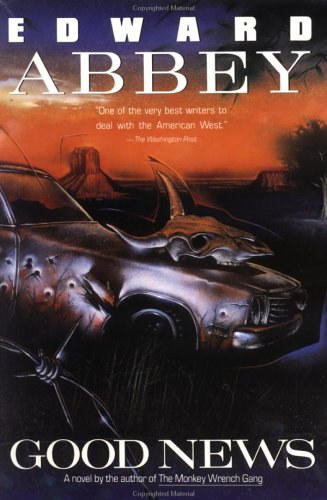
8. Good News: A Novel (Plume)
$10.17
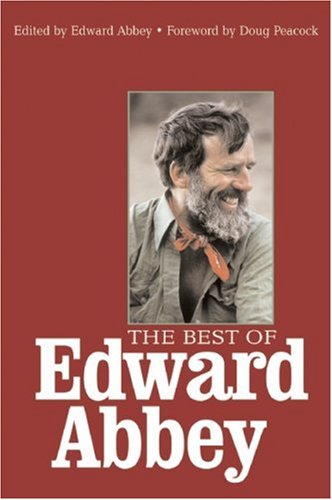
9. The Best of Edward Abbey
$5.95
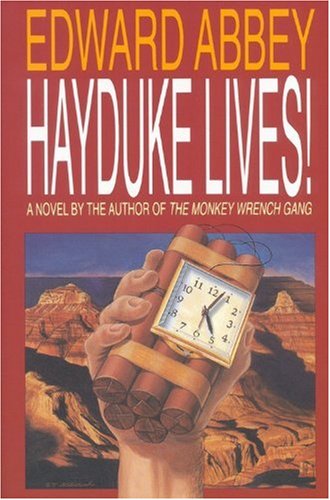
10. Hayduke Lives!: A Novel
$3.95
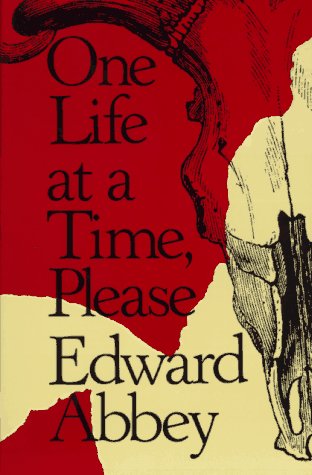
11. One Life at a Time, Please
$9.00
12. Postcards from Ed: Dispatches
$19.95
13. The Hidden Canyon: A River Journey
$8.55
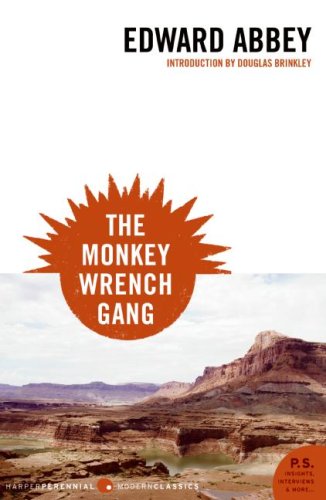
14. The Monkey Wrench Gang (P.S.)
 
$4.33
15. The Serpents of Paradise: A Reader
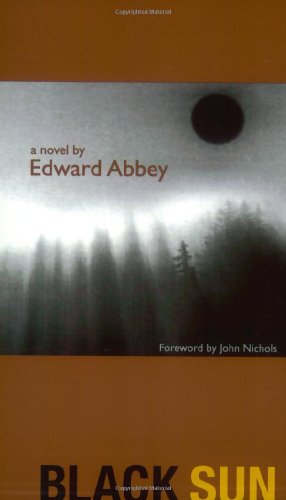
16. Black Sun
 
17. Desert Solitaire
$5.95
18. Brave Cowboy
$8.55
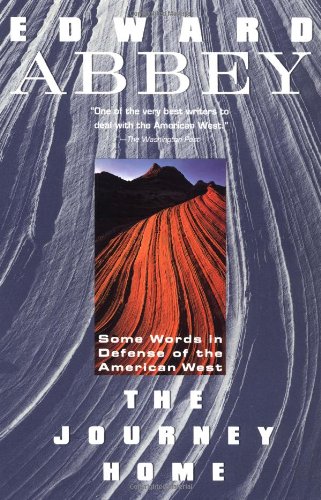
19. The Journey Home (Plume)
$12.57
20. Confessions of a Barbarian: Selections

1. Down The River
by Edward Abbey
 Hardcover: 242 Pages (2002-01)
list price: US$29.75 -- used & new: US$29.65
(price subject to change: see help)
Asin: 0844672025
Average Customer Review: 4.5 out of 5 stars
Canada | United Kingdom | Germany | France | Japan
Editorial Review

Book Description
"Be of good cheer," the war-horse Edward Abbey advises, "the military-industrial state will soon collapse."This sparkling book, which takes us up and down rivers and across mountains and deserts, is the perfect antidote to despair.

Along the way, Abbey makes time for Thoreau while he takes a hard look at the MX missile system, slated for the American West. "For 23 years now I've been floating rivers.Always downstream, the easy and natural way. The way Huck Finn and Jim did it, LaSalle and Marquette, the mountain men, and Major Powell."

"Abbey's the original fly in the ointment. Give him money and prizes. Don't let anything happen to him." --Thomas McGuane ... Read more

Customer Reviews (7)

4-0 out of 5 stars Several good essays about the West
I don't believe this is Edward Abbey's best work, but it is a nice collection of several very well-written essays.
The book includes good examinations of the issue of silt in Lake Powell and a decent look at the Colorado River hermit Bert Loper.
It's a great book to read on river, or in the desert, and Abbey's salty character comes through in every page--though the book does drag a little toward its end.

5-0 out of 5 stars An addventurs book that you will love!
Many things I liked about this book was that it had alot of addventure and excitment. The characters always have exciting attitude's. Jessice is the main character she is 15 and only has a dad. She gets along with all group members once she gets to meet them.
One of the things I didn't like about this book was that they really didn't tell about their home lives much. like why pug was sent to this camp.
P.S. For the most part I thought that this book was extoridanory.

5-0 out of 5 stars drifting along Ed's river
As a longtime Abbey fan, down the river is as powerful and exciting as any.The stories capture the imagination, and are filled with flowing, humorous, forceful prose. a gem to read!

5-0 out of 5 stars A rebel with a cause
After "Desert Solitaire"this is my favorite Edward Abbey book. The essay on rafting the Glen Canyon before the dam was built is sublime and makes you ponder the true value of wilderness to the soul-- a value which can't be tabulated because it is immeasurable.

Abbey's a rebel, defending the West from the industrialists and profiteers. He makes no apologies for being passionate about his cause, and why should he. His passion may not be "fashionable," but Abbey is a true American original, and the kind of person we need more of. His writing is edgy, beautiful, makes you want to grab a raft and head down the Colorado. Nature is where he finds himself-- as harsh and uncompromising as it is, it's real.

I also love Abbey's sense of humor. I wonder if he ever met Hunter Thompson-- that would have been a great conversation. One of the funniest essays I've ever read is in this book: "The Legend of Josiah Gregg." Watching Abbey debunk a book about the life of this supposed great frontiersman had me on the floor. Probably the funniest part was Abbey's interpretation of his memoirs: the way thunderstorms appeared over his head bellowing at him in a purposeful way, the way his campfire got out of control and he fled from it across the plains. His assessment of the Great Plains as a "barren wasteland devoid of life." In Abbey's eyes, Gregg is the Inspector Clouseau of the frontier.

All in all, a great read. Spending time with Abbey is a pleasure.

4-0 out of 5 stars Highly recommended!
I got this book while hiking around Olympic Peninsula in the rainforest. Reading it under a tree beside the river I realized we're lucky in N. America to still have some wilderness! The original inhabitants of thiscontinent took care and even though we have done so much damage there isstill lots left and we should not lose any more to corporations, consumerculture, anthropocentrism. Do you dare to confront the reality of yourweekend warrior office job chain store shopper existence? ... Read more


2. Fire on the Mountain
by Edward Abbey
Paperback: 192 Pages (1992-04-01)
list price: US$12.95 -- used & new: US$5.98
(price subject to change: see help)
Asin: 0380714604
Average Customer Review: 4.5 out of 5 stars
Canada | United Kingdom | Germany | France | Japan
Editorial Review

Book Description

Fire on the Mountain

Grandfather John Vogelin's land is his life -- a barren stretch of New Mexican wilderness, mercifully bypassed by civilization. Then the government moves in. And suddenly the elderly, mule-stubborn rancher is confronting the combined land-grabbing greed of the County Sheriff, the Department of the Interior, the Atomic Energy Commission and the U.S. Air Force. But a tough old man is like a mountain lion: if you back hom into a conner, he'll come out fighting.

... Read more

Customer Reviews (11)

4-0 out of 5 stars The desert between covers
This was the very first book of Edward Abbey's I ever read, back when I was a seventeen year old college freshman.
And it wasn't the last.
It was my last year of college though, and I have to blame, at least in part, this book's author.Edward Abbey loved the desert.He loved the West, with a jealous, protective, sincere love, a love that spills from every page of his books, and that seeps into his readers.Read one Abbey novel, and the odds are, you'll read more.Read more, and the odds are, you'll start to listen to what he has to say about the desert, and about the outdoors.Somehow I went from going to classes, to reading books like this, to living out of a canoe in southern Utah.It's that kind of a read.Abbey's writing is just good enough to motivate a person to get out into he desert himself--but it can't replace the experience of the desrt itself (like Cormac McCarthy sometimes almost does)--and maybe he was never going for that anyway.
In this book, Abbey's terse, playful, anarchistic style and philosophy is still emerging, not yet crystalized into the clearer sentiments of "Desert Solitaire," but--on the positive side--not yet twisted into the cranky diatribes and caricatures of "Hayduke Lives."
The book is the story of a boy visiting his grandfather in New Mexico, at the same time that his grandfather is about to be evicted from his property so that the government can turn the family ranch into additional acreage for White Sands Missile Range.The characters are convincing, the natural descriptions are minimal yet evocative, and the gentle desert tone--with the exception of a few rough spots where Abbey's strident rants overwhelm the voice of the story's supposedly innocent, supposedly naive, child narrator--is spot on.
This is a book I would be proud to have written.It's a chance to see Edward Abbey's voice and style in its earliest stages, and a lovely portrayal of west Texas and southern New Mexico.At times, it's also very funny.
Read this.Take it with you camping.If you like the desert and distrust the government, you'll probably like this book.If you only read one Abbey novel in your life, read...something else.But if you love Abbey's writing, or would like to, then really, pick up this one.Give it a shot.

5-0 out of 5 stars New Mexico, Edward Abbey style
Being one of the 1.5 million people who live in New Mexico, (yes it is a state in the United States)I really enjoyed this book. My brother actually went through something like what had happened in this story, and the reference to certain NM landmarks made me feel at home as soon as read the first few pages. I have actually camped in several of the places mentioned in this book! VERY COOL! Typical Ed Abbey style, he describes breathtaking sunsets, desert stillness, and other New Mexico feelings with ease and passion.It is a quick reader and is hard to put down.GREAT BOOK!

4-0 out of 5 stars The Truth as we're told
The book and the movie are as close to the true story as Mr. Abbey and the public could ever get. I am the main character's great grandson, in real life. If a reader wants to get a feel for eminent domain and how your life's work can be taken away, this novel will put things into perspective. A truly fine piece for Mr. Abbey!

5-0 out of 5 stars A story of strength and simplicity
Fire on the Mountain is an inspiring story about a rancher in New Mexico who is trying to prevent the US gov't from laying claim to his land. Thru the voice of a 12yo grandson who is visiting for the summer, the novel comes vividly alive with desert descriptions of cottonwoods, riverbeds, and sunsets. The beautiful and emerging give-and-take relationship betw grandfather and grandson lends force to an already strong tale.
Abbey is known as the father of the environmental movement, a label he didn't much like. He preferred to call himself 'an agrarian anarchist.' If you like his other books and his exquisite writing style, don't miss this one.

5-0 out of 5 stars The truth of New Mexico
Fire on the Mountain very vividly describes the actual landscapes and realities of New Mexico.The characters enviroment plays an effective role regulating how the family responds to their hardships and obstacles.The book is very well written and based off a true story that is heroic in its own way.I highly recommend this book to a person who likes a book based on reality yet offers adventure while describing such desolate areas and making them come to life. ... Read more


3. The Fool's Progress: An Honest Novel
by Edward Abbey
Paperback: 528 Pages (1998-08-15)
list price: US$17.00 -- used & new: US$9.49
(price subject to change: see help)
Asin: 0805057919
Average Customer Review: 4.5 out of 5 stars
Canada | United Kingdom | Germany | France | Japan
Editorial Review

Amazon.com
Just before he died in 1989, Ed Abbey published what he called his "honest novel," one loosely based on his own life. Early in its opening pages, Abbey's alter ego, Lightcap, takes off from his nearly empty home (its contents just removed by a disgruntled spouse) in Tucson, Arizona--but not before shooting his refrigerator, a hated symbol of civilization. Lightcap makes a winding journey by car to his boyhood home in the Appalachian Mountains of Pennsylvania, calling on old friends along the road, visiting Indian reservations and out-of-the-way bars, and reminiscing about the triumphs and follies of his life. Readers would be mistaken to view this as pure autobiography, but The Fool's Progress nonetheless is an illuminating look into Abbey's time and his way of thinking, especially on matters of ecology and other social issues. It's also a picaresque tale humorously and artfully told, a book that Abbey himself rightly regarded as one of his best works of fiction. --Gregory McNamee Book Description
When his third wife abandons him in Tucson, boozing, misanthropic anarchist Henry Holyoak Lightcap shoots his refrigerator and sets off in a battered pick-up truck for his ancestral home in West Virginia. Accompanied only by his dying dog and his memories, the irascible warhorse (a stand-in for the "real" Abbey) begins a bizarre cross-country odyssey--determined to make peace with his past--and to wage one last war against the ravages of "progress." ... Read more

Customer Reviews (85)

4-0 out of 5 stars Letting it all Hang Out
Ifyou're even the least bit prudish or squeamish about startling sex scenes leaping off the page and coming right at you, forget Ed's book. If you're not, dig in - it's a hoot - tempered throughout by sorrow, regret over fancied failure, soft heart pretending to be tough, a personality so complex as to never be destined to be happy with a woman.The reader senses that he wishes it were otherwise but really doesn't know what to do about it without becoming someone he himself can't live with.Ed Abbey represents the true essence of the person known as a "Free Spirit." It was written as he himself was failing in health as I understand it from those who have gotten into his biography - and as a result of this, he probably thought "let it rip - it's my finale - let them think what they will".

It's a vast departure from another well-written book of his, "Desert Solitaire,"which I thoroughly enjoyed in an entirely different way. It starts out with our herowhipping up a batch of bread - something he obviously has done many times before during a crisis, kneading, kneading, working out on the counter a recurring upheaval:yet another wife left him.In fact, in one of the funniest lines, he receives a phone call from a male friend during the bread baking, who asked him how he was.Answering "I'm baking bread", the friend responds "she left you again, didn't she?"

He sets out on his journey across country to forget and possibly to get another grip against his latest personal failure;tries valiantly to leave an old, ill dog behind because he knows he shouldn't take it along, and fails at that too, slamming on his brakes in a cloud of dust, opening the door in resignation and the mental scene of the old dog struggling to get into the front seat is heart rendering.It goes from one outrageous adventure to another, rendering you helpless in laughter or astonished and breathless at some hidden aspect of human nature he doesn't bother to conceal through discreet wording;sometimes you can't believe he can keep up the pace of the idea stream, yet he does throughout.

I enjoyed it and found it one of the most unusual books I ever read but in recommending it to others, refer to "sentence # 1" of my review.

5-0 out of 5 stars Honestly good!
To be honest, I was concerned while reading the opening scenes and almost put the book down:Henry Lightcap treats his current wife miserably.when she decides to leave him for a computer engineer, he is so distraught that he takes out a .22 and shoots the refrigerator (the culmination, as it turns out, of his hatred for technology and "modern civilization".Oh no, I thought, a self-absorbed misogynist tells his sufferings.For the most part, I was wrong (there is plenty of suffering).This was one of the best books I've read in a good long while.

The main character Henry, I learned later, is a close representation of the reclusive author.Abbey apparently reveals much of his own life through this "honest novel", but to what extent...I wish I knew.Henry grew up in the West Virginia backwoods, submerged in nature, and later rediscovered the even more intense wilderness of the West.

The flashback chapters to the past are interspersed with the Henry here-and-now, older, in his sixties, and harboring a grim secret.Like him, his truck is on it's last odometer rotations.The dog, Solstice, is also old and sickly, and is one of the few beings Henry is tender toward, and makes for some of the more touching scenes.

What initially perplexed and repelled me at first was Henry's treatment of women.Throughout his life he only falls for the bombshells who, ultimately, have nothing in common with him and his love of the wilderness.When he drags is first wife from NYC to barren New Mexico, things do not bode well.After so much trouble with women, evidence of Henry's first real love comes as a shock.Henry is more complex than he seemed, and I began to empathize with him.

This book seems outwardly like it would be a simple semi-memoir, but Abbey's descriptions, especially of nature and wild places, elevate it to something more.The tone is bleak, of a man looking back on his life and contemplating his regrets, but is not without humor (a certain Grand Canyon scene, for example, or his arrest in Denver).When I read Abbey, a (para)phrase from his Desert Solitare comes to mind: get out of the car and walk, better yet crawl through the dirt and rocks and cactus.You can't get the full experience any way else--this philosophy sums up A Fools Progess well.Highly recommended.

5-0 out of 5 stars Funniest book written in English
If you are not laughing out loud in the first five pages of this book you can punch my brother in the face.He doesn't have a sense of humor either, so it might not go well.

Huck Finn grew up to three failed marriages, malignant cancer, and a sickly dog. This story redefines the quest genre, modern anarchism, and dark humor.There is a thesis out there for someone to compare this to Tolstoy's The Death of Ivan Ilych.

I recommend reading all of Abbey's nonfiction as well.Include his letters.Enjoy, and remember "Growth for the sake of growth is the ideology of a cancer cell."

5-0 out of 5 stars How Fortunate to be Foolish
Not every book will fully resonate the first time you read it. Some books require experience on the part of the reader, experience with life and its endless variety of pain, suffering, joy, beauty, etc. Edward Abbey's, "The Fool's Progress" is such a book. If you've never treated a person badly, lost an opportunity or felt the disquiet of not knowing where you "fit" in the world, the book might not resonate as much with you as it did with me.

Still, don't pass up the opportunity to experience a well-crafted story and the kind of tale where the imagery stays with you long after the final page. I rode along with Abbey's alter-ego Henry Lightcap, sitting on the front seat next to his steadfast, last companion and ate up the miles from Tucson to that place of green hills, back East. Along the way, I too recalled my first love, the life I might have had and the chances I took that didn't quite turn out the way I'd planned. Sometimes it was a painful journey, sometimes wistful, but in the end after all was said and done, like Henry, I too felt refreshed, newly awakened and excited to learn what the future holds.

This book offers glimpses into the life of a person who even at the very end doesn't feel the need to say "I wish I'd done it differently." We know he'd have done some things differently. That's not the point. The point Abbey makes through Henry is that it's critical to recognize the value of the things we do when we do them. Reach out to the person you care about, take the chance or opportunity when it's presented, look for the beauty in the things that make you feel at peace with yourself. Abbey knows, it's not always an easy road but the journey is what makes the destination.

In sum, Abbey has crafted the kind of high quality story that in the end reminds the reader that we can only be ourselves, warts and all. Let's be honest, the warts are often the most interesting parts.

5-0 out of 5 stars One of the best road trip books ever written
This book is awesome.It is howlingly funny and you go crazy alternating between disgust and awe at Mr. Lightcap.After you read it you may want to drive a pickup truck across the country and throw beer cans out the window too!

Buy this book today.You will not regret it. ... Read more


4. Edward Abbey: A Life
by James M. Cahalan
Paperback: 357 Pages (2003-03)
list price: US$19.95 -- used & new: US$8.60
(price subject to change: see help)
Asin: 0816522677
Average Customer Review: 4.5 out of 5 stars
Canada | United Kingdom | Germany | France | Japan
Editorial Review

Book Description
He was a hero to environmentalists and the patron saint of monkeywrenchers, a man in love with desert solitude.A supposed misogynist who counted women among his closest friends.A writer who attracted a cult following but was often uncomfortable with it.James Cahalan has written a definitive biography of a contemporary literary icon whose life was a web of contradictions.Edward Abbey: A Life sets the record straight on "Cactus Ed," giving readers a fuller, more human Abbey than most have ever known. For Abbey fans who assume that his "honest novel," The Fool's Progress, was factual or that his public statements were entirely off the cuff, Cahalan's evenhanded shows that Abbey was neither simply a countercultural cowboy hero nor an unprincipled troublemaker, but instead a complex and multifaceted individual whose legacy has only begun to be appreciated. ... Read more

Customer Reviews (14)

4-0 out of 5 stars Meet the real Cactus Ed: Alcoholic Ed
It's true that Cahalan never uses the term, and Abbey himself certainly never fesses up to it, but it's clear that's the case, as a careful reading of this great biography shows, especially if you've read the bulk of Abbey's own work as well, as I have.

Clues? The womanizing and multiple marriages, whether or not Abbey was a misogynist. The immature and obstinate behavior (Example A: Abbey rolling a tire off the South Rim of the Grand Canyon). These alone, if seen in the context of someone's drinking, almost stamp them on the forehead as a stereotypical Type A male alcoholic. If they don't, the whopper storytelling part of his personality does.

But, of course, that's not all.

Although it turned out to be an incorrect diagnosis, normally, there's only one reason you get a diagnosis of pancreatitis without some other medical condition being indicated along with it. And, of course, Abbey's ultimately fatal esophogal varisces are traceable directly to alcohol.

Now, that said, in addition to never owning up to being an alcoholic, Abbey never quit, contrary to myth that even Cahalan doesn't appear to catch.

That's clear from Abbey's final years journals, from which Douglas Peacock, Abbey's model for Hayduke, quotes in "Walking it Off."

In early 1988, Abbey describes the effects of withrdrawal from the codeine he had been using to try to suppress chronic coughing that aggravated the varisces. He explicitly says beer does not ease his codeine withdrawal symptoms.

To the degree that Cahalan, without labeling or analyzing, does catch Abbey's alcoholic behavior, he described it well. Unfortunately, whether because of lack of experience in dealing with the breed or whatever, he unfortunately doesn't analyze Abbey.

The alcoholism is of a piece with other parts of Abbey behind his legendary self-spinning, a glimpse behind that sometimes Abbey gives us himself.

Abbey adamantly insisted he was NOT an environmentalist. Well, the Grand Canyon incident, among MANY others, prove that point all too well. Again, Cahalan sees the pieces, but doesn't do the dot-connecting as much as one might like.

What Abbey really was, as shown by things such as his fondness for 20h century classical music mentioned in "Desert Solitaire," was an existentialist philosopher with a heavy dollop of libertarianism on top. If he had fallen in love with another way of expressing and getting in touch with both existential and libertarian selves, he wouldn't have been out in Arches National Monument.

And yes, we would have been poorer for that, but not as much poorer as Abbey idolators would have us believe.

Abbey deprived the environmental world, the world at large, and many people around, of what could have been much more that he had to offer. But, that's because he was ultimately depriving his own self of -- himself.

But, again, Cahalan, while laying out all the pieces, doesn't quite put the jigsaw together.

That's the prime reason this otherwise excellent bio falls a star short of the top.

5-0 out of 5 stars Leave it to Abbey
Reading about Abbey provided me with the realization that some people in this world really do have a "life" - without many constraints, guilt, or heavy-duty obligations that are often tagged on to an individual by nature of his/her duty to satisfy others.Cahalan presents Abbey as a human being in search ofhis soul while dispelling the myths of his misogyny.Made more interesting by the fact that Cahalan was my professor at Indiana University of Pennsylvania in 2003, I easily became immersed into the journeys of Abbey, who like myself, see no boundaries for where I travel or where I go in the future. A great piece of interesting literature!! From the sands of Abbey's Southwest to the sands of Kuwait, I have fallen victim!This inspires me to write my own account of the life of an American woman who finds her passion in the deserts of Kuwait.

4-0 out of 5 stars A very interesting book about a great writer
Having never heard of Edward Abbey or any book he ever wrote (I picked up the book because it was the first on a shelf at the library) I was absorbed by this guy's life and tribulations. I even made it a point to start to read A Fool's Progress. I'm glad I took the time to read the book because it makes you realize that the guy was human, introverted and not the eco-rebel everyone thought he was. He was a writer. I love his mantra:
1) Write Right!
2) Write Good!
3) Write On!

Though he had his troubles with family life I thought his struggles with life, writing and being successful made for a good story.

5-0 out of 5 stars Terrific book on Abbey's life and writing!
I had never even heard of Edward Abbey until Dr. James Cahalan's book was published.I live approximately 35 miles from Indiana and Home, Pennsylvania, and happened to catch an interview of Dr. Cahalan on my NBC affiliate in Johnstown.

This sparked an interest in Abbey and I immediately bought "The Fool's Progress."I struggled to get through 250 of the 513 pages of his "Fat Masterpiece."

I received Dr. Cahalan's "Edward Abbey: a life" as a gift and found it extremely interesting.The author provides very good insights into Abbey's life, his viewpoints and his writing style.

Reading this book has breathed new life into my interest in Abbey.Having read Dr. Cahalan's book has given me what I needed to now finish "The Fool's Progress" with a better understanding of the context in which the book was written.Also, as soon as I finished "Edward Abbey: a life" I bought "Desert Solitaire."

"Edward Abbey: a life" has given this casual (or maybe wannabe) Abbey fan the inspiration and understanding to become a true Abbey fan.In my opinion, this book is the perfect starting point for those fans wanting to explore the many facets of Edward Abbey's life, relationships and writing.

5-0 out of 5 stars A biography that reads like a novel
Edward Abbey's life was so interesting that most any decently-written biography of him should be entertaining.Cahalan's biography is certainly that, but he also delves into Abbey's psyche through the presentation of details that are ignored in other biographies of Abbey.Thus, the reader is provided an image of Abbey that has a lot of "texture," and, I believe, is closer to a faithful picture of the real man, faults and virtues combined.Cahalan does a good job of remaining impartial, and tries to present the events just as they are, so that the reader is pretty much left free to make his/her own judgements about Abbey The Man.This doesn't mean that Cahalan's personal opinions about Abbey don't come out in the book (he is sympathetic to Abbey), but he lets the reader know when he is expressing an opinion, and when he is stating what is taken as fact.

Biographies of famous authors, especially revolutionary ones like Abbey, is a genre that I have started to really enjoy.It seems that, for me at least, reading about the events, and the author's reactions to them, that helped to form such an extraordinary individual is often more entertaining than the author's own writings!That's not to say that I haven't enjoyed most of Abbey's books (not all, though).The same goes for Jack Kerouac.Cahalan's biography and Ann Charter's biography of Kerouac are two fine examples of biographies that read like novels, but are in some ways better, because they report actual events! ... Read more


5. Abbey's Road
by Edward Abbey
Paperback: 224 Pages (1991-01-30)
list price: US$16.00 -- used & new: US$6.98
(price subject to change: see help)
Asin: 0452265649
Average Customer Review: 3.5 out of 5 stars
Canada | United Kingdom | Germany | France | Japan
Editorial Review

Amazon.com
Curmudgeon, environmental brawler, and literary desert rat, Edward Abbey nursed dreams of one day walking out into the wild "to become one with the landscape. To just... disappear." He made valiant efforts to make good on that dream of escape in sometimes harebrained, often dangerous expeditions to difficult places, adventures some of which are recounted in this lively collection of essays.

The first part of Abbey's Road is given to a walkabout in the outback of Australia, whose scattered human settlements remind Abbey of towns in the American West, "although not so blatantly ugly." Having ignored good advice not to stray too far afield in that waterless place and lived to tell the tale, Abbey turns later in the book to other desert landscapes (islands in the Gulf of California, remote corners of the Grand Canyon, and the like) before delivering a series of trademark yawps against the forces that would just as soon bulldoze such places as protect them.Along the way Abbey recalls his work as a seasonal park ranger (which yielded his incomparable memoir, Desert Solitaire) and fire lookout, offers a few tongue-in-cheek words in defense of rednecks, and muses on the effects of hallucinogenic drugs and the virtues of his "slapstick, slapdash, sex-crazed manner"--all good and generally good-natured pieces, even if a few of them are now showing signs of age.

If you're new to Abbey's work, Abbey's Road is not the best place to start; have a look at The Best of Edward Abbey or The Serpents of Paradise, two sturdy, career-spanning collections. But if you've read his better-known books and want to have a closer look at the man behind them, Abbey's Road is the one to follow. --Gregory McNamee Book Description
Like DESERT SOLITAIRE and THE JOURNEY HOME, ABBEY'S ROAD is a personal odyssey, an exploration of places Abbey loved--the Rio Grande, Canyonlands National Park and Lake Powell.

But it is also more, a journey to new locations--Scotland, the interior of Australia, the Sierra Madre and Isla de la Sombra in Mexico. It all shows Abbey's concern for the wild places and sparkles with his impolite challenge to establishment thinking.

"Edward Abbey is one of our foremost Western essayists and novelists, a true maverick, a spirit not imitable, a joyous literary outlaw." (The Denver Post) ... Read more

Customer Reviews (6)

5-0 out of 5 stars If you enjoy Edward Abbey, this is as good as it gets!
All of the material in this cassette is available elsewhere, but nowhere else can you hear the intonation, humor, and on occasions rants of Cactus Ed in his own voice.I have played this for friends who have never heard of Abbey and universally comment that they have never heard anything quite like it.Whether he's drinking with pigs in the desert, musing on planting a tree under the nuclear umbrella, or playing cat and hiker with a puma, there is wisdom and absurdity in every spoken sentence.If they ever get another copy and you beat me to it - mine has worn out - you have won a real prize.

3-0 out of 5 stars Hit or Miss
This is an entertaining firsthand account of Abbey's adventures as he travels through some of the most remote and beautiful locales in the world. The first chapter, in which he travels through Australia, is by far the most entertaining, and Abbey's wit really shines here. He also makes strong arguments throughout the book about why preserving beautiful natural areas is so important. Some of the subsequent stories come off as so much fluff, in which Abbey is trying to find events of significance and/or peril in the face of a mundane trip. The events seem to me to be interesting enough without having to be dolled up.

4-0 out of 5 stars Vintage Abbey
This collection of previously published magazine articles is vintage Abbey, alternatively moving and funny, sacred and profane, flip and dead serious (well almost) and at all times entertaining. Divided into three categories - Travel, Polemics and Sermons, and Personal History - the subjects range from the Great Barrier Reef to technology to women to Winnebagos to hallucinogenic drugs - with many stops in between. The introduction, wherein Abbey comments on nature writing - and various nature writers -is itself worth the price of admission.

3-0 out of 5 stars Abbey is great, but this collection is not his best
Do not let this book be your introduction to Edward Abbey.There is plenty of brilliance here, but an established fan will be able to appreciate that brilliance best.

2-0 out of 5 stars A disappointing first introduction to Ed Abbey
This was my first introduction to the well known author, Edward Abbey. My impression was that Abbey wrote with a strong environmental voice and was an advocate of wildlands. Instead, I read about a man who kicks animals that don't get out of his way, who drags trashed cars through the Australian outback, who tosses his empty wine bottles into remote canyons,and who expresses a superior attitude to just about everybody. His writing style is highly variable, ranging from sophomoric (usually) to pure Americana (very occasionally). When he hits the latter, he can rival Mark Twain, which is probably why he enjoys the reputation he does. However, this reputation obviously wasn't made with the essays contained in this anthology. Folks looking for an introduction to Abbey are advised to try another book. ... Read more


6. Beyond the Wall: Essays from the Outside
by Edward Abbey
 Paperback: 203 Pages (1988-12)
list price: US$14.95 -- used & new: US$9.25
(price subject to change: see help)
Asin: 0030693012
Average Customer Review: 4.5 out of 5 stars
Canada | United Kingdom | Germany | France | Japan
Editorial Review

Book Description
In this wise and lyrical book about landscapes of the desert and the mind, Edward Abbey guides us beyond the wall of the city and asphalt belting of superhighways to special pockets of wilderness that stretch from the interior of Alaska to the dry lands of Mexico. ... Read more

Customer Reviews (5)

3-0 out of 5 stars Better places to start with Abbey
In some ways this book reflected a more mature Edward Abbey than was present in Desert Solitaire: A Season in the Wilderness but in many other ways though he just came across as older (not wiser.)

Since this book is a collection of individual pieces and not a unified whole it is to be expected that they will range from one another in both topic and quality - with that in mind I would warn any potential reader that Abbey's best work of the collection is not at the front so don't be overly discouraged by the overly long stream of consciousness `A Walk in the Desert Hills' or the overly self-involved and nostalgic `How It Was.'

Generally speaking, Abbey is at his worst in this book when his eyes are turned inward and conversely he is at his best when his eyes are turned outward over the desert landscapes which he loved in essays like `Desert Images', `The Damnation of a Canyon' and `On the High Edge of Texas.'

If you haven't yet read any books by Abbey before I would highly recommend that you start with Desert Solitaire instead of this one.While Beyond the Wall isn't terrible it does lack some of the charm of Desert Solitaire, the continuity and narrative structure makes it easier for the reader to identify with the work, with Abbey himself and with the desert which he so loved.

5-0 out of 5 stars Best of Abbey
The first two pieces in this collection provide the best introduction to Abbey I can think of. "A Walk in the Desert Hills" describes a 115-mile walk across the Sonoran Desert, in search of adventure, wisdom, and water."How It Was" describes his first incursions into the Four Corners and Glen Canyon area, before the pavement came."How It Was" will make you understand what got Abbey intoxicated with the desert."A Walk ..." tells why it was still more magical than bourbon even thirty years later.For these two pieces alone this is my favorite of Abbey's books.The remainder of the pieces in the book, which describe forays around the Colorado River region, the Sea of Cortez, and a rafting trip in northern Alaska, are pure, delightful gravy.

5-0 out of 5 stars Beautiful Simplicity
Although Desert Solitaire is Abbey's most popular work of non-fiction and is an undeniable American masterpiece, Beyond the Wall in many ways surpasses it in its praise of the beauty and granduer of nature and as a meditation on humanity's place in it. As a work primarily concerned with Abbey's experiences on several hiking/camping trips alone in the Desert, from Southern Colorado, and West Texas, through theNew Mexico and Arizona wilds to the Sea of Cortez, the reader is allowed an glimpse into his psyche that is unsurpassed in these quiet revelations, documented in many a lonely, but not lonesome walk. In Beyond the Wall, Abbey is closest to his comparison with Thoreau, in the way that the simple description of Nature itself is the focus of this work. In many ways this book is both a eulogy and a celebration of Glen Canyon and raw unspoiled Nature.
Whether narrating "a Walk Through Desert Hills" or a "float trip down the doomed Glen Canyon, Abbey's awareness of the subtle force of nature is everpresent, and is expressed in the metaphoric image of Freedom and Wilderness versus industrial insanity and slavery. In many ways, what is beyond the wall is the possibility of our unmeditated communion with nature. And although this wall seems forminable, it can be overcome simply by venturing off the beaten path into a wilderness unknown to many. His solution lies in the simple concept of reestablishing an intimate relationship with Nature, which is deprived of so many today. Thus, in becoming acquainted with our environments and surroundings we will be much more involved in saving what is there. The case of Glen Canyon is a sad illustration of this, for despite its stunning beauty and granduer, which Abbey claimed surpassed even that of the Grand Canyon, it was destroyed simply because not enough people had experienced it and too few cared enough to save it.
In reading the essays in Beyond the wall, Ed introduces us to one way that we can all get beyond the walls that alienate us from nature and ultimately ourselves. And since this book can only guide us so far, it is we that must take the next step and decide on what side of the wall we want to live our lives.

4-0 out of 5 stars Why walk in a desert? Why get off the sofa at all?
This is a fine collect of 10 early hikes and float trips Abbey made mostly in the high deserts of the American Southwest.The last takes place in Alaska.In "A Walk in the Desert Hills" Abbey tells of a solo hike across more than 100 miles with only his backpack and the hope that water will be found in natural tanks.What, the reader may ask, compels a man to undertake such a trek with only a belief that salvation lies ahead in a bowl shaped stone (tanks) filled with rain water, and then further on, perhaps another, and hopefully another still?Throughout the book he answers this question by showing us the hidden beauty of slot canyons, how the Colorado looked beneath the flooded Glen Canyon before the dam and shares with us his discovery of petroglyphs and pictographs whose meanings still remains unknown.This is Abbey when his desert world was still new, before the roads and bridges and dams he hated changed it all.This is the world beyond the wall, his world."Beyond the wall of the unreal city, beyond the security fences topped with barbed wire and razor wire, beyond the asphalt belting of superhighways, beyond the cemented banksides of our temporarily stopped and mutilated rivers, beyond the rage of lies that poison the air, there is another world waiting for you.It is the old true world of the deserts, the mountains, the forests, the islands, the shores, the open plains, Go there ...into the ancient blood-thrilling primeval freedom of those vast and democratic vistas.You will never understand the secret essence of the word freedom until you do."

Abbey was as about as free as a man can get.

5-0 out of 5 stars abbey's finest hike
ed abbey's tromp through the american wilderness in search of a definitive ideology and a few tankfuls of water allow the reader to believe in theunderdog's points of view......whether you agree with them or not.Awesomebook!!!! ... Read more


7. Desert Solitaire
by Edward Abbey
Paperback: 288 Pages (1990-01-15)
list price: US$14.00 -- used & new: US$4.99
(price subject to change: see help)
Asin: 0671695886
Average Customer Review: 4.5 out of 5 stars
Canada | United Kingdom | Germany | France | Japan
Editorial Review

Amazon.com
Edward Abbey's Desert Solitaire, the noted author's most enduringnonfiction work, is an account of Abbey's seasons as a ranger at Arches National Parkoutside Moab, Utah. Abbey reflects on the nature of the Colorado Plateau desert, on thecondition of our remaining wilderness, and on the future of a civilization that cannotreconcile itself to living in the natural world. He also recounts adventures with scorpionsand snakes, obstinate tourists and entrenched bureaucrats, and, most powerful of all, withhis own mortality. Abbey's account of getting stranded in a rock pool down a side branchof the Grand Canyon is at once hilarious and terrifying.Book Description
When Desert Solitaire was first published in 1968, it became the focus of a nationwide cult. Rude and sensitive. Thought-provoking and mystical. Angry and loving. Both Abbey and this book are all of these and more. Here, the legendary author of The Monkey Wrench Gang, Abbey's Road and many other critically acclaimed books vividly captures the essence of his life during three seasons as a park ranger in southeastern Utah. This is a rare view of a quest to experience nature in its purest form -- the silence, the struggle, the overwhelming beauty. But this is also the gripping, anguished cry of a man of character who challenges the growing exploitation of the wilderness by oil and mining interests, as well as by the tourist industry.

Abbey's observations and challenges remain as relevant now as the day he wrote them. Today, Desert Solitaire asks if any of our incalculable natural treasures can be saved before the bulldozers strike again.

... Read more

Customer Reviews (115)

5-0 out of 5 stars Rough, tough, smart and a damn excellent read!
Edward Abbey's book rings true and honest in ways that most books today can not match. He drives the wooden stake into the plastic heart of modern day America and yet you feel this author's big soul and the desert he loves with the passion some have only for religion or lust. It's my favorite book I have read the past year except for one other: Walking the Trail, One Man's Journey Along the Cherokee Trail of Tears, by Jerry Ellis. It's about his 900 mile walk along the Cherokee Trail of Tears and it's a rare mixture of nature writing, spiritual adventure and social commentary that grabs your heart and soul and pulls you by the hair across 8 states as he sleeps in woods and fields along the way and inspires almost everyone he meets to tell him their deepest secrets. Both books are MUST reads for people who love the earth and live itself as if they were going out of style. They are classics and will stand the test of Time.

5-0 out of 5 stars a meditation on uneasy beauty...
This book is a moment in time.A meditation on what was in the face of what was to come.It despaired a bit in the imagined future of the Arches, but, ultimately, reveled in the moment.

But the moment is the only real thing.The future is what it might be, and the past is something only dreamed upon.And this moment in time is one worth spending with Ranger Abbey.This is a moment spent in a little tin trailer with the most perceptive man available.This is a moment spent that you know is real.

There is a poetry of solitude that few can capture.A longing for the universal, but a need to stand alone.A bit of a dichotomy, but one that you might be able to wrap your head around...

Suffice it to say that the howl of pain and ultimate aloneness in a bowl of water where you might possibly die alone is a powerful moment.An embarassing excursion that puts your life on the line.By uncareful accident.

But you really haven't lived your life until that has happened to you, now, has it?Welcome to Abbey's road.Read this and find your own way...

5-0 out of 5 stars Best book on nature and conservation since Walden
In this book Abbey said: "... most of what I write about in this book is already gone or going under fast. This is not a travel guide but an elegy. A memorial. You're holding a tombstone in your hands. A bloody rock." Abbey is not demon-possessed to behave so well as Thoreau, he is more opinionated and his opinions can be pretty pungent and prickly (for example, see "Polemic: Industrial Tourism and The National Parks").

However, being opinionated does not make a good book. Abbey's writing is surprisingly polished. The slick rocks, the canyon lands, the sagebrush and cacti all have a authentic texture in them. You can smell the desert dust in this book. Abbey is not called "Thoreau of the American West" for nothing. I think under Abbey's rough shell, he actually had a sensitive heart; he just enjoyed the natural world more than the human one. It is a good thing that he turned some of his attentions to writing, and we are left with some of the best nature writings since Thoreau.

I actually read this book before I read Walden. In fact for me this is the book that started my interest in reading nature and conservation, after I took a trip to Grand Canyon, Bryce, Zion, Canyonlands and, of course, Arches National Park. I have read a few more of Abbey's books since but none have had the impact of this one. I also read in one of those that in his later years he wasn't very satisfied with Desert Solitaire because he was still too "well-behaved". Yet, for me, this is the book that defines him and it achieves the perfect balance between narratives of nature and discourse of opinions. Now I keep a copy by my bedside and if I ever get strangled on an island, I will carry this book and Walden with me.

5-0 out of 5 stars Desert Solitaire
If you love nature and Canyonland, this is a book for you. Great from start to finish.

4-0 out of 5 stars Great writing from the old curmudgeon
I think this is far and away Abbey's best book.The prose is careful, precise, thoughtful.In my first year teaching, I would read a short section of this book every morning before climbing into the trenches, to remind myself what beautiful prose could be--regardless of the subject matter.(As an animal lover and vegetarian, I still have a hard time with his description of beaning the rabbit.)The book, I think, is definitely a "guy" book--but that's how my taste in reading goes, so I loved it back then, still love it today. ... Read more


8. Good News: A Novel (Plume)
by Edward Abbey
Paperback: 256 Pages (1991-01-30)
list price: US$15.00 -- used & new: US$6.68
(price subject to change: see help)
Asin: 0452265657
Average Customer Review: 4.5 out of 5 stars
Canada | United Kingdom | Germany | France | Japan

Customer Reviews (4)

4-0 out of 5 stars A Nest of Anarchists
Edward Abbey's novels displayed his Sagebrush-style conservationist ideals, and his near-Anarchist sentiments took greatest root here. This is a near-future dystopia tale in which a thinly described economic disaster has forced most people to flee Abbey's beloved desert southwest, leaving just a few hardy naturalist survivors trying to create a non-government lifestyle. Meanwhile the wasted city of Phoenix becomes the base for a big-thinking ex-military man who wants to take control of all of humanity and eliminate dissenters who stand in his way. This novel is overflowing with excellent and thought-provoking political philosophy, especially when it comes to the exact meaning of "freedom" and how that term is actually defined by whoever has power. Unfortunately, this book's politics may be a little outdated, because nowadays I suspect that a western power-hungry demagogue would be the exact ideological opposite of Abbey's villain here (this guy's a socialist). The novel has a few other problems, such as longwinded and tiresome monologues from the characters. Most of the action is rather predictable chase scenes, and the story is capped off by an inconclusive ending, which cries out for a sequel that never appeared. This is a very hard-hitting and thought-provoking novel, but Abbey's basic ideas are better defined elsewhere. [~doomsdayer520~]

5-0 out of 5 stars Forget '1984'
This is not only one of Abbey's best novels but a great novel in its own right.As both a city and a country dweller I can not only relate but confirm much of his notion that cities are not nearly as healthy for a man's soul as the country is.In addition this is a great story about social decay and what it takes to over come the challanges that arise from such a situation.We have grown soft and forgetful of what our forefathers went through to create a country like ours and this book gives a realistic and easy to swallow insight into their frames of mind and their state of heart.This is the wild west and the futurama all mixed together with an iron fisted military group to boot.I still can't believe this was never made into a movie.

5-0 out of 5 stars A rare anarcho-classic!
Abbey's best work will always be his essays, but this novel is one of those "forgotten" dystopian classics that deserves much more attention. Forget Orwell's "1984." It's too European. Forget Levin's "This Perfect Day." It's too fantastic. Abbey has written the best post-apocalypse American novel to date. And his politics, as always, ring true. Up the rebels! An anarcho-classic

4-0 out of 5 stars Too bad I like the City
What is amazing about Abbey is how much I buy into his worldview of nasty cities sucking the life out of people and the few free men going out into the country and living off the land. Abbey writes modern Westerns and this one takes place after the infrastructure of the world collapses. An amazingly fun read, I find myself at odds with...I love living in the city, I love traffic, pollution, car horns blaring and noisy upstairs neighbors. Yet I also for a brief time can completely get into Abbey's point of view and that alone makes this a great book ... Read more


9. The Best of Edward Abbey
Paperback: 458 Pages (2005-07-01)
list price: US$16.95 -- used & new: US$10.17
(price subject to change: see help)
Asin: 1578051215
Average Customer Review: 3.5 out of 5 stars
Canada | United Kingdom | Germany | France | Japan
Editorial Review

Book Description
In 1984, the late great Edward Abbey compiled this reader, endeavoring, as he says in his preface, "to present what I think is both the best and most representative of my writing--so far." Two decades later, it remains the only major collection of his work chosen by Abbey himself, a rich feast of fiction and prose by the singular American writer whom Larry McMurtry called "the Thoreau of the American West" and whom Alice Hoffman hailed as "the voice of all that is ornery and honorable."
Devoted Abbey fans along with readers just discovering his work will find a mother lode of treasures here: generous chunks of his best novels, including The Brave Cowboy, Black Sun, and his classic The Monkey Wrench Gang; and more than a score of his evocative, passionate, trenchant essays--a genre in which he produced acknowledged masterpieces such as Desert Solitaire. There is even an excerpt from a novel he was working on in 1984, eventually published as The Fool's Progress. Scattered throughout are the author's own petroglyph-style sketches.
Abbey went on publishing new work until his untimely death in 1989 at age sixty, so this new edition includes a selection of later Abbey: a chapter from Hayduke Lives!, the hilarious sequel to The Monkey Wrench Gang; excerpts from his revealing journals; a little-known account of a trip to the Sea of Cortez; and examples of his poetry. A new foreword by Doug Peacock --Abbey's close friend and the model for the flamboyant activist Hayduke--offers a fond appreciation of this largerthan- life figure in American letters. ... Read more

Customer Reviews (2)

3-0 out of 5 stars A great sampling, but not much more than that.
If you're a fan of Edward Abbey, it wouldn't hurt to check out this book but you may as well just get the books that it takes samples from:Jonathan Troy, The Brave Cowboy, Fire on the Mountain, Desert Solitaire, Appalachian Wilderness, Black Sun, The Monkey Wrench Gang, The Journey Home, Abbey's Road, Good News, Down the River, Beyond the Wall: Essays from the Outside, The Fool's Progress: An Honest Novel, Hayduke Lives!, Earth Apples: The Poetry of Edward Abbey, and Confessions of a Barbarian.Many of the samplings seem out of place when they are taken out of the context of their stories, but there are others that were written to be read individually such as the chapters from Desert Solitaire.Plenty of great writing, but I can't really recommend this book to anyone who either isn't an obsessed fan or someone who just wants a condensed way to see if Edward Abbey is an author who they might want to read more of.I think that if you are one of the latter, you would do better to pick up a copy of Desert Solitaire or the Monkey Wrench Gang instead.

4-0 out of 5 stars An Exceptional Protrayal
An outstanding portrayal of what it means to be on foot in the middle of the harsh desert wilderness. Of the balance between beauty and the harsh reality of an environment where every animal (from stealthy mountain lionsto invisible bugs) every plant (from majestic saguaros to innocent weeds)and even the land itself (from river-bottom quick sand to valley feverlurking in the dust) is at any moment ready to strike, sting, bite,scratch, poke, infect or crumble away beneath your feet withoutwarning.

Humbling. Awe-inspiring. Solid environmental consciousness hardto argue against. And written in a voice that recollects Hunter S. Thompsonin its appreciation of the beauty in the weirdness of it all. Having grownup in Arizona, and exploring these same lands, Abbey accurately representswhat it feels like to be there. And pithy profundities abound for thedeeper meaning of it all. ... Read more


10. Hayduke Lives!: A Novel
by Edward Abbey
Paperback: 308 Pages (1991-09-04)
list price: US$14.99 -- used & new: US$5.95
(price subject to change: see help)
Asin: 0316004138
Average Customer Review: 4.0 out of 5 stars
Canada | United Kingdom | Germany | France | Japan
Editorial Review

Amazon.com
Ed Abbey's 1975 novel, The Monkey Wrench Gang, ended with a classic--and literal--cliffhanger: it left its hero, George Washington Hayduke III, clinging to a sheer rock face in the wilds of Utah as an armed posse hunted him down for his eco-radicalist crimes. Hayduke Lives! allows the grizzled Vietnam veteran another day in the sun, reunited with his old comrades Doc Sarvis, Seldom Seen Smith, and Bonnie Abbzug to battle the world's biggest earthmoving machine, the aptly named GOLIATH. Their principal foe, apart from that behemoth, is the fundamentalist preacher Dudley Love, the mastermind behind uranium mines, power plants, and other insults to Abbey's beloved desert. Abbey has great fun lampooning the pretensions of environmental activists, New Agers ("vee put flowers on zee Big Bucket, vee put flowers on zee driver's neck and hug heem? her? it? and kiss and luff and squeeze and make GOLIATH stop," says one starry-eyed European crystal gazer), and developers alike as he unfolds his tale of a motorized Wild West and its latter-day outlaw heroes. As full of improbable situations and noisy politics as Monkey Wrench Gang, Hayduke Lives! proves to be great fun for readers as well. --Gregory McNamee Book Description
Ed Abbey's 1975 novel, The Monkey Wrench Gang, ended with a classic--and literal--cliffhanger: it left its hero, George Washington Hayduke III, clinging to a sheer rock face in the wilds of Utah as an armed posse hunted him down for his eco-radicalist crimes. Hayduke Lives! allows the grizzled Vietnam veteran another day in the sun, reunited with his old comrades Doc Sarvis, Seldom Seen Smith, and Bonnie Abbzug to battle the world's biggest earthmoving machine, the aptly named GOLIATH. Their principal foe, apart from that behemoth, is the fundamentalist preacher Dudley Love, the mastermind behind uranium mines, power plants, and other insults to Abbey's beloved desert. Abbey has great fun lampooning the pretensions of environmental activists, New Agers ("vee put flowers on zee Big Bucket, vee put flowers on zee driver's neck and hug heem? her? it? and kiss and luff and squeeze and make GOLIATH stop," says one starry-eyed European crystal gazer), and developers alike as he unfolds his tale of a motorized Wild West and its latter-day outlaw heroes. As full of improbable situations and noisy politics as Monkey Wrench Gang, Hayduke Lives! proves to be great fun for readers as well. --Gregory McNamee ... Read more

Customer Reviews (17)

5-0 out of 5 stars A must for monkeywrenchers
Damn fine novel. A comabtive and comic work from the "Desert Anarchist". Find out where all that "Hayduke Lives!" grafiti is coming from.

5-0 out of 5 stars Edward Abbey's Legacy...Great Literature and a Greater Appreciation for the American Southwest...And the Glen Canyon Dam
The name Edward Abbey is a foul couple of words for some, and is followed by foul language off the tongue of the same people. But, it shouldn't...both for his great body writings and for his fierce appreciation for everything that makes the American West great. "The Monkey Wrench Gang" and its sequel "Hayduke Lives" are classic American Literature as well as important social commentary on who we are and what should matter to us as a society and a country. (This review is for both books so might be a bit longer than usual.)

Yes, Abbey was an environmentalist; but, a he was also flawed just as we all are in this area - when he was younger on his first visit to the Grand Canyon, he rolled a tire over the edge because he could. He already appreciated the American West, but the human side of him did it anyway. Yes, Abbey was a curmudgeon; but, it worked - he got the attention of everyone, on both sides of any issue.

With "The Monkey Wrench Gang", Abbey spun a fantastic tale of a hodgepodge band of characters that were bound by a love for the west, and distaste for anything that they saw as ruining it. Bonnie Abbzug, the exile from the east who couldn't stand cheap talk and always wanted action; she found a place in the canyons of the Southwest where one could hear her own thoughts - unlike the canyons of New York that she fled. Doc Sarvis, M.D., a doctor with a passion for his hobby - the burning of any billboard that ruined everyone's view of the landscape (which were pretty much all of them). Seldom Seen Smith, a few wives, a Colorado River Boatman, and a few steps ahead of the Bishop...'nuff said.

And then there is George Washington Hayduke III...this former Green Beret will not stop until he gets to the bottom of who is messing with his desert; and he intends to put a stop to it. I had a college professor like Hayduke.

At its heart, "The Monkey Wrench Gang" is a buddy movie written in words' a buddy movie about the American West. An American West that is being overrun by those fleeing the east and looking for more space and a better life, but cannot but help but bring everything wrong with where they are coming from with them; at the same time, this is a book about those entrenched in the west for generations that can't control themselves when it comes to growth, progress, and the American Way: GREED. This is a book about those who care enough about the human race to actually do something to keep it from destroying itself. This is a book about the self-determined people of the west; a group that sometimes loses its way - a fear of the decadence of East (and California), but who can't help but let a little greed get in they way of their way of live as they build and build and build to accommodate the every expanding needs of the new exiles from more crowded locales.

"The Monkey Wrench Gang" is a book about a system gone wrong and a band of idealists looking for a way to head it off at the pass before it plummets over the edge into the abyss.

As much as "The Monkey Wrench Gang" is a book about idealists, "Hayduke Lives" is a pessimistic book about idealism gone a little wrong. "Hayduke Lives" was Abbey's last book, and it was his last will and testament in a way as well. For all that "The Monkey Wrench Gang" inspired a generation of environmentalists, "Hayduke Lives" is Abbey's critique of the fourteen years that come in between. He is critiquing what he sees is a movement that has lost its way; not just his views of where the Sierra Club went wrong, but also how Earth First! stumbled and fumbled their way off the right path. But, at the same time, Abbey is screaming for us to find our way and find a balance before it is too late.

I think that while "The Monkey Wrench Gang" is universal in its message and unambiguous - a message that everyone, environmentalist and developer alike, can learn from - "Hayduke Lives" is more philosophical and introspective...introspective for the reader as well as Abbey. In "Hayduke Lives", Abbey's message is more subtle and more undefined. What I came away with was his disgust and disappointment with a movement wandering the wilderness lost; but at the same time, I found a message of hope between the lines, a message that we better find a way to get along and work together or destroy each other and ourselves.

In the end, these two books must be judged by each individual reader; the reader must find their own path to meaning and purpose in Abbey's words. Glen Canyon Dam, at the focus of both books, is a monstrosity to some and a godsend to others; to some, it has destroyed a magnificent canyon, and to others it has made unchecked progress in the west possible. The real answer, I think, is somewhere in between.

If you advocate for the dismantling of the dam, then be honest about what that actually means: that overgrown metropolises in the dry desert such a Phoenix and Las Vegas will have to cease to exist; that people in Ohio won't get good, fresh lettuce in the winter; that first people must understand what John Wesley Powell tried to tell everyone well over 100 years ago...the American West cannot support a limitless supply of humanity, that the American West has a FINITE amount of water to go around. Until everyone affected understands what is truly at stake, then the message of tearing down the dam is empty and hollow...and maybe a bit self-centered.

If you fight to defend the dam, fine, but check your own greed (five bedrooms and 3000 square feet for a husband, wife, and two kids is greed - how many storage units do you rent for all of your stuff?). Yes, the dam has brought progress to the American West, but at what cost? What is the carrying capacity of the West? Are we approaching it? Has it passed us by and we are just waiting for it all to collapse? How low does Lake Powell need to go next time before we wake up and realize that water is not a limitless resource in the arid west?

Glen Canyon Dam was built before I was born; but, if the effort were being made today to build it, I would fight with all of my energy - resistance is never futile. But, it is there and nothing that I do, or the Sierra Club does, or the Glen Canyon Institute does will change that...not without educating Americans to what we are doing wrong and how we can do it right. Geologic time will take care of Glen Canyon Dam; it could be in 200 years, 500 years, 1,000 years, or longer, but it will remove the dam - larger natural dams have existed across the Colorado River and nature has always removed them eventually.

Read these two books. Read the writings of John Wesley Powell. Visit the area, tour the dam, and figure it out for yourself. Then, lets all figure it out together.

5-0 out of 5 stars Hayduke versus Goliath
Read "The Monkey Wrench Gang" first - that is where the characters are developed. Unfortunately, Abbey wastes our time in the first few chapters of this novel trying to redevelop them. However, "Hayduke Lives" recovers with a bout against the all-encompassing American Goliath. When you realize that your government is against your best interests with your national treasures (NPS = National Parking Lot Service), then you will know it is time to pick up the monkey wrench. For example, Yosemite National Park just cut an acre of trees for new development on the valley floor after declaring them a "fire hazard." I am pro-Abbey and a resident of the American Southwest, also a kindred spirit. His "Rule #1 'Don't get caught.'" is also my own. Carry on for the sake of all things living.

Mike Zinsley, author of The Rapture of the Deep

2-0 out of 5 stars Very disappointing
In "The Monkey Wrench Gang," Edward Abbey told the story of four friends who decide to do whatever possible to stop the explotation and overdevelopment of the West.Mainly, they blow stuff up and wreck machines, but they have a fun time doing it.
In "Hayduke Lives!," the sequel to that book, Edward Abbey returns to those characters and tries to stir them up to action once again, this time with the threat of a giant bulldozer about to destroy a beautiful canyon.
Yeah....
First of all, do not read this until you've read "The Monkey Wrench Gang" first.And even then, think about it carefully before reading this half-formed, rambling, disappointing sequel.
I loved "The Monkey Wrench Gang"--I've read it multiple times--and so the first fifty pages or so of this were just a lot fun to me, being reunited with the characters from that book.
But then, the story never really goes anywhere.The novel constantly digresses to describe sex scenes or Earth First! rallies, and it's not until page 270(!) of a 307-page novel that the four original members of the Monkey Wrench Gang finally reunite.
The book rambles on in an unfocused way that damages the characters that were so nicely formed in the first book, constantly digresses, and ultimately, unfortunately, becomes much more violent than "The Monkey Wrench Gang" ever did.
The writing is occassionally good--sometimes even great--and some of the scenes are exciting, but none of it ever goes anywhere.There are too many characters and not enough character development, and the whole thing with the bulldozer comes across as lame and cheesy, especially when the first book set up their next goal to be something much bigger and more exciting--the destruction of Glen Canyon Dam.
Read this only if you absolutely LOVED "The Monkey Wrench Gang," but even then, be warned that this might dampen your enthusiasm even for that book.It's pretty disappointing, especially coming from an author that we all know was capable of much, much better.

4-0 out of 5 stars Edward and G O L I A T H
This is definitely a worthy sequel to the classic Monkey Wrench Gang, though here Abbey's writing gets rather cranky and hyperbolic. The Gang has reunited, with crazy Hayduke working undercover and in a variety of subversive guises, to pull off the ultimate humungous eco-activist caper of the century. The villain is the hubristically enormous earthmoving machine G O L I A T H, which is literally moving mountains in Abbey's beloved slickrock country, at the behest of industrial and government lackeys. Abbey unleashes an unceasing torrent of his enviro-anarchist philosophy through the mouths of the characters, both the good and bad guys, though this leads to characters who often make huge voluminous speeches, as opposed to believable conversations.

Abbey throws in some perceptive criticism of less committed and under-informed nature lovers, while lambasting the typical money-hungry developers. This is great for the thinking reader, but unfortunately the book takes on a rather cranky and unforgiving tone overall. There are some plot problems, with under-elaborated characters such as the Colonel, the presence of the Monkey Wrench Gang book in this book's universe (Abbey does not explain this phenomenon well at all), and the presence of the mysterious Lone Ranger character, who is from a different Abbey book that I thought took place in a different reality and time stream. The shifting behaviors and attitudes of Bonnie and Hayduke in particular are also real problems in character construction. But in the end, if you're in the right frame of mind and of the proper political stance, Abbey's philosophy as contained here is incredibly thought-provoking. And the climax to this novel, in which the Gang pulls off an act of sabotage that's G O L I A T H in size and audacity, is hugely uproarious. [~doomsdayer520~] ... Read more


11. One Life at a Time, Please
by Edward Abbey
Paperback: 240 Pages (1988-02-15)
list price: US$15.00 -- used & new: US$3.95
(price subject to change: see help)
Asin: 0805006036
Average Customer Review: 4.0 out of 5 stars
Canada | United Kingdom | Germany | France | Japan
Editorial Review

Amazon.com
In his passionate defense of wilderness and wild-ness, Edward Abbey is always worth reading for those who value a wolf's howl more than the ka-chink! of a cash register, and no matter what the subject, Cactus Ed always shoots from the hip. This collection of essays is no different, and contains the invaluable "A Writer's Credo," wherein Abbey tells would-be scribes to rock the boat and make a stand, else the noble craft is reduced to a mess of pottage, and the muse has no reason for staying.Book Description
From stories about cattlemen, fellow critics, his beloved desert, cities, and technocrats to thoughts on sin and redemption, this is one of our most treasured writers at the height of his powers. ... Read more

Customer Reviews (5)

3-0 out of 5 stars Hit and miss collection of Abbey essays
Edward Abbey's curmudgeonly persona permeates this collection of essays organized by topic (politics, travel, books and art and nature love). This is one of Abbey's later books, a mish-mash of essays, magazine articles and book prefaces, and it has a disjointed feel.

When Abbey describes a journey, like his description of a houseboat trip on Lake Powell, he is magical. When he decides to be political or critical, when the desert rat Abbey comes to fore, he just comes off as too ranting, too artful, trying to hard to be clever and angry at the same time. This is always Abbey, or, I could argue, any artist, at their worst -- when they become so self conscious of their persona that they have to pander to it to maintain the illusion of it. That's at least how Abbey comes off to me in the rantings in this book.

His article about a trip to San Francisco shines when it describes his visit to Robinson Jeffers house, but could do without the pithy descriptions of his daughter and meeting with the magazine editor.

Read "One Life..." one story at a time. If you don't like one, skip it and move on. There are enough pleasing nuggets to satisfy both avid fan and neophyte alike.

3-0 out of 5 stars Abbey reveals some weakness in his character and writings
I had great expectations after reading the first essay: Free Speech.I feel like the book went downhill from there.Abbey seems particularly fond of wandering off by himself, but frankly, when he's part of a white-water rafting excursion, I have serious doubts that they would even let him do that.I'm certain now that he's taking considerable "artistic license" in some of these essays.For me the low point was "Writer's Credo".I felt a strong level of insincerity in this piece -How can a writer feel it's his duty to criticize everyone around him without first subjecting himself to the same standards.Frankly, at best, "Credo" is just a justification for Abbey's misanthropic tendencies.At worst, it's a lie.

"Krutch" was just plain boring."Sex" was somewhat redeeming.

I'm not sure what to say about "Sportsmen" - which as Abbey puts it, is simply excerpts from a printed leaflet.It sure was scary.The question is, with the questions raised about Abbey's honesty of description, and sincerity of purpose, how factual is this piece titled "Sportsmen"?I don't want to believe it, and Abbey spent the whole rest of the book crying wolf.I don't know.

I absolutely love some of Abbey's books.We all love "Desert Solitaire", and the charicatures of "The Monkey Wrench Gang", etc., are wonderful.But this patchwork of rehashed essays seems just like a cheap way to make some extra cash.In summary, a careful read of this bookwill likely expand your image of this writer, but leave you with questions about his veracity.I guess the next book for me will have to be "Confessions".Don't make this your first foray into Abbey's world.You're likely to miss the best.

5-0 out of 5 stars Abbey's best non-fiction after Desert Solitaire
Of all Abbey's non-fiction titles, I liked One Life at A Time best after Desert Solitaire.It's vintage Abbey at his best.You may not agree with his political views in this book of essays.But you'll find his argumentscompelling and logical."Immigration And Other Liberal Taboos"is a classic.So is "The Future of Sex" in which he asks thequestion, "What is femininity?"Gloria Steinham be damned.

3-0 out of 5 stars Good, but not his best
Let me say one thing right up front: Ed Abbey is my favorite author.Fromthe lyrical imagery of "Beyond the Wall" to the alternatinglandscapes and polemics of "Desert Solitaire" to theintrospective fiction of "The Black Sun," Abbey at his best waslike no other author.That said, "One Life at a Time, Please" isnot my favorite Abbey book.Always a mercurial writer, ("when he wasgood, he was very, very good, but when he was bad he was awful"), thisis a very uneven book.Since it is a collection of essays originallywritten as lectures, magazine articles, and book forewards, you'd expect acertain amount of variability, but "One Life at a Time, Please"has more highs and lows than a Canyonlands relief map.

Some of the essaysare very good--"A Writer's Credo" and"The Future ofSex," for example.Others, like "River of No Return,"illustrate his trademark power to breathe extraordinary life into otherwiseordinary adventures.My main complaint is with the collection of essays inthe section titled "Politics."In "A Writer's Credo,"Abbey eloquently argues that it is the writer's responsibility to be acritic of the society in which he lives, so as to foster positive change inthat society.But he seems to forget that to be effective, the writer mustalso persuade.The vitriolic essays in "Politics"may pleaseexisting ecodefenders but are more likely to alienate those importantreaders who are still undecided.If the result causes people to turn awayfrom environmentalism rather than embrace it, they do more harm than good. Abbey himself seemed to recognize the danger of his ways in the excellentessay, "Mr Krutch."

Would I recommend the book?Absolutelyyes.Those already familiar with Abbey will find it an enlighteninginsight into the enigmatic old misanthrope's personality.New readers willdiscover an often eloquent leader in 20th century environmentalism.Onecaution, though.If you've never read Abbey before, save the sectiontitled "Politics" until the end.That way you'll be less likelyto fling the book across the room into a roaring fireplace, or if you do,you'll at least have gotten more of your money's worth.

5-0 out of 5 stars An appetizer to the seven course meal that is Edward Abbey!
This book of essays gives the reader new to Abbey a brief but coherent representation of his cannon.Among favorites in the book are "Theory of Anarchy" where he outlines a lifestyle and society where the individual is priority;"Lake Powell Houseboat"where Abbey uses the pastoral wonder of the Colorado River to reflect on personal experience; and finally the flag ship essay of the entire collection: "A Writer's Credo." Here Abbey outlines the true purpose of the freelance writer"tooppose injustice, to defy power, and to speak out for the voiceless." All Abbey followers should own this book and all who are interested should buy one ... Read more


12. Postcards from Ed: Dispatches and Salvos from an American Iconoclast
by Edward Abbey
Paperback: 336 Pages (2007-08-28)
list price: US$16.00 -- used & new: US$9.00
(price subject to change: see help)
Asin: 1571312854
Average Customer Review: 5.0 out of 5 stars
Canada | United Kingdom | Germany | France | Japan
Editorial Review

Book Description

But hell, I do like to write letters. Much easier than writing books.” And write letters Ed Abbey did. In his famous — or infamous — 45-year career, Abbey’s cards and letters became as legendary as his books for their wit, vitriol, and ability to speak truth to power. Published here for the first time, the letters offer a fascinating, often hilarious glimpse into the mind of one of America’s most iconoclastic and beloved authors. No subject was too banal, too arcane, or too deep for Abbey to expound on: sex, cheerleaders, Mormons, Aspen, and the Bond girls are covered as gleefully as Stegner, Dylan, Chomsky, Buddhism, and betrayal. Whether scolding an editor to simplify (“I’ve had to waste hours erasing that storm of fly-shit on the typescript”) or skewering the chicken-hawk proponents of the war in Vietnam, Abbey’s righteous indignation gives hope and inspiration to a generation that desperately needs both.
... Read more

Customer Reviews (8)

5-0 out of 5 stars Probably the last new Abbey book to be published?
I couldn't wait for this excellent collection of Cactus Ed's letters and infamous postcards to finally come out, if only because like all of us here I've been missing Ed all these years since his demise in 1989. This world is definitely a lesser place without Ed's literary contributions and overall inspiration. Way back in 1980 Edward Abbey mailed me my very own postcard, in response to a letter I had sent him only a week earlier. I've kept that card tucked into my autographed 1st edition of Desert Solitaire ever since. Now I have moved it into the pages of Postcards From Ed, which only seems right.
I hope I am wrong and there is more unpublished Abbey stuff out there. To a lifelong Abbey fan like myself it's all good, all still very relevant, still inspiring. Ed was an American Classic, in his writing and in his life. He will endure, as he should.

4-0 out of 5 stars Postcards from Ed
This is a tought book to review simply because the memory of Edward Abbey (b.1927 d.1989)is still so fresh. If you disliked the writings of Ed Abbey you wouldn't read this book if they gave it away, the subject was that kind of writer.

If you read and enjoyed Ed. Abbey, I include mydelf in this group, it is a fun read down memory lane. Abbey's two most influential books are "Desert Solitaire: A Season in the Wilderness" who his fan consider to be the 20th. Centuries "Walden" and "The Monkey Wrench Gang" the inspiration for "Earth First" are widely refered to here. The auther was neither a Thoreau nor a bomb throwing arsonist. True he was an excentrict in the image of one of his heros Hunter Thompson, but he did know the limits, Abbey did enjoy the debauchery's of life be it women, drugs, booze or guns. Shooting up a discared home appliance while drunk followed by rough and tumble sex was a favorite way for Abbey to reduce stress.

"Postcards from Ed" is a collection of his letters to friends, he often wrote them on a postcards, thus the title that David Petterson chose. They are only a small sample of what he wrote, most have been lost or destroyed by the receivers because they were to blunt and/or insulting. Those that did make it into the book will be enjoyed by his fans as reminders about the man and the stages of his life. There are no return letters so it's strickly a one way trip. All the language and blunt insults that have come to be associated with Ed Abbey are here.

5-0 out of 5 stars Good Insight into the Life of a GreatWriter
David Petersen knew writer Ed Abbey and respected him highly.It shows in both collections David has put together about ol' Cactus Ed.This book, a collection of Abbey's letters to friends, family, other writers, business associates, publishers, and letters to the editor and op-ed sections of dozens of newpapers, is a very fine read if you have any desire to gain a deeper understanding of one of the more talented writers this country has produced.There is humor in these letters, as well as sadness, disappointment, love, teasing, heckling, arguing, and yes, some strong disapproval.

I recommend this and Dave Petersen's and Ed Abbey's other books very highly.

5-0 out of 5 stars Rarely is reading someone else's mail this much fun.
Published author David Peterson presents Postcards From Ed: Dispatches and Salvos From An American Iconoclast, a gathering of postcards and letters from American writer and cult hero Edward Abbey (1927-1989), known for his books "Desert Solitaire" and "The Monkey Wrench Gang", and also known for his short-tempered personality, which earned him the nickname "Cactus Ed". Arranged chronologically, most of the letters and postcards are brief, often packed with zest and a healthy dash of wit; notes and an index round out this engaging insight into a quintessential American psyche. Rarely is reading someone else's mail this much fun. Highly recommended. "I also drive slowly and 'tranquilly' at all times except when approaching an intersection. Based on mathematical reasoning, verified (so far) by experience, I believe it to be a fact that the faster you flash through an intersection the less your chance of colliding with the opposition. Do not be distracted by traffic lights, of whatever shade of blue or pink; their only function is to confuse the timorous."

5-0 out of 5 stars A Wakeup Call From Ed
"Postcards from Ed" reveal an Edward Abbey that was complex -- provocative and humorous.The letters are well chosen to show Abbey's warmth towards family, anger toward establishment and delight in friendship.More than anything, Abbey's letters create a picture of a man without pretense.Secondhand clothes, trailer-living, rundown trucks and cheap beer were good enough for him so long as he could venture into the deserts of the Southwest to clear his mind and feed his senses.If he wasn't obsessed he was probably depressed.If he didn't have a deadline he was likely lazy.Or so he said.

He didn't tolerate superficial relationships well -- "Yes, to hell with it.Let's call an end to this inane, pointless, worthless pretense at communication.If you're not bored with it, I certainly am."But he knew the value of a good friendship -- "So, let me know what you [Wendell Berry] think, if you care to trouble yourself about this.I would not want to risk endangering the kind of feelings you've shown me in the past for the sake of mere polemical spleen.Your friendship i