e99 Online Shopping Mall

Geometry.Net - the online learning center Help  
Home  - Authors - Aeschylus (Books)

  1-20 of 100 | Next 20
A  B  C  D  E  F  G  H  I  J  K  L  M  N  O  P  Q  R  S  T  U  V  W  X  Y  Z  

click price to see details     click image to enlarge     click link to go to the store

$4.95
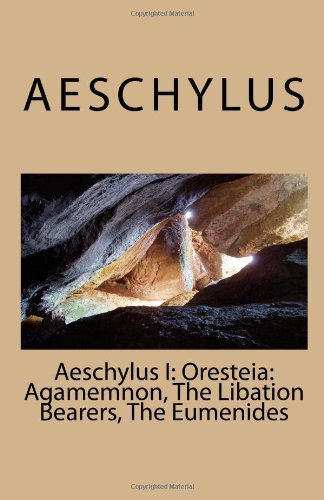
1. Aeschylus I: Oresteia: Agamemnon,
$5.00
2. The Oresteia: Agamemnon; The Libation
$2.00
3. Prometheus Bound and Other Plays:
$8.37
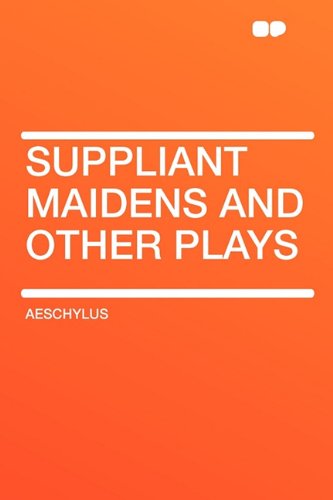
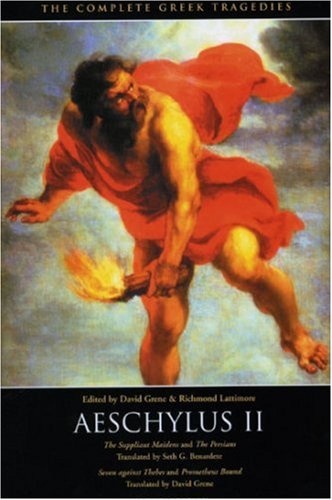
4. Aeschylus II: The Suppliant Maidens
$9.35
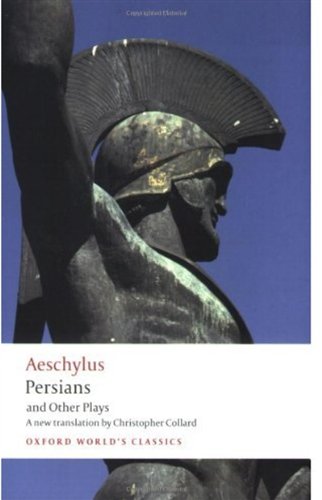
5. The Persians
$21.50
6. Aeschylus: Suppliant Maidens.
$7.60
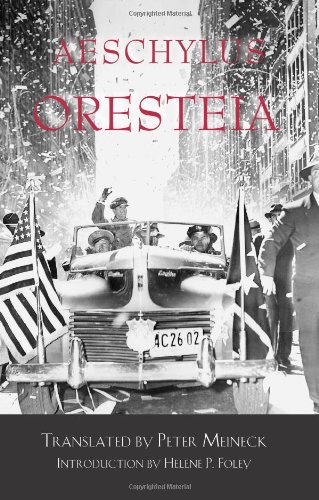
7. Oresteia
 
8. Aeschylus I - Oresteia: Agamemnon,
$14.95
9. The Oresteia - Translated by Ian
 
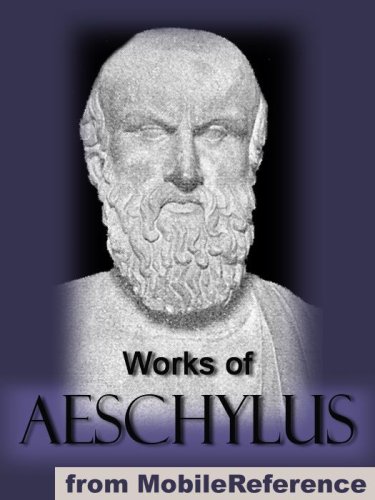
10. The Plays of Aeschylus
$12.00
11. The Orestia
$5.00
12. The Oresteia of Aeschylus: A New
$10.49
13. Oresteia
 
14. Three Greek Tragedies in TranslationAeschylus:
$11.99
15. The Greek Classics: Aeschylus
$16.00
16. Aeschylus: Persians (Duckworth
$18.00
17. Aeschylus: The Persians (with
$7.45
18. Suppliants and Other Dramas: Persians,
$12.56
19. The Oresteia: Agamemnon, Choephoroe,
 
20. Aeschylus: The Creator of Tragedy

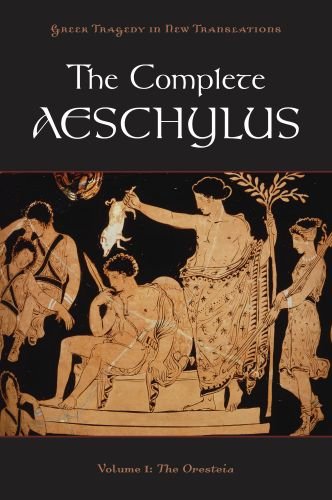
1. Aeschylus I: Oresteia: Agamemnon, The Libation Bearers, The Eumenides (The Complete Greek Tragedies)
by Aeschylus
Paperback: 180 Pages (1969-05-15)
list price: US$11.00 -- used & new: US$4.95
(price subject to change: see help)
Asin: 0226307786
Average Customer Review: 4.5 out of 5 stars
Canada | United Kingdom | Germany | France | Japan
Editorial Review

Book Description

"These authoritative translations consign all other complete collections to the wastebasket."—Robert Brustein, The New Republic

"This is it. No qualifications. Go out and buy it everybody."—Kenneth Rexroth, The Nation

"The translations deliberately avoid the highly wrought and affectedly poetic; their idiom is contemporary....They have life and speed and suppleness of phrase."—Times Education Supplement

"These translations belong to our time. A keen poetic sensibility repeatedly quickens them; and without this inner fire the most academically flawless rendering is dead."—Warren D. Anderson, American Oxonian

"The critical commentaries and the versions themselves...are fresh, unpretentious, above all, functional."—Commonweal

"Grene is one of the great translators."—Conor Cruise O'Brien, London Sunday Times

"Richmond Lattimore is that rara avis in our age, the classical scholar who is at the same time an accomplished poet."—Dudley Fitts, New York Times Book Review
... Read more

Customer Reviews (10)

5-0 out of 5 stars An excellent trilogy
Aeschylus (525-456 BC) is the father of Greek tragedies (one legend reports that Dionysus himself commanded Aeschylus to write them). Of the seventy tragedies that he wrote, only seven have survived to the present day. These three plays form the most complete tetralogy that we have (a tetralogy contained three tragedies and one satyr play - a semi-religious, semi-mocking performance that acted as a postlude to the tragic trilogy) - only the satyr play is missing.

In Agamemnon, the Greek king returns from the Trojan War, with his prize of the Trojan prophetess Cassandra. Cassandra knows that Agamemnon's wife, Clytemnestra, will kill them, but she is fated to be not be believed. And so, the deed is done.

In The Libation Bearers, Clytemnestra has a nightmare that she gave birth to a snake, and so she sends her daughter Electra to Agamemnon's grave to pour out a libation. However, Electra meets her brother, Orestes, and the two plot revenge upon their mother, and her loved. And so, murder begets murder.

In The Eumenides, Orestes is fleeing the Furies, who are pursuing him for murdering his mother. Orestes flees to Apollo, who sends him on to Athens, to be judged by Athena herself.

This is an excellent trilogy. Even though it is over 2,000 years old, it still makes an interesting read. In particular, I enjoyed The Eumenides, with its battle of supernatural beings, and its showcasing of the development of Western jurisprudence. Overall, I found this to be an interesting and informative book, one that I do not hesitate to recommend to everyone.

1-0 out of 5 stars Note on transation
I have read a few things by Lattimore, and while he is touted as the most accurate translator of Greek literature, I find him increadibly difficult to read. His sentences sometimes make no sense at all.
English is a language that depends upon syntax and the order of words in a sentence; Greek is not this way, it is a language with myriad declensions and conjugations, effectively allowing its poets to manipulate a sentence's word order.
Lattimore may simply be too accurate to the Greek originals, because the word order--translated so precisely--simply does not fit well in the English.
I recommend Fagles, who is an amazing translator; and while he is accurate, he also understands the limitations of translating the Greek to English. His sentences are fluid and capture the life of the translation. For Aeschylus, I also recommend Philip Vellacott. Check out Fagles, then check out Vellacott. But please forego the Lattimore translations, unless you really want to understand just the sort of impact a bad translation can have.

5-0 out of 5 stars aeschylus I
the book is pretty good and thorough too.this is a good version to get.

5-0 out of 5 stars The Greatest of Greek Tragedy
Aeschylus I (the Oresteia) probably best epitomized Greek tragedy. This compelling trilogy told the stories of endless cycles of violence in the House of Atreus that stretched across generations and only ended when peace and harmony took its place.

In "Agamemnon", the king had just returned from Troy when he is murdered in his bath by his wife and lover. Aegisthus, the son of Thyestes, sought revenge for his father, whom his brother, Atreus, killed two of his sons and fed him to Thyestes. Aegisthus, the surviving son returned to Argos to marry the queen after Agamenon left for Troy. This would make Aegisthus the ruler of Argos. Clytemnestra agreed to this because she hated her husband for sacrificing their oldest daughter, Iphegenia, to appease Artemis.

After Agamenon's death Orestes, only a child at the time, received a decree from the oracle to kill his mother to take revenge on behalf of his father. This is the theme of the "Libation Bearers." But when Orestes kills his mother it unleashes the Furies, primordial goddesses, who avenge Clytemnestra.

In the third play, "The Eumenides" Orestes is put on trial by Athene and is acquitted of the murder of his mother but the Furies are not satisfied. Only a peace-making offer from the goddess to the Furies ended the endless avenging approaches to justice.

The Oresteia centered on the concept of justice. How should a wrong be punished? What Aeschylus pointed out in his plays was that there were always two sides to every story. But it seemed man's fate to only see one side. Neither Orestes nor his sister, Electra, could see the anguish their mother experienced. They could not understand how she could slay their father because they saw no justification for such a brutal act. It was the same argument the Furies made to Athene when they concluded that the slaying of a mother by her son could not be justified. Yet, each time justice was meted out a new need for justice was its outgrowth.

We are faced today with issues much the same as the characters in Aeschylus' plays faced. Is an "eye for an eye" really a valid form of justice. In our own look at terrorism today could Greek tragedy point the way out of the endless cycles of violence?

4-0 out of 5 stars The Oresteia Trilogy
Aeschylus's Oresteia Trilogy is a wonderful story and great to read. It explains the greek life and life styles that were brought about thousands of years ago during the time of the greek god's and the days of almighty Zeus.Aeschylus brigns about a storyline that will keep you wanting to read until the very end.This is a great story and for all ages to be enchanted by! ... Read more


2. The Oresteia: Agamemnon; The Libation Bearers; The Eumenides (Penguin Classics)
by Aeschylus
Paperback: 336 Pages (1984-02-07)
list price: US$11.00 -- used & new: US$5.00
(price subject to change: see help)
Asin: 0140443339
Average Customer Review: 4.5 out of 5 stars
Canada | United Kingdom | Germany | France | Japan

Customer Reviews (29)

5-0 out of 5 stars Required reading
i first came across these stories when I was 14, i read them again in collage and have read them ever since. the Oresteia is essential literature, if nothing else because of the references it has generated over all of western Literature some examples being Dune by frank Herbert and Orestes by Perfect Circle. also because it is a really intresting study of family dynamics. i also recomend reading it BEFORE it is assigned to you. develop your own ideas to present to a class, get your own idea of it in your mind. I bought this paritcular translation because it was the one i was familar with an a decent one.

5-0 out of 5 stars An excellent trilogy
Aeschylus (525-456 BC) is the father of Greek tragedies (one legend reports that Dionysus himself commanded Aeschylus to write them). Of the seventy tragedies that he wrote, only seven have survived to the present day. These three plays form the most complete tetralogy that we have (a tetralogy contained three tragedies and one satyr play - a semi-religious, semi-mocking performance that acted as a postlude to the tragic trilogy) - only the satyr play is missing.

In Agamemnon, the Greek king returns from the Trojan War, with his prize of the Trojan prophetess Cassandra. Cassandra knows that Agamemnon's wife, Clytemnestra, will kill them, but she is fated to be not be believed. And so, the deed is done.

In The Libation Bearers, Clytemnestra has a nightmare that she gave birth to a snake, and so she sends her daughter Electra to Agamemnon's grave to pour out a libation. However, Electra meets her brother, Orestes, and the two plot revenge upon their mother, and her loved. And so, murder begets murder.

In The Eumenides, Orestes is fleeing the Furies, who are pursuing him for murdering his mother. Orestes flees to Apollo, who sends him on to Athens, to be judged by Athena herself.

This is an excellent trilogy. Even though it is over 2,000 years old, it still makes an interesting read. In particular, I enjoyed The Eumenides, with its battle of supernatural beings, and its showcasing of the development of Western jurisprudence. Overall, I found this to be an interesting and informative book, one that I do not hesitate to recommend to everyone.

5-0 out of 5 stars even better the second time around
These are great plays, and this is a beautiful translation.

I think, though, that to really appreciate what Aeschylus accomplished (aided and abetted by Fagles), most modern readers should really read the entire trilogy twice.

When these plays were first performed, the entire audience would have known the story of Agamemnon's fate and Orestes' revenge from the Odyssey, and probably from other sources besides.The interest came from seeing how Aeschylus would reweave the tale - with what turns of phrase, what dramatic revelations, what poetic license, what new ways of glorifying Athens or bemoaning some new turn in Athenian politics.

The best way to replicate that experience is to read the entire trilogy once to see how it unfolds and how it ends, then to read it again for the nuances of language. Aeschylus is subtle, and Fagles brings out this subtlety in this translation: for example, almost every line uttered in the first part of Agamemnon has a double meaning (at least!), even rendered in English.

Not only this, but the dimensions of the tragedy become clearer the second time around.On the first reading, having forgotten much of the story, I found it gripping.On the second reading, I found it heartrending.

Like another reviewer on this site, I recommend skipping the introductory essay and diving right into the plays.Make up your own mind about what all of this means and why it might be important.Then read the essay if you want to see if you agree with it.

3-0 out of 5 stars How do you say a classic is way overated?
Sure the poetry is great,
but these three plays make a small episode in modern terms...
A very slow one at that.
The three plays:
1) Agamemnon: The killing of the returned King and Cassandra the oracle by the wife and the cousin
2) The Libation Bearers: The meeting of Orestes and Electra at the gave and the killing of
the mother and cousin
3) The Eumenides:the trial by Athena of Orestes with Apollo defending
As plays go they are more excess of dialog than action...
many too long and very heavy speeches.
There are too many questions about the natures of these sins and the justice of revenge when men are the top civil authority in the bronze age, so later plays like these that bring in gods as judges were formulated. These plays survived their age to bring us the Greek ideals of justice,
but they fail to keep a modern audience awake!
I'm not impressed by Aeschylus' plays compared to other Greek plays that I've read by Sophocles.

4-0 out of 5 stars Fascinating continuation of Agamemnon's story- Life after The Illiad
I am a college graduate who has almost no familiarity with classical literature- my interests lie with nineteenth-twentieth century British literature. However, in preparation for my GRE literature subject test, I began delving into the Greek classics I missed at school. The Orestia is classic Greek tragedy, a trilogy of plays that delves into issues of family and male-female relationships, as well as illuminating the culture of the period. The first play, Agamemnon, deals with the homecoming of the Greek hero, who is mercilessly slaughtered by his wife and her lover. Clytaemnestra is a powerful, albeit frightening, female character who seduces the reader, despite her crime. The Libation Bearers picks up years later with Agamemnon's son, Orestes, who returns to avenge his father's murder. The dynamic between mother and son here is particularly interesting; again, Clytaemnestra "steals" the show. The third and final play, The Eumenides, details the trial and fate of Orestes after he commits the heinous crime of matricide that offends the Furies, and their subsequent transformation into the Eumenides, or kindly ones. The translation is accessible to the modern reader, but certainly has a grand style to it appropriate for theater. However, I would highly recommend anyone who is NOT familiar with Greek mythology to read the Introduction, as it explains the geneology of the House of Atreus and all of the horrors that build up to the actions these plays chronicle. ... Read more


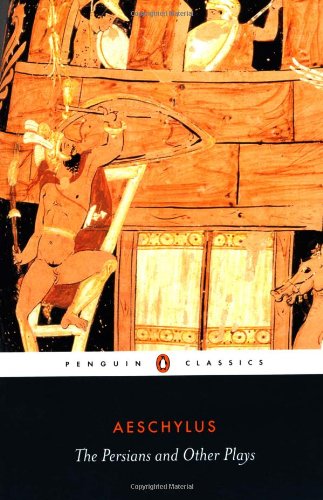
3. Prometheus Bound and Other Plays: Prometheus Bound, The Suppliants, Seven Against Thebes, The Persian (Penguin Classics)
by Philip Vellacott
Paperback: 160 Pages (1961-08-30)
list price: US$11.00 -- used & new: US$2.00
(price subject to change: see help)
Asin: 0140441123
Average Customer Review: 4.0 out of 5 stars
Canada | United Kingdom | Germany | France | Japan

Customer Reviews (4)

5-0 out of 5 stars I think these are required
Ok, missed these in college, but I think you have to read these, and quite frankly, they're a little better with some age on you.Prometheus Bound is more interesting after you have had a chance to watch people (perhaps yourself) let their ego run away with them and get them in horrible trouble.Otherwise, at 18-22 Prometheus is an unmittigated hero, and that's less interesting.As a bonus, Prometheus was used as a model for Milton's Satan, and that Satan is pretty much the coolest Devil.If the Fonz had a big brother, wouldn't you want to meet him? Fantastic lines in this one, and the translation is excellent."Do you think I quake and cower before these upstart gods?"Use it in your next salary negotiation.

The Suppliants is kind of a waste of time.It's obviously the introduction to the action, and not much to reflect on unless you know a woman in an unhappy marriage, and then you can supply them with the line, "I would rather meet my fate in a drawn noose/ Than give my flesh to a husband I abhor;/ Sooner let Death possess me!"That'll add zazz to any domestic argument.

Seven Against Thebes is fantastic and serves as the end to the Oedipus trilogy if you want to read it that way.Lots of great slams on the boastful and praise to the quiet effective types.It's required reading.

The Persians is great reading right now if you're not thrilled with the way America is headed under current leadership.It's about the most powerful empire in the world shattering its massive army in a war of folly.Superior wealth and technology (bridge of boats across the ocean) are squandered in the wastelands.It's from the point of view of the losers, and I can't help but think it's cautionary to the Greeks rather than celebratory.America should read it that way as well.It's eerily relevant.I read this passage this morning and it gave me the creeps:

(Mother of Xerxes's premonition concerning the fall of the Persian empire)

I saw an eagle fly for refuge to Apollo's hearth.I watched, speechless with terror; then a falcon came, and swooped with rushing wings, and with his talons clawed the eagle's head; it, unresisting, cowered there, offering itself to wounds.

Not good for us, not good at all.In any case, just about every page has some piece of wisdom on it, and the translation here puts the the thought with the perfect words.If you're enjoying Shakespeare or KJV right now but want a different flavor, give Aeschylus a shot.He has a strong grasp on the mind of the king and the burden of leadership, more so than WS.There's also a sophisticated view of how real democracy lends strength to a society, in a way that resonates with an adult brain that has become jaded on jingoism.

4-0 out of 5 stars Old yet ageless tragedy by "the other Greek tragedian"
In life and death, Aeschylus is overshadowed by Sophocles.The most tragic thing about Aeschylus is the fact that the great majority of his work was lost in the mists of time.Three of these plays are the only surviving members of three different trilogies.The Suppliants is the conclusion of Aeschylus' own Oedipus trilogy, focusing on the final battle of the twice-cursed sons of Oedipus.Not only was this play overshadowed by Sophocles' Antigone, the final few pages are apparently spurious; someone a half century after it was written felt compelled to add Antigone and Ismene to the action, countering the writer's original presentation of the tragedy.The Persians is interesting because it is based on real history, namely the routing of the Persian army by the Athenians at Salamis.Eight years are all that separate the battle and Aeschylus' dramatization of it.

I must say that tragedy is the right word for these plays.I would dub them "poor me" dramas.In each case, one or more characters suffers an ignominious fate and bemoans his/her/theirlot in life, sometimes cursing the gods to boot.In Prometheus Bound, the giant Prometheus has been chained to a rock on a mountainside as divine punishment for stealing fire from Hephaestas and giving it to humans.Prometheus is proudly defiant and has a word or two to say to just about every man and god he is exposed to.The Persians must have been received very well by the Athenians because it casts Persia and her king Xerxes in a pitiful light.When a long-overdue messenger arrives home with word that the Persian army has been decimated, the whole community wails and mourns their fate; when the defeated Xerxes arrives, he takes the suffering to yet another level, his pride destroyed and replaced with self-loathing and defeatism.Seven Against Thebes details the attack by Polyneices and his followers on his brother Eteocles and the city of Thebes.While much of the play consists of the naming of the opposing champions to lead the fight at each gate, I was most interested in the dialogue between the chorus of Theban women and Eteocles.The women rush in fright to the statues of the gods, pleading for mercy and grieving over their fate.Eteocles is offended by their defeatist words, saying such talk will spread doubt and fear among the city's defenders and is an injustice reflecting a loss of faith in the gods whose likenesses they are embracing.

I consider The Suppliants the best of these four dramas, as it contains some action whereas the other plays are basically static in setting.The story of Io, a fair maiden turned into a cow/human creature and cursed by a maddening gadfly by Hera due to Zeus' pursuit of her, forms a provocative background to this tale.Io's descendants number 50 women and 50 men, and the lustful men seek to forcibly take their female cousins for wives.The women run to Argos and seek the protection of its king and people, setting the stage for a great battle (which unfortunately takes place in a lost drama).

I enjoyed these dramas, although I can't say I would care to see them presented on stage.For the most part, nothing happens, but everyone is miserable and none too shy to broadcast that misery.There can be no mistaking these plays for comedies, yet they do speak to timeless matters of the human spirit even today.

3-0 out of 5 stars So I don't like Greek drama - sue me.
Call me an ignoramus if you like, but I just don't like Greek drama.Prometheus Bound is the third one I've tried - after Oedipus Rex and The Clouds - and I've found them all lacking, the tragedies overblown andrigid, the comedy an imposter to the name.It's not an antipathy toantique culture per se - Homer's epics overflow with life, Ovid is a masterof imagery, incident and invention, Juvenal's spleen is still bracing. It's just hard for anyone raised on Shakespeare, Wilde, Ionesco or Beckettto actually care about these rudimentary dinosaurs. I'm sure they're notreally rudimentary - they must have some complexity and relevance for fustydons to thrill over them for so many centuries, but I'm hanged if I canspot what they see in them.Just because they were the first doesn't makethem the best.I grant that much will be lost in translation, especiallythe poetry, but as a conflict of ideas rather than people, it seemsadidactic, airless, undramatic thing. Not that there aren't merits: for allits philosophy, there is a remarkable physicality to its opening, a stillshocking violence I hadn't experienced since The Bald Primadonna.Althoughthere is subsequently little of visual interest, there is a wonderful faithin storytelling, a transmutation of the present moment into themythological or historical through imagination, that is reminiscent ofmagic realism.Io's plight is very moving on paper, until you visualiseher as a cow perpetually pestered by a wasp, it is very difficult tosuppress the giggles.Prometheus' prophecy of ther forthcoming adventuresverges on the beautiful, fusing the visionary and the actually painful.Ingeneral, though, the antique mindset is too remote for me - I'd rather readJoyce.

5-0 out of 5 stars Excellent translations of the four non-Oresteian plays.
Vellacott has supplied us with excellent translations with commentaries on the four non-Oresteian plays. The seven plays of Aeschylus should be read by every college-level student, irrespective of their major (I'm in thesciences and I have enjoyed them). The popular "Prometheus Bound"is concerned with the conflict between force and injustice on one side andintelligence, justice, and altruism on the other. The Titan Prometheus, whohas stolen fire from heaven and given it to Earth's mortal inhabitants, isbeing punished for his presumption by being bound to a rock on MountCaucasus and tortured. He can foretell the future, but refuses to tell Zeusthe secret of Zeus' downfall. "The Persians" is the least readplay; probably because it has very little action. But, I like it. It is theoldest surviving play based on an event of recent history. The play wasfirst produced in 472 B. C., only eight years after the Battle of Salamis.The speech by the Messenger in the play is the earliest known historicalaccount of that battle. A disgraced Xerxes follows the Messenger.Interestingly, this play also contains the earliest known appearance by aghost in a drama. "The Suppliants" is the first play of atrilogy, has very little action, and is merely a prologue to the twomissing members of the trilogy. The fifty daughters of Danaus are fleeingfrom the fifty sons of Aegyptus, their cousins. The daughters seeksanctuary from Pelasgus, King of Argos. The play, and probably the trilogy,focuses on when city-states should give sanctuary to others. "SevenAgainst Thebes" is a retelling of the war between the sons of Oedipus,Eteocles and Polyneices. They were to supposed to share power in Thebes buthave quarrelled. Eteocles seizes power and Polyneices goes to get help fromAdrastus, King of Argos, and six other kings. Eteocles sends champions tofight the six kings at six of the gates of Thebes. The seventh gate is leftto Eteocles. However, that is the gate to which his brother comes. Eteoclesfeels that he has no choice but to fight and further incur the wrath of thegods by shedding kindred blood. Eteocles had an "out" of hispredicament but he choses not to use it. "When the gods senddestruction there is no escape." ... Read more


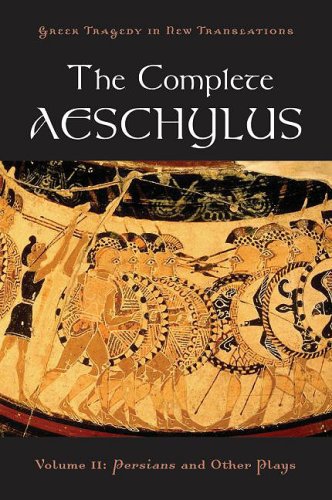
4. Aeschylus II: The Suppliant Maidens and The Persians, Seven against Thebes and Prometheus Bound (The Complete Greek Tragedies)
by Aeschylus
Paperback: 188 Pages (1992-02-01)
list price: US$12.00 -- used & new: US$8.37
(price subject to change: see help)
Asin: 0226307948
Average Customer Review: 4.5 out of 5 stars
Canada | United Kingdom | Germany | France | Japan
Editorial Review

Book Description

The Grene and Lattimore edition of the Greek tragedies has been among the most widely acclaimed and successful publications of the University of Chicago Press. On the occasion of the Centennial of the University of Chicago and its Press, we take pleasure in reissuing this complete work in a handsome four-volume slipcased edition as well as in redesigned versions of the familiar paperbacks.

For the Centennial Edition two of the original translations have been replaced. In the original publication David Grene translated only one of the three Theban plays, Oedipus the King. Now he has added his own translations of the remaining two, Oedipus at Colonus and Antigone, thus bringing a new unity of tone and style to this group. Grene has also revised his earlier translation of Prometheus Bound and rendered some of the former prose sections in verse. These new translations replace the originals included in the paperback volumes Sophocles I (which contains all three Theban plays), Aeschylus II, Greek Tragedies, Volume I, and Greek Tragedies, Volume III, all of which are now being published in second editions.

All other volumes contain the translations of the tragedies of Aeschylus, Sophocles, and Euripides for the most part from the original versions first published in the 1940s and 1950s. These translations have been the choice of generations of teachers and students, selling in the past forty years over three million copies.
... Read more

Customer Reviews (2)

5-0 out of 5 stars This is NOT Slavitt
I just wanted to point out that all these reviews refer to the wrong translation.This is NOT the Slavitt translation!
I haven't read this one but, having read Lattimore's translations of the Oresteia I would guess they were quite good.

4-0 out of 5 stars Don't miss this book!
Ancient Greece is a topic that once bored me, but after I read this book, I suddenly became interested in the Ancient World and the great many achievements of the Greeks. I know many people may not read books on Ancient topics, but this one is definately not one to pass by ... Read more


5. The Persians
by Aeschylus
Paperback: 48 Pages (2004-06-30)
list price: US$15.95 -- used & new: US$9.35
(price subject to change: see help)
Asin: 1419177060
Average Customer Review: 3.0 out of 5 stars
Canada | United Kingdom | Germany | France | Japan
Editorial Review

Book Description
The mighty Xerxes from Darius sprung, The stream of whose rich blood flows in our veins, Leads against Greece; whether his arrowy shower Shot from the strong-braced bow, or the huge spear High brandish'd, in the deathful field prevails.Download Description
The mighty Xerxes from Darius sprung, The stream of whose rich blood flows in our veins, Leads against Greece; whether his arrowy shower Shot from the strong-braced bow, or the huge spear High brandish'd, in the deathful field prevails. ... Read more

Customer Reviews (4)

1-0 out of 5 stars The worst play to study
After volunteering to look at this play for my Classics degree, I started out with high hopes.But after opening it and dicovering how boring it was, my hopes faltered.I still gave it a go though and a couple of hours later when I finally got ready to start writing whether it was actually good enough as a play, my problems started.Bearing in mind that it was written 2500 years ago, i was intrigued that a play could last for so long.But honestly, thats where my interest stopped.It's lenghthy and dull, and although I know that it is a very historical and precise play, I just couldn't follow it.If you want bedtime reading that will send you to sleep, this is the one, sorry.

4-0 out of 5 stars A unique Greek tragedy by Aeschylus about a historical event
"The Persians" is a minor work in the extant plays of Aeschylus, but has considerable historical if not dramatic significance. The play is the second and only remaining tragedy from a lost tetralogy that is based on the historical events of the Persians Wars. The play was performed in 472 B.C., eight years after the defeat of the invaders at the Battle of Salamis. The speech by the Messenger is assumed to be a fairly accurate description of the battle, but the focus of the play is on the downfall of the Persian Empire because of the folly of Xerxes. After the ghost of Darius, father of Xerxes and the leader of the first Persian invasion that was defeated at the Battle of Marathon laments the ruin of the great empire he had ruled, Xerxes offers similar histrionics concerning the destruction of his fleet.

The play is interesting because Aeschylus presents Xerxes, a foreign invader, as exhibiting the same sort of hubris that afflicts the greatest of mythological heroes in these Greek tragedies. Laud and honor is given the Athenians for defeating the Persians in battle, but Aeschylus surprisingly provides a look at the Persian king's culpability in the downfall of his empire. There is a reference in the play to the tradition that Xerxes was descended from Perseus (for whom the Persian race was therefore named), but even so it seems quite odd to turn him into a traditional Greek tragic hero. Aeschylus had fought the Persians at the Battles of Marathon and Salamis, which certainly lends authenticity to his description of events.

Aeschylus won the festival of Dionysus in 472 B.C. with the tetralogy of "Phineus," "The Persians," "Glaucus of Potniae," and the satyr play "Prometheus the Fire-Kindler." Phineas was the king who became the victim of the Harpies, while this particular Glaucus was the son of Sisyphus and the father of Bellerophon who was torn to pieces by his own mares. Consequently, this particular tetralogy clearly has the theme of kings brought down by their own folly. But even within that context, the fact that Aeschylus would write of a historical rather than legendary figure, not to mention a Persian rather than a Greek, remains more than a minor historical curiosity.

5-0 out of 5 stars The tragedy of a proud people.
"Persians" deals with a people trying to exceed mortal limits. The king of persia blinds his people into believing they can accomplish deeds that exceed the laws of the divine and it's natural order. The kinginvades Greece despite bad omens. The people in Persia are told they aredefeated by a messenger and mourn in mad disbelief. Searching for answersthey summon the spirit of a once great king who cannot undo what has nowbeen done. Persia's once proud army, security, and young sons are perished.This translation is excellent.The ending of the play through subjectmatter is sad enough, but the helpless lines delivered by King Xerxes andthe chorus through dialogue toward each other at the end of the play isdevastating.

3-0 out of 5 stars The first play based on recent history.
This is generally not considered one of the better plays of Aeschylus; yet, I did enjoy it, even though there is very little action. Perhaps it is because it dealt with a subject of contemporary interest to its originalaudience. In fact, it is the oldest surviving play based on an event ofrecent history. The play was first produced in 472 B. C., only eight yearsafter the Battle of Salamis. The speech by the Messenger in the play is theearliest known historical account of that battle. The play takes place inthe Persian court and simply presents the arrival of a messenger carryingthe news of Persia's defeat and is followed by the entry of a disgracedXerxes. This play also contains the earliest known appearance by a ghost ina drama. ... Read more


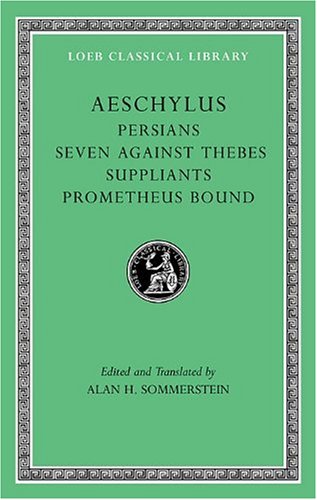
6. Aeschylus: Suppliant Maidens. Persians. Prometheus. Seven Against Thebes (Loeb Classical Library, No. 145)
by Aeschylus
Hardcover: 464 Pages (2006-12-15)
list price: US$24.00 -- used & new: US$21.50
(price subject to change: see help)
Asin: 0674991605
Canada | United Kingdom | Germany | France | Japan
Editorial Review

Book Description

Aeschylus (ca. 525-456 BCE), author of the first tragedies existing in European literature, was an Athenian born at Eleusis. He served at Marathon against Darius in 490, and again during Xerxes' invasion, 480-479. Between 478 and 467 he visited Sicily, there composing by request Women of Aetna. At Athens he competed in production of plays more than twenty times, and was rewarded on at least thirteen occasions, becoming dominant between 500 and 458 through the splendour of his language and his dramatic conceptions and technique.

Of his total of 80-90 plays seven survive complete. The Persians (472), the only surviving Greek historical drama, presents the failure of Xerxes to conquer Greece. Seven against Thebes (467) was the second play of its trilogy of related plays on the evil fate of the Theban House. Polyneices tries to regain Thebes from his brother Eteocles; both are killed. In Suppliant Maidens, the first in a trilogy, the daughters of Danaus arrive with him at Argos, whose King and people save them from the wooing of the sons of their uncle Aegyptus. In Prometheus Bound, first or second play of its trilogy about Prometheus, he is nailed to a crag, by order of Zeus, for stealing fire from heaven for men. Defiant after visitors' sympathy and despite advice, he descends in lightning and thunder to Hell. The Oresteia (458), on the House of Atreus, is the only Greek trilogy surviving complete. In Agamemnon, the King returns from Troy, and is murdered by his wife Clytaemnestra. In Libation-Bearers, Orestes with his sister avenges their father Agamemnon's death by counter-murder. In Eumenides, Orestes, harassed by avenging Furies, is arraigned by them at Athens for matricide. Tried by a court set up by Athena, he is absolved, but the Furies are pacified.

We publish in Volume I four plays; and in Volume II the Oresteia and some fragments of lost plays.

... Read more

7. Oresteia
by Aeschylus
Paperback: 288 Pages (1998-09)
list price: US$10.95 -- used & new: US$7.60
(price subject to change: see help)
Asin: 0872203905
Average Customer Review: 5.0 out of 5 stars
Canada | United Kingdom | Germany | France | Japan

Customer Reviews (1)

5-0 out of 5 stars The play within the Translation
I worked on the production of this translation at The University of South Carolina in 1998.I designed the costumes and masks.Before I began the design process, I read other translations of the script.Peter'stranslation was done with attention to what the characters were saying, notjust the literal dictionary definition of the Ancient Greek.The pacingand flow of the play is great and I recommend it to anyone who thinks thatAncient Greek plays are dull and better left alone. ... Read more


8. Aeschylus I - Oresteia: Agamemnon, the Libation Bearers, The Eumenides
by Aeschylus (Trans. Richmond Lattimore)
 Paperback: Pages (1953)

Asin: B000ZQAPR2
Canada | United Kingdom | Germany | France | Japan

9. The Oresteia - Translated by Ian Johnston
by Aeschylus
Paperback: 171 Pages (2007-06-30)
list price: US$14.95 -- used & new: US$14.95
(price subject to change: see help)
Asin: 0977626970
Canada | United Kingdom | Germany | France | Japan
Editorial Review

Product Description
William von Humbolt wrote of Aeschylus' The Oresteia that, "among all the products of the Greek stage, none can compare with it in tragic power; no other play shows the same intensity and pureness of belief in the divine and good; none can surpass the lessons it teaches and the wisdom of which it is the mouthpiece."A sequence of three plays, The Oresteia relays the final tragedies which befall the House of Atreus following the end of the Trojan War. The first play, "Agamemnon," tells of the return of King Agamemnon from Troy and of his murder by his wife and her lover. The second, "The Libation Bearers," details the revenge exacted by Agamemnon's son, Orestes, and daughter, Electra, for their father's death. In the third play of the trilogy, "The Eumenides," Orestes and Apollo go before an Athenian jury to determine their ultimate fate. The only full trilogy to have survived from the ancient Greek playwrights, The Oresteia was first performed at a festival in Athens in 458 B.C. where it won first prize. The Oresteia today remains one of the most popular plays of all time. ... Read more


10. The Plays of Aeschylus
by Robert H. Ahrens
 Paperback: 138 Pages (1985-08)
list price: US$3.95
Isbn: 0671008013
Canada | United Kingdom | Germany | France | Japan

11. The Orestia
by Aeschylus
Paperback: 136 Pages (2004-06-30)
list price: US$20.95 -- used & new: US$12.00
(price subject to change: see help)
Asin: 1419176331
Average Customer Review: 5.0 out of 5 stars
Canada | United Kingdom | Germany | France | Japan

Customer Reviews (1)

5-0 out of 5 stars Important work!
A classic tale that should be read by every serious student of literature. ... Read more


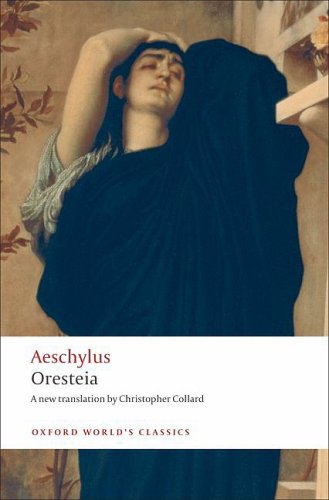
12. The Oresteia of Aeschylus: A New Translation by Ted Hughes
by Ted Hughes
Paperback: 198 Pages (2000-09-04)
list price: US$12.00 -- used & new: US$5.00
(price subject to change: see help)
Asin: 0374527059
Average Customer Review: 4.0 out of 5 stars
Canada | United Kingdom | Germany | France | Japan
Editorial Review

Book Description

In the last year of his life, Ted Hughes completed translations of three major dramatic works: Racine's Phedre, Euripedes' Alcestis, and the trilogy of plays known as at The Oresteia, a family story of astonishing power and the background or inspiration for much subsequent drama, fiction, and poetry.

The Oresteia--Agamemnon, Choephori, and the Eumenides--tell the story of the house of Atreus: After King Agamemnon is murdered by his wife, Clytemnestra, their son, Orestes, is commanded by Apollo to avenge the crime by killing his mother, and he returns from exile to do so, bringing on himself the wrath of the Furies and the judgment of the court of Athens.

Hughes's "acting version" of the trilogy is faithful to its nature as a dramatic work, and his translation is itself a great performance; while artfully inflected with the contemporary, it has a classical beauty and authority. Hughes's Oresteia is quickly becoming the standard edition for English-language readers and for the stage, too.
... Read more

Customer Reviews (4)

5-0 out of 5 stars MUSCULAR HUGHES ON THE HIGH WIRE
I LOVE TED AESCHYLUS AND HIS BUFFED UP LINE, NOT ONLY HERE BUT AS TED RACINE, TED OVID, TED SENECA, TED EURIPEDES, TED LORCA AND TED WEDEKIND. HERE IS MUSCULAR TRANSLATION THAT BOUNCES WITH LIFE AND FLIES FEARLESS WITHOUT THE LEAST THREAD OF AN ACADEMIC SAFETY NET BELOW. SPELLBINDING!

2-0 out of 5 stars A rather objectionable loose translation suitable only for Hughes fans
THE ORESTEIA of Aeschylus, here presented in a translation by Ted Hughes, is a great trilogy on the continual tragedies in the house of Atreus and one of the most impressive creations of Greek drama.

The work consists of the "Agamemnon", "Choephori", and "Eumenides". In the first play, Agamemnon the king of Argos returns home from the Trojan War only to be murdered by his wife Clytemnestra, long angry at him for the sacrifice of their daughter Iphigenia, and her lover Aegisthus desirous to seize the throne. In the second, named for the "libation bearers" who accompany the protagonists, Agamemnon's son Orestes and his living sister Electra avenge their father's murder by slaying Clytemnestra and Aegisthus. In the final play, Orestes is tormented by the Furies until a jury of Athenians led by Athena set him free and end the cycle of violence. The play is a statement on the terrible destiny of man to face divine retribution even when he has done a just deed, and tracks the development of Athenian justice from continual violence to temperance.

Unfortunately, Ted Hughes' translation plays very loose with Aeschylus' work. Putting the play in modern language isn't quite so bad, although it is strange to hear of hurricanes (unknown in the Aegean) and people moving "like gypsies" (the Roma were still in northwest India when this was written). What is truly objectionable is that Hughes' adds content. For example, he has a character talk of the "curse" on the house of Atreus, but this distorts events. Hughes also does not seem interested in conveying Aeschylus' style, instead giving the reader the story in entirely his own poetry. Bottom line: read this if you really like the poetry of Ted Hughes. If you want a faithful translation of this Greek masterwork, look elsewhere.

5-0 out of 5 stars An Interpretation, Not a Translation
No, the translation is not literal. If you want a literal translation, buy something written by a professor of Greek. Hughes has a different goal. He¡¦s a poet who wants to interpret this ancient literature into an idiom that modern audiences can understand and appreciate. I wouldn¡¦t even call this a translation. Let¡¦s call it an interpretation and skip over the problem of accuracy.

That being said, his interpretation is extremely good. The free verse is both powerful and extremely readable. By putting these stories into a more familiar medium, Hughes recaptures the horror of these plays.

By modern standards, the latter plays (Choephori and Eumenides) aren¡¦t very dramatic. The main point is to watch the cycle of revenge play out to a conclusion. But the first play in the trilogy (Agamemnon) is close enough to modern taste to have a huge impact. I was very moved.

5-0 out of 5 stars The Good and the Bad of Translations...
Let's get one thing straight:Hughes' translation is not a literal one of the Oresteia.He takes many liberties - although not as many as he's been berated for - and, in some ways, remakes Aeschylus in the image of Ted Hughes.BUT - his poetry is beautiful without being cumbersome and he clarifies some of the issues that get lost in some other, more literal translations.For example, compare this passage in Hughes with the same passage in Fagles' translation: "This was life. The luckiest hours/ Like scribbles in chalk/ On a slate in a classroom. We stare/ And try to understand them. Then luck turns its back -And everything's wiped out. Joy was not less pathetic/ Than the worst grief." That's Hughes.Here's the same speech (the speech Cassandra makes just before she goes to her death in the Agamemnon): "Oh men, your destiny. When all is well a shadow can overturn it. When trouble comes a stroke of the wet sponge, and the picture's blotted out.And that, I think that breaks the heart." (line 1350)

So you can see the difference - the Hughes translation is very Hughes-esque and the Fagles attempts to stay closer with the original.There's something to be said for both views.I reccomend getting a literal translation (Lattimore is probably the best, Fagles is good too) and then reading Hughes and seing what he does with the plays.He puts a very interesting spin on some passages - and his poetry really can't be beat.If you're a Hughes fan, be sure to pick this up. ... Read more


13. Oresteia
by Aeschylus
Paperback: 282 Pages (1994-03-02)
list price: US$21.95 -- used & new: US$10.49
(price subject to change: see help)
Asin: 0520083288
Average Customer Review: 5.0 out of 5 stars
Canada | United Kingdom | Germany | France | Japan
Editorial Review

Book Description
The most famous series of ancient Greek plays, and the only surviving trilogy, is the Oresteia of Aeschylus, consisting of Agamemnon, Choephoroe, and Eumenides. These three plays recount the murder of Agamemnon by his queen Clytemnestra on his return from Troy with the captive Trojan princess Cassandra; the murder in turn of Clytemnestra by their son Orestes; and Orestes' subsequent pursuit by the Avenging Furies (Eumenides) and eventual absolution.
Hugh Lloyd-Jones's informative notes elucidate the text, and introductions to each play set the trilogy against the background of Greek religion as a whole and Greek tragedy in particular, providing a balanced assessment of Aeschylus's dramatic art. ... Read more

Customer Reviews (1)

5-0 out of 5 stars A superb presentation of the three plays of Aeschylus.
An excellent presentation of the trilogy. Way back in 1970, Sir Lloyd-Jones had come out with the three plays in individual format and filled with annotations. Now, all three plays are together. And all threeplays should be required reading for new students at a university. Thefirst play in the Oresteia trilogy (the only extant Greek trilogy) is"Agamemnon." The trilogy won First Prize at the Greater Dionesiain 458 B. C. Agamemnon returns to Argos from the Trojan War. He is killedby his wife Clytemnestra and his first cousin Aegisthus. Clytemnestra'sreasons for the murder of both Agamemnon and Cassandra were questioned evenin ancient Greece: was it for revenge for the death of her daughterIphigenia or was it for her adultery with Aegisthus? In one of Pindar'sodes (c. 474 B. C.), "Pythia 11", Pindar asks: "Was itIphigeneia, who at the Euripos crossing was slaughtered far from home, thatvexed her to drive in anger the hand of violence? Or was it couching in awrong bed by night that broke her will and set her awry?" The Oresteiatrilogy is a study in justice. Agamemnon's death must be avenged; but, thismeans matricide. Orestes, in the next play, should not have been the handof vengence. The second play is "The Libation Bearers." It is theearliest known play containing an intrigue as the main plot. Electra,sister of Orestes, has been sent to the grave of Agamemnon to offer alibation. Clytemnestra is attempting to placate the spirit of her deadhusband. When she and Aegisthus are killed by Orestes, Orestes finds thatnow the Furies will pursue him rather than his mother. The final play is"The Eumenides." The Eumenides are daughters of Night who avengecrimes committed by offspring against parents and who punished people whofail to keep their oaths. In this last play, Apollo purifies Orestes bywashing him in pigs' blood. But the Erinyes reject Apollo's order to leaveOrestes alone. The conflict is resolved via a trial overseen by Athena.This play is the earliest known drama containing a complete change ofscene. ... Read more


14. Three Greek Tragedies in TranslationAeschylus: Prometheus Bound, Sophocles: Oedipus the King, Euripides: Hippolytus
by Grene David
 Hardcover: Pages (1947)

Asin: B000LCEQ9I
Canada | United Kingdom | Germany | France | Japan

15. The Greek Classics: Aeschylus - Seven Plays (The Greek Classics)
by Aeschylus
Paperback: 256 Pages (2006-03-06)
list price: US$19.95 -- used & new: US$11.99
(price subject to change: see help)
Asin: 0977340023
Average Customer Review: 4.0 out of 5 stars
Canada | United Kingdom | Germany | France | Japan
Editorial Review

Book Description

The importance of Aeschylus in the development of the drama is immense.Before him tragedy had consisted of the chorus and one actor; and by introducing a second actor, expanding the dramatic dialogue thus made possible, and reducing the lyrical parts, he practically created Greek tragedy, as we understand it.Like other writers of his time, he acted in his own plays, and trained the chorus in their dances and songs; and he did much to give impressiveness to the performances by his development of the accessories of scene and costume on the stage.

Of the seventy or eighty plays which he is said to have written, only seven survive: The Suppliant Maidens, on the daughters of Danaüs; The Persians, dealing with the defeat of Xerxes at Salamis; The Seven against Thebes, part of a tetra logy on the legend of Thebes; Prometheus Bound, part of a trilogy, of which the first part was probably Prometheus, the Fire-bringer, and the last, Prometheus Unbound; and the Oresteia (The House of Atreus), the only example of a complete Greek tragic trilogy which has come down to us, consisting of Agamemnon, Choephorae (The Libation-Bearers), and the Eumenides (The Furies).

The Oresteian trilogy on The House of Atreus is one of the supreme productions of all literature. It deals with the two great themes of the retribution of crime and the inheritance of evil; and here a parallel may be found between the assertions of the justice of God by Aeschylus and by the Hebrew prophet Ezekiel.The nobility of thought and the majesty of style with which these ideas are set forth give this triple drama its place at the head of the literary masterpieces of the antique world. ... Read more

Customer Reviews (4)

1-0 out of 5 stars Tragic Deception
Please see my short review on the Euripides edition from this series by clicking 'See all my reviews'.

5-0 out of 5 stars Great Book!

The Greek Classics: Aeschylus - Seven Playsis a great book. It is considered to be a classic for good reasons:it is a good read, it deals with really important matters, it is superb literature and it is a landmark in the history of civilization.

For about two thousand years, it has been on the reading list of most educated people in the Western Hemisphere.Undoubtedly, it will still be part of the curriculum at most of the world's colleges and universities two thousand years from now.You just can't consider yourself to have received a proper education without having read this great Greek classic.

While you are at it, you should also read:
The Greek Classics: Aristophanes - Eleven Plays
The Greek Classics: Euripides - Nineteen Plays
and
The Greek Classics: Sophocles - Seven Plays

Classics like these are not stuffy, pompous, overblown literature as some ignorant anti-intellectuals might think.They are genuine looks at life by excellent writers who had something important to say - and said it well.

5-0 out of 5 stars Amazing View of Human Motivations and Interactions
The Greek Playwrights are amazing.Aeschylus, in particular, will make you rethink everything you think you know about human motivations and interactions.

Just a few months ago, I received the set of Greek Classics: Aeschylus, Aristophanes, Euripides and Sophocles; as a present, and I have been astounded at how relevant they are to this age. I have also been struck by the fact that these four volumes contain all of the surviving works of these great Greek Playwrights.

I have just finished reading the entire set and I am already looking forward to re-reading them.For me, reading these ancient works is a way of touching the past that creates a bond to all of humanity across the ages.

5-0 out of 5 stars The Pinnacle of Greek Drama

With Aeschylus, Greek Drama became the forerunner of modern theater.Nearly every aspect of drama was invented by this first genius of the stage.Every playwright since Aeschylus owes him an intellectual salute.Every appreciative theater-goer throughout the ages owes him a debt of gratitude.

Even today, Aeschylus pulls at the heartstrings of the modern reader.His appeals to the raw emotions of empathy and honor, outrage and shame still feel true to the human spirit.He developed the techniques of drama that have been carried down to us through the ages, right up to the very present.His work will not be forgotten, it is still being stolen and recycled by poets, playwrights and novelists of all persuasions.
... Read more


16. Aeschylus: Persians (Duckworth Companions to Greek & Roman Tragedy) (Duckworth Companions to Greek & Roman Tragedy)
by David Rosenbloom
Paperback: 224 Pages (2007-02-16)
list price: US$22.00 -- used & new: US$16.00
(price subject to change: see help)
Asin: 0715632868
Canada | United Kingdom | Germany | France | Japan
Editorial Review

Product Description
AeschylusPersians is the earliest extant Greek tragedy and sole surviving historical tragedy. It tells the story of the defeat of the Persian king Xerxes and his return in rags to Persia to face the condemnation of his elders. The first product of the Western imagination to represent the causes and limits of imperialist conquest, the play is unflinching in its depiction of the horrors of a defeated invasion and the glory of a successful defence. But it is not merely a paean to Western freedom, democracy, courage and technological supremacy; it is a meditation on the tendency of wealth, power and success to take on a momentum of their own and to push societies to the brink of ruin. ... Read more


17. Aeschylus: The Persians (with Translation) (Classics Companions)
by Anthony Podlecki
Paperback: 136 Pages (2003-06-20)
list price: US$18.00 -- used & new: US$18.00
(price subject to change: see help)
Asin: 1853991279
Canada | United Kingdom | Germany | France | Japan
Editorial Review

Book Description
The Persians (Persae) is Aeschylus first surviving play. Unlike all other surviving Greek tragedies, which deal with persons and events from the remote, mythical past, it is about living persons and events that took place barely eight years before it was produced in March 472 BC. The setting of the play is Susa, the Persian capital: its hero, the Persian king who came so close to defeating the Greeks in 480: its theme, his own defeat at their hands.

Anthony J. Podlecki's translation of the play is complemented by a comprehensive introduction and notes, drawing the reader's attention to conventions of idiom and imagery, legend and allusion. With detailed discussion of the play in relation to possible antecedents, levels of tragic action and metrical schema, the book is ideally suited to students of drama and literature as well as the classics. ... Read more


18. Suppliants and Other Dramas: Persians, Seven Against Thebes, Suppliants, Fragments With Prometheus Bound Traditionally Ascribed to Aischylos (Everyman's Library (Paper))
by Aeschylus
Paperback: 253 Pages (1996-06-01)
list price: US$7.50 -- used & new: US$7.45
(price subject to change: see help)
Asin: 0460877550
Canada | United Kingdom | Germany | France | Japan
Editorial Review

Book Description
Aeschylus' first three surviving tragedies are collectedhere with the fragments of lost dramas and works by other dramatists thatwere attributed to him. ... Read more


19. The Oresteia: Agamemnon, Choephoroe, Eumenides (Everyman's Library)
by Aeschylus
Hardcover: 176 Pages (2004-01-20)
list price: US$22.00 -- used & new: US$12.56
(price subject to change: see help)
Asin: 1400041929
Average Customer Review: 5.0 out of 5 stars
Canada | United Kingdom | Germany | France | Japan
Editorial Review

Book Description
(Book Jacket Status: Jacketed)

One of the founding documents of Western culture and the only surviving ancient Greek trilogy, the Oresteia of Aeschylus is one of the great tragedies of all time.

The three plays of the Oresteia portray the bloody events that follow the victorious return of King Agamemnon from the Trojan War, at the start of which he had sacrificed his daughter Iphigeneia to secure divine favor. After Iphi-geneia’s mother, Clytemnestra, kills her husband in revenge, she in turn is murdered by their son Orestes with his sister Electra’s encouragement. Orestes is pursued by the Furies and put on trial, his fate decided by the goddess Athena. Far more than the story of murder and ven-geance in the royal house of Atreus, the Oresteia serves as a dramatic parable of the evolution of justice and civilization that is still powerful after 2,500 years.

The trilogy is presented here in George Thomson’s classic translation, renowned for its fidelity to the rhythms and richness of the
original Greek. ... Read more

Customer Reviews (1)

5-0 out of 5 stars a less published but formidable translation
as always, the package is wonderful. everyman covers are splendid and the pages are fine paper. the translation is less widely available than the grene lattimore or the fagles translations but it is no less masterful. justice is done to this classic. ... Read more


20. Aeschylus: The Creator of Tragedy
by Gilbert Murray
 Hardcover: Pages (1968)

Asin: B000P0HKIK
Canada | United Kingdom | Germany | France | Japan

  1-20 of 100 | Next 20
A  B  C  D  E  F  G  H  I  J  K  L  M  N  O  P  Q  R  S  T  U  V  W  X  Y  Z  

Prices listed on this site are subject to change without notice.
Questions on ordering or shipping? click here for help.

site stats