e99 Online Shopping Mall

Geometry.Net - the online learning center Help  
Home  - Authors - Agee James (Books)

  1-20 of 100 | Next 20
A  B  C  D  E  F  G  H  I  J  K  L  M  N  O  P  Q  R  S  T  U  V  W  X  Y  Z  

click price to see details     click image to enlarge     click link to go to the store

$17.99
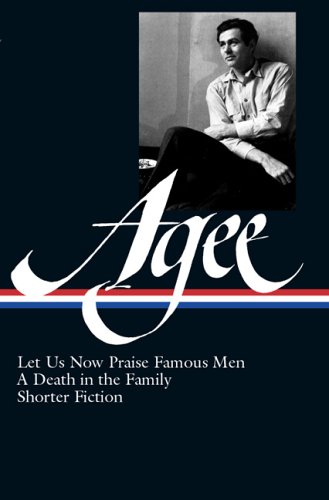
1. James Agee: Let Us Now Praise
$22.00
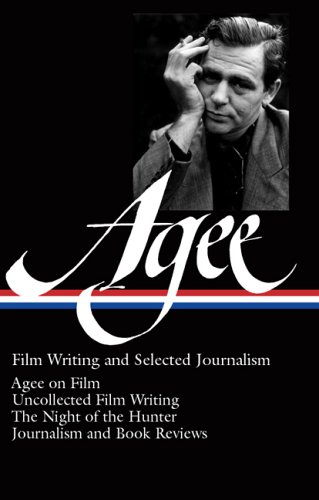
2. James Agee: Film Writing and Selected
$7.50
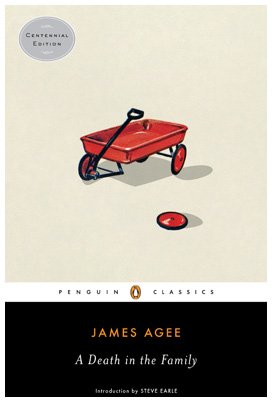
3. A Death in the Family
4. Letters of James Agee to Father
$42.00
5. James Agee Rediscovered: The Journals
 
$5.00
6. The Creative Process of James
7. American Silences: The Realism
 
$46.10
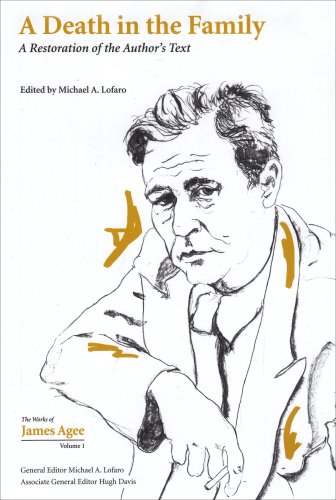
8. A Death in the Family: A Restoration
$17.45
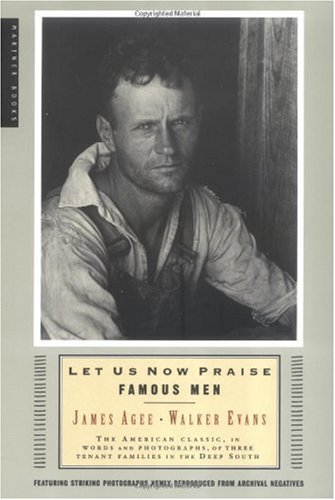
9. Let Us Now Praise Famous Men
$7.49
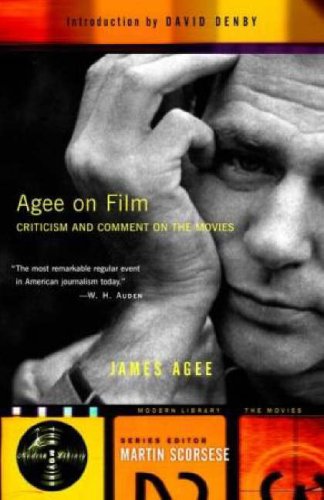
10. Agee on Film: Criticism and Comment
$10.07
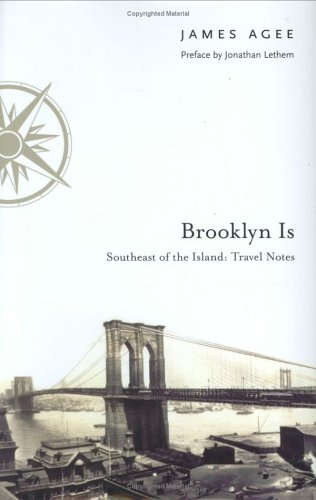
11. Brooklyn Is: Southeast of the
$15.23
12. James Agee: Selected Journalism
$36.91
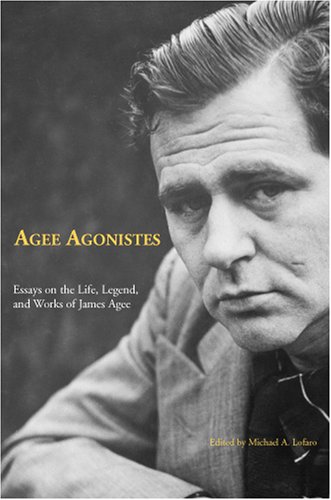
13. Agee Agonistes: Essays on the
 
14. LET US NOW PRAISE FAMOUS MEN
 
$19.99
15. James Agee: A Life
 
16. Letters of James Agee to Father
$5.95
17. James Agee's "A Death in the Family":
 
18. The Collected Poems of James Agee
 
19. The Collected Poems of James Agee
 
20. John Hersey and James Agee: A

1. James Agee: Let Us Now Praise Famous Men, A Death in the Family, Shorter Fiction (Library of America)
by James Agee
Hardcover: 818 Pages (2005-09-22)
list price: US$35.00 -- used & new: US$17.99
(price subject to change: see help)
Asin: 1931082812
Average Customer Review: 4.0 out of 5 stars
Canada | United Kingdom | Germany | France | Japan
Editorial Review

Book Description
A passionate literary innovator, eloquent in language and uncompromising in his social observation and his pursuit of emotional truth, James Agee (1909- 1955) excelled as novelist, critic, journalist, and screenwriter. In his brief, often turbulent life, he left enduring evidence of his unwavering intensity, observant eye, and sometimes savage wit.

This volume collects his fiction along with his extraordinary experiment in what might be called prophetic journalism, Let Us Now Praise Famous Men (1941), a collaboration with photographer Walker Evans that began as an assignment from Fortune magazine to report on the lives of Alabama sharecroppers, and that expanded into a vast and unique mix of reporting, poetic meditation, and anguished self-revelation that Agee described as "an effort in human actuality." A 64-page photo insert reproduces Evans's now iconic photographs from the expanded 1960 edition.

A Death in the Family, the Pulitzer Prize-winning novel that he worked on for over a decade and that was published posthumously in 1957, re-creates in stunningly evocative prose Agee's childhood in Knoxville, Tennessee, and the upheaval his family experienced after his father's death in a car accident when Agee was six years old. A whole world, with its sensory vividness and social constraints, comes to life in this child's-eye view of a few catastrophic days. It is presented here for the first time in a text with corrections based on Agee's manuscripts at the Harry Ransom Humanities Research Center.

This volume also includes The Morning Watch (1951), an autobiographical novella that reflects Agee's deep involvement with religious questions, and three short stories including the remarkable allegory "A Mother's Tale." ... Read more

Customer Reviews (4)

5-0 out of 5 stars An American Classic
This recently reissued collecton of Agee's work includes the brilliant, touching photos of Walker Evans with James Agee, photos made during the Depression Era of the 'thirties. Agee's writings are true Americana, his prose flows and the reader is made a part of the families about which he writes. This compilation belongs in the library of anyone concerned with human feelings in times of hurtin', hunger, and need. If you lived through the time,as I did, you will know it again through Agee's superb reflections on it.

5-0 out of 5 stars Rich Reading Experience
Lately, I find myself returning to literature written before I was born (1956).When I saw the review of LET US NOW PRAISE FAMOUS MEN in THE NEW YORKER, I became instantly convinced that I should purchase it.I'd known Agee's work since I was 13, when I first read DEATH IN THE FAMILY.I belonged to the Scholastic Book Club and every month my mother gave me change out of her the bottom of her purse so I could buy the books I had faithfully marked on my order form.I was haunted by this book as a teen, and I remain haunted still.I will always believe that few American writers ever achieved anything comparable to the beginning of DEATH IN THE FAMILY, a short italicized introduction which begins:"We are talking now of summer evenings in Knoxville, Tennessee in the time that I lived there so successfully disguised to myself as a child."Agee's sensory details throughout DEATH amaze.Another stunning passage reads:"Supper was at six and was over by half past.There was still daylight, shining softly and with a tarnish, like the lining of a shell;"I could go on, because every page of this book is a treasure.But I would like to turn my attention to LET US NOW PRAISE FAMOUS MEN, which I had never read until now.

I will preface my remarks by saying that I am a writer currently very interested in the distinction between fiction and non-fiction writing.Agee addresses this issue by saying:"In a novel, a house or person has his meaning, his existence, entirely through the writer.Here, a house or a person has only the most limited of his meaning through me:his true meaning is much huger."It's perhaps this interest of mine in the craft of writing itself that has made FAMOUS MEN so fascinating to me.

Another thing:In the beginning pages, Agee writes with absolute humility towards his own writing and his subject matter.This was stunning to me, because I've also read Agee's movie reviews, and in those writings Agee is witty, merciless, honest, and very confident in his own opinion.In short, they are some of the best movie reviews I have ever read.However, FAMOUS MEN is another kind of writing altogether. As Agee admits, his efforts to capture his subject matter through words were a failure.Words are inefficient, inadequate in matters so huge. He wrote:"If I could do it, I'd do no writing at all here.It would be photographs; the rest would be fragments of cloth, bits of cotton, lumps of earth, records of speech, pieces of wood and iron, phials of odors, plates of food and of excrement."

That FAMOUS MEN is not more popular does not surprise me, nor was Agee surprised, I think, when the book got bad reviews and suffered poor sales.FAMOUS MEN, I think, is not the sort of book that would ever gain wide acceptance.It is a flawed masterpiece that takes a lot of work to absorb, but well worth the effort.

I don't know the extent to which Agee may have been devastated, nonetheless, at the way America turned its back on his masterpiece.I do know that Agee seemed to suggest in the early pages of FAMOUS MEN that the worst thing that can happen to any artist is mass acceptance.Perhaps mass acceptance is something the writer both wants and fears; I don't know.But Agee does say in FAMOUS MEN that he felt that as soon as, say, Beethoven's music is used as a form of relaxation or as a background to the mundane activities human beings inevitably become so wrapped up in, then the music has lost its vitality. That is why Agee suggests:

"Get a radio or a phonograph capable of the most extreme loudness possible, and sit down to listen to a performance of Beethoven's Seventh Symphony or of Schubert's C-Major Symphony.But I don't mean just sit down and listen.I mean this:Turn it on as loud as you can get it.Then get down onto floor and jam your ear as close into the loudspeaker as you can get it and stay there, breathing as lightly as possible, and not moving, and neither eating nor smoking nor drinking.Concentrate everything you can into your hearing and into your body.You won't hear it nicely.If it hurts you, be glad of it."

The same might be said for FAMOUS MEN.You can't read it as you would some other books, even DEATH IN THE FAMILY, which has a nice and clean chronological structure.You have to really pay attention when you read FAMOUS MEN.If you concentrate, you will hear FAMOUS MEN in your whole body.And if it hurts you, you will be glad.

5-0 out of 5 stars An Overlooked-Writer
Let me be clear... I've not read the present volume though I've read the individual books collected in it years ago. "A Death in the Family" remains vivid in my memory, depite almost 30 years since I last read it, and "Let Us Now Praise Famous Men" is an absolute classic.

Though I have not yet received the LOA edition, I was compelled to add a review if only to counter the first reviewer here who is intent on seeing only ideology rather than the writing. If the work is looked at without the rose-colored glasses of (conservative) political correctness, you'll find there is an amazing writer and thinker behind the words.

Just read the works for yourself, not through an ideological smokescreen.

2-0 out of 5 stars Let Us Now Reexamine Famous Men
Agee was an outrageous bleeding-heart, a man whose life and work were compromised by posturing, mawkishness and complacency in anguish.Thegush of his prose--the hemorrhaging of that bleeding heart--is deeply and cloyingly purple. His endless rhapsodies betray a stubborn adolescence that will delight those who see an artist as a perpetual kid and repel those who don't.

Immense suffusions of tenderness are not the most helpful or respectful way of responding to fellow human beings, and they signal an obsession with one's own feelings instead of their ostensible object.In this regard, one notes that Agee's tenderness did not prevent him from engaging in serial adulteries and enforced threesomes, devoting his life to personal fulfillment rather than self-denying altruism, and indulging himself to death by the age of 45.Of course Agee felt guilty about all this (his writing fairly reeks of a rotting conscience), but he saw his guilt as a reassuring index of purity, like the parishioner who sees confession and absolution as a license to go on sinning.

Moreover, Agee's tenderness was reserved for the disadvantaged.The obverse of this solicitude was an affected brutality of reference to just about everyone else (except family and friends, his favorite artists and his latest lover).This tough-talking pose, which has not worn well, assumed a moral superiority that the record does not bear out.

Art and morality are not the same thing, but Agee thought they were, and this confusion permeates his work.Again and again he makes moral claims upon us which he thinks that his aesthetic project will validate.It does nothing of the kind: it merely aestheticizes.

What did Agee actually do for the Gudgers, Woods and Ricketts other than make the hearts of his readers bleed for them in as transient a fashion as his own?In one respect at least he did more harm than good.He over-idealized "Louise Gudger" to such an extent that he left her with a permanent sense of failure.Unable to reconcile Agee's fantasy portrait with the reality of her ordinary self, she finally committed suicide--further proof that sentimentality can be pernicious as well as meretricious.

Agee did possess extraordinary powers of lyric observation, and a sharp mind when he wanted to use it; but aching sensitivity, metastasizing into rapturous intoxication, tended to distort his vision, soften his rigor and trivialize his voice.He has his devoted followers, or rather his cultists, but one doubts that his place in the canon is as secure or exalted as they might wish, or as this Library of America volume would suggest. ... Read more


2. James Agee: Film Writing and Selected Journalism (Library of America)
by James Agee
Hardcover: 748 Pages (2005-09-22)
list price: US$40.00 -- used & new: US$22.00
(price subject to change: see help)
Asin: 1931082820
Average Customer Review: 4.0 out of 5 stars
Canada | United Kingdom | Germany | France | Japan
Editorial Review

Book Description
James Agee brought to bear all his moral energy, slashing wit, and boundless curiosity in the criticism and journalism that established him as one of the commanding literary voices of America at mid-century. In 1944 W. H. Auden called Agee's film reviews for The Nation "the most remarkable regular event in American journalism today." Those columns, along with much of the movie criticism that Agee wrote for Time through most of the 1940s, were collected posthumously in Agee on Film: Reviews and Comments, undoubtedly the most influential writings on film by an American.

Whether reviewing a Judy Garland musical or a wartime documentary, assessing the impact of Italian neorealism or railing against the compromises in a Hollywood adaptation of Hemingway, Agee always wrote of movies as a pervasive, profoundly significant part of modern life, a new art whose classics (Chaplin, Dovzhenko, Vigo) he revered and whose betrayal in the interests of commerce or propaganda he often deplored. If his frequent disappointments could be registered in acid tones, his enthusiasms were expressed with passionate eloquence. This Library of America volume supplements the classic pieces from Agee on Film with previously uncollected writings on Ingrid Bergman, the Marx Brothers, Alfred Hitchcock's Lifeboat, Vittorio De Sica's Shoeshine, and a wealth of other cinematic subjects.

Agee's own work as a screenwriter is represented by his script for Charles Laughton's unique and haunting masterpiece of Southern gothic, The Night of the Hunter, adapted from the novel by Davis Grubb.This collection also includes examples of Agee's masterfully probing reporting for Fortune-on subjects as diverse as the Tennessee Valley Authority, commercial orchids, and cockfighting-and a sampling of his literary reviews, among them appreciations of William Faulkner, Virginia Woolf, S. J. Perelman, and William Carlos Williams. ... Read more

Customer Reviews (1)

4-0 out of 5 stars Film Writing and Selected Journalism
Includes the classic Agee on Film as well as the screenplay for the classic, chilling Night of the Hunter, this is a must read for film fans of the WWII era.Never shy to express an opinion, Agee wrote with great passion and intellegence about the films of the period.I was esp. impressed with the features he wrote for the fledgling perodical - The Nation.When he discovered a film he liked, he would delve into great detail on what interested him in the work (sometimes pieces would continue from one issue into the next).I also appreciated his willingness to say that a film touched a particular interest in him and might not be to the taste of all readers (can you imagine a critic doing that today - actually putting him or herself out there as just another spectator as opposed to a critical god....)As with the theatrical writings of Ken Tynan - a treasure. ... Read more


3. A Death in the Family
by James Agee
Paperback: 320 Pages (1998-07-28)
list price: US$13.95 -- used & new: US$7.50
(price subject to change: see help)
Asin: 0375701230
Average Customer Review: 4.0 out of 5 stars
Canada | United Kingdom | Germany | France | Japan
Editorial Review

Book Description
Forty years after its original publication, James Agee's last novel seems, more than ever, an American classic. For in his lyrical, sorrowful account of a man's death and its impact on his family, Agee painstakingly created a small world of domestic happiness and then showed how quickly and casually it could be destroyed.

On a sultry summer night in 1915, Jay Follet leaves his house in Knoxville, Tennessee, to tend to his father, whom he believes is dying. The summons turns out to be a false alarm, but on his way back to his family, Jay has a car accident and is killed instantly. Dancing back and forth in time and braiding the viewpoints of Jay's wife, brother, and young son, Rufus, Agee creates an overwhelmingly powerful novel of innocence, tenderness, and loss that should be read aloud for the sheer music of its prose.

"An utterly individual and original book...one of the most deeply worked out expressions of human feeling that I have ever read."--Alfred Kazin, New York Times Book Review

"It is, in the full sense, poetry....The language of the book, at once luminous and discreet...remains in the mind."--New Republic

"People I know who read A Death in the Family forty years ago still talk about it. So do I. It is a great book, and I'm happy to see it done anew."--Andre Dubus, author of Dancing After Hours and Meditations From A Moveable Chair ... Read more

Customer Reviews (67)

5-0 out of 5 stars Beautiful prose
I was kind of appalled to see only one review for what I consider to be one of the greatest novels ever written, so I thought I'd write another rousing endorsement for a book that is (literally) sheer poetry.If you read only ten works in your life, make this one of them; many parallels to James Still's "River of Earth" (another "coming of age" memoir), including the pure pleasure of reading the words as put together.All characterizations ring true, the "postcard" of a past now gone forever is unforgettable, and it's in parts quite funny (such as the young children's interpretations of what they don't quite understand being said and done around them).As explained in the prologue of the edition I found, Agee died before he'd finished refining the work; as a result, parts are left unassigned to a particular order.These were inserted, just as written, fairly skillfully after his death, although the italics got a bit tiresome to read.Overall, however, it works.Someone once said, "We read books to know we are not alone."If ever you've suffered a loss and as a result seen your happy world turn dark and changed forever, you'll relate to and find comfort (and company) in this book.

4-0 out of 5 stars Chonicling loss...
Loss can be experienced, but never fully understood, Perhaps some revelation may come from the tumult of feeling, yet the
chaotic jumble of diverse,conflicting emotions as a whole defies conscious, rational description. W. Somerset Maugham, someone who can be considered a master of introspective narrative, coveredvirtuallythewholerangeofhuman emotion in"Of Human Bondage", yet failed to satisfactorarily explore grief over bereavement. Joan Didion in her Amazon.com Editors' Top Pick of 2005 nonfiction work "The Year of Magical Thinking" fell far short. Perhaps loss cannot be explained so much as put into perspective, either through the chronicling of its immediate impact, or its gradual dissipitation from consciousness.

Or perhaps I haven't read enough on the subject, a possibility which is admittedly as high asthatof my conjectures being correct.However, "A Death in the Family" goes some way in remedying this deficit.

A Pulitzer Prize winner, "A Death in the Family" covers the short time span from just before the father of a family leaves on a journey in which he suddenly dies in a car accident, until his funeral.The thoughts and interactions between many characters central and peripheral to the incident, including his wife, their children, as well as the in-laws are painstakingly and vividly rendered, delining a portrait of - as the title plainly states - a death in the family.

Unable to come to grips with the enormity of grief, the widow's mind first turns to irreverent matters (the blasphemy of trying out a mourning veil in front of the mirror before the funeral) and then to finding solace in her religion. The narrative gist regarding religion on the part of the author registers as part bafflement,and part sheer anger and frustration at the what he percieves as docile, imbecilic submission to such obvious capriciousness. "God, if You exist, come here and let me spit in Your face.", he has one character think.

Such irreverency and inadequecy of mortal thought in face of something as unfathomable as death is convincing and uncontrived, as are the innocence of the dead man's children. ('Could I call myself a half-orphan?'wonders the son, thinking to impress his schoolmates.)

Reading such a novel gives one a sense of catharsis, as well as something like the euphoria one has in waking from a nightmare. But however vivid or realistic a written work may be, can it truly prepare one for loss?

5-0 out of 5 stars A Sad Story with some Great Lines
I don't normally like sad stories, but this novel had a so many beautiful lines that it deserves the high praise it has received. Here are a few of them--what passion!

I hope my efforts at finding these wonderful lines makes your reading of my review worthwhile:

"Just one way, you do get back home. You have a boy or a girl of your own and now and then you remember, and you know how they feel, and its almost the same as if you were your own self again, as young as you could remember" (p. 94).

"'Look at me, Poll,' he said. She looked at him. `That's when you're going to need every ounce of common sense you've got,' he said. `Just spunk won't be enough; you've got to have gumption. You've got to bear it in mind that nobody that ever lived is especially privileged; the axe can fall at any moment, on any neck, without any warning or any regard for justice. You've got to keep your mind off pitting your own rotten luck and setting up any kind of howl about it. You've got to remember that things as bad as this and a hell of a lot worse have happened to millions of people before and that they've come thought it and that you will too. You'll bear it because there isn't any choice--except to go to pieces. You've got two children to take care of. And regardless of that you owe it to yourself and you owe it to him. You understand me'" (p. 148-149).

"One by one, million by million, in the prescience of dawn, every leaf in that part of the world was moved" (p. 201).

"On the rough wet grass of the back yard my father and mother have spread quilts. We all lie there, my mother, my father, my uncle, my aunt, and I too am lying there....They are not talking much, and the talk is quiet, of nothing in particular, of nothing at all in particular, of nothing at all. The stars are wide and alive, they seem each like a smile of great sweetness, and they seem very near. All my people are larger bodies than mine, quiet, with voices gentle and meaningless like the voices of sleeping birds....By some chance, here they are, all on this earth; lying, on quilts, on the grass, in a summer evening, among the sounds of the night. May God bless my people, my uncle, my aunt, my mother, my good father, oh, remember them kindly in their time of trouble; and in the hour of their taking away" (p. 15).

Highly recommended.

5-0 out of 5 stars An American Treasure
This book is a classic of 20th century American literature.You don't need a review by an amatuer -- it has been covered well by professional critics.
The narrative could justly be called the ultimate "family values" novel. Much, but by no means all, of the story is told through the eyes of six-year-old Rufus. However, James Agee also gives the reader fully grown-up glimpses into the hearts of all the main characters.We see the deepest bonds of love transcending profound differences. Devout Catholics and deeply conflicted agnostics cling to each other in the face of death's finality.
This is no sweetness and light, easy answers book.It is troubling and haunting, but in the end inspiring.

5-0 out of 5 stars An important work after all of these yeara
After all of these years,it was the first novel I recommended to someone when they asked for suggestions for reading "classic' literature. I still think about this book-it had a great impact on me when I was in my 20's. ... Read more


4. Letters of James Agee to Father Flye
Hardcover: Pages (1962)

Asin: B000GQTTXM
Canada | United Kingdom | Germany | France | Japan

5. James Agee Rediscovered: The Journals for 'Let Us Now Praise Famous Men' and Other New Manuscripts
Hardcover: 488 Pages (2005-04-28)
list price: US$42.00 -- used & new: US$42.00
(price subject to change: see help)
Asin: 1572333553
Average Customer Review: 4.0 out of 5 stars
Canada | United Kingdom | Germany | France | Japan

Customer Reviews (2)

3-0 out of 5 stars The Excesses of Early Fame.
When I saw this newest book about Agee at the downtown library, I was (at first) relieved that Dr. Lofaro had used an innocuous title, not what he'd threatend at a public meeting I attended here in Knoxville some time ago.A recent one, AGEE AND CHAPLAIN, told things I really would rather not have known about his latter days.This one is purely documentary, using previously unpublished materials, but very heavily edited.I'm not a great fan of Agee, so I overlooked this fallacy; for those purists who hate change, it may be a different matter altogether.

"In 1988, the Special Collections Library at the University of Tennessee purchased the papers of David McDowell, publisher and editor of ...A DEATH IN THE FAMILY."McDowell is the author of two volumes of AGEE ON FILM in 1958 and 1960.It was with much trepidation I put off perusing this volume.Now, I find it's just an interim, as Lofaro hasn't gotten around to descrecrating Agee's Pulitzer prize winning novel yet."The manuscript relating to A DEATH IN THE FAMILY and "John Carter" will be dealt with in subsequent works."I plan to skip it.

In 1992, Mr. Lofaro edited JAMES AGEE: RECONSIDERATIONS.He's no expert on Knoxville's "claim-to-fame" author, coming from Connecticutt.He just happend to be in the right place at the right time to use the plethora of "six hundred pages of mostly handwritten Agee manuscripts, three bound journals, two unpublished chapters of A DEATH IN THE FAMILY, and an extensive collection of poems and drafts of poetry [included in this book], particularly of "John Carter," Agee's unfinished Byronic epic."

The best thing about this book is the Chronology of Agee's short (but full) life and the few candid photos of him as a young man in the 30's in New York.In one of the journals, Agee wrote: "though I knew the south, the Tennessee mountain-city-valley aspects of it, I knew little or nothing about the cotton country."That is the focal point of his LET US NOW PRAISE FAMOUS MEN written in part as a response to the 1937 YOU HAVE SEEN THEIR FACES by Erskine Caldwell and his wife, the photographer Margaret Bourke-White.

Other notables which caught my interest as explained in footnotes throughout, this one in particular:"Percival Lowell, astronomer and brother of poet Amy Lowell, wrote three books on Mars arguing that the planet's canals had been constructed by intelligent beings and devoted much of his career searching for "Planet X."When the ninth planet was discovered at Lowell Observatory in Arizona, it was named partially in his honor, the 'Pl' in 'Pluto' standing for his initials."

In addition to the obscure poems of this sensitive, asthetic author, "Notes on World History," and "Notes from backs of envelopes," there are letters -- personal letters which had been held in The Agee Trust.I'm sure it took much dilligence on the part of the doctoral student, Hugh Davis, to get this in shape and for Lofaro to do the final editing.

5-0 out of 5 stars background of Agee's writings seen in his journals
Drafts and fragments of James Agee's eclectic writings from the 1930s to near the end of his life in the 1950s--from the Depression to post-War United States--offer incomparable access to his eye which was the source for this writings, his note-taking habits, and the self-editing he engaged in. Such self-editing by Agee, or any other writer, not only evidences the concern with grammar and clarity of expression, but also with the author's moral sense, impulses, instinct for communication, and philosophy. The writings, many with print markings resembling or symbolizing changes made by Agee, are journal entries and drafts of poems, novels, essays, and writings such as scripts or treatments Agee did for Hollywood. Sixteen previously unpublished photographs by Walker Evans, including some of Agee, are also found in the volume; thus once again linking this famous photographer and author who together did the unforgettable portrayal of the Depression, "Let Us Now Praise Famous Men." ... Read more


6. The Creative Process of James Agee (Southern Literary Studies)
by James Lowe
 Hardcover: 200 Pages (1994-07)
list price: US$30.00 -- used & new: US$5.00
(price subject to change: see help)
Asin: 0807118966
Canada | United Kingdom | Germany | France | Japan

7. American Silences: The Realism of James Agee, Walker Evans, and Edward Hopper
by J. A. Ward
Hardcover: 210 Pages (1985-01)
list price: US$35.00
Isbn: 0807111791
Canada | United Kingdom | Germany | France | Japan

8. A Death in the Family: A Restoration of the Author's Text (Collected Works of James Agee)
 Hardcover: 615 Pages (2007-12-30)
list price: US$49.95 -- used & new: US$46.10
(price subject to change: see help)
Asin: 1572335947
Canada | United Kingdom | Germany | France | Japan

9. Let Us Now Praise Famous Men
by James Agee
Paperback: 512 Pages (2006-04-06)
-- used & new: US$17.45
(price subject to change: see help)
Asin: 0141188499
Average Customer Review: 4.0 out of 5 stars
Canada | United Kingdom | Germany | France | Japan
Editorial Review

Amazon.com
Just what kind of book is Let Us Now Praise Famous Men? It contains many things: poems; confessional reveries; disquisitions on the proper way to listen to Beethoven; snippets of dialogue, both real and imagined; a lengthy response to a survey from the Partisan Review; exhaustive catalogs of furniture, clothing, objects, and smells. And then there are Walker Evans's famously stark portraits of depression-era sharecroppers--photographs that both stand apart from andreinforce James Agee's words.

Assigned to do a story forFortune magazine about sharecroppers in the Deep South, Agee and Evans spent four weeks living with a poor white tenant family, winning the Burroughs's trust and immersing themselves in a sharecropper's daily existence. Given a first draft of the resulting article, the editors at Fortune quite understandably threw up theirhands--as did several other editors who subsequently worked with a later book-length manuscript. The writing was contrary. It refused to accommodate itself to the reader, and at times it positively bristled with hostility. (What other book could take Marx as the epigraph and then announce: "These words are quoted here to mislead those who will be misled by them"?) Response to thebook was puzzled or unfriendly, and Let Us Now Praise Famous Men sputtered out of print only a few short years after its publication. It took the 1960s, and a vogue for social justice, to bring Agee's masterwork the audience it deserved.

Yet the book is far more interesting--aesthetically and morally--than the sort of guilty-liberal tract for which it is often mistaken. On an existential level, Agee's text is a deeply felt examination of what it means to suffer, to struggle to live in spite of suffering. On a personal level, it is the painful, beautifully written portrait of one man's obsession. In its collaboration with Evans's photographs, the book is also agroundbreaking experiment in form. In the end, however, it is more than merely the sum of its parts. Let Us Now Praise Famous Men is, quite simply, a book unlike any other, simmering with anger and beauty and mystery. --Mary ParkBook Description
With its signature photographs reshot from archival negatives, an elegant new edition of the "most realistic and most important moral effort of our American generation" (Lionel Trilling) Published nearly sixty years ago, Let Us Now Praise Famous Men stands as an undisputed masterpiece of the twentieth century, taking its place alongside works by Henry David Thoreau, Herman Melville, and Walt Whitman. In a stunning blend of prose and images, this classic offers at once an unforgettable portrait of three tenant families in the Deep South and a larger meditation on human dignity and the American soul. In the summer of 1936, James Agee and Walker Evans set out on assignment for Fortune magazine to explore the daily lives of sharecroppers in the South. There they lived with three different families for a month; the result of their stay was an extraordinary collaboration, an unsparing record of place, the people who shaped the land, and the rhythm of their lives. Upon its first publication, Let Us Now Praise Famous Men was called intensely moving, unrelentingly honest. It described a mode of life -- and rural poverty -- that was unthinkably remote and tragic to most Americans, and yet for Agee and Evans, only extreme realism could serve to make the world fully aware of such circumstances. Rejected by Fortune as too unwieldy, it was published for the first time in book form in 1941. Today it stands as a poetic tract for its time, a haunting search for the human and religious meaning in the lives of true Southern heroes: in their waking, sleeping, eating; their work; their houses and children; and their endurance. With an elegant design and a sixty-four-page photographic prologue of Evans's classic images, reshot from archival negatives, the new edition reintroduces the legendary author and photographer to a new generation. Both an invaluable part of the American heritage and a graceful tribute to the vibrant souls whose stories live in these pages, this book has profoundly changed our culture and our consciousness -- and will continue to inspire for generations to come. ... Read more

Customer Reviews (22)

5-0 out of 5 stars A timeless classic...
James Agee's painstaking and honest masterpiece is an exercise in empathy.It is a beautiful, tortured writing that speaks to both the deplorable conditions of the Depression-era souther sharecropper and the humanity of trying to present them in a favorable light.

Agee's writing style is at times erratic-- which helps to give the book its character.It is often self-doubting, as Agee calls himself a spy and frequently second guesses his role in accurately reporting the families' lives.Beautifully done and a groundbreaking classic in ethnographic fieldwork-- a must read!

3-0 out of 5 stars If nothing else, certainly brilliant and thought-provoking
Let us Now Praise Famous Men, in all its poetry and prose, reminds me of an epic, like the Hindu Mahabharata or Homer's Iliad and Odyssey. The lyrical narrative reveals just as much, if not more about Agee, than his subjects. His writing style excludes his subjects as readers.

His prose, which tends to be lofty and cerebral, is also beautiful and brilliant. But, I often wondered, who he was
writing for? The New Yorker audience? The distance in his observations often left me feeling cold. I imagine these hardworking sharecroppers exhibiting some joy, some evidence of warmth, of hope. But I had difficulty finding it in Agee's voice.

The length of Agee's sentences and paragraphs were long, each containing an entire scene, and I labored through them, hoping sleep would not steal me from a passage I might not finish. It was as though Agee too, was afraid sleep would come and steal him from his mission, and so kept hacking away at each sentence, adding commas and colons and semi-colons, lingering his thoughts across the page.

Whatever level of consciousness Agee existed, I could not hang with him for any more than a couple of sentences, as I would fall off the page and have to find my way back into the scene. Where was I? You get the picture...

Agee also uses parenthesis and colons, often not giving his parenthesis a mate: (This struck me as rather unusual and often, cold and detached--more like a voyeur. Did he fabricate his own method of communication using punctuation or was this being done elsewhere at the time? I felt left out of his thoughts when he did this, like when two people are communicating via sign language and you can't make out a word they're saying. Was he doing this in a way to urge us to "think," to stretch beyond the ordinary conventions and try something on that is foreign and unfamiliar, like his subjects and their hardship?

3-0 out of 5 stars Topic great, writers not so great.
The eloquence of composition surely necessitated infinite use of superlatives and verbs, resulting in a requisite painstaking remostrance to the reader, thus fettering the effusion and disembogulation of the document.In other words, wouldn't it have been better to just leave all of the fluff out of the book and just write as if the reader is someone other than the Queen of England?If you can weed through all of excessive use poems and verbs, it's a halfway decent book

4-0 out of 5 stars I thought I hated it at points, but I've never been able to get it out of my head.
This book is an amazing work of art.At times it's baffling, and at times almost impertinent--like when the author decides to describe every object in an entire home, and yet in all these things and in all the conflicting emotions it evokes, it creates a mood and a feeling and a setting that will seep into your skin and fog your brain for months.
The writing is beautiful, the story it tells--of poor, sharecropping, depression-era families--is heartbreaking, and the experience of reading about it all is like a baptism by fire.This book just might re-wire your brain.
I think this is a much better read than Agee's "A Death in the Family," and that one won the Pulitzer Prize.Read this, for sure.
I read it on a bus trip across Guatemala, and the way Agee's descriptions of the old southern poverty fit the poor little towns full of Guatemalan coffee pickers was uncanny.
Let Us Now Praise Famous Men, and let us start with James Agee.

UPDATE: It's years later, and this book has never stopped haunting me.I think of it almost daily.If I were to review it today, I would definitely give it Five Stars.

5-0 out of 5 stars A Classic
Excellent editon of this wonderful, classic work.A series of visual and verbal snapshots of the South as a third world country, the South of the 1930's. ... Read more


10. Agee on Film: Criticism and Comment on the Movies (Modern Library the Movies)
by James Agee
Paperback: 496 Pages (2000-03-07)
list price: US$23.00 -- used & new: US$7.49
(price subject to change: see help)
Asin: 0375755292
Average Customer Review: 5.0 out of 5 stars
Canada | United Kingdom | Germany | France | Japan
Editorial Review

Book Description
"In my opinion, [Agee's] column is the most remarkable regular event in American journalism today."--W. H. Auden

James Agee was passionately involved with the movies throughout his life. A master of both fiction and nonfiction, he wrote about film in clean, smart prose as the reviewer for Time magazine and as a columnist for The Nation. Agee was particularly perceptive about the work of his friend John Huston and recognized the artistic merit of certain B films such as The Curse of the Cat People and other movies produced by Val Lewton. ... Read more

Customer Reviews (7)

5-0 out of 5 stars The Master Writes His Love
James Agee was a great writer (his book about the Dust Bowl is a classic).He continued to be a brilliant writer in his film reviews and his scripts.Thank you, Modern Library, for returning these collections of writing to us.They are wonderful to read and they make you think!

5-0 out of 5 stars He created serious film criticism
I still have my first edition copy of Agee on Film.

A production on the stage is seen once and then is gone forever. Curiously, despite the fact that a film can be viewed repeatedly, once upon a time revivals were rare, and most audiences saw a film once, talked about it, then forgot about it.

Even the film studios only half-heartedly treated their products as permanent, allowing many of them to deteriorate irretrievably and others nearly so (eventually giving rise to an entire industry devoted to film restoration).

Films were given a new life with the advent of television. Growing up on old movies on the tube in the 1950s, I found that repeated viewing of the same film could be a rich experience, and nothing enhanced this experience more than the appearance in the early 1960s of Agee on Film.

Agee took film seriously as a cultural experience, a molder of public opinion, a tool that might be useful or dangerous. Just how much he differs from mainstream reviewers who regarded the movies primarily as entertainment can be seen in the two different sets of reviews in this book.

His reviews in the liberal The Nation are extended analyses of the films and the sensibilities of the filmmakers, withering critiques of the limitations of the studio system, and manifestos on how good films could have been made better. Agee interpolates in his reviews his opinions about everything: The War (WWII, of course), politics, race, education, religion, psychology, philosophy ... the list goes on.

In contrast, his reviews for Time, constrained by that magazine's conservatism, are truncated and absent the depth andbite that distinguishes Agee from all other critics. His beautiful use of language keeps him afloat, but were it not for The Nation, I doubt Agee would have the reputation of Greatest Film Critic of All Time.

Agee on Film was originally in two volumes. The first was the current book. The second was a collection of Agee's own screenplays, including the classic The Night of the Hunter; Noa Noa, a fascinating teleplay about Gaugin (very different from Maughams' The Moon and Sixpence); and his magnificent adaptation of the The African Queen. Thus, he was able, unlike most critics, and with admirable results, to put his pen where his critique was.

James Agee almost single-handedly popularized the appreciation of film as an art form. The writing in this book is how he did it.

5-0 out of 5 stars James Agee, an inspiring critic
Ever wonder what causes a movie reviewer to *become* a movie reviewer? When I was a ten-year-old kid just getting into classic movie comedies, I went to the library and checked out the book AGEE ON FILM solely because it had references to Charlie Chaplin and W.C. Fields. Thus was my introduction to high-quality film criticism.

James Agee made his reputation writing sterling movie reviews for Time and The Nation magazines in the 1940's. Among other glories, he wrote a much-heralded essay titled "Comedy's Greatest Era" that helped to bring silent-comedy icons (most notably Harry Langdon) out of mothballs and caused them to be re-viewed and discussed seriously among film historians.He later went on to work on the screenplays of a couple of gems titled The African Queen and Night of the Hunter.

Unfortunately, many people who regard the critics Pauline Kael and Stanley Kauffmann have either forgotten Agee's work entirely or have assigned his own work to mothballs. But among the faithful are film director Martin Scorsese, who serves as editor of the "Modern Library: The Movies" series of film books. The series has recently reissued the AGEE ON FILM book, and re-reading Agee's work (or reading it for the first time, if you're lucky enough) proves that film criticism can make for reading material as compelling as any fictional novel.

Agee passes the acid test for any film critic: Even if you don't agree with him, his writing is so lively that you can't help enjoying it. His work ranges from three separate columns (three weeks' worth, in print terms) to Chaplin's much-maligned (at the time) MONSIEUR VERDOUX, to the most concise, funniest review ever: Reviewing a musical potboiler titled YOU WERE MEANT FOR ME, Agee replied in four simple words, "That's what *you* think."

If you want to see what high-caliber movie criticism meant in the pre-Siskel & Ebert days, engross yourself in this sprawling book. It'll make you appreciate the decades before every newspaper, newsletter, and Internet site had its own minor-league deconstructionist of Hollywood blockbusters.

4-0 out of 5 stars Resurrected Film Study
James Agee was short for this world, having died in his mid 40s.In that span of time he wrote a famous book, Let Us Now Praise Famous Men, and a couple of classic screenplays, AFRICAN QUEEN and NIGHT OF THE HUNTER.This collection of magazine film reviews and essays is in many ways the leftover part of his work, and yet it feels like enough to make a reputation on.His reviews span just one decade, the 1940s.Many of them tackle foreign films that may be unavailable for all I know.

Interesting to me is that he spends three weeks discussing Chaplin's MONSIEUR VERDOUX, which is a most unusual movie and mostly forgotten today.This might be because he saw it as his only chance to write a poignant piece on the greatest living film artist, or it may be because he identified with the plight of mankind theme that Chaplin was reaching for.You can pick another reason, yourself, but it was a bold decision, because most critics panned the film (according to him) and most readers probably couldn't even see the movie in their small towns.It was as if he knew he would be writing for posterity.Like all critics, he cultivated his darlings.He saw much in the work of John Huston and was very skillful in his sizing up of TREASURE OF THE SIERRA MADRE.I was impressed that he predicted the all-time classic nature of the film, but also understood the studio system gimmicks that took away from the genius.

You don't have to be literary minded like W. H. Auden to enjoy this book.You'll like it, if you like movies.

5-0 out of 5 stars More than we ever deserved . . .
James Agee wrote film criticism in America at a time when the American film industry hardly deserved his attention.His celebrations of silent film comedy, of Preston Sturges, of John Huston [for whom he later wrotethe script for The African Queen], and of the handful of worthy foreignfilms that he managed to see are what make this volume worth reading. Besides Agee's beautiful prose and above all his compassion. Interestingly, Agee was a fan of Frank Capra's comedies (It Happened OneNight) and bemoaned the director's decent into serious social films (MrSmith Goes To Washington, Meet John Doe).His negative review of It's aWonderful Life, which has never been in print since it appeared in 1946,reveals the extent to which Agee was perhaps too far ahead of his time, andeven of ours. ... Read more


11. Brooklyn Is: Southeast of the Island: Travel Notes
by James Agee, Jonathan Lethem
Hardcover: 64 Pages (2005-10-01)
list price: US$16.95 -- used & new: US$10.07
(price subject to change: see help)
Asin: 0823224929
Canada | United Kingdom | Germany | France | Japan
Editorial Review

Book Description
For the first time in book form—a great writer’s classic celebration of the essence of Brooklyn.In 1939, James Agee was assigned to write an article on Brooklyn for a special issue of Fortune on New York City. The draft was rejected for “creative differences,” and remained unpublished until it appeared in Esquire in 1968 under the title “Southeast of the Island: Travel Notes.”Crossing the borough from the brownstone heights over the Brooklyn Bridge out through backstreet neighborhoods like Flatbush, Midwood, and Sheepshead Bay that roll silently to the sea, Agee captured in 10,000 remarkable words, the essence of a place and its people. Propulsive, lyrical, jazzy, and tender, itspitch-perfect descriptions endure even as Brooklyn changes; Agee’s essay is a New York classic. Resonant with the rhythms of Hart Crane, Walt Whitman, and Thomas Wolfe, it takes its place alongside Alfred Kazin’s A Walker in the City as a great writer’s love-song to Brooklyn and alongside E. B. White’s Here Is New York as an essential statement of the place so many call home. James Agee was born in Knoxville, Tennessee, in 1909. One of the great prose stylists of the past century, Agee wrote in many forms—poetry, short stories, novels, essays, commentary, and criticism. In 1958 he won the Pulitzer Prize for fiction for A Death in the Family, and he also wrote the classic account of poor Southern farmers, Let Us Now Praise Famous Men, accompanied by Walker Evans’s documentary photographs. With John Huston, he wrote the Oscar-nominated screenplay for The African Queen, and he was an influential film and theater critic for Time and The Nation. James Agee died in 1955 of a heart attack in a New York City taxicab. In the fall of 2005, the Library of America will publish a two-volume collection of his writings. Jonathan Lethem’s novels include Fortress of Solitude and Motherless Brooklyn, which won the National Book Critics Circle Award, his most recent book is The Disappointment Artist. Lethem was born and raised in Brooklyn, where he still lives. ... Read more


12. James Agee: Selected Journalism
by James Agee
Paperback: 192 Pages (2005-12-30)
list price: US$19.95 -- used & new: US$15.23
(price subject to change: see help)
Asin: 1572334290
Canada | United Kingdom | Germany | France | Japan

13. Agee Agonistes: Essays on the Life, Legend, and Works of James Agee
Hardcover: 334 Pages (2007-05-30)
list price: US$48.00 -- used & new: US$36.91
(price subject to change: see help)
Asin: 1572335742
Canada | United Kingdom | Germany | France | Japan

14. LET US NOW PRAISE FAMOUS MEN
by James Agee and Walker Evans
 Hardcover: 471 Pages (1960)

Asin: B000GQQ9HG
Canada | United Kingdom | Germany | France | Japan

15. James Agee: A Life
by Laurence Bergreen
 Hardcover: 467 Pages (1984-07-12)
list price: US$20.00 -- used & new: US$19.99
(price subject to change: see help)
Asin: 0525242538
Average Customer Review: 4.0 out of 5 stars
Canada | United Kingdom | Germany | France | Japan

Customer Reviews (2)

4-0 out of 5 stars The Goods and the Bads
Description:
A biography of the American journalist, novelist, and screenwriter James Agee.

The Good:
This book is a solidly written account of James Agee's life from his youngest days to his infamously early death of a heart attack in the 1950s.I've been fanatical about Agee since I read _Let Us Now Praise Famous Men_, and this book is a great read for anyone who's interested in his works but unfamiliar with the life of the man himself.I devoured this biography.

The Bad:
Two things come to mind.The first and most relevant is that Bergreen draws on Agee's own writing (in _Let Us Now Praise Famous Men_, _A Death in the Family_, and other books) to flesh out his depiction of Agee's life.It's a bit disconcerting to find quotes that supposedly describe Agee's fictional characters applied to the author's life as if taken directly from a non-fiction source.Granted, Agee's novels were little more than dressed-up autobiographies, but it's hard to shake the feeling that Bergreen shouldn't be quoting them directly as if they were unequivocal truth.
Secondly, for someone who's come to admire Agee for his extraordinary prose, it can be a bit of a shock to discover that he was just a mere mortal, and a pretty flawed one at that.To focus only on the negatives in the book would give us a portrait of Agee as a self-obsessed alcoholic incapable of restraining his puerile sexual urges, causing untold damages to his relationships with his friends and family.Of course Bergreen is a very fair biographer and we don't only get this impression, but it's still somewhat difficult to imagine the man described acted as the vessel for the literary legacy that outlived him.

The Verdict:
Agee: A Life is a wonderfully written biography of the flawed genius who was James Agee.The photographs are a great addition, as they allow the reader to look over the friends and the various women who passed through his life.Highly recommended for those who are interested in the inspirations for his work and the conditions under which Agee wrote his articles, novels and scripts.

4-0 out of 5 stars A very sad story
James Agee was a tremendously talented writer.And apparently a real drunk.This is a very sad and familiar story.Bergreen tells the story well, one of those tales that makes us wonder what in the world is going on inside our heads.On the other hand, one might say Agee simply had a rather commn disease (alcoholism) at a time when effective help was still hard to get.(He was 45 years old when he died of a heart attack in 1955.)
I read "Let us Now Praise Famous Men" when I was sixteen years old and it had a tremendous impact on me.It's a book to keep coming back to.Agee seemed so interested in the plight of others.It's a shame he didn't get the help that may have benefitted him.I look forward to reading Erik Wensberg's biography. ... Read more


16. Letters of James Agee to Father Flye
by James Agee
 Paperback: 271 Pages (1971)

Isbn: 0345023609
Average Customer Review: 5.0 out of 5 stars
Canada | United Kingdom | Germany | France | Japan
Editorial Review

Product Description
Includes a preface and previously unpublished letters by Father Flye. ... Read more

Customer Reviews (1)

5-0 out of 5 stars A must-read for any aspiring writer
I think James Agee is one of the finest authors in American history, so don't expect this review to be objective.
That said, to read James Agee, is to become obsessed by Agee, and to feel an extreme kinship with him such as few other authors could ever inspire.
"Letters of James Agee to Father Flye" is not a perfect book, but it is a magnificent one, full of beautifully expressed thoughts on writing, the writing life, spiritual belief, intellectual honesty, family, and success.I found myself frequently underlining passages in this book, talking about to everyone who would listen, and feeling a strong feeling about it that I can only compare with being young and smitten and with eating really good red chile--in other words, with being in love.I love this book.I love James Agee.
Any fan of his could read and enjoy this, as could any fan of good writing, but I believe that writers especially would benefit from his thoughts on becoming both a good person and being a good writer, on the main goals of writing---to discover a truth and to express that truth as clearly as possible---and on avoiding artificiality.
His rant against "smug safeplaying" in writing is worth the cost of the book just by itself.
The book's faults, I thought, lay in the latter portion in which he and Father Flye wrote back and forth to each other in verse, for weeks, and which got a bit tedious, and in some of Father Flye's footnotes and letters of his own which I think should not have been included.
Father Flye, by the way, was Agee's childhood priest, and a good friend of his, and the two wrote sporadic letters back and forth to each other for most of Agee's adult life.
Robert Phelps's introduction to this collection is well-written, and the book also offers a nice, if peripheral, portrait of Joel Agee, James's son who went on to become a well-known writer himself.
Anyone who read and loved "A Death in the Family" would enjoy Agee's writing about his father's death here.And anyone who read and enjoyed "Let Us Now Praise Famous Men" would enjoy reading about Agee's time researching that book in the Deep South and his difficulty in writing it.
This is a highly recommended book.To me, my feelings for it are almost beyond words, and I'm sure I will read it again. ... Read more


17. James Agee's "A Death in the Family": A Study Guide from Gale's "Novels for Students" (Volume 22, Chapter 5)
Digital: 37 Pages (2005-10-10)
list price: US$5.95 -- used & new: US$5.95
(price subject to change: see help)
Asin: B000BQGRVO
Canada | United Kingdom | Germany | France | Japan
Editorial Review

Book Description

Term paper due tomorrow? Need to cram for a test? Or just looking for the best information about a favorite literary work?

Turn to "Novels for Students" to get your research done in record time. Brought to you by Thomson Gale--the world's leading source of literary criticism and analysis--this e-doc contains: author biography; plot summary; character analysis; an overview of the novel's themes, style, and historical context; a compendium of in-depth critical material; study questions; suggestions for further reading; and much more.

Why choose "Novels for Students"? Because no other source offers so much in such a compact package. Trust the experts: Thomson Gale--and "Novels for Students." ... Read more


18. The Collected Poems of James Agee
by Robert (editor) Fitzgerald
 Mass Market Paperback: Pages (1970)

Isbn: 0345020235
Canada | United Kingdom | Germany | France | Japan

19. The Collected Poems of James Agee Edited with an Introduction By Robert Fitzgerald
 Hardcover: 179 Pages (1968)

Asin: B000I9UH1K
Canada | United Kingdom | Germany | France | Japan
Editorial Review

Product Description
Tight binding, clean, crisp pages. Dust jacket is in tact but has a tear on the front and several chips and is very yellowed due to age. ... Read more


20. John Hersey and James Agee: A reference guide (A Reference publication in literature)
by Nancy Lyman Huse
 Unknown Binding: 122 Pages (1978)
list price: US$20.00
Isbn: 0816180199
Canada | United Kingdom | Germany | France | Japan

  1-20 of 100 | Next 20
A  B  C  D  E  F  G  H  I  J  K  L  M  N  O  P  Q  R  S  T  U  V  W  X  Y  Z  

Prices listed on this site are subject to change without notice.
Questions on ordering or shipping? click here for help.

site stats