e99 Online Shopping Mall

Geometry.Net - the online learning center Help  
Home  - Authors - Ashbery John (Books)

  1-20 of 100 | Next 20
A  B  C  D  E  F  G  H  I  J  K  L  M  N  O  P  Q  R  S  T  U  V  W  X  Y  Z  

click price to see details     click image to enlarge     click link to go to the store

$10.74
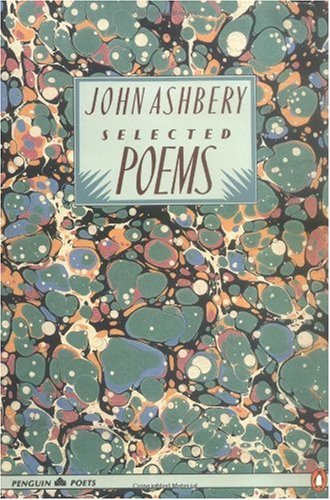
1. Selected Poems (Penguin Poets)
$19.56
2. Notes from the Air: Selected Later
$6.00
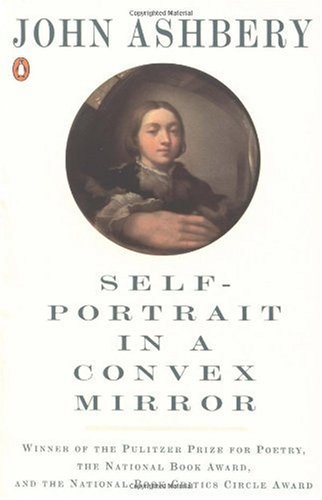
3. Self-Portrait in a Convex Mirror:
 
4. Three Poems (American Poetry Series)
$24.99
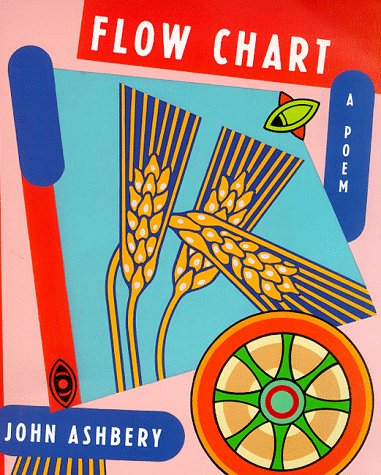
5. Flow Chart: A Poem
$9.91
6. Houseboat Days: Poems
$7.94
7. A Worldly Country: New Poems
$15.73
8. Where Shall I Wander : New Poems
$26.96
9. John Ashbery and You: His Later
$8.03
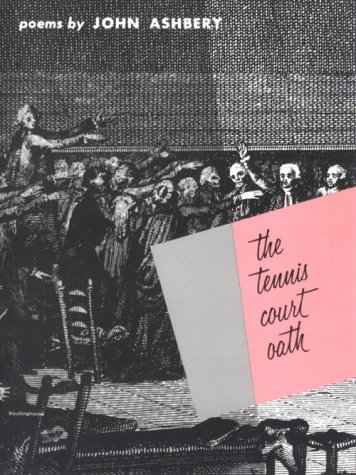
10. The Tennis Court Oath: A Book
$15.00
11. And the Stars Were Shining: Poems
$29.95
12. On the Outside Looking Out: John
$0.95
13. Chinese Whispers: Poems
$2.87
14. April Galleons: Poems
 
15. As We Know
$12.41
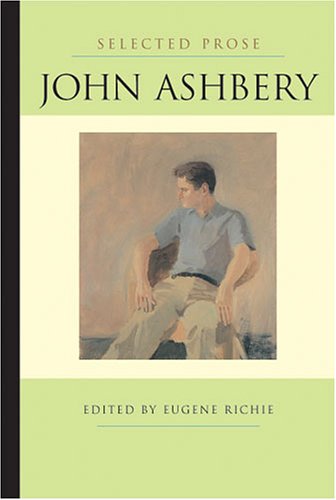
16. Selected Prose (Poets on Poetry)
17. Wakefulness: Poems
$11.00
18. A Wave: Poems
$44.99
19. Ashbery Collaboration, The
$75.00
20. John Ashbery and American Poetry

1. Selected Poems (Penguin Poets)
by John Ashbery
Paperback: 368 Pages (1986-12-02)
list price: US$20.00 -- used & new: US$10.74
(price subject to change: see help)
Asin: 0140585532
Average Customer Review: 5.0 out of 5 stars
Canada | United Kingdom | Germany | France | Japan

Customer Reviews (5)

4-0 out of 5 stars Long poems
Good if you like long poems, but Ashbery has some shorter poems that are just as respectable. Good compilation though.

5-0 out of 5 stars A Mating Swarm of Twittering Machines
Whenever John Ashbery deals out his royal flush of persnickety syntax, tailspun twaddle, and eel-slippery lyric convolution, the mind is where it ought to be.Whipping up spun dimensions in a burning flux of calculated demonry, gossamer insights snookered away in back-closets of the soul, an encroaching blur of poetic hunger just beyond our knowing.

We can *feel* the poet stenciling out his stanzas, sifting every event for its fine-grained visceral crunch, its lyrical *there-ness*, a mind designed to sound deep water with the halcyon light of Hart Crane and Wallace Stevens, the great unassailable precursors of American verse (so difficult to rediscover and appreciate in the morass of "poetry-slams" and "performance-art" that currently glut our poetry venues).

Imagine the type of mind that could respond to Crane and Stevens without flinching, over forty years and eighteen volumes of verse.Imagine the solitaire.

Ashbery staggered me in my late teens with *Self-Portrait in a Convex Mirror*(1975), lighting up my sinuses in a cocaine wash of zippety rhythms and studied inflection, peopling my sleep with deep Figurae and a lush library of maps, persuading the fool's heart in me to break from my covert and run wild with the night mind of the race, the structures and possibilities of my life overloaded by his cognitive dazzle."The geek shall inherit the earth," this poet seemed to be telling me, and I, hamstrung by gynephobia and a crippling social-anxiety, took the old codger at his word.

Ashbery taught me how to keep pace with the world, to saturate the atoms of life with an inward stare, yoking myself nakedly to the ebon flight of his lush written world.With Ashbery's deep intellect and dickety-slippity wit, his pretzelly stanzas and mind-torquing conceptual corkscrewing, I could go on forever relighting my own image, against steady palls of black pain.(But don't all great poets teach us precisely this?)

Witness Ashbery at his most serpentine: "To create a work of art that the critic cannot even talk about ought to be the artist's chief concern."Ouch.Where does that leave the rest of us?Fumbling for categorical handholds on the cliff-face of so-called "language-poetry"?Shrugging off the old man's labyrinthian navel-picking as wastefully avant-garde academic verbiage?Most of these poems seem to erupt in an obfuscatory strain of muddled, stickjaw phonetics, then nip and flounder and twiddle and skip-rope through some half-fledged convolution of thought, reproducing the vagaries and blindsights of poetic composition itself, biting its tail in an Ouroboros vertigo of self-reference and studied awkwardness, an infinite regress short-circuiting each new wired fragment of stunted dramatic logic, of discontinued narrative transit, flip-flopped to articulate its crackerjacked, contradictory character, an uber-villain's squadron of twittering machines set a-flutter to tweak the night with the familiar Stevensian tragedies arising from epistemology.and solipsism.

Yes, we can analyze it now (or else pretend our way to some jerry-rigged solution).All the whistles and clicks of inbound meaning.The poetic tracery of nightvision cunning, unfastening the set of our bones, gorging our deep human need for prosody and inflection, all taken to grief in the massing forms of some depth-stirring new solip:system.(Sometimes a great poem is all it takes.)Ashbery's rippling, obfuscatory surface-tension hides and betokens a mind-pretzelling world of ninny-ish cognitive delight, of a "peculiar slant of memory that intrudes on the dreaming model...filtered and influenced by it, until no part remains that is surely you."

Give this book a chance....Recommended points of entry: "Soonest Mended"(87), "As One Put Drunk into the Packet-Boat"(163), "Self-Portrait in a Convex Mirror"(188), "Wet Casements"(225), "Houseboat Days"(231), "Tapestry" (269), "A Wave"(322).

5-0 out of 5 stars Tangential
John Ashbery once again takes me on a fantastic ride with his four dimentional poetry.Highly recommended for the poet with writer's block because Ashbery teaches us that bounderies are only limited in the mind.I call him tangential because his imagry shoots one into as many directions as one has.

5-0 out of 5 stars A footnote to my previous review
I don't like to misquote other writers and artists...so, it was,naturally, Bernardo Bertolucci who said about himself that he has "anostalgia for the present". Ophuls certainly had a nostalgia for thepast. My admiration and appreciation for Ashbery's work grows stronger allof the time!

5-0 out of 5 stars John Ashbery IS a marvellous poet!
It is insulting (and it must be disheartening)for a poet of John Ashbery's stature to be told, again and again, that his poems don't make any sense. Ashbery is artificial superficially. It is his critics who generally seemcold and clever to me. I have laughed and wept over his books!And I amhoping that others my age (I'm 30) will NOT fall into the same trap, whichseems toplague older readers, of being smug and vague about their approvalof his work (i.e. imitating what they think he's like rather than what heis as a poet.) Like Allen Ginsberg and Sylvia Plath, in different ways, Isuppose, we need to establish a new critical basis for discussing his work,which falls outside the conventional opinions and prejudices of the day.This may be only to say, that Ashbery has become a part of the canon ofAmerican poetry (this can hardly be denied)--and that raises him to ahigher plateau than those poets we see simply as contemporaries; it doesn'tmake him boring and stiff. Can we enjoy unconventional ideas about thismost surprising of poets? For example, as much as I admire Self-Portrait ina Convex Mirror as a book and individual poem; I acknowledge it as amasterpiece...I nonetheless don't find it as entertaining and touching,ultimately, as books included in Selected Poems such as Some Trees andHouseboat Days and A Wave. The Tennis Court Oath, which represented abreakthrough both for Ashbery and for poetry, contains some of his mostbeautiful,rapturous work, like "How Long Will I Be Able To Inhabit TheDivine Sepulcher..." I don't think he wrote that freely again, andwith such a musical emotional pull, until the later Flow Chart, which issometimes similar even in extact detail. Bees, for instance: "Willprobably always be haunted by a bee" and "polluted in any case bybees." Love is the main theme, after all, of Ashbery entire oeuvre.Somebody once said to me that his poems are like a whiff of perfume. Andit's true, in the best sense. Because they are lovely and contain that sortof romanticism and eroticism and one remembers them fondly. He may have, asI believe Pauline Kael wrote about the filmmaker Max Ophuls, "anostalgia for the present." Although he sometimes risks becoming anobjectionable purist himself--he can appear too fussy and argumentative forit's own sake, or even rude, at times--he is mostly kind, fair andbalanced, funny though he undeniably is. Who doesn't like a poet like that,or understand him? Even if one has a very different aesthetic, it can be anintoxicating or even comforting voice to listen to. The Selected Poems area good place to start, but then, if you have a chance, read the wholevolumes,and what's come after. You'll have a chance, because they oughtto be around forever. ... Read more


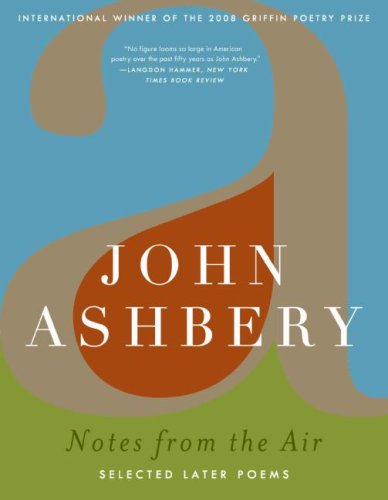
2. Notes from the Air: Selected Later Poems
by John Ashbery
Hardcover: 384 Pages (2007-11-01)
list price: US$34.95 -- used & new: US$19.56
(price subject to change: see help)
Asin: 0061367176
Average Customer Review: 5.0 out of 5 stars
Canada | United Kingdom | Germany | France | Japan
Editorial Review

Book Description

His long-awaited volume, a new selection of his later poems, spans ten major collections by one of America's most visionary and influential poets. Chosen by the author himself, the poems in Notes from the Air represent John Ashbery's best work from the past two decades, from the critically acclaimed April Galleons and Flow Chart to the 2005 National Book Award finalist Where Shall I Wander.

While Ashbery has long been considered a powerful force in twentieth-century culture, Notes from the Air demonstrates clearly how important and relevant his writing continues to be, well into the twenty-first century. Many of the books from which these poems are drawn are regularly taught in university classrooms across the country, and critics and scholars vigorously debate his newest works as well as his classics. He has already published four major books since the turn of the new millennium, and, although 2007 marks his eightieth birthday, this legendary literary figure continues to write fresh, new, and vibrant poetry that remains as stimulating, provocative, and controversial as ever.

Notes from the Air reveals, for the first time in one volume, the remarkable evolution of Ashbery's poetry from the mid-1980s into the new century, and offers an irresistible sampling of some of the finest work by this "national treasure."

... Read more

Customer Reviews (1)

5-0 out of 5 stars For Old and New Ashbery Readers
This selection contains April Galleons, Flow Chart, Hotel Lautremont, And the Stars Are Shining, Can You Hear, Bird, Wakefulness, Girls on the Run, Your Name Here, Chinese Whispers, and Where Shall I Wander. If you are a casual reader of Ashbery, this is perfect for you because it keeps you from rummaging through several collections to find a handful of great poems. For instance, Flow Chart is a fantastic long poem, but for this Selected, it is stripped down to only section Five (out of six). I can't complain too much about what was left out either. There are a few poems here and there but overall these are truly the strongest of his latter oeuvre. If you are a serious reader of Ashbery, then don't expect too much. There isn't an introduction, which i thought was a bummer, and the great poem "Heavenly Days" from Chinese Whispers isn't in here. Also I found the deckle-edge to be a hindrance to easily thumbing through the pages. It's a little too precious. What may be the most interesting part of the book for JA fans is to compare your selection with his selections. I find this as an interesting gauge to what the author aesthetically prefers, at least at the time of the selection. ... Read more


3. Self-Portrait in a Convex Mirror: Poems (Penguin Poets)
by John Ashbery
Paperback: 96 Pages (1990-01-01)
list price: US$17.00 -- used & new: US$6.00
(price subject to change: see help)
Asin: 0140586687
Average Customer Review: 4.0 out of 5 stars
Canada | United Kingdom | Germany | France | Japan

Customer Reviews (6)

1-0 out of 5 stars Through a Glass Murky
A confounding, self-indulgent collection by America's master of Poetica Obscura.

As a teacher of literature and a poetry lover since childhood, I've read thousands upon thousands of poems from a number of poets of a number of languages, and I'll be blasted if this is not the first time I got absolutely NOTHING out of reading a book of poems.In fact the only line from this one that I recall is "I let a guy blow me once."

It is this personalization of verse (to the extreme, where "feeling" becomes more important than meaning) that has destroyed poetry as a popular art form in this country.(One can scarcely imagine asking someone to memorize and recite anything from this book.)

Give me Richard Wilbur or even Sarah Teasdale any time.Shoot, I'll even take Rod McKuen at this point.

A Pulitzer for this?Say it ain't so, Joe!

5-0 out of 5 stars A Classic Worth Your Time
John Ashbery is probably the most famous and most productive of the Post-Modernists & the New York School of poets. His career has been long and productive. He remains to this day very visible, frequently publishing his poems in the New Yorker. It was, in fact, within the pages of the New Yorker that I first encountered Ashbery in my youth. I hated his work immediately. In fact, it took years for me to discover the incredible beauty and intellectual stimulation within Ashbery's poetry. Over the years I have come to appreciate Ashbery's more recent, or later work most of all. Although I appreciate the greater simplicity of his earlier work, and the great, convoluted anguish of his middle work, it is the vision of his later work that engages me most.

Self-Portrait in a Convex Mirror belongs primarily to his middle period. It, of course, famously won many awards, including the Pulitzer Prize for Poetry. I own this edition of the work and it has held up well with multiple readings, both the actual paperback, and the text. When I initially read this volume I found it strangely troubling and thought-provoking. I felt almost physically anguished as I read it over and over again. When I first encountered it I surrendered nearly a complete month to repeatedly devouring Self-Portrait in a Convex Mirror. However, in the end I found that it is still not my favorite of his works. Also, I must confess that I found the short poems in the volume much more engaging than the long, title poem.

As a poet, myself, for years I have found endless inspiration within Ashbery's writing (as well as the writing of many others, including the particularly noteworthy Charles Simic). I think for those first approaching Ashbery's work, this is probably the best place to start. I believe you will find that you either love or hate his work. If you discover that you love it, move on to other works such as The Mooring of Starting Out - a 1 volume edition of his first 4 volumes of poetry, or Where Shall I Wander - one of his latest works...or, there are so many others to choose from, all good, solid works of poetry. If you've already read other works by Ashbery, but have not read this work, you need to get yourself a copy and get to it. I am convinced that it would be a mistake to overlook this very important and engaging work.

4-0 out of 5 stars Sashimi of Post-Modernity
This collection of poems, especially the title poem, is jarring and bewildering in its swiftness and complexity, and in the crossed-paths of struggle, you will encounter spectacular images and conclusions. The imageslike "now from the unbuttoned corner moving out" and"recurring wave of arrival" are vividly childlike and nostalgicbut also remind me of nothing I have encountered before. Ashberry's imagessometimes bang against each other like the organized chaos of bumper cars.If you find yourself lost, keep reading and re-reading, no one needs topoint out subtlety. Stick around, the confusion and overlapping delay therelease at the end of his movements, which rival T.S. Eliot, in theirpolite, mythic send-offs.

5-0 out of 5 stars Explosive, subtle; redefines American poetry.
John Ashbery with "Self-Portrait in a Convex Mirror" redefines American poetry by shattering syntax and "meaning" into a millionfacets. Even cliches and conversational speech take on the tone of epicpoetry in Ashbery's gaze. His indirect mannerism leaves the reader hauntedby images that are unique in American writing. Though drawing heavily frommodern French poetic technique, Ashbery lives up to Pound's dictum,"...make it new" and Rimbaud's decree that "...one must beabsolutely modern." Above all, his portraits ofstream-of-consciousness always surprise with their cinematic,sleight-of-hand, air of freshness. Along with Kenneth Koch, and FrankO'Hara, Ashbery remains the ringleader of the New York School of poetry.

4-0 out of 5 stars Deluxe Sushi of Post-Modernity
This collection of poems, especially the title poem, is jarring and bewildering in its swiftness and complexity, and in the crossed-paths of struggle, you will encounter spectacular images and conclusions.Theimages like "now from the unbuttoned corner moving out" and"recurring wave of arrival" are vividly childlike and nostalgicbut also remind me of nothing I have encountered before.Ashberry's imagessometimes bang against each other like the organized chaos of bumper cars. If you find yourself lost, keep reading and re-reading, no one needs topoint out subtlety.Stick around, the confusion and overlapping delay therelease at the end of his movements, which rival T.S. Eliot, in theirpolite, mythic send-offs. ... Read more


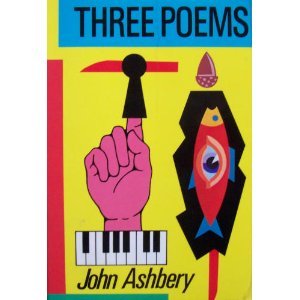
4. Three Poems (American Poetry Series)
by John Ahsbery, John Ashbery
 Paperback: 118 Pages (1989-10)
list price: US$8.95
Isbn: 0880012277
Average Customer Review: 5.0 out of 5 stars
Canada | United Kingdom | Germany | France | Japan

Customer Reviews (1)

5-0 out of 5 stars One never knows where they are (going) in an Ashbery poem.
_Three Poems_ is a journey of language itself; no destination of intention or meaning. One experiences a transparency--no mediation of form--of emotional states. These Ashbery poems are linguistic potential, potentially linguistic . . . nothing ever actualized by "saying". Ashbery circumambulates the thresholds of silence to collapse a medium shown to be inadequate to its content. It is this particular work that forced critical theories such as Deconstruction.These poems are not texts . . . the best "language poetry" since Stein's _Tender Buttons_. ... Read more


5. Flow Chart: A Poem
by John Ashbery
Paperback: 224 Pages (1998-03-18)
list price: US$15.00 -- used & new: US$24.99
(price subject to change: see help)
Asin: 0374525498
Average Customer Review: 4.5 out of 5 stars
Canada | United Kingdom | Germany | France | Japan
Editorial Review

Book Description

"Reticent, shy, unfailingly modern, Ashbery is as unorthodox [as] any of the great twentieth-century creators: Breton, Stravinsky, Picasso," observed Jeremy Reed in Britain's Poetry Review. "We are privileged to be around at a time when he is writing." Flow Chart, a book-length poem that first appeared in 1991, might be Ashbery's greatest creation: a staggering and exuberant "torrent of invention [that] comes as close to an epic poem as our postmodern, nonlinear, deconstructed sensibilities will allow. . . . "
... Read more

Customer Reviews (3)

5-0 out of 5 stars The Best "Interview" of Ashbery
When I first started to read Flow Chart, or even as the intimidating book was in the waiting room of "to read" books, I thought the epic was going to be striped with doldrums but also accompanied with the great Ashbery I have come to know in reading all the previous poetry of Flow Chart and his latest Chinese Whispers and Your Name Here. Well, the poem (divided in six digestable sections) was virtually void of rambling while being inclusive of most voices that Ashbery has mastered.
I have read Flow Chart only one time through, (although with a pink highlighter) and I would describe this poem with a knee-jerk reaction as something like a nervous host of a party that flits from one guest to another. Ashbery doesn't stay on one exact "subject" for long (even though Ashbery says he has no subject). This poem is very tangential. He will introduce in a semi-confessional mode some of his fears about writing and the creative processes and droughts that a poet will ultimately go through, but he will run off the track for an enjoyable detour about a favorable memory.
This book is to be enjoyed for its melancholic closeness that it allows us as readers and as a kind of handbook for writers. In handbook I mean that there are "writer" topics to be enjoyed: critics, past, sexuality, the end, precursors, disciples, and even shallow things like being recognized for achievements whether political or well-deserved.
The one negative about Flow Chart is that one should be a seasoned reader of poetry and more so John Ashbery to thoroughly enjoy it. Flow Chart is the closest thing we have in literature that allows a reader inside the mind of a great thinker and poet while shielding off melodrama and boredom. There is a loosenessin life's conversation that this book contains while keeping a thoughtful and philosophical centrality to it. Every large and small division has a subconscious apprehension or exuberance about life and more importantly art. On page 147 Ashbery says, "The same things happen over and over again under such different guises[.]" And in the closing lines Ashbery again reflects his thoughts of his recyclability of poetry by saying, "I still think I shall be the same person/ when I get up/ to leave, and then repeat the formulas that have come to us so many times/ in the past[.]"
I find this book much like a couch discussion or "free association." There are moments of released repression and healthy enlightenment juxtaposed with casual but interesting life "things."
Ashbery in Flow Chart uses all the leg room available to display his poetic powers. This is his finest achievement through 1992 ,and perhaps in the long poem format still his best to date.

4-0 out of 5 stars funny
There is a great deal of humor in this work.Ashbery is a very droll writer.

5-0 out of 5 stars Must-read Ashbery
Let's assume you're browsing this page because you have at least some familiarity with John Ashbery's poetry.Let's assume you're familiar with the classic short poems represented well in the Selected Poems (you should be), perhaps the long poems like "the Skaters" or "AWave" or "Self Portrait in a Convex Mirror (read them too).Oncethat reading is behind you, and especially if you've read the three longpieces in Three Poems, Flow Chart is a necessary next adventure.Before Iread Flow Chart, I think I carried a prejudice against long poems, andgiven Ashbery's tendency to difficulty, the prospect of reading Flow Chartwas exactly my idea of laborious reading.But once I began my fears andprejudices disappeared.Though I was already a fan of Ashbery, and hadread and reread most of his work, Flow Chart was soon tops on my list ofsatisfying reading experiences.And exactly that term,"experience", is what distinguishes this Book above mere books,separates this Poem from American poetry.This is a book one reads toexperience oneself reading, to participate, so to speak, as a reader insidewhat must be called a work of art.By my measure, this is Ashbery at hisvery finest, freest, most exuberant, and most melancholy.Don't let thelength dissuade you from reading this poem.Give yourself some time, allowyourself to take it in slowly, over the course of a week or two.You mightfind yourself, as I did, finishing a first reading and immediatelyscheduling the next weekend to enjoy it again in a single sitting. ... Read more


6. Houseboat Days: Poems
by John Ashbery
Paperback: 88 Pages (1999-03-30)
list price: US$13.00 -- used & new: US$9.91
(price subject to change: see help)
Asin: 0374525900
Average Customer Review: 5.0 out of 5 stars
Canada | United Kingdom | Germany | France | Japan
Editorial Review

Book Description

This reissue of a book of thirty-nine poems, first collected in 1977, reminds us of Ashbery's astonishing explorations (to use Donald Barthelme's words) of places where no one has ever been. "Wet Casements," "Syringa," "Loving Mad Tom," and the long "Fantasia on 'The Nut-Brown Maid,'" which concludes the book, are among the riches in a collection of dazzling eloquence and power.
... Read more

Customer Reviews (1)

5-0 out of 5 stars Impossibly brilliant and moving
One of the great works of art of this century.Although less well-known than "Self-Portrait in a Convex Mirror", this, along with "The Double Dream of Spring" is Ashbery's best book. ... Read more


7. A Worldly Country: New Poems
by John Ashbery
Paperback: 96 Pages (2008-02-01)
list price: US$13.95 -- used & new: US$7.94
(price subject to change: see help)
Asin: 0061173843
Average Customer Review: 4.0 out of 5 stars
Canada | United Kingdom | Germany | France | Japan
Editorial Review

Book Description

Thrill of a Romance

It's different when you have hiccups.
Everything is—so many glad hands competing
for your attention, a scarf, a puff of soot,
or just a blast of silence from a radio.
What is it? That's for you to learn
to your dismay when, at the end of a long queue
in the cafeteria, tray in hand, they tell you the gate closed down
after the Second World War. Syracuse was declared capital
of a nation in malaise, but the directorate
had other, hidden goals. To proclaim logic
a casualty of truth was one.

Everyone's solitude (and resulting promiscuity)
perfumed the byways of villages we had thought civilized.
I saw you waiting for a streetcar and pressed forward.
Alas, you were only a child in armor. Now when ribald toasts
sail round a table too fair laid out, why the consequences
are only dust, disease and old age. Pleasant memories
are just that. So I channel whatever
into my contingency, a vein of mercury
that keeps breaking out, higher up, more on time
every time. Dirndls spotted with obsolete flowers,
worn in the city again, promote open discussion.

... Read more

Customer Reviews (1)

4-0 out of 5 stars Ashbery Does It Again
As a longtime admirer of John Ashbery's poetry, I am happy to say that in his latest collection, A Worldly Country, written in his seventies, he still has his poetry chops.The poems are characterized by the skillful use of language, striking connections, and surprising shifts in tone that are present in his earlier work.There may be more of a melancholy undertone in these poems, but maybe not.Ashbery continues to delight. ... Read more


8. Where Shall I Wander : New Poems
by John Ashbery
Hardcover: 96 Pages (2005-03-01)
list price: US$22.95 -- used & new: US$15.73
(price subject to change: see help)
Asin: B000EBCP3U
Average Customer Review: 4.5 out of 5 stars
Canada | United Kingdom | Germany | France | Japan

Customer Reviews (2)

4-0 out of 5 stars An extremely pleasant surprise.
John Ashbery, Where Shall I Wander (Ecco, 2005)

John Ashbery, the Old Man of the Mountains of the L=A=N=G= (okay, that's enough, I'm not spelling out the whole silly thing) movement, has gradually, in his poetry, been sounding more and more like a normal human being over the past forty years. With Where Shall I Wander, Ashbery passes almost fully into the realm of normaldom; there are a few obvious twists that pop up from his irresponsible youth, but when you couch them in such poems as this, one can rationalize them as influences from the dadas, say, or the futurists, rather than the rather senseless stuff Ashbery and his contemporaries turned out for so long.

All this is to say, of course, that Where Shall I Wander is not only easily Ashbery's finest book to date, but it's the kind of book that you might be able to hand someone who "doesn't like poetry" and have them come away with it with that "wow, I actually understood that!" look:

"Newfoundland is, or was, full of interesting people.
Like Larry, who would make a fool of himself on street corners
for a nickel. There was the Russian who called himself
the Grand Duke, and who was said to be a real duke from somewhere,
and the woman who frequently accompanied him on his rounds.
Doc Hanks, the sawbones, was a real good surgeon
when he wasn't completely drunk, which was most of the time.
When only half drunk he could perform decent cranial surgery.
There was the blind man who never said anything
but produced spectral sounds on a musical saw. "
(--from "Interesting People of Newfoundland'")

There are times, as in the poem above, when Ashbery has an almost Hayden Carruth feel to some of his work, but the voice is incontrovertibly Ashbery's-- rambling and slightly talky like Carruth's, but with a crotchety feel that's all Ashbery, cod love him for it.

Even better, the author photo on the back can be used to scare pets and small children on the train. "Intense" does not begin to describe the look in Ashbery's eyes; either he wants to pull your spleen out with a dull tea spoon and eat it in front of you, or there's a really big chocolate sundae behind you, and Ashbery's going through withdrawal. Either way, it will either fascinate or scare you (and everyone around you).

Great stuff, on all counts. While I know Ashbery's reputation precedes him among casual readers of poetry ("difficult" and "Ashbery" were words that for years went hand-in-hand), give the man a chance and pick this up. You will no doubt find yourself more than pleasantly surprised. ****

5-0 out of 5 stars The Wonders of Wandering: Ashbery's New Poems
It would be easy to review this book in light of Mr Ashbery's pre-eminent position in contemporary American poetry, sprinkling references to the dazzling virtuosity that has filled each of his more than twenty books of poetry.WHERE SHALL I WANDER follows in the sparkling wake of Mr Ashbery's previous books as surely (to borrow his phrase) "as umbrellas follow rain."But there's more to this collection than merely crowning his previous efforts.In WHERE SHALL I WANDER, an awareness of age--and the spirit's stubborn resistance to it--emerge in passages that glide by us, offering up no wisdom, no pat rational answers for a life lived largely in the shadow of a mountain of experience.In the end, what holds these poems together, despite their inherent intent to separate, is the reader, and this permits each of us to identify with the author in ways no other poet permits.Much has been made of Mr Ashbery's obscurity and impersonality. But, as time goes by and Mr Ashbery's ouvre increases, he has emerged as neither obscure nor impersonal. In WHERE SHALL I WANDER, he is just the opposite, registering the queer particulars of our post-modern world so deeply that each poem moves us in ways that defy explication. The amazing result--far from frustration--is a delight and elation unique in modern (and post-modern) poetry.

...Like all good things
life tends to go on too long, and when we smile
in mute annoyance, pauses for a moment.
Rains bathe the rainbow,
and the shape of night is an empty cylinder,
focused at us, urging its noncompliance
closer along the way we chose to go.

As far as I'm concerned, what is conveyed in Mr Ashbery's new book is wisdom enough for a lifetime--his own or anyone's. ... Read more


9. John Ashbery and You: His Later Books
by John Emil Vincent
Hardcover: 208 Pages (2007-11-01)
list price: US$32.95 -- used & new: US$26.96
(price subject to change: see help)
Asin: 0820329738
Canada | United Kingdom | Germany | France | Japan
Editorial Review

Product Description
John Ashbery and You approaches Ashbery's critically neglected recent poetry with an ear to his use of the supremely elastic pronoun "you" and an eye toward his construction of his books as books. Together, these devices produce effects new to Ashbery's oeuvre and offer readers new ways "in" to his work. John Ashbery and You argues that starting with April Galleons (1987), and reaching an apex in Your Name Here (2000), the poet has been paying increasingly keen and affectionate attention to his readers. Vincent tracks these techniques but above all offers his readers tools to reapproach a dauntingly difficult body of work.


Some critics have suggested that Ashbery is producing books too quickly for criticism to keep up or that the later books represent, as Vincent summarizes it, "a kind of logorrhea . . . and therefore don't really register as separate events as much as episodic eruptions of one big volcano which is the Later Ashbery." Vincent contends that critics are not keeping up with Ashbery not so much because it is all of a piece, but rather because his work varies so much from volume to volume. Each of the volumes from the latter part of Ashbery's career represents an individual and different poetic project, depending precisely on the unit of the book to produce its effects.


By showing us that the entry point to Ashbery is not any given individual poem within a volume, but the entire volume, Vincent gives us a new and productive approach to reading the recent work of one of our most challenging poets. ... Read more


10. The Tennis Court Oath: A Book of Poems (Wesleyan Poetry Classics)
by John Ashbery
Paperback: 94 Pages (1977-12-15)
list price: US$13.95 -- used & new: US$8.03
(price subject to change: see help)
Asin: 0819510130
Average Customer Review: 4.0 out of 5 stars
Canada | United Kingdom | Germany | France | Japan
Editorial Review

Book Description
John Ashbery writes like no one else among contemporary American poets. In the construction of his intricate patterns, he uses words much as the contemporary painter uses form and color- words painstakingly chosen as conveyors of precise meaning, not as representations of sound. These linked in unexpected juxtapositions, at first glance unrelated and even anarchic, in the end create by their clashing interplay a structure of dazzling brilliance and strong emotional impact. From this preoccupation arises a poetry that passes beyond conventional limits into a highly individual realm of effectiveness, one that may be roughly likened to the visual world of Surrealist painting. Some will find Mr. Ashbery's work difficult, even forbidding; but those who are sensitive to new directions in ideas and the arts will discover here much to quicken and delight them.

A 35th anniversary edition of classic work from a celebrated American poet who has received the Pulitzer Prize, the national Book Award, and the national Book Critics Circle Award. John Ashbery's second book, The Tennis Court Oaths, first published by Wesleyan in 1962, remains a touchstone of contemporary avant-garde poetry. ... Read more

Customer Reviews (2)

3-0 out of 5 stars When it's good, it's very very good. But when it's bad...
John Ashbery, The Tennis Court Oath (Wesleyan, 1962)

Reading Ashbery's The Tennis Court Oath probably doesn't rank high on the list of many people's favorite things to do. But reading it while you've immersed yourself in a glut of Charles Simic is an especially bad idea. Simic is the quintessential surrealist writing in English today; Ashbery is sort of a weird, fuzzy cross between surrealism, dada, and L=A=N=G=U=A=G=E whose work is, by turns, incomprehensibly unreadable and quite good.

I opened the book to a random page and start quoting from the top left...

"You often asked me after hours
The glass pinnacle, its upkeep and collapse
Knowing that if we were in a barn
Straw panels would... Confound it
Te arboretum is bursting with jasmine and lilac
And all I can smell here is newsprint..."
("The New Realism")

Anyone who wants to take a stab at explaining that, by all means, go ahead. I cannot help but compare this stuff (as I did in a recent Jackson Mac Low review) to the work of John M. Bennett, which is completely nonsensical but SOUNDS like it shouldn't be. Reading John M. Bennett is like understanding how to read and pronounce a completely foreign language without understanding a single word; even when you have no idea what's going on, if you read it out loud, you can still do so smoothly and put inflections in all the right places to make it sound great. With this, the reader is reduced to stumbling through, trying to grasp some semblance of meaning in order to make it scan. (And we wonder why people ask "what does it mean?" when confronted with poetry. lord save us.)

But when Ashbery is on, he is quite on, and his work takes on a spectre of imagism; not enough to make the book worth buying, mind you, but enough to make it worth borrowing from the library. The more lucid sections of "Europe," for example, where Ashbery dispenses with the easy, wannabe dadaism and gets down to his subject (Beryl Markham), give the reader an idea of why Ashbery, not too long before this, was selected by the Yale Series of Younger Poets. But, as with many poetry collections, you wade through some swine to get to the pearls. In this case, they're often in the same poems. ** ½

5-0 out of 5 stars The Unbroken Oath:Ashbery's Neglected Masterpiece
Wesleyan University Press has reissued a volume in its series of "classics" which deserves a place on the shelves of everyone interested in poetry in the last forty-five years.THE TENNIS COURT OATH is a series of experiments in poetry which are as daring and fresh today asthey were in 1962, when the book (Ashbery's second) first appeared.Thoughthe book contains some often anthologized pieces--"Faust" and"They Dream Only of America" for instance--the book reprints theless familiar "America," "Rain," and the 110 part poem"Europe." It is these more obscure poems that seem to offer thebest glimpse of the possibilities of Ashbery as a poet as well as thepossibilities for language and poetry in general.Reading these poems inthe light of Ashbery's interceding success as a poet, the book emerges as akind of rough blueprint for his career.No one who knows Ashbery's poem"Litany" (in AS WE KNOW, Viking, 1979) can look at the paralleltext of "To the Same Degree" in OATH and not see it as thefledgling form of the later work.Even "Europe," which theauthor himself admits was a kind of failure, demonstrates the daring searchfor a method of communication which Ashbery described (in 1962)as"perhaps a new kind of poetry which tries to use words in a newway....to use words abstractly as an abtract painter would usepaint....This has nothing to do with 'Imagism' or using words because oftheir sound--words are inseparable from their meaning and cannot be said toexist apart from it.My aim is to give the meaning free play and thefullest possible range [in an] attempt to get a greater, more complete kindof realism.""Europe," if it is a failure, is a brilliantone, saturated with the possibilities of language which dares to venture,as T. S. Eliot put it, at "the frontiers of consciousness, wheremeaning fails but feelings still persist."It is that sense ofexperimentation, of the avante-garde and the seemingly limitlesspossibilities for the language of poetry that the complete text of OATH,now reprinted, captures and presents to the reader.Those already familiarwith Ashbery's work will find the book an indispensible high-point in hiscanon, those unfamiliar with Ashbery will see a different kind of poetry,rife with new ideas and new hopes for relating language to the world itseeks to describe and of which it is part. John Ashbery's TENNIS COURTOATH, like his SELECTED POEMS (Viking, 1985) is simply a must for anyserious reader of late Twentieth-century and contemporary poetry. ... Read more


11. And the Stars Were Shining: Poems
by John Ashbery
Paperback: 96 Pages (1995-03-31)
list price: US$13.00 -- used & new: US$15.00
(price subject to change: see help)
Asin: 0374524343
Average Customer Review: 4.5 out of 5 stars
Canada | United Kingdom | Germany | France | Japan
Editorial Review

Book Description

And the Stars Were Shining, John Ashbery's sixteenth collection, strikes out into new territory and engages the reader in unexpected ways. In their relative brevity they display all the valiant wit and rich lyric intensity which readers know from Ashberry's expansive longer work.
... Read more

Customer Reviews (2)

5-0 out of 5 stars Chasing Meaning Out Of Assumed Appearances
And The Stars Were Shining By John Ashbery

John Ashbery's penchant for the long, discursively philosophic poem has sometimes served to distract critical attention from his mastery of intensely conceived shortlyrics.

We all have a favourite Ashbery flavour, and mine is the gin-fizzdynamic at work in the relative brevity displayed by the best of theshorter poems gathered in this collection. In fact, I would argue that youwould have to go back to Houseboat Days (1977), to find a comparablesuccess in terms of Ashbery's ability to compress poetic experience into anaccommodatingly resonant tension-field. With Ashbery's method there isalways the danger that expansiveness contributes to fluctuating air-pocketsin the poem's flight-path, and the reader's encounter with inconsistentlysustained epics like Flow Chart is one of locating pivotal wobble in thestratosphere of Ashbery's poetics.

Ashbery's lyric concerns areinvariably with retrieving the moment from unrecorded notice. It's thetransient nature of experience underscored by a deep sense of loss whichfires Ashbery into attempting to arrest whatever proves meaningful to hisimpulsive plot. As he writes in 'The Improvement':

"We never live longenough in our lives/ to know what today is like./ Shards, smiling beaches,/abandon us somehow even as we converse with them./ And the leopard istransparent, like iced tea."

Ashbery's acute sense of being disinheritedfrom the world of things, and the poem is an attempt to establish discoursewith this aesthetic, has him incessantly preoccupied with chasing meaningout of assumed appearances. His way is to puzzle worry into potentialexistential crisis:

"Nothing seems strong enough for/ this life tomanage, that sees beyond/ into particles forming some kind of entity -/ Sowe get dressed kindly, crazy at the moment./ A life of afterwordsbegins."

('The Improvement')

Ashbery's disorientated, upended approachto his subject matter imparts the feel of innovative modernism to his work.And while his poetry is personal by way of its predominantly quietdisclosures: 'I never get hangovers until late afternoon/ and then it'slike a souvenir, an arrangement,' he is never confessional in the manner ofRobert Lowell or Sylvia Plath. Ashbery's quiet presence permeates, butnever crowds his lyrics. Some of the finest poems to be found in thiscollection, 'Works On Paper I,' 'Ghost Riders Of The Moon,' 'Free NailPolish,' 'Local Time,' 'My Gold Chain' succeed by playing enigmaticnarrative against specific visual imagery. In the best of Ashbery theabstract and the concrete unite to impart allusive mystery to the poem. Theending of 'Works On Paper I' perfectly demonstrates what Ashbery doesbest.

"Those who wish to remain naked are coaxed out of laughter/ withtea and nobody's nose is to the grindstone/ anymore, I bet, and you canfigure out these shivering trees./ But the owner of the bookstore know thatthe flea was blown/ out of all proportion,/ with September steps to go downin passing/ before the tremendous dogs are unleased."

Here thejuxtaposition of the disarmingly casual and the lyrically authoritativecombine to create Ashbery's inimitable tang of urbane poetry, a genre heorchestrates with consummate ease throughout this sparkling collection. Ifby comparison the long title poem suffers from a characteristic lack offocus, then the poem's obliqueness and obscurity are counterpointed byAshbery's inexhaustibly pitched poetic eloquence.

JEREMY REED

4-0 out of 5 stars One of the most personal poetry voices keeps showing charm.
And the stars were shining seems to be a minor Ashberry's work, but don'tbe confused...a great poet is always great. This book is especiallydelightful. Ashberry plays with the dazed reader making a strange andconfusing mixture of images and sounds (something like watching "LostHighway", by David Lynch), painting everything with his particularsense of humour and his vision of life. A bit flamboyant, but completelygreat. To miss it is a crime, as every vulgarity. ... Read more


12. On the Outside Looking Out: John Ashbery's Poetry
by John Shoptaw
Paperback: 400 Pages (1995-01-26)
list price: US$29.95 -- used & new: US$29.95
(price subject to change: see help)
Asin: 0674636139
Average Customer Review: 1.0 out of 5 stars
Canada | United Kingdom | Germany | France | Japan

Customer Reviews (1)

1-0 out of 5 stars Poorly Articulated
I am doing extensive research for my master's thesis on Ashbery and this was by far the worst resource I could have invested in. My main complaint is that this book lacked coherence, though it seemed to have done thorough research. It did not clearly articulate ideas, but rather used every opportunity to quote fragments and attribute random details rather than clearly get at the heart of Ashbery's poetry. I found no useful arguments and it was very difficult to get through to what the author was saying. Very disappointed. ... Read more


13. Chinese Whispers: Poems
by John Ashbery
Paperback: 112 Pages (2003-09-05)
list price: US$13.00 -- used & new: US$0.95
(price subject to change: see help)
Asin: 0374528802
Average Customer Review: 3.0 out of 5 stars
Canada | United Kingdom | Germany | France | Japan
Editorial Review

Book Description

According to a Victorian volume called Drawing Room Amusements (1879), in the game of Chinese Whispers "participants are arranged in a circle, and the first player whispers a story or message to the next player, and so on round the circle. The original story is then compared with the final version, which has often changed beyond recognition." In John Ashbery's latest collection, the verbal nucleus that is the incitement toward a poem undergoes changes caused not by careless listening but by endlessly proliferating trains of ideas that a word or phrase sets into motion. The poem has been transformed, often into "something rich and strange," but the strangeness is that of thought being opened up, like a geode, to reveal unexpected facets of meaning.
... Read more

Customer Reviews (3)

1-0 out of 5 stars A tragedy and a travesty, wrapped in black and yellow
Before reading this glittering failure, I desperately feared for the future of poetry in this country; but seeing as nothing could possibly be worse than this, my fears are suddenly abated.Dear post-post-modern reader, brace yourself for the eloquent, rightfully loaded death sentence of the New York School of American poetry (now at least we have a perfectly valid excuse to plan its funeral and move on to new and better things!).At best, this centerless literary labyrinth, alive with heartless, overwrought, sharp-toothed little imps, represents a disgracefully grandiose attempt to self-promote and to further beat the already beaten-to-death poetics of the abstract expressionists, for the sole benefit of the American, eurocentric, cigar-smoking literati and its smug conformist aplomb.This is writing for the sake of seeming clever (much like this arguably unfair review), but it is taken to the most obnoxious level possible, with highly referential super-high brow humor, tensionless line breaks, tricky word riddles that seem to smirk snobbishly at you as you read; and, worst of all, there is a profound absence of emotional impact.The prose pieces are only slightly more readable.In fact, the best thing about this book is the cover, a storm of sharp, yellow ,leaf-like forms ripping into a black background - very cool.Anyway, back to the heart of the matter; if you have money to burn, don't waste it on this.Go buy a pack of gum and an issue of Hustler instead.If you're an Ashbery fan, plunge into the beautifully weird cover art and think fondly of his past work, but don't dare open the book...bad idea.

5-0 out of 5 stars variation is the premium
I have read Ashbery's first books, such as: Some Trees, and The Double Dream of Spring, Houseboat Days, and also much of the Selected Poems, and I think this latest book, Chinese Whispers, is comparable to his best work.
As I read Chinese Whispers, and then reread it, I found how it is similar to the variation found in an anthology. TheBest American Poetry 2003 contains all kinds of forms and tones, etc. and Ashbery, in C. W. takes on this kind of task, the task of not settling in a rhythm, to keep moving. Even toward the winter of his career, Ashbery is still searching; he seems to still be searching like a beginning poet, yet a new poet with a strong voice.

3-0 out of 5 stars Downhill Still
The mild decline of a great talent continues.Johnny hasn't been on point since Wakefulness, but we can thank somebody that this collection, however mediocre, still easily trumps the ghastly "...Rain".Please--I adore Ashbery, so no hot-dung tossing.There are some great pieces in this latest:"Little Sick Poem", "Half-Kiss'd", the second to last poem whose title escapes me...

...go to the library, but don't buy the thing unless you're compiling a comprehensive collection.A lot of blubber, filler.

I'd give it 2.5 stars, if I could--the last half gold. ... Read more


14. April Galleons: Poems
by John Ashbery
Paperback: 96 Pages (1999-03-30)
list price: US$13.00 -- used & new: US$2.87
(price subject to change: see help)
Asin: 0374525889
Canada | United Kingdom | Germany | France | Japan
Editorial Review

Book Description

In this collection, first published in 1987, John Ashbery--"one of his generation's most gifted and eloquent poets" (Michuko Kakutani, The New York Times)--offers some of his most intimate and direct poems. With breathtaking freshness, he writes of mutability, of the passage of time, and of growth, decay, and death as they are reflected in both ourselves and the changing of the seasons. By turns playful, melancholy, and mysterious, the poems in April Galleons reaffirm the extraordinary powers that have made Ashbery such a significant figure in the American literary landscape.
... Read more

15. As We Know
by John Ashbery
 Paperback: 118 Pages (1979-11-29)
list price: US$7.95
Isbn: 0140422749
Canada | United Kingdom | Germany | France | Japan

16. Selected Prose (Poets on Poetry)
by John Ashbery
Paperback: 336 Pages (2005-11-30)
list price: US$19.95 -- used & new: US$12.41
(price subject to change: see help)
Asin: 0472031392
Average Customer Review: 5.0 out of 5 stars
Canada | United Kingdom | Germany | France | Japan
Editorial Review

Book Description

"By the end of the book, Ashbery has laid out not only a course in contemporary poetics but a portrait of the artist teaching himself to become a thoroughly Modernist poet---in small bites, easy to savor, easy to digest."
---Los Angeles Times Book Review

"This is a marvelous book by one of our greatest poets. Reading John Ashbery's Selected Prose is like listening to a brilliant talker who not only keeps us entertained and laughing, but whoalso has wise things to say about all sorts of interesting subjects."
---Charles Simic

"At last!Many of the fugitive pieces collected in this volume---on Gertude Stein, on Frank O'Hara, on Marianne Moore or Adrienne Rich---published as many of them were in out-of-the way places, have already become collectors' items, providing fascinating---and often startling--- assessments of their subjects as well as new insight into Ashbery himself.Now here they are between two covers, along with many hitherto unknown pieces on subjects ranging from Michel Butor to Mary Butts, Jane Freilicher to Mark Ford.For anyone who cares about the contemporary poetry/art scene, this is an indispensable collection."
---Marjorie Perloff, Stanford University


Selected Prose contains a broad selection of texts by internationally acclaimed poet and critic John Ashbery. This third collection of Ashbery's critical writings dramatically expands the terrain covered by the first two, Reported Sightings: Art Chronicles 1957-1987 and Other Traditions (first presented as the Norton Lectures at Harvard). These essays on writers, artists, filmmakers and the life of a poet provide insight into Ashbery's evolution as one of the major poets in English. Ashbery's criticism is as essential to the cultural history of the twentieth century as was that of T.S. Eliot and W.H. Auden. His unique sensibility has had a profound impact on the literature and arts of our time, and his influence is certain to be felt for decades to come. Editor Eugene Richie's introduction provides a meaningful context for fifty years' worth of critical and creative prose by one of America's finest poets.
... Read more

Customer Reviews (1)

5-0 out of 5 stars I do not hate the celery stick
Mr. Ashbery's prose is both crisp and pliable, like a spaghetti noodle half-submerged in boiling water, sticking above the rim of the pot like a flag-pole in an imaginary country whose flag has not yet been sewn together, or is off being mended.

Like Reported Sightings this book can lead the curious reader down many meandering paths of discovery that go off far beyond the book itself until it is little more than a bright little beacon in the distance assuring you that everything is still OK.


Footnote: Much of this review was inspired by a review that has now been removed. Apparently the author of said review mistook my comic riffs for downright mockery.
... Read more


17. Wakefulness: Poems
by John Ashbery
Paperback: 96 Pages (1999-03-30)
list price: US$11.00
Isbn: 0374525935
Average Customer Review: 5.0 out of 5 stars
Canada | United Kingdom | Germany | France | Japan
Editorial Review

Amazon.com
If John Ashbery pays any allegiance in these poems, it is to the syntaxof dreams. Wakefulness captures the spirit of the sleeping mind, a place where past, present, and future function simultaneously, and where one might find, for instance, seraphs and parking lots, or jesters and dashboards, whimsically juxtaposed. As is often the case in dream worlds, the speaker embarks on a journey. Just where he is going remains elusive, but we do know that there is madness "in the next sleeping car" and"no release in sight." True to the unconscious mind, these poems follow their own idiosyncratic logic, as in, "It was a misunderstanding, mudsliding / from the side where the thing was let in. / And it was all goose, let me tell you, braided goose..." Ashbery deliberately roughens his edges, as if he genuinely believes, as the speaker warns in "Added Poignancy," that "millions of languages / became extinct, and not because there was nothing left to say in them, / but because it was all said too well, with / nary a dewdrop on the moment of glottal expulsion."

Exceptional in their daring wordplay and rhyme, teeming with the unexpected, the eccentric, and the downright freakish, these poems capture our attention by refusing to conform to narrative expectations. Here we enter the mind of an exacting genius, a mind so taken with the subtleties of language, with the way words are laid down, that when he states: "Each is truly a unique piece, / you said, or, perhaps, each / is a truly unique piece. I sniff the difference," we believe him. --Martha SilanoBook Description

Early in the title work of Wakefulness, Ashbery writes: "Little by little the idea of the true way returned to me." Progressive awakenings occur in all of these poems. As we read, each of our senses is engaged, and we come to detect a search for spiritual revelations--in buildings, churches, homes, trains, and cars. Then suddenly we find ourselves back in the open, pursuing the course to Baltimore and Bucharest, to the zoo and the park, to the past and future. As ever, Ashbery's wakeful digressions are wily, comic, heartbreaking, and vertiginous.
... Read more

Customer Reviews (3)

5-0 out of 5 stars Ashbery at his Sharpest
If you have read "Chinese Whispers" and "Your Name Here," then "Wakefulness" is kind of the first part of that set. "Wakefulness" has its surprising slopes that only Ashbery can give us but there is also a distant cohesiveness to it that an Ashbery follower can pick up. I often try to think of a way to describe what an Ashbery poem is like as if I was explaining it to someone who might cringe at the difficulty Ashbery presents us. These poems are like a light sleep in front of the tv where commercials and sitcoms sprinkle an already watery dream: the real mixes with the dreamed real. None of these poems, and not many of Ashbery's poems, are barreling down on the reader in a straight line. Everything is smoke in a fan. Once one can step inside Ashbery's voice, then there is a comfortablity in the chaos, as there is inside our heads.

5-0 out of 5 stars Amazing brilliances in the smallest things
Here you will find the body and mind of the post-modern world
unfolding before your eyes, with all its pleasures, its anxieties, its lost dreams, its hopes.It is the world we know, because it is already in us, part of us--it is always arriving, always arrived.But, there is more.Ashbery, through unique images and juxtapositions, brings into the open a world not quite satisfied with itself, sometimes too satisfied--in a state of suspended satisfaction, sometimes leading to nausea. It is a world looking for experiences under every log and at every corner, only to find the rates of exchange rising and the necessity for experiences increasing.It is a world placed smack dap in the impossibility of its own being.What we have in "Wakefulness" is the journey of many selves through many worlds, many doors, all leading back to a haunting singularity of space and time.One gets the uncanning feeling in each poem that one has been there before, or even that one, if only momentarily, exists only in and through the words that appear on the page.This is what poetry should be.There are echoes of all the greats here, from the English romantics, to Dickinson and Stevens and beyond.But, Ashbery knows how to tame these echoes, how to humour them, disinheret them, and reclaim them for his own purposes, making these poems fully his own.I highly recommend this book and any other Ashbery books.

5-0 out of 5 stars The poet at his best!
A marvelous collection.The quote on the inner cover (by Harold Bloom) says it all "The book is a profound pleasure, the gift of a master." ... Read more


18. A Wave: Poems
by John Ashbery
Paperback: 96 Pages (1998-03-18)
list price: US$11.00 -- used & new: US$11.00
(price subject to change: see help)
Asin: 0374525471
Canada | United Kingdom | Germany | France | Japan
Editorial Review

Book Description

First published in 1984 and now appearing in a new edition, A Wave is widely considered one of Ashbery's finest books of poetry. The 44 pieces collected here--particularly the long title-poem--find the poet applying his uniquely lyric, meditative, and often hilarious sensibility to the mysterious and incessant curves and crests of love, art, thought, experience, and selfhood.
... Read more

19. Ashbery Collaboration, The
by John Ashbery, Ingrid Shaffner, Jane Hammond
Paperback: 80 Pages (2002-12-15)
list price: US$19.95 -- used & new: US$44.99
(price subject to change: see help)
Asin: 1880353202
Canada | United Kingdom | Germany | France | Japan
Editorial Review

Book Description
This catalogue documents a body of work created by Hammond following a unique collaboration with the renowned poet John Ashbery. In 1993, Hammond commissioned Ashbery to create a set of unique titles that would act as catalysts for her recombinative paintings. Ashbery provided 44 such titles that employ his characteristically eclectic use of language, such as Confessions of a Fop, A Parliament of Refrigerator Magnets, Freezer Burn, and others. Since 1993, these titles have been the initial source of Hammond's creative process. The 60 paintings created to date in this series are, like all of her work, produced from a controlled iconographic pool of 276 pictorial representations, drawn from such texts as 19th-century technical manuals, old children's books, pornographic comics, and the like. The relationships between titles and paintings range from obscure to playfully evident, yet all derive from the lively intersection between language and image. ... Read more


20. John Ashbery and American Poetry
by David Herd
Hardcover: 240 Pages (2001-04-14)
list price: US$75.00 -- used & new: US$75.00
(price subject to change: see help)
Asin: 0312239319
Canada | United Kingdom | Germany | France | Japan
Editorial Review

Book Description
David Herd provides a critical language for a ppreciating the beauty and complexity of Ashbery's writing. Presenting the poet in all his forms--avant-garde, nostalgic, sublime, and camp--he demonstrates that the inventiveness of Ashbery's work has always been underpinned by the poet's desire to fit the poem to its occasion. Tracing Ashbery's development from his origins in the dazzling artistic world of 1950s New York, Herd portrays Ashbery as both an American pragmatist writing in the spirit of William James, and a committed literary internationalist learning from Boris Pasternak and the Russian avant-garde. His poetry is shown to be alive to such culturally defining issues as the growth of mass culture, the absence of God, the war in Vietnam, the emergence of AIDS, the erosion of tradition, and the decline of the avant-garde. Herd compares Ashbery's responses to the work of, among others, Robert Lowell, John Berryman, Kenneth Koch, and Frank O'Hara. ... Read more


  1-20 of 100 | Next 20
A  B  C  D  E  F  G  H  I  J  K  L  M  N  O  P  Q  R  S  T  U  V  W  X  Y  Z  

Prices listed on this site are subject to change without notice.
Questions on ordering or shipping? click here for help.

site stats