e99 Online Shopping Mall

Geometry.Net - the online learning center Help  
Home  - Authors - Asimov Isaac (Books)

  1-20 of 100 | Next 20
A  B  C  D  E  F  G  H  I  J  K  L  M  N  O  P  Q  R  S  T  U  V  W  X  Y  Z  

click price to see details     click image to enlarge     click link to go to the store

$13.68
1. Isaac Asimov: The Complete Stories,
$14.28
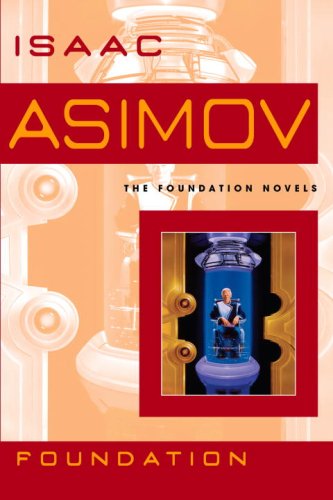
2. Foundation
$3.73
3. Isaac Asimov's Science Fiction
 
4. Understanding Physics (Science)
$13.70
5. Asimov's Guide to the Bible: A
$15.86
6. Asimov's Guide to Shakespeare:
 
$63.12
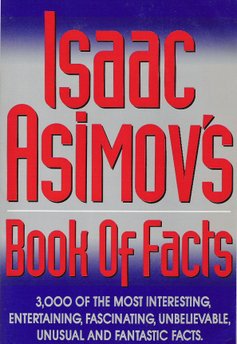
7. Isaac Asimov's Book of Facts:
8. Science Fictional Olympics (Isaac
 
9. How Did We Find Out About the
$84.98
10. A Short History of Chemistry (Science
 
11. Nine Tomorrows
12. Isaac Asimov Presents Great Science
13. Isaac Asimov Presents Great Science
 
$3.00
14. Isaac Asimov Presents the Golden
$2.94
15. Gold: The Final Science Fiction
$14.93
16. El Nacimiento De Los Estados Unidos,
 
17. TV 2000
$3.32
18. Have Robot, Will Travel: The New
$18.67
19. Robot Dreams (Masterworks of Science
$1.82
20. The Return of the Black Widowers

1. Isaac Asimov: The Complete Stories, Vol. 1
by Isaac Asimov
Paperback: 624 Pages (1990-10-01)
list price: US$22.95 -- used & new: US$13.68
(price subject to change: see help)
Asin: 038541627X
Average Customer Review: 5.0 out of 5 stars
Canada | United Kingdom | Germany | France | Japan
Editorial Review

Book Description
The first book of the definitive three-volume collection of short stories by the prolific Isaac Asimov, whose tales have delighted countless fans for over half a century--a must for every science fiction bookshelf. ... Read more

Customer Reviews (13)

4-0 out of 5 stars Definitely aged, but definitely Asimov!
Forty-eight short stories and poems, all written by Asimov an average of 50 years ago.There is some age to this collection of writings... the Multivac ("Multiple vacuum tubes") computer, the quaint use of the word "queer" to indicate "beyond or deviating from the usual or expected," and fairly typical gender stereotypes.What do you expect from 50 years ago!?

There are some great stories here that have aged very well.In particular, I enjoyed:

- Profession (p. 162),

- Spell My Name With An S (p. 277),

- The Last Question (p. 290),

- The Ugly Little Boy (p. 301),

- Nightfall (p. 334), and

- "Breeds There a man...?" (p. 408).

These stories are in the middle part of the book, so there is a "warm-up" period prior to getting to these.Nightfall was interesting to me, in that I had heard it had inspired the movie and book Pitch Black.It is a good tale, but its similarity to Pitch Black was not very strong.

I look forward to getting and reading volume 2.

5-0 out of 5 stars Heck yeah!
This is a GREAT collection of short stories by Isaac Asimov, one of the best science-fiction short-story writer ever. It contains over forty of his best works, including Nightfall and the Ugly Little Boy. The book itself is pretty big, with nice-sized font. Overall, a nice, sturdy copy of awesome short-stories. A must for an Isaac Asimov fan.

5-0 out of 5 stars Old, but still very good
The worst part: Some of the stories in this volume are old, and you can tell that without looking at the published date. There are a significant number of them about the "future" where large companies have an entire computer of their own, or use jargon that is outdated.

Saying that, they are unlikely to seem any older in another 50 years and only a few of the stories are harmed due to the oldness (and those that are can just be ignored -- there are a LOT of stories here).

On the very positive side, there are a lot of stories that could have been written yesterday and are VERY GOOD (5 out of 5) ... and probably 90% are at least GOOD (4-5 out of 5).

5-0 out of 5 stars A must for those who like to read good fiction
I have been a fan of Isaac Asimov's short stories since I was a teenager and I have rarely found better since.While I had already read most of these, to have them in one book was quite the treat.Many of my favorites were listed here including some that previously were only available from some obscure sources.Why read Asimov?Because few writers, if any, deal with the great "What If" questions as Asimov does.His explorations into human nature and what potential pitfalls our improvements in technology will bring us are central to his writing.Some of these stories are dated now and in "The Dying Night" he even acknowledges that in the introduction to that story.Even so, it makes for good reading...and entertaining.

5-0 out of 5 stars Asimov presents his visions of the future of mankind
This is a nice collection of some stories by Asimov. I enjoyed the book, as it reminded me some stories which I have read and showed me some new stories, which I haven't read.
Asimov's science fiction is very convincing, it makes you feel as if we already live in the future and have unbelievable advanced technologies.
In particular, I like the stories:
"Satisfaction guaranteed" - a love story between a male robot (android) and a human female.
Asimov strongly implies that in the future we will have robotic spouses.
"The fun they had" - a story about students who find a real book (as opposed to a book in an electronic format).
Asimov strongly implies that in the future paper books will be obsolete, and will be replaced by e-books that can be read on a computer.
... Read more


2. Foundation
by Isaac Asimov
Hardcover: 256 Pages (2004-06-01)
list price: US$24.00 -- used & new: US$14.28
(price subject to change: see help)
Asin: 0553803719
Average Customer Review: 4.5 out of 5 stars
Canada | United Kingdom | Germany | France | Japan
Editorial Review

Amazon.com
Foundation marks the first of a series of tales set so far in the future that Earth is all but forgotten by humans who live throughout the galaxy.Yet all is not well with the Galactic Empire. Its vast size is crippling to it.In particular, the administrative planet, honeycombed and tunneled with offices and staff, is vulnerable to attack or breakdown. The only person willing to confront this imminent catastrophe is Hari Seldon, a psychohistorian and mathematician.Seldon can scientifically predict the future, and it doesn't look pretty: a new Dark Age is scheduled to send humanity into barbarism in 500 years.He concocts a scheme to save the knowledge of the race in an Encyclopedia Galactica.But this project will takegenerations to complete, and who will take up the torch after him? The first Foundation trilogy (Foundation,Foundation and Empire, Second Foundation) won a Hugo Award in 1965 for "Best All-Time Series."It's science fiction on the grand scale; one of the classics of the field. --Brooks PeckBook Description
One of the great masterworks of science fiction, the Foundation novels of Isaac Asimov are unsurpassed for their unique blend of nonstop action, daring ideas, and extensive world-building. The story of our future begins with the history of Foundation and its greatest psychohistorian: Hari Seldon.

For twelve thousand years the Galactic Empire has ruled supreme. Now it is dying.Only Hari Seldon, creator of the revolutionary science of psychohistory, can see into the future—a dark age of ignorance, barbarism, and warfare that will last thirty thousand years. To preserve knowledge and save mankind, Seldon gathers the best minds in the Empire—both scientists and scholars—and brings them to
a bleak planet at the edge of the Galaxy to serve as a beacon of hope for future generations. He calls his sanctuary the Foundation.

But soon the fledgling Foundation finds itself at the mercy of corrupt warlords rising in the wake of the receding Empire. And mankind’s last best hope is faced with an agonizing choice: submit to the barbarians and live as slaves—or take a stand for freedom and risk total destruction. ... Read more

Customer Reviews (325)

4-0 out of 5 stars Classic mind-stretching sci-fi
This is certainly an excellent "first" book in the Asimov series.Even if one has not read, Prelude to Foundation, you can pick up right up and enjoy the series.Sets the stage for the next books in the series, but also makes one think, "What would happen if America lost its power sources?"

2-0 out of 5 stars Well, it's Asimov
This book has all the Asimovian trademarks: intriguing ideas marred by utterly forgettable and indeed interchangeable characters, cringe-inducing dialogue, and a plodding storytelling style and pace. Later in his career Asimov fixed these problems *somewhat*, but at this point he was very young and they are present in full force. The unfortunate truth is that this book simply doesn't deserve the praise heaped upon it; it's some kind of herd mentality that leads to so many people venerating Foundation. If you are seriously into science fiction, then by all means read the entire Foundation series: it has historical importance and there is enjoyment to be had there. But I hate to think that there are people who are introduced to science fiction by this book.

5-0 out of 5 stars A Real SF Classic
Foundation is the first book of the outstanding Foundation Trilogy.Asimov builds drama with believable characters struggling against bureaucracies and political manipulations on a grand scale.As a central government weakens, planets often show less respect for the core authorities and go there own way, sometimes forming their own alliances. Hari Seldon, master of Psychohistory, uses Psychohistory to make predictions far into the future.Hari Seldon does more than predict outcomes--he has a plan.Seldon does not expect to alter the eventual course of huge historical events, but constructs a strategy to minimize the length of time of the darkest days for the Galactic Empire.

The emphasis of the book, and what makes the book a true science fiction classic, is the imagination that takes the reader through mind whirring possibilities for the future.

4-0 out of 5 stars Sci-Fi Goodness, not without it's problems...
The great thing about Foundation is it's scope. It's a bit unsettling at times that you don't really get to know a character considerably well as the parts of the book break down over the span of several generations, but reading everything unfold and the implications that the events have in the long term is really fascinating.

Asimov's writing is a mixed bag. It's imaginative and has a great vision. But at times the people seem too... squeaky-clean to be people. Every character seems unrealistically eloquent and proper and the dialogue doesn't fall too far from what I'd imagine Asmiov may say himself. There are few differences between the characters in regards to linguistic tendancies. Also, and I know the book was first published in the early 50's, but there are hardly any women even mentioned in Foundation and they certainly don't play significant or visible roles.

It's still quite imaginative and quite good, in spite of these flaws. I understand Asimov was my age (21) when he began writing Foundation, so taking that in consideration it seems like an even more awesome literary feat.

5-0 out of 5 stars Science Fiction Classic
Any fan of science fiction needs to read this series. For lack of a better work, this is one of the foundations of the genre. Asimov is one of (if not the) best authors of SF and this is one of his best works. A classic. ... Read more


3. Isaac Asimov's Science Fiction Treasury
by Isaac Asimov
Hardcover: 800 Pages (2006-03-07)
list price: US$11.99 -- used & new: US$3.73
(price subject to change: see help)
Asin: 0517336359
Canada | United Kingdom | Germany | France | Japan
Editorial Review

Book Description
This giant volume combines two collections of the best science fiction stories from the fifties, sixties, and seventies, edited and with an introduction by the incomparable Isaac Asimov. These thrilling and sometimes frightening visions of the future include:

• "The Last Question" by Isaac Asimov
• "Who's There?" by Arthur C. Clarke
• "Flowers for Algernon" by Daniel Keyes ... Read more


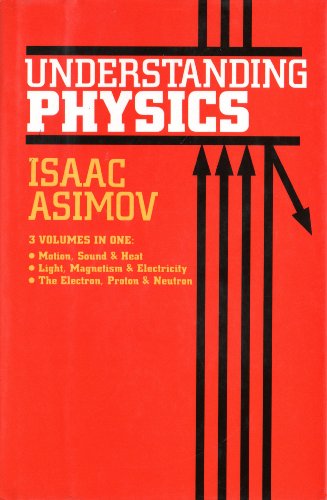
4. Understanding Physics (Science)
by Isaac Asimov
 Hardcover: 768 Pages (1988-06)
list price: US$9.95
Isbn: 0880292512
Average Customer Review: 4.5 out of 5 stars
Canada | United Kingdom | Germany | France | Japan

Customer Reviews (11)

5-0 out of 5 stars A dilettante's delight!
These three volumes in one are an easy-reading, chatty introduction to the world of physics. Asimov's inclusion of the historical background along with the development of specific concepts contributes to its readability. Asimov also keeps scientific jargon and mathematical equations to a minimum. I can't speculate on the value of "Understanding Physics" to the serious student of physics, but for a dabbler who wants to know more about how things work, or to have a handy reference, it is ideal.

5-0 out of 5 stars Fully Explains Fundamental Relationships
Once you learn how to read deeply (and maybe a few years after freshman physics), this is THE book to read.Asimov has a science-type Ph.D. from Columbia (the Ivy league one) and he is a wonderful story teller.Still, I tried to read this book in high school and it meant nearly nothing to me then.But I tried again in graduate school (after completing ABET ECE degree) and was rewarded.Each and every page gave me just what my mind and heart desired.It was a heavenlyexperience to have even a synthetic relationship/conversation with Asimov and his mid-20th century Columbia Univeristy physics department.By the way, I'm pretty sure L. Ron Hubard's cultand its followers ripped off MEST (Mass, Energy, Time, and Space) from this book.

5-0 out of 5 stars The best place to begin the study of physics
Although I took a full year of physics in college, I learned most of my physics from the three books in the Understanding Physics series by Isaac Asimov. As proof, I offer the fact that I scored a respectable 8 on the physics section of the Medical College Admission Test (MCAT) that I took before starting the college physics class. My study of physics in preparation for the test began when I purchased and read the three books in the series. When I was in the physics class, I understood all of the ideas; the only part that presented any difficulty was applying calculus to the problems.
Asimov has a knack for writing about science in a way that allows for the rapid and complete learning of the concepts. This book covers the basics of the fundamental particles that make up atoms, how they interact with each other and their basic properties. Unlike many other authors, Asimov does not hesitate to use equations in his explanations. I commend him for this, as you cannot learn physics without equations and the temptation to avoid them was no doubt strong. If you want to learn the fundamentals of physics, the three-volume Understanding Physics series by Asimov is the best place to start.

5-0 out of 5 stars The best place to begin the study of physics
Although I took a full year of physics in college, I learned most of my physics from the three books in the Understanding Physics series by Isaac Asimov. As proof, I offer the fact that I scored a respectable 8 on the physics section of the Medical College Admission Test (MCAT) that I took before starting the college physics class. My study of physics in preparation for the test began when I purchased and read the three books in the series. When I was in the physics class, I understood all of the ideas; the only part that presented any difficulty was applying calculus to the problems.
Asimov has a knack for writing about science in a way that allows for the rapid and complete learning of the concepts. This book covers the basics of classical physics, as relativity is only mentioned in footnotes. Unlike many other authors, Asimov does not hesitate to use equations in his explanations. I commend him for this, as you cannot learn physics without equations and the temptation to avoid them was no doubt strong. If you want to learn the fundamentals of physics, the three-volume Understanding Physics series by Asimov is the best place to start.

4-0 out of 5 stars Very good
Asimov actually explains and makes sense out of physics.I am Physics major, and Asimov explains about as well as anyone.This is way better and more accessible than that dumb Feinman lectures series. Asimov is a very gifted writer and thinker.Although I differ with him on alot of his conclusions about life and existence,pretty much anything he writes is good.A another Good Physics book is Einstein's "Evolution of Physics". ... Read more


5. Asimov's Guide to the Bible: A Historical Look at the Old and New Testaments
by Isaac Asimov
Hardcover: 1296 Pages (1988-12-12)
list price: US$21.99 -- used & new: US$13.70
(price subject to change: see help)
Asin: 051734582X
Average Customer Review: 4.5 out of 5 stars
Canada | United Kingdom | Germany | France | Japan
Editorial Review

Amazon.com
Isaac Asimov thinks big; readers of his science fiction works are familiar with his grasp and mastery of scale and how the individual stories unfold within the epic work. In Asimov's Guide to the Bible he utilizes this skill to pare down and untangle the many intertwined threads of biblical history and mythology. He views this guide as a way to illuminate the world of the Bible by incorporating the secular aspects of history, biography, and geography into a deeper understanding. Asimov's Guide to the Bible is not a book to be read in continuum but an indispensable companion to any journey through the Bible. Situating the writers of the various books of the Bible in time and space, Asimov gives its writings context and also explains how that context has morphed with time. While some of his conclusions and "qualified speculations" may challenge certain traditional assumptions (for example, there is no reference in the gospels to Mary Magdalene as a prostitute; rather, she was a madwoman whom Jesus cured by casting out seven demons), his aim is not to tear it apart but to flush out some of its mysteries, give it a context that the average Bible reader can understand, and therefore make it more real. --Jodie BullerBook Description
In Asimov's Guide to the Bible, Isaac Asimov explores the historical, geographical, and biographical aspects of the events described in the Old and New Testaments.Asimov's attempts to illuminate the Bible's many obscure, mysterious passages prove absorbing reading for anyone interested in religion and history. ... Read more

Customer Reviews (55)

5-0 out of 5 stars Asimov's Guide
My daughter suggested that I give her a Bible concordance as a Christmas gift. I bought one for her and then looked for Asimov's guide, which I have in my library and consider the best available guide to the Bible. Fortunately, I found it on Amazon. She was fascinated with it. Asimov knew what he was writing about. He wrote 200 books and I consider this among his best. He didn't just "translate the King James version into modern English"; he shared his vast knowledge of ancient history, geography, and languages.

5-0 out of 5 stars Asimov's outdated guide; it's still a good read
This work was published in 2 volumes: OT 1967 and NT 1969 and sadly, the information in this book is outdated because so many new discoveries and evidence about this subject has exploded in the 1990s and 2000s. So, to a student of biblical criticism this book was rather a bore at times but, if you are new to the game I would recommend this book to get you started.
I am sure this would have been a great read in the 1960s - 1980s.

5-0 out of 5 stars Must have hot Biblical Historicity students
This book can be only described with one word.AMAZING!

The insight and knowledge of the late Isaac Asimov is shown here with such an amazing simplicity.He can explain the mystery of life in laymen's terms with extreme ease.

This book, while vast and detailed, is a must have for all the people that have that itch to understand all the mysteries of the bible and only find books that only confuses them more.

5-0 out of 5 stars Fascinating Historical Background of Biblical Times
Isaac Asimov was widely considered the best science writer of the 20th century, because of his outstanding ability to make his subject matter interesting and understandable to the layman.This book gives the reader the historical background of the writing of the Bible and of the events recounted therein.Knowing this background material makes the Bible more readable and more understandable.Having been written by Isaac Asimov, the Guide is so interesting that you may have difficulty putting it down, but it is also a valuable reference work, to be kept handy whenever you read from the Bible.

This is not a scholarly work of biblical criticism, nor does it attempt or pretend to be.If you are looking for such, look to books by such as:
MarcusBorg (e.g. Reading the Bible Again For the First Time ),
John Dominic Crossan (e.g. Jesus: A Revolutionary Biography),
Michael Goulder (e.g. St. Paul Versus St. Peter: A Tale of Two Missions),
Burton Mack (e.g. The Lost Gospel: The Book of Q and Christian Origins), snd
John Shelby Spong (e.g. Liberating the Gospels).THIS IS A MUST READ before reading (or rereading) any of the gospels.
These are all excellent books, well worth reading, but they don't give the reader the background Asimov does.(nor are they to be faulted because they don't, any more than Asimov's guide should be faulted for not being serious biblical criticism).

watziznaym@gmail.com

5-0 out of 5 stars Great secular view of the Bible
Asimov's book gives a very good secular view of the Bible and puts the events occuring in the Bible into historical perspective.It also provides an understanding of the the structure of the Bible, e.g., what is considered canonical (by Jews, Catholics, Protestants), who likely wrote what (although the scholarship may be dated), what was occuring in history when the various books were written, etc.Consider this a book for Bible 101 to teach basic Bible literacy. ... Read more


6. Asimov's Guide to Shakespeare: A Guide to Understanding and Enjoying the Works of Shakespeare
by Isaac Asimov
Hardcover: 1536 Pages (2003-09-02)
list price: US$24.99 -- used & new: US$15.86
(price subject to change: see help)
Asin: 0517268256
Average Customer Review: 5.0 out of 5 stars
Canada | United Kingdom | Germany | France | Japan
Editorial Review

Book Description
Shakespeare's genius is marked by his rare ability to appeal to theatergoers of all types and all levels of education.But for most modern folks, the Greek and Roman mythology and history, let alone the history of England and the geography of sixteenth-century Europe that his works are laden with, are hardly within our grasp.Isaac Asimov comes to making obscure issues clear to the layperson, selects key passages from 38 of the great bard's plays plus two of his narrative poems and, with the help of beautifully rendered maps an figures, illuminates us about their historical and mythological background. ... Read more

Customer Reviews (24)

5-0 out of 5 stars Shakespeare Guide
October 21, 2007

If you want to understand Shakespeare or just appreciate him more,this is a "must have" book.

Highly recommended for Shakespeare fans.

Gunner October, 2007Comment | Permalink

5-0 out of 5 stars Absolutely necessary
This is the book if you want to start exploring Shakespeare. And don't get me wrong: it is not shallow -- on the contrary! -- but it is a very uncomplicated reading. Totally worth it.

5-0 out of 5 stars The best guide
As usual with Asimov works, this guide is absolutely superb!! I fully recommend it to readers attacking Shakesperare for the first time

5-0 out of 5 stars All the facts ma'am and nothing but the facts
Asimov was a tremendous information- processor. He could take any subject in the world and give you the basic information about it. He also understood in the scientific and mathematical books , the principles and laws of the subject.
Here he gives a great deal of information. The book has everything but the ' spirit of Shakespeare'. It has Information but no Poetry.
Some of the great literary critics ofShakespeare( which Asimov is not) caught in their reading a spirit of Shakespeare which Asimov does not.
This does not mean that this guide cannot be useful. But reading it cannot tell you what Shakespeare truly is, and why Shakespeare's work has been so loved. For that you must read it as poetry.

5-0 out of 5 stars A Joy To Read
This book is 100% analysis and comments, it contains no works. For that you need another book as a reference as you read this present book. Of all the Shakespeare analysis books, this is book by Asimov is one of the best books available, and very reader friendly and entertaining.

Here is the analogy. Your hobby is Shakespeare and you have just won the lottery. You have decided to quit your day job, shun the world, sit down, and go over every one of Shakespeare's plays, dissect each scene in chronological order, find out where the characters' names came from, how the plot relates to original source stories such as the myth of King Lear, etc. You research such facts - as they might be available - on whether Shakespeare really did invent the plot of the Tempest all on his own, or as Asimov thinks perhaps it was based on a boat crash in Bermuda. You would go on and on... looking at all the interesting details and side notes plus you would find some maps and drawings. Then - possibly five years later - you would take all the notes, hire Tom Clancy or some other well known modern novel writer and together you would write this easy to read 750 page reference book. Perhaps you could sell a few copies.

That would be your labour of love, and that it exactly what we have here. Asimov has taken the time to methodically go through all the major works, divide them into three groups, i.e.: Roman-Greek and ancient tales, Italian-Mediterranean more modern tales, and finally the English-Europe stories starting with King Lear. He does not need a writer's help - he brings that to the table. Each play is treated in a short chapter and gets about 20 to 40 pages of analysis, general source comments, and specific comments on a few key lines. He has all the skills needed to keep our attention, make it simple, give us lots of background trivia plus the key guidance, and make it all entertaining.

I think most would agree that the best book on Shakespeare is the 3500 page monster: The Norton Shakespeare. But the present book is friendlier and at 750 pages easier to read. So this is an excellent reference where one can get a very fast and painless summary of all the works with many interesting details on lines and characters scene by scene without feeling lost or overwhelmed - as sometimes happens with Norton - a book that one can barely lift. Asimov's book is a must buy for most Shakespeare lovers even if you own other books. Simply put this book is a joy to read, an integral part of any Shakespeare library or fine on its own. Asimov spent all that time and made a serious effort, and now we can enjoy it for a few dollars. ... Read more


7. Isaac Asimov's Book of Facts: 3000 of the Most Entertaining, Interesting, Fascinating, Unusual and Fantastic Facts
by Isaac Asimov
 Paperback: 504 Pages (1992-10-25)
list price: US$14.95 -- used & new: US$63.12
(price subject to change: see help)
Asin: 0803893477
Average Customer Review: 4.0 out of 5 stars
Canada | United Kingdom | Germany | France | Japan
Editorial Review

Amazon.com
Isaac Asimov was unquestionably one of America's greatest scientific writers--from his mind came the awe-inspiring Foundation trilogy and the classic I, Robot. It hardly comes as a surprise then, that the brain of Asimov was overflowing with facts, statistics, and millions of trivial tidbits. His Book of Facts comprises 3,000 of these little information snippets. To organize this wealth of data are distinct subject areas--ranging from chapters titled "Art" and "Medicine" to more obscure ones such as "Salty Facts" and the amusing "Strange Rules, Laws and Customs."Did you know, for instance, that the Tinguian people of the Philippines have a very unique way of kissing? They put their lips close to each other's faces, and then quickly inhale. Or that in the Middle Ages the Europeans put their disobedient animals on trial? Well, you know now!Asimov's Books of Facts immerses the reader into a humongous vat of information. Asimov feeds the brain. --Naomi GesingerBook Description
Collection of unusual facts. ... Read more

Customer Reviews (13)

3-0 out of 5 stars Asimov Didn't Write This
In his autobiography, "I, Asimov", Isaac makes it clear he did not write this book. It was put together by someone else, and his name was attached to it through some kind of contractual mumbo-jumbo. That being said, it is an entertaining book.

4-0 out of 5 stars Good Facts
I am a junkie for inconsequential facts. This book is full of them, although it also has many facts that we should know and perhaps don't. My only complaint is that it's not a paperback. I can't carry it around easily and read at lunch! I recommend it for other facts junkies.

4-0 out of 5 stars Wish it was up-dated by the publisher
I love this book, but it seems to be stuck in the early 80's. A lot has happened since that time. I think the Publisher should honor the memory of the late great Isaac Asimov by keeping the book up to date. Do that and it would earn 5 stars.

5-0 out of 5 stars Completely crazy book. Hours of fun.
This book has some of the most bizarre things that I've ever read. Including the story of some medieval ruler who had the eyes of every captured enemy soldier destroyed with hot pokers. One out of 100 soldiers were spared one eye, in order to lead the blind back home.

Some of this ... I don't think is true, but all the same this is a very fun book. Great bathroom material.

4-0 out of 5 stars A wonderful collection of facts and trivia
Despite all the comments I have read regarding the accuracy of some of this book's facts, I found this collection to be extremely engrossing and downright fascinating.I enjoy reading such compilations of trivia, and I must say that this is one of the best - if not the best - I have read for two reasons.
First, the format of the book is fantastic.The hundreds of facts, which range from one sentence to around a paragraph, are sorted by topic and presented in a brief and accessible manner by the author.The topic-sorting and compression of the countless facts enable one to read the book selectively, if desired, and they also facilitate the option of reading it all at once or gradually.Second, and more importantly, I found the selection of content to be wonderfully diverse and intriguing, as well as entertaining and even fun.In fact (if you will pardon that expression), I found so many of the entries to be worthy of remembering and future reference that I decided to mark those that struck me as particularly interesting or valuable.
I would highly recommend this collection.However, given the accuracy issues some readers have brought up, it should be read with a skeptical mind (but what book should not be read that way?). ... Read more


8. Science Fictional Olympics (Isaac Asimov's Wonderful Worlds of Science Fiction #2)
Paperback: 356 Pages (1984-06-05)
list price: US$3.50
Isbn: 0451129768
Average Customer Review: 4.0 out of 5 stars
Canada | United Kingdom | Germany | France | Japan

Customer Reviews (2)

5-0 out of 5 stars These Stories Stuck With Me for 20 Years
I read this anthology several times as a teenager in the '80s.I've never forgotten several of the stories.In fact, between the latest world events, the 2004 election season, the 2004 Olympics, several of the stories kept popping back into mind unbidden this summer.So I acquired an unscratchable itch to revisit the book, and here I am.The review by Randy Stafford is dead-on; there are a half-dozen real gems in the book and then there are some more forgettable stories.However, since I find that the gems are still sparkling in my memory some 15-20 years after I last read the book, and it's only in the context of this anthology and its general theme of competition that they shine together, I have to argue that the anthology deserves more than Randy's 3 stars.I've found this is a collection that my bookshelf can't be without any longer!

3-0 out of 5 stars More Than Just Olympic Contests
Olympic contests between the Soviet bloc and America were often exploited for propaganda purposes, the outcome of an athletic event supposedly saying something significant about the victor's country.This 1984 anthology, from the height of the Cold War, has several stories built around that notion.

Tom Sullivan's "The Mickey Mouse Olympics" and Nicholas V. Yermakov's "A Glint of Gold" both feature Soviet and American Olympic athletes genetically modified for their events.Sullivan plays the notion for genuine laughs.Yermakov's story is much more serious and shows the price the competitors pay as propaganda pawns.He also works in a defection subplot.

Walter F. Moudy's "The Survivor" abandons all together the notion of mere symbolic combat in the Olympics.In his future, the USSR and USA each put 100 man combat teams into the arena, and they don't come out till one side is annihilated.It's all televised, of course.Moudy is not content to just do a story of future gladiatorial matches.He also delves into what the combat conditioning does to the soldier, what kind of person it produces.It isn't idle speculation, either,because all the survivors of an Olympic War Game get to do whatever they want with no legal sanctions.It's one of the highpoints of the anthology.

Not all of the stories deal with future Olympics; the general theme is competition.

In the case of the dentist in Piers Anthony "Getting Through University", basis for his novel PROSTHO PLUS, the competition is to get accepted to galactic University, School of Dentistry.Anthony creates an entertaining story out of the complexities of dentistry on the galaxy's aliens.

Other highpoints are Norman Spinrad's "The National Pastime", "The Wind from the Sun" by Arthur C. Clarke, and "Prose Bowl" from the team of Bill Pronzini and Barry N. Malzberg.Spinrad's story tells of the invention of Combat Football and its fans very violent enthusiasm for it.It's a 1973 story but hasn't dated that much, especially since wrestling promoters now talk of starting their own football league.Clarke's story combines hard science and melancholy in a solar sail race.Also titled "Sunjammer", it was probably the first story to use the idea of solar sails."Prose Bowl" makes hack writing into an hilarious spectator sport, but it also says some serious things about writers and their audiences.

On the decidely low end of the anthology are Jack Vance's "The Kokod Warriors", about aliens who fight elaborate combats and the humans who bet on them, and Charles Nuetzel's "A Day for Dying", one of those stories with a decadent society of televised bloodsports and an unconvincing revolution to topple it.George Alec Effinger's "From Downtown at the Buzzer", about some aliens fascination with basketball, is marred by a vague ending.

In the entertaining-but-nothing-special category are the rest of the anthology's works.George R.R. Martin's "Run to Starlight" has aliens playing football against humans.The aliens turn out to have a more realistic view of the games' ultimate significance than the humans.Bob Shaw's "Dream Fighter" is another one of those stories where combatants assault each other mentally with horrifying symbols.Suzette Haden Elgin's "For the Sake of Grace" is a feminist story about a poetry contest on a world with an Arab-type culture and the young girl who dares to enter it despite the horrifying consequences of failing.Robert Sheckley's "The People Trap" is a witty, grim tale of a race for land in an overpopulated world."Why Johnny Can't Speed" by Alan Dean Foster is another combat on the highways story.It was possibly a response to Harlan Ellison's classic "Along the Scenic Route"."Nothing in the Rules" by L. Sprague de Camp is about the chaos caused by a mermaid entering a swimming match."The Olympians" by Mike Resnick is not, despite the title, a future Olympics tale.The Olympians are an elite group of humans who specialize in humiliating aliens in athletic competitions.

There are enough good stories here to justify taking a look at this anthology. ... Read more


9. How Did We Find Out About the Speed of Light? (Asimov, Isaac, How Did We Find Out-- Series.)
by Isaac Asimov
 Hardcover: 60 Pages (1986-06)
list price: US$10.95
Isbn: 0802766374
Canada | United Kingdom | Germany | France | Japan

10. A Short History of Chemistry (Science Study Series)
by Isaac Asimov
Hardcover: 263 Pages (1979-10-22)
list price: US$91.95 -- used & new: US$84.98
(price subject to change: see help)
Asin: 0313207690
Average Customer Review: 4.5 out of 5 stars
Canada | United Kingdom | Germany | France | Japan
Editorial Review

Book Description
From the use of metals by prehistoric man to the alchemical experiments of medieval and renaissance man to the complex chemical skills of contemporary man, Asimov traces the development of this building block of our technological world. ... Read more

Customer Reviews (3)

5-0 out of 5 stars After forty years, still the best short history
Even though this book was written forty years ago and there have been many advances in chemistry since then, it remains the best introduction to chemistry available. Isaac Asimov is still the best explainer of science that has ever existed and he was never better than when writing this book. Although Asimov was capable of writing in all areas of science, he was trained as a chemist, so in this case he was writing about the subject that he knew the most about.
The understanding of the elements that led to the modern periodic table did not come easy. There were many false starts and partial truths that were presented, refuted and remodeled. Asimov takes you through all of this historical record, emphasizing that scientific "truth" is an evolutionary process. The "Aha!" moment is a very rare event in science. Most discoveries are the results of months or years of painstaking research and few are definitive. Some of the main advances started as intelligent suppositions that were not verified for decades.
Written at the level of the intelligent high school student, this is the best introduction to the intellectual struggles that forged (literally and figuratively) our current knowledge of chemistry.

5-0 out of 5 stars A longtime favorite of mine
I've had my copy of this since high school. Most of my other books are gone, but I still have this one. It's a very excellent overview of the developments in chemistry, from the early days of discovery, from Lavoisier, to Mendleev, to the Atomic Age. A wonderful book that livens up what can be a very dry subject.

4-0 out of 5 stars Excellent
A great accompanyment to a high school chemistry course.High school chemistry is so abstract, that one wonders how chemists ever thought to look at the things they studied to develop the field.Asimov explains what concrete problems and concerns led to the development of each important discovery, situating it in terms of what was understood at the time, and making the logic of the field's development clear.Easy enough for the non-scientist, but with lots of material I never learned in my science education.Asimov was a great popularizer! ... Read more


11. Nine Tomorrows
by Isaac Asimov
 Mass Market Paperback: Pages (1987-01-12)
list price: US$3.50
Isbn: 0345346041
Average Customer Review: 5.0 out of 5 stars
Canada | United Kingdom | Germany | France | Japan

Customer Reviews (9)

5-0 out of 5 stars Science-Fiction MasterpiecesFIND & BUY THIS BOOK
Any one of the nine short stories in this volume would make their author's career.By assembling them in one volume it becomes immediately apparent that Isaac Asimov was the undisputed master of modern science-fiction.Asimov's style is perfectly suited to the genre--his writing style is plain and deceptively simple.Yet for all the simplicity of the writing the ideas remain profound.

Asimov not only understood science and technology, he had a virtually prophetic vision of how science and technology would change the world.Our internet and cell phones would be no surprise to Asimov--he'd consider how far we have yet to go.

PROFESSION:A fascinating study of a future society where one's profession is dictated by a computer according to a person's talents and aptitudes.Ideas that no longer look entirely futuristic.

THE FEELING OF POWER:The guy can do math in his head!A wry take on the effects of computing power on personal computational ability.

THE DYING NIGHT:A first-rate mystery story told in the milieu of science fiction.

I'M IN MARSPORT WITHOUT HILDA:Like "The Dying Night" a story that demonstrates Asimov's ability to effortlessly cross genre boundaries.

THE GENTLE VULTURES:Watch out for the humans.Take any work by any modern science fiction author--Asimov has already been there and has often done the story better.

ALL THE TROUBLES IN THE WORLD:Artificial Intelligence issues that are still being debated today.

SPELL MY NAME WITH AN S:About the societal impact of near infinite computing power and governmental intrusion into scientific research.

THE LAST QUESTION:Wow.A mindblower.This one is easily among the best science-fiction short stories ever written.Asimov's take on intelligence and the future of the universe.

THE UGLY LITTLE BOY:Time travel and human experimentation are combined in this gem that teaches us that our essential humanity is more important than any scientific achievement.

4-0 out of 5 stars A FINE COLLECTION FROM ONE OF SCI-FI'S MASTERS
Isaac Asimov may very well be the most prolific author in modern history. With over 500 books to his credit (506, to be exact...go to asimovonline.com for the full list, if you don't believe me!), covering just about every subject in the Dewey Decimal System (except philosophy, I believe), the man was a real marvel. One of these 500 volumes, "Nine Tomorrows," is a collection of short stories that Doc Ike first had published in various magazines during the period July '56 to November '58. As the title suggests, all nine tales deal with possible futures that may face mankind, and all feature the wit, erudition and clarity that are the hallmarks of every Asimov story/novel that I've ever read. The collection kicks off with the longest tale, "Profession," in which Asimov presents a 65th century when one's vocation is determined by a kind of computerized psychological profile, and in which youngsters compete in Olympics-style games for plum jobs on other planets. But what happens if it is deemed that you're cut out for nothing at all? That's what happens to young George Platen, in this consistently interesting tale. (Asimov does make one rare goof in this story: George should be 20, not 19, by the story's end. Has anyone else noticed this?) In "The Feeling of Power," Asimov tells us of a scientist who is actually capable of doing simple math problems on paper (gasp!), without the aid of a computer (!), and how the military minds of that distant century make use of these newfound skills. But the old ways of doing things lead to nothing but trouble, in this brilliantly cynical tale. Asimov has been called "the Agatha Christie of Science Fiction," and in "The Dying Night," a murder mystery of sorts, we see an early example of how he earned that title. A scientist lies dead, his papers on mass transference stolen, and three of his old school chums are suspect. This somewhat contrived story nonetheless leads to a satisfactory conclusion that most readers will never foresee. (The 1965 observations of Mercury, by the way, have dated the science in the tale, but this is certainly nothing that Asimov could have foreseen in July '56.) What is certainly the most humorous tale in the bunch comes next: "I'm in Marsport Without Hilda." Written in Heinlein-like, tough-guy prose, this tale concerns a Galactic Service agent who must determine which of three men is attempting to smuggle a powerful drug out of the eponymous port. This one really had me chuckling out loud, and winds up very amusingly indeed. A most entertaining tale. In "The Gentle Vultures," the author tells us that an alien race has been living on the Moon's far side for several decades, waiting for Earth's Cold War to blow up so that they might come to our aid...for a fee, of course. Asimov would have us believe that these folks are the source of the 1940s' and '50s' UFO's, and who knows...maybe he's right! Anyway, the interaction between the chimplike aliens and their kidnapped Earthling is very well done in this unique tale. In "All the Troubles of the World," a computer is responsible for not only caring for everyone on Earth, but also for predicting and preventing crimes. Is it possible that this 1958 story was inspired in part by P.K. Dick's "Minority Report," published two years before? Who knows? The story is very clever, though, and has a most touching ending. "Spell My Name With an S" shows how the smallest alteration in one's life can occasionally lead to great worldwide changes. A way-out surprise ending caps off another very clever Asimov short story. And then there's "The Last Question," in which Asimov theorizes on nothing less than the end of the universe 10 trillion years in the future...and what might happen after that. This is a truly mind-expanding short story that offers much food for thought in its 12 pages. The collection wraps up with perhaps my favorite story of the bunch, "The Ugly Little Boy." Here, a nurse is hired to take care of a 4-year-old Neanderthal tyke who has been plucked from the past by a scientific institute. The tale should be instructive to all those critics who have accused Asimov of being unable to depict convincing female characters. Nurse Fellowes is VERY well drawn, I think, with some psychological complexity and surprising maternal tendencies. The ending of this tale is nicely sentimental, and lingers long in the memory. Thus ends a really fine collection of stories from one of sci-fi's true masters. Trust me, you'll wish there were 20 tomorrows here, instead of just nine!

5-0 out of 5 stars Some of the best science fiction ever written
Isaac Asimov, science fiction grandmaster and one of the absolute best writers in the field ever to wield a pen, wrote so much - and so much of high quality, at that - that it is difficult for a newcomer to his works to even know where to begin. This daunted me so much that, for a while, I dared not venture into Asimov's canon at all - doubtless, many others have done so as well. Now that I have finally started reading him, I regret that I didn't do it long ago. I urge - urge - you not to make the same mistake. Though Asimov wrote literally hundreds of short stories, this short and concise collection features some of his very best. Included in this collection are absolute masterpieces such as The Last Question (one of the Top 3 science fiction short stories of all-time, in my not-so-humble opinion); Profession (an excellent and very underrated story); The Dying Night (an excellent SF mystery that has been, alas, outdated by subsequent science, but is still enjoyable to the full); The Ugly Little Boy (a rare emotional moment for Asimov, and a great story at that - he called this his third favorite that he ever wrote); and Spell My Name With An "S" (a unique and clever story sprung from the lifelong trouble Asimov had with people adding an extra "S" to his surname.) This collection also includes several lighter pieces, which serve to fill space and lighten the mood. Very, very, very highly recommended to any fan of science fiction writing, an absolute classic and masterpiece of the genre.

5-0 out of 5 stars When humanity meets technology, Asimov is there
Sci-fi grandmaster Isaac Asimov is at the top of his game in this collection of nine short stories.The first is "Profession", which speculates on the nature of education in a future where the Earth is the technological center of a civilization of hundreds of populated planets.The story revolves around young George Platen, and the very special profession for which he has been selected.Asimov goes beyond describing the technology for imparting information and makes points about the everyman's preference for physical over social science, the nature of the creative mind, and how society finds
ways to placate the uncreative, including an event at the future Olympics. More menacing is the "Feeling of Power" in which an unassuming computer programmer discovers the lost art of arithmetic in a future society where only computers know how to do mathematics.Asimov shows how this discovery moves up the bureaucratic chain until it reaches the ears of those who know
how to make use of it, but also makes a statement about scientific responsibility."The Gentle Vultures" shows a non-competitive race that goes from planet to planet helping the survivors of nuclear catastrophe - until they encounter their first Cold War.And two of the very best tales deal with the burgeoning concept of artificial intelligence."All the
Troubles of the World" shows a society that relies too heavily on its guiding computer, while "The Last Question" is a totally unique story dealing with a theosophical question and featuring a conclusion that is perhaps the greatest in all science fiction.

Although most of the stories were written in the 1950's, there's very little that's been dated by subsequent scientific discoveries, largely because this collection isn't about hard science so much as the relationships between far-reaching technologies and human society.The protagonists aren't
swashbuckling hero types, and they usually aren't even dedicated scientists single-mindedly pursuing knowledge; they're more likely to be "little guys", ordinary working people with jobs to do, who when faced with something they should be helpless to combat, still summon up the courage to act during that one brief moment when they can make a crucial difference.Probably the most dated feature of this collection is its attitude toward women, who are frequently absent entirely, or serve only in the most stereotypical of roles.Only the touchingly sentimental "The Ugly Little Boy" treats a woman as anything like a real human being.Even so, the power of Asimov's ideas
and the scope of his vision of the future have delighted readers for over half a century.If you haven't read these stories in other collections, you'll certainly want to catch them here.

5-0 out of 5 stars Some books just stick with you...
I read this book God knows how many years ago, and I've never been able to get it out of my head since.I read it again and again until the pages fell out;it's that kind of book.Thoughtful, provocative, and absolutelyterrifying;Asimov at his best. ... Read more


12. Isaac Asimov Presents Great Science Fiction 17
Paperback: 1 Pages (1988-01-05)
list price: US$3.95
Isbn: 0886772567
Canada | United Kingdom | Germany | France | Japan

13. Isaac Asimov Presents Great Science Fiction 16
Paperback: 1 Pages (1987-05-05)
list price: US$3.50
Isbn: 0886772001
Canada | United Kingdom | Germany | France | Japan

14. Isaac Asimov Presents the Golden Years of Science Fiction, Sixth Series
 Hardcover: 624 Pages (1988-02-17)
list price: US$3.99 -- used & new: US$3.00
(price subject to change: see help)
Asin: 0517657546
Canada | United Kingdom | Germany | France | Japan

15. Gold: The Final Science Fiction Collection
by Isaac Asimov
Paperback: 416 Pages (2003-11-01)
list price: US$14.95 -- used & new: US$2.94
(price subject to change: see help)
Asin: 0060556528
Average Customer Review: 2.5 out of 5 stars
Canada | United Kingdom | Germany | France | Japan
Editorial Review

Book Description

Gold is the final and crowning achievement of the fifty-year career of science fiction's transcendent genius, the world-famous author who defined the field of science fiction for its practitioners, its millions of readers, and the world at large.

The first section contains stories that range from the humorous to the profound, at the heart of which is the title story, "Gold," a moving and revealing drama about a writer who gambles everything on a chance at immortality: a gamble Asimov himself made -- and won. The second section contains the grand master's ruminations on the SF genre itself. And the final section is comprised of Asimov's thoughts on the craft and writing of science fiction.

Download Description
Compu-drama director Jonas Willard is looking for a new project when he is successfully bribed by a wealthy author to dramatize his science fiction novel. The creative challenge is a bit daunting, but when Jonas learns the payment of the bribe will be in actual gold coins if the author approves of the final piece... Hugo Award Winner, Locus Poll Award Nominee ... Read more

Customer Reviews (2)

2-0 out of 5 stars Not quite sure what the other reviewers read
It doesn't seem like the other reviewers read the same book that I did.The book I read consisted of a lot of self-congratulatory essays on Asimov's creation of the Three Laws of Robotics (which aren't really laws, but that's a topic for a different rant) punctuated by a bunch of shaggy-dog stories (MAYBE they were funny in 1955) and a couple of lame science-fiction stories.I know Dr. Asimov was a brilliant man, but this book in no way offers him tribute to his genius.For fans only.Maybe.

3-0 out of 5 stars Good Collection of Asimov's Work
If you're a diehard Asimov fan like I am, you'll probably like this book.The main story, "Gold," details a filmmaker realizing the second part of ...And the Gods Themselves.For that alone, it's worth a look.

Asimov's more famous collections are a little more fun.If you're becoming an Asimov fan, it's best to start with his early science-fiction and then move through his career. ... Read more


16. El Nacimiento De Los Estados Unidos, 1763-1816/ The Birth of the United States, 1763-1816: Historia Universal Asimov (El Libro De Bolsillo-Humanidades)
by Isaac Asimov
Paperback: 327 Pages (2006-05-30)
list price: US$21.95 -- used & new: US$14.93
(price subject to change: see help)
Asin: 8420638927
Canada | United Kingdom | Germany | France | Japan

17. TV 2000
by Isaac Asimov
 Mass Market Paperback: Pages (1983-04-12)
list price: US$2.95
Isbn: 0449204332
Average Customer Review: 5.0 out of 5 stars
Canada | United Kingdom | Germany | France | Japan

Customer Reviews (1)

5-0 out of 5 stars Awesome!
This book is full of short stories. These include: Now Inhale,And Madly Teach,The Prize of Peril,Home Team Advantage, Cloak of Anarchy, and Committee of the Whole. In most of these stories, there are tons of surprises. A few of the stories I didn't understand, but most of them were a fun reading. As in Now Inhale, I never thought Taylor could trick the aliens out of killing him. All of these stories are from before 1980, but they're still very unique and imaginative. I can't believe our library sold it at a book sale. ... Read more


18. Have Robot, Will Travel: The New Isaac Asimov's Robot Mystery (Isaac Asimovs Robot Mystery)
by Alexander C. Irvine
Paperback: 272 Pages (2005-11-25)
list price: US$6.99 -- used & new: US$3.32
(price subject to change: see help)
Asin: 1596871512
Average Customer Review: 4.5 out of 5 stars
Canada | United Kingdom | Germany | France | Japan
Editorial Review

Book Description
A human has been murdered on Kopernik and the clues point toward a robot as the killer. But how can that be, when robots are programmed to never bring harm to humans? Before long, roboticist Derec Avery is on his way to Kopernik to investigate. Former Auroran ambassador Ariel Burgess, meanwhile, has a mystery of her own to unravel: Citizens of the Nova Levis colony have been disappearing in greater numbers, while the cyborg population has suddenly started growing at a dramatic rate. With the help of old friends--and potentially new enemies--Derec searches for the identity of a killer, unaware that Ariel is walking directly into the center of the web of intrigue.Download Description
Robot specialist Derec Avery and Calvin Institute attache Ariel Burgess - last seen in Asimov's Aurora by Mark Tiedemann - return in an all-new adventure.A human has been murdered, and all the clues point to a robot as the killer.But how can that be, when robots are programmed to never bring harm to humans?Derec and Ariel must find the murderer - before they become the next victims... ... Read more

Customer Reviews (2)

4-0 out of 5 stars Enjoyable
Pleasant addition to the series.Good use of known characters.Interesting situations.Ending too tidy and killed off too many characters if he was planning to broaden the series as the "Star Wars" crowd has done so well.

5-0 out of 5 stars The Universe Expands
I am always glad to see new books in the asimovian universe. This is a continuation of Mark W. Tiedemann's trilogy featuring Derec Avery and Ariel Burgess from the Robot City series. This one adds a few new twists and turns that not only expands the robot conspiracystarted by Daneel Olivaw, but also adds more to the cyborg aspect. This is book that needs to be in your Asmiov collection. ... Read more


19. Robot Dreams (Masterworks of Science Fiction and Fantasy)
by Isaac Asimov
Paperback: 352 Pages (2004-06-01)
list price: US$14.00 -- used & new: US$18.67
(price subject to change: see help)
Asin: B000FVHJ9O
Average Customer Review: 4.5 out of 5 stars
Canada | United Kingdom | Germany | France | Japan
Editorial Review

Book Description
Robot Dreams collects 21 of Isaac Asimov's short stories spanning the body of his fiction from the 1940s to the 1980s----exploring not only the future of technology, but the future of humanity's maturity and growth.Download Description
Legendary robopsychologist Susan Calvin questions robot LVX-1 about his unique ability to dream, and opens a frightening window into the hidden underlayers of his positronic brain. Asimov's Reader's Choice Winner, Hugo Award Nominee, Locus Poll Award Winner, Nebula Award® Nominee ... Read more

Customer Reviews (19)

4-0 out of 5 stars Not Free SF Reader
A pretty good collection, part of a pair based around the Robot stories, with some others included.The average is 3.48, so very solid.An introduction by the author talking about how stories can look if what they talk about does happen, or gets made to look silly.

Robot Dreams : Little Lost Robot - Isaac Asimov
Robot Dreams : Robot Dreams - Isaac Asimov
Robot Dreams : Breeds There a Man...? - Isaac Asimov
Robot Dreams : Hostess - Isaac Asimov
Robot Dreams : Sally - Isaac Asimov
Robot Dreams : Strikebreaker [Male Strikebreaker] - Isaac Asimov
Robot Dreams : The Machine That Won the War - Isaac Asimov
Robot Dreams : Eyes Do More Than See - Isaac Asimov
Robot Dreams : The Martian Way - Isaac Asimov
Robot Dreams : Franchise - Isaac Asimov
Robot Dreams : Jokester - Isaac Asimov
Robot Dreams : The Last Question - Isaac Asimov
Robot Dreams : Does a Bee Care? - Isaac Asimov
Robot Dreams : Light Verse - Isaac Asimov
Robot Dreams : The Feeling of Power - Isaac Asimov
Robot Dreams : Spell My Name with an S [S as in Zebatinsky] - Isaac Asimov
Robot Dreams : The Ugly Little Boy - Isaac Asimov
Robot Dreams : The Billiard Ball - Isaac Asimov
Robot Dreams : True Love - Isaac Asimov
Robot Dreams : The Last Answer - Isaac Asimov
Robot Dreams : Lest We Remember - Isaac Asimov


Monkeying with the Laws can have surprising results.

4 out of 5


Fractal motive improvement termination.

4.5 out of 5


Mental giant experiment.

3 out of t


Doctor, Doctor, can't give them the news, we're full of mind parasites that kill them fools.

4 out of 5


Robocar protection.

4 out of 5


Outcast negotiator.

3 out of 5


Coin flip strategy.

3 out of 5


Art does Matter.

3 out of 5


Planetary water supply.

3.5 out of 5


Small electoral analysis.

3.5 out of 5


Computer humour intuition.

3 out of 5


Immortal humans breed too fast for the universe.

4 out of 5


Busted robot art.

3.5 out of 5


Computer people consequences.

3 out of 5


Minor change equals big payout.

3.5 out of 5


Neanderthal stasis maternal ending.

4 out of 5


Antigrav rivalry.

3.5 out of 5


Computer match.

3.5 out of 5


Eternity destruction mission.

3 out of 5


Average recall preferable.

4 out of 5


3.5 out of 5

5-0 out of 5 stars It's Isaac Asimov- Of Course it's Great!
I read this collection a couple of years ago, and I fell in love immediately. This collection of short stories is probably one of the best collections you can come across of Asimov's short stories. His views about humanity and the rise of technonogy is fused with his original and creative plots and his incredible writing skill. These stories, including "The Ugly Little Boy," and, of course, the much celebrated "The Last Question" really get you thinking. However, this book is really worth it for the title story, "Robot Dreams," which cannot be found in any other collection of his (and it's a really good story too!). I am not a sci-fi fan, but when it comes to authors such as Asimov, I can make the exception. Get this. You won't be sorry.

5-0 out of 5 stars Asimov Delivers
I've always been an Isaac Asimov fan from the first read of "The Last Question" and "The Ugly Boy" (which are both included in this collection) published in the Asimov collection, "Nine Tomorrows".

His short stories in this volume are just as compelling and make for good nightstand reading.I've read and re-read this book several times over the years, and each time I re-read it, it is as fresh as the first time.Of course, my favorites are the robotic stories with Susan Calvin.Unfortunately, only two are published in this collection.Nevertheless, Mr. Asimov was a master story-teller, and knew his subject matter very well...he is sorely missed.

Three stories in particular stand out: "The Ugly Boy", which poses (and answers) the question of how modern man would react to a neanderthal being plucked out of time, as it were, and thrust into our world; "The Billiard Ball", which explores man's ubiquitous search for the perpetual-motion machine - but more than that, it examines two diametrically opposed personalities and philosophies clashing on the field of academia; and finally, "Lest We Remember", a story that involves the synthetic development of "total recall", and all the socio-political ramifications that capability produces in a fiercely competitive business setting.All in all, five stars...

5-0 out of 5 stars Mostly NON-robot short stories
I expected this to be a collection of robot stories because of the title, but only two are robot stories.They are the first two, and the first one is also a story from _I, Robot_ (which I just re-read).The second one is "Robot Dreams" from which the book takes its title, and it is another Susan Calvin robot story like those from _I, Robot_ but was written in the mid-'80s (_I, Robot_ was written 30 years earlier).It is in the same mold with the earlier stories, but with a nod to advancing technology (small computers, for instance).

Many other stories in this collection center on "Multivac," an immense computer.The name is an obvious derivative of UNIVAC, a large, vacuum-tube based computer of the early 1950s.UNIVAC became famous for predicting that Eisenhower would win the 1952 election based on early returns (against pundit predictions that Stevenson would win).That led directly to one story, "Franchise," which takes the ability to sample a small number of votes to predict a total election outcome and drives the idea to an absurd (but nevertheless interesting) extreme.

There are a variety of other stories, from ones dealing with beings without bodies to one talking about an alien medical investigator who has come to Earth to find out more about a disease.All are worth the read, and some are truly fascinating and end in very unexpected ways.

Ralph McQuarrie provides the cover illustration and several others for individual stories; they are of the style familiar to anyone who has seen original art from "Star Wars" (which he worked on).Asimov's introduction is amusing; he explains what he got right in predicting the future--and what he got spectacularly wrong.He discusses this with respect to both stories in the book (Multivac, for instance) and to other books and stories he had written decades earlier.

All in all, this book was a fun read.

5-0 out of 5 stars Good story sampler, great art.
Someone wrote that he only knew of one story being in another collection, and another wrote that it's only complete if you have Robot Visions as well. Here's the scoop.

Robot Visions has 7 of the 9 stories from I, Robot, 2 stories from Bicentennial Man and one unique to Robot Visions, the title story. The I, Robot and Bicentennial Man stories are all also included in The Complete Robot.

Robot Dreams, as others have pointed out, is actually a well-rounded compendium and has only a few robot stories. The title story is unique to this collection, but the three others are included in The Complete Robot (one of those is an I, Robot story).

So, the first story is from I, Robot, and the second is the newly-penned title story. The next 5 stories are from Nightfall, then comes the title story from Martian Way. Then come two from Earth is Room Enough and one from Nine Tomorrows. The next two stories are from Buy Jupiter, and then three stories from Nine Tomorrows. There follows the final story from Asimov's Mysteries, then a story that's been in four other collections, including TCR. Finally, the last two stories are from The Winds of Change. ... Read more


20. The Return of the Black Widowers
by Isaac Asimov
Paperback: 304 Pages (2005-10-20)
list price: US$14.95 -- used & new: US$1.82
(price subject to change: see help)
Asin: 0786716517
Average Customer Review: 5.0 out of 5 stars
Canada | United Kingdom | Germany | France | Japan
Editorial Review

Book Description

Until his death in 1992, author Isaac Asimov would write more than 120 ingenious tales of detection and deduction, and in 66 of them he would present his armchair detectives, the Black Widowers, with the mind-teasing puzzles that they would strive to solve in often-quarrelsome conversation. The Black Widowers club is meeting again. In a private dining room at New York's luxurious Milano restaurant, the six brilliant men once more gather for fine fare served impeccably by their peerless waiter, Henry. At table, too, will of course be that requisite dinner guest to challenge their combined deductive wit: a man whose marriage hinges on finding a lost umbrella; a woman shadowed by an adversary who knows her darkest secrets; a debunker of psychics unable to explain his unnerving experience in a haunted house; or a symphony cellist accused of attacking his wife with a kitchen knife. In addition to six stories that have never before appeared in any collection, this volume includes the ten best-ever Black Widowers cases, among them the very first to be published, in Ellery Queen Mystery Magazine, as well as the first brand new Black Widowers story to appear in more than ten years.
... Read more

Customer Reviews (9)

5-0 out of 5 stars The Last Meeting of the Black Widowers
Back in 1990 on a rainy night (or maybe it wasn't) I happened across a book in a bookstore entitled:Puzzles of the Black Widowers.I thought it looked interesting...it was!In fact, it was awesome, and so are any of the Black Widower books you can lay your hands on.

Tales of the Black Widowers
More Tales of the Black Widowers
Casebook of the Black Widowers
Banquets of the Black Widowers
Puzzles of the Black Widowers, and now
The Return of the Black Widowers

Each story follows the same outline.A monthly meeting is held in a private room in an exclusive New York Restaurant.The members take turn bringing a guest.Over dinner a mystery is revealed.The members of the club try to work it out, but in the end, their faithful waiter, Henry, solves the mystery.Does the formula ever get old?Never!These are incredibly well written stories, each one being very different and unique.There are 12 stories per book.This book "The Return" is a posthumous volume.Asimov died in 1992 leaving only 6 unpublished Black Widower stories.These are collected here and grouped with 10 of his all-time classics.Also included are two, paying homage to Asimov.Although the book is paperback, it is larger in size than the standard paperback and a screaming buy at $10.

5-0 out of 5 stars Asimov rises from the grave
The Return of the Black Widowers


The Return of the Black Widowers (2003) contains:

The Acquisitive Chuckle

Early Sunday Morning

The Obvious Factor

The Iron Gem

To the Barest

Sixty Million Trillion Combinations

The Wrong House


TheRedhead

Triple Devil

The Men Who Read Issaac Asimov

And some previously uncollected stories,including:

Northwestward

Yes, But Why

Lost In a Space Warp

Police at the Door

The Haunted Cabin

The Guest's Guest

The Woman in the Bar

The Last Story, by Charles Ardai

And an Afterword on the Birth of the Black Widowers


The Foreword by is by Asimov's Friend Harlan Ellison

If you've enjoyed The Black Widowers before or if you just enjoy a good mystery short story, I highly recommend this book.


Please be advised, it might be hard to put down.

GunnerApril,2007


5-0 out of 5 stars The return of a great classic
This was one of my favorite series when I was younger, as I have a thing for short mysteries. The last of the Black Widowers books, this one was a good as any I've read. A must-have for any true Asimov or mystery fan.

3-0 out of 5 stars Four stars for Asimov fans, two stars for non-fans
Of course I had to buy it! I love Asimov, I love his style and wit. He passed away in 1992, but that only slowed his output without stopping it.

There are 11 stories repeated from previous collections, six stories gathered for the first time, one Black Widower story by someone else, and an hommage to the Black Widowers also by someone else. There's an essay by Asimov and Harlan Ellison's forward.

Ellison's forward is the first thing wrong with the book. Asimov was famous for refusing to have anyone else write introductions to his books. In his story collections he also appended miniature essays to each story, often about how he came to think of a particular plot; obviously these essays are missing here. Further, the two stories by other writers just didn't belong in an Asimov collection, they're intruding. Finally, a few of the last stories were written when Asimov was dying and they are simply no good. I read and enjoyed them for sentimental reasons only; they would disappoint readers new to Asimov or the Black Widowers.

So if you are already a fan of the Good Doctor's fiction, indulge yourself and enjoy. Otherwise, do yourself a favour and pick up another of his 400+ books.

Vincent Poirier, Tokyo

5-0 out of 5 stars The dear Doctor's best mystery collection
Being an avid fan of Issac Asimov my whole life, I have read many to most of his fictional works including the casebooks of the Black Widowers.But this particular edition and its highly intense forward by the Doctor's dear friend is the best mystery collection by far. Any Issac Asimov fan will love it as much as I do and any reader of the genre will be highly gratified by the intelligence and plot twists the dear Doctor ingeniously supplies in his stories. ... Read more


  1-20 of 100 | Next 20
A  B  C  D  E  F  G  H  I  J  K  L  M  N  O  P  Q  R  S  T  U  V  W  X  Y  Z  

Prices listed on this site are subject to change without notice.
Questions on ordering or shipping? click here for help.

site stats