
|
Help |
| Home - Authors - Ballard J G (Books) | |
e99 Online Shopping Mall
|
|
Help |
| Home - Authors - Ballard J G (Books) | |
| 1-20 of 100 | Next 20 |
click price to see details click image to enlarge click link to go to the store
| 1. The Complete Stories of J. G. Ballard by J. G. Ballard | |
 | Paperback: 1199
Pages
(2010-11-08)
list price: US$24.95 -- used & new: US$16.47 (price subject to change: see help) Asin: 0393339297 Average Customer Review: 
Canada | United Kingdom | Germany | France | Japan |
|
Editorial Review Product Description Customer Reviews (8)
| |
| 2. Miracles of Life: Shanghai to Shepperton: An Autobiography by J. G. Ballard | |
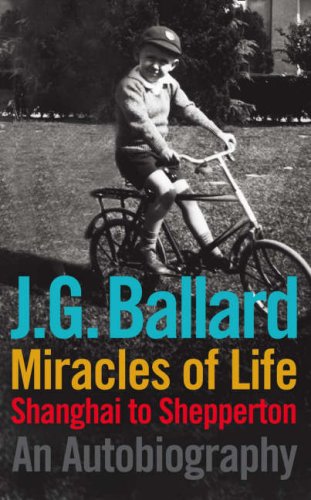 | Hardcover: 288
Pages
(2008-04)
list price: US$9.50 -- used & new: US$7.54 (price subject to change: see help) Asin: 0007270720 Average Customer Review: 
Canada | United Kingdom | Germany | France | Japan |
|
Editorial Review Product Description Customer Reviews (4)
| |
| 3. Crash by Dawn Ades, Will Self, J. G. Ballard | |
 | Hardcover: 202
Pages
(2010-03)
-- used & new: US$134.30 (price subject to change: see help) Asin: 1935263072 Canada | United Kingdom | Germany | France | Japan |
| 4. The Drought (Paladin Books) by J. G. Ballard | |
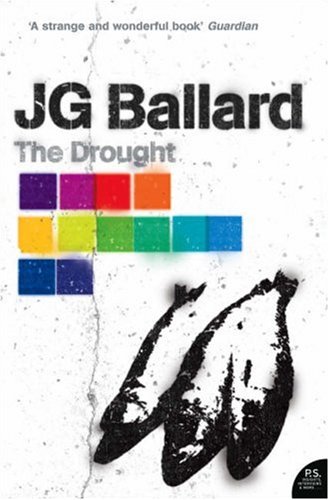 | Paperback: 240
Pages
(2002-04-02)
list price: US$14.45 -- used & new: US$6.31 (price subject to change: see help) Asin: 0586089969 Average Customer Review: 
Canada | United Kingdom | Germany | France | Japan |
|
Editorial Review Product Description Customer Reviews (4)
| |
| 5. Crash: A Novel by J. G. Ballard | |
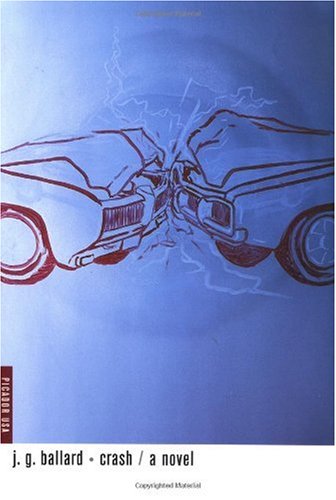 | Paperback: 224
Pages
(2001-10-05)
list price: US$14.00 -- used & new: US$7.93 (price subject to change: see help) Asin: 0312420331 Average Customer Review: 
Canada | United Kingdom | Germany | France | Japan |
|
Editorial Review Product Description Customer Reviews (128)
| |
| 6. Millennium People by J. G. Ballard | |
| Hardcover: 288
Pages
(2011-07-05)
list price: US$25.95 -- used & new: US$25.95 (price subject to change: see help) Asin: 039308177X Average Customer Review:
Canada | United Kingdom | Germany | France | Japan | |
|
Editorial Review Product Description Customer Reviews (5)
Moving away from his familiar theme of how the jaded West has to keep ratcheting up how it gets his kicks, he deals with senseless terrorism. Prescient, especially in light of the March 2004 attack on a hotel in Baghdad, which set a new low in terrorism in that it didn't seem to have any victims targeted. That is, Iraqis and Arabs were killed. Its aim seemed simply to create chaos like in Millennium People. While the plot is not Ballard's best, he still imbues his characters with these drop-dead little quirks that illuminates them in one line of text. Millennium People does little to discredit him in this reviewer's eyes as the leading serious novelist in the English language. A must read for followers, and not a bad start for those new to Ballard. ... Read more | |
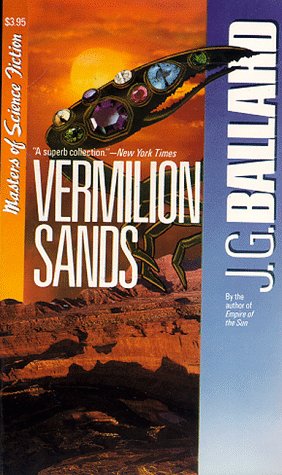
| 7. Vermilion Sands by J. G. Ballard | |
 | Mass Market Paperback: 208
Pages
(1988-08)
list price: US$3.95 Isbn: 0881844225 Average Customer Review:
Canada | United Kingdom | Germany | France | Japan |
|
Editorial Review Product Description Customer Reviews (6)
Vermilion Sands is home to the magnificent singing sonic sculptures, tall statues that emit music or atonal sounds when they sense movement.The marvelous sand yachts of the rich, their trained sand rays (giant white manta rays that float through the air), the cloud-sculptors, the living clothes, and the psychotropic houses all live on in the mind long after the stories have been read.Vermilion Sands is a striking setting, one of the more memorable in fiction. The themes of the stories are fairly similar.Most dwell on unattainable or forsaken love.In "Say Goodbye to the Wind", a former model pines for her departed love.In "Studio 5, the Stars" an aspiring poetess dreams of tragic love.And so it goes in each story.But the stories are fresh and have enough energy to overcome a repetitive theme. Ballard's futuristic city stands as a monument to the power of a memorable fictional setting.Indeed, Vermilion Sands is as powerful as Jeffrey Thomas's Punktown or Jeff VanderMeer's Ambergris to use two recent examples.I'm hoping that Mr. Ballad has seen fit to write more Vermilion Sands stories in the 30+ years since this collection was published.I can only hope that I find more.
What makes VERMILLION SANDS is the sheer inventiveness of the world he imagines.It is a cheap, tacky world, not unlike a tawdry Las Vegas or Palm Springs, populated by futuristic artists and cultural has-beens.The art forms that Ballard imagines are brilliant, and feel far more familiar thirty years later than they must have felt to those in the early 1970s.After all, computers and the Internet and digitalization has constantly forced us to rethink the possibilities and forms of art.Ballard describes architecture that responds to the emotional experiences of its inhabitants and imparts some of that feeling back to those entering it.He imagines machines rather than people producing poetry, on long ticker tape like rolls of paper.Plants that sing.Sculptors who work with clouds as their preferred medium.And Ballard manages to meld these strange new arts perfectly into the lives of a rich and fascinating, if also rather sad and tragic, group of characters. This book is, at the time that I am writing this, out of print.But it has over the years come back in print on a few occasions.I am certain that it will again.It is without question a much more interesting book than many of his that are currently in print, and if there is any justice it will once again be made available.Until then, it is well worth searching out.
| |
| 8. Terminal Beach by J.G. Ballard | |
 | Paperback: 224
Pages
(1997-11-20)
list price: US$14.45 -- used & new: US$4.13 (price subject to change: see help) Asin: 0575401311 Average Customer Review:
Canada | United Kingdom | Germany | France | Japan |
|
Editorial Review Product Description Customer Reviews (5)
Also recommended most highly are "Now Comes the Sea", and "Chronopolis", the latter being the story of a society where time measurement is outlawed, and of the outlaw who wants to bring it back.. You will never forget any of these stories.V Very, very highly recommended.This is a genius at his best.
| |
| 9. The Crystal World by J. G. Ballard | |
 | Paperback: 216
Pages
(1988-05-01)
list price: US$14.00 -- used & new: US$9.30 (price subject to change: see help) Asin: 0374520968 Average Customer Review:
Canada | United Kingdom | Germany | France | Japan |
|
Editorial Review Product Description Customer Reviews (13)
| |
| 10. Unlimited Dream Company (Paladin Books) by J. G. Ballard | |
 | Paperback: 224
Pages
(1990-06-06)
list price: US$16.50 -- used & new: US$7.00 (price subject to change: see help) Asin: 0586089950 Average Customer Review:
Canada | United Kingdom | Germany | France | Japan |
|
Editorial Review Product Description Customer Reviews (4)
| |
| 11. The Atrocity Exhibition: Annotated (Flamingo Modern Classics) by J. G. Ballard | |
 | Paperback: 192
Pages
(2001-05-21)
list price: US$16.50 -- used & new: US$7.45 (price subject to change: see help) Asin: 0007116861 Average Customer Review:
Canada | United Kingdom | Germany | France | Japan |
|
Editorial Review Product Description Customer Reviews (29)
| |
| 12. Billenium by J. G. Ballard | |
| Mass Market Paperback: 159
Pages
(1962)
Isbn: 0425006670 Canada | United Kingdom | Germany | France | Japan | |
|
Editorial Review Product Description | |
| 13. The burning world (Berkley Medallion Book) by J. G Ballard | |
| Mass Market Paperback: 160
Pages
(1964)
Asin: B0007EDC5E Canada | United Kingdom | Germany | France | Japan | |
| 14. Super-Cannes: A Novel by J. G. Ballard | |
 | Paperback: 400
Pages
(2002-10-04)
list price: US$16.00 -- used & new: US$4.79 (price subject to change: see help) Asin: 0312306091 Average Customer Review:
Canada | United Kingdom | Germany | France | Japan |
|
Editorial Review Product Description Customer Reviews (19)
| |
| 15. The Best Short Stories of J. G. Ballard by J. G. Ballard | |
 | Paperback: 320
Pages
(2001-07-06)
list price: US$17.00 -- used & new: US$8.44 (price subject to change: see help) Asin: 0312278446 Average Customer Review:
Canada | United Kingdom | Germany | France | Japan |
|
Editorial Review Product Description Customer Reviews (8)
In any case, whether a Ballard story is a total or only a partial success, it invariably provides plenty of food for thought. Three of them--"The Overloaded Man", "The Drowned Giant", and "The Garden of Time"--rank among my all-time favorites for their perfect fusion of speculative and mythic qualities. The more technology-based stories ("Concentration City", "The Voices of Time") are more interesting for their ideas than their execution. In the introduction to this volume, Anthony Burgess hits on the central importance of Ballard's work: "Ballard considers that the kind of limitation that most contemporary fiction accepts is immoral... Language exists less to record the actual than to liberate the imagination." If you agree, buy this book. ... Read more | |
| 16. The Kindness of Women: A Novel by J. G. Ballard | |
 | Paperback: 352
Pages
(2007-11-27)
list price: US$15.00 -- used & new: US$2.95 (price subject to change: see help) Asin: 0312422849 Average Customer Review:
Canada | United Kingdom | Germany | France | Japan |
|
Editorial Review Product Description Customer Reviews (10)
Aside from that, itis an engaging story. You care about the characters, and you care about theauthor. You meet people and see things and have a good time..... I wouldsuggest this book as not something for someone who is just looking for aread but more for someone who is into Ballard and wants clarification...and details... about him....
| |
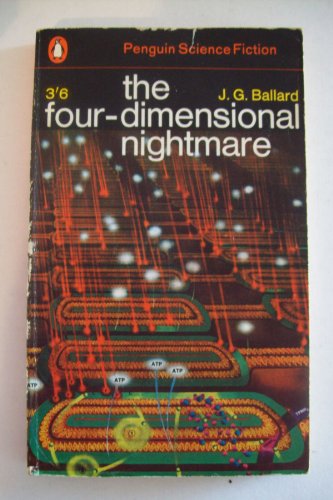
| 17. The Four-Dimensional Nightmare by J G Ballard | |
 | Paperback:
Pages
(1965)
Asin: B000HFVKRU Average Customer Review:
Canada | United Kingdom | Germany | France | Japan |
Customer Reviews (1)
| |
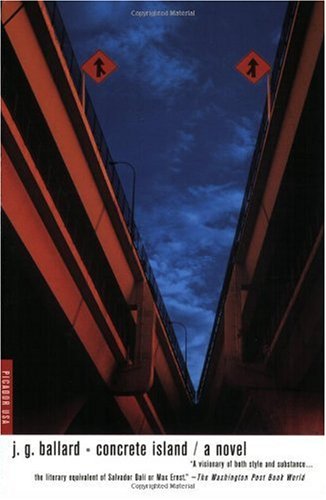
| 18. Concrete Island: A Novel by J. G. Ballard | |
 | Paperback: 180
Pages
(2001-10-05)
list price: US$14.00 -- used & new: US$6.50 (price subject to change: see help) Asin: 031242034X Average Customer Review:
Canada | United Kingdom | Germany | France | Japan |
|
Editorial Review Product Description Customer Reviews (24)
| |
| 19. RUNNING WILD. by J.G. Ballard | |
| Hardcover:
Pages
(1989-01-01)
Asin: B003HNJ53K Average Customer Review:
Canada | United Kingdom | Germany | France | Japan | |
Customer Reviews (18)
Nonetheless, if it's a rainy day and there's nothing else to read.....
| |
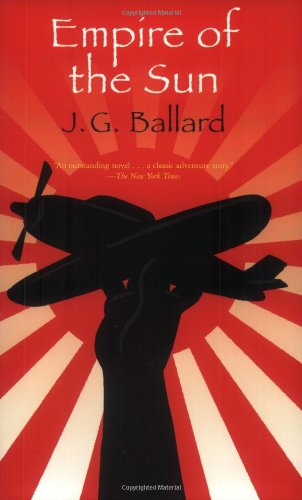
| 20. Empire of the Sun by J. G. Ballard | |
 | Paperback: 288
Pages
(2005-03-01)
list price: US$13.00 -- used & new: US$2.17 (price subject to change: see help) Asin: 0743265238 Average Customer Review:
Canada | United Kingdom | Germany | France | Japan |
|
Editorial Review Product Description Jim is separated from his parents in a world at war. To survive, he must find a strength greater than all the events that surround him. Shanghai, 1941 -- a city aflame from the fateful torch of Pearl Harbor. In streets full of chaos and corpses, a young British boy searches in vain for his parents. Imprisoned in a Japanese concentration camp, he is witness to the fierce white flash of Nagasaki, as the bomb bellows the end of the war...and the dawn of a blighted world. Ballard's enduring novel of war and deprivation, internment camps and death marches, and starvation and survival is an honest coming-of-age tale set in a world thrown utterly out of joint. Customer Reviews (33)
| |
| 1-20 of 100 | Next 20 |
 Ballard futures
 The erotic delirium of a car crash
 Crisp prose but poor story