e99 Online Shopping Mall

Geometry.Net - the online learning center Help  
Home  - Authors - Banks Iain M (Books)

  1-20 of 69 | Next 20
A  B  C  D  E  F  G  H  I  J  K  L  M  N  O  P  Q  R  S  T  U  V  W  X  Y  Z  

click price to see details     click image to enlarge     click link to go to the store

$17.15
1. Matter
$5.56
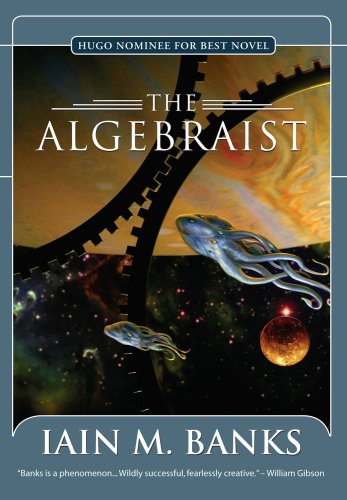
2. The Algebraist
$11.88
3. Feersum Endjinn
$10.39
4. Consider Phlebas
$10.39
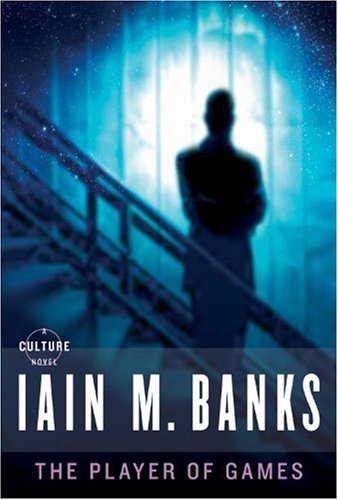
5. The Player of Games
$12.92
6. Use of Weapons
$17.06
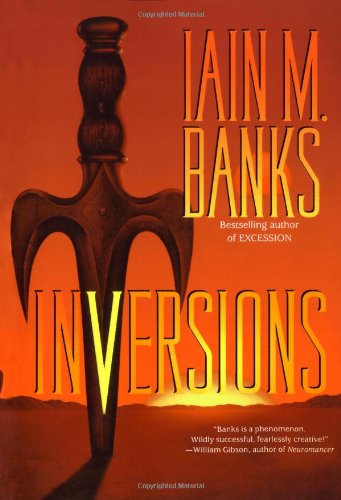
7. Inversions
$10.63
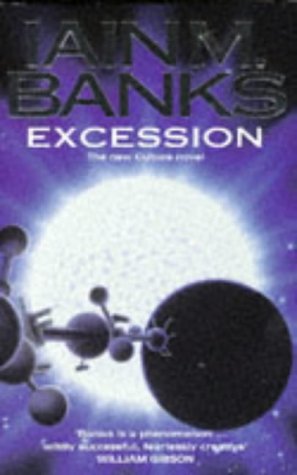
8. Excession
9. State of the Art
$34.92
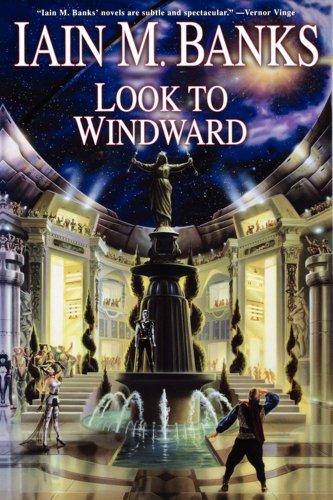
10. Look to Windward
$18.36
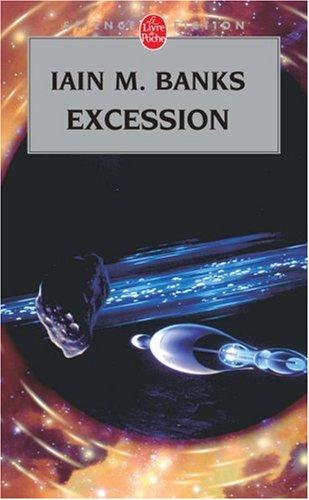
11. Exzession.
$12.94
12. Against a Dark Background
$0.95
13. A SONG OF STONE: A Novel
$8.89
14. Complicity
 
$94.95
15. Dead Air
 
$26.37
16. Pensad En Flebas/ Consider Phlebas
 
17. Consider Phlebas
 
18. THE CULTURE. THE IAIN (M) BANKS
 
19. Feersum Endjinn
20. Bedenke Phlebas.

1. Matter
by Iain M. Banks
Hardcover: 608 Pages (2008-02-27)
list price: US$25.99 -- used & new: US$17.15
(price subject to change: see help)
Asin: 0316005363
Average Customer Review: 3.5 out of 5 stars
Canada | United Kingdom | Germany | France | Japan
Editorial Review

Book Description
In a world renowned even within a galaxy full of wonders, a crime within a war. For one brother it means a desperate flight, and a search for the one - maybe two - people who could clear his name.For his brother it means a life lived under constant threat of treachery and murder.And for their sister, even without knowing the full truth, it means returning to a place she'd thought abandoned forever.Only the sister is not what she once was; Djan Seriy Anaplian has changed almost beyond recognition to become an agent of the Culture's Special Circumstances section, charged with high-level interference in civilisations throughout the greater galaxy.Concealing her new identity - and her particular set of abilities - might be a dangerous strategy, however. In the world to which Anaplian returns, nothing is quite as it seems; and determining the appropriate level of interference in someone else's war is never a simple matter.MATTER is a novel of dazzling wit and serious purpose. An extraordinary feat of storytelling and breathtaking invention on a grand scale, it is a tour de force from a writer who has turned science fiction on its head. ... Read more

Customer Reviews (6)

3-0 out of 5 stars Meandering story with weakly drawn characters
While I love Iain Banks' work in general, and his Culture books in particular, I can't say this is one of his better efforts.Matter is a book plagued by poor pacing, too many forgettable characters, and just a general lack of interesting things to say.

Matter is probably best understood as a study in the lives of three siblings: two brothers and their sister, all children of the king of a recently advancing medieval nation, and the older brother's manservant Holse.Their people live within a ShellWorld, a sort of onion shaped world where people live on the surface of concentric spheres.The two princes live within their post-medieval society, where knights ride great flying birds above the new steam trains, while their sister has gone off to become a Culture agent, barely connected to her distant homeland.

The story follows the four of them as they roam around through various adventures and circumstance, never quite connecting itself to any particular plot or drama throughout the first 2/3 of this fairly long book.All four of them (and some others who travel with them) just sort of meander through the story, pushed back and forth by outside events without quite knowing what's going on, until in the very last quarter of the book a story just sort of pops out of nowhere and takes over.This leads to a very abrupt and unsatisfying ending which really reads like a writer trying to meet a deadline more than anything else.

Along the way, the main characters all seem rather stereotypical and in general don't grow or learn much.Djan, the sister, is a stiff and rather featureless character, and her older brother is just irritating.Her younger brother is the best drawn of the three, as he grows up in a society just out of its medieval period, but in the end the story just doesn't seem to be about any of them -- not even Holse, who is at least affable and bright.Along the way, they all sort of aimlessly wander into a plethora of sub-plots and questions, none of which are answered satisfactorily in the end.

I hesitate to recommend this book, unless you simply have an unquenchable appetite for Culture stories, or perhaps flying knights.In Matter, you will learn more about the galaxy the Culture inhabits, and see life from the point of view of people a century or two behind us technologically but who nevertheless grow up knowing of aliens and high technology.But, in the end, the plot and the characters are weak. You're better off just reading Excession again, instead.

4-0 out of 5 stars Little new matter, still good stuff
I've just finished reading the book and I'm left with somewhat mixed feelings. For one thing, it's too long. Even more than the other Culture novels, it takes a while to really get going. I also share with another reviewer the impression that Banks is starting to repeat himself; in particular, the pair composed by a Special Circumstances female agent and her blood-lusty combat drone seems taken straight from "Use of Weapons". In my humble opinion, the two other Culture novels I'm more reminded of, "Look to Windward" and "Excession", are better crafted novels. Still, I really enjoyed the unpredictable last third of the book (whence the four stars), and some of the ideas are really good. Banks' alien bestiary acquires some new remarkable fellows (such as the Oct, the unhinged "most untranslatable" civilization), and it is a pleasure to witness the gusto with which he still roams the galactic far reaches and deep time in order to serve us new wonders and vistas (although too much of the book is spend just describing said things). I also appreciate the continuous refinement of the Culture, of its moral stand, its political and social workings and its place in the greater scenario. Last but not least: the master's signature features -- dark humour, witty characters and violent plots --are still live and well, for which we may rejoice.

3-0 out of 5 stars Great characters and setting, but Banks seems to lose the thread of his own plot
For the purposes of this review, I will assume the reader is already familiar with the Culture series of novels.If you have not read this series before:"Player of Games" and "Consider Phlebas" are both better introductions (and better reads).
This book has a very complex plot and a huge cast of characters.The Glossary and Cast of Characters alone are nearly 20 pages.To simplify greatly, the story follows three characters: the two sons and single daughter of King Hausk, lord of Sarl, a technologically backwards (approximately 19th century) land inside a "ShellWorld"...an ancient, artifical world of nested levels like Russian dolls, complete with nuclear suns and a variety of unique landscapes.The daughter (Djan) has long been away, adopted into the Culture and recruited into Special Circumstances.When their father is killed, one brother (Ferbin) flees their home looking for help from another SC agent who once helped their family, or failing that, his sister.The other brother (Oramen), unaware of his brother's fate or the great personal danger he is in, stays behind as prince Regent.Meanwhile Djan is travelling home upon hearing of her father's death.
Ferbin travels outward: literally out of the interior of the Shellworld, out into space; and figuratively outward from a cultural backwater into the enormous domain of the Culture.Meanwhile, Djan is following the opposite course, inwards from the expanses of the Culture to her old home.While Banks does an excellent job of developing the unique personalities and backgrounds of the 3 characters, they are primarily used to reflect on the universe he has created. Ferbin is the simple provincial, exposed to and struggling to understand the size and technological wonders of the Culture, while Djan is the sophisticated citizen of the galaxy through whose eyes we can see the Culture as it sees itself.The story of Oramen meanwhile allows Banks to describe their peculiar Shellworld home and contrast petty local politics with the grand scale of the greater universe.The book ends up almost reading as related travelogues.Having three characters in very different settings allows free rein to Banks's imagination as he conjures up world after world, alien race after alien race, technogical marvels, magnificient landscapes and colorful peoples.
The title of the book comes from one character's pessimistic philosophy:we must be living in a totally materialistic universe, because no created universe with a purpose could be so miserable and random.The central plot is around politics in Sarl, but the events, so grandly important and historic to the kings and princes of that land, are unnoticeably trivial on the galactic scale.Banks reinforces this by having the Sarl be patrons of a space-faring race called the Oct, but they in turn are backwards clients of the Nariscene who are further clients of the Morthanveld who are peer to the Culture.Even the God of the Sarl is merely a representative of one of the ancient galatic cultures, and not a particularly formidable one.For a science fiction book, Matter contains a lot of thinking about the meaning and purpose of life.
Unfortunately, after nearly 500 pages of exploring the Shellworld, the galaxy, a series of ancient mysteries and the psyches of its major characters, the book rushes to a unsatisfactory conclusion.I do not mean that there is no happy ending...this is Banks after all and the only thing predictable about the ending is that it is unpredictable.That is the great merit of the plot.Rather, the ending is highly anticlimactic.The book ends with a literal bang, but the buildup has gone on so long that tying it all up in 80 pages is far too brief and disappointing.After spending whole chapters on conversations in pubs and descriptions of making travel arrangements, Banks starts skipping over major events like battles and the deaths of major characters...dismissing them with asides and after-the-facts.This compression continues to the very end, where major events transpire in pages and finally paragraphs.This may be the final expression of the book's philosophy:the reduction of major characters and plot-lines to throw away sentences, but it feels more like Banks ran out of space or time.That a character in the last few pages is literally a God in a Machine may be clever, but does not excuse the Deus ex Machina feeling of the end.
I enjoyed the descriptions of the Culture, the Shellworld, etc.But it took too long, and the ending is unsatisfactory on many levels."Matter" is well written...on a page by page basis ranking with Banks's best, but I can't ever imagine wanting to re-read it or recommend it to someone who isn't a Culture devotee...thus my 3 star rating.

4-0 out of 5 stars About the same as Lookto Windward
Like all banks Culture novels it takes a while to get going; usually about a third of the way before you find it possible to start putting it all together coherently. This one took its own sweet time too, but once it did, it still did not hold me like The Algebraist, Look to Windward, and especially Excession. That, however, doesn't mean it is still not better than ninety percent of what is being published nowadays. And like all of his other novels, it will grow on you. What I found most difficult was trying to like the World setting in which the main action took took place, but that's still a minor objection that caused me to rate it "only" four stars instead of five. It's worth the read if you have the patience to get through the first two hundred fifty or so pages of stage setting.And I think I'll probably enjoy it even more if I read it a second time.

5-0 out of 5 stars better than look to windward
I read this on a flight from heathrow to boston; I think it is better than Look to Windward and similar in scope to Excession; all of Bank's Culture novels are difficult reads, but he does channel tough females well, and this is no exception.He is also still very paranoid and I look forward to seeing the next installment as the Minds take the Culture who knows where. ... Read more


2. The Algebraist
by Iain M. Banks
Paperback: 434 Pages (2006-06-15)
list price: US$14.95 -- used & new: US$5.56
(price subject to change: see help)
Asin: 1597800449
Average Customer Review: 4.0 out of 5 stars
Canada | United Kingdom | Germany | France | Japan
Editorial Review

Book Description
It is 4034 AD. Humanity has made it to the stars. Fassin Taak, a Slow Seer at the Court of the Nasqueron Dwellers, will be fortunate if he makes it to the end of the year. The Nasqueron Dwellers inhabit a gas giant on the outskirts of the galaxy, in a system awaiting its wormhole connection to the rest of civilization. In the meantime, they are dismissed as decadents living in a state of highly developed barbarism, hoarding data without order, hunting their own young and fighting pointless formal wars. Seconded to a military-religious order he's barely heard of - part of the baroque hierarchy of the Mercatoria, the latest galactic hegemony - Fassin Taak has to travel again amongst the Dwellers. He is in search of a secret hidden for half a billion years. But with each day that passes a war draws closer - a war that threatens to overwhelm everything and everyone he's ever known. ... Read more

Customer Reviews (48)

1-0 out of 5 stars Not up to par.
Did not like it. Could not finish it. Love his other works. This book is not up to par.

3-0 out of 5 stars My first and probably not my last Iain Banks' novel
This was my first Iain Banks novel and maybe I should have read others of his first as other reviewers have suggested. But until page 300, I found reading slow going.I only continued because the writing was excellent and I know in order to create an alien world, a lot of exposition must be tolerated.
I was rewarded for hanging with the story, the last 130 pages were as exciting as the first 300 were boring and I couldn't put the book down -I spent my new year's eve finishing the book (maybe I'm boring).I probably will read another Banks' novel to find out if his other novels are as good as the last part of this story.

2-0 out of 5 stars Out of touch
If you enjoyed the sci fi of the 80s, this book is for you. If you are a more sensible type, who prefers that their contemporary sci-fi reflects the actual concerns and best predictions of the time in which it was authored, this book is bit laughable.

It assumes many things which are no longer en vogue within the scientific community. For example, it takes place on a ridiculous time scale of 2,000 years into the future, yet has humans acting pretty much like we do now, showing little understanding of the acceleration in development that computers have only begun to offer us. Nanotechnology doesn't seem to exist, yet no specific explanation is given. The galaxy is something a bit like the Cantina scene in Star Wars. By contrast, modernity tends to paint the next 50 years as the ascendancy ... anything beyond that will probably be nigh unrecognizable to us. This author seems to have been left out of the loop on that. Perhaps he should read some Kurzweil.

This is Star Wars and Dune and Raiders of the Lost Arc, all wrapped up into one book. Would have been great when I was a naive kid, but it leaves a lot to be desired as an informed tech-nerd adult. The dialog is laughable and the detail baroque and, again, from a different era of sci-fi.

To me, antiquated sci-fi should still be appreciated as a social commentary on the time it was conceived (see Philip K. Dick or Heinlein as good examples of this). Antiquated sci-fi being written in 2005 is just a waste of paper.

2005 (or was it 2004? I'm too lazy to get the book out to fact check) must have been a weak year for Hugo nominees for this book to have been counted amongst them.

3-0 out of 5 stars Disappointing
I love many of Banks' other works, and this one really kicked into gear about 2/3rds of the way through. However (unusually for me) I figured out the main mystery of the novel early on, and the ending fell completely flat. A number of other threads that could have been interesting amounted to nothing. Try one of his other books instead.

4-0 out of 5 stars Not Free SF Reader
This starts off slowly and gets funnier and funnier, as you realise what is going on. You appreciate it more and more as you go on.

The main aliens, The Dwellers, while having ridiculous levels of technology and knowledge, and being billions of years old, sometimes seem like they have stepped straight out of a Red Dwarf/Hitchhiker's crossover.

So there is some of that Culture-AI humor here, and AIs - and a super-insane religious/political/military leader, to top all that off. ... Read more


3. Feersum Endjinn
by Iain M Banks
Paperback: 324 Pages (1995-06-01)
list price: US$19.00 -- used & new: US$11.88
(price subject to change: see help)
Asin: 0553374591
Average Customer Review: 4.0 out of 5 stars
Canada | United Kingdom | Germany | France | Japan
Editorial Review

Amazon.com
In a future where the ancients have long since departed Earth for the stars, those left behind live complacent lives filled with technological marvels they no longer understand.Then a cosmic threat known as the Encroachment begins a devastating ice age on Earth, and it sets in motion a series of events that will bring together a cast of original characters who must struggle through war, political intrigues and age-old mysteries to save the world.(B 4worned, 1 oph Banx' carrokters theenx en funetic inglish, which makes for some tough reading but also some innovative prose.)Book Description
Count Alandre Sessine VII has already died seven times. He has only one life left - one last chance to catch his killer. His only clues point to a conspiracy beyond his own murder. For a catastrophe is fast approaching the earth from which there is no escape - until a loophole through apocalypse is discovered. And a chosen few will do anything to keep it a secret. Someone has betrayed Sessine, killed him before he could uncover the truth. Now he has three days before his funeral to live the way men used to live: restricted to one life where one mistake could be his last. Suddenly he finds himself an outlaw, a fugitive, a desperado. And his only hope of survival is finding others like himself. Others who hold a piece of the puzzle to an enigmatic weapon of salvation and chaos... ... Read more

Customer Reviews (39)

3-0 out of 5 stars not as epic as other Banks novels
There is one phrase I usually assosiate with the novels of Iain M. Banks - "space opera." There is one word which assossiates with the same novels - "epic." While Feersum Endjinn was a gripping read the entire way through, it lacked both the epic-ness (that feeling of great importance) and a sufficient amount of opera-ness (that feeling of beauty in detail).

The characters in this novel don't seem as well as developed as they do is his other novels (Algebraist, Consider Phlebas). The idea of the Encrochment upon the earth, the castle/tower of future earth and the Crypt are all decent ideas. However, the novel reads more like a fantasy than it does a sci-fi book; I was thankful when science and techology were interwoven.

When it comes down to it, a Banks sci-fi book is solid good reading. "thi weeard spelin ist so hart 2 reed so it didt afekt mi raetin"

4-0 out of 5 stars Potentially great book (ride, ideas, characters) reduced to very good by plot
Well, this guy has six incredible ideas before breakfast. Having enjoyed several of his books now (including a couple from his non-SF `M'-less alter-ego) I'm not quite as easy to surprise (for example, his technique of outrageously incongruous scale - spaceships the size of continents; windows several kilometres high etc. - doesn't make me goggle so much anymore). So it's all the more impressive that given my high expectations and prior experience he still rarely disappoints. It's also cool that he isn't limited to books centring on the `culture' - much as that excellent concept is robust enough to underpin plenty of books. The `culture' could have been a part of Feersum's universe, but Banks largely goes somewhere else here.

How on earth did he get away with all those chapters of `phonetic' writing? At first I thought, "OK, sure, I get your point: Bascule thinks laterally.... I presume you're going to revert to conventional spelling any time now." And for a little while I was like, "That's enough now, this isn't novel or quirky anymore, it's getting annoying." But after a while I was surprised by how fluent I'd become in reading it. Moreover, even though I would have dismissed this method as a cheap stylistic trick, it really does give Bascule a distinct voice. Not only visually, but in allowing someone to sound like the artful dodger in the deep deep future. Alone the phonetic thing would soon reverse its appeal, but this is Banks, and he can write. Bascule - cockney urchin meeting dry Tom Sawyer - is a triumph of charm.

Typically we have adrenalin charged passages of frying pan to fire action (I don't think I've had less chance to draw breath in any book than the opening of Consider Phlebus), which at one point is like watching a video on fast forward (Sessine's - hmmm, what's the plural for `demise'). Moreover I just like the way Banks writes. He can evoke a mood, lace conversations with humour, present an idea with sting, paint a character... Banks' original ideas would have been enough to establish him as an SF writer, but - unlike some others in this field - he can cross over to novels as well because he doesn't need galactic level sensationalism to make him a good read (but here you get that as well). Banks soon had me in, and pretty much held me.

Listen to me - gushing like a schoolgirl. Well, fair enough - there is a lot of mediocre stuff out there, and this is refreshingly good. The strengths are greater than the weaknesses, but there are weaknesses. The ideas are great, and likewise the narrative, but at some point the crypt becomes an excuse for sloppy and indulgent plotting. There are similarities to the Matrix concept (cf. Neuromancer et. al.) of inhabiting virtual realities, and philosophising about whether computer based existence is any more or less authentic. Matrix 1 was wonderfully cohesive - the realisation that the `reality' was constructed enhanced a tight, incisive plot. Matrix Reloaded, however, was a dog's breakfast. Unfortunately the further I got into Feersum, the more it felt like Reloaded. Nice idea that, for example, the heroes can have an alternate self working in a different time-scheme to protect and aid their `base-reality' selves - but why don't the far greater resourced villains have the same thing? And why do these alternate selves - who appear to be as developed as the originals, devote their lives to utter service? Surely they'd be more like a twin who of course wants their own life. Why? Because it feels good - but it doesn't make sense within its own conventions.

Similarly the Asura is a two-edged device. Introducing a god into a story can be fantastic, but it can also remove any suspense: "Hey, how can we get out of this dilemma? I know, I'm a god - zap: there is no problem." Makes for resolution, but takes away much interest. The way writers often get around this is by having the god gradually struggling to be aware of their powers - it works in Matrix 1, gets by in The Fifth Element, and runs along OK for a while in Feersum. I love the way Banks details the precise way Asura defeats various psychological attacks, rather than simply having her deck them Rambo style. He does work a lot harder to give Asura a history rather than just having her appear. But by the time she can just zap the entire government, bound and gagged, miraculously into a room I'm unclear on why they might still be running from them. Any rabbit can be inexplicably pulled out of a hat. The whole odyssey in the unexplored regions of the Crypt had a nice mood, but made no sense at all.

The ride is well and truly enough with Banks. The rich ideas could just about be enough - but imagine if he had have put them all together in a satisfying cohesive structure! It's not a total random mess like a lot of books, and it's got a lot going for it, but for me it takes it from great to very good. Hey, I'll take very good.

5-0 out of 5 stars A mind game of a book
This is a superb book.Much of the book is taken up with the thoughts of the main character and his thoughts are presented in phonetic fashion, which means it might be difficult for some readers if they can't latch onto the accent.

The structure of the story plays games with the reader's mind and once one gets to the end of the book one is left rethinking the whole story.

This book very clever and very rewarding.

5-0 out of 5 stars feersum intellect
great study of neurolinguistics set in sf story with good action, plot etc.

4-0 out of 5 stars jacket summary
from the back cover of the August 1996 Bantam paperback edition

Count Alandre Sessine VII has already died seven times.He has only one life left - and one last chance to catch his killer.His only clues point to a conspiracy beyond his own murder for a catastrophe is fast approaching Earth.And a chosen few will do anything to keep it a secret.

Sessine has three days before his funeral to live the way men used to live:restricted to one life where any mistake could be his last.Suddenly he finds himself a fugitive whose only hope of survival is finding others like himself.Others who hold the pieces to the puzzle of a weapon of salvation and chaos... ... Read more


4. Consider Phlebas
by Iain M. Banks
Paperback: 544 Pages (2008-03-26)
list price: US$12.99 -- used & new: US$10.39
(price subject to change: see help)
Asin: 031600538X
Average Customer Review: 4.0 out of 5 stars
Canada | United Kingdom | Germany | France | Japan
Editorial Review

Book Description
"Dazzlingly original." -- Daily Mail"Gripping, touching and funny." -- TLSThe war raged across the galaxy. Billions had died, billions more were doomed. Moons, planets, the very stars themselves, faced destruction, cold-blooded, brutal, and worse, random. The Idirans fought for their Faith; the Culture for its moral right to exist. Principles were at stake. There could be no surrender. Within the cosmic conflict, an individual crusade. Deep within a fabled labyrinth on a barren world, a Planet of the Dead proscribed to mortals, lay a fugitive Mind. Both the Culture and the Idirans sought it. It was the fate of Horza, the Changer, and his motley crew of unpredictable mercenaries, human and machine, actually to find it, and with it their own destruction. ... Read more

Customer Reviews (80)

5-0 out of 5 stars A personal view to a galactic conflict
The story told is basically a space opera, but unlike the usual sort of inter-galactic conflict this one is not limited to rousing space battles, adventures on alien planets and justified victors.While Banks includes all the typical aspects of entertaining science fiction in his first venture in the genre, the true essence of the story delves deep into the nature of humanity and the conflicts and confusions present in every person when they decide to take part in war.Horza, the protagonist, is human, but he has cast his lot with the tripedal Idirans who war against the Culture, an amalgamated civilization of humans and sentient machines.Horza's choice is purely biological, he rather support a living and organic species, even if it is openly racist and believes in its own divine pursuit, than have his life controlled by the Minds, ultra-intelligent machines that practically run all aspects of the Culture.

Over the course of the story, as Horza's adventures carry him across the galaxy and throw him in diverse, highly entertaining, and usually dangerous situations, Banks constantly reminds you of the greater war going on and how every little predicament is a representative feature of the Culture-Idiran conflict.As Horza faces the challenges and makes his choices, you begin to make up your own mind on whose side you would join, but I know I changed my mind several times. For me, that is the mark of a well-constructed plot, where the options available are not the typically predictable light vs. dark, but a wide spectrum of different shades of gray.While it is easy to lose yourself in Horza's view, it is when you detach yourself from the narrative, that his character flaws and the truth behind his motivation appears to be uncovered.However, what makes this a truly great book is that it is a self-contained story with real characters whose lives hang in the balace from page to page until the very end.Not to worry, all is accounted for, and Banks even gives the grand conflict an anti-climatic finality in an appendix loaded with philosophical viewpoints and staggering statistics. All in all, a thoroughly enjoyable and intellectually stimulating read from start to finish.

3-0 out of 5 stars A hesitant start to a great concept series
My first experience with Iain Banks' Culture series was actually "Player of Games", which I wholeheartedly gave 5 stars.

This book contained many of the elements that I appreciated about that book: the almost-but-not-quite Utopian Culture, the workings of the characters (including machines) within the Culture and the whole idea of the Minds.

This book added a new element--an alternative viewpoint that the culture could be an actively bad thing, and how Utopia might be Hell. This seen from the viewpoint of Horza, a culture-hating mercenary with a poorly-defined sense of what he actually wants from life, worked especially well.

And there were several good characters, some solid interactions between different creatures, and great visions of what lay outside the culture (and on the fringe of it.)

However, the book had several faults which lowered it to three stars in my mind.

As a minor complaint, he introduced several concepts which appeared, flared, and then vanished without having done much for the story--the Mind-caliber teenager who provided an introduction to the culture, and to the Iridian hatred of the culture, but served little other purpose was my least favorite. This, by itself, could have easily been overlooked.

Banks' use of interspersed paragraphs from different storylines, to build up tension didn't work for me. If it was 5 pages, as things came to a climax, that would have fine. It was more like 50 pages--and got very old.

The fatal flaw, however, was that the book had numerous characters, twists (and eventually the major mission of the story) that I frankly didn't care about.

Ultimately, the book was a balance between elements that I loved, and elements that I actively disliked..and while I don't resent having read it, I wouldn't read it again.


That said, based on my experience with the first two novels, I would (and have) told my friends to skip "Consider Phlebas", and to proceed directly to "Player of Games." They won't miss anything, and they'll enjoy the series start significantly more.

4-0 out of 5 stars Outstanding SF Novel
This novel is a fantastic interstellar SF adventure story about secret agents, bizarre aliens and gigantic spacecraft under the command of `conscious' AI programs.Expect some humorous dialogue, engaging characters and excitement throughout.

4-0 out of 5 stars The Jinmoti of Bozlen Two
Iain Banks was born in Scotland in 1954 and published his first book - "The Wasp Factory" - in 1984. In the years since, he's won critical acclaim, topped best-seller lists and has even written Science Fiction books under the cunning nom-de-plume 'Iain M. Banks'. "Consider Phlebas" was first published in 1987, and is the first of his sci-fi novels.

The majority of Banks' sci-fi novels to date feature the Culture - a symbiotic society, part humanoid and part artificial intelligence. The artificial intelligence element to the Culture can be sub-divided into two parts - Drones and Minds. For the most part, the a Drone's intelligence will be roughly similar to a humanoids. However, while some drones will be significantly more intelligent, the Culture's essential work is carried out largely by non-sentient machines. Minds, on the other hand, are significantly more powerful than both humanoids and drones. They tend to act as the controlling intelligence behind, for example, the Culture's ships and Hubs (artificial habitats). Minds are also largely responsible for making decisions at the very highest levels of society - only a very small number of humanoid Referrers would be intelligent enough to join the process. In "Consider Phlebas", the Culture is at war with the Idiran Empire. Physically, Idirans are very imposing : they're about about three metres tall, fully grown, have three legs and are protected by a natural body-armour. They can also survive a great deal of damage, what would be more than enough to kill another species. They are also a deeply religious people and believe in converting as many as possible to the faith - preferably by conquest.

A little strangely, though, the book's hero isn't a Culture operative - or even a significant player in the war. Bora Horza Gobuchul is a Changer and works for the Idirans as a spy and a killer. Changers are shapeshifters, and have a couple of very impressive natural defences - including the ability to sweat acid and spit poison. The Changers' homeworld is an asteroid called Heibohre, which is located within Idiran space . However, he's not fighting because he's pro-Idiran - it's because he's anti-Culture. In "Consider Phlebas", Horza is sent to Schar's World - a Planet of the Dead - to retrieve a Culture Mind. Naturally, the Culture won't want a Mind to fall into enemy hands - though it won't be easy for them to retrieve it. Schar's World is 'protected' by the Dra'Azon - an exceptionally powerful race, who won't allow anyone other than Changers onto the planet. Nevertheless, Horza isn't without his problems either. Shortly after receiving his orders from Xoralundra, his Idiran contact,the spaceship on which they are traveling is attacked by a Culture vessel. Xoralundra promptly throws Horza out of an airlock and essentially tells him to hope for a lift. Luckily, the Clear Air Turbulence is passing - a ship that's staffed neither by Idirans nor Culture, but by space-faring pirates.

It's been a long time since I read any sci-fi, and the main reason I picked this up was of how highly I rate Banks' 'standard' fiction. I was slightly taken by surprise that the Culture were (technically) cast as the book's 'bad guys. (In a 'normal' book, the Idirans would've been the 'bad guys' - though things don't always have to be that straightforward when Iain Banks writes a book). Furthermore, while Horza is the book's hero, there's nothing villainous about the Culture's operatives who appear in the book - both Perosteck Balveda and Fal N'geestra are actually very likeable. The book's only flaw, for me, was the section that featured the Eaters - it really didn't add to much, and I couldn't see the point of including it. However, an enjoyable story overall and certainly good enough for me to try a few other Culture books.

5-0 out of 5 stars Excellent story from Banks, not the best place for new fans to start
A lot has been said about this title already, so I don't have much to add. I love almost everything of Banks' I've read so far, and this was no exception. If you are new to The Culture or Banks' work, I wouldn't recommend starting here. Great as a second or third though. ... Read more


5. The Player of Games
by Iain M. Banks
Paperback: 416 Pages (2008-03-26)
list price: US$12.99 -- used & new: US$10.39
(price subject to change: see help)
Asin: 0316005401
Average Customer Review: 4.5 out of 5 stars
Canada | United Kingdom | Germany | France | Japan
Editorial Review

Amazon.com
In The Player of Games, Iain M. Banks presents a distant futurethat could almost be called the end of history. Humanity has filled the galaxy, and thanks to ultra-high technology everyone has everything they want, no one gets sick, and no one dies. It's a playground society of sports, stellar cruises, parties, and festivals. Jernau Gurgeh, a famed master game player, is looking for something more and finds it when he's invited to a game tournament at a small alien empire. Abruptly Banks veers into different territory. The Empire of Azad is exotic, sensual, and vibrant. It has space battle cruisers, a glowing court--all the stuff of good old science fiction--which appears old-fashioned in contrast to Gurgeh's home. At first it's a relief, but further exploration reveals the empire to be depraved and terrifically unjust. Its defects are gross exaggerations of our own, yet they indict us all the same. Clearly Banks is interested in the idea of a future where everyone can be mature and happy. Yet it's interesting to note that in order to give us this compelling adventure story, he has to return to a more traditional setting. Thoughtful science fiction readers will appreciate the cultural comparisons, and fans of big ideas and action will also be rewarded. --Brooks PeckBook Description
The Culture - a human/machine symbiotic society - has thrown up many great Game Players, and one of the greatest is Gurgeh. Jernau Morat Gurgeh. The Player of Games. Master of every board, computer and strategy. Bored with success, Gurgeh travels to the Empire of Azad, cruel and incredibly wealthy, to try their fabulous game...a game so complex, so like life itself, that the winner becomes emperor. Mocked, blackmailed, almost murdered, Gurgeh accepts the game, and with it the challenge of his life - and very possibly his death.Praise for Iain M. Banks:"Poetic, humorous, baffling, terrifying, sexy -- the books of Iain M. Banks are all these things and more" -- NME"An exquisitely riotous tour de force of the imagination which writes its own rules simply for the pleasure of breaking them." -- Time Out ... Read more

Customer Reviews (67)

4-0 out of 5 stars Not Free SF Reader
A good Culture novel.The protagonist is a chess master on steroids, basically.An expert at all sorts of games, and what he does for money.

A bunch of those sneaky Culture AI types recruit him to take part in a game that enthralls a whole planet a long way away, as part of what is basically a political and espionage plot, as said planet's rulers are not nice people, to put it mildly.

The artifical companions are again wonderfully snarky (think K.I.T.T., that sort of thing, if you need a tv reference, or occasionally, O.R.A.C.)


5-0 out of 5 stars so, who IS the player ?
Oh, A great book ... just who is the player of Games? Gurgeh, Iain Banks or someone else ?

The last 100 pages are a brilliantly crafted tumble towards increasing tension, and the outcome was not telegraphed at all. Simply brilliant.

.....and then, when you think everything is over, in the last page and a half ..... a completely new twist to the whole story.

This is a culture novel, but would stand alone perfectly as an introduction to Iain M Banks, to the Culture ... even to anyone not interested in space opera type science fiction ..... it is just a damn good read

5-0 out of 5 stars Original and dark cousin of "Ender's Game"
This book was my introduction to Culture novels, by Iain Banks. For those unfamiliar with the series, I'd describe it as a heavy sociological and medium-hard science fiction novel, based in the utopian "Culture" civilization.

As far as "Culture" goes, I did not feel lost, even though this is the second book in the series. There were no references that I wasn't able to understand, and it gave a very good feel for what the Culture was and what it represented. I had been told that order doesn't matter in the series, and from this one data point, I am inclined to agree.

The book itself is a more adult-oriented and darker version of Ender's Game, insomuch as it is a blurring between the lines of game and reality. It's not as fun as Ender's Game, but it's certainly as good.

The quality of writing is excellent...Banks' writing voice is mature and intelligent. His descriptions of highly abstract concepts are well done, allowing the reader to be interested in the progress of games that are beyond comprehension.

I wasn't really shocked by any of the novel's twists, but neither did I plod along waiting for the book to reveal what I already knew.

Overall, well worth the time and money I spent on it.

5-0 out of 5 stars More Than One Player
The Culture is a galaxy-wide civilization, so far advanced that it has solved most problems that afflict humanity. The great concerns of our time are all resolved. No longer planet-bound, no longer concerned with meeting needs; the Culture is a utopian, decadent paradise. A mix of wildly evolved humans and super-intelligent machines, including intelligent spaceships, it is very nearly all-powerful and omniscient.

But there are still parts of the galaxy, or at least parts of the Magellanic Clouds, where the Culture has not yet gained influence. Those parts of the Galaxy are the business of Contact, the part of the very loose government of the Culture that deals with alien civilizations. And in the difficult cases, Special Circumstances steps in to solve the problem. "Special Circumstances," like most names in Banks' books, is a euphemism: "Special Circumstances" isn't bound by the legal, moral or cultural constraints that bind the rest of the Culture.

Gurgeh, the protagonist, is recruited, perhaps blackmailed, by Special Circumstances to help Contact with an awkwardly difficult alien culture. The Azadians present a space-faring civilization, less advanced than the Culture but still powerful, whose entire ethos is based on The Game. Social position, military rank, governmental power, wealth; all of Azad is based on one's performance in The Game. Gurgeh is one of the Culture's best games players. Special Circumstances sends Gurgeh to Azad to compete in The Game.

At one level, Banks is writing about the effect of an advanced culture on a less advanced one. At another, he is having fun with a traditional space opera culture that is in contact with his more subtle and sophisticated one. At another, he is poking fun at traditional SF authors. Because as the story progresses, the underbelly of Azad is revealed to be disgusting and horrific; in some ways, the Culture's efforts to undermine Azad are morally justified.

But most of what Contact tells Gurgeh is a lie. He himself is an unknowing pawn in another game. When is it right to cheat? What is cheating? As ever, Banks asks the questions but doesn't really answer them, making you ask yourself instead, "Am I asking the right question?"

Banks' Culture is ironic and self-mocking. The intelligent ship that takes Gurgeh to Azad is the size of an asteroid but calls itself "Little Rascal." The equally vast ship that takes him back is named "So Much for Subtlety." But the Culture is deadly, too, as evidenced in _Consider Phlebas_, set a few hundred years earlier than _Player of Games_. The Culture is peaceful and principled; that doesn't mean non-violent or honest.

This is a very good book by a very good author. Banks never tells the same story twice, and in _Player of Games_ he sets a new benchmark for intelligent science fiction. Highly recommended.

5-0 out of 5 stars Banks plays a winning hand
A truly awesome effort here.Banks builds a whole empire on the premise of an all-encompassing strategy game, and then sets it in contrast to the Culture, his private universe milieu.It's finally beginning to dawn on me that Banks may not be writing all these Culture novels to showcase utopia so much as to explore its shortcomings.He seems ambivalent at times to the overall goodness of the Culture, choosing to show mostly the dark edges where it comes up against other civilizations.In this case, he goes a long way into the seductiveness of the anti-utopia before revealing its brutality and making the Culture look good again.Along the way, he gets deep into his main character's personality and passion, and concocts a gripping, exciting tale to boot.Excellent work. ... Read more


6. Use of Weapons
by Iain M. Banks
Paperback: 434 Pages (1992-03-26)
list price: US$16.50 -- used & new: US$12.92
(price subject to change: see help)
Asin: 185723135X
Average Customer Review: 4.5 out of 5 stars
Canada | United Kingdom | Germany | France | Japan

Customer Reviews (57)

2-0 out of 5 stars Not Free SF Reader
This book was really disappointing, compared to the rest of the Culture novels I have read.Disjointed, jumping all over the place, and enough to even be somewhat confusing at times, not a good thing.The book hasn't enough focus on the childhood issues that ended up being at the heart of the matter.Worst Culture novel by far.When the best character is a drone robot, perhaps a little bit of a problem.


5-0 out of 5 stars Banks at his finest - Literature that happens to be SF
Probably Bank's best science fiction novel and one of his best works generally. Cheradinine Zakalwe, Diziet Sma and Skaffen Amiskaw are, together, his most interesting group of characters.

The structure of this novel makes it worthy of note on its own. Written in interwoven chapters, it is made up of two alternating narrative streams - one indicated by Arabic numerals and the other by Roman ones. One moves forward chronologically, while the other moves in the opposite direction; yet both are about the central, tragic character, Cheradinine Zakalwe.

Despite being the third of Banks' "Culture" science fiction novels to be published, he wrote a much more complex version of this story in 1974, before any of his books saw print. He later said it was so complex it "was impossible to comprehend without thinking in six dimensions". He credits fellow Scottish author Ken McLeod with getting him to sort this baroque novel into a publishable form.

Zakalwe is a rogue, a military genius, an assassin, a sad case and an utterly sympathetic character all at the same time. A mercenary shaped by his experiences as the perfect soldier, he's taken, refined and utilised by the supposedly benign and pacific Culture for their nastier dirty tricks operations. The moral ambiguity and ethical contradictions of this are not lost on Zakalwe himself or on his Culture handler, the "Special Circumstances" operative Diziet Sma.

Gloriously grostesque, sharply observed, bleakly satrical and written with Baink's unique ability to make the most vile aspects of war and violence lyrically beautiful and richly ironic at the same time, this is the great Scottish master at his finest.

A book to loan to anyone who thinks science fiction is "dumb".

5-0 out of 5 stars title lives up to the plot, and then some!
The title of the book lives up to the plot of the story - war. When one combines the genious of Iain M Banks, sci-fi and war one will get a hellava good story. Zakalwe is the character who fights more than just one war, but many different wars of different planets. The uses of strategy, weapons and soldiers are all presented in an aggresive, readable and enjoyable manner. The drone, Skaffen-Amtiskaw (as in many of Banks' books) are witty and off-the-wall.

The chapters in the book are divided between two counter-chronological timelines. Once this is understood, the readability of the book increases.

All in all, another darn fine sci-fi by Banks.

5-0 out of 5 stars My favorite Iain M. Banks novel
Use of weapons is mind-boggling.

I have read all of Banks's science fiction, and I like this one the best. I won't reveal any details of the plot, but I will say that it has lots of great action, hard-core sci-fi, and a very well-told story. You will not be dissapointed.

5-0 out of 5 stars Best of the Best
I am a huge Iain Banks fanatic.I even order his new books from Amazon-uk and pay shipping if I just can't wait for publication in the US, which can take anywhere from 6 mos. - 2 years.
I have read all his books, and this is his best.The story is beyond exciting and drags you along with no breath until you finish it.The ideas and characters are violent and heartbreaking at the same time.I do not wish to get into plot as I do not wish to spoil this excellent book for anyone.
Whether you have ever read any of his books or not, READ THIS ONE. ... Read more


7. Inversions
by Iain M. Banks
Paperback: 352 Pages (2007-10-19)
list price: US$17.95 -- used & new: US$17.06
(price subject to change: see help)
Asin: 1416583785
Average Customer Review: 4.0 out of 5 stars
Canada | United Kingdom | Germany | France | Japan
Editorial Review

Book Description
Iain M. Banks, the international bestselling author of The Player of Games and Consider Phlebas, is a true original, a literary visionary whose brilliant speculative fiction has transported us into worlds of unbounded imagination. Now, in his acclaimed new novel, Banks presents an engrossing portrait of an alien world, and of two very different people bound by a startling and mysterious secret.On a backward world with six moons, an alert spy reports on the doings of one Dr. Vosill, who has mysteriously become the personal physician to the king despite being a foreigner and, even more unthinkably, a woman. Vosill has more enemies than she first realizes. But then she also has more remedies in hand than those who wish her ill can ever guess.Elsewhere, in another palace across the mountains, a man named DeWar serves as chief bodyguard to the Protector General of Tassasen, a profession he describes as the business of "assassinating assassins." DeWar, too, has his enemies, but his foes strike more swiftly, and his means of combating them are more direct.No one trusts the doctor, and the bodyguard trusts no one, but is there a hidden commonality linking their disparate histories? Spiraling around a central core of mystery, deceit, love, and betrayal. Inversions is a dazzling work of science fiction from a versatile and imaginative author writing at the height of his remarkable powers. ... Read more

Customer Reviews (40)

5-0 out of 5 stars Not a typical Culture novel.
This is another excellent book by Mr. Banks.It gives you a glimpse of the actions of Special Circumstances agents from the viewpoint of the native civilizations that they are embedded in.

3-0 out of 5 stars good but not up-to-par Banksian SF
This book was advertised as being a SF book and after reading all but 2 of his SF books, I looked foward to Inversions with a salivating tongue. There is no science, technology, aliens or spaceships. The story takes place on an undisclosed planet with human or human-like individuals. The two stories (which are well told) revolve around two kingdoms on the same world. Kings, Dames, harems, doctors, generals and Barons are scattered throughout the storyline which creates a gothic yet civilized portrait of the world.

Banks doesn't let the reader down with his refreshing injections of humor and darkness. I kept reading hoping for an angle of SF but was ultimetly left without. This would be a great book for fantasy readers, but as a hard SF fan and especially a Banks space-opera fan, Inversions was a disappointment to my expectations... however, I enjoyed it whilst I read.

4-0 out of 5 stars A fun read of intrigue
This is the first Ian M. Banks novel I read. I am confused why it is considered "SF"- the setting is supposedly on another planet with three moons and two suns (I think), but there's no "science". The setting is in a medieval like time in terms of technology and culture, and the story is about court intrigue and human-made suffering. After reading several of the amazon reviews here I feel maybe I missed something by not having read previous Banks novels, but still I enjoyed this book on its own. Other than the complications of the court intrigue, it is a very light read. I think it works best on the level of allegory as suggested by the stories within stories form. I was most interested in the "Doctor" character, particularly in the details which show her humanity and her sense of dignity. The sudden unexplained event which involves her toward the end of the novel works because of the depth of her character, and suggests a metaphysical level that is almost believable- Banks is clever enough to give the reader room to intuit its significance, while avoiding a deux ex machina ending by tying up the less subtle plot elements. Not a great book, but an entertaining read which convinces me to look at more of his novels.

5-0 out of 5 stars Subtle Sci Fi/Fantasy
A distant planet has reached the stage of what we call the renaissance. People are still ruled by Kings, torture is still considered a way to find the truth, the superiority of those of noble birth from the peasant is taken as given, and while guns do exist they more often do harm to the shooter than the target. But among the barbarity there are signs of progress, power is in places being transferred from the absolute monarchy to local authorities and the science of medicine is slowly becoming less crude and (slightly) more effective.

In this world in connected but separated countries are two mysterious characters who have managed to manoeuvre themselves close to the ruler, one as a Bodyguard the other as the Kings physician. Both have enemies in the court but both seem capable of super human feats when required.

Like all Iain Banks books this one is not light reading, it requires concentration and even now having read it twice I am sure there are subtleties I have missed - but that's how good writing should be, i.e. multi-layered. My recommendation for reading this book is to initially read it as your first Iain M Banks culture book and then read it again after few other of his titles (such as Consider Phelbas, Use of Weapons etc). The first reading may be a bit mystifying at times but the second tome around it will all become clear and you are likely to become a Ian Banks fan.

His books are subtle and complex, full of intrigue, hidden links and imaginative ideas. If your taste is for a quasi Lord of the Rings sword and sorcery epic then you may be disappointed but if you prefer your sci fi with a bit of mystery and not to formula then this is for you.

4-0 out of 5 stars jacket summary
from the back cover of the May 2001 Pocket Books paperback edition

On a disordered world - In Haspidus, Dr. Vosill serves as the personal physician to the king, an incredible achievement for a foreigner and - even more unthinkably - a woman.Sharp-tongued, independent, and full of dangerous ideas, Vosill has more enemies at court than even she suspects.But she also has more remedies at hand than those who wish her ill could possibly imagine.

In a critical time - Across the mountains, a man named DeWar serves as chief bodyguard to the Protector General of Tassasen, a profession he describes as the business of "assassinating assassins."In a troubled new country ravaged by revolution, DeWar, too, has enemies - but his methods of combating them are more direct.

One person's presence - As these new nations struggle to rise up from the ruins of a fallen empire, Vossil and DeWar have each caught the ear of those in power.Although they seem to act as loyal servants to their chosen countries, their true agendas are as elusive as their mysterious, and possibly common, past. ... Read more


8. Excession
by Iain M. Banks
Paperback: 451 Pages (1997-05-15)
list price: US$16.50 -- used & new: US$10.63
(price subject to change: see help)
Asin: 185723457X
Average Customer Review: 4.0 out of 5 stars
Canada | United Kingdom | Germany | France | Japan
Editorial Review

Amazon.com
It's not easy to disturb a mega-utopia as vast as the one Iain M. Banks has created in his popular Culture series, where life is devoted to fun and ultra-high-tech is de rigueur. But more than two millennia ago the appearance--and disappearance--of a star older than the universe caused quite a stir. Now the mystery is back, and the key to solving it lies in the mind of the person who witnessed the first disturbance 2,500 years ago. But she's dead, and getting her to cooperate may not be altogether easy.Book Description
Iain M. Banks is a true original, an author whose brilliant speculative fiction has transported us into worlds of unbounded imagination and inimitable revelatory power. Now he takes us on the ultimate trip: to the edge of possibility and to the heart of a cosmic puzzle....

Diplomat Byr Genar-Hofoen has been selected by the Culture to undertake a delicate and dangerous mission. The Department of Special Circumstances--the Culture's espionage and dirty tricks section--has sent him off to investigate a 2,500-year-old mystery: the sudden disappearance of a star fifty times older than the universe itself. But in seeking the secret of the lost sun, Byr risks losing himself.

There is only one way to break the silence of millennia: steal the soul of the long-dead starship captain who first encountered the star, and convince her to be reborn. And in accepting this mission, Byr will be swept into a vast conspiracy that could lead the universe into an age of peace...or to the brink of annihilation. ... Read more

Customer Reviews (75)

5-0 out of 5 stars Hard sci-fi at it's best...
It helps to enjoy this book if you're the type of person who wonders equally at the technology, the themes, the math, the characters, and the possibilities.Banks' imagination is really going full-blast here with sentient spaceships (sometimes going 'eccentric', doing their own thing) and all of the creative, fantastic inventions that inhabit his far-future world.

I will be the first to admit that it's not the easiest read at first.Get past the first 40-50 pages though, and you'll be glad you did.Charles Stross writes in a similar style, though with more contemporary wit than in The Excession, but these two authors are similar enough that if you like one, you'll probably like the other.

If you really want to dig in deep to a new, imaginative, hard sci-fi universe, then this Culture novel by Banks should satisfy.Don't expect an easy, thoughtless summer-read though.

4-0 out of 5 stars Excessively long
I finally finished reading Excession. I liked the book overall, but it took me 300 pages before it was interesting enough for me to read it for long periods of time. I've had been struggling reading through it a few pages at a time before that, which probably only exacerbated my disinterest.

The ideas in the book were interesting and there was a lot of new information about the Minds and the way the Culture works in general. Events weren't as rosy (from a Culture society perspective) in the book as there were in previous books. The most notable philosophical conflict was with the Affront, a new race introduced in the book.

I've thought about why it wasn't as good to me over the past couple of days and I think the main reason I was disappointed is because the characters fell kind of flat. I didn't really like anyone in the book. Genar-Hofoen came the closest, but he still wasn't well-developed to me. Dajeil Gelian was completely unlikeable, caught in a 40 year sulk and Ulver Seich was hardly better.

The ships were mildly entertaining, but compared to Mawhrin-Skel from Player of Games, they were dull. I think there were just too many characters spread out over the book and in the end, it didn't come together for me. I'd have to put this about even with State of the Art on my list of Banks books, but I think overall it was a good book, for the history of the Culture, more than for the story (as I felt with State of the Art). Ah well.

4-0 out of 5 stars exploring Minds and the wealth of the Culture
When expecting a Banks' sci-fi book, expect only excellence.
When expecting a Banks' "Culture" book, expect seven things:
1) war, weapons, death and destruction
2) glanding different sensations to alter reality
3) drones with smart mouths, attitudes and a cunning wit
4) knife missiles slicing through baddie targets
5) quirky aliens in and out of the Culture
6) dark, grim gory scenes that will leave you cringing
7) Minds and their space vessels

Here's the breakdown of this Culture novel:
1) War breaks out between the Affront and the Culture, but there was little death and destruction. One or two deaths were satisfying enough.
2) Glanding different sensations to alter brain chemistry was prevalent throughout the book. It played no key role, but it was remarked upon enough.
3) Three of four drones made an appearance here. None of them were over the top scene catchers, but one drone did have a few choice words to say.
4) Sadly, no knife missiles were used.
5) The Affront species was humorous to read about. They seem like a hearty species to be mixed with, as long as you're not their dinner or hunting game.
6) I very much like the gritty scenes in Banks' novels, especially the island scene in Consider Phlebas. Excession had two gritty scenes (one with a death and one with grisly injury). Not up to par.
7) There were more Minds in this Culture book than any other Culture novel I have yet to read. It was bordering on mind-boggling, but the story cleared up towards the end. Reading the conversations between Minds was extremely interesting to experience (especially the Eccentric Minds).

Not all categories were up to par, but between the greatness of witnessing the Affront and the Minds. Well played out.

5-0 out of 5 stars Forgot how great this is.
I read this about six years ago in dental school.Since then have read a great deal of Sci Fi- some good some mediocre.I picked this up again the other day, and man does this guy rock.He writes sf with a depth of imagination and seriousness of purpose that you won't find anywhere else.This is going to sound sweeping, but many sf writers are just a joke compared to Banks.I told my wife that reading Banks is like listening to Jimi Hendrix play guitar.No understatement.

So if you like sf, give this a try.Its one of the only Banks books you can get in the US.Its cheap, its long, its filled with mind blowing writing.Just trust me on this.

4-0 out of 5 stars Space opera by a master
Another book set in the universe of the Culture, Bank's powerful, hedonistic galactic civilisation devoted to pleasure and doing good works. This one focuses on the machine intelligences of the Culture rather than the people, and makes it clear that the machines are people too, complete with virtues, vices, and erratic behaviour. "Excession" is hard work, but worth it. It's a complex book with multiple plot threads and it's stuffed with dazzling ideas. The Excession itself is an enormously powerful alien artefact/entity that appears and then simply sits there doing nothing; but by doing so it provokes a great many other entities into action they may regret. Banks has the writing skill to pull it off, but you really do have to be paying attention right the way through. It's not perfect -- there are a lot of ship characters in this one, not all of them clearly delineated by personality, and it's very hard to keep track of who's who at times. It does repay the effort, though. It's funny, moving and thought-provoking, and holds a mirror up to ourselves in the same way the Excession does to the people and civilisations that encounter it. ... Read more


9. State of the Art
by Iain M. Banks
Hardcover: 1 Pages (1989-08)
list price: US$16.00
Isbn: 0929480066
Average Customer Review: 4.0 out of 5 stars
Canada | United Kingdom | Germany | France | Japan

Customer Reviews (16)

2-0 out of 5 stars Not his best
I have been a great fan of Banks for many years and have read nearly everything he has written.I will say I am usually not a fan of short stories and held off reading this one.I finished it last week and was disapointed.

It had the feel of a collection of earlier works that was published later because of the author's popularity.I found the stories to be unsatisfying and almost incomplete.

We also get a good look at the social leanings of the author.his message seemed more important that the stories.

I would skip this one.

3-0 out of 5 stars Not Free SF Reader
Some Culture related stories.Pretty much eminently skippable.This is quite disappointing.I would only get this lot if you get it second hand or really cheap, and nothing of any note at all that I can remember.Definitely give it a miss and read one of the Culture novels instead.

State of the Art : Road of Skulls - Iain M. Banks
State of the Art : A Gift from the Culture - Iain M. Banks
State of the Art : Odd Attachment - Iain M. Banks
State of the Art : Descendant - Iain M. Banks
State of the Art : Cleaning Up - Iain M. Banks
State of the Art : Piece - Iain M. Banks
State of the Art : The State of the Art - Iain M. Banks
State of the Art : Scratch - Iain M. Banks


Bumpy.

2 out of 5


Talking smoking gun.

3 out of 5


Loves me, loves me not.

2.5 out of 5


Sentimental suit.

3.5 out of 5


Wrong delivery.

3 out of 5


Religion rubbish.

2.5 out of 5


Terran grass is greener.

3.5 out of 5


Fast rant.

2.5 out of 5


5-0 out of 5 stars Great Book, must have for collection
If you collect books by Ian Banks, you have to have this one in your collection.

4-0 out of 5 stars "Cleaning Up" is quite the work!
Humor & sci-fi wrapped up in a nice little package. Banks works wonders in this regard. Here are my top 5 (of 8) favorites.
5) "Piece" is a look at gritty life outside of the Culture.
4) "Descendant" isn't sci-fi, but a moving and intelligent story.
3) "Odd Attatchment" is about an astronaut and his, sometimes, humorous relation ship with his AI spacesuit.
2) "The State of the Art" is highly original.
1) "Cleaning Up" is weird (my dad says). I say it's head-shaking, tongue-biting, tear-rolling, seen-in-public-laughing-by-yourself sci-fi/humor at its finest. Ever.

1-0 out of 5 stars Not as advertised
I just received my copy of the paperbook verson of this book from the book depository ltd and it does NOT contain the lengthy essay "A Few Notes on the Culture" which was the main reason that I bought the book in the first place.I am very disappointed! ... Read more


10. Look to Windward
by Iain M. Banks
Hardcover: 384 Pages (2001-08-01)
list price: US$23.95 -- used & new: US$34.92
(price subject to change: see help)
Asin: 0743421914
Average Customer Review: 4.0 out of 5 stars
Canada | United Kingdom | Germany | France | Japan
Editorial Review

Book Description

The Twin Novae battle had been one of the last of the Idiran war, and one of the most horrific: desperate to avert their inevitable defeat, the Idirans had induced not one but two suns to explode, snuffing out worlds and biospheres teeming with sentient life. They were attacks of incredible proportion -- gigadeathcrimes. But the war ended, and life went on.

Now, eight hundred years later, light from the first explosion is about to reach the Masaq' Orbital, home to the Culture's most adventurous and decadent souls. There it will fall upon Masaq's 50 billion inhabitants, gathered to commemorate the deaths of the innocent and to reflect, if only for a moment, on what some call the Culture's own complicity in the terrible event.

Also journeying to Masaq' is Major Quilan, an emissary from the war-ravaged world of Chel. In the aftermath of the conflict that split his world apart, most believe he has come to Masaq' to bring home Chel's most brilliant star and self-exiled dissident, the honored Composer Ziller.

Ziller claims he will do anything to avoid a meeting with Major Quilan, who he suspects has come to murder him. But the Major's true assignment will have far greater consequences than the death of a mere political dissident, as part of a conspiracy more ambitious than even he can know -- a mission his superiors have buried so deeply in his mind that even he cannot remember it.

Hailed by SFX magazine as "an excellent hopping-on point if you've never read a Banks SF novel before," Look to Windward is an awe-inspiring immersion into the wildly original, vividly realized civilization that Banks calls the Culture. ... Read more

Customer Reviews (32)

5-0 out of 5 stars The Power of Despair
I don't think I have ever read a Sci-Fi book that was this emotional. Exciting, inspiring, dissociating, transcendentally inducing... Certainly... But not as emotional... The book explores the unrelenting weight of dark despair on even the most advanced creatures. There is a good dose of Banks' aliens and Banks' plot twists. As other reviewers mentioned, there is not the intense violence of some of the other books. The development of the character Quilan is sublime. It is totally weird how Banks can cause you to feel empathy towards a totally alien creature. It almost makes your gut ache in places. Intense book!

3-0 out of 5 stars Rewriting the plot in the last 5 pages, not so good
Ian Banks' Look to Windward takes its time to develop its story.Banks revels in the universe he has created and will not be rushed to deliver his plot at the expense of painting a complete and complicated picture of his far-off future.Banks invests his technology and societies with grandiose detail and those descriptions do go a long way towards placing his story, though at times they can be long-winded and repetitive.But where Banks really shines is in creating characters to inhabit these well articulated settings.Banks has a particularly good grasp on articulating the alien nature of a character while giving his reader enough common ground to still be able to relate to the character.The tripod ambassador and the simian anthropologist in Windward are both intriguing, but especially compelling is the Hub of Masaq' Orbital, particularly as Banks lends it more and more personality towards the close of the novel.However, despite Banks' facility with setting and character, the plot of Windward was plodding and predictable.The only major plot twist was completely without precedent and in fact contrary to everything that the reader had been able to perceive for all but the last five pages of the book.Such shifts in plot are not so much twists as retroactive plot rewrites particularly unsatisfying to readers who have stuck with Banks' slow development of character, plot and setting throughout the balance of the book.That said, Windward was my first taste of Banks' Culture novels and I found it to be a very good introduction to the Culture, if not a great novel overall.

4-0 out of 5 stars expectations unmet, but still satisfied
When expecting a Banks' sci-fi book, expect only excellence.
When expecting a Banks' "Culture" book, expect seven things:
1) war, weapons, death and destruction
2) glanding different sensations to alter reality
3) drones with smart mouths, attitudes and a cunning wit
4) knife missiles slicing through baddie targets
5) quirky aliens in and out of the Culture
6) dark, grim gory scenes that will leave you cringing
7) minds and their space vessels

With this latest installment in Banks' Culture books, how does it rank with the above expectations?
1) Not much war takes place in this book, but it does mention two past wars (Culture vs. Chelgrian & Culture vs. Idirian). Possible death is bountiful in a few of the chapters and actual death is far and few between... until the very satisfactory last few pages.
2) Glanding is occasionally come across, but just in one or two sections.
3) There is a drone as a main character on the Orbital of Masaq', but it seems too sophisticated so cop an attitude and spit out some wit.
4) knife missiles are mentioned twice, but, sadly, no one dies
5) The Chelgrian species is explored pretty well, more so than a lot of other aliens in Banks' novels. The single Homomdan species was barley touched upon. Perhaps this could be further explored in the future.
6) just one part of Look to Windward made me cringe a bit, and that part was only a page or two long.
7) minds are a central theme, focusing on the mind of the Hub of the Orbital Masaq'. Look to Windward really explores the Hub's mind in detail and all things a Hub is capable of. Silly names for space vessels will not leave you disappointed (especially the 'quote a Culture Ship' game between two characters).

Reviewing the list above, the entire novel fell short of my expectations, but that doesn't leave Look to Windward hanging out to dry. This book is more exploratory in the "human endurance" of a Chelgrian and the "emotions and thoughts" of a Hub Mind. Hard Sci-fi is also throw in the mix for a delightful (but a bit lacking) sci-fi novel from Banks.

4-0 out of 5 stars Revenge can be sweet or Lethal
Eight hundred years ago, during the war between the Culture and the Idiran's the current Hub of Masaq' Orbital was part of a force that destroyed two stars (The Twin Novae Battle) and ended a war.The Chelgrians have just signed an armistice that ended their Caste War (which was instigated by the Culture) in which over 5 billion souls perished.Quildan, lost his love and half his body during this war. Ziller, the greatest composer on Chel, has gone into self-exile on the Culture Orbital Masaq'.

The two Chelgrians are on a collision, which will culminate in a genocidal act of suicide, when Ziller's symphony to honor the light from Twin Novae reaching Masaq.What and how the act will be accomplished is unknown but the secret has been discovered by the xeno-anthropologist Uagen Zlepe who is studying a Behemothaur halfway across the galaxy.Can he get back to Culture space in time.

Banks has created an amazing universe, populated by exotic creatures and worlds.Reading the narrative is almost as much fun as trying to figure out who everyone is and what part they will play in coming battle.

5-0 out of 5 stars jacket summary
from the back cover of the November 2002 Pocket Books paperback edition
cover art by Jerry Vanderstelt
Eight hundred years after the most horrific battle of the Idiran war, light from its catastrophic, world-destroying detonations is about to reach the Masaq' Orbital, home to the far-flung Culture's most adventurous and decadent souls.There it will fall upon Masaq's 50 billion inhabitants, gathered to commemorate the deaths of the innocent and to reflect, if only for a moment, on what some call the Culture's own complicity in the terrible event.

Also journeying to Masaq' is Major Quilan, an emissary from the war-ravaged world of Chel.In the aftermath of the conflict that split his world apart, most believe he has come to Masaq' to bring home Chel's most brilliant star, the self-exiled celebrity Composer Ziller.

Ziller suspects Quilan has come to murder him, but the major's true assignment will have far greater consequences than the death of a mere political dissident.He is part of a conspiracy more ambitious than he can know - a mission his superiors have buried so deeply in his mind that even he cannot remember it. ... Read more


11. Exzession.
by Iain M. Banks
Paperback: 655 Pages (2002-03-01)
-- used & new: US$18.36
(price subject to change: see help)
Asin: 3453196791
Canada | United Kingdom | Germany | France | Japan

12. Against a Dark Background
by Iain M. Banks
Paperback: 496 Pages (1996-03-31)
list price: US$0.95 -- used & new: US$12.94
(price subject to change: see help)
Asin: 1857231791
Average Customer Review: 4.5 out of 5 stars
Canada | United Kingdom | Germany | France | Japan

Customer Reviews (32)

5-0 out of 5 stars one of his best
this was the first Banks book I read many years ago.it's not for everyone, and I've had friends who said they got lost a bit.It's a very rich and complicated world that Banks creates, but the story moves quickly and you have to keep up.

I had to think a bit when I finished the book... but it makes sense to me.What would happen to a poplulated solar system that had been thrown into intergalactic space?No nearby stars... nowhere to grow, nothing to strive for..Very prophetic.

4-0 out of 5 stars jacket summary
from the back cover of the August 1993 Bantam Spectra paperback edition
cover art by Paul Youll
They had government permission to hunt down and assassinate her.What the religious Huhsz cult wanted was simple - the most deadly and enigmatic weapon constructed, the Lazy Gun, lost among the planets of the Thrial star system.Whoever controls the Gun controls all the worlds of humankind.And Lady Sharrow, former antiquities thief and soldier, is the key.On the run, betrayed at every turn, Sharrow sets out to accomplish the impossible and exact revenge - even as she delves into the evil at the very heart of humanity.

5-0 out of 5 stars Long live the Useless Kings
Definitely great vintage Banks SF, which is not set in the Culture universe.

Golter, the planet where the action takes place, is old and extremely isolated and has suffered many rises and collapses of civilizations, some so advanced that their technology now looks like magic.The overall impression is a cross between Vance's Dying Earth and the Mote in God's Eye, liberally sprinled with cyberpunkish dystopia and Banks' tongue-in-cheek anti-capitalism.

The heroine, Sharrow, chases after the Lazy Gun, a long-lost military artifact of tremendous power, while being chased by a religious cult dedicated to killing her.She rounds up her old war buddies for one last hurrah and they are off to the races, punctuated with flashbacks about the war and Geis and Breyguhn, her cousin and half-sister, respectively.

Through the flashbacks it gradually becomes clear that guilt largely motivates Sharrow.Guilt about the previous time she found a Lazy Gun, and caused thousands to die, seems to be what separated her from Miz, her former lover.Sharrow is said to be a star cyberhacker, yet never does any hacking.Turns out that she killed her android butler as a teenager, doing a hacking prank.Yet all that guilt is only implied, never in the forefront.

The rest of Sharrow's team is pretty sketchily characterized, but that's OK as Sharrow, her family, and Golter are the only characters who really matter.

The plot rambles around somewhat and takes us on a tour of Golter's bizarre social/political/technological landscape, thus allowing Banks to pull out some truly bizarre societies to serve as a background to the main storyline.

It isn't too hard to guess how it will end, especially if you have read Banks before: it will end _BADLY_. But it is definitely a fun ride getting there.

5-0 out of 5 stars An exemplary tragic space-opera. Highly recommended
______________________________________________
It would be hard to over-praise AADB, my favorite of Banks' novels. Instead, here is a fair sample [no spoilers]:

Zefla Franck, once described as nearly two meters of utter
voluptuousness with a brain, strolled along the lane, ...her long
golden hair undone and straggling to the waist of her slinky dress,
her shoes off and held over one shoulder....The night was warm.
The faint breeze rising from the orchards in the valley below
smelled sweet.

She whistled and watched the sparkling sky, where Maidservant --
Golter's second moon -- shone blue-gray and bounteous near the
horizon -- a great stone-and-silver ship escorted and surrounded by
a school of flickering, glittering lights: habitats and factories,
satellites and mirrors.... It was, Zefla thought, really quite beautiful...
Moonlight and junklight. Junklight. Such a callous, mean-spirited
name for something so beautiful....

She watched a winking satellite move with a perfect, steady
stateliness across the vault....She [put] her head down to make sure
she wouldn't trip.

She hiccuped suddenly. "Sh*t!" she said.

Maybe it was looking downward that did it. She looked back up at
the sky and hiccuped again. "Sh*t sh*t sh*t!"

... She was nearly home, and she hated going into the house with
the hiccups; Dloan always made fun of her.

Another hiccup. She growled and fixed all her attention on the
satellite. Her shin hit something hard. "Aow, f*ck!"

Zefla hopped around on one foot, clutching her shin. "Ow ow ow!"
she said. She glared at what she'd bumped into: ... a huge pale car,
almost filling the lane outside the house. Zefla glared at the insect-
spattered snout of the auto and muttered.

The shoes she'd beeen carrying dropped from her fingers to the
cobblestones; she hopped on top of the shoes, lost her footing, and
fell with a yelp into the luminous bushes.

She lay in the shrubbery, cradled on her back by the creaking
branches and surrounded by gently glowing leaves. Disturbed
insects buzzed around her head and tickled her bare legs and
forearms.

"Oh, sodomy," Zefla sighed as the door opened...

"Zef?" said a female voice.

"Hell's caries," Zefla groaned. "I might have known. I suppose this
is your car? ....I thought they had collision-avoidance radar."

"It's switched off, " Sharrow said, stooping to retrieve Zefla's shoes
from the cobbles.

Zefla sighed. "Mine, too."

[copyright 1993 Iain M. Banks. Sorry for the silly elisions, required by Amaz*n's Mrs Grundy]]

Making (or renewing) the lush and lovely Zefla's
acquaintance should be incentive enough to motivate you to
bookstore or shelf....

Banks' space operas repay rereading;for me, the second reading is
usuallybetter than the first. I wasn't bowled over by my first go at
Against a Dark Background, but the second time really clicked.
Except for his almost-obligatory Tragic Ending, wherein Zefla -- and
other characters I'd grown fond of (and some I hadn't) -- come to
grief. Oh, weel -- lad's read his Shakespeare tragedies. Not to
mention his European history.

Happy reading--
Pete Tillman

5-0 out of 5 stars Another Banks' spin on the meaning of life.
Vicious stuff; the kind of thing you expect from Banks.
The man is just amazing, an imagination more fecund than anything else I've ever encountered. Like _Use of Weapons_ we have the destructive sibling rivalry, like _Consider Phlebas_ we have a grand tour meeting strange and marvellous things along the way.

But most important, in the background we have the *large* theme. In the end, like the culture novels, this is a book about the point of life. The setting is a planetary system millions of light years from any other star and thus incapable of expanding beyond a very finite space. Given this limitation, civilizations have risen and fallen countless times.
The current system is an extreme version of the 20th century west mixed with medieval times --- wealthy corporations as more powerful than states, excessive bureaucracy and legalism --- but the specific details are not that important. The important issue is the question of should it be changed? And if so, too what? If it should be changed, how much suffering is justified in doing so? And what's the point of change, anyway; the new system will be just one more regime like countless regimes that have gone before.

What makes Banks so interesting (and so unpalatable to many readers) is, of course, that he has no answers to these questions, and that he doesn't have much faith in the stock answers society provides. The bulk of his books, including this one, is essentially, IMHO, arguments by example against the happy pat ways in which society answers these questions when they arise.
What makes this book so upsetting is perhaps that he doesn't even provide up the hedonistic comfort of the culture books, the idea that man is optimized for pleasure and might as well concentrate on that. All we get is a very Buddhist endless cycle of suffering with no escape. ... Read more


13. A SONG OF STONE: A Novel
by Iain Banks
<