e99 Online Shopping Mall

Geometry.Net - the online learning center Help  
Home  - Authors - Beckett Samuel (Books)

  Back | 21-40 of 100 | Next 20
A  B  C  D  E  F  G  H  I  J  K  L  M  N  O  P  Q  R  S  T  U  V  W  X  Y  Z  

click price to see details     click image to enlarge     click link to go to the store

 
21. Twentieth Century Interpretations
 
22. The Novels of Samuel Beckett
$4.75
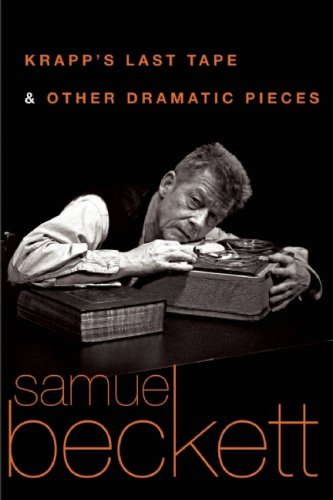
23. Krapp's Last Tape
$9.00
24. A Reader's Guide to Samuel Beckett
$13.23
25. Samuel Beckett: The Last Modernist
 
26. WAITING FOR GODOT A tragicomedy
27. Waiting For Godot: A Tragicomedy
 
28. A Student's Guide to the Plays
$7.04
29. Dream of Fair to Middling Women:
 
30. End-game a Play By Samuel Beckett
 
31. I can't go on, I'll go on: A selection
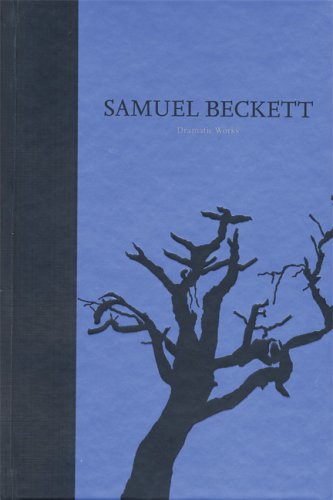
32. The Complete Dramatic Works
 
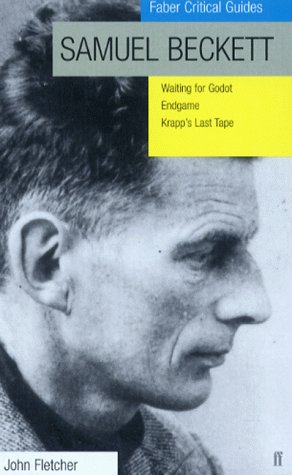
$7.00
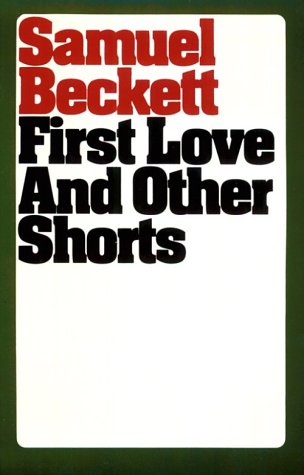
33. First Love and Other Shorts
$14.99
34. Understanding Samuel Beckett (Understanding
$10.88
35. Proust (Calderbooks)
 
$45.00
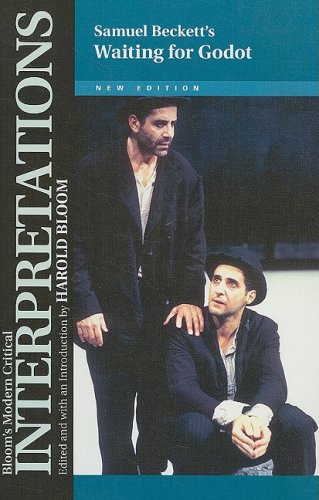
36. Waiting for Godot - Samuel Beckett
$21.46
37. The Cambridge Companion to Beckett
$10.03
38. "Waiting for Godot" by Samuel
 
39. The Theatrical Notebooks of Samuel
$9.00
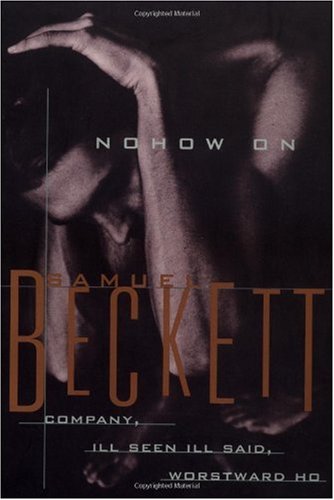
40. Nohow On: Company, Ill Seen Ill

21. Twentieth Century Interpretations of Samuel Beckett: A Collection of Critical Essays (20th Century Views)
 Hardcover: 182 Pages (1965-08)
list price: US$12.95
Isbn: 0130729914
Canada | United Kingdom | Germany | France | Japan

22. The Novels of Samuel Beckett
by John Fletcher
 Hardcover: 256 Pages (1970-12)

Isbn: 0701106956
Canada | United Kingdom | Germany | France | Japan

23. Krapp's Last Tape
by Samuel Beckett
Paperback: 48 Pages (1998-02-16)
list price: US$14.45 -- used & new: US$4.75
(price subject to change: see help)
Asin: 0571062091
Average Customer Review: 5.0 out of 5 stars
Canada | United Kingdom | Germany | France | Japan

Customer Reviews (4)

5-0 out of 5 stars Life as a verb
Beckett's "Krapp's Last Tape" doesn't seem to get the respect it deserves from drama critics because it is always set up against his other works. It lacks the tremendous absurdity of "Waiting for Godot" or "Endgame" but it has its fair share. In some respects "Krapp's LastTape" has much more of a human face than the others: we can understand Krapp much more than Gogo or Didi. And this serves to make him someone with whom we can more easily identify and, therefore, makes him more tragic.

The essential question that this play raises is "Who is Krapp?" Is it the old man we can see on stage? Is it his voice from decades earlier? Or was he the Krapp on the one tape he returns to again and again? Was that Krapp real and then killed and consummed by the bitter man shoving bananas down his throat? Consequently, we discover he is all and none of these. A life is not a static thing; it constantly changes. And, like Krapp, we will either embrace or resent what we do with our lives. This is a terrific play, and, in my humble (and I mean humble) opinion, Samuel Beckett's best.

5-0 out of 5 stars Beauty by the master
This play represents Beckett at what is without doubt his most accessible and possibly his most beautiful. Beckett adores using human memory and the pain of nostalgia in his works, and both of these themes are put to astonishing use in this play.

In 'Krapp's Last Tape', our protagonist Krapp, now in his late 60s, plays back tapes that he has recorded on previous birthdays. Every year this task becomes a more and more onerous one, and every year he is more and more embarassed by "that stupid b**tard I took myself for thirty years ago". The pain of reconstructing the past is a pain that Beckett uses to dolourous effect throughout his prose and dramatic works and its use is particularly powerful here.

Although this play is in fact a monologue, it would appear to take the form of a conversation between a past and present Krapp. This allows the spectator to witness a striking decline in the morale and optimism of the play's protagonist in the intervening thirty years. One is left to assume that the mental attitude of the character will continue to rot over the miserable years that are left to him.

This beautiful rendering of sadness and human pain, is typical of one of the most astonishing and talented writers of the modern era.

5-0 out of 5 stars Beckett's most human drama.
Although it is probably his most conventional play, this is my favourite Beckett work.It is as bleak as Godot and despairing as End Game.It is also as funny as these tragicomic masterpieces.What is different here is that Krapp is less of a pawn, or fragment of an idea than the othercharacters, we are given access to his past, to his fundamentalambivalences (the desire for solitude and companionship), his apprehensionof beauty.It is remarkable to see on stage a whole series of seperateselves contained in the one entity Krapp.The play is depressingly,inevitable circular, and the sense of repetition (note the extraordinaryvariations on light and darkness) throughout the stories the younger Krapptells is not continuity, but an awareness of death, failure, old age.Theplay is also a comment on the nature of theatre going itself: in listeningto his old tapes, Krapp becomes, as well as an actor, an audience, and ininterpreting what he hears, a critic.This Shakespearean self-reflexivityonly adds to the melancholy of the film's close.

4-0 out of 5 stars -=-
Krapp's Last Tape is a humorous one act play involving a man named Krapp. Recording his life, he looks back on recorded spools of his life.Therecorded spools talk about previous spools years earlier.Always with thesame attitude towards just about everything, Krapp does not change as heages.His life is a circular cycle as opposed to a straight line.He isfiguratively constipated. Fun to read and entertaining. ... Read more


24. A Reader's Guide to Samuel Beckett (Irish Studies)
by Hugh Kenner
Paperback: 208 Pages (1996-06)
list price: US$19.95 -- used & new: US$9.00
(price subject to change: see help)
Asin: 081560386X
Canada | United Kingdom | Germany | France | Japan

25. Samuel Beckett: The Last Modernist
by Anthony Cronin, Antony Cronin
Paperback: 672 Pages (1999-04-01)
list price: US$17.95 -- used & new: US$13.23
(price subject to change: see help)
Asin: 0306808986
Average Customer Review: 4.0 out of 5 stars
Canada | United Kingdom | Germany | France | Japan
Editorial Review

Amazon.com
Samuel Beckett has always been something of an enigma. Born and raised in Ireland, he moved to France as a young man and remained there, risking his life during the war in his work with the French Resistance. Kind, generous, and often funny in real life, his plays and novels are implacably dark, filled with despair, need, and isolation. In Samuel Beckett: The Last Modernist, biographer Anthony Cronin limns a deft portrait of the great writer using Beckett's letters, early fiction, and Cronin's own acquaintance with both his subject and several of Beckett's friends in Dublin. Taken together, these sources reveal a multifaceted man.

Beckett passed through many phases on his way to greatness: a French teacher at Dublin College, a member of the Paris circle that formed around James Joyce in the late 1920s, and later an active participant in the French Resistance. The years following World War II proved a fertile time in Beckett's creative life, encompassing his transition from the autobiographical to the modernist impersonal--perhaps his greatest works. Anthony Cronin admirably balances his portrayal of the man and the artist, rendering the details of Beckett's uneventful life and his rich imagination in a way that fleshes out the man even as it celebrates the genius.Book Description
Intensely private, possibly saintly, but perhaps misanthropic, Samuel Beckett was the most legendary and enigmatic of writers. Anthony Cronin's biography is a revelation of this mythical figure as fully human and fallible, while confirming his enormous stature both as a man and a writer. Cronin explores how the sporty schoolboy of solid Protestant bourgeois stock became a prizewinning student at Trinity, flirted with scholarship, and, in Paris, found himself at the center of its literary avant-garde as an intimate friend of James Joyce. But he was a young man who struggled with complexities in his own nature as well as with problems of literary expression. In the small provincial city of Kassel, Germany, the cosmopolitan Beckett experienced a faltering entanglement with his cousin-one of the first in a series of problematic encounters with women. The war years, which he spent as a member of the Resistance and a refugee in the South of France, brought Beckett the self-probings and discoveries that led to the great works. Then, with his sudden and astonishing fame, the balloons of myth began to inflate and a stereotype was born-frozen in exile and enigma, solemnity and sanctity. Anthony Cronin bursts these balloons to see more clearly what lies behind. Without moralizing or psychologizing, without pretensions or piety, he uncovers the real Beckett, the way the life was lived, the way the art was made. ... Read more

Customer Reviews (5)

3-0 out of 5 stars Painful
I have just finished wading through this weighty tome. It is shameful that this author who evidently knew Beckett intimately but did not learn any from him. He makes it clear to us, how Beckett was able to develop a concise reductive approach to his work in which he reduces sentences to a mere phrase.This book need editing dramatically. Cronin waffles for pages and pages about the most tangential issues barely relavent to Beckett's life.On occassion, conjecting as what Beckett may be thinking or not. This goes on for two thirds of his book and then he cuts shortthe most active period of Beckett's life. A moment that Cronin has the most resources availble to him with documents and personnel. Beckett was a master of language this author should read him.

5-0 out of 5 stars Exhaustively researched but never exhausting to read
If you seek to understand how a product of the Irish Protestant middle class a century ago managed at an early age to overthrown any certainty brought about by such an upbringing, Cronin offers surmises to this and hundreds of other puzzles in the reticent Foxrock native's life. For a man who so esteemed silence, the impossibility of words to match our inner experiences and their outer raiments, Cronin's herculean cleaning out of the Augean stables, the poring through every scrap penned by Beckett, results in an extraordinarily thorough but never exhausting account ranging six hundred closely printed pages.

As an adopted Dubliner, and as a working writer for fifty years, Cronin adds here to his earlier successes that ponderedliterary failure, or at least mediocrity, in what passed for bohemian life in the Irish capital of the postwar decade, 1945-55, Dead as Doornails, and in his life of Flann O'Brien/Myles na gCopaleen/Brian O Nolan, No Laughing Matter. Both of these have been reissued recently, and I recommend them to readers curious about how talent can drown its sorrows in too much whisky and its potential in too much talk with too little discipline. While this pair illustrates many anecdotes riotously rendered, the cumulative effect of the two accounts makes for sobering cautionary tales, and how the ghost of Joyce lingered long over last century.

How Beckett managed to extricate himself from the early dominance of Joyce when the two met and depended upon each other however fleetingly in Paris makes for engrossing storytelling. What I noted most of all was how Cronin, through scouring Beckett's records, depicts an author amazingly crippled by maladies mostly psychosomatic, by imagined fears, by phobias befitting indeed his future characters. It takes until 1950 or so for this author, now in his mid-forties, to begin to enter into the period, after `the long siege in the room,' where he could come out of his shell and wrestle with his demons. Having fought, at first for the French Resistance (if his rather circumspect accomplishments fell less than dazzlingly in the Hollywood sense, his danger was no less real and the fate of his comrades no less fatal) and then against his interior desolation, he only then could become, well into middle age, the leader of the avant-garde we know him as, the creator of Godot and Endgame, Krapp and Malone, Molloy and Worm, Winnie and Gogo.

In this brief overview of Cronin's tome, no quotes. But, for anyone needing an excellent précis of what Beckett achieved, chapters 23 and 24 in my estimation serve as a thoughtful and by no means uncritical survey of how Beckett set up scaffolds, erected his plots, and then demolished as much of the structure as the work could stand and still survive.

Of course, his later rather dead-end prose such as How It Is and his tinier plays, or dramaticules, produced as the 1960s and 70s found him caught within the expectations of comedians, scholars, analysts, and audiences, the productions shrank as he seemingly had less to say. As Beckett, at the start of his career, noted of Joyce, the elder Irishman strove to cram the whole of existence into the written word, while his successor sought to eliminate as much of the words and still capture the whole of the same human condition. Two contrasting approaches, intersected by the love of language, the compulsion to manufacture it, and the doubt in any higher purpose than that of the artist driven to create and depict and narrate.

Cronin's energy never flags. I happily measured how well he paces his own story. Godot appears only about 2/3 of the way through, and Cronin never stints on the earlier, more embarrassing malingering of the younger Beckett that presaged his rise to fame and irritated his naturally reclusive nature. His generousity, often remarked upon by those who knew and/or studied him, left many in his debt. Winning the Nobel Prize in 1969, he escaped on an extended holiday and gave away the prize money to a list of deserving up-and-coming writers. One bought a sports car with her windfall.

Cronin, as one who knew and at least once offended Beckett, offers a counterpart to Damned by Fame, which appeared (as biographers often find) immediately prior to his own volume in 1996. James Knowlson, the keeper of the Beckett archive at the University of Reading (where a year's concentration and cash can earn you a MA in Beckett Studies), brought out the authorised biography, with more of the typical trajectory beloved by screenwriters, with Beckett's earlier, more derivatively jaunty, Joycean, or jejune scribblings preparing the way for a blossoming into challenging, disturbing, and, yes, humourous sketches of frailty, despair, and hope.

For Cronin, Beckett's less a secular saint than a hypochondriacal mum's boy who, after coddling and a preparation for respectability, lived the life of the Irish exile (who kept decamping to London and even Dublin often enough) and finally had to grow up, support himself, and push his resources to plumb the darkness within. Out of this, he made stunningly evocative prose, for my tastes some of the best in the 20th century in English, full of cadences that, in the restricted French that he chose so as to limit himself to a harsher diet than that afforded the luxuriant Hiberno-English consumer, ghosted Irishisms, summoned English at its best, and shone through French.

4-0 out of 5 stars Getting to Know Him
A careful, highly readable and sometimes very amusing account of the life of the Irish novelist, playwright, theatre director and sports enthusiast. This gives a nuanced and sensitive account of the Irish background from which Beckett at first painfully extracted himself to a new life in France, but which he was always attached to sentimentally and creatively, never being too busy to meet with a young writer from Ireland, or to drink with old Irish friends and wax nostalgic about the Liffey. This book, while generally very admiring (Cronin has no time for the last novel), is actually more discerning and knowledgeable about Beckett's affairs emotional, literary and dramatic, especially in the later years of his career when Cronin was one of the first to write about him at length in the TLS and elsewhere, as well as to meet him and ask questions such as, "Krapp seems to think he had the possibility of happiness...?" To which Beckett calmly replied, "That doesn't mean he did though, does it?"

You get a fair sense of the man and his times, and a more modulated sense of his slow climb to success, even after "Waiting for Godot" made his name. Never has fame seemed less romantic. Cronin is that best of acquaintance-biographers - no fool, but not an assassin either. Fun as well as thorough. I can't think what will come to light to make a better biography possible.

4-0 out of 5 stars A highly readable book: a fascinating, mysterious genius
For a pretty fat bio, I found this a surprisingly easy and swift read. Cronin, who certainly knows the lay of the land, the type of people, and even some of the actual folks Beckett knew, seems a fair and judiciousbiographer. I found the book most useful in charting Beckett's developmentas an artist from the callow "knowingness" of his early novelsand poems to the wry despair of his mature work. One is impressed both byBeckett's inconsistent touchiness about the handling of his work byadapters, and by his quiet generosity with near strangers as well asfriends. Cronin includes plenty of delightful trivia, from quotes ("Iam not a philosopher; one can only speak of what is in front of one andthat is simply a mess") to the fact that Beckett always accented thefirst syllable of Godot.

5-0 out of 5 stars A valiant attempt to understand the man and the artist
This is a valiant attempt to understand the man and the artist. The slow and unconventional evolution of Beckett's art is well described. This biography is, I feel, honest [in as much as any biography can be such] anddoes not mythologize.Sad that in Beckett's last days he appeared to beconsumed with remorse. ... Read more


26. WAITING FOR GODOT A tragicomedy in two acts [First Edition] 1st
by Samuel BECKETT
 Paperback: Pages (1954)

Asin: B000LL4NDI
Canada | United Kingdom | Germany | France | Japan

27. Waiting For Godot: A Tragicomedy in Two Acts
by Samuel Beckett
Paperback: 61 Pages (1954)

Asin: B000IO389S
Canada | United Kingdom | Germany | France | Japan

28. A Student's Guide to the Plays of Samuel Beckett
by Beryl S. Fletcher, John Fletcher
 Paperback: 279 Pages (1986-01)
list price: US$9.95
Isbn: 057113419X
Canada | United Kingdom | Germany | France | Japan

29. Dream of Fair to Middling Women: A Novel
by Samuel Beckett
Paperback: 266 Pages (2006-10-06)
list price: US$13.99 -- used & new: US$7.04
(price subject to change: see help)
Asin: 1559708271
Average Customer Review: 3.0 out of 5 stars
Canada | United Kingdom | Germany | France | Japan
Editorial Review

Book Description
Samuel Beckett's "high energy and boisterously libidinous"(Booklist) first novel--a wonderfully savory introduction to the NobelPrize-winning author during this centenary year.Written in the summer of 1932, when the 26-year-old Beckett was poor andstruggling, Dream of Fair to middling Women offers a rare and revealingportrait of the artist as a young man. Later on, Beckett would call thenovel "the chest into which I threw all my wild thoughts." When hesubmitted it to several publishers, all of them found it too literary, tooscandalous, or too risky, and it was never published during his lifetime. In the novel, Belacqua--a young version of Molloy, whose love is dividedbetween two women, Smeraldina-Rima and the Alba--"wrestles with his lustsand learning across vocabularies and continents, before a final relapseinto Dublin'" (The New Yorker). Youthfully exuberant and visibly influencedby Joyce, Dream of Fair to middling Women is a work of extraordinaryvirtuosity. Beckett delights in the wordplay and sheer joy of language thatmark his later work. Above all, the story brims with the black humor that,like brief stabs of sunlight, pierces the darkness of his vision. ... Read more

Customer Reviews (2)

5-0 out of 5 stars Early, polysyllabic Beckett
A one-star review should not be allowed to stand alone for this book, though I may provide inadequate challenge.A fan in particular of early Beckett, i.e. of "Murphy,"and of the first part of "Watt" which features a certain Mr. Hackett, I found this exuberant, flamboyant exercise in quasi-poetic comic prose almost their equal.There are individual sentences to savor, for words-as-music (if one consider string quartets and oompah bands both musical), that describe outrageously comic situations and personae with an almost ferocious originality.Yes, the work's style, certainly the hero's stream-of-consciousness interlude, owes quite a bit to Joyce, but Beckett's signature dark humor is already richly manifest.Bleakness expressed in richness, buffoonery in elegant phrases, in color and obvious love of the medium.Beckett may have outdone Joyce in a cheeky display of authorial devices whereby he breaks boundaries of fiction and inserts himself, reveals the writing process, etc.All of this scrambles along, full of surprises, without the least pretentiousness but only the enthusiastic abandon of breakneck youth.

This would be a feast for a literary polyglot, but even if, like me, you don't understand much Latin, little French and less German and Italian, and aren't familiar with, or sure of the meanings of words like
catastasis
expunction
emergal
pleroma
erethisms
gedankenflucht
postil
chiappate
mollecone
turbary
dephlogisticate
cang
genau
multipara
pucelle
lanugo
coryza
apodasis
ipsissimosity
ausgeschlossen
exornation
dehiscence
fauces
coenaesthesis
arcitenens
speculum
didcalced
narquois
maneen
lancinated
unprevisible
bawn
pinace
agenesia
or
crassamenta,
you may still enjoy this book tremendously.Such was, is,the infectious work of a young literary and comic genius.

For particulars of plot, consult the editorial reviews above.

The book shines fresh as rainwater.If you haven't yet, read "Murphy" first, then this one.

1-0 out of 5 stars Bombastic.
A text ... as an autobiography: Beckett's dream of women after being ... raped by one of them.
His dream is a, now and then, hilarious and blasphemous, but mostly, irrelevant stream of grotesque and excessive verbal displays and of exaggerated metaphors. He uses different language combinations and different quotations of other authors. So, his model is obvious, but he's a bad epigone. This book has no plot, no plan and misses the basic art of writing: it reproduces feelings, instead of arousing them.
One should read a comment by another Nobel Prize winner, Naguib Mahfouz, in 'Adrift on the Nile', where he punches Beckett KO: life could be absurd, but not the royalties.
I consider the work of Samuel Beckett as grossly overrated. A good play is 'Waiting for Godot', which is in fact an evocation of people who didn't understand the words of Nietzsche's Zarathustra 'God is dead'. But afterwards it became mannerism, just a pose. ... Read more


30. End-game a Play By Samuel Beckett
 Paperback: Pages (1958)

Asin: B000EOJ5HG
Canada | United Kingdom | Germany | France | Japan

31. I can't go on, I'll go on: A selection from Samuel Beckett's work
by Samuel Beckett
 Unknown Binding: 621 Pages (1976)

Isbn: 0394406699
Average Customer Review: 5.0 out of 5 stars
Canada | United Kingdom | Germany | France | Japan

Customer Reviews (3)

5-0 out of 5 stars Absurd, Tragic, Wonderful
This book is a must have for any fan of great theater, intelligent novels, deep poetry, critical essays, or moving short stories: because it has all of them by the master of all of these genres.

From famous works such as, "Waiting for Godot," and "Krapp's Last Tape" (plays), that force a reader to rethink their world, to classic short stories, such as, "Dante and the Lobster," that is a dive into a surreal world: this book has everything.

1,000 words is not nearly enough to get into this book at any real depth, or to even give it a proper over view.This book covers the entire spectrum of one of Ireland's greatest writers.

Creater of the theater of the absurd, world renouned playwright, and man who single handedly made a place for the "shorter play," in a world that had come to expect a minimum of two acts, for a peice of drama to be considered serious.

This book contains novels, novel excerpts and short stories, all of which, redefined the genres that they belonged to.Prolific, constantly changing, and reaching new hights, Beckett redefined every genre that he wrote in, and set new levels of perfection for the rest of us to reach for.

One can not say enough things about this true literary genius.The best advice that I can give you is, buy this book, read it, and give yourself the perfect oppertunity to become aquainted with Beckett.This book gives a wondeful over view of each of Beckett's writing stages and the evolution of his work.

5-0 out of 5 stars Essential to understanding Beckett
This is a very wise introduction to Samuel Beckett's work.If you haven'tdiscovered one of the most profound voices of the 20th century, then thisbook is the way to do it. By far his most accessible work is the short playKrapp's Last Tape and it is in this volume complete.Waiting for Godot isalso here as well as excerpts from Beckett's prose and some of his laterplays like Not I. This book belongs on your shelf.

5-0 out of 5 stars The best introduction to Beckett
If you've never heard of Beckett, this is the first thing you should check out. Richard Seaver's introduction is an added bonus, which helps us understand Beckett even more. All in all, a fabulous book. ... Read more


32. The Complete Dramatic Works
by Samuel Beckett
Paperback: 480 Pages (1990-10)
list price: US$36.45
Isbn: 0571144861
Average Customer Review: 5.0 out of 5 stars
Canada | United Kingdom | Germany | France | Japan

Customer Reviews (1)

5-0 out of 5 stars 'No Matter,Try Again, Fail Again, Fail Better'
I bought this book few years ago, when I was still new to the writings of Samuel Beckett. Today, however I rate Beckett very highly. He has been an inspiration to many. I admire the unique and arcane atmosphere he is able to create with his characters, who frequently appear to be too intimate to one's entity. I also admire theillusion of straightforward storytelling and it's poetic repetition. I feel that he has given to the drama a new dimension and fresh originality.

I often find myself spontaneously re-reading fragments or short paragraphs from this collection. It is a pity that those who appreciate Beckett's twisted perception of humanity are deprived of this volume. ... Read more


33. First Love and Other Shorts
by Samuel Beckett
 Paperback: Pages (1974-06)
list price: US$7.95 -- used & new: US$7.00
(price subject to change: see help)
Asin: 0394178505
Average Customer Review: 4.5 out of 5 stars
Canada | United Kingdom | Germany | France | Japan

Customer Reviews (2)

4-0 out of 5 stars The rhythm and silenced passion of his writing is amazing.
I enjoyed this book so much that I am currently writing a paper on it.I'm exploring some Beckett's amazing treatment of the conciousness and the movement that is inherent in each of the pieces.I'm also touching on thepieces as they relate to phenomenology and the study of experienceexpressed in conciousness.Unfortunantly, I need to know how thiscollection was compiled, when, and under whose authorization.This is veryimportant to my thesis.If any one knows where I could find thatinformation I would appreciate a response.

5-0 out of 5 stars Wunnerful
There are few short stories that leave one feeling satisfied.Fortunately, this is not one of them.

It has been ages since I read it, but I cannot help but recall the feeling it evoked.

All in all, love fails us.All in all, we fail to tell well of the process by which it fails us.Beckett fails better than us all.God bless you, Sam, for always pointing us toward the unutterable. The other stories I do not remember.But "First Love" alone is worth all these fellows ask of you. ... Read more


34. Understanding Samuel Beckett (Understanding Modern European and Latin American Literature)
by Alan Astro
Hardcover: 240 Pages (1990-09)
list price: US$34.95 -- used & new: US$14.99
(price subject to change: see help)
Asin: 0872496864
Average Customer Review: 5.0 out of 5 stars
Canada | United Kingdom | Germany | France | Japan

Customer Reviews (1)

5-0 out of 5 stars This is an excellent survey of Beckett's work.
Alan Astro has done a magnificent job of reading Beckett's oeuvre.His analysis is acute and sometimes brilliant: I have never read a better piece on _Endgame_, and Astro's take on _Watt_ is incredible.There is no contemporary critic who has dealt with the primacy of the signifier in Beckett's work the way that Alan Astro has, is, and will continue (we hope) to do.His contribution to scholarship and performance cannot be overstated. ... Read more


35. Proust (Calderbooks)
by Samuel Beckett
Paperback: 126 Pages (1989-06)
list price: US$11.95 -- used & new: US$10.88
(price subject to change: see help)
Asin: 0714500348
Average Customer Review: 5.0 out of 5 stars
Canada | United Kingdom | Germany | France | Japan

Customer Reviews (3)

5-0 out of 5 stars A masterful study of Proust's "In Search of Lost Time"
Samuel Beckett's text on Marcel Proust's work was published in 1931, when Beckett was 25 years old. Even though it was written before Beckett had reached his "mature" phase, this is a brilliant piece of criticism. Beckett's close reading (see, for example,his detailed list of the eleven points of departure for Proust's involuntary memory) is supplemented by deep analysis - not "cheap flashy philosophical jargon". Though focused on his discussion of Proust, Beckett also shares with us numerous aphorisms of wider import (e.g. "Habit is the ballast that chains the dog to his vomit.").

Also included in this volume are the famous three dialogues between Beckett and Georges Duthuit (1949). In them, Beckett states his opinion on artistic creation: "The expression that there is nothing to express, nothing with which to express, nothing from which to express, no power to express, no desire to express, together with the obligation to express". Duthuit's conception of art seems to be much more traditional, and the dialogues sometimes (supposedly) become heated.

A word of advice: it makes much more sense instead of buying this edition to buy Volume IV (Poems, Short Fiction, Criticism) of the Grove Centenary Edition of Samuel Beckett's works, since both texts ("Marcel Proust" & "Three Dialogues") are contained therein.

Alexandros Gezerlis

5-0 out of 5 stars On of the best works on Proust, ever
One of the best studies ever written about Proust's novel is also one of the earliest.Beckett's reading underscores the novel's pessimism--the bleak futility of human relations, the stupifying effects of Habit, the"poisonous ingenuity" of Time--yet is itself a brisk, erudite,hilarious, dark, and exhilarating piece of Modernist literary criticism.

5-0 out of 5 stars A brilliantly constructed and movingly written book.
Beckett's 'Proust' is a powerful and revelatory work, largely because itanalyses not only the writing of Marcel Proust but also perception itself:the literary high. It can only enrich the reader's life. I'd recommend itto anyone. ... Read more


36. Waiting for Godot - Samuel Beckett (Modern Critical Interpretations)
 Hardcover: 150 Pages (2008-04-30)
list price: US$45.00 -- used & new: US$45.00
(price subject to change: see help)
Asin: 0791097935
Average Customer Review: 4.0 out of 5 stars
Canada | United Kingdom | Germany | France | Japan
Editorial Review

Book Description
"Nothing happens, nobody comes, nobody goes, it's awful?" Estragon's complaint, uttered in the first act of "Waiting for Godot", is the playwright's sly joke at the expense of his own play - or rather at the expense of those in the audience who expect theatre always to consist of events progressing in an apparently purposeful and logical manner towards a decisive climax. In those terms, "Waiting for Godot" - which has been famously described as a play in which "nothing happens, twice"- scarcely seems recognizable as theatre at all. As the great English critic wrote "Waiting for Godot jettisons everything by which we recognize theatre. It arrives at the custom-house, as it were, with no luggage, no passport, and nothing to declare; yet it gets through, as might a pilgrim from Mars."

Produced at the state of the art recording studios of the Canadian Broadcasting Corporation with sound effects and music.

Performed by James Blendick, Joe Dinicol, Tim MacDonald, Tom McCamus, and Stephen Ouimette

Music composed and performed by Don Horsburgh

Approximate Duration 2 Hours ... Read more

Customer Reviews (158)

2-0 out of 5 stars Waiting for Godot
I know this is one of those works that are supposed to be masterpieces, but it did absolutely nothing for me. To be fair, I'm not a theater person, and I never got the appeal of absurdist works or anything else along those lines. I got about a third of the way into this and just couldn't stand to read it anymore, it drove me nuts. If you can appreciate that kind of stuff then I guess I can see why so many people love it, I'm just not one of them.

2-0 out of 5 stars WAITING FOR GODOT
I picked up Waiting for Godot with no knowledge of it other than having heard that it was a play in which not a whole lot happened.

Literary types have concocted political, Freudian, Jungian, existentialist, biblical and homoerotic (and many other) interpretations of the play. I am not interested in any particular interpretation, for this reason: the play is extremely boring. By the middle of the second act, every last aspect of the play is tiresome. It's billed as "a tragicomedy in two acts." That's great, except it's not funny at all.

This play's influence on Rosencrantz & Guildenstern Are Dead is obvious, except that that play held the interest a little better and actually offered some philosophical insight on life.

Waiting for Godot goes into the category of works that people (pretentious literary snobs and pretentious literary posers) say are so deep and meaningful because they don't have the slightest idea of what it means. I'll be a man and say it's not deep and it's not interesting.

NOT RECOMMENDED

4-0 out of 5 stars like a moth to a flame...
I really can't explain my love of this play...at least not very well. I read this in a course centering on Faulkner, Joyce, and Beckett...so to say that we read some challenging texts is an understatement. This was a delightful breath of fresh air in its brevity but impressive in its complexity.

If, when reading this, you open up your interpretation beyond the obvious, you can riddle your mind with maddening contradictions and uncomfortable conclusions - aren't those the best kind of things to take away from a text?This play is suspenseful, hilarious, but most of all, extremely tragic. This may not be your cup of tea, but at least respect this web of futility that will either drive you to despair or to action. I mean, let's be honest...I'd like to see YOU try this :)

5-0 out of 5 stars Masterpiece of Nothingness
Many parts of this play are comically driven - many are not. And, the majority are neither - or so Beckett may have said as part of his stylistic prank on the reader. Beckett had a target, and he would smile at his target as much as permitted. His dripping dialogue is often interpreted with misinterpretation, misidentification, miscue. That part of the play is resoundingly great.

To not have read this, but experienced it the first time as a member of the audience, may be asking too much of the auditory skills- asking them to constantly respond to clever and contrarian statements which spill off the characters' tongues almost every third or fifth line. One favorite discourse which evidences how fast and clever it can be: "We're in no danger of ever thinking any more." "Then what are we complaining about?" "Thinking is not the worst." "Maybe not. But at least there's that" "That what?" "That's the idea, let's ask each other questions." "What do you mean, at least there's that?" "That much less misery."

Reading thickly carved conceptions like that recited above can easily make one receive and learn more with each reading. This is one of those plays that I could read over and over again, and each time realize something totally new with each reading. This is a "deep" thinking piece of literature.

So who is Godot? Who knows. What does he represent? Who knows. What is the reason that Vladimir and Estragon wait for Godot? Who knows. Are there religious interpretations? Yes. Is God recreated in Godot? After all, Estragon has a nickname - Gogo. Vladimir has a nickname - Didi.Is God a nickname for Godot?If you want to believe such, so believe. Possible religious interpretations are infinite. They absolutely exist. The book starts with discussion of the Bible, and reading of it and some misinterpretation of a proverb. But, beware. Beckett is a master of literary illusion - are the words delivered to portray their nothingness, or by their juxtaposition can the meaningless became most meaningful? Is the Bible part of that "nothingness?"

Sounds almost mean as much as words. The sound of Godot - pronounced the same in English as the original French (Irish Beckett lived in France and wrote in French) - is one example of sound perhaps trumping meaning or definition. One character - Pozzo - is called Bozzo (we grew up watching his cousin Bozo) and later Gozzo. Great inflection of sound. And, sound often is the core of comic reaction - some sounds are funny.Pozzo sounds funny, so does Bozzo, so do many other words in the play.

Admittedly, this is one book you need to read about after having been read. And, to do it justice, I will review this analysis by myself years down the road after I read it again. This could be fun. I can not fathom what it will mean to me then. Who knows.

1-0 out of 5 stars Dumbest "classic" in 20th century literature
I first read this work as part of my Humanities class in high school.I reread again after college to see if several years of "higher education" would make my mind more receptive so great works of literature.Both times, I thoroughly hated this play and consider one of the dumbest pieces of literature commonly taught in schools.The plot is overly simple; two hobos (probably European) await someone (probably male) named Godot.Several others pass them by during their wait.Godot never comes, and the play ends right where it began.No introduction and no conclusion.However, there are supposed to be many meanings that can be had in this story.A common one is that Godot is God, and the hobos represent humans.This reviewer's opinion is that the plot is so simple, that one could draw whatever conclusions or meanings they wanted out of it.All in all, I did not gain anything from this work.Fortunately, it is short enough to get through quickly. ... Read more


37. The Cambridge Companion to Beckett (Cambridge Companions to Literature)
Paperback: 273 Pages (1994-05-27)
list price: US$25.99 -- used & new: US$21.46
(price subject to change: see help)
Asin: 0521424135
Average Customer Review: 5.0 out of 5 stars
Canada | United Kingdom | Germany | France | Japan
Editorial Review

Book Description
This book provides thirteen introductory essays on every aspect of the work of Samuel Beckett, paying particular attention to his most famous plays (e.g. Waiting for Godot and Endgame) and his prose fictions (e.g. the "trilogy" and Murphy). Further essays tackle his radio and television drama, his theater directing and his poetry, followed by more general issues such as Beckett's bilingualism and his relationship to the philosophers. A chronology of Beckett's life, a list of French and English titles and a list for further reading provide additional reference material. ... Read more

Customer Reviews (1)

5-0 out of 5 stars A useful and stimulating collection of articles.
When it comes to Beckett, there are two schools of thought as to how to approach him for the first time. Some feel that we should just plunge in unprepared. Others feel that his writing is so strange and original that a certain amount of preparation is advisable before taking the plunge. But on the principle that two or more heads are better than one, there can be no-one whose understanding, after having read Beckett, will not be deepened and enhanced by reading what at least some of Beckett's many sensitive, intelligent, and informed readers have to say about his work.

The present collection is a fitting addition to the distinguished Cambridge series of Companions and contains thirteen pieces which cover all aspects of Beckett's work: the essays (Proust); the early English fiction (Murphy, Watt); the trilogy (Molloy, Malone Dies, The Unnamable) and four nouvelles; Waiting for Godot and Endgame; Krapp's Last Tape to Play; Texts for Nothing and How It Is; the radio and television plays and Film; the 'dramaticules'; the Residua to Stirring Still; Beckkett's poems and verse translations; Beckett as director; Beckett's bilingualism; Beckett and the philosophers. The book also contains a Chronology of Beckett's life; detailed topical bibliographies accompanying each essay; a useful guide to Further Reading; an Index of works by Beckett; and a General Index. Physically the book is well-printed on excellent paper, and bound in a sturdy glossy wrapper.

Of the thirteen essays, which are of varying merit, I was particularly impressed by three - Paul Davies on the trilogy; H. Porter Abbott on How It Is (with his insightful analysis of how the poetic prose of this book works to generate multiple meanings as we read); and P. J. Murphy's leraned treatment of Beckett and the philosophers - though most of the other essays are well worth reading and add considerably to our understanding of this deep and enigmatic writer. Happily only three of the book's contributors were so balefully under the influence of French theory as to have given us pieces which are not so much about Beckett as about themselves, and which will be of interest only to those who are interested in 'Beckett Studies' as opposed to Beckett himself.

All in all, then, this is a useful and stimulating collection of essays which ought to be of considerable interest to most serious students of Beckett, and as such it may be strongly recommended. ... Read more


38. "Waiting for Godot" by Samuel Beckett (Master Guides)
by Jennifer Birkett
Paperback: 96 Pages (1987-04-09)
list price: US$17.46 -- used & new: US$10.03
(price subject to change: see help)
Asin: 0333408659
Canada | United Kingdom | Germany | France | Japan

39. The Theatrical Notebooks of Samuel Beckett
by Samuel Beckett
 Hardcover: 336 Pages (1993-03-09)

Isbn: 0571145639
Average Customer Review: 5.0 out of 5 stars
Canada | United Kingdom | Germany | France | Japan

Customer Reviews (1)

5-0 out of 5 stars The Illustrious Beckett Reveals Himself
An essential tool for anyone interesting in producing Samuel Beckett'sfull-length play, Happy Days, this production notebook serves as anexplanation to not only the author's sometimes unrecognized references andsources as well as difficulties with the technical elements of production(for example, how the original production coped with the necessity for aflaming parasol).Even if one is not looking to produce Happy Days for thestage, Beckett's production notebook is a great insight into the characterWinnie, whose intelligence is equivocal to Beckett's own and draws (oftenwithout the reader's knowledge, save for this notebook) from Keats,Browning, and Shakespeare. Reading the author's notes on both the play as apiece of literature and as a theatrical event also gives one a betterunderstanding of Beckett as playwright and as an imminent literary figureof the twentieth century. True scholars of Beckett will also enjoy thecopies of handwritten notes, transcribed into type on adjoining pages. Thisnotebook is a perfect tool for dramaturgy or for simply gaining a betterunderstanding of this Beckettian masterpiece. ... Read more


40. Nohow On: Company, Ill Seen Ill Said, Worstward Ho: Three Novels
by Samuel Beckett
Paperback: 116 Pages (1995-12-06)
list price: US$12.00 -- used & new: US$9.00
(price subject to change: see help)
Asin: 0802134262
Average Customer Review: 5.0 out of 5 stars
Canada | United Kingdom | Germany | France | Japan
Editorial Review

Amazon.com
Beckett has few imitators these days, when story is all to most novelists, but he remains a writer of unquestionable stature. Nohow On: Company, Ill Seen Ill Said, Worstward Ho: Three Novels and its companion volume Samuel Beckett: The Complete Short Prose, 1929-1989 assemble virtually all of Beckett's prose work outside his sequence of major novels: Molloy, Malone Dies, and The Unnamable. Book Description

Now compiled in one volume, these three novels, which are among the most beautiful and disquieting of Samuel Beckett's later prose works, work together with the powerful resonance of his famous Three Novels: Molloy, Malone Dies, and The Unnamable. In Company, a voice comes to "one on his back in the dark" and speaks to him. Ill Seen Ill Said focuses attention on an old woman in a cabin who is part of the objects, landscape, rhythms, and movements of an incomprehensible universe. And in Worstward Ho, Beckett explores a tentative, uncertain existence in a world devoid of rational meaning and purpose. Here is language pared down to its most expressive, confirming Beckett's position as one of the great writers of our time.
... Read more

Customer Reviews (9)

5-0 out of 5 stars Ever tried. Ever failed. No matter. Try again. Fail again. Fail better.
These are not easy works. That said, they are perhaps more honest, profound, and original that the many other, more accessible works you could be reading otherwise. Each is certainly a more than a bit tiring, and, like so many other works by Beckett, you'll find yourself frustrated if you breeze through a single paragraph without nearly committing it to memory. So, if they are as worthwhile as I previously suggested, what might justify all the trouble? The one or two passages that will strike you - and perhaps only you - on each reading. The title of my review is one you'll know if you enjoy reading Beckett, but also take a peek at this one that I've never seen singled out or particularly commended:

The words too whosesoever. What room for worse! How almost true they sometimes almost ring! How wanting in inanity! Say the night is young alas and take heart. Or better worse say still a watch of night alas to come. A rest of last watch to come. And take heart. (99)

Like Joyce, Beckett seems to reward the reader in almost direct proportion to how much effort they might invest in any given work. If a work proves difficult, it remains so for a reason - no writer, contrary to reputation, ever seeks the label of "inaccessible" or "esoteric." Beckett, like all great writers, moves in a realm beyond paraphrase, and no readers should beat themselves up for failing to catch every nuance and every meaning at a first go or a single reading. Or multiple readings. All that remains for someone dedicated to reading the work is to trust in it and - perhaps most importantly - enjoy it. Even if that may mean only catching a single passage, one passage at a time.

4-0 out of 5 stars "And you, as you always were.......Alone"
This trilogy, written towards the end of Beckett's illustrious career, shows Beckett at his darkest, densest and most inspired.

In the opening novella entitled 'Company' we are presented with a man lying on his back in the dark, receiving what he supposes are memories from his youth. Memories are a toy that Beckett loves to play with due to their fickle and fallible nature. They are, for Beckett, symptomatic of the human need to reach into the past to find something worthwhile in life. The need to reach back to find something better than what life currently offers. Ultimately what Beckett offers with 'Company' is a demonstration of the futility of such efforts.

A quite similar tone is set in the second part of the trilogy 'Ill Seen Ill Said', yet somehow the solitude of the central character is even more pronounced. In a situation reminiscent of his earlier dramaticule 'Rockaby', Beckett shows us the meagre existence of an old and solitary woman, and how she tries to while away her sad few remaining days. In this text Beckett makes beautiful use of one of his favourite muses, the miserable solitude of old age.

Although Beckett's prose work can always be said to be dense, nowhere is this more true than in the third part of this trilogy 'Worstward Ho'. Despite (or perhaps because of) its inaccessability, it represents Beckett's most clinical and concise criticism of the human condition. Here is where he most starkly portrays the human inability to accept the central void.

For any lover of Beckett or fine literature in general, this trilogy is an absolute necessity. These are three of the best works from one of the world's most exceptional writers.

5-0 out of 5 stars Unbelievable
These three novels represent Samuel Beckett's greatest accomplishment.What are they about you might ask?Let's just say that they're about everything and nothing.They are profound commentaries on the universal existential crises plaguing all of mankind, and an utterly fascinating reduction of what it means to be a human. Be forewarned: these novels are extremely modern, abstract works of art, and for many will be very difficult reading.The final installment, _Worstword Ho_is officially the greatest work of fiction, page for page, that I have ever read.It is not for the faint of heart or weak of stomach.These novels are not to be taken lightly and it should be noted that Samuel Beckett put the "high" in highway.This is abstract literary thought at its far-seeing outer limit.

5-0 out of 5 stars ON. TILL NOHOW ON.
This slender volume brings to us one of the great achievements of 20th century art and it establishes Beckett indisputably as one of the great figures of world literature.
Throughout his long artistic life Beckett had more than his share of blustering critics and disparagers. Yet it was always a matter of assailing Beckett's supposed 'view of life', even with an occaisional embarrassingly small-minded questioning of his 'sanity', and there has never been, and can not be, a substantial and coherent assault upon his artistic ability. It is appalling that there are professional people (and lay) so perverse and petty as to resent a man's artistic genius simply because they feel an aversion to his personal vision. But no matter, Beckett has a substantial body of serious readers whose devotion he has earned, for no artist has struggled more bravely and honestly with his craft.
Though I can read French and have read several of Beckett's works in that language, it is not my native language so I will not presume to assess Beckett's standing as a writer of French literature (though Fin De Partie is unquestionable great writing), but I will put forth the view that Beckett is the greatest English language writer of his generation. Even if he had only written the works reaching from MURPHY (1938) to HOW IT IS (1964)which fall into two basic groups with WATT as a dividing line, he would still have no real peers in international English literature in his time, but the fact that he went on from there to create a third group of works which culminates in the three 'novels' that comprise NOHOW ON is amazing and moves him far out of the reach of any other literary artist of his time or after. It is a simple fact that no one writing today can approach Beckett's artistic standard. He was a genius and more, he was an artist of rare devotion and integrity.
One does not need to be familiar with the long span of Beckett's work to perceive the greatness of COMPANY, ILL SEEN ILL SAID, or WORSTWARD HO, but their greatness seems only deepened by the knowledge that they are preceeded by greatness (WATT, MOLLOY, ENDGAME...). Still I would suggest that if you like NOHOW ON and you are not familiar with Beckett's earlier work that you become so because it will only increase your appreciation of Beckett's extraordinary artistic depth.
Finally, I for one would like to say that few things in my life have moved me as much as Beckett's courageous turning away from an art of 'general truths' and so sensitively and deeply exploring the difficult and often painful mysteries of actual human experience. Beckett taught me that art is a genuine vocation as deep and demanding as any in the world, and more so than most.
Thank you, Sam Beckett.

5-0 out of 5 stars The Master's Masterpiece
Beckett was uncomfortable with comparisons to Joyce - which is understandable both in light of their relationship and of the difference in their respective aesthetics.However I believe that "Worstward Ho" holds a place in the Beckett canon similar to the position of "Finnegans Wake" in Joyce's work.Both are the last major works of their authors and both represent the most perfect realizations of their artistic visions.

"Company"is the union and fulfillment of two of Beckett's recurrent themes - autobiography and "closed place" imagery.Its prose is spare and lyrical, evoking powerful images while its narrative style explores the ambiguities of the relationship between narrator and auditor.

"Ill Seen Ill Said"is a beautiful narrative which is singular among Beckett's prose works in having a female narrator.Its expanded, yet still abstracted and "distilled", cosmology (in comparison to the "closed place" works of the '60s and '70s) represnts an interesting new direction (or destination?) for Beckett's writing.Originally written in French, this work's poetry is best appreciated in that language.

"Worstward Ho" is, I believe, Beckett's masterpiece.It recapitulates all the major themes of his work - the futility of the act of expression, the poverty of language and the problematic dichotomies of perceived and perceiver and of narrator and auditor.It is written in the barest, most stripped-down prose ever composed.At the same time, it is repetitive and resonant. Less than five thousand words long, it compresses volumes of meaning.The more reduced and undetermined the language is, the more potential meanings and significations its words take on.The attempt to pare and refine leads to an ambiguity which grows and dilutes - a paradox Beckett uses with mastery.Despite appearances, the work's structure is as intentionally articulated as its prose.It is also a work of great and black humor, full of punning and wordplay.It should be savored and read and reread. ... Read more


  Back | 21-40 of 100 | Next 20
A  B  C  D  E  F  G  H  I  J  K  L  M  N  O  P  Q  R  S  T  U  V  W  X  Y  Z  

Prices listed on this site are subject to change without notice.
Questions on ordering or shipping? click here for help.

site stats