e99 Online Shopping Mall

Geometry.Net - the online learning center Help  
Home  - Authors - Blake William (Books)

  Back | 21-40 of 100 | Next 20
A  B  C  D  E  F  G  H  I  J  K  L  M  N  O  P  Q  R  S  T  U  V  W  X  Y  Z  

click price to see details     click image to enlarge     click link to go to the store

$30.31
21. The Poems Of William Blake
$24.00
22. The New Apocalypse: The Radical
$1.44
23. Six William Blake Cards (Small-Format
$5.60
24. Blake's Illustrations for the
$13.57
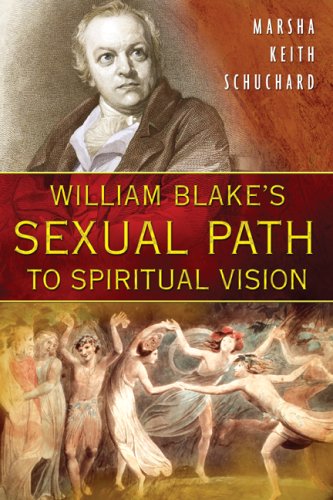
25. William Blake's Sexual Path to
$29.41
26. Why Mrs Blake Cried: William Blake
 
27. Complete Graphic Works of William
$13.57
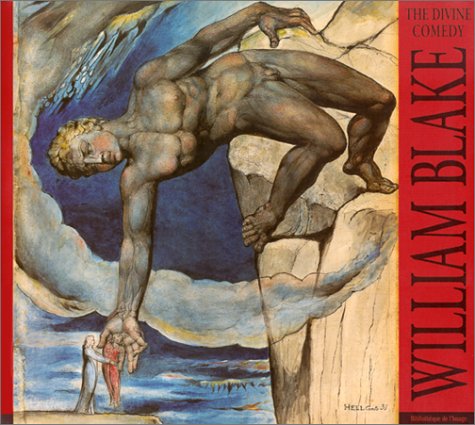
28. William Blake's Divine Comedy
 
$16.50
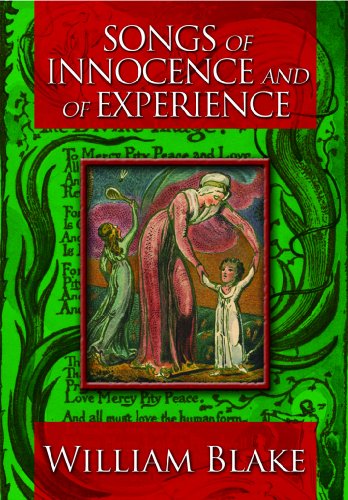
29. William Blake: Songs of Innocence
$31.19
30. Milton, A Poem (The Illuminated
$5.78
31. Blake's Poetry and Designs (Norton
$9.60
32. The Complete Poems (Penguin Classics)
$37.80
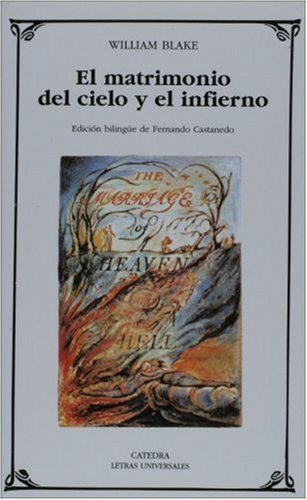
33. The Marriage of Heaven and Hell
 
34. DIVIDED IMAGE.A Study of William
$26.73
35. William Blake: His Philosophy
$6.97
36. Blake: Poems (Everyman's Library
$102.52
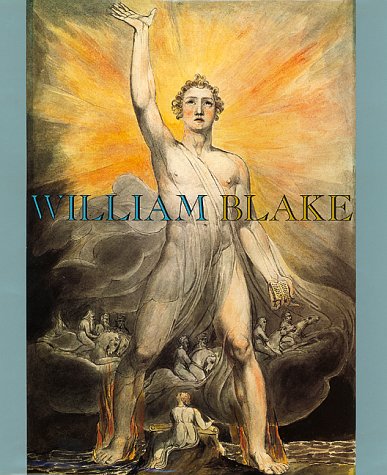
37. William Blake
$26.62
38. William Blake: A Literary Life
$7.05
39. Selected Poems (Blake, William)
$3.74
40. William Blake (World of Art)

21. The Poems Of William Blake
by William Blake
Hardcover: 324 Pages (2007-07-25)
list price: US$45.95 -- used & new: US$30.31
(price subject to change: see help)
Asin: 0548085161
Canada | United Kingdom | Germany | France | Japan

22. The New Apocalypse: The Radical Christian Vision of William Blake (Series in Philosophical and Cultural Studies in Religion)
Paperback: 242 Pages (2003-07-24)
list price: US$24.00 -- used & new: US$24.00
(price subject to change: see help)
Asin: 1888570563
Canada | United Kingdom | Germany | France | Japan
Editorial Review

Product Description
In The New Apocalypse, Thomas J. J. Altizer (perhaps the most radical theologian of our age and a major exponent of the death of God theology), advances the thesis that William Blake is the most original prophet and seer in the history of Christendom, that he created a whole new form of vision embodying a modern radical and spiritual expression of Christianity, and that an understanding of his revolutionary work demands a new form of theological understanding. ... Read more


23. Six William Blake Cards (Small-Format Card Books)
by William Blake
Paperback: 6 Pages (2002-04-15)
list price: US$1.50 -- used & new: US$1.44
(price subject to change: see help)
Asin: 0486422747
Canada | United Kingdom | Germany | France | Japan
Editorial Review

Book Description

Magnificent reproductions of powerful, evocative images from Songs of Innocence ("The Tyger," with complete text of famous poem), Songs of Experience, The Book of Urizen, Jerusalem, and Europe: A Prophecy.
... Read more

24. Blake's Illustrations for the Book of Job
by William Blake
Paperback: 64 Pages (1995-11-16)
list price: US$9.95 -- used & new: US$5.60
(price subject to change: see help)
Asin: 0486287653
Average Customer Review: 5.0 out of 5 stars
Canada | United Kingdom | Germany | France | Japan
Editorial Review

Book Description

Among Blake's finest works: 21 watercolors interpreting the great biblical book and its theme of unmerited suffering. Also presented here are 11 additional watercolors, plus 28 black-and-white illustrations, including 21 extraordinary engravings based on the watercolors. All reproduced from a rare, limited facsimile edition published by The Pierpont Morgan Library. New introductory essay. 60 illustrations.
... Read more

Customer Reviews (2)

5-0 out of 5 stars Hevenly Images
Blake's Illustrations for the Book of Job makes me want to take a Bible study course, just to learn as much as I can about the compelling sketches so beautifully printed on the pages of this eye-catching book.Each lovely oversized page of this book depicts a Scripture episode found the Biblical Book of Job, all of them worth meditating on.I am particularly impressed by the images Blake paints of God, who appears consistently benevolent even in the face of Satan. This book creates fascinating imagery, painted by a man whose life was, apparently, somewhat fixated on this particular subject. Blake painted these images sometime in the early 19th century, but they are still contemporary and memorable.I really love this book for its artistic interest and as a subject for an art history course.

5-0 out of 5 stars A book that changed my life
I was shown a copy of this book 25 years ago. Blake's art transformed my world. I have been a student of Blake ever since. I still go back to this book often. This book, in a few pages, gave me an entry into Blake's system. ... Read more


25. William Blake's Sexual Path to Spiritual Vision
by Marsha Keith Schuchard
Paperback: 416 Pages (2008-06-15)
list price: US$19.95 -- used & new: US$13.57
(price subject to change: see help)
Asin: 1594772118
Canada | United Kingdom | Germany | France | Japan
Editorial Review

Book Description
The secret and mystical sexual practices at the heart of William Blake’s creative and spiritual life

• Reveals newly discovered family documents connecting Blake’s mother and Blake himself to Moravian and Swedenborgian erotic and visionary experimentation

• Shows Blake had access to kabbalistic and tantric techniques of psychoerotic meditation, which used sexual arousal to achieve spiritual vision

William Blake (1757-1827) has long been treasured as an artist and poet whose work was born out of authentic spiritual vision. The acutely personal, almost otherworldly look of his artwork, combined with its archetypal casting and depth of emotion, transcend societal conventions and ordinary experience. But much of the overtly sexual work has been destroyed or altered, deemed too heretical by conservative elements among the mystic Moravians and Swedenborgians, whose influence on Blake has been uncovered only recently.

The author’s investigation into the radical psychosexual spiritual practices surrounding William Blake, which includes new archival discoveries of Blake family documents, reveals that Moravian and Swedenborgian erotic and visionary experimentation fueled much of Blake’s creative and spiritual life. Drawing also upon modern art restoration techniques, Marsha Keith Schuchard shows that Blake and his wife, Catherine, were influenced by secret kabbalistic and tantric rituals designed to transcend the bonds of social convention. Her exhaustive research provides a new context for understanding the mystical practices at the heart of Blake’s most radical beliefs about sexualized spirituality and its relation to visionary art. ... Read more


26. Why Mrs Blake Cried: William Blake and the Sexual Basis of Spiritual Vision
by Marsha Keith Schuchard
Hardcover: 240 Pages (2006-04-25)
-- used & new: US$29.41
(price subject to change: see help)
Asin: 0712620168
Average Customer Review: 4.0 out of 5 stars
Canada | United Kingdom | Germany | France | Japan
Editorial Review

Book Description
Written by a leading William Blake scholar, this is an intriguing and controversial history of the poet and artist, which reveals a world of waking visions, magical practices, sexual-spiritual experimentation, tantric sex and free love. ... Read more

Customer Reviews (4)

5-0 out of 5 stars Fascinating!
This is an absolutely fascinating book! Although many in the Swedenborgian ("New Church") community may take exception to some ofDr. Schuchard's statements about Swedenborg's influences, the author has researched her subject for a great many years and has had access to material unknown to or deliberately ignored by others. It is a pity that Dr. Schuchard's original, unabridged manuscript could not have been published, but its length was apparently impractical for a commercial publisher to issue.

For anyone interested in the background of Blake's work, particularly his "prophetic" books, Dr. Schuchard's study is unquestionably required reading. For Swedenborgians who are open-minded enough to read this book without parochial preconceptions, there is extremely interesting material here that may shed light on the background of some of the more perplexing statements in "Conjugial Love."

Congratulations, Dr. Schuchard, on a book that will hopefully reach a much larger audience than your previous scholarly works, which also deserve to be carefully read, if one can afford to buy them!

5-0 out of 5 stars A reader from England
The danger of a work like this is that the central character is re-inventd to meet the age of the biographer.In the Sixties we had Blake the revolutionary, and now we have Blake the Tantrist.On the face of it however I think the author offers enough evidence to justify her slant on the man. She certainly fills in the missing piece in the Blake biographical jigsaw.For the first time the sub-cultural influences on Blake are brought to the fore.Now we can see the religious, spiritual and sexual ideas that influenced Blake so strongly, and where they came from.The breakthrough was discovering the Blake family's involvement in the Moravian church.Prior to this EP Thompson had postulated an involvement with Muggletonian dissenters, but no one had known for sure.The Moravian link answers many questions.Swedenborg was closely involved with this church during his stays in London.Many of Blake's friends and aquaintances were linked to this church, or to the various secret societies that trod similar ground.This book looks at the influence of Swedenborg's ideas, as it does the sacred sexuality of the alchemists, the ancient Freemasons, the Rosicrucians and the Kabbalists of the time.The'new' interest in mesmerism also influenced Blake.
Blake's artistic style was inspired by these same sources.Schuchard may not have got it all right [see the previous review] but she enters new territory and she opens the way for further research.She quotes Swedenborg extensively and clearly has researched him in some depth so I question the accuracy of her being a 'fraud'.For me this is one of the most exciting texts about Blake to appear for years, and it throws much light on what was previously only guessed at.The book reads very well.It makes assumptions about the state of Blake's marriage based upon the plots of his various works, which may or may not be accurate.But one feels by the end of it, that one has had light thrown on what previously was obscure and puzzling.My only criticism would be the quality of the illustrations which are cheaply produced, especially compared to the lavishness of the Bentley biography, 'Stranger in Paradise'.A small matter, this is a major work.It needs to be read.

1-0 out of 5 stars This book is a fraud.
Making the reasonable assumption that this book is based upon her article of the same name, Ms. Schuchard blatantly puts ideas into Swedenborg's mouth which he would have found revolting.To wit:

Ms Schuchard says, "Because virile potency is crucial to spiritual vision, Swedenborg argued that there were cases where an unmarried man could take a mistress and a husband could take a concubine." and that "when Mrs. Blake cried at her husband's proposal to bring a concubine into their home, she was perhaps influenced by those New Church preachers who warned about opening the floodgate to immorality."

Whereas what Swedenborg actually said was that in those cases where the alternative would lead to greater perversions, that it was *lawful* for an unmarried man to have a mistress, or a *permanently separated* husband to have a concubine; and that concubinage while living at the same time with a wife is "contrary to religion," "has been condemned and should be condemned by the Christian world," "is detestable," and "is an adultery whereby the conjugial principle, which is the most precious jewel of the Christian life is destroyed."

Nothing he wrote could be construed to mean that "virile potency is crucial to spiritual vision," but he did write that a moral life of wisdom is crucial to virile potency.

Ms Schuchard bizarrely states that what Swedenborg calls "wisdom" is a kind of "erotic trance" to be induced by meditations.

Which literally could not be further from Swedenborg's idea of "wisdom" which is this:
"Concepts come first; reason is formed by means of them, and wisdom by both concepts and reason together - and this when a person lives reasonably or rationally according to truths formed as concepts. Wisdom, therefore, has to do with both reason and life together. It is on the way to becoming wisdom when it is a matter of reason first and consequently of life; but it is wisdom when it has become a matter of life first and consequently of reason....
Since wisdom is, as we said above, a matter of life first and consequently of reason, the question arises, what wisdom of life is. In brief summary, it is this: to refrain from evils because they are harmful to the soul, harmful to the civil state, and harmful to the body, and to do good things because they are of benefit to the soul, to the civil state, and to the body. This is the wisdom that is meant by the wisdom to which conjugial love attaches itself. For it attaches itself through wisdom's shunning the evil of adultery as a pestilence injurious to the soul, to the civil state, and to the body. And because this wisdom springs from spiritual concerns which have to do with the church, it follows that conjugial love depends on the state of the church in a person, because it depends on the state of his wisdom."

The actual book Conjugial Love, from which she claims to take the things she asserts, can be read here.So judge for yourself.
http://www.gutenberg.org/files/11248/11248-h/11248-h.htm

I can't attest to her scholarship regarding Blake, but if it's as good as that regarding Swedenborg... then it's completely worthless.

5-0 out of 5 stars This book will amaze you
I am going to 'jump in' and give a preliminary review of Ms. Schuchard's new book based on the article of the same name she posted in the online journal Esoterica (Vol. II, 2000).I had previously read her marvelous book, Restoring the Temple:Cabalistic Freemasonry and Stuart Culture (Brill, 2002), and found her work is much in the vein of Dame Frances Yates, with great elucidation of the convergence of philosophical and historical context with scrupulous attention to detail based on primary-souce references.

Her article, and I assume her book will go into even greater detail, explored the diverse and sometimes tumultuous milieu of 18th century London and the esoteric circles of Moravians, Kaballists, and Occultists out of which were generated the magnificent visions and art of Swedenborg and William Blake.At the core of these esoteric influences were what can only be described as Christian/Kaballistic Tantric sexual practices that provided the operational energia for practitioners to achieve sublime heights of religious vision and experience.These also had their 'down side' for individual souls whose development could not compass the powers they sought to raise through their intensive practices.The detail with which she explores the spiritual/sexual methodology of Blake, Swedenborg, and their circle is almost unprecedented in Western scholarship (except perhaps for Arthur Versluis), but certainly welcome.It sheds important light on similar movements in 17th, 18th, and 19th century Europe and America.

Having read Blake and written papers on him as an undergraduate, I was always intrigued as to how he arrived at his incredible visions and exquisite art.This book will place Blake and Swedenborg, and others of lesser renown, into a rich historical context that includes Protestant and Kaballistic illuminatory traditions and practices, as well as the early cultural confluence of Eastern Buddhist and Tibetan traditions and practices with Western audiences.This is not a book for the squeamish or the moral fundamentalist, as these people will likely not be able to abide with the truths being revealed.For the rest of us, it will become a major cornerstone of Western literary and esoteric scholarship. ... Read more


27. Complete Graphic Works of William Blake
by William Blake
 Hardcover: 494 Pages (1978-10)
list price: US$19.98
Isbn: 0399121528
Canada | United Kingdom | Germany | France | Japan

28. William Blake's Divine Comedy Illustrations: 102 Full-Color Plates
by William Blake
Paperback: 112 Pages (2008-08-25)
list price: US$19.95 -- used & new: US$13.57
(price subject to change: see help)
Asin: 0486464296
Canada | United Kingdom | Germany | France | Japan
Editorial Review

Book Description

Commissioned in 1824 — just three years before his death — Blake's sublime watercolors are not only peerless interpretations of Dante's vision of Hell, Purgatory, and Heaven, they are dramatic expressions of the great artist's integrity and imagination. Some apocalyptic, others angelic, the 102 plates range from completely finished pieces to rough sketches.
... Read more

29. William Blake: Songs of Innocence and Experience;: A Casebook (Casebook Series)
 Paperback: 245 Pages (1970)
-- used & new: US$16.50
(price subject to change: see help)
Asin: 0876950373
Canada | United Kingdom | Germany | France | Japan

30. Milton, A Poem (The Illuminated Books of William Blake, Volume 5)
by William Blake
Paperback: 286 Pages (1998-09-04)
list price: US$50.00 -- used & new: US$31.19
(price subject to change: see help)
Asin: 0691001480
Average Customer Review: 5.0 out of 5 stars
Canada | United Kingdom | Germany | France | Japan
Editorial Review

Book Description

The core of William Blake's vision, his greatness as one of the British Romantics, is most fully expressed in his Illuminated Books, masterworks of art and text intertwined and mutually enriching. Made possible by recent advances in printing and reproduction technology, the publication of new editions of Jerusalem and Songs of Innocence and of Experience in 1991 was a major publishing event. Now these two volumes are followed by The Early Illuminated Books and Milton, A Poem. The books in both volumes are reproduced from the best available copies of Blake's originals and in faithfulness and accuracy match the acclaimed standards set by Jerusalem and Songs. These two volumes are uniform in format and binding with the first two volumes.

The Early Illuminated Books comprises All Religions Are One and There Is No Natural Religion; Thel; Marriage of Heaven and Hell; and Visions of the Daughters of Albion. Milton, A Poem, second only to Jerusalem in extent and ambition, is accompanied by Laocon, The Ghost of Abel, and On Homer's Poetry.

... Read more

Customer Reviews (4)

5-0 out of 5 stars Lots of helps for the general reader of this difficult lyric
The editors of this great work recognize its difficulties and that it is usually only the domain of specialists.They have filled to volume it commentary, notes, and helps to try and help the general reader to penetrate aspects of this extended poem / lyric / myth.The style is so personal to Blake and so unlike any other writer's style that it is hard for most of us to make sense of what each character means in any instance.A further difficulty is that there really isn't a narrative path or plot or much to help the reader move from one moment to the next.Blake had a view of reality has so multi-layered with each being having simultaneous multiple identities and manifestations that our normal way of viewing reality is quite useless.

The plates are beautifully reproduced with wonderful coloring and great images.It is a poem you can tackle as you wish, but plan on spending a lot of time thinking about it before it yields much to you.

For those readers who love Blake this is a great volume to add to your collection.

4-0 out of 5 stars bet you never knew Milton was a ....!!!
I hate Blake.He and his Zoas and Los can go suck the ample breasts of Albion's emanation Jerusalem.At least Joyce (the only other person I know with this personal mythology splattered out for everyone) had a sense of humor.This guy, though.
Nevertheless, the illustrations are something, and there is something in the poem, I don't know exactly what it is (nor does anyone else, regardless of how convoluted and esoteric their arguments), but I'm convinced that in order to understand the least bit of these poems, you must read them all. Study them, in fact.The notes in this version are very good, and the extra illustrations are great, particularly the painting of Adam and Eve discovering Abel with Cain running off covering his newly marked forehead.Also, there is a large Lacoon, undoubtedly Blake's best thing. (I don't want to call it a poem, painting, or even "work" for some reason).

5-0 out of 5 stars You don't know these people.
Try as I might, I haven't come up with the blend of radical individualism thwarted by universal awareness which would make this kind of book an intellectual treat for most people.I have read the poems by William Blake (just a few thousand lines, really) that are in this book before, and I even compared the abridged copy of his poems which I've had for years with a complete text from the library to discover what I could about the process of selection.Most of this is still a big mystery to a lot of people, and buying this book was my first attempt to get the whole picture of what a lot of professors might think about a single work, which is printed on plates numbered 1, then 1 to 8, 8*, 9 to 32, 32*, 33 to 46, then a Preface, copy B, plate 2, and even a plate f, followed by variations of the pictures which were on plate 13 and other Supplementary Illustrations.I had some trouble making out words on the colored plates, so the most educational part of the book for me is the printed text with notes from pages 111 to 217.

Milton is a great figure in English literature, and the great poems which place Satan and God in a struggle that makes Adam and Eve seem like minor characters are the intellectual context for Blake's effort to write a poem using Milton to write about things that minor characters wouldn't even want to talk about.Things don't really start happening for me until plate 12, "According to the inspiration of the Poetic Genius/Who is the eternal all-protecting Divine Humanity" that Milton actually rose up and said, "I go to Eternal Death!"Don't expect to meet anyone saying such things on our streets.This attempt to be instructive in the art of self-annihilation produces one of the great intellectual puzzles of eternal questions, which attempt not to apply to a particular place and time.My appreciation of John Milton and William Blake is more concerned with their ideas than with artistic techniques.The importance of Blake was suggested, more than it was demonstrated, by Theodore Roszak in THE MAKING OF A COUNTER CULTURE, Chapter VIII, "Eyes of Flesh, Eyes of Fire," which observes that a "perfectly sensible interpretation . . . would tell us, for example, that the poet Blake, under the influence of Swedenborgian mysticism, developed a style based on esoteric visionary correspondences . . . Etc.Etc.Footnote."(Roszak, p. 239).What really impressed me was the intellectual context established in the Bibliographical Notes, at the end of THE MAKING OF A COUNTER CULTURE, which states, "Anything Blake ever wrote seems supremely relevant to the search for alternative realities."(p. 302).The radical element of that thought needs to be understood in a way that affirms the religious significance of what Blake was trying to accomplish, and other scholars might overlook how this search in Blake's work might oppose their own assumptions about our cultural inheritance.Harold Bloom, in BLAKE'S APOCALYPSE, (1963, shortly before the radical part of the sixties) said "The dark Satanic Mills have nothing to do with industrialism, but" poetically pick the most common example for why those who are bored might want to complain of "The same dull round, even of a universe, would soon become a mill with complicated wheels."(Bloom, p. 305).There are a lot of names to explain, as Bloom does in his book, and the scholars employed by Tate Gallery Publications for the production of this book display an extraordinary amount of work on this project for that purpose, and the intellectual puzzles are what remains mysterious even after learning what knowledge is available.

At the heart of the poem, "Milton," is the question of what such a character might mean to William Blake, and how, long after Milton's death, he might be of some use.A lot of works have been written to give an author the opportunity to say something that he wouldn't have otherwise had a chance to say, and this book seems to be one of the unique cases of a work which tries to say something that no one else is saying.Instead of treating Milton like anyone who had been dead for more than a hundred years, the treatment of Milton's thought also supposes that it exists through an "Emanation, Sixfold presumably because he had three wives and three daughters."(Bloom, p. 308).Bloom thinks this book is a result of "a complex relation of responsibility to what he has made, though his creation is in torment because scattered through the creation."(p. 308).After John Milton had become blind, his wives and daughters represented a tremendous portion of his remaining contact with the world.

Walter Kaufmann, in LIFE AT THE LIMITS, considered a sonnet by the blind Milton about a dream in which one of his wives, who had died, was seen by him "Brought back to me like Alcestis from the grave."The reality expressed in the final line of that poem, "I wak'd, she fled, and day brought back my night," seemed to Kaufmann to be "the most powerful last line of any English short poem."(LIFE AT THE LIMITS, p. 75).Blake approached this situation, in which picturing another person might be considered the strongest link with any reality, with what modern readers might consider an unctiously religious picture on plate 15, with the caption (explained on p. 139 with, "The giving up of selfhood to achieve a more inclusive sense of self is essential for the artist to create" which isn't so scary if it is only applied to artists and monks):"To annihilate the Self-[there is a foot here in the picture]-hood of Deceit & False Forgiveness."Then plate 16 starts with "In those three females whom his Wives, & those three whom his Daughters/Had represented and containd.that they might be resume'd / By giving up of Selfhood:"This poetic division of a single poet into six male-female relationships is the most surprising thing in the poem, for me.Trying to apply it to religion states a much more radical understanding of what religion has to offer than most people expect if they merely go to church, which seems to be one of Roszak's points about how our culture accepts religion by making it strictly mainstream, totally "God Bless America" as the most popular current phrase goes.Much of the scholarship on the creation of Blake's large works notes how uncommercial it was in Blake's day, as "Hayley discouraged him from anything other than `the meer drudgery of business' (p. 14)" and this book tries to make that picture perfectly clear.

In one of the few small works at the end of this book, Blake complained:

The Classics, it is the Classics! / & not Goths nor Monks, that / Desolate Europe with Wars.(p. 264)

I feel the same way, complaining about some books, but Blake assumed a society in which people were actually being taught things like a Platonic belief in forms, and the Classics were a large element of what seemed bad to him.He might have felt differently if he ever had a chance to observe our formless void, where any claim to wisdom is highly suspect.We can only look the other way.

5-0 out of 5 stars ABSOLUTELY INCREDIBLE
Princeton University Press has thoroughly impressed me with this series. Using higher quality paper than I've ever seen in publishing, along with an unheard-of *six* color printing process, they have reproduced the colorslike never before. In addition to the color plates, a full reprint of thetext is included in typescript, as well as informed and thoughtfulcommentary. Well done! Too bad the hardback is out of print (or was at thetime of this review). ... Read more


31. Blake's Poetry and Designs (Norton Critical Edition)
by William Blake, John E. Grant, Mary Lynn Johnson
Paperback: 618 Pages (1979-06)
list price: US$20.60 -- used & new: US$5.78
(price subject to change: see help)
Asin: 0393090833
Average Customer Review: 5.0 out of 5 stars
Canada | United Kingdom | Germany | France | Japan

Customer Reviews (4)

5-0 out of 5 stars Very solid edition of Blake's works
William Blake is one of those soaring pioneers of the human imagination whose visions and their scope make you feel rather humble at times.His works are quite diverse and his output during his life very considerable.Blake's longer poems, such as 'Jerusalem' or the 'Four Zoas', would easily make large books of their own in any edition of his works.

This Norton's edition contains selections from several of Blake's major works, including his Songs of Innocence and Songs of Experience, his visionary poems, as well as his political poems.The book also contains many scholarly aids including a chronology of Blake's life, critical essays by leading Blake scholars, and colour pages showing Blake's beautiful illustrations to some of his works (as well as being a great poet Blake was also a painter and engraver of very considerable ability).While critics never seem to really reach any consensus on what Blake's poems really 'mean' (Blake is read variously as a Gnostic by Harold Bloom, a revolutionary critic of England during the industrial revolution by Terry Eagleton, or as a disciple of Swedenborg and Boehme by others) Blake's poems contain incredible beauty and visionary power and polyvalent symbols energised with multiple meanings.I think if one consistent theme can be read from Blake and his poems, and I think this was his own intent, was that the power of the human imagination and what it produces in art transcends any attempt to 'bracket' or reduce it to a dead and static system of lifeless scientific symbols; I imagine Blake would class many critics of his work as agents of Urizen, trying to carve out of the fiery energized cosmos of the living human mind the perfect frozen archetype which orders all things perfectly but in doing so, misses the whole point.

Blake's poems then should be read not by trying to impose what you want to see in them but by trying to let them speak to you and perhaps, ignite your own spark of imagination, as Blake has done with many brilliant poets from Yeats to Allan Ginsberg and many others.

4-0 out of 5 stars Very good text for introducing Blake to students
This is a book is quite good as most Norton Critical Editions are.It has a lot of what is needed by students for a course on Blake or, more likely, a course that spends part of a term on Blake.

It has some biographical material and some maps of England and London at the time Blake lived.There are also a good helping of black and white as well as color plates of Blake's illuminated works.The color plates are only good - the color is not produced beautifully.The student will only get an impression of the true power of Blake's artistry.However, a good teacher will point the student to the Blake Archive at:... so the students can see the works more completely with variants and in better color (if you have good video cards and monitors).

One of the best parts of this book begins on page 176 where working drafts are shown and compared to the final versions.There is also a nice selection of critical writing on Blake - criticism from Blake's time through the present.There is also a useful bibliography.

In some ways this is "Erdman Lite", but it is much more portable than Erdman and for an introductory course on Blake it is probably sufficient.I am glad that I have it in my library.

But please don't stop here!

5-0 out of 5 stars Blake's Poetry and Designs
Nice book, but too bad its front picture cover is defaced by Norton's double-layer of big gold stickers with high-tack adhesive that makes them impossible to remove without adhesive remaining on the cover.

5-0 out of 5 stars Come and see a world in a grain of sand . . .
This is absolutely the best compendium of Blake's work which articualtes an outstanding range of his vision. This edition acknowledges the poetry and color paintings of a consumate craftsman of the imagination on high quality, acid free paper and is nylon stitched and bound in signatures to last a lifetime.Books are rarely made this way but the Norton edition is a beautiful rendering of the first, and perhaps, primary British Romantic poet. ... Read more


32. The Complete Poems (Penguin Classics)
by William Blake
Paperback: 1072 Pages (1978-03-30)
list price: US$20.00 -- used & new: US$9.60
(price subject to change: see help)
Asin: 0140422153
Average Customer Review: 4.5 out of 5 stars
Canada | United Kingdom | Germany | France | Japan

Customer Reviews (3)

5-0 out of 5 stars What immortal hand or eye ?
It is the shorter poetry of Blake, that of the 'Songs of Innocence' and 'The Songs of Experience' that lives for me, and I suspect for most others. Though Northrop Frye the master literary critic saw in Blake's longer poems a key to reading the whole universe of Literature, I strongly suspect those long- lined abstraction filled 'visions'are outside the interest and staying power of most readers.
Blake was one of the great aphoristic poets, and along with the mystical visionary lines, there came lines like lightning sudden flashes of the mind which strike us strongly and remain with us.
Here is one of the most well- known Blakean lyrics
:
And did those feet in ancient time
Walk upon England's mountains green?
And was the holy Lamb of God
On England's pleasant pastures seen?

And did the Countenance Divine
Shine forth upon our clouded hills?
And was Jerusalem builded here
Among these dark satanic mills?

Bring me my bow of burning gold!
Bring me my arrows of desire!
Bring me my spear! O clouds, unfold!
Bring me my chariot of fire!

I will not cease from mental fight,
Nor shall my sword sleep in my hand,
Till we have built Jerusalem
In England's green and pleasant land.

Blake was the lunatic lover one of the great madmen of poetry who according to his wife gave her little timeas he most of the time was 'in Paradise'.
Each reader will going through the Collected Poems stop and select what they find congenial for themselves.
In the Collected Poems of Blake there is very much to stop for, including many of the most memorable lyrics and lines Poetry in English has given the world.

" Little Lamb who made thee, Dost thou know who made thee?"

"Tiger, Tiger, burning bright in the forest of the night/ What immortal hand or eye/ Dare frame thy fearful symmetry?/

5-0 out of 5 stars Sui Generis
I don't know upon what planet this poet was born, but it certainly wasn't earth. Blake is the ultimate Gnostic, the ascendent correspondent, thebringer of truth from regions we have no knowledge of. The core of hisphilosophy can be summed up in his assertion in "The Marriage ofHeaven and Hell:" Thus men forgot that All deities reside in the humanbreast...Isaiah answer'd. I saw no God, nor heard any, in a finiteorganical perception; but my senses discover'd the infinite in every thing,and as I was then perswaded, & remain confirm'd; that the voice ofhonest indignation is the voice of God."

Blake is the poet of truerevolution, true Romanticism and true spirit. This is the definitive volumeof his life-work, without, it is true, the illustrations that augmented hisgenius. Yet there is no real necessity for etchings here, as the genius ofhis poetry will etch its own image in your mind if you are receptive to hisuniversal symbolism. Blake was the first truly modern poet, prefiguringMallarme, D.H. Lawrence, Baudelaire, in particular. He was also a greatmythologyzer, the precursor of Campbell, Frazier, and even Alan Watts inmany respects. The Penguin Edition is not illustrated, it's true, but thereis so much to be mined here that one can easily lose oneself in thelabyrinth of Blake's excavations.

Recommended without reservations. A truly paradigm shifting poet and artist. Seek out his illustrative, divinely inspired watercolors, as well. A true visionary, if there ever was one!!
BEK

3-0 out of 5 stars the little lamb has no idea
blake's poems are not black ink on these newsprint pages...blake's poems are engraved plates wild and colorful...

but it's fantastic anyway blake is not The Lamb and not The Tyger

tirzah los orc urizen enitharmon valarahab urthona, all divided and united in the cruelties ofholiness...jerusalem the four zoas the book of urizen the song oflos...echoing our cries. ... Read more


33. The Marriage of Heaven and Hell
by William Blake, Michael Phillips
Hardcover: 136 Pages (2008-04-15)
list price: US$60.00 -- used & new: US$37.80
(price subject to change: see help)
Asin: 1851243410
Average Customer Review: 4.0 out of 5 stars
Canada | United Kingdom | Germany | France | Japan
Editorial Review

Book Description

No work has challenged its readers like Blake's The Marriage of Heaven and Hell. Blake's "Proverbs of Hell"--by turns iconoclastic, bizarre, and unprecedented--have been employed as the slogans of student protest and become axioms of modern thought. Most extraordinary, though, is the revolutionary method Blake employed in making the physical book. The Bodleian Library holds one of the first copies that Blake printed using a technique he called "illuminated printing," and it is the only work in which he signifies its importance.

This new facsimile edition of The Marriage of Heaven and Hell includes a plate-by-plate guide to the texts, interlinear figures, and larger designs in a commentary facing a transcript of each reproduced plate. Drawings from Blake's manuscript notebook, which were used as a basis for the designs, as well as working proof impressions, are also included, demonstrating the evolution of the work. This edition also reproduces a single plate from each of the other eight surviving copies, revealing how over a period of more than thirty years Blake altered the way he finished each copy. An introduction explores the book's literary and historical background, Blake's printing process, and the book's anonymous initial publication.

An expertly edited volume for students, scholars, and collectors alike, this edition of The Marriage of Heaven and Hell allows Blake's vision to reassert its breathtaking power.
... Read more

Customer Reviews (6)

5-0 out of 5 stars "The Great Divorce"
"The Great Divorce" wasn't Lewis's "response" to Blake.Even Lewis was smart enough to admit that he wasn't anywhere near Blake's level.Read his introduction to that book again.

5-0 out of 5 stars It's not about the bible
The other reviewers are missing the point.Blake did not believe in the Christian ideology enought to want to contradict the bible.He believed that god is a construction of the human imagination, the Poetic Genius (read "All Relgions are One" and "There is no Natural Religion").To speak in terms of religiosity, he had to use Christian terminology (Ezekial, Isiah, Satan...) because the language of religion was created this way, and Blake was forced to speak in those terms before developing his own language system.The bible contradicts itself; Blake's writing and thinking transcend that superficial level.

5-0 out of 5 stars contradiction
As far as the ideas in this book contradicting the bible; that particular opinion is completely wrong.The only way one could think so is to have missed the fact that the entire book is a viciously ironic and satirical commentary on those who would claim to represent Christianity while in actuality profaning it.Only the "angels"miss this fact.And as far as C.S. Lewis is concerned, he is as weak when reading Blake as he is when reading Milton.

5-0 out of 5 stars The Bible is not the definitive authority on quality.
I fail to see how whether or not this book is contradictory to the bible is any indictation of whether it is good or not.

2-0 out of 5 stars Contradicing the bible
Many of the ideas in this book are very contradicting to the bible. Read C.S. Lewis' responce to this book "The Great Divorce". ... Read more


34. DIVIDED IMAGE.A Study of William Blake and W.B. Yeats.
by Margaret. Rudd
 Unknown Binding: 239 Pages (1953)

Asin: B0000CIGEM
Canada | United Kingdom | Germany | France | Japan

35. William Blake: His Philosophy And Symbols
by S. Foster Damon
Paperback: 508 Pages (2006-06-08)
list price: US$40.95 -- used & new: US$26.73
(price subject to change: see help)
Asin: 142863214X
Average Customer Review: 5.0 out of 5 stars
Canada | United Kingdom | Germany | France | Japan

Customer Reviews (1)

5-0 out of 5 stars The best insight into Blake ever
This is the most insightful and best means you could ever read to get into and really start to understand the poems and art of William Blake. Why this book is still not in print is beyond me. It was first written and published in I think 1924. Even though it was written over 80 years ago, it does not read like it is an ancient hard to digest read. Foster Damon was a great writer and his work reads as if it was written today and not so long ago. What's good about this book is that Damon breaks down each of Blake's work's and opens up the characters and symbolism. Instead of being put off by the sometimes overwhelming imagery Blake uses, Damon gives us the "End of a golden string", and with it one can start to understand and make sense of Blake and his work. Damon is not a dry bone Scholar or academic. He comes at Blake with an appreciation of Blake's otherworldliness and more hidden ideas. Damon had an interest in mysticism and was also a established poet in his day. He was also an academic at Brown University. So if anyone could gain insight into Blake he was the man.
One idea that Damon prize's from Blake made me nearly fall of the chair when I read it. Not because it, these days, is so hidden or unknown, but this was written in 1924 when these things were not made so explicit. One only has to think of Aleister Crowley or Austin Osman Spare and how they hid in their works ideas and beliefs that in society would have invited great criticism and censor. Damon bravely links the idea of Blake's Mysticism and sexual occultism as being the leaping board to inspired states of mind from which Blake tapped into and created his great poetry and art. I found this book in a second hand book store. Reading this book along with Thames & Hudson's complete illuminated books on Blake and you will have opened the door to the world of Blake and his very Gnostic ideas and beliefs. This book is expensive and I think it should be republished. There is nothing better available to really get an in-depth understanding of Blake. ... Read more


36. Blake: Poems (Everyman's Library Pocket Poets)
by William Blake
Hardcover: 288 Pages (1994-10-18)
list price: US$12.50 -- used & new: US$6.97
(price subject to change: see help)
Asin: 0679436332
Average Customer Review: 4.5 out of 5 stars
Canada | United Kingdom | Germany | France | Japan
Editorial Review

Book Description
These Everyman's Library Pocket Poets hardcover editions are popular for their compact size and reasonable price which do not compromise content. Poems: Blake contains a full selection of Blake's work, including Songs of Innocence, Songs of Experience, poems from Blake's Ms. book, poems from The Prophetic Books, and an index of first lines. ... Read more

Customer Reviews (2)

5-0 out of 5 stars For the common reader not the scholar
This work contains 'The Songs of Innocence' 'The Songs of Experience' a selection from Blake's manuscripts, and from the longer Prophetic Books.
For the complicated Blake so loved by Northrop Frye and other literary critics this small edition of his work will of course, not do. But for the common reader, the one who loves the memorable short lines, the striking rhymes this edition is fine.
Great Blake seems so simple and makes myths in short lines and stanzas.
This is a very good collection for those who love the most popular Blake of all.

4-0 out of 5 stars Mystical vision
Blake is both a great mystic and a great poet. If you enjoy either poetry or mysticism or both you will like his poems. He tends to work on a large scale. For example all of the poems in Songs of Innocence fit a scheme and have a counterpart in Songs of Experience. I like this edition because it is very handsome with nice binding, and includes the major works of Blake. Now all you need is a book of his engravings and paintings. ... Read more


37. William Blake
by Robin Hamlyn, Michael Phillips, Peter Ackroyd, Marilyn Butler
Hardcover: 304 Pages (2001-03-01)
list price: US$75.00 -- used & new: US$102.52
(price subject to change: see help)
Asin: 0810957108
Average Customer Review: 5.0 out of 5 stars
Canada | United Kingdom | Germany | France | Japan
Editorial Review

Amazon.com's Best of 2001
One day in the late 1760s, when William Blake was a little boy enrolled in a London drawing school, a strange thing happened as he walked across Peckham Rye. He saw "a tree filled with angels, bright angelic wings bespangling every bough like stars." These spirits, and a host of other creatures that peopled his fervent imagination, would later be immortalized in the engravings and poems he printed on his own press, which have placed him in the first rank of British artists and literary figures. And so it is surprising that this fine book--impeccable in every respect, from the detailed yet easy-to-follow notes on individual prints, drawings, and paintings to the quality and thoughtful presentation of the 250 reproductions--wasn't published sooner. It accompanies "William Blake," the largest-ever exhibition of the artist's works, which originated at the Tate Britain and is at the Metropolitan Museum of Art in New York through May 27, 2001.

Essays by biographer and novelist Peter Ackroyd and Romantic poetry specialist Marilyn Butler set the stage for the haunting images of powerful, accursed, and spectral figures on succeeding pages. The four sections of the book address key aspects of Blake's art. The first one focuses on the influence of Gothic style and spiritualism on his style. The second deals with Blake's life during the 1790s in the South London village of Lambeth, where he harnessed his printmaking innovations to radical political views. It is intriguing to learn how even Blake's new, typically contrary method of etching in relief was a metaphor for his belief in divinely inspired innate ideas. The third section discusses the odd characters that peopled Blake's works, and the fourth surveys his major illuminated books (including Songs of Innocence and Experience), which he created, in his words, "under the direction of Messengers from Heaven, Daily & Nightly." --Cathy Curtis Book Description
The only manuscripts to survive that lead to the production of one of William Blake's published illuminated books are those of the Songs of Innocence and of Experience, his most accessible and best-loved work. Here, one of the world's foremost authorities on Blake's manuscripts and illuminated printing details the evolution of this masterwork and its entire production process.

In the manuscript known as An Island in the Moon are found the beginnings of Songs of Innocence and in the Manuscript Notebook, a treasure of the British Library, over fifty poems in draft leading to Songs of Experience. All of the pages in manuscript of Songs of Innocence and Songs of Experience are reproduced in color facsimile, including many of the drawings used in illustration, granting the reader a singular view of the artist's mind at work. Michael Phillips details the stages of Blake's composition and his remarkable technique of relief etching text and design on a single copperplate. For the first time, he demonstrates Blake's development of selective color printing of the design in opaque pigments over the original monochrome impression. Used in producing the first copies of Songs of Experience, this second step accounts for their dramatic contrast with the first issues of Songs of Innocence, which were hand-colored in transparent watercolors.

Blake united Songs of Innocence and Songs of Experience in 1794 and produced copies in greater numbers than any other work until his death. In the past, the last copies Blake made have been reproduced because of their elaborate and expensive decoration. Phillips concentrates upon the first copies, revealing the original conception of the work. An impressive selection of these plates are reproduced for the first time.

This beautifully illustrated book is a major contribution to Blake studies. It will delight Blake enthusiasts and all who are fascinated by the extraordinary processes of creation and reproduction it describes. ... Read more

Customer Reviews (2)

5-0 out of 5 stars Brilliantly enlarged pictures, much variety
I used to buy art books only from bargain shelves and tables, sometimes from bookstores that were only selling bargain books.Amazon.com has both varieties of books, and it would be unfair for me to review one book when I really think you should buy the other (bargain) variety.There should not be much confusion between two 304 page books with the title WILLIAM BLAKE when the books are actually the same, but the contents are of such variety, listing Peter Ackroyd, Marilyn Butler, Robin Hamlyn, and Michael Phillips as authors of the exhibition guide for the exhibition at Tate Britain, London, 9 November 2000 - 11 February 2001, and the Metropolitan Museum of Art, New York, 29 March - 24 June 2001, so it might be possible for someone who was looking to see if the listing in two places was identical to discover differences in the information given, though I believe both books are published in 2001 by Harry N. Abrams, Incorporated, New York (Printed and bound in Great Britain).

If you just want pictures, some of which seem quite large, this book has 250 illustrations, including 240 plates in full color.If you like descriptions of pictures, you might find yourself jumping around in the book.A large picture on page 10 is labeled:`Opposite:`Newton' 1795/c. 1805 (no. 249, detail) on page 11.After the Index on pages 296-298 is a Checklist of Works Exhibited at the Metropolitan Museum of Art on pages 299-304 provide a variety of numbers, including a catalogue number in brackets as follows:

129 [249] Newton 1795/c. 1805Color print finished in pen and ink and watercolor 46 x 60 (18 1/8 x 23 5/8) on paper approx. 54.5 x 76 (21 1/2 x 30)Tate; presented by W. Graham Robertson 1939

The full picture is shown on page 213 with a tiny number 249 in the corner by the top margin and a description on page 212 that includes more information than above about "Signed `1795 WB inv [in monogram]' and the inscription.It is possible that the detail page 10 is about full size, showing the lower 30 cm. of a picture that is 46 cm. tall.Catalogue number 248, Sketch for Newton c. 1795 described on page 212 as being on a paper slightly smaller than standard typing paper, might not appear in this book at all.Turning back the page from 212 to pages 210-211 reveals a gigantic crawling Nebuchadnezzar 1795/c. 1805 (no. 247, detail) which is a 30 x 46 cm. (almost 12 inch by 18 inch) enlargement of less than half of a picture that was even larger 44.6 x 62 (17 5/8 x 24 3/8) originally.Pages 210-211 is almost lifesize, with a nose 2 inches long and 5 inches from the bottom of Nebuchadnezzar's lower lip to the part in his hair just above his forehead.

It is difficult to tell how many numbered pictures are not in this book.The final catalogue number 303 described as `Jerusalem.The Emanation of the Giant Albion 1804 - c. 1820' on page 282 is a general reference used to cover paintings of Jerusalem plate 97 (detail) (p. 283), Plate 1 (p. 284), Plate 2 (p. 285), Plates 3, 4, 9, and 11 (p. 287), Plate 12, Plate 26 (p. 289), Plates 51, 69, 70, 84 (p. 291), Plates 92, 97, 99 (p. 293), and pages describing these 15 plates describe 7 plates from Jerusalem that are not shown.

People who are interested in reading interpretations of Blake's works will find a sponsor's forward by Stephen Deuchar on page 7, Acknowledgements and Preface by Robin Hamlyn, Christine Riding and Elizabeth Barker on pages 8-9, `William Blake:The Man' by Peter Ackroyd on pages 11-13, `Blake in His Time' by Marilyn Butler on pages 15-25, a Chronology on pages 26-28 and initials of 10 individuals indicating other authorship on page 29.

`One of the Gothic Artists' on pages 32-97 describes items up to catalogue number 96, `The Queen of Heaven in Glory.'`The Furnace of Lambeth's Vale' on pages 100-171 starts with a description of Blake's Printmaking Studio and various techniques, including a detail on page 111 shown more than 5 times the original size of the small print no. 107 There is No Natural Religion 1788/1795 Copy L shown on page 110.There is in this part a political section called "Lambeth and the Terror" on pages 152-167 which mention items of `Rex vs. Blake' catalogue numbers 208 through 210, items that are not shown.Perhaps we learn more by merely seeing no. 212, The Accusers c. 1804 Copy E on page 167, "A Scene in the Last Judgment."

Pictures are generally clear enough for the lettering by William Blake to be legible, where it is not too small, but pages have been selected without regard to the continuity of the original text.For example, Blake's comments on Swedenborg in his book THE MARRIAGE OF HEAVEN AND HELL, Catalogue no. 127, pages 132-135, include Plate 21 and Plate 24 but not the pages between to and from which the thoughts carry over.

`Chambers of the Imagination' on pages 174-257 includes items numbered from 219 to 297 The Ancient of Days 1824?`Many Formidable Works' on pages 258-293 concludes with many plates from a few of Blake's works.No. 298 Plate 42 `The Tyger' on page 269 (upper left) is lightly colored, "Shown in profile beneath the pale blue bark of a tree trunk," (p. 268) while no. 163 Plate 42 Copy G c. 1793-1794 on page 155 shows a tree and tyger with much darker colors.

Anyone who plans to enjoy looking at the pictures more than anything else could start with this book.People who seriously study WILLIAM BLAKE must have their own reasons.Because his writings cover so much, most people could gain some knowledge of bits and pieces from a work like this.

5-0 out of 5 stars Beautiful Art
The works of Blake are represented here on wonderful gloss paper with large images to fully appreciate the artistic genius of William Blake. This book is also intersperesed with essays that explain his life, his writing, and his art. through his various images you can see his complex and troubled life come into view. A must have for anyone who loves Blake and Extremely helpful for anyone who wants to know him and his work. ... Read more


38. William Blake: A Literary Life (Literary Lives)
by John Beer
Paperback: 264 Pages (2007-10-02)
list price: US$28.95 -- used & new: US$26.62
(price subject to change: see help)
Asin: 023054682X
Canada | United Kingdom | Germany | France | Japan
Editorial Review

Book Description
Written by the distinguished scholar John Beer, and published here in paperback for the first time, this volume follows the writer's life and combines biography and critical analysis. Covering Blake's early career, his major works (such as Songs of Innocence and of Experience) and his work as a visual artist, this is a must for all Blake scholars and enthusiasts. Recent discoveries concerning Blake's forebears and their religion make this study additionally timely. ... Read more


39. Selected Poems (Blake, William) (Penguin Classics)
by William Blake
Paperback: 304 Pages (2006-03-28)
list price: US$13.00 -- used & new: US$7.05
(price subject to change: see help)
Asin: 0140424466
Average Customer Review: 3.0 out of 5 stars
Canada | United Kingdom | Germany | France | Japan
Editorial Review

Book Description
The soulful mysticism of Blake—captured in a definitive new collection of his finest verse

Writer and religious rebel, William Blake sowed the seeds of Romanticism in his innovative poems concerning faith and the vision that inspired him throughout his remarkable life. Whether describing his own spirituality, the innocence of youth, or the corruption caused by mankind, his writings depict a world in which spirits dominate and the mind is the gateway to Heaven. Presenting many of Blake’s major works in their complete texts, alongside extensive passages from such poems as “Jerusalem” and “The Gates of Paradise,” this collection spans his entire poetic life, from the exquisite lyrics of Poetic Sketches to Songs of Innocence and Experience—a compelling exploration of good and evil. Together, they illuminate a self-made realm that has fascinated artists and poets as diverse as Wordsworth, Coleridge, Yeats, and Ginsberg. This is the perfect introduction to Blake’s unforgettable poetry. ... Read more

Customer Reviews (1)

3-0 out of 5 stars Blake poems not complete w/o the images. Add A Blake Dictionary and Blake, Jung and the Collective Unconscious to understand him
Add "A Blake Dictionary" and "Blake, Jung and the Collective Unconscious" by June Singer to understand him.
He is a year's study. And I am at it. Fascinating. lynn scott ... Read more


40. William Blake (World of Art)
by Kathleen Jessie Raine
Paperback: 216 Pages (1985-02)
list price: US$14.95 -- used & new: US$3.74
(price subject to change: see help)
Asin: 0500201072
Canada | United Kingdom | Germany | France | Japan

  Back | 21-40 of 100 | Next 20
A  B  C  D  E  F  G  H  I  J  K  L  M  N  O  P  Q  R  S  T  U  V  W  X  Y  Z  

Prices listed on this site are subject to change without notice.
Questions on ordering or shipping? click here for help.

site stats