e99 Online Shopping Mall

Geometry.Net - the online learning center Help  
Home  - Authors - Bukowski Charles (Books)

  1-20 of 100 | Next 20
A  B  C  D  E  F  G  H  I  J  K  L  M  N  O  P  Q  R  S  T  U  V  W  X  Y  Z  

click price to see details     click image to enlarge     click link to go to the store

$8.09
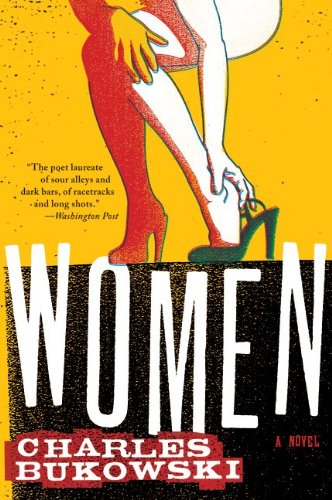
1. Women: A Novel
$7.89
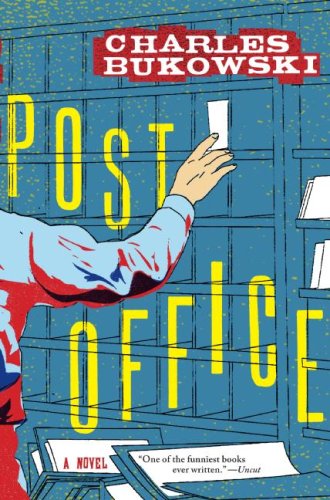
2. post office: A Novel
$18.53
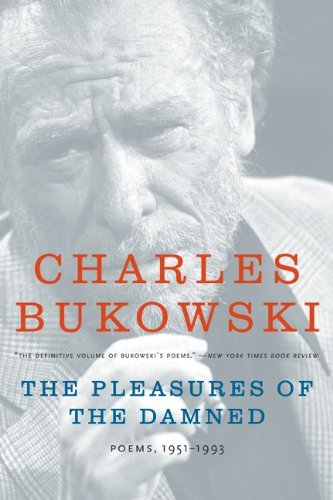
3. The Pleasures of the Damned: Poems,
$8.85
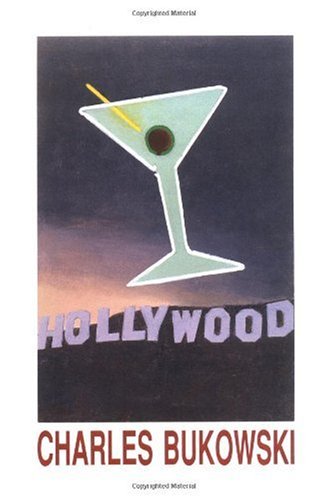
4. Hollywood
$9.03
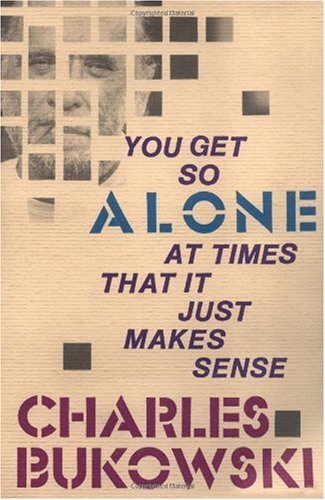
5. You Get So Alone at Times
$7.79
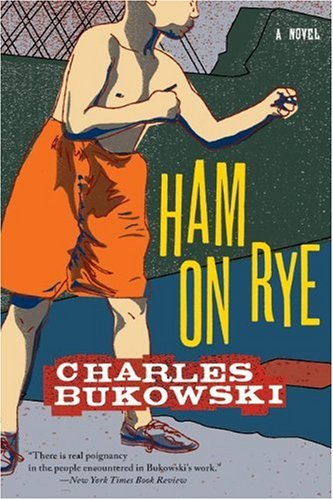
6. Ham on Rye: A Novel
$8.00
7. The Roominghouse Madrigals: Early
$6.99
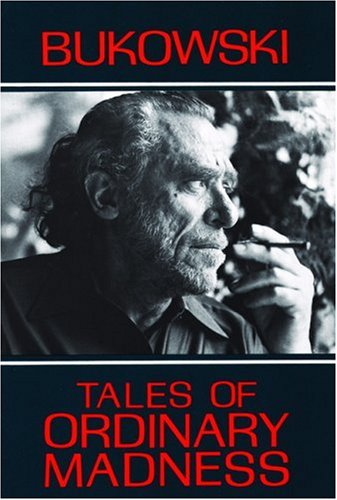
8. Tales of Ordinary Madness
$8.61
9. Dangling in the Tournefortia
$10.49
10. Sunlight Here I Am: Interviews
$9.03
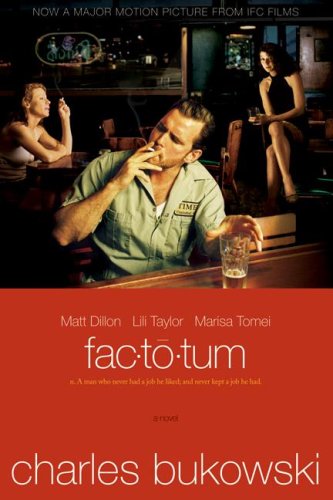
11. Factotum
$9.55
12. Screams from the Balcony
$9.03
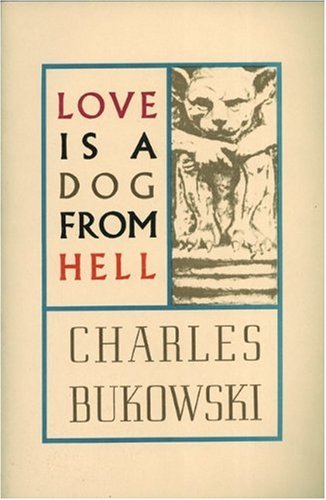
13. Love is a Dog From Hell
$8.29
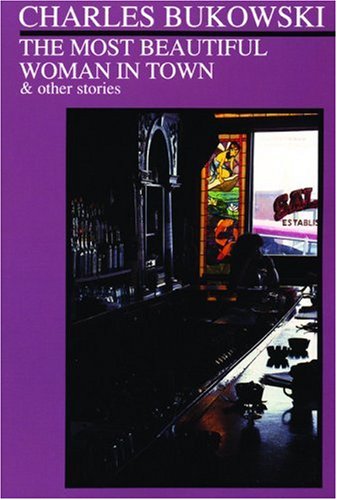
14. The Most Beautiful Woman in Town
 
$8.46
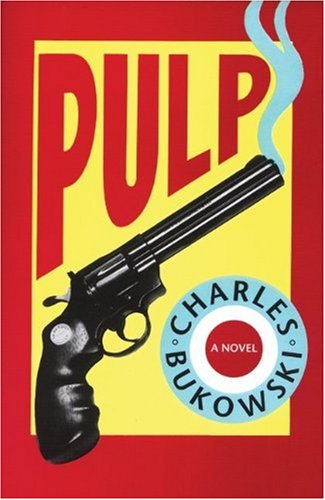
15. Pulp
$8.50
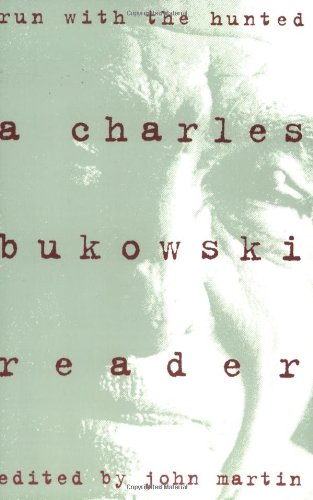
16. Run With the Hunted: Charles Bukowski
$4.50
17. Bring Me Your Love
$9.58
18. Septuagenerian Stew
$8.75
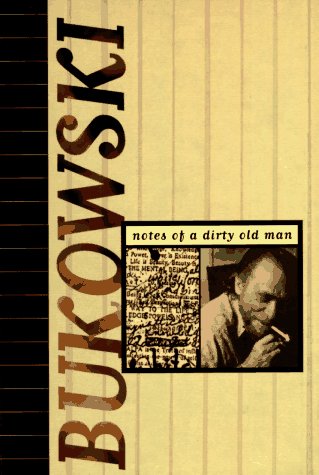
19. Notes of a Dirty Old Man
$12.92
20. Shakespeare Never Did This

1. Women: A Novel
by Charles Bukowski
Paperback: 304 Pages (2007-03-01)
list price: US$13.95 -- used & new: US$8.09
(price subject to change: see help)
Asin: 0061177598
Average Customer Review: 4.5 out of 5 stars
Canada | United Kingdom | Germany | France | Japan
Editorial Review

Book Description

Low-life writer and unrepentant alcoholic Henry Chinaski was born to survive. After decades of slacking off at low-paying dead-end jobs, blowing his cash on booze and women, and scrimping by in flea-bitten apartments, Chinaski sees his poetic star rising at last. Now, at fifty, he is reveling in his sudden rock-star life, running three hundred hangovers a year, and maintaining a sex life that would cripple Casanova.

With all of Bukowski's trademark humor and gritty, dark honesty, this 1978 follow-up to Post Office and Factotum is an uncompromising account of life on the edge.

... Read more

Customer Reviews (112)

4-0 out of 5 stars Prose is direct like pavement
This was actually my first Bukowski book I ever read.I had a girlfriend who had started getting into him right after he died... She liked him because he was so bitter.She later broke up with me using a lot of the same reasoning she had for likeing Bukowski!Nevermind that, though...

Buk only wrote about ten or so different stories in most people's minds.What I find most facinating is that he rarely gets boring (there's some horse track stories that I could never finish).The synopsis of "Women" may make the book sound monotonous, but Bukowski's talent is delivering his life in a direct and interesting way.

1-0 out of 5 stars Boring...and not funny...
It is my first and last Bukowski...Never heard of the guy till this one. Sorry, but have never been exposed to his poetry - which I understand (but now I seriously doubt) it is exquisite.
Expected to have an exhilarating insight into...well, WOMEN from someone who knows about the subject. I should have listened to the other reviewers in the 1 - 2 stars section. What a boring recollection of girls by an ugly, old, broke alcoholist - but, hey, one that is soooo full of himself and his 7inch acrobatic member. Oooops, I must have divulged a secret...I apologize if I have ruined somebody's pleasure of this soon to be forgotten writer and book.

5-0 out of 5 stars One of Buk's best...
BESIDES being sensitive
BESIDES being original
BESIDES telling it like it is
BEHOLD! The man has a sense of humour.
This books is a hilarious, honest look at life and love.
Long Live Charles Bukowski
To Cook is Divine, Italian, Filipino, and Southern-style Vegetarian Recipes from Outside the Box

5-0 out of 5 stars Read it.Don't let your wife read it.
Don't start with this Buck Book, but add it to your list.Don't let your wife read it - in 2007 she won't get it.But if you appreciate the raunchier side of Hank's life - this is it.

5-0 out of 5 stars Don't Try
WOMEN describes the life of Hank Chinaski, a fat, middle-aged, alcoholic poet who one character calls "the most unknown famous man I ever met." Thanks to his literary notoriety, Hank has become a sex object to women, who drink with him, have sex with him, and then get back to their lives. In my notes, I counted 19 women, most of them much younger, who bed Hank.

Bukowski succeeds in making each of Hank's lovers distinct. There's Lydia (Hank helps her feel greatness), DeeDee (positive and engaged in life until she attempts suicide), Nicole (a culture bitch), Mindy (beautiful but lousy in bed), and so on. But with each woman, Hank is exactly the same: he is celebrity alcoholic in pursuit of sex but also open to the special qualities in each woman. From this angle, the book is crude but entertaining erotica, both dismissive and sensitive to women, and extremely funny.

Usually, Bukowski writes in a laconic deadpan style that makes WOMEN a very fast read. I suppose it's not great literature, because Hank doesn't evolve and or have to make fundamental choices. Instead, WOMEN is closer to concise and hilarious fantasy. Still, there are occasional comments that clarify or add depth to the story. For example:

Page 174: "Where did all the women come from? The supply was endless. Each one of them was individual, different... What a feast!"

Page 74: "Why always more women? What was I trying to do? New affairs were exciting but they were also hard work. The first kiss, the first f--k had some drama. People were interesting at first. Then later, slowly but surely, all the flaws and madness would manifest themselves ...Was I trying to screw my way past death? By being with young girls did I hope I wouldn't grow old, feel old? I just didn't want to age badly, simply quit, be dead before death itself arrived."

Page 205: "Just living until you die is hard work."

Page 285: "There was so much sadness in everything, even when things worked out."

... Read more


2. post office: A Novel
by Charles Bukowski
Paperback: 208 Pages (2007-03-01)
list price: US$13.95 -- used & new: US$7.89
(price subject to change: see help)
Asin: 0061177571
Average Customer Review: 4.5 out of 5 stars
Canada | United Kingdom | Germany | France | Japan
Editorial Review

Book Description

"It began as a mistake." By middle age, Henry Chinaski has lost more than twelve years of his life to the U.S. Postal Service. In a world where his three true, bitter pleasures are women, booze, and racetrack betting, he somehow drags his hangover out of bed every dawn to lug waterlogged mailbags up mud-soaked mountains, outsmart vicious guard dogs, and pray to survive the day-to-day trials of sadistic bosses and certifiable coworkers. This classic 1971 novel—the one that catapulted its author to national fame—is the perfect introduction to the grimly hysterical world of legendary writer, poet, and Dirty Old Man Charles Bukowski and his fictional alter ego, Chinaski.

... Read more

Customer Reviews (123)

5-0 out of 5 stars mysogynistic fun
Sure Chinaski's attitude towards women and work aren't PC, but what man doesn't think like this (whether they admit it or not)?Henry is the classic anti-hero and will live forever.

4-0 out of 5 stars Good Read
I liked this book and it is a good read but it is kind of obscure. The protagonist has an interesting view on life that I did not really relate to well but that made it kind of interesting.

5-0 out of 5 stars Some things only come to you when you're ready...
Charles Bukowski, the man, the drinker, the poet, and the postman. What more is there to say? Not much, but I'll be honest with you. I didn't know who Charles Bukowski was up until a few years ago. Even then, after hearing about who he was, and "thinking" I knew what he was about, I would often browse the bookshop aisles (as we all do), occasionally picking up one of his books, reading through the first few pages and then placing the book back on the shelf and drifting off to another section of the bookstore.

Then, a few weeks ago, I was reading something, and article in the Times, I think, about the man, Mr. Bukowski, and I decided to give him another shot. I researched his work a little bit, and decided on Post Office: A Novel, due to it's high-star reviews here on [...].

Well, I picked up the book, finished it in a day and a 1/2 (I had to go to work, otherwise it would have been finished in a few hours) and from the very first page, I was hooked. I drank in his honestly. And although his honestly is quite brutal at times, it was the first time I had read someone who I didn't feel was messing around with me, the reader. He didn't 'flower up' his work by being superfluous, rather, he was more direct and to the point than anyone I've ever read (and talked to). To say it was a refreshing change would be an understatement.

After finishing Post Office, I went out and Factotem, Ham on Rye, Women, and two of his early poetry books, and finished them all within weeks. I suspect, though, that as with any good book, I'll be revisiting them often.

On a final note, if there is one more thing I'd like to say about Mr. Bukowski's books, is that I believe anyone who thinks themselves a writer, really needs to read check out these books. If for no other reason than to see just how much you don't need to put into a piece to make it work. I won't go as far as to call Mr. Bukowski a master, because quite frankly, I think he'd laugh at the very thought. No. I'll call him someone who found his voice and used it to speak volumes. And anyone who puts pen to paper (or finger to keyboard) in the hopes of doing anything with that, needs to see what a true voice reads like.

5-0 out of 5 stars Excellent look inside the mind of Hank.
This day to day account of the life 'Hank' lives is captivating and addictive.If this is your first Bukowski Book (and it would be a good start to getting to know Buck) and you like it - I would guess you will soon be addicted.

5-0 out of 5 stars True to life - beautiful and sad
There are already so many reviews of this title, that I may not be saying anything new. Yet, I feel there is one piece missing. Bukowski was a fascinating author and although I do find his short stories to be among the best shorts ever written, I also enjoy his longer pieces, such as the Post Office.
Bukowski's writing always fills me with inspiration. His short, seemingly uncombed, sentences penetrate my brain like spears, flow off the tongue with ease, and never fail to leave something behind, long after I am done with the book. I admire his style, his honesty, his raw nature, and his unique approach when it comes to portraying life in its purest. He does not try to impress with elaborate sentence structure or flowery vocabulary, he does not try to romanticize life. His views, his images, his words...are all real; as real as it gets.
Bukowski's alter ego, Henry Chinaski, is a man -- a simple, living, breathing man, playing whatever cards life had dealt him. He is a smoking, drinking, farting, gambling man struggling to maintain his head above water, while bound by the chains society ties him with. He is moving through life, seemingly with a certain nonchalance, yet suffering. Suffering from the all-too-human condition many of us know. For one, he is not attached enough to bleed when faced with a loss, yet, he is not completely detached to be indifferent when served a blow. And he is served plenty of blows.
Whoever put together this edition, decided to call it "one of the funniest books ever written" I disagree. Bukowski, and Henry Chinaski's "adventures" are humorous, but most of all, his stories are sad. Sad on the human level. While reading, we are bound to smile, laugh and grin, yet, below the surface, between the lines, is hidden human suffering. Suffering we can all relate to, whether dealing with an "impossible" life partner, or with the "evil" boss, we all have something in common with Chinaski. We may not drink as much, smoke as much, eat better, live in better conditions, but we can relate. And this is exactly what makes Bukowski as relevant today, as it did when the book was first published. It is the most precious of connections -- connecting with the author on a human level.
Along with Miller, Steinbeck, Kerouac, Harold Maine and Albert Cossery, Bukowski remains one of my favorite authors; the sort of author I can go back to at any time and find his writing relevant and entertaining. If you never read Bukowski, go give him a try. You won't be disappointed. ... Read more


3. The Pleasures of the Damned: Poems, 1951-1993
by Charles Bukowski
Hardcover: 576 Pages (2007-11-01)
list price: US$29.95 -- used & new: US$18.53
(price subject to change: see help)
Asin: 0061228435
Average Customer Review: 5.0 out of 5 stars
Canada | United Kingdom | Germany | France | Japan
Editorial Review

Book Description

To his legions of fans, Charles Bukowski was—and remains—the quintessential counterculture icon. A hard-drinking wild man of literature and a stubborn outsider to the poetry world, he wrote unflinchingly about booze, work, and women, in raw, street-tough poems whose truth has struck a chord with generations of readers.

Edited by John Martin, the legendary publisher of Black Sparrow Press and a close friend of Bukowski's, The Pleasures of the Damned is a selection of the best works from Bukowski's long poetic career, including the last of his never-before-collected poems. Celebrating the full range of the poet's extraordinary and surprising sensibility, and his uncompromising linguistic brilliance, these poems cover a rich lifetime of experiences and speak to Bukowski's “immense intelligence, the caring heart that saw through the sham of our pretenses and had pity on our human condition” (New York Quarterly). The Pleasures of the Damned is an astonishing poetic treasure trove, essential reading for both longtime fans and those just discovering this unique and legendary American voice.

... Read more

Customer Reviews (4)

4-0 out of 5 stars Great for those new to Bukowski
this book is great for what it is intended for.A look at Bukowski in a sort of encyclopedic form. Bukowski is very real and heartfelt but in the most simplest blunt fashion and I mean that to be very appreciative.

5-0 out of 5 stars "I Have Been Alone But Seldom Lonely"
THE PLEASURES OF THE DAMNED is a collection of Charles Bukowski's poems, 548 pages of them, many of them from earlier volumes of poetry, some of them never before published. For anyone familiar with Bukowski, there are few if any surprises here, rather a healthy sampling of this iconoclast's poetry. So very autobiographical, many of these poems are about the things Bukowski loved: the races, cats (you can learn from them),booze, poetry (he calls himself a poetry junkie), Wagner, sex (like Mahler, you do not rush it), some women. He can write a paean to a lover in "The Shower" but then say in another poem that American women, as opposed to Japanese women, "will kill you like they tear a lampshade." He is not reticent in writing about people and things he hates as well: some writers, especially Hemingway, whom he describes as "just a drunk"-- the irony is that in "a clean, well-lighted place," his description of Hemingway's use of his literary reputation to reel women in "one at a time" sounds like Bukowski himself-- critics, mindless work. (He pictures workers trapped in jobs that go nowhere as having "goldfish security.)

Nothing was immune from Bukowski's pen. Apparently he could write about any subject. There are poems here on the killing of elephants in Vietnam, a grammar school bully remembered, the ignorance of youth, a trip to the doctor, picturing himself in a nursing home, a conversation with death, an old car ("a poor man's miracle"), the abuse that both he and his mother suffered at the hands of his father (his mother had "the saddest smile I ever knew"), the homeless, the old, poor, sick and dying, throwing a radio out a window, etc., etc.

No one would say that Bukowski wrote "pretty" poems. On the other hand, we cannot deny that many of them go straight to the bone. In "eating my senior citizen's dinner at the Sizzler" (what a horrendous image) markers in modern cemeteries are "flat on the ground, it's much more pleasant for passing traffic." His world is inhabited by a sixty-five-year-old man with cancer who kills his sixty-six-year-old wife who has Alzheimer's and then kills himself and a house that is sad because it is inhabited with people who have mindless, dead-end jobs. For many of the people Bukowski writes about, "it's a lonely world/of frightened people,/just as it has always/been." On the other hand, in the poem entitled "mind and heart" (p. 523), he acknowledges that we are all alone, "forever alone" but goes on to say that "I have been alone but seldom lonely."

Reading Bukowski reminds you of Walt Whitman and Allen Ginsberg--although he certainly is not derivative of any other writer-- but a case can be made that he is a lot closer in his mood and world view to some of the darker poems of both Robert Frost and Emily Dickinson than he probably would have acknowledged. There is a place in the parade of poets for anyone who speaks the truth: the Robert Frosts, the Emily Dickinsons, the Donald Halls, the Edwin Arlington Robinsons along with the Charles Bukowskis.

5-0 out of 5 stars Bukowski Rocks!
A wonderful collection of Bukowski's work spanning his entire career.Great for those already familiar with his poetry and for those just discovering this master.Enjoy!

5-0 out of 5 stars Well Worth a Read
Although I own almost every book Buk has written, I thoroughly enjoyed this collection, expertly edited by John Martin.Martin has selected some of Buk's most provocative and surreal work and arranged it so that it still sounds fresh and vital, even to the most devoted fan.My appreciation for Bukowski's work had dwindled somewhat after the incessant posthumous collections, but Martin gives this prolific writer what he really needed lately:a good editing.Thanks. ... Read more


4. Hollywood
by Charles Bukowski
Paperback: 248 Pages (1989-01-01)
list price: US$16.00 -- used & new: US$8.85
(price subject to change: see help)
Asin: 0876857632
Average Customer Review: 4.5 out of 5 stars
Canada | United Kingdom | Germany | France | Japan

Customer Reviews (30)

4-0 out of 5 stars Pulls No Punches
One of Bukowski's bucket full of virtues is that he tells the truth, and he pulls no punches here in talking about the phenomenon known as "Hollywood".I did find some of the person to person interaction to be thin, but that could be that human to human interaction in Hollywood tends to be thin.Bukowski lets it be known that he questioned his motives in going Hollywood and becoming something that he used to look down on only a short time before - for this alone I respect him immensely as not a lot of them who do this care to make a public introspection afterwards.Bukowski was a real man.Read this book

5-0 out of 5 stars Obscure Gem
If you never heard of the crude, hard drinking American author, this is where to start and/or end.This is Bukowski at his finest. Good reading around "Oscar" time.................

4-0 out of 5 stars bukowski's most enjoyable novel
publishers weekly sure has it in for bukowski. personally, i think of that publication as a sort of cemetery where a lifeless staff of dullards pronounce useless verdicts from there dreary coffins. ignore publishers weekly on this and all books. please do. anyway, this is a very enjoyable book which gives an insiders/outsiders look from within hollywood that almost all of us will never see. bukowski is light and comedic here, but still as biting as ever. "ham and rye," might be his best novel; this one is just so much more fun. highly recommended.

2-0 out of 5 stars Dissapointing
"I drove north up the Harbor freeway toward Hollywood Park. I'd been playing the horses over 30 years. It started after my near fatal hemorrhage at the L.A. County Hospital. They told me that if I took another drink that I was dead.
`What'll I do?' I asked Jane.
`About What?'
`What'll I use as a substitute for drink?'
`Well, there are the horses.'
`Horses? What do you do?'
`Bet on them? Sounds stupid.'
We went and I won handsomely. I began to go on a daily basis. Then, slowly, I began to drink a little again. Then I drank more. And I didn't die. So then I had drinking and the horses. I was hooked all around" (176).

Bukowksi's prose, much like his persona is strong, dead-pan, and often touching and funny. This novel however, is weaker than much of his other works of fiction because the narrator, Henry Chianski, is constantly surrounded by his colleagues. Bukowski doesn't allow for any breathing room in this often redundant portraiture of the world of making film, a field Bukowski has nothing but contempt for. After 100 pages of endless negotiations and back-stabbings one wonders why Bukowski wasn't able to conjure any better scenarios than he was in `The Post-Office,' a far less interesting subject and setting. This novel is not without its moments and the prose is never embarrassing, but it removes the grit and loneliness of his earlier work, necessarily at that, as he composes it onto the screen. A minor effort from an otherwise effective and provocative author.

4-0 out of 5 stars More drunken humor from Bukowski!
This is Bukowskis humorous account of the making of the movie Barfly. Its funny to see the subtle name changes of people like Sean Penn, Mickey Rourke, Faye Dunaway, Tom Jones, Madonna (he referred to her as Ramona) and Bukowskis humorous and not always very complimentry recollections and opinions of them.

Hollywood isn't as good as Ham on Rye, Post Office or Women but its still very good and worth reading.
... Read more


5. You Get So Alone at Times
by Charles Bukowski
Paperback: 320 Pages (2002-06-05)
list price: US$16.00 -- used & new: US$9.03
(price subject to change: see help)
Asin: 0876856830
Average Customer Review: 4.5 out of 5 stars
Canada | United Kingdom | Germany | France | Japan

Customer Reviews (18)

5-0 out of 5 stars A Large One
This collection is massive and reads like the old man wrote in a month; it is a great example of Bukowski's subtleness of form.

5-0 out of 5 stars Golden Years Epiphanies
Success and acclaim might damage some artists. They had the opposite effect on Bukowski. Once he felt he was getting the recognition he deserved, a lot of the bitter hatefulness fell away, and his brilliance grew brighter.This volume goes well with "The Last Night of the Earth Poems," the final volume published in his lifetime.

5-0 out of 5 stars Its all good, even the dead....
I read any/all of Hank's poetry the same way - a couple of pieces after a couple of beers.This combination makes me come back to Hank time and time again.Somehow he is able to cut through time, cut through death, cut through propriety and society without being depressing.He makes me feel like there is honor in just being truthful and sentient.

Imagine writing such simple, scuzzy stuff and knowing it was great at the same time?Here's to ya Hank!

4-0 out of 5 stars I hate poetry, so naturally Bukowski's poetry works for me
I love Bukowski's fiction, its straightforward, unadorned, yet precise diction, and its degraded, yet implacable hero(es?).

Poetry, to me, has always seemed a florid waste of time, and a lazy man's game.It seems like shorthand at its best moments.

But I can't get over the fact that this guy, while making fun of the form, is able to nail his little portraits with alarming consistency.

Some of these, like "My Ivy League Friends," are narrative, mean and straight.

Others, still eschewing metaphor, are humming, man-shaped bells, like "No Help For That."

There are some duds, and I won't bother pointing to them because they'll be obvious when you come to them.

But, I like this guy a lot.He's real, even when he does his best to avoid it.

5-0 out of 5 stars Well you gassed her up, behind the wheel...
...
With your arm around your sweet one in your Oldsmobile
Barrelin' down the boulevard
You're looking for the heart of Saturday night

You get paid on Friday, pockets are jinglin'
And you see the lights you get all tinglin'
'Cause you're cruisin' with a six
And you're looking for the heart of Saturday night

Then you comb your hair, shave your face
Tryin' to wipe out every trace
All the other days in the week you know that this'll be the Saturday
You're reachin' your peak

Stoppin' on the red, you're goin' on the green
'Cause tonight'll be like nothin' you've ever seen
And you're barrelin' down the boulevard
Lookin' for the heart of Saturday night

Tell me is it the crack of the poolballs, neon buzzin?
Telephone's ringin', it's your second cousin
Is it the barmaid that's smilin' from the corner of her eye?
Magic of the melancholy tear in your eye

Makes it kind of quiver down in the core
'Cause you're dreamin' of them Saturdays that came before
And now you're stumblin'
You're stumblin' onto the heart of Saturday night

You gassed her up and you're behind the wheel
With your arm around your sweet one in your Oldsmobile
Barrellin' down the boulevard
You're lookin' for the heart of Saturday night

Is the crack of the poolballs, neon buzzin?
Telephone's ringin', it's your second cousin
And the barmaid is smilin' from the corner of her eye
Magic of the melancholy tear in your eye

Makes it kind of special down in the core
And you're dreamin' of them Saturdays that came before
It's found you stumblin'
Stumblin' onto the heart of Saturday night
And you're stumblin'
Stumblin onto the heart of Saturday night

Once again, as always, Buk achieves perfection.Perhaps one of my most cherished collection amongst my many, many dogged, ragged Buk items.I can't do justice to this collection by trying to piece together a few ill-written words that try to capture the beauty accomplished by Buk, so I won't try.Just know that you're missing out if you haven't gotten this yet, and if you continue to pass it up.Get it now, and you'll realize that.Then, you'll finally be able to at least get some joy out of your solitude.
... Read more


6. Ham on Rye: A Novel
by Charles Bukowski
Paperback: 288 Pages (2007-03-01)
list price: US$13.95 -- used & new: US$7.79
(price subject to change: see help)
Asin: 006117758X
Average Customer Review: 4.5 out of 5 stars
Canada | United Kingdom | Germany | France | Japan
Editorial Review

Book Description

In what is widely hailed as the best of his many novels, Charles Bukowski details the long, lonely years of his own hardscrabble youth in the raw voice of alter ego Henry Chinaski. From a harrowingly cheerless childhood in Germany through acne-riddled high school years and his adolescent discoveries of alcohol, women, and the Los Angeles Public Library's collection of D. H. Lawrence, Ham on Rye offers a crude, brutal, and savagely funny portrait of an outcast's coming-of-age during the desperate days of the Great Depression.

... Read more

Customer Reviews (125)

5-0 out of 5 stars It's a hard knock life
Charles Bukowski's Ham on Rye details the early childhood of his fictional alter-ego Henry Chinaski through his teen years up until the attack on Pearl Harbor.A majority of the novel finds Chinaski growing up in the depression-laded lower-middle class part of Los Angeles, and details his discoveries of alcohol, women, authors, and writing.What is most likely an autobiographical fueled novel, Ham on Rye ends up becoming a startlingly poignant piece of literature, much like many of Bukowski's novels.The reader becomes impassioned with Chinaski's hard, young life as he discovers and withstands the futility of his own existence, gets into fights with his privilaged schoolmates, and develops an extremely painful case of acne that leaves him physically scarred.Though we don't always feel sorry for Chinaski as his actions make him labeled a "truly ugly person", there's no denying that Ham on Rye is a stunningly powerful and bleak portrait of the life Bukowski himself lived.Not as quintessential as Post Office of Factotum, but an essential piece of Bukowski's work nonetheless.

5-0 out of 5 stars An extraordinary book
If there is a novel, this is it. Full of autobiografy, wit, humor and despair.

5-0 out of 5 stars amazing
amazing says it all. very few people can describe the world and its charecters like bukowski.

4-0 out of 5 stars Bukowski is a chandala-- but he did it well
Bukowski is what Nietzcshe referred to as a chandala... he was ugly, he was abused and mistreated, he was a little mean, he was a little perverse, and he suffered and struggled a lot.

But he did it well and documented it well-- even the chandala need their documentarians, historians and champions...

In any event, one thing people shouldn'tconfuse is that they probably would not want to be charles bukoswki unless it was their lot in life. As with many authors, Bukowski gets to take his shabby life and become a sympathetic protagonist.

It is not a bad thing to examine the lower depths as long as one doesn't forget there are also human heights that are attainable for some people.--not for people like Bukowski -- but for other types.

Bukowski's choice of cuisinesays it all--Bukowski is Ham on Rye, perhaps with a piece of stale swiss cheese and 3 day old potato salad on the side. Bukowski is every 10thguy at the wall mart -- who just also happened to be a writer with some insight into his life.-- perhaps it made it bearable for him. I hope so.

5-0 out of 5 stars .
A few days before my fifteenth birthday, I picked up this book and my life was changed forever.I remember tearing through the parts describing the intense boils on his face and the way people treated him.I loved the part about the boy whacking off to his attractive teacher beneath his desk.I loved his drunken antics and the way he behaves: completely and totally in the moment.Everything in this book is so beautiful.This and Women are two of the best books I have ever read.His poetry is great as well.I strongly reccomend everything he has ever written. ... Read more


7. The Roominghouse Madrigals: Early Selected Poems 1946-1966
by Charles Bukowski
Paperback: 264 Pages (2002-06-05)
list price: US$15.00 -- used & new: US$8.00
(price subject to change: see help)
Asin: 0876857322
Average Customer Review: 4.5 out of 5 stars
Canada | United Kingdom | Germany | France | Japan

Customer Reviews (11)

4-0 out of 5 stars Good Work
Those who find Bukowski's novels a little thin in substance and diversity may want to turn to these early poems, which are indicative of the late writer's considerable talent. Bukowksi's poetry is base, unadorned, and funny. He identifies strongly with the common man, perhaps more authentically than the beats or other subterranean movements of the same period. This collection is a strong representation of his early skill as a craftsman; his voice his genuinely present throughout. Stand out poem is `Genius of the Crowd.'

4-0 out of 5 stars Bukowski's Early Uncollected Poems
Charles Bukowski (1920 -- 1994) is best known as the writer of novels such as "Ham On Rye" and "Women", which are based upon the author's life and feature a character named Henry Chinaski, and for movies such as "Barfly" and "Factotum" based upon Bukowski's novels and stories.But Bukowski saw himself primarily as a poet. He wrote prolifically for years, publishing frequently in journals and little magazines.His extensive writing belies, somewhat, Bukowski's public image.It shows a person interested in considerably more that alcohol, horseracing, and sex.Bukowski devoted a great deal of time and energy to becoming a writer.

The collection"Roominghouse Madrigals" was published by Black Sparrow Press in 1988, following the success of the movie "Barfly."Black Sparrow had already published several collections of Bukowski's poetry, but "Roominghous Madrigals" is a collection of earlier material, writen between 1946 and 1966.In fact, the collection dates overwhelmingly from the latter ten years, as Bukowski virtually had stopped writing during the mid 1940s to mid 1950s.In the forward to the collection, Bukowski writes that he and some editorial assistants attempted to gather together some of the poems from Bukowski's earliest efforts for publication in the book.He describes the poems as "more lyrical" than his subsequent efforts and that he retains a "certain fondness" for them because of the life of cheap roominghouses, menial jobs, lack of money, and effort at writing that they recalled to the him.

As with much of Bukowski's poetry, the poems of "Roominghouse Madrigals" are short, broken-lined, unrhymed and unmetered.They generally speak directly to the author's immediate experiences. Whitman is a source for Bukowski's poetry (Emily Dickinson may be as well, given the personal character of the poems) as is the 20th Century poet Robinson Jeffers.The book is long for a collection of poetry (256 pages) and the poems are put together without apparent sequence and with no attempt to correlate the poem with the year in which it was writtin or to its initial publication, if any.

I found "Roominghouse Madrigals" a mixed collection with some poems working, others not.The book is dark and pessimistic, as a whole, with many poems exploring themes of death and suicide, violence and hard living, loneliness, and a broad sense of alienation.The book differs from some of Bukowski's later work in its use of elaborate metaphor, which is frequently highly striking, vivid, and surrealistic. In addition, this collection frequently explores themes at a more abstract level than does most of Bukowski's later poetry.As with most of Bukowski's work, there is a sense of redemption in this book, as the poet tries to create a meaningful life in the crassness or his surroundings through the practice of capturing his experiences in art.

Some of the poems in the collection that I found effective include "It's not who Lived Here", "Poem for my 43d Birthday", "The Japanese Wife", "The Loser", "All I know", "Old Man Dead in a Room", "Counsel", "Goldfish", "Sad-Eyed Mules of Men" "The Gypsies near Del Mar", and "Rose, Rose".Overall, this collection of early, scattered works does not represent the best of Bukowski's poetry.

Readers might want to check the pagination carefully before purchasing "The Roominghouse Madrigals."In my copy, pages 133 -- 164 are included twice while pages 165--196 are missing.

Robin Friedman

3-0 out of 5 stars worth reading if you're a fan
If you're a Buk fan you'll want to check out his earlier 'more lyrical' poetry;basically not as raw and hard-hitting as his work in the Seventies and beyond, a bit more fancy word-work involved, but still interesting.If you're not a fan, and prefer all that pretentious abstract imagist poetry, then this is probably the only book by the man that you might like...

5-0 out of 5 stars beware: this book, this author
yes, if you are famailiar with Buk, then fine, I need not tell you how his early books, like those of Dostoyevsky, Nietzsche, and Celine, are so absurdly full of something ineffable.(Of course this ineffable thing would be, to find yourself with no other option, than to live the life of an artist, before you are recognized as such.How does one express that?And what does expression matter, when it's production we are concerned with?)And yet, we'll read his books anyway.By far, the best American poet - ever.I say this in the same way I would say Shakespeare is the best English playwrite, ever.If you wish to consider yourself, anything above insipid, this book is imperative. If you wish to find a hook on which to hang your schizophrenic tendencies...look no further.Buk's best book...hand's down.Buy it, love it, and Beware...

5-0 out of 5 stars You feel like you are really holding something
I thought that this collection was one of Bukowski's best. I have a number of books from this publisher and think they are classy, functional, and even though paperback feel like you are really holding something. ... Read more


8. Tales of Ordinary Madness
by Charles Bukowski
Paperback: 248 Pages (1984-01)
list price: US$14.95 -- used & new: US$6.99
(price subject to change: see help)
Asin: 0872861554
Average Customer Review: 4.0 out of 5 stars
Canada | United Kingdom | Germany | France | Japan
Editorial Review

Book Description

With Bukowski, the votes are still coming in. There seems to be no middle ground-people seem either to love him or hate him. Tales of his own life and doings are as wild and weird as the very stories he writes. In a sense, Bukowski was a legend in his time . . . a madman, a recluse, a lover . . . tender, vicious . . . never the same . . . these are exceptional stories that come pounding out of his violent and depraved life . . . horrible and holy, you cannot read them and ever come away the same again.

... Read more

Customer Reviews (32)

5-0 out of 5 stars Tales of Ordinary Madness
Charles Bukowski, brutally honest, as usual. This book was pretty good but not as good as his poetry.

1-0 out of 5 stars disappointing
I may run contrary to the other reviewers here, but I really didn't like tales.The book, first of all, doesn't even read like a Bukowski book.The writing style is totally different from any of the novels or short story books, especially Hot Water Music and South of No North.I really don't believe that Bukowski wrote this book, sorry.I think it was some kind of posthumous ghost writer, and not a very good one.Second of all, the stories are terrible.They don't make any sense.Things happen in the book and you're not sure what's going on.The plots have no sort of logical flow to them.So even if Bukowski DID write this book, which he didn't, it still wouldn't be worth reading.

4-0 out of 5 stars Bits and Pieces.
While the stories aren't all together linked, the big picture is clear. Charles Bukowski may very well be writing from the mouth of madness. He uses this book to paint pictures of the lives he sees, and often times lives. If you're looking for a good starter book that doesn't hold back, I recommend this one. My first and still my favorite of his works.

1-0 out of 5 stars Congrats Mr.B- What a pile of drivel!
Congrats Mr. Bukowski!You win the prize for being the first-ever book that I just couldn't make it through.60 pages.That's all I could read before I threw it in the trash.

Such filth (and I'm in construction, should hear MY mouth) and pointless drivel.Completely disjointed - and not the stories to each other, but within each story.How in the world did this guy ever get to be published?

Buy something else.Anything else.Just DON'T READ THIS BOOK!

5-0 out of 5 stars Nobility Among Ruined People
Is it possible to have sympathy for alcoholics, foul-mouthed madmen, a liquor store hold-up man, draft-dodgers, sexists, self-centered writers or any combination of the above? Yes, as long as the writer is Charles Bukowski.

The famous symbolist painter, Odilon Redon once said that dead flowers are just as beautiful as those in full bloom. Bukowski would agree. His characters have seen better days; in fact their best days are well behind them. Or, to paraphrase one of his characters, once you think you've hit bottom, another bottom rises up to hit you. And yet, there is a substantial nobility, a worthiness--I'm struggling for the right word--about these down-and-out characters. For the most part, you like them. Watching a felon, on the night he is about to stick up a liquor store, conversing with his little daughter, is downright poignant. (If you can't tell, "A .45 To Pay The Rent" is among my favorites.)

I'm stretching here a bit, but reading this reminded me of Jacob Riis' "How the Other Half Lives". While I am a working class guy, these stories revealed to me a world that I could never have imagined, nor survived in. The only difference between this and Riis' classic, is that this is autobiographical fiction. But the feeling is still there. These wretches have pride and assert their needs and identities.

These are not stories for the squeamish. So do not go lightly into "Tales of Ordinary Madness". But these stories are not shocking for shock's sake. They are shocking because they are real. ... Read more


9. Dangling in the Tournefortia
by Charles Bukowski
Paperback: 288 Pages (2002-06-05)
list price: US$16.00 -- used & new: US$8.61
(price subject to change: see help)
Asin: 0876855257
Average Customer Review: 5.0 out of 5 stars
Canada | United Kingdom | Germany | France | Japan

Customer Reviews (8)

5-0 out of 5 stars Dangling............
If you've read Bukowksi, then you know how he feels about the "critics".I, for one, find that is later work after 77 or so is his best.This book and "you get so along at times...." are my 2 absolute favorites.You should own this one!

5-0 out of 5 stars Bukowski Made it Look Easy
The biggest gripe I have against Charles Bukowski is that he made it look so easy.He's responsible for spawning thousands of second-rate immitators.I am no exception.Because I've spent some time in San Pedro, this collection in particular resonates with me since many of the poems come out of his stay in that harbor city.It's all here: women, booze, puking, classical music, barking dogs, war, annoying groupies, disasterous book readings, etc.If you were to choose one Bukowski book of poetry to read, this is it.

5-0 out of 5 stars The essence of Bukowski as I see him
The poems in this volume consistently present Bukowski as I've come to see him -- perceptive, self-deprecating, and frequently and unexpectedly funny as hell.There isn't really a bad or wasted line in here.This opinion is based on my knowledge of Bukowski derived from having read maybe 90 percent of his books.If you can have only one volume of Bukowski poetry, this should be it, in good part because it includes musings from his East Hollywood period and the affluent San Pedro days.In this regard, You may notice that Bukowski almost never mentions money or personal finances in his earlier work, but in San Pedro, mortgages, tax accountants, and the price of automobiles enter his view.

5-0 out of 5 stars some ofbukowski's best work
classic bukowski
long narrative thoughtful poetry carefully planned and executed regardless of how he may have described his own techniqe here
the ending short poem is classic

4-0 out of 5 stars gripping reality
an amazing look at the reality of life as illustrated by one who tells it like it is without shame ... Read more


10. Sunlight Here I Am: Interviews and Encounters, 1963-1993
by Charles Bukowski, David Stephen Calonne
Paperback: 288 Pages (2003-09)
list price: US$15.95 -- used & new: US$10.49
(price subject to change: see help)
Asin: 0941543374
Average Customer Review: 4.5 out of 5 stars
Canada | United Kingdom | Germany | France | Japan
Editorial Review

Book Description
Thirty-four interviews and encounters chronicle the rise of Charles Bukowski. He speaks in his own voice about his writing and his life, dutifully answering question after question. Included is his first interview in 1963 with the Literary Times of Chicago from his one-bedroom Hollywood apartment, and his last—at poolside in San Pedro answering a German journalist in August 1993, seven months before his death at 73. Follow his journey from obscurity to fame in Europe and finally in America after the success of the movie Barfly. ... Read more

Customer Reviews (6)

4-0 out of 5 stars a great read
I really enjoyed this book and must have reread it over twenty times by now. These interviews are the real deal: pure laugh-out-loud Buk gold. The man is in fine form. Well worth the money.

steal my car
steal my Belgian beer
steal my Faberge egg
steal my inflatable Jenna Jameson love doll
but DON'T
steal my Charles Bukowski book collection.

4-0 out of 5 stars Definitely one for the Bukowski fan...
I would say this is not for the casual reader of Bukowski's poetry. This is for the deep fan who wants a little more of the man and what he was like. And like his poems, which I am a fan of, expect the vulgar, the gritty, the passion and the truth. I give it only 4 stars just for the repetitiveness at times - since it's mostly a collection of interviews taken from various magazines over the years, a lot of the same questions are asked of Bukowski with a lot of the same answers given. So that makes it a bit tiresome to read at times, but that is a very, very minor detail. There is still plenty of the wit, anger and pomposity and truth here that mark Mr. Bukowski as one of the major writers of the century.

5-0 out of 5 stars Charles Bukowski: The Greatest Writer of Our Times
Sun Dog Press has done a great job compiling interviews that span Bukowski's career.This is the next best thing to a new Bukowski book.Its great to hear ole Buk laying out his lines in his inimitable (many have tried) style.And the book is packed with great advice for anybody who's ever wanted to be a writer.And while you're at it, check out my new book, SURVIVING ON THE STREETS (available from amazon.com, natch).I could use a beer, so hopefully Bukowski -- wherever he is -- won't mind me impinging on his site with this personal plug.acebackwords2002@yahoo.com

5-0 out of 5 stars Essential to the collection.
I give this book five stars because there is absolutely nothing wrong with it. It is a nice, tight collections of interviews spanning Bukowski's career and I found it a pleasure to read. That said, a buyer will want to keep in mind that interviewers often ask the same questions, so people might find this book repetetive, but as an avid Buk fan, I did not.

It's hard to tell with Bukowski where the fiction ends and the reality begins sometimes. He flat out says that he often does not tell the truth to interviewers, so it's hard sometimes to ascertain whether or not you are seeing the real Buk in these interviews. Still, they are an essential part to the overall picture of Bukowski.

One will see several themes throughout the book. Almost every interview gives a brief telling of Bukowski's childhood and the ten-year drunk. It's also interesting to see that he mentions in several interviews writing until he's 80, and it's sad in retrospect to realize that this did not come to pass.

Bukowski remained amazingly consistent in his thoughts througout the span of this book. Still, usually something can be gleaned from each interview which is unique, which makes this an entertaining addition to your collection, though it would not be my first choice if I was just beginning to find out about Buk's life.

4-0 out of 5 stars Bukowski on Bukowski
Twenty-two of the 34 chapters in this book are interviews. The other chapters are pseudo-interviews --- profiles with Bukowski talking a lot, fill-in-the-blank questionnaires, and two excerpts from his books. All of it is worth reading.

In the early chapters, Bukowski is angry and a little unfocused. He seems smart, but he's not at his full strength yet. But by the third or fourth chapter, he's had his first novel published, a second one is done, and he's feeling good. Although Bukowski has a reputation for being a grim skid-row poet, in reality he had a great sense of humor and he was thankful for his success. As you read each interview, he becomes more and more aware of who he is and what he's doing. He remains impatient with dumb questions, but he doesn't bother to rant anymore.

By the later chapters, he makes it clear that he's avoiding the pitfalls of celebrity. This may seem like a contradiction for someone doing an interview, but it makes sense when you notice how rarely he gave interviews. (And how often each interview was for a friend who had supported him for years. Bukowski was loyal and did many interviews as favors for publishers of small magazines.) By the end, he's comfortable in his legacy.

For those who haven't read Bukowski before, you should start somewhere else . . . and then get back to this book. Try 'Women,' 'Ham on Rye,' 'War All the Time,' and 'The Night Torn Mad by Footsteps.' If you are an aspiring writer, this book will help a lot. Bukowski talks about his writing methods quite a bit in these interviews. His advice is specific (write at night, alone, with the radio on), and general (avoid other writers, don't go on book tours to promote your work). ... Read more


11. Factotum
by Charles Bukowski
Paperback: 208 Pages (2002-06-05)
list price: US$16.00 -- used & new: US$9.03
(price subject to change: see help)
Asin: 0876852630
Average Customer Review: 4.5 out of 5 stars
Canada | United Kingdom | Germany | France | Japan

Customer Reviews (59)

5-0 out of 5 stars A Good Place to Start
It's the first Bukowski book I ever read, and it's still my favorite.And while it's not the chronological beginning of his story, it makes a nice introduction.He seems like an angry, godless, drunken, self-loathing Kerouac.I love it.

3-0 out of 5 stars 5 star pieces in a 1 star novel making it a 3 overall
The book as a whole is a work of garbage unfortunatly. The story is very repetitive and litearly you can read the first quarter and wrap it around its self 4 times and you would not miss much of the book (great for last second high school book reports maybe, you only have to read a quarter of it). All of this and the toilet humor of being plastered drunk and partaking in frequent orgies would make this book a true one star, so why give it three? The answer is that it does have some gratifying humor from time to time, and despite the fact he cant keep his jobs his attitude at work and how he reflects it onto people before being fired has its own humorous merit. It does give you a little insight to the psychology of a problematic drunk, and it is plausible to the point of being probably accurate. these pieces make the book flow, and it is not really a difficult read. If a person wanted a book who does not read a lot and rarely has time to read except in short bursts, I guess the book is perfect. It repitition makes it easy to remember where you left off, and you can get as much plot from a quick 2 page read than a sitdown reading the whole novel. All in all its not a bad novel, but its not a good one either, but it is semi intersting.... definatly not a 5 star read though, those going in with high expectations are bound to be dissapointed.

5-0 out of 5 stars Factotum - the man between the lines
World War II, America and Henry Chinaski. This is Factotum. Charles Bukowski brings his alter ego, Henry Chinaski, back to life in this phenomenal work and with it, he puts himself and society on trial.
A lot, perhaps too much, has been said about Bukowski and his work. While I truly enjoy his short stories the most, Factotum, along with post Office, are among my favorite books written by American authors. Bukowski's writing is simple and straight-to-the-point, and Factotum is no exception. Filled with short, sometimes paragraph-like chapters, the writing flows smoothly, gently sneaking under your skin, and before you know it you start to care and you start to see the world through Chinaski's eyes. A world, which, for the most part, has not improved over the past sixty years. Perhaps his truths are universal. One thing hit me in particular: Chinaski goes to the American Cancer Society, only to be given an appointment three weeks later. He mentions that all his life he has been told to catch cancer early, but when it comes to it, he is told to wait three weeks. Last year I went through pretty much the same thing, only to have to wait for an appointment for over four months. Fortunately, it was not cancer, but if it was...what is the point.
Anyway, back to Factotum. Chinaski, being a "4-F" as he states, was exempt from the draft which left him behind, free to look for a job and settle down. Only the restless soul is incapable of settling down. A struggling writer, (writing several short stories by hand each week, which shows great inspiration and capability) he does not have much else to live for. Submerged in booze, smoking, and having sex, he kills time between odd jobs, while waiting to be discovered. However, this is not the point of the story. The story itself is the loose journal of a man struggling with himself and the changes our society was undergoing at that time. Chinaski was not a man who knew what he wanted. As long as his basic needs were met, (Booze, cigarettes, sex, and the occasional meal) he was happy -- relatively happy, or rather unconcerned with the world. He mentions the war in the terms of there being less people applying for the jobs, yet it does not make the jobs easier to get. He chooses jobs which require minimum effort, be it physical (when possible) or mental (always), because he cannot be bothered. Considering his arrest record, he knows he cannot get a "good" job, for they require a background check, so he settles for the other jobs -- shipping clerk, janitor, warehouseman, factotum.... He drinks during the day, he writes at night, he fights at bars, and he drinks more. When he has money, he buys a good whiskey; when he doesn't, he settles for a rotgut wine. He treats women the same way he treats his bottle -- as long as he can get it, it's good. His women, with the exception of a few random "quickies", are not much different than him, only less inspired. Chinaski lives this way because he chooses to, because he cannot be bothered. And why should he.
How many of us wasted years and perhaps decades chasing after something that seemed important to us, yet it really wasn't? How many of us do something we hate or dislike only for the sake of "appearances"? We are all guilty of that. As a society, we look down on the bum standing at a corner, holding a fifth wrapped in a paper bag; we look down on the men who move from place to place, unable to hold jobs, unable to start a family, the men who do inferior work. How many of us ever stopped to think why...to see if they maybe chose to do that, if they have a reason. Chinaski had two years of college, yet he worked as a janitor. It was not from laziness, it was a conscious choice. He did not have faith in the system, he did not want to be part of the system; he simply wanted means of making some money to fulfill his needs. Factotum is a portrait of a broken society, of an era of broken dreams. Factotum is not the "great American novel", but it is a novel full of timeless truth, full of humanity. Chinaski may be dirty and drunk, but he does what he wants, he pursues his dream. He is not trying to change the world, and he does not want the world to change him. Where Kerouac goes on and on for pages about "beauty", Bukowski delivers a short sentence, but always hitting the nail straight on its head, keeping it simple, raw and gritty -- sometimes poetic, sometimes disgusting -- but that is what life is after all.

4-0 out of 5 stars Chinaski Tests Bottom
In FACTOTUM, Charles Bukowski follows his alter-ego Hank Chinaski through a sequence of 19 menial jobs. For each, Buk shows how Hank gets, experiences, and then loses a job, while the core activity in his life is really boozing.

Take, by the way, this description of FACTOTUM. Then, replace the subject of menial jobs with the subject of strangely worshipful women. What you get is a decent description of WOMEN, Buk's hilarious novel about the mature and successful Chinaski. For this reader, Bukowski's ability to write in such parallel structures is almost eerie.

In FACTOTUM, Bukowski presents the young Chinaski, who is just beginning to define himself as a writer and to gain some recognition for his work. In contrast, Chinaski is an established poet in WOMEN and pursued, to his incredulous delight, by attractive but crazy women, who feed his verse. While WOMEN is hilarious, the humor--in my opinion--isn't really there in FACTOTUM. Instead, this novel is a story about sly but self-destructive integrity, with the young Chinaski willing to live a very marginal existence, since this is the life that makes sense to him. I don't think Bukowski is writing with a message. Even so, young Hank is "just saying no" to work until he achieves the work that he wants.

Once again, Bukowski uses a very clear and direct style in this novel. In fact, I don't remember a single striking metaphor or simile in FACTOTUM. In a way, his writing is the opposite of his poetry (I'm reading THE ROOMING HOUSE MADRIGALS), with Bukowski seldom, if ever, pulling a wry or melancholy or thoughtful subtext out a short poetic narrative. Instead, the style in FACTOTUM is straightforward while the voice is consistently that of an alienated boozer who has "realized everything is a hoax" (page 61).

FACTOTUM is amusing but not hilarious. It is also occasionally grim, especially when Bukowski lets Hank test bottom and, oh, say, soil himself. This is an easy read and a good novel but not for the squeamish.

5-0 out of 5 stars Factotum
Charles Bukowski (1920-1994) was an underground writer of poems stories, and novels who has exerted a fascination over me for many years. He is best known for his portrayals of the shabby, dingy side of Los Angeles. His reputation has grown subsequently to his death. Many of his works originally were published by a small publishing house, Black Sparrow Press which specialized in unusual writers, A few years ago, Black Sparrow was purchased by a HarperCollins which continues to maintain Bukowski's works in print and to publish posthumous works.

Last year, an independently-produced film of "Factotum" was released starring Matt Dillion and Lili Taylor.The movie sparked substantial interest in Bukowski and in his novel. Earlier Bukowski movies include "Barfly" (1987) and the documentary "Bukowski: Born into This" (2004).

Bukowski's novels are autobiographical in character and feature an alter-ego named Henry Chinaski. Factotum (1975)was Bukowski's second novel and was written when he was already on the path to success as a writer. He had left the life he described in the book behind almost three decades earlier.As a result, the book gains a great deal by a measure of artistic distance.

The word 'factotum" means "A person having many diverse activities or responsibilities" or "a general servant". These definitions, particularly the second, capture much of the spirit of the novel. Chinaski is a young man, down and out, who has been rejected for the draft during WW II. In short, fast-moving chapters, the novel chronicles Chinaski's search for work crossing back and forth throughout the United States.

The novel is gritty, raw and tough. Chinaski is hardly a hero as he loses one dead-end job after another and throws away the few possible opportunities that come his way. Chinaski is solitary and anti-social. He drinks heavily and plays the horses. He takes up with women and generally drops them as quickly as he meets them. He leads the life of a drifter, loner, and outsider.

Without prelude or introduction, the book opens as Chinaski arrives "in New Orleans in the rain at 5"o'clock in the morning" and is quickly accosted by "a high yellow sitting on the porch steps swinging her legs". He goes through a series of jobs and shabby hotels before embarking on a journey that takes him to Texas, Los Angeles, his hometown, New York City, Philadelphia, St Louis and, finally back to Los Angeles. At the end, we see Chinaski, frustrated and angry fantasizing over a dancer in a burlesque house.

Chinaski loses a litany of jobs, including working as a janitor, window washer, shipping clerk, baker's helper, assistant in a dog buscuit factory, and similar ventures. He either quits, or, more often, is fired for absenteeism, attitude, fighting, and drinking. He has affairs with a variety of women, the most prominent of whom in this book is Jan, with whom he has an on again off again relationship punctuated by alcohol, horseracing, fighting, and Jan's affairs with other men.

Chinaski is an aspiring writer, when he is not drinking or otherwise occupied, and the book includes a scene in which a short story is accepted for publication. Writing and reflection are used, as is so often the case, as a way to understand and distance oneself from a shabby, difficult life. There are many lively, funny scenes in Factotum. Chinaski does not ask for sympathy and gives none. The story is toughly and unapologetically told. The book gives the impression of an individual deeply down on himself and on others who sees himself as fighting and carrying on simply to live his life for what it is.

Bukowski is a vulgar, raw author who will not appeal to everyone. But I continue to be taken with him and with Factotum. The book exerts a pull that I can't shake off.

Robin Friedman

... Read more


12. Screams from the Balcony
by Charles Bukowski
Paperback: 376 Pages (2002-06-05)
list price: US$16.00 -- used & new: US$9.55
(price subject to change: see help)
Asin: 0876859147
Average Customer Review: 5.0 out of 5 stars
Canada | United Kingdom | Germany | France | Japan

Customer Reviews (5)

5-0 out of 5 stars Screamstream.
This truly is a great book, a must for Bukowski fans and a book to which I have found myself returning many times over the years. It starts off very sedate in the 60s, with a meek Bukowski writing well-mannered letters to people from small presses, but he gathers in steam and anger as the book goes along until by halfway through he is writing endless drunken stream-of-consciousness scream-of-semiconsciousness ramblerants to all and sundry, using his typewriter as a machinegun to fire syllabic bullets and howl from his cage and keep a small part of himself alive.

The uncensored inebriated letters he composes are brilliant, funny and poignant and erudite and poetic and stupid and depressing in turns, and he unfailingly tells the truth, no matter what the subject under discussion. His prized loner status is somewhat undermined by the sheer volume of mail he sends, a deeply shy man for whom correspondence is obviously extremely important, his way of communicating with the world and staying relatively sane. But his letters are never aloof or self-conscious, pouring out of the man without being labored over or pretentious.

Seeing reproductions of his artistic letters, full of spelling errors and covered in doodlings of his, is illuminating too. What ultimately comes out of this excellent volume, and the two following it, Living On Luck and Reach For The Sun, is a portrait of a man who simply HAS to write or he will explode. He veers close to suicide in places, as evidenced in grim letters to Sherri Martinelli (avolume of letters to her, Beerspit Night And Cursing, has also been published, and displays a cultured side of Bukowski rarely shown to male correspondents) but by the end of the volume he has quit the post office and is ready to take on the wordwork world. And the rest is history. This is a great book and I would highly recommend it to anybody. The End.

5-0 out of 5 stars Amazing...
I didn't think I'd find another Buk. I liked as much as 'Notes' & 'Love is a Dog', but the unadulterated, excerpted rants in this volume give such a great view, that's just THAT much more pure than his 'fiction'.It's awesome to see story ideas & themes from his other books coming forward in his mind as his friends & colleagues encourage him to write novels.This is the first book of Buk. letters I've gotten, so I can't offer comparisions, but I'll definitely be getting more.Love it.

5-0 out of 5 stars The Sheri Martinelli Years
Bukowski's letters of the 1960s are filled with the passion and energy of the time.It was an age of rebellion and recklessness, and in this period Bukowski's own writing really came of age; you can feel the confidence growing in page after page.His friends were legion, and so many of them seemed to have kept his letters you sense that even then, they knew they were holding on to something special, even if mass fame wouldn't come to CB for another decade or more.

During the time Bukowski was also writing numerous letters to the Beat poet Sheri Martinelli, who had also been the long distance muse to Ezra Pound when he was locked away safely in St Elizabeth's in Washington DC.Both sides of their correspondence have been published and are worth looking into, because how often are we privy to the intimate exchanges of a pair of genius minds?

5-0 out of 5 stars jarring
Will jar the senses. Nothing cute here. The author, Bukowski, barely holding on by his fingertips (before he started to make any money with his literary eforts.) Highly recommend it to anyone who preffers the real to the slickly put together phony books out there by so-called writers being published by the bloated, greedy East Coast houses who don't know what the hell they're doing. Why so harsh? Because I don't see any originality in books put out by them, that's why. How can that be? Ask them. In their desperate, stupid efforts to make every book a sure-fire best-seller they put editors on it who beat all originality right out of these manuscripts. Thus, usually, we are left with unreadable garbage lacking real style and/or originality. And Bukowski? Well, the reason Black sparrow took him on is because his writing was not about that phony slickness that so often New York publishers seem to want and pay the big bucks for (only to fall on their butts--more often than not). Bukowski's style brings to mind another writer or two: Kirk Alex (Working the Hard Side of the Street), Dan Fante: Mooch, Spitting off Tall Buildings, etc. Buy it, read it, and find out what life was like for the man who brought you Post Office, Hollywood, and other masterpieces before the well-earned rocognition towards the latter part of his life. Sadly, he is no longer with us, but his books are. For that we are grateful. Our hat is off to John Martin at Black Sparrow. Thank you, sir, for publishing the books.

4-0 out of 5 stars Charles Bukowski at his drunkest
This book bounces all over the place, though it's written in such a freeform style that nothing necessarily needs to make sense,and the sentences that run on for a couple of pages without punctuation can get tiresome. But definitely reccomended for CB fans... he speaks his truest. ... Read more


13. Love is a Dog From Hell
by Charles Bukowski
Paperback: 312 Pages (2002-06-05)
list price: US$16.00 -- used & new: US$9.03
(price subject to change: see help)
Asin: 0876853629
Average Customer Review: 4.5 out of 5 stars
Canada | United Kingdom | Germany | France | Japan

Customer Reviews (34)

5-0 out of 5 stars Great Early Buk
Love is a Dog From Hell captures Bukowski's considerable talent for capturing a mood and throwing the reader into his world. This is an excellent edition of modern poetry that perfectly captures the degenerated angst of the period. What is particularly striking here is Bukowski's acute awareness of the decay that surrounds him. I thought 'The Worst and the Best' was a strong example:

in the hospitals and jails
it's the worst
in madhouses
it's the worst
in penthouses
it's the worst
in skid row flophouses
it's the worst
at poetry readings
at rock concerts
at benefits for the disabled
it's the worst
at funerals
at weddings
it's the worst
at parades
at skating rings
at sexual orgies
it's the worst
at midnight
at 3 a.m.
at 5:45 p.m.
it's the worst

falling through the sky
firing squads
that's the best" (119)

Read Bukowski and fall into his humorous and dark verse.

5-0 out of 5 stars at his best
this is, by far, my favorite collection of poetry from bukowski. it is worth the price alone for one of the poems (i forget the name of it right now) but one thing's for sure......... this will inspire you to write. in general bukowski style, it's crude, crass and beautiful.

4-0 out of 5 stars Ain't that the truth~
Love really is a dog from hell.This writing is very real, very ugly, and very soothing to the sufferer.

5-0 out of 5 stars The laughter of the mutilated who still need love
It's hard to think of a person less likely to
achieve posthumous fame than Charles Bukowski.
His poems don't scan or rhyme, they're imposs-
ible to memorize and the stories that they
tell repeat themselves like a whisky drinker
around 1:30 in the morning. In fact, you could
write a decent-sized essay on why nobody
should ever remember Bukowsky.

And yet. . .

There have been two movies based on his life
and work. His name hasn't exactly become an
adjective: 'Bukowskian' doesn't scan any
better than his poems, but he is certainly a
reference point in the literary imagination of
our time. If someone says "he's a Charles
Bukowski kind of guy" you get an image, bright
and clear like it came from cable TV.

So why? Why hasn't this guy been consigned to
the trash heap of misanthropic/misogynistic,
narcissistic drunks with no sense of rhythm?

Well, for staters, look at the title of this
review. There are enough people who see them-
selves as 'the mutilated who still need love'
to forgive any poet who came up with a line
like that.
Then there's this, from a poem about people
who call him asking for advice about a
literary career:

...they think I have held back my
secret.

I don't write out of
knowledge.
when the phone rings
I too would like to hear words
that might ease
some of this.

that's why my number's
listed.

Now that last poem, called 462-0614
is the one with the bookmark in my copy
of Love is a Dog. Little stuff like that,
small marks of compassion and vulnerability
that you have to dig for, that's a big
part of why we're still reading him today.

In a more general, story-telling sense he is,
like Billy Collins, the master of the double-
back and bite-you-on-the-butt technique of
spinning a very short tale and that's a very
addictive quality in a poet.

Of course, another reason that we're
reading Bukowsky today is that John
Martin out of Santa Rosa, CA sold his
collection of first editions and founded
Black Sparrow Press to publish guys like
this.

So, if you keep a few volumes of poetry
beside the bed, here's one to keep whenever
you need to be reminded that mutilation
leaves scars and that under the scars, the
mutilated need love too.


--Lynn Hoffman, author of THE NEW SHORT COURSE IN WINE and
the forthcoming novel bang BANG from Kunati Books.

5-0 out of 5 stars Raw and accessible
There is no craft here, they say. The poetry flows from Bukowski's hand with such ease that it's akin to that thing they said about Kerouac: "it's just typing." And it's half true, both in Kerouac and Bukowski there's a beautiful measure of rawness and learnedness. Erudition? Bah! We want nothing to do with it, after Hank dispells the greats, and works through them like he does preteen mexican girls. Every poem is accessible, like a Pinsky or Collins, but it goes further because it pushes us to consider ourselves, more than a stroll through Central Park and a statue, but ourselves dirty and drunk with blood on our hands, f***ing that same statue.

To read more reviews check out Void Magazine's website. ... Read more


14. The Most Beautiful Woman in Town and Other Stories
by Charles Bukowski
Paperback: 248 Pages (1983-06)
list price: US$14.95 -- used & new: US$8.29
(price subject to change: see help)
Asin: 0872861562
Average Customer Review: 4.5 out of 5 stars
Canada | United Kingdom | Germany | France | Japan
Editorial Review

Book Description
These mad immortal stories, now surfaced from the literary underground, have addicted legions of American readers, even though the high literary establishment continues to ignore them. In Europe, however (particularly in Germany, Italy, and France where he is published by the great publishing houses), he is critically recognized as one of America's greatest realist writers.

Charles Bukowski was born in Andernach, Germany in 1920 and brought to America at the age of two. Eighteen or twenty books of prose and poetry, Bukowski, after publishing prose in Story and Portfolio, stopped writing for ten years. He arrived in the charity ward of the Los Angeles County General Hospital, hemorrhaging as a climax to a ten year drinking bout. Some say he didn't die. After leaving the hospital he got a typewriter and began writing again-this time, poetry. He later returned to prose and gained some fame with his column, Notes of a Dirty Old Man. After 14 years in the Post Office he resigned at age 50, he says, to keep from going insane. He now claims to be unemployable and eats typewriter ribbons. ... Read more

Customer Reviews (24)

5-0 out of 5 stars Short Story Freedom
This title is a collection of the disturbing and the disappointing; it should be read by anyone with a brain and a sense of humor.

5-0 out of 5 stars Most Beautiful Woman in Town/Tales of Ordinary Madness
Bought these as Christmas gift but very familiar with content since had original one volume copy of works published years ago by City Lights.Bukowski is a wonderful - although definitely different - story teller.His humanity and humor are unparalled.Not for the thin-skinned, if the reader can suspend routine expectations, he'll take you to wonderous places you've never been before.

5-0 out of 5 stars Spotlight on the seamy side of life
Bukowski tends to, as far as I can tell, polarize readers something fierce.There are those who claim that he belongs among the highest pantheon of American writers for his no holds barred writings and ability to tell it like it is.Others will say that his stories aren't worth the paper they're printed on, full of trash writing and vulgarity, appealing to only the basest of emotions.While I don't think he's a literary genius, I certainly don't think his writing can be dismissed totally out of hand, at least not from the representative sample presented in this collection.Most of the stories focus on a male character, who may or may not be Bukowski, going about his day in some fashion, which will generally include drinking, picking up women or otherwise seeing whatever bizarre things lie at the edge of society.His style is deceptively simple, never flowery or ornate but somehow getting the point across anyway, at its best his words take on a Hemmingwayesque sparseness, the short declarative sentences forming a terse rhythm that gives them more resonance than you would otherwise think.Strangely enough a lot of those moments come at the end of a story, he's good at wrapping tales up, often finishing with a paragraph or two of sobering observation, capping it with some variation of a fatalistic, "well, whatever."At their heart the stories strike me as honest, they're rough and unadorned, but sincere all the same.The most honest ones may be the autobiographical-type tales, not knowing a whole lot about the man I can't tell how much is totally invented and how much was real but those ones (such as "Life and Death in the Charity Ward") have the ring of stark reality about them.He depicts life in the sideways corners, the people who hold the odd jobs, who need a drink to get through the day, the greasy squalor of it all, seen briefly admist the mess of neon lights and burnt out streetlamps, dirty apartments, sweaty desperate couplings, the hope of betting money at the race track and praying that this time, maybe, God willing, you might hit it big.Not huge, but just enough to live comfortably for just one more day.Bukowski depicts them, and by extension himself, unflinchingly and with equal parts contempt and sympathy.The people in his stories are just trying to live, the same as anyone else, and this is how they live.For all the vulgarity and whatnot, nothing in here really shocked me, even the most abrasive act is rendered somehow touching, either through his dry commentary or a dark bit of humor.Even "The Fiend", probably the most disturbing story in here, is balanced by the main character's fate at the end.This collection is by no means perfect, reading too many of these in a row could drive you mad, as a lot of it can strike you as variations on a theme.But read in small chunks, these stories act like the best kind of punk rock music, it says what it has to say and gets the heck out, with not a single word wasted.For those capable of stomaching what amounts to kicking over a rock in the forest and seeing what kind of slimy insects crawl out, this is probably worth checking out.For the rest, you may have to build up your tolerance in other places first.

4-0 out of 5 stars Pushes the Boundaries of What Good Literature Is
The Most Beautiful Woman in Town challenges the reader. At times, Bukoswki seems to be asking, "How much can you take? How far can I go?" No question, he's at the top of his form as a writer here. The objections I have are not with his artistic skill, but with his choices in material. "The Copulating Mermaid of Venice, Calif.," is a disturbing tale of necrophilia. Bad enough. But "The Fiend" is perhaps the most repellent short story I have ever read--a morally repugnant tale of child rape. And after reading a biography of Bukowski, I discovered that the story was not simply a fictional take on sexual depravity, but a variation of an actual sexual fantasy Bukowski had. The author goes too far here. All writers must face their demons, and some do well to write about them. But what is so objectionable about the "The Fiend" is that Bukowski sets up the rape scene for a laugh. "The Fiend" is the largest stain on a very good writer's body of work. That said, this book contains some of Buk's best work, such as the title story, which might be the best introduction to Bukowski's short story style. Also great is "Life and Death in the Charity Ward," about Bukowski's near fatal drinking bout. If I had to recommend one short story of his, it would be "Most Beautiful" or "Life and Death." "Kid Stardust on the Porterhouse" is also great, a retelling of the half-day that Buk spent working at a slaughterhouse. Given the varying quality of this book, Bukowski fans might come away from it with mixed feelings.

5-0 out of 5 stars I'd read this book a thousand times
I get sort of cranky when I hear and read reviews that say Bukowsi's stories are "too fake" or "exaggerated". Umm, the last time I checked, his books were in the fiction section. ... Read more