e99 Online Shopping Mall

Geometry.Net - the online learning center Help  
Home  - Authors - Caesar Julius (Books)

  1-20 of 100 | Next 20
A  B  C  D  E  F  G  H  I  J  K  L  M  N  O  P  Q  R  S  T  U  V  W  X  Y  Z  

click price to see details     click image to enlarge     click link to go to the store

$1.50
1. Julius Caesar (New Folger Library
$4.95
2. Julius Caesar (Oxford School Shakespeare
$14.55
3. Julius Caesar (Arkangel Shakespeare)
$2.72
4. Julius Caesar (No Fear Shakespeare)
$0.94
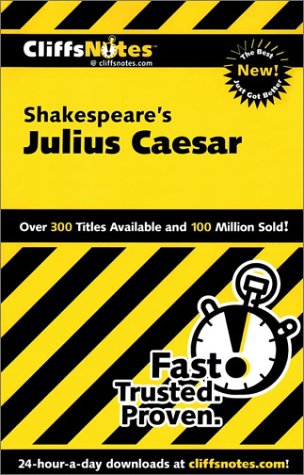
5. Julius Caesar (Cliffs Notes)
$4.71
6. Julius Caesar (Usborne Young Reading
$4.72
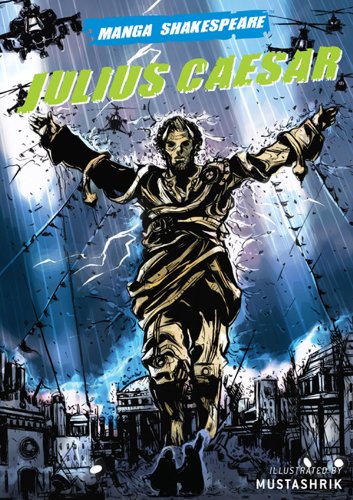
7. Shakespeare's Julius Caesar
$24.95
8. Julius Caesar Literature Guide
$4.00
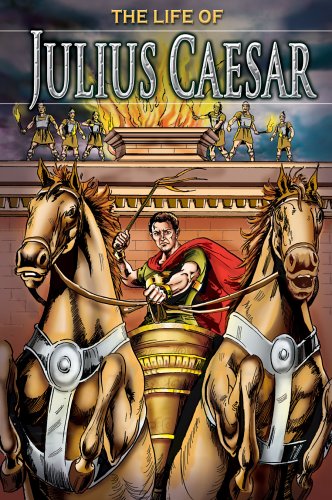
9. The Life of Julius Caesar (Stories
$6.99
10. World History Biographies: Julius
$4.32
11. Julius Caesar (Picture This! Shakespeare)
$9.92
12. Caesar's Legion: The Epic Saga
$3.98
13. Julius Caesar (Sourcebooks Shakespeare;
$2.94
14. Julius Caesar (DK Discoveries)
$12.99
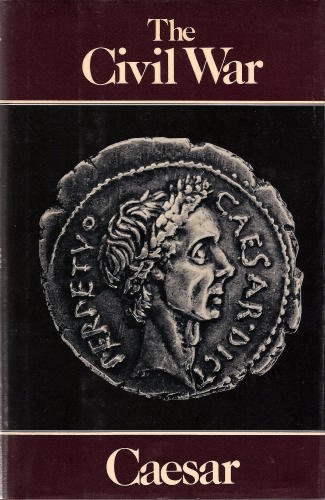
15. Caesar's Commentaries: On The
$9.56
16. The Assassination of Julius Caesar:
$8.25
17. Julius Caesar (The New Cambridge
$19.95
18. Understanding Shakespeare's Julius
$4.96
19. The Gallic War (Oxford World's
$5.91
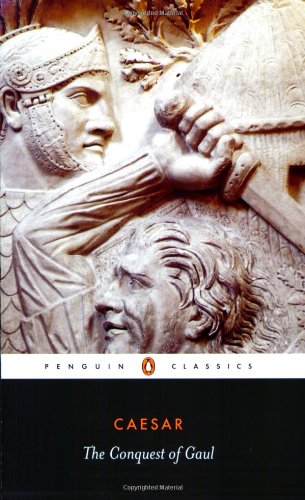
20. The Conquest of Gaul (Penguin

1. Julius Caesar (New Folger Library Shakespeare)
by William Shakespeare
Mass Market Paperback: 288 Pages (2004-01-01)
list price: US$5.99 -- used & new: US$1.50
(price subject to change: see help)
Asin: 0743482743
Average Customer Review: 4.5 out of 5 stars
Canada | United Kingdom | Germany | France | Japan
Editorial Review

Book Description
Folger Shakespeare Library

The world's leading center for Shakespeare studies

Each edition includes:

• Freshly edited text based on the best earlyprinted version of the play

• Full explanatory notes conveniently placed on pages facing the text of the play

• Scene-by-scene plot summaries

• A key to famous lines and phrases

• An introduction to reading Shakespeare's language

• An essay by an outstanding scholar providing a modern perspective on the play

• Illustrations from the Folger Shakespeare Library's vast holdings of rare books

Essay by Coppélia Kahn

The Folger Shakespeare Library in Washington, D.C., is home to the world's largest collection of Shakespeare's printed works, and a magnet for Shakespeare scholars from around the globe. In addition to exhibitions open to the public throughout the year, the Folger offers a full calendar of performances and programs. ... Read more

Customer Reviews (12)

5-0 out of 5 stars Another enjoyable history lesson.
As with so many of Shakespeare's history and tragedy plays, this one is a wonderful history lesson.It is also a wonderful character portrayal of some well-known historical figures.Brutus is a fine example of one of Shakespeare's most wonderfully portrayed tragic figures.Brutus is the true hero of this tragic play.There are lots of wonderful soliliquays, and the language used is just beautiful.A wonderful play to re-read.

5-0 out of 5 stars The Power Of Language
Julius Caesar is murdered very shortly into this play so while he bears the title the play is about the conspirators and the supporters of caesar and the struggle for power that comes after his asassination. The power of language to persude the masses and the fickle nature of crowds are only a few of the themes that Shakespeare explores.

Shakespeare explores the nature of tyranny, politics and absolute power in ways that must have been remarkably risky and controversial in his day.

Someone below noted that we have come to believe that the events as Shakespeare crafted them in his play are how this really happened. "Et Tu Brutus", etc. This is one of the better known and more widely read of Shakespeare's works and is the way many middle school kids are introduced to Shakespeare (maybe rivaled by Romeo and Juliet).

That said it is a fine drama and after multiple readings will still yield something new to think about or some new phrase that will stick in the readers mind.

When Brutus and Antony each deliver their respective addresses to the crowd following Caesar's death Shakespeare demonstrates a universal truth that people can be persuaded by words and the body politic is susceptable to a good propogandist. As true today as it was then.

3-0 out of 5 stars Julius Ceasar
Julius Caesar
Author: William Shakespeare, 1623
By: Cameron Jones

What would you do if the only people that you trusted on this earth betrayed you? How would you feel if the only friends you had killed you? What would you feel if no one cared anymore about you and wanted you to be gone? Well imagine living in 100 B.C Rome as dictator for life and you were hated. That's the kind of life that Julius Caesar had to live.

William Shakespeare was born on April 23, 1564, and later died on the same date. The only way that they found this out is because Caesar died on the same day he was born. Shakespeare died at 52 years of age.

Caesar resided in the city of Rome where he was dubbed as dictator for life. He was offered King of Rome but declined it due to the fact he didn't want people referring to him as "King".So the main characters of the book, Brutus the friend that betrays Caesar for the sake of Rome, and Cassius the horrible mastermind of the murder get Caesar to go to the capital for a dispute that needs to be settled. Calpurnia, Caesar's wife, told him not to go, that she had a dream of him being the statue of the water fountain and instead of water coming out of him there was blood pouring out of him. But being the man that he was, he was persuaded anyway instead of taking his wife's word for it.So Brutus and Caesar walk into the capital were there was a group of conspirators waiting to stab him repeatedly all over his body. Mark-Antony, Caesar's friend heard about the horrible news and ran away fearing that he would be next.Brutus sent news to Antony telling him that there was no need to run that they wasn't going to harm him and that he needed to come back so that they could have a talk about what happened. Antony returns but not for a little chit-chat but for revenge for his best friend! Antony on the way back home met with a man named Octavius, and he would soon join the army of Antony. While news was sent back home telling Brutus and Cassius that Antony and his new added piece to the chessboard was going to declare was on them! So there was four different army fronts with Brutus one leader and Cassius another, and on the other side there was Antony and Octavius as leaders of each of their men.

Now who will walk away on top will good defeat evil or will evil trample over Antony and his hell bent way to get even with Brutus and Cassius?

I would strongly recommend this book to a mature audience, only because the vocabulary in the book is to strong for the adolescence. As far as that goes the story gives very great detail and a very great picture image in your head. So I would defiantly recommend this book for high school children and older.

4-0 out of 5 stars et tu brute?
This is a book that i have recently finished for the first time reading all the way through. It asks compelling questions through the thoughts and converstations between the main characters and their wives. It also relates to current political parties battling for control of the governtment with a 3rd side party also involved. There are also many ironic and suspenseful moments that kepp you reading evan if you are not reading it for study. Over all, Ifind it a great novel, but it is not something that I would read again for a long while; but possibly see the play acted out or watch a telivision form.

5-0 out of 5 stars Shakespeare never gets stale
Scholars have expounded on the merits of Shakespeare's work for centuries, so I'm not likely to add anything of value here.I merely want to point out how extraordinary and rewarding it is to read something written 500 years ago that still seems so fresh today.Human nature really hasn't changed at all.Upon rereading this tale of the machinations surrounding the assassination of Julius Caeser, the scene that really stood out for me was the one in which the assassin Brutus and the loyalist Antony take turns addressing the public following Caeser's death.The manner in which the crowd is stirred against Caeser by Brutus and then swayed the opposite way by Antony can be read as a humorous parody of today's poll-driven political scene.When Antony insists that "I have neither wit, nor words, nor worth,/ Action, nor utterance, nor the powers of speech/ To stir men's blood; I only speak right on," I can hear the voices of any number of modern politicians, including good old George W. himself. ... Read more


2. Julius Caesar (Oxford School Shakespeare Series)
by William Shakespeare
Paperback: 160 Pages (2002-10-17)
list price: US$8.95 -- used & new: US$4.95
(price subject to change: see help)
Asin: 0198320272
Average Customer Review: 4.5 out of 5 stars
Canada | United Kingdom | Germany | France | Japan
Editorial Review

Book Description
The Oxford School Shakespeare is a well-established series which helps students understand and enjoy Shakespeare's plays. As well as the complete and unabridged text, each play in this series has an extensive range of students' notes.These include detailed and clear explanations of difficult words and passages, a synopsis of the plot, summaries of individual scenes, and notes on the main characters. Also included is a wide range of questions and activities for work in class, together with the historical background to Shakespeare's England, a brief biography of Shakespeare, and a complete list of his plays. For this new edition, the text of the play, the notes, and the introductory matter have all been revised so as to make them clearer and more accessible.In addition, the entire text of the book has been redesigned and reset to make it easier to read.The illustrations have been completely redrawn, photographs of recent stageproduction have been included and there is a new, attractive cover design. Roma Gill, the series editor, has taught Shakespeare at all levels.She has acted in and directed Shakespeare's plays, and has lectured on Shakespeare all over the world. ... Read more

Customer Reviews (42)

5-0 out of 5 stars Simply the Best
The Arden Shakespeare series is the best, for either the beginning of scholarly research, the average needs of the English student, or as a resource for the informed theater professional. My only note of caution is for a casual reader who may find the extensive footnoting more of an interruption than a help. Love this book, love them all.

5-0 out of 5 stars The Tragedy of the Tragically Unaesthetically Pleasing Review
"The Tragedy of Julius Caesar" by William Shakespeare proves to be an amazing read if one thoroughly enjoys the challenge of deciphering the selective form of writing and occasionally complicated dialect. This classic play is based on the true, factual account of the assassination of Julius Caesar as it truly took place in 44 B.C. Of course, Shakespeare has completely made the story his own through the use of comic relief, characterization, and wonderful original composition. Julius Caesar, the ambitious and prideful dictator of Rome, has returned home from a victorious battle against his fellow Triumvirate, Pompey. As he celebrates and relishes his absolute power, little does he suspect the growing opposition of conspirators, some of whom he would never expect. This read is certainly worthwhile if one has a good taste for tragedy and does not mind a challenge.

5-0 out of 5 stars Great edition of a great play
I really enjoyed reading this edition of the play. Each scene is proceded by a summary of the secene and followed by commentary on the scene, and there are notes alongside the text explaining unusual words/phrases. As an actor, I have been reading Shakespeare for quite awhile, and I still found this book very helpful. If you are new to reading Shakespeare, I particularly recommend this because you will find it very helpful.

5-0 out of 5 stars Excellent Shakespeare Classic
Shakespeare wrote Julius Caesar in about 1599. The play was the first of three Roman plays. Shakespeare based the source material for the play on a translation of a work by the Greek philosopher and biographer Plutarch, called "The lives of the Noble Greeks and Romans". Shakespeare, like Plutarch, praises and criticises the actions of the main characters in the assassination of Julius Caesar. However, the historical events in the play are fairly accurate, although the playwright sometimes changed the sequence and timing of events and added his limitless imagination to produce a timeless play that has been enacted and enjoyed by millions of people worldwide over the centuries.

The play is set in a period of political instability in Rome. The people of Rome celebrate Caesar victory over Pompey, their former leader. However, there are officials that are concerned about Caesar's growing power. The Romans were then aware that absolute power is open to abuse (there are people today who still do not know this simple fact). Among those concerned about the growing power of Caesar are Cassius and Brutus, who are both followers of Caesar.

Cassius persuades Brutus that something needs to be done to thwart Caesar's growing ambitions. Brutus has a problem with his conscience but ultimately decides that it is in the best interests of Rome that Caesar is eliminated.

Caesar receives warnings about the impending danger. During a festival that Caesar attends, he is warned "Beware the Ides of March". Caesar, however, dismisses the Soothsayer's warnings. When the Ides of March arrive and while Caesar is due to go to be crowned, warnings in the form of storms, bad omens and his wife's horrible dreams initially persuade Caesar to stay at home. However, Caesar decides to go after being advised that if he did not show up, Senators might change their minds about crowning him emperor. On entering the capitol, the conspirators stab Caesar to death.

Mark Anthony, a very close ally of Caesar, initially pretends to go along with the conspirators but he is determined to avenge his death. When Brutus addresses the confused crowd to drum up support for the assassination, Mark Anthony cleverly and expertly manages to turn the crowd against the conspirators and incites them to riot. With popular support in Rome, the triumvirs Anthony, Octavious and Lepidus plan to fight Brutus and Cassius. Brutus's conscience still troubles him and he sees Caesars ghost. Fighting takes place and Cassius and Brutus are defeated and both commit suicide to save their honour. The triumvirs then seize power after avenging Caesar.

5-0 out of 5 stars It's Not All Greek.
When I first read JULIUS CAESAR as a sophomore in high school, I found it to be a decent play, but other than some really cool lines, didn't think it was that great. After having re-read the play and now having taught it to my own classes of sophomore English students, I have a much greater appreciation for the play. Granted, JULIUS CAESAR is not one of Shakespeare's greatest plays nor is it even one of his best histories. And despite much of it being written in the classic Shakespearean iambic pentameter, it really isn't all that poetic. There are moments when the language is extremely vivid and moving, e.g. Mark Antony's speech to the citizens of Rome or some of Brutus' personal soliloquies. However, compared to HAMLET or KING LEAR or HENRY V, the play seems juvenile by comparison.However, it is that very unpolished, amatuerism that makes the play so relevant and easy to connect with younger audiences.

Though Julius Caesar is the title character, the play isn't really about Caesar. Instead, the play is about Caesar's closest friend, Marcus Brutus.Through Brutus, the play examines exactly what it means to be noble, what is honor, and the nature of friendship.In the course of the play, Brutus is led to believe and becomes convinced that in doing a most dishonorable act, he is doing the most honorable thing he possibly can to save Rome and all the ideals he has staked his life upon. Yet, his decision brings him to kill his best friend and ultimately brings about the end of the republic which he had tried to save.

Contrary to what I had been led to believe before I began teaching this play, students really enjoy JULIUS CAESAR. It is full of murder and betrayal.They enjoy the violence and the theme of betrayal is something they are all able to relate to. I have also found that student seem to sympathize much more with Caesar than with Brutus.They can't understand why Brutus would kill his best friend.The concept of caring more about a group of people (family, country, etc.) than one single person seems beyond them.I've tried to use Stephen King's THE DEAD ZONE to help them understand this better (in that story the question is "If you were able to stop Hitler before he became Hitler, even if he was your closest friend, would you?").

Overall, though JULIUS CAESAR is not one of Shakespeare's greatest plays, it is a great play to introduce people both to the brilliance of Shakespeare and to one of history's most pivotal moments; the time when Rome became an Empire. ... Read more


3. Julius Caesar (Arkangel Shakespeare)
by William Shakespeare
Audio CD: Pages (2005-06-10)
list price: US$24.95 -- used & new: US$14.55
(price subject to change: see help)
Asin: 1932219161
Average Customer Review: 5.0 out of 5 stars
Canada | United Kingdom | Germany | France | Japan
Editorial Review

Book Description
Julius Caesar is the most powerful man in Rome, but his power threatens the republic's very existence. A conspiracy is hatched, one that will have fatal consequences not only for Caesar and the conspirators, but also for the future history of the Ancient World. At its heart is the noble Brutus, caught in the tragic conflict between private affection and public duty. This wonderful production is performed by Michael Feast, Adrian Lester, and the Arkangel cast. ... Read more

Customer Reviews (3)

5-0 out of 5 stars Fabulous Teaching Tool
These audio CDs were a valuable addition to my unit. Students were able to hear the text's tone, inflection, and nuances and then more accurately pattern their own oral readings after that of the professional actors on the CD. The CDs also aided students' comprehension. I used them with Acts 4 and 5, and next year I will play the key speeches in Act 3 for students before we engage in role play. Students read along in their texts while listening to the audio.

5-0 out of 5 stars Great in the Classroom
I have used this version in teaching Julius Caesar to sophomores in high school with great luck. The actual length of each scene shows on my computer (Windows Media Player), so I can plan lessons appropriately. The actors do an excellent job and my students enjoy listening as they follow along in the lit. texts. I whole-heartedly endorse this item.

5-0 out of 5 stars Better than the movie!
High School English students never loved Julius Caesar, and the dated movie versions that our school owns don't help any.This recording brings the emotion of the story to life, and I think my sophomores secretly enjoyed it (but would die before they admitted it.) ... Read more


4. Julius Caesar (No Fear Shakespeare) (No Fear Shakespeare)
by SparkNotes Editors
Paperback: 256 Pages (2003-07-03)
list price: US$5.95 -- used & new: US$2.72
(price subject to change: see help)
Asin: 1586638475
Average Customer Review: 3.0 out of 5 stars
Canada | United Kingdom | Germany | France | Japan
Editorial Review

Book Description

No Fear Shakespeare gives you the complete text of Julius Caesar on the left-hand page, side-by-side with an easy-to-understand translation on the right.


Each No Fear Shakespeare contains

The complete text of the original play
A line-by-line translation that puts Shakespeare into everyday language
A complete list of characters with descriptionsPlenty of helpful commentary ... Read more

Customer Reviews (2)

5-0 out of 5 stars Excellent resource
I teach high school students and must say that this book has been a valuable resource throughout our unit on Julius Caesar.My students are finally grasping what is being read and have really enjoyed the reading thus far.If only there had been a reference tool around like this when I was in school!!!The title is absolutely right, there is No Fear in reading Shakespeare any longer.

1-0 out of 5 stars not available
I ordered this book for a class for my son.I was not able to get the book because it was not available. ... Read more


5. Julius Caesar (Cliffs Notes)
by Martha Perry, James E. Vickers
Paperback: 100 Pages (2000-05-29)
list price: US$5.99 -- used & new: US$0.94
(price subject to change: see help)
Asin: 0764585959
Average Customer Review: 5.0 out of 5 stars
Canada | United Kingdom | Germany | France | Japan
Editorial Review

Book Description
The original CliffsNotes study guides offer summaries and expert commentary on major themes, plots, characters, literary devices, and historical background. The latest generation of titles in this series also feature glossaries and visual elements that complement the classic, familiar format.

In CliffsNotes on Julius Caesar, you follow the dramatic political battles of Rome during the height of the Pax Romanum. Shakespeare pits Caesar against an untold number of conspirators and lets the daggers fly. In the end, who will carry on the rule of the Caesars?

This user-friendly guide makes studying a snap — with visual icons flagging key themes, literary devices, and more. You'll come to understand the overall structure of the play, actions and motivations of the characters, and the social and cultural perspectives of the author. Features that help you study include

  • Shakespeare's background and career highlights
  • Scene-by-scene summaries
  • Character analyses of major players
  • A character map that graphically illustrates the relationships among the characters
  • Critical essays
  • A review section that tests your knowledge
  • Glossaries of key words and terms

Classic literature or modern modern-day treasure — you'll understand it all with expert information and insight from CliffsNotes study guides.Download Description
Dramatizing the political battles in Rome during the height of the Pax Romanum, Shakespeare pits Caesar against an untold number of conspirators and lets the daggers fly. In the end, Antony comes to carry on the rule of the Caesars. ... Read more

Customer Reviews (1)

5-0 out of 5 stars Understanding the structure & characters of "Julius Caesar"
James Vickers' Cliffs Notes for Shakespeare's "Julius Caesar" begins with a short biography of the Bard that focuses on what little the historical record tells us about the man.A Brief Synopsis of the Play is followed by a List of Characters that not only tells us who they are but their primary roles in the play.The Summary and Commentary section of the volume breaks down the play scene by scene, and the best way of using this or any other little yellow book with the black stripes is to read the commentary after you have read each scene of the play.This is especially important with Shakespeare because the dialogue is so important and Vickers does not work in as many choice lines as some of the other Cliffs Notes for Shakespeare plays.You cannot deal with Shakespeare if you do not know the key lines.The last section dealing with Character Analyses looks as Caesar, Antony, Octavius, Brutus and Cassius, referring back to the analysis already established regarding the individual scenes.What you will not get from this volume if you are teaching/reading "Julius Caesar" is how the play touches upon the political realities of Elizabethean England.But Vickers does an excellent job throughout of capturing how Shakespeare uses the play to manipulate the audience.Remember, the celebrated funeral oration by Marc Antony is being listened to on stage by a Roman mob that is being watched by an audience of Londoners in the theater.This is one of the better jobs at capturing how Shakespeare constructed a play. ... Read more


6. Julius Caesar (Usborne Young Reading Series 3)
by Rachel Firth
Hardcover: 64 Pages (2007-06)
list price: US$8.99 -- used & new: US$4.71
(price subject to change: see help)
Asin: 0794515959
Canada | United Kingdom | Germany | France | Japan

7. Shakespeare's Julius Caesar
by William Shakespeare, Adam Sexton, Hyeondo Park
Paperback: 178 Pages (2008-02-11)
list price: US$9.99 -- used & new: US$4.72
(price subject to change: see help)
Asin: 0470097604
Average Customer Review: 4.0 out of 5 stars
Canada | United Kingdom | Germany | France | Japan
Editorial Review

Book Description
A modern, manga approach to themes that are current today

Presenting the Bard's inimitable take on real events in Roman history, Julius Caesar routinely sells more than 25,000 copies every year. This graphically rich manga adaptation offers an accessible, contemporary way to enjoy this classic tale of power, manipulation, betrayal, and violence. ... Read more

Customer Reviews (1)

4-0 out of 5 stars Watch Out for Caesar's Ghost!
The themes that Shakespeare dealt with are universal.Yet, the biggest complaint that many people have when reading or discussing Shakespeare is the language:"People don't talk like that.", "Why don't they speak in English?", "I can't understand a word of what they just said." are just a sampling of complaints I've heard when attempting to teach Shakespeare to high school students. I try everything I can think of to get over the language issue, but very little seems to help (comments such as "You do know that the way people talk in movies usually isn't the same way people talk in real life, either, don't you?" seem incomprehensible to students). That's why I'm thankful when books such as SHAKESPEARE'S JULIUS CAESAR: THE MAGNA EDITION come around; it provides another avenue to use in trying to get students connected with the themes of the play and not worry about the language.

SHAKESPEARE'S JULIUS CAESAR takes Shakespeare's famous play and puts it into graphic novel form (even though subtitled "The Magna Edition" the book isn't a true magna because magna reads from the back of the book to the front).Some minor scenes have been cut out, but Shakespeare's language remains.The result is an engaging and accessible graphic novel that young people and more visually oriented people might be able to relate to and understand better than just reading the play directly from the text. ... Read more


8. Julius Caesar Literature Guide
by Kristen Bowers
Paperback: 88 Pages (2006-10-13)
list price: US$24.95 -- used & new: US$24.95
(price subject to change: see help)
Asin: 0977229572
Canada | United Kingdom | Germany | France | Japan
Editorial Review

Product Description
Julius Caesar Literature Guide designed for Secondary Teachers for grades 9-11.Content-standards based guide includes: · Author Biography· Anticipation/Reaction Pre-Reading Activity· Notes on the Real Julius Caesar· Vocabulary List With and Without Definitions· Comprehension Checks for Each Act· Standards Focus Activities on Setting, Tone, and Mood, Character Motivations, Analysis of Rhetoric, Tragedy and the Tragic Hero, and more· Assessment Preparation Activities on Word Roots, Context Clues, Analogies, and Connotation· Quizzes for Every Act· Two Final Test Versions· Play Summary· Pre-reading Ideas and Activities· Post-Reading Ideas and Activities· Essay/Writing Ideas and Prompts· Project Rubric· Response to Literature Rubric· Complete Answer Key ... Read more


9. The Life of Julius Caesar (Stories from History)
by Nicholas Saunders
Paperback: 48 Pages (2006-06-29)
list price: US$6.95 -- used & new: US$4.00
(price subject to change: see help)
Asin: 0769646972
Canada | United Kingdom | Germany | France | Japan
Editorial Review

Book Description

Turn the page and take a step back in time!

From the Stories From History series, The Life of Julius Caesartakes a completely factual look at Julius Caesar’s rise to power in ancientRome. This book is presented in a fast-paced, edgy graphic novel formatincluding bright, action-packed scenes.

Julius Caesar enlarged Rome’s control of the ancient world throughskillful military leadership, defeating enemies in far away countries,as well as in Rome, eventually becoming dictator for life.His reignwas cut short when Romans assassinated him in 44 B.C. However, Caesar’slegacy of creating one of the greatest empires the world has ever knownwould live on. The Life of Julius Caesar is sure to capture anyreader’s attention and turn even the most casual reader into a historybuff!

Features:

• Full-Color illustrations

• Fact Boxes

• Timeline, glossary, and index

Tales from the past meet modern-day storytelling! Epic battles, secretplots, and brave warriors await readers in the nonfiction StoriesFrom History series. Discover history in a fast-paced format, takingreaders right to the action! History has never been this exciting! Checkout the other titles in this series!

... Read more

10. World History Biographies: Julius Caesar: The Boy Who Conquered an Empire (NG World History Biographies)
by Ellen Galford
Hardcover: 64 Pages (2007-05-08)
list price: US$17.95 -- used & new: US$6.99
(price subject to change: see help)
Asin: 1426300646
Canada | United Kingdom | Germany | France | Japan
Editorial Review

Book Description
Born in Rome around 100 B.C., Gaius Julius Caesar grew up to lead of one of the world's greatest empires. A boy of fierce drive and ambition, he was tutored from the age of six. The teenage Gaius became head of his household at 16 and master of his own destiny. Caesar joined the military and at 22 he returned to Rome to begin his unstoppable rise to power. This National Geographic World History Biography leads readers through the intriguing world of Ancient Rome, with a time line, graphic illustrations of historical events, and maps of Rome and its far reaching empire. ... Read more


11. Julius Caesar (Picture This! Shakespeare)
by Christina Lacie
Paperback: 64 Pages (2006-03-17)
list price: US$7.99 -- used & new: US$4.32
(price subject to change: see help)
Asin: 0764132792
Canada | United Kingdom | Germany | France | Japan
Editorial Review

Book Description
Julius Caesar, the Shakespearean drama that is in the curriculum of virtually every high school in the country, is the latest offering in Barron’s Picture This! Shakespeare series. Each title in this series offers a highly original introduction to a Shakespeare play, presenting it as a graphic-novel-style picture story, supplemented with substantial excerpts from Shakespeare’s original dialogue. Students will also find thumbnail sketches of the play’s main characters, and a succinct story summary that explains the play’s main themes and meanings. Many students who are daunted by the difficulty of reading Shakespeare’s dramas in their original form have found titles in this series to be an important first step in appreciating these universally recognized masterpieces of English literature. Supplementing every Picture This! Shakespeare title is a teacher’s guide that suggests topics for classroom discussion and provides enlightening activities that fulfill the needs of a multi-skill-level classroom environment. ... Read more


12. Caesar's Legion: The Epic Saga of Julius Caesar's Elite Tenth Legion and the Armies of Rome
by Stephen Dando-Collins
Paperback: 336 Pages (2004-09-27)
list price: US$15.95 -- used & new: US$9.92
(price subject to change: see help)
Asin: 0471686131
Average Customer Review: 4.0 out of 5 stars
Canada | United Kingdom | Germany | France | Japan
Editorial Review

Book Description
"A unique and splendidly researched story, following the trials and triumphs of Julius Caesar's Legio X-arguably the most famous legion of its day-from its activation to the slogging battle of Munda and from Thapsus, Caesar's tactical masterpiece, to the grim siege of the Jewish fortress of Masada. More than a mere unit account, it incorporates the history of Rome and the Roman army at the height of their power and gory glory. Many military historians consider Caesar's legions the world's most efficient infantry before the arrival of gunpowder. This book shows why. Written in readable, popular style, Caesar's Legion is a must for military buffs and anyone interested in Roman history at a critical point in European civilization."
—T. R. Fehrenbach, author of This Kind of War, Lone Star, and Comanches

Stephen Dando-Collins paints a vivid and definitive portrait of daily life in the Tenth Legion as he follows Caesar and his men along the blood-soaked fringes of the Empire. This unprecedented regimental history reveals countless previously unknown details about Roman military practices, Caesar's conduct as a commander and his relationships with officers and legionaries, and the daily routine and discipline of the Legion. From penetrating insights into the mind of history's greatest general to a grunt's-eye view of the gruesome realities of war in the Classical Age, this unique and riveting true account sets a new standard of exellence and detail to which all authors of ancient military history will now aspire. ... Read more

Customer Reviews (40)

5-0 out of 5 stars Excellent read
I couldn't put it down.It is very fast paced, and I enjoyed the fact that it is more historical than fiction, and still fun.

3-0 out of 5 stars HISTORICAL ACCURACY; LACKLUSTER EXCITMENT
WHILE A WELL RESEARCHED AND ACCURATE HISTORICAL PIECE, IT LACKS VITALITY AND PERSONALITY.THE FACTS, HISTORICAL PERSPECTIVE, DESCRIPTIONS OF EVENTS ARE TERRIFIC.HOWEVER,THE WORK DOES NOT DELVE INTO THE CHARACTERS' MINDS, NOR IS IT A PARTICULARLY EXCITING WORK.I WAS EXPECTING SOMETHING LIKE MICHENOR WHO TELLS A GREAT TALE WITH SUPERB RESEARCH, PERSONALITY, AND A PLOT.DANDO-COLLINS PROVIDES MANY FACTS,BUT WITHOUT CHARM OR MUCH CHARACTER.

4-0 out of 5 stars Excellent Plan of Attack - Wimpy Execution
While I agree with many of the criticisms on this one, it was still potentially a great book.For example, the "translation" of Roman military titles into modern ranks, like colonel and major-general is annoying.These however, are stylistic issues that the author chose to appeal to a wider audience.While I might not agree with him, it's his book, not mine, and I'll give him a pass on his decision.The thing that keeps this book from getting the fifth star however is the writing style itself.

The idea of the book was to give the some Roman history through the eyes of the Roman soldier.It was a great plan and showed some great potential.An example of how great this book could have been is found in chapter one, which really draws the reader in:

"The charge waivered momentarily, then regained momentum.Another volley of javelins blackened the blue sky.And another and another.The attackers in Caesar's leading ranks, out of breath, with their dead comrades lying in heaps around them, and still not within striking distance of the enemy, came to a stop."

This is exciting writing that makes the reader want more.Unfortunately, the author wimps out elsewhere.Consider this paragraph from chapter 5:

"The colonel would have advised that there was a worrying sight to be seen from the guard towers by the praetorian gate.Caesar would have followed the young colonel out onto the main street of the camp, then hurried with him toward the nearby rear gate of the camp, passing off-duty men of the 10th lounging around in front of their tents who would have followed the general's urgent passage with turning heads.At the gate, the ten men of the sentry detail-ten was the standard number of sentries assigned to each camp gate, according to Polybius-can be sure to have stood with their hands on the hilts of their sheathed swords, looking anxious.Caesar and the colonel can be expected to have clambered up a ladder into one of the wooden guard towers on either side of the praetorian gate that traditionally faced the enemy."

For Heaven's sakes!Lose the passive voice and scratch through all the "would haves!"I appreciate that the author is being careful not to cross the line between history and fiction, but it's painful to read!At some point Mr. Dando-Collins needed to decide if this was going to be fun history or serious history.The latter is for use in college classrooms and serious students of the subject.As this is obviously an attempt at a wider audience, however, I say damn the torpedoes!Give us a good yarn -speculation based on what probably happened and all!If he had insisted on showing what is speculation as opposed to what original source historians recorded (often also speculation), he could have set off sections in italics or parentheses.

In spite of the writing style, this is still a good book.It's just a pity though, because it could have been great.

5-0 out of 5 stars A Legion of Roman History buffs should read this excellent book on the illustrious Xth Legion! Hail Caesar!!!!
The ancient world was a brutal neighborhood. Emerging as the greatest military machine of the age were the mighty Romans. In this excellent book, well researched by Stephen Dando-Collins, we get a detailed examination of the 10th Legion. The legiion was recruited in Spain having its birth in 61 BC. This is the most famous of all legions as they fought on the right side of the battlefield in all the battles which made Julius Caesar (100-44 BC) the dictator of Rome.

The Xth Legion fought on the continents of Europe, Asia Minor and North Africa. The legion played important roles in Caesar's conquest of Gaul. The legion was instrumental in Caesar's victory over Pompey in the Roman Civil War. The victory over Pompey at Phrasalus in Greece was the most important victory of that bloody war.The legion was with Caesar in Egypt as he wiped out all the supporters of the Pompeian cause.

Following the assassination of Caesar the 10th fought under Mark Antony and was on the losing side in his battle against Octavian at Actium in 31 BC.

The legion served well under several emperors most notablly in the bitterly fought Jewish revolt against Rome in both 66-73 AD and 132-135

AD.

Along with his vivid description of the battles we learn much about the daily life of a Roman grunt from what he ate; how much he made; the intricacies of enlistment and how the Roman army was organized. A helpful glossary explains Latin terms.

I will read more of Dando-Collins after this initial perusal of a fine

military history. So often ancient history can be written in a dry way but Dando-Collins lively writing style makes it easy to digest. This book is recommended highly for both the neophyte historian as well as the more

widely read devotees of Roman history.

5-0 out of 5 stars Get the audiobook!It was great.
I wish I could give this 6 stars.I was unable to turn off the audiobook.The reader is outstanding.The book is brilliant.The other reviews better describe the book than I shall, but do consider the audiobook.I found it griping.I am listening a second time. ... Read more


13. Julius Caesar (Sourcebooks Shakespeare; Book & CD)
by William Shakespeare
Paperback: 352 Pages (2006-04-27)
list price: US$14.95 -- used & new: US$3.98
(price subject to change: see help)
Asin: 1402206879
Average Customer Review: 5.0 out of 5 stars
Canada | United Kingdom | Germany | France | Japan
Editorial Review

Book Description
Experience the Ides of March like never before through our edition of Julius Caesar, with more than 60 minutes of audio on the CD including key scenes and excerpts from great performances past and present.

IN THE BOOK:
Photographs from notable productions including:
-the 1953 movie by Joseph L. Mankiewicz starring Marlon Brando as Mark Antony, James Mason as Brutus and John Gielgud as Cassius
-contemporary American productions with Morgan Freeman as Casca, Al Pacino as Mark Antony and Martin Sheen as Brutus

HEAR 30 GREAT SCENES ON AUDIO CD
-Herbert Beerbohm Tree from 1906
-the landmark Mercury Theatre production from 1938 starring Orson Welles
-modern scenes starring Richard Dreyfuss, Stacey Keach and Adrian Lester

NARRATED BY SIR DEREK JACOBI
... Read more

Customer Reviews (1)

5-0 out of 5 stars Because of Sourcebooks my 15 yo son asked for more Shakespeare for Christmas!
I have a pretty typical son except that he is homeschooled.Sourcebooks' Macbeth left my son with a deep understanding of Shakespeare and his style of writing; so much so that he asked for another for Christmas - and yes - now he is enjoying "Julius Ceasar" for his own sake!If you or your child has to read a Shakespeare book for whatever reason, make sure you either use or have for reference the Sourcebooks version - they explain words and phrases in terms of their meaning at the time - sentence by sentence.The CD-Rom, which comes with it, allows you to hear sections you may be struggling with as they were performed in famous Shakespeare productions.Also, just FYI, out of several Macbeth movies, we very much liked the BBC version: extremely well performed, with beautiful Scottish settings and realistic costumes (we rented through Netflix). ... Read more


14. Julius Caesar (DK Discoveries)
Paperback: 48 Pages (2006-04-17)
list price: US$6.99 -- used & new: US$2.94
(price subject to change: see help)
Asin: 0756619637
Average Customer Review: 4.0 out of 5 stars
Canada | United Kingdom | Germany | France | Japan
Editorial Review

Book Description
Get a behind-the-scenes look at some of history's most famous and infamous figures in these classic DK guides. ... Read more

Customer Reviews (2)

4-0 out of 5 stars Interesting book, a good read
I bought this book for my 15 year old son, who has been learning about julius caeser in history class and is impressed by his strategic and logistic mind. He liked the book very much, says it was informative and very interesting . He has recommended it.

4-0 out of 5 stars Julius Caesar Lite
Julius Caesar is one of the great characters of world history and his life has fascinated people for two thousand years.This is a typical DK book.Great on the graphics and a lot weaker on the substance.All of the highlights of Caesar's interesting life are touched upon in a cursory way.Do not purchase this book if you are intersted in a serious biography.However, what this book really has going for it are the wonderful illustrations.These are the types of fantastically complex illustrations that can grab a child's imagination and help him develop an interest in ancient history. ... Read more


15. Caesar's Commentaries: On The Gallic War and On The Civil War
by Julius Caesar
Paperback: 340 Pages (2005-10-01)
list price: US$21.95 -- used & new: US$12.99
(price subject to change: see help)
Asin: 0976072610
Average Customer Review: 4.0 out of 5 stars
Canada | United Kingdom | Germany | France | Japan
Editorial Review

Book Description

This complete edition of Caesar's Commentaries contains all eight of Caesar's books on the Gallic War as well as all three of his books on the Civil War masterfully translated into English by W. A. MacDevitt.Caesar's Commentaries are an outstanding account of extraordinary events by one of the most exceptional men in the history of the world.Julius Caesar himself was one of the most eminent writers of the age in which he lived. His commentaries on the Gallic and Civil Wars are written with a purity, precision, and perspicuity, which command approbation. They are elegant without affectation, and beautiful without ornament. Of the two books which he composed on Analogy, and those under the title of Anti-Cato, scarcely any fragment is preserved; but we may be assured of the justness of the observations on language, which were made by an author so much distinguished by the excellence of his own compositions. His poem entitled The Journey, which was probably an entertaining narrative, is likewise totally lost.All of Caesar's works that remain intact are contained in this edition of his commentaries.

It is to the honor of Caesar, that when he had obtained the supreme power, he exercised it with a degree of moderation beyond what was generally expected by those who had fought on the side of the Republic. His time was almost entirely occupied with public affairs, in the management of which, though he employed many agents, he appears to have had none in the character of actual minister.

Caesar deprecated a lingering death, and wished that his own might be sudden and speedy. And the day before he died, the conversation at supper, in the house of Marcus Lepidus, turning upon what was the most eligible way of dying, he gave his opinion in favor of a death that is sudden and unexpected.He died in the fifty-sixth year of his age, and was ranked amongst the Gods. ... Read more

Customer Reviews (8)

4-0 out of 5 stars Very interesting, though hard to read
Mostly written by Caesar, this book provides an insightful view of ancient warfare from a general's perspective, including such topics as the siege, infantry/calvary interaction, the value of enemy awareness, military engineering, intelligence, moral building, calculated risk, and so on.It also describes such topics as the ancient use of the defeated providing hostages, the temperament of the Celtic tribes, the competition for the areas west of the Rhine (Gaul), the lifestyles and state of civilization of the Germanic tribes (this may be the first recorded account of the Germans), and political strategies.

Note that Caesar writes in the third person, which almost makes it seem like it was written by an impartial historian (which is obviously not the case... Hence, its accuracy must be questioned to some degree).

The only downside of this book is its translation, which I compare to reading an old version of the bible. Sentences run very long, paragraphs cover entire pages, verbs are placed in odd parts of sentences,.. etc. It takes a while to get through it.It is, however, worth the effort, and is a interesting window into the past.

2-0 out of 5 stars What's latin for boring??
Caesar might have been a good general but he's a uniquely boring writer with leaden descriptions of intensely exciting campaigns. The other problem is that it's best to read Roman writers in the original Latin as that way the "otherness" of ancient Romans comes across better. Ergo taedet me istius libris. Dabit deus his quoque finem.

5-0 out of 5 stars Hail Ceasar !
It is a very interesting read, but can be hard to follow if you are not a history buff or a fan of Roman History + Ceasar.For the time, the thought process and lucid writing techniques are above average.If you want to get a real sense of history with first hand knowledge, then this is a great read for history buffs, and non-history buffs as well.

2-0 out of 5 stars poor translation
I would strongly recommend getting a higher quality, clearer translation. This version of the classic is near incomprehensible compared to the Penguin or Oxford versions.

5-0 out of 5 stars A classic from Antiquity!
This classic is well worth the time of any buff on Roman History. If you are a true buff you already own it! There are eight "books" comprising about 15-25 pages apiece. Each book a reflection on the previous year's effort in Gaul. The style is plain and to the point. Written in order to curry favor in Rome and document his campaigns, Caeser is guilty of inflating enemy numbers according to some historians. Never the less he painstakingly records the relations between the tribes of the time, the Gauls,Celts, and Germanic peoples are all referenced. The final three books regarding the Civil War are longer. Ramon L. Jimenez's "Caesar against the Celts" is a great companion for this one. He has a good bibliography as well since this translation of the "Commentaries" is lacking of one. For fans of HBO's Rome television show, check out Book V chapter XLIV. ... Read more


16. The Assassination of Julius Caesar: A People's History of Ancient Rome
by Michael Parenti
Paperback: 276 Pages (2004-08-30)
list price: US$16.95 -- used & new: US$9.56
(price subject to change: see help)
Asin: 1565849426
Average Customer Review: 3.5 out of 5 stars
Canada | United Kingdom | Germany | France | Japan
Editorial Review

Book Description
Intrigue, murder, and class struggle at the heart of the Roman Empire.

Most historians, both ancient and modern, have viewed the Late Republic of Rome through the eyes of its rich nobility. In The Assassination of Julius Caesar, Michael Parenti presents us with a story of popular resistance against entrenched power and wealth. As he carefully weighs the evidence concerning the murder of Caesar, Parenti sketches in the background to the crime with fascinating detail about wider Roman society. In these pages we find reflections on the democratic struggle waged by Roman commoners, religious augury as an instrument of social control, the patriarchal oppression of women, and the political use of homophobic attacks. The Assassination of Julius Caesar offers a whole new perspective on an era we thought we knew well. ... Read more

Customer Reviews (39)

5-0 out of 5 stars a vivid chronicle of the times, with brilliant insight and relevance for today
This is a fascinating book, beautifully written, compellingly informative, with engrossing details and surprising accounts. It is an analysis not only of Rome's Late Republic but of the conservative and manipulative prejudices and tacky scholarship of many writers on the subject.

One reviewer here attacks Parenti for claiming to be the first to show that the conspirators killed Caesar because he was moving against their privileges. That is a false statement, as Parenti makes no such claim. Parenti explicitly notes that other scholars before him, including Arthur Kahn and most notably G.E.M. de Ste. Crois, have offered this thesis. He quotes Kahn who says however that they are just "a handful."

Also contrary to that reviewer, Parenti never said that scholars "confuse the Augustan regime with what Caesar intended to found or perpetuate." All Parenti does is note how unconcerned the senators were when their "beloved" Republic was undermined by Augustus. They readily went along with the emperor because he secured their material interests. That was their concern--their wealth and property. That's why they supported Augustus and hated Caesar--Caesar refused to leave their immense wealth and class privileges untouched. He dared to demand that they share a bit of it.

That issue, like so much else in this book is all too relevant for the conditions of today. Parenti is a remarkably versatile and powerful writer. No one so capably combines such thoughtful, engaging analysis and perspective with such interesting storytelling.

2-0 out of 5 stars What's new is not good and what's good is not new.
Anyone familiar with the historical scholarship dealing with Julius Caesar and the late Roman Republic will find this book frustrating and disappointing -- not because that reader is wedded to some supposed "gentlemanly conservative" take on the fall of the Republic, but because this book is a maddening stew.Michael Parenti claims to be offering a new and iconoclastic view of Roman history, shattering a carefully-constructed myth designed to steal agency from the people and those who sought to help them and to celebrate as republican heroes the aristocrats and toadies who kept the people down.But the problem with his caricatured view of Roman historiography is that what's good about his book is not new and what's new about his book is not good.

What's new is his attempt to reinvent Caesar as some sort of revolutionary statesman seeking to bring justice to the Roman poor.It is not at all clear that Caesar was sincere about his populism or was a far more gifted manipulation of the people than, say, Catiline, the target not only of Cicero but of Sallust, a Caesarean historian who had little use for Catiline's supposed populism or for the posturing of Cicero, who brought Catiline down.

What's good here is really not new, and Parenti should be embarrassed by his attempt to persuade readers of his originality.Many fine scholars, such as Sir Ronald Syme [a true iconoclast] and Peter Brunt and Michael Crawford, already have shown that many of those who conspired against Caesar feared that he would unleash the plebeians against them and their entrenched privileges and locks on political power.So, too, Cicero has not wanted for criticw who have denounced him for self-congratulatory massaging of the record, or for cuddling up to those wielding power.Finally, many of the finest studies of this period emphasize the differences between Julius Caesar and his eventual successor Octravius who became Augustus.Augustus donned the mantle of Caesar and fastened a dictatorship on Rome under the guise of reviving and reforming the Republic -- but scholars have long abandoned the tendency to confuse the Augustan regime with what Caesar intended to found or perpetuate.

The problem, ultimately, is that we do not know what Caesar planned to do and we guess at his plans with the risk of falling on our faces -- in great measure because Caesar, as gifted a politician as any in history, navigated from point to point and never left or recorded a clear plan as to what he wanted his legacy to be, or his solution to the problems of Rome.It is as difficult and frustrating to seek Caesar's intentions as it is to find Lincoln's intentions for what he wanted to do and what he wanted the nation's policy to be after the end of the Civil War.In both cases, assassination almost certainly cost us any clear answer to these endlessly fascinating questions.

Thus, Parenti's claims to have revealed a new and clear understanding of Caesar's era and his fate fall to the ground.Readers should turn instead to Rom Holland's slightly over-jazzed but nonetheless entertaining RUBICON, or, for a more sober account, to the classic biography of Caesar by Matthias Gelzer or the recent life by Adriaon Goldsworthy.

5-0 out of 5 stars Brilliant analysis of the late roman republic
The most brilliantly thorough and readable analysis of the late roman republic I have ever read, its politics as well as its personalities, bringing to life a pivotal period in world history.

Having read several related books over the last few years, it has always struck me how many books about the ancient roman republic and the imperial period just concentrate on personal motives, superficialities and/or gossip, completely dissociated from the deeper political motives of the participants and/or the economic forces of the period. Also how many authors simply recycle ancient judgements on many personalities like Cicero, Sulla, Augustus etc... even though the (scant) historical record simply indicates otherwise.

In fact most books on this salient period of western civilization raise more questions than they answer, either because they lack fundamental research, recycle old conclusions or just simply are unable to analyze the reasons and impact of this watershed event. Unlike those timid authors Parenti uses his prodigious scholarship and clear marshalling of historical sources to resurrect a long lost period of history with disturbing connotations to the present. Not only is this a brilliant analysis of the late republic but it puts into context both the events leading to the assasination of Caesar and the rise of the Augustan dictatorship.

That Parenti doesn't analyse every single incident of Caesar's life or dissect every event or incident during this period is nonsense as a criticism. He keeps a clear focus on the subject at hand - to explain to a lay audience the main events leading up to the most famous political assassination of western civilization and, more importantly, the major motivations behind this murder. In this he succeeds brilliantly and the book has my highest recommendation!

4-0 out of 5 stars Caesar as populist
Michael Parenti's book, The Assassination of Julius Caesar: A People's History of Ancient Rome, might be read most profitably in conjunction with Goldsworthy's new biography, Caesar: Life of a Colossus.Parenti's work focuses on a specific issue--Caesar as "populist," murdered by wary elitists.Goldsworthy's book is much more detailed, provides much more context.Parenti's book can be viewed within the larger context.

Parent's thesis, outlined on page 3, is straightforward: "Caesar's sin, I shall argue, was not that he was subverting the Roman constitution--which was an unwritten one--but that he was loosening the oligarchy's overbearing grip on it.Worse still, he used state power to effect some limited benefits for small farmers, debtors, and urban proletariat, at the expense of the wealthy few."

Some other reviewers are appalled at this thesis and the manner in which Parenti writes.This is typical of Parenti's work more generally.He has a position and normally writes in such a way as to address that view in no uncertain terms.Some will appreciate this; others won't.But the question should not be whether or not one likes his passionate writing.The question should be: Does he make his case?This is why reading this book in concert with Goldsworthy's makes sense.In the latter volume, much the same theme is advanced, although presented in a much more nuanced, and, in fact, more convincing manner.

This book is most useful in laying out a perspective that is straightforward and not subtle.Sometimes, the lack of subtlety undermines the logic of the analysis. Still, the volume provides a thesis that places Caesar in a political context.

1-0 out of 5 stars simply awful...
really it's the type of book where you read on because you are amused at the fallacies and inaccuracies stated as fact from page to page. luckily i was able to return this to the bookstore so i didn't have to lose my money along with my time.
... Read more


17. Julius Caesar (The New Cambridge Shakespeare)
by William Shakespeare
Paperback: 226 Pages (2004-05-24)
list price: US$15.99 -- used & new: US$8.25
(price subject to change: see help)
Asin: 0521535131
Canada | United Kingdom | Germany | France | Japan
Editorial Review

Book Description
Marga Munkelt has added a new section and pictures to the Introduction of this updated edition of Julius Caesar. It surveys stage and critical interpretations since the 1980's of Shakespeare's most famous Roman play. The reading list has also been brought up to date.First Edition Hb (1988): 0-521-22220-6First Edition Pb (1988): 0-521-29408-8 ... Read more


18. Understanding Shakespeare's Julius Caesar: A Student Casebook to Issues, Sources, and Historical Documents (The Greenwood Press "Literature in Context" Series)
by Thomas Derrick
Hardcover: 256 Pages (1998-11-30)
list price: US$49.95 -- used & new: US$19.95
(price subject to change: see help)
Asin: 0313296383
Canada | United Kingdom | Germany | France | Japan
Editorial Review

Book Description
This lively gathering of materials about Shakespeare's Julius Caesar will enrich students' understanding of the historical context of the play and encourage interpretations of its cultural meaning. Shakespeare's Julius Caesar reflects perennial cultural concerns about order and freedom, particularly as they clash in the figures of Caesar and Brutus. This innovative experiment in Shakespeare literacy features a wide variety of materials--from a modernized text of Plutarch's lives of Caesar and Brutus set on facing pages for easy comparison, to historical and contemporary parodies, to a rap version of the play. Most of the materials presented here are available in no other printed form. Study questions, project ideas, and bibliographies provide additional sources for examining the cultural and historical context of the play. Following a literary interpretation of the play, Derrick presents a wide variety of materials, including: a modernized version of Plutarch's lives of Caesar and Brutus, set side-by-side to aid in the comparison of their characters; dramatic sequels to the play in the Elizabethan theater; a comparison of Julius Caesar to the Lincoln assassination, with reprints of 19th-century newspaper accounts, John Wilkes Booth's obsessions about Brutus, and the desperate notes he left after the assassination; excerpts from popular culture, including a rap version of the play that is perfect for student performances, parodies from Mad Magazine, James Baldwin's little-known appeal to African American consciousness, "Why I Stopped Hating Shakespeare," and John Housman's reflections on making the film version that starred Marlon Brando; popular allusions to the play and its verse from the 18th century to the present; and a chapter on teaching the play that includes commentary by noted teachers and a parallel layout of a rendering in Basic English alongside Shakespeare's edited play. ... Read more


19. The Gallic War (Oxford World's Classics)
by Julius Caesar
Paperback: 260 Pages (1999-03-18)
list price: US$9.95 -- used & new: US$4.96
(price subject to change: see help)
Asin: 0192835823
Average Customer Review: 4.5 out of 5 stars
Canada | United Kingdom | Germany | France | Japan
Editorial Review

Book Description
The Gallic War, published on the eve of the civil war which led to the end of the Roman Republic, is an autobiographical account written by one of the most famous figures of European history. On one level a straightforward narrative of the campaigns Caesar fought against the Gauls, Germans and Britons, it also serves a deeper political purpose, revealing him as a commander of breathtaking flair, courage and persistence - a man of the people, a man without rival.This new translation reflects the purity of Caesar's Latin while preserving the pace and flow of his momentous narrative of the conquest of Gaul and the first Roman invasions of Britain and Germany.The introduction includes a survey of Caesar's role and reputation in later thought, while detailed notes, maps, a table of dates, and glossary make this the most useful edition available. ... Read more

Customer Reviews (10)

5-0 out of 5 stars Sparkling brilliance over the gulf of time
I can't speak for the translation, but the economy and clarity of Caesar's writing inspired me when I first read him.Even translated, Cicero's writing makes me suspicious of him; while Plutarch's speaks wise reflection and common sense.

Reading Caesar, you feel his vitality.An intelligent man of action whose letters must have made his countrymen in Rome take notice.

It's interesting to speculate how these communications were received in Rome.The effortless confidence and commanding tone must have inspired as much fear as respect.

I know if one of my managers in the field started sending me emails like this, I'd wonder whether he had designs on my job.Is it inspired competance in the writing that causes a feeling of inferiority, or is it naked ambition on a subliminal level that puts one on his guard?Whatever the answer, this is powerful stuff.

4-0 out of 5 stars Translating Snegg
I was privileged to read the review in the original Latin (directly from the original Amazon's mouth) and there were numerous errors in translation of this controversial work. "Catapult" is a pumice-like substance Romans used as litter in their feline pet's "bathrooms." A ballista is a large sausage made from bundles (fasces) of shredded pork. Caesar actually ran away from the battle in question but he ran backward (baculus)--hence the confusion. "Speculatoria navigia" are Roman reading glasses used to navigate Pliny. "Levitas" is what's sometimes needed to keep our buns from burning.

As far as translations go, this one reads a lot better for me than the original written in a language I can't understand.

5-0 out of 5 stars Correcting the correction
Mark Snegg's correction about Baculus would seem incorrect-- to judge from the "Search Inside" feature.Type in "Baculus," go to the first link, and there at 2.25 is Caesar, not Baculus, charging into the fray.

But I picked up the book in Borders last night, and the copy I looked at had Baculus, not Caesar, as Mr. Snegg found.

Where is Amazon getting the texts it's scanning?

UPDATE:Contacted Oxford & got this reply:

The passage to which you refer did contain a significant error - the substitution of Baculus for Caesar - but it was corrected at least three years ago.The passage on Amazon reflects the current state of the text, and the copy you saw in Borders must have been an old impression; we have reprinted several times since the correction was made.

4-0 out of 5 stars Great book and regarding another reviewer's comments
The Gallic War is a wonderful resource that I first read in junior high (I'm a history nut) and I found that it really instilled in me the idea that the more things change, the more things stay the same. Policitians were as ambitious and arrogant, War as brutal, and Armies as powerful 2,000 years ago as they are today.

While I have not read this edition, and the factual errors that Mark Snegg pointed out in his review are inexcusable, Mr. Snegg should check his facts before criticizing the error of others. A catapult is a fieldpiece that uses counterweight, pulleys and lever action to hurl a large rock of pot of greek fire at the enemy. A weapon which hurls a large bolt or arrow with pulley action is a ballista.

1-0 out of 5 stars A poor translation of a famous book
This is an unexpectedly poor translation of Caesar's great work, especially for an Oxford Classics edition. I found several obvious mistranslations, including at least one major error. The English is often awkward and unnatural, and fails to convey the lucid elegance of Caesar's Latin. Strangely enough, the book doesn't have a map of the whole of Gaul. There are a few larger scale maps, but it's not particularly clear how they fit together or even which parts of Gaul are being shown. The notes are at the back of the book, rather than in footnotes, so that the reader has to constantly flip back and forth to read them.

The worst error I came across was in the translation of the well-known incident in 2.25 where Caesar grabs a shield and personally runs forward into the front line of battle, saving a critical situation. Hammond's translation has the chief centurion Baculus doing this, rather than Caesar. Since Baculus is described only two lines earlier as being so seriously wounded that he is unable to stand, this reading defies not only Latin grammar, but also common sense. No justification is offered for this weird interpretation.

Throughout the book there is a certain lack of insight in translating military words. For example, in 4.25 Hammond twice translates 'tormenta' as 'missiles', although in fact it means 'catapults' (that is, bolt-firing machines like large crossbows). In the next paragraph 'speculatoria navigia' is translated as 'spy vessels', when 'scout ships' would be both more accurate and more natural English.

These examples are just the very tip of the iceberg. In general this translation is feeble and riddled with inaccuracies. Most of it is is very stilted English. The publisher's blurb about how it reflects the purity of Caesar's Latin is completely untrue. ... Read more


20. The Conquest of Gaul (Penguin Classics)
by Julius Caesar
Paperback: 272 Pages (1983-02-24)
list price: US$11.00 -- used & new: US$5.91
(price subject to change: see help)
Asin: 0140444335
Average Customer Review: 4.5 out of 5 stars
Canada | United Kingdom | Germany | France | Japan
Editorial Review

Amazon.com
Gallia est omnis divisa in partes tres...It is, perhaps, the most famous opening line of any memoir in Western civilization. What Caesar and the Romans called "Gaul," although we usually think of it as France, also comprised Belgium, the German lands west of the Rhine, southern Holland, and much of Switzerland. This is the only military campaign of the ancient world for which we have a chronicle written by the general who conducted it, and Julius Caesar is an insightful historian, with a keen eye for detail, as in this scene from the repulsion of the forces of the German king Ariovistus:

Caesar placed each of his five generals ahead of a legion and detailed his quaestor to command the remaining legion, so that every soldier might know that there was a high officer in a position to observe the courage with which he conducted himself, and then led the right wing first into action, because he had noticed that the enemy's line was weakest on that side.
... Read more

Customer Reviews (26)

5-0 out of 5 stars 2000 Plus years old and still going strong
If the pre-christian world is where your interests are this book belongs in your collection.The good old days when power and might formed and held together the greatest empire to ever rule the known world.

3-0 out of 5 stars Caesar third person account of his conquest of the Gallia
De Bello Gallico - Julius Caesar third person account of his conquest of Gaul (modern day France, and large parts of Switzerland and Belgium, approximately) is well known for its opening line: Gallia est omnis divisa in partes tres... This military chronicle brings us back to a time when rules of engagement were very different to our own: today, Caesar would be facing charges of genocide at the International Criminal Court for wiping out the Helvetii, for example. The book is fascinating at times but is also repetitive - so many tribes gets you confused. But it allows us to see a very different morality to our own - Caesar naturally thought nothing of killing, ethnically cleansing or enslaving his enemies, as well as a picture of the lives of the european tribes that lived outside the Roman empire. A must for Asterix fans.

5-0 out of 5 stars Insights into a Brilliant Mind
I found this book very hard to put down once I finished the introduction.Caesar's writing style is crisp (and unique - he writes in the third person) and blatantly political.The best parts of the book are his descriptions of the customs and habits of the various peoples, and the self laudatory comments that pepper the narrative.An opportunity to see into the mind of one of history's most fantastic figures.

5-0 out of 5 stars For Miss Rogers who loved her Latin so much A note on the style of the work
Miss Rogers was a Latin teacher in Troy, New York for many years. She loved Latin and had a pleasant and loving attitude to her students. It was from her that I first heard, "Omnia Gallia in tres partes divisa est" She made us memorize certain passages in her beloved language.
So my first view of this ' classic' is not as a 'book to be read' but as a text to be studied in order to learn Latin grammar.
And what I felt in learning this is how logical, clear and straightforward it all seems to be. The style of the work as I understand it is a reflection of that strong, determined, clear, goal- oriented, straightforward moving Roman spirit that conquered a great part of the world.
As for the text itself, the character of Caesar, the military operations. Others more qualified than myself have already commented on this on the 'Amazon site'. I would just say that for some reason I had at that time years ago great sympathy for Vercingetorix, the defeated leader of the Gauls. I could not understand why he had to be defeated since he was in his own land fighting to defend his own people. I thought simple Justice would have him prevail. And as a young person I was dismayed at his despite his great courage being defeated.
As for the Romans even Caesar they inspire respect more than love, and admiration for their courage is balanced by a disdain for their appetite for conquest and domination.

5-0 out of 5 stars The Greatest General - in his own words
This used to be the manual for every young noble going to war as an officer. Today it is a historical document showing the roman republic in war, and in particular a portrait of how the great Ceasar would like his friends, enemies and history to see him. This book has shaped the thinking of allmost every military commander for 2000 years, and it would be a shame not to read the words penned by the dictator himself. ...