e99 Online Shopping Mall

Geometry.Net - the online learning center Help  
Home  - Authors - Carr Caleb (Books)

  1-20 of 100 | Next 20
A  B  C  D  E  F  G  H  I  J  K  L  M  N  O  P  Q  R  S  T  U  V  W  X  Y  Z  

click price to see details     click image to enlarge     click link to go to the store

$4.82
1. The Italian Secretary: A Further
 
$17.49
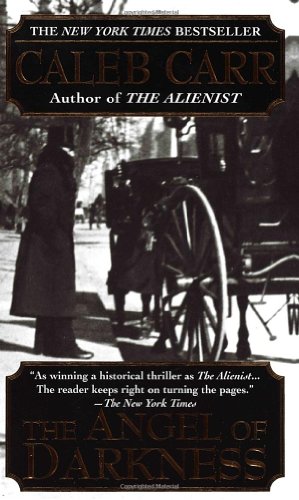
2. The Angel of Dakness
 
$4.98
3. The Devil Soldier: The American
$4.75
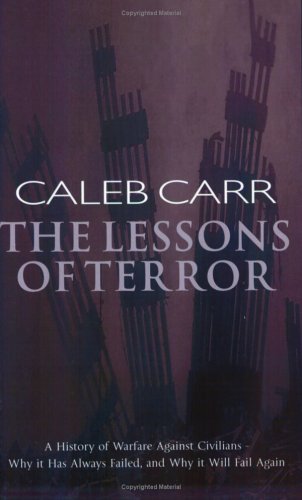
4. The Lessons of Terror: A History
$8.40
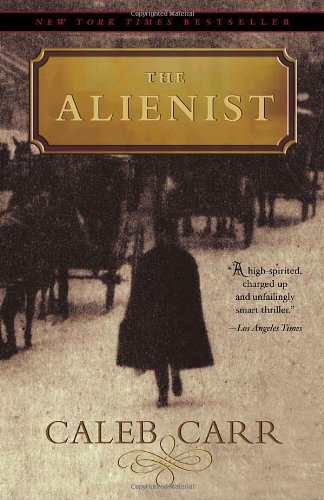
5. The Alienist: A Novel
 
$8.75
6. The Alienist
$1.43
7. Killing Time
 
$15.00
8. The Alienist
9. Casing the Promised Land
10. Die Einkreisung
11. Die Einkreisung.
$9.55
12. The Cold War: A Military History
$8.75
13. The Lessons of Terror: A History
 
$32.97
14. Untitled Alienist Novel
$32.00
15. Killing Time : A Novel of the
$6.47
16. Exorcist: The Beginning
 
17. The Caleb Carr Box Set Boxed Set
 
$24.49
18. The Devil Soldier: The Story of
$7.92
19. Killing Time
$9.95
20. Biography - Carr, Caleb (1955-):

1. The Italian Secretary: A Further Adventure of Sherlock Holmes
by Caleb Carr
Hardcover: 256 Pages (2005-03-18)
list price: US$23.95 -- used & new: US$4.82
(price subject to change: see help)
Asin: B00127UK2I
Average Customer Review: 3.0 out of 5 stars
Canada | United Kingdom | Germany | France | Japan
Editorial Review

Amazon.com
Although Sherlock Holmes categorically dismissed, in "The Adventure of the Sussex Vampire," supernatural explanations for corporeal crimes ("This Agency stands flat-footed upon the ground, and there it must remain. ... No ghosts need apply"), one of the most popular among Sir Arthur Conan Doyle's Holmes tales is The Hound of the Baskervilles (1902), in which the fate of a Devonshire family supposedly hangs on the savage appetites of an apparitional beast. More than a century later, in The Italian Secretary, Caleb Carr again presents the hawk-faced consulting detective with a yarn woven of paranormal plot threads, the mystery this time rooted in the fatal 16th-century stabbing of David Rizzio, a music teacher and confidant to Mary, Queen of Scots.

For Holmes and his affable annalist, Dr. John Watson, this spirited escapade begins sometime in the late 19th century with their receipt, in London, of an encrypted telegram from Sherlock's eccentric elder brother, Mycroft, "a senior but anonymous government official." It summons them to Edinburgh, Scotland, where architect Sir Alistair Sinclair and his foreman, Dennis McKay, have been slain in the midst of rehabilitating the medieval west tower of the Royal Palace of Holyrood--the very wing where Queen Mary had lived, and where Rizzio had met his brutal, politically motivated end. Mycroft fears these murders portend new threats against Britain's present monarch--the elderly Queen Victoria, who infrequently lodges at the palace--by a known assassin, perhaps in nefarious league with the German Kaiser. En route north, Holmes and Watson are menaced aboard their train by a red-bearded bomb thrower (supposedly a rabid Scots nationalist), only to discover that still greater dangers await them, and others, at Holyroodhouse. The plaintive drone of a weeping woman, cruelly punctured and shattered corpses, a pool of blood "that never dries," and a disembodied Italian voice with unexpected musical tastes all imply the wrath of wraiths behind recent atrocities. But Holmes and Watson deduce that greed, rather than ghosts, may be to blame.

Carr, who earned renown with his historical mysteries,The Alienist (1994) andThe Angel of Darkness (1997), apparently intended The Italian Secretary to be a short story; however, he couldn't stop writing. The result is a fleet-footed, atmospherically gothic, and often amusing Holmes tale (with an exposition scene in Watson's bed chamber that's truly priceless), but one that makes scant attempt to enhance our understanding of Conan Doyle's characters--a less ambitious undertaking, in that respect, than Mitch Cullin's concurrently published A Slight Trick of the Mind. And while Carr displays a gift here for adopting another author's literary techniques, it is really his own style and series players that his fans are waiting to see more of in the future. --J. Kingston PierceBook Description

Sherlock Holmes and Dr. Watson are summoned to the aid of Queen Victoria in Scotland by a telegram from Holmes’ brother, Mycroft, a royal advisor. Rushed northward on a royal train—and nearly murdered themselves en route—the pair are soon joined by Mycroft, and learn of the brutal killings of two of the Queen’s servants, a renowned architect and his foreman, both of whom had been working on the renovation of the famous and forbidding Royal Palace of Holyrood, in Edinburgh.

Mycroft has enlisted his brother to help solve the murders that may be key elements of a much more elaborate and pernicious plot on the Queen’s life. But the circumstances of the two victims’ deaths also call to Holmes’ mind the terrible murder—in Holyrood—of “The Italian Secretary,” David Rizzio. Only Rizzio, a music teacher and confidante of Mary, Queen of Scots, was murdered three centuries ago. Holmes proceeds to alarm Watson with the announcement that the Italian Secretary’s vengeful spirit may have taken the lives of the two men as punishment for disturbing the scene of his assassination.

Critically acclaimed, bestselling author Caleb Carr’s brilliant new offering takes the Conan Doyle tradition to remarkable new heights with this spellbinding tale.
... Read more

Customer Reviews (83)

1-0 out of 5 stars Elementary, my dear Watson!
I am a big fan of Carr's and I am a big fan of Sherlock Holmes. Carr's earlier works - The Alienist and The Angel of Darkness were true masterpieces. But The Italian Secretary is boring, has little plot and I must say, has a very dull climax unlike his earlier works. Sherlock Holmes powers are under utilized and Mycroft's intelligence is not employed at all. It is impossible to believe that an average Scotland Yard officer could not have solved this mystery. Moreover, the role of David Rizzio, the Italian secretary is over emphasized. The book could have been smaller by a hundred pages but for the unnecessary long sentences.

I am being very harsh in the review but I expected a lot from Carr being a great fan of his works.

2-0 out of 5 stars You Can't Take It With You
THE ITALIAN SECRETARY began as a short story to be included in a collection of Holmes pastiches with a supernatural theme. Considering that none of Doyle's stories ever had a truly supernatural agent (Doyle's original Holmes eschews the supernatural and the case of the baskerville hound ends firmly in the corporeal realm), the wisdom of that idea is dubious. But I'll let you be the judge on the score. More to the point, this particular short story grew and grew, ultimately becoming this greatly inflated novel. The basic plot isn't bad. There are a couple of nasty murders, some curious circumstances, an interesting setting, a beliveable scam, and no shortage of potential suspects. Sadly, this potentially nice little story has been blown up beyond proportion.

An example is the scene on the train. Holmes talks interminably. It takes ten pages of blather to get to the two-paragraph description of the historical murder of Queen Mary's italian secretary, David Rizzio. The long-winded conversations between Holmes and Watson, and the uncharacteristic verbal jockeying with Mycroft, were not like anything you would ever find in Doyle. Doyle's Holmes is focused, this Holmes frequently rambles. Further, Mycroft should have been left in London. He was out of his element here and his presence was only needed to send Sherlock and Dr. Watson off to Scotland.

Nor is that all. As another reviewer here has commented, the ending is hugely overdone and plays out like a scene from a Three Stooges movie. Put the Stooges into the climax from a Bruckheimer action flick and you get the picture.

Finally, also in the finale, we get Watson climbing a narrow stone staircase in the "haunted" west tower while Holmes is on the floor above. Watson hears footsteps, somebody mutering in a "strange" tongue (which he thinks is Gaelic), and a silhouette with a hump descending toward him. The "confederate" turns and retreats upward again with Watson following after a moments hesitation. Arriving at the top floor, Watson finds only Holmes, who comments that he was "able to chase the man we were pursuing from this room -- I can only suppose that he was trying to retrieve as much of their loot as he could..." and that he "is as agile as an ape." The problem with this is that no such "confederate" has been mentioned peviously in the story, or is he ever mentioned again. The reader is just left to wonder who this character is. The "ghost" of David Rizzio? If so, what does he need with "loot" (you can't take it with you, after all)and why is he speaking Gaelic? Another person whose role was to play the ghost of Rizzio? If so, who was he and why do we hear nothing more of him? Ghost stories can get away with characters that appear out of nowhere and disappear into thin air. Murder mysteries can't. This huge loose end left me especially unsatisfied with the ending of this book.

I never fail to be disappointed by Holmes pastiches. The only ones I ever thought worthy of the originals were Adrian Doyle's EXPLOITS OF SHERLOCK HOLMES. THE ITALIAN SECRETARY has done nothing to alter that opinion.

1-0 out of 5 stars Rubbish, my dear Watson, rubbish!
Is this the same man that wrote The Alienist, Killing time, etc? Unbelievable! What a waste of time and paper.This book is not a pastiche, it is a disgrace. Tedious, boring, infantile,with absolutely nothing in common with the image of Sherlock Holmes and/or Dr. Watson. What a pity Mr. Carr decided to turn away from the stories he writesso wonderfully.He should be ashamed of this .... thing out of his pen.In Spanish, we have a saying:Shoemaker, to your shoes. Enough said.

2-0 out of 5 stars Much Ado About Nothing - Sherlock Holmes On Qualudes
Having been a fan of Carr since his voracious 19th century thriller The Alienist, I was expecting alot more out of The Italian Secretary than I got.Carr had been chosen by the Arthur Conan Doyle Estate to continue on with the Sherlock Holmes mythos and this seemed like a marriage made in heaven.What The Italian Secretary reads like is not homage but tired copycat prose.It feels like Carr just picked up a copy of The Complete Sherlock Holmes, read it, and wrote The Italian Secretary.Not once did it grab me like any of Conan Doyle's Holmes mysteries.Not once.This is an exercise in cliches, and that's about it.Where The Alienist and The Angel Of Darkness were complete and tight, The Italian Secretary seems to have been hurriedly slapped together.There is no real mystery here.The entire situation is solved well before the end of the book.Maybe the Conan Doyle Estate should have picked Mark Frost(The List Of 7, The 6 Messiahs) to do Holmes, for his books were far more entertaining.

5-0 out of 5 stars Not Quite So Elementary...
It can be a daunting task to write a new adventure for one of the literary world's most beloved detectives of all time.The author is certain to open himself up to criticism and to be told that he is no Sir Arthur Conan Doyle.But the undertakers of this project knew that much to begin with, and since this work (and the others, all originally intended as short stories) was commissioned by the Conan Doyle Estate, the criticism of the novel should not be based upon the author not 'living up' to the standards of Conan Doyle.That was not the point - the point was to create a new adventure for a literary hero in the same vein, and Caleb Carr, who is a masterful storyteller of historical mysteries, has done a commendable job.

"The Italian Secretary" is a mystery set within Holyroodhouse, the legendary palace of Mary, Queen of Scots, situated in Edinburgh, Scotland.The title comes from a story that had circulated through the ages, of an Italain secretary who influenced the queen and was violently killed within her private chambers in an effort to send a message to the Catholic ruler within a Protestant nation.Sherlock Holmes and Dr. Watson find themselves drawn into this other-worldly mystery at Holyroodhouse through Holmes' brother, Mycroft, an agent and protector of Queen Victoria, with whom he shares a close and confidential relationship.When two young Scotsmen are found murdered within the castle grounds, rumors fast fly that it is the spirit of the Italian secretary seeking revenge for his hundred-years-old murder.Yet Watson and Holmes know that a supernatural explanation cannot be behind the truth, and set out to uncover the real murderous happenings in the royal palace, an adventure that finds them risking their own lives, and questioning their belief in the supernatural.

While some criticisms of this book may naturally be founded in the fact that Conan Doyle did not like using the supernatural in detective stories; but perhaps the most popular of the Holmes' stories, "The Hound of the Baskervilles", involves the supernatural to a great length (and a debunking of that in the end).This same concept is applied to "The Italian Secretary" with aplomb and ease.Caleb Carr naturally captures the relationship and repartee between Watson and Holmes; the pacing and subtle twists of the mystery are in keeping with Conan Doyle's style, as are the revelations of clues that only Sherlock Holmes can perceive.Caleb Carr has certainly ascertained his place in the literary world with "The Alienist" series and further adds to his merit with "The Italian Secretary".Since it seems to be the mode in today's literature to take famous literary characters and create new stories for them, sometimes with disastrous effect, it is a joy to read an imagining from an author who is worthy of breathing new life into such a beloved character. ... Read more


2. The Angel of Dakness
by Caleb Carr
 Hardcover: Pages (1999-06-22)
list price: US$5.99 -- used & new: US$17.49
(price subject to change: see help)
Asin: 0517454491
Average Customer Review: 4.0 out of 5 stars
Canada | United Kingdom | Germany | France | Japan
Editorial Review

Book Description
In The Angel of Darkness, Caleb Carr brings back the vivid world of his bestselling The Alienist but with a twist: this story is told by the former street urchin Stevie Taggert, whose rough life has given him wisdom beyond his years. Thus New York City, and the groundbreaking alienist Dr. Kreizler himself, are seen anew.

It is June 1897. A year has passed since Dr. Laszlo Kreizler, a pioneer in forensic psychiatry, tracked down the brutal serial killer John Beecham with the help of a team of trusted companions and a revolutionary application of the principles of his discipline. Kreizler and his friends--high-living crime reporter John Schuyler Moore; indomitable, derringer-toting Sara Howard; the brilliant (and bickering) detective brothers Marcus and Lucius Isaacson; powerful and compassionate Cyrus Montrose; and Stevie Taggert, the boy Kreizler saved from a life of street crime--have returned to their former pursuits and tried to forget the horror of the Beecham case. But when the distraught wife of a Spanish diplomat begs Sara's aid, the team reunites to help find her kidnapped infant daughter. It is a case fraught with danger, since Spain and the United States are on the verge of war. Their investigation leads the team to a shocking suspect: a woman who appears to the world to be a heroic nurse and a loving mother, but who may in reality be a ruthless murderer of children.

Once again, Caleb Carr proves his brilliant ability to re-create the past, both high life and low. As the horror unfolds, Delmonico's still serves up wondrous meals, and a summer trip to the elegant gambling parlors of Saratoga provides precious keys to the murderer's past. At the same time, we go on revealing journeys into Stevie's New York, a place where poor and neglected children--then as now--turn to crime  and drugs at shockingly early ages. Peppered throughout are characters taken from real life and rendered with historical vigor, including suffragist Elizabeth Cady Stanton; painter Albert Pinkham Ryder; and Clarence Darrow, who thunders for the defense in a tense courtroom drama during which the sanctity of American motherhood itself is put on trial. Fast-paced and chilling, The Angel of Darkness is a tour de force, a novel of modern evil in old New York. ... Read more

Customer Reviews (304)

3-0 out of 5 stars Disturbing
The team from the Alienist is out to stop a serial killer before she kills the young child who has been kidnapped in New York City.The team proves to their satisfaction that Libby Hatch did it by (among more legitimate methods) breaking into her home two times, and arranging to have her coat stolen so they can check it out for fingerprints and hair samples.Then, when the baby is in immenent danger, they check out Libby's psychological background in upstate NY and leave the primary investigation hang for several weeks.They initiate a court case against Libby in Saratoga county, where they indulge in grave robbing for the purpose of plainting evidence to prove Libby killed her 2 children.Then they have the gall to criticize Clarence Darrow for ruining the future of the legal profession?Why did they bother having a trial at all?Since they decided she was guilty, why didn't they just kill her in New York City?- which they kind of did at the end!
I gave this book 3 stars because I did enjoy the evocation of old New York, and I am familiar with Saratoga and Renssalaer counties.It didn't even bother me that Stevie was the narrator.But when I looked back on the whole story, it gave me a chill from the actions of all sides.

5-0 out of 5 stars Caleb Carr is wonderful.
Spell-bounding and heart-wrenching. I was swept back into a time of discovery that has shaped the contempary psychological hero's such Grisham on CSI. Their true predaccesor was Lazlo Kreizler, The turn of the century philanthopic psychologist who tests the bounds of society's precepts.( Can women be serial killers and still not have the right to vote?)

3-0 out of 5 stars Good but not GreatSequel to Alienist.
This is a reasonably convincing effort to continue to storyline begun in the Alienist, but, all things considered, simply is not in the same league.The Alienist moved quickly in an interesting and informative manner from one plot development to the next.This sequel moves, contrarily, cumbersomely and obviously from one development to the next.The characters are often transparent and not particularly convincing.The villain in this novel is particularly self-evident and Carr resorts to numbing repetition in a minimally successful effort to elucideate her disturbing criminality.To be fair, Angel of Darkness is not a bad read; it simply is not a great read.The Alienist, by comparison, is a novel, exciting, fresh page turner.

--Bill T-M.

1-0 out of 5 stars trades on real-life tragedy
I loved The Alienist and expected to love this book too.I found it slightly disappointing, though -- even before we got to the part that really outraged me.Essentially, the main crime in Angel of Darkness is lifted, all but verbatim, from Small Sacrifices: A True Story of Passion and Murder.This is a true-crime book about a tragedy that affected real people who are alive today.We aren't talking about simply drawing inspiration, either; the crime, the victims and especially the courtroom scenes are taken very, very blatantly from the other book.I listened to this on audiobook and therefore do not know if Carr credited that book in his notes.But I found such extreme copying of a tragedy affecting children both uncreative and ghoulish.I have felt no need to read anything else by this author since.

4-0 out of 5 stars Rough and tumble late nineteenth century New York!
In "The Angel of Darkness", Caleb Carr returns his readers to the atmospheric, intriguing, rough and tumble world of late nineteenth century New York. The story is told through the eyes of Stevie Taggert, a former young thug rescued from a miserable life and almost certain early death as a street kid already up to his eyes in street crime and drugs by his guardian, Dr Laszlo Kreizler, the famous psychiatrist first introduced to us in "The Alienist".

During the politically troubled era preceding the onset of the Spanish-American War, the wife of a Spanish diplomat, whose baby has been kidnapped, frantically appeals to Sara Howard, a private detective and proud feminist who specializes in helping troubled women, for help to rescue the child before it is murdered. Sara in turn appeals to her friend, Dr Kreizler and their colleagues for their assistance in this most puzzling case - Stevie Taggert, Cyrus Montrose, Kreizler's faithful man-servant, Jonathan Moore, crime reporter for the New York Times, and Lucius and Marcus Isaacson, the brilliant yet comedic Jewish twin brothers hired as NYPD detectives by Teddy Roosevelt when he was chief of the force. When the kidnapper's identity is discovered relatively early, the tale changes from a whodunit into that more modern complicated breed of thriller that explores the "why" of the crime!

As the story is told completely through Stevie's eyes, the reader is treated to a wonderfully smooth, linear narration that is both complete and straightforward to follow from the plotting point of view. But that simple statement belies the scope and depth of this wonderful story that includes discussions of the birth of modern feminism, the ravages of cocaine and drug addiction, the growing use of modern crime-fighting tools - forensics, psychological profiling, fingerprinting, ballistics, microscopic matching of hair and fiber samples - and the psychology of that most puzzling and disturbing of criminals, the female serial killer!

For good measure, Carr also treats his readers to appearances of real-life historical figures that are substantially more than tossed off cameos - Theodore Roosevelt as pro tem head of the US Navy prior to his election as president leads a group of feisty sailors in a brawl against a brutal street gang; Clarence Darrow is observed in a thrilling courtroom drama establishing his reputation as one of the most brilliant defense lawyers that the US has ever seen and Elizabeth Cady Stanton whose early musings formed a substantial part of the basis of modern feminism is called upon as a critical witness for the defense.

Four stars and two thumbs up. Lovers of historical fiction will thoroughly enjoy "The Angel of Darkness" and cross their fingers that Carr will deliver on the rumour that there are more "alienist" novels in the works to be narrated by some of the other members of the team.

Paul Weiss ... Read more


3. The Devil Soldier: The American Soldier of Fortune Who Became a God in China
by Caleb Carr
 Paperback: 384 Pages (1995-04-11)
list price: US$15.95 -- used & new: US$4.98
(price subject to change: see help)
Asin: 0679761284
Average Customer Review: 3.5 out of 5 stars
Canada | United Kingdom | Germany | France | Japan

Customer Reviews (17)

5-0 out of 5 stars The Authentic Last Samurai
It seems fitting that one of the most implausible films ever made should be based "loosely" on a book about one of the most implausible real-life figures of history. Frederick Townsend Ward, the Devil Soldier, had nothing to do with the civil war in Japan; neither did any other American officer. But Ward did play a huge role in the defense of the Manchu imperial government against the forces of Chun Wang, the syncretic Sino-Christian rebel, in the Taiping civil war, supposedly the bloodiest conflict of the 19th Century. My five-star rating of this book is contingent upon also reading Jonathan Spence's book about the Taipings, God's Chinese Son. Otherwise you will have less than half the story. Caleb Carr writes very well, but this is not a novel, and as a history it is far too partial.

In his prologue, Carr declares: "No man's life can be truly understood out of context, but in Ward's case the context is especially vital." No kidding, Caleb! In Ward's case, the context is virtually all we have, since nothing of Ward's own letters or thoughts has survived. Thus Carr is writing a biography so much as a social history of a moment in time, that moment when the vast culture of China first "discovered" the West. Carr's short moment of importance was his organization and training of the "Ever Victorious Army" of Chinese soldiers using Western military training and tactics. For better or worse, Ward's model army became the nucleus of the forces that destroyed the Taipings, though the man who replaced Ward as commander after Ward was killed, the scoundrel known as Chinese Gordon, has replaced him in historical memory also.

More novelist than historian, Caleb Carr might fairly be criticized for overdrawing his sources, or for not maintaining sufficient academic reserve. It would be wrong to ignore this book, however, if you have any interest in the history of modern China, in which FT Ward was a meteor in the sky, an omen of things to come.

3-0 out of 5 stars Slow start but interesting to the end
Slow starting off but if the subjects (China, military history, adventure) interest you it is worth sticking to it. The pace of the writing picks up after a bit and the last 2/3 are enjoyable. I do wish there had been more historical pictures and maps.

5-0 out of 5 stars The Yankee sailor that saved the Chinese Empire
In 1859 a 28 year-old sailing officer from Salem Massachusetts took service under the Chinese Empire to defend it from mortal danger. When this young man died in battle in 1863 he had put down the largest and bloodiest civil war in human history (the American Civil War raging at the same time pales in comparison), he had been made a general and a mandarin, he had married a Chinese princess, and he was interred in his own temple. Perhaps most impressively was the fact that he did all of this while retaining the reputation among his friends and foes of being a man of decency, fairness, honor and incorruptibility. And yet for all this, he is nearly forgotten in both his native and adopted country.

Frederick Townsend Ward's history was erased largely because he was feared by both his Manchu masters and by the European powers that were seeking to dismember China for their own mercenary ends. The author speculates that due to his contempt for the cruelty and corruption of the Manchu's, that had he survived, he might have turned the instrument of his "Ever Victorious Army" against them in order to restore the Ming Dynasty. Had that happened, the history of China could have far different in the century that followed.It is clear that Ward found the concept of ending the Empire as unthinkable- which is why the later republic never honored his memory.

One other thing struck me while reading this book: Ward wanted to attend West Point but was not able to obtain an appointment because he lacked "connections." In the long run this didn't seem to hurt him too much....

If this story were fiction it would surely be dismissed as too far-fetched to ever be believed.

4-0 out of 5 stars devil soldier
A very enjoyable tale of a colorful historical character. Carr has a real flair for bringing such a strange time to life, and making it feel familiar. He talks about the Taiping rebellion as if it only happened yesterday, which adds to the sense of reportage and realism. I'm looking forward to the reputed John Woo movie adaptation, although someone should have checked the illustrations before they were finalised. My copy prints Ward's battle-flag upside down -- doubly embarrassing since it is the right way up on the book's cover.

3-0 out of 5 stars Fascinating story of a rogue mercenary terrorist legend
In this involving and well-written account, Carr strains to elevate the importance of Ward, a historical footnote, a mercenary of questionable repute and eventual Qing dynasty functionary whose prime contribution was the cobbling together of the use of "superior and modern" Western weapons against backwards sword and spear carrying Taiping rebels. And by Carr's own account, Ward was only partially successful. To thank him for his assistance (which ultimately helped maintain both Western imperial domination of China, the opium trade, and the extension of the corrupt and weak Qing empire), in a relationship of dual purpose, the Manchu Qing regime (not the Chinese people)gave him an official title and a Chinese wife. Carr's pro-Western bias is strong, as is his strange love of the Ward myth, which he does his best to overblow. Carr's sourcing is spotty, and in too many places, he speculates---typically in ways that favor Ward. This book, and indeed the Ward story itself, presents a very enlightening model of how violent rogue mercenaries, terrorists, and intelligence cutouts are used to assist governments in "counter-insurgency" wars throughout history, such as the Phoenix Program. ... Read more


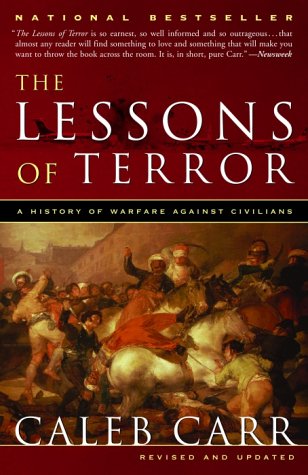
4. The Lessons of Terror: A History of Warfare Against Civilians
by Caleb Carr
Paperback: 320 Pages (2003-03-11)
list price: US$13.95 -- used & new: US$4.75
(price subject to change: see help)
Asin: 0375760741
Average Customer Review: 3.5 out of 5 stars
Canada | United Kingdom | Germany | France | Japan
Editorial Review

Book Description
Military historian Caleb Carr’s groundbreaking work anticipated America’s current debates on preemptive military action against terrorist sponsor states, reorganization of the American intelligence system, and the treatment of terrorists as soldiers in supranational armies rather than as criminals. Carr’s authoritative exploration demonstrates that the practice of terrorism, employed by national armies as well as extremists since the days of ancient Rome, is ultimately self-defeating. Far from prompting submission, it stiffens enemy resolve and never leads to long-lasting success.

Controversial on its initial publication in 2002, The Lessons of Terror has been repeatedly validated by subsequent events. Carr’s analysis of individual terrorist acts, and particularly of the history of the Middle East conflict, is fundamental to a deep understanding of the roots of terrorism as well as the steps and reforms that must be taken if the continuing threat of terrorist behavior is to be met effectively today and, finally, eradicated tomorrow. ... Read more

Customer Reviews (22)

4-0 out of 5 stars Terrors Quantified
Carr's book is, first of all, good. He brings that new and overdue sensiblity which refuses to accept the classifications of previous regimes and establishments. At least this is his attempt. Some of the insights he shows, such as the idea that Total War is not a morally reprehensible product to non-Europeans, helps to shift the perspective of the discussion. But his basically middle of the road argument that Total War is inefficient and therefore never advisable is based on a hopeful assumption: that reasonable men will wage war in a reasonable way if shown the numbers. Of course this is false. The war we are presently engaged in is not a reasonable war. It is a war of fear against a culture different from ours, a shadowy enemy that scares us back to childhood remedies of sandbox fighting and therefore, unfortunately, brings Total War out of our Total Fear.

2-0 out of 5 stars One-sided and over simplistic
When Carr wrote this book he obviously had a predetermined conclusion that he wanted to convey.Though I personally agree that deliberate targeting of civilians is counterproductive to any political / military endeavor, Carr presents a lengthy list of historical evidence that is taken out of context and without an understanding of how militaries fight wars.

In his book he describes Roman brutality in its dealings with invaded countries and asserts that this brutality was the eventual cause of unrest that led to the fall of the Roman Empire.I'm not sure if he could have generalized this more than he did.He failed to look at the overall success of an Empire that lasted nearly 5 centuries.Also, history has shown that part of Rome's success was due to how it integrated conquered countries into its society and allowed those people to eventually become citizens of Rome.

Carr goes on to show the terrorist tactics used by both sides of the U.S. civil war, and he focuses on Sherman's march to the sea and then to Washington.I will agree that both sides had incidents in which civilians were targeted, but it is over simplistic to say that Sherman's tactics were purely terroristic and were eventually counterproductive.Carr and many other people point at the burning of Atlanta as a major example of targeting civilians, but they fail to remember that Atlanta was the largest supply distribution point for Confederate Army and that Sherman gave the civilian population ample warning to leave the city.Any true student of military history will agree that Sherman's destruction of the Confederacy logistics support structure was critical to expediting an end to the war, which consequently falls in line with Carr's belief in decisive warfare as the preferred tactic.

Carr's final chapter draws scrutiny of U.S. strategic bombing, in the form of cruise missiles, as sites them as a terrorist weapons.His argument is based on his assertion that because military leaders are aware that civilian casualties will occur this makes it a deliberate attack on civilians and not collateral damage.His absolutist attitude does not take into consideration that the military target may be worth the cost in civilian lives.Prior to 9/11, President Clinton had the opportunity to kill Osama Bin Laden with a cruise missile, but in accordance with Carr's way of thinking about terrorist acts, he aborted the mission at the last minute because civilian family members were present in the camp.In retrospect that decision to not target a few civilians has cost tens of thousands of civilian lives in the both the U.S. and Middle-East.

Finally, Carr asserts that limited, preemptive ground warfare is the best method to avoid long wars of attrition and civilian casualties.I wonder what his opinion is now after three years in Iraq.I don't think many people really saw that coming.

5-0 out of 5 stars Brief and to the Point!
Mr. Carr has written a concise history of warfare against Civilians. I would recommend this as an excellent primer on the subject. In my belief this should be regarded as a political history as well as a military history.

Saying that, I will add some of his conclusions about reforms are overly simplistic.

4-0 out of 5 stars comforting
This book would be a good gift for someone who is still afraid of terrorists.

4-0 out of 5 stars Excellent Short Volume,Maybe a Little Simplistic..
The theme of this book is "Why Warfare against Civilians has not worked and will Never Work". Though the point is well argued, and goes back to ancient times, it is not always convincing, mainly since many guerilla wars against invaders/occupiers are not covered in depth. Warfare against civilians by an ATTACKING force almost always is a losing propostion, since these innocents are angered, and often turn into insurgent guerillas and even terrorists. But what turns a civilian into a terrorist? This question seems to be totally ignored by policy makers,and is barely mentioned by the author. Certainly when your friends, family, associates, country/religious/men are slaughtered and maimed, it is not unusual to turnfrom civilian to guerrilla to terrorist. So many gray areas of conflict are not mentioned. The author says Cromwell (during the early phase),Frederick the Great, among others, advocated short attacks on military targets only, even in Frederick's case wearing special uniforms of identication to separate them from civilians. He suggests the the 1939-1940 Blitz in Poland and France was a near perfect example, though many would strongly disagree. Most important, he ignores the fact that an insurgency with some terrorist tendencies, like 1950's Algeria,Kenya,& Vietnam can succeed in defeating foreign invasions and armies. He is not convinced that aerial assaults and "collateral damage" are not terrorist attacks, and suggests that several US presidents are guilty. Overall, a strong even-handed presentation, even if the subject is much vaster than may be covered in a short book. ... Read more


5. The Alienist: A Novel
by Caleb Carr
Paperback: 512 Pages (2006-10-24)
list price: US$14.95 -- used & new: US$8.40
(price subject to change: see help)
Asin: 0812976142
Average Customer Review: 4.0 out of 5 stars
Canada | United Kingdom | Germany | France | Japan
Editorial Review

Book Description
The year is 1896, the place, New York City. On a cold March night New York Times reporter John Schuyler Moore is summoned to the East River by his friend and former Harvard classmate Dr. Laszlo Kreizler, a psychologist, or "alienist." On the unfinished Williamsburg Bridge, they view the horribly mutilated body of an adolescent boy, a prostitute from one of Manhattan's infamous brothels.

        The newly appointed police commissioner, Theodore Roosevelt, in a highly unorthodox move, enlists the two men in the murder investigation, counting on the reserved Kreizler's intellect and Moore's knowledge of New York's vast criminal underworld. They are joined by Sara Howard, a brave and determined woman who works as a secretary in the police department. Laboring in secret (for alienists, and the emerging discipline of psychology, are viewed by the public with skepticism at best), the unlikely team embarks on what is a revolutionary effort in criminology-- amassing a psychological profile of the man they're looking for based on the details of his crimes. Their dangerous quest takes them into the tortured past and twisted mind of a murderer who has killed before. and will kill again before the hunt is over.

        Fast-paced and gripping, infused with a historian's exactitude, The Alienist conjures up the Gilded Age and its untarnished underside: verminous tenements and opulent mansions, corrupt cops and flamboyant gangsters, shining opera houses and seamy gin mills. Here is a New York during an age when questioning society's belief that all killers are born, not made, could have unexpected and mortal consequences.


From the Paperback edition. ... Read more

Customer Reviews (458)

4-0 out of 5 stars Carr creates gripping and engaging tale
Laszlo Kreizler is an American version of Sherlock Holmes who, in the setting of New York City of the late 1800's, attempts to solve the murders of children. Kreizler and his cohorts use methods unheard of at the time as they endanger their careers and lives to find the culprit.

I found the characters engaging and the plot gripping. I couldn't wait to see who the killer was. I enjoy stories with a group of well defined characters -- but not too many so that I lose track -- and Carr succeeds in creating that.

5-0 out of 5 stars One of the BEST boks written
This is a great book for anyone 15 and older. It helps give you an understanding of young America, the medical profession and our society and how we treated those who were on the edge of it. Great suspense, imagery and superb style makes this a great book you will read again.

4-0 out of 5 stars Interesting period piece
I found this book to be a fine mix of plot and characterization. There also are a few interesting facts thrown in to add to the authenticity.

5-0 out of 5 stars The Alienist
This book arrived in excellent condition.I haven't got around to reading it yet, but I am eager to read it as soon as I have some time.

5-0 out of 5 stars Carr Shines as both Historian and Novelist
Caleb Carr's writing style and historical acumen could have produced a riveting book surveying the cultural trends of New York City during the late 1800's. The fact that The Alienist also tells the tale of a controversially assembled detective squad and its chase to capture a serial killer victimizing young male prostitutes yields an endlessly provocative novel.Carr's aptly describes the sheer beauty and the gritty despair existing in the Big Apple during the time period by entering the psyche of several vastly different characters. The reader is able to connect with the thoughts and visions of the lowly serial killer himself, the controversial "Alienist" psychologist Lazlo Kreizler assigned to the case, and the bodacious New York City police commissioner at the time, Theodore Roosevelt.Carr's depth of research about both New York City in general and about the increasingly popular, though highly doubted, mode of catching killers through psychological examination during the 1890's provides a gripping mystery that both challenges the reader and is hard to put down. ... Read more


6. The Alienist
by Caleb CARR
 Hardcover: 534 Pages (1994)
-- used & new: US$8.75
(price subject to change: see help)
Asin: 0316909718
Average Customer Review: 5.0 out of 5 stars
Canada | United Kingdom | Germany | France | Japan

Customer Reviews (1)

5-0 out of 5 stars Best Book You Will EVER READ
I recently ordered the First Edition of this book, and it is the only first edition I have ever bought, years after it was published. I did this because it is Far and Away the best mystery I have ever read. It sounds like "Sci Fi" by the title, but it isn't at all. The word "Alienist" is one which was used in the late 1800's for a psychologist. It is about the apprehension of a serial killer, whose crimes were committed at the turn of last century, set in New York. Fabulously detailed, and everyone I have reccommended this book to agrees that it is one of their favorites, if not THE favorite as well. The first 25 pages don't grab you like some top ten bestsellers, but THEN...LOOK OUT!!!! Fantastic, is all I can say!!! ... Read more


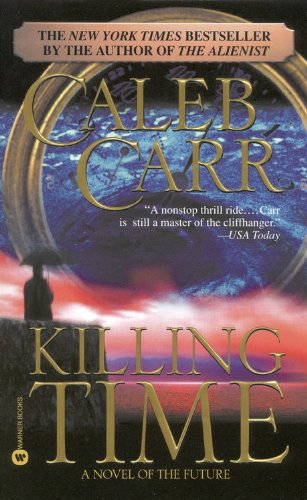
7. Killing Time
by Caleb Carr
Mass Market Paperback: 352 Pages (2002-01-01)
list price: US$7.99 -- used & new: US$1.43
(price subject to change: see help)
Asin: 044661095X
Average Customer Review: 2.0 out of 5 stars
Canada | United Kingdom | Germany | France | Japan
Editorial Review

Amazon.com
It's 2023, and the Web has almost destroyed the world. While cyberspace's early pioneers promoted the Net as a revolution in human communication, America has instead become a society of desk-bound introverts who believe everything they read. The federal government has been "bought" by a Microsoft-style corporation. Any semblance of central authority has vanished. As the Net infiltrates India and Pakistan, fevered nationalists and terrorists find one more medium through which to spread the word.

With Killing Time, Caleb Carr (The Alienist, The Angel of Darkness) manages to create a future that's both frightening and nostalgic. The novel's narrator, Dr. Gideon Wolfe, longs for a world before technology swallowed people's minds and imaginations. Through a series of complex misadventures, beginning with the murder of his best friend, Gideon finds himself joining a ragtag army of scientists and inventors who hope to take it back. Heading up this '60s-style revolutionary cell is a brother-sister team--genetically engineered geniuses with silver hair and shining eyes. Aboard their ultramodern ship, Gideon learns the extent of the damage done. When they dive below the surface of the Atlantic, he looks out the window and sees

not an idyllic scene of aquatic wonder such as childhood stories might have led me to expect but rather a horrifying expanse of brown water filled with human and animal waste, all of it endlessly roiled but never cleansed by the steady pulse of the offshore currents.
Carr's future is suffused with regret. It's also rife with mystery and suspense; in every chapter the stakes are raised a little higher, the apocalypse hovers a little closer. This author is a master of the cliffhanger, of cryptic warnings that return to haunt our hero later in the text. Occasional flashes of humor relieve the prevailing ominousness, and a beautiful girl with a huge gun appears at regular intervals to keep things humming. Fans of Steve Erickson's end-of-the-world novels will likely enjoy this adventure in the Internet age, where the sheer amount of information has induced not quantitative changes in the human psyche, but qualitative ones. --Ellen WilliamsBook Description
It's 2023, and the Web has almost destroyed the world. While cyberspace's early pioneers promoted the Net as a revolution in human communication, America has instead become a society of desk-bound introverts who believe everything they read. The federal government has been "bought" by a Microsoft-style corporation. Any semblance of central authority has vanished. As the Net infiltrates India and Pakistan, fevered nationalists and terrorists find one more medium through which to spread the word.With Killing Time, Caleb Carr (The Alienist, The Angel of Darkness) manages to create a future that's both frightening and nostalgic. The novel's narrator, Dr. Gideon Wolfe, longs for a world before technology swallowed people's minds and imaginations. Through a series of complex misadventures, beginning with the murder of his best friend, Gideon finds himself joining a ragtag army of scientists and inventors who hope to take it back. Heading up this '60s-style revolutionary cell is a brother-sister team--genetically engineered geniuses with silver hair and shining eyes. Aboard their ultramodern ship, Gideon learns the extent of the damage done. When they dive below the surface of the Atlantic, he looks out the window and sees not an idyllic scene of aquatic wonder such as childhood stories might have led me to expect but rather a horrifying expanse of brown water filled with human and animal waste, all of it endlessly roiled but never cleansed by the steady pulse of the offshore currents.Carr's future is suffused with regret. It's also rife with mystery and suspense; in every chapter the stakes are raised a little higher, the apocalypse hovers a little closer. This author is a master of the cliffhanger, of cryptic warnings that return to haunt our hero later in the text. Occasional flashes of humor relieve the prevailing ominousness, and a beautiful girl with a huge gun appears at regular intervals to keep things humming. Fans of Steve Erickson's end-of-the-world novels will likely enjoy this adventure in the Internet age, where the sheer amount of information has induced not quantitative changes in the human psyche, but qualitative ones. --Ellen WilliamsDownload Description
Meet Dr. Gideon Wolfe, expert criminologist of the new millenium. A professor at New York's John Jay University in the year 2023, he lives in an era that has seen plague, a global economic crash, and the 2018 assassination of President Emily Forrester. In this turbulent new world order, Wolfe's life and everything he knows are turned upside down when the widow of a murdered special-effects wizard enters his office.The widow hands him a silver disc from her husband's safety deposit box, hoping that Wolfe's expertise in history and criminology will compel him to track down her husband's killers. The disc contains footage of President Forrester's assassination, the same video that has been broadcast countless times on TV and over the internet-with one crucial, shocking difference: This version shows that before the video was released, it was altered with sinister special effects.This explosive discovery will lead Gideon Wolfe on an electrifying journey from a criminal underworld of New York to the jungles of Africa and on a quest to find the truth in an age when all information can be manipulated. With this novel, Carr has boldly established a new genre-future history-combining the best elements of mystery and thrillers with unique historical insight. Breathtakingly suspenseful,Killing Time unfolds as the work of a master novelist. ... Read more

Customer Reviews (241)

1-0 out of 5 stars Rabbit food anyone?
I had read "The Alienist" and thought it was O.K. enough to try another of Carr's books.

I will say that I finished "Killing Time" merely because I felt it MUST get better at some point. It never did.

Instead of inflicting it upon others I gave it to my 2 rabbits who use it as a chew toy.

They are enjoying it more than I did.

1-0 out of 5 stars Condescending and Unoriginal
I feel very fortunate to have borrowed this book from the library vice buying a copy. Reading this book wasted my time. The central idea, that an information society has special vulnerability to propaganda and manipulation by elites, strikes me as counter-factual and condescending. As sermon, this book failed to convince me.

As an adventure story, it failed to convince me. The idea of a secret elite with a high-technology airship manipulating the fate of the world's population lacks originality. (See Verne's Robur the Conqueror at Project Gutenberg.)

The book's ending relies on deus ex machina, and one that lies off-stage. It failed to convince me. In fact, the author relies on the very same mechanism for the ending that he condemns throughout the rest of the book: manipulation by an elite.

I can say only one positive thing about this book. I now know to avoid this author's work.

5-0 out of 5 stars Wierd foreshadowing
I like the whole disinformation angle.The islamist assasination in the US becomes a pretext to send troops to Afghanistan and then the attack on the afghani terrorist leader had a truly bizare foreshadowing of the caves where "the director" and his minions actually really did fight US troops.This book is mostly whimsy and grim near future.Some plodding dialogue.

This was written post Clinton admin missle strike attacks on Afghani targets, and the threat was identified.Still, the thing about Afghanistan is eery.Caleb Carr later day Nostradamus? : ) I would rather another Alienist type historical fiction novel.

1-0 out of 5 stars A flaccid attempt at Jules Verne
If you like a flimsy, dim-witted plot and an imbecelic narrator, this one's for you.

4-0 out of 5 stars WOW!HARSH CRITICS
Wow a lot of harsh critics out there.No it is not like The Alienist or Angel of Darkness, but why should it have to be?It has been years from first reading this book, but I remember enjoying it very much.I think it shows another side and writing style of Carr.If you have an open mind I think it can be an interesting read.I suppose if you don't like sci-fi at all then stay away. ... Read more


8. The Alienist
by Caleb Carr
 Mass Market Paperback: Pages (1996)
-- used & new: US$15.00
(price subject to change: see help)
Asin: B000NJCH68
Canada | United Kingdom | Germany | France | Japan

9. Casing the Promised Land
by Caleb Carr
Hardcover: 265 Pages (1980-06)
list price: US$10.35
Isbn: 0060107073
Average Customer Review: 1.5 out of 5 stars
Canada | United Kingdom | Germany | France | Japan

Customer Reviews (2)

2-0 out of 5 stars self-criticism
I am the author of this book. It has a few good scenes, but is essentially "roman a clef" nonsense that every writer has to get out of his system early on. Do yourself a favor and read ANYTHING else I've written(you'll be doing me a favor, too). Forgive the follies of youth.

1-0 out of 5 stars What?!?!?!?!
After reading The Alienist, I thought "Why not see what else this guy's written?"Should've known better.All I can say is thank God he waited 14 years to write another book!!!(Must've been taking classes....) Couldn't really make it past the first chapter.The charcters were, well, thinly veiled real people.He should have just called the "hero" Caleb... Sorry, Caleb, loved everything else, even the history books, but this is simply unforgivable! ... Read more


10. Die Einkreisung
by Caleb Carr
Perfect Paperback: 588 Pages (2007-05-31)

Isbn: 3453811135
Canada | United Kingdom | Germany | France | Japan

11. Die Einkreisung.
by Caleb Carr
Paperback: 588 Pages (1996-05-01)

Isbn: 3453099311
Canada | United Kingdom | Germany | France | Japan

12. The Cold War: A Military History
by Stephen E. Ambrose, Caleb Carr, Thomas Fleming, Victor Hanson
Paperback: 496 Pages (2006-11-07)
list price: US$16.95 -- used & new: US$9.55
(price subject to change: see help)
Asin: 081296716X
Average Customer Review: 4.0 out of 5 stars
Canada | United Kingdom | Germany | France | Japan
Editorial Review

Book Description
Even fifteen years after the end of the Cold War, it is still hard to grasp that we no longer live under its immense specter. For nearly half a century, from the end of World War II to the early 1990s, all world events hung in the balance of a simmering dispute between two of the greatest military powers in history. Hundreds of millions of people held their collective breath as the United States and the Soviet Union, two national ideological entities, waged proxy wars to determine spheres of influence–and millions of others perished in places like Korea, Vietnam, and Angola, where this cold war flared hot.

Such a consideration of the Cold War–as a military event with sociopolitical and economic overtones–is the crux of this stellar collection of twenty-six essays compiled and edited by Robert Cowley, the longtime editor of MHQ: The Quarterly Journal of Military History. Befitting such a complex and far-ranging period, the volume’s contributing writers cover myriad angles. John Prados, in “The War Scare of 1983,” shows just how close we were to escalating a war of words into a nuclear holocaust. Victor Davis Hanson offers “The Right Man,” his pungent reassessment of the bellicose air-power zealot Curtis LeMay as a man whose words were judged more critically than his actions.

The secret war also gets its due in George Feiffer’s “The Berlin Tunnel,” which details the charismatic C.I.A. operative “Big Bill” Harvey’s effort to tunnel under East Berlin and tap Soviet phone lines–and the Soviets’ equally audacious reaction to the plan; while “The Truth About Overflights,” by R. Cargill Hall, sheds light on some of the Cold War’s best-kept secrets.

The often overlooked human cost of fighting the Cold War finds a clear voice in “MIA” by Marilyn Elkins, the widow of a Navy airman, who details the struggle to learn the truth about her husband, Lt. Frank C. Elkins, whose A-4 Skyhawk disappeared over Vietnam in 1966. In addition there are profiles of the war’s “front lines”–Dien Bien Phu, the Cuban Missile Crisis, the Bay of Pigs–as well as of prominent military and civil leaders from both sides, including Harry S. Truman, Nikita Khrushchev, Dean Acheson, Gen. Douglas MacArthur, Richard M. Nixon, Gen. Vo Nguyen Giap, and others.

Encompassing so many perspectives and events, The Cold War succeeds at an impossible task: illuminating and explaining the history of an undeclared shadow war that threatened the very existence of humankind.


From the Hardcover edition. ... Read more

Customer Reviews (7)

3-0 out of 5 stars Incomplete and ultimately biased
This book disappointed me and I agree with the other reviewers who say it is incomplete and too heavily focused on Korea and Vietnam. Even beyond that, the selection and content of the essays is negative to the point of bias against the US--I do not agree with the reviewer who says the theme is "America won." To the contrary, many of the essays go out of their way to point out alleged American errors of diplomacy and military action, and ignores significant American steps that led to success, such as Reagan's decision at Reykjavik not to compromise on SDI. While the book is framed as a military history, it does discuss arms treaties and the importance of missile technology (and limitations thereon) to the Cold War; not to mention Reagan's role in structuring the limitations talks is a non-trivial oversight. Further, there is nothing about submarine warfare or undersea cable tapping, Grenada, Afghanistan, Uganda, Nicaragua or other East-West proxy wars, the terror caused by Soviet projection of military power (e.g., Hungary 1956), the Walker Navy spy ring, military uses of cryptography, or other important areas. If you want to read about American errors in Vietnam, buy the book, but otherwise look for a more complete and balanced account of the whole conflict.

4-0 out of 5 stars Limited scope...
The quality of the individual articles is very high.As a collection, however, something is lacking.A better title would have been, "The Vietnam and Korean Wars with Bonus Material".Such huge portion of the book is dedicated to southeast Asia that one would think it was heart of the Cold War.I find it amazing there isn't a single article on Afghanistan (heck, he could have even have put in the Vietnam section that dominates the book and called the chapter "Russia's Turn").In fact, the word Afghanistan doesn't even appear in the entire text.Not a word on the wide variety of surrogate wars fought in the Americas or the Middle East either.

Another flaw is that the introductory pages to each article written by the editor add almost nothing to the text.The articles would stand better on their own.

So basically I'd give the articles five stars.I'd give the editing/collation perhaps two stars.I gave it four overall because the bulk of what your read is very good and I'll give credit where credit is due.Nonetheless, the narrow scope of the collection and the poor quality of the editor's introductions is annoying.

2-0 out of 5 stars interesting but unsatisfying
there are a number of vignettes in this book that are interesting, however the general tone of the book is very America centric, perhaps with an underlying tone of "we won", which detracts from those essays that are more balanced. Generally this was unsatisfying, frustrating eneough to write this review, as although the better essays are quite good, overall there is a lack of substance.

However, the title is a tad misleading .

3-0 out of 5 stars Excellent but Incomplete
The book is a series of articles by many prominent modern historians and it begins at the beginning (a very good place to start) of the Cold War with an article entitled, "The Day the War Started."

Unfortunately, the book essentially ends in the early 1980s with, "The War Scare of 1983."What this means is the book does not consider the last years of the Cold War or how it ended.Another missing piece is that, other than the first series of articles on the war's beginnings and the more well known aspects of the Cold War such as the Cuban Missile Crisis and Berlin, the focus of the book is on the Korean and Vietnam Wars.It ignores other aspects of the Cold War such as our military involvement in Central America throughout the 1980s, the whole issue of brush fire wars in Europe's former colonies in which one side or the other was supported by the US or USSR, and the bipolarization of mid-level conflicts, such as in the Middle East, where, again, the US and USSR supported opposing sides.These missing aspects are not trivial in the context of the Cold War.

Having said that, I'm glad I bought the book, and I've already recommended it to others.It's impossible to not get a lot out of a book that includes articles by the likes of Williamson Murray, John F. Guilmartin, Jr., Douglas Porch, Stephen E. Ambrose, Victor David Hanson, and far more.But, in the end, it is incomplete - hence the three stars.

5-0 out of 5 stars The Military History of a Time of Peace, Unless You Were There
From the end of the Second World War until the collapse of the Soviet Union almost a half century later the two major powers in the world faced a kind of war. It was called the cold war because not much fighting occurred. To be sure, there was some in places like Korea, Viet Nam and Afghanistan. And there were some time where the two superpowers faced each other over loaded weapons such as Berlin and Cuba. But all in all, this was the longest time since the Roman Empire that the two strongest countries on the globe didn't go to war.

During much of this time the Military History Quarterly has provided a venue for the most prominent historians of our time to present articles on points of history as it was being lived. Robert Cowley is the founding editor of MHQ. In this volume he has selected articles from the Cold War period that serve to be a history of the Cold War written as it happened. The authors include some of the most prominent historians of that time, and some others that are not so well known but who provide an insight into the times. ... Read more


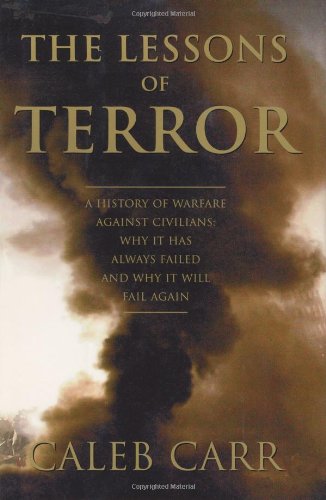
13. The Lessons of Terror: A History of Warfare Against Civilians: Why It Has Always Failed and Why It Will Fail Again
by Caleb Carr
Hardcover: 272 Pages (2002-01)
list price: US$19.95 -- used & new: US$8.75
(price subject to change: see help)
Asin: 0375508430
Average Customer Review: 4.0 out of 5 stars
Canada | United Kingdom | Germany | France | Japan
Editorial Review

Book Description
In The Lessons of Terror, novelist and military historian Caleb Carr examines terrorism throughout history and the roots of our present crisis and reaches a provocative set of conclusions: the practice of targeting enemy civilians is as old as warfare itself; it has always failed as a military and political tactic; and despite the dramatic increases in its scope and range of weapons, it will continue to fail in the future.

International terrorism—the victimization of unarmed civilians in an attempt to affect their support for the government that leads them—is a phrase with which Americans have become all too familiar recently. Yet while at first glance terrorism seems a relatively modern phenomenon, Carr illustrates that it has been a constant of military history. In ancient times, warring armies raped and slaughtered civilians and gratuitously destroyed property, homes, and cities; in the Middle Ages, evangelical Muslims and Christian crusaders spread their faiths by the sword; and in the early modern era, such celebrated kings as Louis XIV revealed a taste for victimizing noncombatants for political purposes.

It was during the Civil War that Americans themselves first engaged in “total war,” the most egregious of the many euphemisms for the tactics of terror. Under the leadership of such generals as Stonewall Jackson, the forces of the South tried to systematize this horrifying practice; but it fell to a Union general, William Tecumseh Sherman, to achieve that dubious goal. Carr recounts Sherman’s declaration of war on every man, woman, and child in the South—a policy that he himself knew was badly flawed, had nothing to do with his military successes (indeed, it hampered them), and brought long-term unrest to the American South by giving birth to the Ku Klux Klan.

Carr’s exploration of terror reveals its consistently self-defeating nature. Far from prompting submission, Carr argues, terrorism stiffens enemy resolve: for this reason above all, terrorism has never achieved—nor will it ever achieve—long-term success, however physically destructive and psychologically debilitating it may become. With commanding authority and the storyteller’s gift for which he is renowned, Caleb Carr provides a critical historical context for understanding terrorist acts today, arguing that terrorism will be eradicated only when it is perceived as a tactic that brings nothing save defeat to its agents.Download Description
In The Lessons of Terror, novelist and military historian Caleb Carr examines terrorism throughout history and the roots of our present crisis and reaches a provocative set of conclusions: the practice of targeting enemy civilians is as old as warfare itself; it has always failed as a military and political tactic; and despite the dramatic increases in its scope and range of weapons, it will continue to fail in the future.

International terrorism -- the victimization of unarmed civilians in an attempt to affect their support for the government that leads them -- is a phrase with which Americans have become all too familiar recently. Yet while at first glance terrorism seems a relatively modern phenomenon, Carr illustrates that it has been a constant of military history. In ancient times, warring armies raped and slaughtered civilians and gratuitously destroyed property, homes, and cities; in the Middle Ages, evangelical Muslims and Christian crusaders spread their faiths by the sword; and in the early modern era, such celebrated kings as Louis XIV revealed a taste for victimizing noncombatants for political purposes.

It was during the Civil War that Americans themselves first engaged in "total war," the most egregious of the many euphemisms for the tactics of terror. Under the leadership of such generals as Stonewall Jackson, the forces of the South tried to systematize this horrifying practice; but it fell to a Union general, William Tecumseh Sherman, to achieve that dubious goal. Carr recounts Sherman's declaration of war on every man, woman, and child in the South -- a policy that he himself knew was badly flawed, had nothing to do with his military successes (indeed, it hampered them), and brought long-term unrest to the American South by giving birth to the Ku Klux Klan.

Carr's exploration of terror reveals its consistently self-defeating nature. Far from prompting submission, Carr argues, terrorism stiffens enemy resolve: for this reason above all, terrorism has never achieved -- nor will it ever achieve -- long-term success, however physically destructive and psychologically debilitating it may become.

With commanding authority and the storyteller's gift for which he is renowned, Caleb Carr provides a critical historical context for understanding terrorist acts today, arguing that terrorism will be eradicated only when it is perceived as a tactic that brings nothing save defeat to its agents.


Cover design: Andy Carpenter
Cover photograph: Chris Corder/UPI
... Read more

Customer Reviews (12)

3-0 out of 5 stars An overview of terror.
In this book, Carr sets out to describe the history of terror.Terror against civilians is nothing new.In fact, the ancient Romans practiced terror against the opposing enemy citizens most of the time.Even worse, the Mongols virtually eliminated their enemies' cities.In the middle age, things began to change.Some society's respected the citizens of another country or principality.However many did not and the slaughter continued.When things did change, they did not change for all societies.

Although I agree with most of what this author says, I had a problem with some of his definitions.For instance, where does terror begin and legitimate warfare end.One of the things Carr critisizes is the American "terror bombing"Well, that might have happened in World War II.Carr labels the bombing of Yugoslavia, Iraq, and Afghanistan terror bombing, but lists the foray over Libya as justifiable.I am not sure I agree with his analogy.Another issue I disagreed with is that of Vietnam.Here Communists used terror indiscrimately, while the South and the Americans used it somewhat sparingly (B-52 bombings).The Communists won and proved how successful some terror is against civilians.

This is an interesting read on a current issue that faces the world.This is an OK read about the use of terror.

5-0 out of 5 stars Permanent wartime footing
Terrorism is warfare waged deliberately against civilians.Carr suggests terrorists are paramilitary units mounting offensive campaigns.Terrorism as a tactic has never succeeded.Military history can teach us lessons to solve the dilemma of modern terrorism.Terror's lure as a quick and gratifying solution is powerful.

Rome used destructive warfare against Carthage and some of the Germanic tribes.Rome came to live with constant threats and rebellion at its borders as a consequence of the tactics employed.Citizens grew weary and wary of service in the military.Young people were filled with apathy and aversion toward the state.

The first requirement of a just war is that it bring peace.The fire of terrorism is self-consuming.Pope Urban II sent his knights on a crusade.Both Christian and Muslim warriors victimized noncombatants.We continue to feel the effects of the crusades today.

Under nationalism every inhabitant became part of the war machine.The wars of the Reformation, the American Civil War, and World War I were especially savage for reason of new technology.In the first example the Inquisition was allowed to degenerate into an organ of persecution and torture.

Grotius's RIGHTS OF WAR AND PEACE dates from 1625.Frederick the Great reformed warfare.He showed contempt for soldiers and compassion for citizens.He had a concept of progressive war.

Total war is conflict without structure or bounds.We have now had it again for some two hundred years.Napoleon resurrected total war from medieval times and he was hated for it.Subsequently Clausewitz devised a variation he deemed absolute war.

Helmut von Moltke, by contrast, created the modern general staff system and supported war with limited objectives.He understood that peace, not devastation, was the purpose of war.Sherman's campaign in the Civil War created endless resentment.

Destruction on a mass scale was the Nazi ethic.(The Prussian military elite, following the principles laid down by von Moltke, among others, almost succeeded in its assassination attempt of Hitler.)The vengeful nature of terror is shown by the dropping of the atomic bombs on Nagasaki and Hiroshima.Contrarily, the rebuilding of Germany and Japan after the war demonstrated immense generosity, overcoming questionable wartime acts such as the fire-bombing of Dresden.

Sadly, a subsequent development sent the United States in another direction at the beginning of the Cold War.James Forrestal established the national security state with the CIA, the NSA, and the Department of Defense.This put the nation on permanent wartime footing.

The American style of warfare is hostile to ideas of creative limitation.Carr's argument is tightly constructed, buttressed by telling historical points.By implication our current situation is addressed.

5-0 out of 5 stars Brief and to the Point!
Mr. Carr has written a concise(small enough to fit in a hip pocket) history of warfare against Civilians. I would recommend this as an excellent primer on the subject. In my belief this should be regarded as a political history as well as a military history.

Saying that, I will add some of his conclusions about reforms are overly simplistic.

3-0 out of 5 stars Good overview
The book starts off describing some of the origins of terror, beginning with the Roman Empire.It then steamrolls through the successive centuries picking examples throughout history of why terror doesn't pay off.While I understand the point, I feel the author tried to cover too much ground in too little space.More concrete examples and more direct writings and quotations from key players would have made the examples stronger.

The author also brushes over exceptions to the rule, including post-war Japan and Germany.

Overall, it's decent book that gets you thinking about terrorism in an objective manner...it's just a little bit light on the details.

4-0 out of 5 stars Excellent critique of terrorism
In a very concise manner Mr. Carr has written a wonderfully informative handbook. He realizes that terrorism is nothing new but must now be confronted with different measures then were used in past history. He does not say to appease terrorists he just states that people do not meld together when force is used against them for too long. Interesting that he feels that Mr. Rumsfeld is way ahead of his time on the issue.
... Read more


14. Untitled Alienist Novel
by Caleb Carr
 Audio Cassette: Pages (2030-12-31)
list price: US$49.95 -- used & new: US$32.97
(price subject to change: see help)
Asin: 0743551559
Canada | United Kingdom | Germany | France | Japan

15. Killing Time : A Novel of the Future
by Caleb Carr
Paperback: 310 Pages (2000)
-- used & new: US$32.00
(price subject to change: see help)
Asin: 0316854719
Canada | United Kingdom | Germany | France | Japan

16. Exorcist: The Beginning
by Steven Piziks
Mass Market Paperback: 256 Pages (2003-12-01)
list price: US$6.99 -- used & new: US$6.47
(price subject to change: see help)
Asin: 0743482700
Average Customer Review: 4.0 out of 5 stars
Canada | United Kingdom | Germany | France | Japan
Editorial Review

Book Description

BASED ON THE FILM FROM THE ACCLAIMED DIRECTOR OF AUTO FOCUS AND AFFLICTION, AND FROM THE WRITER OF THE ALIENIST

In the aftermath of World War II, Lankester Merrin finds himself in the remote Turkana region of Kenya. Haunted by memories of the war, he has taken a sabbatical from the priesthood and journeyed far from his native Holland. He has come to lead the archaeological excavation of a mysterious, Byzantine church, buried in pristine condition as if on the day it was completed. Directly underneath the church, Merrin discovers a much more ancient crypt -- and finds himself face-to-face with unspeakable Evil.

Madness descends on the local villagers and the contingent of British soldiers sent to guard the excavation. Merrin watches helplessly as the atrocities of war are repeated against another innocent village -- atrocities he'd hoped to never see again. The blood of innocents flows freely on the East African plain, but the horror has only just begun....Download Description
"BASED ON THE FILM FROM THE ACCLAIMED DIRECTOR OF AUTO FOCUS AND AFFLICTION, AND FROM THE WRITER OF THE ALIENIST In the aftermath of World War II, Lankester Merrin finds himself in the remote Turkana region of Kenya. Haunted by memories of the war, he has taken a sabbatical from the priesthood and journeyed far from his native Holland. He has come to lead the archaeological excavation of a mysterious, Byzantine church, buried in pristine condition as if on the day it was completed. Directly underneath the church, Merrin discovers a much more ancient crypt -- and finds himself face-to-face with unspeakable Evil. Madness descends on the local villagers and the contingent of British soldiers sent to guard the excavation. Merrin watches helplessly as the atrocities of war are repeated against another innocent village -- atrocities he'd hoped to never see again. The blood of innocents flows freely on the East African plain, but the horror has only just begun.... " ... Read more

Customer Reviews (2)

5-0 out of 5 stars Mostly good
An enjoyable read, but differs on key points with the film.
Yes, I know, different genres, so different methods and ways to an end.
Anyways, there is enough crossover with the film to wonder why the writer was not kept up with the script changes. Personally I liked the way some scenes at least gave a background to actions, even if a "madeup" reason is given. However, the visual stun that the opening section of the film gives is just superb, and the writer could at least have delivered something just as powerful. And yes, the film has gross scenes, so the book delivers on some of those, but still , as a novelisation it could at least have followed a first person narrative method to convey the film in a much better way. Still, worth the read.

3-0 out of 5 stars They should concentrate on being scary, instead of gross
I bought this book because I wanted to find out what the movie would be like. Of course, this is a novelization of the movie. I am pleasantly surprised and disappointed.

First off, the novel being a novelization is not as deep as real novel. We don't learn that much about the characters. It's basically a screenplay of the movie. Hence, it is sometimes really hard to care about the characters, especiallythe ones that get killed and there is a lot of killing. There are also a lot of people that get touched by possession, but not truly possessed. They go crazy, hallucinate,kill and die but since, we don't really care about them, who cares.

Second, this book is overkill on the gross stuff. Flys, maggots, hyenas, crows are everywhere. Flys come out of a man's boils. A woman has stillborn child with maggots in the afterbirth. A guy hallucinates that his butterfly collection has come to life. A butterfly crawls out of his mouth. He kills himself. There are at least 3 vomiting scenes. And why? What are the filmakers thinking? Is the demon Candyman on crack? This stuff is not really scary it is just gross for grossness sake. I really hope they cut a lot of crap out of the movie.

However, this story is interesting and very atmospheric. All the stuff about the church and why it was made is capitavating. The demon is captivating too and so is father Merrin. Their battle at the end of the book is a really good one. Unfortunately, getting to that battle is an uneven journey. They really needed to concentrate on characters such as Sara and Bessian. I would have like to seen Bessian first go into the church and release the demon, or chant the spell on the spiral alter. We don't see any of that. Instead we get a couple of over-the-top evil characters, one with boils all over his face and one a quick to kill general. Both die, but why? You would think the devil would want to keep them around. There is another priest in the book besides Merrin. His role is a rip off father Karras from the origianl and we really don't learn that much about him. Of course, he battles the demon too. But looses big time with an ancient sword in his chest.

Overall, the movie is probably going to be pretty good, especially the battle at the end. The mysteries are good and I'm sure the special effects will be good. But be prepared to be more grossed out then scared. This will be a standard horror movie for a lot of people. ... Read more


17. The Caleb Carr Box Set Boxed Set
by Caleb Carr
 Audio Cassette: Pages (1999-11-01)
list price: US$29.95
Isbn: 0743500008
Canada | United Kingdom | Germany | France | Japan

18. The Devil Soldier: The Story of Frederick Townsend Ward
by Caleb Carr
 Hardcover: 366 Pages (1992-01-08)
list price: US$25.00 -- used & new: US$24.49
(price subject to change: see help)
Asin: 0679411143
Average Customer Review: 4.5 out of 5 stars
Canada | United Kingdom | Germany | France | Japan

Customer Reviews (3)

5-0 out of 5 stars The Yankee sailor that saved the Chinese Empire
In 1859 a 28 year-old sailing officer from Salem Massachusetts took service under the Chinese Empire to defend it from mortal danger. When this young man died in battle in 1863 he had put down the largest and bloodiest civil war in human history (the American Civil War raging at the same time pales in comparison), he had been made a general and a mandarin, he had married a Chinese princess, and he was interred in his own temple. Perhaps most impressively was the fact that he did all of this while retaining the reputation among his friends and foes of being a man of decency, fairness, honor and incorruptibility. And yet for all this, he is nearly forgotten in both his native and adopted country.

Frederick Townsend Ward's history was erased largely because he was feared by both his Manchu masters and by the European powers that were seeking to dismember China for their own mercenary ends. The author speculates that due to his contempt for the cruelty and corruption of the Manchu's, that had he survived, he might have turned the instrument of his "Ever Victorious Army" against them in order to restore the Ming Dynasty. Had that happened, the history of China could have far different in the century that followed. It is clear that Ward found the concept of ending the Empire as unthinkable- which is why the later republic never honored his memory.

One other thing struck me while reading this book: Ward wanted to attend West Point but was not able to obtain an appointment because he lacked "connections." In the long run this didn't seem to hurt him too much....

If this story were fiction it would surely be dismissed as too far-fetched to ever be believed.