e99 Online Shopping Mall

Geometry.Net - the online learning center Help  
Home  - Authors - Edwards Jonathan (Books)

  1-20 of 100 | Next 20
A  B  C  D  E  F  G  H  I  J  K  L  M  N  O  P  Q  R  S  T  U  V  W  X  Y  Z  

click price to see details     click image to enlarge     click link to go to the store

$13.44
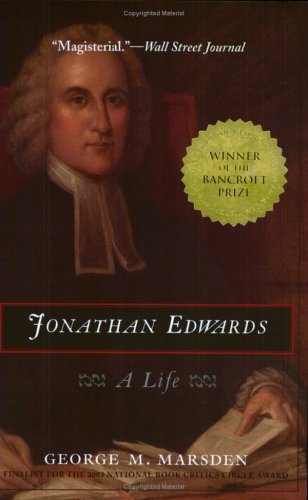
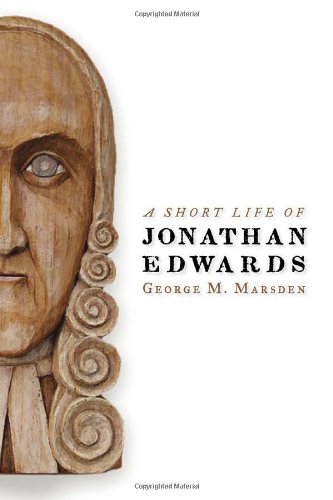
1. Jonathan Edwards: A Life
$13.84
2. The Sermons of Jonathan Edwards:
$10.18
3. A Jonathan Edwards Reader (Yale
$6.24
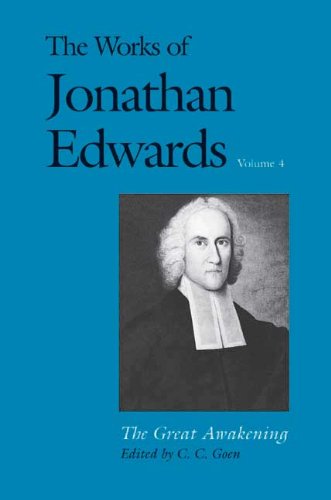
4. Jonathan Edwards: On Revival
$21.07
5. Jonathan Edwards: A New Biography
$10.35
6. The Religious Affections
$1.29
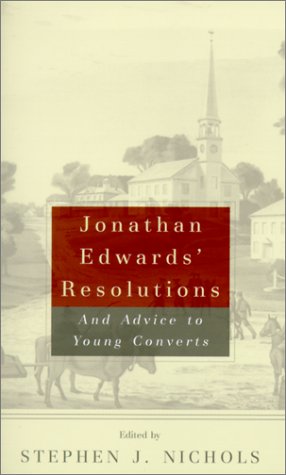
7. Jonathan Edwards' Resolutions:
$26.29
8. The Philosophical Theology of
 
$89.67
9. The Miscellanies, 1153-1360 (The
$13.95
10. Selected Writings of Jonathan
$12.36
11. The Theology of Jonathan Edwards:
$69.00
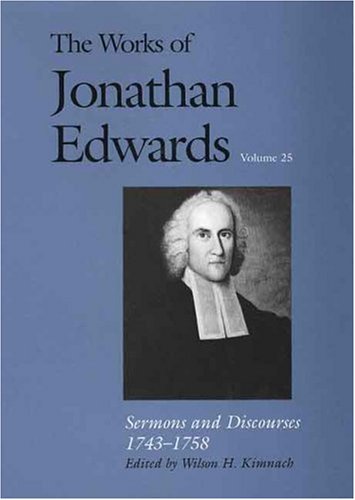
12. Sermons and Discourses, 1730-1733
 
$77.48
13. Letters and Personal Writings
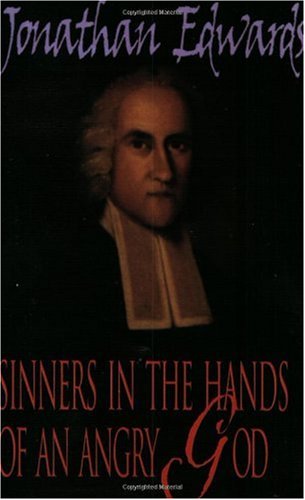
14. Sinners In The Hands Of An Angry
$23.95
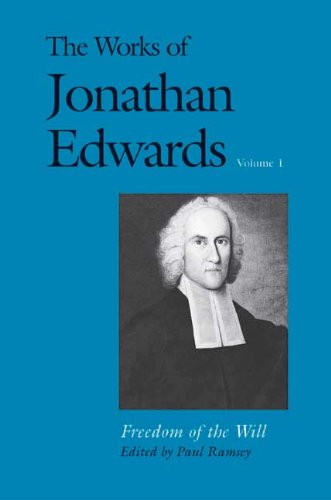
15. Freedom of the Will
$6.80
16. Jonathan Edwards on Knowing Christ
$10.68
17. The Religious Affections (A Treatise
 
18. Jonathan Edwards The Preacher
$6.89
19. Pursuing Holiness in the Lord
$7.00
20. Jonathan Edwards: A Guided Tour

1. Jonathan Edwards: A Life
by George M. Marsden
Paperback: 640 Pages (2004-07-11)
list price: US$22.00 -- used & new: US$13.44
(price subject to change: see help)
Asin: 0300105967
Average Customer Review: 5.0 out of 5 stars
Canada | United Kingdom | Germany | France | Japan
Editorial Review

Book Description

Jonathan Edwards (1703–1758) is a towering figure in American history. A controversial theologian and the author of the famous sermon Sinners in the Hands of an Angry God, he ignited the momentous Great Awakening of the eighteenth century.

In this definitive and long-awaited biography, Jonathan Edwards emerges as both a great American and a brilliant Christian. George Marsden evokes the world of colonial New England in which Edwards was reared—a frontier civilization at the center of a conflict between Native Americans, French Catholics, and English Protestants. Drawing on newly available sources, Marsden demonstrates how these cultural and religious battles shaped Edwards’s life and thought. Marsden reveals Edwards as a complex thinker and human being who struggled to reconcile his Puritan heritage with the secular, modern world emerging out of the Enlightenment. In this, Edwards’s life anticipated the deep contradictions of our American culture.

Meticulously researched and beautifully composed, this biography offers a compelling portrait of an eminent American.
... Read more

Customer Reviews (31)

5-0 out of 5 stars Perfect condition! Quick delievery!
Above all, it's very nice that I can recieved this book very quickly with perfect condition (paperback).
Among biography of Jonathan Edwards, this book is a masterfiece!
I'm very satisfied with this order!

5-0 out of 5 stars Unique Edwards Biography
Marsden, George M.Jonathan Edwards: A Life.New Haven: Yale University Press, 2003.

There is almost a glut of material on Jonathan Edwards. That can be both good and bad.It is good that men are wrestling with Edwards's life and thought.A study of Edwards can renew intellectual life within the church.Furthermore, Edwards is being fairly studied by scholars outside the conservative world. This, too, is good.But there is always the question when a new Edwards book comes out:is there anything left to say?George Marsden thinks so. And Marsden takes his point of departure from other Edwards scholars.For all of the work on Edwards, the standard biographies (Perry Miller and Iain Murray) leave holes in some places.
Thesis:Jonathan Edwards lived in the crossroads of intellectual and social history.He is a perfect representative of both streams of both European and American thought:he was a traditionalist who stood for authority, order, and stable values.Ironically, he also planted the seeds of the individualism that would later haunt evangelicalism.Even more paradoxically, the very cure (e.g., the Great Awakening) to the problem (e.g., spiritual decay and social stagnation) would later become another problem for religious America.

There are two illustrations of Marsden's thesis from Edwards' ministry:the Great Awakening and the communion controversy, the latter will be examined in light of his political views.In both cases we see Edwards the traditionalist clash with Edwards the innovator.Edwards' instrumental role in the Great Awakening conflicted with other pastors in the region.Unwillingly, or unwittingly, Edwards inspired other men to rise up and carry on the revival, a task that also meant criticizing the status quo ecclesiology.Another example is Edwards' view on church-state relations (160).Was Edwards going to be the traditional Constantinian Protestant and favor a state-protected church, or would he encourage his people to be a holy congregation, called-out and separated from the world?It appears he wanted both.On p. 196 Edwards advocates a strong Constantianism.This clashed with his view on presenting spiritual evidences to the Lord's Supper.It is obvious why.

Solomon Stoddard, Edwards' grandfather and the previous pastor, sought a mediating position with the Puritans demand for evidence of conversion alongside the painful fact that many people did not have that evidence.If they did not have that evidence, they weren't really in the covenant.So they posited a "half-way" covenant.There was still the nagging problem of evidence.Therefore, the parishioners would give evidence of moral sincerity whereas Edwards' demanded evidence of godly piety (368).It was Edwards' downfall (or heroic hour, depending on your point of view) to overturn this compromise.

Evaluation:
This book faithfully carries on the Edwardsean tradition.It presents a pastor who sought Christ-exalting power in the pulpit.Yet it is one of the first sympathetic books on Edwards to illustrate tensions in his worldview--tensions the Evangelical world is feeling today.Does a longing for revival and fresh power from the Spirit undermine certain stati quo in Reformed orthodoxy?Marsden's thesis leaves the reader wrestling and thinking on this question.Another fine point is Marsden's emphasis on the healthy sexual morality and love found between Jonathan and Sarah, especially in light of current confusion on sexual mores.I heartily recommend this book.

5-0 out of 5 stars The way Biographies Should Be
Edward's life will be interesting, even to people outside Reformed or Christian circles. If you are simply interested in American History, Edwards is an important figure in the early years of our nation.

But what makes this book even better is Marsden. He is a great scholar/historian, i.e. he has done extensive research and interacted with the primary and secondary sources. But, not only does he present accurate history, he writes in such a way that he keeps you interested at all times. Marsden's style is easy to read and the book almost reads like a novel.

One of my favorite books! Highly recommended!

4-0 out of 5 stars The Human Edwards
Marsden's biography of Edwards does a marvelous job of portraying him in a critical light, highliting both his strengths and weaknesses as a theologian and pastor.

To be honest, it was almost a relief to read of Edwards' faults. The way some people talk of Edwards, you would think he was the greatest Christian of the modern era, but the truth is he had as many flaws as anyone else. For example, though many people laud Edwards for his closely argued Calvinistic theology, few know of his equally intricate, if not wildly speculative, eschatological ruminations. Or, consider Edwards the churchman. While he had the utmost concern for the salvation of his people's souls, he was also an authoritarian who could be distant, and hard to relate to on a human level. Indeed, he was ejected by his church shortly after the famous Awakenings.

Aside from humanizing Edwards, Marsden does a great job of describing the 18th century context, both in its intellectual and historial aspects, and placing Edwards within it. All in all, while I was expecting a volume of hagiography, I was met by a critical biography, which, while not as edifying as I had hoped, was none the less eye opening for its critical stance. Edwards has just as much to teach through his mistakes as through his successes.

3-0 out of 5 stars Impersonal
I find myself in the minority concerning this book. I was disappointed in the "aloof" mood of the author and mostly with the lack of emphasis on historical events within the life of Edwards. It seems to be more of an examination of the mind of Edwards instead of a look at his life. Edwards, (in the way the author presents him),comes accross as merely a "brain" with no real personality or ......life!
Also there is a decided neutrality Marsden takes on all that Edwards believed, as if to send a disclaimer along with the book that says "By no means do I in the least agree or consent to these primitive ideas."
A great deal of research went in to the book, that is obvious.
If Edwards believed, lived, and preached the Love of God, why is it that the author presents him as this machine-like intellectual with no passion or tenderness? ... Read more


2. The Sermons of Jonathan Edwards: A Reader
by Jonathan Edwards
Paperback: 336 Pages (1999-07-11)
list price: US$20.00 -- used & new: US$13.84
(price subject to change: see help)
Asin: 0300077688
Average Customer Review: 5.0 out of 5 stars
Canada | United Kingdom | Germany | France | Japan
Editorial Review

Amazon.com
The Sermons of Jonathan Edwards: A Reader is the first published anthology of sermons by the most influential American Puritan of the 18th century. Some people think Edwards is scary, because his most famous fire-and-brimstone preaching ("Sinners in the Hands of an Angry God") is too severe for today. But this book demonstrates that Edwards is equally capable of rapture, of reason, and of relating to a great variety of Christian experiences. The following passage, from a sermon called "Heaven Is a World of Love," is timeless in its sensibilities: "[B]y living a life of love ... you will be in the way to heaven. As heaven is a world of love, so the way to heaven is the way of love. This will best prepare you for heaven, and make you meet for an inheritance with the saints in that land of light and love. And if ever you arrive at heaven, faith and love must be the wings which must carry you there."

The Sermons of Jonathan Edwards contains 14 sermons (of the more than 1,200 that Edwards preached), including five that have not previously been published. A smart introduction describes the sermons' historical context (some were preached to white congregations, others to Native Americans; all were delivered in the volatile period between the Salem witch trials and the American Revolution) and their literary structure. (Each sermon starts with a Scripture text and brief comment or interpretation; makes a simple statement of doctrine that will be presented in the sermon; and then proceeds with various defenses, applications, and uses of the doctrine, which address the immediate personal and social concerns of the listeners.) As a collection, the editors note, "the sermons have a sense of progression to them that reflects the pilgrimage of the soul ... from its sinful earthly state to a pure heavenly existence." A sermon called "The Way of Holiness," preached when Edwards was a teenager, explains what each step in the soul's pilgrimage should be like, urging believers to live so as to deepen the "likeness in nature between God and the soul of the believer." Edwards's own credo, written when he was 19, declares his intention to follow such a pilgrimage, "to live with all my might, while I do live." --Michael Joseph GrossBook Description
Jonathan Edwards, one of the great thinkers in the history of American religion, was first and foremost a preacher and pastor. This collection of fifteen sermons, four of which have never before been published, represents the major themes of Edwards` preaching and reflects the stages of a life dedicated to experiencing and understanding spiritual truth. ... Read more

Customer Reviews (7)

5-0 out of 5 stars A DIVINE AND SUPERNATURAL LIGHT
I purchased the book for one sermon A DIVINE AND SUPERNATURAL LIGHT

I was amazed about how many of the sermons were right one with where I am at in my life.

Gods word is time less and this is a clear translation of what God has to say to his people.


5-0 out of 5 stars 18th Century Purpose Driven preacher
Do not get this book if you're pursuing modern or postmodern theology. Do not get this book if you're looking for gimmicks.

If you want to get down to basics ... salvation and sin, heaven and hell ... read this collection.

The original 'fire & brimestone' sermon ... "Sinners in the hands of angry God" is worth the price of the book if you're unfamiliar with Edwards.

You can see the evangelical power of this mighty pastor grow in this chronological collection.

Edwards is a gift to us, well worth rediscovering.

5-0 out of 5 stars The Sermons of Jonathan Edwards : A Reader IS A VERY GOOD BOOK TO READ
Jonathan Edwards sermons are inspiring, leading to Christ. 18 century religious american genius. Easy to read. Worth to buy. Highly recommend.

5-0 out of 5 stars As always, excellent!
Edwards is excellent in presenting the gospel.His sermons are quite substantive and always pointing the reader (or hearer in his days) towards God.Should you desire a great book of some of Edward's greatest works, this is the book for you.

5-0 out of 5 stars Beware of nutcase reviews of this book.
John Calvin and Jonathan Edwards are, without question, two of the greatest theologians in the history of the church.Who is Mike DeSario? ... Read more


3. A Jonathan Edwards Reader (Yale Nota Bene)
by Jonathan Edwards
Paperback: 384 Pages (2003-03-11)
list price: US$16.95 -- used & new: US$10.18
(price subject to change: see help)
Asin: 0300098383
Average Customer Review: 4.5 out of 5 stars
Canada | United Kingdom | Germany | France | Japan
Editorial Review

Book Description
Prepared by editors of the distinguished series The Works of Jonathan Edwards, this authoritative anthology includes selected treatises, sermons, and autobiographical material by early America`s greatest theologian and philosopher. ... Read more

Customer Reviews (2)

5-0 out of 5 stars Excellent anthology
This book is one fruit of over 50 years of careful scholarship by the Yale Jonathan Edwards project.The editors of this anthology have been among the editors of the massive critical edition of Edwards' works that was published between 1957 and 2006.

As a result, this anthology is based on an excellent critical edition and has been itself edited by the experts.The language is Edwards' own but with regularised spelling, which makes for great reading.The editors have, for the longer works, done a brilliant job of editing the text down to fit in a manageable paperback, by removing carefully chosen sections of text.Their introduction is 40 illuminating pages.

The anthology consists of a good mix of works.Section one has eight miscellaneous pieces, including some Miscellanies and the Faithful Narrative, which is Edward's own account of one stage of revival.

It closes with various personal writings: excerpts from his diary and Resolutions, plus various personal letters.

The jewel in the crown are the two central sections of the collection.Three sermons: Sinners in the Hands of an Angry God; A Divine and Supernatural Light; A History of the Work of Redemption (all in full) followed by six abridged treatises, including On the Religious Affections; Humble Inquiry; Original Sin; Freedom of the Will and the Nature of True Virtue.

This little book has been golddust for me in trying to get acquainted with Edwards.

4-0 out of 5 stars Great anthology
This book contains excellent choices from the writings of JonathanEdwards, the first great philosopher in the American colonies, includingsome of his earliest writings, mostly just philosophical or biologicalmusings.It reflects some interesting developments in the maturation ofhis thinking.It also has letters to friends, colleagues, and familymembers.Some of his most well-known sermons are alongside somerepresentative samples of his sermons.Unfortunately, there is room foronly excerpts from his longer works, such as The Religious Affections, butthat can't be helped in an affordable popular anthology.If you want allof his works, but the complete works from the same publisher.If you justwant a representative sample of some of the best works of this greattheologian and philosopher, get this. ... Read more


4. Jonathan Edwards: On Revival
by Jonathan Edwards
Paperback: 160 Pages (1984-10-01)
list price: US$10.00 -- used & new: US$6.24
(price subject to change: see help)
Asin: 0851514316
Canada | United Kingdom | Germany | France | Japan

5. Jonathan Edwards: A New Biography
by Iain H. Murray
Hardcover: 503 Pages (2003-10-06)
list price: US$33.00 -- used & new: US$21.07
(price subject to change: see help)
Asin: 0851514944
Average Customer Review: 4.5 out of 5 stars
Canada | United Kingdom | Germany | France | Japan

Customer Reviews (11)

4-0 out of 5 stars Fascinating Man
This book is written by an enthusiastic believer of the reformed faith about a reformed theologian. He debates that the reductionists theories to explain the Great Awakening in terms of social/economic/political causal relationships.Murray asserts the Great Awakening was a work of God. To understand Edwards's role in the Great Awakening one has to understand this point. Depending on your world view this book will be an exciting read or a frustrating read.

The book covers all the controversies in his life. The book is extremely well researched and documented. He argues well for his point and quotes extensively from Edwards, Edwards's family and contempories. This is part of the problem with the book for me. I was looking for more of how the writings of Edwards fit within his life. The book did provide some information on this topic, but the book focused mainly on the controversies. The book bogs down for me because Murray quotes so extensively, I had a hard time keeping with the flow.

In summary, I strongly recommend the book. It is the most balanced biography I've read of Edwards. Murray covers the controversies and events of Edwards's life well. The final chapter traces Edwards's legacy today, which I found interesting. I also recommend Marsden's book "Jonathan Edwards: A Life." It has a slightly different perspective and is a little more readable. Although, I think Murray's biography is better researched.

5-0 out of 5 stars An Edifying Study of the Life of Jonathan Edwards
I have been recently observing an unfortunate phenomenon: Jonathan Edwards is not well known. My referencing of Edwards in conversation has usually been met with an astonishing, "Who?" or, the caricature of the angry, downcast, miserable, depressed, joy-stealing preacher of "Sinners in the hands of an angry God," springs to mind and immediately prejudices the hearer against considering anything positive about the rural pastor from North Hampton, Connecticut. Sadly, this trend has settled in among those who should know and love him best: the Church of Jesus Christ.

I certainly do not directly blame the Church for casting Edwards' life and ministry aside and remaining ignorant of the truth he labored to give to God's people for their health and spiritual good. It is probably mostly the fault of the secular schoolbooks and scholarly critics that speak of Edwards from heavily biased opinion and from misinterpretations his life and teaching. This has, regrettably, painted a picture of Edwards in the minds of Americans that is very unlike the original.

And how tragic! The God-exalting, Christ-centered, humble, love-filled life and ministry of Jonathan Edwards has provided us with deeply satisfying, spiritually nourishing, life-giving, fruit-bearing sustenance for our souls, and yet we have forsaken this well of pure water because we have come to believe, essentially, that it is contaminated! Let us not be content to allow secular authors and critics to have the sole voice to speak to us about our founding fathers! O that we would reclaim that original portrait of this great man from the theft of misinterpretation and place it back securely in its proper place: the Church of Jesus Christ, so that all people can come, see, and enjoy!

Iain Murray, with great skill and spiritual insight, has certainly provided us with the means to do just that in his book, Jonathan Edwards: A New Biography. With this book, Murray has provided us with an accurate, edifying, truthful account of Edwards' life that not only examines his theological convictions, but also demonstrates how those convictions flourished in his everyday life. Edwards is portrayed in real life, with real struggles, real passions, real heartbreak, in the context of a real family, supported, and held up by a God who was more real than all the aforementioned.

Along with a detailed, evangelical interpretation of Edwards life, thought and ministry, Murray provides many excerpts from Edwards' pen that are helpful and practical for any reader. Most notable is Edwards' keen insight on the issue of spiritual pride. Edwards writes, "Spiritual pride is a most monstrous thing. If it be not discerned, and vigorously opposed in the very beginning, it very often soon raises persons above their teachers, and supposed spiritual fathers, and sets them out of the reach of all rule and instruction, as I have seen in innumerable instances" (341).

It can be safely assumed that Edwards saw the `beginnings' of such pride when he personally wrote a young lay-man who had taken the pulpit during a time when the regular pastor was absent, instructing him to stop this practice. In the letter that Murray supplies, we read from Edwards, "I am fully satisfied by the account your father has given me, that you have lately gone out of the way of your duty, and done that which did not belong to you, in exhorting public congregations...I hope you will consider the matter, and for the future, avoid doing thus. You ought to do what good you can, by private, brotherly, humble admonitions and counsels; but `tis too much for you to exhort public congregations" (222). Murray also supplies essential quotes from Edwards regarding proper understanding of the Great Awakening, true conversion, and pastoral study, just to name a few.

Without making an unnecessary overstatement, I can easily that Murray's New Biography has been one of the most edifying and helpful books I have ever read. I often take it back off my shelf to reflect and meditate on significant portions of the book. It is well-written, detailed, thorough, extremely helpful, very interesting, and will provide the reader with a clear understanding of the life and ministry of Jonathan Edwards; not to mention a solid introduction to his theological thought. I heartily recommend it!

5-0 out of 5 stars Superb
Unfortunately in academic circles today it has become taboo to express biases; to be sure, they all come through sooner or later.But, in academia, the writer must separate his own proclivities from his account of "the facts".

The simple fact of the matter is that the same God that Murray worships is the same God Edwards worshipped and now worships in heaven and so we are left with an account of Edwards by a man who is also thoroughly acquainted with the spiritual realities that Edwards experienced (perhaps not to the same degree).

Biographers like Perry Miller are atheists and so they start with naturalistic presuppositions in their accounts.This, for the Christian reader, is an untenable and unfortunate way to look at the life of one of God's choicest saints.

The book is remarkably well researched. Murray is concerned to chronicle the details of Edwards' life with painstaking thoroughness and his account of Edwards' dismissal from his Northampton congregation leaves the reader shocked.Not surprisingly, Calvin was dismissed from Geneva in similar circumstances - such has been the unfortunate tendency of Christians over the centuries.

Murray's writing style is wonderful.He's perspicuous and leaves the reader with the impression that many of today's Christian writers would do well to pack away their pens and take up different activities.

Lastly, this book is a devotional gem.I've written a three-page essay on hos Edwards' life, ministry and thought have affected my own and this has been a pleasure rather than a pain.

5-0 out of 5 stars Excellent Biography of a Great and Godly Man!
I heartily concur with some of the other reviewers - Murray's book is the definitive biography of a godly man who was an important part of the Great Awakening.

The book is comprehensive, covering several areas of Edwards' life:

1.Early childhood and Christian influences.
2.His salvation experience.
3.His happy home as evidenced by the large number of children, loving relationship with his life, and hospitality to others.
4.Associations with David Brainherd, George Whitfield, and other religious leaders of his day.
5.His important contributions to the Great Awakening and the resultant opposition he experienced.
6.His expulsion from the Northampton Church based on his stance on the Lord's Supper.
7.Missionary endeavors to the Indians.
8.Later years and service at Princeton University.

Murray successfully portrays Edwards as a man who although reserved in some respects, was actually a very warm and caring man towards others.

As for the reviewer from France, I only have to say - God alone determines where He will move His Spirit!That is not our choice to make!

5-0 out of 5 stars A Soul Stirring Biography
Jonathan Edwards is maybe the most exciting historical Christian to study (except for Luther.Part of this explanation is the fact that history shows us a much differnt picture than the modern stereotypes show us.Murray is to be commended for his standard setting work on Edwards.Murray is very warm and doctrine centered.As periodical "Christian History" said of Murray's work, "this is the biography Edwards himself would have most appreciated." (Spring 2003).

Final Analysis

This book is long, complex, and well researched.It is not bed time reading, but rather, Sabbath reading as it will stir one's thoughts to the Lord.Murray pulls no punches as he shows his view of Edwards: This man saw more of the glory of heaven and the terror of hell than any modern Christian ever will.Murray's aim is that after reading, Christians will then take up Edward's works and discover the glory for themselves. ... Read more


6. The Religious Affections
by Jonathan Edwards
Paperback: 216 Pages (2001-01)
list price: US$16.99 -- used & new: US$10.35
(price subject to change: see help)
Asin: 1589600266
Average Customer Review: 5.0 out of 5 stars
Canada | United Kingdom | Germany | France | Japan
Editorial Review

Product Description
“What are the distinguishing qualifications of those that are in favor with God, and entitled to his eternal rewards? . . . What is the nature of true religion?And wherein do lie the distinguishing notes of that virtue and holiness that is acceptable in the sight of God?”These questions and others are addressed in Jonathan Edward’s masterpiece, The Religious Affections.To Edwards, these were the most important questions man has to answer.Edwards was the most prominent preacher of America’s first Great Awakening.He witnessed true revival at his church in Northampton, Massachusetts.However, Edwards cautioned against the opposing dangers of rampant emotionalism and elitist intellectualism.He was concerned to define the nature of true religion and to distinguish between true and false revival.The result was this classic work, which will long remain one of the most penetrating and soul-searching volumes in the history of the Christian church. ... Read more

Customer Reviews (15)

5-0 out of 5 stars The most profound analysis of spiritual experience ever written
The Religious Affections is probably the most profound analysis of spiritual experience ever written - and by the most brilliant philosopher/theologian to ever come from North America (and possibly the English language).

Jonathan Edwards wrote this book after the Great Awakening with which he was closely involved. He wrote as both a friend, defending the authenticity of revivals - and also as a critique, warning against putting trust in things which were not certain signs of genuine Spirit-wrought affections.

His treatise takes three parts. In part one he defines his terms and gives twelve reasons why genuine religion (i.e. Christian spirituality - "religion," in Edwards day, did not have the negative connotations that it carries today) consists much in the affections. The affections, for Edwards, are more than mere emotions - they are the strong and lively inclinations of the will, seated in the human heart.

Part two discusses twelve things which are not certain signs of true religious affections. These are things which Edwards warned should not be trusted as evidences of grace OR discarded as evidences that the Holy Spirit has NOT worked in a saving way. They are not indicators one way or the other.

Part three is the most lenghty and examines twelve things which are signs of a true work of the grace, wrought by God's holy Spirit in the heart. This is where Edwards is at his best - carefully, logically, biblically, and passionately describing the true evidences of regeneration. His analysis is keen, his thoughts clear, his argument orderly, his scholarship extensive, his knowledge of Scripture profuse, and his understanding of the human heart profound.

This particular edition - produced by Yale and edited by John Smith - is the best critical edition in print. The introduction and notes on the text are very helpful, as Smith summarizes Edwards' arguments and backgrounds the Puritan writers and their books which Edwards quotes in Religious Affections. This volume also includes Edwards' related correspondence with Thomas Gillespie from Scotland - this being the first time the complete correspondence has been printed in the same volume with the Affections.

This is not an easy book to read. Edwards takes getting used to. But it is very worthwhile. I'm currently reading it for the third time and I continue to find it useful. I highly recommend it for pastors and preachers and all Christians who yearn for a personal and corporate work of the Spirit in revival and spiritual awakening.

5-0 out of 5 stars Classic Work by a Great Thinker and Theologian
This is one of the three Edwards works every Christian should read, along with Sinners in the Hands of an Angry God and The Prevailing Notion of the Freedom of the Will... (the original title was a mile long!). Sinners is the shortest read, then this, then Freedom. This will help you understand the Great Awakening from Edwards perspective, while kindling in you a passion to know God more intimately.

5-0 out of 5 stars Rich, Rewarding, and Convicting
This is one of the great devotional Christian classics of the 18th century, but it still packs a mighty punch today. It began its life as a series of sermons preached by Edwards to his Northampton congregation in 1742 and 1743, and was first published in 1746. Edwards discusses the place of religious fervor and feelings in the Christian life. For those who prefer a more staid and serene Christian existence, Edwards discusses the prevalence of such scripturally based affections as love, joy, desire, compassion, and zeal. He concludes this opening section by asking how can people sit and hear about "the unparalleled love of the innocent, and holy, and tender Lamb of God, manifested in His dying agonies, His bloody sweat, His loud and bitter cries, and bleeding heart, and all this for enemies, to redeem them from deserved eternal burnings, and to bring to unspeakable and everlasting joy and glory, - and yet be cold and heavy, insensible and regardless! Where are the excesses of our affections proper, if not here?"

After this stirring salvo, Edwards then addresses those who have gone overboard in emphasizing emotional experiences by giving 12 false signs which are thought by many to be indicative of someone who is experiencing true religious affections from God. Many people trust in the depthness of their emotions, the zeal for doing churchwork, the experiences they have had when a scripture verse came to mind, the appearance of love in a person's life, etc, but these things in and of themselves are not conclusive proof of God's divine grace.

Then in the body of the book, Edwards discusses 12 clear signs that God is at work in the life, and the chief sign is that there is a greater appreciation and love for God for who He is and not primarily for what you can get from Him.

Another sign that you are expression truly divine religious affections is that you continue to live for Christ every day. If you have one or two days in church where you feel genuinely inspired and then go back to living a life of sin, then you have not experienced a genuine awakening from God, because when God awakens you, you will be changed forever. Everything you do in life will be motivated by a selfless love for God and for His divine qualities and a selfless love for others.

This book was a shattering read for me because I have often looked upon the religious experiences in my life as proof that I was 'in the Lord,' or proof that I was walking with the Lord, when in actuality, a changed life is the proof.

I should also say that the book is a bit wordy. Many sentences are almost a whole paragraph long. You really have to concentrate to get the main idea in certain portions of the book. The reader not used to 18th century writing might have to adjust to these long and sometimes meandering sections.

But you will be greatly rewarded if you give this book the time and study that it deserves.

5-0 out of 5 stars Must Read!
An essential work on Christian faith and its natural manifestation in human emotion. Written by arguably the greatest Calvinist preacher to ever live.

5-0 out of 5 stars The Final Word
Jonathan Edwards penned "Religious Affections" in a day much like our own. Battle lines were drawn over religion of the heart and religion of the head. Edwards, the consummate scholar, but his biblical mind and spiritual heart fully into the task of explaining the scriptural, theological, and practical truth of the nature of spiritual conversion and spiritual growth.

Unlike many Christian scholars today, Edwards recognized the age-old (Old Testament, New Testament, and Church History) truth/tradition of the affections. He saw them as the relational motivation that impelled the soul. Further, he saw the affections, or our longings, desires, and thirsts, as God-created/designed core components of the healthy human personality.

He then traced the relationship between the affections, our cognitions, our volition, and our emotions. Brilliantly he demonstrated that we pursue (volition) what we perceive (cognition) to be pleasant (affections) and pleasing (emotions). In other words, the "action" is in the affections. Capture the affections through the imagination (the deepest aspects of our cognitive capacity) and you capture the soul.

To understand the biblical psychology of the soul, other than the Bible itself, this is THE book to devour.

Reviewer: Bob Kellemen, Ph.D., is the author of "Soul Physicians," "Spiritual Friends," and the forthcoming "Beyond the Suffering: The Story of African American Soul Care and Spiritual Direction."
... Read more


7. Jonathan Edwards' Resolutions: And Advice to Young Converts
by Jonathan Edwards
Paperback: 40 Pages (2001-07)
list price: US$2.99 -- used & new: US$1.29
(price subject to change: see help)
Asin: 0875521894
Average Customer Review: 4.0 out of 5 stars
Canada | United Kingdom | Germany | France | Japan
Editorial Review

Book Description
While completing his preparation for the ministry, Jonathan Edwards wrote seventy resolutions that guided him throughout his life. About twenty years later he wrote a letter to young Deborah Hatheway, a new convert in a nearby town, advising her concerning the Christian life. These two writings, often reprinted during the eighteenth and nineteenth centuries, overflow with straightforward and biblically sound advice. This advice is as current today as it was in the 1700s, and it far surpasses the "how to" books now overrunning bookstores. ... Read more

Customer Reviews (1)

4-0 out of 5 stars Edwards - spurring one another on toward love and good deeds!
The more I read about Jonathan Edwards and the more of his works I read, the more impressed I am with the dedication to the Lord that this man had - and what an amazing time at the founding of this great nation for a man of God such as Edwards to live, write and minister.This short booklet is a compilation of Edwards' famous resolutions which he penned over about a two year period as he was completing his schooling and looking forward to the work that the Lord had before him.He took a moment to pause and reflect on the kind of man that he wanted to be (we should all learn from this) and then wrote down resolutions that would help him not only live a life worthy of his calling, but also leave a legacy through his eleven children and seventy-two grandchildren! From his resolution "never to lose a moment of time," to my favorite one, "that I will live so as I shall wish I had done when I come to die," these resolutions show what dedication, resolve and intentionality Edwards' had for his spiritual journey.

The booklet edited by Nichols also includes a letter that Edwards' sent in reply to an inquiry by a young lady giving suggestions for spiritual growth.This letter was republished by the Hartford Evangelical Tract Society titled "Advice to Young Converts."In this letter, Edwards' warns this young woman to "[b]e always greatly humbled by your remaining sin," but then encourages her by writing, "Although we are exceeding sinful, we have an advocate with the Father, Jesus Christ the righteous, the precious of whose blood, the merit of whose righteousness, and the greatness of whose love and faithfulness infinitely overtop the highest mountains of our sins."

The booklet is a wonderful read - encouraging, challenging and insightful - to learn from probably the greatest theologian from the U.S. soil how he lived the Christian life with full devotion to the Lord and how we may as well. ... Read more


8. The Philosophical Theology of Jonathan Edwards
by Sang Hyun Lee
Paperback: 296 Pages (2000-02-07)
list price: US$29.95 -- used & new: US$26.29
(price subject to change: see help)
Asin: 0691049424
Average Customer Review: 5.0 out of 5 stars
Canada | United Kingdom | Germany | France | Japan
Editorial Review

Book Description

This book demonstrates the originality and coherence of Jonathan Edwards' philosophical theology using his dynamic reconception of reality as the interpretive key. The author argues that what underlies Edwards' writings is a radical shift from the traditional Western metaphysics of substance and form to a new conception of the world as a network of dispositions: active and abiding principles that possess reality apart from their manifestations in actions and events. Edwards' dispositional ontology enables him to restate the Augustinian-Calvinist tradition in theology in a strikingly modern philosophical framework.

A prime example of Edwards' innovative reconstruction in philosophical theology is his conception of God as both eternal actuality and a disposition to repeat that actuality within God and also through creation. This view is a compelling alternative to the traditional Western doctrine of God as changeless actuality, on the one hand, and the recent process theologians' excessive stress on God's involvement in change, on the other. Edwards' achievement was that he saw dynamic movement as essential to God's own life without compromising the traditional Christian tenets of God's prior actuality and transcendence. The author of this volume also explicates the way in which Edwards' dynamic reconception of reality informs his theories of imagination, aesthetic perception, the knowledge of God, and the meaning of history.

This expanded edition includes a new preface and a new appendix titled "Jonathan Edwards on Nature."

... Read more

Customer Reviews (2)

5-0 out of 5 stars Essential to Understanding Jonathan Edwards
Sang Hyun Lee's book is the essential text on Edwards's metaphysics. Not everyone thinks he is right (though I, like most mainstream Edwards scholars, think he is) but every knowledgable scholar realizes that the path to understanding Edwards's metaphysics lies through Lee's work and not around it. The book is densely and carefully written, and at least one graduate student has embarrassed himself in print through failure to read as carefully as Lee wrote. In sum, it is a difficult buttotally indispensable book, and whoever is seeking to understand Jonathan Edwards as a thinker must digest it.

5-0 out of 5 stars Essential to Understanding Jonathan Edwards
Sang Hyun Lee's book is the essential text on Edwards's metaphysics. Not everyone thinks he is right (though I, like most mainstream Edwards scholars, think he is) but every knowledgable scholar realizes that the path to understanding Edwards's metaphysics lies through Lee's work and not around it. The book is densely and carefully written, and at least one graduate student has embarrassed himself in print through failure to read as carefully as Lee wrote. In sum, it is a difficult buttotally indispensable book, and whoever is seeking to understand Jonathan Edwards as a thinker must digest it. ... Read more


9. The Miscellanies, 1153-1360 (The Works of Jonathan Edwards Series, Volume 23)
by Jonathan Edwards
 Hardcover: 608 Pages (2004-07-10)
list price: US$100.00 -- used & new: US$89.67
(price subject to change: see help)
Asin: 0300101023
Average Customer Review: 5.0 out of 5 stars
Canada | United Kingdom | Germany | France | Japan
Editorial Review

Book Description
This volume concludes the series of private theological notebooks that Jonathan Edwards kept from his late teens to the end of his life. It covers the years from 1751 to 1758, a period during which he faced a variety of difficult challenges while working at the Stockbridge Indian mission and served a short-lived presidency at Princeton, then known as the College of New Jersey. In these entries Edwards grapples with modern naturalism, critiques "generous doctrines," and attempts to bolster Reformed thought in the face of the Enlightenment.Download Description
Widely recognized as a great theologian, an influential preacher and a prolific writer, Jonathan Edwards played a prominent role in helping to spark the spirit of revivalism known as the Great Awakening in the eighteenth-century America. Edwards' sermons, while intellectually engaging, were also accessible to the common people and often generated highly emotional responses. His foremost desire was to help people transform from mere believers in Christian doctrine to converted Christians who were moved to action by the principles of their belief. ... Read more

Customer Reviews (6)

5-0 out of 5 stars Amazing thought and insight...
Edwards is known for the greatest sermon ever told "Sinners in the Hands of an Angry God" and most people stop at that sermon and don't read further.These two volumes are vast and comprehensive and not for one who wants to casually read Edwards.These two volumes are still in his original venacular and have not been contemporized like I have seen with other works. They include sermons, thoughts and letters that Edwards wrote on various topics, including his two most popular "Sinners in the Hands of an Angry God" and "Freedom of the Will" and many, many more.

It is great to read from a man so dedicated to God's word and wanting to see his cold puritan peers come to Christ.

Do not buy these volumes if you are a casual reader, these works are very deep on great theological issues but if you want to be challenged these would be a great addition to your library.

The only issue I do have is that it is hard to navigate through the sermons, they could have done a better job with an appendix to make it easier to find the info for reference.That shouldn't take away from the content though as you will be greatly encouraged in your study with Edwards.

5-0 out of 5 stars A note regarding the Works of Jonathan Edwards
This is not a review of The Works of Jonathan Edwards, which at any rate is simply outstanding and which nearly every person -- Christian and non-Christian, elder and young convert, apologist and truth seeker, scholar and layman -- would likely do well to read and digest, but rather a note for those interested in purchasing the currently listed, two-volume Hendrickson edition (ISBN 1-56563-085-8).

The Works of Jonathan Edwards is not the complete works of Jonathan Edwards. A couple of the other reviewers must have accidentally overlooked this fact, but it's understandable given the already immense size of the anthology. Nevertheless, all of Jonathan Edwards' most well-known religious works are indeed included: "Resolutions"; "Freedom of the Will"; "The End For Which God Created the World"; "The Nature of True Virtue"; "Religious Affections"; "Narrative of Surprising Conversions"; "Thoughts on the Revival of Religion in New England"; "A History of the Work of Redemption"; "The Life and Diary of David Brainerd"; and of course "Sinners in the Hands of an Angry God."

In addition, there are plenty of lesser known religious works from Edwards' youth to shortly before his death to occupy the interested reader in godly thought and reflection.

Regarding the various sermons and other writings that would complete the Edwards collection, but which are unfortunately not contained herein, for the most part these can be found online via a quick Google search (i.e., only Edwards' more obscure works are not to be found online, as far as I can tell).

Speaking of which, you can view the table of contents as well as the entire work itself online for free too at the Christian Classics Ethereal Library, for instance, if you want to see for yourself what's specifically included in this collection before purchasing it. That said, although The Works of Jonathan Edwards is available for free online, in my opinion it is far more convenient to have the printed version, as I'm personally more comfortable reading with a book (whatever its size) in my lap than in front of a computer screen.

Of course, if you want the definitive edition, which would include all twenty-three volumes of Edwards' works published to date (including his non-religious works on varied topics such as John Locke, science, etc.), you will have to purchase Yale University's edition of the same name. But that will cost you an arm and a leg, plus there's a considerable amount of secular academic criticism, which you may or may not find helpful. For example, the Yale volume on "The Life and Diary of David Brainerd" compares Brainerd's original diary with Edwards' edited version of the diary, claiming in the process that Edwards edited it in such a way as to make Brainerd conform to a preconceived notion of "saintliness." However, if you're keen on purchasing the Yale edition, the best available price I've been able to find is at Solid Ground Christian Books, which by the way is an excellent bookstore.

So although the Hendrickson publication is not substantively a complete Edwards collection, it is more than "close enough." Edwards was primarily a pastor and a theologian, and this is what is reflected in these volumes. In my view, then, given the price and content, this compilation of The Works of Jonathan Edwards is the best available edition for those primarily interested in Edwards as humble, faithful servant of Jesus Christ.

Also, about the text and binding. A single page is divided into two columns, so that when you open a volume, there will be a total of four columns facing you (since there are of course two pages to look at when a book is opened). I'm not sure what the font size is, but it can't be more than 10 point. Actually, I'd venture to guess it's even slightly smaller.

Regarding the binding, it is sturdy, but I have a feeling that it may not hold up well with constant reading. The binding is quite similar to other Hendrickson publications, if you're familiar with them (e.g., The Works of Josephus, ISBN 0-913573-86-8).

Finally, I highly suggest looking at The Works of Jonathan Edwards on the Hendrickson Publishers' website before purchasing it. In addition to the photo of the two volumes, you can download an Adobe Acrobat Reader (.pdf) file of a sample chapter to view (at least at the time of this review). Thus you can get an actual image of what I'm only feebly able to describe with words.

I sincerely hope this helps. And in reading these works, may you be led to study and understand the Bible more fully, since it is the Bible which Edwards himself wholly leaned on in his writings: for the believer, to know and love Him more deeply, and for the one with ears to hear, to come to know and love Him because He first loved you.

Update: The above comments were based upon the Hendrickson edition, but now that I've seen both the Hendrickson edition as well as the Banner of Truth edition I can likewise recommend purchasing the Banner of Truth edition.Although the content is identical, in my opinion the Banner of Truth edition's binding is more sturdy and of a higher quality. However, if you prefer the works with slightly bigger font (eh, then again, the font size is probably negligible), as well as perhaps a more colorful and attractive cover, then the Hendrickson edition might be better. You can find both the Hendrickson as well as the Banner of Truth editions (ISBNs 0-85151-216-X and 0-85151-217-8) at Monergism Books, another fine bookstore.(Personally, I prefer the Banner of Truth edition.)

Also, the following by Dr. David Martyn Lloyd-Jones in his lecture "Jonathan Edwards and the Crucial Importance of Revival" might prove useful to some:

The two volumes recently republished by the Banner of Truth Trust have often been regarded as the Complete Works, but they are not. A man published a book in the 1860's consisting of numerous other things which are not in these two volumes, and there are still more-sermons, letters, occasional remarks, miscellanies and so on. They are all going to be reprinted in the definitive [Yale] edition.

5-0 out of 5 stars An amazing collection
Freedom of the Will, Religious Affections, The End for Which God Created the World, The Nature of True Virtue, Original Sin Defended, Sinners in the Hands of an Angry God...they're all here and much more. These are some of the most influential Christian writings of all time within the Calvinist branch of Christendom. The resurgence of Calvinism and the tremendous rise in Edwardsian studies in both Christian and secular academia make this two volume set of his works an essential addition to anyone's library. With nearly 1000 pages in each volume, there's more here than you will probably ever read. However, because of so many discourses, treatises, and sermons, the print size is very small -- in order to fit all of the material into the two volumes. Also, this is a fascimile reprint of a 19th century edition, so the font quality is mediocre. Other than those drawbacks, this is an excellent set and a great value. The multi-volume Yale collection will cost you over a thousand dollars, while all you'll ever want is in this collection.

In my opinion, the greatest addition to this set is the Memoirs of Jonathan Edwards. This is the closest you'll get to receiving a personal look at his life of faith. They greatly enhance the intellectually-weighty theological works and the inspiring (and likewise brilliant) sermons.

Jonathan Edward's title as "America's greatest theologian" (or simply "America's theologian") is well-deserved. Don't let the "fire and brimstone" caricature dissuade you.

5-0 out of 5 stars In My Top Ten All-Time Favorite Theological Works
This Hendrickson edition is a remake of the Banner of Truth Edition from 1984 (a 2 Vol. Set). All of the works of Edwards are included.

In this work Edwards' memoirs, sermons, theological treatises, miscellaneous discourses, and short observations are included. Everything and anything written by Edwards (including his most famous works and the lesser known short works) are present. This is the ultimate primary text to own from Edwards.

Brace yourself. Edwards can write some of the most simplistic theological thoughts and some of the most complicated theological thoughts and have one follow the other in a single paragraph. This volume will fill your days with hours of great reading, most of which you will have to reread, and then read again to get a grasp of what Edwards is trying to say. There are certain works, herein, that I have read a dozen times and have yet to fully grasp what Edwards is communicating (though that is no cause to ever stop trying).

Edwards discusses issues such as the human will, freedom, predestination, the attributes of God, sin, original sin, salvation, the Church, marriage, love, time, etc. Even topics that one would never give much thought to, such as indetermination, are included in these pages. Edwards has a way with words that can often times be staggering - to think that someone could write in such a manner. If you are wanting to read Edwards' works then here they are all in one text. But I must warn you that these pages will change your thinking and your life forever!

5-0 out of 5 stars The Mount Everset of Theology!
Martyn Lloyd-Jones said that he was "tempted, perhaps foolishly, tocompare the Puritans to the Alps, Luther and Calvin to the Himalayas, andJonathan Edwards to Mount Everest!" (The Puritans: Their Origins andSuccessors, p. 355). I concur. Nothing in my library holds such astorehouse of wealth, as do these two hefty tomes. Edwards was a brillianttheologian, a zealous evangelist, an astute philosopher, a warm heartedpastor, and an eye-witness (and one of the primary instruments causing) thefirst Great Awakening. If you want theology at its richest go to Edwards'"End for Which God Created the World." IF you want a passion forsouls, read his "Sinners in the Hands of an Angry God." If youare interested in well-articulated philosophy at its finest, peruse"The Nature of True Virtue." If you want biography geared tocultivate godliness in your own heart, read "The Life of DavidBrainerd." If you want pastoral counsel concerning the state of yoursoul, you will find nothing better than "The ReligiousAffections." And if you want to know what a REAL revival looks like,study "A Narrative of Surprising Conversions." (And those worksare less than half of what is in here!) If my house were burning, I wouldprobably grab for these two books second only to the Bible. To get Edwardsis to get theology. So get Edwards! ... Read more


10. Selected Writings of Jonathan Edwards, Second Edition
by Jonathan Edwards
Paperback: 176 Pages (2004-02)
list price: US$13.95 -- used & new: US$13.95
(price subject to change: see help)
Asin: 1577663314
Canada | United Kingdom | Germany | France | Japan
Editorial Review

Book Description
Harold Simonson has enhanced the First Edition of his popular collection of well-chosen essays, sermons, and other writings of Jonathan Edwards with additional works that effectively reveal his far-ranging perspectives in theology, ethics, psychology, and aesthetics. As a theologian Edwards stands alone; as a philosopher his peers include only Emerson and William James. Edwards's insights into the human condition penetrate to the deepest levels of literary artistry, holding his own with the likes of Hawthorne, Melville, Faulkner, Henry James, and Emily Dickinson. Today's readers will realize that Edwards's timeless vision maintains its relevance in the twenty-first century. ... Read more


11. The Theology of Jonathan Edwards: A Reappraisal (A Midland Book)
by Conrad Cherry
Paperback: 300 Pages (1990-03)
list price: US$12.95 -- used & new: US$12.36
(price subject to change: see help)
Asin: 025320559X
Canada | United Kingdom | Germany | France | Japan

12. Sermons and Discourses, 1730-1733 (The Works of Jonathan Edwards Series, Volume 17)
by Jonathan Edwards
Hardcover: 496 Pages (1999-07-11)
list price: US$100.00 -- used & new: US$69.00
(price subject to change: see help)
Asin: 0300078404
Canada | United Kingdom | Germany | France | Japan

13. Letters and Personal Writings (The Works of Jonathan Edwards Series, Volume 16)
by Jonathan Edwards
 Hardcover: 878 Pages (1998-04-20)
list price: US$100.00 -- used & new: US$77.48
(price subject to change: see help)
Asin: 0300072953
Average Customer Review: 4.0 out of 5 stars
Canada | United Kingdom | Germany | France | Japan

Customer Reviews (1)

4-0 out of 5 stars from Yale University Press
This volume gathers together for the first time all known extant letters of Jonathan Edwards, along with his major personal writings. For more than three decades George S. Claghorn has scoured America, Great Britain, and Scotland for letters and documents by and about Edwards. The result is an unparalleled compendium of 235 letters-including 116 never before published or never reprinted since Edwards' death-and four autobiographical texts-Edwards' meditation "On Sarah Pierpont," his future wife, and "Diary," "Resolutions," and "Personal Narrative." These letters and personal writings reveal the private man behind the treatises and sermons. They trace his relations with parents, siblings, college classmates, friends, and family, as well as with political, religious, and educational leaders of his day. New documents include Edwards' only known statement on slavery and letters on the Indian mission at Stockbridge, Massachusetts, that display Edwards' interest in native Americans and his efforts on their behalf. These writings show the human face of Edwards as he applied theological and philosophical insights to the events of his daily life. They provide an unprecedented resource for understanding the man, his times, and his personal connections.

... Read more


14. Sinners In The Hands Of An Angry God And Other Writings Nelson's Royal Classics
by Jonathan Edwards
Hardcover: 320 Pages (2000-06-12)
list price: US$18.99
Isbn: 0785245235
Average Customer Review: 4.0 out of 5 stars
Canada | United Kingdom | Germany | France | Japan
Editorial Review

Book Description

Classic literature by famous Christian authors.Each book is richly detailed in an upscale package, uniquely designed for gift-giving and for collecting a personal classic library.

Jonathan Edwards' most memorable sermons will change forever the way you view life, for our life is indeed in God's hands.

... Read more

Customer Reviews (28)

5-0 out of 5 stars Sinners in the Hands of an Angry God CD
What a powerful message.Jonathan Edwards message to sinners, and the descriptionof sin along with the consequences of sin is remarkable.The reader on the CD has a stunning voice, which when listening to the reading sent chills down my spine!I was absolutely humbled after listening to this sermon, and obtained copies for many of my friends.

5-0 out of 5 stars Heaven and Hell - have we forgotten?
People do not like talking about hell these days! It is very unpc. They do not preach the true gospel either for that matter. Read this and other Biblically sound books to remind yourself while Jesus went through such an agonising death ... to save us from HELL!

Here are some more interesting books you might like too -

The Justice of God in the Damnation of Sinners
A Few Sighs from Hell (Or The Groans of the Damned Soul)
The Heavenly Footman
The Life and Death of Mr Badman
The Strait Gate - Great Difficulty of Going to Heaven
The Doom and Downfall of the Fruitless Professor
The Greatness of the Soul - and the Unspeakableness of its loss
The End of the World, Resurrection of the Dead & Eternal Judgement
Walking so as to Please God

5-0 out of 5 stars Short, powerful, vivid imagery, great read
One of the most famous sermons ever given by one of the greatest theologians of our recent time and probably the greatest American-born theologian, this sermon by Jonathan Edwards was intended to be and remains to this day profound and hard-hitting.Invited by the pastor in Enfield, Connecticut to come and speak to his congregation - a collection of apathetic, spirit-less people completely unaffected by the Great Awakening of 1734-35 in New England.Edwards, himself a pastor of the First Church of Northampton, Massachusetts, delivered this message on July 8, 1741 with the object of presenting the truth of the current condition of those outside the saving grace of God as being in peril and subject to the divine wrath of an Almighty and Holy God.It was said that as Edwards spoke, he was interrupted several times by people moaning and crying out, "What must I do to be saved?"And while this sermon has received heavy criticism since that day, it continues to proclaim the awesome wonder of our God and His incredible grace and patience for all mankind.

Edwards begins his sermon with a proper perspective of the state of the nature of man - fallen from divine grace, now subject to divine wrath.He writes, "There is nothing that keeps wicked men out of hell, at any one moment, except the mere pleasure of God."Edwards wants every man to know that their sin has condemned them to an eternity without God and writes, "As the heart is now a cesspool of sin, so if sin were not restrained, it would immediately turn the soul into a fiery oven, or a furnace of fire and brimstone."Using incredibly visual imagery, Edwards warns the unrepentant that their own efforts are worthless and insignificant at best to prevent their eventual demise into the pit of hell."Your wickedness makes you as heavy as lead; it drives you down, with great weight and pressure, toward hell.And if God were to let you go, you would immediately sink and swiftly descend and plunge into the bottomless gulf.At that moment, you will see that your health, your own care and prudence, your best contrivance, and all your righteousness, have no more influence to uphold you and keep you out of hell, than a spider's web has to stop a falling rock."

Edwards ends by sounding his clarion call to all sinners - that their fate is an eternity without the grace of God."When you look forward, you will see a long forever, a boundless duration before you, which will swallow up your thoughts and amaze your soul; and you will absolutely lose all hope or confidence of ever having any deliverance, any end, any mitigation, any rest at all."

This short, but powerful, sermon is an excellent reminder of God's sovereignty and His grace and mercy - as John Newton near the end of his life said, "My memory is nearly gone, but I remember two things: that I am a great sinner, and that Christ is a great Savior."Sinners in the Hands of an Angry God will be such a reminder to those who know the grace of God and will be a sound and clear warning to all others of their pending fate.

5-0 out of 5 stars Sinners in the Hands of an Angry God
This classic can be a life changer for the person who thinks he can get to heaven by being good. When Jonathan Edwards preached this message he had "nominal" church going Christians falling on their knees in repentence and in fear of Hell. He tells of God's grace and the way to heaven through Jesus Christ.

5-0 out of 5 stars Accountability before a Holy God meets Mercy from God
Edward's sermon is about the grace of God. It is about accountability before a Holy and Just God who hates sin and, because He is Holy and Just as well as Merciful and Loving (two sides of the same coin), demands accountability for our sins. He also provided a way for our sins to be paid in full when Jesus, His only begotten Son, willingly came and took the penalty for our sins. The law convicts us of the sentence we need to be spared from (the fires of hell). Grace is Christ taking our sins upon himself and suffering our punishment so that we can be spared from the awful sentence we deserve for violating God's Holy and Just laws. Edwards is merely pointing that out. Preachers who candy coat the gospel would do well to stop letting their congregations slide into hell and preach the whole gospel. ... Read more


15. Freedom of the Will
by Jonathan Edwards
Hardcover: 368 Pages (2007-11-01)
list price: US$23.95 -- used & new: US$23.95
(price subject to change: see help)
Asin: 1602069174
Average Customer Review: 3.5 out of 5 stars
Canada | United Kingdom | Germany | France | Japan
Editorial Review

Book Description
Considered by many to be the greatest book by enormously influential American preacher and theologian JONATHAN EDWARDS (1703-1758), this provocative 1754 work explores the necessity of God's grace for the salvaging of the damaged "will" of humanity and argues that free will is an extension of and connected to the grace of God. What is the nature of morality? Can God be evil? What constitutes sin? How does God's foreknowledge of all events impact concepts of morality? How does intent inform our acts of vice and virtue?Still controversial and hotly debated in the 21st century, this demanding evangelistic work-some call it the best argument for the sovereignty of God-is among the essential reading of the thinker whose philosophies inspired the 18th-century religious of the Great Awakening, which continues to hugely influence American Protestantism to this day. Freedom of the Will will enthrall and challenge serious readers of the Bible as well as students of theology's impact on American history. ... Read more

Customer Reviews (7)

3-0 out of 5 stars DIFACULT
I FOUND THIS BOOK VERY DIFACULT TO COMPREHEND. PROBABLY NOT THE AUTHORS FAULT BUT MINE.

1-0 out of 5 stars Gnostic fatalism disguised as God's Sovereignty
Jonathan Edwards was a brilliant exponent of the Puritan tradition that God himself was the highest good and that enjoying Him in Himself was the true joy of the Christian both in this life and in Heaven.

Sadly though Edwards could never rise above the limitations of the Deformation fatalism about the vileness of man qua man nor to escape from the mechanistic determinism that naturally results from it.In such a system, human being are mere physical objects with no more self awareness or choice than a billiard ball with God cast as a metaphysical Minnesota Fats who ordains which respective pockets men will be inclined to go.

It is therefore necessary in such a system to perform "damage control" to at one and the same time blame man for all his allegedly preordained failings while completely exonerating God of any responsibility for what He has inexorably ordained.This places the Calvinoid apologist like Edwards in the unenviable position of trying to separate ontological causality from moral responsibility by blaming the instrumental causes of evil (i.e., angels and human beings) because of their proximity to the evil actions.They fail to see that this cuts both ways and that therefore the good that men and angels do by grace should also be merited to them because of their proximity to those actions.The historical Christian tradition recognized this but it was lost in the Nominalist haze of Deformation posturing.

Furthermore, Edwards necessarily affirmed that God was not morally responsible when He ordained evil because "good may come of it" despite the fact that the Bible explicitly condemned this notion (Romans 3:8) in excusing human behavior.If we are to be conformed to the image of God, then it necessarily follows that what is morally wrong for us is also morally wrong for Him as well or are we to say of God as Jesus said of the Pharisees "Do as He says but not as He does?"Asserting the sovereign power of God as Edwards does merely says that "might makes right" and we see the moral chaos that infected the Deformers as they pushed the Voluntairst philosophies of Ockham and Scotus to their logical conclusions.In the end, Edwards is just another Gnostic Dualist who worships a deity whose actions are "above and beyond" good and evil and Edwards like the whole Deformation tradition succumbs to the last lie of the Serpent in Eden who declared that God "knew" both good and evil.

Edwards tried in this essay to eschew the necessity of freedom of indifference for moral agency.He claimed that God himself was necessarily good and worthy of our adulation even though He was incapable of choosing evil.He used this to claim that man could therefore be necessarily evil and worthy of condemnation.

Edward's mistake was that God's goodness is the result of the perfection and consistency of His entire being while the evil in man is the result of weaknesses and flaws in human nature.Edwards jettisoned the previous Judeo-Christian tradition that sin was a privation of the good.Sin is what happens when one pursues a relative good like wealth or pleasure apart from the absolute ontological goodness which is God himself.

The comparison between the human condition and the divine nature are not equivalent.God is necessarily good because He is perfectly integrated in Himself.Man is evil because he lacks perfection and integration.He is pulled in many different directions by apparent goods that distract him from the one true good that is God.He is drawn alternatively from darkness to light as he struggles to define himself.As such the natural man is not necessarily a villain but a tragic figure whose flaws lead him to self destruction.He only becomes a villain when he willingly embraces the darkness.

The sad situation of man is that by nature he does not hate the light but is ambivalent to it.There is nothing in him that compels him towards the light and he picks and chooses whatever he chooses.And he is so bombarded with ambiguous choices that sin is as inevitable as a tightrope walker being blown off the rope in a hurricane.No amount of skill can prevent that.

Edwards too easily accepts the water-tight arguments and self-fulfilling prophecies of Deformation thought.He was never able to rise above the man-made traditions he had received and question their presuppositions.Furthermore, he never interacted with the great minds of the Patristic or Scholastic period preferring the distorted caricatures of them given to him by his own tradition.

In short this book is an outdated and narrow defense of a dualistic Demiurge masquerading as the God and Father of Our Lord Jesus Christ.This false "Goid" is touted as the biggest bully on the block whose arbitrary decision to "love" some men and hate others in and of itself constitutes the "good" of salvation.It is by sheer power that Goid ordains all things and none of us is permitted to question what He has done not because we are too weak to resist Him, not because there are moral ambiguities that the problem of evil conjured up.This is a black and white world where might makes right and the will of Goid trumps any attempt at logical or moral consistency.Edwards claimed that it was better to follow an all-powerful tyrant who could guarantee salvation than a morally consistent God whose actions were mysterious and not easy to understand.

This was the same dilemma that the Roman Emperors used to try and destroy Christianity.Why put faith in a God who cannot save you from the tortures and abuse that an all-powerful emperor can guarantee to deliver in this world?Should we side with the all-powerful Goid whose motives are not morally clear or an all-good God who promises to bring everything eventually into line?The Christian Church made its choice in Patristic times and eventually converted the Emperors.Why did the Deformation make the opposite choice?

In the end this book is of historical significance only.There are far better books on these issues written from other perspectives.

5-0 out of 5 stars The master work of America's greatest theologian.
Jonathan Edwards is one of the greatest thinkers in American history, and while "Sinners in the Hand of an Angry God" has become his most famous work, "The Freedom of the Will" is his best.Two and a half centuries after Edwards wrote it, this book is still the premiere and most thorough argument for the complete sovereignty of God.

"The Freedom of the Will" is a challenging read and might be too hard for people new to the debate between Calvinists and Arminians.It would take too long to outline the entire argument Edwards makes or recap every point he touches on, but what follows are some examples of the ideas and questions raised by Edwards in this book.

1)It is alleged by Arminian belief that a person or action cannot be morally good (or bad) if the agent performing the action is incapable of doing otherwise.But can God be evil?The Bible teaches that He is not only holy, just, and perfect, but that He knows everything that has happened and everything that is to come.So can He do or be evil, or is His will and nature necessarily determined to be perfectly good?If God is capable of doing evil, and not necessarily good, then how can He assure us that He will be perfect for all eternity (if one day, He might choose not to be)?And if He is necessarily determined to be perfectly good forever and cannot be otherwise, does this make God any less holy, perfect, and morally virtuous?As a corollary to this, if He is no less praise-worthy by being necessarily holy, are we, as fallen human beings born into sinfulness, any less blame-worthy if we are necessarily inclined to evil, incapable of willing what is truly good?

2)Another area Edwards focuses on is discussing the Arminian contention that the will actually is free.Edwards takes this idea on by challenging what exactly is meant by the will, and therefore our actions, being "free".His reasoning would lead to questions along these lines: If a starving man is placed at a table with an appetizing pizza on his right, and an utterly foul concoction (insert your own horror) on his left, is he really free in what he wills to eat?What could possibly make this man choose to eat what was on his left rather than the pizza, other than some overriding, external threat?The only way this man might choose what was on the left, barring the overriding threat, would be his will being utterly indifferent to the two choices, and in this case, what kind of man would this be?(Imagine him eating the concoction with no care in the world, much as human beings so often can be seen going about sinning.)

Now, say humans were deceived and fell into a state where what appeared to be appetizing to us was really what made us sick whereas what was truly holy and good, appeared as unappetizing to us as the horrible concoction.(This deceptive state is what we fell into with the Fall of our original parents through their sin.)What would ever make us will to eat that disgustingly wretched concoction on the left?Even after we've tried it and seen how wonderful it is despite how it may appear to our sinful natures, we still go back to the poisonous pizza of sin over and over again.(And whereas the pizza and the concoction of this analogy are so clearly different, sin and God's holiness are infinitely more opposite to each other.)Why do we continue returning to what makes us sick?Why do we continue to see these things as beautiful and appetizing while the holiness of what God has commanded appears so unattractive? Someone says, "Just eat the nasty thing... you know it is good for you, ignore its appearances," and I cry out, "But I just can't!" (Or, as the Apostle Paul put it, "What a wretched man I am! Who will rescue me from this body of death?" - Romans 7:24))Not only can't I eat what is so repulsive to me, but in actuality I don't want or will to, whereas I will to eat the "pizza" because I delight in my sins.It is only by some supernatural changing of my heart and mind that I will ever choose what is truly holy and good.But, oh, how wonderful to know that there is someone who makes this change for us, contrary to our corrupted will.

These questions touch on just a few of the topics concerning the human will and God's sovereignty that Jonathan Edwards discusses in "The Freedom of the Will".I've heard it explained that the Calvinist doctrine on these matters is like a candy with a hard exterior but a soft, delicious center, and I believe that's an accurate way to put it.With this book, Jonathan Edwards comes as close to helping Christians break through that hard exterior as any man ever has.

5-0 out of 5 stars Great Work
This is truly one of the greatest works written.Daniel Webster wrote: "The Freedom of the Will" by Mr. Edwards is the greatest achievement of the human intellect." The London Quarterly Review wrote about this work: "His gigantic specimen of theological argument is as near to perfection as we may expect any human composition to approach. He unites the sharpness of the scimetar [sic] and the strength of the battle-axe."A former President of Princeton said that Edwards was "The greatest thinker that America has produced."

2-0 out of 5 stars the mire of determinism
Whatever felicity Edwards manages in this work, do not credit the ideas represented to Edwards himself.All of his central points on freedom are no more than a Christian appropriation of secular English philosophy in Hobbes, somewhat in Locke, and certainly of David Hume.In the old philosophy, choice is an illusion, because in any course of action we are determined necessarily by our nature; Edwards agrees fully, adding only that our nature gets some extra help from God when it comes to sanctification.
He advances the idea that in every snapshot of human life, we make decisions in accordance with our nature and disposition.Free will is compatabilist in that we have no autonomy other than to follow our greatest desire in any given instance.Not only does this exposition rule out the chance for true virtue--some good thing we do which we might not have done--but Edwards also has a hard time explaining how God is not the author of evil, given that human decisions are consistently determined according to a divine decree. ... Read more


16. Jonathan Edwards on Knowing Christ
by Jonathan Edwards
Paperback: 280 Pages (1990-08-01)
list price: US$12.00 -- used & new: US$6.80
(price subject to change: see help)
Asin: 0851515835
Average Customer Review: 5.0 out of 5 stars
Canada | United Kingdom | Germany | France | Japan

Customer Reviews (2)

5-0 out of 5 stars Profound
Jonathan Edwards had such a profound understanding of scripture that is rare and exclusive to very few people. He explains what it takes and what it means to have a relationship with Jesus Christ. THe one main point that is emphasised in this book is rarely talked about today; that is, that we must come to the realization of how vile and sinful we are as human beings before we can REALLY understand what it means to need a saviour. Many times I said "wow, I never understood it like this before" while reading this book. It echoes a time past where true christains had better character and resolve than most do today.

5-0 out of 5 stars Outstanding Sermons
A lot of great lessons on God's relationship to Man. He has kept God central in his writtings and there is a lot of valuable theological ideas in this book that I think would benefit students of the Scriptures on such as the importance of the role of repentance in Salvation; how God manifests first of all man's sinfulness and guilt before he is shown mercy and grace. Thus making the gospel, turly good news! Highly Christ exalting material in this book. People don't write materials with this kind of caliber anymore- or so it seems. ... Read more


17. The Religious Affections (A Treatise Concerning Religious Affections - The Works of Jonathan Edwards) (The Works of Jonathan Edwards)
by Jonathan Edwards