e99 Online Shopping Mall

Geometry.Net - the online learning center Help  
Home  - Authors - Ellis Bret Easton (Books)

  1-20 of 72 | Next 20
A  B  C  D  E  F  G  H  I  J  K  L  M  N  O  P  Q  R  S  T  U  V  W  X  Y  Z  

click price to see details     click image to enlarge     click link to go to the store

 
$23.87
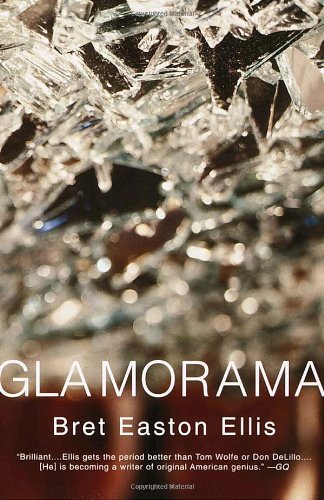
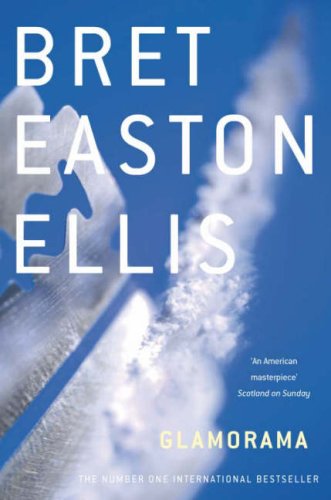
1. Glamorama
$6.87
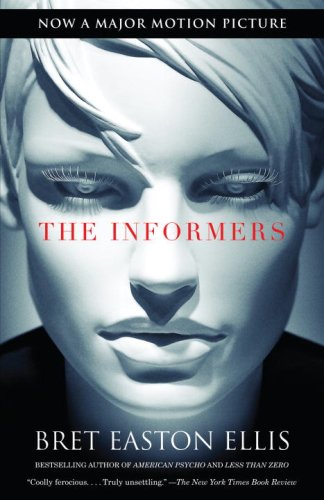
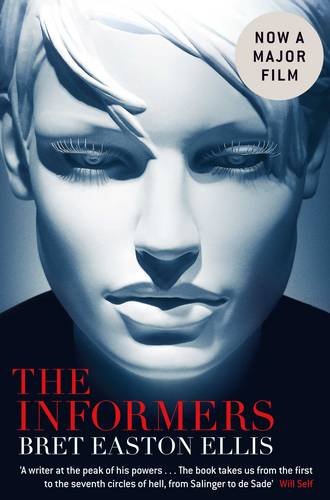
2. The Informers
$7.22
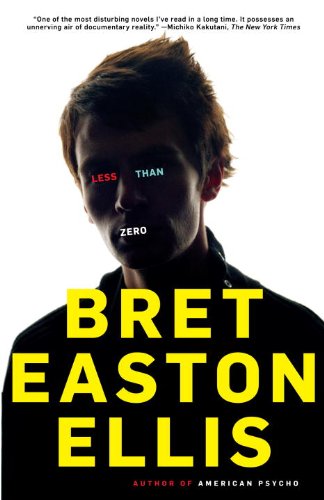
3. Less Than Zero
$18.69
4. Die Informanten.
$27.99
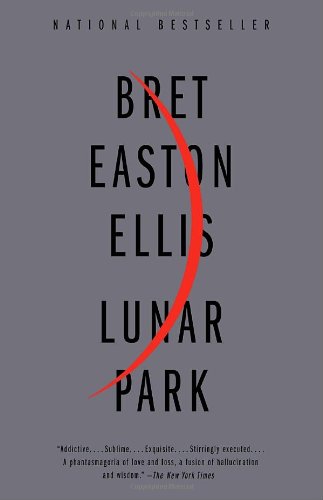
5. Lunar Park
$7.67
6. The Rules of Attraction
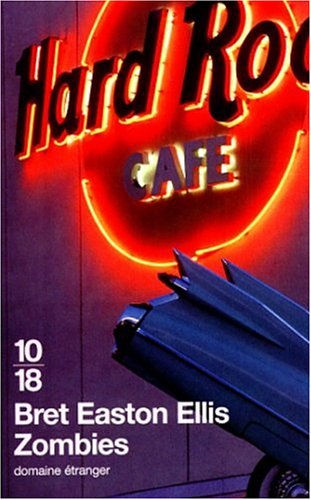
7. Zombies
 
$19.21
8. Menos Que Cero
$37.95
9. American Psycho (German)
$8.72
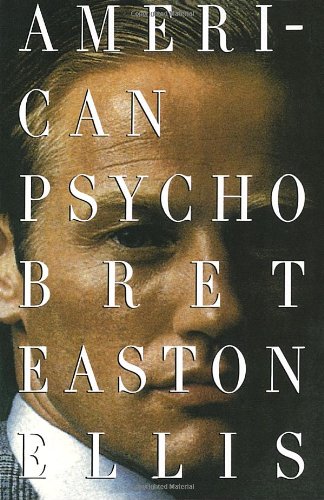
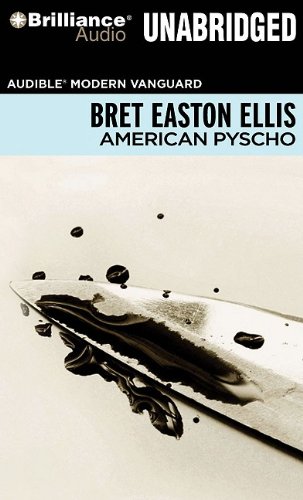
10. American Psycho
$16.94
11. Watch Out
$9.95
12. Biography - Ellis, Bret Easton
$99.99
13. Unter Null.
14. Unter Null
 
15. Americke Psycho
$48.57
16. Lunar Park
17. Glamorama
$7.22
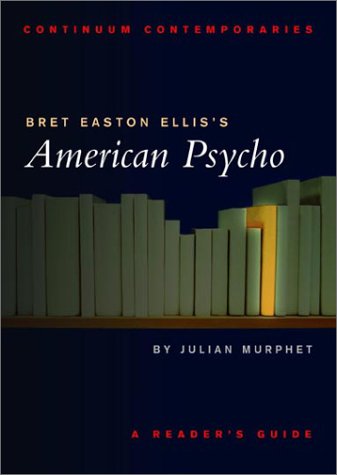
18. Bret Easton Ellis's American Psycho:
$28.70
19. Glamorama
$16.98
20. Glamorama.

1. Glamorama
by BRET EASTON ELLIS
 Hardcover: 481 Pages (1998-12-29)
list price: US$25.00 -- used & new: US$23.87
(price subject to change: see help)
Asin: B0006Q1UJI
Canada | United Kingdom | Germany | France | Japan
Editorial Review

Amazon.com
Glamorama is a satirical mass-murder opus more ambitious than Bret Easton Ellis's 1990 AmericanPsycho. It starts as a spritz-of-consciousness romp about kid-club entrepreneur Victor Ward, "the It boy of the moment," an actor-model up for Flatliners II. Ellis has perfect pitch for glam-speak, and he gives nightlife the fizz, pace, and shimmer it lacks in drab reality. Anyone could cite the right celeb names and tunes, but like a rock-polishing machine, his prose gives literary sheen to fame-chasing air-kissers. He's coldly funny: when Victor's girl tries to argue him out of a breakup, she angrily snorts six bumps of coke, stops, mutters, "Wrong vial," snorts four corrective doses from whatever she has in her other fist, then objects to a rival at the party wearing the same dress she's wearing.

You had to be there; Ellis makes you feel you are. But such satire is a very smart bomb targeting a very large barn. Models' status anxiety doesn't merit Ellis's Tom Wolfe-esque expertise. Glamorama gets better when Victor gets drafted into a mysterious group of model-terrorists who bomb 747s and the Ritz in Paris, wearing Kevlar-lined Armani suits. Oh, they still behave like shallow snobs, pronouncing "cool" as if it had 12 o's. But now when somebody swills Cristal, it's apt to be poisoned, to horrific effect, which Ellis expertly, affectlessly describes. His enfant-terrible debut, Less Than Zero,aped Joan Didion.Now Ellis has grown into a lesser Don DeLillo--and that's high praise. --Tim AppeloBook Description
We'll slide down the surface of things . . .

From his first novel--Less Than Zero, published when he was still a college student--to his most recent--the fierce American PsychoBret Easton Ellis has been a powerful and original presence in contemporary literature, whether giving voice to a previously inchoate generation or provoking a controversy that raged throughout the culture.

Now he takes a quantum leap forward: an awesome reckoning of the American Century at endgame. In Glamorama, a young man in what is recognizably fashion- and celebrity-obsessed Manhattan is gradually, imperceptibly drawn into a shadowy looking-glass of that society, there and in London and Paris, and then finds himself trapped on the other side,
in a much darker place where fame and terrorism and family and politics are inextricably linked and sometimes indistinguishable. At once implicated and horror-stricken, his ways of escape blocked at every turn, he ultimately discovers--back on the other, familiar side--that there was no mirror, no escape, no world but this one in which hotels implode and planes fall from the sky.

Time and again, the novel confounds one's expectations of it, and Bret Ellis accomplishes the transitions from comic to surreal to horrific to humane with astonishing confidence. Matching ambition with artistic maturity, Glamorama is at once hilarious, savage in its worldly observation, and compassionate in its vision: a defining novel of our times. ... Read more


2. The Informers
by Bret Easton Ellis
Paperback: 240 Pages (1995-08-01)
list price: US$13.95 -- used & new: US$6.87
(price subject to change: see help)
Asin: 0679743243
Average Customer Review: 3.0 out of 5 stars
Canada | United Kingdom | Germany | France | Japan
Editorial Review

Book Description
This powerful and poignant novel of L.A., from the author of Less Than Zero and American Psycho, depicts a generation's overwhelming dissatisfaction with the way things are, and its insistence on remaining as detached and isolated as possible. ... Read more

Customer Reviews (74)

2-0 out of 5 stars A lesser Ellis novel
As a huge fan of Bret Easton Ellis' "American Psycho," "The Informers" struck me as underwhelming. Viewed as a series of short stories, the book moves fast, intrigues, and works reasonably well. As a novel, however, Ellis has trouble weaving his characters from one story to the next (i.e. the narrator of one story might be a minor character in another, or only mentioned in passing). And, although it's part of his point in portraying the early-'80s L.A.-set milieu, all of the characters seem so shallow that they don't really grow identities; they all basically blend in with one another.

I am, however, very much looking forward to the upcoming film adaptation. This is one case where the various stories might work better in cinematic terms, interlacing the characters in an Altmanesque fashion.

4-0 out of 5 stars Never a dull moment...
Bret Easton Ellis has always been a personal favorite of mine, ever since the days of reading `Less than Zero' and `Rules of Attraction' and realizing that this guy is a literary genius.Reading `The Informers' though gives me an even more solid belief in the power within this mans pen-strokes, for with a collection this strong penned so young (he wrote all of these short stories while still in college before publishing his debut at the age of 20) there is no doubt in my mind that Ellis is a living legend.Delving into strong subject matter pertaining to his usual drugs, sex and violence but adding layers of human emotion, family deterioration reminiscent of Andre Dubus and even adding some of the supernatural to his style Ellis turns over a new leaf here and gives his readers something fresh.

The stories in general deal with some sickly twisted subject matter, from vampires and aliens to coked out abusive rock stars, but Bret always manages to keep each story a relatable experience not only to the reader but to each and every story.As some have mentioned, it can read like a novel told by many different perspectives and that's probably the best way to look at it overall.

My personal favorite passages have to do with the forced human interaction, like a teen struggling to refill his prescription or a few kinds aimlessly discussing death at a diner.Each word, each sequence of events adds an air to the story, to the overall experience and makes the chapter or story that much more real and influential.Bret is still able to capture his demeanor of meaninglessness, as in everything is null and void of consequence and utterly pointless, without losing his ability to raise genuine concern with his readers.That's the one trait I've always appreciated about Ellis' work.He can paint a picture bursting with characters so flawed and so empty and yet the reader is always drawn in so deep.

While this is not his finest set of work, nor is it his most well liked or campaigned it's a nice reminder of where this fine writer came from and it's a true testament to what real talent can produce.When you sit back and realize that this was some of the first writings Ellis ever penned you begin to understand his genius.Sure, he may not be everyone's cup of tea but any fan of Ellis and his body of work will do themselves a huge favor in reading this collection.

5-0 out of 5 stars Outstanding, yet least read book by BEE
Each chapter, or should I say story, of this book is very well written. Each character has a different voice, and all stories are interested. I have trouble trying to understand why this book is not more popular amongst readers and BEE fans alike.

5-0 out of 5 stars Managed to keep me interested throughout
I LOVE Ellis, but at the same time a lot of his books have some sereous flaws. Glamorama and American Psycho have a lot of great moments and scenes but also always bore the hell out of me at some points, becouse these books actually repeat the same unnecessary routine again and again.

But "The Informers" is the book I find perfect for Ellis. You see, it is quite short, the characters and themes change frequently and the chapters are very brief.

This is how it feels for me. You start to read the chapter, you dive into the story, it goes for some time and at the moment it might become boring and repetative it ENDS (unlike American Psycho, for example)! Then begins another chapter, presenting different character, different take on life in this universe anâ so on.

Every story hav some kind of plot and climax (unlike Am Psycho). It may seem inexistent, but really these stories are much like Chekov's short stories whwere there's no great dreamatic climax, but something is still there.

Also "The Informers" have an interesting structure as a whole. It starts with simple sketches of life situations, but as the book goes the stories start to get darker. There is more and more mentions of vampires and near the end you get some more heavy stories about a dying girl, a child-killer and a vampire, who narrates one of the stories.

So the book and its themes really evolve throughout.

The violence here, in my opinion, is also done much better, then in American Psycho or Glamorama. It's not so repetative and unnecessay, it takes very little place and supports the substance instead of just being a threat by itself.

Some stories are beter, some are worse. For me the highlight is "The Letters From LA", you just must read it. Also "In A Moment Of Silence" and a story about dad anâ son on islands are just brilliant (there are some others and actually every story is good in its own way).

And the thing I really love about Ellis is that he always manages to touch something within me, his books, although seemingly groutesqe at times, always feels very "real" and makes me think about my own experiences and people I know. That strange sence of realism in sometimes unrealistic stories is what I always really love about Ellis' writing (maybe it can be just called honesty).

All in all, "The Informers" has all the things, that make Ellis' books great but at the same time lacks some of the major flaws of his other books.

I highly recommend it.

4-0 out of 5 stars Novel or collection of short stories? Either way it's good.
This collection of short stories is depressing and does little to hide that. Consisting of a cast of increasingly vacuous characters whose lives intertwine in unexpected ways, each story is as empty as the last. There's a girl writing letters to Sean Bateman (I'm assuming while he's at Camden living the events of Rules of Attraction), a washed-up rockstar in Japan, a bevy of blonde, spaced-out beach bums decked out in Wayfarers, and (completely out of place... maybe) a vampire. These stories take the emptiness that Ellis's characters in his first three novels felt to a new level. None of these characters really feel anything, unless it's a sense of self pity. They're like empty shells bumping into each other. And it seems that they are drawn to other "people" who are even less present than they are. For this reason, the vampire story *almost* fits in. It's just the next level past being, as one character tells another when he asks her what she means when she says that he's not "alive"; "just not dead".

Ellis's only flaw is that he makes writing seem too easy. Reading his stories and novels you would think he just sat down and jotted some stuff down. But his stories are too finely crafted for that. And the deceptive lack of effort is what makes his writing all the more entertaining. This book could be viewed as a collection of short stories, or as a novel written from several characters points of view, depending on how you read it. I choose the latter, as it's not that different from Rules of Attraction when read that way. Overall, a great book... if you're in to reading about depressing stories of the rich. ... Read more


3. Less Than Zero
by Bret Easton Ellis
Paperback: 208 Pages (1998-06-30)
list price: US$12.95 -- used & new: US$7.22
(price subject to change: see help)
Asin: 0679781498
Average Customer Review: 3.5 out of 5 stars
Canada | United Kingdom | Germany | France | Japan
Editorial Review

Book Description
Set in Los Angeles in the early 1980's, this coolly mesmerizing novel is a raw, powerful portrait
of a lost generation who have experienced sex, drugs, and disaffection at too early an age, in a
world shaped by casual nihilism, passivity, and too much money a place devoid of feeling or
hope.

Clay comes home for Christmas vacation from his Eastern college and re-enters a landscape of
limitless privilege and absolute moral entropy, where everyone drives Porches, dines at Spago,
and snorts mountains of cocaine.He tries to renew feelings for his girlfriend, Blair, and for his
best friend from high school, Julian, who is careering into hustling and heroin.Clay's holiday
turns into a dizzying spiral of desperation that takes him through the relentless parties in glitzy
mansions, seedy bars, and underground rock clubs and also into the seamy world of L.A. after dark. ... Read more

Customer Reviews (219)

5-0 out of 5 stars A glimpse into the abyss
Less Than Zero is a decidedly love-it-or-hate-it affair, for the simple fact that its very concept, from plot to characterization to rhetorical strategy to structure, can be adored or loathed for the exact same reasons. The novel is a group portrait of the utterly hedonistic, stunningly decadent offspring of mid-80s Los Angeles yuppie culture. Ellis depicts a generation that exists without direction, purpose, or passion, which leads an empty existence fueled by clouds of cocaine and sex and parties and fancy cars and superficiality and complete apathy and detachment. The story is told through the eyes of Clay, a college freshman who's back in town for the winter break. In a strangely non-moralistic manner, Clay slowly begins to grasp the emptiness of his life, at his inability to connect with anybody around him. It's a raw, unflinching, and at times horrifying picture. It's also chillingly effective. That is, in essence, why I love this book- its depictions are powerful and unnerving, and they strike some sort of nerve, some sort of elemental impulse that is both fascinated and repulsed by Clay's existence. It's a glimpse into the abyss, and an utterly captivating one. Those who hate the book will probably be put off by the fact that it describes an awful and unenviable state of being without any hope of redemption of growth. It is, admittedly, hard to argue with those people.

The novel's detractors probably won't like Ellis' pacing or style, either. The novel is written in the typically edgy manner of young writers: That is, in the present tense (admittedly a hit-or-miss device, but it works wonderfully here because it lends a matter-of-fact, anti-romantic feel to the story, the sensation that nothing it depicts is truly special or noteworthy), with a dry and impressionistic sentences that juxtapose details in an odd but seemingly detached manner. Just about everything that Clay does, weather he's eating lunch with his father or snorting cocaine, is expressed in the same style- it all amounts to the same, Ellis seems to be saying. This may seem amateurish or pretentious to some, and again, it really is just a matter of taste. Structurally, the novel is intentionally repetitive, a haze of parties and nightclubs and expensive restaurants and intimate moments and vague recollections blurring into one another, even as the novel approaches its unnerving climax. This may strike you as boring (and, occasionally, it is), but it does mirror the crushing repetition and utter stasis of the characters' lives. Again, people who hate the novel will probably be annoyed by the seeming lack of variety.

So, I love this novel. It's strange, hypnotic, and irresistibly appalling. I would encourage you, however, to look over as many reviews as you can, and read a few pages, of this book before buying it. You may end up despising this thing with a passion.

3-0 out of 5 stars Not Quite Nothing
"Less Than Zero" could be read in less than two hours.I'm not sure how long it took Ellis to write the book, but my guess is it wasn't much more that.It's not a bad book, but it reads like something he might have come up with during a freshman year creative writing workshop.Having read many of his other works (especially American Psycho, which this book seems to be the more successful, older brother of), I found the story to be more of a treatise and less of a terror.

We follow a young college freshman named Clay as he returns home to Los Angeles for Christmas break.It turns out that Clay and his friends are over-priviledged and bored, and their ennui is so stiflingly huge and all-encompassing that their entertainments (read: lifestyle distractions) turn steadily grislier and darker.Clay is the viewpiece for all of this, much less an actor on the stage than one of its proscenium lights.

The book is disturbing, I guess, and it's shudder-worthy to think that this in any way mirrors reality (I guess, on second thought, it's not so hard to imagine), but the book also lacks any depth or complexity."American Psycho" tortured out its point with double-bladed questions and a central character that was the most viscerally active element of his horrifying world."Less Than Zero" has only one question, and it's as soft and muddling as a giant bank of smog, and its central character is just as vapid and vaporous.He yearns for meaning, and he instinctively withdraws from the horrors around him, but his actions are all reflex, and his pathos is all pretend.Nihilism is a tough subject to arm wrestle with (it's got two elbows and a triple-jointed wrist), but Clay (like his name) is too mutably bland to do much else besides exist.

Notable for what it is, and just as dismissable for similar reasons, "Less Than Zero" is an okay read that gets even better after it grows up and becomes its dangerous kin.People who think they've got the teeth for it should skip ahead to "American Psycho" and avoid this milk-white malaise.

2-0 out of 5 stars Pretty lame
I'm a huge fan of literary fiction, but I was bored throughout 3/4 of this.I read on because it felt as though it was just about to get interesting...it never did.

5-0 out of 5 stars Great book about disillusionment!
I thoroughly enjoyed reading this book. Definitely captures the essence of young adults' disillusionment. I felt the book was written honestly -- the indifference the protagonist feels for himself, his friends, his lifestyle and culture is laid out for the reader to see and experience.

This book is a quick read - so even if you don't agree with everything written in the book or with the author, you're not going to waste a lot of your time. On the other hand, I viewed the book and the author as a (personal) study of a narrow scope of society and found this a worthwhile read.

2-0 out of 5 stars What a waste!
This book has no defined climax or conclusion. Has good detail but not a real good story line. ... Read more


4. Die Informanten.
by Bret Easton Ellis
Paperback: 257 Pages (2001-01-01)
-- used & new: US$18.69
(price subject to change: see help)
Asin: 3462030531
Canada | United Kingdom | Germany | France | Japan

5. Lunar Park
by Bret Easton Ellis
Hardcover: 320 Pages (2005-08-16)
list price: US$25.00 -- used & new: US$27.99
(price subject to change: see help)
Asin: B000RO9ZR8
Average Customer Review: 3.5 out of 5 stars
Canada | United Kingdom | Germany | France | Japan
Editorial Review

Amazon.com


Book Description:
Imagine becoming a bestselling novelist, and almost immediately famous and wealthy, while still in college, and before long seeing your insufferable father reduced to a bag of ashes in a safety-deposit box, while after American Psycho your celebrity drowns in a sea of vilification, booze, and drugs.

Then imagine having a second chance ten years later, as the Bret Easton Ellis of this remarkable novel is given, with a wife, children, and suburban sobriety--only to watch this new life shatter beyond recognition in a matter of days. At a fateful Halloween party he glimpses a disturbing (fictional) character driving a car identical to his late father's, his stepdaughter's doll violently "malfunctions," and their house undergoes bizarre transformations both within and without. Connecting these aberrations to graver events--a series of grotesque murders that no longer seem random and the epidemic disappearance of boys his son's age--Ellis struggles to defend his family against this escalating menace even as his wife, their therapists, and the police insist that his apprehensions are rooted instead in substance abuse and egomania.

Lunar Park confounds one expectation after another, passing through comedy and mounting horror, both psychological and supernatural, toward an astonishing resolution--about love and loss, fathers and sons--in what is surely the most powerfully original and deeply moving novel of an extraordinary career.


A Tale of Two Brets: An Amazon.com Interview with Bret Easton Ellis
In his novel Lunar Park, Bret Easton Ellis takes first-person narrative to an extreme, inserting himself (and a host of real characters from the publishing world) into the haunting story of a drugged-out famous writer living in the suburbs trying to reconnect with his wife and son and reconcile his damaged past. Ellis is at the top of his game in Lunar Park, his first novel since 1999's Glamorama, delivering a disturbing and delirious novel about celebrity, writers, and fathers and sons (not to mention a cameo from notorious Ellis creation, Patrick Bateman). Amazon.com senior editor Brad Thomas Parsons spoke with Ellis in a Seattle to Los Angeles phone call to talk about the fact and fiction behind Lunar Park, New York versus LA, '80s music, and the whole "American Psycho thing."

Read the Amazon.com interview with Bret Easton Ellis

Less Than Zero (1985)
Published when Ellis was a junior at Bennington, Less Than Zero is the mesmerizing first-person chronicle of Clay, our laconic, zoned-out guide to a subculture of over-privileged nihilism in early '80s Los Angeles. He travels back home from Camden College (a thinly veiled Bennington) for Christmas break and re-enters his circle of jaded friends--including his ex-girlfriend Blair, and his best friend Julian, who's now hustling to support his drug habit--and a parade of Porches, late-night parties, cocaine, and casual destruction.

Ellis on Ellis: "I don't think it's a perfect book by any means, but it's valid. I get where it comes from. I get what it is. There's a lot of it that I wish was slightly more elegantly written. Overall, I was pretty shocked. It was pretty good writing for someone who was 19."


The Rules of Attraction (1987)
A line-up of Camden College students share the narrating duties in The Rules of Attraction, Ellis' sex-fueled, drug-baked second novel. There's Lauren (who's in the midst of losing her virginity as the book opens), who longs for her boyfriend Victor, currently traveling through Europe; Lauren's ex, Paul, a bisexual party boy who hooks up with hard-drinking closet-case Sean (surname Bateman--that's right, younger brother of Patrick), who also has the hots for Lauren. Less than Zero's Clay makes a cameo appearance as well as a passing glimpse of Ellis' Bennington classmate Donna Tartt's murderous Classics majors from The Secret History.

Ellis on Ellis: "It might be my favorite book of mine. I was writing that book while I was at college. Sort of like the best of times, the worst of times. There was a lot of elation, there was a lot of despair. It was just a really fun book to write. I loved mimicking all the different voices. The stream of conscious does get a little out of hand. I kind of like that about the book. It's kind of all over the place. It's casual. It's scruffy. That's the one book of mine that I have a very, very soft spot for."


American Psycho (1991)
Shopaholic sociopath Patrick Bateman's killer grip drags readers into a bloody, brand-name, urban nightmare as the 26-year-old Wall Street yuppie executes his grooming habits and eviscerates strangers with equal élan. Simon & Schuster dropped the too-hot-to-handle American Psycho which was then published as a paperback original by Vintage Books. Ellis received death threats while the book was boycotted, sliced up by reviewers, and went on to become a bestseller. Mary Harron's 2000 film version starred then little-known British actor Christian Bale, who would later suit up as the Dark Knight in 2005's Batman Begins.

Ellis on Ellis: "It was good. It was fun. It was not nearly as pretentious as I remember I wanted it to be when I was writing it. I found it really fast-moving. I found it really funny. And I liked it a lot. The violence was... it made my toes curl. I really freaked out. I couldn't believe how violent it was. It was truly upsetting. I had to steel myself to re-read those passages."


The Informers (1994)
Ellis returns to early '80s Los Angeles ennui with The Informers, a loosely connected collection of stories of the bored, rich, and morally depraved, written around the same time as Less than Zero. Sex, drugs, and gratuitous violence take center stage, with characters including an aging, predatory anchorwoman, a debauched rock star tearing through Japan, and a pick-up artist vampire. While some of the vignettes echo better Ellis works, ultimately the stories don't add to much as a whole. Book critics are less than receptive to Ellis' post-American Psycho offering.

Ellis on Ellis: "Those were written while I was at Bennington. I wrote a lot of short stories between 1981 or 1982 or so... The Informers more or less kind of represented probably the best of those stories. I wrote a lot of really bad ones, but those are the ones that worked the best together."


Glamorama (1999)
Actor-model Victor Ward (who first made an appearance in the Ellis oeuvre in The Rules of Attraction) is the narrator of Glamorama, Ellis longest novel yet. Ellis offers bold-faced names and celebrity skewering in the first half of the book as Victor tries to open a Manhattan club while cheating on his supermodel girlfriend and double-crossing his partner, but the second half takes a violent, paranoid turn as Victor is sent to England and unwittingly lured into a sadistic ring of international terrorists (posing as supermodels) leaving a bloody trail across the globe.

Ellis on Ellis: "[T]he book wasn't necessarily about terrorism to me. It was about a whole bunch of other stuff. It's definitely the book that I can tell--I don't know if other people can tell but I can tell as a writer--is probably the most divisive that I've written. It has an equal number of detractors as it does fans. It doesn't really hold true with the other books. It was the one that took the longest to write, and the one that seemed the most important at the time. It's an unwieldy book... I like it."


Ellis on DVD


Less Than Zero


American Psycho

The Rules of Attraction

Will the Real Bret Easton Ellis Please Stand Up?
Visit the author's Web site at www.2brets.com.

... Read more

Customer Reviews (119)

4-0 out of 5 stars Worth It
For a book that starts out with a pseudo autobiography, for a book that features a self-indulgent main character, for a book that draws its themes from a series of obvious inspirations (including Shakespeare), I was pleasantly pulled along. Unlike some of Ellis' other stuff, it was clear to me that the construction of the book was well developed and tightly layered. The tension builds slowly. The book dabbles in straight detective stuff, then veers gently (how is that possible?) into horror turf. Yet when the blood comes, it seems even more real, even more damaging, even more of a catharsis. If you can't get past the self-centered main character, put the book down. If you feel yourself surprised to be with this guy for so long, keep reading because the end is worth the trip.

1-0 out of 5 stars Just awful
Ellis turns into a cheap wannabe-Steven-King. A bad bad spine chiller (we are talking monster birds attacking the narrator in a haunted house), that has no literary depth whatsoever. Gone the days when Ellis actually had to say something about the state of society. If you are a die-hard Ellis fan (And I used to be! I read every one of his books), then spare yourself this one. It will just disgust you.

5-0 out of 5 stars I hated this book
So why the 5? The book is perfectly constructed, the characters are real, the choice of making the author the main character and his books important to the plot brilliant; the horror is spectacular.You are sucked into the vortex.But I hated this book. I was disgusted by the Ellis person, real or imagined, and his wife Jayne.They are failed persons: using drugs, prescription or felonious, alcohol, the works.But it's the utternarcissistic existence they live which is the real horror.The demon of Ellis' alter ego is apparently taking over the lives and home of this family.Jayne, the wife, is an actress concerned mainly with keeping family life on an even enough keel to be able to pursue her career and not be alone. While paid help are raising the kids. The little girl Sarah is on meds and so is the son Robby- so as to cause as little trouble to the parents as possible.To my thinking the demons were/are present from the beginning of Ellis life, and he's destined to have them as his only constant companions.The author chucks us a thin bare bone of hope and love (?) in the last few pages of the book.Thanks.
Like many, I wonder what author Ellis is doing today.Why has his book tour been cancelled?Then again, I don't want to know anything further about this character, this author, this person, this mind.I'll never read another of his books, I'm certain.

1-0 out of 5 stars Time for retirement?
Like many, I was so impressed by Bret Easton Ellis's first three novels that I was prepared to read anything with his name attached to it. I stuck by him after the tediousness of The Informers and the absurd and overlong Glamorama because, for the most part, his writing was as good as ever - he was just losing his thematic edge. Unfortunately, Lunar Park represents a further step into banality as not only is its plot ludicrous and its theme largely irrelevant to society at large, but for the first time Ellis's writing appears awkward.
Lunar Park tells the story of a celebrity novelist making a tentative attempt at fatherhood and a life in the suburbs. As the novel progresses it becomes apparent that his house is haunted by the ghost of his father, his daughter's doll is possessed by an evil spirit, a string of murders copycatting American Psycho are being committed, his son may or may not be kidnapping his classmates, the oil leaking from his BMW is the blood of JFK, the nuts in Snickers bars hatch into the things from the Alien movies, he eats an undercooked Whopper blah blah blah who cares. Terrifying, right?
It is ironic that there is so much that can be said about Lunar Park while the book itself says so little. Ellis zig-zags haphazard through the themes of father-and-son, overmedicated society, fiction-into-fact and supernatural occurrence, but spends so little time on each and links them so clumsily that it is impossible for the reader to gain any insight into them, assuming that Ellis himself had any insight to impart to begin with. The supernatural portions that dominate the last third of the book are particularly cringe-worthy as Ellis makes a self-confessed - and poorly advised - homage to Stephen King despite the obvious incompatibilities of their styles. There comes a point when the absurdity of Ellis using his hyper-realistic style to recount the occasion on which a possessed mechanical toy bird grew fangs and gnawed at his trousers becomes apparent. The blurb's conceit that this is an autobiography of sorts is really just a poorly conceived vice to mask Ellis's comprehensive failure to create a suspension of disbelief in his fiction.
It is strange that despite using himself as the lead character and musing on his reactions to his father's death, Ellis still cannot create any sort of emotional resonance within his work. This is a particularly salient failing as one of Lunar Park's primary drives is the assumption of empathy on behalf of the reader, predominantly in relation to Ellis's own character. Ellis begins the book by characterising himself as being only slightly less vacuous than Victor Ward and only slightly more sensitive than Sean Bateman, yet come part two we are immediately meant to empathise with this self-absorbed idiot because he's making some small attempt at self-betterment. This is a stark departure from Ellis's previous novels in which such characters were always presented, rightfully, as objects of derision.
Plot has not traditionally been the focal point of Ellis's novels either, however in Lunar Park it forms the unsteady structure around which the rest of the story is awkwardly plastered. Multiple plots and sub-plots are created and dropped on a whim and ultimately fail to combine into any sort of cohesive whole because the connections that Ellis eventually draws between them are so patently stupid. The lame anagram in the doll's name, the unknowable significance of the house's address, the dumb coincidence in the Harrison Ford movie. It's like, please baby, spare me.
Towards the end of the novel there is a scene in which Ellis (the character) writes the death of Patrick Bateman. The symbolic significance is not hard to grasp. Ellis wrote American Psycho over a decade ago so let's just move on. The problem with this is that American Psycho was an insightful, entertaining, devastatingly funny, razor-sharp social satire. It is one of the best books I have ever read. Lunar Park is self-indulgent drivel. Despite his relentless shallowness Patrick Bateman was a remarkably complex character while the Bret Easton Ellis of this novel can be read clearly straight up-and-down like so many other clichés - daddy daddy why don't you love me - and his problems are simply uninteresting. So if Ellis wrote Lunar Park to cleanse himself of his past, where to from here? Let's hope that it's somewhere much closer to Earth.

2-0 out of 5 stars Disappointing
The metafiction aspect of this work was about the only thing that kept me turning the pages to the end.As a long-time fan of Bret Easton Ellis, reading about the main character's outrageous life in the literary brat pack of the 90's was a fun romp, but the story itself was a bit tedious. ... Read more


6. The Rules of Attraction
by Bret Easton Ellis
Paperback: 288 Pages (1998-06-30)
list price: US$13.95 -- used & new: US$7.67
(price subject to change: see help)
Asin: 067978148X
Average Customer Review: 4.0 out of 5 stars
Canada | United Kingdom | Germany | France | Japan
Editorial Review

Book Description
Set at a small, affluent liberal-arts college in New England at the height of the Reagan 80s, The Rules of Attraction is a startlingly funny, kaleidoscopic novel about three students with no plans for the future--or even the present--who become entangled in a curious romantic triangle.Bret Easton Ellis trains his incisive gaze on the kids at self-consciously bohemian Camden College and treats their sexual posturings and agonies with a mixture of acrid hilarity and compassion while exposing the moral vacuum at the center of their lives.

Lauren changes boyfriends every time she changes majors and still pines for Victor who split for Europe months ago and she might or might not be writing anonymous love letter to ambivalent, hard-drinking Sean, a hopeless romantic who only has eyes for Lauren, even if he ends up in bed with half the campus, and Paul, Lauren's ex, forthrightly bisexual and whose passion masks a shrewd pragmatism.They waste time getting wasted, race from Thirsty Thursday Happy Hours to Dressed To Get Screwed parties to drinks at The Edge of the World or The Graveyard.The Rules of Attraction is a poignant, hilarious take on the death of romance. ... Read more

Customer Reviews (129)

5-0 out of 5 stars Perfectly Written
After reading "Less Than Zero" I was excited to give another Bret Easton Ellis novel a try, and this turned out to be one of those books I never wanted to end.Every page was full of something interesting and thought provoking and what at times seemed shocking also seemed like the harsh, honest truth.And this has become one of my favorite novels that I know I'll read over and over again.

The events are intriguing, the use of different narrators is great and very effective, and the writing style is perfect.Ellis really knew his characters well and had me believing these were real people.

And as always in the three Ellis novels I've read (Less Than Zero, The Rules of Attraction, Glamorama), I felt some disgust towards the characters' actions yet admired them at the same time and part of me wanted to live their wild and eccentric lives.

5-0 out of 5 stars A sad but hilarious portrayal of contemporary college culture
The characters in "The Rules of Attraction" all use alcohol and drugs without a second thought, sleep with the most convenient person available and have no idea what they want to do with their lives.Not only are the main characters of Sean, Lauren and Paul aimless and careless of searching for a purpose in love and life, but the entire school of Camden seems to be exactly the same way.While Ellis may go a bit overboard with his portrayal of existential ennui at American colleges, there is more than a grain of truth in what he shows us about this country's young people.I would recommend this book for any kid about to go off to college so they know how *not* to be like while they are there, and for any adult who has bittersweet memories of their own college experiences.

5-0 out of 5 stars truly amazing
this book was by far, one of ellis' most breath taking novels. "the rules of attraction" took on what is now modern day college life and what happens in college. it is full of disturbing, funny, violent and dark image that you will think of over and over again. when you read the book and get to the ending you will wish the book never ended and be angry how it ended. Rock and roll

4-0 out of 5 stars A different type of novel
Many people dislike this book and deride its lack of cohesion and unsympathetic characters.However, like most of Ellis' work, The Rules of Attraction uses snippets of characters' lives to tell the story of a community, or at least of a group.This book does not have the obsessiveness of American Psycho, and it is somewhat subtler, but it again uses the shallow desires and thoughts of it's characters to paint a picture of a group of college kids at a small liberal arts school, and it allows the reader a glimpse into parts of the mind not usually devoted to in novels.If you are a fan of Ellis, you will like this book.

5-0 out of 5 stars Dark and disturbing yet no one seems to notice...
After reading the impressive `Less than Zero' I was compelled to move right along to `The Rules of Attraction' and I am so glad that I did.Already accustomed to Ellis' writing style I was immediately drawn into his sophomore novella, engrossed in every chapter, every character and every embellishment of college life complete with all its highs and lows.Following the same formula as he had with `Less than Zero', `The Rules of Attraction' really has no story to tell.It's just the random lives of a handful of college students as they wallow through their lives one day at a time.

The novella covers quite a few heavy subjects including drug addiction, suicide and abortion, but everything is discussed and explained in such blunt almost sarcastic dialog that it's not really `heavy'.It's obvious to the reader that the circumstances and consequences of actions are of less and less importance to the parties involved and it adds a layer of realism to each character.I say realism, and that may sound odd, but it's really not.All too often novels and films over-dramatize subjects and to me that takes away from the gritty realism of the circumstances.Bret here capitalizes on the pure simplicity of the average teen's mind and it works wonders.

The novella discusses quite a few students, but three in particular are explored deeper than others.Sean Bateman is in love with Lauren Hynde who is still waiting for Victor to return from Europe.Paul Denton is becoming more and more obsessed with Sean while he's still mourning the loss of his ex-boyfriend Mitchell to the arms of a WOMAN named Candace who just so happens to have a thing for Sean.You may think it sounds like your average teen pining for love and affection but you're wrong.It's much more than that.

Littered with sarcasm and wit yet layered with eventual sadness and desperation, `The Rules of Attraction' manages to flush out humanity in every sentence.From the uncomfortable car ride home after an abortion to the dramatic and heartbreaking suicide, as mentioned, there is quite a bit of `heavy' material contained in this small book, but reader be warned that the characters involved will not feel as deeply disturbed by the outcomes as you will.Any fan of the film will feel even more fulfilled after reading Ellis' brilliant novella and will find it amusing how Victor's European escapade has been literally translated word for word into the film. ... Read more


7. Zombies
by Bret Easton Ellis, Bernard Willerval
Paperback: 276 Pages (1996-09-19)

Isbn: 2221079523
Canada | United Kingdom | Germany | France | Japan

8. Menos Que Cero
by Bret Easton Ellis
 Paperback: Pages (1995-09)
list price: US$16.15 -- used & new: US$19.21
(price subject to change: see help)
Asin: 8433920561
Canada | United Kingdom | Germany | France | Japan

9. American Psycho (German)
by Bret Easton Ellis
Paperback: 548 Pages (2000-04)
list price: US$37.95 -- used & new: US$37.95
(price subject to change: see help)
Asin: 346202261X
Average Customer Review: 3.5 out of 5 stars
Canada | United Kingdom | Germany | France | Japan
Editorial Review

Book Description
Patrick Bateman moves among the young and trendy in 1980s Manhattan. Young, handsome, and well educated, Bateman earns his fortune on Wall Street by day while spending his nights in ways we cannot begin to fathom. Expressing his true self through torture and murder, Bateman prefigures an apocalyptic horror that no society could bear to confront.

Blurb in Spanish: Mucho se ha hablado de American Psycho. Y lo cierto es que había razón para tanta polémica, pues esta novela de Bret Easton Ellis constituye una de las críticas más feroces que un escritor norteamericano ha hecho a su propio país: una sociedad autocomplaciente y orgullosa de si misma. Para su denuncia, el autor ha escogido un camino arriesgado: Patrick Bateman, el protagonista, no es un rebelde ni un paria; Patrick es un joven de éxito que, sin embargo, también es capaz de violar, torturar y asesinar. Como dijo Fay Weldom, American Psycho es de alguna forma el oscuro complemento de La hoguera de las vanidades, por cuanto descubre aquellos puntos negros de la vida de los supuestos triunfadores que la novela de Tom Wolfe quiso obviar. ... Read more

Customer Reviews (1069)

5-0 out of 5 stars Psycho, psycho, psycho
American Psycho is wwild-wild-wild. It's one of the best studies of a psycho killer ever written. Those other serial killer books, like Silence of the Lambs and Hannibal and even The Stranger Beside Me (Revised and Updated): 20th Anniversary do not understand how warped and twisted a serial killer is. Ellis does. He gets it. He gets that a serial killer, Patrick Bateman, is so shallow that he's the sunlight bouncing off the oil slick on a rancid puddle. Damn, but Ellis is good. He's so good that this book bounced around publishers because normal people can't believe how twisted a serial killer is. Ellis uses the serial killer to play off 1980s NYC, but that's secondary to his damn-fine characterization.

Damn, but I need a cup of coffee. This ain't coming out right.

American Psycho is American, but it's also Psycho. Read the book. It's a deep character study, and I like thost, like Rabid: A Novel or Time's Arrow.

The Bookeater!

5-0 out of 5 stars i think a lot of people don't really get this book
I saw American Psycho, the movie, when it first came out with a friend of mine. i have only laughed out loud twice at the movies, and my friend and i were perhaps the only two doing so. Other people just didnt seem to understand it. so finally nearly ten years later now, i see the book at the library and decide to see how it compares. i was not disappointed. there are multiple ways of interpretting this book, all basically covered in the reviews here. this book is terribly violent, but it is not a horror in my mind. just as "City of God" was so much more than the violence that it displayed. the violence is a necessity. if that sort of thing is not your thing, then dont read the book. you can say that what the book tries to say is cliche - oppulence, bad; superficiality, bad; society going down the toilet, etc. but i look at pat bateman, either who he actually is or who he desires to be, as part of all of us. the worst of what we all are taken to the extreme to show it to us. when we can and do have it all, what's next if not more boredom. all our lives are just the search for happiness, avoiding boredom. we all either distract ourselves from this mess or avidly pursue it. both really. so what can we learn about what we are doing. that is the question that one has to ask themselves after reading this book. perhaps the theme has been used before, but i feel that this book does a fantastic job at awakening thoughts in oneself that are very important to contemplate.

also, i want to say that this book is readable not just because of the message and commentary that is thought provoking. it is the humor that makes it truely readable. i have read many a book that is supposed to be the greatest work of fiction of all time that says so many new things, bla bla bla. this book like every other book says the same thing, maybe in a new way relating to new societal situations, but the same really. it is the constant humor that makes this book special. it is funny on every page. no one knows anyone's names; people disappear but someone saw them, but not really; the obsessive detail in description of clothes, music, etc. this book is great because it is a marvelous satire filled with meaning. nothing compares to the brilliance of satire in my opinion.

3-0 out of 5 stars Disturbing
After reading his other work (less than zero, rules of attraction)I was eager to put a book to the cult classic movie.What I read was an overly descriptive and sadistic book filled with some of the most disturbing scenes I've ever read.For those considering this book, 90% of the violence is against women and involves cannibalism, removal of sex organs and inserting rodents in women while they are still alive, albeit not for long...

5-0 out of 5 stars Sense, Sensibility, and Power Tools
There are nearly eleven hundred reviews of "American Psycho" posted here, but in the spirit of '80s excess, there's always room for one more. Simply put: this is one of the funniest, bleakest, and most clever novels I've ever read. I've had copies of it since ever it first appeared at the start of the 1990s, and I've given copies to many a friend and girlfriend over the years. I always tell people that reading "American Psycho" cost be hundreds and hundreds of dollars, since I *had* to have Patrick Bateman's hair and skin care products (I could never have afforded his suits,let alone dinner at Dorsia). "American Psycho" is...well...Jane Austen with power tools: an arch and knowing riff on the opening of "Pride and Prejudice": a young gentleman with a seven-figure income must be in need of...constant social approbation and...victims. The brilliant business-card scene, the barrage of grotesque menu items, the utter indifference to individual identity as opposed to display items--- "American Psycho" is a comedy of manners better than Wilde or Wodehouse, and at least as good as Austen (and the sex scenes are...vur' hot).

Netlix and downloads have ruined Patrick's all-purpose excuse of "I have to return some videotapes", but Patrick's life and world (and even his utter lunacy) are still worth exploring through repeated readings. And how else would we learn about the wonders of Huey Lewis...or that Bono is the Devil? "American Psycho" is too hilarious and dead-on not to read again and again.

And...am I the only one who's noticed that Christian Bale's take on Bateman in the (underrated) film is an exact riff on Tim Matheson's character from "Animal House" (same voice, same inflections, same jawline)?

3-0 out of 5 stars A Review and a Criticism
I believe that it is about time that critics and readers worldwide were let in on the great lie embeddedin the cultural subtext of "American Psycho".This lie is perpetrated for whatever artistic reason Bret Easton Ellis has found fit.The novel has inveigled millions of readers to an interpretation of human nature as base and groundless in intrinsic value.It has furthermore convinced them of the state of nature and the true face of mankind.It attempts to pull back the veil and show human beings as baseless creatures, convinced of the power of their own egos.Patrick Bateman doesn't merely imagine killing women and street gutter hobos, the book makes-good his thoughts.Patrick Bateman brutalizes and maims people with little to no falter into the realm of realism.This is no science fiction novel of a wicked, futuristic and cannibalistic society.This book establishes the ever evolving pathos of Patrick Bateman as a wickedly remorseless and fully-self-invested id.Patrick Bateman kills people, he enjoys it, and as the book progresses he develops a pathos that is stark in its depictions of radically violent behavior.The realizations of snuff porn-like violence has a poignant and rather upsetting realism to it that describes the sexual gratification of pure violence.Both of them are equally wicked and ungratifying comments of the human being.What most of the readers, and professed fans of the novel do not focus on, is the very real possibility that Patrick Bateman is, in truth, an idiotic coward who slums about in his wicked psyche pondering various painful ways to destroy a human being.The truth is different however.Patrick does not commit any radical acts of violence, instead he merely resides in the basement of his primal bestial urges, without act.He is a powerless pervert.That this is a commentary on the uncommon power of the rich, the ability to supersede societal laws and norms, is not license to condemn general society along with the free radicals of the bunch, like Patrick Bateman.We have no more emotional connection to the persons that he kills than to the various characters that populate his life, characters better described simply as those he does not kill.Patrick Bateman's whole world is pure fantasy.What is dangerous and unbecoming to society is the interpretation that Patrick Bateman killed people, and no one cared.This dangerous emotional pivot takes the better part of mankind's positive and generous nature grinding it into a chunky bone meal of blood and ichor.This vile character is a despicable anti-hero and representative of the modern man.A being who has forsaken value and concern because the great satirist, Nietzsche chided mankind for its more puerile motivations. These are the leftover intellectual products of Nazi thinking, dressing Nietzsche up in a clown suit for the Nazi propaganda machine. Patrick Bateman, the novel professes, is the modern creature.Bret Easton Ellis is simply an iconoclast that picks off easy targets and radicalizes them without fleshing them out as interesting material.They are all impulse.It bores me and makes me vaguely ill, that such an imagination, as Ellis obviously has, may find these as important and essentially gratifying illustrations of where mankind's condition.Bret Easton Ellis, despite this, has hesitated to comment on the character or the prevailing motif of the novel.We are left in tow with an interpretation that is horribly inconsistent to general social temper.What bothers me most is the feeling that the world, as defined by Ellis, is terribly nihilistic spilling over into absolute antipathy.That critical readers embrace this interpretation with a certain type of relish, advancing it as an epiphanic statement concerning mankind, is nauseating.Ellis writes with such conviction and ardor that it appears that he wholeheartedly embraces this intellectual understanding.This is not merely social commentary, or at best, satirical dance, for Ellis, this is real sport.Sure he has caricature stuffed into almost every page of the novel, but Ellis describes everything from violence to Versace clothing with almost lavish, religious aplomb.You can feel that he enjoys writing this novel.This is frightening.I don't like Patrick anymore than I like Ellis.This is not to say that Ellis is a despicable human being for writing this novel, it just makes him a lot less relevant.Ellis owes an apology to his readers as well as to the human creature for painting it in such garishly angry tones.You can get by with a lot less cynicism in your life if you pass this novel by.If you don't, its not that you won't like the novel, you very well may, I don't know, people's tastes are peculiar.Perhaps you will get rewarded for writing a review like mine, or not, either way the novel is impressive, insofar as it is a massively negative portrayal of the human being.If you like that, get it, if you don't, don't.
... Read more


10. American Psycho
by Bret Easton Ellis
Paperback: 416 Pages (2000-04-21)
list price: US$14.45 -- used & new: US$8.72
(price subject to change: see help)
Asin: 033048477X
Average Customer Review: 4.0 out of 5 stars
Canada | United Kingdom | Germany | France | Japan

Customer Reviews (10)

5-0 out of 5 stars very interesting
Bu kitap özellikle wall street teki dünyayý yönettikleri düþünen traderlarýn dünyasýna çok çarpýcý bir yaklaþým sergiliyor....para kazanma ve yükselme hýrsýnýn kontrol edilemez boyutlara ulaþtýgýnda insaný nasýl akýl almaz bir deliliðe sürüklediðini ve tatminsizliðe ulaþtýrdýðýný da çok etkileyici bir anlatým tarzýyla ifade ediyor.

5-0 out of 5 stars I couldn't stop laughing
American Psycho is one of the few books I have ever read that REALLY made me laugh out loud. Patrick Bateman is like so many people that I met whilst climbing the corporate ladder in the eighties (I even saw some sad, long forgotten reflections of myself in there). Yes it's graphic. Yes it's violent. It's also funny in a way that few other satires are. Do yourself a favour and read the book!

2-0 out of 5 stars Somewhat Interesting I guess
I read this book a few years ago after a woman living next door recommended it to me. It starts out fairly normal, but then after about 200 pages it gets extremely disturbing. It's the most graphically violent book I've ever read. I didn't really see the purpose of some chapters. One chapter if I remember correctly was a review of a whitney houston album. I guess it was supposed to be a satire? Maybe you weren't even really supposed to read chapters like that. Not my favorite book, but maybe I just didn't get it, I don't know.

5-0 out of 5 stars An engaging social satire
I relaxed on my Ethan Allen couch to read Bret Easton Ellis's late-1980's Manhattan-of-yuppie-excess thriller, American Psycho.I had to put it down to dine on quail sashimi with peach ravioli and baby soft-shell crabs with grape jelly, and after dinner I noted that the Vintage Contemporary cover was a far from ideal surface to snort cocaine off.After donning my Valentino Lycra sports outfit, I resumed reading on the Lifecycle in my $500/month health club.As a whole, I found the financial district consumerist novel to be a brilliant social satire in the tradition of Swift, with lyrical genius comparable to a finely crafted Genesis song.I dropped the title in conversation over Absolut double martinis at the cigar club the following night, and I was secretly delighted that my archnemesis at the firm fumbled when trying to debate its relative merits with me.

[This is where I transition back to reality as Jessica Lux-Baumann, book reviewer.]Twenty-seven year-old Patrick Bateman is a Wall Street mergers and acquisitions executive who spends a few hours a day in his stark Manhattan office and the rest of the time at his exclusive gym, in clubs, clamoring for reservations at the hottest restaurants, cheating with his friends' fiancées, and, oh, murdering socialites and the homeless.Everyone in his eighties NYC life is too self-absorbed to notice his true character (in fact, a Realtor gladly cleans up carnage to make a sale on a hot piece of property).Bateman embodies yuppie ideals while mocking the inferiority of everyone else in his circle.Girls are "hardbodies" or "bitches," reduced to physical measurements and shagability (although Bateman uses considerably less polite terminology).

The book consists of short chapters--diary entries, if you will--of scenes in Bateman's life.At times, he lapses into eloquent yet fanboyish soliloquies about bands like Genesis, Huey Lewis and the News, and Whitney Houston.He thinks about mutilation and torture while debating the relative merits of different brands of sparkling water or discussing the proper way to wear a sweater vest.

I've seen Mary Harron's film adaptation of the book several times, and it is a true, but condensed version of the novel. The novel is far darker, with graphic descriptions of torture and murder (eyeballs dripping like runny eggs, and so forth).

5-0 out of 5 stars Wolfe, McInerney, Dunne . . .Ellis
American Psycho by Bret Easton Ellis, is a very well written, even clever, time capsule of affluent New York in the 80s and 90s.Ellis, clearly with his own style, will appeal to those who enjoy Tom Wolfe (especially Bonfire of the Vanities), Jay McInerney (Bright Lights, Big City), Dominick Dunne's portrayal of the wealthy in virtually all of his fiction and any writings on New York in its state of heightened self-importance (coming from a native and long time New Yorker).

Ellis's novel clearly has a twist, a psychotic murderer among its fast moving Wall Street, uptown societal crowd.The protagonist.Written in the first person.At the same time the conspicuous consumption and vacuous living is both revolting and quite funny.Really more the latter.But very realistic given the time frame.Even today, not that much has changed.So, a story within a novel that gives the reader a flavor for a world unto itself, Manhattan.

Ellis's writing is, quite often, crisp, erudite and superb.". . .there is an idea of a Patrick Bateman, some kind of abstraction, but there is no real me, only an entity, something illusory, and though I can hide my cold gaze and you can shake my hand and feel flesh gripping yours and maybe you can even sense our lifestyles are probably comparable: I simply am not there.It is hard for me to make sense on any given level.Myself is fabricated, an aberration.I am a noncontingent human being.My personality is sketchy and unformed, my heartlessness goes deep and is persistent.My conscience, my pity, my hopes disappeared a long time ago (probably at Harvard) if they ever did exist.There are no more barriers to cross.All I have in common with the uncontrollable and the insane, the vicious and the evil, and all the mayhem I have caused and my utter indifference toward it, I have no surpassed.I still, though, hold on to one single bleak truth: no one is safe, nothing is redeemed.Yet I am blameless."

While much of the writing is more of the New Journalistic variety of Wolfe, the above describes the author's protagonist superbly well.The introspection of Bateman there, while deeply flawed, is at the same time, strangely true.All the warnings about the graphic nature of this book not withstanding, it is brilliantly written and a great and disturbingly funny read.It was, strangely, my first read of Ellis, it will not be my last. ... Read more


11. Watch Out
by Joseph Suglia
Perfect Paperback: 210 Pages (2006-09-04)
list price: US$16.99 -- used & new: US$16.94
(price subject to change: see help)
Asin: 1891855778
Average Customer Review: 4.5 out of 5 stars
Canada | United Kingdom | Germany | France | Japan
Editorial Review

Book Description
WATCH OUT is the story of Jonathan Barrows, a man who falls in love withhimself, literally. He is secretly attracted to his own body, carries outan erotic relationship with a blow-up doll that resembles him, andtakes pleasure in rejecting the advances of his many admirers, both maleand female. He descends into a world of carnivorous priests andProzac-popping Polish prostitutes and eventually assassinates the world'smost popular pop-diva, Britney Spears. "You strange creatures," Barrowsdeclares, "you are nothing more to Me than a meal at the fast-foodrestaurant of life." But who will end up being devoured? Written in aneye-popping style that will shock the most jaded of readers, WATCH OUT isdestined to become a cult classic, and Joseph Suglia, a cult icon. ... Read more

Customer Reviews (47)

4-0 out of 5 stars A must read
A brilliant read, couldn't put down the book, with a megalomaniac hero you love to hate.Funny in a noirish, almost Jim Thompson manner.

5-0 out of 5 stars Seduced.
WATCH OUT is posed at the forefront of ill-humanity and takes you with it. "Humanity", ironically and in the opinion of myself, is a term that was only created when our drive to follow our instincts became too absurd. We are a proper and civil society, not animals......right? It is "appropriate" to have inappropriate thoughts as long as we don't act on them, correct?

There are no timeless clichés or token catch phrases inserted that would invite a reader to feel that he/she can relate to the world that is this book...unless you are comfortable with looking at yourself. This book will make you reconsider how you see yourself.

Page by page is a tidal wave of rationale that we use on a daily basis to psychologically "self-treat" ourselves. The right rear pocket of one's brain that tingles when one is absorbed in their own thoughts. On a subway, standing in line, sitting at a drive-thru waiting to gorge ourselves with the quick and easy; each of us in our own minds feel we are above all of it: the waiting, the compromising, the incessant need to re-check our burger order because, "everyone that works here is a moron"....each of us, in our own right, are a god. Jonathan Barrows is a god.

Everyone is Jonathan Barrows.

The only difference is that he requires the implementation of actions to express his thoughts, the rest of us just sit smugly and proud that we could even formulate the darkest of these thoughts.

Seduction comes quickly in this beautifully versed orchestration of everything dirty and pure, and if you are not careful- if you only focus on the instant gratification that this book will fill your senses with, you will railroad anything that this novel truly is.

5-0 out of 5 stars Powerful and brilliant!
A word to everyone : Read this book, there is nothing that can compare to this, nothing I have ever read has come close to this.
My visualization while reading this book was so amazing, I could not put this book down for a second.
The characters keep you on edge, always wanting to know what is going to happen next.
I found myself relating to the main character Jonathan Barrows in a very intense way, and was spellbound by the ending.
Pure genius is the only way to describe this book, once you start reading it, you will not want to come back to the real world that is yours, you will be so perplexed by the characters that you will want to get inside them, to become them.
This masterpeice is a work that stands on it's own, and I have never read anything that can compare to this.
I recommend anyone that is thinking about reading this artistic relevation, to do so.


1-0 out of 5 stars Pointless and Horrific, OR Sick and Twisted
I adore comedy, philosophy and I appreciate dark humor. This book is for shock value. An intelligent reader will hopefully not fall into the ego trap, "only an elite reader will understand this book". It will leave one feeling dirty and mentally dismembered. It is not really all that funny, although it is meant to be tongue in cheek. I did not want this book in my house when I finished reading it, so I threw it in the recycle bin. It reminded me of a ouji board that I had to dipose of lest it beome a vortex to bring evil into the room. Yes, it was that strange. Not worth wasting one's time. If you value your brain and find your sensibilities to be sacred, avoid this book.

5-0 out of 5 stars Excessive Fiction by Joseph Suglia
Some readers may be put off by Joseph Suglia's self described style of writing ("excessive" fiction), because it is indeed that: visual, descriptive language that often leaves readers feeling inadequate, confused, and yes, maybe a little dirty.But far from being a sophomoric writer that overuses the thesaurus function of his word processing program, Dr. Suglia uses his immense vocabulary to convey his character's disdain of humankind and the society that exists separate of Jonathan Barrows' narcissistic existence.
Jonathan Barrows is a true narcissist.He desires validation from no one, and desires only himself (masturbating to photos of his own genitalia, and making love to a blow up doll version of himself).Dr. Suglia's quietly disturbing writing brings across Barrows' derision of fellow man with a bang, letting the readers into his head and understanding the pure hatred he has for both men and women.He describes exactly how disgusting men and women are to him sexually and mentally, never for a moment giving into the conventional idea of giving the protagonist some sort of humanity (or redeeming qualities), or even other supporting characters (for he does not need other people to affect his thinking or actions).Jonathan Barrows exists in his own world, by his own design, because he is the only one deserving of his interest and effort.
Because of the confident aura he projects, others are naturally drawn to him and his universe, but there isn't anyone worthy of his attention.The reader does not have to identify with Barrows to likewise be enticed (or more accurately, dragged) into his fascinating mind and motivation.We are not supposed to like him, and are more likely to be intimidated by his superior intellect... with the occasional perusal of a dictionary and scratch of the head.
Dr. Suglia creates the world of Jonathan Barrows somewhat effortlessly, to which we are mere bystanders.No one plays a part in his vision of society, which is perfectly apparent by his stand on abortion (neither pro-life nor pro-choice, he is "pro-abortion," leaving nothing to the imagination about the possibility of this man procreating).Whether you are frightened by big words and the mutilation of traditional writing, or are simply are a voyeuristic reader along for the ride, no one will walk away from this book thinking they've read anything like it before.And that is what Joseph Suglia wants...He seeks to re-define the long-held expectation of formulaic plot and characters, and breaks through those pathetic boundaries with the ease of true genius (much like Barrows himself)... and perhaps we see just a little of Dr. Suglia in the unapologetic arrogance in Jonathan Barrows.
So yes, "Watch Out"...Dr. Joseph Suglia is a force to be reckoned with, and only the wallets of scared readers could possibly prevent him from achieving the recognition he deserves.Excessive fiction it is... boring and unimaginative it is not. ... Read more


12. Biography - Ellis, Bret Easton (1964-): An article from: Contemporary Authors Online
by Gale Reference Team
Digital: 12 Pages (2006-01-01)
list price: US$9.95 -- used & new: US$9.95
(price subject to change: see help)
Asin: B0007SBHXO
Canada | United Kingdom | Germany | France | Japan
Editorial Review

Book Description
Word count: 3578. ... Read more


13. Unter Null.
by Bret Easton Ellis
Paperback: Pages (1999-08-01)
-- used & new: US$99.99
(price subject to change: see help)
Asin: 3462028588
Canada | United Kingdom | Germany | France | Japan

14. Unter Null
by Bret Easton Ellis
Perfect Paperback: 188 Pages (2006-01-31)

Isbn: 3462037005
Canada | United Kingdom | Germany | France | Japan

15. Americke Psycho
by Bret Easton Ellis
 Hardcover: Pages (1995)

Isbn: 8085885425
Canada | United Kingdom | Germany | France | Japan

16. Lunar Park
by Bret Easton Ellis
Paperback: Pages (2006-07)
list price: US$30.80 -- used & new: US$48.57
(price subject to change: see help)
Asin: 9879397479
Canada | United Kingdom | Germany | France | Japan

17. Glamorama
by Bret Easton Ellis
Paperback: 496 Pages (2006-10-31)

Isbn: 0330447998
Canada | United Kingdom | Germany | France | Japan

18. Bret Easton Ellis's American Psycho: A Reader's Guide (Continuum Contemporaries)
by Julian Murphet
Paperback: 96 Pages (2002-01)
list price: US$9.95 -- used & new: US$7.22
(price subject to change: see help)
Asin: 0826452450
Average Customer Review: 4.5 out of 5 stars
Canada | United Kingdom | Germany | France | Japan
Editorial Review

Book Description
This is part of a new series of guides to contemporary novels. The aim of the series is to give readers accessible and informative introductions to some of the most popular, most acclaimed and most influential novels of recent years - from `The Remains of the Day' to `White Teeth'. A team of contemporary fiction scholars from both sides of the Atlantic has been assembled to provide a thorough and readable analysis of each of the novels in question. ... Read more

Customer Reviews (7)

2-0 out of 5 stars Ellis Deserves Better
American Psycho is one of the few books I have read more than once.I realized upon initially reading it that there was much going on beneath the surface that I was probably missing due not only to the extreme violence but also to the relentless focus on the superficial details that the main character, Patrick Bateman, describes.An excellent essay by Elizabeth Young in the book Shopping in Space allowed me to better appreciate the book the second time around.I was therefore excited when I saw the instant reader's guide by Murphet.Unfortunately, it was a letdown.

There are a couple of bright spots.Murphet does a fair job (but no better) of placing the book into the historical and social context in which Bateman existed.Murphet also does a good job of demonstrating that many events that are described in the book are probably occurring only within Bateman's head.Particularly noteworthy is pointing out that the real estate agent at Paul Owens' apartment, after Bateman allegedly killed him, was named Mrs. Wolfe.This is a reference to Tom Wolfe, the author of the realistic novel Bonfire of the Vanities, and provides a clue that that particular episode is "real."Combined with other clues, this calls into question the accuracy of Bateman's description of the murder itself.

Unfortunately, this reader's guide usually disappoints.As an initial matter, it is written in the pretentious language all too typical of literary criticism from people trying to show how smart they are.Such high-falutin' language does not impress me and others should not hesitate to say that the emperor has no clothes.

Murphet also strikes out frequently, as when a minor character mistakes Bateman for someone else and proceeds to describe Bateman in unflattering terms.Murphet believes this is noteworthy as it is inconsistent with the perception the reader has formed of Bateman.This is incorrect.Even a casual reader will recognize well before this episode that Bateman's inner view of himself is not matched by others' objective view of him.Check out what a fool Bateman makes of himself at McDonalds immediately after his attack on the homeless guy Al.

Murphet does little better when analyzing social critics of the novel.Bateman attacks both men and women in the novel, which Murphet acknowledges.Yet in discussing allegations of anti-woman sexism, Murphet focuses on whether this is attributable to the character Bateman or the author Ellis.How could anyone miss a softball like this?The better analysis is that the novel's violence may not be anti-woman, but critiques along such lines speak volumes about the callousness of such critics towards men.Further, Murphet's discussion questions regarding consumerism would be laughable if one could keep one's eyes from rolling at, again, the pretentiousness.

Ellis has written an important book skewering a noteable segment of our society.I have given the current reader's guide two stars, rather than only one, because of the paucity of literary criticisms of the novel and because a fan may get something out of it (though I would recommend Elizabeth Young's aforementioned essay over this).American Psycho deserves intelligent analysis.It deserves better than this.

5-0 out of 5 stars American Pyscho: Uncovered
We have been in need of a series like Continuum Contemporaries for a long time.Unlike the watered-down reader's guides produced by York Notes (and in the US `Cliff's Notes') these little books tackle text's which have gained something of a cult status in the late twentieth century, and do so from a perspective which is at once approachable enough for the recreational reader, and rigorous enough for the advanced student. It is therefore fitting that a text so widely, and wildly, misunderstood as Bret Easton Ellis's `American Psycho'. should be included amongst the Continuum survey.

Julian Murphet is one of the foremost critics of Ellis's work, and what you get here are all the benefits of the breadth and depth of his knowledge, boiled down into a slim and precise volume.He provides us with a short biography of the author; an exploration of the narrative voice at work within the text; a discussion of the themes of alienation and reification and a survey of critical responses.He is, however, at his most engaging in his discussion of violence and politics, the real heart of the novel itself.

He tackles the central, consuming question of whether the protagonist Patrick Bateman ever actually commits the murders so graphically rendered in the text's pages, in a manner that is exploratory and revelatory without ever being proscriptive.Thus we see an argument develop from the tentative suggestion that `everything could well be contained to the level of fantasy,' to the final assertion that the violence within `American Psycho' is`an act of language' and never really happens at all.He ties this argument in very neatly with an understanding of the text in its political context, seeing Bateman as a `pin-up boy for the establishment Right' during the Reagan era, and reading the real `murder' within the novel, not as that projected by Bateman, but rather as the `murder of the real' the erasure of all social difference and threat - what he terms `the gentrification of the city.'

Murphet rounds this off with a great critique of the film version of the novel, his genuine academic appreciation of cinema in general, making this more than just a fan's opinion.

No reader of `American Psycho' will ever wholly agree with any one theory, and indeed it is the paradoxical beauty of the novel that is never really gives you a definitive answer either way. Murphet's argument is one reading, but it is a very convincing one, and this text is a must for anyone who remains challenged by, and curious about, this work.

5-0 out of 5 stars EXTRA CREDIT
Having read American Psycho several times since it's release, I'm surprised that it's taken somebody this long to put together something that delves deeper into this book. This reader's guide is broken down into 5 sections (the novelist; the novel; the novel's reception; the novel's adaptation; and further reading and discussion questions) and is followed by brief notes and bibliography pages. Like Anthony Magistrale's The Shining Reader and David Sexton's The Strange World Of Thomas Harris, this book allows me to further explore one of my favorite books and it's author. A little extra credit for the fans and a little insight for those who are not.

5-0 out of 5 stars Ellis is a sicko, but it is great
Brett Easton Ellis shows a very dark character in the book American Psycho. The movie did not even begin to scratch the surface of Patrick Bateman's "odd" personality. After reading this book, the movie adaptation is unbelieveable. You understand the pain that Bateman is going through when asking for reservations. He is so deeply disturbed that he onoly lives for outward apperances. If you only read one book this summer, and you really want to be shocked, pick up American Psycho

5-0 out of 5 stars Opinion on Ellis's American Psycho: A Reader'sGuide
Very good analysis of Ellis' work American Psycho. Particularly interesting is the way the author, Julian Murphet, focuses on the historical and social conditions of American Psycho. The author puts it back in a class context, Bateman being representative of a yuppie class, issued from the Reagan's era: republican, racist, classist, hating the working class victim of Reagan's measures in the frame of the application of an extreme neoliberal economic program. In this study, the reader will find a very good interpretation of the symbolism used by Ellis, particularly in the scene confronting two entities of the capital's representatives as rivals: The world of Finance and the one of Real Estate,