e99 Online Shopping Mall

Geometry.Net - the online learning center Help  
Home  - Authors - Ellison Ralph (Books)

  1-20 of 100 | Next 20
A  B  C  D  E  F  G  H  I  J  K  L  M  N  O  P  Q  R  S  T  U  V  W  X  Y  Z  

click price to see details     click image to enlarge     click link to go to the store

$9.56
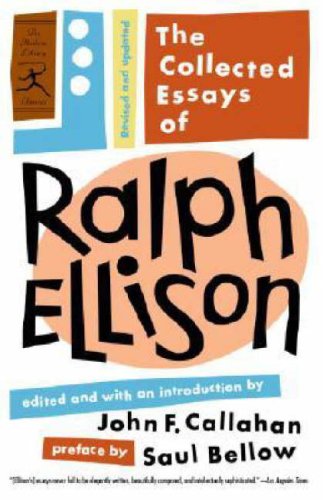
1. The Collected Essays of Ralph
$4.19
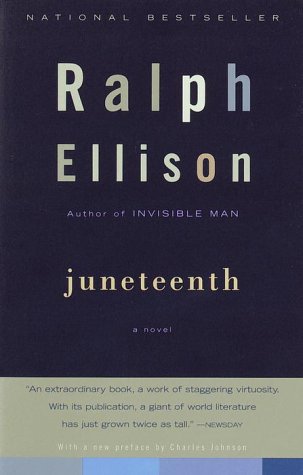
2. Juneteenth: A Novel
$10.13
3. Ralph Ellison: A Biography (Vintage)
$7.00
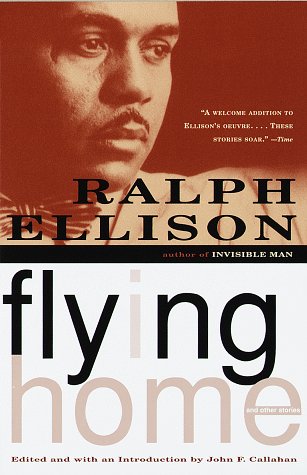
4. Flying Home: and Other Stories
$24.85
5. Ralph Ellison And the Raft of
$4.13
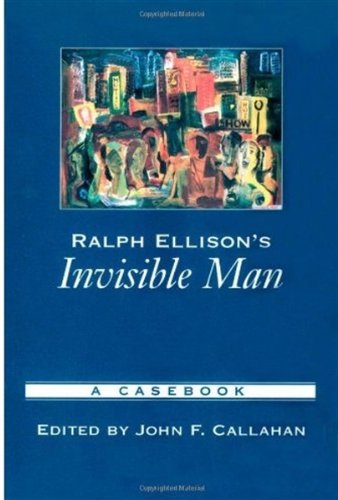
6. Ralph Ellison's Invisible Man:
 
$5.49
7. Shadow and Act
 
$6.95
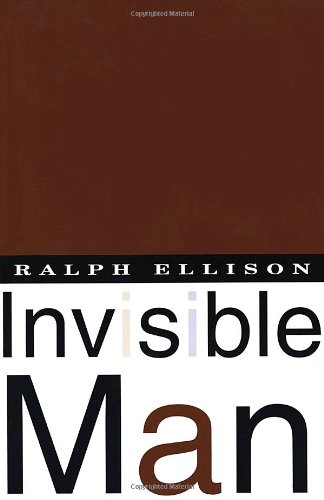
8. Invisible Man
$5.10
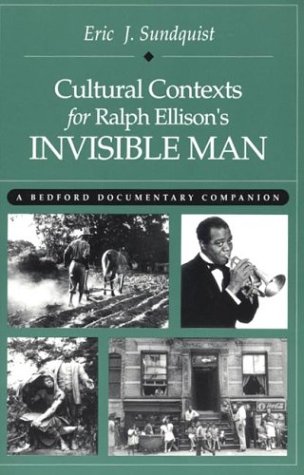
9. Cultural Contexts for Ralph Ellison's
 
10. Invisible Man
$15.04
11. Ralph Ellison: Emergence of Genius
 
$7.60
12. United States Authors Series -
 
$3.74
13. Ralph Ellison's Invisible Man/Monarch
$28.80
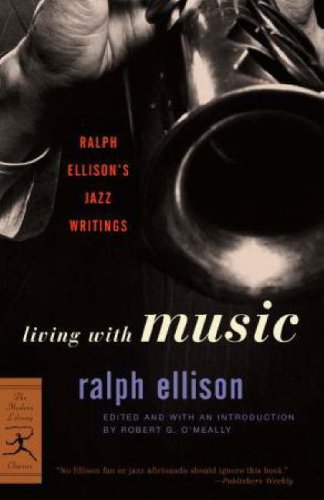
14. Living with Music: Ralph Ellison's
$66.55
15. The Cambridge Companion to Ralph
$55.00
16. Ralph Ellison's Invisible Man:
$12.75
17. A Historical Guide to Ralph Ellison
 
18. Invisible man: Ralph Ellison
$18.00
19. Invisible Man
$33.95
20. Speaking for You: The Vision of

1. The Collected Essays of Ralph Ellison (Modern Library Classics)
by Ralph Ellison
Paperback: 904 Pages (2003-09-09)
list price: US$16.95 -- used & new: US$9.56
(price subject to change: see help)
Asin: 0812968263
Canada | United Kingdom | Germany | France | Japan
Editorial Review

Amazon.com
Ellison was a believer in the hybrid nature of American culture, a position clearly articulated in the essay "What America Would Be Like Without Blacks." Elsewhere, he writes about the music of jazzmen Charlie Parker and Charlie Christian, the fiction of Richard Wright and Stephen Crane, and about the creation of his novel, Invisible Man that rocketed him to fame. This book brings together the contents of Ellison's Shadow and Act and Going to the Territory, as well as a dozen or so other essays and talks previously uncollected.Book Description
Compiled, edited, and newly revised by Ralph Ellison’s literary executor, John F. Callahan, this Modern Library Paperback Classic includes posthumously discovered reviews, criticism, and interviews, as well as the essay collections Shadow and Act (1964), hailed by Robert Penn Warren as “a body of cogent and subtle commentary on the questions that focus on race,” and Going to the Territory (1986), an exploration of literature and folklore, jazz and culture, and the nature and quality of lives that black Americans lead. “Ralph Ellison,” wrote Stanley Crouch, “reached across race, religion, class and sex to make us all Americans.” ... Read more


2. Juneteenth: A Novel
by Ralph Ellison
Paperback: 400 Pages (2000-06-13)
list price: US$14.95 -- used & new: US$4.19
(price subject to change: see help)
Asin: 0375707549
Average Customer Review: 3.5 out of 5 stars
Canada | United Kingdom | Germany | France | Japan
Editorial Review

Amazon.com
Invisible Man, which Ralph Ellison published in 1952, was one of the great debuts in contemporary literature. Alternating phantasmagoria with rock-ribbed realism, it delved into the blackest (and whitest!)corners of the American psyche, and quickly attained the status of legend. Ellison's follow-up, however, seemed truly bedeviled--not only by its monumental predecessor, but by fate itself. First, a large section of the novel went up in flames when the author's house burned in 1967. Then he spent decades reconstructing, revising, and expanding his initial vision. When Ellison died in 1994, he left behind some 2,000 pages of manuscript. Yet this mythical mountain of prose was clearly unfinished, far too sketchy and disjointed to publish. Apparently Ellison's second novel would never appear.

Or would it? Ellison's literary executor, John Callahan, has now quarried a smaller, more coherent work from all that raw material. Gone are the epic proportions that Ellison so clearly envisioned. Instead, Juneteenth revolves around just two characters: Adam Sunraider, a white, race-baiting New England senator, and Alonzo "Daddy" Hickman, a black Baptist minister who turns out to have a paradoxical (and paternal) relationship to his opposite number. As the book opens, Sunraider is delivering a typically bigoted peroration on the Senate floor when he's peppered by an assassin's bullets. Mortally wounded, he summons the elderly Hickman to his bedside. There the two commence a journey into their shared past, which (unlike the rest of 1950s America) represents a true model of racial integration.

Adam, we discover, was born Bliss, and raised by Hickman in the bosom of the black community. What's more, this rabble-rouser was being groomed as a boy minister. ("I tell you, Bliss," says Hickman, "you're going to make a fine preacher and you're starting at just the right age. You're just a little over six and Jesus Christ himself didn't start until he was twelve.") The portion of Juneteenth that covers Bliss's ecclesiastical education--perhaps a third of the entire book--is as electrifying as anything in Invisible Man. Ellison juggles the multiple ironies of race and religion with effortless brilliance, and his delight in Hickman's house-wrecking rhetoric is contagious:

Bliss, I've heard you cutting some fancy didoes on the radio, but son, Eatmore was romping and rampaging and walking through Jerusalem just like John! Oh, but wasn't he romping! Maybe you were too young to get it all, but that night that mister was ten thousand misters and his voice was pure gold.
In comparison, though, the rest of the novel seems like pretty slim pickings. For one thing, much of the plot--including Bliss's transformation from pint-sized preacher to United States senator--is absent. For another, Ellison's confinement of the two top-billed players to a hospital room makes for an awfully static narrative. Granted, he intended their dialogue to exist "on a borderline between the folk poetry and religious rhetoric" (or so he wrote in his notes). But this is a dicey recipe for a novel, and Juneteenth veers between naturalism and hallucination much less effectively than its predecessor did.

None of this is to assail Ellison's artistry, which remains on ample display. The problem is that Callahan's splice job--which well may be the best one possible--remains weak at the seams. So should readers give Juneteenth a miss? The answer would still have to be no. The best parts are as powerful and necessary as anything in our literature, evoking Daddy Hickman's own brand of verbal enchantment. "I was talking like I always talk," he recalls at one point, "in the same old down-home voice, that is, in the beloved idiom... [and] I preached those five thousand folks into silence."Ellison, too, is capable of preaching the reader into silence--and that's not something we can afford to overlook. --James MarcusBook Description
NATIONAL BESTSELLER

"[A]n extraordinary book, a work of staggering virtuosity. With its publication, a giant world of literature has just grown twice as tall."--Newsday

From Ralph Ellison--author of the classic novel of African-American experience, Invisible Man--the long-awaited second novel. Here is the master of American vernacular--the rhythms of jazz and gospel and ordinary speech--at the height of his powers, telling a powerful, evocative tale of a prodigal of the twentieth century.

"Tell me what happened while there's still time," demands the dying Senator Adam Sunraider to the itinerate Negro preacher whom he calls Daddy Hickman. As a young man, Sunraider was Bliss, an orphan taken in by Hickman and raised to be a preacher like himself. Bliss's history encompasses the joys of young southern boyhood; bucolic days as a filmmaker, lovemaking in a field in the Oklahoma sun. And behind it all lies a mystery: how did this chosen child become the man who would deny everything to achieve his goals? Brilliantly crafted, moving, wise, Juneteenth is the work of an American master. ... Read more

Customer Reviews (27)

5-0 out of 5 stars A Masterpiece
A novel about the truth as seen through the eyes of a fiction--indeed, the truth, to Ellison, was always suspect to the lie and again, as in the phrase the emancipation myth, where freedom wasn't given by the law but the law was only subject to the people who inforced it as truth, and thus Juneteenth, as the title of the last great work by an even greater artist, seems to be apt, for it suggests this dichotomy that Ellison was to work in all of his career.

Always a symbolist at heart, Ellison demonstates in Juneteenth the potential of words to turn even the most innocent of scenes on its head, fleshing out the meaning of slavery in something so unrelated as a circus as when Daddy Hickman takes Bliss to the circus, and Bliss innocently asks how come the lions don't catch the trainer, and Daddy Hickman explains that the lions are mastered. And with that small amount of information, the reader is instantly transported into the real scene Ellison wants his reader to notice. Of course, the genius of all this is Ellison's use of the word "mastered" instead of "trained," as that one word becomes the window through which we begin to see the ritual of the circus as having the potential to speak to us about the deeper convention of race.

And that is Ellison par excellent, for he is always using unrelated events to talk about other things.

There are so many things that can and should be said about Juneteenth that I could never exhaust the subject. Not that I am trying to, but one thing is for sure, those who have an intimate knowledge of Shadow and Act, and Going To The Territory and of course Invisible Man will see the influence of those books on Juneteenth. In scene after scene, Ellison calls up his references like a bandleader calls on the Brass section to riff on the beat, to live in the music, and Ellison, in Juneteeth, is more than anything else, living inside himself, inside the basement of Invisible Man, inside all of the history of literature and once in a while he peeks out at us, peeks as from a glass darkly to see if it okay to come out and play.


5-0 out of 5 stars Juneteenth
A little known book. This could be the American novel that transends time and place. The characters and descriptions are of the depth that is rarely described in modern literature.

5-0 out of 5 stars Great American Novel
This could well be the great American Novel that was anticipated. The ideas are powerful and cross racial bounderies. Ellison is a master and re-creates moods with skill. He glorifies the commonplace.

2-0 out of 5 stars Brilliantly Disappointing
Although Ralph Ellison's prose is masterfully, I found the body of work within Juneteenth to be disjointed and nonlinear in scope. Perhaps in someways it parallels Joyce's Ulysses, but falls woefully short of the mark.

5-0 out of 5 stars Not Finished, but Neither Is the Fight Against Racism
Much of the attention surrounding this posthumously compiled and titled novel Juneteenth, has focused on it's unfinished nature. True, in many spots the prose is difficult and plot trasitions are hard to follow. However, Ellison's mastery of the language and his awareness of race relations in the US, make this novel, though unfinished, a poignant follow up to Invisible Man. Ellison, via Callhoun's splicing, delves into the possibilities for equality among races, and the hope that one day we might all, black and white, be led out of the bonds of slavery and into a glorious promised land. Unfortunately, in Ellisons rendering, that Moses is sick and dying, and desperately in need of remembering who he is and where he came from. The end of the novel, although it may be abrupt and full of more questions than answers, might actually be closer to the truth than Ellison might have hoped to achieve. It leaves us as readers to ponder who we are and what we think the outcome might be (infact the last of his notes suggests this kind of relationship of this novel to his redaers). Is racisim truly an eternal bond that we shall never be free of? As in the novel, the answer is up to you. ... Read more


3. Ralph Ellison: A Biography (Vintage)
by Arnold Rampersad
Paperback: 704 Pages (2008-01-08)
list price: US$17.95 -- used & new: US$10.13
(price subject to change: see help)
Asin: 0375707980
Average Customer Review: 4.0 out of 5 stars
Canada | United Kingdom | Germany | France | Japan
Editorial Review

Amazon.com
On the strength of just one novel, as well as a series of lasting essays in cultural criticism, Ralph Ellison stands as one of the major literary figures of the last century. The novel, of course, is Invisible Man, and much of the drama of Ellison's life, as told by Arnold Rampersad in the first major biography of Ellison, is twofold: how Ellison came to write his masterwork, and how he failed to write another. Given complete access to Ellison's papers, Rampersad tells the story of Ellison's long apprenticeship as a musician and writer and his long life, full of honors and frustrations, after the great success of Invisible Man, capturing the complexities, to use of one of Ellison's favorite words, of his elusive subject, at once passionate and patrician, fiercely critical of his country's racial divisions and stubbornly hopeful about its democratic possibilities.

Questions for Arnold Rampersad

One of the leading scholars of African American literature and the author of major biographies of Langston Hughes and Jackie Robinson, Arnold Rampersad is an ideal biographer for one of the great figures of 20th-century American writing. We asked him a few questions about Ralph Ellison.

Amazon.com: Ralph Ellison came from Oklahoma--the "Territory," as he liked to call it--and in his essays he wrote evocatively of the conditions there that nurtured his creative life (although he rarely returned as an adult). What was Oklahoma like for an ambitious but poor young African American like him?

Rampersad: Ellison, who spent the first 20 years of his life in Oklahoma, was intensely aware of the pioneers, white and black, who had migrated toward the end of the 19th century, from the South especially, into what had been demarcated as "Indian" territory. These pioneers had come first as homesteaders, then as founders of the state of Oklahoma in 1907, six years before Ralph's birth. For the rest of his life he carried with him a keen, precious sense of Oklahoma as an extraordinary American site, one that captured much of the complexity of America as it had been shaped by frontier life. Oklahoma City meant excellent jazz and the blues--black culture in its artistic exuberance--as in the pioneering jazz guitarist Charlie Christian (who played later with Benny Goodman) and the equally famous blues singer Jimmie Rushing. But Ellison also knew Oklahoma as a place where Jim Crow was a disturbing, often ruinous force. Moreover, his father had died there when Ralph was only three, and the result was that his mother was forced to toil in humble jobs that sorely embarrassed a proud boy.

Later overlooking the slights and snubs he experienced as a youth, and dwelling especially on his various friendships with fellow students at the local "colored" schools, Ellison cherished his memory of Oklahoma as a region of almost mythic proportion and magical charm. He took immense pleasure in going back home--but he went home only after he had become famous and could command the respect and attention he had craved in his bittersweet youth.

Amazon.com: Ellison spent a long and varied creative apprenticeship before writing Invisible Man. What did he learn along the way that allowed him to make such a stunning debut?

Rampersad: Ellison's many years of training as a musician (on the trumpet) as a youth served him in good stead when he committed himself (influenced first by his friends Langston Hughes and Richard Wright) around 1937 to become a writer. He was then 24 years old--pretty late as a start for most important fiction writers, but not too late for a man of enormous drive, wide reading, and restless intelligence. As Ellison served his apprenticeship, he kept his major literary masters close at hand. They were Dostoyevsky for his distillation of the turbulence, vitality, and tragic gloom of Russia in the 19th century; Hemingway for his terse, virile elegance; Richard Wright (although the competitive Ellison would play down his influence) for the gritty American realism that sought to expose and redress American social injustice; Andre Malraux, for combining in an often breathtaking way the life of radical action and the life of the mind; and in some ways above all, T.S. Eliot, whose landmark poem of 1922 The Waste Land encouraged Ellison in his mature commitment to modernism, a pervasive if mild surrealism, jazzy improvisation, and cosmopolitan learning.

Ellison was a sometimes crudely Marxist writer until about 1942, when he began a zealous conversion away from the literary and political left. Three years later, he started Invisible Man. By that time, after years of hard work as a reader and a consciously apprentice writer, he was fully committed to an esthetic based in liberal humanism, with a particular passion for explorations of American literature and culture.

Amazon.com: The great question with Ellison is, of course, what happened after Invisible Man? Why do you think he struggled so with his second novel?

Rampersad: In some ways, the winning of the National Book Award in 1953 for Invisible Man, and not the mere publication of the novel itself, transformed Ellison's life for better and for worse. This prominent award to a young black man (who beat out Hemingway for the prize) set in motion a flood of honors, big responsibilities, and financial rewards. These tokens of professional success steadily combined with Ellison's proud perfectionism to make it increasingly hard for him to offer the world anything less than a work conceived and executed on a scale that reached grand--perhaps impossibly grand--heights of excellence. Committed to a literature of myth, symbol, and surrealism, instead of the literature of everyday life, he found himself often entangled in fiction writing that drew on techniques borrowed from James Joyce and on Faulknerian myths and fables about race, miscegenation, social injustice, and American culture. He also prized improvisation, which called for powers of organization and discipline that proved finally to be beyond him as a novelist. And he was not helped by his principled refusal to allow himself to be comfortable with the many African Americans who were attracted, starting in the 1960s, by black cultural nationalism and black power. Although he believed in African American culture, he became increasingly and painfully isolated in ways that led him away from the completion of vivid fiction set largely in that culture. He liked to blame his writing problems on the fire in 1967 that destroyed his country home in Massachusetts, but the facts about the fire do not support this claim.

Amazon.com: You've written major biographies of Langston Hughes and Jackie Robinson as well. How did Ellison's public path through the mid-century compare to theirs?

Rampersad: Langston Hughes was the polar opposite of Ralph Ellison in many ways. Hughes loved the masses of black Americans unconditionally; he believed in world travel and in varieties of friendship that covered almost the entire social spectrum; he was almost compulsive in his desire to help younger artists, especially younger black artists; he wrote consistently in a variety of forms of which poetry, drama, and fiction were only the most conspicuous; he also cared little for esoteric art and Olympian esthetic standards.

Ellison was a different man. He traveled little; guarded his resources zealously and believed that young writers should make their way by their individual efforts as he believed he had done for himself; he didn't hesitate to criticize black leaders when he thought they were abusing their authority, which was often, as far as he was concerned; and he set the highest esthetic standards for himself and others. He stuck to writing fiction and essays, and his total output is dwarfed by that of Langston Hughes--except, Ellison would say proudly, in terms of quality. Hughes paid, in the 1930s and through the 40s and early 50s, for his once deep attachment to radical socialism; Ellison quietly shed similar attachments in the name of a complex patriotism. In doing so, he escaped the rough treatment meted out to Hughes and others.

Jackie Robinson was by far the most famous of the three, and no doubt had the greatest impact, as a force for desegregation, on American culture. While he was not an artist or intellectual, he was drawn to politics especially after the end of his baseball career. He was a moderate Republican; the others were Democrats, although Hughes was more critical of party politics than was Ellison, who was befriended and advanced by President Johnson. Both Johnson and, later, Ronald Reagan awarded Ellison the prestigious Presidential Medal of the Arts.

Amazon.com: Invisible Man is one of only a few novels from its era that has kept its power and popularity for readers in later generations. Has it had a similar influence on younger writers? Ellison's prickly relations with his successors may have discouraged immediate followers, but can you see his influence today?

Rampersad: Young writers today, black as well as white, have many sources to draw on and many beacons of inspiration to guide them. And yet Invisible Man is in many ways as admirable, fascinating, and complex today as when it was first published. Among novels by black Americans, its only true rival in terms of quality of craft might be Morrison's Beloved, and the wide range of effects in Ellison's novel is probably unmatched by any other black novelist. Ellison, we should remember, set out consciously to write a novel that was simultaneously about a black man and about an Everyman who transcended race, and to a surprising extent he succeeded in doing so. His novel continues to appeal to blacks and whites alike, and especially to men. Moreover, in writing so brilliantly about race, which remains and probably will remain the most challenging topic in American culture, he practically guaranteed the continuing resonance of Invisible Man.

The superiority of Shadow and Act, his 1964 collection of essays and interviews, to virtually every other book on the subject of black art and culture is evident. Its only serious rival in this respect is probably Du Bois's The Souls of Black Folk (1903).But Shadow and Act lives while much, although not all, of Du Bois's classic book is dated. Shadow and Act continues to serve as a primer for younger black writers who are seriously interested in questions of literary craft and race in America.

Book Description
Ralph Ellison is justly celebrated for his epochal novel Invisible Man, which won the National Book Award in 1953 and has become a classic of American literature. But Ellison’s strange inability to finish a second novel, despite his dogged efforts and soaring prestige, made him a supremely enigmatic figure. Arnold Rampersad skillfully tells the story of a writer whose thunderous novel and astute, courageous essays on race, literature, and culture assure him of a permanent place in our literary heritage.

Starting with Ellison’s hardscrabble childhood in Oklahoma and his ordeal as a student in Alabama, Rampersad documents his improbable, painstaking rise in New York to a commanding place on the literary scene. With scorching honesty but also fair andcompassionate, Rampersad lays bare his subject’stroubled psychology and its impact on his art and on the people about him.This book is both the definitive biography of Ellison and a stellar model of literary biography. ... Read more

Customer Reviews (9)

3-0 out of 5 stars Spotlight on the Warts
Ralph Ellison was a magical writer.A look at his bio only partly explains how he was able to accomplish "Invisible Man," a surrealist existential odysey through Harlem during the Jazz Age.I agree with an earlier reviewer that, now that two extant biographies exist, the previous written by Lawrence Jackson, the two must be looked at side by side.The first, by Mr. Jackson, was written with the much more warm tone of an admirer.Admiration brings one close to the subject in a way that a critical view doesn't.Jackson seems to understand the very jazz rhythms that underpin the prose of Ellison.Rampersad's Ellison is much more petty and pompous. I'm sure both views reflect some of the reality of this complex figure. But as an admirer of Ellison myself, I thought Jackson's book was far more generous and insightful of the man, and the times that gave birth to his masterpiece.

Ellision is also somewhat of a tragic figure, and Rampersad certainly draws this out - he was never able to publish a second novel. Rampersad highlights the mythical fire that at each recounting consumes more and more of the would-be manuscript of a second work of fiction.Rampersad's book is meticulously researched, rich in detail about the later half of Ellison's life.I also agree with earlier reviewers that the essays Ellison produced during this second phase of his career are quite significant, and perhaps not sufficiently appraised by this biographer.

I feel Rampersad is a bit unfair to Ellison in his harping on how much he didn't do during the Black Power era.This is a judgment call - not every African American was wearing a dashiki during those days, and Ellison shouldn't be raked over the coals for this on every other page.It is saddening that he had this distant side to him, but more of an effort should have been made to understand why.Perhaps his and the country's traumatic relationship with communism during the Thirties into the McCarthy era had something to do with how he later tried to separate art from politics.I also suspect that an encounter between the two men colors the book: perhaps Ellison was less than generous with Rampersad when the two met in person for the research on Rampersad's Langston Hughes bio.Perhaps the bad blood continues.

Lawrence Jackson's book is a far better portrait, particularly of the genesis of "Invisible Man."Nevertheless, the scholarship is such in this second bio that it will prove to be an important addition to the understanding of the life of a complex man.

5-0 out of 5 stars The Good American
Biographies are usually hit or miss. So much depends not on the life the subject led, but on how the storyteller presents it, which, of course, depends on how intimately he or she has lived with the subject, which, ultimately, depends on how much of a paper trail the subject left behind for the storyteller, which, finally, depends on whether the subject thought his or her life was worth preserving at the time he or she was living it.


Following this brand of home-spun logic, Ralph Ellison, his wife, Fanny, and their friends and correspondents evidently knew a biographer would want to investigate the puzzling, charmed, but unmistakably heartbreaking life of the author of Invisible Man one day; for the breadth, depth and range of sources Arnold Rampersad canvassed to piece together this significant biography is staggering. On the surface Ellison could very easily be (and has been) dismissed as an elitist, an Uncle Tom, a one-hit wonder, a token Negro; just as easily he could be lauded as a genius, a tribute to his race, the standard bearer of black American literature. But in Rampersad's hands he is nothing short of a man worthy of unyielding compassion. Lest we forget, Ralph Ellison was a black man who in the middle of this nation's troubled twentieth-century aspired for entry into the privileged American society through art and, for all intents and purposes, achieved just that with his first book. Without ever having tried his hand at a novel, Ellison devoted nearly seven years - practically his entire thirties - to writing Invisible Man. Chew on that for a moment. Just let it sink in. He had that much belief, that much faith, in himself at a time in our nation's history when blacks had all but lost their faith in American democracy. And the literary world validated that faith with the highest honor given to an American novelist, the National Book Award. Besting the likes of his literary hero, Ernest Hemingway, Ralph Ellison became the first black author to win the award in 1953, a year before the Brown decision, two years before the Rosa Parks would refuse to give up her seat on a Montgomery bus.

What does that kind of success do to a relatively young man, especially one whose roots were as humble and unassuming as Ralph Ellison's? In what ways does it affect his psychology, not to mention the trajectory of his life? In a certain respect the meat of this biography is an investigation into the trappings of fame, unhinged ambition, uncompromising perfectionism, idealism, and rugged individualism. One wouldn't be too far off in comparing Ellison's meteoric rise to literary stardom in the middle of the century to a high school phenom being drafted in the NBA Lottery straight out of high school. One might even say his rise was even more dramatic, seeing as the immediate success of Invisible Man among the white literary elite signaled an unparalleled intellectual achievement in a society that customarily denigrated black intelligence.

But the same sense of individual fortitude that drove Ralph Ellison to the heights of artistic excellence with IM was also what alienated him from the wider issues of his day, and arguably stifled his art-hence the cautionary tale theme that undergirds all of his achievements and awards and accolades.As Rampersad makes plainly evident through his own conclusions and those of informed insiders such as Saul Bellow and Toni Morrison, Ellison put such tremendous pressure on himself to carry the weight of the entire race via his art - forget simply living up to Invisible Man, which never seemed to be his issue - that he could never finish his second novel. Nothing would ever be good enough for him, and not just because he set his standards for himself so exceedingly high; because he believed that much was at stake. Say what you will about Ralph Ellison as a man (and I had plenty to say about him throughout the often irritable reading of his life story) but he took his craft as serious as any writer who ever lived. To him literature was sacred. In a very literal sense, literature was his religion. Through his art he sought to construct the symbols that gave meaning to the "complex American experience" that he spent his entire professional life post-IM championing. Indeed, one of the prevailing theories surrounding Ellison's prolonged (to put it mildly) gestation period between novels was that he got lost in the power of "myth, symbol and allusion."Of his one-time housemate and longtime associate Saul Bellow once said, "Ralph fell into the trap of seeing himself as an authority on this and that. He did not allow himself to be free and grow." Another theory, this one suggested by his wife, was that he got too caught up in the comforts of fame. In fact, Rampersad makes it abundantly clear that Ralph Ellison was no anti-establishment bohemian artist. He was a social climber, a status seeker, an acquisitive consumer. Ellison enjoyed the limelight. He reveled in his associations with power. He openly and unabashedly pined for entry into the hallowed halls of the American elite, for he believed in those institutions that celebrated American excellence, and made no bones about excluding anyone, particularly other blacks, who did not measure up to his standards. Following a lecture he once gave in northern Illinois a young white professor asked Ellison howit felt to "go places where most black men can't go." Rather than take offense, Ellison, always with his flair of dramatic irony countered, "What you mean is, how does it feel to be able to go places where most white men can't go."

The secret to his success (and his failure some would say) was his sense of himself as anAmerican. He was a Negro (he deplored the label "black" when it came in to use in the 60's) and quite proud of that fact. But he considered himself an equal to all men by birth and to the most elite by dent of effort. But he was clouded by his own success. He believed too uncritically that his own rise to prominence could be utilized as an example to other blacks. If he could achieve on his own merit, then why couldn't every other black person? Why did other black writers need to resort to cheap racial ploys to attract attention to themselves? Why could they not simply hone their craft as he did? The problem with this logic was that Ellison hadn't achieved on his own. All along he was blessed with backers and boosters - nearly all of them white - who at times literally secured his survival or opened the necessary doors for him to enter. As for Richard Wright and Langston Hughes, both of whom played critical roles in nurturing his pursuits early on, Rampersad's evidence shows that Ellison grew increasingly critical and combative toward them once he no longer needed their guidance and support. "No, Wright was no spiritual father of mine," Ellison wrote in the early `60s, "certainly in no sense I recognize."

Indeed, Ellison's relationship with black people in general was cool at best. He was nostalgic and sentimental about Oklahoma City and the people who populated his memories of youth, but he had absolutely no interest in the newly liberated Africa (aside from collecting African art). He spent the better part of the civil rights era making a good deal of his living by lecturing on race (he was a devout integrationist who denounced the Black Power concept and yet was critical of Dr. King's style as well) and yet he would never lend his name or support (aside from he and Fanny's annual donation to the NAACP) to the civil rights movement proper. He was quick to accept writing assignments from leading white publications, but he routinely rejected the requests from fledgling black publications. He supported the Vietnam War despite the fact the young black men were being sent overseas in droves. In spite of its declining condition, the raft of crime and he and Fanny's financial wherewithal, the Ellison's categorically refused to leave their Riverside Drive apartment, and yet from the publication of IM on he was increasingly estranged from black Harlem, not to mention everyday blacks in general, a fact which some critics believed stifled his ability to capture the changing social reality of black American in his fiction.

But then, just when you think it's safe to write him off as a self-hating opportunist, the ever-irascible Ralph Ellison shows you something you didn't expect. When the socialist critic Irving Howe published the essay "Black Boys and Native Sons" lauding Wright's Native Son as the standard by which all black fiction should be judged because it expressed what the critic considered authentic black rage, Ellison eloquently dismantled Howe's essentialist rhetoric in the name of the broad tapestry that is black life. When he was invited to speak to the Panel of Educational Research and Development, he defended black youth and black culture against what he saw as the unfair and uninformed attacks being leveled against it. When Ronald Reagan began dismantling the New Deal structures that had "made it possible for me to go from sleeping on a park bench to becoming a writer," Ellison became a national sponsor of the Emergency Black Survival Fund.

Hiram Hayden, the one-time editor of the American Scholar, said it best when he described Ellison's "lonely burden" as that which belonged to "certain black men of a transitional generation..." "Scorned by militants," Rampersad continued, "too liberal for conservatives, lionized by liberal or calculating whites," Ellison was a man outside of time, which to some extent mirrored the surrealist style in which the final segment of IM is written. At once he was ahead of his time and behind his time, but never completely in it. At intervals his insistent positions made him the object of scorn and ridicule, as when, in what might be the book's most touching moment, Ellison breaks down and cries in the arms of a black student leader at a college in Iowa after being verbally assaulted by a young black man who accused him of being an "Uncle Tom" and a "sell-out." "I'm not a Tom, I'm not a Tom," wept the deeply wounded author. More often, his convictions made him the subject of adoration, as when he received literally countless awards for his independence and artistry.

No one ever chose his battles for him, and, upon closing this outstanding biography, that is what clearly mattered most to Ralph Ellison. He lived and died on his own terms, with his own demons, shortcomings-what have you. Lesser men would have retreated from public life in the face of unfulfilled expectations (Salinger, for example), but Ellison, as embarrassed as he was by his own lack of productivity, continued to stride toward his destiny, even if clumsily at times. Despite Rampersad's intimation that at some point Ellison stopped believing he was going to finish the second novel (Juneteenth),and that he secretly believed it was doomed, he never stopped working on it, never stopped trying to make it measure up to what he wanted it to be. And maybe that is the lesson. That even when we achieve our wildest dreams, the drive toward perfection is never complete; that however much we contribute to the world, we should never be satisfied; that no matter which road we choose there are bound to be thorns, ditches and roadblocks; that the absolute best we can hope for is that our lives are worth writing and reading about long after our time has run out.

Thank you Mr. Ellison for living a life worth reading about. And thank you Mr. Rampersad for bringing that life back to life.

3-0 out of 5 stars Alas! Second to the Line
The obvious place to begin is a comparison with Lawrence Jackson's 2002 unforunately named "Ralph Ellison: Emergence of Genius." Both are the same length, but Jackson covers Ellison's life only to 1952 when he won the National Book Award, while Rampersad goes to his death in 1994. Also, Rampersad had full access to the Ellison archives in the Library of Congress, while Jackson was permitted only the literary drafts and manuscripts there. This meant that Jackson did not have access to Ellison's personal correspondence, although he could view letters to other significant figures, such as Wright, Baldwin and Hughes who have their archives elsewhere.

There is also a lot going on behind the scenes here. Jackson started his book as a PhD dissertation at Stanford while Rampersad was faculty there; Rampersad claims in his acknowledgements that he finished his manuscript in 2003, but that it was delayed for three years due to pressing administrative duties (Hmmmm); in his acknowledgements section Jackson praises Robert O'Meally (now at Columbia) as his mentor, and Rampersad gives a lot of ink to Ellison's trashing of O'Meally's 1980 book on him; and Jackson mentions Rampersad in only one short sentence in his acknowledgements, while Rampersand ignores both Jackson and Howard University (his employer) entirely in his. I smell hard feelings here.

The verdict? Jackson's is by far the better book. Believe it or not, the access to Ellison's personal correspondence is Rampersad's Achilles' heel. Jackson's book was very good. Having read it (I don't believe Rampersad's "I finished mine in 2003" line for a minute) Rampersad realized that the only original thing he had was the previously closed correspondence. That was mostly family and personal letters (Jackson had already tracked down the literary material in the open files of the other authors) which emphasized the daily petty trials and tribulations of life. So by avoiding the material Jackson covered and using the fresh stuff, most of which was personal and trivial (I mean, he's not going to spend a lot of time writing to Irving Howe about his hemorroids) the book makes Ellison come across as personal and trivial.

The problem isn't that Rampersad wants to do a hachet job on Ralph Ellison, it's that he came in second to the line to a very well done book, and at least for the first half of his subject's life, he doesn't have a lot to add, and the last half of Ellison's life wasn't his best. (However, let's wait for Part II of Jackson's bio.)

Sure, go ahead and buy this book. It's not a heavy read. But I caution you, read Jackson's bio first, or all you'll get is a medicine cabinent view of the man.

4-0 out of 5 stars "A pompous, one-book black writer" - James Baldwin
James Baldwin dismissed the increasingly irrelevant Ralph Ellison with this description, and the biography perfectly captures Baldwin's assessment.Baldwin himself never won the National Book Award, but he and novelist John A. Williams could write rings around Ellison on a good day, thus evidencing the highly political nature of the literary world. Just as Richard Wright drifted away from his muse by expatriating himself to France, Ralph Ellison deliberately divorced himself from the black community here at home.He dined out on "Invisible Man" for over forty years, promoting the con game and lie that his second book was "in progress".Ellison loved the tokenism of being the Only Negro In The Room, disparaged women writers, and turned his back on young black writers seeking a hand.Tapped by the NY literary establishment for the role, he embraced being the black gatekeeper, pontificating ad nauseum about the western European literary tradition and screening out other black writers who might have challenged this view. He made a big deal about "craft", yet his noisy novel does not stand up to his own analysis.Frankly, John A. Williams was superior to Ellison in almost every aspect, and his signature novel, "The Man Who Cried I Am" is fully superior to "Invisible Man".But Williams told the unvarnished truth in his work and was marginalized by the NY literary establishment as a result. Rampersad does a terrific job with his subject, but I'm sorry I bought the book, as it adds nothing new to the outsized legend of Ellison.

5-0 out of 5 stars Buy This Book or check it out at your Library
This was a really good book--but it was very long. Rampersad conveys:

* The good, bad and ugly of Ellison's time at Tuskeegee.

* The cantankerous personality of Ralph Ellison--his opinionated personality, his love of the Western intellectual tradition, his male chauvinism and his love of WASPishness and aristocracy. Ironically, Ellison was not only a symbol of macho intellectualism, he was also a victim of it when he's confronted by "Black Power" students during that era. Black nationalists criticized him for being silent regarding oppression of Blacks and subservient to rich white society people; Ellison criticized young Black nationalistic writers (in a blanket characterization) for poor or unhoned literary skills and putting message ahead of craft. After reading this book, now I can see that both sides were partially right. (The most painful for me of Ellison's silence was his cheery participation on the board of Colonial Williamsburg in an era where they used the term "servants" but not "slaves" or "slavery".)

* The gossip about prominent intellectuals was interesting. If you think rappers are hostile to each other, they have nothing on the intellectuals of Ellison's era who had grudges against each other, hurled essays at each other, alliances, and played politics with the awarding of club memberships, board positions and literary awards. Pretty funny.

*The devotion of Ellison's wife who supported his writing career (before Invisible Man was published) by working full-time, then coming home and doing all of the cooking.

By the end of this book, the burden of the work-in-progress was paining me as much as it was Ralph Ellison. If only he could have completed it!

I still have not read Invisible Man. I might, I might not. But I will never forget the personality of the man as evidenced in this bio.

Ralph Ellison had a fascinating life and this book captures the journey!
... Read more


4. Flying Home: and Other Stories
by Ralph Ellison
Paperback: 224 Pages (1998-01-12)
list price: US$13.00 -- used & new: US$7.00
(price subject to change: see help)
Asin: 0679776613
Average Customer Review: 4.0 out of 5 stars
Canada | United Kingdom | Germany | France | Japan
Editorial Review

Amazon.com
Though he was the author of two highly regarded collections of essays, Ralph Ellison's fame rests on his prize-winning novel Invisible Man. For years, he labored on another novel, but he died in 1994 with it still unpublished. Here, Ellison's literary executor, John F. Callahan, collects 13 stories, many of which are published for the first time. The stories give us an intriguing look at Ralph Ellison's development as a writer (some early ones, for example, clearly show the influence of Hemingway), and his early attempts to articulate his concerns about the nature of blackness and the American identity.Book Description
Written between 1937 and 1954 and now available in paperback for the first time, these thirteen stories are a potent distillation of the genius of Ralph Ellison. Six of them remained unpublished during Ellison's lifetime and were discovered among the author's effects in a folder labeled "Early Stories." But they all bear the hallmarks--the thematic reach, musically layered voices, and sheer ebullience--that Ellison would bring to his classic Invisible Man.

The tales in Flying Home range in setting from the Jim Crow South to a Harlem bingo parlor, from the hobo jungles of the Great Depression to Wales during the Second World War. By turns lyrical, scathing, touching, and transcendently wise, Flying Home and Other Stories is a historic volume, an extravagant last bequest from a giant of our literature. ... Read more

Customer Reviews (4)

5-0 out of 5 stars At Home with Ralph Ellison
Ralph Ellison's "Flying Home and Other Stories" apparently is the first posthumous collection to be published by his estate.And it is a remarkable collection at that.There are thirteen stories here, six of which had never been published before.The editor, Professor John F. Callahan, did a fine job at choosing the stories to be included, and he describes the fascinating selection process in the book's introduction.Professor Callahan includes three early Buster-and-Riley stories which inspired me to write my short story, "Los Angeles, 1970" (Outsider Ink at: http://outsidermedia.com/00/spring/olivas.html).The Buster-and-Riley stories capture the wonderful and lively banter between the two boys while showing how the racism of the real world touches and affects their childhood.There is also "A Party Down at the Square" which is a chilling story told in the first person by a white boy who witnesses the burning of an African-American man.Each story is well-crafted and powerful in its understatement.Ellison's graceful and evocative language paints a picture of human strength and frailty with the same honest, unflinching brush.Though he is best remembered for his novel, "Invisible Man," this collection demonstrates that he was also a brilliant craftsman of the short story.

4-0 out of 5 stars Flying is easy if there is no buzzard on the way
Ralph Ellison is a great writer. In this collection of old short stories we see him grow and develop under our own eyes. He deals with the problem of racial relations and of race definitions with a tact and humor that make some of his stories extremely funny. But some others are dramatic and deal with a more general and abstract matter. The title story is typical of that. A black pilot is confronted to all kinds of reactions, from his dead father, from a vulture that crashed his plane, from the white owner of the field where he crashes, from the blacks who try to solve his problem : he broke his ankle in the accident. The father is being humorous about heaven and white Saint Peter. The white owner is deeply racist and brings two « nurses » from a psychiatric hospital since a black man has to become crazy if he flies. The black witnesses are just trying to help the poor fallen pilot without getting any antagonism from the white owner, which is not exactly easy. In each story we find such situations that bring racism to the fore or that reveals the « education » a black man has to go through to become « adapted » to this racist society, to make himself, if not invisible, at least unconspicuous. Those stories are worth a little voyage into this writing that we see building itself stone by stone. Of course the real walls are the novels, but here are the handy tasks that shaped Ralph Ellison's hand and pen for the novels. Dr Jacques COULARDEAU, Paris Universities II and IX.

3-0 out of 5 stars Uneven, but good for Ellison fans
I read this book recently after devouring Invisible Man. I have to say, though, that I was a little dissappointed by this book. Curiously enough, a lot of these stories weren't published in Ellison's lifetime, and with someof them, it's evident why. A few of the stories are juvenile, not at allcomparable to Invisible Man, and by the same token, a few of them arespectacular pieces of prose. So, with this volume, I advise you to treadcarefully, but read it all the way through. The gems are worth it, despitethe failures.

4-0 out of 5 stars Great stories for the Ellison fan
This collection of stories is a must read for those who treasure to work of Ellison.In these short works, the voice that would give us Invisible Man can be seen developing.They are not as powerful or as deep as his great novel, but they do offer an entertaining and meaningful read.Thelengthy introduction is informative and insightful. When I first readInvisible Man, I could swear that I heard jazz as I read.Callahanexplains Ellison's musical background which convinces me that I heard thejazz in Ellison's words by design. These works carry the same music. ... Read more


5. Ralph Ellison And the Raft of Hope: A Political Companion to Invisible Man
Paperback: 249 Pages (2006-04-10)
list price: US$24.95 -- used & new: US$24.85
(price subject to change: see help)
Asin: 0813191629
Canada | United Kingdom | Germany | France | Japan
Editorial Review

Book Description
Ralph Ellison once said he learned from Mark Twain that "a novel could be fashioned as a raft of hope, to keep us afloat as we tried to negotiate the snags and whirlpools that mark our nation's vacillating course toward and away from the democratic ideal."In one of his last public speeches, Ellison challenged American writers "to take individual responsibility for the health of American democracy" in their literary endeavors.

The original essays in Ralph Ellison and the Raft of Hope illuminate Ellison's work to enrich the political sensibilities and strengthen the democratic resolve of his audience.In Ellison's day, rampant social upheaval was the hallmark of a divided America, and those hoping to improve society through concerted democratic action encountered powerful opposition.Conflict and discord filled buses and churches, courtrooms and legislative halls, dinner tables and negotiating tables.Warriors on all sides took their battles into the streets, and this atmosphere permeated the text of Ellison's masterpiece Invisible Man.

Ellison's relevance as a political novelist, essayist, and commentator did not end with the publication of Invisible Man or as the civil rights movement waned.Lucas E. Morel's collection of essays demonstrates that Invisible Man deserves its place in the pantheon of great American novels and that Ellison should be regarded as an essential framer of recent American political thought.His conception of America's basic democratic project—strangers, bound together by common citizenship, crafting a vision for America's future and forging consensus on the path toward that goal—is especially valid in the new century as the nation struggles with divisions and contradictions unimagined during Ellison's lifetime.

The essays in Ralph Ellison and the Raft of Hope probe the political lessons of the landmark novel Invisible Man, in which Ellison reflected on the sacred ideals that set the American republic into motion.He explored the contrast between modern statements of those ideals and the policies that subverted them, ceaselessly exhorting his fellow writers to bring their acute insights to these crucial questions.Drawing from literature, politics, history, and the law, Morel and the contributors demonstrate how Ralph Ellison set the tone and agenda for a politically charged era. ... Read more


6. Ralph Ellison's Invisible Man: A Casebook (Casebooks in Criticism)
Paperback: 368 Pages (2004-04-01)
list price: US$24.95 -- used & new: US$4.13
(price subject to change: see help)
Asin: 0195145364
Canada | United Kingdom | Germany | France | Japan
Editorial Review

Book Description
This casebook features ten distinctive and provocative essays in addition to a generous sampling of Ellison's comments on the novel. A number of the latter are from letters never before published; also published here for the first time is Part II of Ellison's "Working Notes on Invisible Man," an undated exposition of his authorial intentions, probably written in 1946 or 1947.The ten essays are a selection of the most perceptive and comprehensive essays written on Invisible Man during the last thirty-five years, including an essay by Kenneth Burke, which began as a letter to Ellison about the novel, written before its publication in 1952. Also among the essays is Larry Neal's "Ellison's Zoot Suit," in which he finds the novel an exemplary enactment in fiction of the "black aesthetic."The essays explore topics of narrative form, classical and vernacular points of reference, and the relationship between the themes of love and politics. Taken together with Ellison's "Working Notes" and later commentary on the novel, these essays account for the continuing appeal of Invisible Man more than fifty years after its publication. An editor's introduction and a full bibliography accompany the essays, selections from Ellison's writings, and informal statements on his novel. The volume offers a rich variety of interpretations of Invisible Man for students and scholars of Ellison. ... Read more


7. Shadow and Act
by Ralph Ellison
 Paperback: 352 Pages (1995-03-14)
list price: US$14.00 -- used & new: US$5.49
(price subject to change: see help)
Asin: 0679760008
Average Customer Review: 5.0 out of 5 stars
Canada | United Kingdom | Germany | France | Japan

Customer Reviews (2)

5-0 out of 5 stars memoirs from a unique brotha
not merely a statement on being a black man in america, but on being a man period. ellison is not a militant negro nor is he a white man's negro. he is a free spirit whokeeps his mind open to art , music, and life. i lovedall the essays. he had cosmopolitan background growing up in oklahoma city, the product of middle-class parents. he read all types of literature, not just one kind and became a writer, simply by accident. his true love washis music. the middle third of this book proves this is the essays he wroteabout jazz and opera, especially his loving tributes to milton's playhouse and charlie parker. he was a true renaissance man, who never lost the common touch. conquering any challenge that came his way...

5-0 out of 5 stars First Class Act: Shadow of a Giant Mistaken for Invisible
Ralph Ellison, the musician and the author of the extrememly well-conceieved and paced novel "Invisible Man" (a rare instance wherein the plotting falls perfectly in sync with the decsriptive; falling, as with the eloquence and precision of the inernal mechanics into the ornate casing of a timepiece; a statement as much as a parody concering perceptions), here provides many surprises, all attesting to the immensity of his talents and array of his interests: There are articles on Jazz, BeBop, and some of best first-hand renderings upon the scene as it had developed at a period between literal non-accepatnce to a greater receptability; Eliot, as in the author's pechant and interest for the motifs, messages and stylistic of "The Wasteland"; Faulkner and the South; Historic American literary recurrances involving language, rythmic and individual, and some very valuable and erudite selections whose range -both autobiographic and literary- are as indispensable as they are of true merit and eloquence. This edition (and it is a shame there had not been more!), legitimizes the talents and perspectives of a gifted author whose legacy -although saddly never fully realized- shall always stand above any field of the discordant (as in the Wasteland), ringing more true than any pause between a jazz riff's sometimes-disquieting
strains. ... Read more


8. Invisible Man
by Ralph Ellison
 Paperback: Pages (1989-04-23)
list price: US$11.00 -- used & new: US$6.95
(price subject to change: see help)
Asin: 0679723137
Average Customer Review: 5.0 out of 5 stars
Canada | United Kingdom | Germany | France | Japan
Editorial Review

Book Description
Invisible Man is a milestone in American literature, a book that has continued to engage readers since its appearance in 1952.  A first novel by an unknown writer, it remained on the bestseller list for sixteen weeks, won the National Book Award for fiction, and established Ralph Ellison as one of the key writers of the century.  The nameless narrator of the novel describes growing up in a black community in the South, attending a Negro college from which he is expelled, moving to New York and becoming the chief spokesman of the Harlem branch of "the Brotherhood", and retreating amid violence and confusion to the basement lair of the Invisible Man he imagines himself to be.  The book is a passionate and witty tour de force of style, strongly influenced by T.S. Eliot's The Waste Land, Joyce, and Dostoevsky. ... Read more

Customer Reviews (1)

5-0 out of 5 stars Intensity for the Black Experience in America
I'm a white guy who just finished reading "Invisible Man."This is a classic work of 20th century American literature.The narrator of the novel, told in first person, is never named.What a concept!After all, he's invisible, right?This young black man starts out in the South and then moves to New York City, circa the 1940s (even the time frame in this book is hard to figure.)The leading character constantly gets into trouble for doing the right thing or just being honest.At times, his adventures seem the stuff of bad acid trips or journeys through an "Alice in Wonderland" kind of world populated by people spouting intellectual sophistry if not outright b.s.He joins "the Brotherhood" whose members are white and black, its politics cynical and pragmatic.This group pays him money to give speeches and be an administrator.But he eventually discovers their true motives.The narrator's only friends are the married white women who throw themselves at him for purposes of stud, his only bad karma in the book.Yet he's certainly a likeable, introspective fellow, a Kafka-esque victim of society. ... Read more


9. Cultural Contexts for Ralph Ellison's Invisible Man: A Bedford Documentary Companion
by Eric Sundquist
Paperback: 258 Pages (1995-02-15)
list price: US$11.95 -- used & new: US$5.10
(price subject to change: see help)
Asin: 0312100817
Average Customer Review: 5.0 out of 5 stars
Canada | United Kingdom | Germany | France | Japan
Editorial Review

Book Description

A unique supplement to one of the most important African American novels of this century. As Invisible Man chronicles the major moments of African American life during the first half of the twentieth century, this volume illuminates and contextualizes the novel with a collection of speeches, essays, folktales, historical analyses, photographs, and other cultural and historical documents.
... Read more

Customer Reviews (1)

5-0 out of 5 stars Invaluable Resource for in-depth research
Eric Sundquist's book is an invaluable resource for information when trying to understand the background of Invisible Man.This is the place to start if you're doing research on the novel.Not only does Sundquist present the prolific sources that Ellison used and referenced through the novel, the editor also provides additional resource materials for each reference.It's wonderful if you're writing a research paper, and helpful for the curious reader who wants to be even further convinced of Ellison's genius. ... Read more


10. Invisible Man
by Ralph Ellison
 Paperback: Pages (1972-01-12)
list price: US$5.95
Isbn: 0394717155
Average Customer Review: 4.5 out of 5 stars
Canada | United Kingdom | Germany | France | Japan
Editorial Review

Amazon.com
First published in 1952, Invisible Man revealed the pain of a black man's existence in a white world. It was shocking then, but remains important literature today. It is the story of a young man's journey--through the Deep South to the streets of Harlem, through events and experiences that range from tortured to macabre. As he moves through time, he learns about the black world, the white world, and a world of his own. His passage is a frightening but at the same time enlightening pilgrimage, for the Invisible Man and for all of us.Book Description
Invisible Man is a milestone in American literature, a book that has continued to engage readers since its appearance in 1952.  A first novel by an unknown writer, it remained on the bestseller list for sixteen weeks, won the National Book Award for fiction, and established Ralph Ellison as one of the key writers of the century.  The nameless narrator of the novel describes growing up in a black community in the South, attending a Negro college from which he is expelled, moving to New York and becoming the chief spokesman of the Harlem branch of "the Brotherhood", and retreating amid violence and confusion to the basement lair of the Invisible Man he imagines himself to be.  The book is a passionate and witty tour de force of style, strongly influenced by T.S. Eliot's The Waste Land, Joyce, and Dostoevsky. ... Read more

Customer Reviews (269)

5-0 out of 5 stars Masterpiece
Triumph of 20th century Afro-American literature and that specific historical/cultural perspective.For me, much more powerful and
instructive than Native Son, Song of Solomon, or any such treatise.
Enjoy.

5-0 out of 5 stars Invisible man is really something.
This great American novel begins by articulating what it means to be an intellectual, young Afro-American in the South around the time of WWII. Invisible man meets with deceit, distrust and manipulation at every turn and decides to move North to New York City where he finds more of the same. After living hand-to-mouth in Harlem, he becomes a spokesperson for a social movement in Harlem seeking to mobilize for reform. He becomes a pawn in the hands of the leadership of this radical reform movement even as he articluates their messaging. During riots in Harlem he becomes an underground man, literally hibernating below the streets of New York in a hole. The link to Dostoyevsky's undergound man becomes inescapable. Nevertheless, his elusive identity and absence of voice and powerlessness in the hands of his society and culture become paralytic for him. He is a nameless intellectual struggling to assert his identity to overcome the cosmic void intent upon swallowing him through animosity, poverty and bigotry. He becomes a man who has lost his illusions and determines that "humanity is won by continuing to play in the face of certain defeat." There are extistential themes at play in the novel when that philosophy was in its heyday after Europe crawled out of the bunkers and rubble of the decimation of World War II: "...for all life seen from the hole of invisibility is absurd." He decides after living in the hole that he must shed his snakeskin and come up for breath. "Thus, having tried to give pattern to the chaos, which lives within the pattern of your certainties, I must come out, I must emerge." Invisible man does crawl out of his underground hibernation with full recognition of his invisibility and cognizant it's possible that even an invisible man has a "socially responsible role to play." He admonishes us, powerfully, that his voice is also ours. Saul Bellow was right to consider Invisible Man a "book of the very first order." Even more impressively, this was Ellison's first novel and could be considered one of the best, first novels even written by an American. Read Invisible Man: these American Notes from Underground are powerful and moving and prescient. In so profoundly articulating the nothingess, Ellison is really something -- immortal. Invisible man is us.

5-0 out of 5 stars ellison's masterpiece
Ralph Ellison is one of the very writers who actually
deserved the National Book Award for his jaw-dropping
critique of what it means to be a black man in society.

It's the story of a nameless, faceless protagonist and
his effort to escape the harshness of double consciousness,
urban realism, poverty and racism in order to truly exist
as a man in society.A very well-written book that fifty
years after it was first written still resonates today.

Sadly, this was Ellison's one and only book.It's too
bad that he was unable to complete his second book or
any other work.Still, it's one of the most important
black books written and deserves its place in the literary
canon.Highly recommended for the serious reader.

1-0 out of 5 stars Never Read a Worse Book
Rarely do I find I book I hate so much that I am compelled to rip it, burn it, or in some way mutilate beyond recognition, but Invisible Man certainly qualified as just such a book.

Some authors deem it necessary to write a story for the sole purpose of conveying a moral (as opposed to writing the story for the joy of it).This is the point of essays, in my opinion, and should not be applied to novels. Ralph Ellison had a very good point - we must stop the prejudice against black people in America - but he made it so glaringly obvious that any vestige of story in his work was obliterated.

This book was impossibly surreal.It made no sense.It was strange and bizarre and rambling.I was forced to read it by my English teacher, who is also a Vonnegut fan, and couldn't believe the utter lack of interesting, believable plot.

I was also very sad that this book was so long.If a book is going to be bad, why can't it also be short?I do not understand.

I read this book, took notes on this book, and wrote a ten-page paper on this book, and failed to get anything out of it other than, "God, I'm never reading THAT again!"It still seems to be immensely popular and on the lists of Best Novels of All Time, though, and sometimes I wonder if people like the idea of it better than the actual painful process of getting through the book.

This is the worst book I have EVER read, and I would never read it again unless I was paid a large quantity of money.

5-0 out of 5 stars The Invisible Man with Invisible Beauty, by Sean Brown

Ralph Ellison in the introduction to The Invisible Man on page XXII states the intention of the book as "dealing with the sheer rhetorical challenge involved in communicating across our barriers of race and religion, class, color, and region..." along with an intention "to reveal the human complexity which stereotypes are intended to conceal." The Invisible Man's greatness as a book comes from Ellison effective appeal to ethos and pathos using a variety of analogies, double meanings dealing with connotation and denotation, diction, and syntax to convey the inferiority of blacks as an invisible race during the early 1900's.The book is an absolute "must read."

Analogies
Analogies are commonly used to put ideas and perspectives into more commonly known expressions that appeal more widely to pathos and ethos.When exploring the differences in connotation and denotation of the word hole on page 6 in reference to home, Ellison uses an analogy to explain the intended connotation."And remember, a bear retires to his hole for the winter and lives until spring; then he comes strolling out like the Easter chick breaking from its shell."In addition to using an analogy to explain that the word hole was not intended create same connotation as the word grave does, Ellison uses a simile to explain the analogy."Like the Easter chick breaking from its shell" is a simile to better explain how the bear strolls out of his hole, which is an analogy to explain that the hole he lives in has a connotation similar to the word home.The use of an analogy and a simile together appeal with more power to pathos than an appeal made by an analogy or a simile alone.The appeal is intended to use the reader's prior emotions and knowledge surrounding the innocence and warmth of a newly born chick and then compare that to hole.This structure is used constantly throughout The Invisible Man. On the same page he uses another simile to explain how the world repeats itself."...that is how the world moves: Not like an arrow, but a boomerang." (6) The comparison is used to help simplify the concept that world does not travel into new ideas, social norms, or cultural beliefs like an arrow will travel straight into different parts of space.The world will travel into these different parts of space much like a boomerang, having a tendency to return to the origin. Ralph Ellison takes several sentences such as the ones above and compresses the ideas into analogies and similes.Effectively done throughout the book, the technique puts inferiority or invisibility of blacks into simplistic, more understandable terms.The Invisible Man is a work of literary art that is able to make the inexperienced reader realize what the nameless protagonist is experiencing.

Connotations
Analogies and similes are sometimes used by Ralph Ellison to explain some differences in the intended connotation and actual denotation of the word.Another thing that makes The Invisible Man a work of literary art is Ellison's effective use of the connotations of words to appeal to pathos.Ellison uses the analogy of an emerging bear from hibernation in a hole to better explain his connotation of the word hole.Society's connotation of hole is a damp, cold, dark place that may be very similar to grave.Ellison knew that this connotation wouldn't be effective for intent.He also knew that using the word home instead of hole would, because of society's connotation of the word, make it seem as though his character had a warm, friendly place to live that was above all, visible.With the use of an analogy he changes the connotation of the word hole to be just a place to live that is invisible to the world.One of the most common differences between connotation and denotation lies in the actual title and purpose of the book: the invisible man.Denotation suggests that the man cannot be seen or observed.He is a ghost.Ellison's connotation of the word invisible is actually explained on page 3. "I am an invisible man.No, I am not a spook like those who haunted Edgar Allan Poe.... I am a man of substance... and I might even be said to possess a mind.I am invisible, understand, simply because people refuse to see me.... When they approach me they see only my surroundings, themselves...everything and anything except me."

The connotation is a feeling of absence or of being ignored.This specifically appeals to pathos because most people have had the feeling of desire for acknowledgement and the feeling of despair when there is not.With this connotation, Ellison can use the word invisible effectively to appeal to pathos throughout the book.Even without using the word invisible the reader has a certain feeling of being invisible throughout the book and that is what makes the book beautiful.The beauty comes from the reader relating to the protagonist without being told to do so.It lies in the turning of the pages because the reader desires for the protagonist to be recognized and a resolution to present itself.The Invisible Man is a work of literary art because connotation and an appeal to pathos will help the reader develop a new set of "inner eyes" (3) to see the world through.

Diction
Connotation is an effective use of diction, but specific word choice alone, regardless of connotation, can actually be a powerful tool in the author's tool box.Ellison's effectively chooses diction to appeal to pathos and ethos, even without a specific connotation.Diction is another reason The Invisible Man is a master piece of literature because it creates multiple layers of meaning past analogies or connotations.At the beginning of the book the protagonist is taken to give a speech to a group men who have been drinking and smoking cigars.Ellison's choice of diction not only characterizes the men in the room but also appeals to ethos."I was shocked to see some of the most important men of the town quite tipsy.... bankers, lawyers, judges, doctors, fire chiefs, teachers, merchants.Even one of the more fashionable pastors." (18)The reader probably has a sense of ethics that suggest that such important men should conduct themselves with a higher class, especially the pastor.Ellison could have simply left it at "important men of the town," but by including details such as "bankers, lawyers, judges, doctors, fire chiefs, teachers, merchants...pastors" the reader interprets the text differently.Using the former word choice alone would have left the reader with a detachment from the scene; however using the latter personalizes the text.The reader of the book may be a doctor, know a doctor, or at least know the composure that a doctor should have; therefore, the latter goes against the reader's view of ethics.Thoughts that may go through the readers mind may be, these really were important men, I wonder how less prominent citizens would compose themselves.The diction and detail suggests that the men would pay attention to the speech of the protagonist; however, the mock and laugh at him.The power of detail strengthens the scene and the problem before the protagonist: he is invisible to those that he should at least be visible to. In another instance, Ellison uses the rather her in describing a woman's characteristics."The hair was... the face heavily... the eyes hollow." (19)Using the rather than her immediately removes any individualism of the female.An appeal is made to pathos because it strengthens the feeling of invisible.It removes any feeling of visibility by making it seem as though she is just an object. This theory is confirmed later in the passage when she stares at the protagonist with "impersonal eyes." (19) These are just a few, but Ellison effectively uses diction to appeal to ethos and pathos throughout the book.With these techniques, The Invisible Man is a great piece of literature that captivates its audience and steers the readers toward deeper understanding of that time.

Syntax
Syntax is the last remaining element that is used by Ellison effectively in The Invisible Man to tie word choice, connotation, analogy, and simile together.It strengthens every technique in the book.It places emphasis where emphasis is needed and it draws attention to specific details. It appeals to pathos and it appeals to ethos. Repetition and parallel syntax are both used extensively throughout the book.In the scene with the woman mentioned before, the protagonist had some thoughts which Ellison conveys through parallel syntax. "I wanted.... To caress her and destroy her, to love her and murder her, to hide from her and yet to stroke..." (19)The parallel syntax and contradicting statements place emphasis on the protagonist's uncertainty.The syntax ties directly back to the protagonist's desire to be visible but yet enjoying his invisibility.This also appeals to pathos by recognizing that the reader has gone through a time where he or she has had contradicting thoughts on a subject.An example of repetition occurs when Ellison gives the important men dialog during the protagonist's speech to them.

"What's that word you say, boy?'

`Social responsibility,' I said.

`What?'

`Social...'

`Louder.'

`...responsibility.'

`More!' `Respon--`

`Repeat!'

`--sibility.'" (31)

If Ellison had only done the repetition once or twice it could have been inferred that the important men where just clarifying; however, repeating four times suggests that the important men were mocking him.The use of repetition appeals to ethos because people commonly listen to what a man has to say without interrupting him.In this case the important men, who really should be listening, mocked him.They questioned his intelligence; therefore, he questioned his visibility, yet yielding more power to the connotation of invisible.Ralph Ellison uses parallel syntax and repetition throughout the book to give the reader understanding of the protagonist's invisibility.

The Invisible Man is an essential book for every individual regardless if he or she has a direct history with the time of segregation and mistreatment of blacks.Unfortunately racism still exists in the world and in order to gain a deeper sense of the struggles of those of different ethnicities it is important to see it from their perspective.It is physically impossible for a Caucasian to be from a different ethnic background and vise versa.Ralph Ellison, however, has used connotations, analogies, diction, and syntax to effectively put individuals in different shoes mentally.The Invisible Man isn't just a story of an invisible protagonist striving to find visibility, but it is also a struggle for the reader.Through Ellison's effective literary techniques, the reader is brought into the text and struggles with the realization that he or she is invisible, but even more importantly, that he or she has treated another as though they were invisible.


... Read more


11. Ralph Ellison: Emergence of Genius
by Lawrence Patrick Jackson
Paperback: 544 Pages (2007-09-01)
list price: US$22.95 -- used & new: US$15.04
(price subject to change: see help)
Asin: 0820329932
Average Customer Review: 5.0 out of 5 stars
Canada | United Kingdom | Germany | France | Japan
Editorial Review

Product Description
Author, intellectual, and social critic, Ralph Ellison (1914-94) was a pivotal figure in American literature and history and arguably the father of African American modernism. Universally acclaimed for his first novel, Invisible Man, a masterpiece of modern fiction, Ellison was recognized with a stunning succession of honors, including the 1953 National Book Award. Despite his literary accomplishments and political activism, however, Ellison has received surprisingly sparse treatment from biographers. Lawrence Jackson's biography of Ellison, the first when it was published in 2002, focuses on the author's early life.


Powerfully enhanced by rare photographs, this work draws from archives, literary correspondence, and interviews with Ellison's relatives, friends, and associates. Tracing the writer's path from poverty in dust bowl Oklahoma to his rise among the literary elite, Jackson explores Ellison's important relationships with other stars, particularly Langston Hughes and Richard Wright, and examines his previously undocumented involvement in the Socialist Left of the 1930s and 1940s, the black radical rights movement of the same period, and the League of American Writers. The result is a fascinating portrait of a fraternal cadre of important black writers and critics and the singularly complex and intriguing man at its center. ... Read more

Customer Reviews (3)

5-0 out of 5 stars A complete Ellison Bio
This biography is a must have for all Ellison fans.I could barely put it down to sleep!

5-0 out of 5 stars Brilliant!
I loved this bio of Ellison, the first to be published, and its focus on the early years.The writing is top-notch and Jackson has clearly done exhaustive research to uncover an amazing amount of fascinating detail.Belongs in any reader's collection devoted to American and African American literature and history.

5-0 out of 5 stars Ralph Ellison: Emergence of a Genius
This is the most detailed look at Ellison's life that I've seen. This biography covers his path from poverty in Oklahoma to becoming part of the literary elite in the early 1950's. The author examines Ellison's involvement in the black rights movement and his relationships with Langston Hughes and Richard Wright. From start to finish, this is a fascinating read. ... Read more


12. United States Authors Series - Ralph Ellison (United States Authors Series)
by Mark Busby
 Hardcover: 172 Pages (1991-06-30)
list price: US$35.00 -- used & new: US$7.60
(price subject to change: see help)
Asin: 0805776265
Canada | United Kingdom | Germany | France | Japan
Editorial Review

Book Description

Twayne's United States Authors Series presents concise critical introductions to great writers and their works.

Devoted to critical interpretation and discussion of an author's work, each study takes account of major literary trends and important scholarly contributions and provides new critical insights with an original point of view. An Authors Series volume addresses readers ranging from advanced high school students to university professors. The book suggests to the informed reader new ways of considering a writer's work. A reader new to the work under examination will, after reading the Authors Series, be compelled to turn to the originals, bringing to the reading a basic knowledge and fresh critical perspectives.

Each volume features:

  • A critical, interpretive study and explication of the author's works
  • A brief biography of the author
  • An accessible chronology outlining the life, work, and relevant historicalbackground of the author
  • Aids for further study -- complete notes and references, a selected annotated bibliography and an index
  • A readable style presented in a manageable length
... Read more

13. Ralph Ellison's Invisible Man/Monarch Notes (A Guide to Understanding the World's Great Writing)
 Paperback: 80 Pages (1998)
-- used & new: US$3.74
(price subject to change: see help)
Asin: 0760710511
Canada | United Kingdom | Germany | France | Japan
Editorial Review

Product Description
Monarch Notes include: Background on the author and the work, Detailed plot summary, Character analysis, Major themes in the work, Critical reception of the work, Questions and model answers, Guides to further study. ... Read more


14. Living with Music: Ralph Ellison's Jazz Writings (Modern Library)
by Ralph Ellison
Hardcover: 336 Pages (2001-05-29)
list price: US$19.95 -- used & new: US$28.80
(price subject to change: see help)
Asin: 0679640347
Average Customer Review: 3.5 out of 5 stars
Canada | United Kingdom | Germany | France | Japan
Editorial Review

Book Description
"In those days it was either live with music or die with noise, and we chose rather desperately to live."

Before Ralph Ellison became one of America's greatest writers, he was a musician and a student of jazz. The author of Invisible Man wrote widely and brilliantly on his favorite music for more than fifty years, immersing himself in the lives and works of America's musicians, some of whom were his close friends. Ellison is, in fact, perhaps the most important jazz analyst we have. In Living with Music, celebrated jazz authority Robert G. O'Meally has collected the very best of Ellison's writings on this subject; each selection vibrant, insightful, and bursting with Ellison's love of the music in this unique and original anthology.

For readers who think they know Ellison's work, this book will be a revelation. For music fans, it is an essential addition to the jazz bookshelf. Selections include the famous Homage to Duke Ellington on His Birthday, The Golden Age, Time Past,On Bird, Bird-Watching, and Jazz, letters to Albert Murray about Louis Armstrong, and O'Meally's 1976 interview with Ellison. In these pages, Ellison reflects on the greats, from Charlie Parker to Duke Ellington, and meditates on jazz classics in a style that will make even casual fans of the genre hear the music in a whole new way. In Living with Music, we see firsthand the resounding and profound influence that jazz and Ralph Ellison; two American originals, riffing, improvising, and conversing on a truly profound level, have had on our culture. ... Read more

Customer Reviews (2)

5-0 out of 5 stars Must Have for Those Seeking A Literary Exploration thru Jazz
Ellison remains one of the finest writers on jazz to have ever taken pen to paper."Living with Music" is living proof, even though he is no longer with us.This book is ideal for readers seeking a literary exploration through jazz. In addition to Ellison's writings, Robert O'Meally's introduction offers keen insight into the style of jazz culture.

I wouldn't recommend this book to readers looking for an introduction to jazz.For that, I would suggest sticking to liner notes, writings by musicians, and objective writers.However, for those who are looking to explore the whole of jazz culture, that moves beyond the listen, you'll thoroughly enjoy the read.My personal favorite is "Cadillac Flambe.""The Charlie Christian Story" contains some of my favorite quotes on jazz culture.

2-0 out of 5 stars Surprisingly dull and dry
With a reputation like Ellison has, I would expect his writings on jazz to be full of writerly insight which would bring to life the music as seen through the eyes of someone very perceptive. This is not the case. Instead, the book is a series of difficult, dry, mostly trivial essays culled together by, it seems, an editor with a taste for publishing something that would sell and impress rather than something worth reading.

Many essays in this book are reviews of obscure recordings or ruminations on artists most people haven't heard of. Most of the writings also date from the late 50's, giving the content a lack of perspective to our modern ears. Ellison also comes across as somewhat of a curmudgeon, disdaining "modern" jazz and "so-called rock and roll" (his term), adding yet another layer of unreliability.

Ultimately, I found myself skimming through essays I either didn't understand, or didn't care to. Much more relevant and lively jazz essays can be found in numerous other books.

The ultimate disappointment, I think, is that the book doesn't make me want to listen to jazz. It convinces me I don't understand it. ... Read more


15. The Cambridge Companion to Ralph Ellison (Cambridge Companions to Literature)
Hardcover: 256 Pages (2005-06-06)
list price: US$80.00 -- used & new: US$66.55
(price subject to change: see help)
Asin: 0521827817
Canada | United Kingdom | Germany | France | Japan
Editorial Review

Book Description
Ralph Ellison's 1952 novel Invisible Man is one of the most important controversial novels in the American canon and remains widely read and studied. This Companion provides the most up-to-date introduction to this influential and significant novelist and critic and to his masterpiece. It features newly commissioned essays, a chronology and a guide to further reading. The essays recover the compelling urgency and relevance of Ellison's political and artistic vision. Students and scholars of American and African-American literature will find this work invaluable. ... Read more


16. Ralph Ellison's Invisible Man: A Reference Guide (Greenwood Guides to Multicultural Literature)
by Michael D. Hill, Lena M. Hill
Hardcover: 208 Pages (2008-01-30)
list price: US$55.00 -- used & new: US$55.00
(price subject to change: see help)
Asin: 031333465X
Canada | United Kingdom | Germany | France | Japan
Editorial Review

Book Description
Ralph Ellison's Invisible Man is one of the most widely read works of African American literature. Ellison's novel was published at the onset of the civil rights movement in 1953, and it reflects the enduring concerns of that era. It is also an artistically and ideologically complex work, and students often find it challenging as well as compelling. This book gives students an insightful overview of the novel and its contexts. The volume offers a detailed summary of the plot of Invisible Man as well as a discussion of its origin. It additionally considers the social, historical, and political contexts informing Ellison's work, along with the themes and issues Ellison addresses. It explores Ellison's literary art and surveys the novel's critical reception. Students will value this book for what it says about Invisible Man as well as for its illumination of enduring social concerns. ... Read more


17. A Historical Guide to Ralph Ellison (Historical Guides to American Authors)
Hardcover: 296 Pages (2004-05-20)
list price: US$99.00 -- used & new: US$12.75
(price subject to change: see help)
Asin: 0195152506
Canada | United Kingdom | Germany | France | Japan
Editorial Review

Book Description
Ralph Ellison has been a controversial figure, both lionized and vilified, since he seemed to burst onto the national literary scene in 1952 with the publication of Invisible Man. In this volume Steven C. Tracy has gathered a broad range of critics who look not only at Ellison's seminal novel but also at the fiction and nonfiction work that both preceded and followed it, focusing on important historical and cultural influences that help contextualize Ellison's thematic concerns and artistic aesthetic. These essays, all previously unpublished, explore how Ellison's various apprenticeships--in politics as a Black radical; in music as an admirer and practitioner of European, American, and African-American music; and in literature as heir to his realist, naturalist, and modernist forebears--affected his mature literary productions, including his own careful molding of his literary reputation. They present us with a man negotiating the difficult sociopolitical, intellectual, and artistic terrain facing African Americans as America was increasingly forced to confront its own failures with regard to the promise of the American dream to its diverse populations. These wide-ranging historical essays, along with a brief biography and an illustrated chronology, provide a concise yet authoritative discussion of a twentieth-century American writer whose continued presence on the stage of American and world literature and culture is now assured. ... Read more


18. Invisible man: Ralph Ellison
by Ralph Ellison
 Unknown Binding: 439 Pages (1980)

Isbn: 7560018505
Canada | United Kingdom | Germany | France | Japan

19. Invisible Man
by Ralph Ellison
Audio CD: Pages (2005-04-19)
list price: US$34.95 -- used & new: US$18.00
(price subject to change: see help)
Asin: 0739322079
Average Customer Review: 4.5 out of 5 stars
Canada | United Kingdom | Germany | France | Japan
Editorial Review

Book Description
Ralph Elllison's Invisible Man is a monumental novel, one that can well be called an epic of modern American Negro life.It is a strange story, in which many extraordinary things happen, some of them shocking and brutal, some of them pitiful and touching--yet always with elements of comedy and irony and burlesque that appear in unexpected places.It is a book that has a great deal to say and which is destined to have a great deal said about it.

After a brief prologue, the story begins with a terrifying experience of the hero's high school days, moves quickly to the campus of a Southern Negro college and then to New York's Harlem, where most of the action takes place.The many people that the hero meets in the course of his wanderings are remarkably various, complex and significant.With them he becomes involved in an amazing series of adventures, in which he is sometimes befriended but more often deceived and betrayed--as much by himself and his own illusions as by the duplicity of the blindness of others.

Invisible Man is not only a great triumph of storytelling and characterization; it is a profound and uncompromising interpretation of the Negro's anomalous position in American society.


From the Hardcover edition. ... Read more

Customer Reviews (4)

5-0 out of 5 stars A beautiful and moving reading by Joe Morton
Joe Morton's narration of Invisible Man is remarkable. He brings individual voices to dozens of characters. This was my first exposure to a great, great book and I am grateful that I heard it rather than read it. The impact of Morton's reading will stay with me for a long time.

5-0 out of 5 stars The Best Work of American Fiction I've Ever Read.
And Joe Morton's performance is brilliant.The audio version is stronger than the written.

This book was the inspiration for my first book.

5-0 out of 5 stars A classic work that needs no name or adjective to describe.
In my opinion this classic work is one of the top five fiction books in African-American History.I read the book some time ago and wanted hear it on tape to determine if my opinion of the book would change.My opinion of the book was unchanged, it is and will alway be a classic.To be highly critical of the book I would suggest it loses some pacing at the very end.However, the books clearly shows Ellison brillances as a writer and a thinker.He calls into question many issues that the Afro-American community deals with today: racisms, head negro in charge-isms, Uncle Tom-isms, being a credit to our race-isms and more.I think the underlining question raised in this book is how far will Afro-American go to please the majority race.How much of our efforts not to be the majority created stero type Afro-American is to be a credit to our race as oppose to denying our race.A must read or listen to for anybody with an interest in African-American history.

3-0 out of 5 stars The Recognition of One's Indentity
I like the fiction "Invisible Man" because it discloses a universal question: how to recognize one's identity in the community. Every person is a member of a society and lives in a community. We live, work, have various relationships with different individuals and organizations. Have we asked ourselves: who am I? Certainly we know our names, professions, relatives, friends, likes and dislikes, but that doesn't mean we are completely aware of our identity in the world, that is, what we are associal existence, what the society expects of us and what we are entitled to in the society. So there is the time we feel confused, unsatisfied, lost, disappointed, unbalanced. The society is a system, which is formed by historical force. A single individual has not the power to change it or alter it. One's indentity is decided by the society, by the relationship s/he has with the outside world.
It is important to know one's identity clearly because that is the basis for s/he to understand her/himself and the outside world and to act accordingly. The clear awareness of one's identity can help s/he avoid illusion,misdecision,misaction and so on and make her/him have more possibilities to live peacefully and successfully. ... Read more


20. Speaking for You: The Vision of Ralph Ellison
by Kimberly W. Benston
Paperback: Pages (1990-04)
list price: US$37.95 -- used & new: US$33.95
(price subject to change: see help)
Asin: 0882580051
Canada | United Kingdom | Germany | France | Japan

  1-20 of 100 | Next 20
A  B  C  D  E  F  G  H  I  J  K  L  M  N  O  P  Q  R  S  T  U  V  W  X  Y  Z  

Prices listed on this site are subject to change without notice.
Questions on ordering or shipping? click here for help.

site stats