e99 Online Shopping Mall

Geometry.Net - the online learning center Help  
Home  - Authors - Euripides (Books)

  Back | 21-40 of 100 | Next 20
A  B  C  D  E  F  G  H  I  J  K  L  M  N  O  P  Q  R  S  T  U  V  W  X  Y  Z  

click price to see details     click image to enlarge     click link to go to the store

$3.50
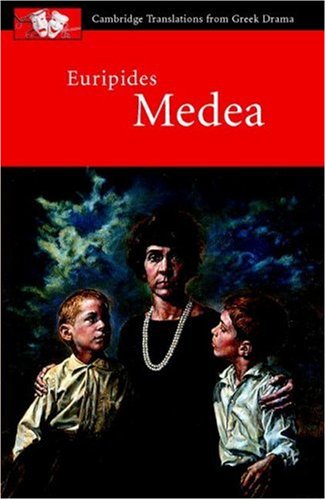
21. Medea
$33.05
22. Euripides: Hecuba: Introduction,
$4.62
23. Euripides: The Trojan Women (Focus
$24.09
24. Euripides: Helen (Euripides) (Euripides)
$7.54
25. The Bacchae of Euripides: A Communion
$38.99
26. Euripides: Helen (Cambridge Greek
 
$24.00
27. Euripides, VII, Fragments: Aegeus-Meleager
$17.99
28. The Greek Classics: Euripides
$5.99
29. Medea (Greek Tragedy in New Translations)
$8.99
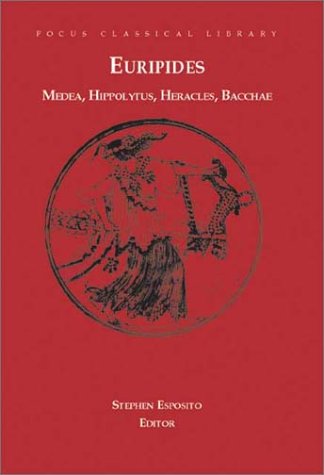
30. Euripides' Hippolytus (Focus Classical
$11.97
31. Bakkhai (Greek Tragedy in New
 
32. The Plays of Euripides
$19.26
33. Fabulae: Volume III: Helena, Phoenissae,
$30.56
34. Euripides and Dionysus: An Interpretation
$3.75
35. Cyclops (The Greek Tragedy in
$37.34
36. Dionysiac Poetics and Euripides'
 
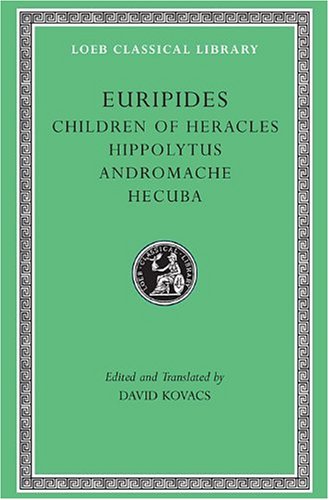
$23.90
37. Euripides: Children of Heracles.
 
38. Aeschylus, Sophocles, Euripides,
$22.36
39. Women on the Edge: Four Plays
$39.70
40. Euripides Alcestis (Oklahoma Series

21. Medea
by Euripides
Paperback: 80 Pages (2005-12-01)
list price: US$3.99 -- used & new: US$3.50
(price subject to change: see help)
Asin: 1580493467
Average Customer Review: 5.0 out of 5 stars
Canada | United Kingdom | Germany | France | Japan
Editorial Review

Product Description
To make Medea more accessible for the modern reader, our Prestwick House Literary Touchstone EditionTM includes a glossary of the more difficult words, as well as convenient sidebar notes to enlighten the reader on aspects that may be confusing or overlooked. In doing this, it is our intention that the reader may more fully enjoy the beauty of the verse, the wisdom of the insights, and the impact of the drama. Witch, barbarian, foreigner, or a woman wronged and committed to the most horrific kind of justice, Medea is a heroine who makes her audience shudder. Euripides shows us an astonishingly strong female protagonist, whom some readers have identified as the first feminist in Western literature. Seeing where her strength leads her, though, we must wonder if she was intended to be portrayed a model or as a warning.Because the three other plays that were traditionally performed with Medea have been lost, it is difficult to say whether Euripides’ Athenian audience was as upset by the play as modern readers are. It won only third place at the biggest festival in the city, indicating that ancient audiences also found it controversial. With its still-relevant examination of marriage, love, and revenge, and its explicit scenes of mental and emotional agony, Medea continues to demand our attention. ... Read more

Customer Reviews (1)

5-0 out of 5 stars Amazing
The book was in excellent condition and it was a joy to read! It was a quick and easy read. If you enjoy scandal, murder, and women overpowering men, then this is the book for you! ... Read more


22. Euripides: Hecuba: Introduction, Text, and Commentary (Textbook Series (American Philological Association), No. 14.)
by Euripides
Paperback: 256 Pages (1999-05-01)
list price: US$38.00 -- used & new: US$33.05
(price subject to change: see help)
Asin: 0788506110
Canada | United Kingdom | Germany | France | Japan
Editorial Review

Book Description
The first modern, full-length commentary of Hecuba suitable for classroom use, this edition also contains material directed to more advanced students and to scholars. It includes an introduction, appendix on lyric meters, bibliography, and index. ... Read more


23. Euripides: The Trojan Women (Focus Classical Library)
by Euripides
Paperback: 122 Pages (2005-01-10)
list price: US$8.95 -- used & new: US$4.62
(price subject to change: see help)
Asin: 1585101117
Canada | United Kingdom | Germany | France | Japan
Editorial Review

Book Description
English translation. The Trojan Women is a play on the consequences of war and the fate of those defeated in war and their victors. ... Read more


24. Euripides: Helen (Euripides) (Euripides)
by Euripides
Paperback: 216 Pages (2003-06-01)
list price: US$27.00 -- used & new: US$24.09
(price subject to change: see help)
Asin: 090651598X
Canada | United Kingdom | Germany | France | Japan

25. The Bacchae of Euripides: A Communion Rite
by Wole Soyinka
Paperback: 126 Pages (2004-07)
list price: US$12.95 -- used & new: US$7.54
(price subject to change: see help)
Asin: 0393325830
Average Customer Review: 4.0 out of 5 stars
Canada | United Kingdom | Germany | France | Japan
Editorial Review

Book Description
A wholly fresh interpretation of the timeless play by a Nobel Prize-winning author.

Wole Soyinka has translated—in both language and spirit—a great classic of ancient Greek theater. He does so with a poet's ear for the cadences and rhythms of chorus and solo verse as well as a commanding dramatic use of the central social and religious myth. In his hands The Bacchae becomes a communal feast, a tumultuous celebration of life, and a robust ritual of the human and social psyche. "The Bacchae is the rites of an extravagant banquet, a monstrous feast," Soyinka writes. "Man reaffirms his indebtedness to earth, dedicates himself to the demands of continuity, and invokes the energies of productivity. Reabsorbed within the communal psyche he provokes the resources of nature; in turn he is replenished for the cyclic rain in his fragile individual potency." The blending of two master playwrights—Euripides and Soyinka—makes for an unforgettable experience. ... Read more

Customer Reviews (3)

5-0 out of 5 stars Soyinka's Translation Brings Diversity to the Ancient
Soyinka's translation of Sophocles' ancient work brings new life to the piece so many have already read. His version of the poem incorporates his opinions--as shaped while growing up in Africa--into the ancient work, and the translation brings a fresh take on the play. I advise it to be read alongside a "traditional" reading of the play if in a classroom setting, so that the ancient ideas are still upheld, while fresh ones are incorporated. A lovely work.

4-0 out of 5 stars Feast!
As a conscript to the universal workings of myth as means to replenish the psychic and physical energies of the social group- Wole Soyinka's Bacchae was a satisfying read. This man of universal letters revised Euripides' drama only in so far as he infused it with his tribal, i.e. Yoruban flavor for the congruent deity of Orgun. The Dionysian trail throughout history haunted Solyinka as it has audiences and adherents. The playwright is not alone in ascribing the immortality of the piece to a universal need to purge the soul and soil with blood and excess. (Some say cannibalism. others, communion.)If not cyclically honored, if not worshipped and given this praise, the God will avenge mankind in horror and misery.Jung, after all, believed that Nazism was Orgun's revenge. The Bacchae and other rituals of excess, blood sacrifices andorphic trance are reenacted in every culture and as May Day, have become vastly diluted to the point of being hardly recognizable.Without the order of the religious, the encoded structure, the excess is uncontained and works against the social good. (60's idealists to Weathermen, deaths, etc.)
When it was first written, it reflected a socio-economic condition in Greece. Many of the towns had imported slave labor and left the lower classes without income. Further, the cheap labor allowed for expansion of the mercantile and industrial centers so that these people's lands were being lost. Then as in the rest of its rebirths, the cult of Dionysius came to lifeduring economic displacement and forced migrations. In other words the return to the earth and the mad episodes of discontrol provided massive antidotes and a new source of power to the earthly loss of the same.As this has been a retrograde force througout history and touches the human need to rejoin the natural forces and cycles, to sacrifice and re-enact the drama of the 'scapegoat' the force of the drama collapses time and culture. Themes are rewoven throughout the continents and the social rituals. May Day is one, as are Mardi Gras and the other 'secret' and excessive- bloody- banquets that serve some unique human and social function- a blood letting, and a rebellion against the enforced 'mysteries' or 'laws' from the state system.
A brilliant playwright and literary lion. The play is a tour de force and will touch the repressed or forgotten in all of us.

3-0 out of 5 stars a communion rite
I read Euripides' original The Bakkhai, and I found Soyinka's version to be a pretty faithful adaptation of it.Soyinka's Bacchae was written as an African-influence stage play, and though I never saw it performed I think it would work wonderfully.I would recommend this play for anyone interested in either the Classics, or just Greek/Roman tragedies in general. ... Read more


26. Euripides: Helen (Cambridge Greek and Latin Classics)
by Euripides
Paperback: 432 Pages (2008-03-31)
list price: US$38.99 -- used & new: US$38.99
(price subject to change: see help)
Asin: 0521545412
Canada | United Kingdom | Germany | France | Japan
Editorial Review

Book Description
This up-to-date edition offers a detailed literary and cultural analysis of Euripides' Helen, a work which arguably embodies the variety and dynamism of fifth-century Athenian tragedy more than any other surviving play. The story of an exemplary wife (not an adulteress) who went to Egypt (not to Troy), Euripides' 'new Helen' skilfully transforms and supplants earlier currents of literature and myth. The Introduction elucidates Euripides' treatment of Helen and sets the play in its wider intellectual context. It also discusses questions of genre and reception, rejecting such descriptions as 'tragicomedy' or 'romantic tragedy', and showing how later artists have responded to Euripides' unorthodox heroine and her phantom double. The Commentary's notes on language and style are intended to make Helen fully accessible to readers of Greek at all levels, while the edition as a whole is designed for use by anyone with an interest in Greek tragedy. ... Read more


27. Euripides, VII, Fragments: Aegeus-Meleager (Loeb Classical Library®)
by Euripides
 Hardcover: 688 Pages (2008-05-15)
list price: US$24.00 -- used & new: US$24.00
(price subject to change: see help)
Asin: 0674996259
Canada | United Kingdom | Germany | France | Japan
Editorial Review

Book Description

Eighteen of the ninety or so plays composed by Euripides between 455 and 406 bce survive in a complete form and are included in the preceding six volumes of the Loeb Euripides. A further fifty-two tragedies and eleven satyr plays, including a few of disputed authorship, are known from ancient quotations and references and from numerous papyri discovered since 1880. No more than one-fifth of any play is represented, but many can be reconstructed with some accuracy in outline, and many of the fragments are striking in themselves. The extant plays and the fragments together make Euripides by far the best known of the classic Greek tragedians.

This edition, in a projected two volumes, offers the first complete English translation of the fragments together with a selection of testimonia bearing on the content of the plays. The texts are based on the recent comprehensive edition of R. Kannicht. A general Introduction discusses the evidence for the lost plays. Each play is prefaced by a select bibliography and an introductory discussion of its mythical background, plot, and location of the fragments, general character, chronology, and impact on subsequent literary and artistic traditions.

... Read more

28. The Greek Classics: Euripides - Nineteen Plays (The Greek Classics)
by Euripides
Paperback: 612 Pages (2006-03-06)
list price: US$29.95 -- used & new: US$17.99
(price subject to change: see help)
Asin: 097734004X
Average Customer Review: 4.0 out of 5 stars
Canada | United Kingdom | Germany | France | Japan
Editorial Review

Book Description

In the time of Euripides, Greek drama reached the zenith of its glory when the works of the great classic triad - Aeschylus, Sophocles and Euripides - followed each other in rapid succession.As partial evidence, presented here are the surviving nineteen plays of Euripides.

Euripides was a voluminous writer, the number of his plays being variously stated at from seventy-five to ninety-two, including several satyric dramas.Of these nineteen have survived, with numerous fragments of others, though many of his best works have been lost and more have suffered from interpolations.It now is widely believed that the play Rhesus, which has long been ascribed to Euripides, was probably the work of some other, lesser-know dramatist.

For the tragedians of later times Euripides was the absolute model and pattern, and equally so for the poets of the new comedy.Diphilus called him the "Golden Euripides," and Philemon went so far as to say, with some extravagance, "If the dead, as some assert, have really consciousness, then would I hang myself to see Euripides." He had warm admirers in Alexander the Great and the Stoic Chrysippus, who quoted him regularly in several of his works.Among the Romans, too, he was held in high esteem, serving as a model for tragedy.

Still today, the works of Euripides are variously regarded and continue to be the source of much critical debate.In centuries to come, this will most likely continue and, in itself, will serve to insure the lasting fame of Euripides. ... Read more

Customer Reviews (4)

1-0 out of 5 stars Tragic Deception
Despite the 5-star reviews (I can't imagine how these texts deserve even a single star, and it's a pity Amazon doesn't allow zero-star reviews), be warned against the whole GREEK CLASSICS series: Aeschylus, Sophocles, Aristophanes, and this Euripides edition. For a start, many lines have disappeared: eg some of those occurring in the scene between Clytemnestra and Agamemnon in Aeschylus; as for the Euripides volume, in spite of the uninterrupted pagination, more than half of ORESTES is missing, as well as lines from CYCLOPS obviously cut for reasons of decorum; this, of course, is also true of the bowdlerized Aristophanes edition, where everyone behaves according to Victorian morality. The absence of annotations and the presence of countless typos are nothing, compared with the translations themselves. Made between the 18th and early 20th centuries, these out-of-copyright translations have long been past their sell-by dates. The verse quality is so poor that it insults Greek drama (talk of 'Greek' when particular characters are 'translated' into their 'Roman' counterparts): written in embarrassingly tortuous syntax, the stilted lines read like some cheap and desperate attempt at reproducing 'mythical' versions of the Bible and Shakespeare. The whole effect is 'tragically' hilarious: if those (especially 20th-Century) translators thought that, by incorporating too many thee's and thou's into their texts, they were hoping to get close to the original Greek, they were laughably mistaken. I wonder why almost all translations in the four volumes are available online for 'free'...

5-0 out of 5 stars Great Book! - The Complete Works of Euripides in One Volume

The Greek Classics: Euripides - Nineteen Playsis a great book. It is considered to be a classic for good reasons:it is a good read, it deals with really important matters, it is superb literature and it is a landmark in the history of civilization.

For about two thousand years, it has been on the reading list of most educated people in the Western Hemisphere.Undoubtedly, it will still be part of the curriculum at most of the world's colleges and universities two thousand years from now.You just can't consider yourself to have received a proper education without having read this great Greek classic.

While you are at it, you should also read:
The Greek Classics: Aeschylus - Seven Plays
The Greek Classics: Aristophanes - Eleven Plays
and
The Greek Classics: Sophocles - Seven Plays

Classics like these are not stuffy, pompous, overblown literature as some ignorant anti-intellectuals might think.They are genuine looks at life by excellent writers who had something important to say - and said it well.

5-0 out of 5 stars The First True Master of the Stage

This book is an education all by itself.It is probably not possible to really appreciate the playwright's craft without reading Euripides.Euripides was the first true master of the stage.He set a standard that few others have reached.

Just a few months ago, I received the set of Greek Classics: Aeschylus, Aristophanes, Euripides and Sophocles; as a present, and I have been astounded at how relevant they are to this age. I have also been struck by the fact that these four volumes contain all of the surviving works of these great Greek Playwrights.

I have just finished reading the entire set and I am already looking forward to re-reading them.For me, reading these ancient works is a way of touching the past that creates a bond to all of humanity across the ages.

5-0 out of 5 stars A Really Big Book

This book contains the complete 19 surviving works of the great playwright Euripides.Here is a collection that virtually every writer in the history of the world could rightfully envy - and it is just the tip of the iceberg.We can only imagine the treasures Euripides wrote that are now lost forever.

This is a book you can be proud to own, to read and to share with your intellectual soul mates.This is a really big book, in every sense of the word.How many actors and actresses throughout the centuries have relished playing the roles Euripides laid out?How many actresses would have given everything to have had the opportunity to play Helen, Electra, or Medea?

Euripides' many admirers claim that he is the most tragic of the Greek tragedians, the most pathetic of the Attic poets, the most humane in his social philosophy and the most skillful in psychological insight.Several centuries more of discussion and debate will probably be required to do him and his work justice.
... Read more


29. Medea (Greek Tragedy in New Translations)
by Euripides
Paperback: 128 Pages (2006-08-10)
list price: US$10.95 -- used & new: US$5.99
(price subject to change: see help)
Asin: 0195145666
Average Customer Review: 5.0 out of 5 stars
Canada | United Kingdom | Germany | France | Japan
Editorial Review

Book Description
The Greek Tragedy in New Translations series is based on the conviction that only translators who write poetry themselves, or who work in collaboration with poets, can properly re-create the celebrated and timeless tragedies of the great Greek writers. These new translations are more than faithful to the original text, going beyond the literal meaning in order to evoke the poetic intensity and rich metaphorical texture of the Greek language. Euripides was one of the most popular and controversial of all the Greek tragedians, and his plays are marked by an independence of thought, ingenious dramatic devices, and a subtle variety of register and mood. Medea, is a story of betrayal and vengeance. Medea, incensed that her husband Jason would leave her for another after the many sacrifices she has made for him, murders both his new bride and their own children in revenge. It is an excellent example of the prominence and complexity that Euripides gave to female characters. This new translation does full justice to the lyricism of Euripides original work, while a new introduction provides a guide to the play, complete with interesting details about the traditions and social issues that influenced Euripides's world. ... Read more

Customer Reviews (1)

5-0 out of 5 stars It's all Greek to me.
Wonderful play, great translation. Collier really makes ancient Greek understandable and enjoyable.Great edition. ... Read more


30. Euripides' Hippolytus (Focus Classical Library)
by Michael Halleran
Paperback: 90 Pages (2001-10-01)
list price: US$9.95 -- used & new: US$8.99
(price subject to change: see help)
Asin: 0941051862
Canada | United Kingdom | Germany | France | Japan
Editorial Review

Book Description
A new translation in English in the Focus Classical Library series. The text contains a complete translation of the play from Classical Greece, with notes, introduction, and essay. ... Read more


31. Bakkhai (Greek Tragedy in New Translations)
by Euripides
Paperback: 160 Pages (2001-02-22)
list price: US$30.00 -- used & new: US$11.97
(price subject to change: see help)
Asin: 0195125983
Average Customer Review: 5.0 out of 5 stars
Canada | United Kingdom | Germany | France | Japan
Editorial Review

Book Description
Regarded by many as Euripides' masterpiece, Bakkhai is a powerful examination of religious ecstasy and the resistance to it. A call for moderation, it rejects the temptation of pure reason as well as pure sensuality, and is a staple of Greek tragedy, representing in structure and thematics an exemplary model of the classic tragic elements.Disguised as a young holy man, the god Bacchus arrives in Greece from Asia proclaiming his godhood and preaching his orgiastic religion. He expects to be embraced in Thebes, but the Theban king, Pentheus, forbids his people to worship him and tries to have him arrested. Enraged, Bacchus drives Pentheus mad and leads him to the mountains, where Pentheus' own mother, Agave, and the women of Thebes tear him to pieces in a Bacchic frenzy.Gibbons, a prize-winning poet, and Segal, a renowned classicist, offer a skilled new translation of this central text of Greek tragedy. ... Read more

Customer Reviews (1)

5-0 out of 5 stars Foolish Pentheus resists the worship of the god Dionysus
"Bakkhai" ("The Bacchae") was written by Euripides when he was living in Macedonia in virtual exile during the last years of his life. The tragedy was performed in Athens after his death as part of a trilogy that included one extant play, "Iphigenia at Aulis," and one which is lost, "Alcaeon in Corinth." These factors are important in appreciating this particular Greek tragedy because such plays were performed at a festival that honored the Dionysus, and in "Bakkhai" he is the god who extracts a horrible vengeance. The tragedy clearly demonstrates the god's power, but it is a terrible power, which suggests less than flattering things about the deity himself.

Pentheus was the son of Echion and Agave, the daughter of Cadmus, the founder of the Royal House of Thebes. After Cadmus stepped down the throne, Pentheus took his place as king of Thebes. When the cult of Dionysus came to Thebes, Pentheus resisted the worship of the god in his kingdom. However, his mother and sisters were devotees of the god and went with women of the city to join in the Dionsysian revels on Mount Cithaeron. Pentheus had Dionysus captured, but the god drove the king insane, who then shackled a bull instead of the god. When Pentheus climbed a tree to witness in secret the reverly of the Bacchic women, he was discovered and torn to pieces by his mother and sisters, who, in their Bacchic frenzy, believed him to be a wild beast. The horrific action is described in gory detail by a messenger, which is followed by the arrival of the frenzied and bloody Agave, the head of her son fixed atop her thytsus.

Unlike those stories of classical mythology which are at least mentioned in the writings of Homer, the story of Pentheus originates with Euripides. The other references in classical writing, the "Idylls" written by the Syracusean poet Theocritus and the "Metamorphoses" of the Latin poet Ovid, both post-date "Bakkhai" by centuries. On those grounds, the tragedy of Euripides would appear to be entirely his construct, which would certainly give it an inherent uniqueness over his interpretations of the stories of "Medea," "Electra," and "The Trojan Women."

I see "Bakkhai" as being Euripides' severest indictment of religion and not as the recantation of his earlier rationalism in his old age. The dramatic conflicts of the play stem from religious issues, and without understanding the opposition on Appollonian grounds of Pentheus to the new cult readers miss the ultimate significance of the tragedy. This is not an indictment of Appollonian rationalism, but rather a dramatic argument that, essentially, it is irrational to ignore the irrational. As the fate of Pentheus amply points out, it is not only stupid to do so, it is fatal. Consequently, "Bakkhai" is one of the most important of Greek tragedies. ... Read more


32. The Plays of Euripides
by Moses Hadas
 Hardcover: Pages (1936)

Asin: B000TYLOHU
Canada | United Kingdom | Germany | France | Japan

33. Fabulae: Volume III: Helena, Phoenissae, Orestes, Bacchae, Iphigenia Aulidensis, Rhesus (Oxford Classical Texts)
by Euripides
Hardcover: 496 Pages (1994-09-08)
list price: US$65.95 -- used & new: US$19.26
(price subject to change: see help)
Asin: 0198145950
Average Customer Review: 5.0 out of 5 stars
Canada | United Kingdom | Germany | France | Japan
Editorial Review

Book Description
Praise for Vols. I and II:`The virtues of this first-rate edition are too numerous to catalogue, and in any case,since they will stand enshrined in what is undoubtedly to be the standard text of Euripides for the next generation or two, they will receive as their just requital the gratitude of countless scholars and students in the future.' Classical Philology 1984`D. is to be congratulated for the high achievement represented by this volume ... We look forward to the third ... and are tempted to wish for a fourth.' Classical Philology 1986This volume brings to completion James Diggle's major new edition of all the surviving plays of Euripides. It supersedes the third volume of Murray's Oxford Text of 1909. The work is based on new collations of all the relevant manuscripts and incorporates many new ideas for the improvement of the text suggested by recent scholars and the editor himself. ... Read more

Customer Reviews (2)

5-0 out of 5 stars Euripidis Fabulae Tomus III: Helena, Phoenissae, Orestes, Bacchae, Iphigenia Aulidensis, Rhesus
In English, Euripides: Tragedies, Volume III: Helen, Phoenician Women, Orestes, Bacchae, Iphigeneia in Aulis, Rhesos. Standard Oxford Classical Text edition of Euripides' late plays (and the Rhesos, which may be early Euripides or may be a later play that came to be confused with a play of Euripides), in Greek with Latin frontmatter and title, as edited by the widely respected Euripides textual scholar James Diggle. This is not so much a review as an attempt to correct the inaccurate title.

5-0 out of 5 stars Diggle's edition of Euripides for Oxford Classical Texts
This edition is superb, a worthy successor to its immediate predecessor, Gilbert Murray's, which of course had to be brought up to date and is now richly, usefully, and definitively supplanted. Diggle is a consummate textual critic--and (icing on the cake) a winsome latinist. ... Read more


34. Euripides and Dionysus: An Interpretation of the Bacchae (Bristol Classical Paperbacks.) (Bristol Classical Paperbacks.)
by R.P. Winnington-Ingram
Paperback: 204 Pages (2003-06-23)
list price: US$31.00 -- used & new: US$30.56
(price subject to change: see help)
Asin: 185399524X
Canada | United Kingdom | Germany | France | Japan
Editorial Review

Book Description
Euripides and Dionysus is a brilliant and influential study of the god of Greek drama and the one surviving tragedy, Euripides' Bacchae, in which he appears. The play has been intensively discussed by critics and very often staged, imitated and adapted in the fifty years since Winnington-Ingram wrote this pioneering monograph, which is still cited as if it were a contemporary work of criticism. His interpretation, presented with great elegance, was composed at a time (just before the Second World War) when he was deeply troubled by what he had seen of fascism; it has special interest now for its place in the history of reception.

Easterling's new Introduction sets the book in its original context and evaluates its reading of the Bacchae in light of more recent work on Greek religion and drama. ... Read more


35. Cyclops (The Greek Tragedy in New Translations)
by Euripides
Paperback: 96 Pages (2001-04-19)
list price: US$12.95 -- used & new: US$3.75
(price subject to change: see help)
Asin: 0195143035
Canada | United Kingdom | Germany | France | Japan
Editorial Review

Book Description
Based on the conviction that only translators who write poetry themselves can properly re-create the celebrated and timeless tragedies of Aeschylus, Sophocles, and Euripides, the Greek Tragedy in New Translations series offers new translations that go beyond the literal meaning of the Greek in order to evoke the poetry of the originals. Under the general editorship of Peter Burian and Alan Shapiro, each volume includes a critical introduction, commentary on the text, full stage directions, and a glossary of the mythical and geographical references in the play.Brimming with lusty comedy and horror, this new version of Euripides' only extant satyr play has been refreshed with all the salty humor, vigorous music, and dramatic shapeliness available in modern American English.Driven by storms onto the shores of the Cyclops' island, Odysseus and his men find that the Cyclops has already enslaved a company of Greeks. When some of Odysseus' crew are seized and eaten by the Cyclops, Odysseus resorts to spectacular stratagems to free his crew and escape the island. In this powerful work, prize-winning poet Heather McHugh and respected classicist David Konstan combine their talents to create this unusually strong and contemporary tragic-comedy marked by lively lyricism and moral subtlety.Download Description
Sparklesoup brings you Euripide's classic drama.This version is printable so you can mark up your script and easy-to-download with links to interesting facts and sites. ... Read more


36. Dionysiac Poetics and Euripides' "Bacchae"
by Charles Segal
Paperback: 379 Pages (1997-10-27)
list price: US$41.00 -- used & new: US$37.34
(price subject to change: see help)
Asin: 069101597X
Average Customer Review: 4.0 out of 5 stars
Canada | United Kingdom | Germany | France | Japan
Editorial Review

Book Description

In his play Bacchae, Euripides chooses as his central figure the god who crosses the boundaries among god, man, and beast, between reality and imagination, and between art and madness. In so doing, he explores what in tragedy is able to reach beyond the social, ritual, and historical context from which tragedy itself rises. Charles Segal's reading of Euripides' Bacchae builds gradually from concrete details of cult, setting, and imagery to the work's implications for the nature of myth, language, and theater. This volume presents the argument that the Dionysiac poetics of the play characterize a world view and an art form that can admit logical contradictions and hold them in suspension.

... Read more

Customer Reviews (2)

4-0 out of 5 stars Feels Very Nietzschean
I tend to agree with the previous review on this book, but I thought it worth mentioning that this text also feels VERY Nietzschean (from Birth of Tragedy).That is to say, Nietzsche's metaphysical principle of the Dionysian (in opposition to the Apollonian in BoT) seems to underwrite every chapter.This is fairly common, I suppose, since "Dionysian" is virtually synonymous with wild/ecstatic/irrational these days (largely because of Birth of Tragedy).But there.I said it.cheers.

4-0 out of 5 stars so many ideas...so little time...
Charles Segal is acknowledged as one of the foremost authorities on Euripides' Bacchae, and has written several billion other articles on this subject and other themes in Greek literature.So he knows a thing or two.Now this helps, as just about any idea that one has while reading the Bacchae can be found dissected and pondered over in this book.Segal brings together psychoanalytical theory, ritualistic (a la Seaford) theory, and many, many others.However...it takes a while to read and some parts take a while to digest.Overall, though, it is very comprehensive and a must for anyone contemplating studying this fantastic play.One complaint: the bibliographies are great, but the afterword (of the 1997 edition) mentions some texts which aren't at the back, and one which doesn't even seem to exist!!!Gah!But, nice one, Mr Segal...sets the bar. ... Read more


37. Euripides: Children of Heracles. Hippolytus. Andromache. Hecuba (Loeb Classical Library No. 484)
by Euripides
 Hardcover: 528 Pages (1995-02-15)
list price: US$24.00 -- used & new: US$23.90
(price subject to change: see help)
Asin: 0674995333
Average Customer Review: 5.0 out of 5 stars
Canada | United Kingdom | Germany | France | Japan
Editorial Review

Book Description

One of Athens' greatest poets, Euripides has been prized in every age for the pathos, terror, surprising plot twists, and intellectual probing of his dramatic creations. Here are four of his plays in a new Loeb Classical Library edition.

Hippolytus triumphed in the Athenian dramatic competition of 428 BCE; in modern times it has been judged to be one of Euripides' masterpieces. It tells of the punishment that the goddess Aphrodite inflicts on a young man who refuses to worship her. Hecuba and Andromache recreate the tragic stories of two noble Trojan women after their city's fall. Children of Heracles, probably first produced in 430, soon after the Spartan invasion of Attica, celebrates an incident long a source of Athenian pride: the city's protection of the sons and daughters of the dead Heracles.

In this second volume of the new Loeb Euripides David Kovacs gives us a freshly edited Greek text facing an accurate and graceful prose translation. Explanatory notes clarify allusions and nuances, and a brief introduction to each play is provided.

... Read more

Customer Reviews (1)

5-0 out of 5 stars One classic Euripides tragedy and three more of interest
This volume in the Loeb Classical Library brings together four of the ninteen tragedies by the tragic playwright Euripides that have survived from the 92 plays he was known to have written: "Children of Hercales" (produced 430 B.C.), "Hippolytus" (428 B.C.), "Andromache" (circa 426 B.C.), and "Hecuba" (circa 425 B.C.).Only the second tragedy could be considered a classic, but the other three have their points of interest.

"Children of Heracles" ("Heracledidae") has usually been considered a minor political play by Euripides.It tells how the children of Hecules were exiled by from their home by the murderous King Eurystheus of Argos (the one who imposed the famous Twelve Labors on the demi-god) after their father's death. The children and their mother fled from country to country in search of sanctuary until, of course, they came to Athens. At first, the Athenians are reluctant to grant asylum, since Eurystheus might bring political and military strife on the city. But Demophon, King of Athens, agrees to admit them. Indeed, the army of Eurystheus surrounds the city and the oracles declares that the safety of Athens depends on the sacrifice of a virgin. Macaria, one of the daughters of Hercules, offers herself as the sacrificial victim. The play has usually been considered to be nothing more than a glorification of Athens, but, of course, in more contemporary terms it is worth reconsidering this Greek tragedy as a look at the problem of political refugees.

"Hippolytus" opens with Aphrodite declaring her power over all mankind and her intention to ruin Hippolytus, the son of Theseus because he alone has had the audacity to scorn love. Instead, the young prince has devoted himself to hunting and Artemis, the chaste goddess of the hunt. As the instrument of Hippolytus' downfall, Aphrodite selects his stepmother Phaedra, by making her fall in love with him. What becomes interesting in Euripides' telling of the tale is how Phaedra resists the will of Aphrodite, having resolved to starve herself to death rather than ever reveal her infatuation. However, Phaedra's secret is revealed and Hippolytus is horrified that his stepmother wants him as her lover.Mortified that her secret is now known, Phaedra hangs herself, but trying to spare the reputation of her children she leaves a note accusing Hippolytus of having tried to rape her. When Theseus returns to find his wife dead at her own hand and his son implicated in her suicide, the king pronounces a deadly curse upon Hippolytus.Ironically, despite the tragic fate that awaits him, Hippolytus is not a sympathetic figure since his devotion to Artemis does not require him to spurn the ways of love and an Athenian audience would not look kindly upon him as a martyr to the idea of chastity.Phaedra becomes the truly tragic character in the tale, who has her dignity taken away from her by a vengeful goddess and a friend with the best of intentions, surely as potent a combination of dangerous characters as you can find in literature.

"Andromache," set in the aftermath of the Trojan War and focusing on the widow of Hector, is one of the weakest of the extant plays of Euripides, a work better considered as anti-Spartan propaganda.The scenes are more episodic than we usually find in Euripides with the first part essentially a supplicant play.The play has one of Euripides' strongest beginnings, with its attacks on Sparta, represented by Menelaus. But even as propaganda Euripides elevates his subject for what he sees is not merely a war between two cities, but rather a clash between two completely different ways of life. Andromache, the widow of Hector, is the slave of Neoptolemus, the son of Achilles, who is married to Hermione, the daughter of Menelaus and Helen.Andromache has born Neoptolemus a son, and the barren Hermione accuses the Trojan woman of having used witchcraft and seeks her death. Andromache has taken refuge as this temple where Hermione and Menelaus try to get her to come out by threatening to kill her son. However, the title character disappears from the play and everybody from Peleus, the father of Achilles, to Orestes, the cousin of Hermione, shows up, mainly to talk about Neoptolemus, who is at Delphi. Thetis shows up as the deus-ex-machina and the play ends rather abruptly. As a tragedy there is little her beyond a progression of characters who all talk about doing something they end up not doing and if there is supposed to be a series of object lessons offered by each of these characters, then that idea is pretty much lost on contemporary audiences.

In "Hecuba" the queen of fallend Troy has become the slave of Odysseus, who takes away her daughter Polyxena to be slain on the grave of Achilles. However, in this drama it is the earlier death of another child, Polydorus that provides the motivation for what comes to pass. This was a child who had been sent (according to Homer, there are various versions of this tale) for safety to the Thracian Chersonese. But now, after Hecuba hears of the death of Polyxena, the body of Polydorus washes up on shore. Apparently Hecuba's son-in-law Polymnester murdered the boy for the gold, which King Priam had sent to pay for his education. Agamemnon hears Hecuba's pleas, and Polymnester is allowed to visit the queen before she is taken away into captivity.The most fascinating aspect of "Hecuba" is that it gives us an opportunity to contrast the character of the queen of fallen Troy here with that in his more famous work, "The Trojan Women." This play was performed ten years earlier and its events take place right before the other play as well, although there is some overlap when Talthybius informs Hecuba of the death of Polyxena. In both dramas Hecuba is a woman driven by a brutal and remorseless desire for vengeance; however she proves much more successful in this drama than she does in "The Trojan Women." ... Read more


38. Aeschylus, Sophocles, Euripides, Aristophanes (Great books of the Western World, 5)
 Hardcover: Pages (1952)

Asin: B000CDDFIO
Canada | United Kingdom | Germany | France | Japan
Editorial Review

Product Description
Volume 5 of 54 ... Read more


39. Women on the Edge: Four Plays by Euripides (The New Classical Canon)
by Whitlock Blundell, Mary-Kay Gamel, Sorkin Rabinowitz, Bella Zweig
Paperback: 512 Pages (1998-12-22)
list price: US$39.95 -- used & new: US$22.36
(price subject to change: see help)
Asin: 0415907748
Average Customer Review: 5.0 out of 5 stars
Canada | United Kingdom | Germany | France | Japan
Editorial Review

Book Description
Women on the Edge, a collection of Alcestis, Medea, Helen, and Iphegenia at Aulis, provides a broad sample of Euripides' plays focusing on women, and spans the chronology of his surviving works, from the earliest, to his last, incomplete, and posthumously produced masterpiece. Each play shows women in various roles--slave, unmarried girl, devoted wife, alienated wife, mother, daughter--providing a range of evidence about the kinds of meaning and effects the category woman conveyed in ancient Athens. The female protagonists in these plays test the boundaries--literal and conceptual--of their lives.

Although women are often represented in tragedy as powerful and free in their thoughts, speech and actions, real Athenian women were apparently expected to live unseen and silent, under control of fathers and husbands, with little political or economic power. Women in tragedy often disrupt "normal" life by their words and actions: they speak out boldly, tell lies, cause public unrest, violate custom, defy orders, even kill.Female characters in tragedy take actions, and raise issues central to the plays in which they appear, sometimes in strong opposition to male characters.The four plays in this collection offer examples of women who support the status quo and women who oppose and disrupt it; sometimes these are the same characters.

The translations in Women on the Edge help readers locate the plays within their original social, cultural and performance context and mediate between ancient and modern ideologies. ... Read more

Customer Reviews (1)

5-0 out of 5 stars Translations Worthy of Performance!
The students in my theatre history class consistently rate this book as the best of all that we read. The translations are honest, accessible and, best of all, performable. Mary-Kay Gamel's translation of Iphigenia AtAulis is a revelation. In addition, the book's introduction and individualprefaces to the plays provide an excellent background on Athenian cultureand theater in general, and on the significance of women as characters andaudience in particular. I recommend Women On The Edge for classes like mineand as a scholarly work, but I also feel that anyone interested inEuripides and ancient Athens will appreciate this book. ... Read more


40. Euripides Alcestis (Oklahoma Series in Classical Culture, V. 29)
by Euripides, C. A. E. Luschnig, Hanna M. Roisman
Hardcover: 304 Pages (2003-08)
list price: US$49.95 -- used & new: US$39.70
(price subject to change: see help)
Asin: 0806134585
Average Customer Review: 3.0 out of 5 stars
Canada | United Kingdom | Germany | France | Japan
Editorial Review

Book Description
Euripides' Alcestis-perhaps the most anthologized Attic drama-is an ideal text for students reading their first play in the original Greek. Literary commentaries and language aids in most editions are too advanced or too elementary for intermediate students of the language, but in their new student edition, C. A. E. Luschnig and H. M. Roisman remedy such deficiencies.

The introductory section of this edition provides historical and literary perspective; the commentary explains points of grammar, syntax, and vocabulary, as well as elucidating background features such as dramatic conventions and mythology; and a discussion section introduces the controversies surrounding this most elusive drama. In their presentation, Luschnig and Roisman have initiated a new method for introducing students to current scholarship. This edition also includes a glossary, an index, a bibliography, and grammatical reviews designed specifically for students of Greek language and culture in their second year of university study or third year of high school. Luschnig and Roisman, who have published numerous articles and books on Greek literature, bring to this volume decades of experience teaching classical Greek. ... Read more

Customer Reviews (2)

5-0 out of 5 stars A comprehensive and well-designed edition for beginners.
This is an excellent edition of Euripides' Alcestis, including short critical essays, an excellent vocabulary, a brief tutorial on Greek poetic metre, and a commentary well-geared to new students.There seems to be some confusion about which edition of this book is which -- the Oklahoma press hardcover edition, at least, includes all these features plus the full text of the play.

The commentary includes vocabulary (in addition to the comprehensive vocabulary in the back) in a well-thought-out way intended to help the student as he or she proceeds through the text, beginning with extensive glosses of a large number of words and thinning them out over the course of the play.There's really no other edition to buy if you are new to Greek drama, except possibly the Jerram if you're really pressed for funds -- but this edition is vastly superior to that one, if for no other reason simply because of the quality of the printing, which will save the reader much eye strain compared to the older book.

1-0 out of 5 stars This is not the text.
This is a 38-page pamphlet containing 1162 mostly one-line notes to Euripides' Alcestis. There are some English notes, but this pamphlet is meant for someone who can read Greek. ... Read more


  Back | 21-40 of 100 | Next 20
A  B  C  D  E  F  G  H  I  J  K  L  M  N  O  P  Q  R  S  T  U  V  W  X  Y  Z  

Prices listed on this site are subject to change without notice.
Questions on ordering or shipping? click here for help.

site stats