e99 Online Shopping Mall

Geometry.Net - the online learning center Help  
Home  - Authors - Feuchtwanger Lion (Books)

  1-20 of 100 | Next 20
A  B  C  D  E  F  G  H  I  J  K  L  M  N  O  P  Q  R  S  T  U  V  W  X  Y  Z  

click price to see details     click image to enlarge     click link to go to the store

 
$75.00
1. Jew Suss
 
2. Josephus
$5.99
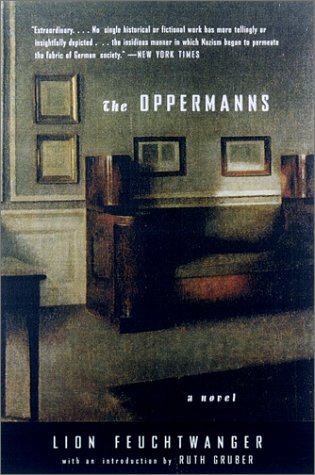
3. The Oppermanns: A Novel
 
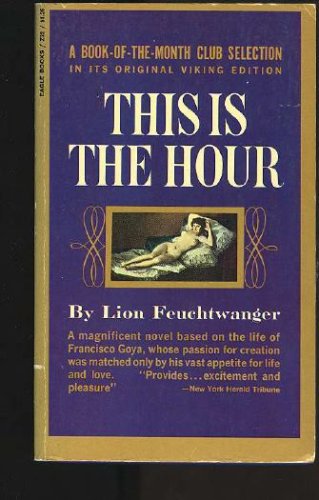
4. This is the hour: A novel about
 
5. Lion Feuchtwanger: the man, his
 
6. Lion Feuchtwanger, The Man, His
 
7. Josephus and the Emperor
$52.86
8. Exil
 
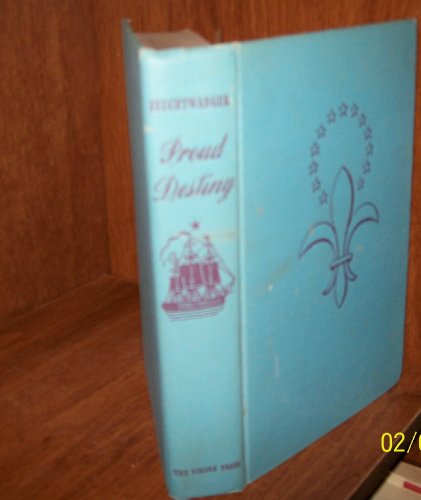
9. Proud destiny
 
10. Die Judin Von Toledo
 
11. Power Lion Feuchtwanger
 
12. Lion Feuchtwanger, der Asthet
 
$62.95
13. Lion Feuchtwanger Und Indien:
 
14. Lion Feuchtwanger (Autorenbucher)
15. Lion Feuchtwanger: Ein deutsches
 
16. Lion Feuchtwanger: Materialien
 
17. Exilerfahrung und Faschismusbild
18. Lion Feuchtwanger: Werk und Wirkung
 
19. Bertolt Brecht und Lion Feuchtwanger,
 
20. Marta Feuchtwanger, Leben mit

1. Jew Suss
by Lion Feuchtwanger
 Paperback: 424 Pages (1984-05)
list price: US$8.95 -- used & new: US$75.00
(price subject to change: see help)
Asin: 0881840475
Average Customer Review: 5.0 out of 5 stars
Canada | United Kingdom | Germany | France | Japan

Customer Reviews (5)

4-0 out of 5 stars An uncomfortable book
It is somewhat surprising that this novel, which became a best-seller soon after it was first published in 1925, should have been written by a self-consciously Jewish writer.Though its purpose was to expose and condemn antisemitism, it is easy to see that how the Nazis could mine it for the infamous antisemitic film under that title in 1940.True, that film was a distortion of the novel, but the character and appearance of Süss and of other Jews in the book is quite distasteful enough.It is, however, also true that all the non-Jews are distasteful also: there is in fact hardly an attractive character in the book.

Josef Süss-Oppenheimer was an ambitious Jewish financier, who from 1733 until 1737 not only ran the personal and public finances of Charles Alexander, the Duke of Württemberg, but also supported the Duke's Catholic autocracy against the Protestant Estates and the Protestant Constitution of Württemberg.He therefore made many enemies among the establishment, was also detested by the people whose financial burdens he greatly increased.He himself discarded traditional Jewish dress and maintained the lavish life-style of the aristocracy, which further exposed him to hatred.That he was a Jew, at a time before Jewish emancipation, of course added fuel to the fire.On the day that Charles Alexander died, Süss-Oppenheimer was arrested and charged with constitutional and financial improprieties.He was hanged in 1738 and his remains were publicly exhibited in an iron cage. It is generally believed that this was a judicial murder, to which the vicious and visceral antisemitism of the time contributed.

Feuchtwanger paints the political and social history of time in great and impressive detail (except that there is not a single date in the book); but he really lets himself go in unappealing and stereotypical details, repeated over and over again in this very long novel: the more observant Jews wear greasy kaftans and have bloodless faces;Süss is portrayed as arrogant and at the same time obsequious (allowing himself to be insulted over and over again by the coarse Duke and his courtiers), indifferent to the impression he knows he creates and to the warnings of his more cautious co-religionists, subtle and scheming and of course ever obsessed with profit and power.

Then, three-fifth of the way through the book, Süss discovers that, although he had been brought up as a Jew since childhood, he was in fact the illegitimate son of a German nobleman, a Field Marshal no less.There is no documentary proof of this, though the legend circulated in Süss' own lifetime. Feuchtwanger presents it as a fact.The one redeeming feature in this otherwise odious figure was that he had always proudly refused to convert: indeed, he had savoured his power the more because he had held it as a Jew; and he now, equally proudly, refused to make use of his new knowledge and to claim Christian and aristocratic descent.

Perhaps these stereotypes corresponded to what Süss and the other characters were really like, and perhaps not: some modern researcherssee Süss as a creative but maligned reformer and modernizer of an antiquated medieval economic system.In any case Feuchtwanger now goes into pure invention.He has given Süss a beloved and beautiful young daughter, whom the father had hidden in a house deep in a forest, to keep her away from the corruptions of court life.An enemy of Süss' had discovered this, and led the lascivious Duke to that place.Rather than yield to the Duke, the girl threw herself to her death from the roof of the house.Süss' revenge is to exploit the Duke's guilt feelings: he becomes more arrogant and oppressive than ever and (unlikely in fact but powerfully effective as fiction) he now quite openly cheats the Duke, who is resentful but dependent.And then he convinces the Duke to plan a coup d'état against the Constitution - and betrays the plot to the Duke's enemies!He knows full well that if, as a result, the Duke falls, so will he.When the Duke hears that the plot has failed, he has a stroke and dies - not before hearing Süss hissing his triumphant vengeance into his ears - and then Süss suggests to the plotters that they should arrest him - which they promptly do: he will be doubly a scapegoat. (In fact, Süss was arrested on the day of the Duke's death, but not under those circumstances.)

The inquisition into Süss' alleged crimes ran into difficulties:he was not a native of Württemberg and had merely given advice: the real criminals were those who had executed it and had committed high treason.He had had intercourse with gentile women, forbidden not only to Jews but also to gentiles under the law:but many high-born families would be disgraced, and this charge was eventually dropped.But the verdict was not in doubt; the mob of course demanded it, too;and he was sentenced to be hanged.There was a slight chance that his life might have been spared if he converted to Christianity: he spurned it.Feuchtwanger's last fancy is that the corpse was taken from the gallows, another substituted, and that Süss was given a Jewish funeral.According to him, it was the substitute that remained exhibited for the next six years.

Though somewhat long and with descriptions frequently repeated, this is a powerful book.But I do not like historical novels which distort known facts.And for all its condemnation of antisemitism, I am disturbed by the relish with which the disagreeable stereotypes of Jewsare narrated in this novel.They swamp, to my mind, the pathos of the Jewish people and Süss' stoical and tragic end.

5-0 out of 5 stars kiddush hashem and chillul hashem
Traditional Judaism created the concept of "chillul hashem" (desecrating or embarrassing the name of G-d, usually by making Jews or Judaism look bad) and "kiddush hashem" (sanctifying the name of G-d) to describe behavior by Jews that makes Jews look especially bad or good (respectively) in the eyes of the gentile world.This novel is about both: most of the main character's life constituted a chillul hashem.As a German king's chief financial officer, he taxes the peasants into penury.But eventually he sabotages the king's plans for despotism and nobly stands by his religion at the cost of his life.

5-0 out of 5 stars MORE POWER THAN EVER
This is one of the most powerful books ever written.All works of Lion Feuchtwanger deserve the special place in our history and in our hearts and this book is right on the top of it.

5-0 out of 5 stars Jew Suss
A Russian friend told me to buy this book..he said it was extremelypopular about young Russian Jews... I found it to be a powerfully healingbook for people who are in turmoil and looking for some purpose in thegrand scheme of things..the book in parts is very biting,very disturbing,and at times hysterically funny..it is timeless as its characters and theirexaggerated flaws applied to modern leaders..and to Jews who are strivingto be non Jews..For Jews who have lost touch with their roots through theirfamilies' attempts at assimilation but who feel their Jewish soul..thisbook might help lessen their pain and find their purpose in living.. Bobby

5-0 out of 5 stars Superb historical novel of Medieval Europe and the Jews.
Feuchtwanger is probably the best historical novelist in the world - truly superb in erudition and majestic in his literary style. While this German Jewish writer is famous for his Josephus trilogy detailing the scenes ofthe destruction of the Holy Temple in Jerusalem, he has also writtenunequaled novels on Goya the artist, J.J.Rousseau the philosopher, and lastbut not least, on Benjamin Franklin. Jew Suss is about medieval Europe andthe Jewish presence there, sometimes a very visible presense, sometimeskabbalistically hidden. A tour-de-force of the highest calibre. ... Read more


2. Josephus
by Lion Feuchtwanger
 Hardcover: Pages (1932-06)
list price: US$10.00
Isbn: 9997407067
Average Customer Review: 5.0 out of 5 stars
Canada | United Kingdom | Germany | France | Japan

Customer Reviews (4)

5-0 out of 5 stars Incredible that this trilogy should be out of print!
The epoch chronicled by Joseph ben Matthias, former priest of the High Temple in Jerusalem, military commander (of sorts) in Galilee against the opening Roman onslaught and historian of that war, is an extremely significant crossroads of civilization and religion.

Josephus was a champion of his maligned people in the waning years of his life. His life and works were shunned by his beloved Jews as he was considered an arch-traitor who became a Roman lackey. That his works were preserved was only due to
the dligence of certain Christian prelates in the early Church, who (after tampering with some revered passages) found in Josephus a witness to the life and resurrection of Christ outside the Gospels. What a marvelous subject for a novel. Lion Feuchtwanger rose to the occasion. His characters are not the antiseptic saints or the demons of Lew Wallace's Ben Hur, but
conflicted, vacillating and at times just plain goofy people who almost accidentally were placed center stage in one of history's most crucial turning points.

Is F's history a little fudged? Well certainly, but his own essay on the historical novel makes it clear that he is
a "political message" writer who takes liberties here and there to make his tale relevant. When he wrote, Jews throughtout the diaspora wrestled with the notion of Zionism... reestablishment of a Jewish polity on ancient ground. The countervailing movement was that Jews had to become "world citizens", contributing to civilization in the countries of their birth, even as rising fascism and antiSemitism closed in upon them.

So Josephus' famed Antiquities is given a bit of a spin to conform with Feuchtwanger's Germany and the Palestine under the British Mandate. To the purist, distortions such as having
the aristocratic priest Josephus be an early advocate of a Zealot faction called the Makkabees might be a bit jarring.
Was Queen Berenice a Jewish patriot in her own way? Well it's possible, and the real Josephus may have wanted to mute this
characterization, as the Jews in Rome were under suspicion and censure under Domitian. Did Nero's consort, Poppaea Sabina
flirt coquettishly with Josephus while testing his knowledge of Jewish aspirations in Judaea and the world? Why not? We know she showered Josephus with gifts and that she was sympathetic
to the Jews's situation....though not a very saintly person in her personal affairs to put it mildly.

Reading these works, one can only wonder why they were never brought to the screen, let alone allowed to go out of print.

5-0 out of 5 stars A MUST READ FOR ANY CULTURED PERSON
Feuchtwanger is probably the best historical novelist in the world - truly superb in erudition and majestic in his literary style. While this German Jewish writer is famous for his Josephus trilogy detailing the scenes of the destruction of the Second Temple in Jerusalem by the Romans, he has also written breathtaking historical novels on Goya the artist, J.J.Rousseau the philosopher, and last but not least, on Benjamin Franklin ("Arms for America"). "Jew Suss" (another masterpiece) is about medieval Europe and the Jewish presence there, sometimes a very visible presense, sometimes kabbalistically hidden. All of these books are a tour-de-force of the highest caliber.

5-0 out of 5 stars A truly magnificent book
A must read for every Historical Fiction lover. It displays a fascinating view of the Great Uprising at 70 C.E., and a truly unique study of the human nature and its drives. Josephus is a book with fully fleshed, multy-faceted personalities, well built background and wondrous plotline. Plenty of material for thought.

One of the traits I most appreciate in Feuchtwanger is that he does not attempt to idolize his characters, but presents them as the humans they were, with all the complications and wonders of the concept.

Aside from a few errors in Jewish religious terminology, and questionable historical moments (without which Historical Fiction is impossible) his portrait of the time is accurate, vivid and irresistable.

The book is bound to sweep every reader immediately, and never let go.

5-0 out of 5 stars One of his greatest books
In this real masterpiece Lion Feuchtwanger has incredibly successfully showed the very nature of jews and their religion. Through the book the reader can not only understand what this people feel and why they live how they do. He starts to love them, to see their tragedy, destiny, future. It's absolutely impossible to stay indifferent. The next two parts of the trilogy ("The sons" and "The day will come") accomplish the history of life of a profound historian Josephus Flavius, but personally I admire this book the most. ... Read more


3. The Oppermanns: A Novel
by Lion Feuchtwanger
Paperback: 416 Pages (2001-05-10)
list price: US$14.00 -- used & new: US$5.99
(price subject to change: see help)
Asin: 0786708808
Average Customer Review: 4.5 out of 5 stars
Canada | United Kingdom | Germany | France | Japan
Editorial Review

Book Description

First published in 1934 but fully imagining the future of Germany over the ensuing years, The Oppermanns tells the compelling story of a remarkable German Jewish family confronted by Hitler's rise to power. Compared to works by Voltaire and Zola on its original publication, this prescient novel strives to awaken an often unsuspecting, sometimes politically naive, or else willfully blind world to the consequences of its stance in the face of national events -- in this case, the rising tide of Nazism in 1930s Germany. The past and future meet in the saga of the Oppermanns, for three generations a family commercially well established in Berlin. In assimilated citizens like them, the emancipated Jew in Germany has become a fact. In a Berlin inhabited by troops in brown shirts, however, the Oppermanns have more to fear than an alien discomfort. For along with the swastikas and fascist salutes come discrimination, deceit, betrayal, and a tragedy that history has proved to be as true as this novel's astonishing, profoundly moving tale.
... Read more

Customer Reviews (6)

5-0 out of 5 stars An extraordinary view of German Jews and the rise of the Nazis
"The Oppermanns" is an extraordinary, (unfortunately) little-known novel that presents the rise of the Nazis and their first months in power through the experience of a single German Jewish family.The Oppermanns are old, established German Jews: upper-class, politically liberal, respected in progressive society, family members who are titans of industry and leading doctors.The reader views how their world closes in on them and collapses in 1932-1933.

This novel, written as the real events were transpiring, shows the incredulity of German Jews.It shows their enduring belief in the Germany of Goethe as the Germany of Hitler overtakes it.It shows their confidence in the German people to act reasonable even as the masses turn into shrill hatemongers.It shows the reluctance to emigrate, the loss of non-Jewish friends, the April boycott of Jewish shops, the Reichstag fire, the erection of concentration camps, Jewish suicides, etc.Though a bit over-the-top at times, this is an accurate depiction of what happened to the bourgeois Jews of Germany in 1933.I highly recommend it.

Unfortunately, no one has bothered to renew the translation (or typesetting) since it was first done in 1934.The translation is generally very good, but it is definitely not perfect.
-- As was common in the 1930s when discussing foreign politics, there was a tendency to overtranslate.All references to "der Führer" are rendered as "the Leader," and "Mein Kampf" becomes "My Battle."No one would translate either of these terms today.Even the Stahlhelm becomes the "the Steel Helmet Association," which is a literally correct and figuratively incorrect translation.
-- There are also some awkward translations that are off-putting for the knowledgable reader.On nearly every page "völkisch" is translated as "Nationalist," which doesn't quite convey the sense of this uniquely German word.Moreover, since there was a political party known as the "German Nationalists" (the DNVP) who were not Nazis, this is confusing.The translator also makes references to the "Agrarian Party" ("Grossagrarier" in the original).Germany did not have an Agrarian political party, so this is misleading.
-- The translator's German was excellent, but he was clearly less familiar with Anglophone Judaism, and his translated version lacks some of the Yiddishkeyt (Jewishness) of the original."Maoz Tzur" is presented as "Moaus zur" (i.e. an old German spelling of the Hebrew phrase).Non-Jews are called "goi," not "goy" as is common in English renditions."Chutzpah" is rendered "chutspe," and "Gojim-Naches" is translated as "goi nonsense."Although the Passover scenes are preserved and translated pretty well, the translator totally edited out a reference to Tisha b'Av.Either he didn't know what it was or figured that the reader wouldn't know what it was.

Finally a small correction to other reviews.According to the original Author's Note from the first English edition (Viking Press, 1934), which is reproduced in this edition, Feuchtwanger composed the book in 1933, not 1934.The original copyright was held by Querido Verlag, Amsterdam, 1933.

But, in sum: An excellent, contemporaneous view of German Jewish life in 1933.Highly recommended.

5-0 out of 5 stars SHOCKING
This book is outstanding, beautiful and skocking.It is a creation of a master.

5-0 out of 5 stars Eerily foretells the events to come in the Nazi era
I'm amazed this book doesn't have more glowing reader reviews as it is an absolute standout for many, many reasons, not the least of which is the author's amazing ability to predict the events to come, even before they've fully occurred! Written in 1934, the novel follows the life of one family, the Oppermanns, and the increasing restrictions and hatred they face in their daily lives. Unwilling to believe these rejections and restrictions are anything but "temporary", they are unprepared for the the way "their" community turns against them, but forced to deal with the inevitable consequences. I found this a very believable work, impossible to put down. The introduction by Ruth Gruber (she spoke with the author) helps place this work into a historical perspective.

4-0 out of 5 stars Well-written, thought-provoking
If you've ever wondered how a modern, civilized country begins the slippery slope to cave-man barbaric behavior, this book is a must-read.It's an fast read too -- goes by very quickly, especially towards the end.

4-0 out of 5 stars Worth a look
This novel recounts the experiences of a fictional Jewish family in Berlin in the early 1930s, as the Nazis take over Germany.An omniscient narrator relates the perspectives of both the Jewish Oppermanns and the National Socialists as Jewish stores are boycotted, as people are arrested in the middle of the night, and as some even commit suicide or find themselves in new concentration camps.

This is not Feuchtwanger's most-read work but it's worth reading if you're interested in Feuchtwanger, in modern literature, or even German history.Feuchtwanger accurately and sometimes painfully depicts the very feelings of people astonished at what was happening in their own country, and it's the novel's gripping reality that provides the reader with a fuller, more personal perspective not available in history books.

This edition includes an introduction written by someone who knew Feuchtwanger and also a reprint of the first review of the novel by the New York Times. ... Read more


4. This is the hour: A novel about Goya
by Lion Feuchtwanger
 Unknown Binding: 522 Pages (1951)

Asin: B0007E45E6
Canada | United Kingdom | Germany | France | Japan

5. Lion Feuchtwanger: the man, his ideas, his work;: A collection of critical essays (University of Southern California studies in comparative literature, v. 3)
by John M Spalek
 Unknown Binding: 330 Pages (1972)

Isbn: 0912158166
Canada | United Kingdom | Germany | France | Japan

6. Lion Feuchtwanger, The Man, His Idea, His work
by John M., edited by Spalek
 Hardcover: Pages (1972)

Asin: B000I983MA
Canada | United Kingdom | Germany | France | Japan

7. Josephus and the Emperor
by Lion Feuchtwanger
 Hardcover: Pages (1942-06)
list price: US$10.00
Isbn: 9997512146
Canada | United Kingdom | Germany | France | Japan

8. Exil
by Lion Feuchtwanger
Paperback: 682 Pages (2000-10-18)
-- used & new: US$52.86
(price subject to change: see help)
Asin: 2866453832
Canada | United Kingdom | Germany | France | Japan

9. Proud destiny
by Lion Feuchtwanger
 Hardcover: 625 Pages (1947)

Asin: B0007DKDPW
Canada | United Kingdom | Germany | France | Japan

10. Die Judin Von Toledo
by Lion Feuchtwanger
 Paperback: 467 Pages (1999-04-10)

Isbn: 3746650283
Canada | United Kingdom | Germany | France | Japan

11. Power Lion Feuchtwanger
by Willa Muir
 Hardcover: Pages (0000)

Asin: B001285BJO
Canada | United Kingdom | Germany | France | Japan

12. Lion Feuchtwanger, der Asthet in der Sowjetunion: Ein Buch nicht nur fur seine Freunde (Metzler Studienausgabe)
by Karl Krohnke
 Perfect Paperback: 321 Pages (1991)

Isbn: 347600791X
Canada | United Kingdom | Germany | France | Japan

13. Lion Feuchtwanger Und Indien: Die Auseinandersetzung Mit Der Indischen Philosophie Zwischen 1914 Und 1925 (Europaische Hochschulschriften)
by Yong-sang Lyu
 Paperback: 338 Pages (2005-03-31)
list price: US$62.95 -- used & new: US$62.95
(price subject to change: see help)
Asin: 3631530781
Canada | United Kingdom | Germany | France | Japan

14. Lion Feuchtwanger (Autorenbucher)
by Wulf Kopke
 Perfect Paperback: 184 Pages (1983)

Isbn: 3406086969
Canada | United Kingdom | Germany | France | Japan

15. Lion Feuchtwanger: Ein deutsches Schriftstellerleben
by Wilhelm von Sternburg
Hardcover: 566 Pages (1994)

Isbn: 3351024150
Canada | United Kingdom | Germany | France | Japan

16. Lion Feuchtwanger: Materialien zu Leben und Werk (Informationen und Materialien zur Literatur)
 Perfect Paperback: 351 Pages (1989)

Isbn: 3596268869
Canada | United Kingdom | Germany | France | Japan

17. Exilerfahrung und Faschismusbild in Lion Feuchtwangers Romanwerk zwischan 1933 und 1945 (European university studies. Series I, German language and literature)
by Holger Zerrahn
 Unknown Binding: 254 Pages (1984)

Isbn: 3261050829
Canada | United Kingdom | Germany | France | Japan

18. Lion Feuchtwanger: Werk und Wirkung (Sammlung Profile)
Perfect Paperback: 168 Pages (1984)

Isbn: 3416017269
Canada | United Kingdom | Germany | France | Japan

19. Bertolt Brecht und Lion Feuchtwanger, "Kalkutta, 4. Mai": Ein Stuck neue Sachlichkeit (Literatur in der Gesellschaft)
by Carl Wege
 Perfect Paperback: 177 Pages (1988)

Isbn: 3770525167
Canada | United Kingdom | Germany | France | Japan

20. Marta Feuchtwanger, Leben mit Lion: Gesprach mit Reinhart Hoffmeister in der Reihe "Zeugen des Jahrhunderts" (Zeugen des Jahrhunderts)
by Marta Feuchtwanger
 Perfect Paperback: 117 Pages (1991)

Isbn: 3889772781
Canada | United Kingdom | Germany | France | Japan

  1-20 of 100 | Next 20
A  B  C  D  E  F  G  H  I  J  K  L  M  N  O  P  Q  R  S  T  U  V  W  X  Y  Z  

Prices listed on this site are subject to change without notice.
Questions on ordering or shipping? click here for help.

site stats