e99 Online Shopping Mall

Geometry.Net - the online learning center Help  
Home  - Authors - Fitzgerald F Scott (Books)

  1-20 of 100 | Next 20
A  B  C  D  E  F  G  H  I  J  K  L  M  N  O  P  Q  R  S  T  U  V  W  X  Y  Z  

click price to see details     click image to enlarge     click link to go to the store

$24.75
1. The Short Stories of F. Scott
$12.00
2. The Short Stories Of F. Scott
$3.62
3. The Beautiful and Damned
$9.95
4. The St. Paul Stories of F. Scott
 
$27.30
5. Price Was High: The Last Uncollected
$14.98
6. The Curious Case of Benjamin Button
 
7. Portable F Scott Fitzgerald
$2.95
8. A Historical Guide to F. Scott
$4.79
9. F. Scott Fitzgerald Quartet: This
$23.99
10. Tender is the Night
$9.01
11. The Crack-Up
$20.97
12. Some Sort of Epic Grandeur: The
$3.25
13. The Cambridge Companion to F.
$54.97
14. F. Scott Fitzgerald: Trimalchio:
$17.25
15. F. Scott Fitzgerald: Under the
$8.90
16. The Perfect Hour: The Romance
 
17. INVENTED LIVES.F.Scott & Zelda
$5.46
18. The Best Early Stories of F. Scott
 
$11.75
19. Short Stories of F. Scott Fitzgerald:
$4.25
20. F. Scott Fitzgerald (Pocket Essential

1. The Short Stories of F. Scott Fitzgerald
by F. Scott Fitzgerald
Hardcover: 800 Pages (1998-04-15)
list price: US$40.00 -- used & new: US$24.75
(price subject to change: see help)
Asin: 0684842505
Average Customer Review: 4.0 out of 5 stars
Canada | United Kingdom | Germany | France | Japan
Editorial Review

Book Description
Today, F. Scott Fitzgerald is known for his novels, but in his lifetime, his fame stemmed from his prolific achievement as one of America's most gifted (and best-paid) writers of stories and novellas. In The Short Stories of F. Scott Fitzgerald, Matthew J. Bruccoli, the country's premier Fitzgerald scholar and biographer, assembles a sparkling collection that encompasses the full scope of Fitzgerald's short fiction. The forty-three masterpieces range from early stories that capture the fashion of the times to later ones written after the author's fabled crack-up, which are sober reflections on his own youthful excesses. Included are classic novellas, such as "The Rich Boy," "May Day," and "The Diamond as Big as the Ritz," as well as a remarkable body of work he wrote for the Saturday Evening Post and its sister "slicks." These stories can be read as an autobiographical journal of a great writer's career, an experience deepened by the illuminating introductory headnotes that Matthew Bruccoli has written for each story, placing it in its literary and biographical context.

Together, these forty-three stories compose a vivid picture of a lost era, but their brilliance is timeless. As Malcolm Cowley once wrote, "Fitzgerald remains an exemplar and archetype, but not of the 1920s alone; in the end he represents the human spirit in one of its permanent forms." This essential collection is ample testament to that statement, and a monument to the genius of one of the great voices in the history of American literature.

... Read more

Customer Reviews (11)

5-0 out of 5 stars F Scott Fitzawesome
F Scott Fitzgerald is the greatest American author of the 20th Century.It's easy to see why with this collection of short stories.What I enjoy best about this book is seeing the experimentation of Fitzgerald's writing from one story to the next.It's fun to see the literary and thematic chances that he took as his career progressed.You should buy this book.

3-0 out of 5 stars Deadline Looming....
It was, after all, the Great Cham, Samuel Johnson, who said that "Nobody but a blockhead ever wrote for anything but money"-I don't believe this is true. I don't even believe Johnson that "harmless drudge" as he describes himself in the dictionary he spent several unrewarded years compiling believed it either.But it does, anent Fitzgerald and his stories, as comprised in this book, come to mind. Simply put, Fitzgerald was a much better short story writer than a novelist.Indeed, one can argue that Fitzgerald was not a novelist at all and was, as he described himself, a writer who wanted to "preach at people."In any event, the Johnsonian dictum cited above seems to apply to Fitzgerald: He wrote much better when under some pecuniary deadline than otherwise.I am not so much concerned here as to whether "Fitzgerald" was a "great" writer or not.But he was certainly no Keats or Shelley, as one reviewer eulogizes.

There is a gossamer quality to Fitzgerald's prose that, it seems to me, is mistaken for lyricism.Pick up any page of Fitzgerald's contemporary, Thomas Wolfe, (specifically Look Homeward, Angel) and you'll see the difference. -What this lightness of touch amounts to in his novels and stories, for the most part, is that the characters come off as two-dimensional, and when Scott tries to delve deeper for what he called "psychological moments" or whatever, the reader is left with a gracefully penned alternative two-dimensional figure.It's quite frustrating. ----All this is to say, though I'm not a great fan of Fitzgerald's writing, some of these stories are worth any reader's while, and I shall list them:

"Bernice Bobs Her Hair" p.25

"Dice, Brassknuckles & Guitar" p.237

"Love In The Night" p.302

"A Short Trip Home" p.372

"The Swimmers" p.495

"A New Leaf" p.634

"Afternoon of An Author" p.734

"The Lost Decade" p.747

These stories stand out for one of two reasons, they lack the strain put on the reader by the gossamer sketching described above, or, for a few of them, Fitzgerald actually manages to pull it off - a powerful or haunting story touching the human condition.

Sorry, F. Scott acolytes, but only three stars for these pearls amidst the Period-Writing paste.

5-0 out of 5 stars Beautiful writing
The use of language doesn't get much better than this.Each sentence is a work of art and a pleasure to read.I smile as I read.The stories themselves are so clearly placed in a post-WWI setting that they are a glimpse into life in the 1920's - as, I believe, Fitgerald wanted to show.Also, to me, any Fitgerald work edited or or explained by Matthew Bruccoli is informative & interesting.

The above, though, is to those who like Fitzgerald.To me, his is special beyond many other authors' writing.If you've never enjoyed his work before, this book won't change that.If you've never read anything by Fitzgerald, I would suggest starting with "The Great Gatsby."

5-0 out of 5 stars Fitzgerald's Stories--Short and Sweet
F. Scott Fitzgerald wrote tons of stories during his lifetime--something around 134, total.This book, however, contains the most elite chunk of those writings.To start, "Bernice Bobs Her Hair" is one of Fitzgerald's most-read stories.I have read it myself, but have found better ones."The Ice Palace", for instance, has a remarkable ability to make its readers walk away saying "I relate to this!"."May Day", my personal favorite, is about people on top sinking to the bottom, and people on the bottom sinking lower.At least, that's the abridged summary, there's alot more to it then that."Winter Dreams" is another winner, but I liked "May Day" better.All of his stories generally pertain to Fitzgerald's masterpiece, "The Great Gatsby".In other words, they all contain that one character desperately searching for the missing piece of the puzzle.That can be either the one element that would make his/her life complete, or launch it in a different direction.Why does he do this so well?Because this theme is partially autobiographical.Fitzgerald started off at Princeton where he made hardly any friends.Then he moved on to the Southern US when he joined the army.This is where he met Zelda.But Zelda did not want to marry him due to his lack of money.So Fitzgerald began writing in persuit of the dollar to support Zelda.His plan worked and he was a big success...for a while.Then he moved, in despiration, to Europe in order to gain a better status.This didn't work either and he ended up dying in Hollywood at age 40.His wife, Zelda, went mad and was institutionalized a few years prior.This should be kept in mind as you read his short stories, there are definate parallels!

4-0 out of 5 stars A wonderful, quick read
I've read almost all of F Scott Fitzgerald's work and I was delighted to find this compelation of short stories. I read this book alomst four years ago and I can still remember the characters and details of each story - my favorite was Diamond as Big as the Ritz. Try it out and you will not be dissapointed! ... Read more


2. The Short Stories Of F. Scott Fitzgerald
by F. Scott (edited by Matthew J. Bruccoli) Fitzgerald
Paperback: Pages (1989)
-- used & new: US$12.00
(price subject to change: see help)
Asin: B000GW6BVO
Canada | United Kingdom | Germany | France | Japan

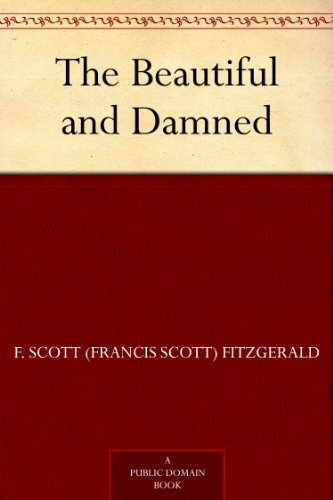
3. The Beautiful and Damned
by F. Scott Fitzgerald
Mass Market Paperback: 432 Pages (2002-07-01)
list price: US$6.99 -- used & new: US$3.62
(price subject to change: see help)
Asin: 0743451503
Average Customer Review: 4.0 out of 5 stars
Canada | United Kingdom | Germany | France | Japan
Editorial Review

Book Description
First published in 1922, The Beautiful and the Damned followed Fitzgerald's impeccable debut, This Side of Paradise, thus securing his place in the tradition of great American novelists. Embellished with the author's lyrical prose, here is the story of Harvard-educated, aspiring aeshete Anthony Patch and his beautiful wife, Gloria. As they await the inheritance of his grandfather's fortune, their reckless marriage sways under the influence of alcohol and avarice. A devastating look at the nouveaux riches and New York nightlife, as well as the ruinous effects wild ambiion, The Beautiful and the Damned achieved stature as one of Fitzgerzld's most accomplished novels. Its distinction as a classic endures to this day.

Pocket Book's Enriched Classics present the great works of world literature enhaced for the contemporary reader. Special features include critical perspectives, suggestions for further read, and a unique visual essay composed of period photographs that help bring every word to life.

... Read more

Customer Reviews (48)

5-0 out of 5 stars Wonderful; Make sure you're up for it.
The Beautiful and Damned is Fitzgerald's longest work and certainly his most criticized. As with 1) This Side of Paradise and 2) Tender is the Night, this novel has a sort of wandering plot that mirrors its main characters' uncertainties. Much of the novel is a life on hold -- waiting for the war to end and for a rich grandfather to die, all while friends variously succeed through work and 'move on' with their lives. All told a magnificent portrait of wealth and beauty and sloth.

The prose is brilliant; some of the best lyricism Fitzgerald has ever written. His metaphors still glow today. As a bonus, there are a few extended, rattle-the-cage, blow-your-mind speeches ('specially one by Maury in 'Symposium') that create those rare moments of literary rapture and practically scream to be read aloud.

If you tend to read quickly, 'skimming' through lyricism to follow speech and plot developments, this may not be the novel for you. The beauty if not hidden between the lines, as in Joyce or Nabokov, but nonetheless it *is* wrapped up in extended metaphors and omniscience that paint pictures of youth and folly. You'll want to read every word, and pause to imagine and reflect. If you're up for it, there is hardly a better choice than The Beautiful And Damned.

An aside: in life, Fitzgerald had a weakness for popular opinion (lacking, somehow, real self-confidence). Often he would view himself based on the quality of his latest work's reception. As The Beautiful and Damned was considered something of a muddle, Fitzgerald often spoke about its poor, rushed quality and his desire for some sort of redo (which turned into The Great Gatsby, which was *also* received poorly!, considering its reputation today). This is an astounding novel, and if you like Fitzgerald *please* don't let the quirks of self-deprecation keep you from this novel.

3-0 out of 5 stars "I don't care about truth; I only want happiness !"
At first it is hard not to fall in love with Gloria Gilbert who, like all the self-besotted children of the heady and hedonistic Jazz Age, is so riotously frivolous, so disingenously self-centred. You excuse the fatuous languidness of her husband Anthony Patch as the transitory aimlessness of youth. But you know that these two have it coming when Gloria - in what FSF calls her "Nietszchean moment" - declares "I don't care about truth; I only want happiness!" While the rest of the Ivy League brahmins live out their dreams as writers and movie-makers, Gloria and Anthony squander their money and beauty on endless parties and clubs. At the end they are the flotsam of the Jazz Age. This tale strains at tragic grandeur without quite achieving it, chiefly because its two main protagonists remain essentially unlikeable, without any redeeming attribute that would stir our sympathy. The prose drips with lyricism, but it is without grace, poise and maturity. FSF was only 26 when it was first published, and this book displays a raw diamond that would attain polish a little later.

5-0 out of 5 stars Beautifully Written about Depressing Story of the B & D'd [96]
Fitzgerald's farce or satire on upper crust New Yorkers can only be described as being realty becoming greater than fiction.Proclaiming the story "was all true", Fitzgerald intimated that this book was something akin to a kiss-and-tell novel about what had happened within America's richest crowd during the time of World War I.

"Anthony, Maury, and Dick sent in their applications for officers' training-camps and the two latter went about feeling strangely exalted and reproachless; they chattered to each other, like college boys, of war's being the one excuse for, and justification of, the aristocrat, and conjured up an impossible caste of officers, to be composed, it appeared, chiefly of the more attractive alumni of three or four eastern colleges."

Princetonian Fitzgerald created a Harvard protagonist Anthony Patch whose birth right is basically his only strong characteristic - at least so at the end of the novel.During his venerable youth, he locks eyes onto friend Rick's cousin, beautiful Gloria, whose unique spirit and vivaciousness make the self-described bachelor become betrothed.

The book follows the couple for a period of just less than a decade, during which time they fall into numerous elations, and depressions. This see-saw bipolar personality/lifestyle depiction is all-too-common in Fitzgerald's novels. Such was well accentuated in Fitzgerald's doctor and patient relationship in"Tender is the Night" as the patient is ultimately cured and the doctor falls into a deep feeling of desultory depression -- dipsomania. Another of Fitzgerald's common themes is of men chasing after beautiful women who make the boys feel blushing discomfiture. Well depicted here with Gloria as well asin "This Side of Paradise" and its Amory Blaine who constantly trips in his whirlwind attempts to conquer beautiful Rosalind (whose personality and looks mirror those of Gloria).

As the book progresses, you see the self esteem of Anthony deflate, while his wife amazingly awaits him to recover, by miracle or otherwise, and be the man she grew to love at the tender age of 22.Like "Tender is the Night", alcohol interferes with the person and with his relationships -- Anthony becomes a drunken "bore."

There are points of this book you have to think - is this a hypothetical autobiography.Had "Tender is the Night" bombed instead of won critical acclaim, would not Fitzgerald have fallen into the liquor bottle like Anthony? I am sure he wondered as such.

But, as sad as the book can be, Fitzgerald had times of folly and humor. Even a self-deprecating humor. He writes, in one discourse where the people talk disapprovingly about the new novels: "You know these new novels make me tired. My God! Everywhere I go some silly girl asks me if I've read `This Side of Paradise.' Are our girls really like that?"

Amazingly well written, and even more astonishing in that Fitzgerald was 25 years old when he wrote this novel, this book deserves its acclaim and infamy.

4-0 out of 5 stars Silent Screams of Change
"It is the manner of life seldom to strike but always to wear away." In The Beautiful and Damned, the author, F. Scott Fitzgerald creates a compelling struggle between life and his two dynamic characters Anthony and Gloria. Fitzgerald inserts his own questions of life and relationships in the offhand statements of his characters, usually too well placed to even be noticed by the reader. And such is the manner of The Beautiful and Damned, to strike at the soul and mind and to wear away our own definitions and conceptions through silent screams of indecision, fear and regret.

Fitzgerald uses his understanding of literature and the power of words to convey two stories: one on the surface, and one, hidden below all plot lines, running deep within each character and within all people who have ever dared to live. He uses color and imagery to clue his readers to this underlying message. Also, Fitzgerald writes in a "play-like" manner, with certain character dialogues, a sense of staging, narration and even in some parts of the book even special "play-like" formatting. This method creates an image of the surface plot, the plot the reader can tangibly grasp: the raised print on the page, the crisp sheets, the grammar and the structure of the story. These elements leave behind all that the reader feels and understands on a deeper level inside the mind, making each reader digest all this information alone, because it is not just bluntly stated by Fitzgerald on paper. This story allows the reader to just read a story, or to jump into the structure of the mind and soul, freeing locked feelings and questions. Fitzgerald's power is to massage his words giving each phrase the power to strike the reader and let them see themselves for the first time.

4-0 out of 5 stars "They were in love with the generalities."
I recently went to see Gatz, the wonderful adaptation of Gatsby by the Elevator Repair Service, and it inspired me to go back to Fitzgerald's body of work. I had read all the major the major works except for The Beautiful and Damned, and I decided to remedy that gap.

The Beautiful and Damned is an interesting book-- I probably liked it the least of all the Fitzgerald works, but I like his work enough that this is far from a bad thing. I could have lived without the overly obvious moralizing genaralities, but Fitzgerald himself recognized that this book had been written in too much of a hurry.

The major strength of the novel is, of course, the characters. We have all known versions of Gloria and Anthony Patch. We went to college with them. They were the social butterflies who seemed to have no worries, no weaknesses, and no real cares. We all assume that somewhere along the way they had to have stopped partying and found something to do-- you cannot imagine these people at 30. The Beautiful and Damned is something about what happens when the butterflies of the world keep going well past the point of excusable youthful mistakes.

People who already enjoy Fitzgerald should give The Beautiful and the Damned a read. It is certainly no Great Gatsby, but still contains much of the style and talent that made Fitzgerald so justly famous. Pay particular attention to the language and the turn of the phrase-- even in his lesser works, Fitzgerald is unparalleled at his particular kind of style. ... Read more


4. The St. Paul Stories of F. Scott Fitzgerald
by Patricia Hampl, Dave Page, F. Scott Fitzgerald
Paperback: 328 Pages (2004-09)
list price: US$19.95 -- used & new: US$9.95
(price subject to change: see help)
Asin: 0873515129
Canada | United Kingdom | Germany | France | Japan

5. Price Was High: The Last Uncollected Stories of F. Scott Fitzgerald.
by F. Scott Fitzgerald, Matthew Joseph Bruccoli
 Hardcover: 785 Pages (1979-01)
list price: US$19.95 -- used & new: US$27.30
(price subject to change: see help)
Asin: 0151740208
Canada | United Kingdom | Germany | France | Japan

6. The Curious Case of Benjamin Button and other stories by Fitzgerald
by F. Scott Fitzgerald
Audio CD: 200 Pages (2007-03-01)
list price: US$19.95 -- used & new: US$14.98
(price subject to change: see help)
Asin: 0786160454
Canada | United Kingdom | Germany | France | Japan
Editorial Review

Product Description
This exclusive audio includes The Curious Case of Benjamin Button,The Bridal Party, Three Hours Between Planes, Babylon Revisited andhe Lost Decade. "Marvelously smooth hybrid tales that prompt readers to think twice about the intersection of life and fiction..."-- Publishers Weekly ... Read more


7. Portable F Scott Fitzgerald
by F. Scott Fitzgerald
 Hardcover: Pages (1945-06)
list price: US$10.00
Isbn: 9997407121
Canada | United Kingdom | Germany | France | Japan

8. A Historical Guide to F. Scott Fitzgerald (Historical Guides to American Authors)
Paperback: 296 Pages (2004-10-14)
list price: US$38.00 -- used & new: US$2.95
(price subject to change: see help)
Asin: 0195153030
Canada | United Kingdom | Germany | France | Japan
Editorial Review

Book Description
Although perceived in his own day as a lightweight chronicler of 1920s trends and fads, F. Scott Fitzgerald (1896-1940) is now recognized as one of the most important writers of the twentieth century. Whether for his classic novels (The Great Gatsby, Tender is the Night), his frequently anthologized short stories ("Babylon Revisited," "Bernice Bobs Her Hair"), or his searing essays of personal examination (The Crack-Up), Fitzgerald is rightly celebrated as a master stylist who plumbs the depths of love, loss, and longing. Unfortunately, much of the interest in Fitzgerald has focused on biographical concerns, including his meteoric rise to fame, his tempestuous marriage to quintessential flapper Zelda Sayre, his rivalry with Ernest Hemingway, and his tragic descent into alcoholism and depression. The resulting, somewhat distorted, image of Fitzgerald has been that of a self-destructive literary playboy. Even scholarly treatments of the author have tended to depict him as a mere spokesman for the Lost Generation, a symbol of the excesses of his era, without properly appreciating the range of his writing or his intellect. This volume of historically minded, newly commissioned essays looks beyond the Jazz Age facade to topics that reveal how Fitzgerald's work both illumines and challenges conceptions of his milieu. Studies of the literary marketplace of the 1920s, the influence of public intellectuals such as Walter Lippmann and H. L. Mencken, film and its treatment of the New Woman, and the aftereffects of World War I all document the depth and breadth of Fitzgerald's thinking. ... Read more


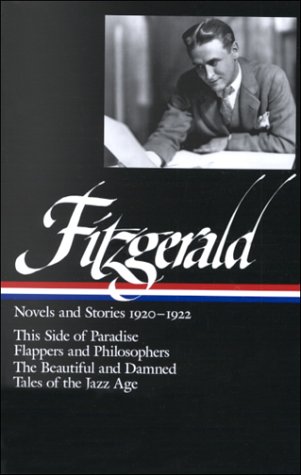
9. F. Scott Fitzgerald Quartet: This Side of Paradise$ Flappers and Philosophers$ The Beautiful and the Damned$ Tales from the Jazz Age
by F. Scott Fitzgerald
Kindle Edition: 1075 Pages (2005-09-10)
list price: US$5.99 -- used & new: US$4.79
(price subject to change: see help)
Asin: B000FCKDF0
Average Customer Review: 4.5 out of 5 stars
Canada | United Kingdom | Germany | France | Japan
Editorial Review

Book Description
The Four Books that Defined and Chronicled the Jazz Age! Here in one eBook is the quartet of books that catapulted F. Scott Fitzgerald to literary immortality. Meet the flappers, the indolent young men, the speakeasies, the gangsters, the illegal hooch, and the easy money that characterized the Roaring Twenties. From This Side of Paradise to Flappers and Philosophers, The Beautiful and the Damned, and Tales from the Jazz Age Fitzgerald will light the way on a very special insider's tour of the Jazz Age. The age that made Fitzgerald and killed him. ... Read more

Customer Reviews (3)

4-0 out of 5 stars The Polly Parker Stories
I am really shocked that this first rate Fitzgerald collection does not have the "Polly Parker" stories that originally were printed serially in THE SATURDAY EVENING POST in 1922. Apparently these uncollected stories remain unavailable anywhere in book form.

Polly Parker was a typical Fitzgerald heroine -- a blue-eyed flapper with a pert nose and golden hair bobbed very short. The reason her stories are omitted, I gather, is that they were slightly more sexual in tone and also addressed taboo subjects such as alcoholism, racial violence, incest, and insanity.

"GRANDPA'S GOLD" the first Polly story, deals with lasting echoes of the Civil War. Spoiled Polly goes to Vermont for the summer to stay with her aging grandfather -- the last remaining Union army veteran in Vermont. Ultimately she robs him of a small fortune in gold coins which he had originally intended to donate to a Negro orphanage. This story highlights Fitzgerald's ambivalence towards the young women of the day -- Polly is cruel and selfish, but also winningly spontaneous, free and independent. Fitzgerald's racism is in full flower here as well. The fact that she is "only" robbing colored people seems to make her crime an amusing prank rather than a vicious crime.

"ALLIGATOR QUEEN" is both darker and more sophisticated. Polly is a houseguest in Georgia, where she meets Eleanor Hiss, a jazz age siren who may or may not have negro blood. The two girls deliberately lead a young Harvard man out into quicksand, then go joy riding in his car while he slowly drowns. Fitzgerald later wrote that Eleanor seduced Polly in an early draft -- but in 1922 the SATURDAY EVENING POST would never have carried a story with an explicit lesbian seduction.

"HOLY MATRIMONY" is the ironic finale to the Polly Parker stories. Invited on a weekend yachting party, Polly is compromised by an Eastern Prince and forced to marry silent movie star Reginald Dashwood. Dashwood is a homosexual who needs "discreet companionship." Polly marries him, assuming he is a pushover, but instead he is cruel, domineering and controlling -- and aided by an iron-willed mother who treats Polly like a servant. Polly's "punishment" is ironic, since she now has unlimited wealth and a dazzling husband -- but no freedom and no hope of either sexual or spiritual release.

Taken together, these three stories represent Fitzgerald's darkest early work -- and they should be included in any "definitive" collection.

5-0 out of 5 stars Short Stories
I bought this book for the short stories. They are like small diamonds on a necklace, sparkling in a row, each one a wonder. Fitzgerald's short stories are like that.

"The Off Shore Pirate" is hilarious. The "Ice Palace"is strange and beautiful."The Curious Case of Benjamin Button" is about a baby born very old who gets younger every year.

"The Diamond As Big As The Ritz" is classic Fitzgerald, about the rich.

The story that is missing is "The Rich Boy." This is the story that started the famous spat between Hemingway and Fitzgerald.

In this short story, Fitzgerald writes: "The rich are very different from you and me."Hemingway responds inhis short story, "The Snows Of Kilimanjaro:""Yes, they have more money."

But you will not find "The Rich Boy" in this book. Too bad.

Included with the short stories are two novels:: This Side Of Paradise and The Beautiful And Damned.They are very adolescent novels. High school students might enjoy them.

Maybe not.

The short stories do more to describe the Jazz Age than his novels.

If you are serious about this author, his greatest novel is The Great Gatsby.His next best novel is Tender Is The Night."The Rich Boy" is his best short story.

5-0 out of 5 stars Good Collection of Pre-Gatsby Work
This is a very attractive packaged, comprehensive collection of Fitzgerald's early work, containing his first two novels (This Side of Paradise and The Beautiful & Damned) and his first two short story collections.Included are some classic short stories such as May Day and The Diamond As Big As The Ritz.Some of the other stories are less than classic, but all are enjoyable.As is the case with all Library of America volumes, the book is very easy to handle and read.There is a useful set of notes and chronology of Fitzergald's life in the back.All in all, this is well worth the price. ... Read more


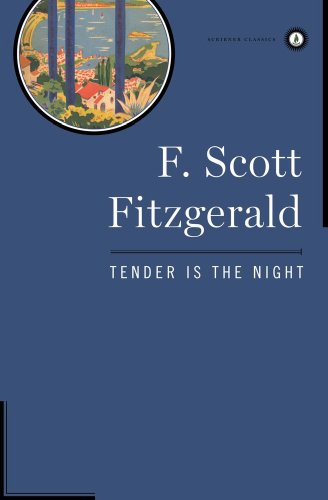
10. Tender is the Night
by F. Scott Fitzgerald
Paperback: 300 Pages (2001-01-15)
list price: US$23.99 -- used & new: US$23.99
(price subject to change: see help)
Asin: 0543722082
Average Customer Review: 4.0 out of 5 stars
Canada | United Kingdom | Germany | France | Japan
Editorial Review

Amazon.com
In the wake of World War I, a community of expatriate American writers established itself in the salons and cafes of 1920s Paris. They congregated at Gertrude Stein's select soirees, drank too much, married none too wisely, and wrote volumes--about the war, about the Jazz Age, and often about each other. F. Scott Fitzgerald and his wife, Zelda, were part of this gang of literary Young Turks, and it was while living in France that Fitzgerald began writing Tender Is the Night. Begun in 1925, the novel was not actually published until 1934. By then, Fitzgerald was back in the States and his marriage was on the rocks, destroyed by Zelda's mental illness and alcoholism. Despite the modernist mandate to keep authors and their creations strictly segregated, it's difficult not to look for parallels between Fitzgerald's private life and the lives of his characters,psychiatrist Dick Diver and his former patient turned wife, Nicole. Certainlythe hospital in Switzerland where Zelda was committed in 1929 provided theinspiration for the clinic where Diver meets, treats, and then marries thewealthy Nicole Warren. And Fitzgerald drew both the European locale and many ofthe characters from places and people he knew from abroad.

In the novel, Dick is eventually ruined--professionally, emotionally, and spiritually--by his union with Nicole. Fitzgerald's fate was not quite so novelistically neat: after Zelda was diagnosed as a schizophrenic and committed, Fitzgerald went to work as a Hollywood screenwriter in 1937 to pay her hospital bills. He died three years later--not melodramatically, like poor Jay Gatsby in his swimming pool, but prosaically, while eating a chocolate bar and reading a newspaper. Of all his novels, Tender Is the Night is arguably the one closest to his heart. As he himself wrote, "Gatsby was a tour de force, but this is a confession offaith."Book Description
Published in 1934, Tender Is the Night was one of the most talked-about books of the year. "It's amazing how excellent much of it is," Ernest Hemingway said to Maxwell Perkins. "I will say now," John O'Hara wrote Fitzgerald, "Tender Is the Night is in the early stages of being my favorite book, even more than This Side of Paradise." And Archibald MacLeish exclaimed: "Great God, Scott...You are a fine writer. Believe it -- not me."

Set on the French Riviera in the late 1920s, Tender Is the Night is the tragic romance of the young actress Rosemary Hoyt and the stylish American couple Dick and Nicole Diver. A brilliant young psychiatrist at the time of his marriage, Dick is both husband and doctor to Nicole, whose wealth goads him into a lifestyle not his own, and whose growing strength highlights Dick's harrowing demise. A profound study of the romantic concept of character -- lyrical, expansive, and hauntingly evocative -- Tender Is the Night, Mabel Dodge Luhan remarked, raised F. Scott Fitzgerald to the heights of "a modern Orpheus."Download Description
"Published in 1934, Tender Is the Night was one of the most talked-about books of the year. ""It's amazing how excellent much of it is,"" Ernest Hemingway said to Maxwell Perkins. ""I will say now,"" John O'Hara wrote Fitzgerald, ""Tender Is the Night is in the early stages of being my favorite book, even more than This Side of Paradise."" And Archibald MacLeish exclaimed: ""Great God, Scott...You are a fine writer. Believe it -- not me.""Set on the French Riviera in the late 1920s, Tender Is the Night is the tragic romance of the young actress Rosemary Hoyt and the stylish American couple Dick and Nicole Diver. A brilliant young psychiatrist at the time of his marriage, Dick is both husband and doctor to Nicole, whose wealth goads him into a lifestyle not his own, and whose growing strength highlights Dick's harrowing demise. A profound study of the romantic concept of character -- lyrical, expansive, and hauntingly evocative -- Tender Is the Night, Mabel Dodge Luhan remarked, raised F. Scott Fitzgerald to the heights of ""a modern Orpheus."" " ... Read more

Customer Reviews (130)

5-0 out of 5 stars Another winner from Fitzgerald!
Dick Diver has studied hard to finally gain his role as a Psychiatrist. But his meeting with the ethereal Nicole proves to be the one thing that could take it all away from him. Nicole is unlike other women he has met. She's willing to convey her deepest and darkest thoughts to him. She cares little about the current fashions. She worries about him when he's not around. Basically, she's everything he could have ever dreamed of. But the circumstances of their meeting aren't exactly perfect. Nicole is not some random women he has met out on the street. Quite the opposite, in fact. Nicole is a resident at a mental health facility. The victim of Dissociative Identity Disorder (a.k.a. split personality). While she is loaded with money, the poor thing has fallen victim to DID after an indiscretion with her father - something she has buried in the back of her mind. While Dick is not Nicole's personal Psychiatrist, he can't help but feel that, by becoming romantically involved with her, he may risk her completely losing her mind; or him losing his license to practice. But he marries her nonetheless.

As a couple, Dick and Nicole Diver are wealthy and fabulous. People are drawn to them like moths to a flame, and shower them with love, attention, and affection at just the mention of their names. They are glamorous and respected by all. Even the young Rosemary, a screen actress who has the world at her fingertips. Rosemary is quickly drawn into the world of the Diver's, and finds herself falling in love with Dick, and he with her. But Dick is not one to place Nicole's mental health on the line, and must work to control himself when around Rosemary - which proves harder than he ever expected. Between shopping sprees on the French Riviera, and glitzy dinners at the most wonderful restaurants, Nicole and Rosemary become better and better friends; of course, this is at the risk of damaging Nicole even more than she already is. And if Dick is not careful, he may find himself lonely once more, if Nicole is driven into the dark depths of madness.

I read THE GREAT GATSBY quite a few years ago, and have always counted it as one of my favorite novels. Now, however, TENDER IS THE NIGHT has also garnered a spot on that particular list. Perhaps it is the fact that I am a Psychology student; or because I love tales full of romanticism and riches, but F. Scott Fitzgerald's TENDER IS THE NIGHT spoke to me in more ways than one, and truly gave me a glimpse inside the lives of a wealthy socialite and her husband/Psychiatrist. Nicole is such an elegant character whose frequent trips into madness are riveting, and impossible to tear your eyes away from; while Dick's constant philandering, yet extreme passion for his wife is hard to ignore, and makes the reader sympathize with and adore him, yet, at the same time, loathe him. Together they are a couple full of power and popularity who stay on your mind long after the last page is turned. Fitzgerald has an uncanny ability of glamorizing anything and everything - from mental illness to starlets and everything in-between. His descriptive language, and impossible to ignore characters are poetic and lovely; while the undertones conveyed within TENDER IS THE NIGHT are somber and tragic. Another winner from Fitzgerald!

Erika Sorocco
Freelance Reviewer

3-0 out of 5 stars Not his best but still Fitzgerald
F. Scott Fitzgerald's book, Tender is the Night, is widely regarded as his second best offering (after The Great Gatsby) and, as with other second best efforts, it suffers by comparison.There are three things wrong with this book, two of which can be corrected and one which cannot.The first problem is that Fitzgerald uses far too many obscure (to an American reader) references and words in French.While such use lends a certain authenticity to the book, it also makes it difficult to read without a considerable amount of knowledge of France, French culture and the French language. One way to overcome this obstacle is to read the Wordsworth Classics edition which provides a list of 399 notes to explain the text. It is somewhat awkward in that you have to flip back and forth between the text and the notes which are in the back of the book. It would be a good idea to make a photocopy of these notes so that they can be referred to as you read the story.

The second problem, also correctable, but more awkward, has to do with the structure of the book. The main story idea is the disintegration of an idealistic and decent man, Dr. Richard Diver, who is corrupted by money and the loss of purpose in his life. To fully experience this tragedy the story should begin at the beginning, namely when Dr. Diver is working as a young psychiatrist in Switzerland. Instead Fitzgerald starts in the middle, that is to say after he is married to Nicole and they are on the French Riviera When we first meet him he comes across as a rich, indolent man given to hanging around with rich, unpleasant people. We also don't know, as Malcolm Crowley has pointed out, what the book will be about--some Americans in the South of France or its true purpose, the "the glory and decline of Richard Diver as a person." The Introduction to this edition by Henry Claridge of the University of Kent does a good job of explaining this problem. Professor Claridge indicates that in fact another edition was put together to correct this very situation, but for various reasons it is no longer in circulation.One could, of course, simply start reading the book at the chronological beginning (the start of Book 2) and then backtrack as necessary.

But the biggest problem, the one that cannot be corrected, is that we just don't care about these people, this insufferable group of Ugly Americans.The book begins by introducing us to Rosemary Hoyt, a 17-about-to-be-18 year old actress who has made one teeny bopper movie (Daddy's Girl) and regards herself, and is regarded by others, as the next coming of Greta Garbo.(For those of you too young to remember Garbo think Meryl Streep with a Swedish accent.). Rosemary has the de rigor mother who is micromanaging her career. She arrives in the South of France and meets a whole host of unpleasant people. There is Tommy Barban, a soldier of fortune apparently on leave between wars, Abe North, an alcoholic who gets more unpleasant as Book 1 continues, the fey Luis Campion, Earl Brady, the stereotypical Hollywood movie director, Mr. McKisco whom nobody likes, Mrs. McKisco who "sees something in the bathroom" and touches off a duel) and other assorted neer-do-wells. Even the Diver children, Lanier and Topsy, seemtoo too perfect, singing a tune in French. In this bunch Nicole comes off as clearly the best of the lot. And then there is Dick. But this isn't the idealist Dick, this isn't the tragic Dick.It's the idle rich Dick, whiling away his life on the beach, giving parties, doing the tourist thing in Paris.

One is hard pressed to admire Dr. Richard Diver at any point in the novel.He is certainly bright--Yale, Hopkins, Oxford--but the picture that Fitzgerald paints of him is more one of professional ambition than service to humanity. We are not talking Dr. Switzer here.He is also a bigot, witness his attitude toward Italians, which gets him into an argument with Italian taxi drivers and leads to negative consequences. And then there is his problem with women or should I say young girls?When we first meet Nicole she is barely 16 and still in shock from a traumatic incident that would affect any child.Yet we find him "falling in love" with her. At this point Diver is 27 years old. Later (chronologically) when the same thing happens with Rosemary Hoyt she is just turning 18.This is not Romeo and Juliet; it is not even the 47-year-old Bogart and the 19 year old Bacall in To Have and Have Not. It is Humbert Humbert and Lolita redeux. Perhaps the problem is that Fitzgerald is trying too hard. It took nine years to write the book and after creating one of the most memorable characters in American fiction, Jay Gatsby, Fitzgerald was trying to top him. But the result is just not very successful. On the other hand Book Three is easily the best of the lot. Here Fitzgerald picks up the action and includes some scenes that are basically slapstick comedy, such as when Mary North (now Mary Minghetti) and her friend Lady Caroline Sibly-Biers are thrown in jail for impersonating two sailors and picking up some local girls. The scene ends fittingly when the local person who can arrange their release (Gausse), after taking much abuse from Lady Caroline, gives her a well-deserved boot in the rear.

The ending is also disappointing. Instead of a dramatic climax the book goes out, as t.s. eliot might have said, "not with a bang, but with a whimper." The whole Nicole and Tommy thing is simply not believable--and Dick as a GP in Palookaville??

When we read a novel it is like entering into another world. The characters become real and we want to care about what happens to them. When Quasimodo meets a tragic end at the end of The Hunchback of Notre Dame we are saddened because we have come to care about him. But by the end of the first book of Tender is the Night I found myself not really caring about any of these people and plunged on with the novel only because it is Fitzgerald.

Then is there any reason to read the book? The answer I think is yes, for two reasons. First of all for the language. Fitzgerald is simply a marvelous writer of English prose.His language here is beautiful and evocative.Take for example, these lines from page 129:"She crossed and recrossed her knees frequently in the manner of tall restless virgins." "...she was a compendium of all the discontented women who had loved Byron a hundred years before..."All this about a relatively minor character, Baby Warren.And this line from page 193 about a policeman:"He had possessed the arrogance of a tall member of a short race, with no obligation save to be tall." Then there is this exchange between Nicole and Tommy Barban on page 246:(Tommy) "You know, you're a little complicated after all." Oh no," she assured him hastily, "No--I'm not really--I'm just a--whole lot of different simple people."

The second reason for reading Tender is the Night is that one should not confine one's self to just one book by an author. Just as we cannot fully appreciate Thackeray if we just read Vanity Fair or Dostoyevsky if we limit ourselves to Crime and Punishment we should read more of Fitzgerald's work than his masterpiece, The Great Gatsby. To fully appreciate this book and Fitzgerald, one should read his first novel, This Side of Paradise and a good biography of his life as well as Gatsby. As with many authors much of his work is autobiographical and it is only by knowing his life that you can understand and fully appreciate his writing. In the end Fitzgerald is writing about himself and his own wife, Zelda. Knowing the lives these two led is vital to a full appreciation of this book.
Amazon forces reviewers to make a choice between a positive or a negative review. But this is a false dichotomy. This book is both very good and very bad. I recommend reading it as a part of Fitzgerald's body of work,, but not as his only work and not as your first reading of his novels.

4-0 out of 5 stars Master Chef serves up a half-baked book...
Fitzgerald was a supreme talent, and he showed what he was capable of with The Great Gatsby...but Tender is the Night lacks direction and inspiration. (I read the restored version, so my chronology may differ from other readers'.)

The plot is a bit scatter-shot and uneven, with a very sweaty ending (for a slice-of-lifer, many developments come across as factitious rather than organic), but the writing is still unmistakably that of a master.Numerous sentences stick with the reader, and Fitzgerald's facility with the phrase causes me no end of admiration.

However, the air-tight perfection of Gatsby is noticeably lacking. (I know: they can't all be as good as Gatsby...but the comparison is natural, and leaves Night far behind.)

Tender is the Night is ranked #28 on the MLA 100, which puts it ahead of some better stuff, but I can't quibble too much with the novel's placement. It's virtuoso writing by a literary titan, and definitely should be read.

4-0 out of 5 stars Paradise Lost
Scott Fitzgerald famously noted that the very rich are different from you and I. Agreed. However, in this tale of the wanderings of a segment of the post World War I "lost generation" one could argue that some things do not escape even the richest. I would note the scars left on Nicole Diver, nee Warren, by her father's incestuous behavior. I would further note the extreme mental problems that caused not only for Nicole's lifebut for Dick Diver, her husband and a psychiatrist, and their children. If that is Fitzgerald's point it really hits home because this book at the very least reflects his own personal problems with his beloved wife Zelda when she went over the edge. As for the rest of the story line this is a typical Fitzgerald Jazz Age story, well written, but with no necessity to empathize with the plight of the other denizens of the story.


1-0 out of 5 stars a dull book full of dull pompous characters.
i usually finish a book this size in about 3 days. "tender is the night" took me about 7 months to painfully crawl through. i could only handle a few pages at a time. it was like a sleep inducing narcotic, without being any fun at all. I read and (i believe) i loved "the great gatsby" about 20 years ago. i had been thinking it was time to reread that work, but now i am afraid to. "tender is the night," was soooo bad. if the characters in this tedious book were drawn from the lives of the fitzgeralds (as i've read they were), then it's no wonder that zelda went insane & f scott drank himself into an early grave. (Dear God, as i write this i can sense the gravitational pull toward the unhelpful button that is being exerted on computer mouses all over america. what am i doing! yet i can't help myself. on i go.) who could stand such pompous dullards for company? if all books were filled with people like the ones found in this novel, I would simply read "Marley & Me," and call it a day for book reading. yuck. ... Read more


11. The Crack-Up
by F. Scott Fitzgerald
Paperback: 347 Pages (1993-09)
list price: US$15.95 -- used & new: US$9.01
(price subject to change: see help)
Asin: 0811212475
Average Customer Review: 4.5 out of 5 stars
Canada | United Kingdom | Germany | France | Japan

Customer Reviews (7)

4-0 out of 5 stars Slightly Obscure Fitzgerald
Lesser known work by FItzgerald is powerful and amazingly relevant in 2007.

3-0 out of 5 stars The Crack-Up
"This is too real and there ain't no escape"-- Nick Lowe, "Cracking Up"


I carried F. Scott Fitzgerald's THE CRACK-UP around with me for almost ten years before I got around to reading it last month. It was one of those books that I felt I was literarily required to read, what with my affection for all things Fitzgerald -- especially Gatsby. Once I got into the book, I found parts of it fairly impenetrable, which must have been Fitzgerald's state of mind while writing some of the material, a posthumous hodgepodge of uncollected pieces, samplings of notebooks, and unpublished letters (both from and to the author).

An excellent companion piece to the book is the PBS American Masters documentary, F. SCOTT FITZGERALD: WINTER DREAMS, which draws heavily from THE CRACK-UP. The film, in its quest to simulate the elegance that its subject so desperately tried (and failed) to attain, unfortunately breezes over some key points in the writer's life; but the DVD is well worth checking out (literally, either from your local library or Netflix). (PBS's website makes up for some of these omissions with a nifty timeline that puts all of Fitzgerald's accomplishments into context with the tragic goings-on in his life. It also offers some additional footage that does not appear in the film, most notably interviews with E.L. Doctorow and Budd Schulberg, who wrote the screenplay for On the Waterfront and who, as a young screenwriter, was rewritten by Fitzgerald.)

Originally written as three essays for Esquire in 1936, "The Crack-Up" was Fitzgerald's bearing of his soul, his confession, his mea culpa to the world at large for letting them -- and himself -- down. It begins: "Of course all life is a process of breaking down, but the blows that do the dramatic side of the work -- the big sudden blows that come, or seem to come, from outside -- the ones you remember and blame things on and, in moments of weakness, tell your friends about, don't show their effect all at once. There is another sort of blow that comes from within -- that you don't feel until it's too late to do anything about it, until you realize with finality that in some regard you will never be as good a man again."

The literary world at large found such brash honesty unseemly, and Ernest Hemingway especially was disdainful of his friend's candor. But just as "The Crack-Up" essays unnecessarily confirmed that Hemingway was indeed a bastard, they also demonstrated that Fitzgerald could still write.

One of the most poignant and telling passages in THE CRACK-UP anthology appears in Fitzgerald's 1932 essay about New York, "My Lost City." Returning a couple of years after the stock market crash of 1929 ("I once thought that there were no second acts in American lives," he writes, "but there was certainly to be a second act to New York's boom days"), Fitzgerald found a new skyline awaiting him. The Empire State Building, all 103 floors and 1,454 feet, had risen out of the dust of the Big Crash. Fitzgerald "went to the roof of the last and most magnificent of towers. Then I understood -- everything was explained: I had discovered the crowning error of the city, its Pandora's box. Full of vaunting pride the New Yorker had climbed here and seen with dismay what he had never suspected, that the city was not the endless succession of canyons that he had supposed but that it had limits -- from the tallest structure he saw for the first time that it faded out into the country on all sides, into an expanse of green and blue that alone was limitless. And with the awful realization that New York was a city after all and not a universe, the whole shining edifice that he had reared in his imagination came crashing to the ground."

Perhaps at that moment Fitzgerald discovered he had his limits, too, and that they were already in his past. One wonders how many times in the eight tortured years he had left, dealing with the insanity of Zelda and Hollywood, book sales all but evaporating, he looked back on that moment atop the Empire State Building and wished he had jumped.

(c) 2006 - Visit chidder.livejournal.com

5-0 out of 5 stars Thedark night of the soul
Fragments of Fitgerald here do not really shore up his ruin. The most romantic of American novelists tells the story of why in the lives of American writers there are no second acts. The title essay 'The Crack - Up' is a very moving one. The tale of ' the dark - night in the soul in which it is always three o'clock in the morning ' of his breakdown and loss of a real feeling for life. He struggled back, and he made his efforts, most admirably perhaps as a father in trying to educate a daughter with two very problematic parents. He was finished at forty- four and did not make it to some other better world in his work and his life. No second act for him. But these fragments show the very beauty of perception and fineness of literary line which enabled him to write his one, and one of America's great masterpieces, Gatsby.

4-0 out of 5 stars A nice collection, but it could be better.
Fitzgerald and Wilson are two writers who mean a lot to me. (Tender Is the Night and To the Finland Station being among my favorite books.) I have to confess that I was expecting more from this collection of Fitzgerald essays, letters and journals. The selection is thin, and there is no clear line for why some pieces were chosen and others were not. It seems to me that there would be room on the market for a more comprehensive collection of the non-fiction prose and letters.

The Crack-Up was originally published in book form while Fitzgerald was still alive, which may explain the somewhat odd selection. The obituaries collected at the end were added after his death for the 1945 edition.

Even with the flaws, The Crack-Up is still worth taking the time to read. Particularly if you are a fan of Fitzgerald, the bitter thought-provoking autobiographical essays provide a nice counterpoint to the exuberance of the novels. Aside from the title essay, "My Lost City" is particularly nice.

Fitzgerald arranged fragments of his writing notebooks into a series of conceptual categories for publication in this volume. These fragments serve as a very nice reminder just how good of a writer he really was. The combination of skilled turn of phrase and careful eye for detail is a powerful one. The journal section could serve as a very good lesson in observation for would-be writers of today.

Wilson himself notes that the letters included represent "merely a handful that happened to be easily obtainable". The most interesting letters are those written to his daughter and some of the letters that he received after the publication of the Great Gatsby. It is fascinating to read the reactions of Stein, Wharton and Eliot.

Time for a new edition of (at least) the collected letters?

5-0 out of 5 stars Vintage Fitzgerald
F. Scott Fitzgerald captured the dreams and aspirations of so many people when he wrote of the fabulous excesses of the 20's - a time not unlike the recent "get-rich-quick" mania of the Internet bubble, which also crashed, destroying many fortunes and lifestyles.
In The Crack-Up Fitzgerald writes equally poignantly of the agony of the aftermath of such excess and unfulfilled desires and social insecurities. He was able to capture all of this so clearly because it was the life that he and Zelda aspired to and, from time to time, lived.But they were always just on the outside, depending on the generosity of others both financially socially.He takes no prisoners.
It is no surprise that he is still being widely read. Don't miss Fitzgeral - it doesn't really matter which of his books you start with, you will find yourself moving through the collection. ... Read more


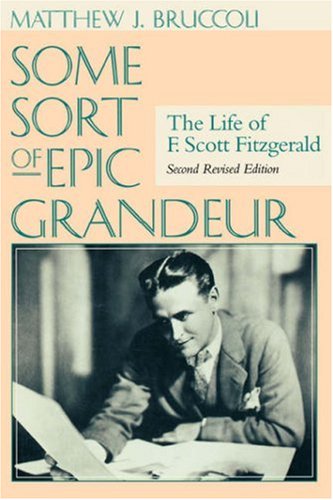
12. Some Sort of Epic Grandeur: The Life of F. Scott Fitzgerald (Rev)
Paperback: 696 Pages (2002-08-01)
list price: US$29.95 -- used & new: US$20.97
(price subject to change: see help)
Asin: 1570034559
Average Customer Review: 5.0 out of 5 stars
Canada | United Kingdom | Germany | France | Japan
Editorial Review

Book Description
Since its first publication in 1981, Some Sort of Epic Grandeur has stood apart from other biographies of F. Scott Fitzgerald for its thoroughness and volume of information about Fitzgerald's life and career. It is regarded today as the basic work on Fitzgerald and the preeminent source for the study of the novelist. In this second revised edition, Matthew J. Bruccoli provides new evidence discovered since its original edition. This new edition of Some Sort of Epic Grandeurimproves, augments, and updates the standard biography of F. Scott Fitzgerald. ... Read more

Customer Reviews (6)

5-0 out of 5 stars Some Kind of Wonderful
I am an absolute diehard fan of F. Scott Fitzgerald, both his life and his literature. So, I knew when I purchased this book I was bound to scrutinize its every nook and cranny. Well, my scrutiny proved to be a wasted effort. Without question, Matthew Bruccoli is the number one Fitzgerald scholar in the country, and after reading this biography, it is impossible to question why.
Bruccoli covers every aspect of Fitzgerald's life and includes several bits of correspondence to really give readers a look inside Fitzgerald's thinking. --Perhaps my favorite thing about the book is that it does not sentimentalize the author (which I myself have a habit of doing). Fitzgerald is spelled out here in all his glory, yet, we also get to see his unflattering side...paranoia, arrogance, unharnessed alcoholism, and downright neurosis.
F Scott Fitzgerald was a brilliant man whose life became legend. It is my humble opinion that Bruccoli has written the most thorough and best possible biography. Simply put, the read isfascinating. It might be 600 pages, but you will fly through it. It is "never dry" (like Fitzgerald :)) and always entertaining. For Fitzgerald fanatics like myself, this book is a must, but I am convinced that anyone who takes to "human interest" stories would find themselves engulfed in its pages.
Also recommended: "The Romantic Egoists"...a scrapbook collection put together concerning the lives of the Fitzgeralds. It is packed with pictures and is a wonderful companion to the biography. It was also published by Bruccoli.

4-0 out of 5 stars Outstanding biography
This is an excellent biography, full of a great wealth of detail.In truth, Fitzgerald is a pretty easy biographical subject, because his fiction was so closely based on his own life and experiences and because he wrote so many letters and kept such detailed notebooks and ledgers accounting for his own life.He also had relationships with many people (Zelda, other writers, etc.) who left behind many accounts of him.Still, Bruccoli does an extremely thorough job and the book is very well-written.

I would give it five stars except for an extremely irritating tendency Bruccoli has to be dismissive of almost all of Fitzgerald's short stories.Bruccoli is way too arrogant about pronouncing dozens of the stories F. Scott wrote as being "minor," or "disappointing," or even "embarrassing," while reserving his praise for a select few, such as "May Day" and "The Rich Boy."Personally, having read every one of FSF's currently collected short stories (well over 100 in all), I don't rate "May Day" or "The Rich Boy" very highly, but I love lots and lots of the "commercial" ones Bruccoli dismisses.I think he should leave the assessment of which stories are good up to the reader.Bruccoli's literary analysis -- of Fitzgerald's novels -- is outstanding, but the short stories should not be so dismissed (even if Scott himself at times dismissed them and hated having to write them to earn money).

5-0 out of 5 stars Amazing reading material for anyone
I am a writer, and first took out the book suffering from similar problems to Fitzgerald's at the beginning of his career, hoping to get some guidence.Reading it, I was struck by the profundity of the advice on writing he gave his daughter Scottie, which is copied in excerpts.I felt like I was getting the same benefits he gave her, and I also got the sense that he would want this.He meant what he had learned to be accessable to everyone;in a way, it was what his life was based around.Then, I got a good deal out of the analyses the biographer devotes to transcibing the process Fitzgerald went through in mapping out each of his extaordinary novels-I took notes I'll keep for ever.I only wish I could find a source like this on my other favorite writers.I'll have to appeal to Amazon's reccomendations for advice.

5-0 out of 5 stars Excellent Reference Book but Choppy on Its Own as a Story
I bought this book and read it before reading any of the works of F. Scott Fitgerald.

The book opens with an interesting literary hook as we follow the last few hours in the life of Fitzgerald on December 21, 1940. He is an unemployed screen writer living in Hollywood at the apartment of his companion Sheilah Graham. On the previous day, he had symptoms of a heart problem. That morning on the 21st, he was working on "The Last Tycoon." He was sitting in a chair, stood up, grasped the mantlepiece, collapsed, and died at age 44.

That book is one of seemingly dozens of short stories on F. Scott, Zelda his wife, and others. The book is not a seamless story but is a chronoligcal collection of short - almost disconnected - stories about his life and works.

It is an excellent reference book to consult as you read the works of Fitzgerald. I found the book on its own too dry with too many facts and it gives no idea of what the writing was like. It was not until I read "This Side of Paradise" did I understand what all the fuss was about with F. Scott Fitzgerald, and it was at that point the present biography came to life. For example, I quote a passage from Chapter 2 of Book I, as Amory sits on the steps of his dorm at Princeton after his first day on campus:

"Now, far down the shadowy line of University Place a white-clad phalanx broke the gloom, and marching figures, white-shirted, white-trousered, swung rhythmically up the street, with linked arms and heads thrown back:

"Going back-going back,
Going-back-to-Nas-sau-Hall,
Going back-going back-
To the-Best-Old-Place-of-All.
Going back-going back,
From all-this-earth-ly-ball,
We'll-clear-the-track-as-we-go-back-
Going-back-to-Nas-sau-Hall!"

Amory closed his eyes as the ghostly procession drew near. The song soared so high that all dropped out except the tenors, who bore the melody triumphantly past the danger-point and relinquished it to the fantastic chorus. Then Amory opened his eyes, half afraid that sight would spoil the rich illusion of harmony."

One learns more about Fitgerald's writing from that passage than the entire biography.

Having said the above, this is a fact filled reference book that acts as a wondeful guide and supplement to the F. Scott's life and the background for the works. There are many photographsand other documents among the 61 short chapters. I especially liked the ledger notes that were kept by Fitzgerald that clearly outline the characters and plot details for the books. Bruccoli has included a huge notes section and appendix at the back of the book, about 100 illustrations, plus many more documents. I have read many interpretations of "Tender is the Night" but it is a lot clearer when you actually read the author's own notes as produced here in the present biography.

Highly recommend: excellent collection of short stories and documents.

5-0 out of 5 stars An excellent biography
I've admired Fitzgerald all my life and regard his work as singularly underrated as time goes on. He was a brilliant and witty writer who could turn a phrase as well as any American author of the 20th century. This biography is the best I've ever read on Fitzgerald. It's particularly strong in the depiction of his gaudy, booze-soaked life with Zelda, especially when they were ex-pats living in France. Bruccoli really draws the reader in with deft descriptions of their marital rows, woes, break-ups and innumerable reconcilations. I was happy to see that their daughter, Scottie, was also illuminated so brilliantly.

The material on Sheila Graham, Scott's lover in Hollywood, was also intriguing. Graham's own book about Scott is a great read, but the author brings out elements to the story which Graham omitted. I was genuinely sad when Scott dies and the narrative concludes. The debauchery, booze and high times of the Flapper era are all here. This is a highly recommended, beautifully tribute to one of the great writers of the past 100 years. ... Read more


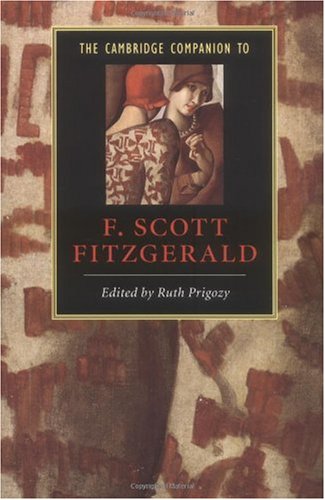
13. The Cambridge Companion to F. Scott Fitzgerald (Cambridge Companions to Literature)
Paperback: 294 Pages (2001-11-19)
list price: US$25.99 -- used & new: US$3.25
(price subject to change: see help)
Asin: 0521624746
Canada | United Kingdom | Germany | France | Japan
Editorial Review

Book Description
Specially-commissioned essays by major scholars present a clear and comprehensive assessment of F. Scott Fitzgerald. No aspect of his career is overlooked--from his first novel published in 1920, through his more than 170 short stories, to his last unfinished Hollywood novel. Contributions present the reader with an accessible picture of the background of American social and cultural change in the early decades of the twentieth century. The volume offers readers a complete account of Fitzgerald's work as well as suggestions for further reading. ... Read more


14. F. Scott Fitzgerald: Trimalchio: An Early Version of 'The Great Gatsby' (The Cambridge Edition of the Works of F. Scott Fitzgerald)
by F. Scott Fitzgerald
Hardcover: 214 Pages (2000-04-13)
list price: US$75.00 -- used & new: US$54.97
(price subject to change: see help)
Asin: 0521402379
Average Customer Review: 5.0 out of 5 stars
Canada | United Kingdom | Germany | France | Japan
Editorial Review

Book Description
This is the first edition ever published of Trimalchio, an early and complete version of F. Scott Fitzgerald's classic novel The Great Gatsby. Fitzgerald wrote the novel as Trimalchio and submitted it to Maxwell Perkins, his editor at Scribner's, who had the novel set in type and sent the galleys to Fitzgerald in France. Fitzgerald then virtually rewrote the novel in galleys, producing the book we know as The Great Gatsby. This first version, Trimalchio, has never been published and has only been read by a handful of people. It is markedly different from The Great Gatsby: two chapters were completely rewritten for the published novel, and the rest of the book was heavily revised. Characterization is different, the narrative voice of Nick Carraway is altered and, most importantly, the revelation of Jay Gatsby's past is handled in a wholly different way.James L.W. West III directs the Penn State Center for the History of the Book and is General Editor of the Cambridge Edition of the works of F. Scott Fitzgerald. He is the author of William Styron: A Descriptive Biography (Random House, 1998). ... Read more

Customer Reviews (5)

5-0 out of 5 stars Super!
Order arrived on time in great condition!Birthday gift for my boyfriend - he loves it!Thank you!

5-0 out of 5 stars A Fascinating Early Draft of The Great Gatsby
As a die hard Fitzgerald fan, Trimalchio has enhanced my love and understanding of The Great Gatsby. I really loved the signifance of the name Trimalchio, once I understood it.(For those of you who haven't read the 2nd century AD play by Titus Petronius in which Trimalchio is orignially referenced, Trimalchio is a slave who throws an extragavent feast that everyone laughs behind his back at.) Knowing the reference gave such new depth to my understanding of Gatsby's character, for who was he really if not an updated Trimalchio?

Something else that seemed rather interesting to me were some of the white supremecy illusions that Fitzgerald sprinkled lightly throughout the novel, notably in conversations with Tom and Daisy about the "Master Race". I also noticed a Swastika Holding Company noted in one of Nick's outings to NYC. That alone, the Swastika Holding Company within an F. Scott Fitzgerald novel, is worthy of a dissertation.

This early draft seems far darker than The Great Gatsby, yet far clearer in character definition. I understood Gatsby and Daisy's characters far more clearly in this draft. This is an absolutely gorgeous, gorgeous preview of what would become "The Great Gatsby" and I highly recommend it.

5-0 out of 5 stars Beautiful & fascinating -- A must-read for "Gatsby" lovers
"The Great Gatsby" is my favorite book.This early version is absoultutely fascinating to me.I've read much about the history of the manuscript and the changes made to it, and with "Trimalchio" we get to read for ourselves one version.I was thrilled to have this unusual opportunity; I felt privileged.(Only one complaint in this review is in my last paragraph.)

Aside from the sheer thrill of witnessing at least part of the transition and revision, the book itself is a wonder--to one end--to be viewed along with "The Great Gatsby."Things I've been bothered by in "Gatsby" are different in this book, and it's interesting to read that they had indeed been altered - most notably, the mid-section in "Gatsby" when Nick tells the reader in a near omnicient narration Gatsby's true story; this happens entirely differently in "Trimalchio" and in my opinion does not break the narrative flow the way it does in the final "Great Gatsby."

Some unanswered questions, some debated items become clearer after reading this.Is Gatsby a good guy or a bad guy?Is Nick?Who is Jordan Baker really?Is Nick the agent of the action or an observant/removed narrator?"Trimalchio" presents the answers to some of these questions differently than does "The Great Gatsby," or in a more straightforward and clear fashion.In a sense, this could be a truer-to-Fitzgerald's-soul account, as many of the changes were suggested to him from the outside.Many of the characters underwent changes from this version to "The Great Gatsby," though some changes more major than others.

I'm trying, in this review, not to write what would be a book's worth of my opinion about which is a superior book.Gatsby is such a part of me I could write forever. I will mention that typos and other necessary changes were made from this to the final, as well.And although some things I've questioned and have bothered me simply because I do love the book so much are different in this early version, I don't know how I'd feel if this were the *only* version of the book, as what we have here is an early version of a book I'd always thought brilliant.

The language is beautiful; the characters amazing, sad, complex.I'm infinitely impressed by this book, whichever level of "completion."

I've got one complaint about this edition of "Trimalchio":at the back of the book, there is a list of changes made - galley version, holograph, 1st edition, etc.They are laid out in such a way that they are hard to follow and hard to study.I nearly know "The Great Gatsby" by heart.While reading "Trimalchio" I noticed tiny, tiny differences.But, after I finished, I wanted to truly study the changes at each stage of Fitzgerald's writing, and the lay-out and lack of explanation made it oppressively uninviting.It's too bad, too, because I am ceaselessly (as FSF might say) interested in this - this book, the revision process, its history, everything Gatsby.

5-0 out of 5 stars Interesting for what it is and what it isn't
For all the talk about the many differences with The Great Gatsby, Trimalchio is still essentially a rough draft of the classic it became rather than a separate and distinct novel.Only the final two chapters are appreciably different beyond the point of reading both novels side by side a page at a time (and as much as I admire Fitzgerald, I'll leave that task to someone else!).Nonetheless, there are enough slight changes in character development and imagery throughout the book to make it interesting.

In one sense - especially in the little-changed early chapters - this version of the story is interesting mostly in that it demonstrates the improvement brought about by the relatively few changes that were still to come.For example, Jordan Baker's climactic recollection of seeing Daisy and Gatsby together during the war is quite a bit less scandalous here than in the final version, so that the plot still advances but much of the tension of the scene is lacking.Some of the party scenes are also less detailed than they would become.None of this is to say these parts of the book aren't still enjoyable, especially if you haven't read Gatsby recently; it's just that the changes Fitzgerald made really did improve the story in small but noticeable ways.

Although the end of the story is largely the same, the last two chapters do hold several surprises for those who are already familiar with the final version.Gatsby is portrayed at least slightly more sympathetically, Nick is less of a shadow, and the past events leading up to the currently unfolding plot are both different and somewhat less vague.This takes away some of the mystique of several of the characters, but it's not necessarily better or worse; in any case, it's fascinating to see Fitzgerald's original approach and how it changed.One thing he arguably didn't change enough is Nick's bleak outlook in the closing pages; life doesn't end at 30 just because of a lousy summer!I've always considered that the weakest point of the novel, but this version at least offers a slightly different context and narration of the ending.

Imperfections and all, it's still brilliant.Recommended for all Gatsby fans.

5-0 out of 5 stars A Must-Read for Gatsby/Fitzgerald Fans
I first encountered "The Great Gatsby" in 11th grade and its sheer lyric beauty has transfixed me to the point of at least 4 readings per year ever since.Therefore, "Trimalchio" was a joy for me to read and I believe it will bring the same amount of happiness to fellow Fitzgerald fans.The book is a brief read at only 146 pages of actual text,( as opposed to "Gatsby's" 189 in the most recent Scribner paperback edition) but the opportunity to read the rough draft of a genuis like Fitzgerald is an invigorating experience- reading passages from "Trimalchio" and then looking at their equivalent passages in "Gatsby" allows you to enter the mind of Fitzgerald through his revisionary decisions and enchances your appreciation of the sheer amount of work which Fitzgerald devoted to crafting his masterpiece.That being said, do not expect incredible differences between the two texts:the most notable changes are minor details and the chronilogical order of events and revelations.Reading "Trimalchio" is ultimately like watching deleted scenes from a movie on a DVD- they are of comparatively minor significance, but they enhance one's appreciation of the work as a whole.If you loved "The Great Gatsby," take the time to read "Trimalchio." ... Read more


15. F. Scott Fitzgerald: Under the Influence
by E. Ray Canterbery, Thomas D. Birch
Hardcover: 396 Pages (2006-03)
list price: US$24.95 -- used & new: US$17.25
(price subject to change: see help)
Asin: 1557788480
Average Customer Review: 5.0 out of 5 stars
Canada | United Kingdom | Germany | France | Japan
Editorial Review

Book Description
F. Scott Fitzgerald was an artist of extraordinary literary talent who tried to synthesize the ideas and events around him and give them personal expression. And, he was more than that. He and Zelda were personal participants who defined and helped to shape much of what is American. Their lives and American life are so intertwined that they seem impervious to an unwinding. They defined the Jazz Age through self-advertisements; then, Scott gave the epoch its name. Americans generally were obsessed with clever advertising and easy money in a booming stock market. But there is more, much more.

Fitzgerald's life and novels continue to personify the great contradictions in American culture and in American capitalism. Fitzgerald's novels-especially The Beautiful and Damned, The Great Gatsby and Tender is the Night- can tell us about our past but just as much about the present and our future. Notably, Scott had originally set Gatsby in the Gilded Age, an age of excesses similar to those of the 1920s. Today the Casino Economy-beginning in the early 1980s and becoming global-has remarkable parallels to these earlier epochs.

Then, the inevitable; the crashes came. A banking panic in 1907 ended the Gilded Age though not the gild, the Crash of 1929 ended the Jazz Age though not "all that jazz," and the collapse of the technology-driven Nasdaq in 2001 brought an end to the most notorious players in the Casino Economy though not its legacy. Zelda, on the precipice at an earlier age than most supposed then or since, crashed shortly after the stock market. Although the public was unaware of Zelda's plunge, only the Great Depression upstaged Scott's "crack-up." As he dispassionately acknowledged, his literary reputation had gone the way of the economy, as had his earnings from the Saturday Evening Post that sustained his little family.

Though Scott's novels have long been on required reading lists around the world, Fitzgerald and Zelda's cultural presence ebbs and flows. There nonetheless was, of course, a "first" Fitzgerald Revival. It came during the early 1950s-being first literary, but inevitably leading to a renewal of his cultural significance. The Fitzgerald Revival now underway is, if anything, even more confounding because it follows some serious academic studies, yet derives its inert velocity from the vibrant personalities of Zelda and Scott, while its deeper significance once again is properly attributed to Scott. ... Read more

Customer Reviews (1)

5-0 out of 5 stars An Welcome Addition to Libraries ofFitzgerald Fans
While F. SCOTT FITZGERALD: UNDER THE INFLUENCE does not ignore Fitzgerald's life, the authors use it to in part explain why Fitzgerald had such a good grasp of the competing economic theories of his time.What makes this book significant, however, is that the authors' primary purpose is to establish that Fitzgerald's works reveal that he "possessed a boldness of intellectual grasp that extends into the economic realm."

Just how much of Thorsten Veblen's THEORY OF THE LEISURE CLASS is reflected in THE GREAT GATSBY as well as in other works, for example, is thoroughly detailed.And the significance of Gatsby "look[ing] with vacant eyes through a copy of [Henry] Clay's ECONOMICS" while at Nick's house is illuminating.

Perhaps it required such authors as one who has written a book on Wall Street capitalism as well as a novel and an economics professor who teaches interdisciplinary studies to give literature lovers further insight into Fitzgerald/his works and toconvince those who see him as "merely" an intuitive wordsmith that "Fitzgerald deserves more intellectual credit than he received at the time or since." ... Read more


16. The Perfect Hour: The Romance of F. Scott Fitzgerald and Ginevra King, His First Love
by James L.W. Iii West
Paperback: 240 Pages (2006-02-14)
list price: US$14.95 -- used & new: US$8.90
(price subject to change: see help)
Asin: 0812973275
Average Customer Review: 4.0 out of 5 stars
Canada | United Kingdom | Germany | France | Japan
Editorial Review

Book Description
In The Perfect Hour, biographer James L. W. West III reveals the never-before told story of the romance between F. Scott Fitzgerald and his first love, Ginevra King. They met in January 1915, when Scott was nineteen, a Princeton student, and sixteen-year-old Ginevra, socially poised and confident, was a sophomore at Westover School. Their romance flourished in heartfelt letters and quickly ran its course–but Scott never forgot it. Ginevra became the inspiration for Isabelle Borgé in This Side of Paradise and the model for Daisy Buchanan in The Great Gatsby. Scott also wrote short stories inspired by her–including “Babes in the Woods” and “Winter Dreams,” which, along with Ginevra’s own story featuring Scott are reprinted in this volume. With access to Ginevra’s personal diary, love letters, photographs, and Scott’s own scrapbook, West tells the beguiling story of youthful passion that shaped Scott Fitzgerald’s life as a writer.
For Scott and Ginevra, “the perfect hour” was private code for a fleeting time they almost shared and then yearned after for the rest of their lives. Now West brings that perfect hour back to life in all its freshness, delicacy, and poignant brevity. ... Read more

Customer Reviews (6)

4-0 out of 5 stars Focusing on FitzgeraldBZ - Before Zelda!
This very slight little book explores the here-to-fore little known facts regarding Fitzgerald's early infatuation with the upper class Chicago deb Ginerva King. The Kings were a very wealthy family from Lake Forest and their daughter on the surface quite out of Fitzgerald's league. As Fitzgerald wrote about all this in 1916, "Poor boys shouldn't think of marrying rich girls." Ginerva was athletic and very personable - and attractive - in 1918 simultaneously announcing her engagement while appearing on the cover of Town and Country magazine. Yet before this a romance of some sort with the poor Fitzgerald ensued, and the author compiles a remarkable amount of information about this youthful relationship, mostly from unknown letters and diaries saved and put away by Ginerva, and donated in 2003 by her granddaughter to the Fitzgerlad archives at Princeton.
These are full of interesting things, and for any Fitzgerald scholar or even just an ardent fan are a must. As one reads through the book the ghosts of early Fitzgerald heroines float in and out of our consciousness. Reminders of this moment in a particualr story, or how someone spoke or felt about a moment in one story or novel can suddenly quite vividly hit us. And it is not only the earlier material. The Perfect Hour serves to remind us all, again, that Daisy and Zelda are not interchangeable - Daisy is much more of a composite character, and many of her traits, from the voice that sounded like money, as Gatsby put it, to her best friend, the tennis champ, are taken from Ginerva's life.
Moreover, Ginerva's stockbroker father who owned a string of polo ponies is yet another source for the composite that is Tom Buchanan. And that rather subtly incestous concept reminds us that Fitzgerald's next novel after Gatsby was initially planned to be about a boy who killed his mother. There is much more going on in Fitzgerald than is generally thought.

4-0 out of 5 stars Star Crossed Lovers
The story takes you to a different time, a time before cell phones, when letter writing was the main form of communication and young ladies wrote their private thoughts in a journal instead of a blog.Ginevra was rich, privileged and flirted with love.F. Scott Fitzgerald was handsome, charming and in love with Ginevra.Their lives would cross and uncross.Both would marry others.But their love lived on in F. Sco