e99 Online Shopping Mall

Geometry.Net - the online learning center Help  
Home  - Authors - Fitzgerald F Scott (Books)

  Back | 21-40 of 100 | Next 20
A  B  C  D  E  F  G  H  I  J  K  L  M  N  O  P  Q  R  S  T  U  V  W  X  Y  Z  

click price to see details     click image to enlarge     click link to go to the store

$8.50
21. A Life in Letters
$18.00
22. Against the Current: As I Remember
 
$11.75
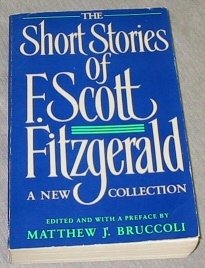
23. Short Stories of F. Scott Fitzgerald:
$27.93
24. F. Scott Fitzgerald: Voice of
$4.99
25. The Pat Hobby Stories
$45.00
26. F. Scott Fitzgerald's the Great
 
27. Letters of F Scott Fitzgerald
$29.21
28. F. Scott Fitzgerald: A Biography
29. F. SCOTT FITZGERALD: THE MAN &
$25.74
30. A Student's Guide to F. Scott
 
$4.49
31. The Love of the Last Tycoon
 
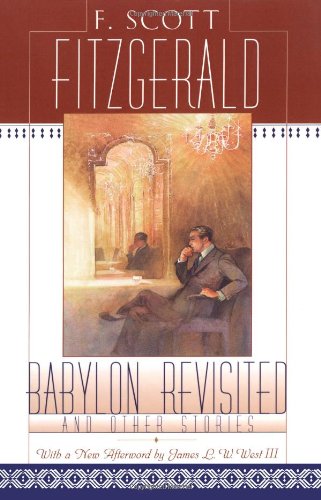
32. Babylon revisited and other stories
$19.15
33. The Collected Short Stories of
$18.25
34. F. Scott Fitzgerald: The Great
$12.42
35. Conversations With F. Scott Fitzgerald
36. F. Scott Fitzgerald's the Great
$87.09
37. All The Sad Young Men (The Cambridge
$5.99
38. Dear Scott, Dearest Zelda
 
$12.95
39. The STORIES OF F SCOTT FITZGERALD
 
40. Taps at Reveille (Scribner Library;

21. A Life in Letters
by F. Scott Fitzgerald
Hardcover: 480 Pages (1994-07-18)
list price: US$35.00 -- used & new: US$8.50
(price subject to change: see help)
Asin: 0684195704
Average Customer Review: 5.0 out of 5 stars
Canada | United Kingdom | Germany | France | Japan
Editorial Review

Book Description
A vibrant self-portrait of an artist whose work was his life.

In this new collection of F. Scott Fitzgerald's letters, edited by leading Fitzgerald scholar and biographer Matthew J. Bruccoli, we see through his own words the artistic and emotional maturation of one of America's most enduring and elegant authors. A Life in Letters is the most comprehensive volume of Fitzgerald's letters -- many of them appearing in print for the first time. The fullness of the selection and the chronological arrangement make this collection the closest thing to an autobiography that Fitzgerald ever wrote.

While many readers are familiar with Fitzgerald's legendary "jazz age" social life and his friendships with Ernest Hemingway, Gertrude Stein, Edmund Wilson, and other famous authors, few are aware of his writings about his life and his views on writing. Letters to his editor Maxwell Perkins illustrate the development of Fitzgerald's literary sensibility; those to his friend and competitor Ernest Hemingway reveal their difficult relationship. The most poignant letters here were written to his wife, Zelda, from the time of their courtship in Montgomery, Alabama, during World War I to her extended convalescence in a sanatorium near Asheville, North Carolina. Fitzgerald is by turns affectionate and proud in his letters to his daughter, Scottie, at college in the East while he was struggling in Hollywood.

For readers who think primarily of Fitzgerald as a hard-drinking playboy for whom writing was effortless, these letters show his serious, painstaking concerns with creating realistic, durable art.

... Read more

Customer Reviews (4)

5-0 out of 5 stars The Beautiful and Damned.
F. Scott Fitzgerald scholar Matthew J. Bruccoli offers a discerning sample of Fitzgerald's letters that serve as an informal biography.Fitzgerald suffered many demons.Alcoholism and poor health were the obvious problems.From reading his letters, we learn that protecting his artistic integrity also weighed heavily on him.Money problems forced him to spend time writing lightweight but commercially viable stories for magazines.This took precious time away from his major work of writing serious novels.His afflicted wife, Zelda, was another dilemma.In 1930, Zelda had her first breakdown, and never recovered.Providing for her care and treatment added to his money woes.Although Fitzgerald enjoyed early success in 1920 with "This Side of Paradise," it was short-lived.By 1924, he wrote to Edmund Wilson, "I really worked hard as hell last winter--but it was all trash and it nearly broke my heart."There was critical success in 1925 with "The Great Gatsby," but it was a financial disappointment.Fitzgerald spent the next nine years writing, revising, and agonizing over "Tender Is the Night."Contrary to hope, that book failed to restore his reputation.The letters display deep introspection, opinions on other writers, comments of manners and morals, and daily concerns of money.There are also amusing and chatty letters to his daughter, Scottie.Fitzgerald's letters to Scribner's Maxwell Perkins and his literary agent, Harold Ober, are the most interesting, and reveal much of his concerns and ideas.Letters written to Zelda in the sanitarium are generally tender and loving, but occasionally they are cross and complaining.The book stops with a letter written to Scottie shortly before Fitzgerald's death in December 1940.Recommended reading for F. Scott Fitzgerald fans.;-)

5-0 out of 5 stars Intriguing form of biography
This is the sort of book that makes one long for the days prior to-email, when people actually wrote letters to one another and correspondence other than bills and junk mail filled one's mailbox. The book is a valuablesupplement to Fitzgerald's many biographies; his letters reveal aremarkable clarity and self-awareness. My heart ached after reading some ofthem. A must read for all Fitzgerald historians.

I do recommend readingone of Fitzgerald's many biographies prior to reading his letters, as it isa fascinating exercise comparing Fitzgerald'sinterpretation/rationalization of an event with a third party's.

5-0 out of 5 stars Fitzgerald as only Fitzgerald knew him.
If you want to gain insight into the life of F. Scott Fitzgerald then seek no further. This amazing compilation of Fitzgerald's correspondences to family, friends, business associates and acquaintances portrays the man andthe writer in a way no biographer could imagine. In his letters can beclearly seen Fitzgerald the literary genius, Fitzgerald the loving husbandand father as well as Fitzgerald the sycophant and Fitzgerald the torturedand insecure neurotic.The genesis and the demise of one of the mostfascinating men of his time eloquently presented in his own words.

5-0 out of 5 stars Fitzgerald as only Fitzgerald knew him.
If you want to gain insight into the life of F. Scott Fitzgerald then seek no further. This amazing compilation of Fitzgerald's correspondences to family, friends, business associates and acquaintances portrays the man andthe writer in a way no biographer could imagine. In his letters can beclearly seen Fitzgerald the literary genius, Fitzgerald the loving husbandand father as well as Fitzgerald the sycophant and Fitzgerald the torturedand insecure neurotic.The genesis and the demise of one of the mostfascinating men of his time eloquently presented in his own words. ... Read more


22. Against the Current: As I Remember F. Scott Fitzgerald
by Frances Kroll Ring
Paperback: 155 Pages (2005-06)
list price: US$18.00 -- used & new: US$18.00
(price subject to change: see help)
Asin: 1932800093
Average Customer Review: 4.5 out of 5 stars
Canada | United Kingdom | Germany | France | Japan
Editorial Review

Product Description
In 1939, F. Scott Fitzgerald was in Hollywood, in failing health, trying to work—write for the movies, sell some stories—and to continue to be the mainstay and anchor for his family, paying Zelda’s substantial hospital bills, educating Scottie and remaining, through letters, a protective and anxious father. The magazines were no longer clamoring for his stories; his books had nearly disappeared from the bookstores. The fame, money and high times of the early years seemed to have evaporated. Fortune had not deserted him entirely, however—Frances Kroll applied for the position as Fitzgerald’s secretary. Young and a little shy, but nevertheless level-headed, intelligent, practical, versatile and resilient, Miss Kroll played a vital role during the last quiet but difficult twenty months of Fitzgerald’s life. They worked at home where she typed from his handwritten pages, ordered groceries, made appointments and listened while he talked out ideas. Finally, it fell to her to make his funeral arrangements and deal with the modest belongings.Nearly a lifetime later, Frances Kroll Ring gives us both the youthful experience of Fitzgerald, and her mature vision of it. This frankly admiring and respectful memoir of the extraordinary writer creates a uniquely domestic picture. We see an admirable and talented man carrying on with dignity, purpose and commitment against a tide of troubles and disappointments. ... Read more

Customer Reviews (4)

5-0 out of 5 stars A Rediscovered Snapshot
The Los Angeles Times review got it right: This book "is like a rediscovered snapshot, bringing a legendary figure into brief, vivid focus." That snapshot also includes a perceptive young woman and her family, Fitzgerald's inner circle (Sheilah Graham, Scottie, Maxwell Perkins, and Edmund Wilson), and a slice of Los Angeles during its most creative period.Hollywood is the backdrop for this book and *The Last Tycoon*, which Fitzgerald was writing at the time, but there's no glitzy melodrama here, and Ring mostly steers clear of "the Fitzorama"--her term for the literary-industrial complex that has grown up around Fitzgerald.By telling her story simply and beautifully, she produces the vivid focus mentioned above.The book also includes reproductions of letters, notes, and telegrams composed by Scott, Zelda, Perkins, and Wilson. Highly recommended.

5-0 out of 5 stars being filmed in Toronto- Spring release....
To be featured on ShowTime-TV channel..by Henry Bromell,aFitgerald expert-writer,(NY). It's neither a docu, nor a BioPic.Kroll's memoir, 1985..details his last frantic attempt in Hollywood--to finish.."The Last Tycoon"...Scott died-at 44- heart attack-Dec.21,1940 after years of smoking/ drinking. His wife..Zelda is played by Sissy Spacek...who read the 1960's bio.."Zelda".
Kroll,now 85 has visited the set in Canada-where producers found Spainish-style hacienda..like Scott's in LA.

4-0 out of 5 stars Poignant little memoir
This is a wonderful, unassuming narrative about the final days of F. Scott Fitzgerald which paints him as a real human being with real problems, writing immortal fiction with a dying hand.His fragility and beauty is evident, and this quick read is a must for anyone determined to learn about the real Fitzgerald.

4-0 out of 5 stars A Chronicle of a Dying Star
This is a wonderful book, poignant yet revealing, just like the man it is about. Frances Kroll Ring was Fitzgerald's secretary in the last few years of his life. What she details in her memoir will enlighten anyone who hasonly ever thought of Fitzgerald as merely an alcoholic who just stumbledinto writing. Yes, she records that he was drinking well up to his death,but he was also doing something important. He was in the middle of writing"The Last Tycoon", a work that was to be unlike his previousefforts, more mature and reflecting a different sensibility. But, as onefinds out at the end of "Against the Current", he never realizedhis goal. The great work was left unfinished, and therefore one moretragedy closed the curtain on an already sad life. ... Read more


23. Short Stories of F. Scott Fitzgerald: A New Collection
by Matthew J. Bruccoli
 Hardcover: Pages (1989)
-- used & new: US$11.75
(price subject to change: see help)
Asin: B000FZ4LI2
Canada | United Kingdom | Germany | France | Japan

24. F. Scott Fitzgerald: Voice of the Jazz Age (Lerner Biographies)
by Caroline Evensen Lazo
Hardcover: 128 Pages (2002-09)
list price: US$27.93 -- used & new: US$27.93
(price subject to change: see help)
Asin: 0822500744
Canada | United Kingdom | Germany | France | Japan

25. The Pat Hobby Stories
by F. Scott Fitzgerald
Paperback: 192 Pages (1995-12-06)
list price: US$14.00 -- used & new: US$4.99
(price subject to change: see help)
Asin: 0684804425
Average Customer Review: 5.0 out of 5 stars
Canada | United Kingdom | Germany | France | Japan
Editorial Review

Book Description
A fascinating study in self-satire that brings to life the Hollywood years of F. Scott Fitzgerald

The setting: Hollywood: the character: Pat Hobby, a down-and-out screenwriter trying to break back into show business, but having better luck getting into bars. Written between 1939 and 1940, when F. Scott Fitzgerald was working for Universal Studios, the seventeen Pat Hobby stories were first published in Esquire magazine and present a bitterly humorous portrait of a once-successful writer who becomes a forgotten hack on a Hollywood lot. "This was not art" Pat Hobby often said, "this was an industry" where whom "you sat with at lunch was more important than what you dictated in your office."

The Pat Hobby sequence, as Arnold Gingrich writes in his introduction, is Fitzgerald's "last word from his last home, for much of what he felt about Hollywood and about himself permeated these stories."

... Read more

Customer Reviews (8)

4-0 out of 5 stars Fitzgerald's Pat Hobby
Fitzgerald's early fiction often deals with the case of the young man who harbors elaborate and perhaps outlandish aspirations for success. In the Pat Hobby stories -- Fitzgerald's last published work -- we see depicted a 49-year-old man whose dreams have collided with a bleak reality. Years after his brief heyday as a well-paid film writer in the days of silent films, he is now quite simply a failure.

And yet Pat Hobby is a unique type of loser, one who sympathizes with the bosses and moguls rather than his fellow downtrodden peers at the bottom of the totem pole. Witness for example the startling scene in which Hobby, with righteous indignation, takes a lunch tray to attack an extra who had the audacity to sit at the VIP table in the studio canteen and refused to move. This scene offers a fascinating insight into Fitzgerald's own psychology, if one views Hobby as an alter ego for the author, while also raising broader questions about American culture.

"A Patriotic Short" is the story which best encapsulates these questions, as Hobby bitterly reflects on the contrast between his illustrious past, when he had a house with a swimming pool that was once admired by the President himself, and his current menial assignment editing a lame film script. Here, in just a few pages, Fitzgerald deftly weaves together the American obsessions with celebrity, the presidency, and of course the swimming pool, into a commentary on the idea of success itself.

Any mention of a swimming pool by Fitzgerald evokes the sad fate of Jay Gatsby. And though we might find Hobby a less sympathetic character than Gatsby, in many ways he represents the other side of the same debased coin. Both are tragic figures, equally unable to fulfill their dreams of glamour, and perhaps both equally the victims of the American ethos of success.

5-0 out of 5 stars The original thing.
Of all Fitzgerald's works, these stories are most accessible, especially for those who saw the golden age of television. Of course, my approach to these short stories was from the height of "Gatsby," and the knowledge of the great film,"The Bad and the Beautiful," so I was taken by surprise with the charm, humor and the creative inspiration found in these Hollywood toss-offs. Not only are they insider truths but hung-over fantasies all at once. Groucho and Robert Cummings came to mind as I laughed out loud. Mel Brooks and Woody Allen should pay him dividends,as well as the TV studios who borrowed from his charming, off-beat take on the Hollywood system.

5-0 out of 5 stars More Heartbreak from the Dream Dump
Most people know F. Scott Fitzgerald as one of the deans of the lost generation and an icon of the jazz-age. But toward the end of his life, in the late 1930's, Fitzgerald was also a writer for MGM studios, and these stories represent brilliantly and tragically this period of his life.

Through the eyes of Fitzgerald's Pat Hobby, Hollywood hack writer, we see a different side of golden age tinseltown, where an extraordinary number of talented writers and artists migrated to in the 1930's and 40's, only to butt their heads against militant mediocrity and the "studio system." As an archetype, Pat Hobby stands in for them brilliantly.

Also recommended: What Makes Sammy Run? by Budd Schulberg, The Day of the Locust by Nathanael West, and The Player by Michael Tolkin.

5-0 out of 5 stars The Brilliant Pat Hobby Stories
The Brilliant Pat Hobby Stories are just as the title says, brillliant.I have never red a collection of stories as this.The wit of Mr. Fitzgerald is astonishing as he captures ones attention and then ends the story with a dramatic twist that will leave one rolling on the floor.

I have read nothing like these stories and I know that I will never read anything like them again.When my brother convinced me to read these stories I was, at first, a little skeptical about F. Scott Fitzgerald.I had heard my brother rant and rave about him before but now I understand why he was ranting and raving about him so.

I have thoroughly enjoyed reading this collection of Pat Hobby Short stories.I am now excited to pick up the next F. Scott Fitzgerald Book that my brother will let me borrow.

5-0 out of 5 stars Hollywood Without The Glamour and Glitz
Pat Hobby, once a successful Hollywood screenwriter, is nothing more than a pathetic has been.Broke, tired, and scrambling to find work, Pat takes on some unconventional methods to fill his pockets and put his name back on the big screen.But things don't turn out as smooth as Pat hopes.After all, as Pat himself repeatedly states, "I'm just a writer," and, "it's a dog's life."Pat's antics backfire and in almost every story he is left with nothing but humiliation.

The Pat Hobby stories were written between 1939 and 1940, when Fitzgerald himself was struggling to keep afloat in Hollywood.Fitzgerald paints the Hollywood scene as cold, calculating, and manipulative.A place where kissing up is more important than the quality of your talents, a place where the writer gets no respect, and a place that most likely today harbors the same attitude that Fitzgerald so deftly described in his final days.

In reading the Pat Hobby Stories, one can feel Fitzgerald's own sense of poor self-worth, despair, and hopelessness.Yet ironically, a twist of dark humor is thrown into the stories, evoking in the reader an ambiguous response of laughing at Pat Hobby while pitying him at the same time.This collection is not only entertaining and easy to read, but is one that will give you broader insight into the late great F. Scott Fitzgerald. ... Read more


26. F. Scott Fitzgerald's the Great Gatsby (Bloom's Modern Critical Interpretations)
Hardcover: 230 Pages (2003-09)
list price: US$45.00 -- used & new: US$45.00
(price subject to change: see help)
Asin: 079107577X
Canada | United Kingdom | Germany | France | Japan
Editorial Review

Book Description
Self-made millionaire Jay Gatsby epitomizes the decadence of the 1920s Jazz Age in this tale of rise and decline, told with detached curiosity by his neighbor and confidante Nick Carraway.

The title, Ernest Hemingway's The Great Gatsby, part of Chelsea House Publishers' Modern Critical Interpretations series, presents the most important 20th-century criticism on Ernest Hemingway's The Great Gatsby through extracts of critical essays by well-known literary critics.This collection of criticism also features a short biography on Ernest Hemingway, a chronology of the author's life, and an introductory essay written by Harold Bloom, Sterling Professor of the Humanities, Yale University. ... Read more


27. Letters of F Scott Fitzgerald
by Andrew Turnbull
 Paperback: Pages (1966)

Asin: B000PYEPES
Canada | United Kingdom | Germany | France | Japan

28. F. Scott Fitzgerald: A Biography (Greenwood Biographies)
by Edward J. Rielly
Hardcover: 160 Pages (2005-10-30)
list price: US$29.95 -- used & new: US$29.21
(price subject to change: see help)
Asin: 0313331642
Canada | United Kingdom | Germany | France | Japan
Editorial Review

Book Description
Probably the best candidate for the author of the great American novel, F. Scott Fitzgerald is primarily known for his masterpiece, The Great Gatsby. He had fallen out of favor by the time of his death in 1940, while Ernest Hemingway attained worldwide fame. But there has been a tremendous renewal of interest in his works, and he is one of the most important writers in the high school English curriculum. While there are other biographies of Fitzgerald, this work meets the need of high school students for a concise, accessible, and informative survey of Fitzgerald's life and career. Because Fitzgerald drew extensively from his own experiences, his life is especially helpful in illuminating his works. This book approaches his life and writings chronologically. It explores how his parents and upbringing shaped his values, how he creatively presented his life experiences in his fiction, and how he participated in and influenced American culture during the Jazz Age of the 1920s. The volume closes with a timeline and bibliography. ... Read more


29. F. SCOTT FITZGERALD: THE MAN & HIS WORK
by ALFRED (Ed.) KAZIN
Hardcover: Pages (1951)

Asin: B000I12INS
Canada | United Kingdom | Germany | France | Japan

30. A Student's Guide to F. Scott Fitzgerald (Understanding Literature)
by Eva Weisbrod
Library Binding: 160 Pages (2004-02)
list price: US$27.93 -- used & new: US$25.74
(price subject to change: see help)
Asin: 0766022021
Average Customer Review: 5.0 out of 5 stars
Canada | United Kingdom | Germany | France | Japan

Customer Reviews (1)

5-0 out of 5 stars A 'must' for high school readers
Eva Weisbrod's A Student's Gudie To F. Scott Fitzerald is a 'must' for high school readers: the career and major works of Fitzgerald are examined in chapters which cover both his full-length fiction and his shorter works. Chapters offer a depth of focus and detail on the major themes begun and created by Fitzgerland's approach and writings which lend particularly well to school research as well as understanding his writings.
... Read more


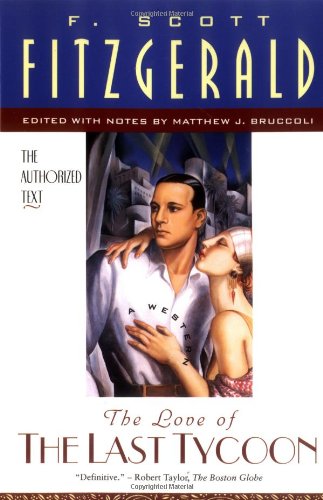
31. The Love of the Last Tycoon
by F. Scott Fitzgerald
 Paperback: 192 Pages (1995-04-14)
list price: US$14.00 -- used & new: US$4.49
(price subject to change: see help)
Asin: 0020199856
Average Customer Review: 4.0 out of 5 stars
Canada | United Kingdom | Germany | France | Japan
Editorial Review

Book Description
The Love of the Last Tycoon, edited by the preeminent Fitzgerald scholar Matthew J. Bruccoli, is a restoration of the author's phrases, words, and images that were excised from the 1940 edition, giving new luster to an unfinished literary masterpiece. It is the story of the young Hollywood mogul Monroe Stahr, who was inspired by the life of boy-genius Irving Thalberg, and is an exposé of the studio system in its heyday. The Love of the Last Tycoon is now available for the first time in paperback.

... Read more

Customer Reviews (16)

5-0 out of 5 stars All the Hollywood hypocrites
The book edited by Matthew J. Bruccoli is a work in progress, left with various kinds of incompletion at F. Scott Fitzgerald's death.The narrator, Cecilia Brady, is on planes frequently.She attends Bennington.She is the daughter of a producer.Monroe Stahr is someone who was born sleepless.He has no talent for rest.Pat Brady, Cecilia's father, and Monroe Stahr are partners.Wylie White, one of the travelers on the plane, is a writer.

There is never a time when the studio is absolutely quiet.There are always technicians present.There is an earthquake and a small water main bursts.Stahr's work is secret in part, devious, slow.He seems ready to shelve a work the writers have labored over to bring to the screen.He notes that when he wants a Eugene O'Neill play he will buy one.If a director disagrees with Stahr he does not advertise it.The writers are people who are employed because they accept the system and manage to stay sober.

Stahr sees a girl who resembles his deceased wife.He has her found in order to see her.He has difficulty explaining his interest to her and she is troubled by people fawning for reason of his power and, in general, the notoriety of being seen in his company.Sustained effort is difficult in California it is asserted.It is Monroe Stahr's ability in this area that accounts for his success.

F. Scott Fitzgerlad chased ghosts, evanescence.Stahr pursues a girl, Kathleen Moore,because she is the image of his dead wife.The author pursued the following idea obsessively--when did his life derail.The Kathleen Moore character shares some of the attributes of Sheila Graham.She lived in England previously and was tutored in classical literature by her live-in companion.

It is reported that Fitzgerald had a life-long capacity to hero-worship.Awriter character in the novel compares Monroe Stahr to Lincoln carrying on a long war on many fronts.At the end of the volume there are working notes and a brief biography.Revisiting the bright, shining world of F. Scott Fitzgerald, even with the melancholy features, is lots of fun.

3-0 out of 5 stars Incomplete is incomplete
I have no doubt that The Last Tycoon would have warranted at least one more star if Fitzgerald had lived to finish it.But like it or not, we have no way of knowing what he would have written and can only judge the merits of what he did write.And that, in any case, is still pretty good.It is definitely a departure from his earlier works, and a tantalizing taste of what he might have continued to do with his talent later on.The images of Southern California back when it was a nice place to live are wonderful, as is the behind-the-scenes look at the movie industry during its golden era.

This is also the only Fitzgerald work I know of in which the narrator is a woman, and it's defnitely fascinating to see how he went about that exercize.Cecilia Brady is just about as egotistical and cynical as most of his other protagonists, but her innocence is refreshing.Also, telling the story through the eyes of one just outside the loop of the movie industry (she's the daughter of one producer, and hopelessly in love with another) was a very clever move.It allowed the plot to develop around the personal life of Cecilia's crush, Monroe Stahr, with only a bit of the bitterness from his work-related troubles seeping through.

But the sad truth is that that plot had only begun to develop.We know far more about Monroe Stahr from the notes and sketches Fitzgerald never intended for publication than we do from the "finished" part of the novel (which wasn't entirely finished either).If nothing else, though, this was a great start.As long as you don't expect more than that, it's worth reading.

3-0 out of 5 stars Betrayal of a Demigod
Fitzgerald's last novel--left unfinished due to his heart attack--presents darker themes than his masterpiece, The Great Gatsby.Told by Cecelia, the 18-year-old daughter of a studio hotshot,and alternately by an omniscient narrator, this story depicts the glory days of the Hollywood studio system, where producers were America's new royalty.Egos collide, budgets quail and the earth quakes at the dawn of the Forties, when the country was threatened by the red menace of Communism. Not even Hollywood was immune from the birth pangs of unionism and pre- McCarthy era political paranoia over the secret revolution of the masses.

The protagonist is 44-year-old Monroe Stahr, a successful and powerful producer whose insight re movie-going America usually proves correct.Having a hopeless crush on this associate of her father's Cecelia gradually realizes that her workaholic idol has fallen in love with a mysterious lady--a British Cinderella raised completely outside the glittering purviews of starlets and gossip columnists.The tragic affair between the mogul and the lovely Kathleen (who resembles his beloved dead wife) is doomed by her prior commitment to an American man, her humble past and Stahr's own failure to take decisive action at critical moments in their poignant relationship.

The completed storyline may be deduced from Fitzgerald's extensive notes for each chapter,plus his conversations with associates. Health concerns plagued both Stahr and ultimately Cecelia--presaging the author's own private medical battle.How frustrating for him (and his alter-ego) to be snuffed out while yet so productive and mentally alert.It would be curious to see how contemporary Hollywood might finish this story if made into a movie.Like rats caught in a maze of their own devising, the characters are trapped by weakness and vanity,while naively convinced of their own personal or business power.As evil schemes corrupt backstage Hollywood, filth and crime trickle down to ultimately contaminate even the once idealistic Stahr.Tragically he did not live long enough to impress theman on the beach: that movies Were worth attending. THE LAST TYCOON proves a starkly grim but gripping tale of searing emotions at the end of the Depression era.

5-0 out of 5 stars There will never be another F. Scott Fitzgerald
No other author in history has so astutely penned such profound and sublime novels with such amazing social insight as has Scottie(as his contemporaries called him) - all the while doing it with such amazing and unparalleled grace and lucidity. While The Love of the Last Tycoon may not be finished, I can easily discern that F. Scott was well on his way to achieving his goal -penning a novel on the level of The Great Gatsby and not as "depressing" as Tender is the Night.

What makes this so amazing, yet so painful, is the extraordinary potential that this work exudes. The Last Tycoon does seem to be like Gatsby moreso than any other Fitzgerald work in its endearing and sympathetic characters such as the self-made Monroe Stahr, the young Cecilia, & tragic Kathleen. As usual, Fitzgerald recreates and tells of his life experiences - this time of his tumultuous years in Hollywood as a screen writer. Although hardened somewhat at this stage of his career, Fitzgerald, like his hero Stahr, still purveys his characteristic idealism laced with a latent hint of foreboding tragedy inevitably awaiting on the horizon. Stahr, like Fitzgerald, is forever viewed as a boy wonder, despite being a seasoned veteran at this stage of his career, due to his overnight success at age 23. So, Fitzgerald, who had the splendid This Side of Paradise published at age 23, and who also was known for his propensity to turn a sickly pale white just as Stahr does, ingeniously incorporates himself into his work one last time.

The incredibly insightful notes, outlines, and revisions written by Fitzgerald shown at the conclusion of the book open an amazing new world of intropection to the reader. I give it 5 stars not for what it is, but for what it would have been. I just finished reading all of his works chronologically and I must say, unequivocally, that this very well could have eclipsed his other works of fiction, all of which are truly sublime.

"It is an escape into a lavish, romantic past that perhaps will not come again into our time." - F. Scott on The Last Tycoon

4-0 out of 5 stars The Last Achievement
This work derives part of its importance from what it says about Fitzgerald at the untimely end of his career: fans of his earlier work will be pleased to see that this final tome showed all the hallmarks of becoming another masterpiece. By 1940, when "Tycoon" was written, FSF hadn't written a book in six years. But the familiar voice, though muted, had not been lost.

The lapse provides welcome proof of the endurance of Fitzgerald's talent over time. We can only imagine what biting, incisive insights he would have come up with if magically sent to chronicle the 1990s.

Fitzgerald's "Unfinished Symphony" is presented in this Scribner paperback edition in a way that will appeal to both casual readers and serious students. Leading Fitzgerald expert Matthew Bruccoli has assembled the fragments of this book into a gripping and highly readable narrative, and the publisher has included a detailed preface exploring FSF's thoughts at the genesis of the work, as well as a selection of working notes which will delight writing students looking for some insight into the workings of a great mind.

This book tells the story of Monroe Stahr, an early Hollywood producer who makes his mark on the industry almost at its very inception. Stahr's word is law within his studio, and a single order from him is enough to reshape, delay or outright kill a film in process. Since the death of his wife, actress Minna Davis, Stahr's job is his life - a life that illness and overwork threaten to cut short. But a chance sighting of englishwoman Kathleen Moore brings back a flood of old memories and new desires. Stahr's pursuit of Moore leads him briefly into the world outside the studio, and then her actions leave him reeling from the blows just when his rivals gang up against him.

The book is truncated at a very unfortunate point, Episode 17 of 30 - the precise point at which events begin to turn against Stahr. To finish the book in our minds, we can visualize the ending put forth in Fitzgerald's surviving notes, though we have not his words to shape it for us. But even in unfinished form, this book is still worth reading, if only to revisit one last time the mind that produced phrases such as this, in describing loops of unedited film hanging in a projection room: "Dreams hung in fragments at the far end of the room, suffered analysis, passed --- to be dreamed in crowds, or else discarded." ... Read more


32. Babylon revisited and other stories
by F. Scott Fitzgerald
 Unknown Binding: 253 Pages (1965)

Asin: B0007H66UY
Average Customer Review: 5.0 out of 5 stars
Canada | United Kingdom | Germany | France | Japan
Editorial Review

Book Description
Written between 1920 and 1937, when F. Scott Fitzgerald was at the height of his creative powers, these ten lyric tales represent some of the author's finest fiction. In them, Fitzgerald creates vivid, timeless characters -- a dissatisfied southern belle seeking adventure in the north; the tragic hero of the title story who lost more than money in the stock market; giddy and dissipated young men and women of the interwar period. From the lazy town of Tarleton, Georgia, to the glittering cosmopolitan centers of New York and Paris, Fitzgerald brings the society of the "Lost Generation" to life in these masterfully crafted gems, showcasing the many gifts of one of our most popular writers.

... Read more

Customer Reviews (9)

4-0 out of 5 stars An Out -of- Style Writer, Getting Down To Business
The literary voice of theninteen-twenties' "Jazz Age," F. Scott Fitzgerald was out of step with the grimmer thirties. Facing his wife's insanity, increasing alcoholism, and his own obsolesence as a writer, the stories collected here show Fitzgerald facing his demons in bracingly honest prose. If "Crazy Sunday" and the other tales of the adventures of Pat Hobby, down-and-out screenwriter, feel a bit like autobiographical wallow, and "Family In The Wind," about a doctor in the midst of a country tornado, is an interesting if uncharacteristic journey into Steinbeck country, it's the title story of the collection that's worth the price of admission.
Charlie Wales is an ex-broker, returned to Paris after all the good times have gone, with only the goal of regaining custody of his daughter after the death of his wife.A thinly veiled take on Fitzgerald's own troubled relations with daughter Scottie after wife Zelda's madness, it's at once a suspenseful, moving, and lyrical story.All his powers are at work here, as if he knew this was his last shot at literary immortality, and he was just about right.

5-0 out of 5 stars Hope, Illusion and Reality
F. Scott Fitzgerald is one of our greatest writers.He is best known today for his many wonderful novels, especially The Great Gatsby.As time has passed, his marvelous magazine stories have faded from sight . . . even though those were more widely read than his novels when they were written.

In Babylon Revisited: And Other Stories you will deepen your understanding of the novels . . . and of their author in these often semi-autobiographical tales. The best stories have as much impact as any of the novels in a spare exposition that adds to their power.

Each story deals with the same general theme:We live on hope which is based on illusions about reality.When faced with reality, we happily escape into new hopes based on different illusions. We are sort of like Peter Pan:We don't want to grow up.

The theme comes across with startling persuasiveness as Fitzgerald unpeels the many forms of hopeful illusions that will seem familiar to every reader.

The stories build chronologically across the backdrop of the United States after World War I in the 20's and 30's.That shift in authorship times also inadvertently adds the drama of seeing how the psychology of the young and educated changed as American went from mindless boom to seemingly unending bust.

Fitzgerald has a rich imagination to makes his world open up for readers so that you can feel both the physical sensations and the emotions of the characters . . . and become the characters while you are reading.

The stories themselves have that delightful quality of exaggeration that makes his points indelible.

The Ice Palace explores a Southern beauty's pursuit of an advantageous marriage in the frozen tundra of Minnesota in winter.May Day recounts the pursuit of pleasure and accomplishment by those of various social classes and beliefs.The Diamond as Big as the Ritz is a wild tale of a mythical place and the consequences of unlimited wealth.Winter Dreams deals with the painful consequences of acting on the illusions of romantic love.Absolution is an amazing story about how we can carelessly end up being untrue to God and ourselves.The Rich Boy considers how being rich and powerful can get in the way of being close to others.The Freshest Boy looks at being an awkward teenage boy and how he came to make peace with the world. Babylon Revisited shows how our mistakes can come home to roost after we believe we are invulnerable.Crazy Sunday is an astonishing look at the psychology of how we connect to one another through others.The Long Way Out is about a woman who suffers from a mental collapse and is now ready to return to her husband . . . when fate steps in.

My favorite stories in the book are May Day, The Diamond as Big as the Ritz, The Freshest Boy, Babylon Revisited and Crazy Sunday.

If you haven't read these stories before, you have a great treat ahead of you.If you can find a copy of George Guidall's narration for Recorded Books, your pleasure will be even greater.

5-0 out of 5 stars Babylon Revisited is Timeless and Apt
The Book of Revelations in the New Testament is the most likely source from which F. Scott Fitzgerald draws his "Babylon Revisited".In Revelations, Babylon the Great (also an ancient Near Eastern city of materialism and sexual excess) is the `mother of whores' and the source of all evil in the Roman Empire.She is said to have been defeated by God and judged for her excessive sin.Upon her destruction, the saints rejoice while the merchants and hedonistic pleasure seekers morn.Symbolism abounds in this revision of the timeless tale and the choice of Fitzgerald's title could not be more appropriate.

Charlie himself is the regeneration of Babylon.During the economic boom of the 20's, Charlie and his wife lived life to its fullest and most shallow degree.They partied until sunup.They squandered wealth.We even get the impression that there was a significant amount of infidelity existing on both sides.As with Babylon, Charlie is punished:The stock market crash in 1929 liberates him of a fortune, "his child [is] taken from his control, [and] his wife escaped to a grave in Vermont."

As with Babylon, Charlie's fall had its rejoicers and mourners.Marion, his wife's bereaved sister, saw Charlie's fall as an opportunity to gain control of his child, and with sincere intentions rid her family of the sinner.Though she doesn't expressly rejoice in her brother-in-laws demise, she does blame him for her sister's death and understands why his life has turned out askew.Duncan and Lorraine, on the other hand, mourned the loss of their sinister partner in indulgence.

This story is complete with all of the historic reference and symbolism that has come to define F. Scott Fitzgerald.What a fantastic, unbelievably creative writer.It's amazing how timeless his writings are, and "Babylon Revisited" is the perfect example of that fact.It really makes you think about your own life.

5-0 out of 5 stars Genius As Big As The Ritz
The king of the 1920's Lit World wrote short stories for big money in Scribner's Magazine, Collier's, Esquire, and Saturday Evening Post.His first novel made him famous, This Side of Paradise, but his subsequent novels including The Great Gatsby sold meagerly.Zelda and Scott went through dough like drunken sailors, so Scott wrote short stories for a quick buck. This group of stories is among his best and though some or all were written commercially, Scott's talent was so huge that they rival his chief competitor's: Hemingway, Parker, Anderson, and Larder in charm and precision.

Above all, Fitzgerald is charming.The drunken rich boys of May Day are close to the authors experience and poignantly revealing.Scott was the son of a failed businessman.His mother's family was well to do and Scott associated with rich beauties that seemed always just beyond a snow covered golf course as in Winter Dreams.His experience with his future wife, Zelda Sear, an Alabama debutante is cloaked in fantasy in Ice Palace. Surely newlyweds are surprised to find they have married strangers.In that there is no secret, but Fitzgerald gives his bride a hysterical nightmare in a St Paul carnival ice maze.The reader loves Sally Carrol and is genuinely caught up in her dilemma of Minnesota in-laws and a suddenly stern husband.

Fitzgerald was a dreamer and The Diamond As Big As the Ritz is a parable about a family so rich, and so self-centered in their luxuries, they murder their guests less the secret of the their wealth be known.In an era where a million dollars could buy a country, Fitzgerald's fascination with success and the rich permeates his work.

5-0 out of 5 stars BRILLIANT STORIES
I bought this volume of stories simply to get a copy of Fitzgerald's "May Day" which I'd read in one of my college texts and then could not find for years. I have always felt that "May Day" would make a superb film--and the screenwriter could lift most of the dialogue right out of the story.It is that good and simple and dramatic. Actually every one of the stories in this collection is first rate.Here is Fitzgerald, only in his 20's, writing of American aspirations before, during and after World War I. And no one wrote about this subject better than he did.The characters are rich and complex, all of them dissatisfied with the bones that life has thrown them, all of them desiring what others have.The reader sees their foibles and loves them anyway.These are not perfect people.They are real people in a time of trouble--fighting, most of them, simply to stay afloat in a world changing faster than anyone would have thought possible. I cannot recommend these brilliant stories highly enough. There is also a brief life and appreciation of Fitzgerald in this lovely Scribner edition. ... Read more


33. The Collected Short Stories of F.Scott Fitzgerald (Penguin Modern Classics)
by F. Scott Fitzgerald
Paperback: 592 Pages (2000-09-28)
list price: US$26.85 -- used & new: US$19.15
(price subject to change: see help)
Asin: 0141183578
Canada | United Kingdom | Germany | France | Japan

34. F. Scott Fitzgerald: The Great Gatsby
Paperback: 192 Pages (1999-09-15)
list price: US$21.50 -- used & new: US$18.25
(price subject to change: see help)
Asin: 0231115350
Average Customer Review: 5.0 out of 5 stars
Canada | United Kingdom | Germany | France | Japan
Editorial Review

Book Description

More critical writing exists onThe Great Gatsby than on any other work of American fiction. ThisColumbia Critical Guide introduces and contextualizes the key critical debates surrounding Fitzgerald's novel. The extracts and essays included here reflectThe Great Gatsby's place as one of the first American novels to make significant use of modernist techniques and explore the influence of this "Lost Generation" work on later American writings. In considering secondary sources from the twenties to the present, this smart and sophisticated study guide offers readers an invaluable resource on this complex rendering of a moment in American history.

... Read more

Customer Reviews (3)

5-0 out of 5 stars Maybe Gatsby wasn't great, but the story is...
There is a reason why this is required reading in advanced literature classes throughout the country.This is without a doubt one of the best tales ever told.It should be used as an example to any aspiring writer of what great writing can be.The thing that makes it so great is Fitzgerald's ability to formulate characters, both large and small, and his ability to have them interact in a manner that is at once both imaginative and realistic.This makes the story, which in and of itself is not more amazing than other books, more amazing because you are compelled to believe the plausibility of a story that is incredible.Even if you are not a literature student you will find this book an enjoyable read that is intellectually stimulating, yet easy reading for those reading to relax.Many have copied this story directly and indirectly because of the lesson it teaches (that in the story about life and that about creating a story) and many will continue to do so in the future.

5-0 out of 5 stars The Failure of Gatsby's American Dream
The Great Gatsby, written by F. Scott Fitzgerald, was published by Simon & Schuster Inc. in New York in 1925. The book is about the American Dream and the failure of the attempt to reach its illusionary goals, especially the Gatsby's. The attempt to capture the American Dream is central theme to many stories of all times. For Gatsby, the dream is that one can acquire love and happiness through wealth and power. F. Scott Fitzgerald (1896 - 1940) was born in St Paul, Minnesota. He was an American short-story writer and novelist. The Great Gatsby is considered as Fitzgerald's finest novel.
The story was set in New York and Long Island in 1920's. Nick Carraway is a young man working as a bond broker in New York. He is used as the narrator throughout the story. Nick acts as an insider as well as an outsider. He eyes everything that is happening in between, but has no intention to interfere. I think he chooses not to lose anybody close to him in the story. This arrangement makes it easy for Fitzgerald to give the audience detailed inside information and to back out as an outsider as needed. The core character, Jay Gatsby, is a character that longs for the past. He devotes most of his adult life trying to recapture it and he finally pays his life as the price in his pursuit. When he was young in the military, Gatsby fell in love with the beautiful Daisy, but he could not marry her because of the difference in their social status. So he left her to acquire wealth. When he got the wealth legally or illegally, he moved near to Daisy, who has already married to another wealthy man, and threw extravagant parties every week hoping Daisy might show up one day at the party. Finally, he set up a meeting with Daisy through her cousin Nick. Fitzgerald uses Gatsby's personal dream to symbolize the larger American Dream where all have the opportunity to get what they want.
Nick is a multi-functional character to the author. He uses Nick as the approach for Gatsby to Daisy. The author naturally arranges all these. Gatsby cannot accept that the past is gone and done with. Nick once attempts to show him the folly of his dream, but Gatsby innocently replies to Nick's assertion that the past cannot be relived. For Gatsby, his American Dream is not material possessions, although it may seem that way. He only comes into wealth to fulfill his Dream, Daisy.
Gatsby believes that he is acting for good beyond his personal interest and that should guarantee success. However, he is terribly wrong. He is so determined and so blind that he would do anything to get Daisy, even covering her up for the fatal accident. His dream never comes about and he ends up paying the ultimate price for it. The idea of the American Dream still holds true in today's time, which is wealth, love, or fame. But one thing never changes about the American Dream. That is everyone desires something in life and strives to get it. Gatsby is a good example of pursuing the American Dream.
A society naturally breaks up into various social groups over time. Members of the lower statuses constantly suppose that their problems can be solved if they gain enough wealth to reach the upper class. Fitzgerald believes in his story that many people interpret the American Dream as being this passage to high social status. They believe once reaching that point, they do not have to worry about money any more. Though, the American Dream involves more than the social and economic standings of an individual.
It seems that the more Gatsby tries to obtain, the less he ends up with. The saddest part of Gatsby is the funeral, which symbolizes the ultimate failure of Gatsby to ever achieve what he has wanted. The women he loved and died for was not present. None of the people who frequented the parties over the summer showed up. Wolfsheim, whom Nick believed to be a close friend to Gatsby, refused to attend. The idealism conflicts with the materialism and is torn apart. However, it is his father who lives at the bottom of the society, who is the most natural and native person in the story, whom Gatsby has never mentioned about, finds his way to his son's mansion for the funeral. What greatness of a father's love is in contrast to the love that Gatsby died for? That is the love of eternity. The father loves his son no matter his son is rich or poor. At this moment, both the idealism and materialism are eclipsed by the truthfulness and naturalness. And that is why Nick was tired of the life there, the carelessness of the people, and the corruption of the society in the American East. He decided to head back to his origin, to the more natural and traditional American Mid-West.
Gatsby possesses an extreme imbalance between the material and spiritual sides of himself. Fitzgerald uses him as a portrait of the ultimate failure of the American Dream in that individuals tend to believe wealth is everything. Maybe what Fitzgerald wants to say is that a nation cannot operate solely on materialism. The spirits of individuals are the true composition of a nation.

5-0 out of 5 stars The Great Gatsby: What a novel!
The Great Gatsby, written by F. Scott Fitzgerald is a fiction novel that took the world by storm. Nick, Jay Gatsby, Tom and Daisy Buchanan, Jordan a tangled mess of social relationships, some intended for love, some for friendships, others stemmed from old running love. Nick lives on West Egg, near the Gatsby mansion, Gatsby a man whom Nick comes to know well, as well as possible.

Gatsby throws huge social gatherings that people come to even if not familiar with the man Gatsby himself. Nick goes to these gatherings and soon meets Gatsby and becomes friends of leisure. When reading of these lavish parties of Gatsby's F. Scott Fitzgerald makes you feel as though you have been there and wish to stay one second and leave the next by feelings of discomfort. But yet you will want to continue to read to see what is in store next.

Gatsby throws these gatherings in hopes of meeting Daisy once again, for in the past they were lovers. Tom, who is Daisy's husband, is also Nick's old college buddy, is clueless of Gatsby's intentions with Daisy. Which Tom himself is not so faithful to Daisy. Nick agrees, not so whole heartedly, to help Gatsby and Daisy meet. As all of this falls into place Tom continues to see a mistress by the name of Mrs. Wilson, a woman who is married to a mechanic living in a dreary place. Meanwhile Nick starts to fall for a flirtatious and wildly mannered Ms. Jordan Baker. The parties continue to exist, and the company continues to fall into a social web of deceit and denial. As this all takes place you feel for Gatsby because of his longing for Daisy, but are struck by a weak appalling feeling for the way he seems to go about his business.

As the story continues to fall into place some find true love, some find old love, while others find the truth. The plot thickens as a death occurs causing an uproar of suspension of motive and a scandalous cover up causing suspension and tension among the old acquaintances.

F. Scott Fitzgerald throws twist and turns at you in this novel just when you think nothing else could happen. He has quite the talent for hooking a read and slowly reeling them in to feel every slight bump and jerk before reaching the shore, or the end. Which leads to another misfortunate death in the novel that was a great mistake, but yet made a great ending to a great novel that will have you intrigued from the first page to the last. ... Read more


35. Conversations With F. Scott Fitzgerald (Literary Conversations Series)
by F. Scott Fitzgerald
Paperback: 128 Pages (2003-12)
list price: US$20.00 -- used & new: US$12.42
(price subject to change: see help)
Asin: 1578066050
Canada | United Kingdom | Germany | France | Japan
Editorial Review

Book Description
Conversations with F. Scott Fitzgerald assembles over thirty interviews with one of America's greatest novelists, the author of The Great Gatsby and Tender Is the Night.

Although most of these are not standard interviews in the modern sense, the quotes from Fitzgerald and the contemporary journalistic reaction to him reveal much about his writing techniques, artistic wisdom, and life. Editor Matthew J. Bruccoli, the foremost Fitzgerald scholar, and Judith S. Baughman have collected the most usable and articulate pieces on Fitzgerald, including a three-part 1922 interview conducted for the St. Paul Daily News.

Fitzgerald (1896-1940) died before the authorial interview became a literary subgenre after World War II. Although Fitzgerald enjoyed his celebrity, as is clear in these pieces, he had a poor sense of public relations and provided interviewers with opportunities to trivialize him. As a result, Fitzgerald was often treated condescendingly in the press. Seven of his interviews---five printed before 1924---have flapper in their headlines. In the Jazz Age---a term Fitzgerald coined---he was regarded as a spokesman for rebellious youth, as a playboy, as an authority on sex and marriage, as an expert on Prohibition, and as an immensely popular writer for his work published in the Saturday Evening Post. Yet his literary ambitions were sizable and his impact on American fiction immeasurable. ... Read more


36. F. Scott Fitzgerald's the Great Gatsby (Barron's Book Notes)
by F. Scott Fitzgerald, Anthony S. Abbott
Paperback: 102 Pages (1984-10)
list price: US$3.95
Isbn: 0812034155
Average Customer Review: 4.0 out of 5 stars
Canada | United Kingdom | Germany | France | Japan

Customer Reviews (26)

1-0 out of 5 stars I Could Write Greater "Literature" in My Sleep!
Tragically, in Grade 11 we were forced to read "The Great Gatsby" and I thought it was the stupidest book pretty much ever. Gatsby was too full of himself, Daisy was a blonde ditz, Nick I just really didn't care about, and all in all Jordan was the only one I really liked. My teacher said I was looking at things too much in the black and white perspective, but when it really comes down to it this book was about stupid people who did stupid things. Wish I could have put that in my essay. It barely showed anything about the twenties lifestyle for those who say it's a great commentary on those times unless you count descriptions of cars and clothes. It was like "Romeo and Juliet" only not tragic and you wanted to kill off Daisy and Gatsby yourself half way through it. I don't know who says what Great Literature is, but if this is among them, then that's a tragic commentary on our times. I can normally appreciate most literature we're made to read: "The Glass Menagerie", "Hamlet", "To Kill a Mockingbird" even "The Bean Trees" I had to read, but "The Great Gatsby" is just a lot of stupid nonsense I really could have cared less about. My apologies to those who liked it, but for myself it was the biggest waste of time in school. Math made more sense and trust me, I usually hate math a whole lot more than literature.

4-0 out of 5 stars The Great Gatsby and The American Dream
F SFITZGERALD - THE GREAT GATSBY The best descriptions of Fitzgerald was made by one of his critics : "he stood outside the ballroom , a little boy with his nose to the glass , wondering how much the tickets cost andwho paid for the music " .His place in American literature wasclearly defined . He records an age and a particular social circle withinthe age .The Great Gatsby is a character study of a wealthy Long Islandparvenu , Jay Gatsby . Gatsby , who had aquired his fortune through shadymeans , is the archietype of the American self made man , seen in thehurried -crazy alchooldominated haze of the Jazz age , but through the eyesof Nick Carraway , an objective cold blooded observer who representsthethe older values of the American Middle west before the war; The GreatGatsbygives expensive parties , he recalls his struggled youth withromanticism and he seeks to rearrange his friends lives to suit himself .In fact through this behaviour he tried to escape his loneliness of fear ofremaining alone . When he rencounters Dasy Fay , a youthful love romancewhose memory he has long cherished but who is now married to Tom Buchanan ,he seeks to take up the affair where he left off . Dasy ,driving Jay fromNew York to Long Island in his car , runs over and kills a woman namedMyrtle Wilson , who by improbable coincidence is TomBuchanan`s mistress.Myrtle`s husband , who has seen the car before in the possession of Buchanan , follows Jay , murders him and kills himself .Gatsby`s funeralis attended only by Nick and Jay`s father .The Great Gatsby is a study ofsuccess and presents the evolution and developement of the american dream :a poor boy is hurted by a rich and beautiful girl , spends his life in order to aquire wealth and this way to become worthy ofher , then finds ,after he has achived success that the girl was not worthy of his struggle .The "mystery " of Gatsby , uncovered by Nick Carraway as thenovel evoluates , is that hisextravagant and vulgar way of liferepresents an attempt , perhaps subconscious freudian struggle , to win therecognition of the beautiful Dasy who rejected him years before because hewas poor and unknown .

3-0 out of 5 stars GATSBY
AH THE GREAT GATSBY THIS IS A VERY UNIQUE NOVEL IT'S ALMOST LIKE WHAT WE TODAY WOULD CALL A JERRY SPRINGER SHOW THIS NOVEL IS A NOVEL WITH A LOT OF SYMBOLISM IF YOU LOOK FOR IT BUT IF YOU DON'TIT'S STILL A VERY CLEVERLYWRITEN NOVEL. BECAUSE OF THE LOVE TRIANGLEAND THE MANY TWISTS AND TURNS IGAVE IT 3 STARS

5-0 out of 5 stars Great Gatsby recaptures the atmosphere of the roaring 20s
The Great Gatsby is one of the best novels I have ever read. The story centers on Jay Gatsby, a millionaire, whose past is a mystery, but with his tremendous wealth, he is able to attract everyone into his life circle. Nevertheless, his entire motive is to win back his old lover, Daisy.Hisloyalty for love eventually paved the road toward his tragic ending.

5-0 out of 5 stars Nothing Is Greater Than Gatsby
This book was excellent in my opinion.It contained love, lust, undying devotion, betrayal, and every other element that makes for a good love story.But it was more than that, meaning can be found in each and everycharacter.Some characters such as Daisy represented the times (the 20's),as she was dependent upon her husband and was nothing more than the visionher husband held in his eyes. While a character such as Gatsby representedthe struggle that we shall face until the end of time. The struggle I speakof is one of the heart. If you are at all romantic, I suggest this book toyou, and if you are not I suggest it to you because of its intrigue andcontent. ... Read more


37. All The Sad Young Men (The Cambridge Edition of the Works of F. Scott Fitzgerald)
by F. Scott Fitzgerald
Hardcover: 540 Pages (2007-01-29)
list price: US$105.00 -- used & new: US$87.09
(price subject to change: see help)
Asin: 0521402409
Canada | United Kingdom | Germany | France | Japan
Editorial Review

Book Description
This volume of the Cambridge Fitzgerald Edition includes the original nine stories selected by Fitzgerald for All the Sad Young Men, together with eleven additional stories, published between 1925 and 1928, which were not collected by Fitzgerald during his lifetime. This edition is based on extensive surviving manuscripts and typescripts. The volume contains a scholarly introduction, historical notes, a textual apparatus, illustrations, and appendices.The complex history of composition for 'The Rich Boy' is untangled, and Fitzgerald's thorough revision of 'Winter Dreams' is described.Important passages of sexual innuendo and tabloid-style scandal in 'Jacob's Ladder', 'The Love Boat', and 'Magnetism' - removed by editors at the Saturday Evening Post - are restored to the Cambridge texts. ... Read more


38. Dear Scott, Dearest Zelda
by F.Scott Fitzgerald, Zelda Fitzgerald
Paperback: 432 Pages (2003-10-06)
list price: US$18.60 -- used & new: US$5.99
(price subject to change: see help)
Asin: 0747566011
Average Customer Review: 3.0 out of 5 stars
Canada | United Kingdom | Germany | France | Japan
Editorial Review

Book Description

Through his alcoholism and her mental illness, his career lows and her institutional confinement, F. Scott and Zelda Fitzgerald's devotion to each other endured for over twenty-two years. Now, for the first time, we have the story of their love in the couple's own letters. Dear Scott, Dearest Zelda consists of more than 75 percent previously unpublished or out-of-print letters as well as extensive narrative on the Fitzgeralds' marriage by Fitzgerald scholars Jackson R. Bryer and Cathy W. Barks. Dear Scott, Dearest Zelda features black-and-white and color photographs, and a candid introduction by Eleanor Lanahan, the Fitzgeralds' granddaughter.
... Read more

Customer Reviews (4)

5-0 out of 5 stars A Fantastic Collection of Literary Love Letters
Once I opened this book of F. Scott and Zelda's love letters, I was glued to it, and didn't put it down until I had read the entire book 6 hours later. This is an engrossing collection of passionate letters between two of America's most famous Jazz Age babies, full of innocence, spurned hope, desperate longing, and a never-ending belief that one day, somehow, they would end up together again. Even knowing the Fitzgeralds' history as well as I do, I was drawn in by their steamy letters, and half-believed that everything was going to turn out alright in the end for them. Maybe it did. This is a fantastic, epic collection of letters (more by Zelda than Scott), photos (I loved seeing the presents that Scott gave to Zelda), drawings, and copies of the original letters. F. Scott had such beautiful handwriting. Anyways, for anyone with even a slight interest in the Fitzgeralds, or in love letters, this is a book well worth its price, one that I thought about for days after I finished it off.

3-0 out of 5 stars Mediocre
I'm fascinated by Fitzgerald and was truly looking forward to reading this book, what I thought would be an exchange between F. Scott and Zelda, as its title indicates.

But, the book is almost entirely Zelda's writing.Zelda didn't keep many of Scott's letters, so they aren't here, and apparently his letters to other people are found in other books - not that they "belong" here, necessarily, but I would have liked to hear from Scott himself.For example, Zelda in the hospital: letters from Zelda to Scott are here.Scott clearly is doing things during these periods - including writing letters to hospital staff *about* Zelda's treatment (these letters, I believe, are in Bruccoli's book, F. Scott Fitgerald's Life In Letters).

Much of Scott's thoughts, therefore, are left to the imagination.He's in California at times; he's drinking; he's with their child.Since this book is about their relationship as told through letters--i.e., their own words and thoughts--I wanted his too.

So, I found it rather one-sided and its title misleading.Had I known I wasn't going to read a relationship in letters I may have had a different response.It's absolutely interesting to read Zelda's thoughts and we certainly understand much of their situation through reading this book.So, for what it is, it's interesting.But, for what it purports to be, it's lacking.

4-0 out of 5 stars Portrait of a Marriage
This is a vivid, moving portrait of a marriage told in the couple's own words to one another.While biographer and commentators on the Fitzgeralds and their period have provided their own interpretations of the most famous exemplars of the Jazz Age, Breyer and Barks have chosen to let the protagonists speak for themselves and to each other. The result is a look at two human beings struggling to find their identities, define their relationship, and establish their place in the world relative to one another.That they only partially succeeded but never stopped trying is what makes this collection of their letters compelling reading.
Highly recommended for anyone who wants to know what the world looked like to those living in, and often trapped in, its confines.

1-0 out of 5 stars Just not interested
I really tried to get into the letters of Scott and Zelda.I thought it would broaden my knowledge of this artistic couple and help me to understand their work.I tried.I failed.I just could not get interested in Zelda's shallow world of parties and dances.I tried skipping to the meatier stuff later in her life; still could not quite muster up the empathy needed to relate to this woman.Her life was no doubt tragic and sad, but I was not moved.Perhaps it is heresy to say, but I still am not convinced F Scott is the great American novelist he is marketed to be; the letters in this book did not keep my attention long enough to desire to get to know them better. ... Read more


39. The STORIES OF F SCOTT FITZGERALD (Stories F Scott Fitzerald SL 135)
by F. Scott Fitzgerald
 Board book: 512 Pages (1951-01-01)
list price: US$16.95 -- used & new: US$12.95
(price subject to change: see help)
Asin: 0684717379
Average Customer Review: 5.0 out of 5 stars
Canada | United Kingdom | Germany | France | Japan
Editorial Review

Book Description

What we know of that unique period in American history labeled the Jazz Age has been defined by F. Scott Fitzgerald's piercing fiction.

His short stories brilliantly realize an era both exploding with opportunity and seething with decadence. His prose captures the melancholy lacquered over with merriment, the corruption interlaced with the glamour, all refracted through a spectrum of human lives.

Here, Caedmon has assembled an extraordinary cast of stage and screen stars to bring Fitzgerald's early work to resonant life. His characters (some passionate, some comic, some tragic) take on an extra dimension when interpreted aloud by these fine actors.

This collection both honors and enhances Fitzgerald's already irreplaceable position in American letters. Each return listening will bring even more emotional impact to each story.

... Read more

Customer Reviews (3)

5-0 out of 5 stars I love this man's work!
I first became acquainted and fell in love with the work of F.Scott Fitzgerald when I read a hardback copy of The Great Gatsby in my early 20s. Since then, I have read Tender Is The Night and This Side of Paradise, so when I discovered this collection of stories by my literary hero, I floated up to the cieling. My favorites include The Diamond As Big As The Ritz and Bernice Bobs Her Hair, and anyone who has not already been introduced to Fitzgerald, either in English class at school or whilebrowsing in a local bookstore, it's not too late to change yourmind, and it is my sincere hope that you will love this man's work as much as I do!

5-0 out of 5 stars I could listen to this over and over
I was delighted to find out that not only were F. Scott Fitzgerald's short stories being narrated on audio cassette, but that one of the performers was none other than Robert Sean Leonard.Scottie is by far one of my favorite American authors.It takes an incredible talent to condemn the life you live in your literature, and when I think how he strived for excellence but fell victim to society, I can't help but pity him.His writing is so delicious to read as well.He has such wonderful similies and metaphors, and is so descriptive I can taste the wine, feel the rain and see the stars.The Jazz Age is one of my favorite time periods and F. Scott Fitzgerald captures it perfectly.You see the glittering side but then the glitter gets tarnished as it must. What is even better about this audio is that one of the narrators is none other than my favorite actor, Robert Sean Leonard (better known as Neal in Dead Poets Society and Claudio in Much Ado About Nothing among other films).His voice is wonderful to listen to, even if you're not a fan of his acting.It's perfectly clear and flowing and it reminds you of listening to your parents reading you a bedtime story. The tape itself leaves you feeling as if you've been on an emotional rollercoaster.There's a nice beginning, then it peaks with conflict, the resolution, and then the end finishes as calmly as it started.Yet you've gained something from it.Fitzgerald has some incredibly phenomenal themes in his work. The odd part is that I usually don't like getting audio books, but I certainly reccomend this audio of The Stories of F. Scott Fitzgerald"It's worth every penny.

5-0 out of 5 stars AN EXEMPLARY COLLECTION SUPERBLY READ
Surely an icon in the annals of American literature, F. Scott Fitzgerald produced a body of work which epitomized the Roaring Twenties.It has been said that his dominant influences were "aspiration, literature, Princeton, Zelda Sayre Fitzgerald, and alcohol."Nonetheless, his writing possesses an urgency, a bite, unrivaled by his peers.

Collected in this superb audio are nine of his early stories performed by accomplished actors.Broadway/film actress Blythe Danner reads "Bernice Bobs Her Hair," a narrative inspired by a lengthy letter Fitzgerald wrote to his younger sister, Annabel, in which he offered advice on how she could become popular with boys.

"The Jelly-Bean," read by Dylan Baker, takes place in Georgia.Fitzgerald credits his wife for her expertise in helping him write a portion of this tale involving crap shooting, saying "as a Southern girl" she was an expert at this endeavor.

The talented Peter Gallagher reads "Head and Shoulders," the first of Fitzgerald's story to appear in The Saturday Evening Post.

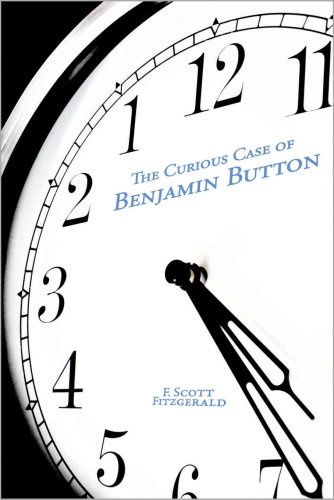
Also found in the collection are "The Diamond As Big As The Ritz," "Dalyrimple Goes Wrong," "The Ice Palace," "Benediction," "The Curious Case Of Benjamin Button," and "May Day."

This is an exemplary combination of memorable prose and oral presentation, a remarkable listening experience. ... Read more


40. Taps at Reveille (Scribner Library; Sl274)
by F. Scott Fitzgerald
 Paperback: Pages (1971-08)
list price: US$2.95
Isbn: 0684124645
Canada | United Kingdom | Germany | France | Japan

  Back | 21-40 of 100 | Next 20
A  B  C  D  E  F  G  H  I  J  K  L  M  N  O  P  Q  R  S  T  U  V  W  X  Y  Z  

Prices listed on this site are subject to change without notice.
Questions on ordering or shipping? click here for help.

site stats