e99 Online Shopping Mall

Geometry.Net - the online learning center Help  
Home  - Authors - Gaddis William (Books)

  1-20 of 100 | Next 20
A  B  C  D  E  F  G  H  I  J  K  L  M  N  O  P  Q  R  S  T  U  V  W  X  Y  Z  

click price to see details     click image to enlarge     click link to go to the store

$4.93
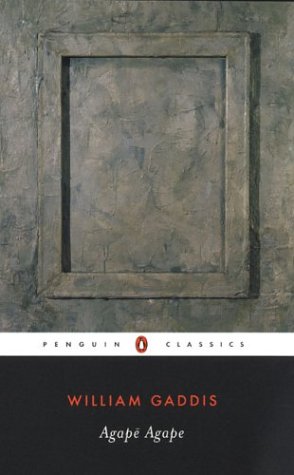
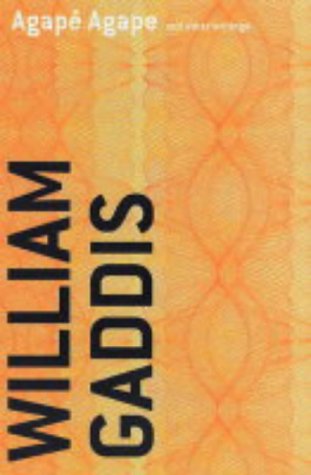
1. Agape Agape (Penguin Classics)
$14.40
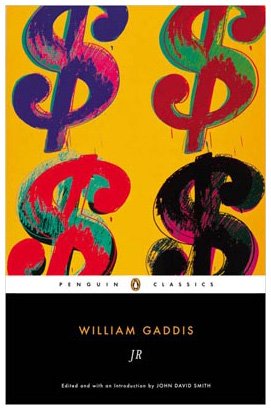
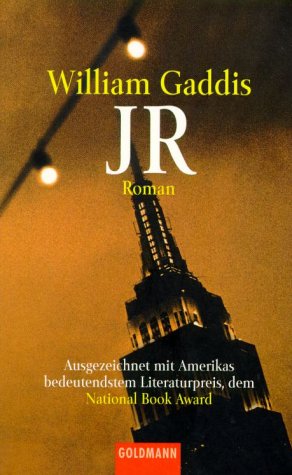
2. JR (Penguin Twentieth-Century
 
$31.00
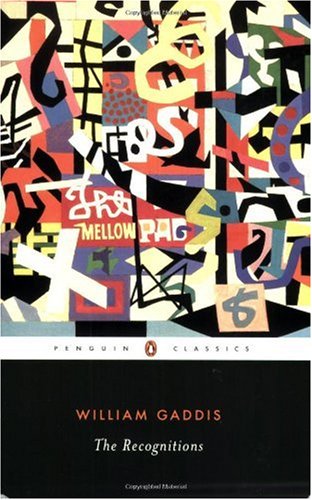
3. The Recognitions
$8.49
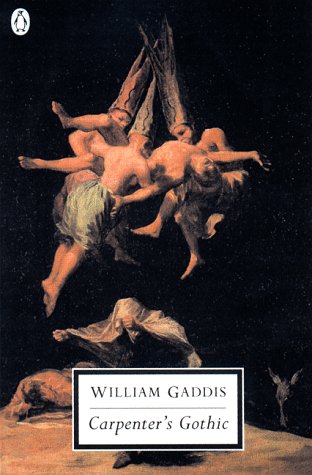
4. Carpenter's Gothic (Penguin Twentieth-Century
 
$2.95
5. A Frolic of His Own
 
6. In Recognition of William Gaddis
 
7. William Gaddis (Twayne's United
$27.99
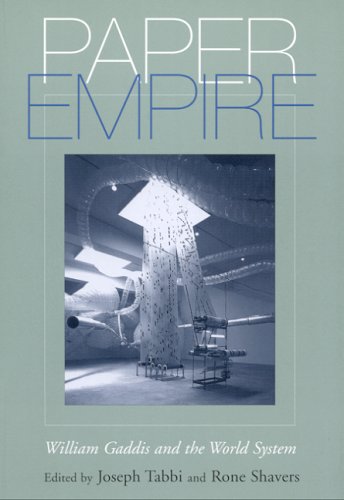
8. Paper Empire: William Gaddis and
$4.95
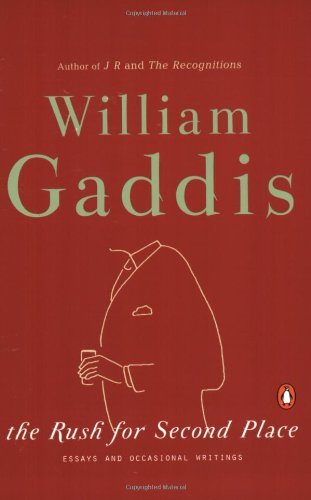
9. The Rush for Second Place: Essays
 
$38.16
10. William Gaddis (Bloom's Modern
 
$269.06
11. A Reader's Guide to William Gaddis's
 
$45.00
12. A Vision of His Own: The Mind
 
$5.95
13. William Gaddis. Agape Agape.(Book
 
14. The recognitions,: A novel
$8.00
15. Gilbert Sorrentino/William Gaddis/Mary
 
$10.00
16. The Ethics of Indeterminacy in
 
$9.95
17. Biography - Gaddis, William (1922-1998):
 
$5.95
18. The Ethics of Indeterminacy in
 
$5.95
19. William Gaddis. The Rush for Second
 
$9.95
20. Postmodernist Manichaean Allegory

1. Agape Agape (Penguin Classics)
by William Gaddis
Paperback: 128 Pages (2003-09-30)
list price: US$13.00 -- used & new: US$4.93
(price subject to change: see help)
Asin: 0142437638
Average Customer Review: 5.0 out of 5 stars
Canada | United Kingdom | Germany | France | Japan
Editorial Review

Amazon.com
William Gaddis's final work, Agape Agape, is an effective distillation of his philosophy and a powerful personal statement regarding the state of modern culture. The book is written in the form of a disjointed, stream-of-consciousness monologue delivered by a dying elderly man, himself attempting to complete his final work, a social history of the player piano in America.Desperate to complete his work before the onset of madness or death and fighting the effects of medication, the frantic narrator offers a meandering discussion of his work, which explores technology's artistically stifling influence. The narrator has isolated a particularly profound example of this in the player piano, an artistic invention that alternately replaced the artist.Technology, the narrator argues, has heightened the value of passivity, entertainment, and mediocrity, leading to the impending "collapse of everything, of meaning, of language, of values, of art, disorder and dislocation wherever you look."The narrator fervently claims that only through artistic courage can we achieve understanding, transcendence, and discover the uniting spirit of creativity, a brotherly "agape" love.

As Joseph Tabbi explains in his informative afterword, Agape Agape is the result of years of research and consideration by Gaddis, and the novella explores technological advancement and the response to this advancement, both actual and hypothetical, by such figures as Nietzsche, Walter Benjamin, and Tolstoy.While an impressive work of scholarship, Agape Agape is foremost an emotional decree, Gaddis's final statement of outrage and sadness at our cultural direction and a plea for change.At less than 100 sparsely punctuated pages, the book is an efficient combustion of energy and an affecting depiction of personal and cultural disintegration.At once a condemnation, warning, and affirmation, it reflects Gaddis's apprehensions but also his enduring faith in the power of creation. A worthwhile starting point for newcomers to Gaddis's work, Agape Agape is a memorable end to the career of a gifted thinker. --Ross DollBook Description
William Gaddis published four novels during his lifetime, immense and complex books that helped inaugurate a new movement in American letters. Now comes his final work of fiction, a subtle, concentrated culmination of his art and ideas. For more than fifty years Gaddis collected notes for a book about the mechanization of the arts, told by way of a social history of the player piano in America. In the years before his death in 1998, he distilled the whole mass into a fiction, a dramatic monologue by an elderly man with a terminal illness. Continuing Gaddis's career-long reflection on those aspects of corporate technological culture that are uniquely destructive of the arts, Agape Agape is a stunning achievement from one of the indisputable masters of postwar American fiction. ... Read more

Customer Reviews (5)

5-0 out of 5 stars Feckham Peckham Fulham Clapham
Reminds me of nothing so much as Lucky's inspired tirade in Waiting for Godot in which the ends and odds of Western civilization are stitched up and stuttered nonstop in one fell swoop. Dense and dead funny.

5-0 out of 5 stars Brilliant Ruminations
William Gaddis' Agape Agape is a brilliant, philisophical rumination on the nature of contemporary society and its relationship to art and the artist.It's not really a novel, but rather a 100 page diatribe of a dying man trying to get his affairs in order before the end.He is in a bed somewhere, spilling water, bleeding slightly on his notes, his books.He talks to us about everything from the mundane (the blood) to the deeply philisophical (Plato and many, many others).I read this one one sitting in about an hour because it's that compelling and enjoyable.The conversation seamlessly moves from real estate matters to artistic matters.His commentary will make you chuckle, will make you shake your head in agreement.This is an interesting work and if you are looking from a step up from your average novel.Enjoy.

5-0 out of 5 stars Brilliant--It's Changed My Mind About Gaddis!
I have seldom if ever revised my opinion of an author based on a posthumous work-until now.I confess to having found the late William Gaddis' other (and in some circles, classic) novels (J.R., Frolic of His Own, The Recognitions, and Carpenter's Gothic) theoretically interesting and probably brilliant, but always far too long, very self-indulgent, difficult for its own sake and almost unreadable-in other words, they bored me, what I could get through of them.
This prejudice of mine is coupled with a general dislike for posthumous works in general-the kind where a Major Author left a work unfinished at death, and which is years after released and edited with an introduction or forward by some noted Scholar: ("This really IS a great book, all of Fitzgerald's/Hemingway's/Duras'/McGowin's major Themes are here," etc., etc.).Well, they very seldom are great works, and just as the act of Revision seems contrived to some (your Kerouac wannabes, perhaps), I, conversely, find the act of posthumous publication to itself be contrived-again, in general.Glenn Gould, the great pianist, once expressed his intense dislike of "live" recordings being released on record labels with the surrounding hoopla, and said he planned to do a "fake" live album, recorded in the studio, complete with mistakes and overdubbed with audience coughing, etc.Sony of course wouldn't go for it, but I've often wanted to write a "fake" posthumous novel, the Final (unfinished) Work of a Great American Novelist-I'll make it about 100 de-contextualized pages, with 200 pages of forwards, introductions, afterwards, and footnotes.Now that Dave Eggars is a Publisher, he should get in touch.
But in the case of Agape Agape, the Afterward is totally superfluous.The book was finished when Gaddis died, and I don't need to have that explained to me, nor do I care what Joseph Tabbi et. al. Think of it in the overall context of Gaddis' other novels or what it started out as or what Gaddis wanted it to achieve.It's 125 pages, and all of a piece, without section or chapter breaks, the perfect length for what is the most cohesive and affecting book the man ever wrote-the free-associations of a dying narrator who's afraid his lifelong goal to write the definitive history of the player piano will never come to fruition.Into this frenetic and breathless narrative, then, is woven...everything.What begins with the narrator's opinions concerning several aspects of the History and Future of Technology becomes a fictional autobiography the likes of which has rarely been achieved, cemented by the character's grasp of mortality and humanity, and by Gaddis' seamless and masterful narrative drive.He is ON.
This is a one or two-sitting book, and the reader will come away from it reeling.It's too brief for me to go into specifics, for the specifics are the book, the book is the plot-but if you've never read Gaddis, START HERE.And if you need to picture a Literary Precedent, think of Dostoyevsky's Notes from Underground, perhaps, or of the best shorter work by Camus or John Hawkes-but only think.Because this book suceeds where Gaddis' other novels drag in that it also makes you feel.

4-0 out of 5 stars Agape Agape
Make no mistake: "Agape Agape" is not the mammoth achievement of prior Gaddis novels.However, it still is a worthwhile read brimming with ideas on every page.

A man is dying and from his bed he struggles to put his papers in order, to try to give shape to his last book.His mind races with all manner of thought mainly about society: the mechanization of the arts, society's dumbing down, player pianos, the Pulitzer Prize, school violence.All these thought threads come together in one overarching theme, and Gaddis's genius is not only in the ideas put forth but in his prose style: a style of fits and starts, sentences that run on incessantly, others that end abruptly to go on to the next thought.It is the perfect representation on paper of the thought processes of a dying intellectual man.

Admirers of both Gaddis's work as well as the work of Thomas Bernhard will gain much from this slim volume.Joseph Tabbi's afterword at the end puts this novella in context when viewed against Gaddis's entire ouevre.

Readers new to Gaddis might start with this one or "A Frolic of His Own."

Either way, treat yourself to this little book, one that deserves to be read more than once, one that deserves to be admired, one written by a largely overlooked American giant.

5-0 out of 5 stars A compressed delight
An old man's Beckett-like disjointed rant is a forum for satisfyingly inconclusive and erudite musings on art, music, and individual inspiration in our "age of mechanical reproduction" and mass-market pandering. This small book is full of a wealth of crisscrossing themes. Unlike Gaddis's larger tomes,this is simply structured, has blistering forward momentum and can be read in a few hours.In prose alternately profound and profane, Gaddis has contrived a perfect device to exercise his lifelong preoccupations, creating an impassioned but infirm narrator whose very disorganization engagingly mocks the author and his sprawling subject. Parts are excruciatingly funny. This is a must-read if you're a Gaddis or Beckett or Thomas Bernhard or David Markson fan, or if you ponder the nature of art in this--or any other--age. ... Read more


2. JR (Penguin Twentieth-Century Classics)
by William Gaddis
Paperback: 752 Pages (1993-05-01)
list price: US$25.00 -- used & new: US$14.40
(price subject to change: see help)
Asin: 0140187073
Average Customer Review: 4.5 out of 5 stars
Canada | United Kingdom | Germany | France | Japan

Customer Reviews (17)

5-0 out of 5 stars one of my top 5 favorites
1st, a below reviewer says it's all dialogue, which is almost true but not quite.there are sections of exposition, description, but because of the way it's all written, you could be halfway through one of these sections before realizing that the dialogue stopped and this isn't someone speaking anymore.

that aside, this book is just amazing, and it's oddly accessible once you get going.kind of like shakespeare or milton.you have to get used to the use of the language.but Gaddis's ear for dialogue, especially that of JR, the little kid all the action ("action" not really being the right word) revolves around, is so good, so funny, so good at creating memorable lines and ideas...it just can't be beat.

i could go on and on, but why?just read it.(on this note, this is one of those books that is aided by a reading guide, and there is an excellent one available free [by Steven Moore] at the Gaddis website, williamgaddis.org.)

5-0 out of 5 stars JR
On a school excursion to New York, a small group of eleven year old children are introduced to the American way of life.A hurried business man, constantly on the phone or bothered by his secretary, gives a hasty explanation of the stock market, and what it means to 'purchase a piece of America'.The children are suitably awed, especially when their excursion moves from theory to practise with the purchase of one stock from a communal kitty.

One child, JR, is particularly enamoured with the whole process.He asks complicated questions about futures, buybacks, depreciations, interest, tax write-offs and more, flustering and intriguing the man in charge of the tour around the company.JR is so curious, in fact, that upon arriving home, he begins to study and plan ways to make his piece of America work for him.

He meets up with Edward Bast, a struggling composer, and they strike a deal.JR will be the thinking man of the operation, Bast - as an adult - will be the face of the company.Soon, Bast is traveling back and forth from paper mill to Indian reserve to banquet to meeting room as JR creates an empire from 'worthless' stock and inventory obtained through mail order and telephone deals.

JR is written almost entirely in dialogue.People speak, radios chatter, conversations begin and end and trail off, some in the main focus of the novel, such as Rhoda and Bast's discussions in the increasingly cluttered apartment he lives in, some off to the side, little snippets finding their way into the book, shedding light on minor characters or putting a different perspective on what is currently happening.Gaddis, as always, writes flawless dialogue that in no way reads like the 'perfect' diction of most novels, instead having trailing sentences, unfinished words and thoughts, and poor punctuation.When speaking, a character is almost never identified, but through Gaddis' grasp of speech, it is generally pretty easy to tell who is who and what is going on.There are large paragraphs of description scattered about, but these generally serve as bookends to conversations between characters.

The novel JR is an extremely interesting look at the world of finance.Seen through the eyes of the oblivious musician Bast, we are horrified as JR's empire grows and grows, always obeying the law, always being correct and accurate, but at the same time, perverting the true spirit of business and money.Perhaps because he is eleven, JR is unable to see the companies he buys, sells, underwrites and reconstructs as actual tangible realities, the employees are little more than vast bottomless money pits in terms of salaries to him, and nothing is sacred.He has no understanding of the realities of what he is accomplishing, all he is concerned with is, 'If you are going to play, play to win.'

5-0 out of 5 stars Recognize a Work of Real Genius?
I have long been struck by the irony that the most avid readers of literary novels seem to have been virtually ignored by American publishers who cater to the mainstream. Sad to say but American publishing's mindless fixation with mediocre mainstream fiction has had an obliterating effect on American literary culture. So God Bless Penguin for having the good sense to bring to light, even belatedly, this breakthrough literary novel by a supremely gifted writer. I haven't read a more challenging novel by such a first-rate mind in ages. The style of the novel is based upon stream-of-voice: it's akin to walking down 5th Avenue and overhearing parts of conversations of passersby. The net effect is that the reader is compelled to become engaged by virtue of the context, style and story line of unidentified speakers until their voices become familiar. Until the reader succeeds in identifying the voices, the novel seems absurdly abstract. Like many great 20th century novels JR does appear incomprehensible at the outset until the reader discovers a roadmap to navigate this vast stream of voices. If life is order disguised as chaos, then JR is the very height of verisimilitude as there is a reality inherent in this novel that is breakthrough by virute of its style and intricately woven in its storyline. This stream-of-voice in a sense captures the fine art of the ancient oral tradition of story-telling starting with Homer. Jose Saramago in Blindness experimented in a similar way in his novel of discovery and so does Joyce in Ulysses and Finnegan's Wake. JR is an important novel by a relatively obscure literary novelist worthy of the small but devoted readership of which it has become my privilege to join. In fact, I have just begun to read The Recognitions. If you are a serious reader of literary novels, then you owe it to yourself to read Gaddis. His novels are a national treasure: one only hopes that some day soon the nation will properly recognize it.

5-0 out of 5 stars American Masterpiece
William Gaddis, who died in 1998, wrote experimental behemoth-sized novels about the breakdown of authenticity in post-50's America. His first novel, the 900 page "The Recognitions", is about a young painter who discovers he can make more money selling copies of old master paintings, than he can making original ones. Slowly, he begins to disappear (literally) in the novel, and becomes only known as 'him'.

"JR", his second novel, is comprised of nothing more than voices- shouted, murmured, blundered out by a myriad of memorable characters. The only thing that separates the voices is the dash infront of the text, which is attributed to a particular character. However, the objective voice (Gaddis) makes rare and beautiful entrances, slipping into the incessant talking- and narrative time and space is 'adjusted' or 'deciphered'.

The novel is about a grade school boy, JR., who builds an empire using counterfeit stock he acquired for a class project. Readers are taken inside office buildings, through telephone wires, down elevators, listening to the frantic, inarticulate voices of businessmen in their trade. A labyrinth of vague associations and clandestine intensions are built, and the voices move out of the office and into the streets, through subways, in taxis, into people's apartments, where readers discover that beyond all the voices and deciept, people fall in love.

4-0 out of 5 stars Masterpiece?Don't think in those terms
I'd suggest to anyone reading this "because its a masterpiece", to get over it.That's no reason to read, or worse, recommend a book.Read it because you want to try out Gaddis' style which is quite a change from the norm.

The reviewer who equated it to listening to the radio is pretty close, in my opinion, although I feel its more like listening to other people talking on the train (or perhaps watching a Robert Altman movie with a blindfold on) in that conversations can be broken off just when you think they are getting interesting.

Reading Gaddis can be like watching television, with someone else holding the remote.If you can't watch movies that way, you'll hate this book.

If you haven't read any Gaddis, read "A Frolic of His Own" first - I was astonished at the way he managed to manipulate my impressions of people solely on the way he let me hear them talk, and then as time went on, I discovered that I actually quite liked those despicable characters after all - and the beating the legal profession gets is far easier to understand (and sympathise with) than the capitalists in JR.

If you find Frolic heavy going, you probably won't like JR.If you find JR heavy going, don't touch The Recognitions.The only reason I bothered with JR, after reading Recognitions, was because I had read Frolic first.

Don't read JR because you're expecting a savage attack on capitalism, although it is that. Don't read it because you want to see how schools are becoming profit-centers first, and educators second, although it shows that.Don't read it because someone said its a picture of an America that was (is?), although perhaps it is.

Read it because its a good book.Difficult to read, sure, especially for the TV Guide generation, but worth it in the end, and very funny especially to those of us with a cynical bent.

"... because even if we can't um, if we can't rise to his level, no at least we can, we can drag him down to ours ..."

-- Bast, on humanizing Mozart(I think it was, anyway ;-) ... Read more


3. The Recognitions
by William Gaddis
 Hardcover: Pages (1995-04)
list price: US$31.00 -- used & new: US$31.00
(price subject to change: see help)
Asin: 0844667404
Average Customer Review: 4.5 out of 5 stars
Canada | United Kingdom | Germany | France | Japan

Customer Reviews (43)

4-0 out of 5 stars I Know It When I See It
Long. Strange. Deep. Difficult. Tiring. Fun. Over-detailed. Likable characters. Horrible characters. Educational. Mind-numbing. Subtle.

The world of the fake juxtaposed with the world of the fair. Doing wrong for the right reasons and doing wrong for the wrong reasons.

This was an interesting read (I'm still not sure how enjoyable a read it was). I'm glad I read it and will read more Gaddis. I also discovered William Gass from the introduction. So, two "keeper" authors in one.

Not for casual readers. You have to have patience and prepare to work as a reader to make it through.

5-0 out of 5 stars I Love It, But I'm Strange
Why in the world should anyone trouble to read so difficult a novel? A novel, for pete's sake, not even a work of non-fiction with useful information. Don't we read novels for entertaining? But it turns out that hard work has its rewards. If you are one of the lucky ones, the book is enthralling. For the unlucky majority it will be just boring.

Gaddis's obscurity does not come from an inability to write clearly: "it is the bliss of childhood that we are being warped most when we know it least" (p. 26);
"She's still sick of trench mouth. She got it kissing the pope's ring" (p. 192); "90 percent of the advertisements he read had no possible application in his life" (p. 283); "Busy as those monks in the Middle Ages were keeping a-kindle the light of knowledge which they had helped to extinguish everywhere else" (p. 495); and so forth. So if Gaddis can be witty, entertaining, and clear at the same time, why is The Recognitions, and all of Gaddis's work for that matter, so hard to follow?

A central theme in all the works of Gaddis is about the gap between what we know (through recognition) and what we are told. A priest-confessor sums up the problem: "We live in a world where first-hand experience is daily more difficult to reach, and if yo reach it through your work, perhaps, you are not fortunate in the way most people would be fortunate. But these are things I shall not try to tell you. You will learn these things for yourself if you go on, and I may help you there" (p. 952). For a writer, this problem of learning by first-hand experience is doubly challenging for story-telling is a second-hand way of knowing. So how can a story teller honestly urge first-hand experience through a second-hand medium? Gaddis's method is to turn novel reading into a first hand experience. He tames the famous recommendation to young writers--show; don't tell--three steps further. He provides shadows which the readers, if they can, transform into shapes. ("Scarcely more steady than the shadows themselves, a figure took form and emerged," p. 920.)

A businessman who specializes in selling art forgeries says of most people, "They don't want to know. They want to be told" (p. 313), and he holds those people in contempt. The solution in art isto turn passive lookers into knowing creators: "Everybody has that feeling when they look at a work of art and it's right, that sudden familiarity, a sort of ... recognition, as though they were creating it themselves while they look at it or listen to it" (p. 535)

Three hundred plus pages later we see the idea spelled out again: "He studied with Titian... Titian's paintings in the Escorial, he saw then when he went to paint for the king, and who whole style changed. He learned from Titian. That's the way we learn, you understand" (p. 870). And the reader learns by reading Gaddis.

The result of this kind of creative participation in the work is a kind of enchantment that moves readers more deeply, when it moves them at all. An old woman is described as the "nightmare of the girly she had been two generations ago" (p. 561). To understand that image the reader has to see the old woman's body and the young girl's thoughts simultaneously. They have to work, not just read. And in this book they have to such work, line by line, page by page, for a thousand pages.

Gaddis does not think this kind of active engagement is easy: "They were enjoying the discussion very much, each finding the other intelligent, witty, in all a good companion, for neither was listening to what the other was saying" (p. 696), but Gaddis does believe intent participation in the other is essential. The price of not being able to listen and know is death--metaphorically in the death of the sou, literally, in the story, I count two people in the last 15 pages killed by ignoring messages in languages they didn't understand.

Every reader will find a different book. The more they bring, the more they can get. The harder they are willing to work, the easier their story will be to follow.

5-0 out of 5 stars Recognitions are Few
I read The Recognitions in the 1990s.The gist of the book emerges here and there, just like "recognitions," not all at once, in sequence, or in bulk, but every now and then, not well-formed or even coherent.That we live in a miasma of forgery is clear to few.Most of us are so imbedded in myth and its rote that we cannot percieve, much less understand, our lot.Gaddis pokes at our fraudulent lives.

The book is a satire on a mythological scale.The bishops wear skirts to appear feminine and demure, but with a "thousand yards of material up their sleeves in South America."Aunt May is done in by technology in a single beautiful sentence.Homosexuality threads throughout the book and is as fundamental to religion as it is to art.(One would benefit by reading "The Lives of the Saints" along-side this work.)

Gaddis exposes the inauthentic on every page, and there are a thousand of them.His skill with words is exceptional: alliterations, allusions, metaphor, rhythms, melody, all music.

In Gaddis, the consequences of forgery are revealed over generations.They are cataclysmic.But forgery is the inevitable side effect of eating of the tree of knowledge and building the tower of Babel, as mankind, in its terror, is driven to know, speak -- continually giving new names to old values -- and dissemble; anything to avoid the ultimate recognition.Thus, the birth and renewal of religion.

I advocate, in the name of Gaddis, who would certainly appreciate it, that sweatshirts, hats, bumber stickers, tatoos, and other paraphernalia, be printed up and marketed commemorating this book.We live in the world of marketing as surely as we believe we understand ourselves.Read the book and live it out!

1-0 out of 5 stars Impossible to Enjoy
Gaddis is certainly a gifted writer, but what he crafted here is impossible to enjoy on any level. 1000 pages of fragmented sentences,incomplete thoughts, non-interlocking, interlocking story lines and cameo characters simply does not cut it for a first rate work.

5-0 out of 5 stars not perfect, but brilliant still
This book isn't for anyone, and I was tired of it at times.I think it is a little long, and at the end, you can feel the transition of interest in Gaddis to his next epic "J.R."I think both of Gaddis's first two books are essential reads."J.R" is comic and almost narratorless- a style that is somewhat flawed since to identify characters without the standard "John said..." at the end, he has to give each character a unique stutter or annoying lingual habit, like you know saying like like a lot like or er um that is er um I mean.By the end it gets old.Back to "The Recognitions"-

The writing is great and I don't know if there is any book more full of great ideas."God cares as much for a moment as for an hour" is my favorite.What a great quotation and a great thought.Everything in the book is a fraud.It starts off like any epic, we get the birth of the hero and the book will obviously be about his towering gifts.He can't fail at anything.But he never develops as the star.The book itself, along with every action by every character, becomes a fraud.There is good humor, some mystery, and a lot of value.

Its a very hard book to review.The plot doesn't so much matter, the characters aren't that important, it just kind of is a book you have to read if you like hard, rewarding novels.If you don't like Faulkner, Joyce, Pynchon, Woolf, or other similar writers I would say don't try this book.It won't be to your tastes.I read "J.R" first and I think that might be a good way to go too.This book is full of questions, man's search for meaning in a way, where J.R. is just a scathing condemnation more or less, as if Gaddis looked over the whole earth and saw nothing not to make fun of, nothing noble at all.After the first 600 pages of "The Recognitions", Gaddis was all satire.And after "J.R" his satire was mostly redundant."Carpenter's Gothic" is worth the read because there are some great lines by the end, but on the whole, it isn't a great book, just one worth reading if you've knocked off all the best books and don't know where to go from there.

I think I like Gravity's Rainbow by Pynchon better, but I personally have this ahead of Ulysses.It isn't written as well as Joyce's best one, but it has much more intellectual content.It isn't just a mind-blower for style, its a mind blower. ... Read more


4. Carpenter's Gothic (Penguin Twentieth-Century Classics)
by William Gaddis
Paperback: 272 Pages (1999-03-01)
list price: US$16.00 -- used & new: US$8.49
(price subject to change: see help)
Asin: 0141182229
Average Customer Review: 4.0 out of 5 stars
Canada | United Kingdom | Germany | France | Japan
Editorial Review

Book Description
This story of raging comedy and despair centers on the tempestuous marriage of an heiress and a Vietnam veteran. From their "carpenter gothic" rented house, Paul sets himself up as a media consultant for Reverend Ude, an evangelist mounting a grand crusade that conveniently suits a mining combine bidding to take over an ore strike on the site of Ude's African mission. At the still center of the breakneck action--revealed in Gaddis's inimitable virtuoso dialoge--is Paul's wife, Liz, and over it all looms the shadowy figure of McCandless, a geologist from whom Paul and Liz rent their house. As Paul mishandles the situation, his wife takes the geologist to her bed and a fire and aborted assassination occur; Ude issues a call to arms as harrowing as any Jeremiad--and Armageddon comes rapidly closer. Displaying Gaddis's inimitable virtuoso dialogue, and his startling treatments of violence and sexuality, Carpenter's Gothic "shows again that Gaddis is among the first rank of contemporary American writers" (Malcolm Bradbury, The Washington Post Book World).

"An unholy landmark of a novel--an extra turret added on to the ample, ingenious, audacious Gothic mansion Gaddis has been building in American letters" --Cynthia Ozick, The New York Times Book Review

"Everything in this compelling and brilliant vision of America--the packaged sleaze, the incipient violence, the fundamentalist furor, the constricted sexuality--is charged with the force of a volcanic eruption. Carpenter's Gothic will reenergize and give shape to contemporary literature." --Walter Abish ... Read more

Customer Reviews (13)

5-0 out of 5 stars Talk, talk, it's all talk
Often this is considered the least of Gaddis' novels, the most obvious reason being that it's the shortest, although that isn't the only reason.Still, in his longer novels Gaddis was always able to work his themes to a fever pitch and stretch them out, playing with dialogue and tone over the course of hundreds of pages, giving you in essence a grand symphony.A depressing symphony, also, mind you, dotted with sparks of black humor but it made each book a rather meaty read.Here he attempts to do all that in like a tenth of the space and while that gives the novel a breakneck pace that isn't really matched by anything else he's ever done (Agape, Agape, maybe, but I'll let you know when I get there), things start off quickly and keep moving.Even this is an illusion, while The Recognitions was a tad ponderous at times and was meant to be read slowly, JR comes across as a mad flurry of action, due to all the competing voices charging head-on in cacophony.Here everything just feels compressed, the characters trapped in a bottle, the setting never really leaving the house that gives the novel its name.With its limited setting and fewer characters, it sometimes can feel like JR-lite but the tone is remarkably different.As I mentioned, there are hints of Gaddis' rather dark view of things but most of the time it was leavened by humor or at least some kind of compassion.In this story, you have none of that.The two main characters, Paul and Elizabeth, are taking care of a house owned by a different man, while Paul works with a Reverend and also seems to be suing a bunch of people due to some kind of airplane crash, while Elizabeth goes to different doctors somehow aligned with the case and generally frets about.Which sets up the main problem with the novel, the two characters are mostly unlikable, the novel begins with Paul berating Elizabeth nonstop while asking her to do stuff for him and it really doesn't relent, just about every scene of them together follows that pattern and it does get rather tedious after a while.Elizabeth isn't much better on her own, while Paul's foulmouthed rants have an amusing component to them, Elizabeth just tends to flutter and frit about and not saying anything of real import, although she does gain something resembling a spine toward the end.Paul's schemes are what drive the narrative but it is hard to figure out what the general thrust is underneath all the ranting, in fact the copy on the inner jacket will tell you more about the plot than the story really does and it's not unheard of for a reader to feel simply snowballed under the mountains of dialogue.Fortunately, Gaddis does dialogue well.Really, really well.Real people may not talk like that but he captures the rhythms close enough and the back and forth chatter is like nothing else is literature.The lack of punctuation marks only immerses the dialogue further into the prose, making it all a sort of weird background noise . . . though it can get confusing because he writes more actual prose here than in JR, where the non-dialogue narrative almost seemed like an afterthought.Although the constant talking remains key, the rich language that was in the Recognitions starts to poke through here and there.But it's the chatter that shines, especially toward the latter portion of the book where all the conflicts start to come to a head.When the owner of the house, McCandless shows up and appears to be more connected to matters than he lets on, things start to pick up and the many page conversation between him and Lester where they alternately threaten and manipulate and dance around each other with nothing but words is probably the best thing in the novel and I was sincerely sorry when it ended, so marvelously was it paced.Otherwise, things progress merrily, it will probably take several readings to figure out what is going on but it reads easily enough, even if the plot seems a bit sketchy at times.While Gaddis' technique is as sure as usual, he doesn't seem to have as much of a handle on his themes, ranting about basically everything without much focus.That can be frustrating at times, I'll agree.Still, the book is much more than Gaddis-lite, which is putting things too simply.His command of his technique is as astounding as ever and it's a good a place to introduce yourself to his work as any (Frolic might better, Recognitions is not for the faint of heart due to its length and JR is actually rather atypical), even if you shouldn't stop there.And hey, it even has chapters, of a sort.Sell-out!Just kidding!Difficult, but I think worth the effort involved.

1-0 out of 5 stars a pretentious criminal atrocity
this book was terrible.it is nothing more than a twisted and messed up story that is supposed to have some meaning and substance to it.but it doesn't.it goes nowhere, does nothing.there are merely characters, that do meaningless things, and that's about it.besides the obvious title theme, there really are no useful themes.

it is written in a style that is quite difficult to read, which is fine with me, but afterward you question why you wasted all the effort and concentration in reading when the book wasn't worth it anyway.

the only good plus i can see in this book is if you want to read it, and pretend you like it, just so you can discuss it in a pretentious book group and get with a pretentious girl or boy.other than that it really has no value.

3-0 out of 5 stars Not his best work
It says nothing he didn't say better in JR, which though somewhat less accessible, is a richer, funnier and satisfying novel.The writing is dazzling, though it becomes somewhat monotonous at points in this book.(Get your own ice, Paul.)The problem is the content.At its core, this book is pretty empty. Carpenter's Gothic and, to a lesser extent, JR are like some Wynton Marsalis solos.The artist may be able to hit notes and play riffs no one else can and his tone may be gorgeous, but the music doesn't say anything.Still, worth three stars for the brilliance of the technique.

3-0 out of 5 stars Worth a look
I read it a long time ago, and some of the dialogue has stuck with me, but overall there's an emptiness of vision underlying this work. Whether or not the book satirizes Christianity or fundamentalism is hard to say; if it does, it doesn't try very hard. One character rants against the language of evangelization, but that character turns out to be a venal, self-obsessed murderer. What does that say about his opinions? In fact, one irony is the work may implicate readers who agree with the anti-Christian diatribes ... but I'm not sure. At least the book's short and some of it is memorable.

4-0 out of 5 stars Challenging, but well worth it...
Having heard so much praise for Gaddis' work and having read excerpts from all four of his novels, I decided to give "Carpenter's Gothic" a try.I must say that I was not at all surprised to find that everything I've heard about Gaddis' virtuoso prose and dialogue is absolutely true.The man was an absolutely brilliant writer.His dialogue is the best I've ever read.I also can see why he never really became popular: he's not the easiest writer to read.A book like this has to be read at least two times in order for the reader to catch up on a lot of what is going on.Not that this would be much of a chore.In fact, I think that anyone who has read this book would look forward to a second go-round! ... Read more


5. A Frolic of His Own
by William Gaddis
 Paperback: 512 Pages (1995-02-10)
list price: US$21.95 -- used & new: US$2.95
(price subject to change: see help)
Asin: 0684800527
Average Customer Review: 4.0 out of 5 stars
Canada | United Kingdom | Germany | France | Japan
Editorial Review

Amazon.com
Perhaps William Gaddis' most accessible novel--though a dense and imposing book--A Frolic of His Own is a masterful work that mocks the folly of a litigious society. The story centers around Oscar Crease, the grandson of a Confederate soldier who avoided a deadly battle by invoking a legal clause that allowed him to hire a substitute and who later became a Supreme Court judge. Oscar writes a play about his grandfather that goes unproduced yet appears as the storybehind a big-budget Hollywood film. Oscar sues and is tossed into the vortex of litigation. Meanwhile, almost 20 other lawsuits of varying frivolity swirl about, adding to this satirical and philosophical treat, which won the National Book Award for 1994. ... Read more

Customer Reviews (35)

3-0 out of 5 stars Great Technique Used to Little Effect
This is the first book by Gaddis that I have read.While the plot, characters, and technique are all promising in themselves, the book's whole is less than the sum of its parts.

This is the result of Gaddis's decision to apply a post-modernist literary technique to a narrative that doesn't benefit from it.As many other reviewers have noted, the bulk of the book is written as pure dialogue, without quotations and without attribution.While this creates some problems in the beginning, it becomes surprisingly easy to follow.The rest of the book is made up of excerpts from texts, mainly a play, legal briefs, and court documents, with a very few brief stretches of interior monologue or description.

The problems with this technique are two.First, it is monotonous.Writers generally vary the pacing and tone of their writing for dramatic effect.Gaddis can't do that.Second, the technique flattens out the narrative:no part of the text is given more importance than any other.The end result is that the reading the book feels like taking a drive over a flat highway in a car stuck in third gear, and, at almost six hundred pages, it's a very long drive.

Gaddis's choice is unfortunate, because the substance of the book, including a long-simmering battle over the rights to a play and movie about the American Civil War, an accident in which a driver runs himself over, and a running family feud, could have made for an entertaining book.

3-0 out of 5 stars phew! I need a vacation!
I forced myself to finish this book. Several areas of alliteration were fascinating & masterful.Funny, yes, but it was like walking through three feet of mud in high heels.This is not a book for those expecting short-term reward, but wickedly satirical on many levels.Will I read Gaddis again?-hmmmmmmmmm maybe I'll just stick pins in my eyes......

4-0 out of 5 stars Legal Tenderness
I read Frolic after JR and The Recognitions of which I was more impressed than Frolic. It's amusing to watch Gaddis skewer the legal profession -- I can think of few professions more worthy of it -- but while he addresses the national feeding frenzy of greed associated with litigation his characters fail to capture much empathy as they were more hideous in many cases than their legal representatives. Consequently, I found myself detached from main characters and unsymapthetic to their sordid fates. In JR and The Recognitions I found characters whose destinies in the story lines mattered to me -- not so in Frolic. Gaddis has his finger on the pulse of a national disgrace in the need for tort reform but, since the reformers are self-regulating lawyers, it isn't likely to happen anytime soon. This novel is very finely written with powerful, pithy observations expressed in breathtaking jabs and poetic riffs. Frolic isn't as densely packed with intellect as JR or The Recognitions but is more accessible than either as his style is more accommodating in Frolic. This novel is just shy of great compared to the high standards set by his other works, which are among the best brace of American novels of the late 20th century. The great novels of Gaddis are destined to be discovered by wider readerships, to radiate brilliantly on America's literary landscape and to endure.

4-0 out of 5 stars Good, but not THAT good...
Having read the reviews posted here, I felt pretty certain that I would enjoy Gaddis' books. His emphasis on dialogue (as opposed to description and narration) adds a pleasantly kinetic feel to the book, not unlike reading a Mamet play.

The problem I'm having, however, is that the book doesn't actually SAY very much. As fun as it is to see Gaddis play games with legal talk, 500 pages of satire seems a bit excessive. All of the characters are parodies of people, rather than people, and there's nothing to really grab onto and care about in this book. Is it fun? Sure... for a while. Is Gaddis a talented writer? Absolutely. But is this book something you need to rush out and get? Not really.

5-0 out of 5 stars A Masterpiece of His Own
I made the "mistake" of familiarizing myself with Gaddis' work by first reading The Recognitions about six months ago. Make no mistake - The Recognitions is well worth the effort, once you understand how to read it (i.e. the dialogue and conversational effect and how to interpret who is talking and when, and what is narrative as opposed to dialogue), although toward the end, when Wyatt loses his mind in the monastery, the imagery gets a bit muddled. In any event, as I began reading A Frolic of His Own, I found myself thinking, wow, I should have started with this one, because this is much more accessible than The Recognitions. Of course, I now realize that it is more accessible simply because I had been through the wringer with The Recognitions and not because the style is so much different. Indeed, it is more structured and more coherent, but the same Gaddis black, stinging satire is there in its glory.

An amazing book. Gaddis truly listened to how we speak and interact with each other, because his dialogue is absolutely spot on with how we humans/Americans speak to each other in a familiar manner. While there are no truly sympathetic characters (all are pretentious and selfish in a way we all know far too well), one can't help but feel empathy towards each of them in some sordid way. The plot has been outlined in other reviews, so I won't go there, other than to say that just when you think Gaddis is off on some tangent and you feel a lack of cleverness in having not "got it", he brings it right back around, front and center, although it may not be where you thought it was going to be.

Unlike criticisms of The Recognitions, and even JR, which suggest too much plot, too many charachters, and many loose ends (not necessarily true), this is a tightly, albeit densely, plotted book that is at times laugh out loud funny and other times head in the oven sad. But at all times it challenges and is truly entertaining and wonderful. Maybe the best book I've ever read. ... Read more


6. In Recognition of William Gaddis
 Hardcover: 209 Pages (1984-05)
list price: US$4.98
Isbn: 0815623062
Canada | United Kingdom | Germany | France | Japan

7. William Gaddis (Twayne's United States Authors Series)
by Steven Moore
 Hardcover: 176 Pages (1989-05)
list price: US$22.95
Isbn: 080577534X
Canada | United Kingdom | Germany | France | Japan

8. Paper Empire: William Gaddis and the World System
Paperback: 328 Pages (2007-02-04)
list price: US$32.95 -- used & new: US$27.99
(price subject to change: see help)
Asin: 0817354069
Canada | United Kingdom | Germany | France | Japan

9. The Rush for Second Place: Essays and Occasional Writings
by William Gaddis
Paperback: 160 Pages (2002-10)
list price: US$14.00 -- used & new: US$4.95
(price subject to change: see help)
Asin: 0142002380
Average Customer Review: 4.0 out of 5 stars
Canada | United Kingdom | Germany | France | Japan
Editorial Review

Book Description
William Gaddis published only four novels during his lifetime, but with those works he earned himself a reputation as one of America's greatest novelists. Less well known is Gaddis's body of excellent critical writings. Here is a wide range of his original essays, some published for the first time. From "'Stop Player. Joke No. 4,'" Gaddis's first national publication and the basis for his projected history of the player piano, to the title essay about missed opportunities in America during the past fifty years, to "Old Foes with New Faces," an examination of the relationship between the writer and the problem of religion-this diverse collection displays the power of an autonomous literary intelligence in an age increasingly dominated by political and religious conservatism. ... Read more

Customer Reviews (2)

3-0 out of 5 stars Okay just as an indication of what's bouncing around in
Gaddis's head, but as essays these are incredibly ineffective.Take the longest piece in this collection - The Rush for Second Place: it pretty much starts out with the conviction that American culture is largely mediocre (revolutionary thought!) and then just lists a whole bunch of things that Gaddis considers stupid and ridiculous.Well, I agree that there's a lot about this country that's stupid and ridiculous, but the last thing I need is a list: I'm not asking for solutions, just an argument - a point - something.An essay: TRY to accomplish something.No one else needs another sputtering catalogue of rage.

The only thing a list is useful for, of course, is exposing you to something (a book, a person) that you may not have heard of before.And the most wonderful discovery that I got out of this book was John Holt and his books.Read him if you haven't already.

As an admirer of Gaddis's fiction, though, which is full of fascinating ideas, this collection was disappointing and even a little dismaying.The early essays contain interesting germs of topics, such as a short piece of writing on the player piano, whose ramifications aren't really developed.Gaddis apparently considered the player piano as a sort of symbol for a culture that wants art without effort, easy mechanized entertainment for the masses - but that's just my incompetent gloss, and I wish that he'd made the effort to put together an argument himself.

And the later work, as I said earlier, is of the scattershot rant variety - even the interesting comparison of Erewhon with the Republican congress of the 90s jumps around and has obviously dated rather badly.

The reason I say this is a little dismaying is that - if an author writing essays has such trouble expressing himself in a coherent fashion - it starts to reflect on his fiction as well.I've read A Frolic of His Own and Carpenter's Gothic - and have stalled out recently, although I hope to start again, on The Recognitions and JR - and although I still find them hilarious satires, I'm starting to doubt the penetration of the thought behind the comedy.Gaddis's imagination is visionary, but I'm starting to feel that - like Dickens - his mind is pretty commonplace.The standard liberal line on politics, for the most part, and moaning about the stupidity of mass culture: maybe he's right, but how dreary it is to be right in such a boring and disorganized fashion.

5-0 out of 5 stars Finally, the Collected Uncollected Works...
It's good finally to see William Gaddis's "ocassional" writings collected into one volume. For years, the only thing available was the super-rare and thus ridiculously expensive pirate edition, "The Uncollected Works of William Gaddis" published by the so-called Black Moon Press, whoever and wherever they were or weren't. While that underground classic might have had the drop on this legit book, "The Rush For Second Place" is more complete and up to date. Good stuff! ... Read more


10. William Gaddis (Bloom's Modern Critical Views)
 Hardcover: 289 Pages (2003-09)
list price: US$45.00 -- used & new: US$38.16
(price subject to change: see help)
Asin: 0791076644
Canada | United Kingdom | Germany | France | Japan
Editorial Review

Book Description

This title, William Gaddis, part of Chelsea House Publishers' Modern Critical Views series, examines the major works of William Gaddis through full-length critical essays by expert literary critics. In addition, this title features a short biography on William Gaddis, a chronology of the author's life, and an introductory essay written by Harold Bloom, Sterling Professor of the Humanities, Yale University. ... Read more


11. A Reader's Guide to William Gaddis's "The Recognitions"
by Steven Moore
 Hardcover: 337 Pages (1982-05-01)
list price: US$35.00 -- used & new: US$269.06
(price subject to change: see help)
Asin: 0803230729
Canada | United Kingdom | Germany | France | Japan

12. A Vision of His Own: The Mind and Art of William Gaddis
by Peter Wolfe
 Hardcover: 312 Pages (1996-11)
list price: US$45.00 -- used & new: US$45.00
(price subject to change: see help)
Asin: 0838636942
Canada | United Kingdom | Germany | France | Japan

13. William Gaddis. Agape Agape.(Book Review) (book review): An article from: The Review of Contemporary Fiction
by Thomas Hove
 Digital: 12 Pages (2003-03-22)
list price: US$5.95 -- used & new: US$5.95
(price subject to change: see help)
Asin: B0009FWXRO
Canada | United Kingdom | Germany | France | Japan
Editorial Review

Book Description
This digital document is an article from The Review of Contemporary Fiction, published by Review of Contemporary Fiction on March 22, 2003. The length of the article is 3473 words. The page length shown above is based on a typical 300-word page. The article is delivered in HTML format and is available in your Amazon.com Digital Locker immediately after purchase. You can view it with any web browser.

Citation Details
Title: William Gaddis. Agape Agape.(Book Review) (book review)
Author: Thomas Hove
Publication: The Review of Contemporary Fiction (Refereed)
Date: March 22, 2003
Publisher: Review of Contemporary Fiction
Volume: 23Issue: 1Page: 134(1)

Article Type: Book Review

Distributed by Thomson Gale ... Read more


14. The recognitions,: A novel
by William Gaddis
 Hardcover: 956 Pages (1955)

Asin: B0006AU3HE
Canada | United Kingdom | Germany | France | Japan

15. Gilbert Sorrentino/William Gaddis/Mary Caponegro/Margery Latimer: The Review of Contemporary Fiction/Fall 2001 (Review of Contemporary Fiction)
Paperback: 180 Pages (2001-09)
list price: US$8.00 -- used & new: US$8.00
(price subject to change: see help)
Asin: 1564783014
Canada | United Kingdom | Germany | France | Japan

16. The Ethics of Indeterminacy in the Novels of William Gaddis
by Gregory Comnes
 Hardcover: 200 Pages (1994-01)
list price: US$59.95 -- used & new: US$10.00
(price subject to change: see help)
Asin: 0813012511
Canada | United Kingdom | Germany | France | Japan

17. Biography - Gaddis, William (1922-1998): An article from: Contemporary Authors Online
by Gale Reference Team
 Digital: 21 Pages (2006-01-01)
list price: US$9.95 -- used & new: US$9.95
(price subject to change: see help)
Asin: B0007SBUFY
Canada | United Kingdom | Germany | France | Japan
Editorial Review

Book Description
Word count: 6019. ... Read more


18. The Ethics of Indeterminacy in the Novels of William Gaddis.(Brief Article): An article from: The Review of Contemporary Fiction
by Joe Tabbi
 Digital: 2 Pages (1994-06-22)
list price: US$5.95 -- used & new: US$5.95
(price subject to change: see help)
Asin: B0009225XE
Canada | United Kingdom | Germany | France | Japan
Editorial Review

Book Description
This digital document is an article from The Review of Contemporary Fiction, published by Review of Contemporary Fiction on June 22, 1994. The length of the article is 483 words. The page length shown above is based on a typical 300-word page. The article is delivered in HTML format and is available in your Amazon.com Digital Locker immediately after purchase. You can view it with any web browser.

Citation Details
Title: The Ethics of Indeterminacy in the Novels of William Gaddis.(Brief Article)
Author: Joe Tabbi
Publication: The Review of Contemporary Fiction (Refereed)
Date: June 22, 1994
Publisher: Review of Contemporary Fiction
Volume: v14Issue: n2Page: p231(2)

Article Type: Book Review, Brief Article

Distributed by Thomson Gale ... Read more


19. William Gaddis. The Rush for Second Place: Essays and Occasional Writings.(Book Review) (book review): An article from: The Review of Contemporary Fiction
by Christopher Paddock
 Digital: 13 Pages (2003-03-22)
list price: US$5.95 -- used & new: US$5.95
(price subject to change: see help)
Asin: B0009FWXRY
Canada | United Kingdom | Germany | France | Japan
Editorial Review

Book Description
This digital document is an article from The Review of Contemporary Fiction, published by Review of Contemporary Fiction on March 22, 2003. The length of the article is 3793 words. The page length shown above is based on a typical 300-word page. The article is delivered in HTML format and is available in your Amazon.com Digital Locker immediately after purchase. You can view it with any web browser.

Citation Details
Title: William Gaddis. The Rush for Second Place: Essays and Occasional Writings.(Book Review) (book review)
Author: Christopher Paddock
Publication: The Review of Contemporary Fiction (Refereed)
Date: March 22, 2003
Publisher: Review of Contemporary Fiction
Volume: 23Issue: 1Page: 134(2)

Article Type: Book Review

Distributed by Thomson Gale ... Read more


20. Postmodernist Manichaean Allegory in William Gaddis's Carpenter's Gothic.(Author abstract): An article from: Style
by Robert E. Kohn
 Digital: 21 Pages (2006-12-22)
list price: US$9.95 -- used & new: US$9.95
(price subject to change: see help)
Asin: B000VJB2EI
Canada | United Kingdom | Germany | France | Japan
Editorial Review

Book Description
This digital document is an article from Style, published by Thomson Gale on December 22, 2006. The length of the article is 6245 words. The page length shown above is based on a typical 300-word page. The article is delivered in HTML format and is available in your Amazon.com Digital Locker immediately after purchase. You can view it with any web browser.

From the author: Postmodernist Manichaean allegories, which pit Good against Evil, are distinguished by their elusiveness: the upright turn out to have faults; the nefarious, virtues. The dominant postmodernist element in William Gaddis's Carpenter's Gothic is its richness in such Manichaean allegories and their Nietzschean correlates, the Apollonian and Dionysian allegories. The "bleeding" of the polarities is all the more strong in Carpenter's Gothic because the Manichaean and Nietzschean details get lost in a welter of distorted, false, incomplete, and confusingly presented information. The pervasiveness of postmodern Manichaean allegory in Carpenter's Gothic further explains why the Tibetan Buddhist duality, which holds that good and evil cannot exist separately, resonates so strongly in this novel. Though this connection of the duality to Carpenter's Gothic is well known, its presence there is now better understood. While the flurry of information makes the postmodernist Manichaean allegory less obvious, it also renders the novel more difficult to read, which makes for a deeper and more lasting readerly experience.

Citation Details
Title: Postmodernist Manichaean Allegory in William Gaddis's Carpenter's Gothic.(Author abstract)
Author: Robert E. Kohn
Publication: Style (Magazine/Journal)
Date: December 22, 2006
Publisher: Thomson Gale
Volume: 40Issue: 4Page: 334(14)

Article Type: Author abstract

Distributed by Thomson Gale ... Read more


  1-20 of 100 | Next 20
A  B  C  D  E  F  G  H  I  J  K  L  M  N  O  P  Q  R  S  T  U  V  W  X  Y  Z  

Prices listed on this site are subject to change without notice.
Questions on ordering or shipping? click here for help.

site stats