e99 Online Shopping Mall

Geometry.Net - the online learning center Help  
Home  - Authors - Hardy Thomas (Books)

  1-20 of 100 | Next 20
A  B  C  D  E  F  G  H  I  J  K  L  M  N  O  P  Q  R  S  T  U  V  W  X  Y  Z  

click price to see details     click image to enlarge     click link to go to the store

$6.99
1. Thomas Hardy
$27.75
2. Thomas Hardy: The Complete Poems
$4.30
3. Far from the Madding Crowd (Modern
$6.79
4. Selected Poems (Penguin Classics)
$4.95
5. A Laodicean (Penguin Classics)
$49.99
6. The Woodlanders
$23.19
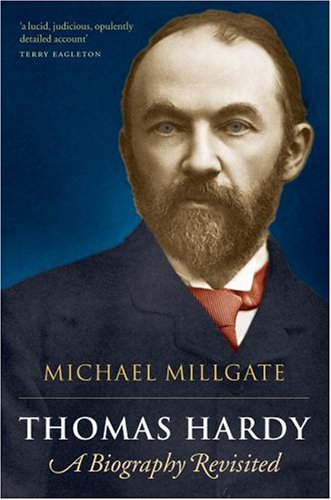
7. Thomas Hardy: A Biography Revisited
$3.88
8. Wessex Tales: That Is to Say,
$12.36
9. Life's Little Ironies (Dodo Press)
10. Thomas Hardy: His Life and Work
$23.13
11. The Cambridge Companion to Thomas
 
12. Far From the Madding Crowd By
$4.00
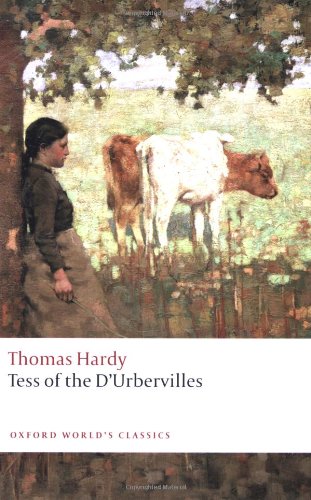
13. Tess of the D'Urbervilles (Penguin
$3.88
14. Wessex Tales: That Is to Say,
 
$25.00
15. Complete Poems of Thomas Hardy
 
$1.01
16. The Return of the Native (Bantam
$20.99
17. The Mayor of Casterbridge (Large
 
18. The Life and Work of Thomas Hardy,
$3.94
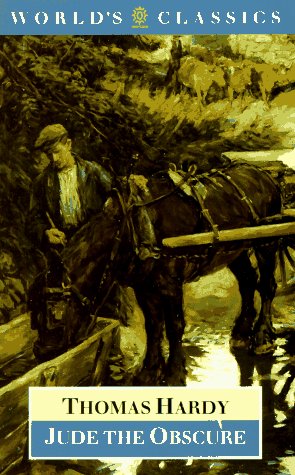
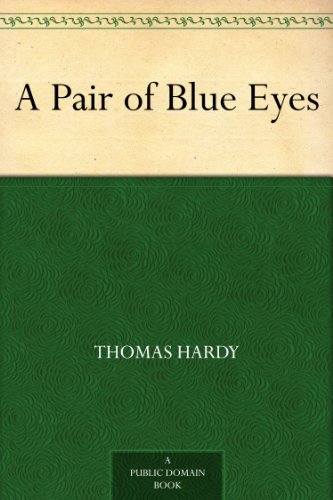
19. A Pair of Blue Eyes (Oxford World's
 
$6.21
20. The Mayor of Casterbridge (Penguin

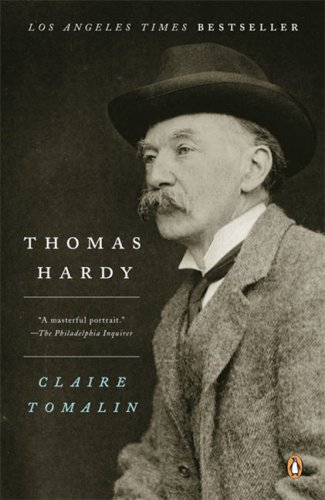
1. Thomas Hardy
by Claire Tomalin
Hardcover: 512 Pages (2007-01-18)
list price: US$35.00 -- used & new: US$6.99
(price subject to change: see help)
Asin: B000VPNCS6
Average Customer Review: 4.0 out of 5 stars
Canada | United Kingdom | Germany | France | Japan
Editorial Review

Book Description
Whitbread Award winner Claire Tomalin's seminal biography of the enigmatic novelist and poet Thomas Hardy.

Today Thomas Hardy is best known for creating the great Wessex landscape as the backdrop to his rural stories, starting with Far from the Madding Crowd, and making them classics. But his true legacy is that of a progressive thinker. When he published Tess of the d'Urbervilles and Jude the Obscure late in his career, Hardy explored a very different world than that of his rural tales, one in which the plight of lower classes and women take center stage while the higher classes are damned. Ironically, though, Hardy remained cloaked in the arms of this very upper class during the publication of these books, acting at all times in complete convention with the rules of society. Was he using his books to express himself in a way he felt unable to do in the company he kept, or did he know sensationalism would sell? Award-winning author Claire Tomalin expertly reconstructs the life that led Hardy to maintainconventionality and write revolution.

Born in Dorset in 1840, Hardy came of age in rather meager circumstances. At sixteen, he left home for London and slowly worked his way through many rejections to become a published writer. Despite his mother's admonitions to never marry, he wed Emma Lavinia Gifford in 1874 and, even though he fell easily in love, stayed true to her till her death in 1912. He frequently toured London society, but few felt they knew the true Hardy, and it is this very core of self that Tomalin elegantly brings us to know so completely.

Hardy's work consistently challenged sexual and religious conventions in a way that few other books of his time did. Though his personal modesty and kindness allowed some to underestimate him or even to pity him, they did not prevent him from taking on the central themes of human experience-time, memory, loss, love, fear, grief, anger, uncertainty, death. And it was exactly his quiet life, full of the small, personal dramas of family quarrels, rivalries, and at times, despair, that infuses his works with the rich detail that sets them apart as masterpieces. In this engrossing biography, Tomalin skillfully identifies the inner demons and the outer mores that drove Hardy and presents a rich and complex portrait of one of the greatest figures in English literature. ... Read more

Customer Reviews (10)

4-0 out of 5 stars A portrait of a writer and poet
Thomas Hardy's fame today, almost 70 years after his death, rests on great novels like THE RETURN OF THE NATIVE, TESS OF THE D'URBERVILLES and THE MAYOR OF CASTERBRIDGE. It is thus surprising to learn from biographer Claire Tomalin that he considered himself mainly a poet who wrote novels only for the money. Taking him at his word, Tomalin devotes major attention throughout her book to how his poetry reflects the twists and turns of his career, the people he knew and loved (or disliked) and the places he visited.

Tomalin has been involved in British literary journalism for many years. A few years ago she wrote an engrossing book about Ellen Ternan, the young actress with whom Charles Dickens carried on a secret affair toward the end of his life. Her study of Hardy also looks at her subject's private life, but she functions also as a literary critic, subjecting Hardy's novels, poetry, short stories and other writings to a good deal of clear-eyed and fair-minded critical appraisal. The book, however, gets off to a slow start. She takes a chapter or two to find the right biographical voice, but once she has found it, she uses it skillfully indeed.

What readers are likely to find new in her book is its detailed attention to Hardy's poetry. He wrote over a thousand poems, many of them closely reflecting his life experience, and Tomalin's text is sprinkled liberally with samples. Read purely as poetry they are mostly excellent, but as here skillfully related to the events that prompted them, they take on even greater interest. On the evidence of this book, Hardy seems woefully underrepresented in most anthologies of British poetry.

Hardy was born in 1840 to a family of humble construction workers in Dorset on the channel coast of England southwest of London. He seemed headed for a humdrum career in architecture until he got the writing bug and produced a controversial novel that no publisher would touch. He was, however, sufficiently encouraged to keep at it, and the publication of DESPERATE REMEDIES in 1871 began his career's upward climb. He never attended a university, married the daughter of a country clergyman and was only gradually accepted by the class-conscious English society of his time. As his fame slowly grew, his marriage soured, and by the time Emma Hardy died in 1912, the couple was living as if separated even though they resided in the same house (Tomalin calls the situation one of "mutual incomprehension"). Emma complained in a letter that "he understands only the women he invents --- the others not at all." Hardy's second marriage, to a young admirer, seems in Tomalin's rendering to have been not much more successful --- Florence Hardy comes across as temperamental, easily offended and generally troublesome.

Hardy also lost his Christian faith, a fact that may be reflected in the bleak emotional landscape of his later novels, whose characters struggle, usually vainly, against malignant natural and cultural forces they cannot control. Yet Hardy characteristically continued to attend church services now and then, explaining lamely that it was good for people "to get clean and come together once a week." The man Hardy, Tomalin says, was "hard to know."

Once Hardy became "seriously rich" and famous, he took to enjoying high life among England's literary and social elite. He always insisted that he be buried in his beloved Dorset rather than in Westminster Abbey, but his friends overruled him after his death and there was a full-dress Westminster burial of his ashes, with A. E. Houseman, Kipling, Shaw and Galsworthy among the pallbearers. His heart, however, was first removed and buried in his hometown of Dorchester. Even in death, Hardy managed to have the best of both of his worlds.

--- Reviewed by Robert Finn

5-0 out of 5 stars Tomalin Strikes Again
As a Thomas Hardy fans, I was thrilled when I saw that Claire Tomalin had followed her l997 biography of Jane Austen with this book. I enjoyed Jane Austen: A Life and had positive expectations of the new book; these were more than fulfilled. I find this book even better than the first.
Ms Tomalin writes well and is very thorough, making good use of sources available to her. I don't know if it was that she had more sources available to her this time, but her thoroughness seemed less nitpicky (she is never pedantic)is somewhow than it sometimes appeared in the earlier work. When she gives--parenthetically--the actual number of the first phone the Hardy's acquired, it is a sort of bonus rather than a filler. Hardy may have been a drab little man--as some contemporaries described him--but her description is not drab reading; it is compelling and enlightening, making one's joy in his work even greater than it already was. I am more familiar with his prose than with his poetry, and I particularly appreiated he use of his poems to illustrate aspects of his life and relationships. Ms Tomalin has done a truly lovely job of making me more familiar with my two favorite authors.

3-0 out of 5 stars A Half-Hearted Hardy
No biography by Claire Tomalin can be anything less than interesting and readable, but unfortunately after her superior efforts on the lives of Jane Austen and Samuel Pepys in recent years Tomalin has produced a biography that is neither very needed nor one of her better efforts. Few of the great English writers have a life already better chronicled than Hardy, given the recent excellent biographical study by Millgate (not to mention the two-volume autobiography Hardy himself produced late in life and had published posthumously as a "biography" under the name of his second wife Florence). Tomalin's room to make a new mark here is thus very limited, and she does so by emphasizing his poetry, his relations with his first wife Emma, and by engaging in some very bizarre speculation based on the few areas in Hardy's life where we have very little evidence. Where such speculation was necessary for her lives of Austen and Pepys (given the comparative paucity of supporting materials about their lives, and, in Austen's case, of first-hand documentation of her subject's life), it seems perverse when dealing with a life so thoroughly documented both by Hardy himself and by those who knew them. In one instance, she proposes that because the name of Abel Whittle is THE MAYOR OF CASTERBRIDGE is also the name of a Dorset man who was a contemporary of Hardy's mother Jemima, that this might mean that Hardy collaborated with the plot of that novel with his mother--a highly dubious speculation.

Tomalin is on much more solid ground when she talks about Hardy's famous deteriorating relationship with his odd lonely wife Emma, who grew to loathe her husband in her later years and to document that hatred in great detail in her journals. Emma Hardy emerges as a much more distinct character in this work than does the droll, controlling Hardy or his frustrated second wife Florence, and again it might have been better had Tomalin stuck more to the facts to give a fuller portrait of her three main figures. The biography is also oddly too short, given the length of Hardy's life: odd details, like his brief meeting with the Prince of Wales in the twenties, whereas his relations with other writers (such as E. M. Forster) are given in barely any of the space they deserve. And at times Tomalin does not seem to have taken her narrative through the requisite drafts she might have: for example, midway through one paragraph she suddenly begins to describe in great detail a vitriolic attack Emma Hardy directed against Hardy's sister Mary without any explanation whatsoever of what prompted the tirade. Hardy's life was too rich, and Tomalin too good of a writer, for this book to be unreadable or uninteresting, but given her achievements with her biographies of Austen, Pepys, Katherine Mansfield, Mary Wollstonecraft, and others this book comes as a big let-down.

4-0 out of 5 stars Thomas Hardy by Claire Tomalin
This was a very well-written biography and fulfilled my expectations of Claire Tomalin. It was brisk and readable, and very interesting to the point that I read through the footnotes after finishing the book. I have read many of Hardy's novels but never his poetry, and never a bio of him before. I found this book to be very interesting but it left me with the impression that I need to read earlier Hardy bios by Millgate and others to get a full picture of Thomas Hardy. I think it is a good overview of the man and a great introductory point for deeper study.

5-0 out of 5 stars Masterful biography
Thomas Hardy has been my favorite author ever since I read "The Mayor of Casterbridge" as a sophomore in high school,'way back in 1962. Since that first book, I have read his novels avidly, and with great pleasure, as has my son. This new biography is simply amazing, for it recounts Hardy's full and active life, and even though it shows some of his warts, it gives us a picture of a man who used his life and struggles in his works. Mostly his poetry was generated from his experiences, but many of the characters and scenes of his novels came from his life in the country, and he even used certain buildings in his tales, changing the names, of course. We see here a human Hardy, flawed just as we all are, but striving mightily to give to the world his feelings and thoughts through his works. After reading this book, I appreciate Hardy even more! ... Read more


2. Thomas Hardy: The Complete Poems
by Thomas Hardy
Paperback: 1040 Pages (2002-02-09)
list price: US$33.95 -- used & new: US$27.75
(price subject to change: see help)
Asin: 0333949293
Average Customer Review: 5.0 out of 5 stars
Canada | United Kingdom | Germany | France | Japan
Editorial Review

Book Description
Thomas Hardy's first love was poetry. It was not until 1898, when he was 58, that his first book of poetry, Wessex Poems was published. For the final years of his life he abandoned fiction and devoted himself entirely to poetry; he is now not only regarded as one of the most important English novelists but is also a poet of major stature and increasing popularity. The Complete Poems includes Hardy's more than 900 poems, complemented by detailed notes. Collected here are his eight books of verse, all the uncollected poems, Domicilium, and the songs from The Dynasts. This edition contains an additional poem, The Sound of Her. ... Read more

Customer Reviews (4)

5-0 out of 5 stars Perfect
Perfect! What more needs to be said? This collection was delicious and is a treasure for any Hardy fan. Enjoy every bite!!

5-0 out of 5 stars Hardy Poems
The book was in excellent condition and arrived as promptly as one could expect.As of this date I really haven't had a bad experience with any of my book orders.Thanks so much.

5-0 out of 5 stars Great poems from a great novelist
Considering how depressing Hardy's novels can be, his poems are curiously uplifting, full of descriptive power and a love of rural England.Among his classics are "The Darkling Thrush", "Channel Firing" (great World War I poem), and "The Oxen" (beautiful Christmas poem about nostalgia and faith).

Like his novels, the poems illustrate Hardy's capturing of the past and his sense of something greater than us shaping our lives and our feelings.These are apparent in "Last Words to a Dumb Friend", his lament for his deceased cat.In this, the very home where the cat lived seems to resonate with the cat once he has passed to "the Dim" (i.e., beyond Death):

"And this house, which scarcely took
Impress from his little look,
By his faring to the Dim(NOTE: faring = travelling)
Grows all eloquent of him."

5-0 out of 5 stars The Poet ofPast Time and Past Love
Hardy had a life-long fascination with the paradox of memory: how people, events, and even isolated feelings can be buried by time and later resurrected in the fullness of emotional memory. His central aesthetic principle is that of `the exhumed emotion,' which one can wryly interpret as a graveyard variant of Wordsworth's "emotion recollected in tranquillity." But for Hardy, it was a mysterious capability, like his comment that "I am cut out by nature for a ghost-seer." Hardy's aesthetic of the "grotesque" frequently features past lovers as ghosts or elusive phantoms.

In"She, to HimIII" he muses on the "souls of Now" who would disjoint / The mind from memory, making Life all aim, / And nothing left for Love to look upon." In this brief phrase, from the start of his career, can be found four of the major themes of his entire life and work: the present ("Now"), memory (past), Life, and Love, all in tension with one another.

The volume contains innumerable poems of unrequited love, regretted love, guilty love, repentant love, etc. etc. One of the great English poets of the 20th century. Ranks with Yeats and above Heaney. ... Read more


3. Far from the Madding Crowd (Modern Library Classics)
by Thomas Hardy
Paperback: 512 Pages (2001-12-11)
list price: US$7.95 -- used & new: US$4.30
(price subject to change: see help)
Asin: 037575797X
Average Customer Review: 4.5 out of 5 stars
Canada | United Kingdom | Germany | France | Japan
Editorial Review

Book Description
Far from the Madding Crowd, Hardy’s passionate tale of the beautiful, headstrong farmer Bathsheba Everdene and her three suitors, firmly established the thirty-four-year-old writer as a popular novelist. According to Virginia Woolf, “The subject was right; the method was right; the poet and the countryman, the sensual man, the sombre reflective man, the man of learning, all enlisted to produce a book which . . . must hold its place among the great English novels.” Introducing the fictional name of “Wessex” to describe Hardy’s legendary countryside, this early masterpiece draws a vivid picture of rural life in southwest England.

This Modern Library Paperback Classic is set from the 1912 Wessex edition and features Hardy’s map of Wessex. ... Read more

Customer Reviews (13)

5-0 out of 5 stars HARDY CLASSIC
EXCELLENT-HARDY DOES A WONDERFUL JOB OF DEVELOPING CHARACTERS AND PLOT-HE'S AN EXCELLENT WRITER

5-0 out of 5 stars Forces of Nature
FAR FROM THE MADDING CROWD, the first of Thomas Hardy's 'Wessex' novels, tells the story of a small troupe of farmers and their workers in a sheep-farming community in the fictitious county of 'Wessex'.

Gabriel Oak has been a shepherd since his teenage years, as his father was before him, but he's moved up and purchased, on credit, his own farm. The work is hard, but he is confident that he will succeed, and takes pride in being his own man. Then one day, a new woman arrives in town. Bathsheeba Everdene is beautiful, headstrong, intelligent, but incurably vain; Farmer Oak falls in love with her immediately. A few months later, he proposes, and is utterly rejected. Bathsheeba moves on to care for her dying uncle, and take over his farm. Gabriel continues farming - until tragedy strikes.

He and Bathsheeba will cross paths again, this time not as lovers, but as mistress and servant. Bathsheeba's beauty, vanity and impetuousness leave a trail of carnage in her wake, and Gabriel can only watch on as lives are destroyed, farms are ruined, and his own heart is crushed repeatedly.

Hardy is famous for his fatalism, and this is displayed no more than in the character of Bathsheba Everdene. She is not an evil person, as the above summary would suggest - but her stunning beauty and fierce intelligence combine with her vanity and impulsivity to create something like a force of nature, and though she means only good she seems to be able to do nothing but wrong by those who care for her. She has no more control over her nature than she does over the weather. One of the most interesting aspects of this character is that her vices - vanity, impulsivity, which Hardy attributes to her being young and beautiful - lead to the downfall of others, but she is continuously saved from downfall by her own intelligence and inner personal strength.

REal tragedy finally does strike Bathsheba, but rather than let it destroy her as retribution for her wicked ways, she grows from it. We may not be able to escape the hardship of life, Hardy seems to be saying, but we can grow and prosper by learning from it.

This was a fantastically entertaining book. The only warning that I could give with it is that it is slow-moving. The action comes in fits and spurts, and Hardy has a penchant for elaborate descriptions of the countryside, for farmhouses, churches and festivals. They are beautifully written, but take time to digest fully. Highly recommended.

5-0 out of 5 stars No need for titles
vivid, lucidly written, conjuring up images of serene hillsides and country life at every opportunity; you never feel less than a central part of the story, being able, thanks to Hardy's joyous descriptions, to picture every scne and character in the greatest of detail and desiring nothing more than to join the number of Wessex's inhabitants. Truly a wonderful book.

5-0 out of 5 stars A masterpiece of brilliant fiction
This book has everything - sumptuous and beautiful prose, brilliantly realized characters, a magnificent page-turning plot, superb use of the English language, and a relatively happy ending.If you ever thought Thomas Hardy was not for you, read this book, it will change your mind forever.A classic among classics.Hardy's ability to construct sentences that perfectly convey the message is second to none. His use of vocabulary, his powers of decription, and his uncanny insight into human nature will make you practially weep with envy.

5-0 out of 5 stars Far From Ordinary
Hardy is not my favorite author by any stretch of the imagination, but this is a work of beauty. Unlike other Victorian works (like those of Jane), "Far From the Madding Crowd" leave the chattering jiberish of scheming aristocrats behind to focus on the drama of the country and the working class. Also, this novel explores the "Woman Question" of the day (place in society) and presents a strong willed lead that breaks many of the molds of the time. Loyalty, love, loss, and understanding are all very beautifully and strongly discussed as well. A novel that should be required reading for all students. ... Read more


4. Selected Poems (Penguin Classics)
by Thomas Hardy
Paperback: 320 Pages (1998-12-01)
list price: US$12.00 -- used & new: US$6.79
(price subject to change: see help)
Asin: 0140436995
Average Customer Review: 5.0 out of 5 stars
Canada | United Kingdom | Germany | France | Japan
Editorial Review

Book Description
Only after Hardy's death did his poetry begin to receive theacclaim it demands. Experimenting vigorously with rhythm, stress andverse forms, Hardy colors the depths of his thematic efforts withtechnical vibrancy. Whether dwelling on personal grief or tender domesticdramas, his genius for rhetorical ambiguity continues to challengecritical expertise. ... Read more

Customer Reviews (3)

5-0 out of 5 stars A minor disclaimer
Despite the increasing place Hardy's poetry has in the canon of English Literature it seems to me that he falls short of the very first rank. While he has a clanking originality of his own his poetry always seems to me lacking in a deeper soul music and sympathy. Consider one of his most well- known poems, 'Hap'
HAP

If but some vengefulgod would call to me
From up the sky, and laugh:"Thou suffering thing,
Know that thy sorrow is my ecstasy,
That thy love's loss is my hate's profiting!"
Then wouldI bear it , clench myself, and die,
Steeled by the sense of ire unmerited;
Half-eased in that a Powerfuller than I
Had willed and meted me the tears I shed.

But not so.How arrives it joy lies slain,
And why unblooms the best hope ever sown?
-Crass Casualty obstructs the sun and rain,
And dicing Time for gladness casts a moan...
These purblind Doomsters had as readily strown
Blisses about my pilgrimage as pain.

This poem centers on a basic Hardy theme, the cruelty of chance and accident which rule the world. Or to say this another way the lack of atraditional caring God who makes order and sense of the world.
While it is true that I am not especially enamored of this idea as basis for one's ultimate world- view my objection to the poem comes for other reasons. I do not think that this kind of abstract explaining is very effective as poetry.I again do not feel its music or deep soulfulness.
Again I may be completely wrong about this.

5-0 out of 5 stars one of the greatest poetry collections
After the Library of America edition of Robert Frost's poetry, this might be the best collection of poetry there is. Not only is Hardy one of the best poets ever (easily top five in the English language), but Mezey does a great job at putting together this collection. He selects the best of Hardy's poetry and a highly representative selection as well. His introduction is very well written and highly informative. It's like taking a quick class on Hardy. The poems are very much annotated, almost too much, but the notes are at the back of the book, so they are unobtrusive. There is a chronology and Mezey includes a few quotes, some of them quite witty, from Hardy. And all for an affordable price. You really can't beat this, and Hardy is one of those poets that should be on everyone's shelf.

A quick list of my favorite Hardy poems: Hap; Neutral Tones; At a Hasty Wedding; The Last Chrysanthemum; The Darkling Thrush; Mad Judy; The Ruined Maid; The Man He Killed; Channel Firing; Ah, Are You Digging on My Grave?; Without Ceremony; The Haunter; The Voice; His Visitor; She Charged Me; At Tea; Over the Coffin; In the Moonlight; Near Lanivet, 1872; Something Tapped; The Ballet; A Backward Spring; At a Country Fair; A Night in November.

5-0 out of 5 stars The Best Hardy Collection
If you are looking for a collection of Hardy's poetry, look no farther than this collection. The Penguin editors have done an incredible job of organizing the dense, complex body of Hardy's work into a very readable collection. This is more than just a simple "Hardy's greatesthits." Yes, there are the standard favorites here, but there is alsoan impressive collection of the writer's more obscure work. Reading theentire contents of this book is the best way to see the breadth of Hardy'sexistential and metaphysical angst. ... Read more


5. A Laodicean (Penguin Classics)
by Thomas Hardy
Paperback: 480 Pages (1998-01-01)
list price: US$12.00 -- used & new: US$4.95
(price subject to change: see help)
Asin: 0140435069
Average Customer Review: 4.0 out of 5 stars
Canada | United Kingdom | Germany | France | Japan

Customer Reviews (4)

5-0 out of 5 stars A Mine of Cultural Exploration
I have read all of Hardy many times over.But this book has a special magic to it--the declining aristocracy, the emerging middle class, and religious dissenters.The formulas are all here.The plot is ludicrous towards the end; but the start, the germ, is fascinating.

For me, what this novel leaves out as it were is more important than what's here.By this I mean, I'd love for Hardy to have explored a theme that, apparently, hasn't really gotten explored and this novel would have been be a perfect opportunity for elaboration: that is, the persistence of reactionary Gothic in the midst of Victorian progress.Hardy does explore the nostalgia after a fashion: Paula Power in the end wishes she were an aristocrat and her castle intact.Well taken.

But what Hardy could have explored and didn't (he's hardly to blame) is the more global persistence of the gothic as a thoroughly middle-class hallmark of respectability, and even sensibility, given the fact that the gothic began life as a thoroughly ant-modern phenomenon.We think of all the grizzly "shilling shockers" of earlier decades.How is it psychologically, psychiatrically, that Victorians clung so to the past--a past with deep and obvious ant-progressive, anti-technological, commitments; even as they saw themselves as forging a new world?There a great Freudian "backward glance" here.Nostalgia, religious piety in the midst of the "ache of modernism", obsessions with death?Is this all there is to it? It sounds as if it's rich material for a soul doctor.

Read the novel.It's good.

5-0 out of 5 stars A Laodicean is a fine 1881 love story by Thomas Hardy
The church is Laodicea was wishy-washy in its faith commitment to Christ. A Laodicean, therefore, is someone who is lukewarm. The lukewarm lady in this Victorian lady is Paula Power. Paula is the daughter of a later railroad tycoon Her very name "Power" is a symbol for the power of the industrialized world of railroads and progress. As the novel begins she stands in a Baptist chapel preparing to be baptized. At the last moment she refuses the sacrament.
This scene is the first sight the young architect George Somerset has of the woman he will work for and love. Somerset and his rival architect Havill engage in a contest to see who will get a lucrative commission to renovate ancient Castle De Stancy purchased by Paula's wealthy father. The DeStancy's represent the old aristocracy. Paula is friendly with Charlotte De Stancy and owns the castle.Paula is beautiful with a mind all her own. Not a shrinking lilly is she!
The novel has two love triangles. Paula is loved by Somerset and Captain William De Stancy the brother of Charlotte and father of his bastard son Will Dare 9 (who dare's to do dirty tricks with a will of his own!). De Stancy is stationed near the castle following years in India. Dare is a photographer who assists Somerset in his architectural drawings. He will steal the plans of the castle restoration giving them to the rival architect Havill. He will also claim that Somerset is a gambler and a drunk by forging a telegram and a photo of the young man.The novel is thus using a telegram and a photograph to advance the plot.
Photography and telegraphing are also symbols of the coming age of the modern world. Dare is a deceitful odious man whose plots for his Dad to wed the wealthy Paula are foiled in the end.
The second triangle involves George who is loved by Paula (her commitment to him is often lukewarm!) and the mousy Charlotee DeStancy.
The novel has many chapters set in the watering holes of France and Germany where the characters go for the waters and gaming. The book is well illustrated by the famed George DuMaurier who also wrote the novel
"Trilby."
Hardy was himself a trained architect. The novel has philsophical disucssions intermingled with the love story. The book has a relatively happy ending which is surprising.Tragedy is the usual endof most Hardy books. Hardy was a skeptic and an agnostic who finest work is in tragedy and not comedy.
This is a fine book with a story well told. It is not a major novel by Hardy but is still worth several hours of reading enjoyment.

4-0 out of 5 stars Not Very Subtle, But Often Surprising
Thomas Hardy's 1881 novel, "A Laodicean" is often overlooked among his more noted works, like "Tess" or "Jude".While "A Laodicean" is not the most subtly developing Victorian novel in terms of romance, it is sophisticated and worth reading in other aspects.Subtitled "A Story of To-day," Hardy's novel effectively explores the relationship between the coming age of technology and the death of the aristocracy in pre-20th century Britain.

The novel begins with George Somerset, a flighty and intelligent young man who has tinkered with several pursuits, but is finally settling into architecture.Wandering about the vicinity of Markton village, he comes upon a rustic baptism.Paula Power, a young heiress whose late father was a railroad tycoon, refuses to be baptized, raising Pastor Woodwell's charge against her that she is a "Laodicean," a lukewarm believer.George is engaged to work on the restoration of Paula's new residence, Castle De Stancy.Somerset's fascination with Power is born and the action of the novel begins in earnest.

Some of the themes of interest include technological advance - the telegraph's intrusion into the most ancient spaces - the gothic castle and photography.With the image of the crumbling gothic Castle De Stancy, Hardy questions the relevance of hereditary aristocracy and religious fervor to the cosmopolitan modern age.With Paula, Hardy's lifelong interest in the independent heroine is complicated and subtly nuanced.With the fascinating Mr. Dare, Hardy plays with his gothic and colonial subtexts, prefiguring Bram Stoker's late 1890's "Dracula."

"A Laodicean" is worth reading because it is itself lukewarm - unsure whether progress is always positive and uncomfortable with the flippancy of both the aristocracy and new wealth.It is a book whose very instabilities and insecurities make it engaging.

3-0 out of 5 stars Not one of Hardy's best, but an interesting read.
One of the interesting aspects of writing a thesis on imagery in Hardy's novels was getting to read some of the lesser known of his writings, this one included. While there is good reason for many of them to be little considered, "A Laodicean" is still worth a read if you are aHardy fan. It was largely written while he was bedridden after a mysteryillness in 1880-1881. In the novel. Hardy tries to capture the changingworld in the England of his day. Aristocracy and family names haddominated, but new wealth in the form of industry and technology werebeginning to assert themselves. Thus, his heroine Paula Powers can't makeup her mind which of her two suitors, an aristocrat and an architect, shereally wants. Even when she makes her choice, there is still doubt in hermind right to the end of the novel, hence the description of her as a`Laodicean', (from Revelation 3:14-22) someone who is neither hot nor cold.Many of the images and themes which we associate with Hardy's better knownnovels are here, but it never quite hits the heights. Still, it isinteresting to see this take on the changes on England's society near theend of the 19th century. ... Read more


6. The Woodlanders
by Thomas Hardy
Paperback: 368 Pages (2007-08-09)
list price: US$49.99 -- used & new: US$49.99
(price subject to change: see help)
Asin: 1435328159
Average Customer Review: 4.5 out of 5 stars
Canada | United Kingdom | Germany | France | Japan
Editorial Review

Book Description
Giles Winterbourne and Grace Melbury were virtually promisedto one another; now her father has other plans, forcing her marriage toEdred Fitzpiers. His philandering and poverty sour their marriage, andthe woodman remains sunk in dogged devotion. The events that follow areechoed in the bewitching but pitiless cycle of the seasons, as thevillage of Little Hintock is caught up inextricably in the natural world.Download Description
Winterborne sped on his way to Sherton Abbas without elation and without discomposure. Had he regarded his inner self spectacularly, as lovers are now daily more wont to do, he might have felt pride in the discernment of a somewhat rare power in him--that of keeping not only judgment but emotion suspended in difficult cases. But he noted it not. ... Read more

Customer Reviews (15)

4-0 out of 5 stars Foreshadowing Tess
The Woodlanders is said to be one of Hardy's more descriptive novels and Hardy is also said to have a love for this part of the country. I thought this was a beautiful passage:

"From the other window all she could see were more trees, jacketed with lichen and stockinged with moss. At their roots were stemless yellow fungi like lemons and apricots, and tall fungi with more stem than stool. Next were more trees close together, wrestling for existence, their branches disfigured with wounds resulting from their mutual rubbings and blows. It was the struggle between these neighbors that she had heard in the night. Beneath them were the rotting stumps of those of the group that had been vanquished long ago, rising from their mossy setting like decayed teeth from green gums. Farther on were other tufts of moss in islands divided by the shed leaves--variety upon variety, dark green and pale green; moss-like little fir-trees, like plush, like malachite stars, like nothing on earth except moss."

And this description of Winterborne as a wood-god really stood out for me:

"He rose upon her memory as the fruit-god and the wood-god in alternation; sometimes leafy, and smeared with green lichen, as she had seen him among the sappy boughs of the plantations; sometimes cider-stained, and with apple-pips in the hair of his arms, as she had met him on his return from cider-making in White Hart Vale, with his vats and presses beside him."

It is said that Winterborne was a creation derived from Hardy's own father.

The book also has the typical Hardy realism and tragedy based on innocence and wrong choices, the unfair position of women, mere chance, or should I say Chance, in keeping with the way Hardy uses it.For me, somehow, the more descriptive nature of the book, while not that descriptive--Hardy is a realist not a romantic, gave the book a hazy, almost somnolent quality that almost distracted from the clarity and meaning of the book. Maybe it was Hardy's intention to have the woods form a kind of shadowy hold over the characters, the readers--there's the strange effect a single tree had on Winterborne's father, and another on Grace. But Hardy's description of the moors in Return of the Native had more power for me. Also, the characters seemed undeveloped to me, especially Grace, who was a main character. Marty seemed more real, though maybe that was intentional as the book ends with her, and poor Grace floated un-fixedly in the non-place between two classes.

I love Hardy's novels and poetry otherwise I may have given it 3 stars. I just read it--it may be I need to ruminate on it for awhile.

5-0 out of 5 stars Visit Wessex in the Woodlanders and Savor the prose of Thomas Hardy
The Woodlanders is the eleventh novel by Thomas Hardy. Hardy takes us to an obscure village in his mythical Wessex. The novel portrays the beautiful Grace Melbury a nubile young miss coddled by her parents; eager for glamour and disdainful of bucolic boredom. Grace is courted by Giles Winterbourne a local rustic but cast him off to wed Dr. Edred Fitzpiers the local doctor. The marriage is a disaster for Fitzper lusts for Madame Charmond. He also has a fling with Suke a local girl.
Fitzpiers flees to the Continent while Grace seeks reconciliation with
Winterborne. The couple hope to wed under a newly passed Parliamentary
law dealing with the right of women to obtain a divorce.
All goes wrong. Accidents occur as chance and fortune always play a part in the Hardy world. The novel does end happily which is rare for Hardy.
Hardy knew the English countryside as it moved from spring to winter.
His description of nature is beautifully written. Hardy also knew the south of England as it was moving from the rural nineteenth century to the modern world of the coming twentieth century.
The Woodlanders is one of the lesser known Hardy novels that is well worth your attention. The story is well told with many interesting and exciting plot developments which will hold the attention. Well recommended.

5-0 out of 5 stars NOT PART OF THE "BIG 5" EH...WELL MAKE IT THE "BIG 6!"
The Woodlanders (1887) is one of Thomas Hardy's finest novels, which deals with doomed love in a gloomy rural "partly real and partly dream" country of Wessex.

It is one of Hardy's favorite and if Hardy liked it, I do to, especially since I have never read this novel....I liked The Return of the Native...

THE BIG 6

FAR FROM THE MADDING CROWD -1874
THE RETURN OF THE NATIVE -1878
THE MAYOR OF CASTERBRIDGE - 1886
THE WOODLANDERS - 1887
TESS OF THE D'URBERVILLES - 1891
JUDE THE OBSCURE- 1895

5-0 out of 5 stars Disaster at the altar in the church of Hardy.
"It would have made a beautiful story," Thomas Hardy said about this novel, "if I could have carried out my idea of it; but somehow I come so far short of my intention."

"I wish you had never thought of educating me," Thomas Hardy's protagonist tells her father at one point in this novel, "because cultivation has only brought me inconveniences and troubles" (pp. 232-33). Hardy (1840-1928) wrote his eleventh novel in 1887, before his better-known masterpieces, TESS OF THE D'URBERVILLES (1891) and JUDE THE OBSCURE (1895), and a year after THE MAYOR OF CASTERBRIDGE (1886). Set in the "partly real and partly dream country" of Hardy's Wessex, in the "sequestered" forest community of Little Hintock (located "outside the gates of the world," p. 6), a place where "loneliness is not so very lonely after a while" (p. 83), THE WOODLANDERS is about doomed love, betrayal, and social restraints, and like Hardy's other work, it succeeds as a satisfying story of a romantic disaster in Hardy's cruel universe. The novel tells the sad tale of a woman, Grace Melbury, forced to choose marriage between two suitors of different social statures, Giles Winterborne, a local woodlander with a gentle, virtuous nature, and Edred Fitzpiers, an ambitious doctor and a scoundrel. Influenced by her well-intentioned though meddling father, Mr. Melbury, who only wants his daughter to "marry well" (p. 89), Grace's decision ultimately leads to disastrous consequences and, in the end, to a lonely woman worshipping at a dead man's grave. Once again, we discover the course of love is never happy in Hardy's universe.

Rather gloomy for a Victorian romance novel? Well, yes. But reading Victorian fiction does not get any better than reading Thomas Hardy's extraordinary novels. Returning to Hardy's brooding, melancholy fiction after my first encounter with his novels more than twenty five years ago, I am re-discovering Hardy's brilliant ability to convey familiar, primordial truths through his fiction, making him worth reading again and again.

G. Merritt

4-0 out of 5 stars Hardy gone berserk
Hardy classified THE WOODLANDERS with his Novels of Character and Ingenuity, which category included his very best novels (TESS, THE MAYOR OF CASTERBRIDGE, THE RETURN OF THE NATIVE). This 1887 novel is so bizarre, however, that you might feel it belongs more properly with his Romances and Fantasies. In the secluded rustic community of Little Hintock all manner of things are a-brewing: simple Marty South has a thing for cider-merchant Giles Winterbourne, who has been promised for years to marry well-educated Grace Melbury, but Grace's father marries her off instead to philandering Edred Fitzpiers, who has a thing for local wealthy widow Felice Charmond. In this circle of desire all manner of things can go wrong--and, this being Hardy, of course they do. Some of his wildest plot contrivances (including two bizarre scenes wherein the Widow Charmond must convey crucial information to Grace, and Fitzpiers even more crucial information to Grace's father) occur without the redeeming Shakespearean scope of a novel like THE MAYOR OF CASTERBRIDGE which allows you to overlook the wackiness. Still, even if this is lesser Hardy, it's still Hardy, so the novel has such poetically gorgeous evocations of landscape and character as to make everything worthwhile in the end. ... Read more


7. Thomas Hardy: A Biography Revisited
by Michael Millgate
Paperback: 638 Pages (2006-11-09)
list price: US$29.95 -- used & new: US$23.19
(price subject to change: see help)
Asin: 0199275661
Average Customer Review: 5.0 out of 5 stars
Canada | United Kingdom | Germany | France | Japan
Editorial Review

Book Description
Michael Millgate's classic biography of the great novelist and poet Thomas Hardy was first published in 1982. Much new information about Hardy has since become available, often in volumes edited or co-edited by Millgate himself, and many established assumptions have been challenged and revolutionized by scholarly research. In this extensively revised, fully reconsidered, and considerably expanded new edition the world's leading Hardy scholar draws not only upon these new materials but upon an exceptional understanding of Hardy gained from long immersion in the study of his life and work. Many large and small aspects of Hardy's life are here freshly illuminated, including his family background, his fumbling self-education as a poet, his difficult relations with his first wife and hers with his family, his sexual infatuations, his secret collaborations with aspiring women writers, his clandestine composition of his own official biography, and the memory-invoking techniques by which he sustained his remarkable creativity into extreme old age. Thorough, authoritative, and eminently readable, Thomas Hardy: A Biography Revisited is now the standard life of Hardy for a new generation. ... Read more

Customer Reviews (2)

5-0 out of 5 stars A Volume Not To Be Missed
This is not a volume to be passed over. Although Millgate doesn't detail the expansions and revisions to his acclaimed biography of 1982, his learning, refinements, and discriminations make this a new work. Its like will not be found over any horizon you may be looking for--anytime soon.

5-0 out of 5 stars Definitive Thomas Hardy.
Michael Millgate knows his Hardy.After all, he is perhaps the world's leading Thomas Hardy scholar. After publishing his Hardy biography in 1982, Professor Millgate went on to edit the COLLECTED LETTERS OF THOMAS HARDY 1926-27 (1988) and THOMAS HARDY: SELECTED LETTERS (1990). Those letters contained new information about Hardy, which Millgate incorporates into this fully revised, definitive new study of Hardy's life and work.

Because Hardy was such an intensely private person who carefully guarded the pariculars of his life, examining his life in detail was clearly no easy task.However, Millgate not only triumphs in bringing his subject to life in this 625-page biography, but also succeeds in demonstrating that "numerous aspects of A PAIR OF BLUE EYES, UNDER THE GREENWOOD TREE, and even FAR FROM THE MADDING CROWD are clearly autobiographical, and the later evidence of THE WOODLANDERS, TESS OF THE DURBERVILLES, and JUDE urges the conclusion that Hardy's best work tended to have strong and specific roots in his own background and experience" (pp. 186-7).Millgate follows the life of Thomas Hardy from his "solitary" and "remarkably uneventful" childhood (p. 39) in Bockhampton, to his architectural studies (p. 55), through his his difficult marriage to his first wife, Emma (an agnostic woman who became bleakly evangelical--much like Sue Brideshead in JUDE), to his transition from "pessimistic" novelist to an esteemed poet in his later years.Along the way, in his careful analysis of Hardy's writing, Millgate shows that Hardy was a "Pessimistic Meliorist" (p. 378), who "could see only an incomprehensible and probably meaningless universe," but who also "cared deeply about the human condition, perceived value in individual lives, asserted such traditional and Christian values as charity and what he liked to call 'loving kindness,' and thought that things could and indeed get better" (p. 379).

For those, like me, who are fascinated with Thomas Hardy and his novels, this equally fascinating biography should be considered required reading.

G. Merritt ... Read more


8. Wessex Tales: That Is to Say, the Three Strangers, a Tradition of Eighteen Hundred and Four, the Melancholy Hussar, the Withered Arm, Fellow-Townsme
by Thomas Hardy
Paperback: 1 Pages (1978-10)
list price: US$3.95 -- used & new: US$3.88
(price subject to change: see help)
Asin: 0312862768
Canada | United Kingdom | Germany | France | Japan

9. Life's Little Ironies (Dodo Press)
by Thomas Hardy
Paperback: 220 Pages (2007-04-20)
list price: US$16.99 -- used & new: US$12.36
(price subject to change: see help)
Asin: 1406523275
Average Customer Review: 4.5 out of 5 stars
Canada | United Kingdom | Germany | France | Japan
Editorial Review

Book Description
1894 short story collection, by the English novelist, short story writer, and poet who was awarded the Order of Merit in 1910.Download Description
To the eyes of a man viewing it from behind, the nut-brown hair was a wonder and a mystery. Under the black beaver hat, surmounted by its tuft of black feathers, the long locks, braided and twisted and coiled like the rushes of a basket, composed a rare, if some-what barbaric, example of ingenious art. One could understand such weavings and coilings beingwrought to last intact for a year, or even a calendar month; but that they should be all demolished regularly at bedtime, after a single day of permanence, seemed a reckless waste of successful fabrication. And she had done it all herself, poor thing. She had no maid, and it was almost the only accomplishment she could boast of. Hence the unstinted pains.She was a young invalid lady - not so very much of an invalid - sitting in a wheeled chair, which had been pulled up in the front part of a green enclosure, close to a bandstand, where a concert was going on, during a warm June afternoon. It had place in one of the minor parks or private gardens that are to be found in the suburbs of London, and was the effort of a local association to raise money for some charity. There are worlds within worlds in the great city, and though nobody outside the immediate district had ever heard of the charity, or the band, or the garden, the enclosure was filled with an interested audience sufficiently informed on all these. ... Read more

Customer Reviews (2)

5-0 out of 5 stars Just wonderful
What wonderful language! What wonderful characters! If you're looking for happy endings, don't look here. Tragedy, suicide, and deceivement abound in these short stories. (My 1965 hard-cover copy also includes A FEW CRUSTED CHARACTERS.) But if you appreciate remarkable writing that will take your breath away, this is it! Comparable to Hardy's THE MAYOR OF CASTERBRIDGE.

4-0 out of 5 stars A fascinating piece of Hardy
As a great admirer of "Jude the Obscure" and "Tess of the D'Ubervilles," I was intrigued when I saw this collection of some of Hardy's shorter works, and was not disapointed.The common theme runningthrough these sketches is Hardy's dissatisfaction with the institution ofmarriage.Written in Hardy's impeccable style, these stories are short andbiting looks at the circumstances that surround and influence marriage. You'll find few happy endings among these tales, but they are an enjoyableread.It's always a pleasure to immerse oneself in Hardy's world andlanguage, and the twisted little plots Hardy creates show a side of hisgenius I had not previously realized.

These stories are not as profoundas some of Hardy's other works, and, by necessity, the characters are notas well developed.However, I would still recommend this book.For a fanof Tess or Jude, it's a fascinating look into the mind of Hardy at the timehe was writing these novels.And for someone who's never read any Hardy,they are an easy and enjoyable introduction to a wonderful author. ... Read more


10. Thomas Hardy: His Life and Work
by F. E. Halliday
Paperback: 202 Pages (2001-01-01)
list price: US$16.95
Isbn: 1842321293
Canada | United Kingdom | Germany | France | Japan
Editorial Review

Book Description
Hardy's belief that 'The ultimate aim of the poet should be to touch our hearts by showing his own,' is endorsed in his own works - whether poetry or prose, his compassion is what lends it greatness. The full appreciation of his work depends on an understanding of his life: they are so inextricably intertwined that they must be treated together.

With the refined estimation of an expert, Halliday gives us a remarkable introduction to Hardy's anguished soul and brilliant work. ... Read more


11. The Cambridge Companion to Thomas Hardy (Cambridge Companions to Literature)
Paperback: 258 Pages (1999-06-28)
list price: US$29.99 -- used & new: US$23.13
(price subject to change: see help)
Asin: 0521566924
Canada | United Kingdom | Germany | France | Japan
Editorial Review

Book Description
The Cambridge Companion to Thomas Hardy is an essential introduction to this most enigmatic of writers. These newly commissioned essays from an international team of contributors comprise a general overview of all of Thomas Hardy's work and specific demonstrations of his ideas and literary skills. Individual essays explore Hardy's biography, aesthetics, his famous attachment to Wessex, and the impact on his work of developments in science, religion and philosophy in the late-nineteenth century. The volume also contains a detailed chronology of Hardy's life, and a guide to further reading. ... Read more


12. Far From the Madding Crowd By Thomas Hardy
by Thomas Hardy
 Paperback: Pages (1967)

Asin: B000YDQX3G
Canada | United Kingdom | Germany | France | Japan

13. Tess of the D'Urbervilles (Penguin Classics)
by Thomas Hardy
Paperback: 592 Pages (2003-05-27)
list price: US$8.00 -- used & new: US$4.00
(price subject to change: see help)
Asin: 0141439599
Average Customer Review: 4.0 out of 5 stars
Canada | United Kingdom | Germany | France | Japan
Editorial Review

Book Description
Edited with Notes by Tim Dolin and an Introduction by Margaret R. Higonnet ... Read more

Customer Reviews (49)

5-0 out of 5 stars A Certain Classic
Tess of the D'Urbervilles is among the best novels I have read when judged on its purely literary merits.Hardy's command of imagery in his creation of the nuanced satire of society and the values it imposes upon Victorian women is outstanding.And, Hardy uses nature to structure the novel and reflect the plot.He is also able to introduce a fatalist approach to the characters' actions that flows seamlessly with his characterization of them.However, Tess is more than an invaluable piece of English literature.
Tess of the D'Urbervilles is also a strong insight into the forces of nature that shape our lives.It is a tale about the unlucky girl Tess, who has to endure suffering on two fronts: from the man who takes advantage of her, and the man who rejects her.She is symbolic of the person within us all, who is oppressed by the outside world, and depressed from within.She is humanity, and her story will speak to anyone who reads this book.

5-0 out of 5 stars Highly Recommended.
Thomas Hardy is a definete for anyone serious about literature. Tess of the D'Urbervilles is not to be passed up, it's a treat. I didn't find it at all over descriptive nor boring.

5-0 out of 5 stars One of the most deeply moving novels in English literature
Even reviewing Tess makes me choke back tears.Hardy develops one of the most truely beautiful female characters in all of English literature; then, like an evil wizzard, slowly tears her to shreds and finally grounds her into dust.

A modern young woman growing up now might find it hard to identify with Tess.She is a poor farm worker and a product of the cultural changes at the beginning of the industrial revolution in England.But there is enough of a study of basic human nature here to make her story valuable to just about any reader.

Hardy's prose is gifted, deep descriptive narative and character development.You may end up loving Tess; it's hard not to hate Hardy.

3-0 out of 5 stars Sad classic novel
This is a classic novel that is one of the saddest.It involves a very likeable, innocent country girl who is seduced by a cruel employer.She has a child by that union that dies early in infancy.She later meets a man who loves her but upon learning her past rejects her.She then meets up again with the first man, who forces her to be his mistress.The ending is very sad.

Through it all Tess maintains her dignity and is a very likeable character.This novel shows the extreme cruelty of legalistic morality that is not tempered by compassion and respect for others, particularly women during this time period.

The book is very well written if you like poetic descriptions and vivid imagery.Hardy is a master of both, and of the human drama.

3-0 out of 5 stars Societys' Strictures
Having read Tess several times years ago and then revisiting it now, I am reminded how frustrating a book it can be: frustrating that Hardy's 19th century England could be so cruel; frustrating that Tess (and others) blamed herself for being ruthlessly violated at 16; and frustrated at Angel's initial behavior after he learns of Tess' tragic and blameless past. It's just too incomprehensible for someone living in the 21st century to relate to--and you wonder about Angel's incompatible behavior--for someone of his supposed character. As much as I love the pastoral beauty of Hardy's described vales and heaths, I loathe the society under which the characters lives are always ruined. The whole books starts to seem silly and tedious when viewed from such a perspective. ... Read more


14. Wessex Tales: That Is to Say, the Three Strangers, a Tradition of Eighteen Hundred and Four, the Melancholy Hussar, the Withered Arm, Fellow-Townsme
by Thomas Hardy
Paperback: 1 Pages (1978-10)
list price: US$3.95 -- used & new: US$3.88
(price subject to change: see help)
Asin: 0312862768
Canada | United Kingdom | Germany | France | Japan

15. Complete Poems of Thomas Hardy
by Thomas Hardy
 Paperback: 1002 Pages (1982-05)
list price: US$23.00 -- used & new: US$25.00
(price subject to change: see help)
Asin: 0020696000
Canada | United Kingdom | Germany | France | Japan

16. The Return of the Native (Bantam Classics)
by Thomas Hardy
 Paperback: 384 Pages (1982-03-01)
list price: US$4.95 -- used & new: US$1.01
(price subject to change: see help)
Asin: 0553212699
Average Customer Review: 4.5 out of 5 stars
Canada | United Kingdom | Germany | France | Japan
Editorial Review

Book Description
This fine novel sets in opposition two of Thomas Hardy's most unforgettable creations:  his heroine, the sensuous, free-spirited Eustacia Vye, and the solemn, majestic stretch of upland in Dorsetshire he called Egdon Heath.  The famous opening reveals the haunting power of that dark, forbidding moon where proud Eustacia fervently awaits a clandestine meeting with her lover, Damon Wildeve.  But Eustacia's dreams of escape are not to be realized--neither Wildeve nor the retuming native Clym Yeobright can bring her salvation.  Injured by forces beyond their control, Hardy's characters struggle vainly in the net of destiny.  In the end, only the face of the lonely heath remains untouched by fate in this masterpiece of tragic passion, a tale that perfectly epitomizes the author's own unique and melancholy genius.Download Description
One of Hardy's classic statements about modern love, courtship, and marriage, The Return of the Native is set in the pastoral village of Egdon Heath. The fiery Eustacia Vye, wishing only for passionate love, believes that her escape from Egdon lies in her marriage to Clym Yeobright, the returning "native, " home from Paris and discontented with his work there. Clym wishes to remain in Egdon, however -- a desire that sets him in opposition to his wife and brings them both to despair. Behind the narrative of The Return of the Native lie the tragic fates of Flaubert's Madame Bovary and Oedipus, and in writing the novel Hardy endowed his ordinary characters with the status of tragic heroes, seen especially in the ill-fated lovers and Damon Wildeve, who spoil their chances to master their own destinies. ... Read more

Customer Reviews (62)

5-0 out of 5 stars Rickman reading of Return of the Native
Fantastic reading of the book. The first chapter is slow due to detailed writing of scenic attributes but once the plot unfolds it is riveting. It is easy to feel for the characters due to the unbelievablejob that Alan Rickman does narrating the story, He has the proper voice inflections for each character to really project the appropriate emotions meant by the author. I have listened to book narrations before that have failed miserably at that important aspect and subsequently ruined the experience. Rickman is a master at it.Although it is fairly long, it did not detract at all as I listened to it on the way to work each day. I actually found myself wishing it were longer!I would highly recommend "reading" this via the audio book.

5-0 out of 5 stars A Suberb Recording
First, let me confess that I bought this because I am a fan of Alan Rickman's wonderfully rich, mellifluous baritone and the idea of spending hours listening to him read one of the classics of English literature is was absolute heaven to me. And, I can honestly say, I was not disappointed; the recording is absolutely brilliant.

Using ever nuance and range of his distinctive Rickmans each character that poulates Egdon Heath his or her own distinctive voice and cosistantly applies it throughout from the beginning to the end of the story. When he reads the description of the wild and desolate heath, Rickman's voice turns Hardy' prose into sublime poetry.

5-0 out of 5 stars Get the CD Version January 2007
Get the CD version just out .
When I had to read this book in High School I found it excruciatingly BORING. But Alan Rickman did such a good job, now I think this story is BETTER than Wuthering Heights.

From AudioFile
" The suffering that follows is mitigated somewhat by the ending, but more by the mastery of Alan Rickman's reading. At the start, Rickman senses the voice for each character in Hardy's fictional world, and he maintains each character's personality throughout. He even manages to project Hardy's subtle shadings of tone with the rhythm and tempo of his narration, throwing in a song here and there because, in spite of his gloom, there is a festive strain to Hardy, as well. If you have a hard time reading this classic English writer, this is how to do it. "P.E.F. (c) AudioFile, Portland, Maine.
Yes and he can even do the womens voices without doing falsetto ! Rickman won the Best Talking Book or Talkie thing for this and deservedly so.
I enjoy talking books and often use them as I drive long distances and this is the best one I have heard so far. I hope Alan Rickman , or another English actor, reads some more Thomas Hardy books for us in future.

3-0 out of 5 stars Good but nothing spectacular.
Hardy is very good at descriptions.The language he uses makes the people and scenery come alive.While this is true I personally feel that I would have preferred to read other books over this one.A good book but nothing special.

5-0 out of 5 stars The return of the native
This book has been taught in lit classes for years excellent but sad book.
Michael B Vye ... Read more


17. The Mayor of Casterbridge (Large Print Edition)
by Thomas Hardy
Paperback: 362 Pages (2007-03-08)
list price: US$20.99 -- used & new: US$20.99
(price subject to change: see help)
Asin: 1426461208
Canada | United Kingdom | Germany | France | Japan
Editorial Review

Product Description
One evening of late summer before the nineteenth century had reached one-third of its span a young man and woman the latter carrying a child were approaching the large village of Weydon-Priors in Upper Wessex on foot. ... Read more


18. The Life and Work of Thomas Hardy, 1840-1928
by Thomas Hardy
 Paperback: 641 Pages (1989-07-17)

Isbn: 0333461673
Canada | United Kingdom | Germany | France | Japan

19. A Pair of Blue Eyes (Oxford World's Classics)
by Thomas Hardy
Paperback: 464 Pages (2005-11-03)
list price: US$11.95 -- used & new: US$3.94
(price subject to change: see help)
Asin: 0192840738
Average Customer Review: 4.0 out of 5 stars
Canada | United Kingdom | Germany | France | Japan
Editorial Review

Book Description
'Elfride Swancourt was a girl whose emotions lay very near the surface.'Elfride is the daughter of the Rector of Endelstow, a remote sea-swept parish in Cornwall based on St Juliot, where Hardy began the book during the first days of his courtship of his first wife Emma. Blue-eyed and high-spirited, Elfride has little experience of the world beyond, and becomes entangled with two men: the boyish architect, Stephen Smith, and the older literary man, Henry Knight.The former friends become rivals, and Elfride faces an agonizing choice.Written at a crucial time in Hardy's life, A Pair of Blue Eyesexpresses more directly than any of his novels the events and social forces that made him the writer he was.Elfride's dilemma mirrors the difficult decision Hardy himself had to make with this novel: to pursue the profession of architecture, where he was established, or literature, where he had yet to make his name? ... Read more

Customer Reviews (1)

4-0 out of 5 stars A fun introduction to Hardy
This is Hardy's third novel (1873), and is set in the southwest area of England (Cornwall), where he met his first wife. It is the story of young, impetuous Elfride, and her romance with two men: the young architect Stephen Smith and the urbane, educated lawyer, Henry Knight. As common with his other novels, it reflects elements of tragedy, irony, and class advancement. Elfride and Knight are low middle-class persons trying to advance in society and in love. Though not as intricate and challenging as his later novels, it is an entertaining and illuminating read nonetheless. ... Read more


20. The Mayor of Casterbridge (Penguin Classics)
by Thomas Hardy
 Paperback: 448 Pages (1998-04-01)
list price: US$7.95 -- used & new: US$6.21
(price subject to change: see help)
Asin: 0140435131
Average Customer Review: 4.5 out of 5 stars
Canada | United Kingdom | Germany | France | Japan
Editorial Review

Book Description
Edited with an Introduction and Notes by Keith Wilson. ... Read more

Customer Reviews (9)

3-0 out of 5 stars Thomas Hardy continues to spread depression
Thomas Hardy, while certainly an extremely talented author, seemingly had the knack of producing Victorian-era soap operas which never fails to depress even the most cheerful soul.Sometimes his depressing stories has a message that produces a somewhat cathartic reading experience (as with Tess of the D'Urbervilles), but with The Mayor of Casterbridge all we get is utter negativity.This mayor is one twisted, selfish and self-loathing individual.He seems to live with a rain cloud over his head, and doesn't quite understand how it is to be loved.Fun guy?Nope.And there isn't even a happy ending.


Bottom line: nice characterizations and fine prose amount to lipstick on a sow.Not recommended.

4-0 out of 5 stars favorite Hardy book
Reread this one recently - what a great book. This is my favorite of all Hardy's books. The fascinating part of this novel is the protagonist, because he is such a mix of good and bad. He has good and even heroic impulses and acts, and bad and even evil impulses and acts. The way he manages to sabotage the good things he could get reminds me of Lily in the House of Mirth, although Henchard's sabotage is due to through bad temper and anger and insecurity, while Lily's are due to ambivalence. But the trip downward is quite similar. Basically it ends up being the story of a man's self-destruction. What a crime that Hardy's novels were unpopular when he first wrote them, and the bad reviews discouraged him from writing more! I have them all but wish there were more.

5-0 out of 5 stars The Mayor of Casterbidge is a Tragic Tale of a Tormented Soul.
An early fall afternoon in the 1840s bucolic world of Wessex. Michael Henchard, a young hay trusser, sells his wife Susan to another man for the paltry sum of five guineas.The 400 page classic by Thomas Hardy (1840-1928) goes on to chronicle the rise and fall of Henchard. The main characters are:
1. Michael Henchard-The tragic Mayor of Casterbridge who loses all he values in life and all those people he loves to his rival.Henchard is a visible proof of the fact that fiction displays "the human heart in conflict with itself.' He is a Faustian striver who is ambitious in business as a corn chandler; politics as he becomes mayor and love losing the three women who have meant most to him. Henchard dies in an obscure hut near Egdon Heath desiring to be completely forgotten by the world. He has a death wish and wishes to achieve the oblivion of death in a universe controlled by fate, chance and irony. He is one of Hardy's great creations.
2. Sue Henchard is the wife sold by Henchard to a sailor. She emigrates with him to America. When she returns 20 years later to Casterbridge she remarries Henchard but dies soon after the wedding. She is a simple-minded country woman lacking in knowledge and sophistication.
3. Donald Farfrae-While Henchard represents ancient Wessex in folkways and beliefs, Mr. Farfrae is a young Scotchman who soon steals Henchard's supremacy in Casterbridge. He is hired by Henchard to straighten out the latter's business affairs but leaves him to start a successful rival business firm. Farfrae is the second Mayor of Casterbridge in this novel. He marries Henchard's mistress Lucetta. When Lucetta dies after being the center of a scandal causedby old loves letters to Henchard being revealed, Farfrae weds Henchard's stepdaughter Elizabeth Jane. He is a kind man who seeks to help Henchard to no avail.
4. Eliaabeth-Jane-She is an intelligent person who returns from abroad with her mother Sue. She has been raised to believe that Michael Henchard is her father. Elizabeth-Jane becomes a hired companion to Henchard's quondom mistress Lucetta. Elizabeth Jane later weds Farfrae. This young lady learns her real father is the sailor Newson and Sue.
5. Seaman Newson-The real father of Sue who returns to find her twenty years after the deal of exchange he made to purchase Sue as his wife from Michael Henchard.
6. Lucette-The Jersey miss who had an affair long ago with Michael Henchard. Lucette is sexy and exotic. She weds Donald Farfrae dying after details of her affair with Henchard lead to scandal.
The characters in this ironical novel are all puppets in an uncaring universe.The last word in the novel is "pain"! There is plenty of pain to share among all the characters.
As with all of Hardy's classic novels, the descriptions of the town folks and the flora and fauna of Wessex are beautifully written. Hardy is the best regional novelist in all of English literature.
The Penguin Edition of the novel contains excellent illustrations by Robert Barnes which were included in the original edition. A helpful chronology of Hardy's life; discussion of the textual history of the novel and a useful introduction by Dr. Keith Hardy are included. The novel is one you should read and enjoy.

5-0 out of 5 stars Dark, depressing, and fascinating
Read this novel after Far From The Madding Crowd and Return of the Native. It's a very bleak and depressing novel - without the comic flourishes and moments of his earlier work.
The story follows Michael Henchard, a hay-trusser, who sells his wife and child for five guineas in an 'auction' during a fit of inebriety. He spends the next 21 years regretting his action, but during that time he does well for himself, becoming mayor of Casterbridge, a rural town. Years later, his wife and daughter reappear. This starts a chain of events that leads to Henchard's fall. He eventually ends up losing everything because of his pride, passion and stubborness. The main character isn't very likeable, but there is something of the tragic about him that commands your attention.

5-0 out of 5 stars The Downward Spiral
Michael Henchard (yep - - later he's the Mayor, all right), having sold his wife and baby early in the novel for 5 guineas while in a drunken rage, gets what he deserves despite his valiant efforts at atonement years later after an initial rise in fortune and a 'chance' reunion with his long-abandoned wife and daughter.Not that an example of Divine retribution is Hardy's intention; Hardy was an atheist.But he stacks the cards so heavily against Henchard that it's hard to believe he isn't a True Believer after all.Chance?Irony? Coincidence?(Synchroncity??Gadzooks!)Divine retribution?All grist for Hardy's deterministic mill, and a grinding mill it is for Henchard.It ultimately doesn't matter - - to prove his point Hardy orchestrates the narrative so obviously and nothing can stop Henchard's downward spiral, of course.Everywhere in the novel, it's plain he's doomed.Hardy created this character whose final wish, as Hardy has him spell out in his will, is that he be forgotten.And then Hardy titles the novel after him for the ages.Did I hear someone say 'Omniscient Narrator'?Pretty divine, I'd say. ... Read more


  1-20 of 100 | Next 20
A  B  C  D  E  F  G  H  I  J  K  L  M  N  O  P  Q  R  S  T  U  V  W  X  Y  Z  

Prices listed on this site are subject to change without notice.
Questions on ordering or shipping? click here for help.

site stats