e99 Online Shopping Mall

Geometry.Net - the online learning center Help  
Home  - Authors - Harlan Thomas (Books)

  1-20 of 100 | Next 20
A  B  C  D  E  F  G  H  I  J  K  L  M  N  O  P  Q  R  S  T  U  V  W  X  Y  Z  

click price to see details     click image to enlarge     click link to go to the store

$2.56
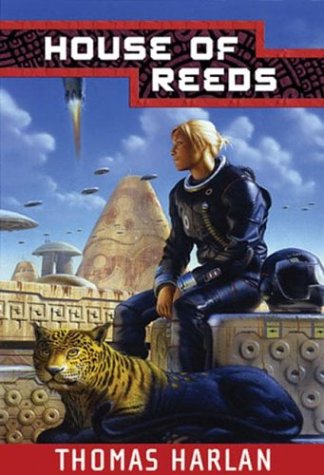
1. House of Reeds
$2.75
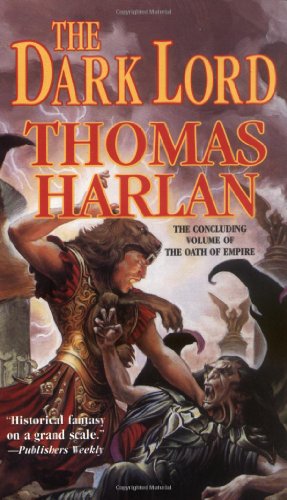
2. The Dark Lord (Oath Of Empire)
$19.98
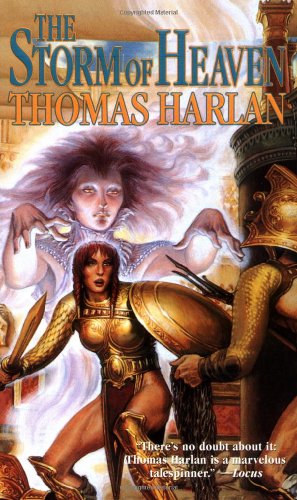
3. The Storm of Heaven
$7.59
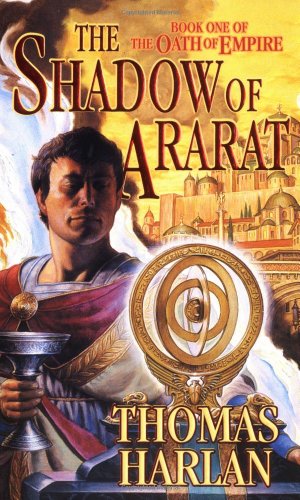
4. The Shadow of Ararat (Tor Fantasy)
 
$9.95
5. Biography - Harlan, Thomas (1964-):
$1.82
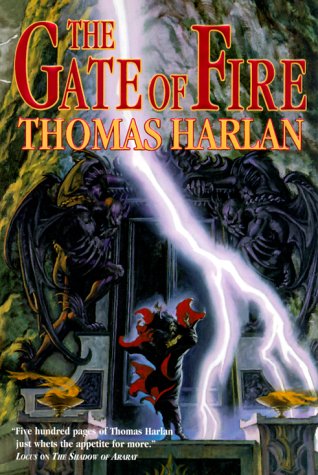
6. The Gate of Fire (Oath of Empire,
$2.35
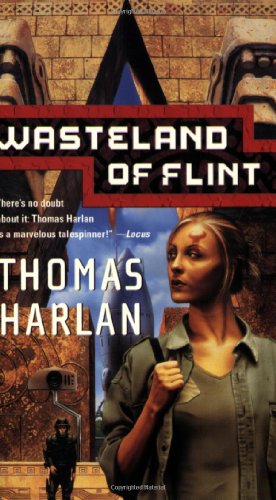
7. Wasteland of Flint
$10.99
8. Shadow of Ararat / The Dark Lord
 
$19.95
9. Shadow Of Ararat - Book One Of
 
10. a yank in the raf
 
11. The Storm Of Heaven - Book Three
 
12. A YANK IN THE R.A.F.
13. Heldenfriedhof
$39.82
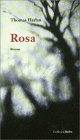
14. Rosa (Eichborn Berlin)
 
15. Storm of Heaven
 
16. Wasteland of Flint
 
17. A Yank in the R.A.F.
$24.94
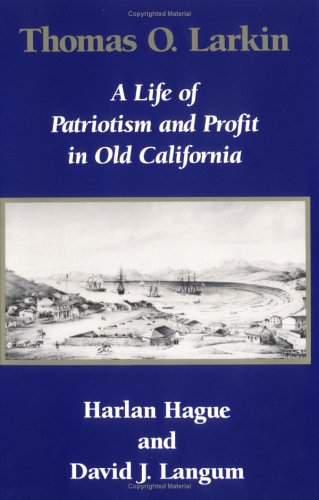
18. Thomas O. Larkin: A Life of Patriotism
$11.45
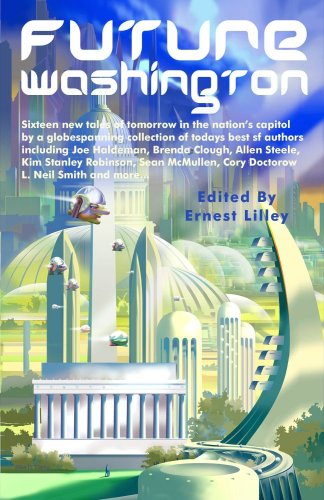
19. Future Washington
$19.95
20. The Shadow of Ararat (Oath Of

1. House of Reeds
by Thomas Harlan
Hardcover: 416 Pages (2004-04-17)
list price: US$25.95 -- used & new: US$2.56
(price subject to change: see help)
Asin: 0765301938
Average Customer Review: 4.0 out of 5 stars
Canada | United Kingdom | Germany | France | Japan
Editorial Review

Book Description
n five short centuries, the mighty Empire of the Mxica, descendants of the ancient Aztecs, has spread out to conquer the earth. Now it is ready to leave the homeworld and set its sights on the stars. But the universe it finds is a dangerous place filled with hidden powers. Humanity is only a minor space-faring species on the fringe of a ferociously political arena where ancient and enormous alien empires are engaged in millennia-old struggles for supremacy. But that doesn't stop Imperial Mxica from claiming control. In House of Reeds, xenoarcheologist Gretchen Ander-ssen finds herself in very dangerous territory indeed. Sent to the planet Jagan to scout a possible artifact of the Old Ones, she and her team end up in the middle of a war-a war not of conquest or defense, but a 'flowery war,' planned and fomented by the Priests of the Empire, for the purpose of blooding the Emperor's youngest son. It may be a War of Flowers, but many people will die, and blood will flow in the streets. ... Read more

Customer Reviews (14)

4-0 out of 5 stars Good Sequel, Interesting Universe
The House of Reeds is a good sequel to Wasteland of Flint, both of them setting a style of unusual handling and an unusual universe for SF.

The universe is unusual as it's not the typical Campbellian model of American and European style humans as they nobly rule the galaxy -- instead it's the Aztecs and Japanese tip-toeing around in a large and dangerous Galaxy where humans have little power or understanding of the far larger players.

The handling is unusual in that the female lead is a fairly low-caste Nordic worker who has again stumbled into something of the larger powers, and now must figure a way to complete her work without a vast disaster.

I'm glad there is this sequel and enjoyed the further work in this universe.You should read the first novel to enjoy both more, as characters from the first book are continued and the first book is a smoother intro to the universe than this one, but you can read this one alone.

4-0 out of 5 stars Good series...
This and the prior book are both well written, interesting "space opera", with a fairly novel slant.Light reading, but well worth the cost and time investment.As some of the other reviews have noted, Harlan still needs some polish, but he's head and shoulders above the garbage some of the bigger name authors are putting out.I'll buy the 3rd book the instant it comes out (in paperback).

4-0 out of 5 stars Intrigue, Mystery & Character Development
I read the first book Wasteland of Flint before reading this book.

Thomas Harlan has been able to further develop the main characters in this book - Gretchen of the Company, Susan of the star ship cruiser Cornuelle and Itzpalicue, an Imperial agent of the Mirror. Hefails in portraying a clearer human perspective of the characters though he did justice to Malakar the Jehanan and Itzpalicue.

The Mexica-Japanese-European triangle is well balanced and maintained throughout the book. There's mystery and intrigue on the planet Jagan. The author tries and succeeds in capturing our imagination. At some places though details are very sketchy and do not lend to credibility (Gretchen singing a Jehanan song so well that Malakar has to drag her away).

I only wish that the author maintains his threads from book to book (such as whether the kalpataru was a thing left behind by the First Sun people)? Any surprises (even a Lengian) should be carefully thought of before springing it on us poor mortals!

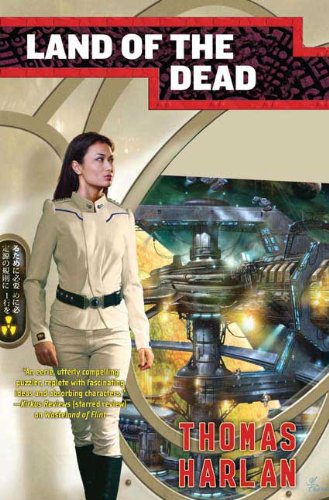
For now, I am looking forward to the "Land of the Death". I am (quite) well settled to read the next few books on the "In the Time of of the Sixth Sun" and wish Thomas Harlan a good fist and nimble thoughts.

Please make the sequels fast ...

5-0 out of 5 stars Great ride!
This book is a great ride--all the way to the wreck at the end.

In the first book (Wasteland of Flint), we met Green Hummingbird--Aztec judge/mystic, and for most of the book I was was not sure whether he was a subtle master of the ineffable, or an old crackpot with some nice toys. (I eventually came down on the wise old master side.) In House of Reeds, we meet someone whom Green Humminbird refers to briefly in the first book--Itzpalicue ("Skirt-of-Knives").

There is a hint of a past relationship--perhaps one that ended very badly--between the two. In House of Reeds, Green Hummingbird is off-stage, and Itzpalicue is very much at the center of events. She is in many ways the opposite of Green Hummingbird--where he relies on subtlety and is cautious to a fault, she operates with meat cleaver and sledgehammer. Instead of sniffing some er...sacramental powder, Izpalicue jabs herself with thorns to maintain a high state of mental alertness. Her machinations are spectacularly clever (the time-shifted conference call alone was worth the price of admission), but in the end she is either too clever or not clever enough--all her plotting comes to naught, and she may have unwittingly played a role in setting up a far greater disaster.

I look forward to seeing Green Hummingbird again in the next book. Perhaps he will give Izpalicue a talking-to. Ah yes, and what will Gretchen do with her re-awakening talent? How will Heideshi take the humiliation of defeat? How quickly will the next super-powerful incredibly malignant ancient alien artifact be swept under the rug? Soon...soon...I hope.

27 Aug 07: Where the blazes is the next book, Mr. Harlan?

2-0 out of 5 stars Disappointing
I didn't get to read the first book in this series. It's possible that would have changed my opinion but I don't believe it would change much.

I found it very tough going to read. I could not identify the hero or the villan of the book. All the sympathetic characters ended up getting torn apart and all the bad folks got exactly what they wanted.

There were a large number of shallow characters that I could not stay interested in, and in some places had trouble keeping separate.

The author should learn foreshadowing, characterization, better editing, and remove all the extraneous detail. There's nothing wrong with his imagination though.

I don't recommend this book ... Read more


2. The Dark Lord (Oath Of Empire)
by Thomas Harlan
Mass Market Paperback: 792 Pages (2003-08-18)
list price: US$7.99 -- used & new: US$2.75
(price subject to change: see help)
Asin: 0812590120
Average Customer Review: 3.0 out of 5 stars
Canada | United Kingdom | Germany | France | Japan
Editorial Review

Book Description
Tom Harlan brings his Oath of Empire series to a shattering conclusion in The Dark Lord. In what would be the 7th Century AD in our history, the Roman Empire still stands, supported by the twin pillars of the Legions and Thaumaturges of Rome. The Emperor of the West, the Augustus Galen Atreus, came to the aid of the Emperor of the East, the Avtokrator Heraclius, in his war with the Sassanad Emperor of Persia. But despite early victories, that war has not gone well, and now Rome is hard-pressed. Constantinople has fallen before the dark sorceries of the Lord Dahak and his legions of the living and dead. Now the new Emperor of Persia marches on Egypt, and if he takes that ancient nation, Rome will be starved and defeated.But there is a faint glimmer of hope. The Emperor Galen's brother Maxian is a great sorcerer, perhaps the equal of Dahak, lord of the seven serpents. He is now firmly allied with his Imperial brother and Rome. And though they are caught tight in the Dark Lord's net of sorcery, Queen Zoe of Palmyra and Lord Mohammed have not relinquished their souls to evil. Powerful, complex, engrossing --Thomas Harlan's Oath of Empire series has taken fantasy readers by storm. The first three volumes, The Shadow of Ararat, The Gate of Fire, and The Storm of Heaven have been universally praised, and the author was nominated for the Campbell Award for Best New Writer of 1999 and 2000. ... Read more

Customer Reviews (10)

3-0 out of 5 stars AS a book it rates higher than a 3, but as the end it really is a
2.If you want to read any of this series of books it is mandatory to start with the 1st and read them in order and probably with no breaks (like reading other authors' books) in between.Lots of threads...lots of characters... lots of differing action.I HATED that a couple of the most interesting and well-developed characters just fizzled out.There SHOULD be a 5th book.I expected a 5th book even though I could only find the 4 (which I made sure that I had before starting the series). When I finished this book...I felt " yeah, now what?".There were many likeable characters and several really unlikeable ones...that means that he wrote them well.But he didn't finish his job well. I really felt like I'd been left hanging out over a cliff.He did so much work writing this...and I put in so many (some enjoyable) hours reading this...I really was let down. I think even an "Epilogue" summing up some of the thread endings would have helped. It makes me not want to chance reading another of his series.Be sure that you have all the books before starting the first...and be assured that I think there are some good hours of reading...but there's a letdown coming at the end.The maps are very good although I could have used a couple more details than were given
in the African parts.

2-0 out of 5 stars Stupid ending spoils good series
That author Harlan threw the character Dwyrin away at the end of the third book should have been a major warning sign. Here was a character that Harlan introduced as a youngster and made us care about. Dwyrin is then summarily killed at the close of the third book for no apparent reason other than Harlan didn't know how to fit him into the fourth book.

Further, as mentioned by a prior reviewer, a number of other characters who are nicely developed in the first three books are relegated to bit parts.It might have been better if they had been killed as well.Many are "living dead" in more than one sense.

There are also glaring logical gaps.Galen finds out about Gaius' plot to overthrow him.Does he tell Maxian (who controls Gaius utterly) or have Gais arrested ?No, he sends for the German legions, and then lets Gaius steal them away.

Another problem mentioned in other reviews is the oath not stopping magic.Harlan says "The Oath is weak in Egypt."Why would that be exactly ? Wasn't it created by an Egyptian sorceror ?

Other reviewers have mentioned the loose ends and speculated that this is really just the fourth book of a five book series. The near complete uninvolvement of Mohammed in any action could only be excused on that basis, as well as the undetermined fate of Thyatis.But even if it is a fourth book out of five, I have a major problem.

Harlan, in the fourth book, has fallen into what I call the "Song of Ice and Fire" syndrome.To draw his readers into the story, he uses his narrative skills to craft strong, likable characters and sets up mighty obstacles for them to overcome.However, the more likeable a character is, the more tragedy and failure beset the character.Further, if a character begins to acheive some success, then the personality and attitudes of that character shift so that the character becomes unlikeable.

The appeal is like that of a train wreck or burning building.You read on and on, with hope that good will eventually be rescued and someone will right the terrible wrongs. But except for very minor triumphs, things just get more and more bleak. The noble die or suffer horrible fates; evil triumphs again and again; the good who do have some meassure of success slide into evil.

It has occurred to me that I don't really need to read thousands of pages of fantasy to be depressed by the triumph of evil.I get enough of that from reading the newspaper.

2-0 out of 5 stars Schizophrenic
I have enjoyed the series to this point. The tension excitement and intelligence of plot had impressed me. The Dark Lord is a meandering disappointment. While it has some decent action, it is mired in political intrigue and charcterization that is inconsistent with the story. Suddenly Nicholas is a cold blooded killer? Maxian feels he has the time to marry Martina? What happened to his focus? It is amazing that Alexandria is on the edge of destruction and suddenly Rome is mired in base political intrigue. Anastasia's departure was an impressive moment in the series. Here, she is back and Thyatis is again at her bidding. What happened to all the supposed personal change. And WHAT ABOUT THE OATH? This series could be split in two and no reader would know the difference. EVERYTHING in Rome is as it was in the first book. What was the point ofearlier rifts (Galen and Maxian, Anastasia and Thyatis, Anastasia and Maxian)? Thier characters have returned to their earlier form with narry an explanation. Helen goes from helping Martina to hating her. Why? To protect her son? Martina is a fool that only becomes threatening when threatened. Why is the clear to everyone except the all knowing Duchess and The Empress of the West?Why does Helen want to rule the East now as well? Didn't she spend last book complaining about how overworked Galen is? It reads like a middle novel in a longer series. Why all the set up and intrigue? So many interesting issues have fallen by the wayside. The fate of Damawand and Ahmet is supplanted by incessant whining from Martina and the now predictable (read boring) invincibility of Thyatis. Shirin's role was ever a weak one. Her presence in this book reads like a soap opera hack job. Dahak is the strongest character in the book, yet his motives and relationship with The Royal Boar are given only a cursory treatment. I like strong female characters, but it seems Harlan felt a balance wasn't enough; almost the whole book is told from the eyes of plotting, complaining women. Is that so terrible? It is when its also boring. Maybe Harlan is on the Robert Jordan Plan. Maybe Tor editors need to start doing thier job.

3-0 out of 5 stars Disappointment
I had eagerly awaited this last in the series since getting involved with the story awhile back.However the book failed to live up to the first three and I finished it feeling cheated.The ending alone was incredibly weak especially after all the earlier character building.I noticed the author never went any deeper in his study of the Roman military , till the very end there was no one but centurians and legionares in the Army, no decurians, optimos, tribunes, signifers, etc etc.Also it was repeatedly stressed in the earlier books that magic had little or no effect on the Roman forces, why did it become so successful in the last book?Anyway the story lost my interest about midway and then became work to finish.It does seem like there is a sequel setup but I for one will not waste money on it...

4-0 out of 5 stars Too many loose ends
I've been waiting and waiting for my library to get this last book, and when it finally came, I was thrilled! The pace was fast, and the staging was great. I was not thrilled with the alterations made to Martina, but then, she was fairly minor, so no harm done. However, I do have one complaint. There are way too many loose ends! What happens with Mohammed now that he's back? Does Maxian keep his power? Is he truly a god (bit arrogant, there, he was). What happens between Vladimir and Betia? Is Thyatis really dead this time? Was Kore the K'Shapacara queen (assuming that Kore, another name for Hecate, was also the Queen of the Night)? Too many questions were left unanswered, and so I am pleading with Mr. Harlan to give us a fifth book and tie everything up! I admit, I like my books nice and neatly tied up, so a fifth book would be particularly welcome. All in all, though, a gorgeous read! Thank you, sir, for such a lovely series. ... Read more


3. The Storm of Heaven
by Thomas Harlan
Paperback: 928 Pages (2002-07-14)
list price: US$7.99 -- used & new: US$19.98
(price subject to change: see help)
Asin: 0812590112
Average Customer Review: 4.5 out of 5 stars
Canada | United Kingdom | Germany | France | Japan
Editorial Review

Book Description
The great three-sided war continues, Rome against Persia against the tribes of the desert now commanded by Mohammed of Mekkah. The tide is turning against the Eastern Empire--the Emperor Heraclius lies bedridden in Constantinople and his brother Theodore has lost a great battle to the tribes. In the West, Rome lies devastated by the long-pent eruption of Vesuvius. And in the hidden valley of Damawand, the Persion sorcerer Dahak plots his revenge.But there is hope for the West. Prince Maxian has learned that the Oath need not be broken; it can be changed by a skilled sorcerer. In Judea, young Dwyrin is coming into his full powers, honed by sorcerous combat with his friend Odenathus, who now leads the shattered remnants of the army of Palmyra. And among the Goths north of the Danuvius, a new legion is being forged, by a very old general. ... Read more

Customer Reviews (8)

5-0 out of 5 stars The climax of "Storm" eclipses a volanic eruption
Having just re-read Thomas Harlan's third installment in his epic "Oath of Empire" series, the "Storm of Heaven," in anticipation of the next and final novel, I must say that the books just keep getting more enthralling."Storm" follows the further actions and fates of the characters introduced in the earlier novels.Without revealing too much, we learn what has become of Thyatis, Maxian, Mohammad, Nicholas, Dwyrin, and their companions.And let us not forget Gaius Julius, Alexandros, Dahak, "The Boar," the Queen of Cats, and many other characters...

Yes, Thyatis does battle in the arena, in among the most vivid and adrenaline-producing descriptions of gladiatorial combat this reader has ever experienced.Yes, Maxian does grow a bit wiser, and yes, Dwyrin comes into the fullness of a power only hinted at in the previous novels; Harlan's brilliant imagery of sorcerous combat produced as much a rush for me as his heart-pounding descriptions of more "conventional" battle.

As Rome attempts to recover from the disaster of Vesuvius, the reincarnated Julius Caesar finds great opportunities, which entwine his fate with other characters.Alexandros marches off to war, for Rome, but not with Romans.Mohammad communes and continues to act as a channel for his god, but who is using who?

There are so many twists of fate and events of such magnitude that even the volcanic eruption of Vesuvius at the end of "Gate of Fire" seems to pale in comparison.Much is resolved, but more remains unresolved, and as the climax of each novel eclipses the one before it, "The Dark Lord" should have an ending that will be literally earth-shattering.I, for one, can't wait!

4-0 out of 5 stars A Compelling Tale of an Alternate Roman World
The Storm of Heaven, (TSoH) is the 3rd book of author Thomas Harlan's compelling tale of an alternate world where magic is real, and Rome never fell.

It is 624 A.D.In the previous 2 books, the Emperors of the Eastern and Western Roman empires had joined forces to devast and defeat Persia.But the tactics of the Eastern Emperor cost some of his allies dearly, resulting in the destruction of the city-state of Palmyra.Prince Maxian, youngest brother of Galen, Emperor of the West, had discovered that there was an Oath which cast restrictions on the Empire, attacking and destroying anything that the Oath perceived as a threat to Rome.

Maxian set out to destroy the Oath, convinced that the Oath was actually harming Rome.He was blessed with healing magical talent, and quickly grew in power, resurrecting Julius Caeser and Alexander the Great.

But there are other plots and stories, all intertwined.A young student named Dwyrian, from far off Hibernia (Ireland) is drafted into the Roman army, and gains magical powers far faster than he should.

Dwyrian's teacher, coming after him, meets a merchant named Mohammed of Mekkah.And there is an evil, inhuman sorcerer, Dahak, who is in league with Persia.There is Thyatis, an agent in service to the Emperor of Rome, and more characters and subplots than you can shake a stick at.

Book 1, The Shadow of Ararat, was sheer brilliance.Book 2, The Gate of Fire, was well done, but not as good as the 1st volume, due to a host of new elements which were introduced without enough foundation being laid.

The Storm of Heaven is not as good as Book 1, but it is better than book 2.Maxian deals with the devastation that he wrecked by accidently causing the eruption of Mount Vesuvius.Thyatis deals with her own survivor's guilt, and ends up in the arena of the Colosseum.Dwyrian grows in power.Mohammed leads, along with Dwyrian's one time companion, Zoe, who is now the Queen of the destroyed city of Palmyra, the march for vengence against the Emperor of the East.Empress Martina of the East struggles to hold the Eastern Empire together for the benefit of her young son, while her husband is wracked by an illness of mysterious origin.Her Uncle, Prince Theodore, the brother of her husband, has his own plans for who should rule the Eastern Empire.

Gaius Julius Caesar and Alexandros, have their own dreams of power, which they have not given up, even though they have been cast aside by their master, Prince Maxian.Oh, and the Persians are on the march as well.

ALthough a long book, TSoH, suffers from covering too much ground with too few pages.THe author's note at the end indicates that the author exceeded the size limit which had been decreed by the editors, and excised portions are available via a website.

Still, despite that flaw, author Harlan has created a highly detailed alternate Roman world, with compelling characters and a complex and entertaining storyline.I look forward to Book 4 of this series.

5-0 out of 5 stars Powerful series, exciting action
The leaders of Rome, both east and west, seem hopelessly sunk into grief and guilt. Meanwhile, a revived Persia and the desert armies of Mohammed win victory after victory over the dispirited Roman armies. Even Prince Maxim, who has tried to break the Oath of Empire that holds Rome together while preventing any progress, seems unwilling to do anything to prevent destruction.

In this third novel in the OATH OF EMPIRE SERIES, players with more minor roles in the earlier books come to the fore. The revived Julius Caesar and Alexander the Great have to act independently because Maxim refuses to give them direction. The wizard-boy Dwyrin has found incredible powers. Thyatis has lost her memory and must fight for survival on her own.

With two books under his belt, Harlan has mastered the impressionistic style. His plot still jumps from one action-center to the other across the Roman and Persian worlds, but these transitions are less jarring and the overall plot moves forward more smoothly than in the earlier novels.

I look forward to the next volume in this fascinating series set in a 7th century world where magic works and where the power of the Oath has kept Rome from falling.

4-0 out of 5 stars Very Enjoyable, at least to a history dweeb such as myself
This book is very long, the type is small, and Harlan still cut out so much stuff to hit this length that he has whole chapters on his website that just couldn't fit.I haven't read those chapters, though, because the book works very well as is:somebody, either Harlan or his editors, did an excellent job of cutting without butchering.

His world isn't quite our world in the same era, of course:the Roman Empire never fell in his.But he brings the era alive and carries a complex story through many twists and turns without losing the reader's attention.A very enjoyable book, full of lots of interesting historical nuggets.

5-0 out of 5 stars Excellent ending to a fascinatingtrilogy
In the seventh century, the Roman Empire is under siege on two military fronts and one natural front.Mohammed of Mekkah and his army defeated Theodore and the war with Persia led by the inhuman sorcerer Damawand continues unabated.Adding to the gloom is the eruption of Vesuvius that has destroyed several cities.

The last real hope for Rome and Constantinople lies with Prince Maxian, who has tried to destroy the magical Oath that protects the city.An epiphany strikes him and he realizes he is taking a destructive path that could kill many innocents.He turns to the past, raising Alexander the Great and Julius Caesar, to abet his cause of saving the great empire from its two front war.

THE STORM OF HEAVEN is an extremely complex alternate historical fiction novel that includes a well-written introduction explaining key events from the first two novels.However, in spite of that, most new readers and repeat fans will find it much easier to follow the myriad of plots by perusing the previous novels (see THE SHADOW OF ARARAT and THE GATE OF FIRE) because this is an extremely elaborate tale.This reviewer stopped early on because she understood that like Rome wasn't built in a day, this is not one day reading.The audience will feel they have been transported to the ancient world as the vivid depths of detail bring the senses alive.That and the numerous subplots that brilliantly tie together make Thomas Harlan's novel (and The Oath of Empire series) a must read for the sub-genre audience.

Harriet Klausner ... Read more


4. The Shadow of Ararat (Tor Fantasy)
by Thomas Harlan
Hardcover: 510 Pages (1999-06-30)
list price: US$26.95 -- used & new: US$7.59
(price subject to change: see help)
Asin: B000F6ZACM
Average Customer Review: 3.5 out of 5 stars
Canada | United Kingdom | Germany | France | Japan
Editorial Review

Amazon.com
Thomas Harlan's impressive first novel, The Shadow of Ararat, delivers big-screen entertainment. It's an alternate history with babes, battles, and believable magic theory and technology, not to mention political intrigue and major spectacle. Think Spartacus meets Merlin by way of Frankenstein.

The Roman Empire has reached our 7th century without falling or becoming Christian. Galen Atreus, Emperor of the West, and Heraclius, Emperor of the East, join forces to overthrow Chroseos II, Emperor of Persia. The book follows four major characters. Dwyrin MacDonald, a young Irishman learning sorcery, is prematurely initiated and sent to fight with the Roman army, though he can barely control his gift for calling fire. The Roman Thyatis Julia Clodia, a covert warfare specialist, leads her unit behind enemy lines. Ahmet, an Egyptian priest/sorcerer at Dwyrin's school, sets out to rescue Dwyrin but meets Mohammed (yes, that Mohammed). They join Roman allies Nabatea and Palmyra, desert cities facing superior Persian forces without Roman aid. Finally, Maxian Atreus, Galen's youngest brother, a healer-magician, discovers a "curse" protecting the State from inimical magic but also preventing nonmagical progress. He sets out to lift it at any cost, resurrecting canny Julius Caesar and searching for Alexander the Great--an even greater source of magical power.

Harlan's ability to evoke cinematic images makes scenes come alive. There's plenty of action and an ending that both satisfies and promises lots more to follow.--Nona VeroBook Description
In what would be A.D. 600 in our history, the Roman Empire still stands, supported by the twin pillars of the Legions and Thaumaturges of Rome. Now the Emperor of the West, the Augustus Galen Atreus, will come to the aid of the Emperor of the East, the Augustus Heraclius, to lift the siege of Constantinople and carry a great war to the very doorstep of the Shahanshah of Persia. It is a war that will be fought with armies both conventional and magical, with bright swords and the darkest necromantic sorceries. ... Read more

Customer Reviews (39)

4-0 out of 5 stars A little too verbose ...
An alternative-history epic, this envisions a world where magic works and the Roman Empire is divided between the western emperor in Rome and his eastern counterpart in Constantinople.

The eastern emperor talks the western emperor into joining armies with him and invading the Persian empire.At the same time, the younger brother of the western emperor discovers that a mysterious curse has been sapping his countrymen of their vitality for generations.

He raises Julius Caeser from the dead to help him research this; it soon becomes apparent that he too must go to Persia to locate the tomb of Alexander the Great and raise him to help break the curse.These two plotlines are drawn out over a lot of pages:the Persian invasion is wrapped up, but the curse plotline is left to carry into the sequels.

The viewpoint characters are numerous:Prince Maxim; Dwyrin, a Celtic boy trained in an Egyptian school of magic and drafted into the legions; Ahmet, his guilt-stricken schoolmaster; Krista, a conniving slave girl; Thyatis, a woman assassin elevated to centurion rank in the western army; and even a pre-Islamic Mohammed.(Interestingly enough there's no Christianity or Judaism around whatsoever.)

A solidly researched story, it contains several breathtakingly realistic battle scenes, and the magic is thoroughly grounded in concepts like auric fields and the all-encompassing energy matrix.

Aside from sheer wordiness, one crucial thing dragged this book down from greatness:the characters are all stock-types subordinate to the plot.That's what made it ultimately seem to go on mind-numbingly long.

The poor author especially can't do female characters though he means well. They are all sex goddesses who are either conniving (the Duchess, Krista the slave girl) or saintly (the Queen of Palmyra).

Then there's Thyatis (and a minor character Zoe, a love interest for Dwyrin):they are men, period.I know they're clothed in the bodies of gorgeous women, but they read like transgendered males in personality.

I'd sort of like to know how the series turns out but I don't think I commit myself to another lengthy stay in this universe - at least not for a very long while.

4-0 out of 5 stars This series is only for the most dedicated reader
I've read the entire series...and on the whole I liked it.The setting is set up historically so that not much time is spent on it...at least not on the Roman part.The maps were both helpful and puzzling.I may just be less adept at reading battle maps. But the world maps were good, and I learned things from both the map and the story that I'd never known before.I learned about Nabateans.There were other things, but most were things that I already knew.I think it's great when you can learn real world facts from fiction.However, as I said, the reader must commit to reading this series.There were times when the detail or the slowness of plot or even the lack of interest in a character would make me want to quit.I,at least, had to come up for air to clear my head many times...and I found that even though I was not crazy about some of the topics (necromancy, in particular), I was interested enough and invested enough to finish.I'm just glad that I had all 4 books at the time, or I probably wouldn't have completed the series.It's both interesting and irritating. I love to read very long books if they are well-written... as this is in most parts.I'm not usually that interested in alternative history...but I gave it a chance and I'm glad that I did.I felt like I'd accomplished something by the time I finished this book because at times it felt like real work.It wasn't all difficult...and I really did end up liking most of it...and I did conquer.

2-0 out of 5 stars Ruthless editing needed here
Shadow of Ararat is one of those books which sounds promising at first, but just fails to hit the mark. First of all, the book is HUGE and the font is VERY small. Ruthless truncating is needed here -- nothing that a good editor can't do.

In addition to that, I believe Mr. Harlan, though a budding, talented author, needs to take a few courses on cohesive narration and plot. I could never really fathom the plot -- I have an odd habit of not reading the inside book cover summaries, and then I try to figure out the basic storyline as I read the book. Usually this works, but not with Shadow of Ararat. I did not even know who were the main characters! Mr. Harlan changes the points-of-view so often and strays away from one character for such a long time, that when you get back to that character's point-of-view, you've most likely already forgotten about him or her. (At least, that's what it's like with me; otherwise I'm just another average fourteen-year-old.)

Another gripe I have about this book is the narration. Some of the sentences are rather choppy, and Mr. Harlan seems to find pleated tunics and dazzling sunsets and magic spells much more fascinating to write about than actually developing a coherent plot. It is clear that Mr. Harlan has done his homework and researched extensively. For that, I commend him, as this is a historical/fantasy novel. I was just a bit surprised that once I had finished this book, I discovered that I had learned more about ancient Roman and Persian weapons and clothes, and did NOT feel enlightened in any way whatsoever. But Mr. Harlan does have a good eye for detail; he at least paints a very colorful picture of what the Roman empire was like. You can just see the tumultuous, chaotic atmosphere of the city of Rome, and the hot, sweltering Egyptian desert under the noonday sun. He does spend a good amount of time describing a character's clothing and physical appearance.

What I found most disappointing about this book, however, is the lack of an interesting plot, and its incohesive narration which I thought was rather confusing. Sometimes I found myself reading passages just for the sake of finishing the book. At times I even wanted to throw the book out my window in hopes that it would give hapless passersby a headache as bad as the one I would be having (from reading the book).

4-0 out of 5 stars Great Characters and brisk plot
Harlan is able to weave a believable version of Rome in a world of magic. The Dahak character intrigues and the battles are fresh and lively. Harlan is able to bring suspense to Thyatis' commando style raids as well as Galen's politicing. An excellent debut to what becomes a decent series. The author does well to describe scenes from many views without getting bogged in repetion.

2-0 out of 5 stars "A Big Book is like a Big Evil"
The quotation from Callimachus that is the title of this review could in this case be continued, "And Four Big Books...."Mr. Harlan has certainly accomplished a remarkable feat in producing so much prose in so short a time--indeed, he even managed to produce more than Tor would publish, which must be almost impossible.His website indicates that he had to cut over 300pages.But don't worry, they have been preserved there.......

The main value of these volumes is as a testimony to the lack of editors in publishing today."Terbert Jordkind" has already demonstrated that, of course, but in Harlan's endless works we have more entire pages which could be omitted and whose omission would considerably strengthen the story.

If you react to the first two volumes as I did, you will find yourself awash in a sea of words and eventually drowning in them.Everything is described in detail, and the book shifts from viewpoint to viewpoint like a kaleidoscope.Soon this whirring becomes a whirlwind and you will not remember, when you encounter Maxim, or Dyrwin, or whoever, for the fourth time, what he was up to when you last saw him. Mr. Harlan's gift for verbosity is not matched by a gift for clarity, so often you will not really be sure what happened at all--but, what the heck, just shrug and go on to the next hundred pages, I mean, what difference does it make?It's not as though this hash were carefully constructed.

And, if you are like me, you will find yourself caring less and less, and skimming, and skipping, and then, at the end of volume II, going to the nearest large trash container, tossing both volumes into it, and thanking heaven you didn't buy all four.

A picky, pedantic note: I will always wonder why Mr. Harlan called the King of Persia "Chrosoes" when the name of those two monarchs is spelled, in English, "Chosroes," (or Khosru Parviz).But then, he also uses the word "avtokrator" when he means "autocrator."Oh, well, as Pope said, a little learning is a dangerous thing.

And as the Duke of Gloucester said, "Another da(r)ned, thick, square book!Always scribble, scribble, scribble!Eh!Mr. Gibbon?"Gibbon didn't deserve it, but Mr. Harlan..... ... Read more


5. Biography - Harlan, Thomas (1964-): An article from: Contemporary Authors Online
by Gale Reference Team
 Digital: 5 Pages (2005-01-01)
list price: US$9.95 -- used & new: US$9.95
(price subject to change: see help)
Asin: B000RY9TLK
Canada | United Kingdom | Germany | France | Japan
Editorial Review

Book Description
Word count: 1379. ... Read more


6. The Gate of Fire (Oath of Empire, Book 2)
by Thomas Harlan
Hardcover: 480 Pages (2000-05-19)
list price: US$27.95 -- used & new: US$1.82
(price subject to change: see help)
Asin: 0312865449
Average Customer Review: 3.0 out of 5 stars
Canada | United Kingdom | Germany | France | Japan
Editorial Review

Amazon.com
This sequel to The Shadowof Ararat is the second book in the Oath of Empire series, set in analternate Roman Empire circa A.D. 623. Prince Maxian, younger brother to Galen,Emperor of the Western Empire (Rome), and Heraclius, Emperor of the EasternEmpire (Constantinople), has returned to Rome to disrupt the magical power ofthe centuries-old oath of allegiance to the Emperor that all legionnaires take.Maxian believes the oath constrains citizens to a narrow path, stiflingcreativity as well as any thought of disobedience, and he intends to use all hissorcerous power--and the help of Alexander the Great and Gaius Julius Caesar,whom he has raised from the dead--to succeed. The Empire, meanwhile, isthreatened by multiple enemies: The insane Persian necromancer Dahak isdetermined to raise an army by any means to regain the Peacock Throne toppled bythe Empire. Zoë, niece of Palmyra's Queen Zenobia, and her ragged butdetermined followers plot revenge on Rome for allowing the Persians to sack anddestroy their beloved city. And in the deserts of Iraq, a man named Mohammed isdriven by a prophetic vision to build an army against the Empire. Harlan'sattention to detail is impressive, at times overwhelming, as he fills the broadcanvas of his hypothetical Roman Empire. Readers with the stamina to followevery thread of the multitudinous plot lines here will find a vigorouslyimagined, thought-provoking story. --Charlene BrussoBook Description
The Gate of Fire continues Thomas Harlans remarkable fantasy epic, following increasingly dangerous conflicts both military and sorcerous. The sorcerer Dahak plots from his hidden citadel to regain the Peacock Throne. Prince Maxian, having raised both Julius Ceasar and Alexander the Great from the dead, now considers how to use them to free Rome from the curse of the Oath. Thyatis has fled with the widowed Queen of Persia to a hidden island; Dwyrins thaumaturgic unit is shattered as Zoe discovers the destruction of Palmyra and, as its new queen, vows revenge against Rome. And in Mecca, Ahmets friend and Palmyras lieutenant Mohammed receives a vision, and a command, and the power to strive against the forces of darkness. Praise for Thomas Harlan: Harlans command of military strategy and tactics is thorough and vividly realized. The Shadow of Ararat is not only an ambitious debut novel, but a first-rate alternate history by any standard. Amazing Stories In his ambitious first novel, Harlan combines fantasy and alternate history to create a rich depiction of an ancient empire. Publishers Weekly Tom Harlan is a writer to watch, a writer with a great future ahead of him. I anxiously await his next book. Come on, Tom, write faster. Dennis L. McKiernan How long has it been since a writer has managed to begin a large-tome, multi-volume epic fantasy giving alternate history the vividness of the real thing and magic the combination of visceral and intellectual impact of the hottest new sciencein a first novel? Well, Thomas Harlan has done just that in The Shadow of Ararat. Locus ... Read more

Customer Reviews (14)

4-0 out of 5 stars like it, but it is part of a 2000 page book
The second book of Oath of Empire is really enjoyable to some... in particular for those who may think the failures of Rome have important lessons for today.It helps to be able to read tomes very quickly.I am curious about where the author is headed as I start the 3rd book - in particular omitting Jesus and emphasizing Mohammed is hopefully going to be an interesting speculation and food for thought.This is the 4th book I've read by the author... all suffer a bit from weak editing, silly covers, excessive length, and minor inconsistencies.The stories are still good, tho!

4-0 out of 5 stars Action and depth
I have finished the first three of the Oath of Empire books. I appreciate Harlan's style and realism. The characters are distinct and undergo believable growth and change. Dahak is a superb "bad guy" his strategies and actions are intelligent and chillingly effective. He is not without weakness but he recognizes that and adjusts accordingly. Nothing is more fun than a bad guy you respect. Overall a pleasurable and intelligent read. I got a little tired of Zoe's whining though...

3-0 out of 5 stars The saga wanders on...
Gate of Fire is vol. 2 of Harlan's Oath of Empire series of fantasy alternate history. The plot line is given above. He makes no concession if you haven't read vol. 1 (Shadow of Ararat). Then again do you want to? I'm not sure why I've continued. His writing style is thorough but most unexciting, a bit of a drag. And so much incident of doubtful relevance (or, to what?). Where was his editor? I think I keep going on the basis of his detailed descriptions and situations of a realistically described Roman Empire of the 7th century A.D., but one where magic works. Harlan has done a great amount of historical and geographic research on the background of Rome in the Near East. I find his examination of the rise of Mohammed one of the most fascinating, and timely, aspects of the saga.

This volume 2 is a transitional work. Following the war against Persia (vol. 1), people are now milling around in preparation for confrontations yet to appear. While this volume omits the long travel passages 'under the blazing sun' of the first book, it also doesn't have the climactic battles that marked a conclusion of sorts. The main characters and their companions continue but break up and shift. (Some of their backgrounds also seem to be altered.) Harlan is now developing six parallel stories, with the narrative rotating among them as among as many separate novellas, so the overall pace is slow and the pages accumulate. One new featured character is introduced (a warrior barbarian), but his place in the overall saga remains to be discovered, and is merely a distraction here. For the first time several of the main characters and story lines do begin to intersect and interact, near the end of the book. Again there are ferociously graphic scenes of hacked limbs, burning skin, and bursting eyeballs as blood-sucking black powers and gods incarnate occasionally meet our heroes in malignant conflict. It includes scenes of Vesuvius right out of eyewitness Pliny the Younger. The only light touch is Julius Caesar, now brilliantly reincarnated as a comic figure! Clearly the author has something larger in mind, but we get only glimpses of what that might be, of which theme will emerge dominant. Note: the paperback has a squashed feeling compared to the generous hardback; the maps are barely legible.

2-0 out of 5 stars Harlan blew it
By attempting to finish this second volume you experience the same frustrating sensation than with other promising alternative histories, notably Wingrove's "Chung Kuo". All the minor weaknesses present in the fist volume grow instead of being corrected. Vacilating characters, ad hoc elements and dei-ex-machina multiply, and the plot can turn to any direction within the following page.I think that Harlan gets in trouble trying to fit a custom Islam rising in the story, then breaking his "contract" with the readers (the one that goes: let's see what would happen without all these "People of the Book" around). Vocabulary and descriptions of epic and magical scenes still great, but a 500 page book can't be made with that only.

5-0 out of 5 stars Rich Complex Believable
Right now, there are perhaps three series that are as rich, complex, andwell written: George Martin's Song of Fire and Ice; Jordan's Wheel of Time;and Mary Gentle's Secret History of Ashe.

Harlan's writing is extremelyskillful in that it never gets in the way, yet paints extremely complexportraits of characters and situations.He does not depend on devices suchas deus ex to help him out, as he never paints himself into a corner--hisplots are tight and well thought out and his characters are understandableand empathetic.They do not agree with eachother, they do not always getalong, and life is not wonderful.This is a sophisticated work, with oneof the main personalities gradually subverting to evil, although hisintentions are the purest.

Gate of Fire is the second in the series, andit is as good as the first. Do yourself a favor.Read it. ... Read more


7. Wasteland of Flint
by Thomas Harlan
Mass Market Paperback: 512 Pages (2004-02-01)
list price: US$7.99 -- used & new: US$2.35
(price subject to change: see help)
Asin: 0765341131
Average Customer Review: 3.5 out of 5 stars
Canada | United Kingdom | Germany | France | Japan
Editorial Review

Book Description
In some far distant future year, the human race has spread out among the stars, encountering other species and an Empire that spans at least this corner of the galaxy. The Empire is ruled from the Imperial City of Tenochtitlan (which he know as Mexico City), the capital of the planet Anahuac. But the advance of Imperial Mexica has revealed that there were earlier powerful interstellar empires, which are long gone now, leaving behind their mysterious artifacts.When a survey team goes missing, it's up to Dr. Gretchen Andersen to unravel the mystery, a mystery centered on these ancient artifacts, one that could shake the very foundations of the Empire. ... Read more

Customer Reviews (19)

4-0 out of 5 stars Evocative, absorbing and intelligent - no space opera
Bought in an airport, this was much much better than I anticipated it to be. It's an interesting entry into a richly imagined universe. THe author was a game designer according to the bio, and that attention to detail and background shows throughout. THe alternate history premise is one of Aztec domination of the world and subsequent human space, with associated favored peoples eg Nisei(Japanese) and Skawts (as it sounds) in a familiar form of empire. They discriminate against the russian/scandinavian/european peoples, in terms of opportunity and standing. The two main protagonists span this divide.
The backdrop is one where humans have spread to space, but quickly become aware of their limitations and the consequent need to avoid attention from more powerful/older races, the 'First Sun' peoples. While eager to pick up technology from others, there is a very double-edged sword in that it may attract unwelcome attention from others in a dangerous and unforbidding universe.
Against this, a swedish xenoarchaeologist, and an Aztec judge/priest initially clash and then develop some mutual understanding in dealing with the threat arising from a newly discovered world of ancient ruins.
This eerie deserted planet is evocatively described, with a real sense of place and brooding menace.THere's a lot of description here, with not a huge amount of action, but that is not necessarily a drawback.The writing concentrates on painting characters and scenes, and evoking atmosphere. I really got the sense of humans as being very small 'bit-players' in an awesomely larger, bleaker and colder universe, populated by powers beyond our comprehension.
THere's been a lot of criticism here as to the book being dry and boring, but I found myself swept up into the detail of the alternate universe, and there's some very fine writing in parts - I found the imagery of a Nisei ship captain, lying in darkness on his bunk, on his ship in the vastness of space, listening to recordings of street noise and the children singing in his home village, to be quite moving.
There are no concessions to a lack of engagement into the alternate timeline.THere are no swift recaps of world history, but rather the information of context is doled out in small amounts as it arises throughout the story, leaving it to the reader to pickup and fit it in a developing jigsaw. I found this refreshing and natural, and made for a much richer experience. It's not space opera - there's no space battles between clashing fleets of ships, or rampant tech that so often allows 'deus ex machina' plotlines.Neal Asher or Peter Hamilton it's not (and I love both), but if you want something imaginative, quietly contemplative and seductively absorbing, then this is very much worth a read...I'm looking for the sequel.

4-0 out of 5 stars Wasteland of Flint, by Thomas Harlan, a very interesting tale set in the future that has a Aztec/Japenese power bloc.
I think that Thomas Harlan's series that begins with Wasteland of Flint is a very good series, (Two Books so Far), with the premise that the Aztecs and Japanese conquered the planet and expanded into space. One of the main characters, Gretchen Anderson, is a xenoarcheologist, working for a private company.Unfortunately for Anderson, she is neither Mexican (Aztec) or Japanese and unfortunately this makes her part of the oppressed majority.

The two books in this series are very good and well worth reading. I have tried Harlan's ancient history tales set in Roman times, and I do not find them as interesting to me.

Mark

1-0 out of 5 stars Cure for insomnia
Thank God I bought this book at a local used book store for only $0.50. I would hate to think I bought it new for $7.99. I am a fan of most alternate history, which is the main reason I purchased the novel. But you could take what little alternate history there is out of this book and still have your novel. The book dragged on and I have to admit that I know of no good reason why I completed reading it. Fortunately the book will not be wasted. I often donate books to the local library's Books for Soldiers program and this book will go to Iraq where one our our soldiers will use it to relax as there is nothing exciting in the book.

4-0 out of 5 stars Good series...
This and the following book are both well written, interesting "space opera", with a fairly novel slant. Light reading, but well worth the cost and time investment. As some of the other reviews have noted, Harlan still needs some polish, but he's head and shoulders above the garbage some of the bigger name authors are putting out. I'll buy the 3rd book the instant it comes out (in paperback).

1-0 out of 5 stars good book to throw against the wall
This is a horrible book.The author seems unqualified to write plausible science fiction.The plot turns on a lot of mystical mush that made no sense to me.It's the usual problem that if anything can happen, the reader doesn't care what does happen.Also, the characters are all unpleasant and interact only through bickering, so I cared even less about their arbitrary adventures.

Did I mention that it was horrible?
... Read more


8. Shadow of Ararat / The Dark Lord / The Gate of Fire - 3 Book Pack (Oath of Empire, Volumes 1, 2 & 4)
by Thomas Harlan
Mass Market Paperback: Pages (2002)
-- used & new: US$10.99
(price subject to change: see help)
Asin: B000WO519E
Canada | United Kingdom | Germany | France | Japan
Editorial Review

Product Description
3 volumes in the Oath of Empire Series. ... Read more


9. Shadow Of Ararat - Book One Of The Oath Of Empire
by Thomas Harlan
 Hardcover: Pages (1999)
-- used & new: US$19.95
(price subject to change: see help)
Asin: B000S14RR8
Canada | United Kingdom | Germany | France | Japan

10. a yank in the raf
by harlan thomas
 Hardcover: Pages (1943)

Asin: B0013F91LA
Canada | United Kingdom | Germany | France | Japan

11. The Storm Of Heaven - Book Three Of The Oath Of Empire
by Thomas Harlan
 Hardcover: Pages (2001)

Asin: B000RIUXYI
Canada | United Kingdom | Germany | France | Japan

12. A YANK IN THE R.A.F.
by HARLAN THOMAS
 Hardcover: Pages (1000)

Asin: B000S5ONQ4
Canada | United Kingdom | Germany | France | Japan

13. Heldenfriedhof
by Thomas Harlan
Hardcover: 577 Pages (2006-10-31)

Isbn: 3821807644
Canada | United Kingdom | Germany | France | Japan

14. Rosa (Eichborn Berlin)
by Thomas Harlan
Hardcover: 218 Pages (2000)
-- used & new: US$39.82
(price subject to change: see help)
Asin: 3821806931
Canada | United Kingdom | Germany | France | Japan

15. Storm of Heaven
by Thomas Harlan
 Paperback: Pages (2001)

Asin: B000OTLPFG
Canada | United Kingdom | Germany | France | Japan

16. Wasteland of Flint
by Thomas Harlan
 Mass Market Paperback: Pages (2003)

Asin: B000Q1HVLO
Canada | United Kingdom | Germany | France | Japan

17. A Yank in the R.A.F.
by Harlan THomas
 Hardcover: Pages (1942)

Asin: B000NXHTJO
Canada | United Kingdom | Germany | France | Japan

18. Thomas O. Larkin: A Life of Patriotism and Profit in Old California
by Harlan Hague, David J. Langum
Paperback: 304 Pages (1995-03)
list price: US$24.95 -- used & new: US$24.94
(price subject to change: see help)
Asin: 0806127333
Canada | United Kingdom | Germany | France | Japan

19. Future Washington
Paperback: 290 Pages (2005-10-01)
list price: US$16.95 -- used & new: US$11.45
(price subject to change: see help)
Asin: 0962172545
Average Customer Review: 3.5 out of 5 stars
Canada | United Kingdom | Germany | France | Japan
Editorial Review

Book Description
Future Washington is a collection of stories by noted science fiction writers from around the world, and the political spectrum, which looks at possible futures for the US capitol. Throughout the collection, Washington is faced with challenge after challenge, leading novelist and futurist Bruce Sterling to comment:

"…it sure was interesting that Washington is wrecked, drowned or comprehensively destroyed in practically every story in your collection."

But that's not really surprising, because the future (and any good stories) is expected to be full of challenge. The important thing to take away from these stories is how the residents rise to meet those challenges, be they the rise of theocracy or the waters of the Potomac.

Colleen Cahill (Recommending Officer for Science Fiction and Fantasy at the Library of Congress) wrote:

"(these) stories take us to a D.C. that might be, with visions both light and dark, containing destruction, growth, humor and serious thought…whether the US government is alive and well, transformed by time or a distant memory, all the stories include a hint of the D.C. of today, making this a book for those of us who have lived or currently live in or near the city. It is the great writing and interesting visions of the future that make this a work for any who enjoying good reading." ... Read more

Customer Reviews (3)

4-0 out of 5 stars Clarification
The story "The Day of the RFIDs," alluded to in the Daniel Miller review as a highlight of the FUTURE WASHINGTON collection, was actually written by Edward M. Lerner.

2-0 out of 5 stars Not as good as I expected it to be
I was kind of disappointed with this book, honestly--the stories are very hit-or-miss.The best one is by Kim Stanley Robinson, but it's an excerpt from a novel, not written for this collection--probably better to just read the novel.Another highlight is by Cory Doctorow, exploring the use of RFID tags and the Dept. of Homeland Security, although I felt like going up to him and whispering "Your ideology is showing".As for the others, some of them are amusing (particularly one near the end in which Democrats and Republicans have devolved into warring tribes--it reads like it was co-written by David Broder and Hunter S. Thompson), but only a few make a serious attempt at exploring an interesting future.More common are relatively shallow attempts at parody, such as one story in which Indiana real estate agents plant a nuclear bomb in DC and exploit the chaos to move the capital to Fort Wayne.Overall, the book doesn't have enough worthwhile material to make it worth buying.Check it out of a library for a few of the stories, but don't waste your time or your cash.

4-0 out of 5 stars Is there a future for Washington DC ?
Future Washington contains 16 stories from a variety of authors most usually not found in anthologies.The stories posit many different futures for the DC but most are dark and distopian in one way or another.

"Primate in the Forest" by Kim Stanley Robinson, "Hothouse" by Thomas Harlan, "Civil Disobedience" by Joe Haldeman, all have the area suffering from one degree of global warming or another as background.

"Ignition" by Jack McDevitt gives us an idea of what can happen with fundamental religion take over. Paranoia takes over a computer geek in Edward M. Lerner's "The Day of the RFIDs" but is he really that paranoid?

Jane Lindskold in "Tgers in the Capitol" has the original designer of the capitol area who is not all that happy with what was done with his designs. "Hallowe'en Party" by Nancy Jane Moore is basically directions and instructions for a future party in the DC area (the directions are only slightly off from those you'd get if you lived in this security conscious area now).

"Agenda" by Travis Taylor, "A Well-Dressed Fear" by B.A. Chepaities, "The Lone and Level Sands" by L. Neil Smith, "Hail to the Chief" by Allen M. Steele, and "The Empire of the Willing" by Sean McMullen, all deal with politics and intrigue on one level or another.

"Mr. Zmith Goes to Washington" by Steven Sawicki has my favorite aliens (from sfrevu.com's Damned Aliens Column) drop in for a Senate Hearing. "Indiana Wants Me" by Brenda W. Clough gives a look at what could happen to the DC area if Congress moved elsewhere. "Human Readable" by Cory Doctorow deals with the concept of who has access to IT and will it be economic status blind."Shopping at the Mall" by James Alan Gardner give us a view of what would happen if Americans just disappeared one day.

All in all, there are stories to make you laugh out loud, shake your head in frustration, dispair, and agreement.Those that make you think maybe you should pay just a bit more attention to what are leaders are doing FOR/TO us in DC.Every story is strong with character, place, and plot.It's a good buy. ... Read more


20. The Shadow of Ararat (Oath Of Empire)
by Thomas Harlan
Hardcover: Pages (1999-07-09)
-- used & new: US$19.95
(price subject to change: see help)
Asin: B000XQKW7W
Canada | United Kingdom | Germany | France | Japan

  1-20 of 100 | Next 20
A  B  C  D  E  F  G  H  I  J  K  L  M  N  O  P  Q  R  S  T  U  V  W  X  Y  Z  

Prices listed on this site are subject to change without notice.
Questions on ordering or shipping? click here for help.

site stats