e99 Online Shopping Mall

Geometry.Net - the online learning center Help  
Home  - Authors - Hill Geoffrey (Books)

  1-20 of 100 | Next 20
A  B  C  D  E  F  G  H  I  J  K  L  M  N  O  P  Q  R  S  T  U  V  W  X  Y  Z  

click price to see details     click image to enlarge     click link to go to the store

 
$29.99
1. A Treatise of Civil Power
$9.62
2. Without Title
$12.36
3. Selected Poems
4. Geoffrey Hill's New and Collected
$2.09
5. Canaan
$8.22
6. The Triumph of Love
$49.95
7. Collected Critical Writings
$16.78
8. The Enemy's Country: Words, Contexture,
$1.45
9. Style and Faith: Essays
$16.81
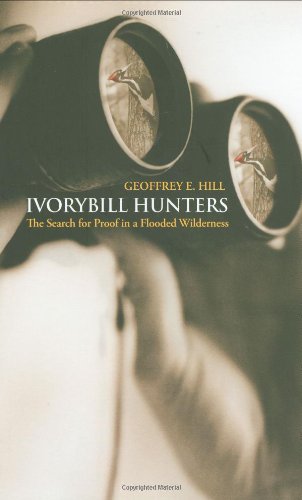
10. Ivorybill Hunters: The Search
$1.89
11. Speech! Speech!
$24.58
12. The Orchards of Syon
$6.56
13. Brand: A Version for the Stage
$19.41
14. Geoffrey Hill (Writers & Their
$49.82
15. The Uncommon Tongue: The Poetry
$52.00
16. Acceptable Words: Essays on the
$80.00
17. Holocaust Poetry: Awkward Poetics
 
$67.33
18. The Poetry of Geoffrey Hill
 
$25.00
19. Agenda: Geoffrey Hill Special
 
20. Edwin Brock, Geoffrey Hill, Stevie

1. A Treatise of Civil Power
by Geoffrey Hill
 Hardcover: 64 Pages (2008-01-07)
list price: US$30.00 -- used & new: US$29.99
(price subject to change: see help)
Asin: 0300126174
Canada | United Kingdom | Germany | France | Japan
Editorial Review

Book Description

Geoffrey Hill’s latest collection takes its title from a pamphlet by Milton of 1659 that attacks the concept of a state church as well as corruption in church governance. As Milton figures prominently here, so too must the Lord Protector, Cromwell, addressed in a memorable sonnet sequence. Also considered by Hill are other poets to whom he nods in gratitude, not just Milton and “my god” Ben Jonson, or Robert Herrick, or William Blake, but also Robert Lowell and, perhaps most interestingly, John Berryman, whose Dream Songs haunts this present collection.

Here we again confront the poet’s familiar obsessions—language, governance, war, politics, the contemporary and classical worlds, and the nature of poetry itself. John Hollander writes of Hill’s poems that they immerse themselves “in the matters of stones and rock, of permanence and historical change, martyrdoms and mockeries, and above all history and the monuments and residua of its consequences in places, things, and persons.” A Treatise of Civil Power is the work of a major poet at the height of his powers.


... Read more

2. Without Title
by Geoffrey Hill
Paperback: 96 Pages (2007-04-30)
list price: US$16.00 -- used & new: US$9.62
(price subject to change: see help)
Asin: 0300121571
Average Customer Review: 5.0 out of 5 stars
Canada | United Kingdom | Germany | France | Japan
Editorial Review

Book Description

Praise for Geoffrey Hill’s newest collection of poems:
“Without Title, his new collection, combines the force and freedom of Hill's narrative verse with a renewed faith in his masterly talents for form and wordplay. The result is alarmingly good; a collection of lyrics on the difficulties of ageing, the problems of belief and the vagaries of language bracketing a sequence of pindarics in which Hill, ostensibly responding to thoughts of the Italian poet Cesare Pavese, meditates at length on both their lives and considers the place of a poet in the world.”—Tim Martin, Independent on Sunday
... Read more

Customer Reviews (1)

5-0 out of 5 stars Emotional and Accessible- Hill's best work
Having read Geoffrey Hill's poetry from time to time in "Poetry Magazine" and in online sites,in spite of the many poetry critics and readers who extolled his work, it was to me unnecessarilydense and rather difficult to parse.However, this collection (Without Title) is a overwhelming display of poetic expertise, clarity, and unveiled emotion that I believe will become his transcendent work.One of the poems in this collection, "Broken Hierarchies," captures the essence of the environment and music of America's Appalachian region which is no small feat, given that Geoffrey Hill is a quintessentially British poet.An absolute poetic gem and strongly recommended. ... Read more


3. Selected Poems
by Geoffrey Hill
Paperback: 288 Pages (2006-06-01)
-- used & new: US$12.36
(price subject to change: see help)
Asin: 014102500X
Canada | United Kingdom | Germany | France | Japan

4. Geoffrey Hill's New and Collected Poems: 1952-1992
by Geoffrey Hill
Paperback: 240 Pages (2000-01-12)
list price: US$18.00
Isbn: 0618001883
Average Customer Review: 4.5 out of 5 stars
Canada | United Kingdom | Germany | France | Japan
Editorial Review

Book Description
This volume brings together poems from four decades of Geoffrey Hill's work. ... Read more

Customer Reviews (3)

5-0 out of 5 stars An excellent collection that will take some digestion
Here, collected in one volume, are Geoffrey Hill's first five books of poetry (For the Unfallen, King Log, Mercian Hymns, Tenebrae, and the Mystery of the Charity of Charles Peguy), plus a few early versions of poems that later appeared in Canaan. For those who are not yet familiar with Hill's works, this would be the obvious place to start, since his last two works (Speech! Speech!, and The Triumph of Love) are both difficult book length poems, and "Canaan" is not necessarily any easier.

Not that these poems are easy, not even the ones Hill wrote when he was 19 (like "Genesis", the opening poem of the collection). What they are is challenging, beautiful, thoughtful, at times meditative, at times lyrical, often skeptical, almost always wonderful.

These are poems written for those who love poetry and don't mind if it's hard, who can reread a poem ten times in order to appreciate it, who have the patience to learn to read a real poet. Although this book is only 200+ pages, there is a lifetime (almost!) of reflection contained within it, from the early poems reflecting on art, responsibility, history and war in "For the Unfallen", to the funeral music of "King Log", the beautiful prose poems of "Mercian Hymns", and the deeply religious "Tenebrae".

Give it some time. Don't judge it too quickly. Hill will certainly be remembered as one of the greatest poets of the 20th and early 21st centuries, as one who recognized the heavy responsibility of a poet in our times.

5-0 out of 5 stars A nobbled vernacular?
Or a nobbly vernacular? Perhaps a knackered vernacular. Hill's poetryspeaks a language not far removed from the ordinary, right up against iteven: "not strangeness, but strange likeness". Uncommonlystrange. "Simple, sensuous and direct": a likely story. For"direct" read "dialect", in a poor comedian's travestyof a Chinese accent. But this is poetry that goes to the roots, by oneroute or another, like an underground map of the English language. There is- believe me - nothing abstract or effete about it (laughter). What youhave to know to read it is how to go on reading even when you don't knowwhat you have to know. Now go and read it.

0 out of n readers found thisreview helpful.

4-0 out of 5 stars challenging reading; not for the timid
Geoffrey Hill is among the best three or four British poets of his generation.His poems are challenging:they require a strong knowledge of history, religion, and literary allusions, as well as the decipherment of thorny syntax and obscure symbolism.But to interpret these traits as weaknesses would be mistaken.One can continue to read verse in the colloquial,Blake/Wordsworth/Frost/Williams tradition ... or one can tackle poetry which requires real effort to understand it.Hill offers the latter. ... Read more


5. Canaan
by Geoffrey Hill
Paperback: 76 Pages (1998-09-11)
list price: US$15.00 -- used & new: US$2.09
(price subject to change: see help)
Asin: 0395924863
Average Customer Review: 4.0 out of 5 stars
Canada | United Kingdom | Germany | France | Japan
Editorial Review

Amazon.com
The Washington Post Book World refers to the "sensuality and coiled force" of Geoffrey Hill's poetry, and Donald Hall calls him "the best English poet of the twentieth century." In this collection, Hill takes on the role of prophet and witness, expressing outrage over England's recent history and politics. There is a deeper resonance in the writing, too, which is alluded to in the title. Hill suggests that most of human history and politics is corrupt and inhumane, and he is angry. Hill's is powerful writing that marries the earthly and the spiritual.Book Description
Here is public poetry of uncommon moral urgency: it bears witness to the sufferings of the innocent at the hands of history and to the martyrdom of those who have dared look history in the eye. "Rich, quarrelsome...handsome and brutish...Hill's poetry is the major achievement of late-twentieth-century verse," says The New Criterion. "Canaan is one of the few serious books we will have to mark the millennium." ... Read more

Customer Reviews (4)

2-0 out of 5 stars Hill at His Most Opaque
I'm a great fan of Hill's work--the Mercian Hymns, for instance--and of the Blakean early poetry, but this book, I think, is Geoffrey Hill at his worst.I say he is at his worst, not because of the allusions and the lack of notes that allow us inside the particular cloister he inhabits (the culture allows us to uncover such things), but because he fails the first obligation of all poets, and that is to the mother tongue.We do not find the old burly force of Hill at his best, but instead encounter effete language, lost in a perfumed cloud of erudition.Lacking memorable language, we search for mastery of poetic form, but even that is denied us.Hill sticks to a kind of slack, unrhymed counting of syllables, and we are all the worst for it.Go back, Geoffrey Hill, to the vernacular.Tell us more about that grandmother who made nails for a living, and leave the dons to their obscurity, and the priests to find God among the worm-casings and the dust.Look at the best of R.S. Thomas, if you need to see again.Look again, for God's sake, at William Blake before you sit down with your editor at Penguin.

5-0 out of 5 stars reading and wrestling
Despite the extreme difficulty of these award-winning poems--difficulty for which Geoffrey Hill, considered by some to be England's greatest
living poet, is notorious--I like them very much.And there I find myself hoist on my own petard, having frequently raged against the
obscurantism of authors like James Joyce, but now endorsing a poet who is nearly as impenetrable at times.So, first, let me acknowledge that
I am willing to forgive more from Mr. Hill because I favor his dark moral/religious/political take on modern England, than I would be from
someone who was just being obscure for obscurity's sake, say Joyce or Pynchon.Second, I do think we, justifiably, tend to give poets more
leeway than novelists; after all, by the very effort they have to put in to achieving a chiseled brevity they earn some right to ask a little more
effort of us readers.The nearly forty poems here do not fill even eighty pages, so if you have to read them once or twice, or ten times, it
doesn't seem as onerous a task as trudging through hundreds of densely printed pages of a novel.

Mr. Hill's themes and methods are signaled early on, in the title of the collection and in the epigraph :

...So ye children of Israel did wickedly in the
sight of the Lord, & forgate the Lord their God,
& serued Baalim, and Asheroth ... Yea, they
offred their sonnes, and their daughters vnto
diuels, And shed innocent blood, euen the blood
of their soones, and of their daughters, whome
they offred vnto the idols of Canaan, and the
land they defiled with blood.Thus were they
steined with their owne inuentions ... o
Canaan, the land of the Philistims, I wil euen
destroy thee without an inhabitant.

Judges 3:7; Psalm 106: 37-9; Zephaniah 2:5
(from the Geneva Bible of 1560)

The Geneva Bible of 1560?Okay, so he's delving back into the past, to a vibrant and impassioned form of ruggedly fundamentalist
Protestantism and a Bible written by Brits in exile (note that Professor Hill himself is and has been at Boston University); comparing modern
England to ancient Canaan, and casting himself in the role of doomsayer.The reader has been warned.

Here's an example of one of the more accessible pieces :

DARK-LAND

Wherein Wesley stood
up from his father's grave,
summoned familiar dust
for strange salvation:

whereto England rous'd,
ignorant, her inane
Midas-like hunger: smoke
engrossed, cloud-encumbered,

a spectral people
raking among the ash;
its freedom a lost haul
of entailed riches.

I've no idea who Wesley and his father are, though I assume it's John Wesley (1703-91), the founder of Methodism, but can tell you that this
bleak vision taps into three of Mr. Hill's favorite themes : of England as having become excessively materialistic, even hedonistic; of
hard-won British liberty as a thing of the past; and of post-War Europe as an ash heap.That much I think I follow.

Or consider just two of the images from a poem, most of which I didn't understand, DE JURE BELLI AC PACIS, which is written in memory
of Hans-Bernd von Haeften, who plotted against murder and was executed in 1944.The first :

Could none predict these haughty degradations
as now your high-strung
martyred resistance serves
to consecrate the liberties of Maastricht.

followed later by :

To the high-minded
base-metal forgers of this common Europe,
community of parody, you stand ec-
centric as a prophet.

Even without being able to follow every elusive allusion in the poem, and without knowing anything of von Haeften, you can easily discern
the message that Mr. Hill is contemptuous of the new European Union, based solely on economic integration, with no thought given to the
unlikelihood of ever turning these disparate nations into a genuine community, and little regard given to the surrender of sovereignty and
freedom it will require.

Even if you are unmoved by the specter of England subjugating itself to French and German bureaucrats and indifferent to the economism of
modern British society, you may have trouble figuring out why Geoffrey Hill sounds so angry, so much at times like an Old Testament
prophet.But think on this quote from Cardinal Cormac Murphy-O'Connor :

It does seem in our countries in Britain today, especially in England and Wales, that Christianity, as a sort of backdrop to people's lives
and moral decisions - and to the Government, the social life of the country - has now almost been vanquished.

or this one from Dr. George Carey, Archbishop of Canterbury :

A tacit atheism prevails. Death is assumed to be the end of life, bleak though that thought is. If we need hope to clutch to our breast at all
it will be in such greatly scaled down forms, such as our longings for family happiness, the next holiday or personal fulfilment. Our
concentration on the here and now renders thoughts of eternity irrelevant.

All of which brings us back to the Biblical Canaan, where the Israelites did evil in the eyes of the Lord and so were sold into slavery.Simply
as a literary matter, Geoffrey Hill's poems here are a powerful evocation of the idea that something similar is happening now to England and
the British people, that they have become a post-Christian and demoralized society.And if, like me, you agree with the specific charges he
levels here, however oblique the terms in which he couches them, then you'll like the book very much and be honored to put some effort into
reading it and wrestling with his meanings.

GRADE : A-

5-0 out of 5 stars The after-life of the elegy
The sequence "De Jure Belli ac Pacis" ("of the laws of war and peace": the title of a work by Hugo Grotius) in this volume is oneof the finest things Hill has written: an elegy which branches between theprivate and the public voice, accusing the "high-minded / base-metalforgers of this common Europe, / community of parody" at the same timeas it laments the loss of what "[w]e might have kept" of the morehumble, inhibited high-mindedness of the poem's dedicatee, Hans-Bernd vonHaeften (a member of the Kreisau circle of conspirators againstHitler).

The poem asks whether the "witness" of those who stoodnot only against Hitler but against the politics of Hitlerism ("wildreasons of the state", as Hill's poem on Bonhoeffer has it) is safe inEurope's keeping, when its tributes to the murdered conspirators"compound with Cicero's maxims, Schiller's chant" (Beethoven'sOde to Joy, presumably) the silencing of von Haeften's "silencedverities". More ominously, it speaks of the "new depths ofinvention" to which the Nazis sank in the torture and execution ofmembers of the Kreisau circle, suggesting that the bestiality of the SS isanother part of the disavowed inheritence of modern Europe. Theinterrogators played records of children singing folk music to drown outthe screams of their captives; does not our culture also have recourse to"children's / songs to mask torture" (cf Benigni's _La Vita e'Bella_)?

Not all of _Canaan_ is as good as this. Hill's "Psalms ofAssize", for instance, read like marginalia on marginalia,simultaneously clenched and lyrical: the "singable remainder" ofa calcinated theology, perhaps, but too brittle to last in the reader'simagination. But much of the volume is more than worth sticking with. Thepoems are more often than not about the disappearance of their ownreferents - "the names / and what they have about them dark todark" ("Sobieski's Shield") - but this is the very oppositeof a willed obscurity: Hill's language calls after lost things into thedarkness into which they have fallen, and sometimes manages to recover"lost footage, / achieve too late prescient telegraphy" (anothername for 20/20 hindsight?). Perhaps this marks Hill ineradicably as agrumpy old modernist: whilst other poets, other poetics, have devotedthemselves to exploring and even celebrating the contingency of languageand meaning, _Canaan_ remains anachronistically committed to an elegiacmode. But in fact its particular glory is that it shows what the elegy canbe and go on being even amid a society and culture besotted with theevanescent and continually on the make, yet afflicted with a deep andinscrutable nostalgia for a loss it has little way of knowing how toconfront.

5-0 out of 5 stars The after-life of the elegy
The sequence "De Jure Belli ac Pacis" ("of the laws of war and peace": the title of a work by Hugo Grotius) in this volume is oneof the finest things Hill has written: an elegy which branches between theprivate and the public voice, accusing the "high-minded / base-metalforgers of this common Europe, / community of parody" at the same timeas it laments the loss of what "[w]e might have kept" of the morehumble, inhibited high-mindedness of the poem's dedicatee, Hans-Bernd vonHaeften (a member of the Kreisau circle of conspirators againstHitler).

The poem asks whether the "witness" of those who stoodnot only against Hitler but against the politics of Hitlerism ("wildreasons of the state", as Hill's poem on Bonhoeffer has it) is safe inEurope's keeping, when its tributes to the murdered conspirators"compound with Cicero's maxims, Schiller's chant" (Beethoven'sOde to Joy, presumably) the silencing of von Haeften's "silencedverities". More ominously, it speaks of the "new depths ofinvention" to which the Nazis sank in the torture and execution ofmembers of the Kreisau circle, suggesting that the bestiality of the SS isanother part of the disavowed inheritence of modern Europe. Theinterrogators played records of children singing folk music to drown outthe screams of their captives; does not our culture also have recourse to"children's / songs to mask torture" (cf Benigni's _La Vita e'Bella_)?

Not all of _Canaan_ is as good as this. Hill's "Psalms ofAssize", for instance, read like marginalia on marginalia,simultaneously clenched and lyrical: the "singable remainder" ofa calcinated theology, perhaps, but too brittle to last in the reader'simagination. But much of the volume is more than worth sticking with. Thepoems are more often than not about the disappearance of their ownreferents - "the names / and what they have about them dark todark" ("Sobieski's Shield") - but this is the very oppositeof a willed obscurity: Hill's language calls after lost things into thedarkness into which they have fallen, and sometimes manages to recover"lost footage, / achieve too late prescient telegraphy" (anothername for 20/20 hindsight?). Perhaps this marks Hill ineradicably as agrumpy old modernist: whilst other poets, other poetics, have devotedthemselves to exploring and even celebrating the contingency of languageand meaning, _Canaan_ remains anachronistically committed to an elegiacmode. But in fact its particular glory is that it shows what the elegy canbe and go on being even amid a society and culture besotted with theevanescent and continually on the make, yet afflicted with a deep andinscrutable nostalgia for a loss it has little way of knowing how toconfront. ... Read more


6. The Triumph of Love
by Geoffrey Hill
Paperback: 96 Pages (2000-01-12)
list price: US$13.00 -- used & new: US$8.22
(price subject to change: see help)
Asin: 0618001832
Average Customer Review: 5.0 out of 5 stars
Canada | United Kingdom | Germany | France | Japan
Editorial Review

Amazon.com
The Triumph of Love is a swan song for our most violent and turbulent of centuries. Geoffrey Hill has a reputation as a difficult poet, and it's true that this volume is no easy read, but it's by no means inaccessible, either. Forming a book-length poem divided into 150 sections, its free verse is rich with allusions from Petrarch to the Scott expedition and dense with the weight of history and philosophy. Hill takes nothing less than suffering as his subject, and his poems aren't shy about staring evil straight in the face--in particular, the Holocaust, an evil compounded by our inability to distinguish one of its victims from the next: "this, and this, / the unique face, indistinguishable, this, these, choked in a cess-pit of leaking Sheol." If the subject matter is uniformly somber, the style is not. Fragmented, colloquial, often interrupted by editorial asides, parodies, and snatches of song, The Triumph of Love marks something of a departure from the stately formalism of Hill's earlier books. Through it all runs the self-interrogating, self-mocking voice of the poet, questioning his right to write about such matters as well as the language he uses to do so. In the end, however, Hill finds that the elegy itself is the only answer to the questions history poses. "What / Ought a poem to be?" he asks himself, and answers (three times), "a sad and angry consolation." Widely recognized as one of Britain's distinguished poets, here Hill has produced a memorably sad and angry consolation for "a nation / with so many memorials but no memory."Book Description
In Geoffrey Hill's words, "The poet's job is to define and yet again define. If the poet doesn't make certain horrors appear horrible, who will?" This astonishing book is a protest against evil and a tribute to those who have had the courage to resist it. ... Read more

Customer Reviews (2)

5-0 out of 5 stars A triumph indeed
An incredible poem by a passionate and erudite poet. Written in 150 sections over 82 pages, the Triumph of Love is a poem about memory; the memory of those who have gone before us, have suffered, have made sacrifices, and the ways in which violence is done to them through the forgetting of those living today. The reader will certainly want a dictionary and encyclopedia nearby for the numerous references to historical and literary figures and the many obscure (but irreplaceable) words!

I read it through once myself, and then went back again slowly, then again looking up all the references. Each time I found new appreciation and love for this poem. It is at times beautifully lyrical, coarse, bitingly satirical, but overwhelmingly, in Hill's own words, "a sad and angry consolation". If you are familiar with Hill's other poems, you will certainly enjoy this ride. If not, you may wish to start with some of Hill's earlier works, which are also wonderful (in his "Collected Poems").

5-0 out of 5 stars Ho, ho, ho.
Geoffrey Hill's new poem is - amongst other things - an enormous "blague": "a satire upon stupidity...a weapon of the intelligence at bay". A comedy (commedia) in the fullest sense, it ispacked with excruciating in-jokes, false leads and obscurities whose verypurpose seems to be to satirize the insistance of our media culture oninstantaneous public "accessibility". Half intimate portrait,half erudite "gotcha", the poem is by turns dazzling,exasperating and *very* funny: a prize for the patient and demandingreader, and a wet haddock in the face for everyone else (critics andacademics included). ... Read more


7. Collected Critical Writings
by Geoffrey Hill
Hardcover: 688 Pages (2008-04-29)
list price: US$49.95 -- used & new: US$49.95
(price subject to change: see help)
Asin: 0199208476
Canada | United Kingdom | Germany | France | Japan
Editorial Review

Book Description
The Collected Critical Writings of Geoffrey Hill gathers more than forty years of Hill's published criticism, in a revised final form, and also adds much new work. It will serve as the canonical volume of criticism by Hill, the pre-eminent poet-critic whom A. N. Wilson has called 'probably the best writer alive, in verse or in prose'. In his criticism Hill ranges widely, investigating both poets (including Jonson, Dryden, Hopkins, Whitman, Eliot, and Yeats ) and prose writers (such as Tyndale, Clarendon, Hobbes, Burton, Emerson, and F. H. Bradley). He is also steeped in the historical context - political, poetic, and religious - of the writers he studies. Most importantly, he brings texts and contexts into new and telling relations, neither reducing texts to the circumstances of their utterance nor imagining that they can float free of them. A number of the essays have already established themselves as essential reading on particular subjects, such as his analysis of Vaughan's 'The Night', his discussion of Gurney's poetry, and his critical account of The Oxford English Dictionary. Others confront the problems of language and the nature of value directly, as in 'Our Word is Our Bond', 'Language, Suffering, and Value', and 'Poetry and Value'. In all his criticism, Hill reveals literature to be an essential arena of civic intelligence. ... Read more


8. The Enemy's Country: Words, Contexture, and Other Circumstances of Language
by Geoffrey Hill
Paperback: 168 Pages (1995-01-01)
list price: US$19.95 -- used & new: US$16.78
(price subject to change: see help)
Asin: 0804723680
Average Customer Review: 5.0 out of 5 stars
Canada | United Kingdom | Germany | France | Japan

Customer Reviews (1)

5-0 out of 5 stars Dense but brilliant book of criticism by a great poet
The Enemy's Country is Hill's second book of criticism, collected from lectures he gave at Cambridge University. Each essay takes on a different topic, ranging from Dryden, Walton and Donne to Ezra Pound. Yet they all fit together in complex ways. The overall theme is the poet's need to operate within the 'contextures' of language and society. The poet should not give way to 'compleasance', yet he must realize the dangers and cannot simply pretend to operate his art from a non-topos, or utopia. He is very much within the world around him, and so is his art. Only the artist who realizes this can struggle against it - his language becomes his resistance.

Hill has given more to the English language than any other 20th century poet, and this volume of criticism only continues that. His prose is almost as dense as his poetry; it makes very hard reading for the uninitiated, but (as with his poetry) over time it yields its secrets and proves very deep and provocative.

For those interested in 16th and 17th century literature in English, this book is indispensible, but even for others, there is much to learn here from a master. ... Read more


9. Style and Faith: Essays
by Geoffrey Hill
Hardcover: 224 Pages (2003-05)
list price: US$25.00 -- used & new: US$1.45
(price subject to change: see help)
Asin: 1582431078
Average Customer Review: 4.0 out of 5 stars
Canada | United Kingdom | Germany | France | Japan

Customer Reviews (3)

5-0 out of 5 stars Brilliant!
John Hollander calls Hill "the finest British poet of our time." The praise is worthilly placed. He is a powerful force in the realm of literary thought, and beyond. Any souls who have read the essayist work of Dorothy Sayers or G.K Chesterton will find in these pages of Hill a literary kinship of souls. Although their ideas may differ, one can easilly imagine these three essayists gathered around the same table exchanging vigorous thoughts. Hill seems to possess the temperament of ruggedness with contemplation that is Seamus Heaney.

Some of the previous reviewers criticized the essays as lacking coherence; they forget these are essays, not a formal treatise. The essays are Hill's look from various angles and postures of thought along one line of thought.

As far as what one reviewer referred to as his crankiness, it is refreshing to find a contemporary writer standing firmly upon thoughts not influenced merely by the latest literary fads. In this way he is, as all the best artists, brilliantly and refreshingly original.

3-0 out of 5 stars Erudite but bizarre
I was introduced to Geoffrey Hill, both as poet and critic, by a friend whom I told of my love for 17th-century English literature.Style and Faith has only deepened this love, but it was an entangling, rather than enchanting, encounter for me.

I found Hill to be at his best when he tackles the literature directly, as in the essay on Vaughn's "Night" and, to a lesser degree, the essay paralleling Hooker and Burton. Hill's gratitude for this literary and spiritual heritage is profound and infectious.In addition, the bibliographical reach of the book is wonderful and has led me to make many further related purchases.

But his loyalty to these distant icons of an age with a greatly different "pitch" than ours can handicap Hill as well. This shows most in his book reviews, which, though pointed and learned, are impossibly crabbed and narrow. For instance, while there is no doubt (in my mind, at least) that the power of Scripture as written in English is closely dependent on the translator's style, to insist, as Hill does, that it is an abomination of the highest order to publish Tyndale's New Testament with modern spelling is patently ridiculous.Style and faith are definitely linked, but faith and orthography are not.

Nevertheless, there are few critics writing for the public who are as steeped in our literary inheritance as Hill, and these essays, while erratic, are highly valuable.


4-0 out of 5 stars An important collection of previously published articles
Geoffrey Hill is most commonly recognised as one of the most difficult, and important, poets of our day. Born in Bromsgrove, England, in 1932, Hill has written several volumes of excellent poetry. However, he is also a first-class literary historian and critic, as is evident from this collection of seven previously published articles, which date from 1989 to 1999. Five of them stem from the Times Literary Supplement, such as the first two, which are review articles on the publication of the Oxford English Dictionary, Second Edition, in 1989, and on a 'modernized spelling' version of Tyndale's bible, and the Revised English Bible, a new translation. With a skill few others could hope to match, Hill weighs the value and inadequacies of the works. Other articles include a rumination on Henry Vaughan's "The Night" and other forays into 16th and 17th century literature, his area of expertise.

While I would heartily recommend Hill's first two volumes of criticism, "The Lords of Limit", and "The Enemy's Country", to anyone interested in poetry, 16th/17th century literature, or Geoffrey Hill himself, it is harder to unreservedly praise this latest offering. This is not because it offers "nothing new" -- that is not my chief reservation. It is rather that the selection seems at times to lack coherence. One would have liked to have had perhaps another article, written especially for this volume, or at least an introduction of sorts that placed the individual essays in relation to one another and to the poet-critic's work as a whole.

Despite this minor criticism, this work offers a serious perspective unavailable elsewhere, and contains enough gems to warrant a good deal of study. ... Read more


10. Ivorybill Hunters: The Search for Proof in a Flooded Wilderness
by Geoffrey E. Hill
Hardcover: 272 Pages (2007-03-22)
list price: US$24.95 -- used & new: US$16.81
(price subject to change: see help)
Asin: 0195323467
Average Customer Review: 4.5 out of 5 stars
Canada | United Kingdom | Germany | France | Japan
Editorial Review

Book Description
The last documented sighting of the Ivory-billed Woodpecker--one of the rarest and most intriguing animals in the world--was noted over 50 years ago. Long thought to be extinct, the 2005 announcement of a sighting in Arkansas sparked tremendous enthusiasm and hope that this species could yet be saved. But the subsequent failure of a massive search to relocate Ivorybills in Arkansas made hope for the species' revival short-lived.Here, noted ornithologist Geoffrey Hill tells the story of how he and two of his colleagues stumbled upon what may be a breeding population of Ivory-billed Woodpeckers in the swamps of northern Florida. He relates their laborious attempts to document irrefutable evidence for the existence of this shy, elusive bird following the failure of a much larger research team to definitively prove the bird's existence.Hill tells of his travails both in and out of the vast swamp wilderness, pulling back the curtain to reveal the little-seen political maneuvering that is part of all modern science. He explains how he and his group decided who to exclude or include as their findings came in, and why they felt the need to keep their search a secret. Hill returns repeatedly to how expectations can guide observations, and how tempting it is to oversell evidence in the face of the struggle between an overwhelming desire to find the bird and the need to retain integrity and objectivity. Written like a good detective story, Ivorybill Hunters also delves into the science behind the rediscovery of a species, explaining how professional ornithologists follow up on a sight record of a rare bird, and how this differs from the public's perception of how scientists actually work. Hill notes the growing role of amateurs in documenting bird activity and discusses how the community of birders and nature lovers can see, enjoy, and help preserve these birds.Ivorybill Hunters will prove a fascinating read for those with an interest in natural history, adventure, environmental conservation, and science, as well as the more than forty-six million Americans who now call themselves birdwatchers. ... Read more

Customer Reviews (5)

5-0 out of 5 stars Optimistic News for the Ivory-bill
After the discouraging results at relocating (finding) the Ivory-billed Woodpecker in Arkansas in 2005 this book is a welcome source of optimistic news.Professor Hill is a good writer and his account of Auburn University's search for Ivory-billed Woodpeckers in Florida is a satisfying read not just for the possible good news but also as an enjoyable vicarious adventure into the cypress tupelo forest where the birds may be found.

There may not be the glossy 8x10 picture of an Ivory-billed Woodpecker at its nest cavity yet but read this and you will be encouraged.In addition to the exciting accounts of encounters with Ivory-bills, their drumming and calls, I found the details of foraging sites and the specific Ivory-billed wood peeling method and bill adaptation of interest.

The author and search group have a website and will continue to update sightings there.This book will give you the background on the discovery and exploration of the impressive cypress/tupelo/oak forest along the Choctawhatchee River that may be a refuge of the Ivory-billed and a source for more good news to come.

3-0 out of 5 stars good story, but where is the proof?
I think this book needs to be reviewed on two levels: first is this a good, honest, readable book, and then second is their credible evidence for the Ivorybilled woodpecker presented?

Dr. Hill writes in an open manner that makes the account of the search readable.There are stories of alligators, a stolen kayak, and almost being lost in a remote area. I think he is honest in presenting what he thinks he saw and his motives ... I don't think if he was being open, he would state that his group a panther in North Florida (they are not known to occur there).He also is willing to state his motives, even if not completely honorable (to do a better job that the Cornell team and to have a southern team find a southern bird). On this account, it is ironic that he criticized Cornell on their evidence, when he offers little more. In one short chapter, whose purpose seems to increase his own credibility,he dismisses the experience of locals (who had never reported them) as well as the more systematic Florida Breeding Bird Atlas.Hill is quite open about mistakes made and opportunities missed.

As a book (and his published scientific article) that tries to present evidence it is not all that convincing (and he himself states this is not proof).As Carl Sagan said "Extraordinary claims requires extraordinary proof".Although he argues that the Ivorybilled in Florida are different than those that were in the Singer tract, he does not seem willing to accept that Pileated Woodpeckers may have variability in cavity size or behavior. The circle showing the ivory billed on page 232 could be any black and white (however somewhat better images are published on the Auburn web site). The reader is really left with little evidence to examine other than the word of a few good observers.The reader is also left to ponder, whether Hill rushed to publish this book and findings, just as he criticized the Cornell team.For the skeptic there are some nice blogs on the Ivorybill as well as important paper by Jerome Jackson.

4-0 out of 5 stars Opinion on Iverybill Hunters
A very detailed
account of a search for Ivorybills in a north Florida river swamp, which led me to believe that the author and his crew had in fact found a breeding population of these woodpeckers; the author certainly seems convinced of this. Both he and his students seem to have convincing expertise on the identification of this species, although they failed to obtain absolute proof in the form of videos and photos, due to the great difficulties involved and their admitted lack of expertise with cameras. They did obtain many minutes of sound recordings which were quite convincing to outside experts. All in all, a very interesting and encouraging account of a search for these birds in what remains of wild America. I recommend it.

5-0 out of 5 stars Ivorybill Hunters:Thesearch for Proof in a Flooded Wilderness
This is an incredible account of an ongoing story that is still alive even now.The implication af the rediscovery of the Ivorybill Woodpecker is unparalleled in conservation history and this account is most exciting!!

5-0 out of 5 stars Chasing after hope on a feather
I remember hearing news of an ivorybill sighting in 2005, followed up by purported sound recordings of the formerly extinct species and then fleeting video footage. Since then, several research teams and amateur birders have claimed sightings, but none have captured definitive proof of the bird's existence.

Throughout all the debate, excitement, speculation and accusations, two things struck me: First, Nature never fails to surprise, and second, the passions of people also never fail to surprise.

Now we have the story of the (maybe) resurrection of a thought-to-be-lost species by one of its hunters, Professor Geoffrey E. Hill, who was part of a 2005/2006 Florida search team that found tantalizing evidence but no definitive proof of ivorybills in the forests around the Choctawhatchee river.

"Ivorybill Hunters" reads like a good detective novel filled with political intrigue, clashing agendas, and a forest of tantalizing leads, most of which ended up as dead ends. The ivorybill has taken on such a mythic status that one could compare it to another famous bird, the Maltese Falcon, both of which are the stuff on which dreams, and in the case of the ivorybill, reputations and history, are made. ... Read more


11. Speech! Speech!
by Geoffrey Hill
Paperback: 80 Pages (2003-04-30)
list price: US$16.95 -- used & new: US$1.89
(price subject to change: see help)
Asin: B000HWYOQ2
Average Customer Review: 4.5 out of 5 stars
Canada | United Kingdom | Germany | France | Japan
Editorial Review

Book Description
A new book-length poem from "the strongest British poet now alive." -Harold Bloom.

Excruciatingly comic, Speech! Speech! is also that rarest of things: a tour de force that is tragic. As imperious as the King, forever issuing commands, and as perilously ingenious in rejoinder as the Fool, the voices of Geoffrey Hill vie to outjest each other-outrage each other-yet also to soothe implacable injuries. Whose injuries, exactly? To some degree (third degree), the poet's own-but not his alone, yours too, gentle reader. In its ferocity and love, in its glimpses of timeless beauty, even in the praises it bestows (upon the savage farce of Daumier, or the dear measure of Holst, or the clear-eyed endurance of Balzac), it is a supreme "how to" book. How to be (or at least how to begin the process of being) honest. In speech, for a start. With a poem for each of the 120 days of Sodom, it may go too far-but then, as T.S. Eliot said, it is only by going too far that you find out how far you can go. This is History (and yet how different from Robert Lowell's unrolling) and these are Dream Songs (and as nightmarishly just as John Berryman's visions). Not self-expression, but self-explosion. A challenge to all concerned. ... Read more

Customer Reviews (4)

3-0 out of 5 stars a difficult customer
I think this book is aggressively critical in tone. In it, the author has a succession of negative things to say about the modern world. He especially does not like the media. He criticises musical forms like rap which he does not seem to know very much about. On the other hand, the book has quite a lot of memorable phrases, and sometimes it can make you laugh. It is the kind of book which leaves the reader with very mixed feelings.

5-0 out of 5 stars difficult genius
The man is brilliant, but so difficult to get through. I would suggest having a handy reference section nearby. He has a beautiful way with words. The current volume is one long poem, divided into sections (in a similar way to "The Triumph of Love").

Hill will definitely become more widely appreciated as time wears on...

5-0 out of 5 stars A deep, disturbing work of poetry
Geoffrey Hill is truly a poet's poet. His work is highly intellectual, peppered with references, and tersely worded. Behind the imposing verbal front, however, one finds a vast expanse of wry, analytical intelligence and an immense compassion for his fellow man. "Speech! Speech!" is Hill's newest book, which he describes as his "Inferno"; with his usual erudition and wit (as well as a fair amount of introspection), Hill examines the state of the media in today's world, and his relationship to it. His words tear through such topics as the death of Princess Diana, the BBC in his childhood, and the prevelence of rap. "Speech! Speech!" is a volume both of dissent and of hope; at times brutally honest, unbearably ugly, it is at the same time a testament to the redeeming and timeless power of poetry.

5-0 out of 5 stars Bug'rit! Millenium hand and shrimp!
"Speech! Speech!" continues much in the mode of "The Triumph of Love": praise and lament "in different voices", a polyphonous essay into the stresses and strengths of the English language, its potential for wrought honesty as well as casual deception.

The poem's ethical obsession is with pitch, as opposed to tone: the making and upholding, in language, of difficult distinctions as opposed to - so far as it can be held distinct from - the equitable imperative smoothing-over of disputes and differends (the "healing" snake-oil of much contemporary political rhetoric). In illustration of this, as in obedience to it, "Speech! Speech!" bristles with split hairs. The defamatory satirical genius of the poem lies in its outrageous conflations, a wit that works insidiously, like guilt, by association. But its moral animus ("animus is what I home on, even as to pitch" - section 90) is focussed on those parts of speech where one is surprised to see distinctions being made, or remade - surprised that they should (still) be thought or seen to matter.

There are many places in the poem where it becomes difficult, important, to ascertain what is being driven at, from what angle (or angles) and with what force. So, in section 57, the speaker beckons:

Show you something. Shakespeare's elliptical late syntax renders clear the occlusions, calls us to account...

The reader of "Speech! Speech!" is similarly drawn to the places where Hill's elliptical verse indicates, but does not show, unaccounted-for ommissions, exclusions, losses. We are ordered to "[j]udge the distance" between generations, to take the measure of what Hill sees as the abrupt - overnight - pillage and erasure of a common heritage - "common" in a sense to be distinguished from, but not opposed to, that of "demotic". This is arguable, of course, and the poem argues with itself about it, about the meaning of "democracy" and the condescension of "the egalitarian anti-elitist SUN" (a widely-circulated British newspaper, whose language Hill parodies passim). Nevertheless, Hill seems genuinely shocked by the way that English culture has changed over the past fifty years, and is clearly contemptuous of the ability of electronic databases and the "world-surfing quote research / unquote of your average junk maestro" (cheers!) to replace the "forms of understanding, far from despicable, / and furthest now, as they are most despised" he celebrated in "The Triumph of Love" (section CXIX). His argument may be judged reactionary, but it is passionately made.

I have found it difficult to receive the verses of "Speech! Speech!" as Hill says they were intended - as praise-songs. What is being praised is presumably the faculty the poem itself aspires to, that of fashioning a language fit for human use out of the "acoustic din" of an indifferent mass culture. Or, rather, what is both praised and petitioned by "Speech! Speech!" is that part of ourselves that might find a use for such a language, that is too proud and attentive to be satisfied with less - that is healthy enough to curse. But sheer celebratory delight (not, for once, miscalled) is achieved only in brief epiphanic flushes, as if by concession: for the most part the dominant, almost ineluctable mood of the poem is one of sadness and anger.

"Speech! Speech!" is a poem to spend time with - more time than I have spent so far. Notice is given on the inside sleeve that it is a "tour de force", and I would not dissent from that; however, there is much about it that will not come immediately, and may not come at all until the last measures of one's own reading (such is the messianic hope of interpretation). Off you go, then... ... Read more


12. The Orchards of Syon
by Geoffrey Hill
Hardcover: 96 Pages (2002-02-28)
list price: US$24.00 -- used & new: US$24.58
(price subject to change: see help)
Asin: B000ENBQ10
Average Customer Review: 5.0 out of 5 stars
Canada | United Kingdom | Germany | France | Japan
Editorial Review

Book Description
From "the finest British poet of our time" (John Hollander), a blank-verse meditation on the mystery of grace-and the capstone to a decade-long poetic project.

"Hill is probably the best writer alive, in prose or rhyme, in the English language.... He manages-in a manner unrivalled since Yeats-to make phrases, to mythologize our predicament, to speak for us." --A. N. Wilson, Daily Telegraph

The fourth book of poems by Geoffrey Hill to appear since 1996, this is the final installment of the remarkable series that began with Canaan and continued with The Triumph of Love and Speech! Speech! Read together, these four books-each a distinct and complete aesthetic achievement-form a single great poem, a kind of high-modernist Divine Comedy that is at once a prophetic judgment on man's fallen state and a sad and angry consolation. The Orchards of Syon is Hill's Paradiso, a Dantean eclogue in which the natural world, and the dream-state of our earthly existence, offer glimpses into Paradise. Having cut us to the quick in his previous books, Hill now heals us with the balm of his own language, and in doing so remakes the devotional poem for our times. ... Read more

Customer Reviews (1)

5-0 out of 5 stars Latest installment from the maestro of contemporary verse
A meditation on immortality, memory, and poetry: all this should be familiar to readers of Geoffrey Hill's poetry. Orchards is the third book-long poem Hill has produced in the past five years, and, even more so than the first two, must be read in conjunction with his earlier work to be fully appreciated and understood. (First time readers of Hill would be better advised to turn to his "New and Collected Poems," or "The Triumph of Love" for a starting point).

Once again (the other time was in "Speech! Speech!") Hill forgoes the sweeping lyricism of "The Triumph of Love" in favor of a focus on pitch rather than tone (think of Hopkins). At times, awkward, flailing about, reaching and overreaching, or falling short, "The Orchards of Syon" nevertheless achieves at moments a poignancy and precision that rewards close (very close) readings.

Hill was born in 1932 in England, but now teaches at Boston University; his topics are 16th/17th c. English poetry, but also Hopkins and 20th century poetry, and he is "Professor of Religion and Literature". Unsurprisingly then, this poem delves into the question of Augustine vs Pelagius; Bradwardine vs Ockham, that is to say, divine will vs human "free" will.

Beware, this is dense stuff, and will require time and effort to be unpacked, unravelled, understood. It is a poem to be read over years, not days or months. As Hill writes in section VIII:

The curlew's pitch distracts us from her nest.
But: end this for all in some shape other
than vexed bafflement; each triangular
wall-cope cladded with tight moss
springy as a terrier's pelt, buttonhole
emerald polypodae, sprung tremblers
within the burring air of the fell?

Amen to that, I say. ... Read more


13. Brand: A Version for the Stage by Geoffrey Hill (Penguin Classics)
by Henrik Ibsen
Paperback: 176 Pages (1997-01-01)
list price: US$12.00 -- used & new: US$6.56
(price subject to change: see help)
Asin: 0140446761
Average Customer Review: 4.0 out of 5 stars
Canada | United Kingdom | Germany | France | Japan

Customer Reviews (3)

5-0 out of 5 stars Patience hardens
This is unmistakeably Hill's _Brand_: the technical grace of his Englishing of Ibsen shows an acute awareness of the responsibility of thetranslator to both the original text and the language into which it is tobe translated. Hill's translation enriches not only the English languagebut the ability of English (and non-Norwegian) speakers to appreciateIbsen's brooding, symbolically charged drama of the challenge of faith inthe midst of common life. Is Brand's fidelity to his "dear Christ hurtwith thorns" obdurate or obstinate? In this play, the repudiation ofsocial morality in the name of higher things is put to the question: whatif devotion to such "higher things" also leads to, or becomes amask for, moral isolation, the cauterization of social feeling?Uncompromising and yet compromised, Brand is a caution, and _Brand_ acautionary tale...

2-0 out of 5 stars The "Good" Ibsen
Brand is the flip side of Peer Gynt. Ibsenmay well have intended to write heroism into Brand, a charismatic dissenting priest, but could not breathe any life into his protagonist at all. Brand is cold, righteous,merciless, uncompromising. The play is dated, dull, static, but ofhistorical interest toIbsen scholars, since he may have learned plenty bywriting Brand. The rather rigid Norwegian state/church of his time lovedit, granted Henrik a permanent poet stipend for Brand. Modern gentlereaders may roll their eyes.

5-0 out of 5 stars One of the best books I have read....
This book captures the essence of humanity.I recommend to anyone who wants to find themself. ... Read more


14. Geoffrey Hill (Writers & Their Work)
by Andrew Michael Roberts
Paperback: 128 Pages (2002-03)
list price: US$19.41 -- used & new: US$19.41
(price subject to change: see help)
Asin: 0746308795
Canada | United Kingdom | Germany | France | Japan

15. The Uncommon Tongue: The Poetry and Criticism of Geoffrey Hill
by Vincent Sherry
Hardcover: 288 Pages (1987-08-15)
list price: US$55.00 -- used & new: US$49.82
(price subject to change: see help)
Asin: 047210084X
Canada | United Kingdom | Germany | France | Japan
Editorial Review

Book Description

Examines Hill's verse within the context of British and American reaction to the great literary modernists of the early 20th century
... Read more

16. Acceptable Words: Essays on the Poetry of Geoffrey Hill
by Jeffrey Wainwright
Hardcover: 176 Pages (2006-03-17)
list price: US$74.95 -- used & new: US$52.00
(price subject to change: see help)
Asin: 0719067545
Canada | United Kingdom | Germany | France | Japan
Editorial Review

Book Description

This is the most comprehensive and up-to-date critical work on Geoffrey Hill, covering all his work up to Scenes from Comus (2005), as well as some poems yet to appear in book form. It aims to contribute something to the understanding of his poetry among those who have followed it for many years and students and other readers encountering this major poet for the first time.

... Read more

17. Holocaust Poetry: Awkward Poetics in the Work of Sylvia Plath, Geoffrey Hill, Tony Harrison and Ted Hughes
by Antony Rowland
Hardcover: 208 Pages (2005-07-01)
list price: US$80.00 -- used & new: US$80.00
(price subject to change: see help)
Asin: 074862256X
Canada | United Kingdom | Germany | France | Japan
Editorial Review

Book Description

This study focuses on the post-Holocaust writers Sylvia Plath, Geoffrey Hill, Tony Harrison, and Ted Hughes, while also stressing the links between their work and the Holocaust poetry of Paul Celan, Miklos Radnoti, Primo Levi, and Janos Pilinszky.

Developing his theory of "awkwardness," Antony Rowland argues that post-Holocaust poetry can play an important part in our understanding of Holocaust writing. Rowland examines post-Holocaust poetry's self-conscious, imaginative engagement with the Holocaust, as well as the literature of survivors. He illuminates how "awkward" poetics enable post-Holocaust poets to provide ethical responses to history and avoid aesthetic prurience. This probing and sensitive reassessment of Holocaust-related poetry offers an important new perspective on postwar poetry.

... Read more

18. The Poetry of Geoffrey Hill
by Henry Hart
 Hardcover: 320 Pages (1986-01-01)
list price: US$29.00 -- used & new: US$67.33
(price subject to change: see help)
Asin: 0809312360
Canada | United Kingdom | Germany | France | Japan
Editorial Review

Book Description

The development of Geoffrey Hill’s verse over 30 years is like the topography of his homeground in the West Midlands of En­gland. There are hills and valleys but no wholly unexpected shifts of contour.

Henry Hart has completed the first comprehensive mapping of this new po­etic landscape and finds Hill a deeply tra­ditional poet capable of writing in a vari­ety of forms, but also one who used his superior skills to debate tradition.

Hart begins the discussion of Hill’s work with selections written during his Oxford days in the early 1950s. The poet’s themes of passion, crisis, and the struggle toward perception and control were then finding their early focus in the quest for intense vision and right judgment.

The post-Oxford works—For the Un-fallen, King Log, Mercian Hymns, and Tenebrae—along with Hill’s most recent poem, The Mystery of the Charity of Charles Peguy, all display verbal power, skill with forms, and sensuously and metaphysically informed intelligence.
... Read more

19. Agenda: Geoffrey Hill Special Issue
 Paperback: Pages (1979)
-- used & new: US$25.00
(price subject to change: see help)
Asin: B000I2HRII
Canada | United Kingdom | Germany | France | Japan

20. Edwin Brock, Geoffrey Hill, Stevie Smith (Penguin Modern Poets, 8)
 Paperback: Pages (1966)

Asin: B000I59T5Y
Canada | United Kingdom | Germany | France | Japan

  1-20 of 100 | Next 20
A  B  C  D  E  F  G  H  I  J  K  L  M  N  O  P  Q  R  S  T  U  V  W  X  Y  Z  

Prices listed on this site are subject to change without notice.
Questions on ordering or shipping? click here for help.

site stats