e99 Online Shopping Mall

Geometry.Net - the online learning center Help  
Home  - Authors - Isherwood Christopher (Books)

  1-20 of 100 | Next 20
A  B  C  D  E  F  G  H  I  J  K  L  M  N  O  P  Q  R  S  T  U  V  W  X  Y  Z  

click price to see details     click image to enlarge     click link to go to the store

$14.99
1. Isherwood on Writing: The Lectures
$11.82
2. My Guru and His Disciple
$11.82
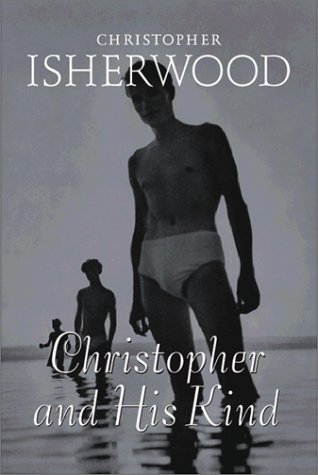
3. Christopher and His Kind
$8.98
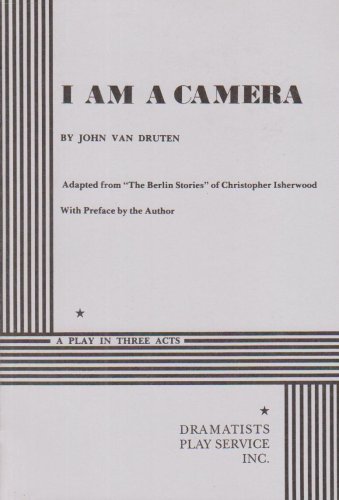
4. The Berlin Stories: The Last of
$9.52
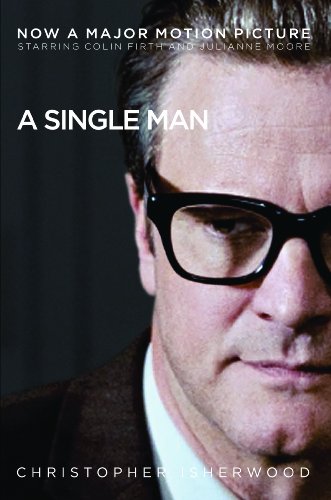
5. A Single Man
$11.92
6. Christopher Isherwood: His Era,
$9.42
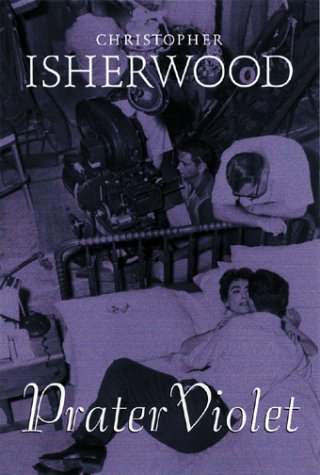
7. Prater Violet
$14.89
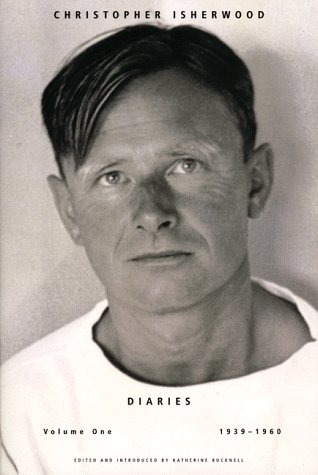
8. Diaries: Volume 1, 1939-1960 (Diaries)
$16.28
9. Conversations With Christopher
$11.95
10. Christopher Isherwood Reads Selections
$11.95
11. Christopher Isherwood Reads Selections
$9.78
12. Goodbye to Berlin
 
13. Prater Violet
 
14. My guru and his disciple / Christopher
 
$12.94
15. Where Joy Resides: A Christopher
$103.89
16. Queer Times: Christopher Isherwood's
$11.70
17. The Condor and the Cows: A South
 
18. Last Drawings of Christopher Isherwood
$1.83
19. Isherwood: A Life Revealed
$13.02
20. The Memorial

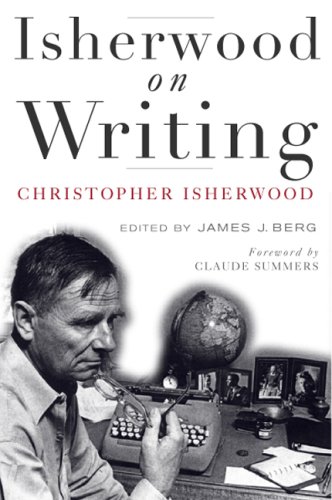
1. Isherwood on Writing: The Lectures in California
by Christopher Isherwood
Hardcover: 208 Pages (2007-12-28)
list price: US$25.95 -- used & new: US$14.99
(price subject to change: see help)
Asin: 0816646937
Canada | United Kingdom | Germany | France | Japan
Editorial Review

Book Description

In the 1960s, Christopher Isherwood gave an unprecedented series of lectures at California universities on the theme “A Writer and His World.” During this time Isherwood, who would liberate the memoir and become the founding father of modern gay writing, spoke openly for the first time about his craft—on writing for film, theater, and novels—and on spirituality. Isherwood on Writing brings these public addresses together to reveal a distinctly—and surprisingly—American Isherwood.


Given at a critical time in Isherwood’s career, these lectures mark the era when he turned from fiction to memoir. In free-flowing, wide-ranging discussions, he reflects on such topics as why writers write, what makes a novel great, and what influenced his own work. Isherwood talks about his working relationship with W. H. Auden; his literary friendships with E. M. Forster, Virginia Woolf, Stephen Spender, Aldous Huxley, and Somerset Maugham; and his work in the film industry in London and Hollywood. He also explores uncharted territory in candid comments on his own work, something not contained in his diaries.


Isherwood on Writing uncovers an important and often-misunderstood time in Isherwood’s life in America. The lectures present, in James J. Berg’s words, “an example of a man, comfortable in his own sexuality and self, trying to talk about himself and his own life in a society that is not yet ready to hear the whole story.”


A major figure in twentieth-century fiction and the gay rights movement, Christopher Isherwood (1904–1986) is the author of many books, including A Single Man and Down There on a Visit, available from Minnesota.


James J. Berg is dean of liberal arts and sciences at Lake Superior College in Duluth, Minnesota. He is editor, with Chris Freeman, of The Isherwood Century: Essays on the Life and Work of Christopher Isherwood (winner of the Lambda Award) and Conversations with Christopher Isherwood.


Claude Summers is professor emeritus of English at the University of Michigan, Dearborn and author of many works, including Gay Fictions: Wilde to Stonewall.

... Read more

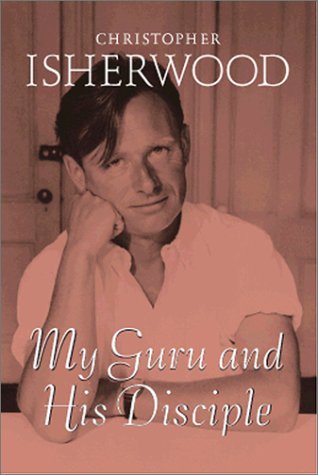
2. My Guru and His Disciple
by Christopher Isherwood
Paperback: 352 Pages (2001-10)
list price: US$18.95 -- used & new: US$11.82
(price subject to change: see help)
Asin: 0816638640
Average Customer Review: 5.0 out of 5 stars
Canada | United Kingdom | Germany | France | Japan
Editorial Review

Book Description
"My Guru and His Disciple is a sweetly modest and honest portrait of Isherwood's spiritual instructor, Swami Prabhavananda, the Hindu priest who guided Isherwood for some thirty years. It is also a book about the often amusing and sometimes painful counterpoint between worldliness and holiness in Isherwood's own life. Sexual sprees, all-night drinking bouts, a fast car ride with Greta Garbo, script-writing conferences at M-G-M, and intellectual sparring sessions with Bertolt Brecht alternated with nights of fasting at the Vedanta Center and a six-month period of celibacy and sobriety. Seldom has a single man been endowed with such strong drives toward both sensuality and spirituality, abandon and discipline. . . . In these pages, Isherwood has reinvented the spirit of devotion for the modern reader."Edmund White, New York Times Book Review

"This book is a humbling tribute to someone who revealed to Isherwood inner grounds for spiritual awareness." Alan Hollinghurst, New Statesman

A major figure in twentieth-century fiction and the gay rights movement, Christopher Isherwood (1904-1986) is the author of Down There on a Visit, Lions and Shadows, A Meeting by the River, The Memorial, Prater Violet, A Single Man, and The World in the Evening, all available from the University of Minnesota Press. ... Read more

Customer Reviews (4)

5-0 out of 5 stars Highly Recommended
This book is a superb honest portrait of Isherwood's Guru, Swami Prabhavananda and the former's major character flaws. Basically, the author admits to his Guru that he is a homosexual and therefore not fit to be in the spiritual path. However, the Swami beautifully reassures Isherwood that this is NOT a flaw as Christopher is very sincere about his spiritual practices and his relationship with God is deep. This has profound implications.

The main reason why I love this book is that Isherwood gives the reader a very candid account of his relationship with the Swami. It does not avoid controversial and sensitive issues such as homosexuality and the idea of being a pacifist, especially during World War 2. It does not show any pretense in the manner in which Isherwood views his Guru with brutal honesty. A must read for all the homosexuals in the world traveling on the spiritual path. It basically states that one does not have to feel guilty about his/her sexual preferences when approaching God.

5-0 out of 5 stars Swami, How I Love Ya, How I Love Ya.....
Indulging in a third Christopher Isherwood 'novel', after being left flat by 'The Memorial' was a truly enlightening experience. Much like the 'Boy's Own Story' trilogy of Edmund White, though supposedly not an amalgamation of characters (like White's novels) the story outlines 30 years of tutelege under Swami Prabhavananda, and how the influence of this holy man helped shape Isherwood's life.

Beginning in the first half of the 20th century, Isherwood spent many years in and out of the Hindu Vedanta Center run by the Swami. As he struggled with his faith in juxtaposition with his homosexuality, the author found great comfort in the love of the Swami, which was unwavering, despite his knowledge of Isherwood's lifestyle.

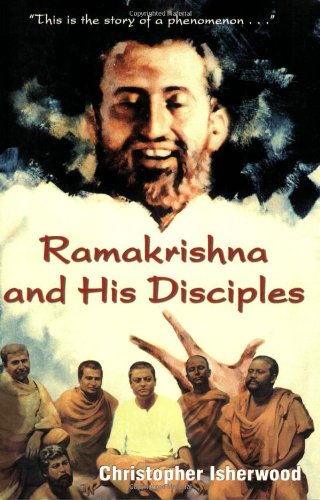
Along for the ride are many of Isherwood's contemporaries, including author Aldous Huxley, and an occasional weaving in of other celebrities of the time, such as Greta Garbo, and his lover of many years, Don Bachardy. Isherwood, amongst publication of his own novels, aids in translating the Baghad-Vita with the Swami, and publishes Ramakrishna and His Disciples, a study of a 19th century holy man who embraced all religions as worthy of learning, to appreciate the unity of all.

An interesting portrait of Isherwood himself, this book also delves into the day-to-day workings of the Hindu faith, a Vedanta center, and the life of a Swami, albeit in a Western Cultural setting.

A good read, and as much a peaceful pursuit to read as the pursuit of Isherwood's own inner peace.

5-0 out of 5 stars An English writer in America meets an Indian swami
Surely one of Isherwoods finest works. This memoir tells of his time in Hollywood during World War II and of his meeting and subsiquent association with Swami Prabhavananada. Isherwood approaches the subject with candidreflection and in his usual minimal style takes the reader on a a spiritualquest for the truth behind god and the trail of the pacifists dilemmaduring a crippling war. Auden, Huxley and a host of others walk through thework. An absolute must for Isherwood fans. I cried at the end...one of thebest books I've ever read.

5-0 out of 5 stars account of a heart relationship between student and teacher
One of the most intelligently written books on the subject. Here, Isherwood recounts the events that lead him to meet a man who was to seriously effect the way christopher approached life as a pacifistin a wartorn world. A remarkable relationship between a very modern man and adirect desciple from the lineage of Ramakrishna Paramahamsa. I think thatthis is one of the best books I have ever read. Christerpher Isherwood iseconomical with words and yet is evocative,candid and funny. Auden, Huxleyand meany more characters of the time walk through this memoir. I cried atthe end. Written by a master. If you are a cynic on the subject of swamisread this... it was written by one.. ... Read more


3. Christopher and His Kind
by Christopher Isherwood
Paperback: 352 Pages (2001-10)
list price: US$18.95 -- used & new: US$11.82
(price subject to change: see help)
Asin: 0816638632
Average Customer Review: 4.5 out of 5 stars
Canada | United Kingdom | Germany | France | Japan
Editorial Review

Book Description
Originally published in 1976, Christopher and His Kind covers the most memorable ten years in the writer's life-from 1929, when Isherwood left England to spend a week in Berlin and decided to stay there indefinitely, to 1939, when he arrived in America. His friends and colleagues during this time included W. H. Auden, Stephen Spender, and E. M. Forster, as well as colorful figures he met in Germany and later fictionalized in his two Berlin novels-who appeared again, fictionalized to an even greater degree, in I Am a Camera and Cabaret.

What most impressed the first readers of this memoir, however, was the candor with which he describes his life in gay Berlin of the 1930s and his struggles to save his companion, a German man named Heinz, from the Nazis. An engrossing and dramatic story and a fascinating glimpse into a little-known world, Christopher and His Kind remains one of Isherwood's greatest achievements.

A major figure in twentieth-century fiction and the gay rights movement, Christopher Isherwood (1904-1986) is the author of Down There on a Visit, Lions and Shadows, A Meeting by the River, The Memorial, Prater Violet, A Single Man, and The World in the Evening, all available from the University of Minnesota Press. ... Read more

Customer Reviews (5)

5-0 out of 5 stars Classic Literary Memoir
I've just finished reading Christopher Isherwood's beautiful little memoir of the years 1929 to 1939, Christopher and His Kind. The personalities that Isherwood surrounded himself with, both little and well-known, provide much of the book's content. Isherwood, with wonderful candor, discusses his meetings and relationships with such luminaries as E.M. Forster, Stephen Spender, W.H. Auden and Rosamond Lehmann. The lesser-known figures, such as the dazzling aesthete Brian Howard, and Gerald Hamilton, a sort of shady internationalist and editor, are just as fascinating. Possessing a gift for anecdote and a deeply sympathetic personality, Isherwood's renderings of his contemporaries are a joy to read and always ring true. The book has occasionally dark themes, especially those surrounding the political milieu of the time and the rising tensions in Europe. As we relive Isherwood's life during these years, we share his sense of impending doom. Isherwood's lover, Heinz, is actually arrested and imprisoned by the Gestapo and was later forced to fight on the Russian front (an experience which he miraculously survived). Isherwood's treatment of homosexuality is matter-of-fact; he never seems to have felt guilt or pain over it, but rather early on in his life felt that it was sort of a personal game for he and his friends. During the course of the book, however, he is forced to develop an increasing consciousness of being a member of an unwieldy 'tribe' of gays that extends far beyond his small personal world. At first, it seems like Isherwood is going to write in the third person, but he continually lapses back and forth between the first and the third, an effect which is slightly bewildering but doesn't really effect the book negatively. Christopher and His Kind provides a near perfect picture of literary and gay life of the Europe of the thirties.

5-0 out of 5 stars How kind of Isherwood
To reveal a more candid portrait of his life between 1929 and 1939.

Christopher and His Kind explores the real story behind his travels back and forth from England to Germany, and the people and events that influenced his life during this decade of time.

Having first read 'Down there on a Visit', which draws experiences and people from this time in his life as it's foundation, it was amusing to read the 'real' story behind certain characters and situations described in the former novel.

Isherwood is far more frank about his homosexuality, and his encounters with other males, in this book, which can also be attributed to the time period in which this was written, being the 1970's, which definitely saw a more liberal attitude emerging than in the 50's, and 60's.But at the same time, he never seems 'graphic' or overindulgent in his descriptiveness. A sense of propriety and discretion carries throughout.

The only off-putting aspect of this novel to me, which lists many of Isherwoods contemporaries and friends, including Wystan Auden, E.M. Forster, Virginia Woolf, Aldous Huxley, and more, is that Isherwood in many, many instances refers to himself in the third person, as Christopher, and then immediately switches to first person, 'me'....which is a bit confusing. It reminded me of another book by an 'autobiographical' author, Edmund White (The Married Man) in which White switches from his usual first-person narrative to a third person narrative, leaving me with the impression that he found himself unable to record the events described as anything but an outsider, or observer. I wonder if perhaps the same is true with Isherwood?

Regardless, this book delves deep into his travels, and interactions with his friends and family. Also described are his days with a long-term love and travel companion, and the lengths Isherwood went to for this young man. The book hints at much more to come with the ending words, which is by far my favorite 'line' out of the four Isherwood works I have read...knowing what he is refering to....but I won't give it away.

An excellent read, and entertaining to any fan of this gifted author, to know more about his life and times.

5-0 out of 5 stars One of a Kind
This book is one of a kind....brilliant, great, adventurous, a classic.Words do not describe it.Isherwood lays evertything on the table.He shows all his cards.This is one of the most exciting books I've ever read.I'm a college student and I skipped all of the ten thousand other books I have to read in order to read this one.It was not a waste of time.Once you get into this book it's a blast.The best part is following Isherwood across Europe.If you want the definitive feeling about the Modern Era read this book.You will get to know such characters as EM Forster, W.H. Auden, and Virginia Woolfe.....Gee, ever heard of them?This is the last great classic Isherwood wrote.I was so entranced by the words that I stayed up all night to finnish it.It's defintiely on my all time favorite list.

3-0 out of 5 stars Interesting Read- rewarding for the patient
I will admit to being slightly put off by the text when I first started reading it. However, once past the unique construction of grammar and syntax, it was an enjoyable experience. I found the filter of the English class system, homosexuality and 1920's mores an interesting perspective. I would recommend reading some of Isherwood's other texts before undertaking this one as many of the stories and characters are freely referenced and revealed in a truer light. The descriptions of Germany are unique to his age and thoroughly fascinating. The story of the man he tries to save from the Nazi's is interesting, but I particularly liked the end of the novel where he broaches the future and seeking love, and true companionship. Overall I fine read.

5-0 out of 5 stars Isherwood discovers Berlin and boys
Christopher Isherwood makes it clear in his introduction that this book will be candid about his homosexuality.It begins with his move to Berlin and covers the time up to his move to America.There are fascinating anecdotes: the character of Sally Bowles (later made famous by "Cabaret") was named after the then unknown but handsome American Paul Bowles.Isherwood read E.M. Forster's "Maurice" in manuscript, decades before it was published.These are just a few.And note: his "Diaries: Volume 1" begins just *after* this book (the earlier diaries were destroyed) ... Read more


4. The Berlin Stories: The Last of Mr. Norris andGoodbye to Berlin (New Directions Book)
by Christopher Isherwood
Paperback: 207 Pages (1963-06)
list price: US$15.95 -- used & new: US$8.98
(price subject to change: see help)
Asin: 0811200701
Average Customer Review: 5.0 out of 5 stars
Canada | United Kingdom | Germany | France | Japan
Editorial Review

Amazon.com
Christopher Isherwood was a diverse writer whose accomplishments included The Mortmere Stories (Edward Upward Series), A Single Man and a translation of The Song of God (Bhagavad Gita). But many critics hailed The Berlin Stories, the reissue of two of his best novels, as his finest. In the book, a man named Christopher Isherwood, who is and is not the author, writes a story of exile, combining the best of Isherwood's real life with the best of the life he imagined. ... Read more

Customer Reviews (21)

5-0 out of 5 stars "Even now I can't altogether believe that any of this has really happened."
Christopher Isherwood's "Berlin Stories" is perhaps most famous for having inspired the stage and screen masterpiece Cabaret, but those who are looking for an exact match between the two will be disappointed.The divine Sally Bowles does make an appearance (her charisma and verve are the book's high point), but only briefly, and her story only contains only seeds of what would become Cabaret's plotline.The primary similarities between the musical and its source material lie in the characterization of the aforementioned wannabe diva (who is every bit as vibrant on the page as she is in performance), as well as in the central themes and setting.

Berlin, 1930 - 1933: a city caught helplessly in an inexorable rush toward history as warring political factions fight for control and the Nazi party begins its rise to power.Violence and danger lurk in every street, and yet life goes on for the citizens of Berlin - who struggle to keep a degree of normalcy in their lives and food on their tables.They desperately cling to their traditional way of life as Germany's bloodthirsty future in WWII becomes more and more a nightmarish present.They are utterly unprepared for what lies ahead for them and their beloved nation.Could they have stopped Hitler?Almost certainly, if only they had taken the threat seriously.And therein lies the tragedy at the heart of Isherwood's masterpiece: that while it may be human nature to bury your head in the sand and hope for the best when trouble comes knocking, doing so will make you a passive co-conspirator and only allow the worst-case-scenario become a fully realized reality.

"The Berlin Stories" consists of two novellas that have been published together."The Last of Mr. Norris" delves into the failure of Germany's communist party and, through the character of Mr. Norris, shows us the war profiteer at its worst.Norris doesn't care who ends up in power or what they do to Germany so long as he can use them to turn a profit and maintain his lavish lifestyle.The one complaint I have about it is that William Bradshaw's immediate friendship with the shifty Mr. Norris requires a suspension of disbelief on the reader's part.Why would he so readily trust Norris when his every instinct reveals him to be a charlatan and a swindler?Perhaps we are meant to see in William's willingness to trust Norris the larger concept that Germans eventually embraced Hitler despite their better instincts, but if that was Isherwood's intention it is a little too vague."Goodbye to Berlin" is a series of vignettes with a writer named Isherwood (!) as its central character.The vignettes begin when it was still possible to hope for the best, and end in a cloud of violence as Isherwood is forced to leave Berlin, his once-and-still beloved city, in 1933.

"The Berlin Stories" is, ultimately, an elegy for the lost Germany that Isherwood had once fallen in love with, and the reader will be hard pressed not to mourn with him as the once vibrant city of Berlin descends into chaos and bloodshed.What is truly terrifying is that it actually happened, and it is incumbent upon us to make sure that it never happens again.
Grade: A

4-0 out of 5 stars Interesting look at pre-war Berlin
While nowhere near as fleshed out as "Cabaret"--the film that was constructed from this and "I am a Camera," THE BERLIN STORIES are still great entertainment and a valuable look into pre-war Berlin and Germany.

Isherwood brings to life the squalid conditions and the "many families in one place" atmosphere that adds to the gloom and doom, and also the human interactions that makeup these stories.

If you're planning to delve into the land of Christopher Isherwood, I highly suggest this writing of his, along with his wonderful, though extremely extensive autobiographies. Great fodder about Stravinsky, Los Angeles, Arthur Kallman, and a host of others around the "LA roundtable" that is also a time capsule of an era we will never see again.

5-0 out of 5 stars Welcome to Berlin
Forget all about Mr. Norris. He might have changed trains, but he never takes off. Goodbye to Berlin on the other hand is wonderful. Modernism at its best. Isherwood watches, as a bystander, how the roaring twenties Berlin slowly decays and how the Nazis are creeping out of their holes and take over public spaces.

5-0 out of 5 stars Berlin Berlin
Guess what this book is about? Paris? Correct! Really? No, not really! This compelling collection of stories, narrated by Isherwood, recreates the glamour and drudgery of Berlin. The reader is invited to enter into a world filled with colorful characters, like the irrepressible Sally Bowles and seductive Otto. For all those who shun history textbooks, "Berlin Stories" is a wonderful way to get acquainted with the politics of Berlin in the late 1920s and early 1930s.
The eccentric characters within this book add to its many layers. I personally love the character Sally Bowles. As "The New Woman," Sally epitomizes the attempt by women to adopt a style of comportment based on an idea about what "The New Woman" was like instead of "who" she actually was.
Christopher Isherwood has a way with words and can wrap a story around you so that when you look to the beginning, you are already in the middle.
References to Weimar Germany and the encroaching Nazi Germany will have you on the edge of your seat. This book is perfect for literary buffs or anyone who loves an engaging story.

5-0 out of 5 stars Weimar's Characters
Every reader seeks some form of entertainment or enlightenment. Whether it is the newest romance novel or the most cutting edge work of science the reader expects to finish a printed work with a sense of fulfillment. Christopher Isherwood more than fulfills his assigned role as entertainer in his work The Berlin Stories. Using the setting of Weimar Berlin he weaves a tale of hope, heartache, and tragedy. However, Berlin Stories is not a novel about Weimar German culture, it is a novel about humans interacting and conflicting with their environment. Isherwood's work is not brilliant as a historical work; it is a brilliant character study not seen in literature of its time. The reserve that the author shows in narrating what the person says, and what he or she does allows the reader to step into the story and analyze the characters that Isherwood sees for ourselves.
Isherwood's characters are magical and memorable. Sally Bowles and her eternal search for fame and fortune, Natalia and her naive ways, and the confused Fräulein Schroeder, and many others show us the height of the author's art. He has taken the people he has known and loved and eternalized them without any damnation. Isherwood's world is a world of decadence and tenderness, heartlessness and love. All of these qualities make The Berlin Stories a fundamental work of fiction, and an easy read.
... Read more


5. A Single Man
by Christopher Isherwood
Paperback: 186 Pages (2001-04)
list price: US$15.95 -- used & new: US$9.52
(price subject to change: see help)
Asin: 0816638624
Average Customer Review: 4.5 out of 5 stars
Canada | United Kingdom | Germany | France | Japan
Editorial Review

Book Description
Fiction

The author's favorite of his own novels, now back in print!

When A Single Man was originally published, it shocked many by its frank, sympathetic, and moving portrayal of a gay man in midlife. George, the protagonist, is adjusting to life on his own after the sudden death of his partner, and determines to persist in the routines of his daily life; the course of A Single Man spans twenty-four hours in an ordinary day. An Englishman and a professor living in suburban Southern California, he is an outsider in every way, and his internal reflections and interactions with others reveal a man who loves being alive despite everyday injustices and loneliness. Wry, suddenly manic, constantly funny, surprisingly sad, this novel catches the texture of life itself.

"A testimony to Isherwood's undiminished brilliance as a novelist." Anthony Burgess

"An absolutely devastating, unnerving, brilliant book." Stephen Spender

"Just as his Prater Violet is the best novel I know about the movies, Isherwood's A Single Man, published in 1964, is one of the first and best novels of the modern gay liberation movement." Edmund White ... Read more

Customer Reviews (16)

5-0 out of 5 stars A single man as Everyman
Because of "Cabaret," Christopher Isherwood is mostly remembered for his "Berlin Stories" and its inimitable Sally Bowles. But "A Single Man" is, I think, far and away his masterpiece--a Southern Californian counterpoint to "Ulysses" and (especially) "Mrs. Dalloway." But, if you're intimidated by stream-of-consciousness prose, don't let the references to Joyce and Woolf put you off; this novel is nearly a breezy Malibu beach read by comparison.

Isherwood details twenty-four hours in the life of an aging college professor who had lost his younger lover the previous year. "Waking up begins with saying 'am' and 'now,'" opens the first chapter, which describes the emerging corporal awareness of this initially anonymous id and which closes with the line, "It knows its name. It is called George."

The novel sticks to the mind of its protagonist as he embarks on his daily rituals: preparing for a class he must teach (Huxley's "After Many a Summer" is the subject and the students' apathetic ignorance provides much of this section's mirth); lunching with his colleagues; visiting a dying friend in the hospital; going to the gym and flirting with its teenaged patrons.

His routine begins to leave its expected track when he meets an old friend for dinner and they get uproariously drunk. Afterwards, he intends to head home but, "How to explain, then, that, with his foot actually on the bridge over the creek, George suddenly turns, chuckles to himself, and with the movement of a child wriggling free of a grownup," he heads to the local "nonconformist" dive--and runs into one of his students.

Like Clarissa Dalloway readying for a party, George lives a lonely, lackluster existence occupied with petty details, inconsequential annoyances, and unanticipated pleasures. But Isherwood instills every sentence with beauty, every character with immediate empathy, and every encounter with so much tension that "A Single Man" is, indeed, Everyman. The unique particulars of George's declining years may not be familiar to many of us, but the struggle between hopefulness and disenchantment is.

3-0 out of 5 stars Identity Literature
Well written, certainly, but this is identity literature: if you want to step inside the world of an aging homosexual lecturer, grim, drinking, depressed, at a mediocre college, with an occasional crush on some of his students, this may be a suitable book. It is richly furnished with all the details, sensitivities and grumblings. I did find it excessively preoccupied with itself and that particular perspective. It is an account of a peculiar solitariness, with a few good moments. If you are trying to read something within this distinct genre -- perhaps only for a change of perspective -- this book may be worthwhile. But expect that you may not be swept off your feet if you cannot empathize sufficiently.

5-0 out of 5 stars READ THIS BOOK!!!
Deceptively simple, this classic of gay literature from 1964 is a funny, sad, smart, political, and strangely prophetic read.A dynamic character study and day-in-the-life novel of cantankerous George, a 58 year-old gay widower and literature professor living, lusting, and loathing in California.The book engagingly explores the various roles he plays and displays to the world and hints at the reality of the role we all play as human beings.A SINGLE MAN is utterly fascinating, full of intriguing observations, poignant, and just as deep as you want it to be.It's a true work of genius.

5-0 out of 5 stars Read this book!
This short novel follows one day in the life of George, a 58-year-old English professor at San Tomas State College in Los Angeles, CA.From the moment he wakes up and shuffles to the bathroom, we are immediately thrust into his perception of life both as a gay man in the 1960s, and without his partner Jim who died in a car accident.His views are based upon both of these events, sometimes viewing the world as a big, happy joke, and other times as a very hostile place.

It's a great character study into something I think we don't read about too often: the life of a gay man in his fifties.Too often, gay books deal with men in their twenties and thirties, and if someone older than that appears, he's a caricature or stereotype of the dirty old man.George is very human and is presented in a very realistic manner.

Beautifully written.Definitely worth reading.

3-0 out of 5 stars Didn't do it for me
I dunno why this one just isn't one of my favorites. I think the writing was gorgeous, the characters were fabulous, and the story was good enough to keep me hooked. And I realize that the point of the book is to be rather mundane and maybe alittle melancholy (?) but it wasn't something I particularly enjoyed reading. It seemed like instead of focusing on some kind of story or plot it was focusing on ridiculous details. Plus there's nothing particularly deep about it. I was left at the end like, "Oh, ok . . ."

But if you're into that kind of book then go for it, honey! ... Read more


6. Christopher Isherwood: His Era, His Gang, and the Legacy of the Truly Strong Man
by David Garrett Izzo
Hardcover: 256 Pages (2001-06)
list price: US$29.95 -- used & new: US$11.92
(price subject to change: see help)
Asin: 1570034036
Canada | United Kingdom | Germany | France | Japan

7. Prater Violet
by Christopher Isherwood
Paperback: 128 Pages (2001-04)
list price: US$15.95 -- used & new: US$9.42
(price subject to change: see help)
Asin: 0816638616
Average Customer Review: 4.5 out of 5 stars
Canada | United Kingdom | Germany | France | Japan
Editorial Review

Book Description
Fiction

The classic novel on the golden era of film, now back in print!

Originally published in 1945, Prater Violet is a stingingly satirical novel about the film industry. It centers around the production of the vacuous fictional melodrama Prater Violet, set in nineteenth-century Vienna, providing ironic counterpoint to tragic events as Hitler annexes the real Vienna of the 1930s. The novel features the vivid portraits of imperious, passionate, and witty Austrian director Friedrich Bergmann and his disciple, a genial young screenwriter-the fictionalized Christopher Isherwood.

"Prater Violet, in my view, is one of the best short novels in English written in this century." Stanley Kauffmann

"Prater Violet is the most charming novel I have read in a long time. . . . a novel about movie writers, which is yet a novel about the life of every serious artist." Diana Trilling

"A deliberate historical parable. Prater Violet resembles the episodes in Goodbye to Berlin and keeps up the same high level of excellence." Edmund Wilson

A major figure in both twentieth-century fiction and the gay rights movement, Christopher Isherwood (1904-1986) is also the author of Down There on a Visit, Lions and Shadows, The Memorial, The World in the Evening, and A Meeting by the River, all available in paperback editions from the University of Minnesota Press. ... Read more

Customer Reviews (5)

5-0 out of 5 stars a little novella about nostalgia, film, and Hitler
I reread this lovely novel earlier this year.In a way, it's better than Berlin Stories because of its conciseness and the humor is more sophisticated.What had been funny looms like familiar smells over everything when history steps in.I laughed so much and felt so much as I read and that is the reason why we must keep reading Isherwood and slowing down time so that we can perceive when one is being amusing or humble or genuine, without artifice.

4-0 out of 5 stars One of Isherwoods best
For those who never wanted "Berlin Stories" to end, "Prater Violet" will be a welcomed treat.Isherwood's fictions were, for the most part, only thinly veiled memoirs - indeed he plays a part in most without even the contrivance of altering his name.However, whether they be fact or fictions, these stories are original and delightful.Isherwood's adventures in the film colony of London prove irresistible.Each of the characters, Chatsworth, Ashmeade and the great director Friedrich Bergmann, are drawn with wit and clarity.What is most remarkable is how fresh this material is considering it was published in 1945.A very fine and rewarding short novel.

4-0 out of 5 stars At the movies
Isherwood's short novel is autobiographical fiction about being hired to write a screenplay for a movie called "Prater Violet" during early World War 2. There's lots of world politics, of course, as well as the politics of the worldwide movie industry (Hollywood included). Isherwood's writing is superb, and fills this brief space with a lush garden of a story. Here's a quote: "This business about the box office is just a sentimental democratic fiction. If you stuck together and refused to make anything but, say, abstract films, the public would have to go and see them, and like them..."

5-0 out of 5 stars brilliant and unpretentious
one of the best fictional portraits of a movie director, right up therewith "white hunter, black heart." and isherwood's quiet,unforced, amused style is a joy.

5-0 out of 5 stars Isherwood's Best
This novel chronicles the making of a film called"Prater Violet" in war-torn Berlin.An interesting aspect of the novel is that Isherwood is one of the central characters himself.The novel is filled with emotions as its characters live their lives in WWII Germany. ... Read more


8. Diaries: Volume 1, 1939-1960 (Diaries)
by Christopher Isherwood
Paperback: 1104 Pages (1998-10-01)
list price: US$20.00 -- used & new: US$14.89
(price subject to change: see help)
Asin: 0061180181
Average Customer Review: 3.0 out of 5 stars
Canada | United Kingdom | Germany | France | Japan
Editorial Review

Amazon.com
Christopher Isherwood is noted for his novels and autobiographical writings, especially The Berlin Stories (the basis for the film, Cabaret) and Christopher and His Kind. But Isherwood put at least as much of his genius in his Diaries as he did in his writings intended for immediate publication. The first volume follows Isherwood as he emigrates from England to the United States where he became a Hollywood scriptwriter. This volume continues with his lifelong affair with Don Bachardy to his establishment as a major writer in the early 1960s. Isherwood's Diaries are beautifully written, gossipy, and indispensable for anyone who cares about writing, the creative process, and gay history.Book Description
In 1939 Christopher Isherwood and W. H. Auden emigrated together to the United States. These diaries, covering the period up to 1960, describe Isherwood's search for a new life in California, where he eventually settled.

The diaries tell how Isherwood became a disciple of the Hindu monk Swami Prabhavananda; about his pacifism during World War II; about his work as a screenwriter in Hollywood and his friendships with such gifted artists and intellectuals as Garbo, Chaplin, Thomas Mann, Bertolt Brecht, Stravinsky, Aldous Huxley, Gielgud, Olivier, Richard Burton, and Charles Laughton, many of whom were émigrés like himself.

Throughout this period, Isherwood continued to write novels and sustain his literary friendship with E. M. Forster, Somerset Maugham, Gore Vidal, Tennessee Williams, and others. He turned to his diary several times a week to record jokes and gossip, observations about his adopted country, philosophy and mystical insights. In spare, luminous prose, he also revealed his most intimate and passionate relationships, particularly with Bill Caskey and later with the very young Don Bachardy. ... Read more

Customer Reviews (7)

4-0 out of 5 stars Pleasant reading
Not sure why some people reacted so strongly to this book. Yes, at times it reads like a secretary's account of some very dull meeting - but that is also its charm. There's an utter lack of pretense or self drama. Rather, it is a very meticulous accounting of the people Isherwood meets and his struggles to achieve a spiritual balance. This is like watching time pass while sitting on a curb where nothing much happens - only the view is of another's world and time. I enjoyed the gentleness of this man although his experiences and spiritual struggles are far from my own.

4-0 out of 5 stars The truth is plain
I found this book compelling for a number of reasons. Like at least two reviewers here, as an Isherwood fan, I found his accounts of the early years fascinating. More interesting perhaps, one of the reasons I foundthem fascinating was because they were often banal, tedious, (but were theyever malicious?) full of frality and the soft vanities of an aging man.Surrounded by vain and often shallow people, his struggle to findspirituality in his work and in his friends was admirable, even if at timesit did shock. In the end it is the humility of some of these entries thatstruck me, the fear that the best was behind, that ahead lay only declineand darkness. Finally, the genre of the diary is a peculiar entity. I amnot sure it can be read like a book. It requires to be read in small bits,and always with an eye to the odd disjuncture of privacy and the publicdomain. Isherwood would not have been ashamed by this work, he might wellhave seen it as a parody of St Augustine: please make me celebite, but notyet.

5-0 out of 5 stars Moving and instructive
As an ardent fan of Isherwood's novels, I am, perhaps, the ideal consumer for these lengthy diaries. I left the book on my bedside table, only to be read at night, and for three months enjoyed the author's observant, witty,spiritual, intelligent and sometimes banal entries with thankful adoration.Covering as they do a span of time that allows for great personal change,as well as an ever-shifting political climate, the Diaries open a windowinto a beloved author's day-to-day, while painting a fascinating backdropthat moves from Hollywood glamour to Pennsylvannia Quakerism to EasternSpirituality and back. Isherwood's writing is always crisp, and wisewithout condescension. Through his devotion to searching outself-awareness, I found myself re-examining my own creative productionlevels. Put simply, the book is truly inspirational. I can't wait for thenext installment.

4-0 out of 5 stars I thought this was a fascinating acount of Isherwood's life
This title should be read by all fans of Isherwoods' novels and stories for insight into the man's character and life-style during his middle years after he emigrated to the United States. I was particularly interested inhis committment to Vedanta and how that developed during these years, aswell as the gradual development of his relationship with the very young DonBachardy about whom we have so little information otherwise. Bachardy wasand is a very private person. Isherwood emerges as a complex man and, likemost diaries, this book shows him with all his personality warts as well asthe ups and downs of his daily life. He suffered acutely at various timesfrom very human maladies; boredom, writers' block, lonliness andhypochondriacal concerns. I think this has to be remembered when readingsomeone's diaries or letters. It's like seeing a person undressed; you getto view the good, the bad and the ugly. There is surprisingly little ofIsherwood's sexual views or life included here however; certainly not muchthat is explicit, and his occasional bitchy remarks about Hollywoodpersonalities is refreshingly candid. I would compare these diaries tothose of Evelyn Waugh although Isherwood was far less the curmudgeon thatWaugh was and lacked Waugh's crusty mean spiritedness.

1-0 out of 5 stars Puh-lease, Spare Me
This was the most astoundingly boring read I've ever (and I read ALL the time) set myself up for. Full of self-absorbed nonsensical verbage which could easily be called "garbage" for all it's content andreadability, this book was impossible to finish, despite my hoping thatsomething interesting would happen just around the next page.Isherwoodcould have described the era, his life and lifestyle, his celebrityfriends, the movie business, with so much more panache... instead, hesounds as bored as the reader will undoubtedly be in trying to get throughthis parody of a book.In my lifetime, I've only come across 3, maybe 4,unreadable books - this is one of them.An utter waste of time and money. And a shame, since this man's life MUST have been more interesting thanthis collection of diary entries.I'd recommend The Warhol Diaries if youare interested in a diarist's view of life in an interesting time. Unfortunately, the Isherwood Diaries is vague, ill-defined,faux-philosophical, pseudo-intellectual and pretentious in its language. Ick! ... Read more


9. Conversations With Christopher Isherwood (Literary Conversations Series)
by Christopher Isherwood, Chris Freeman
Paperback: 201 Pages (2001-12)
list price: US$20.00 -- used & new: US$16.28
(price subject to change: see help)
Asin: 1578064082
Average Customer Review: 5.0 out of 5 stars
Canada | United Kingdom | Germany | France | Japan

Customer Reviews (1)

5-0 out of 5 stars The Best There Is!
Better than the literary crit stuff that has been published on Isherwood, and miles ahead of the various attempts at biography, these 'Conversations' give a portrait of the whole man. It really is the best there is on the life of Christopher Isherwood ... Read more


10. Christopher Isherwood Reads Selections from the Bhagavad Gita
by Swami Prabhavananda & Christopher Isherwood
Audio CD: 1 Pages (2005-08-01)
list price: US$11.95 -- used & new: US$11.95
(price subject to change: see help)
Asin: 0874819563
Canada | United Kingdom | Germany | France | Japan

11. Christopher Isherwood Reads Selections from the Bhagavad Gita
by Swami Prabhavananda & Christopher Isherwood
Audio CD: 1 Pages (2005-08-01)
list price: US$11.95 -- used & new: US$11.95
(price subject to change: see help)
Asin: 0874819563
Canada | United Kingdom | Germany | France | Japan

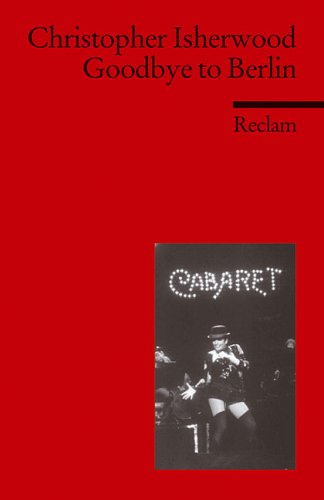
12. Goodbye to Berlin
by Christopher Isherwood
Paperback: 256 Pages (1997)
-- used & new: US$9.78
(price subject to change: see help)
Asin: 0749390549
Average Customer Review: 4.0 out of 5 stars
Canada | United Kingdom | Germany | France | Japan
Editorial Review

Book Description
First published in 1939, the novel evokes the gathering storm of Berlin before and during the rise to power of the Nazis. Events are seen through the eyes of various individuals whose lives are about to be ruined.


From the Paperback edition. ... Read more

Customer Reviews (4)

4-0 out of 5 stars An Unexpected Delight
I knew nothing of either this book or its author when I picked it up. I was merely compelled to do so because the blurb revealed that it was set in Berlin, a city which I will soon be visiting - and in which I might even be residing. I hoped to get a good vicarious understanding of the city through reading it.

I can't say that this hope was completely gratified. I did, however, learn a great deal about the city's denizens and its political crises in the 30s, pre-Hitler. The narrator of the book is also called Christopher Isherwood. This he attempts to explain in the preface: "Because I have given my own name to the 'I' of this narrative, readers are certainly not entitled to assume that its pages are purely autobiographical, or that its characters are libellously exact portraits of living persons. 'Christopher Isherwood' is a convenient ventriloquist's dummy, nothing more."

In other words, this is very thinly veiled autobiography. The narrator even mentions a book he wrote - "All The Conspirators" - which the real-life writer also composed. I must admit, this didn't particularly bother me - just thought I should point it out.

There is something enchanting about Isherwood's prose. It is extremely passive, for one thing; rarely does the narrator reveal his feelings; he is, as he says, "...a camera with its shutters open, quite passive, recording, not thinking." He recounts several enticing, sometimes jarring, anecdotes about living as an English teacher in Berlin's capital, forced to live in murky working-class tenements and uninhabitable attics, or in idyllic villas with querulous homosexuals.

What makes this little novel of vignettes special, though, is the characters. Each of them is so realistically rendered that one might be inclined to think that they really did exist - and, truth be told, they probably did, only under different names. They are fascinating, in any event.

4-0 out of 5 stars I am a Camera...
The opening page of Goodbye to Berlin contains one of the Twentieth Century's most famous sentences: 'I am a Camera with its shutter open, quite passive, recording, not thinking.' One of the most famous, yet also most disengenuous sentences. For Christopher Isherwood might have wished readers to think that his authorial persona - wry, detatched, passive, laconic - was actually his real personality, but we know the reality - lithe and limber boys in bathhouses, for instance - was rather more colourful. In the end, Isherwood couldn't distinguish between what was real, and what was a product of his imagination, the two bled into each other, giving result to an immaculate set of writings from his Berlin period when he was living poor in guesthouses, teaching English and recording the final months of early thirties Berlin Bohemia with the menacing shadow of Hitler imposing on the edges, and moving ever more darkly towards the centre.

Goodbye to Berlin contains some of Isherwood's choicest writings. There is the memorable tale of Sally Bowles, a feckless slightly aristocratic girl who sleeps with producers in the hope of making her big break and sings clubs (badly) in the evening. Her story inspired the musical 'Cabaret', and Isherwood creates a superb portrait of a young glamorous woman using her transient sex appeal to manipulate men and their emotions.

What Kingsley Amis described as Isherwood's 'boyhorn' features, with a tale of Otto and Peter, a quarreling gay couple who struggle with their sexuality in the homophobic atmosphere of pre-war Berlin. Then there is Natalia Landauer, the rich Jewish Heiress of a wealthy family, and the poor and Frau Schroder, the plump, caring landlady who is intrigued by the patrician Isherwood and is enthralled by his stories 'Quite right Herr Isssyvoo!'

The passive prose style is a perfect foil for this decadent era in Weimar Germany. The people Isherwood describes are often selfish and feckless, but always bursting with humanity. The book concludes with a description of Jewish shop owners suffering increasing intimidation for Nazi bully boys.

The back end of that famous camera sentence: 'one day this will have to be recorded and fixed'. Well now that period is fixed in history. We knowwhat all this decadence ran into. For that, Goodbye to Berlin makes very poignant and powerful reading.

3-0 out of 5 stars Down and Out in Berlin
Originally published in 1939, the vignettes which form this book were based on the period (1930-33) Isherwood spent in Berlin that coincided with the Nazi ascension to power. It exists uneasily somewhere in the grey zone between memoir and fiction. Taking a cue from Dos Passos' USA trilogy (whose fist volume came out in 1930, and which he certainly would have read), Isherwood described his writing as "I am a camera with its shutter open", thereby ostensibly branding it documentary in nature. The episodes certainly read as a straight memoir would, and since the narrator of each piece is called Christopher Isherwood, it's hard not to take them as such. But however much is fictional, and whatever else it may be, the book functions today as a time capsule of a society on the brink of horrific change. And it derives no little drama from our knowledge of what was to happen to that society over the next 15 years. Of course, it also endures in fame as the base material from which the musical/film Cabaret was formed, as well as the earlier play/film I Am a Camera.

The pieces run chronologically, beginning with "A Berlin Diary", which introduces the reader to the city, and to Isherwood's hand-to-mouth existence as an freelance English tutor and lodger in a low-end guesthouse. The idea is to introduce various colorful characters, such as the landlady and his fellow lodgers (a prostitute, a bartender, a music-hall singer, and a traveling salesman), and acclimate the reader to the setting. Next is "Sally Bowles", certainly the most famous of the stories, and featuring the most famous of his characters. I wasn't particularly engaged by the story of the 19-year-old English golddigging"actress", nor did it make a whole lot of sense as to why Isherwood would go to such effort to remain friends with such a self-absorbed chit of a girl. "On Ruegen Island" takes place at a vacation spot in northeastern Germany, on the Baltic Sea. It is primarily the story of Isherwood's English friend, and the young working-class German man he becomes infatuated with. It's a well-drawn, but almost cliche portrait of the neurotic, insecure sugar-daddy, his freeloading, bisexual plaything, and their dysfunctional mind games.

In the next story ("The Nowaks"), Isherwood catches up with this same dissolute hustler in Berlin, and ends up lodging with his family. This is an opportunity to sketch out daily life in an even lower-class milieu. This contrasts nicely with the next story, "The Landaurers", in which Isherwood becomes friends with a rather intense young Jewish woman from a wealthy merchant family. Here, Isherwood actively dislikes the young woman, and yet still cultivates her acquaintance for some reason. That reason may be the "friendship" he develops with her breezily cynically world-wise cousin Bernhard. There's something somewhat unsettling in Isherwood's offhand characterization of Bernhard's"Eastern" inscrutability and repeated references about how one could never really "know" what was going on in his head. These sound awfully like some of the classic stereotypes of Jews, and one wonders to what extent Isherwood harbored his own upper-class instilled prejudices. (This may be discussed in Peter Parker's Isherwood: A Life Revealed, but I'm not interested enough to track that down and check.) In any event, the contrast between the poor Nowaks and the wealthy Landaurers serves to highlight the growing Nazi menace, and Isherwood sees the writing on the wall in his final diary farewell.

The collection seems destined to be lauded ad nauseam as a fond farewell to the seedy, corrupt side of Weimar-era Germany and its fun-loving group of nightlife denizens: gay hustlers, women on the make, communist poseurs, and so on, all of whom would soon disappear or become reinvented under a completely different kind of of Nazi decadence. However, it's not at all clear to me from this that the Berlin of that time was markedly different from other large European cities of the time. Certainly Paris and other cities had a thriving "underground" scene at the same time -- Berlin's claim to fame (indeed a large portion of why Isherwood went there), was the steady and cheap supply of young boys, kind of a pedophile's paradise. In any event, those interested in the Berlin of that era may want to tackle Alfred Dobin's massive masterpiece, Berlin Alexanderplatz, which channels 1920s Berlin through the eyes of an ex-con.

5-0 out of 5 stars It just WON'T Leave my tape player!
I was never one for audio books, I thought they were for people too lazy to read the real thing, and that many of them were read without feeling or emotion and sounded a bit like my 9th grade English teacher reading the death of Mercutio scene from Romeo and Juliet.But the combination of one of my favorite books and my favorite actor (Alan Cumming) led me to even buy used to hear what it sounded like.The search was well worth it!Alan puts so much into this brilliant recording.He intimately entwines you in the world of pre-war Berlin before the deluge.He is utterly witty handling the character of Fraulein Schroeder, uproariously funny with the famous Sally Bowles, and when he is Chris the narrator of the book, he takes you on a rollercoaster of emotions, from joy to sorrow to everything in between.Alan knows the book so well as if he came from that world.He captures your attention for the 3 hours that the running time is, and for 3 hours does NOT disappoint!If you're fortunate enough to be able and get a copy of this, I know you'll agree with me, and in the meantime they have to start reprinting this gem among literary and performance gems! ... Read more


13. Prater Violet
by Isherwood;Christopher
 Hardcover: Pages (1945)

Asin: B000OL9S26
Canada | United Kingdom | Germany | France | Japan

14. My guru and his disciple / Christopher Isherwood
by Christopher (1904-1986) Isherwood
 Hardcover: Pages (1980)

Asin: B000VZM4ZS
Canada | United Kingdom | Germany | France | Japan

15. Where Joy Resides: A Christopher Isherwood Reader
by Christopher Isherwood
 Paperback: 207 Pages (1991-05-01)
list price: US$12.95 -- used & new: US$12.94
(price subject to change: see help)
Asin: 0374522553
Average Customer Review: 5.0 out of 5 stars
Canada | United Kingdom | Germany | France | Japan
Editorial Review

Book Description
Best known for The Berlin Stories-the inspiration for the Tony and Academy Award-winning musical Cabaret-Christopher Isherwood (1904-1986) was a major figure in twentieth-century fiction and the gay rights movement. This collection presents two complete novels, Prater Violet (1945) and A Single Man (1964); episodes from three other novels, Goodbye to Berlin (1939), Down There on a Visit (1962), and Lions and Shadows (1938); and excerpts from his nonfiction works, Exhumations (1966), Kathleen and Frank (1971), and My Guru and His Disciple (1980).

"The late Christopher Isherwood was a writer with exceptional powers of observation. . . . An excellent anthology." -Los Angeles Times

Christopher Isherwood (1904-1986) is also the author of A Single Man, Down There on a Visit, Lions and Shadows, The Memorial, The World in the Evening, and A Meeting by the River, all available in paperback editions from the University of Minnesota Press.

Don Bachardy, Isherwood's longtime partner, is a painter and writer living in Santa Monica, California. His books include Last Drawings of Christopher Isherwood (1991) and Stars in My Eyes (2000).

James P. White is a novelist who directs the creative writing program at the University of South Alabama. ... Read more

Customer Reviews (1)

5-0 out of 5 stars You Do Know Who Isherwood Is?
Christopher Isherwood's name and the breadth of his work is completely overshadowed by a musical adaptation of just one of his short stories.One of the best writers of memoir, reportage and fiction of the twentieth century, his work will one day appear on required reading syllabi alongside Hemingway, Faulkner and Fitzgerald.In the meantime, please read and share this book.

The demi-biographical stories presented in "Where Joy Resides" demonstrate Isherwood's ability to consolidate place, time, character and emotion into a concise and highly readable presentation.Although a diverse selection, the reader will finish the book with an understanding and affinity for the author.

Spend a weekend "Where Joy Resides," and I'm confident you will not remember Christopher Isherwood as the guy who wrote "Caberet." ... Read more


16. Queer Times: Christopher Isherwood's Modernity (Studies in Major Literary Authors)
by Jamie M. Carr
Hardcover: 188 Pages (2006-05-10)
list price: US$110.00 -- used & new: US$103.89
(price subject to change: see help)
Asin: 0415978416
Canada | United Kingdom | Germany | France | Japan

17. The Condor and the Cows: A South American Travel Diary
by Christopher Isherwood
Paperback: 268 Pages (2003-11)
list price: US$17.95 -- used & new: US$11.70
(price subject to change: see help)
Asin: 0816639825
Canada | United Kingdom | Germany | France | Japan
Editorial Review

Book Description
In September 1947, long before mass tourism and with no knowledge of Spanish, Christopher Isherwood and his lover Bill Caskey left for a six-month tour of Colombia, Ecuador, Peru, Bolivia, and Argentina. Isherwood's account of this journey, The Condor and the Cows, is one of very few classic travel books on South America and was among the books Isherwood considered his best.

Based on his trip journal and loosely structured by the vagaries of his travels, these pages give us an Isherwood who dreams of voluntary exile in the tropical paradise of Curaçao and dines out on stories of Nazis in Berlin, missionaries in China, and movie stars in Hollywood. He describes the surprising and sometimes unnerving people and places he encounters through telling, cinematic details-of Inca drinking vessels, the Spanish colonial city of Cuzco (which he calls "one of the most beautiful monuments to bigotry and sheer brutal stupidity in the whole world"), a bullfight in Bogotá, the towering ruins of Machu Picchu. Unsentimental, rich, and wonderfully rendered, this expanded edition includes additional photographs by Bill Caskey and a new foreword by Jeffrey Meyers. ... Read more


18. Last Drawings of Christopher Isherwood
by Don Bachardy, John Russell, Stephen Spender
 Hardcover: 128 Pages (1991-05)
list price: US$45.00
Isbn: 0571140750
Average Customer Review: 5.0 out of 5 stars
Canada | United Kingdom | Germany | France | Japan

Customer Reviews (1)

5-0 out of 5 stars A eulogy for lovers
Christopher Isherwood has been appreciated for years as one of America's finest writers.Recent publications of biographies, essays of remembrances, and historically important data in the form of his diaries have established his place in history.That he had a longterm relationship with artist Don Bachardy is a well known fact and in truth much of the notoriety currently is due to Bachardy's continued devotion.Nowhere is there a more profound paeon to love than in this book of ink drawings.As Christopher Isherwood lay ill and dying his lover stayed by his side, savoring all the moments remaining in their temporal relationship.How best to while away his attentiveness than to draw Isherwood.These profoundly touching renderings show Isherwood's decline and finally his death, even drawings of his corpse as Bachardy waited for the body to be removed from their Santa Monica home.This is not a morbid book.This is a book that radiates love and chronicles time passing and life ending.It is one of the most tender elegies we have in art. ... Read more


19. Isherwood: A Life Revealed
by Peter Parker
Hardcover: 832 Pages (2004-12-07)
list price: US$39.95 -- used & new: US$1.83
(price subject to change: see help)
Asin: 1400062497
Average Customer Review: 3.5 out of 5 stars
Canada | United Kingdom | Germany | France | Japan
Editorial Review

Book Description
Here is the definitive biography of one of the most exciting, influential, and elusive authors of the twentieth century. Christopher Isherwood’s novels and short stories, including those that inspired the musical Cabaret, have always been assumed to be largely autobiographical.

Based in part on Isherwood’s private papers–unavailable until now–this fascinating book presents the real story of his life, a life that saw a relatively conventional boy become an acclaimed writer, mystic, and “grand old man” of the gay liberation movement. In the end, Isherwood: A Life portrays someone who misled as much as he revealed.

Born in 1904, the heir to a large country estate where his grandfather was squire, Isherwood had a youth filled with both privilege and loss. His father’s death in World War I devastated his mother and created a “hero-father” image that would haunt both Christopher and his unstable brother for the rest of their lives.

He began to acknowledge his homosexuality at his English boarding school and subsequently formed a definition of “self” based on subterfuge, performance, and escape. With his lifelong friends W. H. Auden and Stephen Spender he emerged as one of the leading literary figures of the 1930s.

From the bars, nightclubs, and slums of Weimar Germany–where Isherwood created The Berlin Stories and introduced the world to Sally Bowles–to homosexual communes in Greece and Portugal, to the film studios of London (the subject of his novel Prater Violet) and Hollywood, his destinations became arenas for his reinventions. Isherwood’s later years as an unofficial spiritual and sexual sage in Southern California only added to the abiding mystery of his life.

In addition to using Isherwood’s correspondence, unpublished diaries, and other previously unavailable sources in painting this clear and definitive portrait, Peter Parker has also unearthed the author’s telling early works, including parodies, school memoirs, and even part of a crucial lost novel.

Painstakingly researched and brilliantly written, Isherwood: A Life captures the fugitive reality of a man who has become a favorite artist and important symbol of an entire era in our life of letters. Published in the centennial of his birth, it will be read as long as Isherwood himself is. ... Read more

Customer Reviews (3)

5-0 out of 5 stars Recommended
For me, this is the first biography of Isherwood that spells out the contradictions of this complex and fascinating personality and views them not as episodic pieces but as a whole life. Finally, I was able to see that the Hollywood and Vedanta years were not some unfortunate detour that Isherwood took, but an inevitable journey in a quest for authenticity and examination of truth -- real and perceived. This personal revelation is probably more a result of the life choices Isherwood made than anything Parker illuminates here, still I appreciated the fact that Parker HAS opinions, especially about the intrinsic value of Isherwood's work and I can agree or disagree with his assessments. I have walked away from this biography with a new appreciation of Isherwood's amazing talent and his profound integrity as an artist. The wild, the debauched, the dull, blissful, the banal and petty -- Isherwood captured it all, distilled it into his art and we are all the richer for it.

2-0 out of 5 stars Size isn't everything!
Peter Parker's earnest, exhaustive and rather conventional biography fails to recognise the forest for the trees. Isherwood did, in fact, "find a home", both geographically and spiritually, although you might not recognise that from Parker, who indicated in an interview for The Telegraph that he didn't "judge" his subject.
The tone of some sections makes that claim a little hard to swallow but he has saved his worst finger-wagging for a crass putdown of Isherwood's guru, Swami Prabhavananda, whom he characterises as sly and manipulative, playing up to Isherwood's vanity in order to borrow some of the writer's cachet for Vedanta Society publications and good P.R.Parker even tries to mount a prosecution against the guru as not really being tolerant towards homosexuals at all, with Isherwood getting "special treatment", before finally beating a lame retreat into a disclaimer that Isherwood had "not been duped in any way". ( Parker is mouthing Denny Fouts, whom Isherwood called "the sourest of all critics").

Should we blame Parker for his cultural myopia? Even Isherwood's dear friend, W.H. Auden, regarded his religion as "Heathen mumbo jumbo" , but unlike Parker, did not fail to recognise the guru's bona fides ("Your Swami's quite obviously a Saint, of course.") Parker's churlish putdown of Swami Prabhavananda is sheer perversity and does him and his book little credit.


Isherwood presciently foreshadowed some of the neo-colonialist prejudice his spirituality might evoke In "An Approach to Vedanta" and elsewhere, David Robb picks up on the point in relation to the suspicion surrounding the reception of Aldous Huxley's turn towards spirituality.Robb identifies "an ingrained British contempt for subject native races." specifically in relation to Huxley's adoption of Gandhi's principles of nonviolence. Parker doesn't recognize this in his own attitude.

It's high time the Brits realised that they have had Isherwood suspended in aspic for far too long. Prof. John Sutherland, reviewing this biography for the London Review of Books, refers to Isherwood's "late life conversion to transcendentalism". As Isherwood met the guru in 1939 (when he was in his mid-thirties), and continued in the relationship for almost four decades, there's no way this could be construed as" late life".Reviews of the Parker biog. have flushed out many of these old canards lurking in the underbrush.

To Parker's credit, the second, very productive period of Isherwood's life IS given due weight. His judgments of the literary texts are fairly predictable, but he is unable to understand why Isherwood found "My Guru and His Disciple" (1980) as among his best work. Even Stephen Spender agrred on that (and he wasn't an uncritical friend, after all.)

When it comes to trying to evaluate the benefits to Isherwood from his 40 year practice of Vedanta, Parker is really out of his depth; his neo-Christian blinkers narrow his vision to the point where he can't even see what he is looking at. This is a shame. It seems also that he has avoided talking with many of the people still alive today who knew Isherwood during this time, to test his own prejudices, and that, too, is a failing in this portrait.

To give it its due, the 12 years' work Parker put into this biography does show. It will become the standard reference book on Isherwood for dates, places, people and events. But it will take a better biographer than Parker to capture all of the dimensions of this fascinating precursor of many (post-modern) trends. At 800 pages, he should have got it right (apparently he sliced 15% out of the final edit), but you have to ask why Isherwood's partner, Don Bachardy, was so bitterly disappointed with the outcome.I still feel the Berg and Freeman collections, and Katherine Bucknell, the editor of the diaries, give much more real insight into the man than this collection of facts has managed to do.

4-0 out of 5 stars A much needed biography
I read the English edition of this biography a few months ago and enjoyed it.I think that once you have read this book, you really don't need to read another biography of Isherwood.

However, I kept thinking as I read this book, that has there ever been a life more recycled for literary purposes than Isherwood?

I am a fan of Isherwood and am glad to own this book. ... Read more


20. The Memorial
by Christopher Isherwood, Isherwood Christopher
Paperback: 294 Pages (1999-02)
list price: US$17.95 -- used & new: US$13.02
(price subject to change: see help)
Asin: 081663369X
Average Customer Review: 4.0 out of 5 stars
Canada | United Kingdom | Germany | France | Japan

Customer Reviews (1)

4-0 out of 5 stars Not all that memorable....
This is admittedly only the second Isherwood novel I have read...and the first half sets up what I thought was going to be a really good finish...but I was a bit disappointed.

Regarding the various relationships of several members of a family, and a few outsiders, there is really one one thread that comes through as a focal point or 'main' story, and that is of the relationship between the character of 'Eric' and his cousin 'Maurice', as well as the involvement of Maurice and Edward, an older man in the habit of making life more cushy for Maurice, much to Eric's disdain.

Citing moral corruption and the decline of character of his cousin, Eric strives to barr Edward from continuing his support of Maurice with an appeal to the man's better judgement.

Again, this book has a lot of potential, but it just didn't move me the way The World in the Evening did. I give it four stars for Isherwood's writing style, but cannot give an additional mark for content. ... Read more


  1-20 of 100 | Next 20
A  B  C  D  E  F  G  H  I  J  K  L  M  N  O  P  Q  R  S  T  U  V  W  X  Y  Z  

Prices listed on this site are subject to change without notice.
Questions on ordering or shipping? click here for help.

site stats