e99 Online Shopping Mall

Geometry.Net - the online learning center Help  
Home  - Authors - Ishiguro Kazuo (Books)

  1-20 of 100 | Next 20
A  B  C  D  E  F  G  H  I  J  K  L  M  N  O  P  Q  R  S  T  U  V  W  X  Y  Z  

click price to see details     click image to enlarge     click link to go to the store

$3.94
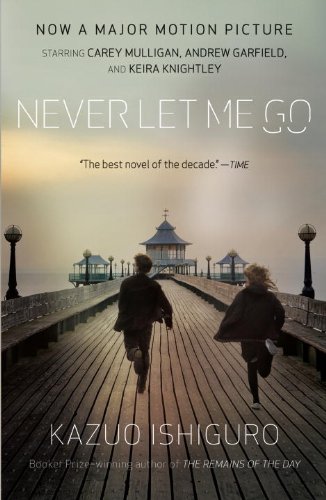
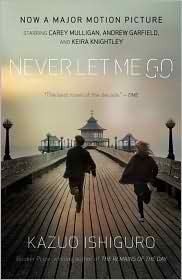
1. Never Let Me Go
$7.56
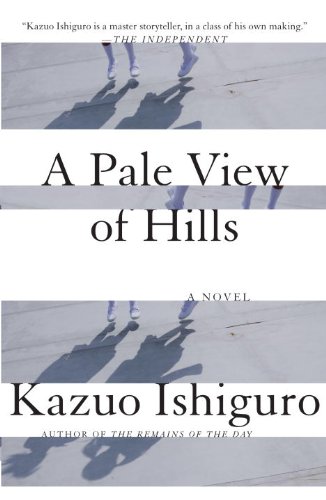
2. A Pale View of Hills
$3.64
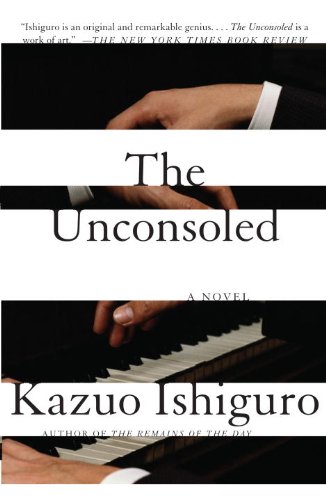
3. The Unconsoled
$4.26
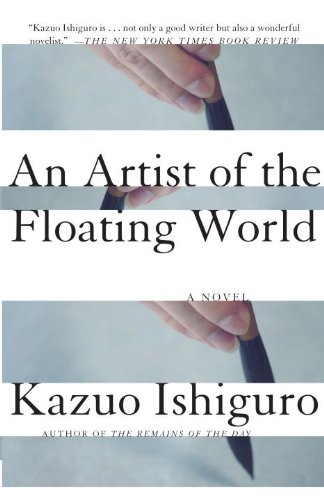
4. An Artist of the Floating World
$3.70
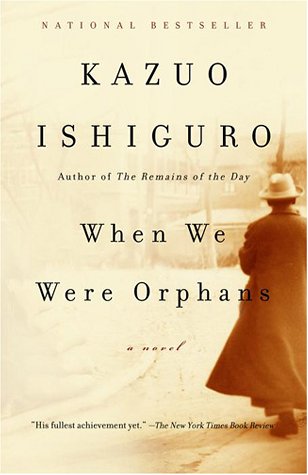
5. When We Were Orphans: A Novel
$8.75
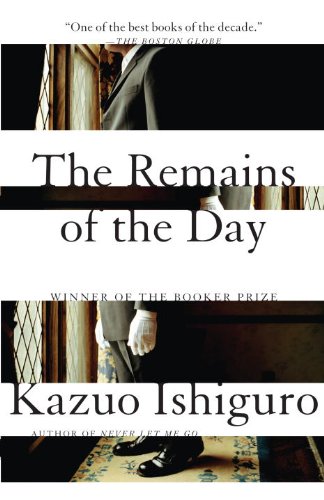
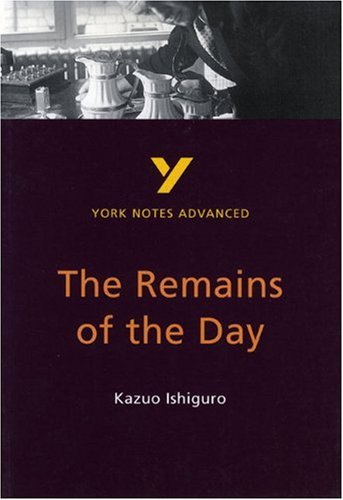
6. Remains of the Day (Penguin Joint
$21.31
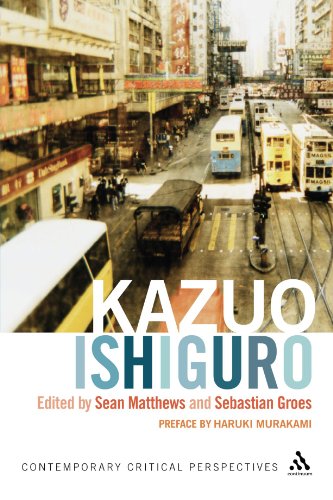
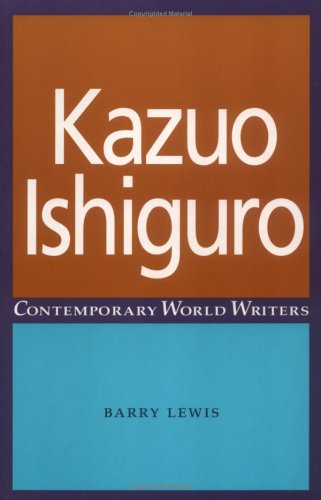
7. Kazuo Ishiguro (Contemporary World
$7.64
8. Never Let Me Go
$8.18
9. Never Let Me Go
$17.17
10. Damals in Nagasaki
 
$50.00
11. Conversations with Kazuo Ishiguro
$23.19
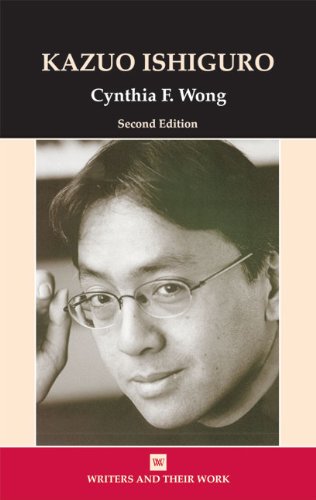
12. Kazuo Ishiguro (Writers &
$7.70
13. Kazuo Ishiguro's The Remains of
$49.95
14. Threebies: Kazuo Ishiguro (Faber
15. Remains of the Day, the
 
$26.95
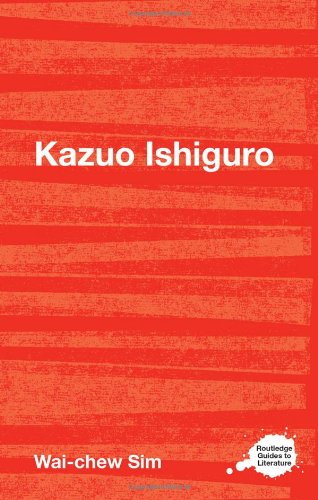
16. Kazuo Ishiguro: A Routledge Guide
 
17. 5-book Set By Kazuo Ishiguro;
 
$119.95
18. Globalization and Dislocation
 
$4.10
19. NEVER LET ME GO.
$39.20
20. The remains of the day de Kazuo

1. Never Let Me Go
by Kazuo Ishiguro
Paperback: 304 Pages (2006-03-14)
list price: US$14.00 -- used & new: US$3.94
(price subject to change: see help)
Asin: 1400078776
Average Customer Review: 3.5 out of 5 stars
Canada | United Kingdom | Germany | France | Japan
Editorial Review

Book Description
From the Booker Prize-winning author of The Remains of the Day comes a devastating new novel of innocence, knowledge, and loss. As children Kathy, Ruth, and Tommy were students at Hailsham, an exclusive boarding school secluded in the English countryside. It was a place of mercurial cliques and mysterious rules where teachers were constantly reminding their charges of how special they were.

Now, years later, Kathy is a young woman. Ruth and Tommy have reentered her life. And for the first time she is beginning to look back at their shared past and understand just what it is that makes them special–and how that gift will shape the rest of their time together. Suspenseful, moving, beautifully atmospheric, Never Let Me Go is another classic by the author of The Remains of the Day ... Read more

Customer Reviews (163)

4-0 out of 5 stars Great pace, great original storyline...
at first I was like "Oh I've heard this before", but I was SO wrong. This is a great tale...it has a great pace and you really get a sense of the characters as well as connect with them.You will move through this one pretty fast and I definitely recommend it.I will be looking for more titles from this author.

5-0 out of 5 stars Beautifully heartbreaking
The title of this work just said, "You must read this; it will be difficult, but read it." And that was so true. I purchased the book, not fully understanding what it was about or how it would unfold. I loved the author and trusted that it would be a worthwhile journey but still let the book sit on the shelf until I felt brave enough to venture in.
From the first page you know that there is something that you don't know. You are told the "where" and the "when" and yet you know that the story of these lives is much more complicated.The mystery compels you to continue reading until you are completely committed to the characters; you are right there with them as the truth and tragedy of their lives is revealed. The story is crafted to be incredibly personal and yet it deals with huge issues that we, as a scientific society on our current path, must thoughtfully consider. The manner in which the author weaves the question of humanity and the soul with the intimate lives of these people is both profound and brilliant.

5-0 out of 5 stars A warning
I'm an Ishiguro fan, and found this to be among his best books. But it is also the most upsetting one I can remember reading - uncomfortably close to reality in this country where some lives are worth so much more than others, and the very rich actually do travel to less "developed" countries to buy organs. (I can't imagine why other reviewers said it was preposterous!) I identified with and grew more and more fond of the narrator, so I tried to deny the reality of her role in life until it became impossible to escape. I'm an English professor with a high degree of tolerance for miserable books, but I was devastated, had nightmares for weeks, and still refuse to discuss it lest I return to that state. In short, although I admire this book and marvel at the author's ability to write in so many different ways and inhabit such different characters, I cannot recommend it to anyone but completely impervious readers.

2-0 out of 5 stars Zzzzzzzz.....
Wow.If you want a book that never EVER comes to a climax, this is the book for you.Honestly one of the most boring books I have ever read.It had a slow start, a slow middle, and right up until the last page...SLOW.I had to finish it because it was my book club read.Ugh.If you want to torture yourself read this book.This book could have been written in about 1/2 theamount of pages used.It does not evoke one amount of emotion in my body.I'm not sure why all the good reviews!?

The book is written in the first person, by Kathy and all she does is talk about what she says to another character, how she felt when she said it, before she said it and after she said it.And, then talks about the other character's response, how she THINKS they felt, how they really felt and years later how one thing she said had an effect.Bored yet?That's the ENTIRE book.

4-0 out of 5 stars Thought-provoking and highly moving
A disturbing book, which I had not expected to like as much as I did. I don't want to reveal plot details here, but I knew enough about the plot before reading the book to have some misgivings. But I was drawn in to care about what happened to the characters. Despite the potential for bleakness, this book actually had the opposite effect on me, and I found it quite uplifting (though very sad) by the time I finished it.

Ishiguro's writing is beautiful, as always. ... Read more


2. A Pale View of Hills
by Kazuo Ishiguro
Paperback: 192 Pages (2005-03-03)
list price: US$14.45 -- used & new: US$7.56
(price subject to change: see help)
Asin: 0571225373
Average Customer Review: 4.0 out of 5 stars
Canada | United Kingdom | Germany | France | Japan
Editorial Review

Book Description
The story of Etsuko, a Japanese woman now living alone in England, dwelling on the recent suicide of her daughter. In a story where past and present confuse, she relives scenes of Japan's devastation in the wake of World War II. ... Read more

Customer Reviews (40)

4-0 out of 5 stars Exceptional!
Highly Recommended.

Kazuo Ishiguro illuminates a microcosm of Hiroshima from the atomic shadows of the post-WWII era, as he delves into the interpersonal relationships of a Japanese mother and her two daughters. Despite their move across the world to England, those shadows will always haunt as patriotism and loyalty clashes with the younger generation's psyche to move on, and how the equlibrium of life could be disturbed and turn people into shadows, memories into ghosts, the past into an obscure pale, yet powerful, view of Hills.

4-0 out of 5 stars Shadows Across The River
Kazuo Ishiguro was born in Nagasaki in 1954 and moved to Britain at the age of five. He was awarded the OBE in 1995 and the Chevalier de l'Ordre des Arts et des Lettres in 1998. "A Pale View of the Hills" is his first book, and he has gone on to win the Whitbread Prize (with "An Artist of the Floating World") and the Booker Prize (with "The Remains of the Day").

"A Pale View of the Hills" is told by Etsuko, a Japanese widow now living in England. Keiko, Etsuko's daughter from her first marriage, was born in Japan though had later moved to England with her mother. She later moved to Manchester, where she had recently committed suicide. Niki - her daughter from her second marriage to her English husband - currently lives in London. Niki and Keiko were never close, to the point where Niki felt she couldn't attend the funeral. Keiko, in fact, she appears to have kept herself isolated - even when living at home, she wouldn't have been seen by her family for days at a time. Part of the book deals with Etsuko's current relationship with Niki, and their attempts to come to terms with Keiko's death.

Recent events have also led to Etsuko looking back to when she was pregnant with Keiko. The war was only recently over and she was living in Nagasaki with her first husband, Jiro. The couple were living in a recently built block of apartments, close to the river - though right beside a large patch of very unhygienic wasteground. At the far end of the wasteground, on the banks of the river, was a lone wooden cottage that had somehow survived both the war and the city's planners. For a short period, during the summer, that cottage was home to a woman called Sachiko - someone Etsuko came to consider a friend. Sachiko was originally from Tokyo, though had been in Nagasaki for around a year. Until her arrival at the cottage, she had been staying at an Uncle's house in a different part of the city - though she proves a little vague as to why she left such comfortable surroundings for such a dilapidated cottage. She doesn't appear to be a caring mother either - Mariko doesn't go to school and she's regularly left without a babysitter. In fact, Mariko seems to care more for her cat and kittens than she is cared for by her mother. (Mariko does speak of a mysterious woman who apparently lives in the woods and calls round when her mother goes out - this, however, is dismissed as a figment of her imagination by Sachiko). In time, Etsuko learns a little more of her new friend's past and her plans for the future - including a life in America with a man called Frank.

The same summer, Etsuko's father-in-law came to stay. Ogata-San is a retired teacher, and he proves a likeable character. While he's not in the same position as Sachiko, he is struggling a little with how attitudes have changed in post-war Japan. Ogata-San is a little troubled by an article he stumbled across in a magazine for teachers. The article had been written by one of Jiro's former school-friend, Shiego Matsuda, and had suggested that teachers like himself should have been dismissed at the end of the war. Ogata-San is naturally offended - Matsuda had spent a great deal of time at the Ogata house as a boy, and Ogata-San himself had introduced Matsuda to his current employer. He's hoping that Jiro will insist on an apology from his old friend.

A little frustratingly, there are a few loose ends that aren't tied up - it's only really hinted at how Etsuko's first marriage came to an end and how she met her second husband, for example. I also wondered about Etsuko's father-in-law, and how he felt about her decision to leave Japan for England - the pair had clearly been very close. Nevertheless, while it's not a cheerful book, "A Pale View of the Hills" is a well worth reading.

2-0 out of 5 stars Yes, but still....
I enjoy serious novels. In fact, I only like serious novels, and this is a serious effort to write a serious novel, an unabashedly literary novel. I fully agree with most of the positive comments in the older reviews, concerning "unreliable narrators" and onion-like layers of meaning. So why don't I like it? For one thing, Ishiguro doesn't write very well; he doesn't do sentences well; his prose sounds remarkably like academic translation of 19th C German or perhaps Hungarian. More significantly, his characters are all the same person; the aging Japanese woman in this book displays exactly the same sensibilities as the butler in "Remains of the Day". I've written critical reviews of several other Ishiguros;that implies, of course, that I take his work seriously enough to keep risking my reading time on it. "Pale View" was his first book; if I'd read it before the others, I would almost certainly have been impressed. As it is, I don't feel that he's gone further in later books, and so I'm disappointed.

4-0 out of 5 stars Subsequent story of Ozu's film " Tokyo Story "
This is a story of a family: a woman, her two husbands, their daughters, her father-in-law in Nagasaki, Japan and England. Having grown up to live a married life in Nagasaki, a woman lives alone in England. She spent Japan's post-war days in very poor but honorable way. It is an old fashioned way of life in Japan; people were all social and so were she. She maintained friendly relations with all-neighbors, friends and her relatives. She spoke to even a stranger like her friends. She called her husband's father "Ogata-San", which showed her respect for him. It's also humbleness of Japanese women in the past. Their conversation evokes me an Ozu Yasujiro's film, " Tokyo Story".
This is also a story of women; Etsuko, Sachiko, Mariko, Keiko, and Niki. all of them are eccentric in various aspects : Etsuko's neighbor Sachiko is eager to leave devastated post-war Japan to start over in America; Mariko, Sachiko' s daughter is sullen, always holding cat as if it was a security blanket. Keiko, one of Etsuko's daughter committed suicide. Tediousness in words exchanged between Etsuko and Niki, her another daughter expresses their disagreement with each other. Only Etsuko behaves normally among the others. Kazuo Ishiguro set her in a story as a subsidiary character essential for the development of the plot, I think. She spoke to the others and knew their living. Sometimes she felt compassion for them and sometime she persuaded them to have second thought, but in vain. Whether in Japan in the past or nowadays in England, she has had no fellow to evoke a sympathetic response from. She is always lonely. It casts a tinge of somberness on this story.

4-0 out of 5 stars Subtle...Haunting...and Confusing
I turned to A Pale View of Hills almost immediately after finishing The Remains of the Day, which I loved.This one was good too, but not quite as satisfying.I think the main difference was that it was far more difficult to wrap my head around this one.Don't get me wrong:I read plenty of difficult books, and a challenging read doesn't bother me.The weird thing about this one, though, is that I didn't realize just how difficult it was until I was about three-fourths of the way through.Up until that point I would have called the book something like "subtle and haunting."But then I ran into this massive twist that made me doubt my entire interpretation of the book to that point.Were Sachiko and Mariko really the narrator's neighbors, viewed through the "pale" lense of memory, so that remembered experiences became confused and conflated?Or were they imaginary inversions of the narrator and her daughter, created by the narrator to help her deal with death and loss?And what about the ghost that Mariko kept seeing?Who was she?Was she real or imagined?

All of these questions kept me reading, kept pushing me forward...but then the book just kind of ended.I felt like the last chapter flew right over my head, and from reading through some of the reviews here it seems that others were left with the same feeling.I would definitely say that this is a worthwhile book, but at times the delicacy of the story-telling leads to large doses of ambiguity...and maybe that's the point.But despite some of my confusion, there were plenty of worthwhile themes that I found readily accessible...plenty of pain and guilt and fear and regret, along with an exploration of cultural and generational differences.In the final analysis I think "subtle and haunting" still describes A Pale View of Hills fairly well, but I would also add "difficult" and perhaps "downright confusing" to the list of apt adjectives.I have a feeling a second reading, knowing what I know now, would do a lot to help me unravel what happened at the end.I imagine I'll probably give it another go at some point in the future, and at any rate I'm still eager to read more by this author. ... Read more


3. The Unconsoled
by Kazuo Ishiguro
Paperback: 544 Pages (1996-10-01)
list price: US$15.95 -- used & new: US$3.64
(price subject to change: see help)
Asin: 0679735879
Average Customer Review: 3.5 out of 5 stars
Canada | United Kingdom | Germany | France | Japan
Editorial Review

Book Description
The Unconsoled is at once a gripping psychological mystery, a wicked satire of the cult of art, and a poignant character study of a man whose public life has accelerated beyond his control. The setting is a nameless Central European city where Ryder, a renowned pianist, has come to give the most important performance of his life. Instead, he finds himself diverted on a series of cryptic and infuriating errands that nevertheless provide him with vital clues to his own past. In The Unconsoled Ishiguro creates a work that is itself a virtuoso performance, strange, haunting, and resonant with humanity and wit.

"A work of great interest and originality.... Ishiguro has mapped out an aesthetic territory that is all his own...frankly fantastic [and] fiercer and funnier than before."--The New Yorker ... Read more

Customer Reviews (136)

5-0 out of 5 stars NO TITLE FOR THIS REVIEW
one of the wildest, most extraordinary books i've ever read.brilliant writing, surreal, like really funny kafka.indescribable.a man lost in the world, time unhinged, events and reality bent slightly out of shape.will one day be recognized as a masterpiece (i hereby declare it one).bold art.

5-0 out of 5 stars My favorite book
This is, as the title indicates, one of my favorite books, and I'm a little disappointed that it's earned only 3.5 stars.

Ishiguro's writing style is flawless. Read The Remains of the Day for proof. This book is for anyone who loves the chocolatey, velvety feel of a perfect sentence; who doesn't mind long paragraphs as long as they're beautifully worded; and who can read a book patiently over many days. If you're interested in devouring a quick read, then this is not for you.

Try falling asleep while reading The Unconsoled; it'll give you pleasant, European dreams.

2-0 out of 5 stars A Very Dreamlike Novel
In fact it was so convincingly dreamlike that it put me to sleep. That said, read some of this. It reveals what happens when people become so obsessed with artiface that they lose themselves.

4-0 out of 5 stars unique
This review follows my second reading of the novel.The first thing I offer for consideration is the title -- this is a tragedy with comic elements.

The book has very realistic characters, all with foibles, but all very human.I felt compassion for most all of them.I cared what happened to them.And so, while it is impossible to read this novel and not recognize its dream-like qualities, you also want to read the story on a literal level.There is tension throughout the novel, some because you want to know what happens to the characters, some because you want to resolve the issue of what is going on -- how these dream like elements collide with reality like they do.

Now having finished it I have a brief analysis, or suggestion as to how to read the novel.I considered my own dreams.When I dream, I take the dream elements literally, however fantastic they may be. It is only when I wake up a little, that I can begin to analyze, and understand the dream's true symbolic meaning -- "oh, the house represented my early family life" etc..

This story is much like a dream, Ryder's dream that we are inside of, and never fully awake from. In that sense, we take things literally, and it feels symbolic, but we don't directly think of the symbolism.

As the novel progresses, and we get more knowledge of Ryder's history, we gain a little more distance on him, despite him being narrator.It is then that we read the story symbolically -- Stephan is a younger version of himself, Boris is Ryder when he was young.So sometimes we awaken, and interpret Ryder's dream, other times we fall back asleep, and are plunged into it again. And so we go back and forth, realism to symbolism, symbolism to realism.

But you can't really have it both ways at once.Both ways might be something like this: things are really happening in a real world, but then Ryder projects his fantasies, or unconscious material on to them.While you can read some of the novel like this, I think a sustained reading like this is impossible.

For some, this makes the novel frustrating, unappealing.I, however, gained some resolution in another way.Something I had known, but not known explicitly, was revealed in the end.Just as the characters Ryder encounters may be real or symbolic, so too is Ryder.

The novel truly feels like a dream, unlike some other novels that try to mimic dreams.This novel is truly innovative, unlike some others I've read that try to impress with their flash.

This guy can write, and he's in command.Whether you like the product is a different matter.If you like the characters, themes of love, loss, woundedness, past issues influencing present, fathers and sons, failures and attempts to connect, then you will probably like this --if you have a taste for something new.

4-0 out of 5 stars Haunting,yet overlong
There are many fine reviews of "The Unconsoled" here that will give you the range of reactions. I especially liked Charles Kaufmann's.

In my opinion, the book is profound, funny and haunting--something to ponder about for years. That is, IF you finish it. Give it time to work its magic. Accept the fact you as a reader will be manipulated.

On the downside, Ishiguro could have made his same multifaceted and ambiguous points in fewer words by dropping some of the scenes. If one of his points is that we are "too busy" to truly empathize and console others, then we should spend less time reading and writing overblown novels and more time expressing compassion in the human arena.

Finally, I should broach the topic of the novel's Englishness, the cloying courtesies and infuriating failures to call a spade a spade speak volumes on the differences between British and American cultures. American readers, I suspect, will have more difficulty enjoying the book. ... Read more


4. An Artist of the Floating World
by Kazuo Ishiguro
Paperback: 208 Pages (1989-09-19)
list price: US$12.95 -- used & new: US$4.26
(price subject to change: see help)
Asin: 0679722661
Average Customer Review: 4.5 out of 5 stars
Canada | United Kingdom | Germany | France | Japan
Editorial Review

Amazon.com
In An Artist of the Floating World, Kazuo Ishiguro offers readers of the English language an authentic look at postwar Japan, "a floating world" of changing cultural behaviors, shifting societal patterns and troubling questions. Ishiguro, who was born in Nagasaki in 1954 but moved to England in 1960, writes the story of Masuji Ono, a bohemian artist and purveyor of the night life who became a propagandist for Japanese imperialism during the war. But the war is over. Japan lost, Ono's wife and son have been killed, and many young people blame the imperialists for leading the country to disaster. What's left for Ono? Ishiguro's treatment of this story earned a 1986 Whitbread Prize.Book Description
This is the story of an artist as an aging man, struggling through the wreckage of Japan's World War II experience. Ishiguro's first novel. ... Read more

Customer Reviews (34)

4-0 out of 5 stars Portrait of the Artist as an Old Man
This narrative of Japanese artist Ono explores the change of a nation and its culture.Ono's tale is set in post-World War II Japan, but he often reflects on the ways of life prior to the war.Living a peaceful retired life, he is engaged in marriage negotiations for his youngest daughter.Having failed to marry her off once, he is forced to evaluate his past.His role as a propaganda artist during the war has come back to haunt him in the new, progressive nation.He must learn to accept the new democratic sentiments and Americanism that the younger generation venerate (including his two adult daughters and grandson).He must put behind him his life in "the floating world," or the world of nightly pleasures he was taught to emulate during his youth.

As a young apprentice, Ono grew accustomed to painting geishas, but as he grows as an artist, so does his sense of nationalism and pride.He becomes a highly regarded teacher and a celebrated national artist.But once Japan is defeated, war criminals are sent to the gallows and other contributors to the war effort are committing suicide.Ono is forced to recognize his mistakes and to accept a modern Japan for the sake of his remaining family.

This is a poignant novel, and much like The Remains of the Day, focuses on coming to terms with the past.It is a self-evaluation life as Ono reinterprets his actions as a young man while maintaining his pride.

4-0 out of 5 stars "We, at least, acted on what we believed and did our utmost"
Kazuo Ishiguro was born in Nagasaki in 1954 and moved to Britain at the age of five. He was awarded the OBE in 1995 and the Chevalier de l'Ordre des Arts et des Lettres in 1998. "An Artist of the Floating World" is his second novel, was first published in 1986 and won that year's Whitbread Prize.

"An Artist of the Floating World" opens in October 1948, and is set in post-World War II Japan. The story is told by Masuji Ono, a retired artist and - once - a man of some influence and renown. His wife and son died during the war, though both his daughters survived - one is married, with a son, while Ono is conducting negotiations for his other's marraige. Over the course of the book, Ono looks back over his life and tries to deal with how his home city and the attitudes of the people around him are changing. His own career began on the workshop of Mister Moriyama, before he moved to the studio of Master Takeda- one who favoured painting the 'floating world', as the pleasure districts were known. Finally, Ono worked with Chishu Matsuda in producing artistic propoganda - which led to his position of influence leading up to and during the war. Now, in the post-war years, he notices how his own once great reputation has faltered and how attitudes towards him and his paintings have changed. There are many, for example, from the younger generations who hold him at least partly responsible for Japan's misguided foreign policy.These changes in attitude are being mirrored by the physical changes of the city. With the post-war rebuilding, whole districts are now becoming unrecognizable - Ono's own favourite 'pleasure district' is changing in this way. These changes in attitude and in the city lead Ono to look back over his life and try to come to terms with how he has lived it.

"An Artist of the Floating World" was an excellent book, though a little sad in places. Ono himself seems a somewhat sad at how his home city is changing - partly due to the damage caused by the war, partly in the name of 'progress'. In fact, I couldn't help feeling a little sad at the loss of Ono's 'pleasure district' myself. Ono, on the other hand, doesn't quite change enough : he acknowledges his role to a point, though doesn't show any real sorrow for how things turned out. There were one or two points I'd have liked more information on - particularly his relationship with an ex-pupil called Kuroda. I'm not too surprised, however, that Ono avoided this topic as much as possible, though. For Ono to have dwelt on that topic may have caused him to discover something about himself he didn't like.

3-0 out of 5 stars worth reading
One of my favorite writers. This book was full of digressions so sometimes hard to know where it was going but it is worth the read. It touches on Japan history (WWII) and insights the culture and art.

4-0 out of 5 stars Book about ghosts from the past and catharsis
Kazuo Ishiguro is definitively one of my favorite contemporary writers and this novel is surely reminding me why? "An Artist of the Floating World" is first Ishiguro's novel that I've read which is settled in Japan and it brings such a fabulous picture of so many aspects of Japan society, tradition, culture and at the end, evolution. But more than anything it brings such a perfect picture of Japanese character. Magnificent indeed!

Lessons about Japanese role in WWII in school were inferior comparing with European part in all that and therefore my knowledge about this issue was not impressive at all. I knew only general, basic things and to be honest I never thought about how one Japanese (aggressor) looks on WW? Here we "can" see how art can be used in politic purposes and then how can ones handle with guilt and errors from the past. Book is no longer in my possession and therefore I cannot write quote from dialog of two old men but it's something like this:" At least we have thought that we are doing right thing and we've done the best we could do" Yes, but aren't we all doing things because we think they're right? I don't know, maybe I cannot swallow this excuse that easy because I've heard the same sentence too many times right here in my own backyard from many sides when battlefield has become only common field once again.

The strangest thing is the fact that no matter where crime is committed the basic goal, the basic idea and therefore the ultimate excuse are universal. Unfortunately conciseness, admitting errors and self punishment; undergo catharsis is everything but universal. Instead of those we have more and more excuses and at the end the worst thing: justifying crime by another crime ... and here we go again ... But in Ishiguro's book, catharsis is so normal that the reader as well as characters is experiencing it. That positive energy of youngsters in the book is magnificent which is what impressed me the most.
How youngsters are looking into the future and build that future with such an enthusiasm. During that physical transformation of the cities much more impressive is that metal one. Oh we here have so many things to learn from Japanese.

Also cultural difference is breathtaking. Marriage custom, way of conversation between family members or student and teacher even the manner of behaving to someone who you hate is so ... well I guess: Japanese *lol*

2-0 out of 5 stars Hmmm
Both of Ishiguro's novels set in Japan are lovely pieces, but for some reason I can't connect with the stories, including, of course, this one.It could be cultural; it could be simply that I'm not ready.I adore all his other work; as a writer myself, I study his narrative voice for its sterling quality.But this is one I would recommend with reservations. I will come back to this eventually and I would wager I will love it. ... Read more


5. When We Were Orphans: A Novel
by Kazuo Ishiguro
Paperback: 352 Pages (2001-10-30)
list price: US$14.95 -- used & new: US$3.70
(price subject to change: see help)
Asin: 0375724400
Average Customer Review: 3.5 out of 5 stars
Canada | United Kingdom | Germany | France | Japan
Editorial Review

Amazon.com
When 9-year-old Christopher Banks's father--a British businessman involved in the opium trade--disappears from the family home in Shanghai, the boy and his friend Akira play at being detectives: "Until in the end, after the chases, fist-fights and gun-battles around the warren-like alleys of the Chinese districts, whatever our variations and elaborations, our narratives would always conclude with a magnificent ceremony held in Jessfield Park, a ceremony that would see us, one after another, step out onto a specially erected stage ... to greet the vast cheering crowds."

But Christopher's mother also disappears, and he is sent to live in England, where he grows up in the years between the world wars to become, he claims, a famous detective. His family's fate continues to haunt him, however, and he sifts through his memories to try to make sense of his loss. Finally, in the late 1930s, he returns to Shanghai to solve the most important case of his life. But as Christopher pursues his investigation, the boundaries between fact and fantasy begin to evaporate. Is the Japanese soldier he meets really Akira? Are his parents really being held in a house in the Chinese district? And who is Mr. Grayson, the British official who seems to be planning an important celebration? "My first question, sir, before anything else, is if you're happy with the choice of Jessfield Park for the ceremony? We will, you see, require substantial space."

In When We Were Orphans Kazuo Ishiguro uses the conventions of crime fiction to create a moving portrait of a troubled mind, and of a man who cannot escape the long shadows cast by childhood trauma. Sherlock Holmes needed only fragments--a muddy shoe, cigarette ash on a sleeve--to make his deductions, but all Christopher has are fading recollections of long-ago events, and for him the truth is much harder to grasp. Ishiguro writes in the first person, but from the beginning there are cracks in Christopher's carefully restrained prose, suggestions that his version of the world may not be the most reliable. Faced with such a narrator, the reader is forced to become a detective too, chasing crumbs of truth through the labyrinth of Christopher's memory.

Ishiguro has never been one for verbal pyrotechnics, but the unruffled surface of this haunting novel only adds to its emotional power. When We Were Orphans is an extraordinary feat of sustained, perfectly controlled imagination, and in Christopher Banks the author has created one of his most memorable characters. --Simon LeakeBook Description
From the Booker Prize-winning, bestselling author of Remains of the Day comes this stunning work of soaring imagination.

Born in early-twentieth-century Shanghai, Banks was orphaned at the age of nine after the separate disappearances of his parents. Now, more than twenty years later, he is a celebrated figure in London society; yet the investigative expertise that has garnered him fame has done little to illuminate the circumstances of his parents' alleged kidnappings. Banks travels to the seething, labyrinthine city of his memory in hopes of solving the mystery of his own, painful past, only to find that war is ravaging Shanghai beyond recognition-and that his own recollections are proving as difficult to trust as the people around him.

Masterful, suspenseful and psychologically acute, When We Were Orphans offers a profound meditation on the shifting quality of memory, and the possibility of avenging one’s past.Download Description
The maze of human memory--the ways in which we accommodate and alter it, deceive and deliver ourselves with it--is territory that Kazuo Ishiguro has made his own. In his previous novels, he has explored this inner world and its manifestations in the lives of his characters with rare inventiveness and subtlety, shrewd humor and insight. In When We Were Orphans, his first novel in five years, he returns to this terrain in a brilliantly realized story that illuminates the power of one's past to determine the present. ... Read more

Customer Reviews (202)

5-0 out of 5 stars An unusual and moving story
I liked it the first time I read it; when I re-read it I was blown away.Ishiguro works in odd, subtle ways and I guess it took me a while to get it, but get I did.The setting is concrete, the narrative is clear, but they are only partly what Ishiguro seems to be writing about.The section on war-torn Shanghai as the narrator goes from blown-out underground room to blown-out underground room on his pathetic quest for his (obviously) long since deceased parents aches with archetypal suffering.What Ishiguro is exploring in this book, in a new and extravagantly original way, is the landscape, the buried and secret terrain, of the heart.

4-0 out of 5 stars The inner mystery of Detective Banks.
Kazuo Ishiguro won the Booker Prize for The Remains of the Day (1989), which is one of my ten favorite novels of the last 25 years.Ishiguro is a rare writer who always makes reading a worthwhile experience.In his more recent novel, When We Were Orphans (2000), he employs the literary conventions of a Sherlock-Holmes' novel and a first-person narrative to tell the story of Christopher Banks, a celebrated British private investigator who returns to Shanghai in 1937, determined to solve the mystery of his parents' disappearance when he was nine years old. In the early 1900s his father was in the opium business. Despite all the improbabilities, Banks is convinced that his parents are still alive and that he must find them. What makes Ishiguro's novel most interesting is that, unlike Sherlock Holmes, who only required fragments of evidence to solve a case, Banks is a detective with a mind deeply fragmented with the pain of his childhood, making the truth much harder for him to grasp. He operates under the sad delusion that if he solves the mystery of his missing parents, he will not only heal himself, but he will also heal the world. Much like Stevens, the memorable butler of The Remains of the Day, Banks is emotionally detached and repressed--unable to recognize his real feelings.Happiness eludes him.Ultimately Ishiguro is more interested in his detective's interior mysteries than the case his protagonist is determined to solve.The writing here is Ishiguro at his best, elegant, intelligent, suspenseful, and subtle. When We Were Orphans was shortlisted for the Booker Prize, and will appeal to serious readers.

G. Merritt

3-0 out of 5 stars Confusing and Disappointing
Sometimes the confusing nature of a book adds to its charm; this was not the case with When We Were Orphans.I felt to urge to re-read the book after figuring out most of what was going on after finishing the book.

I found the protagonist rather annoying and conceited.Perhaps we all are; perhaps others found him charming.The other characters seemed rather weak.I didn't get attached to any of them.

After reading this, I'm reluctant to pick up Remains of the Day which I've heard is excellent.

4-0 out of 5 stars It's The Way He Tells 'Em...
Kazuo Ishiguro was born in Nagasaki in 1954 and moved to Britain at the age of five. He was awarded the OBE in 1995 and the Chevalier de l'Ordre des Arts et des Lettres in 1998. "When We Were Orphans" is his fifth novel, was first published in 2000 and was shortlisted for that year's Booker Prize.

The story is set in the 1930s and is told by Christopher Banks. Born and raised in Shanghai until the age of nine - when, within a few weeks of each other, both his parents disappeared - Banks then moved to England, to be raised by an aunt. Now grown up and based in London, Christopher is working as a high profile and very successful private detective. His celebrity has eased his way into fashionable London society, though some - such as Sarah Hemmings - are initially a little resistant to his appeal. Fashionable society, however, isn't Christopher's main concen : although it's been many years since his parents disappeared, the case is still(apparently) open and unsolved. Christopher has taken it upon himself to complete the investigation - "When We Were Orphans" sees him not only move forward with the case, but also look back on his childhood memories of Shanghai. Obviously, his parents feature prominently in these memories - but his friendship with a Japanese boy called Akira was also very important to him. As the book goes on, however, it becomes clear - though unfortunately not to Banks himself - just how unreliable his memories are. Ultimately, the investigation leads to his return to Shanghai - where he hopes to close the case. The trouble, of course, is that while his investigation may uncover the truth, the truth may not be quite what he is expecting...

While I wouldn't say "When We Were Orphans" is entirely flawless, the flaws are only very few and far between. The details on how Christopher conducted his investigation were a little scant - but, as the book wasn't written as a thriller, that's pretty easy to brush off. The style of writing was also occasionally a little formal - there's a few chaps and fellows here and there, what ho. However, given that the story was being told by a Cambridge graduate in the 1930s...somehow, to me, the language added a touch of authenticity. There were one or two questions left unanswered - particularly in relation to Akira. (I'd have given anything to find out what happened to him after Christopher left Shanghai). Overall, though, I'd absolutely recommend this book - very readable, and one that I just couldn't put down.

5-0 out of 5 stars Premonitions of 9/11
First off, ignore the editorial reviews. This is a meditation on lost innocence that plays off its own textuality--like a Hemingway novel rewritten by Nabokov. There are many scenes that can bring you to the verge of tears; the final chapters, unfolding across a landscape of smashed buildings and shattered psyches, will make you remember 9/11. There is some hint of redemption at the end but this is a book about the difficult choices we make, and how we are compelled to live with them. A masterpiece. ... Read more


6. Remains of the Day (Penguin Joint Venture Readers)
by Kazuo Ishiguro
Paperback: 112 Pages (2000-08-14)
list price: US$11.22 -- used & new: US$8.75
(price subject to change: see help)
Asin: 0582342988
Average Customer Review: 4.5 out of 5 stars
Canada | United Kingdom | Germany | France | Japan
Editorial Review

Amazon.com
The novel's narrator, Stevens, is a perfect English butler who tries to give his narrow existence form and meaning through the self-effacing, almost mystical practice of his profession. In a career that spans the second World War, Stevens is oblivious of the real life that goes on around him -- oblivious, for instance, of the fact that his aristocrat employer is a Nazi sympathizer. Still, there are even larger matters at stake in this heartbreaking, pitch-perfect novel -- namely, Stevens' own ability to allow some bit of life-affirming love into his tightly repressed existence.Book Description
A tragic, spiritual portrait of a perfect English butler and his reaction to his fading insular world in post-war England. A wonderful, wonderful book. ... Read more

Customer Reviews (187)

3-0 out of 5 stars 3.5 stars. There's a lot of hype here on Amazon.
No spoilers

I'm not too sure if this novel is worthy of the magnificent reviews it is getting here on Amazon, but I'll just tell you my two cents on the matter.

The Remains of the Day is quite simply the story of self-analyzing/questioning butler Mr. Stevens as he takes a rare journey from the noble house for which he has served impeccably for decades. What I did like about this story is the journey of a man--despite being in his later years in life--finallyrecognizing, understanding, and accepting the emotions capable within him. All his life he has measured his worthiness on his butlery skills, and all of a sudden he finds himself questioning that maybe there is more to himself that he otherwise was cognizant of. If you can appreciate that, then this book is worth the read.

On the other hand, I think the reason why I didn't jump out of my seat for this book is because of the incredible amount of hype surrounding it. Aside from being lauded on Amazon, it has won several literary awards as well. I must be in the minority here because this is a good novel, not a great novel. I feel like Stevens could have gone so much further into himself that what Ishiguro did, and at the end I felt almost let down by the whole venture.

I guess the bottom line would be if the first part of this review appealed to you at all, then go ahead and read it (it's only 245 small pages so you'll be finished in no time even if you find you're not into it). If you're looking for a more engrossing novel concerning the a journey of self-recognition and appreciation, this would not be it.

5-0 out of 5 stars Well worth reading.
The words that commonly are used to describe this book are "sad" and "funny". It is very well written with interesting characters and a good story line. I actually cared what happened. Though not a long read, Ishiguro told what he wanted to tell without resorting to filler. This is a relaxing read that will draw you in without literary gimmicks, just telling a story.

5-0 out of 5 stars a great read by a great writer
A 200-page book about an English butler who takes a roadtrip? It sounds like the most boring thing in the world. I don't know how he pulled it off, but this book is a masterpiece. I think Ishiguro is one of the few true geniuses of first-person narration.

5-0 out of 5 stars Read slowly and enjoy every moment!
"The Remains of the Day" by Kazuo Ishiguro makes no compromises in telling a story about someone who only lived to work as a Butler, but nevergot the chance to actually 'live', love or enjoy life outside his Butler existence. All the Butler, Mr. Stevens, knows is how to serve others, be a perfect butler, and consequently turns to his memories to rationalize his wasted existence and find the will to live through 'remains of the day' when his 'good old butler days' are over. Read the book and you'll see the poor Butler reality come life before your very eyes. Enjoy!

3-0 out of 5 stars Well written, but disappointing
I had heard a lot of good things about this novel, and with such a reputation I looked forward to reading it. However, I couldn't help but feel a little disappointed after I finished. I agree that the prose itself is excellent, but as a whole the book just didn't work for me. There were individual sections I enjoyed, but overall it was, well, boring. There was little or no plot to drive it, and the character of Stevens got a bit too repetitive for me towards the end. Despite the book's many fans, this was one book that simply didn't do it for me ... Read more


7. Kazuo Ishiguro (Contemporary World Writers)
by Barry Lewis
Paperback: 176 Pages (2001-04-07)
list price: US$21.95 -- used & new: US$21.31
(price subject to change: see help)
Asin: 0719055148
Canada | United Kingdom | Germany | France | Japan
Editorial Review

Book Description

The first complete study of Ishiguro's work from A Pale View of the Hills to When We Were Orphans, this book explores the centrality of dignity and displacement in Ishiguro's vision, and teases out the connotations of home and homelessness in his fictions. Barry Lewis focuses on such key questions as: How Japanese is Ishiguro?; What role does memory and unreliability play in his narratives?; Why was The Unconsoled understood to be such a radical break from the earlier novels?
... Read more

8. Never Let Me Go
by Kazuo Ishiguro
Paperback: 272 Pages (2006-01-31)
-- used & new: US$7.64
(price subject to change: see help)
Asin: 0676977111
Average Customer Review: 4.0 out of 5 stars
Canada | United Kingdom | Germany | France | Japan
Editorial Review

Amazon.com
All children should believe they are special.But the students of Hailsham, an elite school in the English countryside, are so special that visitors shun them, and only by rumor and the occasional fleeting remark by a teacher do they discover their unconventional origins and strange destiny.Kazuo Ishiguro's sixth novel, Never Let Me Go, is a masterpiece of indirection.Like the students of Hailsham, readers are "told but not told" what is going on and should be allowed to discover the secrets of Hailsham and the truth about these children on their own.

Offsetting the bizarreness of these revelations is the placid, measured voice of the narrator, Kathy H., a 31-year-old Hailsham alumna who, at the close of the 1990s, is consciously ending one phase of her life and beginning another.She is in a reflective mood, and recounts not only her childhood memories, but her quest in adulthood to find out more about Hailsham and the idealistic women who ran it.Although often poignant, Kathy's matter-of-fact narration blunts the sharper emotional effects you might expect in a novel that deals with illness, self-sacrifice, and the severe restriction of personal freedoms.As in Ishiguro's best-known work, The Remains of the Day, only after closing the book do you absorb the magnitude of what his characters endure.--Regina MarlerBook Description
From the Booker Prize-winning author of The Remains of the Day and When We Were Orphans, comes an unforgettable edge-of-your-seat mystery that is at once heartbreakingly tender and morally courageous about what it means to be human.

Hailsham seems like a pleasant English boarding school, far from the influences of the city. Its students are well tended and supported, trained in art and literature, and become just the sort of people the world wants them to be. But, curiously, they are taught nothing of the outside world and are allowed little contact with it.

Within the grounds of Hailsham, Kathy grows from schoolgirl to young woman, but it’s only when she and her friends Ruth and Tommy leave the safe grounds of the school (as they always knew they would) that they realize the full truth of what Hailsham is.

Never Let Me Go breaks through the boundaries of the literary novel. It is a gripping mystery, a beautiful love story, and also a scathing critique of human arrogance and a moral examination of how we treat the vulnerable and different in our society. In exploring the themes of memory and the impact of the past, Ishiguro takes on the idea of a possible future to create his most moving and powerful book to date.


From the Hardcover edition.Download Description
"So exquisitely observed that even the most workaday objects and interactions are infused with a luminous, humming otherworldliness. The dystopian story it tells, meanwhile, gives it a different kind of electric charge. . . . An epic ethical horror story, told in devastatingly poignant
miniature. . . . Ishiguro spins a stinging cautionary tale of science outpacing ethics."
—Publishers Weekly (starred review)

"Perfect pacing and infinite subtlety. . . . That this stunningly brilliant fiction echoes Caryl Churchill’s superb play A Number and Margaret Atwood’s celebrated dystopian novels in no way diminishes its originality and power. A masterpiece of craftsmanship that offers an unparalleled emotional experience. Send a copy to the Swedish Academy."
—Kirkus Reviews (starred review)

"Ishiguro’s elegant prose and masterly ways with characterization make for a lovely tale of memory, self-understanding, and love."
—Library Journal (starred review)

"
Ishiguro’s provocative subject matter and taut, potent prose have earned him multiple literary decorations, including the French government’s Chevalier dans l’Ordre des Arts et des Lettres and an Order of the British Empire for service to literature…. In this luminous offering, he nimbly navigates the landscape of emotion — the inevitable link between present and past and the fine line between compassion and cruelty, pleasure and pain."
—Booklist

Praise for Kazuo Ishiguro:
"His books are Zen gardens with no flowery metaphors, no wild, untamed weeds threatening — or allowed — to overrun the plot."
—The Globe and Mail

"A writer of Ishiguro’s intelligence, sensitivity and stylistic brilliance obviously offers rewards."
—The Gazette (Montreal)

"Kazuo Ishiguro distinguishes himself as one of our most eloquent poets of loss."
—Joyce Carol Oates, TLS

"Ishiguro is a stylist like no other, a writer who knows that the truth is often unspoken."
—Maclean’s

"One of the finest prose stylists of our time."
—Michael Ondaatje

"Ishiguro shows immense tenderness for his characters, however absurd or deluded they may be."
—The Guardian

"[Ishiguro is] an original and remarkable genius."
—The New York Times Book Review


From the Hardcover edition. ... Read more

Customer Reviews (235)

4-0 out of 5 stars A Book to Make You Think
This is a fascinating story and I recommend it to readers who aren't afraid to think about where science may be taking us and how important ethics are when faced with new scientific possibilities.It's a good read but prepare yourself to be shocked when you find out what's going on.

5-0 out of 5 stars A haunting book in the WORST FONT EVER.
I feel so ridiculous bringing this up, as the book is magnificent, but the font hurt my eyes. If I hadn't been so drawn into the gentle horror of the story, I'd have set the book down and found another edition to read. Why was it published in such an eye-straining, round font?

3-0 out of 5 stars Skilled writer, but leaves me cold
This one is clearly a well-crafted book- the story is thight and the characters are well described and realistic within their strange and tiny world.In the words of comic artist Dan Clowes, however, the book maintains an icy distance between artist and reader.Not bad of itself,i was in the mood for a waarmer read.

3-0 out of 5 stars Good intentions, mediocore application.
I'd have to disagree with previous reviews in saying that I did not at all find the book slow-paced, nor boring, although definitely anticlimatic.

What disturbs me the most is the part about the 'students' humanity being defended through their art. I'm not sure if Ishiguro was implying that the students were not human, but it seemed as though through their actions they were only imitating human life. None of them ever really loved, even when they thought they did. And even when it was brought up that their art was a glimpse into their soul, can anyone believe that making art would prove that someone was human? Just because someone has the ability to create art that is seemingly 'moving' or 'good' doesn't mean they understand what they are doing or purposefully creating the art because of what is in their souls. Even Kathy points out that none of them really knew what was good or not, they all just seemed to have a scale that was ingrained into them on how to rate art. On how many tokens it would acheive. It was not a very convincing arguement to say that art was being used to make them more human.

There's a subtle line, I believe, between the way the 'students' interact with one another and the way the rest of the world interacts. In a way, every ounce of them clings to the way they believe Hailsham was, even though they start to distort their memories and forget things. I'm not sure if it was poor characterization or a deliberate attempt by Ishiguro to make the 'students' seem slightly less human. But if you're writing a book about clones interacting with each other in a somewhat normal way, trying to make them seem normal, then why end up making them not so human after all.

And I disagree with the writing. I do not think it is one of the best written books in a hundred years. Ishiguro is obvious in pointing things out to the reader even when he's trying to be subtle. Especially in the way he explains his metaphors in simplier terms in the following sentence, as if implying the reader couldn't figure it out. Or in the ways that he had to go out and blatently say that the gaurdians were afraid of the students without even showing it, even in the last greeting at madame's house. I'd rather be able to think for my own, thank you.

3-0 out of 5 stars To be or not to be?
I agree with Robert Bezimienny's review that the characters are flat and the premise of the story is only sketchily developed.It's a story about people who aren't quite human yet behave like most people you know.So, maybe they are human?It's also a tragic love story about two people who should be together but aren't.What separates them?Unlike the author, I think their own passivity--not another person--is to blame.So, how is that tragic, really?

The first third of the book is pure, page-turning suspense.Life at this English boarding school is definitely odd.What truth lies behind it?Gradually the reader surmises much of the truth and the last third of the book is anticlimatic.I wish the author had continued the suspense with new twists and curiosities.Because the characters are unsatisfying and the emotions distilled like water.One character goes into wild rages but these are described at a great distance.More often, we see this character close up as quite easy-going.

There is a villain of sorts but she is not developed to any real impact.I disliked her and grew impatient that her friend did not see through her but since she never did, what was there to get excited about?

Even though many reviewers seem to love this author's style, and this book in particular, I admit to prefering more red blood in my stories.The movie "The Remains of the Day" should give you an idea if this type of Britainia is your cup of tea. ... Read more


9. Never Let Me Go
by Kazuo Ishiguro
Paperback: 276 Pages (2006)
-- used & new: US$8.18
(price subject to change: see help)
Asin: 057122413X
Average Customer Review: 5.0 out of 5 stars
Canada | United Kingdom | Germany | France | Japan

Customer Reviews (2)

5-0 out of 5 stars Impossible to put down.
Fans of M. Atwood, Attention!This novel is as well written and thought provoking as Atwood's best, and the character development is even better.Mr. Ishiguro creates a richly appointed universe just ever so slightly different from our everyday experience, but how that difference opens us to a transcendent examination of our relationships with other societies and classes of people as well as with other species.This work, alone, should solidify his reputation as a master.

5-0 out of 5 stars A poignant metaphor
The wonder and power of this book is that it simultaneously takes the reader on two different, almost opposite, paths. From one point of view, the book begins in what almost, but not quite, appears to be a realistic setting, and only slowly, in small, carefully, measured doeses, reveals itself to be an uncanny, frightening, science fiction fantasy. Yet, at the same time, this same book begins with a set of characters who seem too wound up in their own lives and obsessions to speak to us, but who eventually reveal themselves to embody the deepest and most poignant dilemmas of what it means to be human. Some reviewers have described "Never Let Me Go" as a cautionary tale about the excesses of science and the fearsome possibilities of biological manipulation and exploitation. It is that. But it is, more truly and powerfully, a profound metaphor for the human condition. We are all, really, just like Kathy, Ruth, and Tommy, striving to make sense of who we are, and, at our best, insisting on our intrinsic worth as human beings. That, I think, is the real message of the book, and it is more scary and humbling than any mere warning about medical science could ever be. ... Read more


10. Damals in Nagasaki
by Kazuo Ishiguro
Paperback: 217 Pages (2002-04)
list price: US$23.95 -- used & new: US$17.17
(price subject to change: see help)
Asin: 3442727383
Canada | United Kingdom | Germany | France | Japan

11. Conversations with Kazuo Ishiguro (Literary Conversations Series)
 Hardcover: 256 Pages (2008-03)
list price: US$50.00 -- used & new: US$50.00
(price subject to change: see help)
Asin: 1934110612
Canada | United Kingdom | Germany | France | Japan
Editorial Review

Book Description
Conversations with Kazuo Ishiguro collects nineteen interviews, conducted over the past two decades on both sides of the Atlantic and beyond, with the author of Booker Prize-winning The Remains of the Day. The interviews collectively address the entirety of this literary artist's career, affording readers of Ishiguro (b. 1954) the most vivid portrait yet of contexts and influences behind novels that have been garnering awards for a quarter-century. The interviews focus on the author's six novels--A Pale View of Hills, An Artist of the Floating World, The Remains of the Day, The Unconsoled, When We Were Orphans, and Never Let Me Go--but also treat his short fiction, screenplays, and film adaptations of his novels. The writer's evolving understanding of himself, his Japanese heritage, and his use of English and Japanese history are also discussed at length.

Though readers might expect Ishiguro to be reticent, given the nature of his protagonists, his responses are full, thoughtful, and frequently witty. The volume includes interviews from British, French, and American periodicals, a conversation between Ishiguro and acclaimed Japanese novelist Kenzaburo Oe, and a new interview conducted with the book's editors. ... Read more


12. Kazuo Ishiguro (Writers & Their Work)
by Cynthia F. Wong
Paperback: 128 Pages (2004-11)
list price: US$22.70 -- used & new: US$23.19
(price subject to change: see help)
Asin: 0746311427
Canada | United Kingdom | Germany | France | Japan

13. Kazuo Ishiguro's The Remains of the Day: A Reader's Guide (Continuum Contemporaries)
by Adam Parkes
Paperback: 93 Pages (2001-09)
list price: US$9.95 -- used & new: US$7.70
(price subject to change: see help)
Asin: 0826452310
Average Customer Review: 4.5 out of 5 stars
Canada | United Kingdom | Germany | France | Japan
Editorial Review

Book Description
This is part of a new series of guides to contemporary novels. The aim of the series is to give readers accessible and informative introductions to some of the most popular, most acclaimed and most influential novels of recent years - from `All the Pretty Horses' to `White Teeth'. A team of contemporary fiction scholars from both sides of the Atlantic has been assembled to provide a thorough and readable analysis of each of the novels in question. ... Read more

Customer Reviews (2)

5-0 out of 5 stars The Quintessential Reader's Guide
An impressive entry into the field of Reader's Guides, Kazuo Ishiguro's The Remains of the Day by Adam Parkes is valuable on two levels: for the individual reader who wants to enhance his understanding of The Remains of the Day, it's like taking a Master Class; and for the book discussion group leader it's like stumbling on a gold mine of useful information.

In the hundreds of books we've discussed on SeniorNet.org/books, this one stands alone as the most in-depth, challenging, and comprehensive Reader's Guide offered. The chapter on Style, Form, and Irony is worth the price of the book itself. It leaves no stone unturned and turns up some you'd never have imagined.

This slim volume begins with a study of the author, moves to an analysis of the book itself, the issues and sub themes, comparative literature, the reception of the novel, some questions, a bibliography and recommended reading, and more. There's even a section on the movie Remains of the Day for comparison.

This is the first book by this author in this series I have ever tried, and I would buy anything by either again: it's that good.

4-0 out of 5 stars An Excellent Book
This volume is a most distinguished contribution to the Continuum Publishing Group's new series of studies by international scholars of important contemporary fiction. Professor Adam Parkes eschews popular academic jargon and writes in a clear, straight-forward style, giving a brilliant and succinct analysis of this many faceted book.
The 90 page book will interest and inspire the general reader and, in particular, will prove an ideal tool for those teaching modern literature in universities or sixth-forms but, best of all, will send the reader back to the novel with his understanding and enjoyment enhanced. ... Read more


14. Threebies: Kazuo Ishiguro (Faber "Threebies")
by Kazuo Ishiguro
Paperback: Pages (2003-04-07)
-- used & new: US$49.95
(price subject to change: see help)
Asin: 0571962890
Canada | United Kingdom | Germany | France | Japan

15. Remains of the Day, the
by Kazuo Ishiguro
Hardcover: 245 Pages (1998-11)
list price: US$23.45
Isbn: 0571171311
Canada | United Kingdom | Germany | France | Japan

16. Kazuo Ishiguro: A Routledge Guide (Routledge Guides to Literature)
by Wai-chew Sim
 Paperback: 208 Pages (2009-02-05)
list price: US$26.95 -- used & new: US$26.95
(price subject to change: see help)
Asin: 0415415365
Canada | United Kingdom | Germany | France | Japan

17. 5-book Set By Kazuo Ishiguro; Never Let Me Go, the Remains of the Day, a Pale View of Hills, an Artist of the Floating World, the Unconsoled
by Kazuo Ishiguro
 Paperback: Pages (2000)

Asin: B00117ZW90
Canada | United Kingdom | Germany | France | Japan

18. Globalization and Dislocation in the Novels of Kazuo Ishiguro
by Wai-chew Sim
 Hardcover: 305 Pages (2006-10-30)
list price: US$119.95 -- used & new: US$119.95
(price subject to change: see help)
Asin: 0773456910
Canada | United Kingdom | Germany | France | Japan

19. NEVER LET ME GO.
by Kazuo. Ishiguro
 Paperback: Pages (2005)
-- used & new: US$4.10
(price subject to change: see help)
Asin: 0739457950
Canada | United Kingdom | Germany | France | Japan

20. The remains of the day de Kazuo Ishiguro
by Gallix/François
Hardcover: 222 Pages (1999-10-01)
-- used & new: US$39.20
(price subject to change: see help)
Asin: 2842740750
Canada | United Kingdom | Germany | France | Japan

  1-20 of 100 | Next 20
A  B  C  D  E  F  G  H  I  J  K  L  M  N  O  P  Q  R  S  T  U  V  W  X  Y  Z  

Prices listed on this site are subject to change without notice.
Questions on ordering or shipping? click here for help.

site stats