e99 Online Shopping Mall

Geometry.Net - the online learning center Help  
Home  - Authors - Jackson Shirley (Books)

  1-20 of 100 | Next 20
A  B  C  D  E  F  G  H  I  J  K  L  M  N  O  P  Q  R  S  T  U  V  W  X  Y  Z  

click price to see details     click image to enlarge     click link to go to the store

$7.98
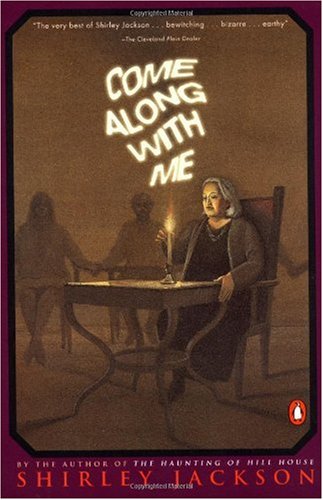
1. Come Along with Me
$7.91
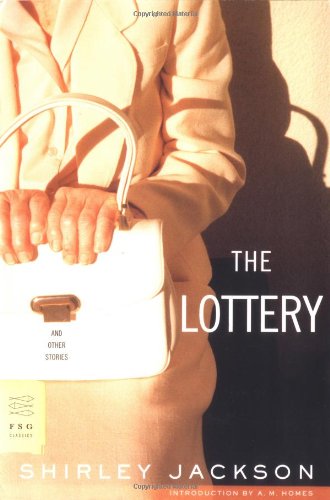
2. The Lottery and Other Stories
$100.00
3. The Lottery and Other Stories
 
4. Private Demons: The Life of Shirley
$7.91
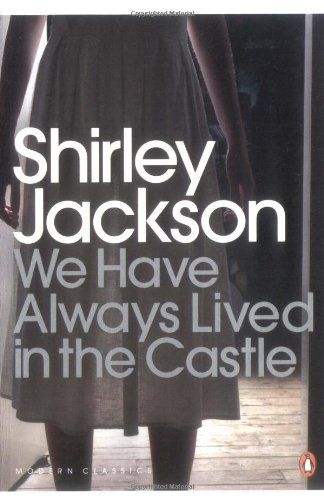
5. We Have Always Lived in the Castle
$10.48
6. Just an Ordinary Day: The Uncollected
$7.91
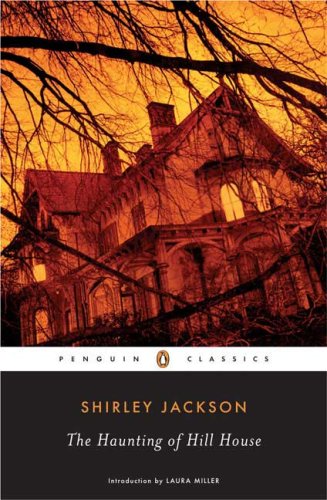
7. The Haunting of Hill House (Penguin
 
8. The Sundial
9. The Bird's Nest (The Arbor House
 
$21.98
10. The Road Through The Wall; Hangsaman;
 
$11.94
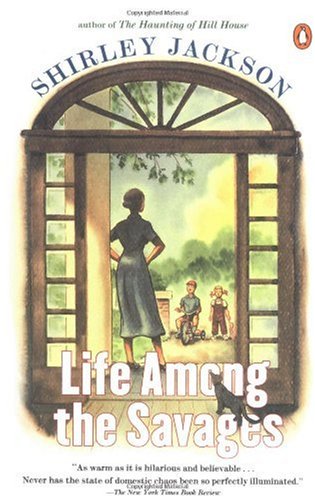
11. Life among the savages ; Raising
$5.96
12. Life among the Savages
 
$16.18
13. Shirley Jackson (Bloom's Major
 
14. Shirley Jackson Collected Short
 
15. Road Through the Wall
 
16. COME ALONG WITH ME Part of a Novel,
 
17. The Lottery
$9.47
18. 9 Magic Wishes
$28.95
19. Makers Of Christianity - From
 
20. The Lottery and Other Stories

1. Come Along with Me
by Shirley Jackson
Paperback: 256 Pages (1995-10-01)
list price: US$15.00 -- used & new: US$7.98
(price subject to change: see help)
Asin: 0140250379
Average Customer Review: 4.0 out of 5 stars
Canada | United Kingdom | Germany | France | Japan
Editorial Review

Amazon.com
If you were thrilled by Shirley Jackson's "The Lottery" but aren't familiar with her other stories, don't miss the chance to pick up this important collection edited by the author's husband. In addition to "The Lottery," it includes classics like "The Beautiful Stranger" (body snatcher theme with a twist), "The Summer People" (a tale of sinister villagers), "A Visit" (a lyrical ghost story), "The Rock" (where death is a short, shy gentleman), and "The Bus" (Jackson's most overtly ghoulish and frightening story of all). The unfinished novel Come Along with Me is mesmerizing, and Jackson's "Biography of a Story" is an utterly hilarious account of readers' reactions when "The Lottery" was first published in the New Yorker in 1948. As the New York Times said, "Everything this author ... has in it the dignity and plausibility of myth ... Shirley Jackson knew better than any writer since Hawthorne the value of haunted things." ... Read more

Customer Reviews (8)

4-0 out of 5 stars 'I delight in what I fear'
Shirley Jackson was once told that even if she never wrote anything except "The Lottery" she would be remembered forever.Indeed, who can forget the first time they read this story and its shocking, sinister ending?"Come Along With Me" includes not only this classic story, but several of Jackson's other writings as well (short stories, essays, an unfinished novel), which prove Jackson's great talent and unique genius.

Yet, what is it that makes Jackson's work so effective and provocative?Few authors have her talent for tapping into our fears and fantasies quite as well as Shirley Jackson.After dangling the promise of joy and happiness in front of us, she cruelly snatches it away and show us a dark parody of our own dreams.We see this time and time again in Jackson's work, especially in several of the stories collected here.In "Summer People", a married couple's long-awaited extended holiday becomes a nightmare of isolation.In "Beautiful Stranger", a woman is miraculously freed from an abusive husband, but loses herself in the process.In "The Bus", an elderly woman finds pain in childhood memories just when it seems she needs them the most.And, In "I Know Who I Love" a woman finds that even after the deaths of her unloving, overprotective parents, she is still very much within their control.In short, there are few happy endings in Shirley Jackson's world.

This is a great collection for Jackson fans as well as those who might not be too familiar with her work.The only bad part, a few of her early stories are a little weak compared to the later ones.All in all, this book is still well worth checking out!

5-0 out of 5 stars Jackson's most revealing stories and thoughts on fiction
This book is a fitting testament to Shirley Jackson, as the selections span her entire literary career.It is tragic that a writer of Jackson's caliber should be called away during her productive years, but we are quite fortunate to be allowed a taste of the novel Jackson was working on when she died.That taste is a short one, consisting of six chapters (roughly 27 pages), the final three of which are the first draft.The protagonist is a thoroughly Jacksonian character, sometimes spontaneous and sometimes nostalgic, making a new life for herself in her own peculiar way.Her attempts at shoplifting are particularly telling of her character, but unfortunately her story ends at just about that point.The other stories included here are a special treat.While "The Lottery" is included (just in case someone may not be familiar with it, as Jackson's husband tells us in his preface), the other stories are poignant looks into the lives of rather ordinary people.Jackson had an amazing talent for characterization; the smallest actions can tell us more about a person than his/her overt actions and words, and such little things make Jackson's stories incredibly vivid, illuminating, and personal.Shirley Jackson was a wife and mother whose writing always took second place behind her family.Many of these stories center on family life in all its aspects."The Beautiful Stranger" and "A Day in the Jungle" deals with the sense of unfulfillment and unhappiness that one partner may come to feel in his/her marriage, "The Rock" speaks to the strength of a brother-sister relationship, "Island" is a somber story about one's end-of-life years."Pajama Party" is a simple tale of a young girl's birthday slumber party.The story sounds so much like real life that it could be a neighbor telling you about it firsthand; it is also the funniest story Jackson ever wroteThere are darker stories where characters become "lost," hopeless, and frightfully alone--"The Bus," "The Little House, "A Visitor" (which is a strange ghost story of sorts).The best stories here, in my mind, are "Louisa, Please Come Home," which has a uniquely Jacksonian twist of the prodigal son motif, and "I Know Who I Love," which illustrates the fact that parents can be much too overprotective of their children.

The true highlight of this book, though, are the three "lectures."One gives Jackson's response to the old "where do you get your ideas?" question.Another one addresses the techniques of writing effective fiction.My favorite, though, is an essay describing the reaction of readers to the publication of "The Lottery" in New Yorker Magazine.Jackson includes comments from all sorts of readers, almost all of it negative, which she breaks down into three different categories.While "The Lottery" is certainly an original, successful story, I cannot imagine that so many people would have been so affected that they felt compelled to put their shock and disapproval into words.The responses that Jackson describes to us offer a vivid look at American culture at mid-century.

If you are a Jackson fan, you (should) already own this book.If you want an introduction to Jackson, the stories included here will certainly delight you and win you over to Jackson's unique way of telling stories.These stories clearly reveal Jackson's humanity and family devotion, and the reader comes away with great respect for the author as both a writer and as a human being.

5-0 out of 5 stars An intimate tribute to a bright, literary star.
Shirely Jackson was a gifted writer who deserves to be regarded with the same prestige heaped upon Ray Bradbury and others.Come Along With Me, a posthumous collection gathering together early works with lectures and a novel fragment, not only allows readers to shiver and giggle as only Ms. Jackson could make us do, it also offers the reader an intimate glimpse into the creative process (compare the sharp focus in the revised segments of Come Along With Me with the somewhat blurred unrevised sections) and, by printing short stories in order of their publication, the growth of Ms. Jackson's considerable talent for the intelligently ghoulish can be seen and savored.As with her other, more famous stories (i.e The Haunting of Hill House), it is what is implied in the methodical unfolding of the tales that makes for the chills rather than in your face grue.This book, along with Jackson's others, is an essential in any literature loving bookworm's library.Highest recommendation.

5-0 out of 5 stars A Must for Shirley Jackson Fans
This book is amazing!If you love short stories with a twist (or twisted short stories), you will be mezmerized by this book.The real gems in thiscollection are the short stories--you will find it difficult to put thisbook down.If you loved "The Lottery", get this book!Thecollection was assembled posthumously by Shirley Jackson's most trustedcritic--husband Stanley Hyman--and it is pure gold!

5-0 out of 5 stars The Master of the Haunted Story....
It is a shame that Shirley Jackson died before finished what most certainly would have been her most provocative novel, yet we are lucky that a small portion exists.But, if you don't like cliffhangers (even thoughthis one is on purpose), you'll be disappointed.

However, the bookcontains much more than just the unfinished novel; it is a collection ofsome of her best short stories and lectures."The Lottery" isincluded as is a "biography" of the story displaying some of thereactions received by the shocking story.Other stories such as"Pajama Party" and "A Day in the Jungle" show hertalent for the human side, innocence and all."The Rock" is justas haunting as "The Lottery" and is perhaps even moredisturbing.

A book for writers, COME ALONG WITH ME also includes severalof Jackson's lectures regarding her ideas on the creation of short storiesand their value as literature.This is definitely a book for those wantingto become more familiar with Jackson's spellbinding work. ... Read more


2. The Lottery and Other Stories
by Shirley Jackson
Paperback: 320 Pages (2005-03-16)
list price: US$14.00 -- used & new: US$7.91
(price subject to change: see help)
Asin: 0374529531
Average Customer Review: 5.0 out of 5 stars
Canada | United Kingdom | Germany | France | Japan
Editorial Review

Book Description

The Lottery, one of the most terrifying stories written in this century, created a sensation when it was first published in The New Yorker. "Power and haunting," and "nights of unrest" were typical reader responses. This collection, the only one to appear during Shirley Jackson's lifetime, unites "The Lottery:" with twenty-four equally unusual stories. Together they demonstrate Jack son's remarkable range--from the hilarious to the truly horrible--and power as a storyteller.
... Read more

Customer Reviews (5)

5-0 out of 5 stars Brilliant stories from a literary fifth columnist
My favourite living author of the offbeat, macabre story is Joyce Carol Oates.This prolific woman, who can seemingly pen an entire novel while having a bath, has compiled a formidable opus of stories which Alberto Manguel appropriately describes as Black Water stories.I haven't read any of her many other types of novel and short story, but if I were handing out Nobel prizes, I would grab back any of the prizes handed out in the last twenty years (they seem to be awarded on the basis of some kind of quota system) and give it to Ms Oates. But before Joyce Carol Oates there was Shirley Jackson.We've all read The Lottery in high school, and even though I was intrigued and appalled by this story at the time, I didn't seek out more Jackson for a long time, partly I think because I thought my English teacher would approve.Just as well, because I think I am better able to appreciate her now that I am older and society and life in general has become more suspect for me.

Jackson died when she was 48 years of age, a victim to depression, drink, amphetamines, and chocolate.She was married to a university professor and lived at a time when America was expanding and exporting its robust, cocksure culture to the world.All of the stories in The Lottery and Other Stories were published in the 1940s.New York City was the true capital of North America and fast becoming the capital of the world.In these stories the hypocrisy behind the blithe optimism and manifest destiny of American culture is deftly portrayed.Many conservative, nostalgic thinkers and politicians evoke this time as being a golden age, a time that our current debauched, rudderless culture should aspire to.Jackson, a literary fifth columnist, doesn't appear to have embraced any of it.She skewers the racism, sexism, materialism and violence of the times -the glitter turns out to have been cheap paint after all- and she does so in simple straight forward slice of life stories, and, more devastatingly, in allegorical, nightmarish tales -The Lottery, The Tooth, and The Daemon Lover, etc.

The Lottery -Its about atavism, superstition -about responding to the mystery, insecurity, and danger of life by making human sacrifices to the vulpine forces of nature in order to presumably save the majority through a kind of magical inoculation.This type of thinking is the antithesis of science.It is ancient, 'old brain' thinking and it shares a lot with some 'new age' thinking.I think it is also why we can sometimes justify sending our young people off to die in pointless wars in foreign countries.It is about unthinking adherence to ritual.It is about compartmentalizing our emotions and behaviour-allowing friendship and compassion to co-exist with murderous cruelty, in the same person, in the same community.The veneer of civilization is not that thick or that strong.Civilization is a modern, stylish bungalow, built over a deep, ancient dungeon, where savagery and perhaps evil still walks, and periodically comes up the damp winding staircase -witness the unspeakable atrocities on both sides of recent and current conflicts (e.g. Kosovo, Rwanda, Iraq.)No wonder this story generated the most mail of any story ever published in the New Yorker.It is truly disturbing.Bridge with the girls, or baseball and a few beers with boys wouldn't seem the same after reading this story.

5-0 out of 5 stars Pointless ritualism
A fantastic critique of the pointlessness of rituals...such as meat-eating...racism...speciesism...homophobia.

The text is available for free on the internet...but Jackson should be in everyone's collection.

4-0 out of 5 stars Always a pleaser....
Shirley Jackson is currently one of my favorite authors. (And, incidentily always has been, since elementary school.)She is the author that everyone has some sort of familiarity with, unbeknownst to them.From The Lottery, to The Haunting of Hill House, to We Have Always Lived In the Castle,there is a sort of haunting timelessness in her work.No matter where you grew up, what your background, you will always find a common thread to link you to her world.And in her world, you will find, (if you pay attention) a parable to our times, a guessing game of "could it really?.." and, "did it ever?"... After all of these questions, you will find yourself answering, yes, yes it did...

5-0 out of 5 stars "The Lottery"Rigged Against Women
In the society of Ms. Jackson's "The Lottery," the reader's initial reaction to the surface appearance of both the town and its people is a favorable one.She pictures a healthy and happy small town that is simply brimming with a robust sense of nature: "The morning of June 27th was clear and shiny, with the fresh warmth of a full summer day; the flowers were blossoming profusely and the grass was richly green" The town seems centered on its annual lottery, an event which appears harmless enough, but as the story progresses, the reader learns the full and horrifying truth behind the lottery.The winner, chosen at random, is then ritually stoned to death by the willing participation of the town's inhabitants.Thus the "winner" is not a winner at all.With this ritualistic killing of one whose only misfortune is to pick the winning (losing?) paper, Ms. Jackson passes judgment on a society that seems to be full of the corn-fed Middle America types that abound in any painting by Norman Rockwell.It is the very ones who seem most like us that fill her tale with creepy horror.

The killing that terminates the plot may not have come as a surprise to the careful reader.Ms. Jackson drops hints from the second paragraph that this unnamed small town may have been the forerunner of the village that housed the robotic wives of The Stepford Wives.These delicate hints become obvious after multiple readings. The action begins with some little boys playing with pebbles and stones: "Bobby Martin had already stuffed his pockets full of stones, and the other boys soon followed his example, selecting the smoothest and roundest stones."One of the other boys "made a great pile of stones in one corner of the square and guarded it against the raids of the other boys."It is these stones which will be later used against poor Tessie Hutchinson, the woman who pulled the X-marked ticket.Ms. Jackson also makes a subtle stab at a society which is male dominant.As the boys play with their lethal collection of stones, the girls do little more than watch as they are forbidden by their gender to participate.It is only against the one female who dares to speak out against such a rigid anti-female society that the Lottery punishes with a ritualistic killing.

Tessie Hutchinson is no angel of a woman.She is shrewish and is almost man-like in her attempts to break the gender barrier by speaking and acting in ways that the other townspeople disapprove.Tessie seems almost eager to join in the festivities as she crowds her way toward the mysterious black box that houses all the tickets."Wouldn't have me leave m'dishes in the sink, now would you, Joe?" she asks.

Little by little it becomes increasingly clear that the object of the Lottery is to lose, not win. As the villagers begin to draw their tickets, Tessie thinks that another villager may have been given an unfair advantage; "You didn't give him time enough to take any paper he wanted.I saw you. It wasn't fair," she shouts.Her husband Bill shows no sympathy for her as he responds, "Shut up, Tessie."Later Tessie yells, "There's Don and Eva.Make them take their chance!"Again Tessie moans, "It wasn't fair."It is this repetition of fair that suggests that deep down Tessie suspects that she will draw the losing ticket.Indeed, when Tessie does draw the ticket with the X, she shouts out in a vain attempt at sympathy, "It isn't fair, it isn't right."And then her friends and relatives kill her by stoning her in the Biblical way of death for adulterers.Even her little son Davey joins in with the killing of his mother.

In "The Lottery," Shirley Jackson portrays a society that looks much like ours on the outside, but in the killing of the scapegoat, she suggests that on the inside, we are perhaps much more like her friends than we might like to think.

5-0 out of 5 stars Illuminating snapshots of life
Many people are familiar with the story "The Lottery," but it is just one of many incredible vignettes of life filling this collection.It is hard to understand today why "The Lottery" originally provoked such a strong reaction, yet it still packs a punch for first-time readers.While it does have aspects of horror, the remaining stories are basically literary."Flower Garden" and "After You, My Dear Alphonse" deal with racism and would seem to be pretty bold statements for the time period (the book was published in 1948); the latter story seems particularly groundbreaking because of the unusual perspective it provides."Charles" is a humorous yet illuminating look at the behavior of children, while "Afternoon in Linen" is an important statement on why children sometimes behave as they do.Jackson is at her best when describing the disenchanted adult. The helplessness of women is an important theme in many stories; many of the women described here feel helpless and subservient to their husbands, their neighbors, and their community."Elizabeth" is a fairly long study of how one woman's wishes and dreams remain unfulfilled in later life.The housewife in "Got a Letter From Jimmy" is thoroughly exasperated by her husband's feelings, and since she cannot speak her mind to him, she is forced to fantasize about killing him.In "The Villager" a woman spontaneously chooses to become someone else entirely for a few minutes, and most of Jackson's heroines spend much time contemplating what could have been.In "Of Course," the fact that a new family has a few unorthodox views builds an unbreachable wall between brand-new neighbors.The women in these stories are always wondering what other people think about them and worrying about what others will say about them.Even when a group of women try to do something good to help the less fortunate, it backfires on them in "Come Dance With Me in Ireland."When a female character vacations with her husband in New York in "Pillar of Salt," she soon becomes "lost," afraid, and desperate to return home."Colloquy" is the shortest story in the collection, but its protagonist speaks for most of Jackson's female characters when she asks whether she alone or the whole world has gone insane.

My favorite story here is "The Daemon Lover."Herein, Jackson offers one of the most poignant, touching looks at loneliness, desperation, and fragility I have ever read.In the story, we spend a day with the protagonist as she prepares for her wedding, having become engaged just the night before to a James Harris.It is a depressing yet beautiful story, and I actually rate it higher than "The Lottery."The character of James Harris actually flitters throughout several of these stories, a phantom of sorts haunting several of Jackson's more memorable female characters.

Jackson deals with very serious subjects, and the illumination provided by her unusual perspectives on life is vivid and poignant.When addressing racism, she shows how even an individual with the best of intentions and good will can still represent an unfortunate racist attitude.In speaking to morality and social values, she shows how hard it can be for an individual to go against tradition and the community to do what is right.She offers powerful insights on child (and adult) psychology.Even the couple of stories I did not really "get" offered insight into the living of life.Readers should not expect a book of horror stories when they pick up this book.The stories can be maudlin and even depressing, but they are philosophical, psychological, and sociological rather than creepy or spooky. ... Read more


3. The Lottery and Other Stories (Modern Library)
by Shirley Jackson
Hardcover: 320 Pages (2000-07-05)
list price: US$19.95 -- used & new: US$100.00
(price subject to change: see help)
Asin: 0679640398
Average Customer Review: 4.5 out of 5 stars
Canada | United Kingdom | Germany | France | Japan
Editorial Review

Book Description
A haunting and powerful collection of stories from one of America's finest writers, with a new Introduction by Patrick McGrath.
         Eerie, unforgettable, and by turns terrifying and hilarious, Shirley Jackson's collection of stories plunges us into a unique, brilliantly etched world where the uncanny lurks in the everyday and where nothing is quite what it seems. In "The Lottery," Jackson's most famous work and one of the greatest--and scariest--stories of the twentieth century, a small town gathers for an annual ritual that culminates in a terrible event. In "The Daemon Lover," a woman waits, then searches, for the man she is to marry that day, only to find that he has disappeared as completely as if he had never existed. In "Trial by Combat," a shy woman confronts her kleptomaniac neighbor, and in "Pillar of Salt," a tourist in New York is gradually paralyzed by a city grown nightmarish. Throughout these twenty-five tales, we move through a variety of emotional landscapes full of loneliness and humor, oddity and cruelty, banality and terror, and searing psychological insight. No reader will come away unaffected.
         The only collection to appear during Jackson's lifetime, The Lottery and Other Stories reveals the full breadth and power of this truly original writer. ... Read more

Customer Reviews (72)

5-0 out of 5 stars Teh Scary
Being assigned to read 'The Lottery: And Other Stories' as part of a university english course, I read most of it in the course of a day.The nightmares I had that night caused me to go without sleep for at least two days afterwards.I can still remember the dread wrapping itself around my mind as it realized what was happening in the small town of 'The Lottery.'I have yet to find an author that matches Shirley Jackson's talent in horror.

3-0 out of 5 stars A few gems in here......
I loved the title story and a couple of other ones. But some of the stories seemed pointless and I would get to the end and be....huh? Like it just ended mid-writing. Some were boring. But there are some great ones in between the bad.

5-0 out of 5 stars A RARE GEM
Shirley Jackson is a rare treasure whose work is on par with such exceptional short story writers as John Cheever and J.D. Sallinger.

Jackson's stories on the surface may seem like simple tales of domestic life, but she is one of the slyest observors of the quiet desperation that envelops most lives. She may lead you to believe you know how a story will conclude, then she delivers a twist that may very well cause you to gasp.

3-0 out of 5 stars A "Lottery" Without a Payoff
It's like Roald Dahl without the ironic endings. Or any endings, for that matter. The stories just stop and leave you with a quizzical, slightly annoyed grimace. However, they are well-written, finely observed character studies -- snapshots of quiet desperation detailing the sometimes funny, often contemptible minutiae of human behavior. (If Jackson were around today, she'd probably be the star writer on "Curb Your Enthusiasm.")

There are a few satisfying tales -- the title piece (though a little more predictable post-"Twilight Zone" than it must have been when originally published), "After You, My Dear Alphonse," "Charles" and "Colloquy" -- not coincidentally, the only narratives with some sort of punchline.Meanwhile, there are others I might refer to when trying to illustrate a certain archetype, but that doesn't translate to literary fulfillment.

5-0 out of 5 stars Full of surprises
Shirley Jackson is a wonderfully creative writer and once again she proves it with this fine collection.Many of the stories contain so many twists that you will be left thinking of the outcome - or what you believe it to be - a long time after you put the book down. ... Read more


4. Private Demons: The Life of Shirley Jackson
by Judy Oppenheimer
 Paperback: Pages (1989-05-27)
list price: US$10.95
Isbn: 0449904059
Average Customer Review: 4.5 out of 5 stars
Canada | United Kingdom | Germany | France | Japan

Customer Reviews (13)

5-0 out of 5 stars A WELL-CRAFTED BIO WITH BOTH TRIUMPH AND TRAGEDY
Most people remember Shirley Jackson as the talented author of THE HAUNTING OF HILL HOUSE and WE HAVE ALWAYS LIVED IN THE CASTLE, not to mention the deeply disturbing and still popular short story "The Lottery."Some of us also have lucked onto her two essay collections-slash-novels about family life and kids, "Life Among the Savages" and "Raising Demons," books with a surprisingly comedic view of life with four small children, in which Jackson portrays herself as a harried homemaker, not a nationwide celebrity with book contracts and a schedule of (not entirely welcome) speaking engagements.

Yet who was this Shirley Jackson?Talented, yes, and accomplished.But the cost of expressing those talents took an already unbalanced individual and set her on the path of multiple doom due to excessive and steady consumption of sweets, cigarettes, brandy and amphetamines.There were many sides to Shirley Jackson, says the author, and she justifies that by offering a warts-and-all bio that is conversant with feminist theory (the book dates from the 1980s) but not under its thumb; knowledgeable about psychobiography but not entirely a psycho-bio of a book, and understanding how Jackson's past influenced her adult life.

We return to Burlingame, California (suburban San Francisco) for Shirley's grammar-school years and to upstate New York for her teen and college years.With every intention otherwise, Shirley was a thorn in her mother's side, a striking but not particularly pretty face and a body that leant itself to obesity.Shirley was also a bright if not totally focused student and early on leant more toward poetry and short-story writing than the graceful suburban airs and superficial beauty that her mother would much rather have preferred.

There is a great deal of truth in the novels-of-family life and a great deal of omission, too.Through those books we gather a picture of her husband, scholar Stanley Hyman, as a reticent and somewhat reserved man; when in fact Stanley Hyman was a political firebrand who loved debating and plain old arguing.When Shirley narrates that she went to bed "with a mystery," there's no mystery now that a portable typewriter, pack of cigs and snifter of brandy probably climbed in too.

This woman of many contradictions fiercely loved her children and was fiercely protective of them, yet was at best a mediocre homemaker who occasionally enjoyed cooking but rarely got the chance or took the chance.What we don't hear--and hear only in this significant biography--was that as the Hyman - Jackson family expanded, so did their standard of living.There were housekeepers some of the time, and generally they didn't work out.But there was also the money for some travel and to send the two middle children--both girls--to prep school out of town.

In some ways, Jackson was a kind of "multiple" personality who found it more and more difficult to reconcile her roles or personae as happy homemaker yet sophisticated party person, a sensible but hard-headed and politically sensitive citizen who did not shy from pursuing justice to get a malfeasant public-school teacher fired, yet a woman who bemoaned the deep gulf between adopted town North Bennington, Vermont's locals and the faculty at the still-newish Benninngton College.

Shirley Jackson used all her writerly talents in her sunny letters home to mother, even (or especially)a women desperate to achieve a sunny tone in her letters to mother but in reality deeply given to depression, especially the "post-partum" type when the artist finishes a significant work.Just a plain old regular harried housewife, as she portrayed herself in LIFE AMONG THE SAVAGES and RAISING DEMONS, would have found life with four exuberant children and without today's labor-saving devices difficult enough, but with a full-time-plus career as author, her personal life became untenable even as her novels gained ever more acceptance and acclaim -- and she leaned on her crutches ever more.

In essence, as Shirley Jackson continued to expand her work by moving into novels instead of short stories, her crutches became her addictions.She had been taking Amphetamines since the 1950s when they were considered fairly harmless "diet drugs" or "pep pills."Shirley always worried about her weight, in large part occasioned by her fear she was a failure in the eyes of her mother.She died very overweight before her fiftieth birthday, a sad combination of liquor and drugs that would be roundly condemned today, and also without thanks from cigarettes and chocolates.Sadly, only the youngest child, Barry, was home at the time.

What also comes through in this book is the love all four of her children held for their mother, and a much more rounded picture of an author under great psychogical strain who strained even harder to fit a picture of small-town normality.In this book we get to hear how her real life differed from the charming LIFE AMONG THE SAVAGES and RAISING DEMONS; also we get to understand why the back chambers of her tortured soul formed the impetus and inspiration for her very best writing.This is the only full-scale biography of Shirley Jackson we are likely to get, at least anytime soon.While not particularly "academic," the book is excellent and thorough journalism that is a pleasure to read even as we learn of the pain that composed so much of Shirley Jackson's life.Highest recommendation.

5-0 out of 5 stars Deserves more than five stars.
PRIVATE DEMONS is the best biography I've ever read in my life.I first read it years ago when it first came out, and am on my second copy.

Shirley Jackson was an interesting and complex woman with talent to burn.She was comfortable with penning the pyscological/creepy/haunted house types of novels and equally comfortable turning out humorous short pieces about her family life.She was a genius with both.

More than one reader has experienced a little cognitive dissonance when realizing that Jackson wrote both "The Lottery" and "Charles"."THAT'S the SAME author?"is a constant refrain.

Author Judy Oppenheimer does an outstanding job of bringing this tremendous writer to life, as well as doing her fans a great service by bringing Jackson's name and reputation back to the literary forefront.Through skillful writing and research and generous interviews with Jackson's 4 children and many friends, the reader is mesmerized by the too-brief life that was behind Jackson's multifacted talent.

Writing this book could not have been an easy task, since Shirley Jackson contained multitudes, to quote Walt Whitman.PRIVATE DEMONS may be out of print now, but search your secondhand bookstores both in your city and online, and track down this treasure of a biography.You will not be sorry.

5-0 out of 5 stars A life of contradictions
She never states her reasons but I assume what made me buy this book are the same reasons that drew the writer, Judy Oppenheimer, to write about Shirley Jackson. It is an effort to try and understand the mind and influences behind such masterpieces as the "Lottery", "We have always lived in the castle" or "Hangsaman". Was she mad? Was she full of fears? What were the influences which worked upon her? Did she - could she - have a normal family life? and how in god's name did she think of all these ideas, were they based on her personal experience?
This is a very good read, partly because of the intriguing heroine and partly due to the good writing (quite dramatic at times). The bottom line is that I did get the answers
to most of my questions. This is a very thorough life story, which even continues after Jackson's untimely death, telling us what happened to all the major people in her life. This account presents Shirley Jackson from every possible angel: a daughter, a wife, a mother, neighbour and friend, and a writer too - but never only a writer. A very troubled person living a life of many contradictions.I guess I never expected her to have been a regular person.
I always wonder about Biographies. Is it all true? It seems that the biographers know more about the person then he knew about himself. We read about Jackson's most intimate details of life (Stanley and Shirley's first night together is just one example), about her inner most thoughts. I believe that the author has had to develop her own theories or choose among the options that were given to her by the many close people surrounding Shirley Jackson ("she made good friends", was one of the things Judy Oppenheimer says about Jackson in her final notes). The writer however presents many seemingly "open" issues as facts. A good example would be the true meaning of Jackson's famous story "The Lottery". There are several versions regarding the creation of this story, a few of them given by Jackson herself. Oppenheimer presents all versions but claims that the "the Lottery" was the purest, most direct expression to Jackson's knowledge of human evil and the painful awareness of anti-Semitism she has acquired over the years. Another example could be Shirley and Stanley marriage which was full of contradictions (he always remained "the important figure" around the house), and many infidelities from Stanley's side. One says you can never tell what goes on between a couple but Oppenheimer seems to be quite confident of her conclusions. I am quite sure she had her sources to term her hypothesis as facts. At other times the writer chooses to take a neutral stand. For example, was Shirley's marriage to Stanley "her greatest fortune or her worst calamity"? we are left to decide for our own.
The book is filled with little details and is based upon dozens of interviews (Jackson's children are a major source). The writer states comments and references made by a host of friends and relatives - no aspect of Jackson's life is left untouched. We learn what she ate, what she drank - how much she drank. What she thought about each of her children, the fights she had with her friends. We learn about her many illnesses, about her high points and her many breakdowns. How her house looked, what she collected - the list is infinite.
Most interesting however are the connections made between he books she wrote and the life she led. Jackson's art was always close to her real life. This connection reached its climax in the book "We have always lived in the castle" - the solution Jackson finds for her heroines is the one she found for herself. Constance and Merricat end living in the castle made to become a fortress, never again leaving it to go out. This was just what happened to Jackson in the time following the publication of the story. This book has also been her reaction to the feeling of withdrawal and rejection she received from the village people amongst which she lived (This is the way I felt every day, she claims). Constance and Merricat were also a portrayal of two parts of herself, and reflected her two daughters. Each book and its major similarities with the life and problems she faced at the time.
At first I used this book more as a reference book I used it to look up Jackson's stories and the books I read through the years.Sort of like comparing or checking my understanding of the story with what the experts says. I was also interested to hear what were the reviews and reactions to these books and stories, especially the ones I liked best.
The story of Jackson life however is too interesting to put down and at times seems as strange and creepy as her books. A very recurrent motif in her books is the battle of the mind itself. This is a motif recurrent in her life too.
I never thought that Jackson's stories were real "horror". They are a very candid portrayal of the evil of human kind.It is interesting to note that a really "bad" character, a murderer in fact, is the very likable heroine of "We have always lived in the castle". Again an example of Jackson's contradictions.
A very interesting book aimed at Jackson's fans or those who appreciate her work.

4-0 out of 5 stars the female version of Stephen King
Since I was a small child I have been a huge fan of Shirley Jackson's writing, she is amazing. I love the gothic stuff but her humorous writings are wonderful too. This was a really eye-opening biography as I knew very little of her personal life before I read it. It was a sad but engrossing read.

5-0 out of 5 stars One ofa kind
She really was one of a kind. She married an ass however he probably made her more prolific than she would have been. I love her writing and wish anyone could come close to it. The book of her life is interesting and somewhat sad. I would have to loved to have met her. ... Read more


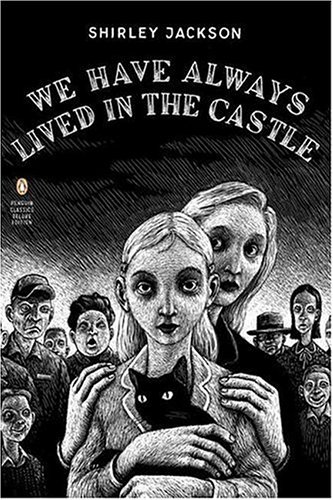
5. We Have Always Lived in the Castle (Penguin Classics Deluxe Edition)
by Shirley Jackson
Paperback: 160 Pages (2006-10-31)
list price: US$14.00 -- used & new: US$7.91
(price subject to change: see help)
Asin: 0143039970
Average Customer Review: 4.5 out of 5 stars
Canada | United Kingdom | Germany | France | Japan
Editorial Review

Amazon.com
Visitors call seldom at Blackwood House. Taking tea at the scene of a multiple poisoning, with a suspected murderess as one's host, is a perilous business. For a start, the talk tends to turn to arsenic. "It happened in this very room, and we still have our dinner in here every night," explains Uncle Julian, continually rehearsing the details of the fatal family meal. "My sister made these this morning," says Merricat, politely proffering a plate of rum cakes, fresh from the poisoner's kitchen. We Have Always Lived in the Castle, Shirley Jackson's 1962 novel, is full of a macabre and sinister humor, and Merricat herself, its amiable narrator, is one of the great unhinged heroines of literature. "What place would be better for us than this?" she asks, of the neat, secluded realm she shares with her uncle and with her beloved older sister, Constance. "Who wants us, outside? The world is full of terrible people." Merricat has developed an idiosyncratic system of rules and protective magic, burying talismanic objects beneath the family estate, nailing them to trees, ritually revisiting them. She has made "a powerful taut web which never loosened, but held fast to guard us" against the distrust and hostility of neighboring villagers.

Or so she believes. But at last the magic fails. A stranger arrives--cousin Charles, with his eye on the Blackwood fortune. He disturbs the sisters' careful habits, installing himself at the head of the family table, unearthing Merricat's treasures, talking privately to Constance about "normal lives" and "boy friends." Unable to drive him away by either polite or occult means, Merricat adopts more desperate methods. The result is crisis and tragedy, the revelation of a terrible secret, the convergence of the villagers upon the house, and a spectacular unleashing of collective spite.

The sisters are propelled further into seclusion and solipsism, abandoning "time and the orderly pattern of our old days" in favor of an ever-narrowing circuit of ritual and shadow. They have themselves become talismans, to be alternately demonized and propitiated, darkly, with gifts. Jackson's novel emerges less as a study in eccentricity and more--like some of her other fictions--as a powerful critique of the anxious, ruthless processes involved in the maintenance of normality itself. "Poor strangers," says Merricat contentedly at last, studying trespassers from the darkness behind the barricaded Blackwood windows. "They have so much to be afraid of." --Sarah WatersBook Description
Taking readers deep into a labyrinth of dark neurosis, We Have Always Lived in the Castle is a deliciously unsettling novel about a perverse, isolated, and possibly murderous family and the struggle that ensues when a cousin arrives at their estate. ... Read more

Customer Reviews (82)

4-0 out of 5 stars Hauntingly memorable
Jackson's dark tale centers upon 18-year-old Mary Katherine "Merricat" Blackwood and her older sister Constance - two survivors of a family mysteriously poisoned six years earlier. The two keep to themselves, preferring to stay away from the villagers who taunt and accuse Constance of the murders.

As the story progresses, some of the circumstances surrounding that awful day begin to emerge - though it's clear that Merricat is an unreliable narrator, at best. Thus, the more details are revealed, the more questions the reader has.

Despite the bleakness, the Blackwood sisters are fairly content in their isolated life. They have one another, as well as their elderly uncle Julian, who managed to survive the poisoning, though now with physical and mental issues.

One day, a long-lost cousin suddenly appears at the Blackwood home. It's quickly apparent that it's rumors of the sisters' fortune Charles is after - making Merricat desperate to stop him, no matter what it takes.

Despite the creepiness of the Blackwoods and their "castle," it's also easy for readers to sympathize with some of their feelings about the outside world -- and wonder just what IS really "normal."

5-0 out of 5 stars Jackson was a genius, she left us too soon.
A young woman, her older sister, and their uncle live as pariahs on a crumbling estate next to a small town.We first meet the girl on one of her tortuous and torturous bi-weekly excursions into town to get supplies.Something happened at the house on the estate seven years ago which devastated this once prosperous, leading family.The full story is not revealed until near the end of the book and Jackson deals out pieces of information through the main character's bizarre thoughts, the cruel actions of the town's people, and the interactions and rituals of the surviving members of the family in their spooky museum-like house.I doubt that a more insightful, compassionate exploration of madness has ever been written -compassionate without being maudlin or judgmental.The love between the two sisters is of a quality not suited to the world they live in.As in many other Jackson stories, the morals and sanity of small town America take a beating.Wonderfully paced, this is a psychological novel in the best sense of the word.

5-0 out of 5 stars So glad someone finally reprinted this book!
This is my favourite Shirley Jackson novel. I've read it numerous times, and my copy is in BAD condition, with the pages beginning to fall out (you know a book is pretty old when the price on the cover is sixty cents). I'm so glad that I can finally get a new copy!

4-0 out of 5 stars A bit gothic, very sad...
Shirley jackson, famous for "The Haunting of Hill House" delivers another winner, albeit a more restrained one. This time, no haunted house, no paranormal activities. Just small town pettiness and a creeping sense of paranoia. Well written, eloquent, this would make a fascinating on-secreen psychological drama. The book is not dated at all, but on the contrary acts as a still relevant and poignant indicment of intolerance and meanness. What emerges in the end is the utter alienation of the main protagonists. There is a pervading sense of loneliness in Miss Jackson's writing that is absolutely compelling. I won't reveal the ending, but rest assured: this book is a wonderful addition to any booklover library. This Penguin edition coveris also nicely designed and features a very enlightening foreword penned by Jonathan Lethem, author of "The Fortress of Solitude". A true gem!

5-0 out of 5 stars Portrait of the poisoner as a young lady
While certainly not as well-known as her famous short story "The Lottery", Shirley Jackson's novel "We Have Always Lived in the Castle" is still a great work in its own right; one worth reading and savoring.A word of warning however; this is not a who-dunit or a psychological thriller, as some readers might think.Don't expect shocking plot twists, morally-grounded characters, or a neatly resolved ending.This is, instead, a powerful and hauntingly beautiful exploration of madness, culpibility and family dysfunction closer to Patricia Highsmith and Lovecraft (see "The Outsider" and "The Tomb") than Agatha Christie.At the center of it all is the wildly disturbed, and strangely likable, Mary Katherine ("Merricat") Blackwood, whose psyche is gradually revealed to the reader throughout the novel.At times loving, cruel, innocent, hateful, tender and controlling, Merricat is above all facinating.Jackson definitely shows true literary genius, balancing reality and fantasy to create an unforgettable story.If you prefer interesting characters, real psychological tension and a rich gothic atmosphere over the conventions of the suspense/thriller genre, read this book.

If you enjoy this novel, be sure to check out "The Haunting of Hill House" as well.
... Read more


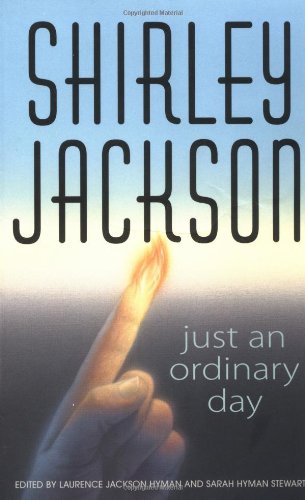
6. Just an Ordinary Day: The Uncollected Stories Of Shirley Jackson
by Shirley Jackson
Paperback: 448 Pages (1997-12-01)
list price: US$23.00 -- used & new: US$10.48
(price subject to change: see help)
Asin: 0553378333
Average Customer Review: 4.0 out of 5 stars
Canada | United Kingdom | Germany | France | Japan
Editorial Review

Amazon.com
The late Shirley Jackson (1919-65) is the author of the classic short story, "The Lottery," a dark, unforgettable tale of the unthinking and murderous customs of a small New England town.She is also the author of several American Gothic novels, such as We Have Always Lived in the Castle and The Haunting of Hill House.Her atmospheric stories explore themes of psychological turmoil, isolation, and the inequity of fate.Just an Ordinary Day is a posthumous collection of 54 short stories (many of which have never been published), edited and introduced by two of Jackson's children.Jackson penned many of the stories in this volume for the popular press, for titles ranging from Fantasy and Science Fiction and The New Yorker to women's magazines such as Charm and Good Housekeeping.The disparity of the intended audience and the divergent styles result in an uneven collection of short stories, some that are outstanding and will be much appreciated by the reading public, others that hold interest only to the die-hard fan or chronicler of Jackson's work.Book Description
The stories in this edition represent the great diversity of her work, from humor to her shocking explorations of the human psyche. The tales range, chronologically, from the writings of her college days and residence in Greenwich Village in the early 1940s, to the unforgettably chilling stories from the period just before her death. They provide an exciting overview of the evolution of her craft through a progression of forms and styles, and add significantly to the body of her published work.


Just an Ordinary Day is a testament to how large a talent Shirley Jackson had and to the depth, breadth, and complexity of her writing. Though this remarkable literary life was cut short, Jackson clearly established a unique voice that has won a permanent place in the canon of outstanding American literature, and remains a powerful influence on generations of readers and writers. ... Read more

Customer Reviews (9)

5-0 out of 5 stars Jackson remains one of the finest American writers to have lived
This is a wonderful collection of Shirley Jackson's short stories in a new easy to read book. Jackson's "The Lottery" continues to shock and mesmerize readers sixty years after it's publication in "The New Yorker". To this day, this story holds the record for generating the most mail and telegrams in "the New Yorker's" history and Jackson, until her death, contended that this was "just a story." Her writing is a wonderful guide for all people who wish to write. It's a satisfying smörgåsbord of a wide variety of work, all of it centered on character and the inner workings of the human mind. As a fan of writers such a Richard Russo, Charles Dickens, Barbara Kingsolver, Stephen King, Alice Walker and John Irving, Shirley Jackson belongs at the top of this list. You must read everything she wrote, but this book is a wonderful way to get your feet wet. Used or new, it's a book that you will return to many times and you may even want more than one copy so that you can lend it but still have it while your reading buddy takes his or her time savoring each story. This is an example of the power of the written word and an example of why William Shakespeare and Aristophanes are still remembered and read today.

4-0 out of 5 stars A Nice Discovery
Shirley Jackson was a gem. She was a suburban mom and wife who managed to find the time to crank out loads of short fiction as well as authoring The Haunting of Hill House, easily the greatest haunted house novel yet done. Jackson's uncollected, often unpublished stories are here in this volume that arrives in the world like a late Christmas present. Some of these tales are hilarious, a few are disturbing, many are weird, and a handful are touchingly personal and concern Jackson's life raising her kids in post-War America. (Those last types were the ones I enjoyed most of all.) Shirley Jackson left the world far too soon and her like won't be seen again, but this volume, compiled by her son, is a nice keepsake for her fans, who never knew most of this existed.

5-0 out of 5 stars oh, so very,very good, mrs. jackson!
well, i just loved it.

i adore shirley jackson's style: the way she caputured a time period long gone and dosed it with play and shivers.

i haven't had such a delightful time with a short story collection in eons.

if you've never read shirley jackson, start with 'the lottery' short story collection & you'll be so itchy for more, you'll hug this book to your chest just before you begin eating the pages.

5-0 out of 5 stars just an extraordinary day
that's how i felt when i saw this book on my library shelf. it helped to quell a hunger that i have had for many years. thank you laurence and sarah for compiling these works. i would love to see the out of print works of shirley jackson back on bookstore's shelves.

5-0 out of 5 stars The Real Shirley Jackson
There has been tons of controversy over this book about whether or not is should have been published.My personal opinion is that is should not have been published because these stories were private stories and were not published for a reason.However, now it has been published and there is nothing anyone can do about it but enjoy it as a learning experience. The reason I gave the book five stars was because it is a very accurate representation of Shirley Jackson.Writing was always theraputic for her -- she used it to express the other dimensions of her life and her self which no one could understand.Writing was a way of putting everything that went on in her mind down on paper.Therefore, reading these stories is like reading her diary -- she expressed her emotions through fiction, and the variety of characters and plots that can be seen in this collection are a representation of a certain period of her life through her eyes. If you are looking for the edited fiction that made Shirley Jackson famous, this is not the book for you.However, if you are interested in the inner workings of the author's mind, this collection of stories and essays is the closest one can get. ... Read more


7. The Haunting of Hill House (Penguin Classics)
by Shirley Jackson
Paperback: 208 Pages (2006-11-28)
list price: US$14.00 -- used & new: US$7.91
(price subject to change: see help)
Asin: 0143039989
Average Customer Review: 4.0 out of 5 stars
Canada | United Kingdom | Germany | France | Japan
Editorial Review

Amazon.com
Shirley Jackson's The Haunting of Hill House has unnerved readers since its original publication in 1959. A tale of subtle, psychological terror, it has earned its place as one of the significant haunted house stories of the ages.

Eleanor Vance has always been a loner--shy, vulnerable, and bitterly resentful of the 11 years she lost while nursing her dying mother. "She had spent so long alone, with no one to love, that it was difficult for her to talk, even casually, to another person without self-consciousness and an awkward inability to find words." Eleanor has always sensed that one day something big would happen, and one day it does. She receives an unusual invitation from Dr. John Montague, a man fascinated by "supernatural manifestations." He organizes a ghost watch, inviting people who have been touched by otherworldly events. A paranormal incident from Eleanor's childhood qualifies her to be a part of Montague's bizarre study--along with headstrong Theodora, his assistant, and Luke, a well-to-do aristocrat. They meet at Hill House--a notorious estate in New England.

Hill House is a foreboding structure of towers, buttresses, Gothic spires, gargoyles, strange angles, and rooms within rooms--a place "without kindness, never meant to be lived in...."

Although Eleanor's initial reaction is to flee, the house has a mesmerizing effect, and she begins to feel a strange kind of bliss that entices her to stay. Eleanor is a magnet for the supernatural--she hears deathly wails, feels terrible chills, and sees ghostly apparitions. Once again she feels isolated and alone--neither Theo nor Luke attract so much eerie company. But the physical horror of Hill House is always subtle; more disturbing is the emotional torment Eleanor endures. Intense, literary, and harrowing, The Haunting of Hill House belongs in the same dark league as Henry James's classic ghost story, The Turn of the Screw. --Naomi Gesinger Book Description
The classic supernatural thriller by an author who helped define the genre

First published in 1959, Shirley Jackson’s The Haunting of Hill House has been hailed as a perfect work of unnerving terror. It is the story of four seekers who arrive at a notoriously unfriendly pile called Hill House: Dr. Montague, an occult scholar looking for solid evidence of a “haunting”; Theodora, his lighthearted assistant; Eleanor, a friendless, fragile young woman well acquainted with poltergeists; and Luke, the future heir of Hill House. At first, their stay seems destined to be merely a spooky encounter with inexplicable phenomena. But Hill House is gathering its powers—and soon it will choose one of them to make its own. ... Read more

Customer Reviews (315)

4-0 out of 5 stars House Seekers
I initially became interested in this book when I saw it listed among the scariest books in publication.My only prior encounter with Shirley Jackson was her bizarre short story, "The Lottery".Being familiar with Jackson and her style of prose, I was excited by this tale of terror.Regrettably, "scary" might be the last word that I would use to describe this book.

A team of seekers enter Hill House with the intention of tracking or documenting the supernatural activity.Led by Dr. Montague the team encounters "the creature", lots of rattling doors and windows, and event some smeared blood.But the book is not really about the acts of terror or the house, it is unraveling story of the narrator Elanor.She has waited her whole life for something to happen, and the whole story leads to what that is.The house has taken a collection of victims, which the readers knows is destined to continue.The collision course of the house's toll and Elanor's "happening" create a nice build of tension.However, I would classify this more as a work of suspense than horror.

Shirley Jackson is a tremendously gifted writer particularly in her exact usage of words.The only contemporary peers I might suggest she has is Truman Capote.Yet in reading this book, I always felt I was missing something.Even when the "something" happened, I still almost felt a need to wait around for something more to happen.

5-0 out of 5 stars The Haunting of Hill House
Book Review: The Haunting of Hill House

The Haunting of Hill House is a novel written almost 50 years ago, by the legendary author of The Lottery,Shirley Jackson. A classic haunted house story fraught with spine chilling events that are sure to freeze the blood in your veins.
Miss Jackson's writing is so rich with vivid imagery and possesses such a unique style that the flowing tempo of the book is startling. The house itself and the main character Eleanor Vance, seem to be wrapped in a dancing embrace of obsession, depression, and loneliness. Her characters are all insane. The house itself is declared to be "not sane" in the first paragraph. Something lurks in the house that attracts Eleanor from the moment she receives the letter from Dr Montague. The draw of the house is inevitable for her. She steals her sister's car and dreamingly finds her way to Hill House. It is obvious that this girl has developmental problems as she has spent most of her life tending to her sickly mother. The trip to Hill House is something "She is doing, by herself!" And what a trip it is. The terror is mostly psychological but it is terror none the less!
From the moment of her arrival, when the ominous pensive mood of the story is established,Hill House slowly but surely captures Eleanor. The slow merging of Eleanor's character and the house is brilliant and the tension becomes unbearable at times.
Perhaps the only compliant I have is the introduction of the two characters of Mrs Montague and her weird assistant, Arther. The place that they come in is so think in mood that their arrival seems nonsensical and misplaced. But the tension and terror, nevertheless, persists!
This book is a psychological spine chilling page turner which I would recommend to anyone interested in the genre. A must read for all fans of horror fiction.

5-0 out of 5 stars Not your typical ghost story
In "The Haunting of Hill House", Shirley Jackson takes the familiar elements of the ghost story and turns them upside down.The reader, perhaps expecting spirits rattling chains or the ghosts of nuns buried alive, is instead confronted with the subtle and psychological terror Jackson is so well-known for.Hill House is certainly no Overlook Hotel (from "The Shining"), however the lack of ghouls or encounters with the supernatural does not diminish this novel's haunting creepiness.

What is really scary about this book is not so much the house itself, but the obsessive love/hate relationship which develops between Eleanor, Theodora and Luke.Eleanor is a woman in her early thirties, suffering from crippling shyness after a decade of caring for her now dead mother.Theodora, it seems, is her mirror opposite: she's talkative, extroverted, out-going.Soon, she draws Eleanor out of her shell, giving her the companionship she was been aching for after years of isolation.As Luke, Hill House's future owner, comes between the two women, Theodora can no longer give Eleanor the attention she needs, with disastrous results.The unvoiced emotions which at first bind these characters together and then drive them apart are really what create tension and suspense in this novel.In the end, fears of abandonment and rejection become more powerful than any ghosts which may be haunting Hill House.

As some other reviewers have mentioned, we see in this novel themes and character types which would re-emerge in Jackson's later works, notably "We Have Always Lived in the Castle".In both, you have an unhealthy family dynamic (Theodora and Eleanor jokingly call themselves cousins), a seemingly ideal community removed from society at large, free-floating guilt, deeply troubled emotions which lead to deadly behavior, and (as mentioned above) profound anxiety related to abandonment.In Shirley Jackson's world, love and affection can quickly become destructive and obsessive as her characters often find less than healthy ways to express their feelings.

In short, this is not your average haunted house story, so don't expect to jump out of your seat at any point while reading this novel.If you're expecting thrills or showdowns with the dead, you may feel disappointed.However, this is still a very disturbing and creepy work sure to get under your skin.

5-0 out of 5 stars Superb
I can't even begin to describe how much I love this book.Shirley Jackson manages to create a magnificent canvas of horror using only her words.Her character development is flawless and the chills she gives the reader are uncountable.

5-0 out of 5 stars The granddaddy of haunted house stories...
I read this book in high school and thought it was OK. I picked it up again just recently, having read a wide variety of horror in the ensuing 20 years, and I can't believe I didn't think more highly of it back then. (Of course, who has time for real literature when you're saving up your babysitting money to buy the next installment in the Sweet Valley High series?)

This has to be one of the best ghost stories I've ever read. It was first published in 1959, a decade or so before "horror" became synonymous with gore and perversion. (Sorry, but I just can't stomach the detailed accounts of axe-wielding cannibal zombie demons mutated by nuclear testing who rape and devour through hundreds of pages. I'd rather read Poe or Lovecraft.) The horror here is entirely psychological. It's very subtle, building so slowly that you don't even realize how scared you are until your husband stomps in to ask you if you need anything from the store...at which point you jump and swear at him and laugh and turn on all the lights and completely forget that you're almost out of shampoo.

There's no tidy ending. Shirley Jackson raises more questions than she answers: Is Hill House really haunted, or is Dr. Montague's team suffering from mass hysteria exacerbated by their isolation and the house's peculiar history, construction, and atmosphere? (And, oh, is there ever atmosphere.) Could the alleged haunting possibly be the result of Eleanor's latent psychic ability ~ a poltergeist, maybe? Is Eleanor possessed by Hill House or is she just losing her mind? I think it makes for a scarier story when the reader has to fill in some of the blanks.

The characters are well-developed ~ an unexpected pleasure in a genre where plot twists and special effects often take center stage. Eleanor makes for a perceptive, if somewhat neurotic, narrator, and there are moments that are laugh-out-loud funny. All in all, an engrossing, enjoyable, unsettling book that comes highly recommended by me.

Well, I'm sensing an incoming message from planchette. I hope this was helpful to you. ... Read more


8. The Sundial
by Shirley Jackson
 Paperback: 1 Pages (1986-01-07)
list price: US$5.95
Isbn: 0140083170
Average Customer Review: 4.5 out of 5 stars
Canada | United Kingdom | Germany | France | Japan

Customer Reviews (10)

5-0 out of 5 stars A Masterpiece for the intelligent
Shirley Jackson wrote this book just four years prior to her best novel, "We Have Always Lived in The Castle" and in many ways, the two books are like a set. Perhaps it is the grand style of living, the gracious ways in which one must behave while lacing poison into the sugar and the manner in which Jackson can write characters of the most horrific qualities in such a way that you are morbidly fascinated, often unable to take your eyes away from the page for what you are reading is so distasteful, but so very well written; it is akin to passing a fatalistic car accident and having to look; you've waited all this time and you DESERVE to look. Well such is the case with "The Sundial". Based on a premonition from dear, lovable Aunt Fanny, the world is coming to an end and it is only those who stay within the safety of the large house who will survive. The servants are dismissed, food and supplies are brought in en masse and then we watch and wait as we see the characters face the end of the world. The book is not about the end of the world-that would be far too easy. No, Shirley Jackson finds the people to be far more fascinating and as she always is,she is quite correct. We drive by this accident and almost bring the car to a complete stop, unable to tear our eyes away from both the brilliance and the horror. Jackson remains one of the finest American writes to have ever lived.

4-0 out of 5 stars Dark humor at the expense of the snooty
This is a really good novel. It's too bad it's out of print.

It's unlike most of Jackson's other novels -- it's more of a comedy among the upper class than her other work. Um, "comedy" might be misleading. I don't know how to describe Jackson's sense of humor. It's just shy of completely dark. People behave very badly. And yet you laugh.

Try it!!

5-0 out of 5 stars good
This wasnt her best, but if your new to Shirley Jacksons writing style, this is one to read.

3-0 out of 5 stars It's the end of the world as we know it
Even as great a writer as Shirley Jackson has to have a worst book (worst being a relative term, of course), and The Sundial would seem to be Jackson's.The story never had a strong Jackson feel to it because the characters were fairly shallow and unworthy of this reader's sympathy.As an outcast myself, I expect to find at least one troubled soul with which to identify and commiserate when I read Jackson.I initially had trouble distinguishing between the different characters because none of them were very deeply developed.While the occasional gripe or maudlin sentiment caught my attention, I found that I did not care for or about any of the dozen or so individuals described here.The Sundial is basically a weird end-of-the-world novel; the young Mr. Halloran has just died, and his mother now assumes the coveted role of head of household (due to her own husband's infirmities).As she begins to assert her authority and basically throw a few people out of "her" house, old Aunt Fanny encounters the ghost of her father, who warns her that the world is about to end, but that he will protect everyone who stays in the house.As several people begin to believe the truth of the premonition (including Mrs. Halloran), everyone is allowed to remain there.The number is increased by an obnoxiously loud friend of the Mrs. Halloran's and her two daughters, a strange girl sent by her father for temporary housing, and a gentleman whose background escapes me.These people, as might be expected, do not get along with each other very well at all.Mrs. Halloran, born of a low station, increasingly annoys her companions by assuming a dictatorial air, eventually insisting on wearing a crown.The novel leads up to the fateful day when the prophecy is supposed to be fulfilled.

While there are elements of humor in the conversations and interactions of characters who dislike one another as much as these do, there is no deep psychological meaning to be gleaned from the story.No character strikes me as real or more than remotely human, and the general attitude expressed as to the imminent end of the world is a much different reaction than I would expect of anyone.I have been reluctant to see other Jackson novels end, but I had no trouble putting this book down once I turned the final page.For someone wondering what Shirley Jackson is all about, I would not suggest reading this novel as an introduction; this one really does not fit the mold of her other major works.A Jackson fan such as myself will want to read The Sundial, of course, simply because Shirley Jackson wrote it, and it is quite likely that some will get more out of this book than I did.

4-0 out of 5 stars a good creepy tale
This is an especially appropriate book to read as we stand poised on the edge of a new millennium.An odd assortment of kin and hangers-on gather in a gothic mansion as, initially drawn by the lure of the family fortune, they get drawn into a sort of group apocalyptic psychosis.They end up burning an extensive library of books to make room for the food and supplies they are stocking up on and spend time their time planning out future mating arrangements, to guarantee the continuance of the race, and writing their own differing accounts of what is happening.

This may not be one of Jackson's greatest works, but as always, the story can be read either straight, for its entertainment value, or as a palimpsest, with hidden meanings lurking just below the surface.It could be a comment on religion or on 1950's nuclear hysteria or on any number of things; Jackson simply provides a creepy tale, delivered with wit and style, and it's up to readers to draw their own conclusions.

GRADE: B- ... Read more


9. The Bird's Nest (The Arbor House Library of Contemporary Americana)
by Shirley Jackson
Paperback: 276 Pages (1986-10)
list price: US$5.95
Isbn: 0877958335
Average Customer Review: 4.0 out of 5 stars
Canada | United Kingdom | Germany | France | Japan

Customer Reviews (8)

5-0 out of 5 stars Especially recommended for fans of Stephen King's Dark Tower
This exceelen thriller is quite possibly my favorite Shirley Jackson novel. My primary motivation for reading it was the fact that the main character, Elizabeth, is a woman with multiple personalities, a disorder that fascinates me. The POV and narrative voice change periodically, with the story sometimes being told in a third person semi-omniscient voice giving Elizabeth's point of view, and sometimes being told through the journals of her doctor, Dr. Wright. I much preferred Dr. Wright's journals to the turmoil of Elizabeth's various personalities, some of which were very unstable and prone ot confusing if interesting flashbacks. The Doctor, by contrast, was much more linear and easier to follow, and Jackson gives him a delightful voice to read. I liked the book overall, especially the ending, which pleasantly surprised me. The way that Dr. Wright reacted to the individual personalities and the way that each of the personalities was given such a distinctive voice really made the book for me. Also of note: I know that Stephen King was a huge fan of Jackson's and I am positive that this is the book that inspired his character Susannah Dean (aka Odetta Holmes/Detta Walker) in the Dark Tower series. Highly recommended read, especially for King fans, who will probably enjoy it especially.

5-0 out of 5 stars Shirley Jackson Advanced
My favorite Shirley Jackson book has always been "We have always lived in the Castle". However, although "The Bird's nest" was only Shirley Jackson's third novel, it is, so I feel, "Shirley Jackson - advanced course". This is an elaborate story which incorporates all classic Jackson fingerprints and yet involved a research and a unique way of writing. A seemingly "normal" story (at least this is how it starts...) that somehow turns - the moment cannot be precisely captured - into a haunting, creepy tale. This is a book you read and have to keep going back and checking once and again for the hints you seemed to miss in your reading.You understand the words but do not always understand why regular words give you such an uncomfortable feeling. This is by the way is a feeling which is very familiar to Jackson's readers. Also, the overall sense is that a secret clouds the whole story and that if you would have paid more attention and read more attentively, maybe you could have figured this one out, as Jackson always seems to leave hints along the way.The body of Miss R., a niece to Aunt Morgen and a patient of Dr. Wright (the two other main characters of the story) is a "bird's nest " to four conflicting characters, each one a different person with a different character, and even different facial expressions (the Dr. can tell who is standing in front of him even before she speaks). All these four personalities are fighting for dominance over the "awareness" of the young girl. The story is told in a way I never met in Jackson's books, where each chapter presents the story from a different angel, although only Doctor Wright speaks in his own narrative voice. The other chapters present one main character but from a side look.
The battle is always, as with Shirley Jackson, with one's mind, a subject that interested her immensely. Like Natalie from "Hangsaman" who imagines/befriends the "girl Tony" (and the reader keeps asking himself if she is true or just fictitious), and like "The haunting of hill house" where we learn, maybe too late, that the real battle is what goes inside the mind of the heroine, in the "Bird's nest", the battle is over the mind of Elizabeth R.
It is the goal of Dr. Wright (and the reader) to understand the source of this personality split. Interesting to note that this battle or conflict is, according to the famous psychologist Erik Erikson, the crisis appropriate to the age of young adulthood. Erikson describes this crisis as "Intimacy vs. Isolation" and declares that the most important events of this stage are love relationships. You are not developmentally complete until you are capable of intimacy, but an individual who has not developed a sense of identity usually will fear a committed relationship and may retreat into isolation.
A split of one person and the constant battle between being complete or separate, close or withdrawn is thus a recurrent motif in Shirley Jackson (Constance the homey and Merricat the bold in "We have always lived in the castle", Natalie and the girl Tony, etc.). In the "Bird's nest" however Jackson seems to have taken this issue one step further. She was fascinated with the subject of multiple personalities and therefore has made a serious research before writing this book. Her research has convinced her for example that a multiple personalities case needed to have an act of sexual abuse as its cornerstone. She therefore installed the hints of such act with the description of Robin, about which Betsy tells the man in the restaurant.
There are many layers to this story, nothing is ever really clear and the story can be analyzed in many different ways. Also very interesting to understand the story in light of Shirley Jackson's personality and her fascination with the subject, a fascination that her biographers claim to stem from her feeling that she herself had several personalities within.
Basically the story is read as a thriller. You want to read further on as you have to know what will happen next and what personality will gain ownership of Miss R. For me the reading has also been another stage of my learning and admiration of this powerful author.It seems that with every book you get a little closer to further understanding this elaborate mind.


4-0 out of 5 stars a very competent look at multiple personality disorder...
"The Bird's Nest" is a departure from the usual horror/suspense material pumped out by the late Shirley Jackson.It is a very serious, meticulous examination of a young woman plagued with multiple personalities.The author does a stellar job in telling this story from the perspectives of key individuals: the woman herself, her spinster aunt (with whom she lives), and her psychiatrist.The narrative is taut, the characterizations are fully developed.

However despite all this glowing praise the book lacks ... compassion.There is a complete lack of warmth in all the characters, and I found the psychiatrist to surprisingly cold and the only character lacking in believability; he seemed like someone pulled out of a Charles Dickens novel.Unfortunately the coldness of the characters bled off on to this reader, and towards the end of "The Bird's Nest" I began to lose interest in the plight of our poor suffering leading character.


Bottom line: competent, serious and well written.But perhaps a bit too antiseptic for my taste.

4-0 out of 5 stars Needs More oomph
There is no doubt of Shirley Jackson's recurring genius and writing style in this book, it had a great initial blow, but it needed more power in the follow-up.Good,smooth, story-line, strong characters, interesting ending.

From Sam Flowe's Internet School Of Writing:

A+

5-0 out of 5 stars Will the real Elizabeth Richmond please stand up?
No writer has ever plumbed the depths of psychology as deeply as Shirley Jackson.While not as powerful as We Have Always Lived in the Castle or even Hangsaman, this novel does succeed in giving the reader a remarkable look into the mind of a disturbed individual.Elizabeth Richmond is a perfectly drab, mousy creature wanting nothing more than to pass her days as quietly and demurely as possible.A fragile emotional soul, she is tormented by terrible migraines and backaches.Her problems mount when her aunt begins accusing her of terrible things she has no recollection of doing.A trip to the doctor results in a referral to the good Doctor Wright, a man practicing psychology while proudly announcing he is not a psychologist.Using hypnosis, Dr. Wright comes to recognize and converse with three distinct personalities in his patient--the quiet, demure Elizabeth, the exceedingly nice and wonderful Beth, and the childish, prankster Betsy.Betsy, gaining more dominance over her other selves, manages to escape to New York to search for her mother.It is there that a fourth personality emerges, this one a spoiled brat who cares only about the money she is supposed to inherit.As the story progresses, Elizabeth's split personalities fight for dominance, often switching back and forth between one and another.

Jackson gives us two (or maybe I should say five) viewpoints on the young lady's case.Most often, we are allowed to see things from Elizabeth's viewpoint(s), but in sections we are given an external, non-clinical account of events by Doctor Wright.We also see and learn much about Elizabeth's Aunt Morgen, who is quite a character and rather unbalanced herself.As the doctor pursues his therapy, we learn many things about Elizabeth's mother and Aunt Morgen's less than sisterly relationship with her, we pick up confusing images of a character named Robin from Elizabeth's early childhood, and we find a reference to Elizabeth's four selves once going in search of a bird's nest.I have to admit the bird nest thing escapes my comprehension, and I am still quite muddled about the Robin character.Of course, if the entire story made sense, this would not be Shirley Jackson.As it is, this is a wonderful example of character development as only Jackson could provide.Aunt Morgen is almost as mysterious as Elizabeth herself.While I sympathized greatly with three of Elizabeth's personalities, including the mischievous one, I strongly disliked the fourth.With the constant switching between selves, I found myself hating Elizabeth one second, and caring for her the next.I regarded Aunt Morgen at different times as a fool, a wretch, a loving aunt, and a neurotic.Dr. Wright is a rather ambivalent character, although he is given to fits of exasperation when Elizabeth's case or her aunt frustrate him.Jackson ingeniously made one of the four personalities left-handed; this allowed her a most telling and effective means by which to have two personalities communicate simultaneously.I do not know how much scientists knew about multiple personalities during the time this novel was written around 1950, but I am sure Jackson possessed insights more penetrating than those of many clinicians.Few psychological horror novels can rival The Bird's Nest. ... Read more


10. The Road Through The Wall; Hangsaman; The Bird's Nest
by Shirley Jackson
 Paperback: Pages (1998)
-- used & new: US$21.98
(price subject to change: see help)
Asin: B000HU0LH0
Canada | United Kingdom | Germany | France | Japan

11. Life among the savages ; Raising demons
by Shirley Jackson
 Paperback: 310 Pages (1998)
-- used & new: US$11.94
(price subject to change: see help)
Asin: 0965780066
Average Customer Review: 5.0 out of 5 stars
Canada | United Kingdom | Germany | France | Japan

Customer Reviews (1)

5-0 out of 5 stars THIS IS GOOD NEWS; TWO CLASSICS TOGETHER IN ONE VOLUME
Dear Reader,

This is not a review of Shirley Jackson's wonderful memoirs of her life with boisterous and at times eerily unsettling kids in Vermont --LIFE AMONG THE SAVAGES in 1952 followed by RAISING DEMONS in 1957.They have been well covered in reviews under their respective titles.

I write this--hoping it will get thru the Amazon filters--because this is the first time since the late 1980s that BOTH works together in one volume have become available.It was the Quality Paperback Book Club that published the duo back in 1988, and now it's available again thru Book-of-the-Month Club, Smart Reader Rewards, QPBC and other BOMC affiliates.

If you read the reviews you'll see that most people who read the (in print) LIFE AMONG THE SAVAGES want to read RAISING DEMONS as well, but are usually stymied by its being out of print.Now interested readers can get both works in one volume at a good price.I hope Amazon carries it too.

--allen smalling
... Read more


12. Life among the Savages
by Shirley Jackson
Paperback: 256 Pages (1997-10-01)
list price: US$15.00 -- used & new: US$5.96
(price subject to change: see help)
Asin: 0140267670
Average Customer Review: 4.5 out of 5 stars
Canada | United Kingdom | Germany | France | Japan
Editorial Review

Amazon.com
Can this be the author of such chilling tales as The Lottery and The Haunting of Hill House? An ordinary housewife stuck in a big, shabby house with three marvelous, demanding children and a charming husband who takes detached interest in the chaos they generate? Yes, it's Shirley Jackson all right: the precision of her observations and prose is familiar, even if her humor is something of a surprise. Not until Anne Lamott's Operating Instructions in 1993 would another woman write with such honesty about the maddening multitude of trivial, essential chores that constitute a mother's life. But Jackson nailed it first, 40 years earlier, in her hilarious chronicle of life in a small Vermont town, where getting the kids to school on time requires the combined gifts of a drill sergeant and a lady's maid. The saga of her son's bumpy adjustment to kindergarten, frequently anthologized as Charles, is justly famous, but Jackson's account of the Department Store Trip from Hell (two kids, two toy guns, one doll carriage and doll, mayhem in revolving doors and escalators) is even funnier. Although her memoirs are as merciless as her ghost stories, you may not notice because you're laughing so hard. --Wendy Smith ... Read more

Customer Reviews (22)

5-0 out of 5 stars Timeless
I got my mother this book for her birthday, but she was still lost in the story of a certain boy wizard long after I finished with him so I read this first instead.This book may have been written in the 1950's but the sentiments and trials of motherhood are timeless.

The only thing that really brought home to me that this book was written in a different era were the amounts of money. But even that only serves to reinforce for me just how pertinent this book is today, yesterday and for many tomorrows.

There is a scene where she ends up raiding her children's piggy bank that keeps me in stitches while reading it and makes me smile whenever I think about it. Whether it's 5 cents or $5, it doesn't matter why you raided your children's piggy bank , it only matters that bread and milk were on the table, the kids got to school (eventually) and that no matter what it takes, you got the job of mothering done.

Highly recommended.

4-0 out of 5 stars Amsuing
As a stay at home, I enjoyed reading this book.It is very funny.It is also interesting to see the change in times.This book was written in the 1940s. Especially of interest is the author's description of her two week hospital stay for child birth.These days it is pracically a drive by procedure :)I felt the book dragged at times, but all in all this is an enjoyable read and certainly one I would recommend to other moms.

5-0 out of 5 stars Humor from the Horror Goddess???
Yes! This book was so funny, I actually laughed out loud at times! Her descriptions of family life really hit home with me, and I wish she had written more...

5-0 out of 5 stars one of my all-time favorites
I grew up reading and rereading this book, as did all the five children in my family. It's one of the very funniest books I know on the subject of families and their foibles. Shirley Jackson is so well known for her more macabre and adult writing that people are usually skeptical when I recommend this for its outstandingly intelligent humor. Once you read this you must also read Raising Demons, which is the sequel, and every bit as good, although much harder to find.

5-0 out of 5 stars Demonic children
This is Shirley Jackson's hilarious account of her struggles raising an expanding family of children.She is delightfully unsentimental in her account of family life, and any harassed parent will recognise the situations she finds herself in.For instance, what parent hasn't suffered the anguish of trying to eat in a restaurant with young children, how well Shirely Jackson sums of the sheer horror of that situation, among many others.I didn't think there could ever be a book about child-raising as funny as Jean Kerr's 'Please Don't Eat the Daisies' but this one runs it a very close seco