e99 Online Shopping Mall

Geometry.Net - the online learning center Help  
Home  - Authors - James Henry (Books)

  1-20 of 100 | Next 20
A  B  C  D  E  F  G  H  I  J  K  L  M  N  O  P  Q  R  S  T  U  V  W  X  Y  Z  

click price to see details     click image to enlarge     click link to go to the store

$20.30
1. Henry James: The Mature Master
$14.99
2. Henry James : Novels 1881-1886:
$10.31
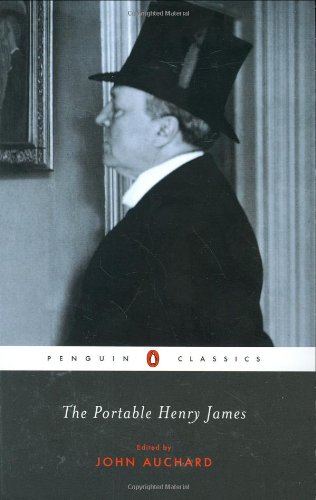
3. The Portable Henry James (Penguin
$13.93
4. Henry James : Literary Criticism,
$15.00
5. Henry James: Collected Stories
$8.80
6. The American (Norton Critical
$20.65
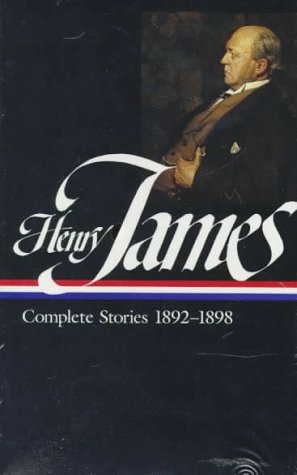
7. Henry James: Complete Stories,
$12.43
8. Tales of Henry James (Norton Critical
$11.91
9. Henry James: The Young Master
$5.00
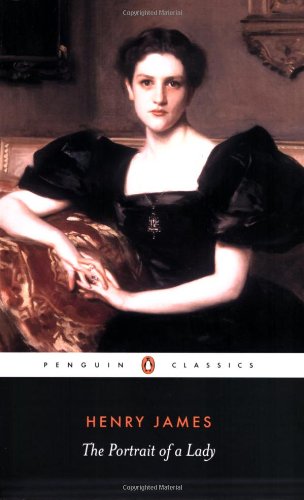
10. The Portrait of a Lady (Penguin
$1.93
11. The Turn of the Screw and Other
$20.85
12. Henry James: Novels 1901-1902:
$20.49
13. Henry James : Complete Stories
$12.20
14. Washington Square
$95.00
15. The Complete Letters of Henry
$8.46
16. Selected Tales (Penguin Classics)
$14.99
17. Henry James Goes to Paris
$12.00
18. Henry James: Complete Stories
$7.19
19. Henry James: A Life in Letters
$13.48
20. The Spoils of Poynton

1. Henry James: The Mature Master
by Sheldon M. Novick
Hardcover: 640 Pages (2007-11-13)
list price: US$35.00 -- used & new: US$20.30
(price subject to change: see help)
Asin: 0679450238
Average Customer Review: 5.0 out of 5 stars
Canada | United Kingdom | Germany | France | Japan
Editorial Review

Book Description
The New York Times compared Sheldon M. Novick’s Henry James: The Young Master to “a movie of James’s life, as it unfolds, moment to moment, lending the book a powerful immediacy.” Now, in Henry James: The Mature Master, Novick completes his super, revelatory two-volume account of one of the world’s most gifted and least understood authors, and of a vanished world of aristocrats and commoners.

Using hundreds of letters only recently made available and taking a fresh look at primary materials, Novick reveals a man utterly unlike the passive, repressed, and privileged observer painted by other biographers. Henry James is seen anew, as a passionate and engaged man of his times, driven to achieve greatness and fame, drawn to the company of other men, able to write with sensitivity about women as he shared their experiences of love and family responsibility.

James, age thirty-eight as the volume begins, basking in the success of his first major novel, The Portrait of a Lady, is a literary lion in danger of being submerged by celebrity. As his finances ebb and flow he turns to the more lucrative world of the stage–with far more success than he has generally been credited with. Ironically, while struggling to excel in the theatre, James writes such prose masterpieces as The Wings of the Dove and The Golden Bowl.

Through an astonishingly prolific life, James still finds time for profound friendships and intense rivalries. Henry James: The Mature Master features vivid new portraits of James’s famous peers, including Edith Wharton, Oscar Wilde, and Robert Louis Stevenson; his close and loving siblings Alice and William; and the many compelling young men, among them Hugh Walpole and Howard Sturgis, with whom James exchanges professions of love and among whom he thrives. We see a master converting the materials of an active life into great art.

Here, too, as one century ends and another begins, is James’s participation in the public events of his native America and adopted England. As the still-feudal European world is shaken by democracy and as America sees itself endangered by a wave of Jewish and Italian immigrants, a troubled James wrestles with his own racial prejudices and his desire for justice. With the coming of world war all other considerations are set aside, and James enlists in the cause of civilization, leaving his greatest final works unwritten.

Hailed as a genius and a warm and charitable man–and derided by enemies as false, effeminate, and self-infatuated–Henry James emerges here as a major and complex figure, a determined and ambitious artist who was planning a new novel even on his deathbed. In Henry James: The Mature Master, he is at last seen in full; along with its predecessor volume, this book is bound to become the definitive biography. ... Read more

Customer Reviews (3)

5-0 out of 5 stars Henry James: The Mature Master is the second of the two volume biography by Sheldon Novick
Henry James was born in New York City in 1843. James and his older brother the Harvard philosopher William were geniuses. Their only sister Alice who died young was a talented diarist. Their other two brothers lived hard and difficult lives. Henry James Sr was an eccentric philosopher who had trouble making a living. The James family traveled widely in Europe spending time in Paris and London.
This second volume of the life of James begins with his success in 1881 of the first novel of his maturity: The Portrait of a Lady." Prior to his death from heart disease in 1916 the great author would produce suchmasterpieces as: "The Ambassadors,"; "The Golden Bowl,"The Wings of the Dove,"; "What Maisie Knew" and "The Turn of the Screw." James was a prolific author turning out long novels, short stories, reviews and nonfiction travel and journalistic articles.
Henry James was a homosexual who had several affairs with many young men during his long life. James spent his year in such locales as Venice, Rome, Paris and London. He bought a home in Rye in Sussex where he lived from the 1890s until his death in the midst of World War I. James became a British citizen shortly before his death to cement his solidarity with the British in the war and as a criticism of American neutrality under the Wilson administration.
James had many female friends such as Mrs. Humphrey Ward and Edith Wharton his fellow novelists. He sometimes had trouble with bills but lived a basically well to do existence earning his living by the pen. He attended one semester at Harvard Law School and earned several honorary degrees.
Novick has had access to thousands of James letters. Unlike Leon Edel, Novick is not reticent in discussing the author's love life; quest for fame and fortune. Novick's two volume opus has replaced the five volume Leon Edel biography as drawing a more complete picture of Henry James and his brilliant family.
Henry James' later works are written in a very difficult style. He probes the secrets of the human mind and heart. James is a painter of human consciousness viewing a story through the lens of his character's eyes. James is influenced by European masters such as Balzac and Zola. He closely examines the transalatic conflict of cultures between the young United States and the old Europe of art and traditon. James had a love-hate relationship with America and Americans. He was often perceived as cold but was also a good friend to many folks needing his counsel and strength.Henry James is not everyone's cup of tea but to discerning readers he is well worthy of concentrated attention.
Sheldon Novick has produced one of the best biographies of a major American writer ever written.

5-0 out of 5 stars an extraordinary account for James lovers!
As a lover of the fiction of Henry James, I recommend this book highly. It gives insight into not only this remarkable man of letters, but also the time he lived in and how he was engaged in that time. I learned about his political views, the nature of his friendships, his difficulties with money and health, but mostly I felt from Novick an enormous sympathy forJames'unique voice. I quote:
"His medium was the solitary imagination, but his subject was his passionate understanding, "love's knowledge" in Martha Nussbaum's precise phrase, of the strong forces that draw people together, despite all jealousies and violence. James prompts us to use a sense that combines intelligence and emotion,that allows us to imagine each other's experience and to enact in imagination the bare descriptions that we read, as if they were stage directions; he is the artist of empathy."

5-0 out of 5 stars The Road to Understanding Henry James
The Road to Understanding Henry James

Here is a book for those of you have struggled, as I have, to understand what Henry James was up to in his novels. Sheldon Novick, in this deeply penetrating, beautifully written biography takes us behind the scenes to walk with, and think with, one of literature's most imaginative, most innovative, and most complex artists. In fact, Novick skillfully builds on the images of theatrical and pictorial artistry to take us on a revealing tour of James's subtle craftsmanship, of his keenly felt power of individual consciousness in our perception of reality, of his sense of responsibility toward his siblings and friends, and of his far-reaching relationships with an international circle of artists, political leaders, and social thinkers in America and Europe. We are observers at a play, watching James micromanage everything -- as he did in London during his years as a playwright. In a sense we are part of the drama in James's books, since the action, and its psychological revelations, come to life only when our imagination fuses with that of the novelist. His novels portray conflicts, innuendos, deceits, bravery, contradictions, and compulsions in an intricate, cohesive dialogue rather than in a vivid, straightforward description. Novick introduces us to the novelist's studio, and to the novelist's mind, in this way:"James is seated with his back toward us, at an easel," Novick tells us. "The model lounges on her couch, on a little platform, facing us, and we see that the painter has sketched the outlines of her figure on the canvas . . . .We imagine ourselves sitting where the painter sits, the remarkable beauty of the model's nude flesh mysteriously illuminating the experience."

In this striking image, Novick highlights the projection of James' imagination, which resonates with our own imagination. "The cumulative effect is not exactly visual," Novick advises us. "It is the picture of a living mind feeling its way into simplest and greatest truths, which the reader is led to discover or recall for herself. . . . James prompts us to use a sense that combines intelligence and emotion, that allows us to imagine each other's experience and to enact in imagination the bare descriptions that we read, as if they were stage directions; he is the artist of empathy."

For the reader, James also can be the artist ofconfusion and frustration as hetampers with language to transfer, to our minds, the germ ofwhat he himself imagines, but chooses to convey obliquely, in part to address our emotions as well as our intellect, and perhaps to spur our own powers ofself-discovery.This technique, maturing in his late novels and stories, can be effective, but it also can be downright addling to readers who spin out on the slippery surface of Jamesian grammar. "Over the years," Novick relates, "ordinary nouns and verbs would slowly drop from his writing. . . . A cloud of descriptive nouns, adverbs, and adjectives would surround the pronoun like a skein of metaphors -- coalescing in the reader's eye. The scene itself then seemed to appear magically, as if illuminated and framed by a proscenium."

Not even Novick's considerable eloquence and persuasion can make readers, like me, experience this magic every time, or even enjoy merging with James's imagination when we do. As a reader, I suspect that James is quite aware of how we are affected -- and disaffected --as we trace the luxuriant, indirect trail that he lays out for us, pushing our way through luscious, ingenious,fantastic groves of unpruned words. To sympathize with us -- as he seems to in The Bostonians, for example -- James occasionally lightens the heavy going with sprigs of ironic humor. But the real satisfaction is understanding James's imaginative, intellectual intent -- which I finally did, with some pleasure, when reading The Bostonians, but only after taking Novick's well-cultured tour of the Jamesian mind.

Novick's memorable tour leads us seamlessly through the literary, social, sociological, political, and historical setting in which James lived, and by which he was profoundly influenced in his outlook and professional work. We enter the scenery hearing muffled, offstage drumbeats -- the calls to Civil War in America, a wrenching conflict of wills in which two of James's brothers fought and were wounded. At the tour's end, we leave the scenery hearing the drums of World War I, a ghastly fulfillment of misguided political will during which, living in London, James died of congestive heart failure. He was honored in England by the Order of Merit, but alienated toward his own country by its resistance to entering into muddy, bloody trench warfare in the name of Anglo-American solidarity, a condition of mutual regard for which James, although "not intimate with political men," vigorouslyand unfalteringly promoted as a private ambassador.

Novick's fine new biography (which was preceded by The Young Master, about James's earlier life) has an intriguing history of its own. Before Novick's two books, the dominant account of James's life, completed in 1972, was Leon Edel's five-volume biography. In that work, James emerges as a somewhat bloodless man of little passion or courage. In The Mature Master, Novick, in the light of extensive new scholarship, frees James from the constraints of outdated analysis, and brings him to life as "the active, passionate, engaged man his contemporaries knew."

Julian McCaull ... Read more


2. Henry James : Novels 1881-1886: Washington Square, The Portrait of a Lady, The Bostonians (Library of America)
by Henry James
Hardcover: 1249 Pages (1985-12-01)
list price: US$40.00 -- used & new: US$14.99
(price subject to change: see help)
Asin: 0940450305
Average Customer Review: 4.5 out of 5 stars
Canada | United Kingdom | Germany | France | Japan
Editorial Review

Amazon.com
This volume in the Library of America's series on Henry James catches the author as he inaugurates his "middle period," the years when he wrote many of his best books. The three novels reprinted here concern women who must choose between competing alternatives. Catherine Sloper of Washington Square, plain and bookish, is romanced by the dashingly handsome Morris Townsend.But her father, sure that such a man could only love Catherine for her money, forbids her to see him. The young heroine of The Bostonians is torn between loyalty to her southern beau and her attraction to one of James's most unusual characters: a wealthy Boston feminist!

The Portrait of a Lady, arguably James's greatest novel, introduces us to Isabel Archer, a beautiful, vivacious, and independently minded American woman who travels to Europe and is seduced by its society. Her circle includes her terminally ill but deeply loving cousin, Ralph; the noble and adoring Lord Warburton; her witty and sarcastic friend Henrietta Stackpole; the meticulous aesthete Gilbert Osmond; the mysterious Madame Merle; and Caspar Goodwood, her passionate American suitor.Negotiating between the life each of them offers and represents, Isabel becomes part of one of the best books written about women's choices.

Movie buffs will be particularly interested in this volume, for all the novels in it have been made into films. The Bostonians was a Merchant-Ivory production in 1984. It starred Vanessa Redgrave as the feminist Olive Chancellor, sparring with southern gentleman Christopher Reeve! The Portrait of a Lady (1996), with Nicole Kidman and John Malkovich, was Jane Campion's opulent follow-up to The Piano. And Washington Square has been made into two major movies: the 1997 version starred Jennifer Jason- Leigh and Albert Finney; but the classic adaptation was William Wyler's 1949 film The Heiress, which starred Montgomery Clift, Ralph Richardson, Miriam Hopkins, and Olivia de Havilland in an Oscar-winning role. It's a real treat to read a superb book and then see how major filmmakers transform it into cinema that is compelling and entertaining it its own right. --Raphael Shargel ... Read more

Customer Reviews (2)

5-0 out of 5 stars The joys of love. . . .are but a moment long
Henry James, packaged in a beautiful book, with dark print on white pages, is the king of the nuance.To read him, you slow down, you enter his world, a scene of dusk and mood and marrow and sorrow.A novel as sweet as the vision of a cool bath in a marble tub, in a darkened chamber, in a hot land.Characters who sometimes do not get exactly what they want even though they want it.One far removed from current events and politics and global warming and death-defying high wire acts of short-sighted greed which are all net and no tightrope.Far removed and yet existing at the core where the personal is burnt into the societal and where a man sitting on an ottoman while a woman stands next to a fireplace predicts the ruin of the state.

4-0 out of 5 stars "Washinton Square" by Henry James
I enjoyed "Washington Square" thoroughly. I believe any highschool student should read this if they are looking for a "book" report. I found it captivating and I couldn't put the bookdown. However I was a little disappointed in how the ending turned out, butwhat can I do? ... Read more


3. The Portable Henry James (Penguin Classics)
by Henry James
Paperback: 672 Pages (2003-12-30)
list price: US$18.00 -- used & new: US$10.31
(price subject to change: see help)
Asin: 0142437670
Average Customer Review: 4.0 out of 5 stars
Canada | United Kingdom | Germany | France | Japan
Editorial Review

Book Description
Henry James wrote with an imperial elegance of style, whether his subjects were American innocents or European sophisticates, incandescent women or their vigorous suitors. His omniscient eye took in the surfaces of cities, the nuances of speech, dress, and manner, and, above all, the microscopic interactions, hesitancies, betrayals, and self-betrayals that are the true substance of relationships. The entirely new Portable Henry James provides an unparalleled range of this great body of work: seven major tales, including Daisy Miller, The Turn of the Screw, "The Beast in the Jungle," and "The Jolly Corner"; a sampling of revisions James made to some of his most famous work; travel writing; literary criticism; correspondences; autobiography; descriptions of the major novels; and parodies by famous contemporaries, including T. S. Eliot, Ezra Pound, Virginia Woolf, and Graham Greene. ... Read more

Customer Reviews (3)

5-0 out of 5 stars Best introduction yet to Henry James
This collection gives an excellent overview of James' work and offers the reader a chance to engage a notoriously daunting author at many levels. There are the stories, the essays, the letters, and of course select novels. This is the best place to start.


5-0 out of 5 stars A solid James

You'll find that the Portable format is clear and the selections are well chosen. A must for a smart library, or at least an educated head. No disappointments here.

2-0 out of 5 stars One upon whom nothing is lost
The indisputable greatness of James relates to his having created a style for presenting experience and human relationships , distinct and deep, yet with real narrative power. The limitations of that greatness are the limitations of James own life and experience. And they relate to his having missed central elements in human experience. Compare for instance the love relationships in Tolstoy to those in James, vital realized relationships fromthose always on the verge of realization .
The great exemplary story for this element in James' life is one of his greatest works, "The Beast in the Jungle" .In this story included in this anthology the hero Marcher waits all his life for the great transformative revelatory - event. In the end that happening turns out to be that nothing is going to happen.
This collection contains some of James' finest stories, plus valuable autobiographical writings.
... Read more


4. Henry James : Literary Criticism, Vol. 1: Essays, English and American Writers (Library of America)
by Henry James
Hardcover: 1504 Pages (1984-12-01)
list price: US$40.00 -- used & new: US$13.93
(price subject to change: see help)
Asin: 0940450224
Canada | United Kingdom | Germany | France | Japan

5. Henry James: Collected Stories (Everyman's Library)
by Henry James
Hardcover: 1120 Pages (2000-03-07)
list price: US$30.00 -- used & new: US$15.00
(price subject to change: see help)
Asin: 037540936X
Average Customer Review: 5.0 out of 5 stars
Canada | United Kingdom | Germany | France | Japan
Editorial Review

Book Description
(Book Jacket Status: Not Jacketed) ... Read more

Customer Reviews (1)

5-0 out of 5 stars The Short Stories of Henry Jame: Worth the Effort
The short stories of Henry James are a microcosm of his novels: bafflingly complex, syntactically convoluted, and thematically multi-layered.He wrote more than 100 between 1864 and 1910, of which perhaps a few dozen are much read today. Complicating any discussion of his short prose is to define "short." Many of his short stories are long enough to qualify as novellas but regardless of the length, any fiction of Henry James promises to take the reader into the world of the microverse, a highly stylized and internalized arena where action counts less than thought and "how" far more than "what." For those who come to his short fiction after having read, say THE GOLDEN BOWL or THE AMBASSADORS, such readers have learned patience, secure in the knowledge that the inner workings of the mind are surely more interesting than the slam-bang world of reality.

There are a few themes that James uses often both in his short and long fiction.He likes to place cultured and intelligent protagonists in an alien environment just to watch them squirm on a foreign alter, or what is more sinister, to maintain them in a familiar ground, only to change the laws of physics or rationality--and then watch them squirm. He employs the doppelganger, or double of the protagonist, one who might be his present or future version, or again more sinister, one who might be a spectral reincarnation. Many of James' heroes fear marriage and must battle an encrusted society that demands it.James was also fascinated with innocence, especially in children and child-like adults. In such stories, the world exists only to corrupt such innocence. Finally, James rarely used one theme in isolation. He much preferred to onion his stories with overlapping themes, all of which are centered on James' rich and allusive prose style, allowing him to meld the complexity of content with the complexity of style.I have chosen a few of his short prose fiction as examples of the quintessential Henry James.

In "The Aspern Papers," James writes of a narrator who must balance the need to obtain art (the papers of the deceased American poet Aspern) while maintaining his ethics while so doing.The narrator travels to Venice for these papers only to discover that their current owners are quite unwilling to give them up. He promises to marry one of them in return for their delivery to him, thinking all the while they are too naïve to see through his scheme. In the end, he tries to steal them, only to learn that they have burned them, one page at a time.James' narrator is one of a long series of such who speak of integrity more than show it.

In "The Jolly Corner," James uses the "double" of the protagonist to point out how one man's life could have been had things been different. Spencer Brydon, an American expatriate returns to America, only to meet his ghostly alter ego, one who Brydon might have become had he stayed at home. Perhaps James had in mind Lambert Strether of THE AMBASSADORS, who is also the model of what the alter ego might have been: a money-grubbing capitalist with no one to tell him "Live!"

James uses "The Pupil" to depict the loss of childhood innocence. The caddish and grifting transplanted American Moreen family hires fellow American Pemberton to tutor their son. They refuse to pay him agreed on wages, all the while exhorting him with the nobility of his task.They offer him custody of their son, which he understandably refuses, but the boy is crushed since he favors Pemberton over his parents.

Art versus life come into conflict in "The Real Thing."The narrator is hired by a couple, punningly named the Monarchs, to paint them as exemplars of the "real thing" of nobility.It is his realization that the reality of their claim does not allow him to create the illusion of a second-rate knock off. He is unwilling to further society's need to measure a life by glorifying its phony aspect.

In these stories and in Henry James' others, he presents the reader with a subjective examination of the inner workings of the mind. For those readers who wish to enter such a microverse, they will find that James' admittedly baffling style will be seen as more as a part of that journey than an impediment.


... Read more


6. The American (Norton Critical Edition)
by Henry James
Paperback: 496 Pages (1978-09)
list price: US$17.05 -- used & new: US$8.80
(price subject to change: see help)
Asin: 0393090914
Average Customer Review: 5.0 out of 5 stars
Canada | United Kingdom | Germany | France | Japan

Customer Reviews (1)

5-0 out of 5 stars Must Read
This is a must read for any serious Enlish/Comparative Literature major. I am surprised that it still does not get read as much in college courses. I would even suggest this book for high school students looking to study abroad. READ THIS BOOK! You will thank me for it. ... Read more


7. Henry James: Complete Stories, 1892-1898 (Library of America)
by Henry James, John Hollander
Hardcover: 948 Pages (1996-01-01)
list price: US$35.00 -- used & new: US$20.65
(price subject to change: see help)
Asin: 1883011094
Average Customer Review: 5.0 out of 5 stars
Canada | United Kingdom | Germany | France | Japan

Customer Reviews (3)

5-0 out of 5 stars The Short Stories of Henry James: Worth the Effort
The short stories of Henry James are a microcosm of his novels: bafflingly complex, syntactically convoluted, and thematically multi-layered.He wrote more than 100 between 1864 and 1910, of which perhaps a few dozen are much read today. Complicating any discussion of his short prose is to define "short." Many of his short stories are long enough to qualify as novellas but regardless of the length, any fiction of Henry James promises to take the reader into the world of the microverse, a highly stylized and internalized arena where action counts less than thought and "how" far more than "what." For those who come to his short fiction after having read, say THE GOLDEN BOWL or THE AMBASSADORS, such readers have learned patience, secure in the knowledge that the inner workings of the mind are surely more interesting than the slam-bang world of reality.

There are a few themes that James uses often both in his short and long fiction.He likes to place cultured and intelligent protagonists in an alien environment just to watch them squirm on a foreign alter, or what is more sinister, to maintain them in a familiar ground, only to change the laws of physics or rationality--and then watch them squirm. He employs the doppelganger, or double of the protagonist, one who might be his present or future version, or again more sinister, one who might be a spectral reincarnation. Many of James' heroes fear marriage and must battle an encrusted society that demands it.James was also fascinated with innocence, especially in children and child-like adults. In such stories, the world exists only to corrupt such innocence. Finally, James rarely used one theme in isolation. He much preferred to onion his stories with overlapping themes, all of which are centered on James' rich and allusive prose style, allowing him to meld the complexity of content with the complexity of style.I have chosen a few of his short prose fiction as examples of the quintessential Henry James.

In "The Aspern Papers," James writes of a narrator who must balance the need to obtain art (the papers of the deceased American poet Aspern) while maintaining his ethics while so doing.The narrator travels to Venice for these papers only to discover that their current owners are quite unwilling to give them up. He promises to marry one of them in return for their delivery to him, thinking all the while they are too naïve to see through his scheme. In the end, he tries to steal them, only to learn that they have burned them, one page at a time.James' narrator is one of a long series of such who speak of integrity more than show it.

In "The Jolly Corner," James uses the "double" of the protagonist to point out how one man's life could have been had things been different. Spencer Brydon, an American expatriate returns to America, only to meet his ghostly alter ego, one who Brydon might have become had he stayed at home. Perhaps James had in mind Lambert Strether of THE AMBASSADORS, who is also the model of what the alter ego might have been: a money-grubbing capitalist with no one to tell him "Live!"

James uses "The Pupil" to depict the loss of childhood innocence. The caddish and grifting transplanted American Moreen family hires fellow American Pemberton to tutor their son. They refuse to pay him agreed on wages, all the while exhorting him with the nobility of his task.They offer him custody of their son, which he understandably refuses, but the boy is crushed since he favors Pemberton over his parents.

Art versus life come into conflict in "The Real Thing."The narrator is hired by a couple, punningly named the Monarchs, to paint them as exemplars of the "real thing" of nobility.It is his realization that the reality of their claim does not allow him to create the illusion of a second-rate knock off. He is unwilling to further society's need to measure a life by glorifying its phony aspect.

In these stories and in Henry James' others, he presents the reader with a subjective examination of the inner workings of the mind. For those readers who wish to enter such a microverse, they will find that James' admittedly baffling style will be seen as more as a part of that journey than an impediment.


5-0 out of 5 stars Misleading Information
Why is Amazon listing this book, Henry James:Complete Stories 1892-98 as available new? I ordered it in February and never received it.Amazon notified me frequently of continuing delays and, then, a few weeks ago cancelled the order, the book being unavailable. This is one of two volumes of James's stories which Amazon lists but has been unable to provide. I've written the same review for the other one.

I have since ordered a used copy and received it without delay!

The stories, of course, all five volumes are perfection, delight, wondrous!The edition is beautiful:print is very small and on thin paper but still easy to read.The hardback bindings hold the pages together securely yet allow the reader to hold the book open without a lot of effort. The little ribbon marker is a nice touch.

5-0 out of 5 stars Little Gems from The Master
Henry James (1843-1916) was nicknamed The Master by admiring fellow-authors towards the end of his life.He is truly a noble, gifted, psychological author depicting a by-gone era but including timelessinsights about human beings and their general and mental situations in hiswritings.He is a master of lengthy prose (too lengthy for some!) TheseLibrary of America editions of James's writings are wonderful,high-quality, unabridged books with expert editing (notes) at the back ofthe volume.They have a knack for selecting the best editions of theauthor's writings where more than one version was published in the author'slifetime. The short stories of this volume are from the mature period butbefore James'final developed style of fictional writing.There are alarge number of stories including manywonderful gems such as "OwenWingrave," "The Coxon Fund" and "In the Cage."Tobe fair, most of the stories were written quickly for magazines, and a few("Glasses" comes to mind) just aren't good stories at all, in myopinion.However, most of the stories do succeed quite well. "OwenWingrave" (criticized by Bernard Shaw as being too deterministic andneglecting free will) is actually a penetrating tale about militaryculture, military values, and the role of the military in thenineteenth-century world. "The Coxon Fund" is about a brilliantlecturer supported by the fund but whose life and the lives of hissupporters are full of pitfalls outside of the Fund's influence.The storyshows how the successes andfailures of the Fund(and the Lecturer) havesubtle and not-so-subtle ramifications for each of the characters. With"In the Cage", the author steps outside of his accustomedhigher-class and higher-educated mix of characters to present the plight ofa penetrating lower-class telegram processor and her insights on life andher suitor.I found it a nice rendition of late-nineteenth century London.I encourage readers to explore this and other Library of America editionsof James' writings. ... Read more


8. Tales of Henry James (Norton Critical Editions)
by Henry James
Paperback: 524 Pages (2002-11)
list price: US$17.75 -- used & new: US$12.43
(price subject to change: see help)
Asin: 0393977102
Canada | United Kingdom | Germany | France | Japan
Editorial Review

Book Description
Nine of James's most important tales, including (new to the second edition) "In the Cage," a tale that engages James's complicated attitudes toward gender, class, and the rise of information technology. "The Author on His Craft" again reprints James's critical essay "The Art of Fiction" and related passages from his notebooks, including a new passage on "In the Cage." "Criticism" has been entirely updated and includes ten new essays by critics who during the last twenty-five years have helped to establish the lines of debate about James's tales.

About the series: No other series of classic texts equals the caliber of the Norton Critical Editions. Each volume combines the most authoritative text available with the comprehensive pedagogical apparatus necessary to appreciate the work fully. Careful editing, first-rate translation, and thorough explanatory annotations allow each text to meet the highest literary standards while remaining accessible to students. Each edition is printed on acid-free paper and every text in the series remains in print. Norton Critical Editions are the choice for excellence in scholarship for students at more than 2,000 universities worldwide. ... Read more


9. Henry James: The Young Master
by Sheldon M. Novick
Paperback: 592 Pages (2007-11-13)
list price: US$19.95 -- used & new: US$11.91
(price subject to change: see help)
Asin: 0812978838
Average Customer Review: 4.0 out of 5 stars
Canada | United Kingdom | Germany | France | Japan
Editorial Review

Amazon.com
In this shrewd, scrupulous biography covering the life of Henry James from his birth until the threshold of his greatest work, Sheldon Novick steers away from the notion that James was a man of sublimated desires, the very figure of the repressed artist who observed life rather than living it. Novick, in fact, argues that the object of James' earliest expression of love was none other than the jurist Oliver Wendell Holmes. Whether one chooses to believe that thesis or not, this is a refreshingly frank discussion of James' early life that sheds new light on his astonishing capacity for literary creation.Book Description
As if Henry James himself were guiding us, we visit old Calvinist New York in the mid-nineteenth century, and share the coming-of-age of a young man whose boldness of spirit and profound capacity for affection attract both men and women to him. We journey with James through Italy and France, witness his first love affair in Paris, and settle with him in London at the height of Empire in the Victorian Age. We scale the heights of London society with him, and as the world opens to James we share with him the experience of writing a series of celebrated and successful novels, culminating with Washington Square (on which the play The Heiress is based) and his masterpiece The Portrait of a Lady. The Washington Post Book World notes: “It is no small ambition to write a biography of James that is commensurate with that master, and Sheldon Novick has done it.”

“Splendidly written . . . Novick has aimed to bring James back to life and he has succeeded brilliantly.”
–The Washington Post Book World

“Like a movie of James’s life, as it unfold moment to moment.”
–The New York Times

“Masterful in bringing James and his world to life.”
–San Francisco Examiner-Chronicle

“Beautifully written, with a grace that enables [Sheldon Novick] to weave his subject’s words in and out of his own with a properly Jamesian suavity . . . Novick’s account gives one a profound respect for James’s persistence and power of will.”
–The New Republic ... Read more

Customer Reviews (1)

4-0 out of 5 stars The Most Readable James Biography
This first volume on James's life in relation to the writings brings us upto 1881 and The Portrait of a Lady.Novick can be more daring than LeonEdel was, especially about James's love life, as there are now more lettersavailable.It's also nice not to have Edel's over-the-top psychologicalreadings of the works and his Literary-Guild style of narration.Readersmay well have overlooked this important book, as it got little press whenit came out--the NY Times Book Review gave it two paragraphs in their"Books in Brief" department!But when vol. ii comes out, we willhave the most balanced and readable biography of James to date. ... Read more


10. The Portrait of a Lady (Penguin Classics)
by Henry James
Paperback: 656 Pages (2003-09)
list price: US$11.00 -- used & new: US$5.00
(price subject to change: see help)
Asin: 0141439637
Average Customer Review: 4.5 out of 5 stars
Canada | United Kingdom | Germany | France | Japan
Editorial Review

Book Description
When Isabel Archer, a beautiful, spirited American, is brought to Europe by her wealthy Aunt Touchett, it is expected that she will soon marry. But Isabel, resolved to determine her own fate, does not hesitate to turn down two eligible suitors. She then finds herself irresistibly drawn to Gilbert Osmond, who, beneath his veneer of charm and cultivation, is cruelty itself. A story of intense poignancy, Isabel's tale of love and betrayal still resonates with modern audiences. ... Read more

Customer Reviews (22)

5-0 out of 5 stars Classic
Isabel Archer is a young, spirited American who travels to England stay for a bit with her aunt's family.Hungry for adventure and fiercely independent, she figures she'll marry at some point but only when it suits her and only to satisfy herself rather than any familial obligations or societal pressures.She's already spurned one suitor, the determined Caspar Goodwood, and soon after her arrival in England she's hotly pursued by Lord Warburton, a friend of the cousin she's staying with.She turns him down too, and then, inexplicably, allows herself to be wooed and won by fellow American Gilbert Osmond.Everyone but her can see what Osmond really is - a cruel and controlling would-be snob who's only after Isabel's money, but machinations behind the scenes manage to completely fool the otherwise intelligent and intuitive Isabel.By the time she realizes what a terrible mistake she's made and how she's been coldly manipulated by someone she thought was a friend, it's too late to undo and she feels trapped and angry with herself, but also too proud and dignified to admit her error.

The story is subtle but powerful in its unfolding, and perfectly captures the essence of a truly tragic situation - a loveless marriage.It doesn't sound particularly compelling, perhaps, since we tend to just accept the fact that there are a lot of unhappy marriages in the world, but somehow James spins the story out with such nuance and detail that it really drives home how easily anyone can end up in a similar situation, no matter how sincere and right a decision may have seemed at the time.I've never been divorced and have been happily married for eleven years now, but even I couldn't help but shudder at Isabel's situation and how that one fateful decision, one she was so sure was the correct one, ended up bringing her so much misery.Even more tragic is how easily she could have taken the other fork in the road and ended up in a much happier union with someone who truly loved her, and continues to even after her marriage.It makes you realize just how precarious and chance-ridden all our life decisions are.

The only odd thing is the ending.It's VERY ambiguous, so much so that I was a little taken aback and not entirely satisfied.I can take an uncertain ending, but it was the abruptness of it that puzzled me.Overall, though, it was a very fulfilling read and does make me want to read more by Henry James.Before this the only other work of his I'd read was Turn of the Screw, which is a very different kind of story.I saw the movie Washington Square and thought it was excellent, and it seems a similar kind of story to Portrait, so I think I'll check that out.

4-0 out of 5 stars This is the 1908 Edition!
Harold Bloom, in his book How to Read and Why, strongly recommended the 1908 edition of James' Portrait of a Lady over his earlier 1881 edition. At Bloom's urging, I have combed through dozens of used book stores over the years and have always found only copies of the 1881 edition. I don't know why that would be because one would think that when an author like Henry James sets upon improving an earlier work that the revised version would be superior. Even if it is not superior, it is at least what he intended to leave for posterity. Anyway, I finally gave up hope on finding a 1908 edition in a used book store and found this on amazon, but it was unclear what edition this Penguin version was. One reader's comment said she thought it was 1908, but I needed to know 100%, so I ordered it through a nearby B&N, that way, if it turned out to be another lousy 1881 edition, I could easily just hand it back to them and say I don't want it. But I am happy to report that when it finally arrived, I carefully read the "Note on the Text" and I can confirm that Penguin is indeed offering the 1908 edition - the version Henry James himself considered to be the best.

4-0 out of 5 stars hmm.
I like this book. Have to say though, I found it to be a tough read. I hestitate to say anything bad about it, because everyone else gave it 5 star reviews, so I feel like I must've missed the real magic in it. overall, it was ok. I never found the plot to be very well organized-it seemed like the author just kind of wrote whate came to mind and then went where it led rather than work from a definite plan. In fact, it never seems to have much of a plot at all, its really more of a psychological study of the nature of the characters. hence, it is not called the " The Adventures of a Lady." I also would have appreciated a little more dialogue to move to story along, as sometimes it does get rather heavy and dull. However, if you can overlook that, Henry James has a beautiful writing style, creates beautiful characters, and is a necessity on the bookshelf of any serious reader.

5-0 out of 5 stars Remarks
Perhaps an alternate title for The Portrait of a Lady might be The Velvet Pit and the Silk Pendulum.It is a kind of blend of the sensibilities of Oscar Wilde at his "aesthetically" sunniest, and of Poe in the grimmest of his catacombs.

Probably the most striking feature of the book is what is usually called "style." In my view this is a misleading and inadequate term because it implies that style is something essentially separate from content, rather like suits of clothes that can be changed as fashion changes, with the inner content and substance remaining unaffected.But in a novel, there literally is no content without its creation through language, and the particular, artful, "signature" quality of that language, in all its specificity-paragraphs, sentences, phrases, individual words-literally forms, gives existence to, content.

And this signature style is at bottom nothing more than what could be called the state of consciousness of the author, of the storytelling subject generating the linguistic "world of objects"of the book.The exact language employed, and the images it forms, weaves a kind of virtual tapestry of the mind of the author.We are made, through reading, to "see" the world and events of the story ("objects") but what we consequently see is not the world of the novel, but that world only as filtered through, and created by, the consciousness of the author.

This is what is so distinctive in The Portrait of a Lady.Much of the novel takes place in Italy, with all of the "fine" artifacts and objects d'art on display there.But the mind of Henry James is itself a kind of Titian; consider, for example, the following passages:

A genteel young man trying to look fierce, but "who smelled more of heliotrope than of gunpowder."A young lady determined to improve her mind who sits with a book, "trudging across the sandy plain of German Thought."

The same young lady, introspectively contemplating her own habit of happy introspection, but who is not, perhaps, quite as wisely Socratic as she imagines: "Her nature had, in her conceit, a certain garden-like quality, a suggestion of perfume and murmuring boughs, of shady bowers and lengthening vistas, which made her feel that introspection was, after all, an exercise in the open air, and that a visit to the recesses of one's spirit was harmless when one returned from it with a lapful of roses."

And a Countess, mature in years if not in outlook, of dubious morality: "[This] lady had so mismanaged her improprieties that they had ceased to hang together at all-which was at the least what one asked of such matters-and had become the mere floating fragments of a wrecked renown, incommoding social circulation....[She was married] to an Italian nobleman who had perhaps given her some excuse for attempting to quench the consciousness of outrage.The Countess, however, had consoled herself outrageously, and the list of her excuses had now lost itself in the labyrinth of her adventures."

These sallies are not isolated flashes in the dark; the entire novel is made of various textures of language-of symbolic consciousness-resembling the above.


James has to some degree a reputation as a mere glider through drawing rooms, a cerebral houseguest of life who closely observes but never really lives.He "thinks" life; he does not really experience it.This idea is simply ludicrous.I know little of the circumstances of his life, but unless he be a God, it is simply impossible for the author of The Portrait of a Lady not to have lived, and lived deeply, and from that indispensable perspective comprehended all of the deep structures of human nature that are so truthfully on display here.

There is a scene in the novel in which character "A" makes a titanic appeal, a beautiful appeal,to character "B.."We had not before seen such as this from "A."His/Her entreaty arises from a place, a depth, in which "Nature" and human nature, merge and become one.It is a place of unique power.The rest of the novelfollows inevitably from this scene (I am being deliberately obscure so as not to spoil the story).Only a real human being living a real human life could have written such a scene, with all it contains and implies.If this is not enough, Chapter 42 alone should serve.If this won't do, the totality of The Portrait of a Lady is an annihilating piece of evidence.Read the book!

And it is not just "deep stuff" that recommends the novel, but all manner of drama!You will encounter a lounge lizard who hangs out in his Louvre, a pimp who plays Schubert, a wind-up toy standing in for a daughter, and a spirited young lady who takes a trip to the taxidermist.Upon discovering that it is she who is the object of that worthy's attentions (a gentleman of exquisite sensibilities!), she naturally resists.Thus, in due course, she is deposited in the velvet pit.And the pendulum begins to swing.

Will she escape?The book ends in a manner that in many ways is reminiscent of Ibsen's Ghosts, and for similar reasons (form & theme, not content).Only Mrs. Alving is doomed, but Isabel?Well....

5-0 out of 5 stars A masterpiece: timeless view into a lady's decision making
The Portrait of a Lady by Henry James sketches the account of life and times of most memorable heroine Isabel Archer. Isabel leaves US and arrives in England with her Aunt. Her cousin, Ralph, who ails from tuberculosis takes active interest in her, and Henry James creates highly realistic and entertaining conversations, which shed light into the character and thoughts of both these characters and the uncle and the aunt. The story gets interesting with presence of two suitors, each highly successful in their respective country (US and UK). The dying uncle leaves his neice a fortune, and she finds herself independent enough to pursue her whims and life.

Her marriage to Gilbert Osmond, the events that lead to it and how Isabel comes of age is the reason why Portrait of a Lady is a must read novel for every person. After denying two apt and deserving suitors, Isabel ventures to make a tragic choice and the intricate interplay of her perception or rather lack of it with the circumstances and events makes novel a masterpiece. The strains between the Old Europe and New America, the idiosyncracies associated with each come to fore, both through Isabel's life and through that of her journalist friend's, Henrietta Stackpole's.

Be it plain Pansy, the perfectionist Madame Merle, the cold and practical Aunt, the socialite Countess Gemini, each woman, like Isabel, is portrayed in sufficent detail. The two suitors engage as character studies, while the cousin Ralph is the character that shall stay with me forever. Admirable even in adverse circumstances, he is for me besides Isabel, the greatest creation of Henry James.

The story could have become melodramatic, but that is highly understated. The dialogues could have filled it to make it like screenplay, but James supplies nice descriptions of both the physical world and that of what goes in Isabel's heart to make it substantial. The commentaries on love and marriage that are subtly built into the novel, and the picture of both US and Europe seem quite contemporary. For a novel written in 1881, it shows how acute the observations of the author were, as well as the fact that we, humans, live life with similar choices, mistakes and feelings irrespective of the age. The novel has enough element of suspense, and events unfold in unexpected ways, making each discovery a pleasant or unpleasant surprise.

Having read many bleak American novels, this Henry James novel allows one to see how a Jane Austen type entertainer can be generated with sufficient origanility by a masterful writer. I am spellbound by the analogies in many of the most memorable actresses, espicially in how they make their choices between men.

Four excerpts from novel shows one the essence of the book:

"Justice to a lovely being is after all a florid sort of sentiment."


"She had had a more wondrous vision of him, fed though charmed senses and oh such stirred fancy!- she had not read him right. A certain combination of features had touched her, and in them she had seen most striking of figures. That he was poor and lonely and yet that somehow he was noble- that was what had interested her and seemed to give her her opportunity. There had been an undefinable beauty about him - in his situation, in his mind, in his face. She had felt the same time that he was helpless and ineffectual, but the feeling had taken a form of tenderness which was very flower of respect."

"It was not till the first year of their life together, so admirably intimate at first, had closed she had taken the alarm. Then the shadows had begun to gather; it was as if Osmond delibrately, almost malignantly, had put the lights out one by one."

"How could anything be a pleasure to a woman who knew that she had thrown away her life?"
... Read more


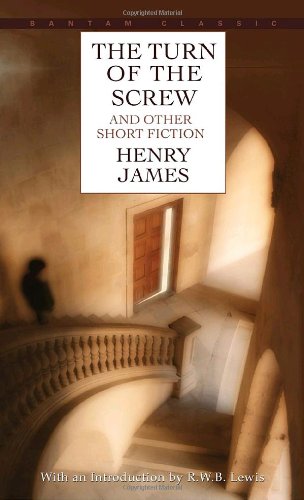
11. The Turn of the Screw and Other Short Fiction (Bantam Classics)
by Henry James
Paperback: 432 Pages (1981-09-01)
list price: US$4.95 -- used & new: US$1.93
(price subject to change: see help)
Asin: 0553210599
Average Customer Review: 4.5 out of 5 stars
Canada | United Kingdom | Germany | France | Japan
Editorial Review

Book Description
To read a story by Henry James is to enter a  world--a rich, perfectly crafted domain of vivid  language and splendid, complex characters. Devious  children, sparring lovers, capricious American girls,  obtuse bachelors, sibylline spinsters and charming  Europeans populate these five fascinating  Nouvelles --works which represent the  author in both his early and late phases. From the  apparitions of evil that haunt the governess in  The Turn Of The Screw to the  startling self-scrutiny of an egotistical man in  The Beast In The Jungle, the mysterious  tumings of human behavior are skillfully and  coolly observed--proving Henry James to be a master of  psychological insight as well as one of the finest  stylists of modern English literature. ... Read more

Customer Reviews (6)

5-0 out of 5 stars Five Excellent Tales from a Master Craftsman
The Turn of the Screw and Washington Square are novellas. Daisy Miller is intermediate in length while The Beast in the Jungle and The Jolly Corner are short stories. All five are among the best short fiction of Henry James.

In the introduction Professor R. W. B. Lewis only marginally discusses the literary merit and artistry of these five stories; he is more concerned with developing biographical insights about Henry James himself. This fascinating introduction adds considerable value to this collection.

The Turn of the Screw (1898): A reader new to this classic work should read no reviews, no essays, no forwards, and no prefaces. I made that mistake. Without going into details, my first reading of The Turn of the Screw was unduly influenced by my knowing too much too soon.There will be plenty of time after your first reading to immerse yourself in literary criticism and reader reviews.

Washington Square (1881):When the young, handsome, articulate Morris Townsend shows interest in Catherine, Dr. Sloper immediately concludes that his true interest is her wealth, and moves to break them apart. Matters are complicated by Catherine's silly, meddlesome, and manipulative aunt, Mrs. Penniman, who functions as an uninvited go-between for the two young lovers.

My fascination with Washington Square centered not on whether Townsend was genuinely in love with Catherine, but with the way in which Catherine revealed her inner strength in managing her increasingly strained relationship with her insensitive father. Washington Square may not have achieved the full psychological subtlety and complexity desired by Henry James, but it is far from a simple, superficial tale of bitter sweet romance.

Daisy Miller (1878): Henry James is largely remembered and respected for his vivid portrayals of Americans abroad and their encounters with the cultural differences that divided the brash, young, immature American continent from the sophisticated, class conscious Old World.

Daisy Miller appears to be the epitome of incautious innocence. She disregards European customs, seemingly quite assured in her own judgment that she is doing no wrong, only flirting with young gentlemen as would any American girl. As the story progresses, she becomes aware of the building criticism from the expatriate community, but apparently chooses to ignore advice from well-meaning, socially prominent women.

Perhaps what makes this story fascinating is that we readers see Daisy not from the perspective of an omniscient author that is privy to Daisy's innermost thoughts, but through the eyes of a third person, a Mr. Winterbourne, an American bachelor living in Geneva. Winterbourne is obviously fascinated with Daisy Miller and the astute reader (or one who has read this tale several times) may question whether the narrator is perhaps unduly biased.

The Beast in the Jungle (1903): John Marcher had from his earliest time, deep within him, "the sense of being kept for something rare and strange, possibly prodigious and terrible, that was sooner or later to happen" and he had in his bones the foreboding and conviction that it might overwhelm him. Despite its suspense and deep sense of despair, this classic tale has been described as sluggish and overly ornate. Be that as it may, this foreboding tale is memorable.

The Jolly Corner (1908): Returning after decades in Europe to his vacant, empty home in New York, Spencer Brydon would in the gathering dusk "wander and wait, linger and listen, feel his fine attention, never in his life so fine, on the pulse of the great vague place: he preferred the lampless hour and only wished he might have prolonged each day the deep crepuscular spell".

5-0 out of 5 stars book review
This book has five short fiction tales.The longest story is about 200 pages, and the shortest one is around 90 pages.This book is great for bringing on an airplane, or if you just have a short amount of free time.The stories are easy to read in an hour or so at a time.

4-0 out of 5 stars The Screw Turns Slowly But Effectively!
Although this story churns slowly and with a writing style that many of us are not used to, it makes up for it with a great, chilling story that sticks with you after the last pages are over. This is one of those books you have to read in the quiet to concentrate on each word, but it is all the quiet that can make this book scare you. James' obviously did a masterful job on the story, with his cliffhanger ending, because to this day, people are still giving their interpretation of it and what it means. And this story was published over 100 years ago, in 1898. Any author would LOVE to have people still talking about a book like that, for better or worse. I love the characters throughout this story, and you begin to wonder what exactly is going on - is she seeing ghosts? Are the kids seeing ghosts? Has she lost her mind? All good questions and at the end, you still might be scratching your head, but it is still a satsifying conclusion that lets your creative mind decipher it all. In conclusion, this book is a pretty slow read considering it's only like 100 pages, but once you get half way, you're not going to want to put it down!

4-0 out of 5 stars Unnerving Tale Hidden Inside Some Stories in a Flashback
On the surface this is a story about an either haunted or hysterical governess who juggles words with true virtuosity, stringing them into psychologically insightful sentences. But that is all just camouflage, as is the many-layered structure of this tale. When the chips are finally down, the truth emerges, even though it is never explicitly stated --- how could it possibly have been stated explicitly in 1898? --- this is a story about pedophilia and its effects on a ten year old boy. At the core of this tale lies the relationship between the boy Miles and his uncle's servant Quint at Bly, the uncle's country estate. The housekeeper Mrs. Crose informs the new governess that the too-good-to-be-true Miles had been "bad" in the past, he would disappear for hours in the company of Quint who was not only "much too free" but also engaged in "depravity." Sent off to a boarding school, Miles gets expelled for what he tells his classmates presumably about this depravity. When at the very end of the tale the governess confronts Miles about these matters, he appears to expire in the last four words of the tale's last sentence. Yet at the start of the unresolved flashback which this tale represents, Miles may yet be alive as a middle-aged family man named Douglas, who reads to his friends the whole tale as written down by the governess herself.

Is Douglas the grownup Miles? James doesn't tell, but this remains a fascinating possibility perfectly consistent with the rest of this tale. Further conflations of characters are equally well compatible with the "facts." The uncle who lived at Bly and then left his estate at the very time of Quint's accidental death doesn't want to ever again hear of his nephew or to return to Bly. Could it be that it was not Quint who engaged in pedophilia, but that it was the uncle himself who abused his orphaned nephew? In their numerous dialogues the Governess and Mrs. Crose complete each other's sentences to such a degree that one gets the distinct impression that one is dealing with the ruminations of a single character and like Quint, so Mrs. Crose too can easily be removed from the scene. In fact James does just that shortly before tale's end, while getting rid of Miles' little sister Flora at the same time. He sends them to London to visit the uncle. There is one more character, the earlier governess Jessel, whose only role is to impose a certain degree of symmetry to the tale, and to appear in one climactic scene.

Why all these dispensable main characters, why the fireside chat of all kinds of minor characters at the time when the flashback is entered never to be left again, and finally why even use a flashback? I think these are all diversionary tactics on James' part. The central story he tells is so very unorthodox, unnerving and incendiary that he prefers to hide it with great care and great success among all this clutter. As I said, in 1898 he would have been pilloried for openly writing about pedophilia. The challenge of doing so all the same, has resulted in a masterpiece of ambiguity, which still clearly conveys its point. This interpretation of the story is supported by the fact that Benjamin Britten, one of the twentieth century's greatest opera composers, has set "The Turn of the Screw". Britten was himself apparently interested in pubescent boys and pedophilia drives the stories of three of his masterpieces. Based on what has been written about Henry James, he may not have been a stranger to this subject either.

The style of this tale is fascinating. On the one hand it is formal, quite pedantic, quite precious and removed, as if carving itself a much-needed ditch separating the narrative from the reader. It does not grant easy access. On the other hand all those long sentences with big words tend to have a mesmerizing effect that absorbs the reader into the story better than even the most honest and well-meaning informality ever could. There is a certain rhythm and poetic drive to some crucial passages. For instance, as one enters the flashback, the first few pages have the drive of a prose poem or of a symhony. With it James welcomes the reader to his realm. No wonder "The Turn of the Screw" ultimately landed on the opera stage.

4-0 out of 5 stars clear, precise, even-handed stylist
Henry James wrote in a clear, precise even-handed American style that has not grown stale despite the passage of over 100 years. The two stories that stand out here to me are the two that are usually singled out by reviewers, "Daisy Miller" and "The Turn Of The Screw", the former because of its sensual European atmospherics and the fact that even back in 1900 an American female could be considered overly outgoing or prurient by community standards, even if she was probably just an extroverted American; the latter because James effectively creates the controlled terror of a ghost story involving children at a British greathouse, perhaps a bit like Poe.But the other 3 stories all have something going for them: "The Jolly Corner", is also a ghost story,set in New York;"The Beast Of the Jungle" creates a sense of mysterious suspense within the context of a couple's love relationship, and "Washington Square" is the story of a love relationship forbidden by the girl's
sophisticated doctor father. ... Read more


12. Henry James: Novels 1901-1902: The Sacred Fount / The Wings of the Dove (Library of America)
by Henry James
Hardcover: 736 Pages (2006-02-02)
list price: US$35.00 -- used & new: US$20.85
(price subject to change: see help)
Asin: 193108288X
Average Customer Review: 2.5 out of 5 stars
Canada | United Kingdom | Germany | France | Japan
Editorial Review

Book Description
This volume brings together The Sacred Fount (1901), one of Henry James's most unusual experiments, and The Wings of the Dove (1902), one of his most beloved masterpieces and the novel that inaugurated the majestic and intricate "late phase" of his literary career.

Writing to his friend William Dean Howells, James characterized The Sacred Fount, the only one of his novels to be told in the first person, as "a fine flight into the high fantastic." While traveling to the country house of Newmarch for a weekend party, the nameless narrator becomes obsessed with the idea that a person may become younger or cleverer by tapping the "sacred fount" of another person. Convinced that Grace Brissenden has become younger by drawing upon her husband, Guy, the narrator seeks to discover the source of the newfound wit of Gilbert Long, previously "a fine piece of human furniture." His perplexing and ambiguous quest, and the varying reactions it provokes from the other guests, calls into question the imaginative inquiry central to James's art of the novel.

James described the essential idea of The Wings of the Dove as "a young person conscious of a great capacity for life, but early stricken and doomed, condemned to die under short respite, while also enamoured of the world." The heroine, a wealthy young American heiress, Milly Theale (inspired by James's beloved cousin Minny Temple), is slowly drawn into a trap set for her by the English adventuress Kate Croy and her lover, the journalist Morton Densher. The unexpected outcome of their mercenary scheme provides the resolution to a tragic story of love and betrayal, innocence and experience that has long been acknowledged as one of James's supreme achievements as a novelist. This volume prints the New York Edition text of The Wings of the Dove, and includes the illuminating preface James wrote for that edition. ... Read more

Customer Reviews (4)

3-0 out of 5 stars The Edition In Itself
The three stars are aimed at the edition, rather than the work itself (The Master is never less than a 4 [although, I prefer his middle period to his later period].)

The edition falls short in the in inclusion of The Sacred Fount.Any edition which includes The Wings of the Dove should necessarily include The Ambassadors, and The Golden Bowl.These works are the core of his late oeuvre, and should be presented together.The Sacred Fount is interesting, but just that and nothing more.Obviously, the LOA had their mind on their money and their money on their mind when they produced this volume, thus doing a disservice to James lovers by not allowing them to have the Big Three in one package.

As far as the usage of the New York Edition, I'm absolutely fine with that decision: It's the last version touched by James and obviously the one he wanted to leave to his readers. It's his last word on his art, and we should respect that.If you want to track his artisitic development, buy a less expensive volume of the early version.

5-0 out of 5 stars The combination of two of the greatest stories from during the turn of the nineteenth century
Henry James: Novels 1901-1902: The Sacred Fount & The Wings Of The Dove by Henry James, now released in current edition edited by Leo Bersani, is the combination of two of the greatest stories from during the turn of the nineteenth century. Composed of The Sacred Fount, the only of Henry James' stories to have been told in the first person perspective, and The Wings Of The Dove, as one of the greatest stories told by Henry James, Henry James: Novels 1901-1902 is an esteemed collection of two very great landmarkers in literary history. An important addition to either academic or public library system, Henry James: Novels 1901-1902 is very strongly recommended to all students of literature as well as collectors of Henry James greatest and most known works.

1-0 out of 5 stars Why use the text of the New York Edition?!


Every previous volume of Henry James -- 4 volumes of novels and 5 volumes of stories -- does *NOT* use the New York Edition, preferring instead the earliest printed book edition (novels) or the earliest periodical text (stories).

This gives us a picture of James' evolving artistry over time.

Now, for some inexplicable reason, Bersani chooses to use the New York text for Wings.

WHY???


One star.

1-0 out of 5 stars LOA--DUMB AND DUMBER


LOA blunders yet again, this time by inexcusably BOTCHING the volume that should have been the absolute capstone of the series: Wings, Ambassadors, Golden Bowl.

Instead, LOA will round out the series of Henry James' novels by publishing 4 less-than-generous volumes instead of the expected 3.

Here is what LOA should have published:


Novels 1896-1901

Other House
Spoils of Poynton
What Maisie Knew
Awkward Age
Sacred Fount
_________________
~1200 pages


Novels 1902-1904

Wings of the Dove
Ambassadors
Golden Bowl
_________________
~1400 pages


Novels 1911-1916

Outcry
Ivory Tower (unfinished)
Sense of the Past (unfinished)
_________________
~700 pages


Unfortunately, here is what they will actually publish:


Novels 1896-1898

Other House
Spoils of Poynton
What Maisie Knew
Awkward Age
_________________
~1000 pages


Novels 1901-1902

Sacred Fount
Wings of the Dove
_________________
~700 pages


Novels 1903-1904

Ambassadors
Golden Bowl
_________________
~900 pages


Novels 1911-1916

Outcry
Ivory Tower (unfinished)
Sense of the Past (unfinished)
_________________
~700 pages


Clearly, LOA will publish 4 volumes where 3 would suffice. They will doubtless use the extra revenue to fund such "choice" volumes as 6+ volumes of journalism (scoff!), movie criticism (ha!), and the "lyrics" of Cole Porter (groan).(Notice that those "lyrics" are not called "poems" -- because they most decidedly are not!) What's next? Journalism of the 1970s and 80s? The "lyrics" of Bob Dylan? The movie -- er, excuse me, "film" -- criticism of Siskel and Ebert?!

Not to mention that this volume reprints the New York Edition text of Wings, while every previous volume of novels reprints the first book edition. What an egregious editorial oversight... Plus, LOA pads this volume by including the Preface to the New York Edition, which is already included in the James volumes of literary criticism. LOA has resorted to publishing the same content twice!

With every passing year, LOA gets stingier and stingier. And with every passing year, its standard of what constitutes canonical writing falls ever, ever lower.

This volume rates at best one star on account of its meagre page count, incompetent textual editing, and shockingly poor series planning.

LOA's supporters are propping up an organization that has clearly lost sight of its original mission.


... Read more


13. Henry James : Complete Stories 1884-1891 (Library of America)
by Henry James
Hardcover: 896 Pages (1999-01-11)
list price: US$35.00 -- used & new: US$20.49
(price subject to change: see help)
Asin: 1883011647
Average Customer Review: 4.5 out of 5 stars
Canada | United Kingdom | Germany | France | Japan

Customer Reviews (2)

4-0 out of 5 stars Easy reading but his stories are not always fulfilling
You get the impression that you are shortchanged at the end on several of his stories; some endings do not bring a lot of satisfaction. Others float here and there without really getting anywhere and there's rarely any action. But when it does occur it's usually at the end. It's not to say that I really do not like Henry James, quite the contrary. I like him because he shows the values that were important in his time.And there is enough variation in the stories to make it worth purchasing and reading. This is a book to bring on vacation.You can read through one story in about two sitting depending on how fast you read.The type is a bit small for me, it would be nice if it were a bit bigger.

5-0 out of 5 stars Great Short Story Book
This book was purchased as part of the required reading of selected short stories for a Retirement Learning at Vanderbilt course on the art of the short story.

The book is a nice size with excellent type and format and is one of a series of Henry James' short stories catalogued by date.The book has a classy look and has additional information about the other books in the series and lists the stories in each.

There is a wonderful Chronology in the back of the book which tells all about Henry James, his travels and life in general.

The only draw back is that the pages are thin so the book can hold a lot and they can sometimes be a little difficult to separate when turning.

All in all a great volume at a modest price. ... Read more


14. Washington Square
by Henry James
Audio CD: 200 Pages (2007-03-01)
list price: US$19.95 -- used & new: US$12.20
(price subject to change: see help)
Asin: 0786160764
Average Customer Review: 5.0 out of 5 stars
Canada | United Kingdom | Germany | France | Japan
Editorial Review

Product Description
James is the acknowledged master of the psychological novel, which profoundly influenced the 20th-century literary world. The power of his prose and the skill with which he marshals seemingly insignificant details to accomplish his purpose sustains the listener's interest and compels continued contemplation. ... Read more

Customer Reviews (1)

5-0 out of 5 stars An excellent narration of James' classic...
I admit I listened to the audiobook after I saw the movie version of "Washington Square" with Jennifer Jason Leigh, as well as "The Heiress," with Olivia de Havilland. I did not particularly enjoy what sounded like undisguised contempt for women in James' writing, but I love Dickens and heaven knows his understanding of women is limited. The characters of Catherine, Dr. Sloper, and Townsend are vivid and unforgettable. There is something compelling about the sad creature Catherine: She exerts a hold on you. You turn away from her, you love her, you turn away again. Although some have seen certain touches in the novel as comedic, I can't agree. Nearly all involved seem fatally flawed, damaged and damaging to others. As for this recording, the narration and sound quality are excellent. I was glad I listened to the book instead of reading it, as I doubt I would have finished it. Lloyd James' reading was very well done indeed. ... Read more


15. The Complete Letters of Henry James, 1855-1872: Volume 2 (The Complete Letters of Henry James)
by Henry James
Hardcover: 528 Pages (2006-08-01)
list price: US$95.00 -- used & new: US$95.00
(price subject to change: see help)
Asin: 0803226071
Canada | United Kingdom | Germany | France | Japan
Editorial Review

Book Description
The Complete Letters of Henry James fills a crucial gap in modern literary studies by presenting in a scholarly edition the complete letters of one of the great novelists and letter writers of the English language. Comprising more than ten thousand letters reflecting on a remarkably wide range of topics-from James's own life and literary projects to broader questions on art, literature, and criticism-this edition is an indispensable resource for students of James and of American and English literature, culture, and criticism. It will also be essential for research libraries throughout North America and Europe and for scholars who specialize in James, the European novel, and modern literature.Pierre A. Walker and Greg W. Zacharias have conceived this edition according to the exacting standards of the Committee on Scholarly Editions. The first in the series, this two-volume work includes the letters from 1854 to 1869 in volume one and the letters from 1869 to 1872 in volume two. ... Read more


16. Selected Tales (Penguin Classics)
by Henry James
Paperback: 704 Pages (2001-10-01)
list price: US$15.00 -- used & new: US$8.46
(price subject to change: see help)
Asin: 0140436944
Average Customer Review: 4.5 out of 5 stars
Canada | United Kingdom | Germany | France | Japan
Editorial Review

Book Description
Throughout his writing life, Henry James was drawn to the short-story form for the freedom it offered him-and he made the genre his own. This new selection comprises both brief tales and longer works that explore James's concerns with the old world and the new, and with money, fame, class, and art. "Daisy Miller," "The Lesson of the Master," "The Real Thing," "The Figure in the Carpet," "In the Cage," "The Beast in the Jungle," and "The Jolly Corner" are included here, along with twelve others. Haunting, witty, and beautifully drawn, these stories are as rich and resonant as James's novels.

Edited with an introduction by John Lyon. ... Read more

Customer Reviews (3)

4-0 out of 5 stars Brilliant but dense
I'll start with the reason why I didn't give it 5 stars. This is the only work by James that I read and I found it to be incredibly dense, the language he uses, the imagery, allusions and devices he employs make for an incredibly difficult read. I've read some allegedly dense books in my time but his style takes the cake - I simply found myself skipping at least 2 of the stories in this collection because I just became utterly lost and bored. Of course there's a great chance that I'm the dense one.

On the plus side, James is incredible at creating worlds that explore the social and psychological dimensions, in a deeper way than almost any writer I've encountered. We see the contradictions, cruelty and sublimity of the human mind like never before. James is concerned largely with occurences in "polite" society, although the clash between this world and the general world sometimes forms the basis of a masterful story like In The Cage. The other thing I adored was his self-referentiality. So many of his celebrated long short stories are about fiction and about stories or the writing process. James is also the master of frustration: his best stories often focus around some secret or Grand Truth that's never revealed to the reader. We are resigned to the sidelines, watching the reflexions (James's spelling!) of the greater picture. But this makes his stories more appealing, not less, and turns them into classics.

I heartily recommend it to anyone who has the patience to delve into this immensely rich world of character and feeling.

5-0 out of 5 stars If you're cruising for gay Henry, this is the place to go...
This great selection of James's tales includes several of his widely-anthologized and well-known stories as well as the brilliant but little-known novella "In The Cage." Perhaps more interestingly, readers searching for the James stories that Gay Studies scholars are always referencing will also find many of them here: "The Figure in the Carpet," "The Pupil," "The Middle Years", and others. If you're cruising for gay Henry, if you want to find the figure so carefully woven in the Master's carpet, this selection is the place to go.