e99 Online Shopping Mall

Geometry.Net - the online learning center Help  
Home  - Authors - Kafka Franz (Books)

  1-20 of 100 | Next 20
A  B  C  D  E  F  G  H  I  J  K  L  M  N  O  P  Q  R  S  T  U  V  W  X  Y  Z  

click price to see details     click image to enlarge     click link to go to the store

$8.95
1. The Metamorphosis
 
$6.39
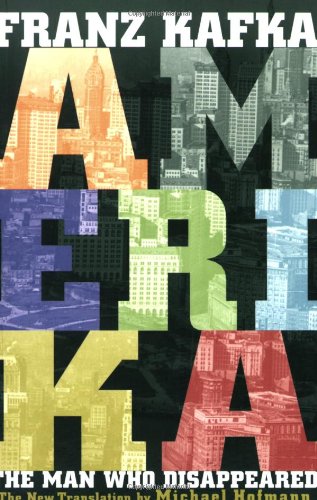
2. Amerika
$11.39
3. Franz Kafka: A Biography
$5.95
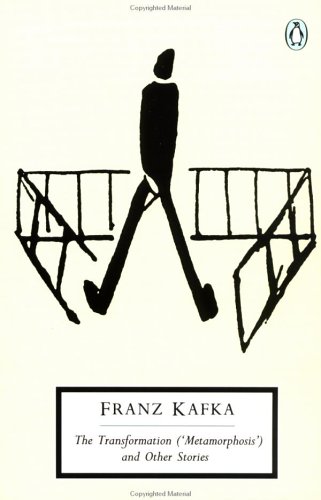
4. The Transformation (Metamorphosis)
 
5. Franz Kafka, the complete stories
 
6. The World of Franz Kafka.
$5.99
7. The Trial
$13.12
8. Collected Stories (Everyman's
 
$5.99
9. The Trial
 
$4.50
10. The Sons (Schocken Kafka Library)
 
$4.50
11. The Sons (Schocken Kafka Library)
 
$5.94
12. The Castle
$9.34
13. Metamorphosis and Other Stories:
$9.58
14. The Diaries of Franz Kafka (Schocken
$6.99
15. The Metamorphosis: Great Books
$7.89
16. Amerika: The Man Who Disappeared
 
17. Franz Kafka:The Complete Stories
 
$3.95
18. Franz Kafka (Bloom's Modern Critical
$8.50
19. The Metamorphosis, In The Penal
$5.99
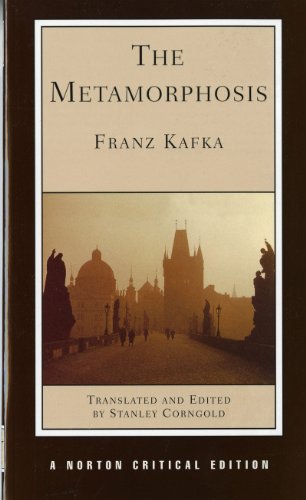
20. The Metamorphosis (Norton Critical

1. The Metamorphosis
by Franz Kafka
Paperback: 94 Pages (2006-08-03)
list price: US$8.95 -- used & new: US$8.95
(price subject to change: see help)
Asin: 1600964222
Canada | United Kingdom | Germany | France | Japan
Editorial Review

Product Description
The Metamorphosis, first published in 1915, is the most famous of Kafka's works, along with The Trial and The Castle. The story begins when a traveling salesman, Gregor Samsa, wakes up to find himself transformed into a giant insect. Curiously, his condition does not arouse surprise in his family, who merely despise it as an impending burden. As with all of Kafka's works, The Metamorphosis is open to a wide range of interpretations. Most obvious are themes relating to society's treatment of those who are different, the loneliness of isolation, and the absurdity of the human condition. Newly designed and typeset in a modern 5.5-by-8.5-inch format by Waking Lion Press. ... Read more


2. Amerika
by Franz Kafka, Willa Muir, Edwin Muir, E. L. Doctorow
 Paperback: 336 Pages (1996-07-02)
list price: US$13.00 -- used & new: US$6.39
(price subject to change: see help)
Asin: 0805210644
Average Customer Review: 4.0 out of 5 stars
Canada | United Kingdom | Germany | France | Japan

Customer Reviews (26)

4-0 out of 5 stars Lost in Amerika
By the author's own admission, "Amerika" is a much more optimistic piece than Kafka's other works.Since Kafka was never able to finish this work, the reader is unable to read the final "happy ending" that the plot is leading toward fulfilling.Even without the afterword which alleges the eventual ending, the lack of angst and thinning sense of confusion point toward resolution.

After fathering a child in his teenage years, Karl Rossman is shipped to America to begin his life free of stigma.But getting off of the ship that brings him to America becomes a challenge that leads him to a wealthy family member in America.However, Karl's life of luxury is short-lived.After offending his uncle, he is cast out on his own.Falling in allegiance with a pair of out of work tramps, Karl hopes to start anew.Delamarche and Robinson continually take advantage of Karl's resources until work finds Karl.These two men cost Karl his job of stature and try to force him into the servitude of the obese singer that employs Robinson and Delamarche.We never learn how Karl escaped this predicament, but find Karl in the last chapter finding an apparently great opportunity in Oklahoma.

Since this is an unfinished work, there are some gaps in the story as pointed out in my review.Many have dismissed this work of Kafka as it does not fit the typical mold of his work.While the gaps in the story make it difficult for me to give this book five stars, I would recommend this book to fans of Kafka.

3-0 out of 5 stars Interesting
Kafka's "Amerika" was the first of his novels that I read following a survey of his short stories.It's a witty and charming book, even if the America Kafka presents is completely unlike any America I've ever heard of.Still, I didn't find it that engaging.I felt as if Karl, the main character, was something of a pinball, bouncing from one place and situation to another as a consequence of the seeminly random decisions of those around him.He spends an awful lot of time thinking and thinking and thinking, but in the end all his thoughts don't amount to much and he's kicked to the next event.

Also, please remember this is an unfinished novel!Unlike many of Kafka's unfinished stories, it doesn't cut off at any particular final point, it just sort of stops, and now I'm frustrated! ;-)

2-0 out of 5 stars They've all come to look for America....
Franz Kafka's 'Amerika' started off, to me, with a great premise, but in the end I found the tale less than entertaining.

Karl Rossman, a teenage boy shipped off to America by his parents following an 'indiscretion' with a servant girl, finds himself in the company of an American uncle, who quickly shuns him for accepting the hospitality of one of the uncle's friends.

Rossman then 'disappears' into the poor working class landscape of America, where he encounters many less than scrupulous characters.

Much of this novel is devoted to the this 'disappearance', though the action, to me, never quite moved along...and made the story quite stale to me...

While I have not read any other works by Franz Kafka, I hope that other novels were better paced and executed. His prose is enjoyable, just not very 'lively' in this offering.

4-0 out of 5 stars Amerika
Without ever having visited America, the German-speaking Czech author, Franz Kafka, wrote a novel based on research which included an autobiography of Benjamin Franklin, travel brochures, and the stories of Europeans who had traveled to America and returned to Europe. The result was the novel, Amerika, his unique and often very unrealistic interpretation of life in America. Amerika follows an almost sixteen-year-old boy through a series of experiences and adventures. Due to misbehavior at home, Karl Rossmann is sent by his parents to New York to live with his uncle in America . Kafka's skewed view of America is immediately demonstrated as Karl is greeted by the statue of liberty holding a raised sword. Karl meets many people and discovers a life quite different than any he has ever known in Europe. Karl meets his uncle and finds himself in the midst of people who are well-off in society. Later, on his own, he discovers a different side of American life. From houses the size of castles, to unfair treatment by his employer, to an out-of-control political rally, Karl is constantly surprised by America as he experiences many bizarre occurrences. Because Kafka did not finish Amerika, the reader is left disappointed in not knowing what happens to Karl, but also hopeful for Karl's future. This book is an interesting portrayal of America from the point of view of an early twentieth-century European who had never visited America. This makes the book intriguing.

5-0 out of 5 stars A few impressions
There is an excellent review of this book on 'The Amazon site' by AJ Feinsinger that captures the story of this work, and much of its strangeness.
I am only adding a few impressions of my own.
First I concur with the observation that this is a book written by a person who has never been in America. I remember reading it years ago, and how it seemed to me the very opposite of everything America stands for.
America in my mind then, was brightness and optimism , a new hope and a new dream. It was moving Westward, and pioneering. It was clear and simple and beautiful
Kafka's 'Amerika' is complicated and mind- ridden. It is filled with paradoxes and absurdities, with strange cruel meetings .The atmosphere of nightmare and difficulty that pervades Kafka's work was felt by me then as in absolute contradiction to the American spirit.
Of the novels , 'The Castle ' 'The Trial' and this one I find this one the least satisfying, the most incoherent. It is very much a super- incomplete work. 'Incompleteness' is of course part of Kafka's legacy and gift .But here it seems often as if there simply has not been enough time given to the text.
I am in any case a reader of Kafka's diaries, parables, stories, shorter works more than I am of his novels which I find somehow tiresome.
This is to my mind the least satisfactory of all of Kafka's work.
And yet as Kafka reveals to us our own contradictions, paradoxes and fears in a way no one else can- this work too has its meaning and instruction.
... Read more


3. Franz Kafka: A Biography
by Max Brod
Paperback: 296 Pages (1995-09-01)
list price: US$17.50 -- used & new: US$11.39
(price subject to change: see help)
Asin: 0306806703
Average Customer Review: 4.0 out of 5 stars
Canada | United Kingdom | Germany | France | Japan

Customer Reviews (4)

5-0 out of 5 stars Left behind he tells the story of a wounded soul
Max Brod was Kafka's best friend. Kafka willed his writing to the flames and Brod rescued them, and helped make them known to the world.
Brod was a writer of considerable accomplishment and output yet to his great credit he recognized that it was Kafka who was the great genius who mankind would come to reread and reread.
The biography tells the story of Kafka's difficult quest to live and write. It contains much of what Kafka reportedly said and is thus rich in his own unique voice.
It is not the most comprehensive nor the authoritative biography but it is the first and most influential .And it is the one which helped save the name , and give the work of this great genius to the world.

4-0 out of 5 stars Written before he was so famous
Those of us who feel that Mozart might have been right, when he complained to his father about having to give music lessons for enough money to live, will find Max Brod entirely on our side in FRANZ KAFKA, A BIOGRAPHY, when it comes to "Philistines who are of the opinion that it is enough if genius has `a few hours free'--they don't understand that all the available hours barely suffice to guarantee to an even tolerably uninterrupted ebb and flow of inspiration and repose its right and proper far-flung arc of oscillation."(pp. 88-89).Kafka obtained a doctorate in jurisprudence on July 18, 1906, did a year of unpaid practice in the law courts typical for those who intend to be called to the bar, and tried to find a job with office hours that would be through at 2 p.m. each day.In July 1908, he began working at the Workers' Accident Insurance Institute for the Kingdom of Bohemia in Prague.Work is tiring, so "Kafka tried sleeping in the afternoon and writing at night.That always went all right for a certain length of time, but he was not getting his proper sleep."(p. 80).With television providing entertainment at all hours, and people eating enough to produce sleep apnea to wake them constantly for another gasp of breath after we are too fat to sleep normally, it is not surprising that people find themselves in a state of mind which matches whatever Kafka was writing.

I checked a few biographies to see how much emphasis had been given to Kafka's work on the job, since reading recently in a book by Peter Drucker that Kafka does not get enough credit for requiring people in the presence of falling objects to wear safety helmets.Max Brod had been a friend of Kafka in school, and worked for years in the post office while writing a book, so he was doubly aware of Kafka's attitude toward his work, because he allowed Kafka's feelings to determine his own occupation until he could no longer stand "Suffering that has been raised to a degree that can only be described as fantastic."(p. 81).Brod quotes a letter in which Kafka's attempt to describe his work is comical.

"people fall, as if they were drunk, off scaffolds and into machines, all the planks tip up, there are landslides everywhere, all the ladders slip, everything one puts up falls down and what one puts down one falls over oneself."(p. 87).When he was appointed a drafting clerk, all the new clerks had to listen to a member of the Board, who had "given them a talk which was so solemn, and so full of fatherly sanctimoniousness, that he (Franz) had suddenly burst out laughing, and couldn't stop.I helped the inconsolable Franz to write a letter of apology to the high official."(p. 87).

By December 28, 1911, Kafka complains in his diary that, due to his family's share in a factory "they made me promise to work there in the afternoons!"(pp. 89-90).Max Brod thinks this mess is responsible for "his later absorption into the world of sorrows that finally led to his illness and death. . . . but the disaster was essentially caused by the fact that a man so tremendously richly gifted, with such a rich creative urge, was forced just at the time when his youthful strength was unfolding himself, to work day in and day out to the point of exhaustion, doing things which inwardly didn't interest him in the least."(p. 91).This must be my favorite theme, in all of literature, that people are kept so busy, they would have to be fools to take the time to see what anyone else is doing.Kafka wanted to be able to depend on others "to keep everything running in the same good order as usual; for after all, we are men, not thieves."(pp. 91-92).This biography is written with the greatest friendly involvement in the life and death issues of its subject.At the end, concerning a medical report on July 14, 1908, "that Kafka, because of his affected nerves and `great cardiac irritability' had to give up his position" (p. 248) it was only to be considered an excuse "to transfer to the semi-government Accident Insurance Institute, where the work was considerably easier."(p. 248).

This biography will be most meaningful to those who are familiar with Kafka's writings.Many further items are also available."Kafka's letters to Milena, her letters to me, and Janouch's recollections provide indispensable documentation for the period of Kafka's life in which THE CASTLE was being composed--documentation which is all the more important because Kafka's diary stops completely during the writing of the novel, and is relatively meager for the few years he had yet to live."(pp. 221-222).

Chapter VII, The Last Years, has the beginning of Kafka's friendship with Dora Dymant in the summer of 1923.At the end of July he left Prague to live with her in Berlin, published four stories and used the title, "A Hunger Artist" for the collection.On March 17, 1924, Brod brought Kafka back to Prague to live with his father and mother again.(p. 203).Taken to a Vienna clinic, Kafka was then "transferred at the end of April" (p. 204) to a sanatorium, where, "cared for in every way by his two faithful friends, Kafka spent the last weeks of his life--so far as the pains he suffered allowed it, patiently and cheerfully."(p. 205).

This famous biography was written in 1937.Appendixes include a chronological table which ends, 1952, Death of Dora in London (August).A postscript (p. 213) at the end of Chapter VII reveals that the first German edition ended at that point.Chapter VIII, New Aspects of Kafka, includes "we are faced with the inevitable distortion of his image."(p. 215).

4-0 out of 5 stars Kafka's friend and biographer offers much insight
This biography lets you on the inside of not only a great writer but on the inside of a close friendship between two writers and friends. It's written in a rather relaxed way, the way only good friends can be with one another. I read a biography on Kafka many years ago and it left me a bit indifferent about Kafka. This biography lets you feel the warmth and exuberance of the man, the everyday of this extraordinary writer. You can almost imagine yourself in his childhood home, meeting the family, understanding how Kafka became Kafka, how the seeds for his stories were planted and evolved. This biography had all the intimacy of an autobiography. Anyone who would like to know the tender underside of the beast, this is the biography you're looking for.

4-0 out of 5 stars Comprehensive,enlightening portrayal of Kafka.
When one considers Kafka has had so much influence on literature that the word "Kafkaesque" was invented to describe his thoughts and effects on us (how many writers can claim their "own word"!),itis surprising that only three notable biographies on him exist. This one isby a man who knew Kafka closely for the last half of his life.When they metKafka was 19, he died one month short of his 41st birthday.The author'sreverence makes the reader become passionately attached to the subjects ofKafka's inner feelings; his reserved,taciturn approach to people, hisobsession with pure thoughts, his sensitivity to noise, his devotion to thethe earth,its humans,animals and plants.Even now, three quarters of acentury later, the reader feels the exasperation, the frustration, thetorment Kafka suffered under his materialistic, social climbing father whodominated and eventually ruined his son. The book cannot be calledlively,Kafka's lifestyle was not frolicsome. However, it is never dull. Hisclandestine trysts with the sleazier side of Prague nightlife takes thereader by surprise.Then comes Brod's stunner of a revelation only unearthedin 1948, twenty-four years after Kafka's death.??? The last quarter of thebook is the best.Intense and sorrowful, just as Kafka would have wanted it.For those looking for the intellectual side of Kafka the book offersinsights into his appreciation of Goethe (his idol),Thomas Mann, Flaubertand Dickens, among many others. Brod's ace is his ability to quote thesensitive Kafka; viewing the fish at a Berlin aquarium after Kafka becamean ardent vegetarian he is quoted, "Now I can at last look at you inpeace,I don't eat you anymore". Also his reverence for all life aswhen a nurse placed flowers near his deathbed," One must take carethat the lowest flowers over there, where they have been crushed into thevases, don't suffer. How can one do that? Perhaps bowls are really thebest." And then the "humorous" Kafka on hearing that he hadTB," My head has made an appointment with my lungs behind myback." When Kafka died tragically young he joined the likes of theRomantics Byron (36),Shelley (29) and Keats (25) as a group who haddedicated their lives to the betterment of mankind and had all died whenlife should have just been beginning. As with the Romantics,one is leftwondering what Kafka would have achieved given another forty years. Onewill never know, but for an interesting observation of his 40years,"Franz Kafka-A Biography" is the book. ... Read more


4. The Transformation (Metamorphosis) and Other Stories: Works Published During Kafka's Lifetime (Twentieth-Century Classics)
by Franz Kafka
Paperback: 256 Pages (1995-03-01)
list price: US$10.95 -- used & new: US$5.95
(price subject to change: see help)
Asin: 0140184783
Average Customer Review: 4.0 out of 5 stars
Canada | United Kingdom | Germany | France | Japan

Customer Reviews (2)

5-0 out of 5 stars Suicide, Transformation Into a Bug, Torture: Standard Kafka Stuff
Woops, I gave away the plots!

This contains the best and most interesting short stories, including "The Stoker." Also, it has his best and most innovative work "Transformation" or "Metamorphosis." "The Stoker" became chapter one of his book "Amerika." It is a less traumatic and scarry story than most of Kafka's works - including most of the stories in the present collection. By the way, they are not all scarry or dark, but being "dark" is a Kafka theme running through many of his works.

The present book is a mixture of short and long works. The short works cover a huge range of subjects from very simple to gruesome. One has to be a little bit carefully in selecting a Kafka collection because not everyone is equal. Some are just 200 pages long. This is a bit longer.

The three main stories are dark stories - all in the Kafka tradition. Without giving away the plot details, some will find "The Penal Colony" a bit hard to digest. Similarly, The Judgement is a dark tale.

My favourites in this group are "Metamorphosis" and "The Stoker." After reading the latter book, I read Kafka's "Amerika" and felt a certain disappointment. "The Stoker" is the best part of that longer novel "Amerika."

Anyone reading this book should follow up and read one of Kafka's longer works to obtain a better overall understanding of his writings. I thought that "The Castle" was his best novel and themost interesting work, followed by the unfinished and more complicated "The Trial." His other novel "Amerika" is far behind the other two, and if you read "The Stoker" there is no need to waste time reading that novel.

3-0 out of 5 stars The works of Kafka published in his lifetime
This volume contains the works of Kafka published in his lifetime: The Metamorphosis, Meditation, The Stoker, The Judgment, The Hunger(Fasting)Artist, Airplanes of Brescia.
One of the pieces, the Metamorphosis (In this volume called ,"Transformation") is one of Kafka's most famous work. Gregor Samsa who woke one day to discover himself to be a crawling creature, and whose plight as insect is taken to be the family situation of Kafka is one of the major characters of twentieth - century Literature.
Kafka disturbs, and brings us to a level of fear and anxiety perhaps no other writer can. How he does this with sentences of incredible beauty is both chilling and mysterious.
His work is parabolic, symbolic and seems to suggest to us more about the imprisoned and lost situation of Mankind than we would somehow really like to know.
Perhaps reading him is notfor everyone.
But for those ready to bear the uncanny weight of literary beauty this is the answer. ... Read more


5. Franz Kafka, the complete stories
by Nahum Norbert Glatzer
 Unknown Binding: 486 Pages (1971)

Asin: B000731D2E
Average Customer Review: 4.5 out of 5 stars
Canada | United Kingdom | Germany | France | Japan
Editorial Review

Amazon.com
How many writers get their own adjective? The work of this terminally alienated master narrator of the subconscious demanded a new descriptor; I guess they gave up and just settled on "Kafkaesque." But if you ever wonder what the original Kafkaesque work was, take a look here. The book contains all of Kafka's short and longer stories -- everything but his three novels.Most of these stories weren't even published during the author's lifetime.The widely-anthologized The Metamorphosis is here, wherein Gregor Samsa awakes from uneasy dreams to find himself insectoidally transformed, as are equally lovely pieces like A Hunger Artist, A Country Doctor and A Little Woman. ... Read more

Customer Reviews (42)

4-0 out of 5 stars Excellent introduction to Kafka unique style
Most of the stroies are gems.
Kafka's unique style lies with the way he uses the language - he manages in bringing the reader to the darkest corners of the psyche using a matter-of-fact, almost bland collection of allegedly objective observations on his protagonists' emotions, thoughts and behaviours. These protagonists are sometimes human beings but some are neither human nor animals...One could call them Kafka imagination's progeny.
The reason I give it only 4 stars is because some of the stories are bordering on ...boring. I guess the reason in having them in this edition is in order to be able to call it 'The Complete Stories'.
Thus - if you are ready to accept some less than stellar writing, you'll be rewarded in most of the book by an extraordinary style and truly 'kafkaesque' ideas.

5-0 out of 5 stars A Treasure of Madness
Kafka is still "the rage," one supposes, but it is hard to see how, now that he has become an icon. This is a fabulous collection. Updike is right that these stories are excellent. Kafka has had enormous influence on modern fiction. He may be one of a handful of highly important authors. Reading him today is especially interesting; you would think these stories had been written the day before yesterday. Kafka's subject, which is something like 'the estrangement of the soul and modern man's quest for hope in a hopeless universe' sounds awfully familiar.The truth is that little else has been said to expand on Kafka's central insight into modern man's spiritual dilemma. "There is hope, but not for us." Kafka, rather like Poe, writes creepy tales. That his world is ours is the magic of his genius. Yes, we've been there alright, but we cannot explain how it happened. We can, as they say, relate...to Kafka's narratives of anxiety, helplessness, and fear.

5-0 out of 5 stars His Basic Short Story Collection
This is a collection which first appeared about 60 years ago and has been published a number of times with small variations in the selected works.

Franz Kafka (1883 - 1924) was one of the major German-language fiction writers of the 20th century. He was a Jew living in Prague and working for the Worker's Accident Insurance Institute. He wrote in his spare time and was inspired by the problems associated with bureaucratic institutions - such as we read in "The Castle."

I read all of Kafka's work and put together this Listmania list from my notes and experiences. His short novella Metamorphosis is among the best short works ever written. Unfortunately, he did not write and publish much when he was alive. Most of what is available was published after his early death, and some of it is edited (possibly) poorly as in Amerika. His writings vary from novels to one page impressions of life, such as one essay that is about looking out a window. The novels revolve around a young to middle aged protagonist male named "K," who battles the courts and bureaucrats.

At some point while reading his works, I realized that his short stories are just as important as the novels, or even more so, and Metamorphosis is just one of a number of excellent short works involving compulsion and one's view of life. So, the present book is an excellent buy for those who want to learn about Kafka.

Overall, I like "Metamorphosis" for its originality. After reading many of his works I got to the point where I had read enough, because many of his writings are just fragments. Some might want to read all his sort stories in one go, but I did not because of all the fragments. In any case, this collection with a forward by Updike is an excellent buy or read, well worth the time. The following short stores are complete works and not fragments: Hunger Artist, A Country Doctor, A Little Woman, The Penal Colony, and the Judgment. The Penal Colony goes even farther than Metamorphosis; and as such, it is an odd reading experience, having almost a nightmare quality to the story. A few of the others are bizarre as well. In any case, an English reader will always wonder if he completely understands or has fully appreciated the translated German writing.

This is recommended as a basic introduction. It is missing The Stoker but it has his key short works.

5-0 out of 5 stars Kafka's Complete Shorter Works
This book contains almost all of Kafka's literary works, save his full length novels.

Kafka's writing is representative for a large portion of modern literature.Although one can classify his works as dealing with alienation, assimilation, inferiority, and insecurities, they are, on some level, impenetrable by interpretors.His prose is clear and easily readeable; however, the implications of his story remain troubelsome and confounding.

Kafka's writing style betrays expected norms of literature.In the metamorphisis, the protaganist Gregor Samsa awakens from his sleep to find himself changed into a beetle.The story is about the ramifications of the event, and the expected pinnacle, his transformation itself, is barely attended too.Furthermore, Samsa seems to take his transformation in stride.He recognizes the uniqueness of his case, but thoughts of his own insanity, nor the impossibility of the situation are hardly voiced.By giving us the absurd and simultaneously sidelining it, Kafka is able to focus on other issues.Samsa's "otherness" as a beetle, now being an existential given, leads us to explore how being "other" works in relationship to family and other acquantices.

Kafka is a truly marvelous writer, and if his writing seem paranoid and absurd, it adds to their literary quality.His concerns are not so unique as the positions his literary creations often find themselves in, and he provides an interesting voice on the conditions of modernity.

5-0 out of 5 stars Kafka had it right
This is the most authoritative collection of Kafka's immortal short fiction; it includes the most respected translations of each story (mostly by Willa and Edwin Muir), and a fair introduction from John Updike.

Kafka was the greatest writer of short fiction of the modern era. Such stories as 'The Metamorphosis,' 'In the Penal Colony,' 'The Hunger Artist,' and 'The Great Wall of China' encapsulate the tyrannical, dehumanizing regimentation of the modern world. Kafka may be difficult to read, and the allegorical form is not enjoyable for everyone. However, it is impossible to not be drawn into the strange madness of 'The Hunger Artist,' or 'The Country Doctor,' surely two of the most terrifying works of literature of the period.

In many ways, Kafka was a precursor to the sort of self-reflexive artistry that would later be found in Beckett, Sartre, and Brecht; Kafka is always aware that he is working within the literary realm, and he knows that he cannot escape it. Therefore, (brilliantly), he turns it into an advantage, by intoning the mystical, the metaphysical, and the surreal. His characters are often animals, metaphors, or simply moods. This approach has its strengths, but only in the hands of a true master. Fortunately for us, Kafka was just that, in the truest sense: a master of form, and unity of content. ... Read more


6. The World of Franz Kafka.
by Franz]. Stern, J.P. ed. [KAFKA
 Hardcover: Pages (1980)

Asin: B000UG5PBS
Canada | United Kingdom | Germany | France | Japan

7. The Trial
by Franz Kafka
Paperback: 304 Pages (1999-05-25)
list price: US$13.00 -- used & new: US$5.99
(price subject to change: see help)
Asin: 0805209999
Average Customer Review: 4.5 out of 5 stars
Canada | United Kingdom | Germany | France | Japan
Editorial Review

Amazon.com
The story of The Trial's publication is almost as fascinating as the novel itself. Kafka intended his parable of alienation in a mysterious bureaucracy to be burned, along with the rest of his diaries and manuscripts, after his death in 1924. Yet his friend Max Brod pressed forward to prepare The Trial and the rest of his papers for publication. When the Nazis came to power, publication of Jewish writers such as Kafka was forbidden; Kafka's writings, many of which have distinctively Jewish themes, did not find a broad audience until after World War II. (Hannah Arendt once observed that although "during his lifetime he could not make a decent living, [Kafka] will now keep generations of intellectuals both gainfully employed and well-fed.") Among the current crop of Kafka heirs is Breon Mitchell, the translator of this edition of The Trial. Rather than tidying up Kafka's unconventional grammar and punctuation (as previous translators have done), Mitchell captures the loose, uneasy, even uncomfortable constructions of Kafka's original story. His translation technique is the only way to convey the comedy and confusion of this narrative, in which Josef K., "without having done anything truly wrong," is arrested, tried, convicted and executed--on a charge that is never disclosed to him. --Michael Joseph Gross Book Description
Written in 1914, The Trial is one of the most important novels of the twentieth century: the terrifying tale of Josef K., a respectable bank officer who is suddenly and inexplicably arrested and must defend himself against a charge about which he can get no information. Whether read as an existential tale, a parable, or a prophecy of the excesses of modern bureaucracy wedded to the madness of totalitarianism, Kafka's nightmare has resonated with chilling truth for generations of readers. This new edition is based upon the work of an international team of experts who have restored the text, the sequence of chapters, and their division to create a version that is as close as possible to the way the author left it.

In his brilliant translation, Breon Mitchell masterfully reproduces the distinctive poetics of Kafka's prose, revealing a novel that is as full of energy and power as it was when it was first written. ... Read more

Customer Reviews (35)

4-0 out of 5 stars Great book, horrible translator!
The novel itself is brilliant.It is truly one of Kafka's major works and warrants reading from all Kafka fans.HOWEVER, please read the comments from others about the translator.He is pompous, arrogant, and a huge spoiler!

5-0 out of 5 stars Prepare to lose your sense of reason
I haven't read a Kafka novel before. While reading this, I always find myself internally shouting and complaining about the lack of reason within the book. I complain about Josef K's lack of ability to fight for his situation, but then again I am reminded that this is surrealism at its best. Nothing makes sense in this book. But still, I love it. As long as you are willing to understand that nothing will make sense in this book, then you will enjoy it. If you aren't willing to give up your sense of reason, then don't read this one.

5-0 out of 5 stars Style, Pointed, Fine Composition
It would be strange to not give a book of this reputation 5 stars.I do so with no reservation either, but this wasn't really what I'd call a literary masterpiece.

The story traces the logic of K a man arrested without cause.The stream of thought never really ends in the book as his thoughts are influenced by his encounters with other people and as he is disillusioned about the society he lives in to some degree.He never becomes disillusioned enough to see what awaits him though.

The tone and style of the writing is immersive, consistent and relentless putting us in the mind of the accused, and the writing is clear and certainly makes a clear and fine exposition out of what the author set out to do, which was to show the madness of giant bureaucracy with little care for the life of others.

Its a good read, and one thing that occured to me is how much smarter the system is than an actual human being, which gives that trapped feeling that the author does so well.How could it not be "smarter" especially today, with pages and pages of rules and paid positions and so forth at that time and now add in computers the power of bureaucracy probably only increases.

On the one hand its not a great literary masterpiece, but on the other hand it is such an important book that I don't really care.

5-0 out of 5 stars The Trial
The Trial, by Kafka, is superb work only short of masterpiece because it was never finished. I read the book a few months ago, but it still can give me the shivers when I reflect on the brutal, impersonal environment with whichK., the main character, is persecuted. When suspected of a crime, the accused must defend themselves but are not revealed the nature of the crime they committed. This is the dark, helpless world K. is subjugated to.Many times the book feels dreamy as if K. could wake up -- but he can't.

4-0 out of 5 stars Man versus world
Kafka I maintain is the funniest writer in 20th Century Literature. Seriously. You don't think so - name another great comic writer. A GREAT comic writer. Yes, yes, there are funny writers, such as P.G. Woodehouse, there are writers who ram their books with jokes like an goose liver on the eve of fois gras, but who can match Kafka for sheer, metaphysical, universal funniness. Kafka is Charlie Chaplin's embodiment that life is a tragedy in close up, a comedy in the long shot. Up close, the story of Joseph K is indeed a ghastly one. As Kurt Vonnegut pointed out, the trajectory of this sorry tale is no arcing parabola but a tale of a man who is already in a pretty sorry way at the start and finds his plight gets steadily worse with no respite. What misery! K, imprisoned for an unspecified offence, lurches woefully from one mishap in the penal bureaucracy to another, meeting characters singularly unsuited to helping out in his plight - a painter, a priest. In the end he faces his inevitable fate with the sort of shrug reminiscent of Maimonides. The final page has a scene of black comedy of a pitch not even Samuel Beckettmanaged to accomplish - the odious knife passing ceremony in front of the victim. Poor Joseph K. Kafka was a proponent of the view that just when you think you are at rock bottom and things can't get any worse - that's the point at which they inevitably will.

Poor Franz.

And then he gained the posthumous reputation as the greatest writer of the Twentieth Century.

What comedy! ... Read more


8. Collected Stories (Everyman's Library)
by Franz Kafka
Hardcover: 560 Pages (1993-10-26)
list price: US$22.00 -- used & new: US$13.12
(price subject to change: see help)
Asin: 0679423036
Average Customer Review: 4.0 out of 5 stars
Canada | United Kingdom | Germany | France | Japan
Editorial Review

Book Description
(Book Jacket Status: Jacketed)

Franz Kafka’s imagination so far outstripped the forms and conventions of the literary tradition he inherited that he was forced to turn that tradition inside out in order to tell his splendid, mysterious tales. Scrupulously naturalistic on the surface, uncanny in their depths, these stories represent the achieved art of a modern master who had the gift of making our problematic spiritual life palpable and real.

This edition of his stories includes all his available shorter fiction in a collection edited, arranged, and introduced by Gabriel Josipovici in ways that bring out the writer’s extraordinary range and intensity of vision.

Translated by Willa and Edwin Muir ... Read more

Customer Reviews (4)

2-0 out of 5 stars Horrible Translation
Comparing these translations to other versions, these translations are horrible.With Kafka, even just one word can change the entire meaning of his work.I would recommend Malcolm Pasley's translations of Kafka instead.

5-0 out of 5 stars the Muir's in tux and bow tie
Check Your Review of
Collected Stories (Everyman's Library)
by Franz Kafka, et al

Here is your review the way it will appear:

= ÊÊ the Muir's in tux and bow tie
Reviewer: Michael Sympson from Florida
It has become customary for a current translator to preface his production with a little critique of his predecessors, especially the Muirs Ð after all we are not supposed to put our light under a bushel, but just between you and me: a great translator is just as rare as a great author, there might be billions and quadrillions of stars in the Universe, but the nights are still dark and the zodiac shows the same old signs since the countdown began at 11.00 am on Sunday, April 27th, 3877 BC. (central European time). Perhaps if the pay would be better there would be more stars in the firmament over Grub street.

So, since this is not the best of all worlds, only the best of all possible worlds, if not the only possible world, we better brace ourselves for surprises when a latter day translator of some repute allows to compare the "Country Doctor," perhaps Kafka's finest achievement, in his new version, with the established rendition of the Muirs. The very first sentence draws the line. Neugroshel (ÒThe Metamorphosis, in the Penal Colony, and Other StoriesÓ) thinks he knows better than the author and trims the sentence to bite-size:

"I was in a great predicament: an urgent trip lay ahead of me; a dangerously ill patient awaited me in a village ten leagues away; a heavy blizzard filled the vast space between me and him; I did have a wagon, lightweight, with large wheels, just the right kind of wagon for our country roads. Bundled up in my fur coat, holding my instrument bag, I stood in the courtyard, ready to travel; but the horse was lacking, the horse." But Kafka didnÕt write for the ÒToronto StarÓ and felt no obligation to chop his sentences to anemic tidbits for the weak digestion. The Muirs thought so too:

"I was in great perplexity, I had to start an urgent journey; a seriously ill patient was waiting for me in a village ten miles off; a thick blizzard of snow filled all the wide spaces between him and me; I had a gig, a light gig with big wheels, exactly right for our country roads; muffled in furs, my bag of instruments in my hand, I was in the courtyard all ready for the journey; but there was no horse to be had, no horse." Perhaps not the choice of words, but syntax and rhythm are incomparably closer to the original; in fact, this sentence alone deserves to be copyrighted for eternity and should oblige every succeeding translator to quote the Muirs. And why stop with the first sentence? The entire story is coming across splendidly. And by the way, the doctor used a gig, not a wagon, Mr. Neugroschel.

ÒEvery author creates his own pedigreeÓ says Jorge Luis Borges; and we know from KafkaÕs own testimony whom he had chosen as his models. Charles DickensÕ white hot fusion of language and imagery left its mark on ÒAmerica;Ó Flaubert taught Kafka the discipline to say extraordinary things in ordinary language and seek for the one befitting word; and late in his life, Heinrich von KleistÕs marvellous economy of structure and style left an indelible impression on Kafka. To some extent, Kafka even appreciated Friedrich Nietzsche. Just recall the rants and paragraphs of endless to-and-fro soliloquies in Ôlegalese,Õ KafkaÕs variety of the interior monologue.

Such were, what Kafka himself had recognized as formative influences. His friend Max Brod however, preferred to add Kierkegaard to this list and to belittle Nietzsche. BrodÕs view prevailed with the critics of his generation. KafkaÕs work drifted into the murky neighborhood of existentialism and of nebulous metaphysics for the secular seeker. For most critics and many readers, Kafka had turned from an artist to a saint. Regrettably the Muirs picked up on this trend and this sometimes slanted their choices in the phrasing - notice ÒI had to start an urgent journey ... :Ó Neugroschel was right to play it down in his rendition. Against all appearances, Kafka is not a latter day John Bunyan.

According to Stephen King (you are right, how could I sink so low) the two most important ingredients of fiction are empathy (the readerÕs) and the ability to hypnotize (on the authorÕs part). The man is right, and Kafka does possess hypnotic powers if the reader is willing to yield to his magic. KafkaÕs stories are dreams, not more real than fairy tales, and full of symbols as confusing as in a nightmare. The Muirs had enough artistic instinct to actually perceive that, and all things considered, produced a translation, which will remain the standard for still a very long time to come.

5-0 out of 5 stars My absolute favorite.
This is my absolute favorite book by my favorite writer, Kafka. As a 17 year old student at a boarding high school, my writing teacher lent me her copy of "The Metamorphosis" (the Muir translation), which Iinstantly fell in love with. I immediately bought the Everyman's Libraryedition of Kafka's Collected Stories, which I believe to be the bestcollection of Kafka's stories out there. There is a controversial topicover which translator best captures Kafka's intent, this book uses the Muirtranslation in the first half which I believe, though it may not be asaccurate as the Corngold translation, flows better languistically and iseasier to read. The book, while visually pleasing, arranges the stories inthe most sensible way: instead of placing the stories in alphabeticalorder, like the other books, it arranges them chronologically in the bookthey were originally in (e.g. stories that were published in"Meditations" are in the Meditations section and not scatteredabout). Choice stories include "In the Penal Colony,""Report to an Academy," "The Metamorphosis," and, themost heart-wrenching and simply beautiful, "Josephine the Singer orthe Mouse Folk," which was arguably the last story Kafka wrote beforehis death in 1924. The book also contains a number of unpublished stories(make that 'unfinished,' as unfortunately many break off mid-text, containa note of 'two pages missing...' and then continue on, leaving the reader alittle baffled), which will content those who have read absolutelyeverything that Kafka published. While it does not contain "TheTrial," "The Castle," or "Amerika" (although ithas the first chapter, "The Stoker"), it contains, I'm prettysure, everything else. The book also has a lengthy introduction, but Iwould advise the reader to first read the book and then the introduction,because the intro alludes to stories in the book and is confusing unlessyou have read the story that they're talking about. A short literarychronology is also included. This book is well worth the money and I highlyrecommend it. This is possibly the most beautiful collection of stories Ihave ever read.

5-0 out of 5 stars WOW. Amazing.
Kafka's insight into human nature is amazing. Truly amazing!His stories connect to us, how we're feeling, and what we're feeling.They incapsulatethe sometimes futile nature of life, and the underlying guilt of it all.Adefinite must read! ... Read more


9. The Trial
by Franz Kafka
 Paperback: 312 Pages (1995-03-28)
list price: US$13.50 -- used & new: US$5.99
(price subject to change: see help)
Asin: 0805210407
Average Customer Review: 4.5 out of 5 stars
Canada | United Kingdom | Germany | France | Japan
Editorial Review

Amazon.com
A terrifying psychological trip into the life of one Joseph K., an ordinary man who wakes up one day to find himself accused of a crime he did not commit, a crime whose nature is never revealed to him. Once arrested, he is released, but must report to court on a regular basis--an event that proves maddening, as nothing is ever resolved. As he grows more uncertain of his fate, his personal life--including work at a bank and his relations with his landlady and a young woman who lives next door--becomes increasingly unpredictable. As K. tries to gain control, he succeeds only in accelerating his own excruciating downward spiral.Book Description
The Trial tells the terrifying tale of Joseph K., a respectable functionary in a bank who is suddenly arrested and must defend his innocence against a charge about which he can get no information.Whether read as an existential take, a parable, or a prophecy, this hauntingly believable story stands out as one of the great novels of our times. Kafka's unsurpassed nightmare vision rings with chilling truth as it foreshadows the excesses of modern bureaucracy wedded to the mad agendas of twentieth-century totalitarian regimes.

This definitive edition includes Kafka's own drawings as well as excerpts from his diaries during the period in which he wrote The Trial. ... Read more

Customer Reviews (163)

5-0 out of 5 stars Good translation...
I can't "review" The Trial.As George Steiner writes in the introduction: "The thought that there is anything fresh to be said of Franz Kafka's The Trial is implausible."I will however, comment on this particular edition.I have not read any other translation of the novel, but I was satisfied by the job done by Willa and Edwin Muir.The so-called "Definitive Edition" is worth having, not only for the classic translation, but also for the supplemental material: the introductory essay, unfinished chapters, passages deleted by Kafka, excerpts from Kafka's diaries, drawings by Kafka, and Max Brod's postscripts to previous editions.

4-0 out of 5 stars Not ha-ha absurdity, but the other kind
The words 'surreal' and 'absurd' are often used to describe this novel. They are both apt. Kafka's account of a man's ordeal before charges he can get no information about is written in prose that is lean and quick to read. And yet, somehow the paragaphs manage to meander off into the next page, or even the page after that. Sometimes this leads us to wonder exactly how we arrived at where we are? The characters in the meantime are in the habit of appearing on Kafka's dreary stage with no introduction. Just as we begin to infer a sense of where they stand, they are off doing or saying something totally unexpected. An oppressive warder will suddenly make a friendly gesture. A priest will call out a name he could not know. It is very surreal indeed.

But I think Kafka's most singular contribution here is not in his surrealist imagery, but in his use of the absurdist's tool. He does not use absurdity to entertain or delight, like Lewis Carroll might have done. He uses it as a lens to scrutinize the real world, and the institution of law in particular. He takes their contradictions, their non-sequiturs, and he amplifies them to humorous effect. He capitalizes 'Law', as if we wouldn't dare to question it. He does such things to better illuminate the room. But if one were to strip away the outer layers of the trial's machinery, and focus instead on its kernel, one would find it to match the real world's in many ways.

Mark Twain has done the same thing with his Connecticut Yankee in King Arthur's Court. By rendering out of proportion the habits and beliefs of King Arthur's knights, he is able to show how silly they are. He stands somewhere between Carroll and Kafka in this regard, for though he is not so fanciful as Jabberwockies and Cheshire Cats, he is not so grim as K's trip to the cathedral either.

In the end it is a work that is thought provoking. It is also a bit scattered. There are quite a few deleted passages, unfinished chapters, and the unavoidable nuances that goes with translation. But I like to fancy how this may be what Kafka has intended. The papers of his novel are like the papers in the wake of a real trial. Many of them are misplaced or inaccurate, and a few may even be of dubious authorship. It is amazing how we could use such things to hang a man.

5-0 out of 5 stars Kafka's The Trial
Reading Franz Kafka makes you feel like you are living in a dream - usually a nightmare. The Trial follows Joseph K for a year; the man is accused, apparently without cause, of a crime. He never discovers what crime.

As K struggles to prove his innocence in a secret and subjective court, Kafka reveals K's psychological deterioration. The controlled banker is slowly transformed into a nervous and unstable defendant.

The continual presence of the 'case' also brings out K's flaws. Instead of confident, he is exposed as arrogant. Instead of ambitious, he is self-centred. He coldly uses people. He becomes isolated.

In the end K surrenders to the situation's senselessness.

The Trial confronts humanity's helplessness by investigating the nature of torture. By depicting fear. Kafka leaves us hoping for some higher power; something or someone to make life meaningful.

5-0 out of 5 stars We Live in a Kafkaesque World
I thought The Trial worked well as a commentary about the oppressiveness of the legal system in a corrupt society or as a commentary about someone's guilt that keeps bothering them. It shows the Kafkaesque world as being an oppressive, absurd one in which the accused becomes helpless before a court that makes decisions by personal influence, rather than on objective evidence. The court attempts to make K. helpless by keeping him off balance with many baffling situations which do not make sense and by frustrating him with their slothful pace. Furthermore, the court is all pervasive and owns everything. The accused becomes dependent on lawyers and spends all his time on the case. A Kafkaesque world is one of helplessness brought on by absurdity, oppressiveness, and unpredictability that weakens the will of the accused.

Personal influence on and experience with the court officials and lawyers is what will determine the outcome of the case, not what the evidence is. Uncle Leni suggests K. should use his "influential friends" to help his case. He complains that Joseph has been rude by leaving the presence of the lawyer and head clerk of court to seduce the lawyer's mistress while he tries to influence them to his nephew's favor. He says that K. is dependent on the lawyer for the outcome of his case. What really matters is "...counsel's personal connection with officials of the Court; in that lay the chief value of the defense" . In another scene, the painter explains that K.'s case will be determined by the influence his helpers have on the court, not on the evidence that he brings to the court.The painter urges K. not confuse personal experience with the written law; the painter's personal experience is what really matters, not what is written in the law about the innocence of the accused.

Secrecy, ambiguity, confusion, and indefiniteness are strategies used by the court to keep the accused helpless, off-kilter, and anxious. The accused wonders when the trial will ever begin or end.The lawyer Huld admits that he does not know what the charges are and will not be able to find out what they might be until later. The court is based on secrecy and "remoteness from the populace" which leads to absurdity and corruption. It is impossible to determine the hierarchy of the court as a whole and the subordinate officials do not know what is going on in the higher courts because of secrecy. This makes it hard to understand individual cases because of the disjointed nature of the system. The judges do not know what happens to the case after they have ruled on it and it is sent to the higher offices. Keeping the accused unsure of how they stand with the court leads to a feeling of helplessness. Accused people learn early on that is better to conform to the procedures of the court rather than urge reform because this would upset the vengeful officials and would possibly make the system more ruthless. Officials are unforgiving of a trifle offense and then suddenly forgiving over a bold jest.

The wheels of justice turn so slowly that the final destination is never reached; all attempts to speed up the process are fruitless, even as the accused concentrates more time and effort on his case. Nothing is ever firmly completed; even lawyers may have the cases taken away from them after reaching a desired point. Then the accused would be out of the reach of the lawyer in some remote higher court and all the pleas that were completed become waste paper. In K.'s case, "...progress had always been made, but the nature of the progress could never be divulged". K. becomes dissatisfied with the slow process with which his case is proceeding and blames it on the lawyer. K. decides that he will fire the lawyer and petition the court daily to conclude his case with a "not guilty" verdict. K. becomes so engrossed in the case that he can no longer concentrate on his job.

The court is everywhere and owns everyone, especially those who are guilty. The painter says that the accused is always considered guilty by the court and nothing will change their minds. The painter also says that "...everything belongs to the court". The painter then says that his studio and all attics are part of the court as he shows him the doorway to the court that is part of his studio. K. concludes that he should "never be caught napping" because the court can appear in the most unlikely places.

The Trial seems to be the guilt-ridden hallucinations that come from Joseph K.'s own psyche. That would explain why courtrooms are in attics and punishment is carried out in an office closet. Joseph K. functions normally for a while and then suddenly a new improbable situation occurs regarding the guilt that he feels, but cannot justify. The priest tells K. a parable in which a man sits by the doorkeeper for the rest of his life by his own free will. Perhaps this refers to K's situation; he is caught in the legal system because he wants to be. Secondarily, the novel is a satire on the "injustice system" in which an innocent person is arrested and gets trapped in something he will never get out of.

5-0 out of 5 stars Let's start with the end.
What is the story? K. is "arrested", "sentenced" and put to "death". I'm not spoiling anything because this novel is not really a story but a dreamlike description of an ordeal. What happens in the end is more or less irrelevant except for one thing. The last scene of the novel where K. is stabbed dead by two members of the "law enforcement", contains a very important clue to understand the novel. K.'s last words are 'Like a dog!' That's right, like a dog and not like a human being. At the very last moment K. finally understands that during his whole life he was only interested in what he could GET from other people and he never was concerned with what he could GIVE to other people. He lived like an animal so to speak, like a dog.

And that's the reason why he's "arrested". Let's not forget that the word "arrest" also means that someone has ceased to grow up and to develop his character. In a certain way K. is still a child. This second meaning of the word arrest is the reason why no one can tell him why he's arrested, every time that K. asks that question. K. himself is the only person who can answer that question: I'm too selfish and I have to change my ways. There is a chapter that illustrates what I mean.

When K. and his uncle arrive at the house of K.'s lawyer, the door is opened by the lovely maid Leni. K. is obviously very keen on her. There is also a senior clerk of the Court. He has taken a special interest in the trial of K.. They all meet in the bedroom of the lawyer who has a weak heart and has to stay in bed. When the important discussion is about to begin, a noise is heard from the kitchen. K. says that he will go to the kitchen to see what's wrong. With a sigh of relief he closes the door behind him. He sees pretty Leni and forgets all about the important meeting. K. likes to flirt with Leni. At a given moment she says:"All you have to do is to confess that you are guilty". With feminine insight she knows what is wrong with K.. He's guilty of childish egoism. Meanwhile the three others are still waiting in the bedroom of the lawyer.

Another important moment in the novel is when a priest hails K. in the church where he was supposed to meet someone. The priest is a symbol for K's conscience. At a certain moment during their conversation K. asks: "Are you angry with me?" and the priest answers: "I'm not angry with you, but can't you see what lies ahead of you?" At this point K. is very close to his redemption, his problems could be solved at this very moment, if only he had the nerve or the courage to continue this conversation. But no, he says "it's time for me to go back to my work. I'm already late.
Now K. is inexorably doomed. ... Read more


10. The Sons (Schocken Kafka Library)
by Franz Kafka
 Paperback: 192 Pages (1989-08-05)
list price: US$11.95 -- used & new: US$4.50
(price subject to change: see help)
Asin: 0805208860
Average Customer Review: 5.0 out of 5 stars
Canada | United Kingdom | Germany | France | Japan
Editorial Review

Book Description
I have only one request," Kafka wrote to his publisher Kurt Wolff in 1913. "'The Stoker,' 'The Metamorphosis,' and 'The Judgment' belong together, both inwardly and outwardly. There is an obvious connection among the three, and, even more important, a secret one, for which reason I would be reluctant to forego the chance of having them published together in a book, which might be called The Sons."

Seventy-five years later, Kafka's request is-granted, in a volume including these three classic stories of filial revolt as well as his own poignant "Letter to His Father," another "son story" located between fiction and autobiography. A devastating indictment of the modern family, The Sons represents Kafka's most concentrated literary achievement as well as the story of his own domestic tragedy.

Grouped together under this new title and in newly revised translations, these texts -- the like of which Kafka had never written before and (as he claimed at the end of his life) would never again equal -- take on fresh, compelling meaning. ... Read more

Customer Reviews (2)

5-0 out of 5 stars Daddy Dislikes My Diet
What happens when one imposes meat-eating on the other? What happens when the one doing the imposing happens to be your own father? And what happens when such carno-terrorism--to borrow from Jacques Derrida--becomes allegorical, representative of an inability to speak? In "Letter to His Father," Franz Kafka (a self-championing vegetarain harboring something akin to a body dismorphic disorder) coughs up a catalog of paternally-driven injustices and imagines a gastronomic utopia inimical to Daddy's sadistic table regime. Often overlooked, "The Letter to His Father" belongs right up there with Kafka's other canonized marvels. Go ahead and chew on it for a while.

5-0 out of 5 stars A Letter to my Father
A Letter to my Father by Franz Kafka is a look into the mind of one of the most talented (but also unhappy) writers of the 20th century. It's a very personal account of the relationship between Kafka & his father, hisstrong, controling, tough father who was the main figure who influencedKafka's life & way of thinking. Franz Kafka talks with great pain inthis 'letter' about his childhood years & how his father controlledeveryone in the household, how the writer's own personality was shaped& molded by this one relationship. After reading this letter, thereader is closer to understanding the person that wrote"Metamorphosis" & "The Judgment". ... Read more


11. The Sons (Schocken Kafka Library)
by Franz Kafka
 Paperback: 192 Pages (1989-08-05)
list price: US$11.95 -- used & new: US$4.50
(price subject to change: see help)
Asin: 0805208860
Average Customer Review: 5.0 out of 5 stars
Canada | United Kingdom | Germany | France | Japan
Editorial Review

Book Description
I have only one request," Kafka wrote to his publisher Kurt Wolff in 1913. "'The Stoker,' 'The Metamorphosis,' and 'The Judgment' belong together, both inwardly and outwardly. There is an obvious connection among the three, and, even more important, a secret one, for which reason I would be reluctant to forego the chance of having them published together in a book, which might be called The Sons."

Seventy-five years later, Kafka's request is-granted, in a volume including these three classic stories of filial revolt as well as his own poignant "Letter to His Father," another "son story" located between fiction and autobiography. A devastating indictment of the modern family, The Sons represents Kafka's most concentrated literary achievement as well as the story of his own domestic tragedy.

Grouped together under this new title and in newly revised translations, these texts -- the like of which Kafka had never written before and (as he claimed at the end of his life) would never again equal -- take on fresh, compelling meaning. ... Read more

Customer Reviews (2)

5-0 out of 5 stars Daddy Dislikes My Diet
What happens when one imposes meat-eating on the other? What happens when the one doing the imposing happens to be your own father? And what happens when such carno-terrorism--to borrow from Jacques Derrida--becomes allegorical, representative of an inability to speak? In "Letter to His Father," Franz Kafka (a self-championing vegetarain harboring something akin to a body dismorphic disorder) coughs up a catalog of paternally-driven injustices and imagines a gastronomic utopia inimical to Daddy's sadistic table regime. Often overlooked, "The Letter to His Father" belongs right up there with Kafka's other canonized marvels. Go ahead and chew on it for a while.

5-0 out of 5 stars A Letter to my Father
A Letter to my Father by Franz Kafka is a look into the mind of one of the most talented (but also unhappy) writers of the 20th century. It's a very personal account of the relationship between Kafka & his father, hisstrong, controling, tough father who was the main figure who influencedKafka's life & way of thinking. Franz Kafka talks with great pain inthis 'letter' about his childhood years & how his father controlledeveryone in the household, how the writer's own personality was shaped& molded by this one relationship. After reading this letter, thereader is closer to understanding the person that wrote"Metamorphosis" & "The Judgment". ... Read more


12. The Castle
by Franz Kafka
 Paperback: Pages (2003-06)
list price: US$7.50 -- used & new: US$5.94
(price subject to change: see help)
Asin: 082221900X
Average Customer Review: 4.0 out of 5 stars
Canada | United Kingdom | Germany | France | Japan
Editorial Review

Amazon.com
They are perhaps the most famous literary instructions never followed: "Dearest Max, my last request: Everything I leave behind me ... in the way of diaries, manuscripts, letters (my own and others'), sketches, and so on, [is] to be burned unread...." Thankfully, Max Brod did not honor his friend Franz Kafka's final wishes. Instead, he did everything within his power to ensure that Kafka's work would find publication--including making some sweeping changes in the original texts. Until recently, the world has known only Brod's version of Kafka, with its altered punctuation, word order, and chapter divisions. Restoring much of what had previously been expunged, as well as the fluid, oral quality of Kafka's original German, Mark Harman's new translation of The Castle is a major literary event.

One of three unfinished novels left after Kafka's death, The Castle is in many ways the writer's most enduring and influential work. In Harman's muscular translation, Kafka's text seems more modern than ever, the words tumbling over one another, the sentences separated only by commas. Harman's version also ends the same way as Kafka's original manuscript--that is, in mid-sentence: "She held out her trembling hand to K. and had him sit down beside her, she spoke with great difficulty, it was difficult to understand her, but what she said--." For anyone used to reading Kafka in his artificially complete form, the effect is extraordinary; it is as if Kafka himself had just stepped from the room, leaving behind him a work whose resolution is the more haunting for being forever out of reach.Book Description
The story of K., the unwanted Land Surveyor who is never to be admitted to the Castle nor accepted in the village, and yet cannot go home, seems to depict, like a dream from the deepest recesses of consciousness, an inexplicable truth about the nature of existence. In his introduction, Idris Parry shows that duality-to Kafka a perpetual human condition-lies at the heart of this essentially imaginative magnum opus: dualities of certainty and doubt, hope and fear, reason and nonsense, harmony and disintegration. Thus, The Castle is an unfinished novel that feels strangely complete, in which a labyrinthine world, described in simple language and absurd fantasy, reveals a profound truth. ... Read more

Customer Reviews (67)

4-0 out of 5 stars A Frustrating Masterpiece
As a philosophical exercise this novel succeeds, as entertainment it's lacking.What I mean is that Kafka's frustration with bureaucracy comes through clearly in this work.It's his nightmare. K, the protagonist has been contracted to do work at the castle, but he cannot get there - no roads lead to the castle, no one can introduce him or take him there, and despite finding a place in the village his ultimate goal is continually thwarted.

I did appreciate how Kafka demonstrates the villagers loyalty to the officials of the castle, even when they didn't understand what the officials did, or why, or how.It's surely a commentary on questioning authority.

But the novel was frustrating and that, I believe is Kafka's intention - to evoke a strong emotional discontentment through a frustrated main character.That's the success of the novel - and it did make me think about the condition of life, being guided like a mule after the carrot on a stick.

I didn't enjoy the novel, but I learned from it and maybe that's the highest compliment of all.

- CV Rick, February 2008

5-0 out of 5 stars One Of Kafka's Best Works
Franz Kafka (1883 - 1924) was one of the major German-language fiction writers of the 20th century. He was a Jew living in Prague and working for the Worker's Accident Insurance Institute. He wrote in his spare time and was inspired by the problems associated with bureaucratic institutions - such as we read in "The Castle."

I read all of Kafka's work and am putting together a Listmania list from my notes and experiences. His short novella "Metamorphosis" is among the best short works ever written. Unfortunately, he did not write and publish much when he was alive. Most of what is available was published after his early death, and some of it is edited (possibly) poorly as in "Amerika." His writings vary from novels to one page impressions of life, such as one essay that is about looking out a window. The novels revolve around a young to middle aged protagonist male named "K," who battles the courts and bureaucrats.

I read this new translation and thought that it was a good to great novel. It is very innovative and it is a bit provocative. Also, sometimes it is very funny. Compared to some of his other works it is less intense than say "The Trial" and less creative than "Metamorphosis," but still it is good. Overall, I like "Metamorphosis" for its originality and "The Castle" as an unusual read. The latter is not as good as the former, nor are many other works by Kafka, or for that matter many other writers.

The protagonist is the male character, presumably about 30, or in his late 20s,simply known as "K." The story is about K's attempt to meet with the leaders of a castle which dominates a small town,so that he can do work for which they have contracted him to do. He goes a round in circles trying to accomplish this goal and the mystery is whether or not he can meet them. As we saw in "The Trial," he develops a relationship with a woman that has a simple job. Here it is a barmaid.

The novel is good but the reader is left with this question: will we ever understand all of his writings as English readers? Are there points here that we will miss because of the translation to English? I found this quotation that makes that point (from Wikipedia):

"Kafka often made extensive use of a trait special to the German language allowing for long sentences that sometimes can span an entire page. Kafka's sentences then deliver an unexpected impact just before the period--that being the finalizing meaning and focus. This is achieved due to the construction of certain sentences in German which require that the verb be positioned at the end of the sentence. Such constructions are not duplicable in English, so it is up to the translator to provide the reader with the same effect found in the original text."

In any case, this is not as good as Metamorphosis, and few would expect that it could be, but still it is excellent.

1-0 out of 5 stars Beware! This page refers to the Muir translation
The reviews on this page refer to the newest edition and translation of The Castle, but the publication being advertised on this page is the old, error-filled Muir translation.Look inside the book and check the copyright information to avoid ordering by error.I made the mistake of ordering from this page and received the Muir translation, which I already had in an older printing.

3-0 out of 5 stars Kafka's World
Kafka lived in Prague where the seat of the government, a castle towers above the city. He once made a trip to a small village in the mountains covered in snow and this is how his story begins. The characters and situations of his novel are taken from Kafka's real life relationships with his father and lovers, tenuous occupation as a lawyer and the plight of the Jews who feel alienated and persecuted from the old Ghetto Josefov in Prague.

Many reviewers refer to K's dream nightmare which can be defined quite simply as the dire poverty and humiliation to which the villagers find themselves ensconced. Whether this is a result of the oppressive system or of a flaw in the character's is never made clear, surely K's behavior is peculiar. The fragments of stories have unsatisfactory conclusions andyet still touch on interesting ideas, some of it is very tedious to read bordering on irrelevance . However as Kafka skillfully evokes fear and pity, his game is to obfuscate and he discovers there are no answers to his questions.

Regarding the unfinshed nature of the novel. Kafka declared to his friend Max that it was meant to end in K's sickness and death surrounded by the villagers. Just as in real life, Kafka's tragedy is that he cannot achieve his desires to become a full-time writer and became mired in a bureaucratic desk occupation.

3-0 out of 5 stars a good short story turned into an overlong novel
Although I think many of the positive reviews accurately described this book, I felt like I got the point after one or two hundred pages.Certainly, this book describes how incomprehensible and annoying bureaucracy can be - but it wasn't all that readable. ... Read more


13. Metamorphosis and Other Stories: (Penguin Classics Deluxe Edition)
by Franz Kafka
Paperback: 320 Pages (2008-02-26)
list price: US$14.00 -- used & new: US$9.34
(price subject to change: see help)
Asin: 0143105248
Canada | United Kingdom | Germany | France | Japan
Editorial Review

Book Description
For the 125th anniversary of Kafka’s birth, an astonishing new translation of his best-known stories, in a spectacular graphic package

For all his fame, Franz Kafka published only a small number of stories in his lifetime. This new translation of those stories, by Michael Hofmann, one of the most respected German-to-English translators at work today, makes Kafka’s best-known works available to a new generation of readers. Metamorphosis gives full expression to the breadth of Kafka’s literary vision and the extraordinary depth of his imagination. ... Read more


14. The Diaries of Franz Kafka (Schocken Classics Series)
by Franz Kafka
Paperback: 528 Pages (1988-10-30)
list price: US$17.00 -- used & new: US$9.58
(price subject to change: see help)
Asin: 0805209069
Average Customer Review: 5.0 out of 5 stars
Canada | United Kingdom | Germany | France | Japan
Editorial Review

Book Description
It is likely that these journals will be regarded as one of [Kafka's] major literary works; his life and personality were perfectly suited to the diary form, and in these pages he reveals what he customarily hid from the world." -- New Yorker

"What seems to hold [the diaries] together is a kind of ruthless honesty and self-awareness." -- New York Times

Though Franz Kafka is one of the greatest and most widely read and discussed authors of the twentieth century, and continues to be a tremendous influence on artists of our time, he remains an elusive figure, his life and work open to endless interpretation.

These diaries reveal the essential Kafka behind the enigmatic artist. Covering the period from 1910 to 1923, the year before Kafka's death at the age of forty, they provide a penetrating look into Kafka's world -- notes on life in Prague, accounts of his dreams, his feelings for the father he worshipped and for the woman he could not bring himself to marry, his sense of guilt and of being an outcast, and his struggles and triumphs in expressing himself as a writer.

Now, for the first time in this country, the complete diaries of Franz Kafka are available in one volume. They are not only indispensable to an understanding of Kafka the man and the artist, but are a compulsively readable, haunting account of a life of almost unbearable intensity. ... Read more

Customer Reviews (9)

5-0 out of 5 stars Comic masterpiece
Yes, yes, I know it's odd to describe Kafka's writing as comic, but he really was one of the funniest writers of the Twentieth Century. His outlook on life reminds me so much of Charlie Chaplin's famous mantra that life is a tragedy in close up, in long shot it's a comedy. Kafka is loved by millions because he is the most universal writer of them all. High on the peaks of Twentieth Century literature features the brilliant stylistic prose of Nabokov, the pyrotechnics of Joyce, the pitch black comedy of Beckett, the sublime little observations of Proust. But right at the summit sits the unlikely figure of the wretched, kvetching tortured sick soul and body of Kafka, the world's greatest underdog. With these diaries chronicling his dreams, his awareness of the fragility of his physical body, his anguished relations with his family and friends, the daily nightmare of his office job and the time it stole from his creative pursuits, Kafka speaks for us all. For instance, a single paragraph sentence from 1913 reads:

I'll shut myself off from everyone to the point of insensibility. Make anenemy of everyone, speak to no one.

Now anyone who has ever been a teenager will feel a burning empathy with that sentiment!

Then some bits are brilliantly, nightmarishly extraordinary, like this musing, also from 1913:

To be pulled in through the ground-floor window of a house by a rope tied around one's neck and to be yanked up, bloody and ragged, through all the ceilings, furniture, walls, and attics, without consideration, as if by a person who is paying no attention, until the empty noose, dropping the last fragments of me when it breaks through the roof tiles, is seen on the roof

I read this part on a train, and snorted with laughter. Kafka is such a lovable tortured genius, carrying the weight of his misery around like an anvil on his back. Such a warped brilliant imagination.

Keep a copy of these diaries on your bedside table for those moments when you are fed up with the wretched pressures of the world, can't stand other people, and want to selfishly wallow like a pig in the mud of your own self pity. Priceless.

5-0 out of 5 stars A Writer's Writer
Franz Kafka's diaries were never meant to be published. Yet his diaries are spread across the internet, the actual published diaries translated into many languages and countless printings. These dairies are very personal, and the gentle Prague Jew would certainly be appalled.

Why do we continue to find these writings so fascinating?

Well, simply, they're terribly honest. Kafka never meant for these diary entries to be published, let alone read by another person. For those interested in the mechanics and soul of writing, Kafka's diaries are a source of true wonder. A confessional of a gentle soul, a man trapped in an insurance job, staying up through the night writing his heart-out, his thoughts, pains and acute observations of a time on the brink of great and terrible change, the death and cruelty of two world wars.

When reading Kafka, there is an overwhelming darkness, loneliness, a strong shadow that continually hovered around him, a "something" he tried to rid himself of through intense self reflection, which the reader of these diaries will discover.

Kafka's life story is, for the most part, a tragedy. A painful experience as one, sometimes, can feel his self consciousness, that subtle pain at the back of the neck, when, you know, you're being stared at...and his continued bad health.

I've attempted to read Kafka's diaries many times, and only now, for some reason, can withstand the pain of his perceptions, his precarious relationship with his father, and the few women he loved and the true love he never married.

Kafka is a man that loved writing for writing's sake, an artist who experimented daily, till dawn most nights, to pick up his little brief case and begin his work as an insurance lawyer in a semi-official insurance institute.

A strange yet moving entry:

21 February 1911
I live my life here as if I were entirely certain of a second life, as if for example I had entirely gotten over the failed time spent in Paris, since I will strive to return soon. Connected to this, the sight of the sharply divided light and shadow on the street paving.
For a moment I felt myself covered in armour.
How distant, for example, are the muscles of my arms

Kafka's writing was for the act itself without pretension or grandious dreams, (though his success during his 40 year lifetime was no disappointment) an act of instinct, pure and natural. Kafka is the true writer's writer.


5-0 out of 5 stars The Indispensable Kafka
Franz Kafka's 1910-23 diary entries are essential reading for anyone who seeks a better understanding of the author's literary world. This 1988 printing contains all the surviving Kafka diaries in one comprehensive volume. More revelatory than any biography, the diaries remain as compelling as his fictional work.

5-0 out of 5 stars I am now in love with Franz Kafka
The diaries reveal that Kafka was not only the one-dimensional character of the disturbed, alienated, and melancholic man that contemporary literary analysis presents him as, but a person with a complexity of feeling, humor, and distinct moments of happiness and joy.
The segment where he vacillates, through an organized list, as to whether he should marry his fiancé or not I found most enjoyable, and it is also fascinating to watch the diaries darken as Kafka ages, and to long for the unfinished fragments of stories and the gaps in narrative as he struggles against tuberculosis.
History claims that he was the prophetic bearer of images of totalitarianism and social suppression, but it is often forgotten that Kafka was also an ordinary man leading a rather ordinary, if not emotionally tempestuous, life.
These diaries are indispensable in understanding the underlying philosophy and thought behind his literary works, and in coming to know more intimately the author who created them, rather than relying upon a preconceived notion of Kafka as an isolated, miserable apparition.

5-0 out of 5 stars Incredible, Underrated.
The Diares of Franz Kafka reveal him to not just be the disturbing and clever author, but a genuine philosopher in his own right.Because he never published huge tomes of philosophy, he is completely overlooked.Kafka tends to address only himself in his diary, but he grapples with universal problems of the human condition.My copy of the Diaries is underlined, highlighted, and circled on almost every page.He puts into words, even in the translation, so many important and elegant ideas that have not been adequately expressed before or after him.If you have even the slightest interest in Kafka or philosophy, or alienation, buy this book.Buy two copies, in case you lose the first one. Once you've read it, you will not want to be without access to it, ever. Incredible. ... Read more


15. The Metamorphosis: Great Books Edition (Penguin Great Books of the 20th Century)
by Franz Kafka
Paperback: 224 Pages (2000-01-01)
list price: US$13.00 -- used & new: US$6.99
(price subject to change: see help)
Asin: 0140283366
Average Customer Review: 4.5 out of 5 stars
Canada | United Kingdom | Germany | France | Japan
Editorial Review

Book Description
"Had one to name the author who comes nearest to bearing the same kind of relations to our age as Dante, Shakespeare, and Goethe bore to theirs, Kafka is the first one would think of."-- W. H. Auden

Packaged with French flaps, acid-free paper, and rough front. ... Read more