e99 Online Shopping Mall

Geometry.Net - the online learning center Help  
Home  - Authors - Kawabata Yasunari (Books)

  1-20 of 100 | Next 20
A  B  C  D  E  F  G  H  I  J  K  L  M  N  O  P  Q  R  S  T  U  V  W  X  Y  Z  

click price to see details     click image to enlarge     click link to go to the store

 
$6.98
1. Beauty and Sadness
$9.18
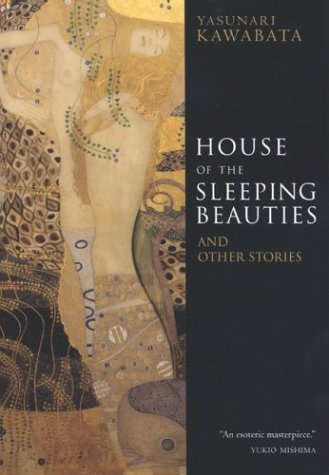
2. House of the Sleeping Beauties:
$7.86
3. The Sound of the Mountain
 
$6.57
4. Snow Country
$7.50
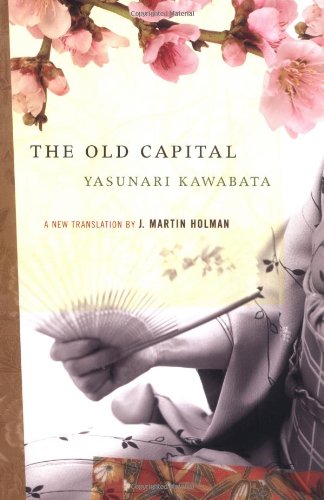
5. The Old Capital
$7.00
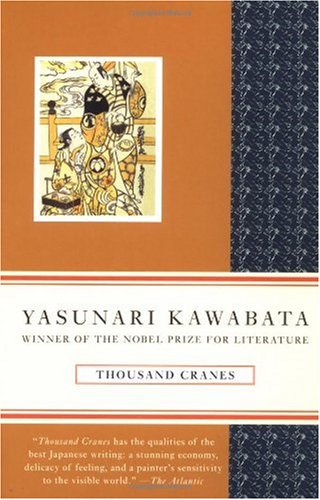
6. Thousand Cranes
$8.36
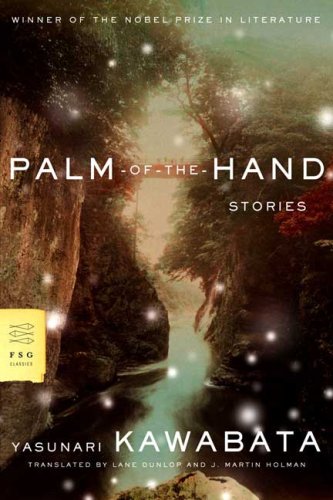
7. Palm-of-the-Hand Stories
$7.00
8. The Master of Go
 
9. Thousand Cranes
$3.00
10. First Snow on Fuji
$2.17
11. The Dancing Girl of Izu and Other
$17.95
12. The Scarlet Gang of Asakusa
 
$5.95
13. Writing as tea ceremony: Kawabata's
$9.18
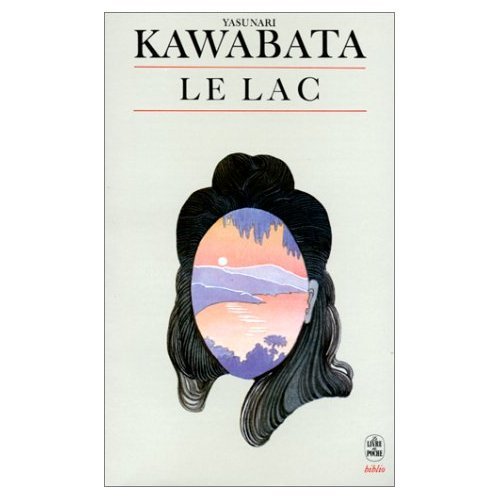
14. The Lake
 
$5.95
15. Kawabata y las manos del corazón.(Primera
 
16. NOBEL PRIZE LIBRARY: YASUNARI
 
17. Nobel Prize Library.Yasunari Kawabata;
 
$9.95
18. Biography - Kawabata, Yasunari
 
19. Nobel Prize Library Yasunari Kawabata
 
20. Nobel Prize Library: Yasunari

1. Beauty and Sadness
by Yasunari Kawabata
 Paperback: 224 Pages (1996-01-30)
list price: US$13.00 -- used & new: US$6.98
(price subject to change: see help)
Asin: 0679761055
Average Customer Review: 4.5 out of 5 stars
Canada | United Kingdom | Germany | France | Japan

Customer Reviews (13)

4-0 out of 5 stars A bleak study of intertwined sexual relationships
"Beauty and Sadness" by Nobel Laureate Yasunari Kawabata and translated by Howard Hibbett is a slightly disappointing book after having just read "Snow Country" by the same writer, but a different translator.

I mention the translator because a non-Japanese speaker is totally dependent on the skill of the translator to capture the atmosphere, the nuances and the unspoken cultural aspects of the original Japanese.A literary work is as much about the imagery and musicality of the words and textural cadences as it is about immediate dictionary meanings.

It goes without saying that a straightforward translation of words and grammar would most likely give a very inadequate impression of the writer's intentions.This is true of any translation of fiction, not only this book.

"Beauty and Sadness" is a study of intertwined sexual relationships, all of them pathological to a greater or lesser degree.The central relationship is the 53 year-old Oki's renewed relationship (after 20 years) with Otoko whom he seduced and impregnated as a child of 16 and who still "loves" him.There is Otoko's lesbian relationship with Keiko - a very strange and disturbed young girl out for revenge against Oki - whom Oki also slept with.There is Keiko's relationship with Oki's son which leads to the climax of the book.Finally there is Oki's relationship with his wife who knows about all these goings on.The reader never knows who is using who and to what end.Got all that?

The relationships are only superficially about "love" - "hatred" would be a more apt word.Oki himself is a particularly distasteful character.He treats both Otoko and Keiko as objects and one wonders if he got any pleasure from either relationship.The rather explicit description of his "lovemaking" with Keiko is far from erotic.It creates feelings of repugnance which typify the interplay of love/hatred in the book.

This is a very bleak book, like "Snow Country" written 20 years earlier.It is relevant that Kawabata committed suicide.

5-0 out of 5 stars Art and suffering
Art needs fuel.Something does not come from nothing, and novelists and painters often draw from the wellspring of their own misery to create magnificence.Kawabata's final book, "Beauty and Sadness" explores these themes, of the interlinking of creativity and pain, and how artists use their own lives to make something grander.

Oki and Otoko are such artists, creating beauty from sadness.Their illicit and doomed love affair deeply wounded their souls, with the despair of their lost child lasting far longer than the brief time they spent together.Oki chronicles their story in his novel "A Sixteen Year Old Girl," and Otoko paints, continually seeking to exorcise her feelings and expressing them on canvas.

Alternately, Keiko and Taichiro create sadness from beauty. Oki's child, Taichiro, is drawn into a web of revenge woven by Otoko's lesbian lover and protege Keiko.Whereas Oki and Otoko have made an uneasy peace, Keiko refuses to let it rest, and wants to punish Oki by taking his child in the same way he took Otoko's.

Kawabata's skill at language portraiture is what makes this such a fine book, drawing the reader into the downward spiral of the character's lives.Anyone familiar with his writing knows where the path is going, but the skill of his craft tenders the sadness with beauty.It is a soulful journey, leaving one with a bitter taste and the reality of lost love.

5-0 out of 5 stars Beauty and Sadness
I love this book, I re-read this book in three different languages, and i'm reading it again the fourth times.

5-0 out of 5 stars Revenge
This was the seventh Yasunari Kawabata book that I have read and it is also my current favorite.

Kawabata weaves a wonderful story and its title describes it perfectly. The story begins with the writer Oki Toshio. In his younger days Oki had a love affair with a young girl named Otoko. Their affair produced a child, but unfortunately the child was born premature and died shortly after birth. The death of the child caused Otoko to suffer a nervous breakdown and she was put into a mental asylum. Her mother told Oki that Otoko would soon be better but it would probably be better if Oki did not see her again. Warp 20 or so years into the future. Oki decides to see Otoko again at New Years, so he hops a train to go see his ex lover. Otoko worried about Oki's arrival hires a couple of geisha to entertain them. Also her protoge Keiko is there. I believe Keiko to be the main character in the story.

Keiko is not only Otoko's student but her lover as well. Keiko is angered about how Oki treated Otoko so many years ago, and wants to seek revenge against her teacher's ex lover. Otoko still harbors a strong love for Oki but is not assured enough to keep Keiko from plotting against Oki. Keiko is extraordinarilly charming and beautiful, and although a lesbian she manipulates males very easily. She seduces Oki and his son Taichiro, the reader knows something bad is going to happen to Oki or one of his loved ones early on, and he or she just wonders how it will finally happen.

Another beautiful book by Kawabata. Few writers come close to his descriptions of landscapes or his very evocative writing of the human form. Very good book please read it.

3-0 out of 5 stars others were better
This has been the 3rd book from Kawabata that I've read but this one didn't live up to the previous 2 I've read(Snow Country, Sound of the Mountain).Maybe it was because the translator was not Seidensticker that the words seemed kind of dull, I dunno.The rest of the books I couldnt put down.I'm on my 4th (Thousand Cranes, Seidensticker translator) and it already brings back the appeal of my first 2 books. ... Read more


2. House of the Sleeping Beauties: And Other Stories
by Yasunari Kawabata
Paperback: 160 Pages (2004-02-06)
list price: US$16.00 -- used & new: US$9.18
(price subject to change: see help)
Asin: 4770029756
Average Customer Review: 4.5 out of 5 stars
Canada | United Kingdom | Germany | France | Japan
Editorial Review

Book Description
From Japan's first Nobel laureate for literature, three superb stories exploring the interplay between erotic fantasy and reality in a loner's mind.

"He was not to do anything in bad taste, the woman of the house warned old Eguchi. He was not to put his finger into the mouth of the sleeping girl, or try anything else of that sort." With his promise to abide by the rules, Eguchi begins his life as a member of a secret club for elderly gentlemen
who have lost their sexual powers. At an inn several hours from Tokyo they indulge in their last pleasure: lying with beautiful young girls who are sleeping nude when the men arrive. As "House of the Sleeping Beauties" unfolds in Kawabata's subtle prose, the horrified reader comes to see that the
sexual excitement is a result not of rejuvenescence, but of a flirtation with death.

The three stories presented in this volume all center upon a lonely protagonist and his peculiar eroticism. In each, the author explores the interplay of fantasy and reality at work on a mind in solitude-in "House of the Sleeping Beauties," the elderly Eguchi and his clandestine trips to his club;
in "One Arm," the bizarre dialogue of a man with the arm of a young girl; in "Of Birds and Beasts," a middle-aged man's memories of an affair with a dancer mingled with glimpses of his abnormal attachment to his pets.

All of these stories appear in English for the first time outside of Japan. "Of Birds and Beasts," written in the early 1930's, is one of Kawabata's earlier works, while "One Arm" and "House of the Sleeping Beauties," the latter hailed by novelist Yukio Mishima as the best of Kawabata's works, are
among his later works. ... Read more

Customer Reviews (13)

5-0 out of 5 stars Love and Death
These strange and haunting stories of strange love are written with a disturbingly quiet and even hand. It's a genius read. Kawabata is the master of beautiful disaffection. His characters do not feel pain when you think they should, and one recoils, but is drawn back in to the stories. At the core of Kawabata's work is a pessimism about the value of life itself-even while the protagonists are involved in secret obsessions. Fascinating, beautifully written, haunting.

4-0 out of 5 stars Pushing the envelope
This is an excellent story, although it is a little different from much of Kawabata's work.I gave this book four stars only because of the bizarre nature of the "other" stories.The main story is outstanding, written with wonderful detail and descriptive prose.It is an intriguing story that will hold your attention until the end.It is well worth purchasing the book for that story alone.Kawabata has a way of examining human feelings and exposing those elements that are common to all people.His characters often have me visualizing concrete individuals that I have known, including myself.I would recommend this book to anyone who enjoys a touch of eroticism that stimulates both the higher and lower recesses of human nature.I would caution readers that the introduction by Yukio Mishima contains spoiler material, and should perhaps be read after reading the first story.

5-0 out of 5 stars The terror of lust by the approach of death
Kawabata's magisterial short novel is a beautiful but sad reverie about life and death, young and old, sex and coming impotence.

Sleeping with sleeping girls ('a deathlike sleep') was 'a fleeting consolation, the pursuit of a vanished happiness in being alive.'
'The sleeping beauties are for an old man the recovery of life, but also a sadness ... that called up a longing for death. The aged have death and the young have love, and death comes once, and love comes over and over again.'

Kawabata's writing is subtle (the old man is tempted to breach the house rules) and intimistic (the descriptions of the ethereal bodies of the sleeping virgins).
But, as the great Japanese writer Yukio Mishima expresses it perfectly in his introduction, this book is a pregnant reflection on 'the terror of lust by the approach of death.'
A masterpiece.

5-0 out of 5 stars 3 Stories, 1 Theme - The loneliness and desires of old age
"House of the Sleeping Beauties and Other Stories" contains three variations on the same theme, encompassing the soul-sick loneliness of old age, and the longing for ideal companionship, one with no judgments or confrontation, but merely peace and the contentment that comes from loving someone.According to Kawabata, this longing increases with age, and one romances ghosts from the past, using the present to conjure up their memories from the depths of a forgetting mind.

The leading story, "House of the Sleeping Beauties," is among the best, most powerful Kawabata stories I have ever read.It shows an author in full command of his style, able to arouse a startling depth of emotion using a limited palette of words and scenery. The story is simple in conception, disturbingly erotic in nature, and stunning in execution.An old woman runs a brothel for impotent old men, housing unnaturally sleeping virgins who have no performance expectations of the old man, nor incriminations for their inabilities.The old men may lie with them, hold them and drink in their youth and beauty free from the hard reality of their own impotence.The sleeping girls will never know who was with them, or what was done.The only forbidden act is sex.

The story is pure eros without sex, the desire of the impotent.The leading figure in the tale, Eguchi is "still able to function as a man," unbeknownst to the brothel keeper. He knows what it is to desire more than the girls are willing to give, and the tension between his desires, the rules of the house, and the depressing reality of Eguchi's future impotence combine and take form under Kawabata's guiding hand.With each girl he sleeps next to, Eguchi wanders through his memories, remembering his youth and the girls he shared it with. Such a story can only come to one ending, and reality comes crashing into his fantasy.A stark and gripping tale.

The remaining stories, "One Arm" and "Of Birds and Beasts," suffer in the aftermath of the powerful "House of the Sleeping Beauties.""One Arm" in particular is a disappointment, perhaps due to its too-surreal situation, and an old man who borrows a young woman's arm (given quite willingly) then proceeds to romance and fall in love with the limb.As with "House of the Sleeping Beauties," this is eros without sex, desire without lust, but it lacks the honesty and fantasy/reality blend that makes the former story so strong.

"Of Birds and Beasts" is good enough, and a better story than "One Arm."Completely lacking in eroticism, this is another tale of an old man who seeks companionship, this time in all sorts of dogs and birds.His house is full with his menagerie, and he and his lone maid tend to the creatures with something less than love.Each new animal holds his attention for a few weeks at most, before it is filed away and forgotten in the background.Like "House of the Sleeping Beauties," each new animal summons up memories, this time of the birds that the old man kept accidentally killing, then buying a new set.A sad and lonely story to be sure, but with the same emotional depth one expects from Kawabata.

"House of the Sleeping Beauties and Other Stories"is worth buying for the lead story alone, which is widely considered amongst Kawabata's finest.Author Yukio Mishima ("The Sailor Who Fell from Grace with the Sea") considered it his personal favorite.Edward Seidensticker's translation is subtle and enjoyable, far superior to his somewhat heavy handed translation of "Snow Country."

3-0 out of 5 stars Disturbing, but potentially dated
"House of Sleeping Beauties," and the other short stories in this collection, all deal with the themes of idolization of virginity, degradation, fetishization of the body, and so forth.While this may be food for thought for early and even late 20th century readers, the 21st century reader might not get as much out of it.As with many modern Japanese works, Yasunari Kawabata transcends any cultural barriers by focusing on things that are alien in any settings, and themes that are universal to anyone who has ever struggled with any sort of "hang up" about [anatomy]. ... Read more


3. The Sound of the Mountain
by Yasunari Kawabata
Paperback: 288 Pages (1996-05-28)
list price: US$13.95 -- used & new: US$7.86
(price subject to change: see help)
Asin: 0679762647
Average Customer Review: 4.5 out of 5 stars
Canada | United Kingdom | Germany | France | Japan

Customer Reviews (19)

5-0 out of 5 stars Heaven knows I'm miserable now
It's funny how contemplative we get when we realize that the Fates are deciding whether or not to cut the thread to our life. We look back and question our existence: was the journey a good one, or did we waste it? Why did I marry him or her? Did my children turn out right? What is my legacy? What about my friends? What kind of lives did they leave behind? Why did they die before me? Why do I suddenly find my in-law a whole let sexier than I did a week ago? Ogata Shingo asks himself these questions when we meet him in The Sound of the Mountain. I've always had the fear that Shingo has; that the life I will lead will not have been fruitful. Not that I find my in-laws particularly sexy. His failures as a husband and father - he believes - are expressed in the marriages of his children (his son is having an affair at the start of the story, which forces his daughter-in-law to get an abortion, and his daughter married and later divorces a suicidal drug dealer). The sound of the mountain in the title was a sound he associates with death, and when he mentions it to his family the next day, his daughter-in-law reminds him of the time his wife's sister (his former love) passed away. Right before he learned the news of her passing, he heard the sound of the mountain. If you've ever felt the need to question your reality, The Sound of the Mountain is a good way to go.

4-0 out of 5 stars The Sound of the Mountain
The Sound of the Mountain is about an older man named Shingo, a grouchy divorced daughter, a lazy, loser son that is cheating on his wife, and his son's wife Kikuko. The story tells of abortions, infidelity, abusive husbands, and war widows.Shingo suffers from flashes of lost memories and occasionally hears the mountain behind his garden rumbling, which seems to signify the closing of death. Shingo's memory is failing and he is showing signs of dementia or Alzheimer's disease.
Deciphering the different themes, I would think the mountain symbolizes the aging generation of Shingo. Reading his thoughts, the mountain seems to speak of ancient wisdom: the sin of incest-like relation, the responsibility and moral obligation towards one's own blood and marriage. With these, he thinks about repressing his gentle love for the child-woman, Kikuko and cleaning up the mess his family creates. The exact opposite is Shuichi, finding pleasure in an older woman, and remorselessly treating his marriage with cruelty. He cheats on his wife with an older woman and she becomes pregnant.
The haikus, or Japanese poems, enrich this admirable read far beyond most others, leading to the author being awarded the prestigious Literary award of Nobel Prize in 1968. Overall, this was a very interesting read. I would recommend this book to all.

5-0 out of 5 stars sarah sounds of the mountain
To me this book was very intersting. It is sad that they committed suicide. He died in real life the author of the book. To me that is very sad and a hard way to die. Throughout the story we are given glimpse of Japanese Life, i would recommend this book to everyone.

5-0 out of 5 stars This too, shall pass
"The Sound of the Mountain" ("Yama no Oto") should have been a script for an Yasujiro Ozu film.All of the elements are here, with the kindly aged father Shingo who cannot gain his children's respect or love, ready to be portrayed by Chishu Ryu, and the lovely and loving daughter-in-law Kikuko, far more understanding than his real children, designed exactly for Setsuko Hara.The family who has left its rural home to uproot to Tokyo, following the jobs, losing their heart in the process. It really is too perfect.

Instead, the story is guided by the gentle hand of Yasunari Kawabata, who gives us the Japanese family, still disheveled by the end of the war and not quite certain what their roles are and dealing with their loss of identity.Confucian ideals, such as respect for the elder parents, have been swept aside in the post-Occupation reality.Shingo's son Shuichi has come back from the war an indifferent, cold-hearted man, flaunting his affairs with neither spite nor pleasure.Shingo's wife, Yasuko, is an ugly reminder of her sister, whom Shingo loved in is youth yet died.Their daughter Fusako is a burden, returning home with ugly children, her husband a waste and their marriage broken.The only pleasure in his life is the daughter-in-law Kikuko, whom his son wounds daily with his lack of caring.

In the Kawabata style, there is neither complaint nor surface rage at life's inconstant fortunes, but rather an acceptance and perseverance.Life is about moving forward, even at the advanced age of Shingo and Yasuko, who take their burdens as they come.Shingo is the main character, and so this is a book of old age, of looking back at life's mistakes and longing for fading pleasures."The Sound of the Mountain" is a brilliant, cherishable book, one that captivated and moved me.

Interestingly enough, "The Sound of the Mountain" was eventually made into a movie, and while Ozu didn't get to direct, Setsuko Hara did get the part of Kikuko.Someone else must have had the same idea.

4-0 out of 5 stars Good Book But Not So Good Idea !!!
I¡¦m interested in ¡§The Sound Of Mountain¡¨ since I saw ¡§Awarded the Nobel Prize for Literature in 1968¡¨ on the cover of the book.
The main character of the book is Ogata Shingo. He can heard the sound of mountain which is a hint of unknown occurrence, and a premonition of death. It made me feel mystery, thus, had the curiosity to read the whole book. However, ¡§the sound of mountain¡¨ is not the main theme of the book. Instead, I felt the relationship of Shingo¡¦s family member and the life of the old man, i.e. Shingo, is the theme of the story.
Actually, I¡¦m quite disappointed with the book. This is because I want to know how ¡§the sound of mountain¡¨ to tell Shingo the unfortunate future. However, ¡§the sound of mountain¡¨ seldom appear in the story. As an alternative, I can see the book use many words to describe the family life of Shingo. So I felt quite boring at the beginning of the book.
As I mentioned before, the relationship of the characters are the theme of the story, this made people to think some questions. What¡¦s the correlation between father and daughter? What¡¦s the relationship between husband and wife? What¡¦s the affiliation between father and daughter-in-law? Do you have any idea? In the book, I found that Shingo don¡¦t like her second wife so much as he miss his first wife, who was his second wife¡¦s sister. Also, he don¡¦t like his own children since they always bring problems to him. However, he loves his daughter-in-law very much, he even want to fall in love with her. Although this is an interesting idea of a story, I don¡¦t like so much since I¡¦m a little bit traditional. If such relationship really happened, I think it¡¦s really horrible.
Besides, I think the story is not coherent enough. On the other hand, I think the book is good of describing the mystery sound of mountain.
To conclude, from my opinion, I think except of the idea of Shingo is not good, others are quite good. We can learn many words from the book.

So I¡¦d like to recommend it to you. ... Read more


4. Snow Country
by Yasunari Kawabata
 Paperback: 192 Pages (1996-01-30)
list price: US$12.95 -- used & new: US$6.57
(price subject to change: see help)
Asin: 0679761047
Average Customer Review: 4.0 out of 5 stars
Canada | United Kingdom | Germany | France | Japan
Editorial Review

Book Description
To this haunting novel of wasted love, Kawabata brings the brushstroke suggestiveness and astonishing grasp of motive that earned him the Nobel Prize for Literature. As he chronicles the affair between a wealthy dilettante and the mountain geisha who gives herself to him without illusions or regrets, one of Japan's greatest writers creates a work that is dense in implication and exalting in its sadness. ... Read more

Customer Reviews (45)

5-0 out of 5 stars A Beautiful Story Set In Snow Country
Kawabata's novels retain timeless appeal for their lyricism, his aesthetic discourse over beauty, and his characters' inner struggles with human longing. In his classic Yukiguni (Snow Country), he paints a story of a discontent city-dweller who finds solace in a maiden's simple beauty and sporadic love for her temporary guest, which are only magnified by the harshness of a cold countryside tinged with icicles and a closed society's wrath.In what some may call the Japanese fashion, Kawabata invites the reader to imagine great depths of human emotion without using so many words.

5-0 out of 5 stars Book Order
Great service. Condition of book was stellar and it was delivered in a very timely manner.

5-0 out of 5 stars the master
As a teacher of comparative and literature (with a focus on poetry, but the novel as well), I feel confident in saying that Kawabata is a writer of such brilliant painterly effects (by which I meanI visual and emotional evocations), that I rank him at the very top of twentieth century writers in the world.

5-0 out of 5 stars Kawabata at its best...then again his stories are always great!
Snow Country was the first book i read from Kawabata. To me, his writing style resembles the making of a painting. Kawabata uses seemingly simple words to visualize the story; the result is a rich, velvetly, image that floats in the mind of the reader. You can almost touch it. Hisdescriptions on the environment and the characters are extremely detailed. However, feelings are unclear, and thats that keeps the reader guessing and assuming. Interesting enough is to ralize that he describes the Geisha in the same manner as the snow covered landscape.

4-0 out of 5 stars Distilled Beauty...
I'll keep this short and sweet like the novel. It's been brought up constantly that the prose is akin to a haiku in its simplicity yet depth of meaning and that's a perfect way to look at what is known as the masterpiece of this Nobel Prize winner's wonderful career. At the heart of the story is an ill-fated love affair between two people who know that it can never work out. Somehow, the backdrop, what gives the book its name, becomes another character in this tale that often reminded me of Ha Jin's "Waiting" and to a certain extent, "Kokoro." This is the type of book that has to be digested slowly as you are apt to miss much of what is going on if you zip through it the way I did the first time I read it. Once you have a second go you can see the intricacies of the love affair and the way that Kawabata deftly presents each of his characters. Don't read this on the subway - relish every moment sitting back during a long cold night. ... Read more


5. The Old Capital
by Yasunari Kawabata
Paperback: 160 Pages (2006-01-10)
list price: US$15.00 -- used & new: US$7.50
(price subject to change: see help)
Asin: 1593760329
Average Customer Review: 4.5 out of 5 stars
Canada | United Kingdom | Germany | France | Japan
Editorial Review

Book Description

The Old Capital is one of the three novels cited specifically by the Nobel Committee when they awarded Kawabata the Nobel Prize for Literature in 1968. With the ethereal tone and aesthetic styling characteristic of Kawabata's prose, The Old Capital tells the story of Chieko, the adopted daughter of a Kyoto kimono designer, Takichiro, and his wife, Shige.

Set in the traditional city of Kyoto, Japan, this deeply poetic story revolves around Chieko who becomes bewildered and troubled as she discovers the true facets of her past. With the harmony and time-honored customs of a Japanese backdrop, the story becomes poignant as Chieko’s longing and confusion develops.
... Read more

Customer Reviews (7)

5-0 out of 5 stars An Exquisite Novel
The Old Capital, though mentioned along with Snow Country and A Thousand Cranes in the announcement of Kawabata's Nobel Prize in literature, is not as well-known as either of the other two.Yet it is my favorite of his novels.

Kawabata explores the distances between people, the differences between them, the value of tradition, and the difficulties of knowing in his narration of Chieko's discovery of her twin sister, from whom she was separated shortly after birth by a kidnapping - or was it by an abandonment?

I neither speak nor read Japanese, but J. Martin Holman's translation must be a good one.Virtually every page held me entranced with its beauty.

5-0 out of 5 stars The Old Capital
If you read for plot, this book isn't for you. The fairly dramatic plot (twins separated at birth by a kidnapping)seems almost an aside to the poetic, carefully crafted descriptions of Kyoto life- lanterns, fire flies, cherry blossoms, kimonos. This book will bring you into a world of the perfect beauty and harmony epitomized in Japanese culture and design. The sadness, confusion and longing experienced by the charaters is made particularly poignant by this backdrop of aesthetic perfection and order. Your focus will be on the beauty of the book's descriptions, but it is somehow these descriptions which leave you saturated with the emotions experienced by the characters.

4-0 out of 5 stars A journey to Kyoto
Anyone who has made the journey to the old capital Kyoto or spent anytime in the land of the rising sun will truly appreciate the poetic nature of Yasunari Kawabata's work.Yasunari's avid descriptions are enough to make you feel as though you are there again or visiting for the first time if you have not already.Distinctively Japanese in the themes of nature, tradition and gender roles, this book is sure to touch the soul of any reader.Recommened for the disconcerning reader in search of a little subtle complexity rapped in hidden charm, Japanese style.

5-0 out of 5 stars wonderful... just wonderful...
This is my favorite Kawabata book and I've read quite a few. I think it is much better than more famous "Snow Country". It is also much more complex than other Kawabata books, which are somewhat similar in their repetitive descriptions of the relationship between weak man and unhappy woman. This book is mysterious, eerie, awe-inspiring, beautiful, touchingly tender and somewhat weird. At the center of the story are two female twins, their incomprehensible inner universes and strange sensibilities. "Old Capital" is Kyoto - ancient center of Japan and cradle of the beautiful Heian culture. The city is portrayed as a place where past is mixed with present and aestetic sensibilities is combined with everyday routine of protagonists, who are but simple people with their life centered around family, work and small bussinesses.

Reading this book in both Russian and English translations made me realize that a lot of meanings in the book are lost when it is translated in English, because of the complex system of dialogues where the manner of speech is changed accordingly to the status of people conversing and their relationship to each other. Russian, being a much more hierarhical and polite language than English, produces better translation, but than again - as I dont know Japanese, I cant really say how much inferior the translation is compared to the original work.

3-0 out of 5 stars a different perspective on life
I have enjoyed reading Japanese novels lately and I am certainly aware that our cultures are different."The Old Capital" makes that even clearer.Consider the plot.A teenage girl discovers that her parents stole her from another family when she was an infant.She discovers this, more or less, as the result of meeting her twin sister.They become acquainted with one another and even confuse a young man who couldn't keep track of who was who.There is certainly a lot that can be done with that concept.Yet in Yasunari Kawabata's highly acclaimed novel, the reader is given the sense that there is no shock when the main character discovers these thing.Indeed, there seems to be more emotion expended over the selection for a Kimono pattern.I found myself enjoying the novel yet trying to comprehend this radically different perspective on life.I haven't figured out the Japanese mind as yet but "The Old Capital" is another step along what has proven to be an interesting journey to find out. ... Read more


6. Thousand Cranes
by Yasunari Kawabata
Paperback: 147 Pages (1996-11-26)
list price: US$12.95 -- used & new: US$7.00
(price subject to change: see help)
Asin: 0679762655
Average Customer Review: 4.5 out of 5 stars
Canada | United Kingdom | Germany | France | Japan
Editorial Review

Book Description
With a restraint that barely conceals the ferocity of his characters' passions, one of Japan's great postwar novelists tells the luminous story of Kikuji and the tea party he attends with Mrs. Ota, the rival of his dead father's mistress. A tale of desire, regret, and sensual nostalgia, every gesture has a meaning, and even the most fleeting touch or casual utterance has the power to illuminate entire lives--sometimes in the same moment that it destroys them. Translated from the Japanese by Edward G. Seidensticker.


"A novel of exquisite artistry...rich suggestibility...and a story that is human, vivid and moving."--New York Herald Tribune


Kawabata is a poet of the gentlest shades, of the evanescent, the imperceptible. This is a tragedy in soft focus, but its passions are fierce."--Commonweal ... Read more

Customer Reviews (19)

5-0 out of 5 stars Essence of sublime
Thousand Cranes is a beautifully and simply written tale of human tragedy.Kawabata takes us, with subtle nuance and few words, into the strongly passionate and complex world of human relations.

With the world of Cha dou (the way of tea) as the back drop, what follows is an intricate web of deceit and revival of old repressed emotions, which are intricately woven with a Zen like quality between the characters as the story progresses.

A young man, Kikuji, gets an invitation to a tea ceremony by Chikako, the long ago spurned mistress of his dead father. He doesn't know that it is a manipulation on her part to set him up for an arranged marriage meeting with a student of hers. Also showing up at this ceremony is the woman, Mrs.Ota, who took Chikako's place as Kikuji's father's long time mistress. Chikako has been jealous of Mrs. Ota and conspires against her and her daughter while she insinuates herself into Kikuji's life.

Mrs. Ota, still in deep grief over the loss of Kikuji's father, connects with Kikuji at the ceremony. The fine line of reality gets blurred when both of them start feeling a deep nostalgia about the father, and they sleep together, filling Kikuji with an awe of the sublimeness of woman that he has never felt before and offering Mrs. Ota a temporary reprieve from her pain.

Ota's daughter, Fumiko, takes on the guilt of her mother's past with Kikuji's father and the new development of what has happened between her mother and Kikuji, and begs Kikuji to stay away from her mother and to forgiver her.

Chikako is a bitter woman who stayed in Kikuji's household even after the affair with the father was over, and is: conniving, cruel, and cares not about who she hurts. She has become a Tea Ceremony master and it is in this context that she does her manipulating and ruining of lives.

Centered in all of this is Kikuji, as was his father before him. While he doesn't really want to deal with the recriminations of his father's past, he is forced to do so. He feels loathe to marry even though he finds the girl introduced to him very fine. With Mrs. Ota he feels both something warm and freeing, and yet, he also feels the need to hurt her at the same time, wondering if she is seeing his father in him. Chikako keeps forcing herself into his space and he doesn't do much to deter her from doing so even though he despises her. And she takes advantage of that by trying to manipulate his life against him.

Outside of that, he develops a very sweet relationship with Fumiko, who is really suffering about her mother's past and recent actions, and he tries in some way to ease her pain. The line gets blurred here as well as he has a hard time distinguishing between her and her mother, seeing her mother in her until the end when he sees her as separate.

All of this culminates in a final tragedy that seems a waste.

Although an actual traditional Tea Ceremony is not ever explicitly done in this book, the tradition and refinement of it is passed on through the accoutrements, which are hundreds of years old, and which have passed from Mrs. Ota to Kikuji's father and from Kikuji's father to him. The use of these tea bowls and utensils through out the story keeps a thread of connectivity and deep emotion going between the characters and suggests a continuum of tradition, and, breakage from it as some of the bowls get destroyed.

Kawabata's writing is a pure expression of the Japanese mind and culture, which I feel westerners will not understand immediately unless they have had some exposure to the eastern way of thinking. I myself spent years living in Japan, studying the language, trying to grasp the Japanese mind, which is illusive at best, even now. However, if you are willing to read this book outside the confines of the western mind, with another part of you, then this book is an exquisite work of poetry and art that is well worth the experience.

5-0 out of 5 stars Tea without Sympathy
Kawabata, in this book, produces a characteristic sense that, yes, indeed, this is true: that the author not so much invents or writes as records facts.
Repressed passions and pain, conflicted desires, apathy, pessimism and hopelessness are all part of Kawabata's landscape, as well, and here, he has found a setting for these emotions in tea. Know nothing about tea? It's allright, you know something about life, and that's what we're talking about.

5-0 out of 5 stars Evanescent Eroticism and Death, the Japanese Forte
The crane is a symbol of long life in Japan, ironically enough for this story. The title of the book comes from the cranes decorating a kimono worn by a significant guest at the tea party about which this story revolves. My favorite of Kawabata's novels, there is in Thousand Cranes a deep primordial eroticism. That is normal in Kawabata's work, but this story evokes perhaps the best example, even better than Snow Country. One of the satisfying pleasures of reading Kawabata is that he puts you in touch with Japan's sexual tension in the way a good Bordeaux might have connected you with enjoying red wines. You realize immediately you're onto something complex, and it is going to take a while to understand its depth.

If you can imagine love and desire in the quality of an intense dream, that is how this story begins to unfold. But like a cherry blossom, that kind of love is fleeting. Reality barges in to destroy its budding beauty. Withering jealous resentment worms its way into love it cannot abide, insinuating itself to take its revenge for perceived offenses, perhaps inherited.Alexander Pope wrote a poem about love between Peter Abelard and his student Eloisa that on one level reminds me of the depth and quality of feeling Kawabata manages to craft in Thousand Cranes. It is the kind of love some cannot live with. Here is an excerpt from one stanza in Eloisa's voice that I think captures that understated texture of desperation in Kikuji's and Fumiko's relationship in this novel:

Far other dreams my erring soul employ,
Far other raptures, of unholy joy:
When at the close of each sad, sorrowing day,
Fancy restores what vengeance snatch'd away,
Then conscience sleeps, and leaving nature free,
All my loose soul unbounded springs to thee.
Oh curs'd, dear horrors of all-conscious night!
How glowing guilt exalts the keen delight!
Provoking Daemons all restraint remove,
And stir within me every source of love.
I hear thee, view thee, gaze o'er all thy charms,
And round thy phantom glue my clasping arms.
I wake--no more I hear, no more I view,
The phantom flies me, as unkind as you.
I call aloud; it hears not what I say;
I stretch my empty arms; it glides away.
To dream once more I close my willing eyes;
Ye soft illusions, dear deceits, arise!

The end of Thousand Cranes is haunting. I don't believe there is anything in Japanese culture more profoundly different from the Western view of things than how one lives with love or fails to do so, or for that matter how a good author writes about it.Restraint is the word that comes to mind. That, it seems, is what this story is about.

5-0 out of 5 stars Stain of a dead woman's lipstick taints the rim of a teacup
The metaphor used in "Thousand Cranes" is tea, but not simple dried leaves in boiled water.Along with tea, in the tradition of the Japanese tea ceremony, is the complete picture created by the individual pieces of the art, bowels and whisks and jugs for carrying water.The various utensils, each with their own pedigree, are only able to find their true use in the hands of a Master of tea.

In this story, the metaphor is skillfully brought to play in Kikuji, who has inherited his father's women and guilty past in the same way that he has inherited his tea cottage and collection or rare cups and utensils. Chikako, a discarded mistress of Kikuji's father, is the poisonous Master of tea, manipulating others with the same subtle skill she maneuvers the ceremony. In equal measure, Fumiko, daughter of Kikuji's father's favorite mistress, also struggles under the burden of inherited guilt, even while seeking to escape, giving her mother's tea items to Kikuji as gifts yet not able to free her mind with the same ease.

True to Kawabata's style, the unsaid rings much more loudly than the dialog, and surface tone of calm belies a raging whirlpool sucking the characters deeper and deeper.I found "Thousand Cranes" a captivating read, and was unable to put it down until I had finished the story.A small book, it does not lack for power.

2-0 out of 5 stars Too sentimental
The sentimental and sexual education of a young man, who gets entangled in a spider web concocted by one of his father's mistresses.
The story is shrouded in an emotionally restrained and melancholic (remembrances of the passed away) atmosphere, which is always brutally broken by the interventions of the devilish intriguer.

The novel is full of symbols, but should more appeal to the Japanese than to foreign readers. The tea ceremony is an important part of it, e.g. the author relates the deep impressions made by tea sets on the participants (because they have hundreds of years of age and their ancestors drank already out of them).

Some reactions of the main characters seemed to me exaggerated and they cried nearly on every occasion.

Only for the aficionados of the Japanese novel. ... Read more


7. Palm-of-the-Hand Stories
by Yasunari Kawabata
Paperback: 280 Pages (2006-11-14)
list price: US$15.00 -- used & new: US$8.36
(price subject to change: see help)
Asin: 0374530491
Average Customer Review: 5.0 out of 5 stars
Canada | United Kingdom | Germany | France | Japan
Editorial Review

Book Description

Recipient of the Nobel Prize in Literature in 1968, the novelist Yasunari Kawabata felt the essence of his art was to be found not in his longer works but in a series of short stories—which he called “Palm-of-the-Hand Stories”—written over the span of his career. In them we find loneliness, love, and the passage of time, demonstrating the range and complexity of a true master of short fiction.
... Read more

Customer Reviews (13)

4-0 out of 5 stars Nobel Toilet Reading
Yes, I'm serious about the title of this review.Nobel Prize winner Kawabata's "Palm-of-the-Hand Stories", a collection of 70 mostly 1-4 page stories makes for excellent toilet reading, reading of the highest order.Don't lie to yourselves, we all do it - even the ladies.So instead of reading some junky magazine or playing a hand-held video game while on the throne, read this book; its stories are of the perfect duration.The stories range from slight observations to deep expositions on human nature.Coincidentally, one of the stronger stories in the book is titled 'Lavatory Buddhahood'.Go figure.So whether you take my advice as to where this book is best read or not, it's worth reading.

4-0 out of 5 stars Cover is Curling Away
I hate the actual physical cover of this book,
the front and back cover are both very much curling outward,
so its hard to insert the book in a bookshelf.
This has nothing to do with the content of the book,
but it is very annoying nevertheless.

5-0 out of 5 stars Astonishing
These are among the most amazing short stories ever written. Some could be stereotypically described as poetic; others are more straightforward and prosaic. Some focus on brief moments; others traverse entire lives. Other reviewers have added a note of caution, but my suggestion is instead to jump right in. If you don't like one story, try a few more. The mystery and grace of these stories, the fullness of the emptiness surrounding their intensity and concision, and their range in time, content, and form will continue to astonish throughout one's life.

5-0 out of 5 stars No Generic Syrup
If you like Sudden Fiction as a genre but not the usual silliness which accompanies it, this is the perfect union of very short fiction, craftsmanship and seriousness. Not always serious in tone but in effort. For the most part they are tender stories of rememberance, loss and the betterments of life. They are brief and dream-worthy, almost as if they were prose acting as poetry:

"Startled by a sharp pain, as if her hair were being pulled out, she woke up three or four times. But when she realized that a skein of her black hair was wound around the neck of her lover, she smiled to herself. In the morning, she would say, "My hair is this long now. When we sleep together, it truly grows longer."

Quietly she closed her eyes.

"I don't want to sleep. Why do we have to sleep? Even though we are lovers, to have to go to sleep, of all things!" On nights when it was all right for her to stay with him, she would say this, as if it were a mystery to her." from Sleeping Habit

Even when the stories are harsh they aren't beleagured with excess, but consequential life and its misgivings with some ironic humor interjected amongst the living ghosts. The same can be said for the norm: lush stories that are kindly felt but never over-sentimentalizations and mush. A great bed-side companion to make you dream better and wake a little more human.

5-0 out of 5 stars Beautiful collection of short stories!
House of the Sleeping Beauties is one of my favorite anthologies, and I couldn't wait to get my hands on another book from this brilliant author. The stories in Palm of the Hand are full of poetic and philosophical undertones and magical realism. My favorite one is "Bamboo-Leaf Boats," a poignant tale about a woman who grieves the loss of her fiance. The pain the protagonist goes through moved me. The other stories are beautiful as well. I suggest you read this wonderful book... ... Read more


8. The Master of Go
by Yasunari Kawabata
Paperback: 208 Pages (1996-05-28)
list price: US$13.95 -- used & new: US$7.00
(price subject to change: see help)
Asin: 0679761063
Average Customer Review: 4.5 out of 5 stars
Canada | United Kingdom | Germany | France | Japan

Customer Reviews (16)

5-0 out of 5 stars The beauty of Go
This novel by Nobelist Yasunari Kawabata is a mixture of real-world events and fiction: it is a description of a real-world Go match, fought in 1938 between Honinbo Shusai and Minoru Kitani. Kawabata was present at the game, reporting it to the newspaper that had organized the match. In this book, Kawabata has taken certain liberties, though: some names and events have been changed, there's a dose of fiction in the story.

Fiction or not, it is a beautiful story. Kawabata's style is subtle and even though not much happens in the book, it is an intriguing tale that hooks the reader as the events unfold both on the Go board and outside it. The Go match is in the focus, yet at the same time Kawabata offers so much more: the clash between tradition and modern rationalism and the struggle between two strong personalities.

I don't know how much one can enjoy the book without any knowledge of Go. Go was the reason I read this book, and I was satisfied - the match was very central to the story. The story is, however, very beautiful and Kawabata - or at least the translator Edward Seidensticker - knows his way with words, so it was a pleasure to read, Go or no Go.

1-0 out of 5 stars surprised by wrong account
I am surprised that the Go Master was depicted so positively when he in fact has cheated in a game versus the legendary true Go Master, Go Seigen.See article below!I was hoping the book would have a more balanced view instead of depicting the Go master as "Good" and the competitor as "Evil".I am glad that Kitani Minoru vindicated Go Seigen by beating Shusai (the Go Master) in the game, of which the book is the subject.

In 1933, Go Seigen won a special Nihon Ki-in tournament to have the opportunity to play a game against Honinbo Shusai Meijin. At that juncture, Honinbo Shusai embodied the highest Go authority and tradition in Japan. In addition to inheriting the hereditary title of Honinbo, he was also the holder of the prestigious position of Meijin. The game between Go Seigen and Shusai was thus highly anticipated. The newspapers thought it would be a good business idea to publicize the game as a confrontation between Japan and China. As a consequence, Go Seigen became the unfortunate victim of rising Japanese nationalism. Before and during the game, he was often harassed and threatened by nationalists, and the windows of his house were smashed in.

The game itself began on October 16, 1933 with Go Seigen taking black and lasted for a period of almost three months. During the opening of the game, Go Seigen caused quite a sensation by playing his first three moves at 3-3, 4-4 and Tengen points. Such a fuseki has never before been witnessed in a professional game, and the newspapers covering the game recorded top sales all throughout the match. This marked one of the seminal events that pushed the "Shin Fuseki" movement into the mainstream.

The match ended with Honinbo Shusai winning by two points. However, his victory was surrounded by controversies. At the time of the match, the tradition dictated that the player holding white had the right to adjourn the game at anytime, and there was no sealing of moves before adjournment. This meant that Shusai, being the nominally stronger player and thus holding white, could adjourn the match whenever it was his turn to move and continue deliberating at home before the match resumed. Shusai shamelessly abused this privilege by adjourning the game more than a dozen times, without exception, all at his turn to play. For instance, on the eighth day of the match, Shusai played first, and Go Seigen replied within two minutes, Shusai then thought for three and a half hours, only to adjourn the game. It was no secret that Shusai, during adjournments, discussed and studied the game with his students to come up with the best moves. Go Seigen was therefore put into an especially adverse position for having to take on the entire Honinbo establishment.

Shusai had been trailing all throughout the match when, on the 13th day of the game, he made a brilliant move that in a single stroke brought him back into the game and guaranteed his victory. However, it was widely rumored that it was not Shusai but one of his students - Maeda Nobuaki - who authored this ingenious move. Even Maeda himself hinted that this move was indeed his idea. Years later, when presented with the opportunities to debunk this rumor, he neither confirmed nor denied it. The game became known as the game of the century.

Five years later in 1938, Go Seigen's great friend Kitani Minoru also played a famous game against Honinbo Shusai (see The Master of Go by Yasunari Kawabata). Due in no small part to having witnessed the treatment Go Seigen received from Shusai in their previous match, Kitani Minoru demanded that the moves be sealed before each adjournment. Initially, Shusai's camp opposed this, but Kitani vehemently insisted, and Shusai eventually gave in. Kitani won that game by a comfortable margin of five points.


[edit] Rank Promotion Record

5-0 out of 5 stars Read it if you want to gain more understanding of go
I am not going to give out the ending and spoil this great novel. The book is well written and the translation is clear.

5-0 out of 5 stars nobel winner, enough said.
I'm a big go fan.So the idea of a story revolving around the best game to ever exist was pretty exciting.This book is astonishingly good if you're a go fan.It's probably less so if you're not, but he's done other important work...

5-0 out of 5 stars Reads like a collection of newspaper columns
I'm giving this book five stars because it's one of only three fiction books available with go as the theme, and I love the game of go.

But, this book reads like a collection of newspaper columns.You can literally rip any chapter out of the book and not lose any continuity.Each chapter is on a different subject, starts with a different chronology, and has a different point.For example, one chapter is about the long hair on the Go Master's eyebrow, and starts when he was still alive, and ends with some post-mortem photographs.Another example, one chapter talks about the Go Master's competitor's wife, and how years ago she was very pretty, but now she's a lot more weathered but she still has hints of prettiness, and how she's supportive of her husband throughout the tournament and raises their kids.Like I said, rip these out, and you really don't lose much.

It also movie-ifies the Go Master and his competitor.It makes the Go Master out to be the nice guy, and his competitor out to be the bad guy, with no good qualities at all.I'm sure that the actual go match wasn't as dramatic and lively as this book makes it sounds.

But, it does do an excellent job of portraying all of the excitement an everything that goes through the head of a very skilled person involved in a board game.I remember playing games of chess or go and it seemed really exciting to me, but afterwards when I tried to explain how exciting the game was, other people would just look at me with a blank stare.This book does a good job describing that feeling in an explainable way.

I'm a go player, so I understood a lot of the go references.If you haven't ever played go before, it might be pretty hard to understand, especially because go is different than any other game that I've ever played.But, here's an intro course.White 100 means the 100th move, and Black 101 will be the next move, the 101st move.This is the way to tell chronology in the book.Go is very interesting, in that the first 50 moves, or the beginning game, aren't very complex, and so they go fast.The next 100 moves, or the middle game, are extremely complex, and the final 50-100 moves, or the end game, are very simple.Usually the game is decided in the middle game, and the end game is just kind of a formality.

That dynamic is totally different than any other game, and so what that means to the non-go player is that none of the charts or graphs of the go moves will make any sense, because the book talks about the middle game, which is so vague and nebulous to an onlooker.At least in chess, an onlooker can say "who captured more pieces" and get a good idea for who is winning.There's no way for an onlooker to ask a simple question to go players to determine who is winning.

It's an excellent book to read for a cultural experience, since it's written by a Japanese author about a go game in 1938.I especially thought the chapter on the American visiting Japan was funny.

Also, the first part of the book makes it sound like the Go Master's final go game was responsible for the Go Master's death.I think that's just the author dramatizing it.In one of the later chapters I found out he died about a year later.Plus this Go Master dude was like 70 lbs, 85 years old, and just sat around in an old folk's home playing games all day.People like that die all the time.

All in all, worth reading, but I do hope that more people write books on the game of go, because I love the game of go. ... Read more


9. Thousand Cranes
by Yasunari Kawabata
 Mass Market Paperback: 144 Pages (1968)

Isbn: 0425028690
Canada | United Kingdom | Germany | France | Japan
Editorial Review

Product Description
Kikuji is a sensuaous bachelor trapped in the shadow of his father's past by the women his father loved. This is the story of Love, Guilt and death in Modern Japan ... Read more


10. First Snow on Fuji
by Yasunari Kawabata
Paperback: 248 Pages (2000-11-10)
list price: US$14.00 -- used & new: US$3.00
(price subject to change: see help)
Asin: 1582431051
Average Customer Review: 4.5 out of 5 stars
Canada | United Kingdom | Germany | France | Japan
Editorial Review

Amazon.com
Although he was the first Japanese writer to win the Nobel Prize,Yasunari Kawabata (1899-1972) remains much more obscure in the West than his high-profile protégé Yukio Mishima. Yet he's a writer of formidable talents. For one thing, Kawabata recognized early on the affinity between Japanese poetry--with its abrupt transition from image to image--and the jump-cut flavor of modernist prose. He also explored erotic life at a truly microcosmic level. Some may find a novel like The Mole--which revolves around a woman's habit of fiddling with her eponymous birthmark--a little too molecular in its approach. But sex, like God, is in the details, and throughout his career Kawabata has unearthed some surprising truths about our most urgent appetites.

First Snow on Fuji, a collection of stories originally published in 1958, is a fairly representative slice of the author's oeuvre. In "Her Husband Didn't" (a classic Kawabata title, by the way), a woman's earlobebecomes the discreet object of desire:

The earlobe was just as round and plump as an earlobe ought to be--it was small enough that Junji could squeeze it between the tips of his thumb and forefinger, no bigger than that--yet it filled him with a sense of the beauty of life. The smooth skin, the gentle swelling--the woman's earlobe was like a mysterious jewel.... He had never known anything with a texture like this. It was like touching the lovely girl's soul.
For Kawabata's characters, the physical usually leads straight to the metaphysical, which is what prevents him from deteriorating into a soft-core thrill merchant. And in several of the other stories here, he proceeds directly to the weightier issues. "Silence," for example, is at once a study in failing inspiration and a gloss on Kawabata's own career (the latter argument is made very effectively by translator Michael Emmerich in his introduction). And the title story offers an intriguing take on memory, which Kawabata seems to regard as a distinctly feminine operation: it's "the docility of women that makes it possible for them to return to the past."

What we love most in a writer--the idiosyncratic music of his or her prose--is the hardest thing for a translator to capture. There are times, alas, when Emmerich's ear seems inadequate to the task. His rendering never falls beneath a certain literate level--but for a writer of Kawabata's minimalistic delicacy, a clunky transition or flatfooted phrase can sink the whole enterprise. Readers might prefer to start, then, withThousand Cranes or Snow Country. But for all its linguistic flaws, First Snow on Fuji reminds us that in literature most of all, less can be more--much more.--James MarcusBook Description
The stories of Yasunari Kawabata (Winner of the 1968 Nobel Prize for Literature) evoke an unmistakably Japanese atmosphere in their delicacy, understatement, and lyrical description. Like his later works, First Snow on Fujiis concerned with forms of presence and absence, with being, with memory and loss of memory, with not-knowing. Kawabata lets us slide into the lives of people who have been shattered by war, loss, and longing. These stories are beautiful and melancholy, filled with Kawabata's unerring vision of human psychology. First Snow on Fuji was originally published in Japan in 1958, ten years before Kawabata received the Nobel Prize. Kawabata selected the stories for this collection himself, and the result is a stunning assembly of disparate moods and genres. This new edition is the first to be published in English. ... Read more

Customer Reviews (6)

3-0 out of 5 stars So-so on Fuji
"First Snow on Fuji" is a mixed bag.I enjoy Kawabata's succinct prose.One story, 'Silence', is tremendous, and worth the price of the book by itself.It's about a writer who, b/c of a stroke, can no longer speak or write, and his daughter; and the main point of the story is whether or not the writer, Akifusa, should try to communicate through his daughter or not.It's a grand statement on the human power of communication.The other stories, though interesting, are not as good - and for that I give it a mediocre rating.

4-0 out of 5 stars Inner heart revealed................
Yasunari Kawabata is the first Japanese writer to be awarded the Noble Prize for Literature.First Snow on Fuji is a collection of short stories written in a minimalist fashion, where each word and turn of phrase carries a depth and profoundness.It feels as if each word is uniquely suited to the telling of that particulartale.The stories cover a vast array of life's events, love, desire, loss and discovery. It is not that the inner hearts of the characters are revealed to the reader, but that the reader is allowed to observe while the characters inner hearts are revealed to themselves.
Michael Emmerich translates the writing of Kawabata with a perfect blend of both elegance and simplicity.This is a classic Japanese collection of short stories by an author with the delicate touch of perfection.

4-0 out of 5 stars Concentrated Novels, Just Add Water
This is a fine collection of short stories by Kawabata. These are longer than his "Palm of the Hand" stories but still display to the full his incredible talent to suggest a whole large-scale novel with the barest minimum of words and phrases. The deep suggestiveness and resonance typical of Kawabata is present in these brief works, though somewhat more flat-footed than elsewhere--one wonders if this is an effect of translation or whether Kawabata was a just a wee bit off his game here.

This collection also includes a rarity, a drama by Kawabata, which comes across as incredibly flat, wooden, and dull. It seems that drama was not a medium suited to him, although perhaps the play works well when actually performed--many a Kabuki play looks lame on paper but comes alive on the stage. But as it stands it seems an awkward ending to an otherwise fine collection of stories. This is not Kawabata at his best, but quite good still.

5-0 out of 5 stars Earlobes, novels, and cheating wives
This was the 8th Yasunari Kawabata book that I have read. Kawabata finished writing this book back in the year 1959. It was during a time in his life in which he spent more time touring Japan and the worls than actually writing, so the reader must keep in mind that he wrote these beautiful stories while he was basiacally on the run from place to place. The stories in the book are all pretty sad. The first "This Country, That Country" deals with a young housewife named Takako who is having an affair behind her husband's back the thing is she is not having the affair with the man she wants to be having the affair with. The reader sees Takako torment when she talks to her secret love or even just thanks of him. She seems to know more about him than his wife. Oh, did I mention that she is the neighbor of her secret love?
That is just an example of the stories that Kawabata weaves here. They are short and can be read in a short reading, but Kawabata's short stories have more meaning than some authors' 700 page novels. I really liked the stories "Nature" and "Silence" myself, and the story "Yumiura" is one of the saddess pieces of literature that I have ever read. A good book, but if you are new to Kawabata read _Thousand Cranes_ or beauty and Sadness instead.

5-0 out of 5 stars Beautiful
This volume should be in every library. Elegant and subtle language weave each tale that are delicately, and often painfully, human. The conclusions, abrupt and ambiguous, are haunting and thought provoking. This is a collection of stories that moves you and speaks to you long after you've finished. ... Read more


11. The Dancing Girl of Izu and Other Stories
by Yasunari Kawabata
Paperback: 176 Pages (1998-08-29)
list price: US$13.50 -- used & new: US$2.17
(price subject to change: see help)
Asin: 1887178945
Average Customer Review: 5.0 out of 5 stars
Canada | United Kingdom | Germany | France | Japan
Editorial Review

Book Description
Available again, a newly translated collection of twenty-three stories from one of the most influential figures in modern Japanese literature.

Yasunari Kawabata is widely known for his innovative short stories, some called "palm-of-the-hand" stories short enough to fit into ones palm. This collection reflects Kawabata's keen perception, deceptive simplicity, and the deep melancholy that characterizes much of his work. The stories were written between 1923 and 1929, and many feature autobiographical events and themes that reflect the painful losses he experienced early in his life. ... Read more

Customer Reviews (8)

5-0 out of 5 stars Book Order
Great service. Condition of book was stellar and it was delivered in a very timely manner.

5-0 out of 5 stars A lonely view of love
This is an interesting mix of Yasunari Kawabata's early work, well before he was Japan's literary superstar, and well before the works that would ultimately win him the Nobel prize.The title story (I can't say titular, can I?) is of a college student's crush on the youngest member of a dancing troup.Most likely autobiographical, it leaves the reader sharing Kawabata's youthful loneliness.The second larger short story (there's no better way to describe it) is Diary of My Sixteenth Year, which covers the disappating love of a youth and his dying grandfather.

The remaining stories are much shorter, ranging from 3 to 10 pages each.Birthplace is an interesting story of abandonment and leaving one's home behind.Burning the Pine Boughs is as much about reading between the lines as reading what's on the page.Oil is a deep work of overcoming childhood loss.

Three common themes permeate these stories.First is the idea of an imperfect, sour or unatainable love.Second is the idea that at least somehow many of them are autobiographical.Third is that much is left unsaid in the stories.In a sense they are a prose form of Zen art, where what is unsaid can be more important than what is put to paper.Despite being distinct, one can read inferences between the stories (the hands for prayer in both Master of Funerals and Hands, for example) and perhaps that is enough to tie them all together.

Although Snow Country is commonly referred to as Kawabata's greatest accomplishment, these stories were more accessible and emotionally powerful.

5-0 out of 5 stars Innocence and love, age and death, riddles with no meaning
"The Dancing Girl of Izu and Other Stories" is an odd collection of sorts, mixing an elegant, straight-forward short story together with some autobiography and a fluttering of palm-of-the-hand tales.Each element contributes a unique flavor, and a different facet of Kawabata's style.

J. Martin Holman proves himself again a master translator of Kawabata, retaining the flow and most importantly the feeling of the originals, far more than other translators I have read.The only flaw I found was that he splits the book into two sections, which I personally found a bit jarring.I think it more naturally flows into three distinct chapters.

"The Dancing Girl of Izu" is as fine a short story as you are likely to read anywhere.Every necessary element is contained, with no superfluous decoration.It is heartbreaking in its subtlety, and masterful in its craft. Everything important is unsaid. Kawabata can manipulate emotions so deeply using so little, leaving the reader with an aching emptiness as great as that of the narrator.Beautiful, and fully worth the cost of the collection alone.

"Diary of my Sixteenth Year," "Oil," "The Master of Funerals" and "Gathering Ashes" are four short autobiographical sketches of Kawabata's relationship with his only relative, a blind grandfather who would figure into several tales.Not factual per se, but true impressions.They present an intimate portrait of youth trying to understand the aged, of responsibility and resentment of responsibility, and of the numbness of death. The stories are presented as recovered diary accounts Kawabata wrote when he was 16, and they may be so.I believe the feelings, and that is enough.

The third section contains the 18 remaining unpublished palm-of-the-hand stories, Kawabata's personal trademark and contribution to literature.A page or three at the most, each story functions like a Zen koan, a story or riddle with no obvious meaning used as a contemplation tool by meditating monks to clear their minds and make them go hmmm...as they try to decipher. Koans have been called "extremely brief vignettes enabling the individual to hold entire universes of thought in mind all at once," and I think this sums it up nicely.Do not attempt to decipher these palm-of-the-hand stories, but instead read them and feel them and go hmm...

4-0 out of 5 stars brief glimpses
I recently read this collection of short (with the emphasis on "short") stories.This set of stories are very autobiographical; especially in the first part.The title story is a tale of young love.The message that came through to me was the innocence of the attraction of the two main characters.After that came a touching diary that told of the relationship of a teenage boy and the elderly, invalid grandfather who raised him.It reminded me of my relationship with my own grandfather.The other sketches were worth reading as well and most were only two or three short pages in length.There is certainly a poetic style in Kawabata's works.This particular collection is a good introduction to the writer.

5-0 out of 5 stars Kawabata at his best
Although Kawabata is most often associated with his better than good Palm-of-the-hand stories, I don't view them as my favorate Kawabata work.The Dancing Girl of Izu (mandatory reading for Japanese Junior High School Students) is a sort of coming of age story that made me step back and reflect.The semi-autobiographical work is tender, heart warming, and a keen glimpse into Japanese life.If you have read and enjoyed earlier works of this author I would strongly suggest this collection to you.If you have yet to discover Kawabata, I say there's no better place to start! ... Read more


12. The Scarlet Gang of Asakusa
by Yasunari Kawabata
Paperback: 279 Pages (2005-04-18)
list price: US$18.95 -- used & new: US$17.95
(price subject to change: see help)
Asin: 0520241827
Average Customer Review: 4.5 out of 5 stars
Canada | United Kingdom | Germany | France | Japan
Editorial Review

Book Description
In the 1920s, Asakusa was to Tokyo what Montmartre had been to 1890s Paris and Times Square was to be to 1940s New York. Available in English for the first time, The Scarlet Gang of Asakusa, by Nobel Prize winner Yasunari Kawabata, captures the decadent allure of this entertainment district, where beggars and teenage prostitutes mixed with revue dancers and famous authors. Originally serialized in a Tokyo daily newspaper in 1929 and 1930, this vibrant novel uses unorthodox, kinetic literary techniques to reflect the raw energy of Asakusa, seen through the eyes of a wandering narrator and the cast of mostly female juvenile delinquents who show him their way of life. Markedly different from Kawabata's later work, The Scarlet Gang of Asakusa shows this important writer in a new light. The annotated edition of this little-known literary gem includes the original illustrations by Ota Saburo. The annotations illuminate Tokyo society and Japanese literature, bringing this fascinating piece of Japanese modernism at last to a wide audience. ... Read more

Customer Reviews (2)

5-0 out of 5 stars Scarlet, Black and Blue
The bruised characters of the underbelly of Asakusa Tokyo life are introduced to us in this early book by the brilliant author Yasunari Kawabata. This first English translation of the master's work contains some "extras"- ncluding Donald Richie's memories of a first meeting with the author.

This was my first introduction to Kawabata, and was a wonderful read. It made me want to know more about the time and that world, and to read more Kawabata-an author I have learned to deeply respect and admire and cherish.

4-0 out of 5 stars Fascinating early effort by Kawabata; not really about gangs.
The Scarlet Gang of Asakusa was one of Kawabata's earlier works, written after he had already achieved some recognition in Japan with The Izu Dancer, but well before his worldwide breakthrough Snow Country. The novel (now translated into English for the first time ever) takes place in a thriving entertainment district in Tokyo, at a time when Japan was rapidly industrializing, building universities, importing Western technology and making its own, in order to establish itself as a world power. Kawabata's choice of setting was especially well-suited for capturing the spirit of these times, because a place like Asakusa was a perfect illustration of the way the Japanese culture itself was changing: jazz music and flapper dresses became popular, music-halls and vaudeville theatres edged out traditional forms of entertainment, and gender roles were suddenly much less rigid, ambiguity was fashionable, images of ennui-ridden "modern boys" and provocative, alluringly dangerous "modern girls" became so iconic that the words designating them ("mobo" and "moga") entered everyday vernacular. This novel can be read as a valuable document of this interesting and short-lived period in Japanese history.

Nominally, the story revolves around The Scarlet Gang, one of many youth gangs running around Asakusa at the time. Their exploits are related by a nameless, first-person narrator, whose association with members of the gang gives him an excuse to wander around Asakusa and observe various aspects of life there, in a detached and casual manner. Often, the things he sees are unrelated to each other, and he flits from place to place without lingering anywhere for too long, which makes his account seem more like a set of anecdotes about Asakusa life than like a coherent narrative. In fact, the role in the plot of The Scarlet Gang itself is secondary to these anecdotes. The narrator hints that the gang is involved with criminal activities, but never really explains what those activities are, or how the gang profits from them, or even what people are actually in the gang. Only a few members of the gang are encountered in the book, and when they do appear, they're not doing anything gang-related.

It seems that the gang's sole purpose is to give a certain outlaw mystique to its members. Although the ostensible goal of the book may be to create a general portrait of Asakusa life, Kawabata is drawn to deeply introspective, intensely personal stories, as he was in every work he ever wrote. So, when a few distinct plot threads begin to emerge from the book's seemingly formless narrative, they all deal with very specific, individual passions and emotions. The longest of these coalesces around Yumiko, Asakusa slum dweller and prominent member of The Scarlet Gang; her sister, we learn, was seduced and abandoned by a certain man, and eventually Yumiko meets this man, entices him, and takes revenge.

Yumiko is a strange character. She knows the score, talks cynically about prostitutes and gang leaders, like nothing can shock her anymore; her gang affiliation and short haircut serve to establish her as a thoroughly modern girl. Kawabata describes her as possessing a "coarse, adult carnality," and her earthy speech implies that she's highly experienced at using it for her own ends. But then, we learn that she's actually a virgin; she simultaneously shuns and yearns for intimacy, and speaks sorrowfully of her inability to feel attraction towards anyone. This sudden image of disturbed purity does not resemble the stereotype of the "modern girl" at all, but it does greatly resemble all of Kawabata's heroines. Here the author abandons the character of his chosen setting, in favour of one of his own major themes, and in fact, the story only gains power from it.

The other main plot threads also contain haunting depictions of individual turmoil. In one, a pimp known as Left-Handed Hiko acquires and exploits an underage prostitute (a common occurrence in Asakusa, Kawabata implies). However, the way this scenario plays out is anything but common. Although the girl is selling her body, she shows herself to be so inexperienced in worldly matters that she genuinely believes Hiko's smooth-talking and empty promises. Her innocence so astonishes him that he is overcome by intense guilt, then by fear, and finally flees.

Some of the shorter asides are also striking, like the one enumerating the love affairs of a low-level thug named Umekichi; the increasingly sleazy nature of these liaisons is first shocking and then profoundly sad, so much so that there's something unsatisfying about the way the description glibly, quickly tosses them off. Each item on the list of "confessions" hints at depths of passion that could have filled a novel in their own right, but the narrator moves on after having only skimmed the surface. Still, the countless anecdotes interspersed between the main plot threads serve to give a jaunty, devil-may-care demeanour to the story, and the narrator's flippant voice maintains the vibrant feel that Kawabata perceived in Asakusa life, in spite of the more brooding sections.

The back cover and the foreword claim that this is a modernist book, but that might lead one to expect it to be more difficult than it actually is. For instance, the foreword emphasizes the narrator's self-referential turns of phrase, like how he frequently addresses the "dear reader" directly. But this practice can be found in Western literature and poetry before the advent of modernism, where it was used for its humour value, much like it is here. The foreword also interprets the episodic nature of the story as evidence of modernism, but, as the foreword itself points out, the book was being serialized in a newspaper even as it was being written; such a style of writing was especially well-suited for such a format. Perhaps the book makes more sense if one views it as a collection of loosely connected short stories, some longer than others, rather than a novel; and in that case, it again has many precedents in the nineteenth century. ... Read more


13. Writing as tea ceremony: Kawabata's geido aesthetics.(Japanese novelist Yasunari Kawabata)(Critical Essay): An article from: International Fiction Review
by Peter M. Carriere
 Digital: 16 Pages (2002-01-01)
list price: US$5.95 -- used & new: US$5.95
(price subject to change: see help)
Asin: B0008FEAN0
Canada | United Kingdom | Germany | France | Japan
Editorial Review

Book Description
This digital document is an article from International Fiction Review, published by International Fiction Association on January 1, 2002. The length of the article is 4615 words. The page length shown above is based on a typical 300-word page. The article is delivered in HTML format and is available in your Amazon.com Digital Locker immediately after purchase. You can view it with any web browser.

Citation Details
Title: Writing as tea ceremony: Kawabata's geido aesthetics.(Japanese novelist Yasunari Kawabata)(Critical Essay)
Author: Peter M. Carriere
Publication: International Fiction Review (Refereed)
Date: January 1, 2002
Publisher: International Fiction Association
Page: 52(10)

Article Type: Critical Essay

Distributed by Thomson Gale ... Read more


14. The Lake
by Yasunari Kawabata
Paperback: 168 Pages (2004-07-08)
list price: US$16.00 -- used & new: US$9.18
(price subject to change: see help)
Asin: 4770030010
Average Customer Review: 4.0 out of 5 stars
Canada | United Kingdom | Germany | France | Japan
Editorial Review

Book Description
The Lake is the history of an obsession. It traces a man's sad pursuit of an unattainable perfection, a beauty out of reach, admired from a distance, unconsummated. Homeless, a fugitive from an ambiguous crime, his is an incurable longing that drives him to shadow nameless women in the street
and hide in ditches as they pass above him, beautiful and aloof. For their beauty is not of this world, but of a dream-the voice of a girl he meets in a Turkish bath is "an angel's," the figures of two students he follows seem to "glide over the green grass that hid their knees." Reality is the
durable ugliness that is his constant companion and is symbolized in the grotesque deformity of the hero's feet. And it is the irreconcilable nature of these worlds that explains the strangely dehumanized, shadowy quality of the eroticism that pervades this novel.

In a sense The Lake is a formless novel, a "happening," making it one of the most modern of all Kawabata's works. Just as the hero's interest might be caught by some passing stranger, so the course of the novel swerves abruptly from present to past, memory shades into hallucination, dreams break
suddenly into daylight. It is an extraordinary performance of free association, made all the more astonishing for the skill with which these fragments are resolved within the completed tapestry. ... Read more

Customer Reviews (8)

4-0 out of 5 stars Minor Work
First, I'm going to agree with several other reviewers and say that this is not the best place to start if you're unfamiliar with Kawabata.My guess is that this novel, much like "Thousand Cranes", is probably unfinished.Kawabata was notorious about continuously rewriting and adding to fiction that had long been published, and "The Lake" ends so precariously and with so much unfinished business that I can't see how it can be considered whole and complete.The final chapter reads more like an outline than prose, and several of the major characters introduced in the middle of the novel never reappear again, which left me a little aggravated--because their story-line was more interesting to me than Gimpei's.

That said, I love Kawabata and there's enough in this novel to make it worth reading despite its glaring problems.Gimpei's behavior is erratic and difficult to fathom--one striking image illustrating this is a scene toward the end where he's hiding in a ditch waiting for a young girl he admires to pass by--as he sits waiting he notices a flower growing from a crack in the wall.He leans over and then eats the flower.Gimpei's life is full of these odd moments, and his mind wanders haphazzardly through the moments of his life making distant correlations between what was, what is, and what could never have been.

The book can be frustrating at times.Gimpei's free associations of memory with moment sometimes bog down the flow of the narrative, which left me feeling dioriented and unsatisfied.