e99 Online Shopping Mall

Geometry.Net - the online learning center Help  
Home  - Authors - Kazantzakis Nikos (Books)

  1-20 of 100 | Next 20
A  B  C  D  E  F  G  H  I  J  K  L  M  N  O  P  Q  R  S  T  U  V  W  X  Y  Z  

click price to see details     click image to enlarge     click link to go to the store

 
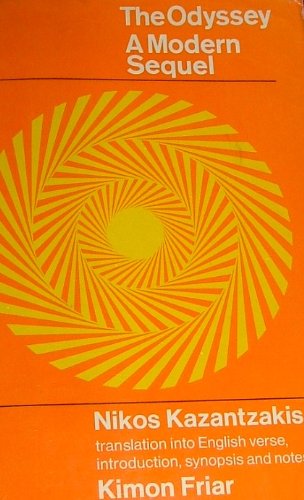
1. The Odyssey: A Modern Sequel (Touchstone
$15.67
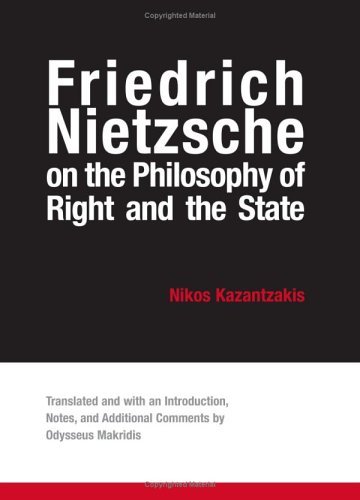
2. Friedrich Nietzsche on the Philosophy
$11.23
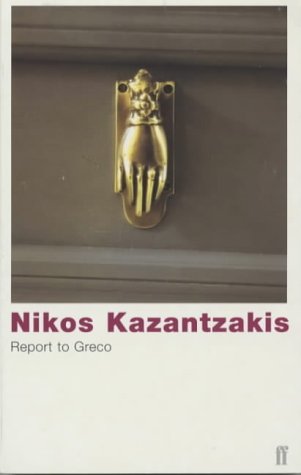
3. Report to Greco
 
$4.99
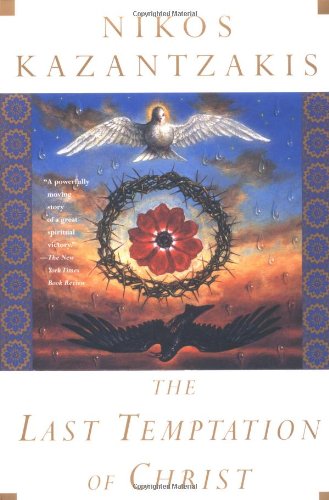
4. The Last Temptation of Christ
$8.38
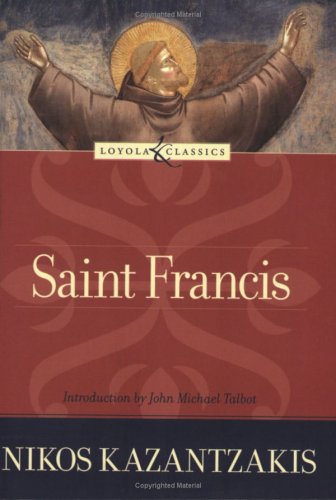
5. Saint Francis
 
6. Alexis Zorba, Un Chef D'oeuvre
 
7. Saint Francis[St.]
$71.01
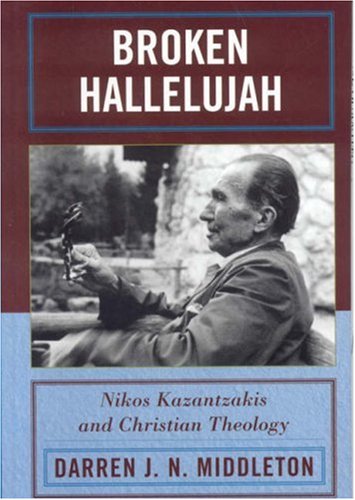
8. Broken Hallelujah: Nikos Kazantzakis
$9.94
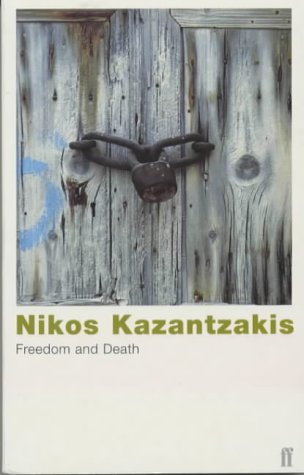
9. Freedom and Death
$9.02
10. At Palaces Of Knossos
$7.17
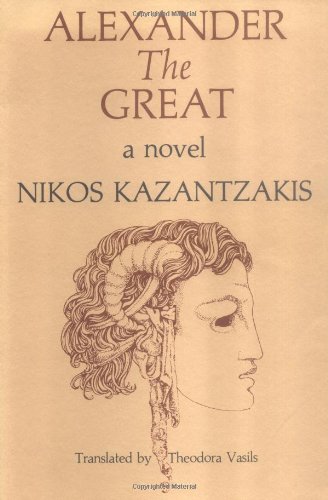
11. Alexander The Great: A Novel
$9.65
12. Fratricides
 
$62.58
13. Report to Greco
 
$336.87
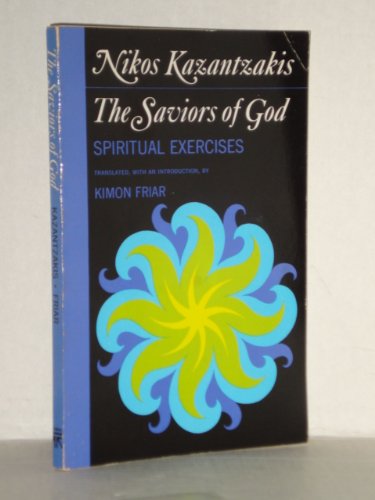
14. Saviors of God
 
15. Odyssey: A Modern Sequel
 
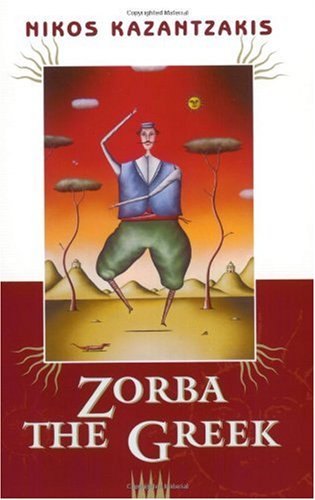
16. Zorba the Greek
 
17. Nikos Kazantzakis a Biography
 
18. Le Christ Recrucifie
 
19. Nikos Kazantzakis
 
20. The Last Temptation Of Christ

1. The Odyssey: A Modern Sequel (Touchstone Books)
by Nikos Kazantzakis, Kimon Friar
 Paperback: 824 Pages (1985-09)
list price: US$39.50
Isbn: 0671202472
Average Customer Review: 5.0 out of 5 stars
Canada | United Kingdom | Germany | France | Japan

Customer Reviews (13)

5-0 out of 5 stars Best read straight through without stopping
I read this in a period of weeks while homeless in a city, each day I would return to the library and read another huge section,never missing a day...the incredible prolixity and repetition, far from being burdensome, were like great rolling waves of majesty and freedom upon which I floated until the last cantos, surely one of the greatest climaxes in all world literature, brought me to rest and peace as Odysseus was united with Christ, and sailed off through the ice. And then I knew that for the rest of my life I would be as free as Odysseus had showed me how to be in this work. How's that?

3-0 out of 5 stars Mithras and Apollo
I read Kazantzakis absorbing and compelling verse novel over a two-month period, rich and crazy as a Christmas fruit cake, and only to be nibbled in small doses.This is a deeply flawed work of consumate art; flawed, because it expresses a weltangshaung and philosophical stance utterly at odds with the complexities and values of the human spirit which it still succeeds in celebrating in verse of passion, intensity and beauty.Flawed, because it defines the human spirit in terms of the unsubtle, extroverted, violence of masculinity at its most obnoxious, a Nietzschean ubermensch driven to sweep through the human mind like a panzer division; flawed because it present a vision of utter and self-serving solipsism.

But of consumate art in that within those paramaters it creates, with a richness and intensity rarely encountered in modern literature, a detailed, elaborate and sensory world of image, passion and experience; and in positioning the human spirit dancing at the edge of the abyss, in celebrating the defining moments and relationships of life, it ultimately triumphs over its own weakness.

Its stages of the soul's evolution, its imagery and its passionate invocation of the sun link it with the old warrior-cult of Mithras; and while the leopards, elephants, drunkards and maenads seem at first more of Dionysos, the elegance and elegaic elements also link the work with the Greek Apollo, and the discipline of an exact and exacting verse.

Essential to an understanding of the twentieth century vision - and also to an understanding of what made so many of us passionately feminist.

5-0 out of 5 stars No hopeNo despair
A long, long time ago, I read this book and it changed the way I read literature. Kazantzakis' book goes beyond writing - it is a vivid exploration of the flame that consumes man. To go back to reading the frivolous so-called literature of today almost seems pointless. I am just thankful that Kazantzakis left us with such a rich body of work to read.The libraries were full of his books twenty years ago, but today I rarely find them on any shelf. To those of us who were lucky enough to discover him early, we know that he is the best kept secret of the twentieth century.

5-0 out of 5 stars Homer would have loved it
This is the best book I have ever read. Granted, I have read it in greekbut still, there is no match. Homer would have loved his hero over again.

5-0 out of 5 stars Homer would have loved it
This is the best book I have ever read. Granted, I have read it in greekbut still, there is no match. Homer would have loved his hero over again. ... Read more


2. Friedrich Nietzsche on the Philosophy of Right and the State
by Nikos Kazantzakis
Paperback: 124 Pages (2007-06)
list price: US$17.95 -- used & new: US$15.67
(price subject to change: see help)
Asin: 0791467325
Canada | United Kingdom | Germany | France | Japan
Editorial Review

Book Description
First English translation of Nikos Kazantzakis's 1909 doctoral dissertation on Nietzsche. ... Read more


3. Report to Greco
by Nikos Kazantzakis
Paperback: 512 Pages (2001-06-18)
list price: US$16.50 -- used & new: US$11.23
(price subject to change: see help)
Asin: 0571195075
Average Customer Review: 5.0 out of 5 stars
Canada | United Kingdom | Germany | France | Japan

Customer Reviews (3)

5-0 out of 5 stars I am really disappointed!!!!
I have this book in Arabic and I decided to read the english version, but to my utter disappointment i could not find such a great book on amazon!!!..

So Amazon, I need that book desperately... help !!!!... What is the answer?!!!!!!!

5-0 out of 5 stars A book so powerful, so essential, so life-altering no wonder its out of print...
I found this book, used, for a dollar outside the Strand in NYC. It was like finding a diamond ring in a box of Crackerjacks.

What is the matter with the American publishing industry that a giant of modern literature like Nikos Kazantzakis and a book like `Report to Greco' can possibly be out of print? What...are 45 bazillion copies of the latest John Grisham nonsense not enough? Certainly an entire wall of the new James Patterson novel is sufficient, especially inasmuch as its exactly the same as the first 300 James Patterson novels. Are publishers and booksellers *that* greedy that they can't spare three inches of shelf-space like they used to back in the days when books weren't marketed like fast-food burgers? Sure, it's great to read, everyone says so, but does it make absolutely no difference *what* we read? Is it worthwhile to read any old junk? Why is it good to read anyway...just to boost the economy?

Reading is of value *because* of books like `Report to Greco.'

`Report to Greco' is the philosophical/spiritual autobiography of a truly extraordinary seeker. To call Kazantzakis merely a `poet' or a `novelist,' even an `artist,' is to short-change a man whose remarkable life and work records the effort to live at the highest possible level. `Report' lays out Kazantzakis's personal philosophy perhaps more directly than in any of his other works. Much more than a strictly factual biographical chronicle, `Report' is a kind of mythological record of the most important aspects of his life.Kazantzakis provides the key to understanding `Report'--and his spiritual approach in general--when he describes his habit of amplifying and interpreting the major events and turning points of his life in archetypal terms. His father isn't merely a `father' but a Father. His mother isnt any old 'mother' but the Universal Mother. His first experiences of sex, death, love, and violence are all elevated to the colossal proportions that they assume in our soul--and thereby more `real' than real. For Kazantzakis, reality doesn't consist of a simple recitation of facts...but of the monumental emotional and spiritual inner truths that those facts elicit from our souls.

Yes, Kazantzakis speaks seriously about the `soul,' about `God,' about `meaning' and a `spiritual life.' And he does so in a way that doesn't embarrass an educated human being in the 21st century. Indeed, if a spiritual life is possible at all at this point in human history, if a search for `God' can be anything other than a charade of retrogressive nostalgia or fundamentalist lunacy, then Kazantzakis shows, if not the path, then a way to find the path. A way to live with fire, spirit, and heart.

This is a book of discoveries, dramas, and ideas writ large. The kind of book that isnt written any more, or, if its written, apparently isn't published. It's more than only a shame that 'Report to Greco' is out of print--it's a disgrace. I suppose we can always hope for the movie version to inspire some publisher to run off a few copies. After all, it got Kazantzakis's `Zorba the Greek' and `The Last Temptation of Christ' back on the shelves. For now.

How ridiculous.

5-0 out of 5 stars Religion for modern people
"Report to Greco" is Kazantzakis "autobiography" although even his widow in the introduction admits both that the book is a mixture of "fact and fiction" and that there are some "small modifications" when he speaks about his own adventures. So, think of it as another novel, or philosophical tract.

The work begins with some of the most profound and true words about death I have ever read: "I collect my tools: sight, smell, touch, taste, hearing, intellect. Night has fallen, the day's work is done. I return like a mole to my home, the ground. Not because I am tired and cannot work. I am not tired. But the sun has set."

The book is full of sayings and brief passages like this, revealing at every turn the familiar Kazantzakis struggle for "ascent": growth, unity, passion. "It is our duty to set ourselves an end beyond our individual concerns, beyond our convenient, agreeable habits, higher than our own selves, and disdaining laughter, hunger, even death, to toil night and day to attain that end. No, not to attain it. The self-respecting soul, as soon as he reaches his goal, places it still farther away. Not to attain it, but never to halt in the ascent. Only thus does life acquire nobility and oneness." (p. 80)

In this quest for ascent, Kazantzakis is led into both a journey of ideas and to physical travel. The book abounds with accounts of his adventures in Israel, Mt. Athos and throughout Europe in addition to his encounters with the great ideas.

It is the significance of the stories that captivate me, as I remain suspicious of the biographical value of the material. He speaks of the "balance" of the ancients as not effortless but difficulty won against the forces of chaos that triumphed before and after the magic moments of the 5th century. As he describes the decline: belief in the country replaced by individual self- sufficiency; the arts shifting their attention to glorification of the indulgences of the wealthy; and to ever more "realistic" descriptions of degradation (p. 170); he could be describing our time as well. Other striking stories of original sin (p.25) or an encounter with a monk who found the one true joy of his life not in worship but in illicit sex (p. 225), his warning of the dangers of the "minor virtues" (p. 142, 213) are worthy of reflection and study.

His struggle for oneness, to unite passion and discipline, the Dionysian and Apollonian sides of the Greek heritage (p. 323-4), remains our struggle. Or at least it should be the struggle of those who wish Christianity to speak to the full person, not just to the self-flagellating ascetic. ... Read more


4. The Last Temptation of Christ
by Nikos Kazantzakis
 Paperback: 512 Pages (1998-03-01)
list price: US$14.00 -- used & new: US$4.99
(price subject to change: see help)
Asin: 068485256X
Average Customer Review: 4.5 out of 5 stars
Canada | United Kingdom | Germany | France | Japan

Customer Reviews (81)

3-0 out of 5 stars It's okay--though I don't get what all the hype is about
For a frequently banned book, I expected more. My expectations were definitely high, which is probably part of why I didn't really dig "The Last Temptation".

Jesus is really not a very likeable character in this book. He's really mean to his Mom--which I didn't appreciate. He won't even look at her or acknowledge her--he pretty much disowns her. And I can't understand why Jesus never heals Joseph, yet he heals that Roman's daughter--that seemed really cruel. Jesus is basically so self absorbed throughout the entire book. It's always, "me, me, me." He's desperate, and I mean whiny, falling on the knees on the verge of a tempter tantrum desperate to "find God"--too desperate for me to really relate to and his disciples--OMIGOD!! They are so annoying. They're whiney, shuffling sheep. Ugh...couldn't stand them. Judas is the most likeable of the bunch-which I found ironic--since he is generally thought of as the worst traitor ever.

That being said, the book is well-writen and a real page turner at times--it's just that the characters themselves are so unlikeable-every one of them (except Judas). Also, I think the author assumes the reader knows a lot about Christianity, which I don't, so I was often confused-especially about why Jesus draws certain conclusions about what God wants him to do and why. I didn't understand Jesus' reasoning. In fact most of the time Jesus seems like a frothing maniac, not how I imagine the son of God to be.

All in all, it's okay--if you have an interest in religion I recommend it, if not I wouldn't bother--but read the prologue if you happen to pass it on a bookself sometime. I found the prologue the most interesting and inspiring part of the book.

5-0 out of 5 stars A Heroic Life
The powerful message of this book and its author is a simple one: The life of Jesus was heroic, and thus worth emulating, even if He were only a man who thought--perhaps through imaginings--that men and women were worthy of redemption through a love that suffers. Camus describes such a man as our true friend, one who sleeps on the cold ground while we are in prison, hoping for our release through his effort.

Through fear, and fear only, many prefer the savage, vengeful God of the Book of Revelation to the courageous man of Mark's Gospel, described here so well for us by Kazantzakis. Only the Spirit can take us further, but first we must accept and admire the man.

5-0 out of 5 stars It is a novel but a beautiful novel and explicitly spiritual in it's aims and goals.
Now, I didn't see the movie but from what I have heard Scorcese missed the boat as to what this novel was all about.(Just for the record, I think Scorcese is over rated!!)

This was a beautiful book.It is not blasphemous in any way shape or form.If one reads it to the end you will understand what I mean.

Are there are few uncomfortable moments?Yes!But that is the point of the book.The title of the book explains everything and is ITSELF explained on the last page.

If you are a Christian don't be afraid of this book or what others might say about the film.Go to a bookstore and check out the author's forward, and you just might find yourself buying the book.

4-0 out of 5 stars A Riveting Classic
I picked this up not expecting too much. I thought that this would just be another safe retelling of a Bible story. Boy was I wrong! The Jesus depicted in this book is very human. He struggles with temptations and unpleasant situations. This book challenged me, made me think, and failed all my predictions. I like that this book is unpredictable but satisfying. This book really made me stay up late at nights until I finished it. I was in a book rut until I picked up this one. A riveting story. Oh and it will not bore you to tears, it's one of "those" classics!

5-0 out of 5 stars It's a love letter
One cannot review this book as a work of literature, although it certainly is that.Kazantzakis wrote it as a love-letter to Christ and a meditation on the nature of the man.In that sense, he succeeded wildly, ecstatically, anachronisms and misplaced Greek characterizations and all."Gunpowder", even - it's all part of Nikos Kazantzakis, and it all serves to drive us deep into the heart of his Jesus, and himself.

That said . . . I have to take issue with Kazantzakis (of course.Else why write a review?)

I was mystified at the ease with which The Baptist turned Jesus from his Gospel of "Love, Love" to that of "the Axe is laid at the root of the tree."Jesus seems to get the better of John in their discussions, arguing most persuasively why his message must differ from John's - and then he goes out sounding like John redux. Did his sojourn in the desert cause this change in direction?It seemed a little too facile for me.

And the ending (I'm perpetually disapointed by endings - seems to be a thing with me). . . why did he have to die?That was very disappointing.

Just kidding - what disappointed about the ending is that Jesus did not really prevail over the final temptation as he had in the desert.He was drawn in to his fantasy life, luxuriated in it even, and then was surprised to find himself once again upon the cross (hope I'm not giving anything away here).I suppose this is Kazantzakis' final identification with the humanity of Jesus, but it seemed an odd perspective on the final moment of Jesus' life as a man - surprised relief rather than victory.

It's too much to expect of a writer, that his inner-most meditation on the meaning of Jesus should provide any "answers" to a reader looking for illumination (I've given up on "Truth").For all that I've failed in each of my three readings of this book over the last twenty years to fully grasp Kazantzakis' Jesus in all his dimensions, the journey has been well worth the cost in time and frustration.Kazantzakis was a natural writer as well as a Natural writer, and his Jesus is more human (with all that it entails) than any other treatment has dared allow him to be. ... Read more


5. Saint Francis
by Nikos Kazantzakis, John Michael Talbot
Paperback: 606 Pages (2005-04)
list price: US$13.95 -- used & new: US$8.38
(price subject to change: see help)
Asin: 0829421297
Average Customer Review: 4.0 out of 5 stars
Canada | United Kingdom | Germany | France | Japan
Editorial Review

Book Description
Kazantzakis infuses this tale with a fervent vision that is uniquely his own, highlighting the saintís heroic single-mindedness in the face of extreme physical and spiritual suffering. He portrays the saint as a great lover and inspiring leader, who embraced radical poverty in the face of many obstacles and temptations. ... Read more

Customer Reviews (6)

5-0 out of 5 stars A rare pen!
I did know Saint Francis before but when i read this book it is with great honor I should say Nikos Kazantzakis is my Saint Francis!!

3-0 out of 5 stars Lost in the Translation
In 1972, I read The Last Temptation of Christ by Nikos Kazantzakis.I will always consider it one of the greatest books ever written.I found it an incredibly faith-affirming book and it changed my life as it changed my outlook on Jesus Christ.Thirty-five years later, I decided to read Saint Francis.

I was very disappointed.Not because it is a bad book, but because it fell way short of what I expected.Over the last three decades, I would say to anyone, "Open The Last Temptation of Christ to any page, and read.The words flow from each page like poetry."Such was not the case with Saint Francis.

I had a similar experience recently with Par Lagerkvist.I read Barabbas 40 years ago and then read The Sybil last year.I'll remember Mr. Lagerkvist for Barabbas, not for the disappointing Sybil. Similarly, I will remember Mr. Kazantzakis for the Last Temptation, not for Saint Francis.I truly believe that my failure to connect with these books recently is because of the translation, not because the author's work was of less value.

Saint Francis is a dark book of personal sacrifice. I continually saw visions of the Opus Dei sect as I read the book.Francis clearly led a life of personal sacrifice dedicated to the glory of God, but the translation left me empty and not inspired.I'll not refute any of the superlative reviews that this book has earned, but from this man's point of view, I'll be cautious in the future when selecting translated material regardless of the author.

5-0 out of 5 stars One of Kazantzakis most passionate books
I am pleased to find that a number of reviewers find this book life-changing. It presents the entire anguish of human being, and it is the book that describes one of the highest concerns of Kazantzakis, an issue that he deals on several other books, but never with such fever: the desire of the human being to talk with God, and the depths that the human mind has to go in believing and disbelieving, in facing irrationality and hearing the voice of God.
You do not have to be religious in the strict christian sense. If that is the case, then this book might be offending, as it presents the passions of man that tries to reach God in an 'uncoventional' way, that does not abide by the doctrine of the church.

Still, I was deeply affected and deeply shaken by this book, more than any other book of Kazantazakis that I have read. Reading it was a 'passion' in itself. I had to reach the same depths, and I felt some of the anguish of St. Francis, as presented by Kazantakis. A lst remark. Do not compare the book with a biography. St. Francis is a tragic hero, an embodiment of mans religious passions, an example of faith.

2-0 out of 5 stars Grim
I have read a lot of books on St. Francis of Assisi, and viewed several films. Kazantzakis presents a "fictional re-creation" St. Francis as an aescetic who travels a journey that few of us would want to take. An aescetic with a disgust for anything having to do with "the flesh" Francis suffers throughout most of the novel from malnutrition, dehydration, and a collection of maladies brought on by the neglect and abuse of his own body, the "temple of the Holy Spirit." This form of mortification of the body has thankfully been abandoned, but was considered a path to salvation coming out of the Dark Ages. His fear/avoidance and mysognistic view of women was unfortunate, and I think this perhaps was a bit overblown and not well researched by Kazantzakis, for I have not found this pathological view in any other writings about St. Francis.
For a deeper understanding of St. Francis of Assisi, and the wide attraction of this most famous saint, please read G.K. Chesterton's biography of St. Francis. Don't get me wrong, I admire and love St. Francis and the revolution he began in Christianity, but I disliked his portrayal by Kazantzakis.

5-0 out of 5 stars Being with St. Francis
I read this book a year ago while on Spring break with my husband and two little daughters.It completely took me away and put me on a higher spiritual level that lasted a long time.Kazantzakis somehow captured the essence of what St. Francis was all about...St. Francis was a man who truly tried to do what Jesus said to do, sell everything you have, give it to the poor, pick up His cross daily and follow Him.The feeling I get when I read the book was one of actually being with St. Francis and understanding why so many followed him and liked him.I am in the middle of reading it again (another Spring break!), and I see why I loved it so much the first time.It's a great novel, even if you aren't a Christian, because the characters and the writing are so good, but being a Christian adds a spiritual level that makes me want to read this book over and over, even though I think I am so far from where St. Francis was!It makes one think about what Jesus really said and what it would be like to TRULY do what He said!I highly recommend it. ... Read more


6. Alexis Zorba, Un Chef D'oeuvre de Nikos Kazantzaki
by Nikos Kazantzaki
 Paperback: 401 Pages (1973)

Isbn: 0039281396
Canada | United Kingdom | Germany | France | Japan

7. Saint Francis[St.]
by Nikos Kazantzakis
 Mass Market Paperback: Pages (1966)

Asin: B000HUIPBE
Canada | United Kingdom | Germany | France | Japan

8. Broken Hallelujah: Nikos Kazantzakis and Christian Theology
by Darren Middleton
Hardcover: 176 Pages (2007-01-28)
list price: US$75.00 -- used & new: US$71.01
(price subject to change: see help)
Asin: 0739119273
Canada | United Kingdom | Germany | France | Japan
Editorial Review

Book Description
Marking the fiftieth anniversary of Kazantzakis's death, author Darren J. N. Middleton looks back on Kazantzakis's life and literary art to suggest that, contrary to popular belief, Kazantzakis and his views actually comport with the ideals of Christianity. ... Read more


9. Freedom and Death
by Nikos Kazantzakis
Paperback: 472 Pages (1996-12)
list price: US$15.52 -- used & new: US$9.94
(price subject to change: see help)
Asin: 057117857X
Average Customer Review: 5.0 out of 5 stars
Canada | United Kingdom | Germany | France | Japan

Customer Reviews (2)

5-0 out of 5 stars freedom and death
Before reading the book the title confused me; shouldn't it be Freedom OR Death?You would think....until you read the book.I won't spoil it for you by telling you what message Kazantzaki is trying to convey; you can find this out for yourself.What I can tell you is the setting is in Crete late 1800's while Crete was still under Turkish rule.It's a story of one family's (perhaps Kazantzaki's?) pride in their Greek Christian heritage and their irrepressible and explosive drive for freedom.Might I add that I have never read a book where an author displayed more love for his native land than Kazantzaki's passion for Crete and his "mother" Greece.This novel is classic Kazantzaki; powerfully raw but deeply profound all at the same time.It left me feeling like I had a knife stuck in my heart, like after reading an ancient Greek tragedy - absolutely beautiful.I highly recommend this book.

5-0 out of 5 stars Timeless and Inspiring
I was kind of surprised not to see any reviews on this amazing novel by Nikos Kazantzakis. Let me start by saying that I 've read this novel only in the original Greek version. Nevertheless, I feel I can comment on the content and the feelings that this "journey" inspired me.

I originally felt that you have to be Greek to really feel the intensity of the ideas that storm through this story that takes place during the Greek Revolution era (1820's) against the Turkish oppression in the island of Crete. However, any reader can rise above the distinctive historical and cultural context (which with marvel you will experience its description) and get swept by the powerful ideas of love for one's home, love for one's family and such love for one's freedom that death is a duty. It is suggested however to familiarize yourself with some facts about Kazantakis' life and work by reading "Report to Greco" or/and his classic "Zorba the Greek". The fight for freedom is an idea that can be symbolized in many aspects of our lives and that sadly has now become a very commercial and misunderstood concept. It is in this book however that I read about it being given in its purest form as the ultimate fight for an idea that is more precious than life itself. The title of the book encompasses its substance: it is Freedom AND Death.

The writing by Kazantzakis is greatly colorful with beautiful details that create the reality of that time. At the same time, his writing is very affecting; being a Cretan himself you can see his deep love for his home testified on the pages. This is not an easy read, I feel you need to be in a specific mood to engage in this book since it requires your soul to be present and not just your mind. It is emotionally drenching, the human struggles (both psychological and physical, inner and overt) depicted are fiercely touching and the glorious and bloody climax builds up in a ceremonial way. In the end of this book I trully experienced a catharsis, for the first time at such strength, having gone through so many emotional stages with the characters and the plot of the story. As in other Kazantakis books, people might find sexist elements or even misogyny, but bear in mind the historical era and the patriarchic structure of society at the time.

I realize this review is quite personal, but I just felt the need to share my thoughts and feelings about this masterpiece. Approach this novel with an open mind and an open heart and I assure you, you will be rewarded. ... Read more


10. At Palaces Of Knossos
by Nikos Kazantzakis
Paperback: 219 Pages (1988-04-30)
list price: US$12.95 -- used & new: US$9.02
(price subject to change: see help)
Asin: 0821408801
Average Customer Review: 5.0 out of 5 stars
Canada | United Kingdom | Germany | France | Japan

Customer Reviews (2)

5-0 out of 5 stars All the Elements of a Classic
How do you write a "children's" book that will hold readers' interest 50, 100 years from now? James Barrie, Francis Hodgson Burnett, and Terry Pratchett have. So has Nikos Kazantzakis.
This book is a gem, and deserves much wider recognition.
Mythology is usually presented, even in the much-lauded D'Aulaire series, as little more than a plot line. Here, the familiar story of Theseus and the Minotaur is enriched with well-developed characters. My favorite is Princess Ariadne: as imperious, sensitive, and curious as Elizabeth Tudor in her youth. Kazantzakis describes the splendors of the Minoan city-palace as lushly as one can infer from the historical artifacts that have been unearthed, then he enriches the picture with details of folkways that still exist today in Greece.
What raises this book from the merely entertaining to the classic is the author's dedication to his real mission: to impart the great truths of the world to his young readers. In the Palaces of Knossos, we learn a little about the nature of despotism, and how to test the long-term viability of a civilization beyond the veneer of its present power and wealth.
Teachers and parents, read this wonderful book, and be awed and entertained yourself before you read it to your kids. While you're at it, bring out a book like BBC's Civilizations by Jane McIntosh and Clint Twist so your charges can see the strange and beautiful paintings from the palace of Knossos of bull-leaping youths, the bronze dagger that Theseus himself might have carried, and one of the odd little iconic statues of the Great Goddess worshipped throughout ancient Crete.

5-0 out of 5 stars at the palaces of knossos
This novel derives from a series of stories written byKazantzakis for a youth's magazine. The novel utilizes Kazantzakis'graceful style to add even more magic to this fantastic myth. In the beginning, a young traveler is found surveying the grounds of the Palace of Knossos, raising suspicions with security guards and catching the eye of the young princess Ariadne.The young traveller turns out to be Theseus, a prince who desires to free his people from the tyranical King.Included is the infamous minotaur and many greek gods. This novel remains interesting and exciting all throughout the story, and can be recommended to any age group.END ... Read more


11. Alexander The Great: A Novel
by Nikos Kazantzakis
Paperback: 232 Pages (1982-04-15)
list price: US$12.95 -- used & new: US$7.17
(price subject to change: see help)
Asin: 0821406639
Average Customer Review: 4.5 out of 5 stars
Canada | United Kingdom | Germany | France | Japan

Customer Reviews (5)

4-0 out of 5 stars Great adventure immersed in historical fact
Kazantzakis originally wrote this as a series in a literary periodical and was largely aimed at a teenage audience.As the translater notes, Kazantzakis would probably have liked to edit the combined work. Nonetheless this is a fantastic adventure packed - page turning novel which is based on the historical life of Alexander the Great.

This book is ideal for a teenage boy or for an older reader that likes a good adventure story and wants to get an interesting summary of Alexander's exploits.

Kazantzakis takes us through the Alexander's amazing life from his early teenage years to his ultimate death.The story is narrated through the eyes of a young boy of the Macedonian court that ultimately becomes one of Alexander's closest friends.

A teenage boy will find strong positive messages about the possibilities available through commitment to achievement(and learn a bit of history through the process).It's not just Alexander's belief in achieving the unthinkable, the adventures of heading to war and conquering unknown lands that will entrance young (and old) readers.Kazantzakis also tastefully includes small snipets of childhood romance in the life of the young narrator with sensitivity.

The only piece that left me only a little dissapointed was the complete absence of any mention of Roxanne.I thought that Alexander's great romance should have got a mention.

5-0 out of 5 stars Read this book!
I have read 6 of Alexander's biographies. This was the 7th. The only one written by a Greek for a Greek. I find this the most accurate, objective and exciting one. A must read. Kazantzakis at his best. I just hope that Stone's version depicted on film will do justice to the Great Macedonian King. Alexander Lives!

5-0 out of 5 stars Alexander the Great
It is an extraordinary book for youngsters which gives both history and adventure. I already knew the biography of Alexander but I wanted it in story-form and this book is the best.I'm glad I didn't have to wait till I'm old enough to read Alexander's story in Mary Renault's version with all the extra spicy bits.(I haven't read it, my dad told me about it). (...)

5-0 out of 5 stars A winner in all aspects
First I would like to mention that I have read all of Kazantzakis's work in Greek, and most of it in English. The translation of this book if very good, and most of the meaning of the original text is properly conveyed. Kazantzakis aspect of Alexander the Great is a Greek's point of view. Nevertheless Kazantzakis, like in all his works (Zorba the Greek and The Last Temptation to name but a few) is very critical towards his subject. He is not a writer that writes only about the merits of his characters but also on their weeknesses. Even though the imperialistic aspect of Alexander the Great is a thing few people can imagine as proper nowadays, it was very correct and normal at the time he used to live. Indeed through conquering and slaughtering he brought Greek civilisation to the ends of the known world of his time. A book written in simple language (Kazantzakis idiom language, unfortunately could not be translated) but full of meaning. Two thumbs up.

4-0 out of 5 stars A fun primer on Alexander
Cleverly written from the perspective of a boy in the Macedonian court, this book provides a gentle and reasonably accurate, if glossed over, introduction to Alexander for young readers.(Note: I read the translatedversion, since I am not familiar with modern Greek.) ... Read more


12. Fratricides
by Nikos Kazantzakis
Hardcover: 254 Pages (1998-07)
list price: US$27.00 -- used & new: US$9.65
(price subject to change: see help)
Asin: 0571105068
Average Customer Review: 4.5 out of 5 stars
Canada | United Kingdom | Germany | France | Japan

Customer Reviews (2)

5-0 out of 5 stars Village Life, Oppression, Struggle for Life
The life in the village revolves around the seasons, with accurate and colorful detail one senses the natural flow of "the way it should be" however there is an ominous "presence" that threatens the natural order of things ... The main characters are Father Yanaros and Captain Drakos, and the supporting cast includes, Leonidas the student, Hadjis the well-traveled one, Kyriakos, and Dimos an elderly peasant, Panagos (the barber), Kosmas, Stratis. Levi and a variety of others who feel like real people.. The struggle for freedom and the need to sustain life during oppression and occupation is intensified and illuminated. The resolution of social problems and role of religion and the church in balancing the good and evil in society is the main theme. The battle of the spirit against human frailties isKazantzakis' constant theme ... he excels in this area. This novel exemplifies the dynamic powers of description and characterization that has won Kazantzakis world-wide acclaim. Highly recommend this book to those who want to understand the constant battle to live in the midst of oppression. Erika Borsos (erikab93)

4-0 out of 5 stars only one pot of basil in the whole village
Perhaps the least well known of Kazantzakis' bleak beautiful epics, The Fratracides is as in-depth examination of the effects of oppression as I have discovered.The book is set in a mountain village in Greece duringthe Turkish occupation.While on the surface it is about a revolutionaryfaction and it's resistance to the occupation and the villager'sresistance, and occasionally support, of that faction, the book alsooperates on several, more intriguing levels. It examines the differenthuman responses to domination as clearly as any sociology book, but withcharacters, words, and images that worm their way around your head in a wayno textbook ever could.The fatalism of the of the literally hungryviolence-sick villagers, the power-hungry priest grabbing at straws, thezeal of the revolutionary leader, the sensual despair of the townMagdalene; the characters manage to function symbols of human reactions aswell as fully dimensional people. Kazantzakis is the master of the life ofthe world vs. the life of faith dilemna and that dynamic most certainlyplays out in this work, though in a different way than in most of his otherwritings.It is not just one person struggling with the meaning of faith,but a whole community embodying the various aspects of that particulardrama.The Fratracides is, I would say, the hardest of Kazantzakis'fictional writings in the sense that he gives the reader very little tohope for.But, when you stop to think about it, how appropriate. Occupation and violence are not necessarily situations in which hope is afacile option.The writing is solid; Kazantzakis has the profound abilityto distill human experience emotion into dense stones that pave thevillages and hills where the action takes place.The Fratricides is uniquein it's ability to be spiritual without being dogmatic, analytical withoutbeing dry, and thouroughly beautiful both in story and writing. ... Read more


13. Report to Greco
by Nikos Kazantzakis
 Paperback: Pages (1975-08-15)
list price: US$12.95 -- used & new: US$62.58
(price subject to change: see help)
Asin: 0671220276
Average Customer Review: 5.0 out of 5 stars
Canada | United Kingdom | Germany | France | Japan

Customer Reviews (13)

5-0 out of 5 stars A Beautiful Autobiography of A Profound Thinker & Writer
The spiritual travels to find himself and his inner soul are fascinating and the geography covered is extensive and with Kazantzakis' descriptions of the scenery, one feels that they are walking right along side him from Europe to Greece, the Mid East and beyond.

At one point, Kazantzakis is traveling with his friend Buddhaki to Mt. Athos to visit the many monasteries there and they come upon a Father Makarios. They muse on the ego, separation from God, etc., and when it is time to go, the good Father says, ["Good luck. God be with you." And a moment later, mockingly: "Regards to the world." "Regards to heaven," I retorted. "And tell God it's not our fault but his-because He made the world so beautiful."] (p 225)

On a trip to Jerusalem they meet a young man who ["...was passionately condemningthe dishonesty and injustice of present-day economic and social life. The masses went hungry while the great and powerful piled up fortunes. Women sold themselves, priest did not believe, both heaven and the infernal pit were here on earth. The afterlife did not exist; here was where we had to find justice and happiness.... Cries rang out: "Yes, yes, you're right!" "Fire and axe!" Only one person attempted to object." ..."It was frightening. The purpose of trip was to worship the sweet, familiar face of God-so gentle, so tortured, so filled with hopes for life everlasting." ..."...we were carrying as a terrifying giftthe seed of a new, dangerous, and as yet unformed cosmogony."] (p 245)

Later and on the road to the Dead Sea, "I had found it necessary to purge my bowels and expel the demons inside me-wolves, monkeys, women; minor virtues, minor joys, successes-so that I could remain simply an upright flame directed toward heaven. Now that I was a man, what was I doing but enacting what I had so ardently desired as a child in the courtyard of our family home! A person is only born once; I would never have another chance!" (p 252)

*Kazantzakis begins to summarize his spiritual journey with, "Our journey to the fatal intellectual Golgotha thus becomes more loaded with responsibility because now, looking at the Cretans, we know that if we fail to become human, the fault is ours, ours alone. For this lofty species-man-exists, he made his appearance on earth, and there is no longer any justification whatever for our deterioration and cowardice." (p 441)*

At the end is, "Just then-as fate was in a mood to play games-I made the acquaintance of an elderly mineworker named Alexis Zorba." (Zorba the Greek). This leads Kazantzakis to an introductory chapter on Zorba wherein he states, "My life's greatest benefactors have been journeys and dreams. Very few people, living or dead, have aided my struggle. If, however, I wished to designate which people left their traces imbedded most deeply in my soul, I would perhaps designate Homer, Buddha, Nietzsche, Bergson, and Zorba."
(p 445)

Kazantzakis was a prolific writer with incredible insight and wisdom and some of his best known works are: "The Last Temptation of Christ" and "Zorba the Greek". Start in on any book, though, and one will most likely feel compelled to read them all!

5-0 out of 5 stars Absolute Repose, Absolute Fecundity
Autobiography of the Greek novelist, poet and philosopher. In his own words, the author of Zorba the Greek, Saint Francis, and The Last Temptation of Christ tells the story of his life and art. Translated from the Greek by P. A. Bien.

Report to Greco is comparable in importance to The Education of Henry Adams. It is not a formal autobiography, but rather the summing up, by a great artist, of a lifetime's ideas, work, experiences and friendships. In it, Kazantzakis searches for the roots of his own genius, describes his early interest in Nietzsche, his apprenticeship with Henri Bergson, his travels through Russia in the early days of the revolution, his tempestuous and deeply moving friendships and loves and -- above all -- the agonizing and never-ending process of artistic development that culminated in a whole series of inspired masterpieces.

It is a book of epic themes, dominated by Kazantzakis' agonized search for a means to combine his love of life and art with his ceaseless quest for spiritual truth -- a quest that led him from Bergson to Freud, from Freud to Lenin, from Lenin to Buddha, compelled by a deep desire to bring about, not only in art, but in life, a spiritual revolution, a 1917 of the soul.

Kazantzakis has been acclaimed as one of the truly great writers of our century by both Albert Schweitzer and the late Thomas Mann. Report to Greco is his credo, his summing up, his report to posterity on the efforts and the journeys of a lifetime. Together with The Odyssey: A Modern Sequel and The Saviors of God: Spiritual Exercises, it forms the cornerstone of his work.

5-0 out of 5 stars A literarymasterpiece
I have read the book in both the original Greek and the translated version. The translated version is exceptional which is a rarity in literature. The book is a quasi-autobiography of Nikos Kazantzakis but the main theme is not his life. It's the spiritual struggle of man to find his place on earth and to understand the concept of a God. A deeply spiritual person, Kazantzakis, struggled throughout his life trying to draw the right path for him. He traveled throughout the world in order to witness how other cultures dealt with the same notions. He returns home at the end because the call of his birth land is too strong. The book is written supposedly as an account to his grandfather, an arab pirate, but a view also exists that it is a report to El Greco (Domenikos Theotokopoulos), a famous Greek artist (1541-1614). Kazantzakis was a great admirer of El Greco and a visit to his homeland is described in the book. Kazantzakis is a literary giant, Albert Camus was one of his friends and admirers, and the book is not for the casual reader.
To me this is the book I would choose to have if I was only allowed to own one book.

5-0 out of 5 stars Christ, Buddha, Lenin
A truly challenging work.A consumate traveller, truth-seeker, inetellectual, Kazantzakis creates a remarkable memior.The fact that Christ, Buddha and Lenin were the author's three primary heros and inspirations should be enough to pique anyone's interest.I would especially recommend this book to anyone feeling disillusioned with modern life.See how the world was just 100 years ago, and how it still might be for those adventurous enough to think they can redesign it...

5-0 out of 5 stars Overcoming Twentieth Century Angst
This superb tome is meant to be read as part metaphor, part autobiography, and part myth. A truly glorious and inspirational work. Here, fellow readers, is the essence of the book: "Rise up, brothers! Join the struggle of life! Have no fear! Yes, all is vanity, but by boldly confronting the Abyss and experiencing each day anew, we can overcome the pettiness and sheepishness of the Age! Stand and fight! Though life is but a finite struggle, do not despair! Live life to its fullest! By doing so, each one of us may existentially triumph over our own mortality." Remember what is written on Kazantzakis' tombstone in Crete: "I want nothing, I fear nothing. I am free!" ... Read more


14. Saviors of God
by Nikos Kazantzakis
 Paperback: Pages (1960-03-15)
list price: US$10.00 -- used & new: US$336.87
(price subject to change: see help)
Asin: 0671202324
Average Customer Review: 4.0 out of 5 stars
Canada | United Kingdom | Germany | France | Japan

Customer Reviews (7)

1-0 out of 5 stars Not what I was looking for......
My biggest disappointment was that the online description did not accurately describe the contents of the book.I ordered a 'used' copy supposedly in 'excellent' condition.The book I received had considerable handwritten notes in it!When I expressed my total dissatisfaction with the order I was given a total refund which I did appreciate very much.

5-0 out of 5 stars A FEW WORDS
N. Kazantzakis:"I know well that death cannot be conquered, but man's value is not measured by the Victory, but from the fight for Victory itself. And I know as well this, which is even more difficult: its not the fight for Victory - its only the value of the man, and is this: to live and die gallantly and to not condescent a reward. And further this, the third, which is even more difficult, the certainty that there is no reward should not scare you, but fill you with joy, pride, and bravery..."

5-0 out of 5 stars GREAT!!!
I really like the author and I saw this book in a used bookstore and didn't get it.But then I couldn't get it out of my mind.So I went back to get it and I'm glad I did.It is a strong and moving book.He expresses the thoughts of someone who sees nothing but God. His life is God.This has nothing to do with any religion,as it is above a set of rules or beliefs.I can relate to him.Get the book if you can.

5-0 out of 5 stars God's surging, dramatic tide of maelstrom possibility
The name Nikos Kazantzakis is anathema to so many; countless Americans probably only know him as the man who authored the book "The Last Temptation of Christ" on which the controversial (and widely demonized) movie was based. There was much more to this man than met the eye, however. Such Americans don't know the reader of Nietzsche and Bergson, the man who idolized both Christ and Lenin as saviors of humanity, the brooding genius whose incisive glacial intellect was perpetually at war with the hot blood of his idealism and passion. A fascinating and fragmented character who ascended the peaks and explored the dark valleys of human experience more than most, Kazantzakis commits pen to paper here with a spirituality that will haunt the reader; it is more alive and explosive than any camp-meeting revival. Writing with a distinctly modernist tone of world-smashing and revolution akin to Marx and with a racy, frenetic, hot-blooded pace which D.H. Lawrence would've admired, Kazantzakis introduces us to HIS idea of God: not the friendly father figure of Christian lore, but the turbulent, primordial drive for life and change within the universe, striving (successfully, through sometimes violent fits and starts) to ascend, to create, to thrive, to "transubstantiate matter into spirit". More akin to Bergson's idea of "elan vital", this is a series of spell-binding meditations that most mainline believers of any stripe probably wouldn't like; precisely because it scares the living daylights out of you with its frightening possibilities and its sirens' call of seemingly chaotic life-affirming zest. The late Kazantzakis beckons to us across the void, urging us to take the plunge and gaze into that vortex without fear, even though we will lose all we are in the process.

5-0 out of 5 stars The bible of non-absolute faith (a reply to my friend below)
"Nonsense" is a very draft and cruel word to characterize an attempt to describe the CHAOS. For that's what this book is. How can one describe the Chaos, the human agony for the purpose of life? Every time you visualize yourself as a tiny dot (equals to nothing compared to the universe) and you ask the all-time-big-questions, you fill the fear. If you want to ease your heart, read the bible, or whatever the holy book of your religion (we all do in times of despair). You will be reassured for the absolute truth for all your questions and fears. But if you want to keep your eyes open and dare to look at the chaos this book will be a good companion. It is not perfect, but is the best attempt I know. Using Kazantzakis' words from "Report to Greco", the author is "facing the chaos and says I like it!" ... Read more


15. Odyssey: A Modern Sequel
by Nikos Kazantzakis
 Hardcover: Pages (1958)

Asin: B000GSKAXI
Canada | United Kingdom | Germany | France | Japan

16. Zorba the Greek
by Nikos Kazantzakis
 Unknown Binding: 347 Pages (1964)

Asin: B0007GQ7Z4
Average Customer Review: 4.5 out of 5 stars
Canada | United Kingdom | Germany | France | Japan

Customer Reviews (64)

4-0 out of 5 stars Bacchus vs. Nietsche: The story of a sensualist rebel
Other than his ponderous and perhaps party fictionalized actual autobiography ("Report to Greco"), this is Kazantzakis' most autobiographical novel, with an intellectual narrator modeled after himself.The real title can be translated as "The Life and Times of Alexis Zorbas", and the standard English title is a nod to the successful film by Michalis Cacoyannis.Anthony Quinn's portrayal of the book's eponymous main character, though good for an Irish-Mexican-American, has warped the whole world's understanding of Greece and "Greek dancing" (there were times when I was almost driven to violence against drunken British idiots stumbling about with arms in the air doing the "Zorba"), but that's for another review.

A few sentences for context would not be amiss.Kazantzakis is constantly discovered by Greek teenagers, loved to distraction, then abandoned.Why?Because he himself discovered Buddha, Marx and Nietsche at a formative age, and his writings reflect an uneasy mix of different "struggles": to attain serenity and self-understanding, to be one with all of humanity, and to transced human limitations through heroic struggle aggainst impossible odds.Nietsche, however, usually wins out in the end.All Kazantzakis' heroes are rebels against conventional morality and worldly opinion, and set themselves the task of transcendence, often reluctantly.In "The Last Temptation of Christ" (a novel that caused a huge furore among conservative Christians when it was made into a film by Martin Scorcese), Jesus is a sinner that is driven against every fiber of his will, mind and body to be the Chosen one, until he undergoes the Last Temptation on the cross (read the book or see the movie if you want to know the outcome).In "God's Pauper," a novel about St Francis of Assisi, the superhuman struggle is one of renunciation of all that is worldly or easy, even the hope of heaven and fear of hell (that did not endear the author to conservative Christians either).

So what is Nietschean or superhuman about Zorbas?He is a laborer, folk musician, barely educated philosopher, bon vivant and womanizer, larger than life and totally indifferent to piety, organized religion, social convention or wealth.He is a rebel: not the ascetic kind but the kind that grabs the world with both hands, elbows, armpits, thighs and everything else.Of course, being a sensualist and scoffer at convention does not make Alexis Zorbas amoral, cruel or indifferent: on the contrary, his compassion and sense of justice for the downtrodden are proportionally magnified.As Kazantzakis' St Francis would say, Zorbas does the right thing without hope for or fear of the afterlife; instead he does it for pleasure, defiance and a sense of what's right.

I won't summarize the plot of the book; it's not particularly relevant.Neither are the comments by readers who were shocked by the story's occasional savagery and misogyny.Crete was a violent place, where sheep-stealing was a matter of pride, family honor was defended with murder and blood feuds lasted for generations; all this is still not unknown in some mountainous areas, and Cretans have a huge rate of (illegal) gun ownership.The position of women has definitely improved in 90 years; judging a dead author for setting down the (exaggerated) reality of another age is not fair.Let me just end by saying that most Greeks still have a soft spot in their hearts for Zorbas the character well after they have outgrown their teenage fascination with other, less fun-loving and life-affirming Nietschean rebel heroes created by Kazantzakis.And if you subscribe to the conservative Christian view that it's only the fear of hell and promise of heaven that keep us from savagery, than either stay away from Kazantzakis or prepare to have your faith tested.Kazantzakis' characters reflect the views of most Greeks on this matter, and last I checked the crime rate in Greece was minuscule.

5-0 out of 5 stars Very Insightful
The narrator of this novel is a deep & philosophical thinker much drawn towards Buddhist teachings. He is cerebral and completely intellectual in contrast to his subordinate Zorba. Zorba is a man without much education but he is a man who has touched life in its raw form with an earthly outlook towards life. Zorba has seen wars, been in love with many women, married many times, plays the Santuri and loves to dance. Zorba goes through pain, suffering, hapiness and joy with ahedonistic attitude and exhibits a great love for life. His old age is no detterent to his enjoyment of life. Above all Zorba has an opinion of everything ranging from women, relationships, business, religion, nationalism and politics. All his views are fromhis own bitter and sweet experiences and some of his views on women & religion can put off many. Zorba does not give importance to morals but he exhibits his compassion in his relationship with the old whore, the widowand workers in the mine. His views on the dangers of nationalism, war and religion are intresting. Overall an excellent book with deep insights, reflection and loads of philosophical discourses. This book is a masterpiece. I wonder why Kazantzakis was never given the Noble Prize. When Albert Camus won the Noble prize by one vote more than Kazantzakis he mentioned that Kazantzakis deserved the honour 'a hundred times more' than himself.

5-0 out of 5 stars A Classic Work Still Relevant Today
Zorba the Greek is Nikos Kazantzakis' most successful novel.Despite being an older novel, it remains a classic for the very reason that it's entertaining, engaging, and has a theme and philosophy still relevant to new and old readers alike.

The book is read from the view of the main character, whose name is never revealed and his experiences on Crete with his hired hand, Alexis Zorba.From the beginning to the end of the novel, the narrator learns from and about Zorba's paradigm of life.Zorba is a Nietzschian-like character who is spontaneous and wills to experience life with absolute enthusiasm.He teaches the narrator how to value aspects of life that are usually taken for granite, like food, women, the ocean, stories, music, etc.He is the adult with the child-like appreciation for life and all that it provides for the human experience.The young narrator is commonly regarded as a bookworm and an academic.He represents order and rationality, but immediately appreciates Zorba perspective on life.The discussion and life between the two characters produces a story where the reader can learn and appreciate how each character develops.

It's a solid and heartwarming book that represents a discussion and exploration of the excitements of life; a definite recommendation.

5-0 out of 5 stars Great Place to Start
This book is a great introduction to a fantastic author that is often overlooked by American readers."Zorba" is fascinating, deep, and hilarious, all at once, and it's short and playful enough such that it won't turn off more casual readers.I recommend this title as a starting point for people who want to read Nikos Kazantzakis for his philosophical insights or for his moving stories.

5-0 out of 5 stars An underrated classic!
"Zorba the Greek" is simply a great novel. Kazantzakis is brilliant in his dialogue, story-telling, and word pictures. I have read Zorba over and over again, particularly when I want to feel the vibrant life of Greek culture. Many find themselves in opposition to Kazantzakis' philosophies, but this book should be savored for its pure celebration of life, brilliantly embodied in Zorba and his intellectual friend, a young British Greek.

Sexist, yes. Anti-religious, yes. A great read, nonetheless!

Reviewed by David Lundberg, author of Olympic Wandering: Time Travel Through Greece ... Read more


17. Nikos Kazantzakis a Biography
by Helen Kazantzakis
 Hardcover: Pages (1968)

Asin: B000SMZ0I2
Canada | United Kingdom | Germany | France | Japan

18. Le Christ Recrucifie
by Nikos Kazantzaki
 Paperback: Pages (0000)

Isbn: 2259001459
Canada | United Kingdom | Germany | France | Japan

19. Nikos Kazantzakis
by Helen Kazantzakis
 Hardcover: Pages (1968)

Asin: B000QE5C8A
Canada | United Kingdom | Germany | France | Japan

20. The Last Temptation Of Christ
by Nikos; Translated from the Greek by Bien, P. A. Kazantzakis
 Paperback: Pages (1966)

Asin: B000IWLUB8
Canada | United Kingdom | Germany | France | Japan

  1-20 of 100 | Next 20
A  B  C  D  E  F  G  H  I  J  K  L  M  N  O  P  Q  R  S  T  U  V  W  X  Y  Z  

Prices listed on this site are subject to change without notice.
Questions on ordering or shipping? click here for help.

site stats