e99 Online Shopping Mall

Geometry.Net - the online learning center Help  
Home  - Authors - Kerouac Jack (Books)

  1-20 of 100 | Next 20
A  B  C  D  E  F  G  H  I  J  K  L  M  N  O  P  Q  R  S  T  U  V  W  X  Y  Z  

click price to see details     click image to enlarge     click link to go to the store

$21.20
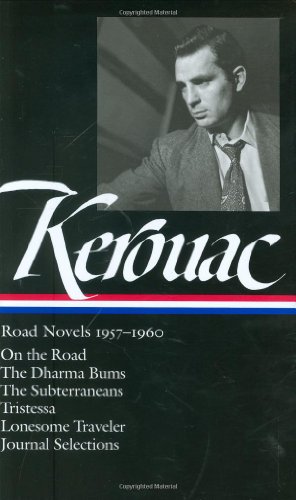
1. Jack Kerouac: Road Novels 1957-1960:
$10.75
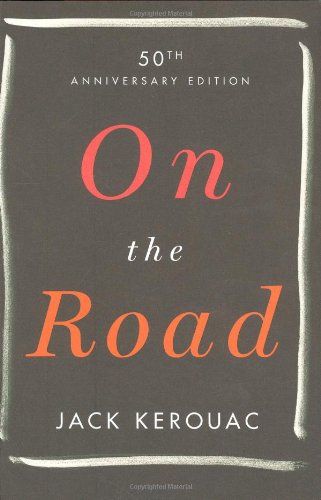
2. On the Road: 50th Anniversary
$7.93
3. On the Road: The Original Scroll
$6.60
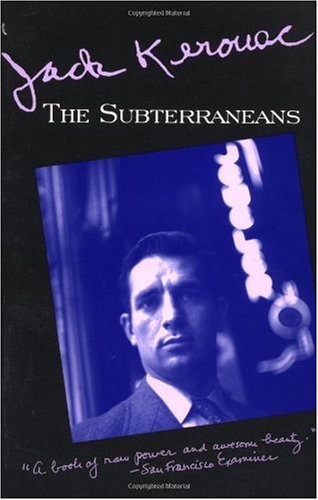
4. The Subterraneans
$9.03
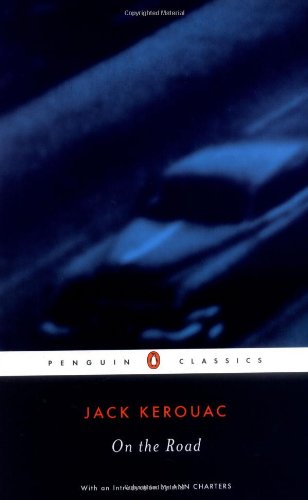
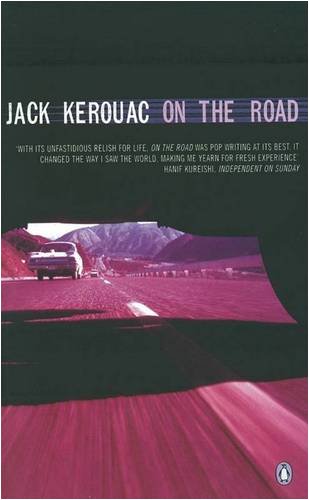
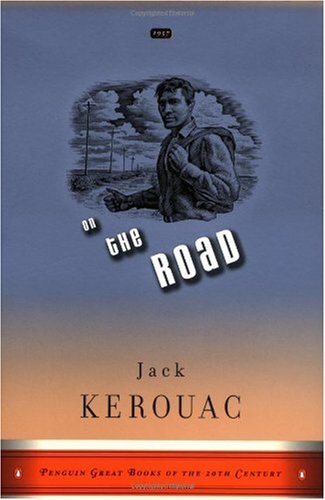
5. On the Road (Penguin Great Books
$5.60
6. Tristessa
$8.75
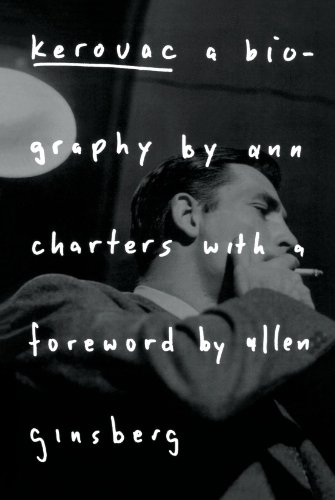
7. Jack Kerouac: A Biography
$8.25
8. Vanity of Duluoz: An Adventurous
$4.99
9. Departed Angels: The Lost Paintings
 
$8.46
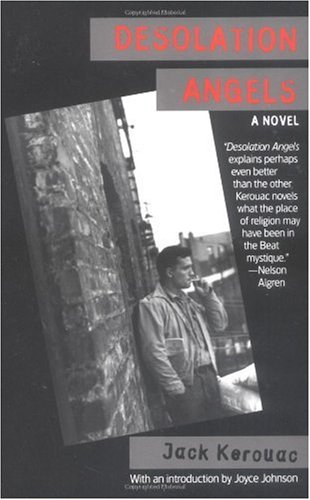
10. Desolation Angels
$7.40
11. Maggie Cassidy
$8.20
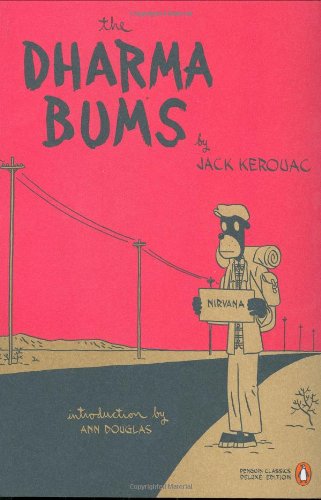
12. The Dharma Bums (Penguin Classics
$9.49
13. Jack Kerouac's American Journey:
$25.72
14. Beatific Souls: Jack Kerouac's
 
15. On the Road
$9.48
16. Kerouac: A Biography
$11.54
17. The Dharma Bums (Penguin Modern
$7.90
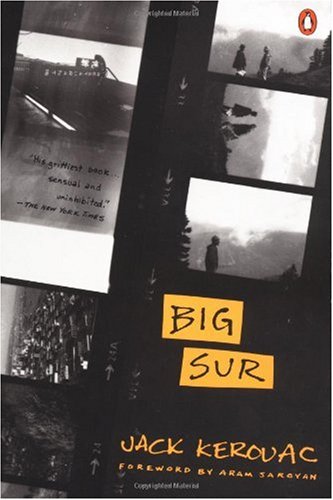
18. Big Sur
$6.98
19. On the Road (Penguin Classics)
$73.63
20. Jack Kerouac and the Literary

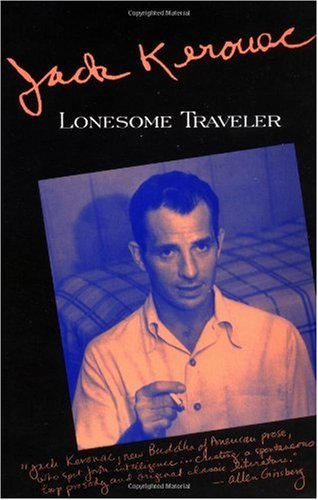
1. Jack Kerouac: Road Novels 1957-1960: On the Road / The Dharma Bums / The Subterraneans / Tristessa / Lonesome Traveler / Journal Selections (Library of America)
by Jack Kerouac
Hardcover: 900 Pages (2007-09-01)
list price: US$35.00 -- used & new: US$21.20
(price subject to change: see help)
Asin: 1598530127
Average Customer Review: 4.5 out of 5 stars
Canada | United Kingdom | Germany | France | Japan
Editorial Review

Book Description
The raucous, exuberant, often wildly funny account of a journey through America and Mexico, Jack Kerouac's On the Road instantly defined a generation upon its publication in 1957: it was, in the words of a New York Times reviewer, "the clearest and most important utterance yet made by the generation Kerouac himself named years ago as 'beat.'" Written in the mode of ecstatic improvisation that Allen Ginsberg described as "spontaneous bop prosody," Kerouac's novel remains electrifying in its thirst for experience and its defiant rebuke of American conformity.

In his portrayal of the fervent relationship between the writer Sal Paradise and his outrageous, exasperating, and inimitable friend Dean Moriarty, Kerouac created one of the great friendships in American literature; and his rendering of the cities and highways and wildernesses that his characters restlessly explore are a hallucinatory travelogue of a nation he both mourns and celebrates. Now, to celebrate the fiftieth anniversary of Kerouac's landmark novel, The Library of America collects On the Road together with four other autobiographical "road books" published in the late 1950s and early 1960s.

The Dharma Bums (1958), at once an exploration of Buddhist spirituality and an account of the Bay Area poetry scene, is notable for its thinly veiled portraits of Kerouac's acquaintances, including Ginsberg, Gary Snyder, and Kenneth Rexroth. The Subterraneans (1958) recounts a love affair set amid the bars and bohemian haunts of San Francisco. Tristessa (1960) is a melancholy novella describing a relationship with a prostitute in Mexico City. Lonesome Traveler (1960) collects travel essays that evoke journeys in Mexico and Europe, and concludes with an elegiac lament for the lost world of the American hobo. Also included in Road Novels are selections from Kerouac's journal, which provide a fascinating perspective on his early impressions of material eventually incorporated into On the Road. ... Read more

Customer Reviews (8)

4-0 out of 5 stars An excellent collection.
An excellent collection of Kerouac novels. It is worth buying for On the Road & The Dharma Bums alone. Good for keeping your book collection compact. Definitely buy it if you are thinking about it.

5-0 out of 5 stars All My Favorite Books
What a wonderful collection!My copies of these books keep magically walking out the door.

On The Road was the first book I finished and immediately began to read again.

Should be on everyone's must read list!

5-0 out of 5 stars King of the Beats at his best
I had to read the Dharma Bums for a college course, being a fan of Hemingway, I immediately fell in love with Kerouac.With his passion for America and the human spirit most of these stories are invigorating tales of freedom.Also, when he presents heroes like Neal Cassady (Dean Moriarty of On the Road) and Gary Snyder (Japhy Ryder in The Dharma Bums) he does so in an unbiased manner, presenting their flaws along with their accomplishments.He blurs the line between poetry and prose to tell his wonderful stories.I think everyone should read at least some Kerouac.

5-0 out of 5 stars What a great collection!
Thank you Library of America for this wonderful collection.

to reviewer sky, you are truly clueless about Kerouac when you characterize him as one of the "con-men, impostors, poseurs, and talentless hacks". he was actually quite a serious - yet at the same time anguished - person; he drank himself to death because he couldn't handle the fame. amazing what one NYT review can do.

also, I've got to wonder about your literary understanding if you can't pick out the fantastic linguistic rhythms in the paragraph you quoted.

5-0 out of 5 stars Jack Kerouac Recognized
The September 5, 2007 fiftieth anniversary of the publication of Jack Kerouac's On The Road is commemorated by the release of three major volumes:A designated 50th Anniversary edition (Viking, $24.95); On The Road: The Original Scroll, the long-awaited controversial release of the uncensored 120-foot alleged "teletype roll" on which Kerouac blasted out his masterwork in just three weeks, six years before its publication (Viking, $26.95); and the handsome Library of America edition ($35.00), Jack Kerouac: Road Novels 1957-1960, edited with notes by neo-historian Douglas Brinkley, featuring Road and five other of his best known novels with selections from his journals.
Whether this literary blitz will land a grand revival of Kerouac's work by old and new generations is yet unseen.But it secures his reputation as a major American writer because his voice resonates with great poignant prose of Walt Whitman, Mark Twain, and John Steinbeck, celebrating wonders and adventures of youthful travels on the open road.
On The Road helped kick off the 1950s literary "Beat Generation", including works of William Burroughs and Allen Ginsberg. It recounts early adventures of Kerouac ("Sal Paradise"), sidekick Neal Cassady ("Dean Moriarty"), Burroughs ("Old Bull Lee"), Ginsberg ("Carlo Marx") and others as they traveled the country in stolen and transport service cars, and partied with sex and drugs while digging be-bop jazz and celebrating the sights and sounds of America.One 1949 trip was toBurroughs' New Orleans house on Wagner Street in Algiers, now renovated and commemorated by an historical marker on its grounds with a quotation from On The Road.Kerouac wrote of crossing the Mississippi River on the Algiers ferry.
"Now we must all get out and dig the river and the people and smell the world," said Dean.... On rails we leaned and looked down at the great brown father of waters rolling down from mid-America like the torrent of broken souls - bearing Montana logs and Dakota muds and Iowa vales and things that had had drowned in Three Forks, where the secret began in ice.Smoky New Orleans receded on one side; old sleepy Algiers with its warped woodsides bumped us on the other."The following text describes the hunt to Burroughs's house in Old Algiers (now a national landmark) and Burrough's wife Joan, gaunt, badly addicted to amphetamines.
Millions of readers and generations of authors have been influenced by the On The Road, typically discovered by readers in their adolescence. Almost everyone who has read the book remembers when and where they first encountered it, the way one indelibly recalls the loss of virginity.
"Original Scroll" examiners including Howard Cunnell say portions of it have a scored line down one side, suggesting it was hand-ruled and cut to fit the platen of Kerouac's typewriter, indicating it was not teletype paper.However, Cunnell makes some errors, not the least of which is that the Burroughs house in Algiers was located next to a bayou.In fact it is about four blocks from the river and many miles from the nearest bayou.
The dust jacket photo of Scroll shows Kerouac holding long, unfurled footage of a large roll of paper not taped together.The book speculates that Kerouac used this particular roll for his second novel, The Dharma Bums.
The Road scroll now is yellowed with age the way foolscap or newsprint-type teletype paper degrades quickly due to acid content.This continuing literary mystery mythologized by more than 50 years of the "teletype manuscript" story deserves proper forensic examination.
Brinkley's editing of Jack Kerouac: The Road Novels 1957-1960 for The Library of America is part of his early and continuing admiration for the author's work, prefaced by his first book "The Majic Bus", in which he repeatedly misspells Ken Kesey's vehicle "Further".The handsome cloth-bound volume, printed on fine acid-free paper with LOA's traditional sewn-in bookmark strip, presents the novels On The Road, The Dharma Bums, The Subterraneans, Tristessa, Lonesome Traveler, and selected journal entries.Dharma Bums, like most of his novels, was interconnected and part of what Kerouac called "The Duluoz Legend".Bums recounts his travels to California and hikes and camping there with his friend fellow beat poet Gary Snyder, and his introduction to Buddhism, which he intertwined with his deep Catholic spirituality.Subterraneans concerns his relationship with a black girlfriend and is not really a "road" novel.Desolation Angels is and would have been more appropriate for this volume.The tragic Tristessa delves deeper into his travels in Mexico as described in Road and focuses on his inability to keep as his lover a prostitute addicted to morphine.Lonesome Traveler has been described more as a travel memoir than a novel, but features some of his most poetic prose, especially a late draft of "October in the Railroad Earth".
The Library of America edition is a beautiful book and well worth buying even if you possess and have read your old dog-eared paperbacks of the books it includes.Brinkley's appendage notes sheds important light on the Beat saga and makes a strong case Kerouac was not an insignificant writer passing through the 1950s and 1960s, but one to be rediscovered and enjoyed by succeeding generations for all time.
... Read more


2. On the Road: 50th Anniversary Edition
by Jack Kerouac
Hardcover: 320 Pages (2007-08-16)
list price: US$24.95 -- used & new: US$10.75
(price subject to change: see help)
Asin: 0670063266
Average Customer Review: 4.0 out of 5 stars
Canada | United Kingdom | Germany | France | Japan
Editorial Review

Amazon.com
A 50th anniversary hardcover edition of Kerouac's classic novel that defined a generation

Few novels have had as profound an impact on American culture as On the Road. Pulsating with the rhythms of 1950s underground America, jazz, sex, illicit drugs, and the mystery and promise of the open road, Kerouac's classic novel of freedom and longing defined what it meant to be "beat" and has inspired generations of writers, musicians, artists, poets, and seekers who cite their discovery of the book as the event that "set them free." Based on Kerouac's adventures with Neal Cassady, On the Road tells the story of two friends whose four cross-country road trips are a quest for meaning and true experience. Written with a mixture of sad-eyed naïveté and wild abandon, and imbued with Kerouac's love of America, his compassion for humanity, and his sense of language as jazz, On the Road is the quintessential American vision of freedom and hope, a book that changed American literature and changed anyone who has ever picked it up. This hardcover edition commemorates the fiftieth anniversary of the first publication of the novel in 1957 and will be a must-have for any literature lover.

Celebrating 50 Years of On the Road
In three weeks in a Manhattan apartment in April 1951, Jack Kerouac wrote his first satisfactory draft of On the Road as a single, 120-foot scroll. On the Road: The Original Scroll prints the text of this remarkable literary artifact in book form.
Why Kerouac Matters: The Lessons of On the Road (They're Not What You Think): John Leland, author of Hip: A History, argues that On the Road still matters not for its youthful rebellion but because it is full of lessons about how to grow up.


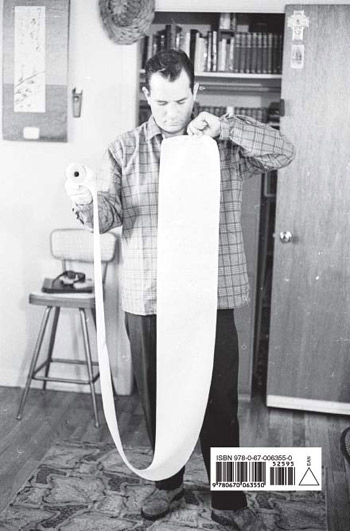
From the back cover of On the Road: The Original Scroll: Jack Kerouac displaying one of his later scroll manuscripts, most likely The Dharma Bums


Kerouac's map of his first hitchhiking trip, July-October 1947 (click image to see the full map)

Original New York Times review of On the Road (click image to see the full review)

... Read more

Customer Reviews (8)

5-0 out of 5 stars Yass, Yass, you should read this and explode.
Let me starting by noting that this was the first time I've ever read this wonderful tome.You can't be around literature or even modern American culture without hearing the name Jack Kerouac, but I had never actually sat down and read this book.

It took me a few chapters to "get into it" in terms of the style.But after a while, I couldn't wait to get home from work and read a few more chapters, and savor the goodness. I LOVED the narrative, and the stream of consciousness style added to the prose.I've since read a bit on Kerouac and his style and his friends (Wikipedia is a good place to start), and this isn't the sloppy, lazy manifesto it is often made out to be in today's times.Kerouac knew exactly what he was doing, and it was beautiful. I'm not going to summarize the story, because you probably already know it, but I will say that I wept at the end because I was touched, and because I was truly sad to say good-bye to this book.

As others have clearly noted--there isn't much else "special" about the book in terms of it being an "Anniversary edition."There is NYT review included from when the book was published, and while a nice read, that is the only "extra" you get.The jacket cover is nice, and the hardcover looks like something you might hold on to as opposed to maybe a paperback.Beyond that, if you already have a hardcover version of this wonderful book, you won't be missing much by skipping this edition.

Kerouac's prose really buries itself into your subconscious, and when your friends wonder what the hell you are talking about, remind them of what you are reading.I'm sorry that my prose falls short in capturing the joy, the utter joy, I experienced when reading this book.If you have not read it yet, you could do much worse than this.

5-0 out of 5 stars Ultimate Version of a Classic redone
Everything old is new again!

I remember reading Jack Kerouac immortal novel of a road trip when I was in high school. About ten years later, I heard a Rhino record collection of Kerouac reading abridged cuts from his novel with Steve Allen (yes, author/actor/former Tonight show host) playing piano in the background. About five years later, Durkin Hayes audio hadDavid (Kung Fu) Carradine reading an abridged version of the novel. About five years ago, Caedmon audio had Matt Dillon read an unabridged version of Road. Now Will Patton has stepped up to the audio plate, orating an unabridged recording of Road

Patton brings a southern charm to his narration of this classic American novel of an anatomy of a road trip early 1950's. This audio capture the beatnik era in the reading. Patton's vocal shading is amazing to listen to.He seem to capture the era and the characters with a quick change in his voice or tone

As I have said, I have other versions before, but this seem to be a verbal time capsule of an era gone by.

For those who have notread the book, this audio will be a perfect chance to listen to great literature.

Bennet Pomerantz AUDIOWORLD


3-0 out of 5 stars A Young Man's Book
After six months of reading Trollope (and loving it) this year, I realized it was time to put the Victorians behind me for a while and started checking out the New York Times book reviews.Coincidentally, the 50th anniversary of "On the Road" came to my attention.It seemed like gross oversight to have lived in America for 50 years and not know anything of Kerouac.

"On the Road" seems like a young man's book (both for the writer and the reader).I wish I'd come to Kerouac 30 years earlier, at which time I was living in Manhattan among a circle of friends all taking ourselves way too seriously.For a susceptible young mind, reading it might encourage indulgence in more youthful high-spirited madness and irresponsible experience; perhaps that's healthy, perhaps not, but it would create memories."On the Road" is a great promotion for Life and Experience (and less brooding).

However, that said, reading the book (as a man in his fifth decade), I appreciated the book without finding it a consistently enjoyable or satisfying experience.Within the first hundred pages, I became impatient with the sameness of all the events of the book and its characters.I stayed with the book out of curiosity and hope, trusting that there would be development or growth of either character or plot.

But, reading of the characters' somewhat redundant frenetic buzzings here and there, the picture that often came to mind was that of a flea circus: all frenzied mindless activity without purpose or pattern ("sound and fury signifying nothing").

I suspect that, if one read only the first 50 pages and the last 50, little of the experience of reading the book would be lost, and this is hardly a recommendation for a book.The exception would be the loss of some fine passages of prose poetry.If one stops focusing on plot and development, there can be satisfaction to be had from savoring the descriptive writing.

Is it possible to care about a book without caring about the characters?I'd go so far as to say that there were no real characters.Dean is a speech pattern, a distinctive highly-energized speech pattern, but he seems little more.Reading Sal's frequent references to Dean's madness, I wondered if Sal meant that Dean was literally mad and if the book's culmination might be his total mental dissolution.But, at the end, Dean was still sweating and rubbing his belly and babbling as in the first chapter.Sal the observer, himself seems a bottomless vessel; more and more may be poured into him, but he never fills and nothing of substance pours back out.And the rest of the characters are largely interchangeable.

In the end, I think it's easy to esteem "On the Road" as a kick in the butt of literature, and as a new-sounding (for the time) and distinctive voice.But I'm not driven to seek out more.

4-0 out of 5 stars Forever young
Jack Kerouac is a conservative. Yes, believe it. He is a conservative in the best sense of that word before it was corrupted by the mouths of partisan politicians.
One wag once classified "On The Road" as mere "typing" and I first judged it to be an amateurish travelogue. Then I recognized what Kerouac is doing -- trying to call America back to its better self; what America was before World War I; what it was before it became the cop of the world out to "prove something" (the supposed merits of gunboat social democracy). That's reason enough to rank "On The Road" a classic.
Only a person with the disposition of a child can enter the Kingdom of G-d, the Christian scriptures say. Kerouac's narrator Sal Paradise (the last name gives it away) is of the Kingdom. But he's no braggart or preacher. Sal quietly mourns that America has mostly ceased to be. His contrast of U.S. and Mexican police shows the depressing depths to which the "civilized" world's leading nation has sunk. Yet Paradise holds fast that "every moment of life is holy and precious." Interactions with Mexican Indians remind us that the Indians were the proud forerunners of Western man. One weeps today for American Indians who have traded their noble station for mawkish casino gambling entertainment pottage fouling the spiritual rivers of mankind.
Kerouac's post-World War II narrative reminds one of the Jazz Age rebellion (best chronicled by F. Scott Fitzgerald) that followed World War I. Jazz plays a large role in both rebellions. Kerouac is trying to call out the better (albeit imperfect) America in part through immersion in "bop" music. Charlie Parker's "Now's The Time" ought to be considered the lit motif/soundtrack of "On The Road." Parker's music and Kerouac's prose communicate urgency. Kerouac even positions Sal Paradise to be like Parker. The author describes Parker as a "cool" Kansas City alto sax player spurred on by "mad" Thelonius Monk and "even madder" Dizzy Gillespie. Road companions Carlo Marx (is Kerouac's flirting with communism?) and Dean Moriarity (the name "Dean" implies a teacher) play Monk and Gillespie to Paradise's Parker.
Kerouac shows his yearning for the old and better America through the search for Dean's father. These hopes would be shattered when the U.S. war machine plowed into Korea and Vietnam. Big government, operating as the dual-headed welfare/warfare state, continuing to grow and destroy,draining the country of its people and vitality. Fitzgerald saw the government and its political central bank crash the economy then get out by blaming freedom. A generation and two later, Kerouac and fellow "beats" would witness American smashing up non-threatening countries and skating away pointing fingers at communists in Russia and China.
Sal Paradise notes it covertly and almost dispassionately, telling us about "the snake" destined to consume the planet. Moreover, Sal's father is dead while Old Man Moriarity (metaphors for the better America) remains missing. Kerouac resigns himself yet with a faint hint of optimism.
"...Nobody, nobody knows what's going to happen to anybody besides the forlorn rags of growing old, I think of Dean Moriarity, I even think of Old Dean Moriarity, the father we never found, I think of Dean Moriarity."

1-0 out of 5 stars incredibly disappointing
The 50th anniversary splash surrounding this "classic" finally drove me to try it and I must admit, I really don't know why I bothered.I was 5 years old when this book was written so I was obviously way more a part of the hippie generation than the beat generation.Nevertheless, the story is boring (it's been a long time since it took such a long time to finish a novel)and repetitive, the writing is crappy, the insights are minimal at best, and there is not a single character that mattered to me.I guess I'm glad I finally read it but what a tremendous disappointment. ... Read more


3. On the Road: The Original Scroll
by Jack Kerouac
Hardcover: 416 Pages (2007-08-16)
list price: US$25.95 -- used & new: US$7.93
(price subject to change: see help)
Asin: 067006355X
Average Customer Review: 4.5 out of 5 stars
Canada | United Kingdom | Germany | France | Japan
Editorial Review

Amazon.com
The legendary 1951 scroll draft of On the Road, published word for word as Kerouac originally composed it

Though Jack Kerouac began thinking about the novel that was to become On the Road as early as 1947, it was not until three weeks in April 1951, in an apartment on West Twentieth Street in Manhattan, that he wrote the first full draft that was satisfactory to him. Typed out as one long, single-spaced paragraph on eight long sheets of tracing paper that he later taped together to form a 120-foot scroll, this document is among the most significant, celebrated, and provocative artifacts in contemporary American literary history. It represents the first full expression of Kerouac's revolutionary aesthetic, the identifiable point at which his thematic vision and narrative voice came together in a sustained burst of creative energy. It was also part of a wider vital experimentation in the American literary, musical, and visual arts in the post-World War II period.

It was not until more than six years later, and several new drafts, that Viking published, in 1957, the novel known to us today. On the occasion of the fiftieth anniversary of On the Road, Viking will publish the 1951 scroll in a standard book format. The differences between the two versions are principally ones of significant detail and altered emphasis. The scroll is slightly longer and has a heightened linguistic virtuosity and a more sexually frenetic tone. It also uses the real names of Kerouac's friends instead of the fictional names he later invented for them. The transcription of the scroll was done by Howard Cunnell who, along with Joshua Kupetz, George Mouratidis, and Penny Vlagopoulos, provides a critical introduction that explains the fascinating compositional and publication history of On the Road and anchors the text in its historical, political, and social context.

Celebrating 50 Years of On the Road
A 50th anniversary hardcover edition of Kerouac's classic novel that defined a generation. On the Road is the quintessential American vision of freedom and hope, a book that changed American literature and changed anyone who has ever picked it up.
Why Kerouac Matters: The Lessons of On the Road (They're Not What You Think): John Leland, author of Hip: A History argues that On the Road still matters not for its youthful rebellion but because it is full of lessons about how to grow up.


From the back cover of On the Road: The Original Scroll: Jack Kerouac displaying one of his later scroll manuscripts, most likely The Dharma Bums


Kerouac's map of his first hitchhiking trip, July-October 1947 (click image to see the full map)

Original New York Times review of On the Road (click image to see the full review)

... Read more

Customer Reviews (24)

5-0 out of 5 stars In a Class by Itself
I mean, it's hard to write a review of something that people are stil trying to figure out exactly what it is, poem, novel, autobiography, jazz riff, all the above.It was great to see the unedited, unchanged version with original names and some relatively (to our times) tame sexual themata.I whizzed right through it trying to capture to wild ride Kerouac was on while writing this single paragraph tale of our age.When read alongside the more familiar version with paragraphs and quotations marks and pseudonyms, it was easy to see the power of the book and the overwhelming effect it must have had on readers when it first came out, even if it was in the more muted version.I loved it.

It also doesn't seem like the kind of book which requires either a synopsis or a lengthy review.This is not the Count of Monte Cristo, let's face it.It is hard to say that the book has a real plot per se.But it shook a generation because of its immediacy and honesty and emotional power.Maybe Truman Capote didn't like it (he called it "typing" not writing).But this was something new and raw, and plenty of people didn't like Miles Davis either.

5-0 out of 5 stars awesome read
this book was required reading when I was in high school, to be able to reread it with all the real people mentioned was a wonderful treat

5-0 out of 5 stars Wow!He KNEW Time!
I read the standard version of ON THE ROAD years ago - and loved it.But having just read the unbroken by paragraph or chapter rush of the scroll version, it's like the literary equivalent of a Wellesian cinematic long take.And it makes a difference, a big difference in the book.It is no longer a book, it is the very onrush of Life and it is trip that carries you along whether you want to go or not.There is a truly hypnotic appeal in this unbroken narrative that is, yes, diluted in the standard version.The real names are welcome, the more explicit sexuality is welcome - but it is the literary long-take that makes this original version so complelling and irresisitable.(And just as an aside, as there would be no true Abbott without Costello and vice versa...there probably would not have been a Kerouac without Cassidy.Or if there were, he probably would have been lame and tame and not much remembered.But Kerouac's writing of the "Holy Goof" Cassidy smacks of a synergy that comes pure from Heaven - or Hell, if you disapprove the admittedly madcap lifestyle of the book's main hero.)Anyway - back to my main point - the unbroken scroll reads like how it was meant to be...for in its FORM is its very meaning...and that is that Life is a road and a rush and a journey and a thing to be explored, adventured into, seeking, searching...for Life is Movement and this book is the most mobile book ever written.A must...like a breath of fresh air! Like the wind blowing your hair through the open window of an immortal car on an unending drive.An Odyssey for our times - still!Thanks, Jack!

5-0 out of 5 stars Highly Recommended
This is an excellent version of a cult classic book that I HIGHLY recommend.With real names, more details and a sweet introduction you can't go wrong.

KLB

5-0 out of 5 stars No One To Fill Jack's Shoes and I Got The Blues...
Fifty years ago
A wind started to blow
across America land of the free
The change was from normal to strange to beatific ectasy
and all be-
cause one man broke the sanctified clause between seen and unseen
and since his intense vision
of life, of love, of joy of strife
none of us could ever be the same again

Who do I worship? Who do I blame?

Jack.

I read his books/ I bleed his books dry with coffee in one hand
Blue Pentel in the other
And the man is blindly mad as well as kindly Saint brother

Him paint-
ing word pictures of pivateslideshowlife for all to see
He
and his pal Dean Moriarty
going across this great big wild plain

A trip for child mind
For angel heart
For illumiated soul
For frustrated dry bones of body weak

Shallow, hollow, small and frail
Hoping to find the Holy Grail.
Seek and ye shall find more than you could know

He infected intellects with sick artistic glow
Gave new license to be free
with words so easy without structure without form
so startling so mad so glad so sad
this storm of Beatific Fury.

Hip beyond words his echo remains
and his literary gifts still stains this world
In 1967 we sent the saint back to Heaven
no one to fill Jack's old shoes
no one will
and I got the blues

Poor sad Jack.

We need you back.


Peace & Blessings,
john, 'the Light Coach' ... Read more


4. The Subterraneans
by Jack Kerouac
Paperback: 111 Pages (1994-01-27)
list price: US$12.00 -- used & new: US$6.60
(price subject to change: see help)
Asin: 0802131867
Average Customer Review: 4.0 out of 5 stars
Canada | United Kingdom | Germany | France | Japan
Editorial Review

Book Description

Written over the course of three days and three nights, The Subterraneans was generated out of the same ecstatic flash of inspiration that produced another one of Kerouac's early classic, On The Road. Centering on the tempestous breakup of Leo Percepied and Mardou Fox--two denizens of the 1950s San Francsico underground--The Subterraneans is a tale of dark alleys and dark rooms,of artists, of visionaries,
... Read more

Customer Reviews (39)

2-0 out of 5 stars Incoherent rambling
Loved Dharma Bums, can't forget On the Road, enraptured with Desolation Angels, and bored to death with the Subterraneans. Only read the first 20 pages, though. Couldn't get farther then that, so maybe it really picks up. Love the first page however. It's really Kerouac at his nonsensical worst.

1-0 out of 5 stars Arrogant and overrated.
I wouldn't say that the book is wholly without merit, but it left me with an eerie feeling, and a suspicion that it was an advertisement for a certain lifestyle, a cocktail, or god forbid khakis.It's a shameless embrace of impulsive living, embodied in the stylized way this book is written, and which was eventually Kerouac's undoing.

Is he fleecing the lowlifes he socializes with by writing down their stories?Is he glorifying, and capitalizing on, disfunction?It's difficult to answer those questions, but a more meaningful or entertaining book would preclude their asking.

Capote said of Jack Kerouac that he was "typing, not writing."That may have been unfair, but reading the Subterraneans, I felt I knew where he was coming from.That said, I kinda liked the ending.Gosh, I'm a sucker.

3-0 out of 5 stars Kerouac
I liked "The Subterraneans" enough, even though it's not nearly on my list of best works by the author. But I'm hot penning these few sentances for peeps who have read this book. This is for the one's who are interested.
If you haven't read anything by Jack Kerouac before this is NOT the place to start. Though a good book with a good story, "The Subterraneans" is a hard read and not a great introduction to the author. Note I said hard in the previous sentance because this novel was written over three days and three nights and reads that way. Kerouac's prose is right on, as it usually is, but more dense this time, probably because the man was on speed when he penned it.
If you are new to this world of Kerouac then may I recomend to you the always popular "On the Road" or "The Dharma Bums" before this. They both show what Kerouac does best and are two of the best books he ever wrote. Poetry in the form of story.
"Subterraneans" is a good Kerouac book, not the best, not the worst, pretty much residing in the middle of his catalog, hence the three star rating(three to me means good, but there are better books out).
So there you go. You should read "Subterraneans" because again it is a good book. But I think it could, and probably would, turn off newbies to the Kerouac legend(there are always exceptions mind you), and it would be better to start off with one of the aforementioned titles first. Thanks.

4-0 out of 5 stars Funny Angel
My third exposure to Kerouac, though enjoyable and interesting, only rates four stars from me.

Having read Dharma Bums and On The Road prior, Subterraneans, which has a far more limited landscape than the aforementioned, also has a lesser 'growth' for the protagonist, who is a thinly veiled Kerouac.

The story centers on the brief love affair of novelist Leo Percepied with Mardou Fox, an African American beauty, ten years his junior. Taking place during the 1950's; one of the major obstacles in the relationship, from the outset, is the racial difference of the two characters.

But Percepied suffers from other self-imposed obstacles, being unable to fully admit his love of Mardou to himself, until she begins to pull away from him.

Barely over 100 pages in length, this novel, while rich in the same Beat-generation characteristics of his other works, shows far less of a 'voyage' for the protagonist than other novels. While you do gain some insight to the life and person of Jack Kerouac, it is limited.

But don't let that discourage you from giving this book a glance. It is easily digestable, and very enjoyable. Kerouac's Benzadrine-laced prose is, as always, a 'trip'...even in a story that doesn't go very far.

5-0 out of 5 stars THE BEBOP OF LOVE AND ALL THAT JAZZ
THE SUBTERRANEANS is a novel remarkable for a number of distinctions, not the least of which is the report that Grand Beat Master Jack Kerouac wrote it in only three days.The book's analytical depths, structural complexity, and richness of language would make one more inclined to believe it took three years to write.To read this novel is to sink into a mesmerizing whirl of bebop rhythms, uncompromising confession, and the audacity of raw images for which Kerouac and other Beat Writers were so well known. The current hoopla brewing around Ashton Kutcher's on-screen interracial relationship in the forthcoming film GUESS WHO? could make many think this is something new in popular culture. However, Kerouac's main characters in THE SUBTERRANEANS are Leo, an Anglo-American, and his love interest Mardou, an African-Native American.The interracial nature of this relationship (supposedly based on a real-life one that Kerouac had in 1953) is not ignored but neither does it dominate the novel.A question clear from the beginning is not only whether or not Leo and Mardou can successfully navigate their very intensely fragile personalities and sustain a mutually satisfying relationship, but also whether or not they can survive the excessive weights of history and bigotry.

The entire culture of bebop jazz forms an important backdrop for the novel and Kerouac expresses his love for the music in short homages paid to some its giants, including saxophonist Charlie "Bird" Parker.Likewise, a number of Kerouac's Beat pals can be found (as in other works by him) in supporting roles in this novel: Allen Ginsberg as the character of Adam Moorad; William Burroughs as Frank Carmody; and Gregory Corso as Yuri Gligoric. This a true and thoroughly enjoyable American classic from one of our most true and thoroughly enjoyable writers.

by Aberjhani
author of I Made My Boy Out of Poetry
and Encyclopedia of the Harlem Renaissance (Facts on File Library of American History)

... Read more


5. On the Road (Penguin Great Books of the 20th Century)
by Jack Kerouac
Paperback: 304 Pages (1999-06-01)
list price: US$16.00 -- used & new: US$9.03
(price subject to change: see help)
Asin: 0140283293
Average Customer Review: 4.0 out of 5 stars
Canada | United Kingdom | Germany | France | Japan
Editorial Review

Amazon.com
On The Road, the most famous of Jack Kerouac's works, is not only the soul of the Beat movement and literature, but one of the most important novels of the century. Like nearly all of Kerouac's writing, On The Road is thinly fictionalized autobiography, filled with a cast made of Kerouac's real life friends, lovers, and fellow travelers. Narrated by Sal Paradise, one of Kerouac's alter-egos, On the Road is a cross-country bohemian odyssey that not only influenced writing in the years since its 1957 publication but penetrated into the deepest levels of American thought and culture.Book Description
MAXnotes offer a fresh look at masterpieces of literature, presented in a lively and interesting fashion.Written by literary experts who currently teach the subject, MAXnotes will enhance your understanding and enjoyment of the work. MAXnotes are designed to stimulate independent thought about the literary work by raising various issues and thought-provoking ideas and questions.MAXnotes cover the essentials of what one should know about each work, including an overall summary, character lists, an explanation and discussion of the plot, the work's historical context, illustrations to convey the mood of the work, and a biography of the author.Each chapter is individually summarized and analyzed, and has study questions and answers. ... Read more

Customer Reviews (614)

3-0 out of 5 stars The good ol' days...
Really hoped I would like it more. Basically the circle of life never ends...Drive, meet new people, get high, go to sleep, wake up and do it again.

5-0 out of 5 stars Can't beat Kerouac's style
Although many American novelists have written novels in the style of everyday drifters hitting the road, not many can compare to the inimitable style of Jack Kerouac.

Sal and Dean hit the road like so many characters before them, both real and fictional, in search of something intangible and not quite conceivable. They are driven by a restless lust for life and for whatever they can find in the next state or country. In many ways this is a tale that typifies the human experience, always looking for what's around the next corner and exemplifying the point made in John Lennon's famous quote "Life is what happens when you're making other plans".

Sal and Dean's crossings of America are always both alluring and inspiring, however it is when they cross the Rio Grande that this novel truly kicks into life. Kerouac's prose in describing the Mexican landscape, people and exploits of the pair is quite simply without parallel. The reader is immediately intoxicated by the sun-baked Latin American atmosphere and the tequila-drenched hedonism that it brings.

Throughout the entire convoluted and charismatic tale runs the relationship between Dean and Sal which, some would argue, is the entire focus of the book. It is a close relationship but one that is plagued and damaged, perhaps irreparably, by Dean's impetuous nature and self absorption. It is a beautiful but flawed fiasco but one that makes the novel even more enticing.

As I mentioned previously, there have been many novels of the drifter or road wandering variety, however with Jack Kerouac's 'On The Road', we certainly have a seminal work.

2-0 out of 5 stars Take Detour, Uneven Road Ahead.
On the Road, Jack Kerouac's epic of road travel and search for meaning in the late 1940s, was written in three weeks time, typed on a long scroll, which was really several pieces of paper taped together. Kerouac's writing has a stream of conscious, spastic nature, although it went through many years of revisions before being published.The story fictionally recounts true events in the writer's life, particularly those with Neal Cassidy (Dean Moriarty in the book), whom Sal, the Kerouac character, seems to have had an infatuated crush on.From New York to California and Mexico Sal drives, or rather rides, and comes across various characters and cities.The novel helped to launch the Beat movement and has influenced countless writers, artists, and readers alike, and has been deemed one of the best novels of 20th-century American literature.Significantly, it made America a literary subject.

I wanted to like this book.I really, really did.I was prepared to be blown away and taken on a literary adventure of meaning and wonder, excitement and energy.I read, and waited, to no avail.I read some more, but it soon became apparent that this would not be the book for me.Despite this, I grudgingly soldiered on and completed it a few days later than I had anticipated to (I usually breeze through fiction without struggle), as I continuously put it back on my shelf only to talk myself into trying again.I'm glad I did, but found that the book's legend is far more interesting than the actually story.

Split into four sections, each consecutive one involving a different road trip with more details and a shorter time-span, I found myself also becoming consecutively more involved as the book went on.The first section I found, unfortunately, tedious and little more than a listing of things he did and places he went.The following section was not as eye-rolling, and the third was tolerable.The fourth was actually interesting.There was throughout, of course, the occasional poetic and insightful passage, but they were few and far between and not really worth the effort to find.The most unfortunate flaw of the novel is that it is actually quite uninteresting.It would have made an intriguing (and bearable) novella, but its length feels frustratingly unjustified.

Furthermore, and this is no fault of Kerouac, the book is hardly what popular culture has touted it to be.The text is not rebellious, but actually quite conservative.It is not forward-looking, but nostalgic.The roads that the men travel upon are by the 1950s (the book was published in 1957) of little significance as Eisenhower was quickly building up interstate freeways.Kerouac's memoirs are really a sort of nostalgia for a disappearing era.And the characters, really, are hardly rebels.Instead they drift from place to place seeking excitement, only to find the same dull existence in each setting.In the second half of the book Sal begins to grow tired of the road, and of Dean, as he sees more and more of the same.Also, Sal often feels content to be a spectator rather than a participant, watching the antics of others from a safe distance.Truly, the men are misfits.In an age when men were expected to be unemotional, solitary bread-winners, Sal is thoughtful and sensitive, indeed, tenderness between men (not sexual, as that was omitted from the original draft) is an important aspect of the novel, and he is continuously asking his aunt (mother, in life), whom he still lives with, to send him money.In this way they were unique, disenfranchised maybe, but they were not rebelling against anything.Mostly they get drunk and try to get laid in a familiar fraternity style.The characters are lonely and insecure, not hipsters or nonconformists.Their journey is about a search for stability, not spontaneity.These are not criticisms of the novel, but merely observations, and are actually the elements that make story vaguely readable.

For all these reasons and more it is an important piece of Americana, and it is an interesting commentary for its time, about its time.However, great literature it is not.In fact, I can't bring myself to recommend that people spend their time going through Kerouac's thoughts, which usually amount to things being "mad," or his journal-like passages of events that tend to feel more like the notes he took about an account to be later revised into a yet-to-be-finished version.For another road story of the same period, published around the same time, take a detour and check out Lolita by Vladimir Nabokov, which is phenomenal literature, rather than a literary phenomenon.Some may say it is a victim of its own hype, which nothing can ever live up to, but I've read some classics where that hype has been more than appropriate. Kerouac, the man and his book, is one that people tend to have very strong feelings about, either positive or negative, and perhaps he does speak to the heart of some readers.This reader, however, was unimpressed and unmoved.On the Road's importance today is more in what it symbolizes, rather than what it is.

3-0 out of 5 stars OK read
I found this to be a fairly boring story, but it is well written.Perhaps my expectations were just too high, after all the praise around it.Still glad I read it.

1-0 out of 5 stars On the Road
I was very bored by this and quit reading about half way through.The prose didn't keep me interested enough in order to keep reading it. ... Read more


6. Tristessa
by Jack Kerouac
Paperback: 96 Pages (1992-06-01)
list price: US$12.00 -- used & new: US$5.60
(price subject to change: see help)
Asin: 0140168117
Average Customer Review: 5.0 out of 5 stars
Canada | United Kingdom | Germany | France | Japan

Customer Reviews (26)

4-0 out of 5 stars Vintage Kerouac
Jack Kerouac describes his low-budget meanderings within the slums of the Prostitution and Drug Culture in 1950's Mexico City.His descriptions of the hovels that his "compadres" live in, is quite engrossing... it reminds me somewhat of the activities in the neighborhoods of modern-day Tijuana (short all the pets and chickens and so-forth)... I wouldn't recommend anyone attempt these same "feats" in modern-day Mexico City, as it has become a much more dangerous place for tourists over the last 50 years.

The fact that Kerouac is able to travel and live among the bohemian under-culture is one thing, but that he is able to describe it with his running dialog style on a typewriter is quite unique (a style that is something close to what I'd independently come up with at 14 in 1973, while capturing a dialog between a good friend and my sister on my Mom's old manual typewriter).

5-0 out of 5 stars sweetness
I can`t really review the whole book yet as I`m only on page 16, but so far this book is thick, and dripping in poetry.Kerouac is genius, unmistakable.I should have read this sooner--by page 16 it`s already more highly beautiful then 1000 other books combined.I`ll read the rest of it and write more later--Hopefully it`s more of the same

5-0 out of 5 stars Tristessa
Many readers who love Kerouac consider "Tristessa" one of his finest novels. "Tristessa" has become the book of Kerouac that I return to most often.The book was initially rejected for publication, and it first appeared in paperback in 1960 following the success of "On the Road". The book initially may have been conceived as part of "On the Road." "Tristessa" is written in Kerouac's "spontaneous prose" style, with long rhythmic improvisational sentences and the feel of jazz.It is short, butdeceptively complex, introspective, romantic, and sad.When I first read the book, I was taken by the descriptive passages and didn't pay much attention to the progression of the story.In my most recent reading, I got more from the story itself.

"Tristessa" consists of two short parts, each of which tells the story of the first-person narrator, Jack, as he makes two visits to Mexico City separated by about a year. Jack is in love with a morphine-ridden prostitute named Tristessa. In part 1 of the book, "Trembling and Chaste" we see the ambiguous relationship between Jack and Tristessa. The reader meets Tristessa in her shabby room, surrounded by other addicts, including her supplier, a man named El Indio, and by cats, dogs, chickens,and by a crucifix over her bed.Jack is with her, but he leaves and takes the reader on a tour through the underside of Mexico City, rife with poverty, drugs, and prostitutes.The scenes with Tristessa are interlaced with discussions of suffering, religion and Buddhism.Jack is in love with Tristessa, but he has taken a vow of sexual chastity which he reluctantly tries to honor.Tristessa appears to be in love with Jack.

In the year that intervenes between the two parts of the novel, Jack works
in a fire tower in the Northwest -- this story is told in Kerouac's "The Dharma Bums."When he returns to Mexico City as narrated in part 2 of the book, Tristessa's life has deteriorated as she has become more hopelessly addicted.Kerouac's friend Old Bull Gaines (William Burroughs) is also in love with Tristessa as is her supplier of drugs, El Indio.Jack tries to rescue Tristessa from injury,overdose and possible death as he stays with her through the streets of Mexico City and tries to find her a home.He loses her to Gaines and realizes the impossibility of their relationship -- which, in the published text, remains unconsummated. At the close of the book, Jack dreams of writing "long sad tales about people in the legend of my life... This part is my part of the movie".And he invites the reader "let's hear yours."

"Tristessa" is a short, highly personal, and deeply moving novel. Kerouac told the story of his own troubled life in a series of novels that have stayed with me.Every person has their own story, albeit not necessarily that of the beats.Kerouac has told his, and he has challenged the reader to understand and to respond with sympathy and joy to his or her own story: "lets hear yours."

Robin Friedman

5-0 out of 5 stars Excellent.
First of all, I'm a big Smashing Pumpkins fan and always wondered where the inspiration for the song "Tristessa" came from. Then, I'd read that it was a Kerouac novel, but didn't actually read this until after I'd read ON THE ROAD..
While ON THE ROAD really got me into liking Kerouac, i think it was this one (and THE ART OF HAPPINESS by the Dalai Lama) that got me into spirituality and Buddhism more specifically. It's really his observations that stand out in this novel, and I have to say that this novel is sweet in its briefness, and also somewhat more emotionally involved than some of his other books, since it's a love story of sorts.
Definitely pick up this book.

5-0 out of 5 stars What's Changed?
I remember reading this about three years ago as an undergrad and not enjoying this book. I'm not sure why. I just never much liked the Beats; their experiences just seemed so foreign to mine for me to relate. But I reread this book a couple of days ago, and everything had changed. I'm just guessing that I was an idiot a few years ago, and now I'm obviously wise and intelligent and crazy and depressed enough to like this. I read this straight through, and every minute of it felt so authentic. I felt the sorrow here. The longing the protagonist has for Tristessa and the desire he has to redeam her. The sense of despair and longing for spiritual fulfillment. I appreciated his engagement initially with Buddhism and eventually a reconsideration of Christianity. This was a nice read. Spare and sincere. I'll reread it again soon. I'm sure that I'll like it again. ... Read more


7. Jack Kerouac: A Biography
by Tom Clark
Paperback: 272 Pages (2001-08-31)
list price: US$14.95 -- used & new: US$8.75
(price subject to change: see help)
Asin: 1560253576
Average Customer Review: 4.5 out of 5 stars
Canada | United Kingdom | Germany | France | Japan
Editorial Review

Book Description

All the components of the Jack Kerouac legend are here: the excesses of alcohol and drugs; the soul searching; the characters—Neal Cassady and Allen Ginsberg, Gregory Corso and Lucien Carr, John Clellon Holmes and William Burroughs, Jack’s mother, Gabrielle, and the other women in Kerouac’s life. There is also a record of the travels that became the basis for On the Road and Visions of Cody, the death-shrouded childhood that became Mexico City Blues and Tristessa, and the stupor of fame that weighed on him as he tried to articulate his torments in Big Sur. This edition is newly revised with a new introduction by the author.
... Read more

Customer Reviews (2)

5-0 out of 5 stars Concise, Factual, and non-Hagiographic.
I was looking for a biography of Jack Kerouac and the one thing I wanted to avoid was a fan's love letter. I wanted something as objective as possible which would illuminate the writer as a man rather than a hero, and that is exactly what I found in Tom Clark's text. It's quite concise with its narrative running just over 200 pages. Despite its brevity, the book managed to cover Kerouac's shortened life in a most satisfactory fashion. I also enjoyed the pictures which artfully adorn the chapters. The one thing that really stands out is the way in which he used drugs to self-medicate. He said that alcoholism was a happy disease but it certainly wasn't for him. Depression appeared to be an even more prominent feature of his personality than graphomania. I found the last forty pages of the tale very sad indeed. One longs to grab him by his flannel shirt and inject him with antabuse. All of this is wasted emotion, however. The man who is bent on killing himself can never be deterred from his goal. This is a skillful portrait of a legend as a human being.

4-0 out of 5 stars He was dedicated . . .
One of the first things that you come to learn about Jack Kerouac, aside from geographics, is how much he loved to write. The man truly was relentless and driven. He carried a typewriter in his suitcase and beingout of work was just an excuse or a good moment to write. I read this bookand it saddened me to no end because Jack inspired and even pushed many tobecome writers, but didn't have the luxury of long life to see his ownfruits. William S. Burroughs accredits Jack for his whole literary career.

Clark describes Kerouac in terms that you may not have ever thought ofhim in. He was a deeply religious person due to his mother, he was kind andgentle and, almost fatherly to his friends. He did love to drink and gethigh, like his contemporaries, but you really feel that he was asmis-guided by his flock as much as he tried to steer them. They truly werehis extended family. This is the only Clark piece that I've read, and itwas well worth the time and money spent.

I gave this book four starsbecause Clark seems to describe Kerouac as two people at all times. Andmaybe the question of that itself should've been examined further. I willrecommend this book to others for sure. This book seems to encapsulate theKerouac very well (for all his faults). ... Read more


8. Vanity of Duluoz: An Adventurous Education, 1935-46
by Jack Kerouac
Paperback: 272 Pages (1994-06-01)
list price: US$15.00 -- used & new: US$8.25
(price subject to change: see help)
Asin: 0140236392
Average Customer Review: 4.5 out of 5 stars
Canada | United Kingdom | Germany | France | Japan

Customer Reviews (11)

3-0 out of 5 stars A weak novel from one of the greatest novelists ever
Unfortunately, even the stars in the heavens sometimes fall. This is what happened to Jack Kerouac in his final years, and this book is exhibit A.

Kerouac was never the "life is a thrill a minute joy-fest" guy that he's often mistaken for by young people who read "On The Road" and the others for the first time. (Myself included, many years ago) A rereading of his books later in life reveals how sad and confused a man he really was; his novels are a quest, they are not the answer. There are answers in them, but "hit the road and forget everything you were taught by your parents and your teachers" is not an answer he ever gave or intended to give. Kerouac was a profoundly lonely man, so lonely that he let many of his friends treat him like a dog (remember Dean abandoning him in Mexico in "Road") and not only came back for more but wrote some of the greatest books ever written about them.

But his loneliness and confusion truly came home to roost after he became famous. Fame made him bitter and forced him to drink and isolate himself ever more in order to deal with it. He wrote about this in "Big Sur," unquestionably one of his best books, and his power as a writer never left him...but in "Vanity of Duluoz" we see how far he's slipped from the great Journeyman he was two decades earlier. Particularly in the novel's early passages, he rails against modern society and moans over how much better things were when he was young, and it poisons his writing almost fatally. Of course, he is hardly the only writer to complain about the world; one of his greatest influences, Louis-Ferdinand Celine, practically made a career of it, but Celine made it FUNNY, and that makes all the difference. Nobody wants to hear an old man bitch about these kids today, if that's his only point. Celine used his kvetching as a counterpoint to whatever story he was telling, and the contrast comes on like an explosion of energy. Kerouac, sadly, only tells his story to show how much better times were back then than they are now. Worse, in the first sentence of the book he implies that "Vanity Of Duluoz" isn't even meant for us, his faithful readers: it's for his wife. (And judging from the way she kept so much of his writing out of the public eye for decades after he died, it's clear he was preaching to the choir)

I don't know what effect the novel had on the millions of kids who snapped it up in 1967, thinking they were getting another youth-affirming "On The Road" or "Desolation Angels" (another book I drastically misread as a kid) and discovering instead a man their parents' age, complaining about their long hair and their careless, hedonistic lifestyles and how they have used him as an excuse to become worthless bums. Their reaction couldn't have been too happy. It's too bad: a generation who felt he was their christ figure, the one who went out into the world and showed them the way, now finding their buddha telling them to clean up and get lost. And this book, detailing the years 1935 through the end of the War, should have been one of his most joyful, bombastic works: he leaves his hometown, discovers the wonders of Manhattan, meets his great circle of friends, and begins to discover himself as a man and a writer.

But it wasn't to be. He was simply too mired in depression and alcohol to muster the energy needed to give the subject the treatment it deserved. In a roundabout way he did, of course, tackle this time period in his first novel "The Town And The City," and although it lacks the characteristic Kerouac voice it's still an excellent novel, and highly recommended. But it's not the masterpiece that "Vanity" could have been, and that is all the more a tragedy. This book feels like a filler: he'd written about his childhood and his adulthood, now he needed to write about his young adulthood, so he could fill in the gaps in the Duluoz legend and say he finished it. That's just not a good enough reason to write a book. Even when you are---or were---as great a writer as Jack Kerouac.

5-0 out of 5 stars Another star from Kerouac
Kerouac was obviously influenced by Thomas Wolfe a great deal.And this influence had a great impact on Kerouac's style and method.Even so, he found his own path and own way of telling a story.Kerouac's stories largely mimic conflict within his own life, and therefore, reading a story by Kerouac is to read a story of Kerouac.I feel this is what has appealed to me most...that I'm not receiving a story about a fantasy world, but a autobiography about a real person with real struggles.Written in the style of On the Road and Dharma Bums, the Vanity of Duluoz is a must read...

5-0 out of 5 stars The last of Kerouac
For all intents and purposes this is Kerouac's last real novel.With great fondness and honesty, he goes over a lot of the same themes and events as in his earlier works, but now he's tired, not feeling the need to prove anything and just barely holding on to hopes that things ever get better.This is a sincere, lovely, heartbreaking and haunting book of reflections at the end of a pained but adventurous life.

5-0 out of 5 stars One of the best from THE best!
No, this isn't just for fanatics!If you want a history of good ol' Jack, then yes, it is just for fanatics.However, if you just want an exciting adventure, it's for anyone.This book has got something for everybody, seriously.It has crime, "romance", adventure on the high seas, everything and more.... and then there's always sport (now there's an obscure M. Python reference!Good thing it fits(:)Anyway, this book is a clasic, no matter what stuffy old lit scholars say.One of my favourite quotes comes from this one: "Insofar as nobody loves my dashes anyway, I'll use regular punctuation for the new illiterate generation."What's my favourite Jack quote?"Holy suffering cows!", that's what (:

3-0 out of 5 stars FOOTBALL AND WAR
All of Jack Kerouac's writings don't really fit into the category of novels. They are more in the form of the sentimental memories of Proust or a man looking back on his life as if he were already dead. The Vanity of Duluoz is no exception to this style. Of course, Kerouac takes the title for his work from the Bible verse in which it is said "all is vanity". Written just two years before his death, most of the book seems a Cliff's Notes to his entire body of work.

The book is subtitled "An Adventerous Education 1935-1945" and basically covers ground already seen in other works. Except in this one, he is writing a book for his wife, as if to fill in the story of his life to someone. The driving force behind this work is football and war. It follows Kerouac from early high school football games into college and then into the merchant marines and to the formative years of the beat movement.

Even though one of Kerouac's biographers, Barry Miles, said this book was written in his "fat Elvis period", I found the book quite good. Not among the best of his work, but he still had the spark of writing even in the midst of alcoholism.

Especially good are his experiences in entering Columbia University and the politics that got involved with his playing time. I didn't know that Jack pretty much decided to write because the coach of his team refused to let him start. So, basically, Kerouac just said "I have better things to do than take this. I'm gonna become a writer".

Something not really touched on in other novels but included in this one is Jack's service in the armed forces and the merchant marines. He wasn't afraid to serve in the military during World War II, he just couldn't take being ordered around. Back then, merchant ships crossing the Atlantic were in just as much danger from German u-boats as any battleship.

When the book starting to lose its power was when Jack met the other Beats, who really in the end were a bunch of losers. Kerouac was like Cool Hand Luke. His friends fed off him and on him, draining his energy and sapping his ideas. Kerouac makes up names that are so thinly artificial for his friends that you feel like you're reading a Dickens novel. When he concentrates on himself, he is a genius. When he writes about others, he becomes weak. He should have kept the radar squarely on himself.

This book is pretty good. Average for Kerouac. It is a paradox. It is a novel written about his a joyous youth by a man who sees himself in bitter old age. ... Read more


9. Departed Angels: The Lost Paintings
by Jack Kerouac, Ed Adler
Paperback: 224 Pages (2004-11-04)
list price: US$26.95 -- used & new: US$4.99
(price subject to change: see help)
Asin: B00127QDL0
Average Customer Review: 4.5 out of 5 stars
Canada | United Kingdom | Germany | France | Japan
Editorial Review

Book Description

This first-ever collection of Jack Kerouac’s visual art includes nearly every existing full-color painting collected and preserved by the Kerouac estate in Lowell, Massachusetts. Also included are dozens of black-and-white line drawings, sketches, and facsimile reproductions of Kerouac’s notations from his unpublished notebooks. In writing, Kerouac’s restless and relentless experimentation—what he called “spontaneous bop prosody”—pushed language to the boundaries of meaning. In painting and drawing he found a complementary means of expression. A friend and admirer of painters Willem de Kooning, Larry Rivers, Franz Kline, and Dody Muller, Kerouac was an ardent and deliberate student who worked to develop and refine his skills and his conception of the act of painting—a conception related to the spontaneous composition he had pioneered in his books. Ed Adler’s essay offers an unprecedented view of Kerouac, the visual artist. Rich in anecdote and drawing on extensive quotation from Kerouac’s letters, notebooks, and published writings, Adler’s essay demonstrates the biographical and thematic preoccupations common to Kerouac’s writing and painting, especially Kerouac’s struggle to integrate the two spiritual traditions, Catholicism and Buddhism, to which he was devoted. No consideration of Kerouac will be complete without reference to this heretofor- unseen aspect of his life and work.
... Read more

Customer Reviews (2)

5-0 out of 5 stars extraordinary Kerouac
This is a remarkable work about a remarkable artist - a real eye opener and worth every penny

4-0 out of 5 stars Pictures of Transient Pain and the World Beyond
The text and paintings here are revealing of Keroauc's soul as an artist tho without doubt his greatest paintings were done with words... and the numerous paintings and drawings reflect talent... however, most of the off the cuff pencil drawings are cartoonish and at times viewable for no more than 10 seconds. One thing he could rarily get right was a person's face, particularly the nose...very weird... The writer's pedantic analysis of Kerouac's work is alright at first particularly in setting the historical artistic context for modernist American painting, but begins to wear..and his assessment of Kerouac's work is inflated...There is no doubt Kerouac took his painting seriously.Paintings like The Eagle, the Ghost over Lowellat tenament dusk, the abstract paintings, the Clothesline, the woman with guitar and the pencil drawing of Buddha are all accomplished works..really quite surprising! (I would have liked to have seen his painting of Charlie Parker..but that is not in this collection). This book is recommended because, for once in the last ten years, we have some new insight into the man and his artistic vision. ... Read more


10. Desolation Angels
by Jack Kerouac
 Paperback: 409 Pages (1995-09-01)
list price: US$15.00 -- used & new: US$8.46
(price subject to change: see help)
Asin: 1573225053
Average Customer Review: 5.0 out of 5 stars
Canada | United Kingdom | Germany | France | Japan

Customer Reviews (37)

5-0 out of 5 stars Timid Before God
Jack Kerouac's 'Desolation Angels', written about a period of his life roughly 10 years before his death, acts as a nice bridge between 'On The Road' (which was awaiting publication during the course of events described in "Angels") and a subsequent publication, Big Sur, both of which I've read.

During his two month self-imposed exile to work as a fire ranger on Desolation Peak, Jack Kerouac was forced to confront many of his pre-existing or emerging demons.The location for this period of his life is especially apropos for the 'desolation' surrounding Kerouac, much of which was self-created, as he sank further into depression and alcoholism.

The book covers more of his life than just the two months on Desolation Peak, but as Jack re-emerges into society, you get the sense that this 'loner' was only comfortable being 'alone' amongst others...that while he could see, smell, and wander amongst others, and feel tolerably 'isolated'...he could not stand the true isolation he could achieve, to remove himself from society altogether.

Jack wanders from the American Northwest to Florida, to Mexico, to Tangiers, to California with his mother in tow, and eventually back to Florida, when his mother grows further depressed with their cross-country move after only a month.

Many players from Kerouac's former novels appear in this one as well, albeit with different names...the poet 'Gregory Corso,' to whom Kerouac lost 'Mardou Fox' in "Subterraneans" is called 'Raphael Urso' in "Angels"...'Dean Moriarty,' from "On The Road" is 'Cody' in this incarnation.

Kerouac's detachment from the Beat Generation, his status as their reigning 'king', his fame, and his Buddhist beliefs all come into focus during this novel, one of his finest, in my opinion. If you rode shotgun with Kerouac for On The Road, explore his life further, and you will uncover far more about this dark, troubled, but fascinating author.

5-0 out of 5 stars I wouldn't trade it for the World
Kerouac at his best.Like the former reviewer, I agree that it times it can be thorny.However, if you take these "lull" moments for what they really are, you will see that much can be gained from reading them and not taking them as another Kerouac run-on.This novel, which I read third in the sequence of On the Road, Dharma Bums, and then Desolation Angels picks up nicely from the conclusion of Bums, and provides a great trilogy for those getting into Jack. Perfect character descriptions, encounters with his fellow beats, and the absolute wallowing of Kerouac into his Self...this being the best part of the novel, which the other two lacked.5 Stars.Take your time with it, this is a beautiful piece of work.

5-0 out of 5 stars Gives You Much to Think About
There is a lot in this book to enjoy and think about.Why it wasn't included in the syllabus for Post Modernist Fiction when I took it at Columbia in the 1970's is puzzling.Why read "Ulysses" or "The Sound and the Fury," two "classics" that leave you empty and frustrated, when you could read this book and at least walk away somewhat empowered?Why read two uninteresting drunks when you can read an interesting one?Maybe Kerouac might motivate you to take over Low Library or, better yet, drop out of Columbia and get a life.There must have been some reason.

Kerouac was apparently schizophrenic and I tend to prefer the thinker to the party animal, especially now that there are more party animals than there are parties to house them.What makes Kerouac interesting, though,is the way these two aspects of his personality interacted with each other.Scorn for the status quo, popularized in the "60's", whatever on earth the "60's" connotates in God's mind, can be traced back at least to the French symbolists, was then manipulated by 20th century national socialists, then rediscovered by the Beats and finally morphed itself into its opposite (the status quo) by the hippie-yuppie-military-Madison-Avenue-God-knows-what-else establishment we are currently enslaved by... I think I've run out of sentence.Ask Dennis Hopper when he's not making a commercial for Wall Street.Anyway, Kerouac gets this insanity at some very lucid level and it sets him apart from his peers, who were less (not?) able to view themselves, or their "generation," very critically.This all helps one muster up the (courage?) to deal with the current train wreck we're witnessing, with car after car mindlessly piling up on the smoldering heap.Not that Jack didn't add much to the smoldering heap.In fact, without the schizo element, it would be hard to believe that the samecould get as heavy as he does in this book.

You can mindlessly read the first section of "Desolation Angels" on Desolation Peak.Kerouac seems like a normal, oversensitive guy and the section has a nice brevity and completeness about it.His existentialism is more current than Sartre or Camus and he is a better writer in many ways.He doesn't need to fictionalize because he sees that lifeprovides the best material, so why muddy the water with a bunch of "lies?"Kerouac's only real "lies" are his bop prosodist excursions, during which his natural writing talents are short-circuited by his need to be "cool" and mimick Joyce and the other masters of confusion and tedium.The fact that Kerouac contradicts himself philosophically and morally almost constantly throughout is not a problem: he's B-E-A-T remember, like with a stick.And you're supposed to be as wasted as he is when you cognate, so what's the problem?It only matters when his stomach suddenly starts hemorraging in 1968, and then only to him really.He's like a star NFL quarterback, easily replaced once some 350 pound goon turns him into nursing home material.In "Desolation Angels," we get to witness the end of humanity as it was once known and Kerouac takes entire centuries of thought and sensibility with him to the grave.

But, Kerouac has two things going for him: he remains lucid enough, for the most part anyway, because he is documenting "simple life," as he might describe it.And, hence, secondly, he is able to convey greater complexities because he generally avoids the rhetorical stream-of-consciousness trap.It's like a Don Johnson "Miami Vice" shoot-out scene taking place in a library, with Don protecting himself from a stray bullet with a copy of Malraux, then opening to a page and reading an excerpt.If you're not laughing at least once every page, you're not reading closely.

Personally, I'd rather read Gauguin or van Gogh because they saw it coming.The issues were the same: freedom vs. modernity.Kerouac has many of their insights, but he thinks America, the open road, and guys who don't bathe regularly are going to save him and, by the time he finds out that they're going to kill him, it's too late.Apparently, like all blue-blooded Americans, he could be a pretty mean drunk.Fortunately, succeeding generations dropped their souls like Neanderthal Man dropped his tail and, so, there is no existential problem anymore.But, as Mr. Bowie notes on "Heathen," some of us "stay behind."For him it's 1982.Why 1982, I couldn't tell you.For me, it's 1903, the the year Gauguin died.For Jack, it was probably 1957, or therabouts.Either way, this book takes you back to a space that is now nowhere to be found, only recalled with pangs.

Of all parties mentioned, only Gauguin really completed his mission, as he had the sense to get out of Western Civilization before it turned him into one of those pickling cucumbers you stare at in horror at the grocery store, as it rots before your very eyes.No, Gauguin paints some beautiful pictures of the savage life that is dying, calls Schuffenecker an "idiot" and then, fulfilled, quietly dies.For Kerouac, this option was attempted (the Buckley interview was it?), but not really possible.However, it is most likely what he needed to do to complete the Duluoz legend.Unfortunately, Lowell, MA is his idea of the tropics.Ultimately, Jack's rucksack got full of too many sins, omissions and Americanisms to get him very far, so he ends up on a Greyhound bus with Memere too drunk to make out the next stop on the bus ticket.

All of this is much easier to comprehend if you view it as classic comedy, which is something Americans were once very good at making.

4-0 out of 5 stars the death of sal paradise
Somewhere in the 409 pages of this book you'll find buried a truly great work of American literature.It is hard to fault Kerouac for his devotion to spontaneous and unedited writing; though these methods imposed limitations on what he could accomplish as a writer, they also contributed to what makes his books so fascinating.If Jack had lived in Hemingway's time, he would have submitted Desolation Angels to the publisher and would have been handed back a 300 page masterpiece.

The most problematic section is the first one, "Desolation in Solitude."I understand that Kerouac wanted to convey the sheer insanity of his isolation as a lookout, but considering that he already devoted about 30 pages to this in Dharma Bums, he essentially retreads the same mystic nonsense for another 70 pages without giving much new insight into his experience.The one interesting bit that comes out of the whole ordeal is the gradual dissatisfaction that Kerouac feels for Buddhism (which, through his interpretation, seems to fall a bit close to nihilism) and his reacceptance of Christianity.

But after this first section, things pick up and Kerouac delivers one painfully sad and and transcendentally beautiful insight after another (one of my favorites: his frustration at receiving a $3 jaywalking ticket on the way to a job, costing him half his day's pay-- but you have to read the way he puts it to understand, of couse).It is worth noting that Desolation Angels really is two different books written almost 5 years apart.The first half he wrote while in Mexico City (during events he describes in the second half, Passing Through), while the second half was written in Florida (I think) while he lived with his mother.Thus, Kerouac's interpretation of life radically shifts when you begin the 2nd half.He also suddenly becomes a lot more candid, talking about his life as a writer, his use of drugs, and the homosexuality of his peers in a lot more detail and honesty than he could manage before.It is also important to understand that "Desolation Angels" (part 1) was written BEFORE On the Road was published, while "Passing Through" (part 2) was written AFTER.His sudden brush with fame can probably account for this shift in perspective.

I don't want to go into too much detail about the multitude of spiritual revelations within the book, as its better to hear it out of the mouth of the mystic.Reading the book, one can't help but notice that Kerouac, even when past his literary and spiritual peak, was not the embittered and impotent wreck that he's usually considered-- not based on his touching insights in "Passing Through."He clearly has a lot of faith in humanity, and of the necessity that people act out of love and respect rather than hate and fear.Many critics quickly dismiss Desolation Angels as a "lesser work," but I think that if you're willing the persist through the dense opening section, the rewards are nearly as profound as those of his more famous novels.

5-0 out of 5 stars Mature and well written
I read this book while travelling in India. I was amazed and touched. I haven't thought that Kerouac could write any better or even at the level of Onthe Road and The Subterraneans, I was wrong. If you like Keorouac, not to say a fan, buy this book. ... Read more


11. Maggie Cassidy
by Jack Kerouac
Paperback: 208 Pages (1993-08-01)
list price: US$15.00 -- used & new: US$7.40
(price subject to change: see help)
Asin: 0140179062
Average Customer Review: 4.5 out of 5 stars
Canada | United Kingdom | Germany | France | Japan

Customer Reviews (20)

4-0 out of 5 stars Jack Pre-Booze-ouac
A must-read for Kerouac afficionados. The depiction of his teenage years in Lowell, though sentimental at times, are some of his most beautiful prose; full of sunsets, football and first kisses.
Kerouac-Virgins should check out his 'On the Road' or 'The Subterraneans' first.

5-0 out of 5 stars An Over Looked Jem
When thinking of Jack Kerouac the first think you think about is On The Road, or the Dharma Bums. Yet this is a story that has a very personal feel to it. In some ways more so than his other stories. The basic story line is love, love lost and love that got away, yet never forgotten. I'm over simplifying, but that is what it comes down to.Clocking in at just fewer than 200 pages. Kerouac fits a lot into a short novel. On almost every page you can get a feel of Kerouac have regret for losing Maggie Cassidy.The true beauty comes from the language that Kerouac uses to describe things and people.It is really something to read the final time Kerouac and Cassidy meet. It is sad and powerful in the descriptions and the visual images that he gives that give insight to Kerouac more as a person rather than a writer.This story can best be understood from someone who is "older" in years. I say that in terms of thinking rather than actual age.Because although I am 25, at the time of this review,I can relate to the story, yet I am sure that I will relate to the story more as I get older.

This is a wonderful story that we can all relate to in some way or fashion. It is wonderful piece lit that is better than some of the garbage I reading my junior year English class, when I was in high school.

5-0 out of 5 stars Jack's Best Kept Secret
When Kerouac was good he was superb. This is young love in a glorious, mind-bending nutshell.Beautifully written and deeply felt.

When I was much younger and had experienced my first brutal betrayal in life, this novel was my greatest comfort. Kerouac had uncanny vision into the human heart, and was capable of expressing the awful paradox of young love, the joy and pain of it, it terms that were never sentimental, and often quietly heroic.

A poetic, lovely book.

5-0 out of 5 stars Kerouac at His Most Legible
This is my favorite Kerouac novel. This is a beautiful book of life recounted through a teenager's way of looking at things.Through exciting highs and devastating lows, the writing is easy to follow and a moving read. If you're planning to begin reading Kerouac, this is an excellent novel to start with. It has the same emotion without unstructered chapters.

4-0 out of 5 stars 30's Love at It's Best
Jack Kerouac, writer of many a romantic tale; stories set out wst on roads hitchhiking, listening to jazz till 4 a.m., and just living by the moment, but not this one.Although it is written in his similar romantic run-on sentenced style that captivates any lover od literature, it's a story about his teen years back home.Most of it revolving around his love with his girl Maggie Cassidy.Being a teenager you see connections and dumb teenage stereotypes, that are sad but true.Stories of drunken New Years with the boys, tales of the track and football team, and mostly that story of love, the "world revolves around us" love