e99 Online Shopping Mall

Geometry.Net - the online learning center Help  
Home  - Authors - Nabokov Vladimir (Books)

  1-20 of 100 | Next 20
A  B  C  D  E  F  G  H  I  J  K  L  M  N  O  P  Q  R  S  T  U  V  W  X  Y  Z  

click price to see details     click image to enlarge     click link to go to the store

$10.99
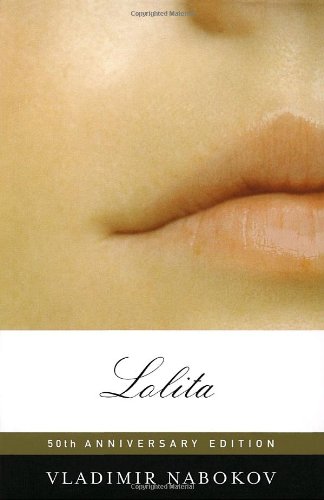
1. Lolita (Everyman's Library (Cloth))
$4.91
2. Vladimir Nabokov's Lolita: A Casebook
$10.69
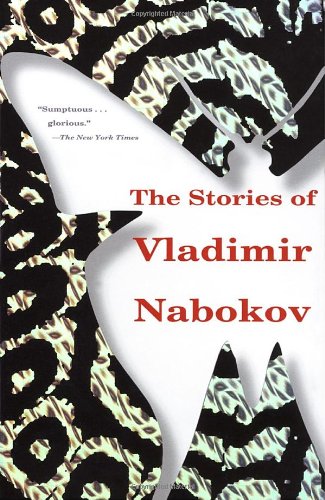
3. The Stories of Vladimir Nabokov
$10.88
4. Lectures on Literature
$7.37
5. Mary
$9.48
6. Strong Opinions
$8.41
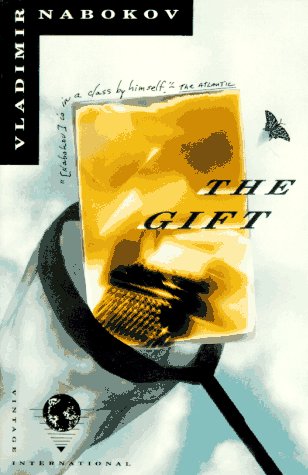
7. The Gift
$7.88
8. The Defense
$49.70
9. Nabokov and the Art of Painting
$12.32
10. Nikolai Gogol
$7.00
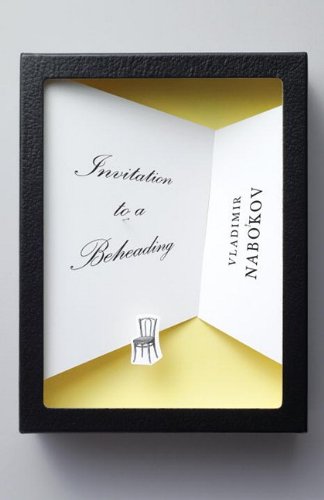
11. Invitation to a Beheading
$27.26
12. Vladimir Nabokov: Lolita
$7.86
13. Despair
$13.06
14. Speak, Memory (Penguin Modern
 
15. King, queen, knave: A novel
$19.84
16. Imagining Nabokov: Russia Between
$200.81
17. Vladimir Nabokov : Novels and
$4.15
18. Vladimir Nabokov : The American
$9.58
19. Ada, or Ardor: A Family Chronicle
 
20. Vladimir Nabokov Lectures on Literature

1. Lolita (Everyman's Library (Cloth))
by Vladimir Nabokov
Hardcover: 366 Pages (1993-03-09)
list price: US$19.00 -- used & new: US$10.99
(price subject to change: see help)
Asin: 0679410430
Average Customer Review: 4.5 out of 5 stars
Canada | United Kingdom | Germany | France | Japan
Editorial Review

Amazon.com
Despite its lascivious reputation, the pleasures ofLolita areas much intellectual as erogenous. It is a love story with the power to raise both chuckles and eyebrows. Humbert Humbert is a European intellectual adrift in America, haunted by memories of a lost adolescent love. When he meets his ideal nymphet in the shape of 12-year-old Dolores Haze, he constructs an elaborate plot to seduce her, but first he must get rid of her mother.In spite of his diabolical wit, reality proves to be more slippery than Humbert's feverish fantasies, and Lolita refuses to conform to his image of the perfect lover.

Playfully perverse in form as well as content, riddled with puns and literary allusions, Nabokov's 1955 novel is a hymn to the Russian-born author's delight in his adopted language. Indeed, readers who want to probe all of its allusive nooks and crannies will need to consult the annotated edition.Lolita is undoubtedly, brazenly erotic, but the eroticism springs less from the "frail honey-hued shoulders ... the silky supple bare back" of little Lo than it does from the wantonly gorgeous prose that Humbert uses to recount his forbidden passion:

She was musical and apple-sweet ... Lola the bobby-soxer, devouring her immemorial fruit, singing through its juice ... and every movement she made, every shuffle and ripple, helped me to conceal and to improve the secret system of tactile correspondence between beast and beauty--between my gagged, bursting beast and the beauty of her dimpled body in its innocent cotton frock.
Much has been made of Lolita as metaphor, perhaps because the love affair at its heart is so troubling. Humbert represents the formal, educated Old World of Europe, while Lolita is America: ripening, beautiful, but not too bright and a little vulgar. Nabokov delights in exploring the intercourse between these cultures, and the passages where Humbert describes the suburbs and strip malls and motels of postwar America are filled with both attraction and repulsion, "those restaurants where the holy spirit of Huncan Dines had descended upon the cute paper napkins and cottage-cheese-crested salads." Yet however tempting the novel's symbolism may be, its chief delight--and power--lies in the character of Humbert Humbert. He, at least as he tells it, is no seedy skulker, no twisted destroyer of innocence. Instead, Nabokov's celebrated mouthpiece is erudite and witty, even at his most depraved. Humbert can't help it--linguistic jouissance is as important to him as the satisfaction of his arrested libido. --Simon LeakeBook Description
(Book Jacket Status: Jacketed)

When it was published in 1955, Lolita immediately became a cause célèbre because of the freedom and sophistication with which it handled the unusual erotic predilections of its protagonist. But Vladimir Nabokov's wise, ironic, elegant masterpiece owes its stature as one of the twentieth century's novels of record not to the controversy its material aroused but to its author's use of that material to tell a love story almost shocking in its beauty and tenderness.

Awe and exhilaration–along with heartbreak and mordant wit–abound in this account of the aging Humbert Humbert's obsessive, devouring, and doomed passion for the nymphet Dolores Haze. Lolita is also the story of a hypercivilized European colliding with the cheerful barbarism of postwar America, but most of all, it is a meditation on love–love as outrage and hallucination, madness and transformation.

With an Introduction by Martin Amis ... Read more

Customer Reviews (444)

4-0 out of 5 stars A Pervert's Progress
"Lolita" was hugely controversial when first published in 1955. It was banned for a time in both Britain and France, although (rather surprisingly, given the often hysterical moral climate during the Eisenhower years) not in the United States. Today the most common reaction to many books (as well as films and popular songs) which fell foul either of the censors or of conservative public opinion during that era is "what was all the fuss about?", but "Lolita" retains its power to shock even today.

The reason is that the central character, Humbert Humbert, is not only a murderer but also a paedophile. Humbert, a French-born academic resident in America, is obsessed by what he calls 'nymphets', sexually desirable girls between the ages of nine and fourteen. This obsession appears to be the result of his tragic, and unconsummated, affair with his childhood sweetheart, Annabel, who died at the age of thirteen. In 1947 Humbert, then aged in his mid-thirties, moves to Ramsdale, a small New England town, where he becomes infatuated with Dolores ("Lolita"), the twelve-year-old daughter of his widowed landlady, Charlotte Haze. In order to remain close to Lolita, Humbert agrees to a proposal of marriage from Charlotte, who has fallen in love with him, although he has no sexual interest in her, or indeed in any adult woman. He eventually seduces Lolita after her mother's death in a road accident.

The book is divided into two parts, and I have often thought that Part I (which deals with Humbert's early life and his stay in Ramsdale and ends at the point where he and Lolita become lovers) would have made a superb novel, or perhaps more accurately novella, in its own right if Nabokov had published it on its own without any Part II. It is a brilliant psychological study, exploring the mind of a man who is despicable yet at the same time fascinating, at times almost sympathetic.

There was, of course, a good reason why the book could not end with Part I. A hundred years earlier Flaubert could only get "Madame Bovary" published by persuading a court that his heroine's suicide in the book's final chapters was a just punishment for her sins that would dissuade other Frenchwomen from cuckolding their husbands. In some respects little had changed between the 1850s and 1950s; there was still a moralistic convention that fictional criminals, just as much as real-life ones, had to be punished for their crimes, the main difference being that the novelist had a rather larger range of punishments available to him than the criminal courts. Nabokov could have concluded "Lolita" with Humbert in jail on a charge of statutory rape, but evidently rejected this option, possibly because it was too obvious. Instead he provided a nemesis in the shape of playwright Clare Quilty, Humbert's fellow-paedophile and his rival for Lolita's affections. (Despite his feminine-sounding Christian name, Quilty is male).

After Charlotte's death, Humbert takes Lolita out of school and takes her on a car journey around America, staying in motels. Much of the second part of the book is taken up with a description of their travels round America, during the latter part of which they are pursued by Quilty, who is determined to seduce Lolita away from Humbert. Unfortunately, I have never regarded Part II of the novel as altogether satisfactory- the plot seems to get lost and the story of their long journey becomes tedious and repetitive. For most of the book Quilty is a vague, shadowy presence, and when he finally appears near the end he emerges as a bizarre and eccentric character whom I found it difficult to believe in.

Another thing I should mention about this book is the author's extraordinary prose style, particularly remarkable in view of the fact that he was not a native-born English speaker. It is a record of his love-affair with his adopted language, a mixture of puns, word-games, literary allusions, recondite words and jokes. For example, Annabel's surname is Leigh, an obvious allusion to Poe's "Annabel Lee", a poem to which Nabokov makes reference several times in the early chapters. (He even considered naming the book "The Kingdom by the Sea"). Nabokov's word-games are often bilingual; at one point he uses the French sentence "Qu'il t'y mene" (literally "That he leads you there") for no other reason than that it spells out the surname of Humbert's enemy.

I said above that Humbert seems almost sympathetic, yet he never quite wins the reader's sympathy, and his attempts at self-justification never ring true, if only because the reader remains all too well aware that he is a fallible narrator. (The story is narrated by him in the first person and takes the form of a confession written by him shortly before he dies in prison while awaiting trial for Quilty's murder). By Humbert's account Lolita seduces him rather than vice-versa, but this may well be a fabrication designed to portray his victim as a sexually precocious temptress. (He also claims that she was sexually active with both boys and girls by the age of eleven). He claims to love her, but this is difficult to take at face value when one considers how he treats her. Quite apart from the question of underage sex, he disrupts her education, drugs her with intent to commit rape, plots to murder her mother and plans to abandon her when she turns fifteen, that being the age at which girls cease to interest him sexually. If that is how Humbert behaves towards someone he loves, I dread to think how he might have treated Lolita if he had hated her. At the end of his life, however, he does have a moment of enlightenment when he realises that he has deeply wronged the girl he claimed to love. Contrary to what some have claimed, Nabokov never intended this book to justify or glorify child molesters. It can be seen as a pervert's progress in which the central character condemns himself out of his own mouth.

5-0 out of 5 stars Literature, but in a good way
Definitely literature, reading this book clears up a number of cultural references. Exciting and fast paced, for the most part, Nobokov artfully addresses the dual perspectives on pedophilia while refraining from the vulgar. The exploration of a troubled mind is reminiscent of Dostoyevsky's "Idiot" and "Crime and Punishment", but set in the familiar culture of America.

5-0 out of 5 stars Much more powerful than even its controversial reputation would indicate
Wow. Beautiful, witty, clever, perfect. A masterpiece (or "un chef d'oeuvre" as Humbert would undoubtedly say). Any book that makes me laugh and cry with my whole belly, face, and heart repeatedly throughout the book (though most of the crying came at the end) and within the same ten minutes has accomplished an amazing feat. I found this on the shelf of our family library, and when my mother tried to discourage me, her not-really-that-innocent seventeen-year-old daughter from reading it, I knew it must be good. Of course it's disturbing, but people who dwell on it excessively are missing out on quite an experience. It's one of those books that must be read again and again because there are so many allusions, puns, etc. that are easy to miss the first time. Next time I'll be reading an annotated version, but I enjoyed trying to pick up on everything myself the first time around. I recommend doing the same thing.

5-0 out of 5 stars A book that will stay with you.
Immoral, depraved, criminal, mean, arrogant, but also sophisticated, erudite, charming and humorous - that is Humbert Humbert, the narrator of this tragic "love" story. Love is probably the wrong word to describe the obsession Humbert has with Lolita, the twelve year old girl whom he essentially kidnaps. The erotica in this book is never graphic, but will still make the reader cringe. The language is full and intense and the central characters are convincing. I found myself actually rooting for Humbert in the later chapters even though he is so despicable - such is the power of Nabokov's description of this unforgettable character. The disturbing subject matter and tragic consequences still haunt me several weeks after finishing this book.

4-0 out of 5 stars A great book, but not exactly pleasant reading
I've read "Lolita" twice now, and it's very difficult for me to explain how I feel about this book. On one hand, I think it's brilliant. Vladimir Nabokov's amazing prose makes "Lolita" one of the most celebrated 20th century novels ever written. It's clever and shocking and absolute genius. However, the story also revolves around a pedophile/murderer, Humbert Humbert. In the first few pages of the book, we learn that Humbert is writing "Lolita" as a confession while he rots away in a jail cell. Humbert has always had an obsession with "nymphets," which is his affectionate term for sexually desirable girls ranging from nine to 14 years of age. He ends up marrying a woman just because he's hung up on her 12-year-old daughter, Dolores (a.k.a. "Lolita"). Humbert and Lolita eventually begin an affair, and Humbert's overwhelming desire for her ultimately leads him to commit murder.

Being the phenomenal writer that he is, Nabokov makes the child molester Humbert appear charming and almost sympathetic to the reader. This man is a completely wretched human being, but due to the author's exquisite manipulation of language, we're forced to view Humbert in a very different light. I think "Lolita" is a fantastic story, but the whole pedophilia aspect has always soured my experience of reading this book. I can appreciate "Lolita" for its innovation and brilliance, but it's just not the kind of story I genuinely enjoy reading. ... Read more


2. Vladimir Nabokov's Lolita: A Casebook (Casebooks in Criticism)
Paperback: 224 Pages (2002-11-21)
list price: US$24.95 -- used & new: US$4.91
(price subject to change: see help)
Asin: 0195150333
Average Customer Review: 4.0 out of 5 stars
Canada | United Kingdom | Germany | France | Japan
Editorial Review

Book Description
Midway through the last century, Lolita burst on the literary scene--a Russian exile's extraordinary gift to American letters and the New World. The scandal provoked by the novel's subject--the sexual passion of a middle-aged European for a twelve-year-old American girl--was quickly upstaged by the critical attention it received from readers, scholars, and critics around the world. This casebook gathers together an interview with Nabokov as well as nine critical essays about Lolita. The essays follow a progression focusing first on textual and thematic features and then proceeding to broader topics and cultural implications, including the novel's relations to other works of literature and art and the movies adapted from it. ... Read more

Customer Reviews (1)

4-0 out of 5 stars Wonderfully illuminating commentaries on Lolita.
This casebook looks at Nabokov's controversial novel from different angles based on diverse critical schools. It comments on the narrator,on the Americanisation of Humbert Humbert, on the rhetorical tools used to capture the reader and illuminates the way readers have reacted to this wonderful novel. It also takes into account the films on Lolita and discusses them in relation to the book. All in all it is an important aid in deciphering the rhetorics of Nabokov's fiction and glimpsing what it is that makes him such an important author. ... Read more


3. The Stories of Vladimir Nabokov
by Vladimir Nabokov
Paperback: 704 Pages (1996-12-09)
list price: US$18.95 -- used & new: US$10.69
(price subject to change: see help)
Asin: 0679729976
Average Customer Review: 5.0 out of 5 stars
Canada | United Kingdom | Germany | France | Japan
Editorial Review

Amazon.com
These stories, written between the early 1920s to the mid-1950s, reveal the fascinating progress of Nabokov's early development as they remind us that we are in the presence of a magnificent original, a genuine master.Edited by his son and translator, Dmitri Nabokov, this volume is a literary event.Book Description
From the writer who shocked and delighted the world with his novels Lolita, Pale Fire,
and Ada, or Ardor, and so many others, comes a magnificent collection of stories. Written between the 1920s and 1950s, these sixty-five tales--eleven of which have been translated into English for the first time--display all the shades of Nabokov's imagination. They range from sprightly fables to bittersweet tales of loss, from claustrophobic exercises in horror to a connoisseur's samplings of the table of human folly. Read as a whole, The Stories of Vladimir Nabokov offers and intoxicating draft of the master's genius, his devious wit, and his ability to turn language into an instrument of ecstasy. ... Read more

Customer Reviews (18)

5-0 out of 5 stars Gold Standard for Short Stories
Put simply, this collection of short stories is a contemporary gold standard for the form.Nabokov's stories are packed with sparkling surprises, playful artifices and languid, confident language.I've put together a 50+ year reading vita and I find myself drawn back to these stories like a moth to flame...

5-0 out of 5 stars There's nothing like a good Nabokov story
Started out reading this book little by little in order to digest each story in full, but then began reading one story after another with seemingly no intermission in between.Both ways suited me fine.In fact, sometimes it doesn't really help to think all that long about some of his stories--they are are like simple chance meetings w/ strangers, while other stories of his spawn dramatic lifetime relationships and require, even demand your utmost attention.

Everytime I stray from reading Nabokov I always come back to his books and think, "Wow, he is such an amazing writer!".I can't say enough about his detailed descriptions, his amazing perspectives, and his uncannily large English vocabulary.He never ceases to amaze me.

5-0 out of 5 stars Wondrous
Although I had read various Nabokov stories over the years I had never done so in a comprehensive manner, and finally decided to do so.I anticipated that this would be a wonderful read, and of course, I was right.

I was well aware as to how gifted Nabokov is with the language;what surprised me is his versatility.It seems like there is nothing he can't do.Contained in this collection is every kind of character imaginable:rich, poor, simple, smart;there is even an entirely credible portrait of a Siamese twin.There is straight drama, fantasy, adventure, horror and intrigue.There are all the elements of what our English teachers told us make good writing:symbolism, allegory, descriptive power, observation, wit, cleverness, heart, and an enormous store of knowledge, performed in a style that can only be described as poetic.And woven through it are the themes that make up the web of humanity:beauty, truth, and love.It is an utterly splendid collection, as good a collection of short stories as any I have ever read.

One of the things that sets him apart is restraint, or perhaps subtlety is a better word.In, "The Reunion," for example, two brothers meet after not seeing each other for ten years.One escaped the Soviet Union and is living a poor, almost wretched existence in Berlin.His brother stayed, and was able to achieve some success as a Soviet functionary.They finally meet each other in the Berliner's shabby apartment.Most authors would not be able to resist the urge to let this to sink into melodrama.There would be arguments, tears, and recriminations.But not for Nabokov.In his story the brothers simply find that they are uncomfortable with one another, and when they go their separate ways the seeming lack of drama beforehand makes their parting all the more poignant.

Humor and sadness are evident in all of this collection, sometimes in succeeding stories, sometimes in succeeding pages."A Bad Day," is the touching and amusing story of a little boy's visit to his cousins in the Russian countryside, a visit he dreads because he doesn't get along and because he will be teased.The last line of the story--which in the hands of somebody like Updike would be a devastating condemnation of humanity--is here bittersweet, bringing both a tear to the eye and a smile to the face in self-recognition.It is, after all, nothing more than a "bad day."

But if there is whimsy here there is also great power.In, "Signs and Symbols," an old man and woman make a trip to the sanatorium to visit their deranged adult son on his birthday.Such a simple exercise is made terribly complicated by their age, their lack of means, the unpredictable nature of their son, and the indifference of the hospital staff. Nothing is really resolved by story's end;we are simply given an indelible portrait of the difficult, arduous journey that life has been for these uncomplicated, decent people.It is very moving and also an excellent example of Nabokov's worldly or otherworldly knowledge.

Many of the stories here have to do with, as you would expect, Russians and Russian expatriates.("Write about what you know!" the English teachers say.) Nabokov unfortunately knew about the horrible experience of being exiled from his country, a country that his stories make clear he deeply loved, and to which he never returned.He doesn't spend a lot of time condemning the evil system that drove him and millions like him away, (although he does, briefly, in two of his earlier, weaker stories), he instead concentrates on those that it drove away.There are many excellent examples of this, but perhaps my favorite is entitled, "Cloud, Castle, Lake."In it, an older fellow is taken on a holiday train excursion he tries to get out of, is coerced into taking part in activities he doesn't wish to engage, and told to forsake the simple pleasures he has come to enjoy;all for--he is told--his own good.The train eventually stops at a perfect little inn, which overlooks a perfect lake in which is reflected a lovely cloud and castle.He wants to stay.Of course, he can't.Sad as it is, the story is also very amusing, and, typical of Nabokov at his best, works on several different levels.

The story also contains examples of Nabokov's splendid use of the language at the height of his power.Our friend observes the countryside from his hurtling train:"The badly pressed shadow of the car sped madly along the grassy bank, where flowers blended into colored streaks.A crossing:a cyclist was waiting, resting one foot upon the ground.Trees appeared in groups and singly, revolving coolly and blandly, displaying the latest fashions.The blue dampness of a ravine.A memory of love, disguised as a meadow.Wispy clouds--greyhounds of heaven."How marvelously descriptive this, and so beautiful that one finds oneself emotionally engaged.

The book is loaded with this stuff.You can barely turn a page without some surprise or delight awaiting you.A twenty-eight year old son returns unexpectedly after many years to visit his mother in, "The Doorbell."In the dimly lit room, he is taken aback by the fact that she is clearly preoccupied with something.Suddenly, "like a stupid sun issuing from a stupid cloud, the electric light burst forth from the ceiling."This, by the way, is another great story.In, "Ultima Thule," as a character is walking on the beach, "a wave would arrive, all out of breath, but, as it had nothing to report, it would disperse in apologetic salaams."

I could go on and on.After picking up the book I decided to read it cover to cover, but after about a hundred and fifty pages, I simply opened it and read the stories randomly.After a time I began to open the book onto stories I had already read, and found that I couldn't help but to reread them.Finally, I became apprehensive in fear that I might have missed something.

But no matter.If I haven't gotten to one yet, I will eventually.The book has already become an old friend, and like an old friend I will return to its comfort and joys for many years to come.

4-0 out of 5 stars eloquence comes wrapped best in brevity
I suspect that Nabokov must have been suffering from depression, for voidness usually springs forth little except art.And that's precisely what you find in this collection; his opulent, artful take on humanity makes one shudder!While I admit I didn't finish reading all the stores in this book, I did especially love La Veneziana because it -vaguely- reminded me of Dorian Gray (one of my very favorites).I also read Lolita (recommended only for those who are obsessed with that one elusive love), but I think I like his short stories better.

5-0 out of 5 stars Who could give Nabokov less than 5 stars?
I'm so glad I stumbled upon the Nabokov section in the bookstore last month.See, I'm a Russian Studies major, and the Nabokov class is being offered this quarter.I'm not taking it, but I decided to go check out what this guy was all about.Let me just say --- WOW.This man could really write.It's all like gorgeous poetry.Buy this treasure of a book, with so many beautiful stories in it, and you will not regret your purchase. ... Read more


4. Lectures on Literature
by Vladimir Nabokov
Paperback: 416 Pages (2002-12-16)
list price: US$18.00 -- used & new: US$10.88
(price subject to change: see help)
Asin: 0156027755
Average Customer Review: 4.5 out of 5 stars
Canada | United Kingdom | Germany | France | Japan
Editorial Review

Book Description

For two decades, first at Wellesley and then at Cornell, Nabokov introduced undergraduates to the delights of great fiction. Here, collected for the first time, are his famous lectures, which include Mansfield Park, Bleak House, and Ulysses. Edited and with a Foreword by Fredson Bowers; Introduction by John Updike; illustrations.
... Read more

Customer Reviews (14)

5-0 out of 5 stars A master's class on the art of reading
Nabokov is a native of world literature. So it is no surprise that as he is taking the reader on a guided tour of his land, his strong literary opinions easily navigate centuries and continents of literary landscape. However, being an emotional as well as scholarly narrator, Nabokov naturally gravitates to his favorite corners of the world. He is a guide giving a tour of his native city and adding more intimate detail and color when talking about the streets where he grew up. Russian literature must occupy a very special place in his heart, since it permeated his Russian childhood, his longing for which he so beautifully described in "Speak, Memory". In "Lectures on Russian Literature", Nabokov is noticeably closer to the Russian writers than he is to the European writers in his previous volume, "Lectures on Literature" (itself very enjoyable). His spectrum of vision is wider, embracing multiple works of a writer and his personal qualities. The resulting picture is richer, the contrasts of the temperaments and styles make the writers stand out: Chekhov's altruism and Turgenev's vanity, Gogol's impressionist colors and Gorky's clichés, Dostoevsky's cold reason overwhelming his art and Tolstoy's "mighty" art "transcending the sermon", the believable and coherent worlds of Chekhov or Tolstoy and Dostoevsky's internally contradicting world or Gorky's "schematic characters and the mechanical structure of the story"...

Here Nabokov continues his thought that a writer is mostly a creative artist, rather than a historian or philosopher. This is how he summarized Gogol's desperate attempts to collect facts for the second part of "Dead Souls": "[Gogol] was in the worst plight that a writer can be in: he had lost the gift of imagining facts and believed that facts may exist by themselves" (Gogol was asking his friends to supply him with descriptions of life around them which he could use in his art). Contrast with it Nabokov's admiration of Chekhov's writing for being so true to life. Chekhov invented his characters, but did it so well that they naturally created a coherent world. Nabokov always put imagination and style at the top of the writer's arsenal, and much above any "reality" (which he always mentioned in quotation marks).

Nabokov clearly prefers characters to reveal themselves rather than be explained by the author: for example, where Chekhov let his characters act (not surprisingly, Chekhov was a great playwright), Turgenev tended to over-explain. In "Fathers and Sons", he uses epilogue to describe what happened next in the story. In the scene where Bazarov's father embraces his wife "harder than ever", Turgenev feels the need to explain that this happened because "she had consoled him in his grief". For the same reason Dostoevsky, whose characters Nabokov sees as "mainly ideas in the likeness of people", was not one of his favorite authors. Primacy of idea over form and style was anathema to Nabokov. Both Turgenev and Dostoevsky were too visible on the page for his taste.

Personal style of a writer enjoys a special consideration throughout these lectures. While Chekhov is presented as a master of light touch, of suggestion, Dostoevsky appears repetitive, dogmatic, hurried and over-working. As an illustration, Nabokov points out that to set up the murder in "Crime and Punishment" the author needed a whole confluence of circumstances: "Raskolnikov's poverty, self-sacrifice of his sister and utter moral debasement of the intended victim".

Nabokov believes that literature should not be gulped, but "taken and broken into bits, pulled apart, squashed", gradually releasing its flavors. One could hear a master chef admiring the virtues of spice freshly crushed in a mortar. His obvious delight in attending to the minute flavors of the novel makes his lectures so enjoyable and unique.

5-0 out of 5 stars The Mother Lode - Don't Miss It!
Imagine you attend Cornell, you smart devil you. You wander into the Lit class and a hawk-browed very serious tall man with glinting eyes leans out at you over the faded wooden podium. Behind him on the blackboard are a maze of drawings, dates, crisscrossing lines and circles. You look again at your syllabus - Russian Literature in translation. The black bell above the door rings, the tired muted clatter of a halting iron clanger. A rustle of books, restless students, and dead air from the closed winter storm windows rises up for just a second, then, hovering in the room shrinks to silence. The teacher begins,
"Tolstoy is the greatest Russian writer of prose fiction. Leaving aside his percursors Pushkin and Lermentov, we might list the greatest artists in Russian prose thus: first, Tolstoy; second, Gogol; third, Checkov; fourth, Turgenev. This is rather like grading student's papers and no doubt Dostoevski and Saltykov are waiting at the door of my office to discuss their low marks."
So begin the lectures on Anna Karenina. By the time Nabokov is done you will know more than you thought possible about the novel. You'll be comfortably familiar with the inside of an 1872 Russian railroad passenger car traveling as the night express between Moscow and St. Peterburg. To help you picture it, Nabokov draws a highly detailed sketch, with the position of each occupant, doors, windows, stove; even the direction of travel is rememebered.
Wonderful as all this is, for sheer incandescent brilliance, no essay on any work in Russian Literature by any critic comes close to Nabokov's examination of Gogol's Dead Souls. Unlike Nabokov's own listing of Russian prose masters, he also comes in second as well as first, with the fulsomely captivating essay on Anna Karenina. The others offer a cross between a kaleidoscope's rendering of the fantasy behind the dummy facades with the exactitude born out of years of scientific reading.
Nabokov's particular and unique genius treats us with a plethora of acute and uncanny observations, viewpoints derived from the closest possible scrutiny of the works.No book compares in this field - a marvel!

5-0 out of 5 stars To enjoy the art of literature
Nabokov writes about literature the way some write about wine: savoring nuances and discussing it with delight. A writer of elegant books and a scientist devoted to meticulous classification of detail, he could match Robert Parker's ability to rate 10,000 wines a year with his capacity of analyzing literary works. His illuminating writing is itself full of light and spark and makes his "Lectures on Literature" an esthetic experience.

In Nabokov's world, art fully defines a literary work. Here writer is an "enchanter" and a story teller, rather than historian, philosopher or instructor in any practical matter. His lectures are devoted to detecting the elements of style and structure in some of the most remarkable novels of European Literature.

One of these elements is symphony. Nabokov once confessed that he never found much pleasure in music. If we imagine for a second that he did, he probably would have preferred symphonies to chamber music and big band to jazz trio. He delighted in complex structures, where multiple parts fit neatly together: symphony of people in Flaubert's agriculture scene in "Madame Bovary", where "all the characters of ... book intermingled in action and in dialogue", symphony of simultaneous events in "Ulysses", symphony of senses in Proust's pairing of the visual and musical effects of moon light in "The Walk by Swann's Place", which he considered more complete and elegant than moon light's description in Gogol's "Dead Souls" where only visual perception is called to work.

Many other elements of personal style are noted: Dickensian imagery and word play, Proust's evolving sentences where A leads to B leads to C, the theme of layers in "Madame Bovary", variation of style in "Ulysses".

Nabokov's method of detecting these elements is to pay special attention to detail. The natural scientist in him believes that any general conclusion would develop naturally after the facts have been collected and taken in. Nabokov expected his students to draw street maps and family trees, visualize hairdos and notice the exact way one catches a coin tossed in the air.

Having answered the how of reading literature, Nabokov considers the why. The answer he offers is to acquire a taste for it. He believes that seeing the novel through its author's eyes, rising to the level of "the joys and difficulties of creation" is one of the most intense pleasures, and shares this pleasure with his students.

5-0 out of 5 stars Contents
Several of the other reviews have this product confused with another book (Lectures on Literature).The contents of this one (Lectures on RUSSIAN Literature) are:

Nikolay Gogol: Dead Souls; "The Overcoat"

Ivan Turgenev: Fathers and Sons

Fyodor Dostoevski: Crime and Punishment; Memoirs from a Mousehole; The Idiot; The Possessed

Leo Tolstoy: Anna Karenin; The Death of Ivan Ilych

Anton Chekhov: "The Lady with the Little Dog"; "In the Gully"; Notes on The Seagull

Maxim Gorki: "On the Rafts"

Three Essays: Philistines and Philistinism; The Art of Translation; L'Envoi

5-0 out of 5 stars Classic lit criticism
Excellent and brilliantly witty and dry series of lecture courses on literature from the master, Vladimir Nabokov. In this volume, Nabokov fights against all interpretive lenses, he denounces the sociological, political, and autobiographical perspectives on literature, arguing that a true reader should pay attention to the detail of the author's narrative, to the artistry and creativity, and not get drawn into banal generalizations. He writes that "the novels in this series are supreme fairy tales" (pg. 2).

According to Nabokov, good reader should:

1. Have an imagination
2. Have a memory
3. Have a dictionary
4. Have some artistic sense

In this volume, Nabokov lectures on a wide variety of great literature, including Jane Austin's `Mansfield Park,' Charles Dickens' `Bleak House,' `Dr. Jekyll and Mr. Hyde by Robert Louis Stevenson (an unusual choice at the time), `Madame Bovary' by Flaubert, Proust's great `a la recherché,' `the Metamorphosis,' by Kafka, `Ulysses,' by Joyce, and an excellent essay called `The Art of Literature and Commensense.'

This volume is filled with pleasurable surprises, especially the marvelous facsimiles of Nabokov's lecture preparations with complete annotations, and many wonderful diagrams and illustrations of the works analyzed. He has some great drawings of Gregor Samsa the beetle, and the floor-map of his apartment. It really helps the reader appreciate the work unlike the bulk of literary criticism, which seeks to mystify and empower the interpreter. This is a true appreciation of the novel form, and a classic of lit criticism from one of the greatest writers of the 20th century. His depth and breadth of understanding and attention to detail will astound you. ... Read more


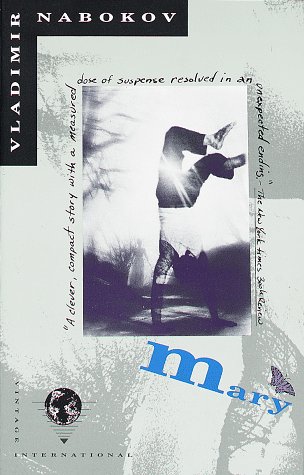
5. Mary
by Vladimir Nabokov
Paperback: 144 Pages (1989-11-20)
list price: US$13.00 -- used & new: US$7.37
(price subject to change: see help)
Asin: 0679726209
Average Customer Review: 4.5 out of 5 stars
Canada | United Kingdom | Germany | France | Japan
Editorial Review

Book Description
Mary is a gripping tale of youth, first love, and nostalgia--Nabokov's first novel.  In a Berlin rooming house filled with an assortment of seriocomic Russian émigrés, Lev Ganin, a vigorous young officer poised between his past and his future, relives his first love affair.  His memories of Mary are suffused with the freshness of youth and the idyllic ambience of pre-revolutionary Russia.  In stark contrast is the decidedly unappealing boarder living in the room next to Ganin's, who, he discovers, is Mary's husband, temporarily separated from her by the Revolution but expecting her imminent arrival from Russia. ... Read more

Customer Reviews (12)

5-0 out of 5 stars One of the Three Greatest Russian Writers Ever
If ever discussing Dostoevsky or Tolstoy, the conversation might inevitably turn towards Nobakov. One of the holy trinity of Russian writers, Nabokov, in "Mary", encompasses a whole array of human emotions. I don't want to give away the ending, but the impact is compounded in the final pages. Masterfully written, it keeps you turning pages to see what happens. It didn't turn out like I imagined, but I was not disappointed. Conversely, instead of being let down, my life went through a paradigm shift. Not a lot of books have done that to me, but this book is a rarity indeed.

5-0 out of 5 stars Are memories real
Having suffered a head injury with a period of memory loss I understand the angony and mystery in trying to fill in the gaps of bits of images.I can only imagine the sense of loss and displacement that the main character, a military officer who we learn suffered a major head injury during the war.Engrossed in the novel, we then are left wondering what was real or imagined.Unable to fill in the blanks in his life, the protagonist takes bits of the present and past and creates a world of memories in an attempt to find himself.What distinguishes this great work from later works of popular science fiction or mystery, is that the cahraters live in a place and time where they are unable to return to their homeland, recover and heal fro the war, revolution and displacement that affected countless people.Add to that a totalitarian Russia that attempted to erase and rewite the past and you have a human mirror to an injury now imposed upon an entire society.Joseph Roth explored the displacement of people from the Austrian Empire between the great wars and here Nabokov adds to Roth's accomplishments.Memory, individual and corporate, is pivotal to understanding ourselves and orienting our lives.Nabokov, brilliantly creates a ship floating without such ballast.The amazing thing is that what these authors wrote about was real.Read this book.

4-0 out of 5 stars Mary:A Developmental Surreal Experience
In this book, Nabokov indicates that this was one of his very first books.It was published and copyrighted posthumously.The manuscript appears to be developmental for Nabokov.The signposts of Nabokov are clearly illustrated in his use of irony and surrealism.

Interestingly, while many characters appear in the story, the text conceptually is primarily an exposition of the inner thoughts of the protagonist Ganin.The story involves the life during an interim period of Ganin's life; who is really at this time, a transient in Berlin.If he is sure where he will end up, Nabokov does not let the reader know.Rather, Ganin seems more to be drifting toward his ordained life, in some other place than in Mother Russia.

As usual, Nabokov does make a bit of a negative commentary about homosexuality, although it is somewhat more veiled than his later outright homophobic perspective.Nabokov understands the homosexuality, yet disdains it here, as he does in other novels.

The book is especially of interest to Nabokov readers who are trying to see the developmental phases of the author's long and illustrious writing career.It is recommended to all who are interested in ironic, existential and surreal views of real life.

3-0 out of 5 stars Dredging up nostalgia for Russia
This does bear hallmarks of apprentice work - the characters, as Nabokov himself confessed, are fairly stereotypical portrayals of actual emigres. It Nabokov's most autobiographical novel, incorporating beautiful delineations of his childhood estate in Russia, adapted as the scene of the protagonist, Ganin's love affair with the eponymous Mary, who never appears throughout the novel. There are not as many exquisite points of style as in his later novels; those familiar with Nabokov's early stories might sense this short novel took the form of one of these stories and stretched it into novel length. But the novel does introduce a character who is patrician, romantic, and somewhat deranged. Ganin is a simpler version of many Nabokovian heroes (and anti heroes to come).

4-0 out of 5 stars LOVE IS PAST
First published in Berlin in 1926, Mary is Vladimir Nabokov's first novel. As with all first novels, this book is much more autobiographical than the author's later works.

Lev Glebovich, also known as Ganin, lives in a Berlin boarding house along with other Russian emigres. He has a mysterious past which comes to light when Aleksey Alfyorov, a fellow boarder, shows him a picture of his young wife that will be arriving in Berlin in a week. Much to Ganin's shock, he recognizes the picture as his long lost love, Mary. He had lost touch with her during World War I and hasn't spoken to her in 5 years. Jobless and lacking a driving passion, Ganin begins to live in his memories of the past as he makes plans to run away with Mary when she arrives.

This story was unconventional in the sense that Mary never really arrives. Nabokov shows her through memories and names the book after her, but its really about Ganin and his conflict over whether Mary actually exists anymore or is she a memory that can never be regained. In this sense, Mary exploits themes explored more fully by Proust. For such a short book, the author succeeds very admirably at bringing the characters of the boarding house alive and in creating prose that feels like a dream. This is a masterful debut. ... Read more


6. Strong Opinions
by Vladimir Nabokov
Paperback: 368 Pages (1990-03-17)
list price: US$16.00 -- used & new: US$9.48
(price subject to change: see help)
Asin: 0679726098
Average Customer Review: 4.0 out of 5 stars
Canada | United Kingdom | Germany | France | Japan
Editorial Review

Book Description
In this collection of interviews, articles, and editorials, Nabokov ranges over his life, art, education, politics, literature, movies, and modern times, among other subjects.  Strong Opinions offers his trenchant, witty, and always engaging views on everything from the Russian Revolution to the correct pronunciation of Lolita. ... Read more

Customer Reviews (6)

2-0 out of 5 stars A Nabokov fan, disillusioned by this book
Before I first encountered STRONG OPINIONS, I was a Nabokov fan. Reading this collection, however, changed my view of him for good. The man's weird animus against literally hundreds of major authors (Cervantes, Camus, Balzac, Mann, Stendhal, Lorca, Faulkner--you name 'em!) is terribly mean-spirited and small. His attacks on Freud get tiresome, and one begins to wonder if he ever did read much Freud in any depth. He also goes after other leading thinkers and even lets fly against, in his words, "Einstein's slick formulae" (I'm really quoting). And his defense of the U.S. war on Vietnam isincredibly ignorant and simplistic, even stupid. Nabokov the artist was a major presence who altered the shape of literature. Nabokov the man, by contrast, was a nasty, dogmatic, narrow-minded little fellow who couldn't countenance any aesthetic but his own.
I'm not the only Nabokovophile who has had this "conversion." I know several others who've had the same experience.

5-0 out of 5 stars A portrait of the artist as a man
The book includes interviews, literary essays and five short articles on Lepidoptera. Since the book covers the main themes in Nabokov's life on one hand and is carefully compiled by Nabokov himself on the other, it presents a kind of self-portrait. Its author was a remarkably relentless rewriter, who noted that "[he] rewrote several times every word that [he] has ever published" and that even his recounting of the last night's dream to his wife was "but the first draft", and so this book is the result of no less a meticulous labor than his novels are. It presents a carefully drafted portrait, at times blatantly revealing, at times guardedly mystifying, but always elegantly or freshly phrased.

In his "Lectures on Literature", Nabokov mentions a character in "Bleak House", a man appearing only for a sentence or two just to help carry in from the street an old man in his chair. He gets a tuppence for his labors, tosses it in the air, catches it over-handed, and leaves. Nabokov points out that this one word, "over-handed", makes all the difference: it is a drop of color which renders even an incidental character alive. It seems that Nabokov's own public persona is similarly brought to life with the stories of borrowing a television set (which otherwise he did not watch) to see the first man landing on the Moon, or of having driven a car twice in his life (both times disastrously).

Some of the essays presented in the book are real gems. The 4-page piece "On Adaptation" is a beautiful critique of Robert Lowell's unfortunate rendition in English of Mandelshtam's famous poem. The highly amusing penultimate sentence, where Nabokov applies to one of Lowell's poems the techniques Lowell used in his version of Mandelshtam's, makes the most expressive argument for literal translation and for preserving the writer's intent. In a way, this one sentence makes a better case for Nabokov's verbatim translation of "Eugene Onegin" than the much longer if very engaging article answering Wilson's critique of Nabokov's translation of Pushkin's masterpiece.

Another essay, "Inspiration", provides a rare glimpse into the writer's sanctum sanctorum: a detailed description of a writer's interaction with his muse. Nabokov presents here several examples of what he considers inspired writing and expresses hope that students will learn to recognize it in the books they read. The students of Nabokov will certainly recognize inspiration in his own writing, revealing itself in elegant phrasing and fierce independence of thought and making his answers even to the most mundane questions worth reading.

5-0 out of 5 stars Strong opinions is the term
This collection of interviews and articles is essential reading for lovers of Nabokov's fiction. Throughout he presents himself as a full blown iconoclast, presenting in lucid prose (Nabokov never answered interview questions without having time to prepare beforehand), delicious vignettes into his character and theories of literature.

Here you will find, a staunch defence of why he translated Pushkin literally (and a funny damning of his erstwhile foil, Edmund Wilson's misplaced criticism; reflections on the course of his triptych life (Russia, Europe America); how his literary inspiration comes (the complete novel wells up inside him before it is written then curls itself out); a refusal to allow any social message to his work; the pleasures of writing (the tingle in the spine); his condemnation of a host of cannonical authors - Faulkner, Hemmingway, Conrad, Dostoevski etc.; and most importantly, the leitmoteif that runs through his thought, an extended diatribe against the vulgarities and pervasiveness of 'poshlost' (see p.100 in the paperback edition). If you absorb this defintition, and agree with its tenets, you will start to notice instances of poshlost spreading like a rash all over contemporary letters, films and journalism.

In addition there are a couple of beautifully written pieces on butterfly hunting, a perfect subject for Nabokov's perceptive, aesthetic mind, and a lifelong passion of his.

4-0 out of 5 stars Nabokov in a nutshell
This is a pretty good collection of Interviews with Nabokov and Nabokov's letters to editors and stuff like that. For people who want to find out more there's the comprehensive two volume biography of Nabokov by Brian Boyd.

Nabokov's opinions in a nutshell?

Thought everything written by James Joyce was completely mediocre except for "Ulysses," which towered above the rest of his ouvre as one of the supreme literary masterpieces of the 20th century. Loved Flaubert and Proust and Chateaubriand, did not like Stendhal (simple and full of cliches) or Balzac (full of absurdities). Loved Tolstoy's "Anna Karenina" (considered it the greatest novel of the 19th century) and "Death of Ivan Illych," hated "Resurrection" and "Kreutzer sonata." Liked Gogol, despised Dostoevsky as a melodramatic mystic (he even once gave a student an F in his course for disagreeing with him). Loathed Conrad and Hemingway, but liked the description of the fish in "Old Man and the Sea" and the short story "Killers." Hated Andre Gide, T.S.Eliot, Faulkner, Thomas Mann and D.H.Lawrence and considered them all frauds. Thought Kafka was great, Orwell mediocre. Despised Camus and Sartre, considered Celine a second rater, but liked H.G.Wells. Loved Kubrick's film of Lolita (thought it was absolutely first-rate in every way) but later in the '70s regretted that Sue Lyon (though instantly picked by Nabokov himself along with Kubrick out of a list of thousands) had been too old for the part & suggested that Catherine Demongeot, the boyish looking 11 year old who appeared in Louis Malle's 1960 film "Zazie dans le Metro" would've been just about perfect to induce the right amount of moral repulsion in the audience towards Humbert (and prevent them from enjoying the work on any superficial level other than the purely artistic). Liked avant-garde writers like Borges and Robbe-Grillet and even went out of his way to see Alain Resnais' film with Robbe-Grillet: "Last Year at Marienband." Didn't care for the films of von Sternberg or Fritz Lang, loved Laurel and Hardy. Made a point of saying how much he hated Lenin when it was fashionable to blame the disasters of the Soviet Union on Stalin. Supported the War in Vietnam and sent President Johnson a note saying he appreciated the good job he was doing bombing Vietnam. Never drove an automobile in his life & his wife was the one who drove him through the United States onscientific butterfly-hunting expeditions, all through the many locales & motels & lodges that later appeared in "Lolita."

Seem interesting? You're bound to be offended even if Nabokov is one of your favorite writers. Genius or madman? I would say both, the 'divine madness' of the greatest of artists. Highly recommended for a peek inside the artistically fertile mind, and the tensions that need to be maintained to produce it.

4-0 out of 5 stars For fans of the man
An entertaining read for fans of the man, but probably not for others. Learn what it was about VN that to this day causes well-meaning fans to rave in such affected (and misspelled) tones. See below and you'll knowwhat I mean. ... Read more


7. The Gift
by Vladimir Nabokov
Paperback: 384 Pages (1991-05-07)
list price: US$14.95 -- used & new: US$8.41
(price subject to change: see help)
Asin: 0679727256
Average Customer Review: 4.0 out of 5 stars
Canada | United Kingdom | Germany | France | Japan
Editorial Review

Amazon.com
For most of his life, Vladimir Nabokov was quite literally a man without a country. It's a small irony, then, that his career falls so neatly into national phases: Russian, German, French, and American, plus the protracted coda he spend in a Swiss luxury hotel during his final decade. The Gift, which he wrote between 1935 and 1937 in Berlin, is the grand summation of his second phase. It describes, for starters, the sentimental education of a young Russian writer, Fyodor Godunov-Cherdyntsev. This hyphenated creation has more than a few things in common with the author, despite Nabokov's vehement denial in the novel's foreword. Still, only a nitwit would read The Gift for its autobiographical revelations. What this early masterpiece does offer is a wealth of lyrical, witty, heartbreaking prose, beautifully translated from the Russian by Michael Scammell (with an assist from Nabokov himself). Who else would note the way a street rises "at a barely perceptible angle, beginning with a post office and ending with a church, like an epistolary novel"? Who else has ever administered the satirical shiv to his characters with such deadly, almost affectionate aplomb?

Shirin himself was a thickset man with a reddish crew cut, always badly shaved and wearing large spectacles behind which, as in two aquariums, swam two tiny, transparent eyes--which were completely impervious to visual impressions. He was blind like Milton, deaf like Beethoven, and a blockhead to boot.
Of course, only a fraction of The Gift is taken up with this sort of demolition derby. Fyodor's romance with Zina, for example, occasions the most ardent prose of Nabokov's career: "And not only was Zina cleverly and elegantly made to measure for him by a very painstaking fate, but both of them, forming a single shadow, were made to the measure of something not quite comprehensible, but wonderful and benevolent and continuously surrounding them." (Shades of Volodya and Véra? Only the deceased husband and wife, and perhaps Stacy Schiff, know for sure.)

At the same time, The Gift is a brilliant, mesmerizing riff on the history of Russian literature, with elaborate bouquets tossed to Pushkin and Gogol. There's also a hilarious yet somehow tender evisceration of the do-gooding polemicistNikolai Chernyshevski--which was suppressed, in fact, when the novel was originally serialized by a Russian émigré magazine. As should be clear by now, The Gift defies any attempt at quick-and-dirty summary. But the book plays the most pleasurable kind of havoc with our stuffy notions of narrative structure and linguistic protocol. And as Nabokov repeatedly wraps the reader's consciousness around his little finger, he never holds back on that ultimate literary gift: pleasure. --James MarcusBook Description
The Gift is the last of the novels Nabokov wrote in his native Russian and the crowning achievement of that period in his literary career.  It is also his ode to Russian literature, evoking the works of Pushkin, Gogol, and others in the course of its narrative:  the story of Fyodor Godunov-Cherdyntsev, an impoverished émigré poet living in Berlin, who dreams of the book he will someday write--a book very much like The Gift itself. ... Read more

Customer Reviews (18)

5-0 out of 5 stars A beautiful gift.
Nabokov, in his foreword, states that The Gift "is the last novel I wrote, or ever shall write, in Russian.Whether the author knew this as a certainty when he was writing this novel or if the conscious decision to eschew his native language for future literary endeavors came later, he, nevertheless, produced what would be his most "Russian" work.The beginning of the novel is a tip of the hat to Gogol's Dead Souls while the last paragraph is his homage to Pushkin's Eugene Onegin; and throughout the book there are references to Tolstoy, Turgenev, Dostoevsky (deridingly) and the literary favorite of Lenin, Nikolay Chernyshevski.Now, before the prospective reader throws up their hands and bemoans a lack of background in Russian literature for an excuse not to read this book, be assured.This is one of Nabokov's most uplifting novels and is essentially a love story; that it contains some of the author's best prose (in either Russian or English) only adds to the reading pleasure.And although there are obvious influences from Proust and Joyce (the circular format of the Chernyshevski chapter, for example), this is not, as Amazon reviewer David K. O'Hara remarked, "bloody Finnegan's Wake."

The Gift is the story of Fyodor Gudunov-Cherdyntsev, an emigre writer living in Berlin, and represents Nabokov's contribution to the "portrait of the artist" literary genre.In most of the works in this category much is said regarding the artist's angst, inspiration and triumphs but very little of the artist's actual writings are given for the reader's consideration.Not so with this book - the reader has the actual texts of the works at hand.Thus, we are able to read Fyodor's first published book of poetry (as well as the imagined critical responses) concerning his memories of life in Russia before the Revolution; an unpublished biography of his father, a famous naturalist, and his adventures in Asia as he undertakes expeditions to describe the fauna and flora of exotic lands, seemingly oblivious of the political upheaval taking place back home in Russia -- this section of the novel contains some of Nabokov's most beautiful writing.Finally, in an attempt to deal with what he sees as the mediocrity of Soviet letters and the stagnation of the emigre literary scene, Fyodor sets out to write a biography of the great pragmatist, confused socialist, and almost unreadable author, Nikolay Chernyshevski.That Chernyshevski was a particular favorite of Lenin and exerted enough influence that he was regarded as one of the "intellectual" catalysts for Lenin's activism and the subsequent Bolshevik revolution (and the reason, in the end, for Fyodor's emigre status) only made him grist for Fyodor's sardonic talents.

Although Nabokov enjoys getting into the head of his emigre protagonist, he is too shrewd a writer to simply give his readers a word by word transcription of Fyodor's literary efforts.Woven through the novel and connecting the literary efforts of Fyodor is the story of his love affair with Zina Mertz, a fellow emigre with whom he strikes up a clandestine relationship.She makes her appearance halfway through the novel (Fyodor hears her flush the toilet in the rooming house they share), but the careful reader will discover that she has been on the periphery of Fyodor's world from the first chapter.Several times they are almost brought together but some twist of fate keeps them in their separate orbits.It is only as Fyodor grows as an artist that he is ready for a relationship with Zina and the sharing of his emotions and intellect with her.It is through his love for Zina that Fyodor has the determination to re-examine his previous attempt at his biography of his father and, in so doing, sees the great book that was waiting for him to write: a book documenting his literary achievements and his love for Zina, a book which would be a gift in appreciation of all that life had granted him -- this very book that the reader holds in his hands.

Nabokov almost always discourages any attempts to see himself in the roles of the characters he invents, to "identify the designer with the design."But while Fyodor Godunov-Cherdyntsev might not be a manifestation of Nabokov, there is a similarity in the idea of this novel as a gift.Just a Fyodor offered his gift to Zina for the happiness she brought into his life, so did Nabokov dedicate The Gift to his wife, Vera, as a means of thankfulness that their marriage had survived a rocky period.

2-0 out of 5 stars Nabokov's Gift; Is it worth the elegant prose?
Nobokov's The Gift is an interesting work. I am unsure whether it is due to the haste with which I read it, or the nature of the book itself, but I found that while some sections were enticing, not only in style, but also in content, entire sections seemed unrelated and uninteresting. I frequently found myself engaged in the action, but often found myself unable to recall what I had just been reading for the previous 40 pages. While I enjoyed many sections, this ebb and flow made it difficult for me to concentrate on the full picture and I sometimes found myself frustrated with reading.

Nabokov's prose however was always beautiful, regardless of my feelings toward the plot elements. Even in those sections entirely devoid of other interest, I always found the prose captivating. Thus there are innumerable quotable passages, each of which glides smoothly across the tongue or through the ear. It is this ability with prose which made the seemingly mundane life of a butterfly collector come alive with the adventurous nature of many heroic explorers. The times where Fyodor recalls his father and his expeditions are undoubtedly my favorite part of the novel, they felt most personal and realistic, while other portions felt dry and rather uninteresting.

I found the first fifty pages especially dry, they read more like a book report or litererary analysis than a novel, continually interspersed with excerpts from his poetry which were then discussed for their merit in capturing or not capturing the desired sentiment. The following story of the boy who died, and the mother eager to speak with Fyodor about it, added interest and a more human aspect. While he seemed cold and removed, it is very easy to associate with his character, while it always feels fulfilling to help another person through difficult times, it often becomes burdensome and even boring when a tape recorder could easily have taken his place.

It is quite possible that a second reading would be beneficial, that it would make many of the connections that I have missed, but for now, I am more inclined to read other works of a less tedious nature.

For me, The Gift is an exercise in How prose means rather than What it means.

3-0 out of 5 stars The Gift
To be honest, this is one of the hardest books that I have ever read.While it is impossible to deny the genius of Nabokov, it is a genius that exalts itself at the expense of everyone else.The entire time that I was reading the book, I felt that I would never be able to match Nabokov intellectually on any level.Every time that I felt I was beginning to understand what he was trying to convey, something would shift, and I would again be lost.I enjoyed the book, however, and I would recommend it to others, on the basis of its incredible use of language.The Gift has a lyrical quality to it that allows the novel to stand independently of its ideas at times.One is tempted to read it just to hear the way the words flow.It is an immensely frustrating book to read, but in the end it is well worth it.

2-0 out of 5 stars The Gift
It would be hard not to recognize the genius of The Gift, yet I found that the book, especially in chapters 3 and 4, was a flippant display of "artist's egoism."Nabokov recognizes the greatness of his literature and taunts his audience with the irregular rhythm of his prose that muddles time and switches abruptly between the present and the metafictional. Although the prose is much too intelligent and artful to be called "stream of consciousness," I personally do not enjoy this kind of uninterrupted text, stretching paragraphs across pages.Much like Faulkner's work, there is an incredible amount of information jammed into the pages and it feels overwhelming rather than satisfying.I guess that it because as the reader, it is nice to feel "smart" and piece together certain puns, idiosyncrasies, ironies, and character developments that are formulaic in most novels-we all want to "figure out" the author and decipher his/her messages.In The Gift, I felt as if Nabokov was a bit heavy-handed with his masked metaphors and a lightly-drawn plot.I wanted something less ethereal and more concrete. I could rephrase all I just said colloquially and just say it-the book made me feel dumb.And who likes that?!

I think part of the reason this book was so hard to grasp was that it was a book about a book. Nabokov himself poses this idea in the introduction of the book, "its heroine is not Zina, but Russian literature."In metafiction, one has to ask, why would anyone write a book about a book?Instead of simply reading the book checked out of the library or bought at a bookstore, the audience is presented with an auxiliary work, set within the text of the primary work.The best way I can understand this idea is by examining Nabokov's obsession with catching butterflies.Mirroring Nabokov's own personal fascination with zoology and science, Fyodor's father is an avid lepidopteron and an eccentric adventurer.I saw this as an embodiment of Russian literature-capturing something free-floating, spiritual, and beautiful and then analyzing it, encasing it, and writing about it.Similar to Russian literature, Lepidoptery is a way for someone to explore the vast regions of their country, and study the natural and anthropomorphic changes occurring in these regions.

In this sense, the actual capturing of butterflies can also be seen as an illustration of western literary dominance and of the western novel form.As words and thoughts, just as monarchs and moths, are swept into the author's net, a certain kind of "literary colonization" occurs in which the dominant group asserts its power over the colonies.To Fyodor, his father was an embodiment of the Russian fatherland, and Fyodor was more enthralled by his father's butterfly collecting than he was of his father's stories which spoke of slaying lions in Byzantium, fighting in Syria, saving Icelanders from starvation, and sacking "80 fortresses in Africa."(106 Vintage Edition.)Both the delicacy and scientific prowess of butterfly-collecting fascinated Nabokov and Fyodor to the point of enchantment.Yet Fyodor's father is not a western crusader, but rather an enigma who "[sinks] on his haunches with a kind of Oriental ease" (108), and who's home is filled with Tibetan coins and wolf's tooth necklaces.I think this is the kind of literature that Nabokov is trying to produce-an esoteric hybrid of east-west, native-?migr?, and spiritual-scientific.

The fact that The Gift was written by Nabokov as German ex-pat at the onset of WWII is certainly significant.Similarly of note is the fact that Nabokov includes the Russian greats-Pushkin and Gogol-into his work.Any Russian reading The Gift would most likely be familiar with Pushkin and Gogol's works, but as an American, only slightly versed in Russian literature, I found the Chapters 2 & 3 very difficult.Nabokov has certainly directed his gaze at Russia with this book and perhaps it can be hailed as Nabokov's last truly Russian novel.After all, following The Gift, Nabokov wrote Lolita and spent a large amount of time living and traveling in America and Switzerland.

I believe that the "Russian qualities" of the book must be considered in order to fully understand it. I know much of my frustration with the book is because I do not understand many of the Russian national/historical/literary themes.Although Nabokov alludes to Shakespeare, Poe, and even Eastern wisdom, The Gift certainly pays homage to Russian literature and acts as creative political tribute to Russia.Like Fyodor, Nabokov wants to give his own gift to his countrymen-the gift of Russian literature.However, if Nabokov was targeting a Russian audience affected by the Stalin years and the widespread pandemonium of Hitler's Germany, he didn't offer them much.The Gift was not fully printed and permitted in Russia until after perestroika.So it must be asked, was The Gift truly a gift to Russia, or simply the memoir of a self-absorbed genius?I would say the later.

Personally, I found the book excruciating.But for those of you that love mind games, heady prose, and books like Finnegan's Wake and Doktor Faustus-read on!

4-0 out of 5 stars The Gift
This book was very difficult to get through, yet I feel as if all of the effort was well worth it.I took the time to read it twice, as instructed by Nabokov himself, in order to fully capture in my mind the nuances of the novel.What struck me as most rewarding was the instances when I would pick up on these nuances and I almost felt a camaraderie with Nabokov.One part that really stood out for me was when the narrator, the main character, would speak about love, his sentences would almost imperceptibly become stanzas of rhyming poetry.When he spoke about his first love affair, and his love with Zina, the sentences would slip subtly into rhyme, one of many themes that weave in and out of Nabokov's master prose.It is at the moments when I pick up on these that I feel as if I am a little closer to understanding the genius that allowed Nabokov to be so egotistic about his work.

It is his genius that allows me to reccomend this book.The reward of reading and re-reading a work of such difficulty can seem slight, but in my opinion well worth the time and effort.Nabokov's sense of humor, his mastery of prose, his deeply intense knowledge of Russian authors, their styles, and their biographies all make this book something to cherish rather than to ignore and dismiss solely based upon the fact that it challenges the reader. ... Read more


8. The Defense
by Vladimir Nabokov
Paperback: 272 Pages (1990-08-11)
list price: US$14.00 -- used & new: US$7.88
(price subject to change: see help)
Asin: 0679727221
Average Customer Review: 4.5 out of 5 stars
Canada | United Kingdom | Germany | France | Japan
Editorial Review

Book Description
Nabokov's third novel, The Defense, is a chilling story of obsession and madness. As a young boy, Luzhin was unattractive,  distracted, withdrawn, sullen--an enigma to his parents and an object of ridicule to his classmates. He takes up chess as a refuge from the anxiety of his everyday life.  His talent is prodigious and he rises to the rank of grandmaster--but at a cost:  in Luzhin' s obsessive mind, the game of chess gradually supplants the world of reality.   His own world falls apart during a crucial championship match, when the intricate defense he has devised withers  under his opponent's unexpected and unpredictabke lines of assault. ... Read more

Customer Reviews (25)

4-0 out of 5 stars Poets do not go mad; but chess-players do?
A lesser-known work of Vladimir Nabokov, this novel deals with the spiraling descent into madness, and ultimately self-destruction, of a gifted chess player.Originally written in Russian (and translated into English by Nabokov himself), its original title is "Luzhin's Defense." This refers both to a hypothetical chess opening invented by the protagonist, as well as to his "defense" against an irrational world. Throughout, the protagonist is given but the single name "Luzhin" -- which translates roughly to "mud puddle" --or more colloquially, to "drip." (Nabokov was fond of giving his characters Bunyanesque names.)

As a child Luzhin is neglected by his parents. Taught the rules of chess by an "auntie" -- the game becomes his all-consuming passion. The first part of the novel presents Luzhin as a charming, if somewhat "nerdy," young man. The latter part of the book describes his bid for the world championship, and his catastrophic disintegration.

G. K. Chesterton speculated that:
"Poets do not go mad; but chess-players do. Mathematicians go mad, and cashiers; but creative artists very seldom. I am not, as will be seen, in any sense attacking logic: I only say that this danger does lie in logic, not in imagination. Artistic paternity is as wholesome as physical paternity."

Was this Nabokov's message as well? Were the seeds of Luzhin's destruction sown by parental neglect, or were they caused by the "Chesterton factor" ? Was there a genetic predisposition, or was it the pressures of the match? Perhaps Nabokov intended all be true; but read the novel and formulate your own opinion.

It is almost certain that Nabokov patterned after a specific chess player. (It is conjectured that this was Akiba Rubinstein.)
With the recent untimely death of former world champion Bobby Fisher, the demands of professional chess take on additional relevance.
Incidentally, the novel has been turned into a movie.

4-0 out of 5 stars chess, madman and his fair maiden
An earlier work, this novel is a well-thought-out story of a troubled genius. The setting and characters are recognizable as being from Nabokov's world. The old world European lifestyle, somewhat smelly and pompous, isn't my cup of tea, but the flow of language and the unfolding of the plotline are very good. Chess is a main focus, but the development of the main characters' lives and downfalls are the thought-provoking centerpieces. The last scene demanded to be read several times. It was a bit shocking. The prefaces to many of Nabokov's works give valuable insight into his goals and motivations. He was kind to share them. While certainly not even close to later pieces such as Pale Fire, this is a decent novel. There is a movie based on the book, though it tends to focus more on the relationship/lovey-dovey stuff than on the struggle/battle that is the real issue. It is worth reading, if only once.

5-0 out of 5 stars An Outstanding Literary Work!
'The Defense' is a well-written and engrossing read, wherein Vladimir Nabokov uses foreshadowing masterfully. It is a first-rate book!

5-0 out of 5 stars Luzhin is Palpable

Luzhin is so well-drawn, I feel I would recognize him in the street; there is not a detail missing from, or confounding about, Nabokov's description of him. My favorite part of "The Defense" is this brilliant rendition of Luzhin. He has stuck with me a long time, as though he's a person I've known.

Nabokov refers to "The Defense" as his "chess book," and it's interesting to me to see how many of the reviews here used words like "game" and "endgame" to describe it. While clearly the book is about chess and much of the hallucinatory imagery is that of a chess board or pieces, I didn't read in the plot what Nabokov describes: that the plot itself is organized as a chess game. Other than the end (and even then I felt the imagery, though not the event, was a stretch) I didn't see the plays, the moves. If it is a book that itself has the plot of a chess game, it was the opponent's game for me, in the sense that we never know what our opponent is planning or thinking.

I did not feel, as other reviewers wrote, that the plot was weak; I felt it was plodding. But Luzhin is a plodding person, and the character and plot work in tandem, which I found a wonderful. It's a book to read when in the mood to read slowly and savor or examine the poetic prose of Nabokov. I enjoyed this.Curiously, Nabokov tells us in the introduction how to pronounce Luzhin: It rhymes with "illusion." This is a lovely addition to its tone, though a translated book.

I recommend this for those interested more in Nabokov's remarkable style than as a page-turner, and for anyone interested in his earlier work. I've got the feeling, too, from Nabokov's writing, that he himself was in love with this book and that it was a favorite of his own writing. For that reason, too, it's interesting.

5-0 out of 5 stars you can't go wrong with Nabokov and Chess
This early Nabokov novel is not of the mindbending genius of later works like Pale Fire and Lolita, but it is still better than even the best work by many other writers.

Nabokov is a brilliant stylist and imagines the world of his protagonist brillantly. The phrasing is sparse and compelling, but as the main character's mind starts to disintegrate, so does the book. The last third is a bit of a disppotment. A disappointment only because its a nabokov novel, and I've come to expect such great things for him. Its worth the time, especially if you have an interest in chess, but I'd read his later works first. ... Read more


9. Nabokov and the Art of Painting
by Gerard de Vries, D. Barton Johnson, Liana Ashenden
Paperback: 224 Pages (2006-04-01)
list price: US$59.50 -- used & new: US$49.70
(price subject to change: see help)
Asin: 9053567909
Canada | United Kingdom | Germany | France | Japan
Editorial Review

Book Description

“Sounds have colors and colors have smells.” This sentence in Ada is only one of the many moments in Nabokov’s work where he sought to merge the visual into his rich and sensual writing. This lavishly illustrated study is the first to examine the role of the visual arts in Nabokov’s oeuvre and to explore how art deepens the potency of the prominent themes threaded throughout his work. The authors trace the role of art in Nabokov’s life, from his alphabetic chromesthesia—a psychological condition in which letters evoke specific colors—to his training under Marc Chagall’s painting instructor to his deep admiration for Leonardo da Vinci and Hieronymus Bosch. They then examine over 150 references to specific works of art in such novels as Laughter in the Dark, The Real Life of Sebastian Knight, Pnin, Lolita, Ada, and Pale Fire and consider how such references reveal new emotional aspects of Nabokov’s fiction. A fascinating and wholly original study, Nabokov and the Art of Painting will be invaluable reading for scholars and enthusiasts of Nabokov alike.
... Read more

10. Nikolai Gogol
by Vladimir Nabokov
Paperback: 188 Pages (1961-01-01)
list price: US$16.95 -- used & new: US$12.32
(price subject to change: see help)
Asin: 0811201201
Average Customer Review: 4.5 out of 5 stars
Canada | United Kingdom | Germany | France | Japan

Customer Reviews (2)

5-0 out of 5 stars Gogol rules!
In this witty book about Nikolai Gogol, Nabokov captures perfectly Gogol's dreamlike, irrational, surrealistic absurdity. Nabokov's book is a perfect tribute to Gogol.

4-0 out of 5 stars Could have been better, but it's awfully good
Perhaps regrettably obscured behind Nabokov's famous novels and even his Lectures on Russian Literature and his controversial work on Eugene Onegin lies this short critical biography of Nikolai Gogol.The main thrust ofthe book is to portray Gogol as a masterful, if troubled and inconsistent,writer whose work is valuable not at all for its portrayal of Russia or forany seeming advocacy of social change, but rather exclusively for itsartistic merit.Nabokov takes us rather briskly through Gogol's youth andhis earlier works; provides detailed, quote-filled discussions of TheInspector General and the first volume of Dead Souls; summarizes the lastten years of Gogol's life, during which he attempted to write the secondvolume of Dead Souls but saw his artistic creativity fading; and gives ashort exposition of Gogol's most famous short story, "TheOvercoat."

Nabokov's essays on The Inspector General, Dead Souls,and "The Overcoat" are all quite illuminating and entertaining. He escorts us through each work, discussing the numerous ways in which eachinnovatively reflects Gogol's unique and charming quirks, and including,with annotations, numerous passages (each translated by Nabokov himself)which demonstrate Gogol's excellent prose.His emphasis is not at all onthe plots of the works (which he only grudgingly included at the end of thebook at the request of his publisher) but rather on their style, which hesuccessfully shows to be a much more fundamental aspect of Gogol's worksthan any satire that one may choose to read in to them.

At times,though, it seems that Nabokov gets a little too caught up in his own dogma. Most critics nowadays would agree with Nabokov that Gogol was much moreimportant as an artist than as a social commentator, but it's pushing itawfully far to say, as Nabokov does, that Dead Souls is no moreauthentically a tale about Russia than Hamlet is authentically aboutDenmark.Also, Nabokov confines almost all of his attention to just threeworks, which put together, if memory serves, wouldn't come to much morethan 300 pages.He dismisses Gogol's numerous Ukrainian tales (the last ofwhich were written when Gogol was 25; The Inspector General, by contrast,was written at the ripe old age of 26) as "juvenilia" which areemphatically not "the real Gogol," and pays little more than lipservice to any of Gogol's other acclaimed short stories.The one otherslightly irritating aspect of Nabokov's book that I can think of is that inthe long passages that he quotes he insists on interjecting his owncomments [in brackets] mid-sentence, thus ruining the flow of the prosethat he took the trouble of translating so very well.

But these are allminor quibbles, and I hope you won't let them discourage you.Nabokovmakes his point very entertainingly and very well, and although it mighthave been nice if he'd broadened his study to more of Gogol's work, hisdiscussions of Gogol's three most important works are really excellent. Since it would be hard for me to think of a 20th-century author more suitedto writing about Gogol than Nabokov, I had high expectations for this book,and I was not at all disappointed. ... Read more


11. Invitation to a Beheading
by Vladimir Nabokov
Paperback: 240 Pages (1989-09-19)
list price: US$13.00 -- used & new: US$7.00
(price subject to change: see help)
Asin: 0679725318
Average Customer Review: 4.5 out of 5 stars
Canada | United Kingdom | Germany | France | Japan
Editorial Review

Book Description
Like Kafka's The Castle, Invitation to a Beheading embodies a vision of a bizarre and irrational world. In an unnamed dream country, the young man Cincinnatus C. is condemned to death by beheading for "gnostical turpitude." an imaginary crime that defies definition. Cincinnatus spends his last days in an absurd jail, where he is visited by chimerical jailers. an executioner who masquerades as a fellow prisoner, and by his in-laws. who lug their furniture with them into his cell. When Cincinnatus is led out to be executed. he simply wills his executioners out of existence: they disappear, along with the whole world they inhabit. ... Read more

Customer Reviews (22)

5-0 out of 5 stars Dream or Reality?
Most of the enjoyment with this book is the discovery of Nabokov's creation. Frankly, I suggest that you skip the reviews here, close your eyes for the moment and simply read the book - the same recommendation that I make for most of his books. Read the comments later.

Vladimir Nabokov (1899 to 1977) is a Russian born writer who went to Cambridge, lived in western Europe, then in the US, and finally retired to Switzerland. He has a medium sized body of work with numerous novels, short works, and his non-fiction. Most know him for his 1955 creation of Lolita, which he wrote and re-wrote for over twenty years before the final product. It was based on a real life French story, but set in America. He has 20 novels.

Eleven of Nabokov's novels come from his early European period when he could write in many languages but he wrote his first 11 novels all in Russian. This is one of those, one of his last novels, and it was published in 1938 as a book.

The book is not about an invitation to a beheading as much as it is about a man on death row. Without giving away the plot, it describes in a very fanciful and unrealistic way, but in a creative fashion as Nabokov can do, the life a prisoner on death row and the people who come to visit.

The man is in a jail or in the fortress which is the jail in a small French town. His name isCincinnatus. We are never told what crime he has commited. He is visited by his lawyer, the jailer, the jail supervisor, his family, etc. To say much more would be to give away the story.

As with some of his other novels, it is part reality and part mental images or dreams. It is left to the reader to sort out which is which.

I think it is good; it is interesting; but not his best work.

5-0 out of 5 stars Everybody's havin' them dreams
I only came to know of this early Nabokov novel by reading the wonderful "Reading Lolita in Tehran" by Azar Nafisi (highly recommended), a study of the relevance of literature in the personal quest for freedom from the crushing weight of oppression.Certainly the protagonist of "Invitation to a Beheading," Cincinnatus C., is a relevant case in point, given that he has been sentenced to death for an obscure crime (gnostical turpitude)and is constantly under the manipulatory pressures of absurd agents of the state.In this he is not at all unlike Nafisi and all the other victims of Khomeini's revolutionary guards who interpret the crimes as they go along.Others may find some parallels in modern America.
Many have compared this Nabokov (written in 1935) to Franz Kafka, but the wellspring is really more deeply rooted in the existential guilt that plagues the modern psyche.In earlier times, all shared in the social code of justice and understood the right and wrong, whether or not they agreed with it; but in the 20th century, there emerged a certain arbitrainess of authority that made potential criminals of all somewhere inside their minds.I think of the French author Celine in this context, as well as an unpublished novel of my own written almost 40 years ago.
So it is easy to see how Nafisi could apply the parallels to her situation in Tehran, forced to veil, forced to accept, unable to flee, to the situation of Cincinnatus C.I think that anyone who has lived an even mildly contemplative life can feel the constriction that such or any arbitrary authority causes.
But what I really want to say about "Invitation to a Beheading" is a bit more personal in nature.Have you ever awoken from a complex dream and thought, "I wish I could write this down, it's really a good story"?No one I have ever read, including Joyce, has done as well at capturing a dream state as Nabokov does in the early pages of "Invitation."And, as if to prove it is not a fluke or a lucky break, he comes back to it again and again, right up until the