e99 Online Shopping Mall

Geometry.Net - the online learning center Help  
Home  - Authors - Ngugi Wa Thiongo (Books)

  1-20 of 44 | Next 20
A  B  C  D  E  F  G  H  I  J  K  L  M  N  O  P  Q  R  S  T  U  V  W  X  Y  Z  

click price to see details     click image to enlarge     click link to go to the store

$14.79
1. Decolonising the Mind: The Politics
 
$71.11
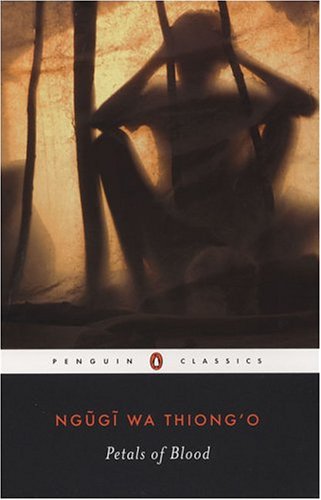
2. Petals of blood
 
$131.48
3. Ngugi Wa Thiongo (New Orientations)
 
4. African Writers Series
 
5. Homecoming: essays on African
 
6. I will marry when I want / Ngugi
 
7. Messianism and salvation in the
 
8. The works of Ngugi wa Thiongo:
 
9. Matigari: Ngugi wa Thiongo ; (African
 
10. "Justice for the oppressed--":
 
11. Women and revolution in Ngugi
 
12. The trial of Dedan Kimathi
 
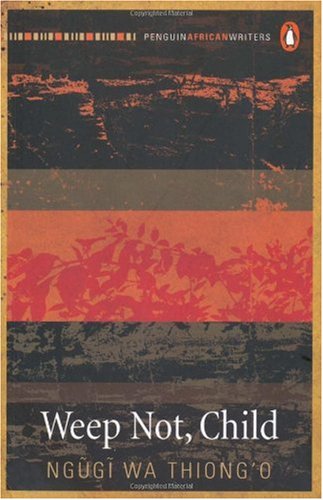
13. Weep not, child (African/American
 
14. Ngugi Wa Thiongo's Drama and the
 
15. The first Walter Rodney memorial
 
16. Secret Lives and Other Stories
 
17. Decolonising the Mind: The Politics
 
18. This time tomorrow
 
19. Penpoints, Gunpoints, and Dreams:
 
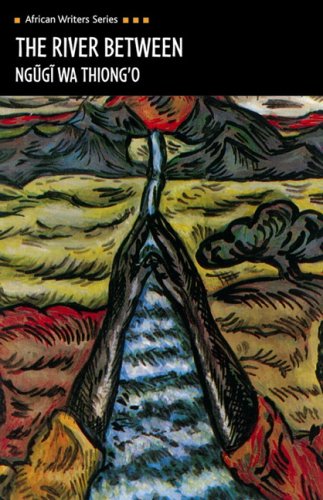
20. The river between

1. Decolonising the Mind: The Politics of Language in African Literature (Studies in African Literature Series)
by Ngugi Wa Thiongo
Paperback: 114 Pages (1986-07-18)
list price: US$15.00 -- used & new: US$14.79
(price subject to change: see help)
Asin: 0435080164
Average Customer Review: 4.0 out of 5 stars
Canada | United Kingdom | Germany | France | Japan
Editorial Review

Book Description
Ngugi describes this book as "a summary of some of the issues in which I have been passionately involved for the last twenty years of my practice in fiction, theatre, criticism and in the teaching of literature. In the eighteenth and nineteenth centuries Europe stole art treasures from Africa to decorate their houses and museums; in the twentieth century Europe is stealing the treasures of the mind to enrich their languages and cultures...." ... Read more

Customer Reviews (1)

4-0 out of 5 stars Great Reading
I thought this book was really thought provoking and helps to highlight the damage done to our African languages by colonialists. Sadly, we now have an increasing number of Africans who seem to take pride in how well their kids know foreign languages when they cannot even speak the tongue of their birth! ... Read more


2. Petals of blood
by Ngugi wa Thiongo
 Unknown Binding: 344 Pages (1978)
list price: US$9.95 -- used & new: US$71.11
(price subject to change: see help)
Asin: 0525178287
Average Customer Review: 4.5 out of 5 stars
Canada | United Kingdom | Germany | France | Japan
Editorial Review

Book Description
The puzzling murder of three African directors of a foreign-owned brewery sets the scene for this fervent, hard-hitting novel about disillusionment in independent Kenya. A deceptively simple tale, Petals of Blood is on the surface a suspenseful investigation of a spectacular triple murder in upcountry Kenya. Yet as the intertwined stories of the four suspects unfold, a devastating picture emerges of a modern third-world nation whose frustrated people feel their leaders have failed them time after time. First published in 1977, this novel was so explosive that its author was imprisoned without charges by the Kenyan government. His incarceration was so shocking that newspapers around the world called attention to the case, and protests were raised by human- rights groups, scholars, and writers, including James Baldwin, Toni Morrison, Donald Barthelme, Harold Pinter, and Margaret Drabble. ... Read more

Customer Reviews (8)

4-0 out of 5 stars an insightful, painful journey through disappointment in post-independence Kenya
Primary schoolteacher Godfrey Munira requests a posting at a far-away, rural location, hoping to escape his feelings of failure, his disappointment with himself. He is sent to the village of Ilmorog, where he crosses paths with Wanja, a beautiful bargirl come to live with her grandmother; Abdullah, a former freedom fighter who now runs a small shop and bar; and later Karega, a former student expelled from a prestigious secondary school for participating in a strike, then reduced to selling petty wares to tourists. These four friends (and sometimes lovers and sometimes rivals) participate with the native residents of Ilmorog through ups and downs, through drought and urbanization.

The principal theme of the book is disillusionment with independence, which replaced a few elite whites tightly holding power and money in Kenya with ... a few elite blacks holding power and money in Kenya. And as Ilmorog develops, just as in Kenya's post-independence transition, those who fought longest for change aren't those who see the benefits. The theme is not a happy one, and the novel holds out no clear solution (one character finds religion, another finds alcoholism, a third finds labor unions - and incredible hostility towards them by those in power) but it reflects true frustration on the part of many unable to climb out of abject poverty.

Thiongo's writing style is not swift-moving or action-packed, but the early pace reflects the pace of life in Ilmorog, and the action picks up as does life in the small town. Pushing through the slower parts is worthwhile: this book feels true to the frustration of many of Kenya's (and Africa's) poorest, disillusioned and searching for hope. Sometimes Thiong'o preaches too obviously through his characters, but the complaints are not his alone.

4-0 out of 5 stars A Most Impressive Book
A most impressive book.Chinua Achebe said that through fiction you may not be able to tell fact but through fiction you can tell truth.This novel transcends post colonial Africa; it's a commentary on the universal human condition.The forces of greed corruption exploitation transcend borders.The bosses will be served.Well done Ngugi Wa Thiong'o.

5-0 out of 5 stars Brilliant
This novel is amazing. It just gets better each time I read it. It is a skillful blend of humor, irony, emotion, drama, politics and theory. "The railroad ate the trees, which called upon the rains." This is a critique of the colonial effect on the environment, which at the same time offers a cause and solution for the drought and crop failures contributing to poverty and disease in our beloved Africa. All in one simple line! This book is a rich treasure chest, each page holds jewels!

5-0 out of 5 stars powerful
Ngugi takes you through an emotional journey of pre and post colonial journey. This book moved me and educated me on some Kikuyu cultures - He references Theng'eta a potent alcoholic drink that I still have yet to find any Kikuyu who has heard of it. non the less the book is very much worth the time and more so the money - enjoy

5-0 out of 5 stars A tale of Post-Colonialism
Set in Kenya but could be a prototype for a native culture anywhere colonized, breaking free, then globalized which is an extension of colonialism. It is easy to understand why the author was imprisoned after the book's publication in 1977 as he presents a bleak view of what the Kenyans got in the way of leaders after independence from the white rulers. The viewpoint here seems to be anyone "for the people" is assassinated, those that stay in power are stinking rich doing business with the former white rulers and selling out their own people.

The story opens with a brief introduction of the four main characters - Munira, Abdulla, Wanja and Karega - a triple murder has just taken place, 3 leading millionaire government officials of the city of Ilmorog were burned to death in their beds. We are then taken back twelve years in time to when Munira arrived in the sleepy, dusty village of Ilmorog to teach school, The four friends meet and we hear their individual stories, how they change over the years but more so how the place called Ilmorog changes, from a dusty village to a modern urban centre, and the effect on people who lived there for generations.

I found the book very dense reading at first, there so many African names introduced, also the style of writing with many flashback is challenging, but before page 100 I was sailing along and could hardly put the book down. There are many layers to this novel, it is a book about Africa, about the world history of black people in general, globalization, colonialism, and a murder mystery as well, the arsonist responsible for the triple murder is revealed to us by the end. ... Read more


3. Ngugi Wa Thiongo (New Orientations)
 Hardcover: 232 Pages (2008-01-02)
-- used & new: US$131.48
(price subject to change: see help)
Asin: 8185753830
Canada | United Kingdom | Germany | France | Japan

4. African Writers Series
by Ngugi wa Thiongo
 Unknown Binding: 280 Pages (1970)

Isbn: 0435900366
Average Customer Review: 4.5 out of 5 stars
Canada | United Kingdom | Germany | France | Japan
Editorial Review

Book Description

This is a compelling account of the turbulence that inflamed Kenya in the 1950s and its impact on people's lives. Five friends and agemates make different choices when the Mau Mau rebellion erupts in colonial Kenya. Kihika joins the freedom fighters in the forest; Gikonyo supports the rebels, but is arrested and detained; Mumbi, Gikonyo's wife, works to keep family and home together in the village; Karanja chooses to support the more powerful British masters; Mugo ultimately betrays his friends and loses his life in a desperate attempt to stay alive and stay neutral.

In this ambitious and densely worked novel, we begin to see early signs of Ngugi's increasing bitterness about the ways in which the politicians, not the fighters or their families, are the true benefactors of the rewards on independence.

... Read more

Customer Reviews (15)

4-0 out of 5 stars A political tale with an emotional threshold
There is no one storyline to follow throughout, and there is no one protagonist to embrace. Instead, Ngugi tells us of a world on the brink of independance, of the people that lived through the transition, and of the effects that occur to the land and its people in the process.

While understanding that Ngugi was someone quite politically charged, the book plays as an allegory to his specific beliefs, but reading this story cannot help but take you on an emotional road as well. He spins a tale in an enchanting and effective way. His characters represent the many layers of people on the transitioning land: those of tradition, wisdom, corruption, and courage.


A great book to read for the interpretations, and for the story itself.

2-0 out of 5 stars BREATHTAKING
If it is possible to imagine, Ngugi wa Thiong'o's "A Grain of Wheat" surpasses the power and eloquence of Herman Hesse and Joseph Conrad. He traces the inner development of his characters with such deep understanding of the human condition that I was astounded and moved to tears and joy. He rises above the black vs. white issue and places his characters in the arena of life where they have to deal with oppression, betrayal, disolussionment, love and despair as human beings. Ngugi pulled me right into midst of the people's lives and allowed me to get to know them intimately. The experience has made me a better person...more loving, more compassionate and more understanding. Thank you Nugui for a rewarding experience.

5-0 out of 5 stars Great book, possibly the best African novel there is!
A really captivating story of struggle and betrayal. Wonderful flashbacks and indivual story-telling aspects keeps us the reader turning the page to gain more insight with every bit of information revealed.
I highly recommend it to anyone.

P.S -A panga is a cutlass/machete/long knife(blade) with a wooden handle, I didn't know this until AFTER reading the novel.

5-0 out of 5 stars A masterpiece - captivating
Ngugi expresses himself in prose.His style is simple but conveys deep meaning and the crude reality of the people.It has a language of power, violence and patriarchy.There is the intrusion of the African language.He creates suspense throughout the novel which captivates the reader's attention.The style of writing is open-ended, which leaves the reader to speculate and draw his own conclusions.A Grain of Wheat becomes a work of art as Ngugi portrays realistic themes (violence, betrayal, etc), and he show the feelings of the people.He describes the Mau Mau movement and mentions people like Jomo Kenyatta.He makes use of symbolism.The `grain of wheat' is the seed of rebellion which is represented by the Mau Mau. This eventually leads to the freedom from colonial rule.Ngugi shows how colonialism had different impacts on different people.It is a complex and traumatic experience for each individual.We also have all-rounded characters.The book has a fluid chronology, far from being linear in structure.The style of writing only enhances the real events.There is also a lack of continuity, and the lengthy sections of flashbacks tend to leave the reader unaware of exactly what timeframe he/she is supposed to be thinking.All the major characters are there for a reason.The songs/dances indicate that Ngugi is trying to bring his African culture in the novel.The novel shows the African reality.The reader discovers/is informed about the atrocities of concentration camps - violence against the African people and eventually rebellion for freedom from the Whiteman's control.The reader is also informed about the colonising power. Characters are unfolded through various events, and the events illustrate the characters; the plot and the characters are inter-dependant.The plot achieves tragic effects, and satire mingled with comedy.It is a narrative plot with monologues and dialogues.There is the element of suspense (Mugo at the beginning).The plot is artistic as a whole.It is up to the reader to connect the scenes together since the author often uses flashbacks to narrate various episodes.The story has a circular pattern (it starts with, and returns to, Mugo) and it is only by connecting the bits and pieces that we have the whole story.The narrator probes deep into theses characters (through monologues which reveal the innermost feelings of the characters).He uses the characters to lash out his own feelings about the issues.The use of humour to accentuate the seriousness of the situation (e.g. Karanja's dream with the Queen, lashing out bitterness about her).

5-0 out of 5 stars Compelling story w profound moral msg for all activists
I loved this book. The story itself is compelling, detailing both African and European characters' perspectives on Kenyans' struggle for independence from Britain. Just for the story alone, the book is an intriguing page-turner that completely satisfies. But beyond that, it has a powerful and inspirational moral message that I have taken with me and hope never to forget.

Each of the major characters commits an act of betrayal to attain a greater goal, whether it's the British officer who wants to create a happy, harmonious colony and finds himself torturing and murdering in pursuit of this vision, or whether it's the Kenyan rebel who betrays his comrade to save his own life, feeling that he must survive to perform important tasks for his people.

Each one chooses less-than-perfect means to an imagined end. But what we and they learn, is that the "end" never comes, and we are left living day-to-day in the rubble of our "means." The betrayals that crisscross the novel scar all the characters with heavy losses, representative of the losses and betrayals that scarred Kenya as it stood on the threshhold of independence, divided between those who had collaborated with British occupation and those who had rebelled. And yet the final note is one of hope, that somehow reconciliation and transcendence of past injuries can be attempted.

I took to heart two messages: that those of us who struggle for justice in today's world must never betray our own principles in pursuit of some supposed higher good--because we too will be left only with our betrayals and no higher good in sight. And, that even after betrayals and years of conflict, there is still a spark of hope for renewal. ... Read more


5. Homecoming: essays on African and Caribbean literature, culture and politics (Studies in African literature)
by Ngugi wa Thiongo
 Paperback: 155 Pages (1972)

Isbn: 0435185810
Canada | United Kingdom | Germany | France | Japan

6. I will marry when I want / Ngugi wa Thiongo and Ngugi wa Mirii / translated from the Gikuyu by the authors
by Ngugi wa Thiongo (1938-)
 Paperback: Pages (1989)

Asin: B000VZIFZ6
Canada | United Kingdom | Germany | France | Japan

7. Messianism and salvation in the novels of Ngugi wa Thiongo
by Eloise A Brière
 Unknown Binding: Pages (1975)

Asin: B0007AYQJE
Canada | United Kingdom | Germany | France | Japan

8. The works of Ngugi wa Thiongo: Towards the kingdom of woman and man
by Chimalum Moses Nwankwo
 Unknown Binding: 201 Pages (1992)

Isbn: 9781397179
Canada | United Kingdom | Germany | France | Japan

9. Matigari: Ngugi wa Thiongo ; (African writers series)
by Ngugi wa Thiongo
 Unknown Binding: 175 Pages (1990)

Isbn: 0949225886
Average Customer Review: 3.5 out of 5 stars
Canada | United Kingdom | Germany | France | Japan

Customer Reviews (2)

5-0 out of 5 stars Keil Jensen's review
Keil,

Ngugi was self-exiled from his country in 1982, and the novel came out in 1986.You also left out the part where the police arrested the book since they couldn't arrest the man.

2-0 out of 5 stars Compelling Tribute to Kenya and Ngugi
In short, Matigari is the name of a former Mau Mau fighter who, as the book opens, comes out of the woods to lay down his weapons and, as he puts it, trades them for the belt of peace.Trouble comes when he begins asking the question "Where can a man find peace and justice in this world".We soon find out that in this nameless postcolonial country, there is none to be found.This book is extrememly powerful in its portrayal of the fictional Matigaro, and the Kenyan government also found it powerful.Soon after its publication, rumors began to spread of a man named Matigari who traveled the countryside, fighting for justice amongst the common people.The government soon issued a warrant for his arrest, not understanding that this man was a fictional character.Not long after this, Ngugi himself was exiled from the country.This says more for tthe power of Ngugi and his writing than my words ever could. ... Read more


10. "Justice for the oppressed--": The political dimension in the language use of Ngugi wa Thiongo (African literatures in English)
by Herta Meyer
 Perfect Paperback: 164 Pages (1991)

Isbn: 3892064067
Canada | United Kingdom | Germany | France | Japan

11. Women and revolution in Ngugi Wa Thiongo's works (AHRA working paper)
by Claude Dusaidi
 Unknown Binding: Pages (1985)

Asin: B0006EORPE
Canada | United Kingdom | Germany | France | Japan

12. The trial of Dedan Kimathi
by Ngugi wa Thiongo
 Unknown Binding: 85 Pages (1976)

Asin: B0006DZ254
Average Customer Review: 3.5 out of 5 stars
Canada | United Kingdom | Germany | France | Japan
Editorial Review

Book Description
Ngugi and Micere Mugo have built a powerful and challenging play out of the circumstances surrounding the trial of one of the celebrated leaders of the Mau Mau revolution. ... Read more

Customer Reviews (2)

4-0 out of 5 stars Insightful, prompting
I did this piece as part of class assingment. I like it for its depiction of a rather mysterious character, even in Kenya. The proud reference to African history is heartening, considering the publication date. The mimes and dances make it more than just the quintessential play. It is so rich in style, it would be a challenge to reproduce on stage. My reccommendation to anyone in search of African roots. an probably be considered as a good text for revisionist history.

3-0 out of 5 stars My humble opinion
I read this play as part of a class assignment, but was impressed by the clarity and depth of emotion with which the material was presented.The play's authors have done an excellent job of presenting a non-Europeaninterpretation of history.This play made me approach Kenyan history witha different view.However, it did not provide any background informationon the Mau Mau rebellion, making it difficult to understand the character'smotivations.Overall, it was an interesting and insightful piece of work,but one I would reccommend only to someone with a decided interest in theeffect of colonialism in Kenya. ... Read more


13. Weep not, child (African/American library)
by Ngugi wa Thiongo
 Unknown Binding: 184 Pages (1969)

Asin: B0006C003E
Average Customer Review: 4.0 out of 5 stars
Canada | United Kingdom | Germany | France | Japan
Editorial Review

Book Description

This is a simple and powerful tale of the effects of the Mau Mau war on individuals and families in Kenya. Two brothers must decide where their loyalties lie; Njoroge, the dreamer and accomplished student, finds it hard to give up schooling and is drawn relentlessly into turmoil. Good and evil are portrayed somewhat more starkly than in Ngugi's later works.

... Read more

Customer Reviews (3)

4-0 out of 5 stars Weep not, child
The story concerns itself with an important period in the life of the author's tribe in Kenya in the 1950's - the Mau Mau Emergency at a time when I myself lived in Kenya. It does not pretend to be other than a subjective fictional account and yet is more accurate than the recent supposed historical account by Caroline Elkins, outrageously inaccurate as that is. Ngugi's book goes to the heart ofa young boy whose burning desire is to get an education at a time when conflict and killing were all around him. It is beautifully and simply told with a very authentic 'young' voice.

4-0 out of 5 stars Quick, easy read
This was a quick read portraying the struggles of a young boy coming of age in Kenya with the onset of the Mau Mau uprising and the opression that led to it. The novel's simplicity may make it seem like an elementary book, but this is what makes it genuine and a good beginning for anyone who is just starting to learn about the atrocities that happened throughout white man's rule of Africa and what is still going on today. It's not hard to see why Ngugi was so wrongfully punished for his bringing these events to the forefront as he definitely was making some point-blank political statements (and very brave).

4-0 out of 5 stars The Plight of the African people
"Weep Not, Child" chronicles a young boy, Njoroge, as he grows up admist the Mau Mau war and the conflict between the African natives and the British colonial rulers. The book is in essence about the hopes and dreams of a young boy coming being affected by the outside world and howthe outside world changes a person.

The novel also addresses thepolitical conflict that was occurring in Kenya in the 1950's. The authorincorporates a description of the power of the white rulers, the bitternessof the Africans at being enslaved on their own land and their attempt torise up against the tyranny, and finally deals with the poor relationsbetween the blacks and Indian merchants, who are looked down upon by theblack community.

I read this novel as a part of my IB English class. Weread this book in combination with "1984" (Orwell). It was a verypowerful story when it dealt with Njoroge's life, his thoughts and hisfeelings but due to the length of the novel (136 pages) one only gets afairly superficial explanation of the historical and cultural context ofthe book. Also, this novel is a book in translation, so some of thesentence and grammatical structure can be a bit tricky at times. All inall, a very good book. ... Read more


14. Ngugi Wa Thiongo's Drama and the Kamiriithu Popular Theater Experiment
by Josphat Gichingiri Ndigirigi
 Hardcover: 308 Pages (2006-08)

Isbn: 1592213413
Canada | United Kingdom | Germany | France | Japan

15. The first Walter Rodney memorial lecture
by Ngugi wa Thiongo
 Unknown Binding: 12 Pages (1987)

Asin: B0006FDEZM
Canada | United Kingdom | Germany | France | Japan

16. Secret Lives and Other Stories
by Ngugi Wa ThiongO
 Hardcover: Pages (1975-10)
list price: US$6.95
Isbn: 088208058X
Average Customer Review: 5.0 out of 5 stars
Canada | United Kingdom | Germany | France | Japan

Customer Reviews (2)

5-0 out of 5 stars Ngugi
It is indeed depressing that these series of short stories are out of print. Is there a way to get them back into print?

5-0 out of 5 stars Tragedy
It's a tragedy this important book is no longer in print.It's a depressing commentary on the state of literature.Ngugi wa Thiogo's stories are stunning. ... Read more


17. Decolonising the Mind: The Politics of Language in African Literature (Studies in African Literature Series)
by Ngugi Wa Thiongo
 Paperback: Pages (1986)

Asin: B000OO8GVW
Canada | United Kingdom | Germany | France | Japan

18. This time tomorrow
by Ngugi wa Thiongo
 Unknown Binding: 50 Pages (1970)

Asin: B0006E1EFA
Canada | United Kingdom | Germany | France | Japan

19. Penpoints, Gunpoints, and Dreams: Towards a Critical Theory of the Arts and the State in Africa (Clarendon Lectures in English Literature, 1996)
by Ngugi Wa Thiongo
 Paperback: Pages (1998)

Asin: B000OKRAW2
Canada | United Kingdom | Germany | France | Japan

20. The river between
by Ngugi wa Thiongo
 Unknown Binding: 174 Pages (1965)

Asin: B0006BNHC6
Average Customer Review: 4.5 out of 5 stars
Canada | United Kingdom | Germany | France | Japan
Editorial Review

Book Description

    ...that rarity, an almost wordless love story that avoids pseudo-nobility while remaining proudly and distinctively African.
    - The Guardian

Christian missionaries attempt to outlaw the female circumcision ritual and in the process create a terrible rift between the two Kikuyu communities on either side of the river. The people are torn between those who believe in Western/Christian education and the opportunities it will offer, and those who feel that only unquestioned loyalty to past traditions will save them. The growing conflict brings tragedy to a pair of young lovers who attempted to bridge the deepening chasm.

... Read more

Customer Reviews (13)

5-0 out of 5 stars The Valley of the Shadow of Death: Can one reconcile the old and the new?
Ngugu wa Thiong'o's two ridges are rivals to the political and spiritual salvation of the Kikuyu. Waiyaki stands between the two worlds.Indeed, he sees that both the traditionalist's view and the tribe and the new Christian view each hold a modicum of merit. Waiyaki attempts to bridge these worlds to strengthen the tribe and connect with the good of the modern world.
The man caught between two worlds is a common theme throughout literature and may be seen as trite.Yet, as usual trite themes are only bad when done by bad writers. Ngugu, however,is a fantastic writer.He is to the Kikuyu what Achebe is to the Ibo.This book is thoroughly enthralling; not only do I give this book 5 stars I would put it in must read.

3-0 out of 5 stars The River Between
The River Between is about the division between two villages in Africa, divisions begun by the differences between the tribal ways and Christian ways brought by the missionaries.The death of Muthoni, the eldest daughter of Joshua, the most stringent follower of the missionary, after undergoing female circumcision causes the missionary to "outlaw" female circumcision and forbid the children of the "circumcised" to attend the school.An expelled student of the school in his final year sets up schools for those that believe the tribal traditions, but his youth awakens an old enemy of his father to oppose him and set him up for failure by utilizing the young man's love for Nyambura, Joshua's other daughter.Not to give anything away, I was not happy with the end of the book, hence the 3 rating; however, those who think they are enlightened and would like to outlaw female circumcision should read this book as if does raise an interesting question:"If the white man's religion made you abandon a custom and then did not give you something else of equal value, you became lost.An attempt at resolution of the conflict would only kill you, as it did Muthoni."What do the "liberals" who want to outlaw female circumcision in the name of "women's rights" suggest as a custom to replace this custom?

4-0 out of 5 stars Just one question...
I read this book while living in Tanzania as a volunteer from 2000-2002. I found it very helpful in understanding East African post-colonial attitudes. For that, it was an invaluable book to read, and it helped me put my own self and work into context. I would recommend this book to anyone doing Peace Corps in Kenya or Tanzania.

As a work of fiction, it is fascinating, and I was easily absorbed into the storyline, and the love story involved.

However, I felt that the women in the story were too simplistically depicted. It left me wondering if that is truly how women in Kenya during that era felt about female circumcision, or if Ngugi himself had written from the female perspective without really understanding it.

In some ways, he makes FGM seem like it is comparable to male circumcision, which it's not. It does far more damage to a woman than what men typically experience from male circumcision.

So my suggestion, then, is for readers to keep in mind that the writer is a male from a male-dominated society as they read the story.

5-0 out of 5 stars Important book from an important author
The River Between is a subtle tale that manages to comprehensively deal with a variety of themes including the challenge of leadership, the values of traditional heritage, the destructive nature of rejection of culture and finally, the multi faceted dimensions of the human personality.

As an African woman in the Diaspora, the writing of African writers from the Continent is a very important and an integral means of connecting with a heritage that I am routinely forced to ignore and misunderstand. This novel, amongst many other African novels, is an important tool in the re-education of the mind, forcing you to understand the dynamics of the many diverse African cultures as well as introducing you to the unique mode of storytelling that African writers illustrate so well, and Ngugi is a particularly accomplished story teller.

A River Between, although set amongst the Gikuyu, has lessons for all African people everywhere fighting for self-determination, survival and most importantly, global unity amongst African people. The way in which Ngugi deals with the issue of Female Circumsion is one that I have to respect. He does not simply demonise the practice but puts the practice into the context of tradition and heritage. Indeed, he highlights the perils of literally `white' washing African cultures through the character of Joshua who ultimately loses both his children.

One of the most memorable quotes for me occurs in Chapter 25 when Waiyaki thinks to himself about Joshua, the `white' man's horse:

"He had clothed himself with a religion decorates and smeared with everything white. He renounced his past and cut himself away from those life-giving traditions of the tribe. And because he had nothing to rest upon, something rich and firm on which to stand and grow, eh had to cling with his hands to whatever the missionaries taught him..."

Overall, River Between is a beautifully written story that illustrates the complimentary nature of duality or seemingly apparent opposites. It is subtle and yet bold; inspirational but also cautionary. Everything is intricately interwoven and you realise that all elements of life is steadfastly connected with each other, you can not successfully separate love from social responsibility, or heritage and legacy from the present and future.

5-0 out of 5 stars Powerful Novel
"The River Between" tells the story of a young boy, Waiyaki, who is told by his father that he will be the savior of his village.Waiyaki's village is under the threat of integration by the white missionaries who are slowly entruding on their village.Waiyaki is to go to the mission and learn the teachings of the white man and use those teachings to help save his people.Waiyaki accepts his role as savior and feels that education is the only way to save his people.

This novel deals with complex issues, including finding a balance between accepted, traditional norms and new world education.The struggle to find a balance is the motivating factor in this novel and drives the story forward.Ngugi crafted this novel masterfully and receives tremendous praise for this work.I highly recommend this book to any who desire to read it. ... Read more


  1-20 of 44 | Next 20
A  B  C  D  E  F  G  H  I  J  K  L  M  N  O  P  Q  R  S  T  U  V  W  X  Y  Z  

Prices listed on this site are subject to change without notice.
Questions on ordering or shipping? click here for help.

site stats