e99 Online Shopping Mall

Geometry.Net - the online learning center Help  
Home  - Authors - Paine Thomas (Books)

  1-20 of 100 | Next 20
A  B  C  D  E  F  G  H  I  J  K  L  M  N  O  P  Q  R  S  T  U  V  W  X  Y  Z  

click price to see details     click image to enlarge     click link to go to the store

$13.14
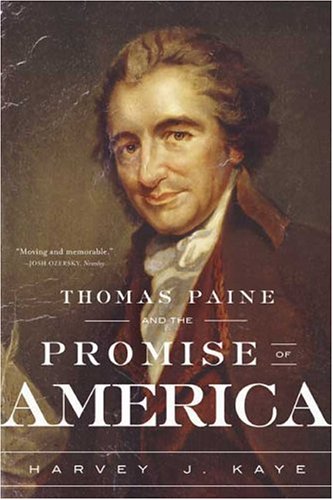
1. Thomas Paine and the Promise of
$2.61
2. Common Sense, The Rights of Man
 
$19.58
3. Thomas Paine : Collected Writings
$12.52
4. Thomas Paine Collection: Common
$5.22
5. Thomas Paine: Enlightenment, Revolution,
$13.89
6. Rights of Man
$3.99
7. Thomas Paine's Rights of Man:
$16.89
8. The Thomas Paine Reader
$7.50
9. 46 Pages: Thomas Paine, Common
$26.01
10. Thomas Paine: Firebrand of the
$9.84
11. Paine: Political Writings (Cambridge
$3.93
12. Common Sense
$4.70
13. Common Sense and Other Writings
$11.85
14. The Age of Reason - Thomas Paine
 
$11.99
15. Tom Paine and Revolutionary America
$11.55
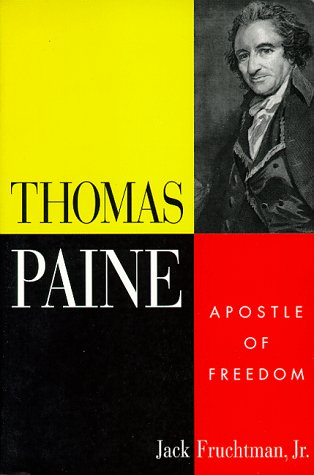
16. Thomas Paine: Apostle of Freedom
$30.61
17. Basic Writings Of Thomas Paine:
$10.00
18. The Phoenix: Rights of Man &
$12.95
19. The Age of Reason: Being an Investigation
 
$1.06
20. Triangle Histories of the Revolutionary

1. Thomas Paine and the Promise of America
by Harvey J. Kaye
Hardcover: 336 Pages (2005-08-03)
list price: US$25.00 -- used & new: US$13.14
(price subject to change: see help)
Asin: B0013JD9K0
Average Customer Review: 4.0 out of 5 stars
Canada | United Kingdom | Germany | France | Japan
Editorial Review

Book Description

America’s unfinished revolution

The revolutionary spirit that runs through American history and whose founding father and greatest advocate was Thomas Paine is fiercely traced in Thomas Paine and the Promise of America. Showing how Paine turned Americans into radicals—and how we have remained radicals at heart ever since—Harvey J. Kaye presents the nation’s democratic story with wit, subtlety, and, above all, passion.

Paine was one of the most remarkable political writers of the modern world and the greatest radical of a radical age. Through writings like Common Sense—and words such as “The sun never shined on a cause of greater worth,” “We have it in our power to begin the world over again,” and “These are the times that try men’s souls”—he not only turned America’s colonial rebellion into a revolutionary war but, as Kaye demonstrates, articulated an American identity charged with exceptional purpose and promise.

Beginning with Paine’s life and ideas and following their vigorous influence through to our own day, Thomas Paine and the Promise of America reveals how, while the powers that be repeatedly sought to suppress, defame, and most recently co-opt Paine’s memory, generations of radical and liberal Americans turned to Paine for inspiration as they endeavored to expand American freedom, equality, and democracy.
... Read more

Customer Reviews (14)

5-0 out of 5 stars A Timely Treasure
When I ordered this book I was thinking of updating my knowledge of one of that group of men we usually think of as our "forefathers"--the ones who were there at the birth of our nation.I got that AND SO MUCH MORE.In addition to learning more of Thomas Paine himself, I learned why he has never had the place of distinction and honor accorded others of his time despite his seemingly crucial activities in securing our independence.THEN, this fine historian takes the "essence" of this dynamic American, traces its ( and his) waxing and waning influence through the decades, and presents us with the need to re-capture, if we can, that zeal for maintaining our freedom and our "national theme" of a nation for the common good--for the common man.For me, anyway:A Masterpiece. The only drawback (if one can call it that):Now I MUST read ( and own) the basic works--in Thomas Paine's own words

5-0 out of 5 stars Common Sense Society of Fort Lee NJ
This is a brilliant work that breathes new life into the legacy of Tom Paine and links his writings to our lives as Americans today.We in the Borough of Fort Lee, New Jersey are proud that Paine began to write "The American Crisis" while in Fort Lee as an aide to General Nathaniel Greene.The retreat to victory through New Jersey in November 1776 was one of the darkest periods of the American Revolution.Paine's words in The Crisis inspired this young nation so much so that General Washington had "The Crisis" read by his offcers to his men prior to the crossing of the Delaware.

We in Fort Lee are presently forming "The Common Sense Society" to promote the ideals of Tom Paine and to work with the Borough of Fort Lee to erect a statue to Paine in our Monument Park where Paine encamped with the American Army in 1776.This would be only the sixth statue of Paine in the world and the fourth in the United States.

2-0 out of 5 stars Well written but biased and flawed argument
Kaye's prose is solid and I certainly enjoyed the first few chapters on Paine's controversial life. The book, however, takes a turn for the worse when it launches (for half the book!) into a very oversimplified argument that "liberals" (of all times, shapes, and persuasions) are the true decendents of Paine's ideology and that conservatives (over and over derided as "the powers that be" "capitalist elites" etc.) can never truly draw from Paine's legacy. Quite the contrary, Kaye admits that Paine's libertarian tendencies and his disdain for government, contradicting his own argument. An interesting read, but disgustingly biased and as a previous post commented, should be on the shelf with other political polemics. Wouldn't recommend it to an objective student of history looking for a good intro to Paine.

5-0 out of 5 stars More than a Biography

Although I purchased this book assuming it was a biography of Paine, I discovered it was much more. While the first third of the book is a short, excellent biography, the heart if the book is a study of Paine's influence on American's liberal, progressive, radical movements and even of the Reagan conservative revival.Kaye makes it clear that his sympathies lie with the left and views Reagan's reliance on Paine's words as a highjacking, but despite this bias, the book is an objective analyses of Paine's influence throughout the 230 years of American history. One question, I have oftenasked is why did the conservative elite of the Colonial Era, who had so much to lose if the Revolution failed, pledge the "their lives, their fortunes and scared honor" to the cause of American Independence?Kaye offers a plausible and logical explanation: the influence of Thomas Paine's pamphlets, most notably "Common Sense.".

3-0 out of 5 stars Good story, poor writing
Good review of the life and times of an often over-looked founders but it's often hard to follow the disorganized and disjointed style of the author. ... Read more


2. Common Sense, The Rights of Man and Other Essential Writings of Thomas Paine (Signet Classics)
by Thomas Paine
Paperback: 416 Pages (2003-07-01)
list price: US$5.95 -- used & new: US$2.61
(price subject to change: see help)
Asin: 0451528891
Average Customer Review: 5.0 out of 5 stars
Canada | United Kingdom | Germany | France | Japan

Customer Reviews (14)

5-0 out of 5 stars did i know american history? not really!
every american should have a copy to see how the american goverment has taken away every liberty that was so hard to get!

5-0 out of 5 stars Great patriot
Great book by one of our greatest patriots. Should be required reading for all American citizens.

4-0 out of 5 stars Forgotten Founding Father
Thomas Paine is not as heralded as the rest of the Founding Fathers. This is most likely due to his not holding any political office, and largely due to his heterodox views on religion. But more about the that later.

I was quiet impressed with Paine's "Golden Voice" for the Revolution.He had a talent, and even a genius, for persuasive essaymanship. John Adams wrote, "Without the pen of Thomas Paine, the sword of Washington would have been wielded in vain."

This is a book of selections, and as C. S. Lewis observed,"The only use of selections is to deter those readers who will never appreciate the original, and thus save them from wasting their time on it, and to send all the others on the original as quickly as possible." (The Quotable Lewis, #447)

For a complete compilation, buy Thomas Paine : Collected Writings : Common Sense / The Crisis / Rights of Man / The Age of Reason / Pamphlets, Articles, and Letters (Library of America).

Here is the breakdown of this book's contents:

"Common Sense" (complete): Plain and simple, this should be required reading for every high school student--or even earlier.We cannot underestimate the connection between this pamphlet, Patrick Henry's "Liberty or Death" speech, and the decision to go ahead with the Declaration of Independence.In fact, the order, logic, and evidence that Paine used in this pamphlet was reused by Jefferson in the Declaration.

"The Crisis" (selections):These essays are a combination of motivational speeches and silver-tongued ridicule--a cross between Tokyo Rose and Rush Limbaugh.

"Rights of Man" (complete, both parts):

Coming in two part, this book could also be divided along the lines of it's contents: One half is a rambly screed against Edmund Burk's Reflections on the Revolution in France (Oxford World's Classics), the other half is rather snazzy political theory.For example, his distinction between natural and civil rights is a gem.

Age of Reason (selections of part 1):This is the book that really undid Paine and brought about the famous doggerel: "Here lies Tom Paine, who wrote in liberty's defense / And in his `Age of Reason' lost his `Common Sense.'"Like Nietzsche, Paine had a talent for sarcasm which overshadowed his evidence.Think of How to Talk to a Liberal (If You Must): The World According to Ann Coulter.

Though critical of religion, the book did leave it's mark:Joseph Smith, the founder of Mormonism (The Book of Mormon: Another Testament of Jesus Christ or Encyclopedia of Joseph Smith's Teachings), was well-schooled in this book.His mother recorded that Smith's paternal grandfather got into a heated discussion with his father, and threw a copy of the book and told Smith's father to read it until he believed it History of Joseph Smith by His Mother: Revised and Enhanced.BYU scholar Joseph Fielding McConkie, a great-great grandnephew of Joseph Smith, was also favorable to certain aspects of the book "Seeking the spirit."

Really, this book is nothing new, if one is familiar with Bertrand Russell's or Carl Sagan's critiques, or spend any time reading anti-Christian blogs.A Christian response would be either Mere Christianity or More Than a Carpenter.

When he presented the manuscript to Benjamin Franklin, the sage replied, "At present I shall only give you my opinion, that, though your reasonings are subtle and may prevail with some readers, you will not succeed so as to change the general sentiments of mankind on that subject, and the consequence of printing this piece will be, a great deal of odium drawn upon yourself, mischief to you, and no benefit to others. He that spits against the wind, spits in his own face."

His parting paragraph is a mixture of wit, wisdom, and prophecy:

"I would advise you, therefore, not to attempt unchaining the tiger, but to burn this piece before it is seen by any other person; whereby you will save yourself a great deal of mortification by the enemies it may raise against you, and perhaps a good deal of regret and repentance. If men are so wicked with religion, what would they be if without it."

So take it for what it is.Whatever your view of organized religion may be, this book should round out your thinking.

Agrarian Justice (selections):This is Paine's plan for redistributing income to equalize living conditions.The intent of economic equality is in accord with Paine's big heart.But for the man who said, "Government even in its best state is but a necessary evil; in its worst state an intolerable one," it is beyond strange that he would advocate such intrusiveness.Why would he want to create a nation-wide welfare system, which would of necessity, empower that "necessary evil." Maybe he did loose his common sense in his age of reason.

As I mentioned earlier, Paine is not as well known as the other founders, partly due to "Age of Reason." Additionally there is ashallowness to Paine's prose. At times he is an avid marksman for political theory, as in parts of "Common Sense" and "Rights of Man," at other times he merely strings together platitudes, invective, cracker-barrel wisdom, and off-hand sarcasm.There is no analytical depth as we get with Aristotle, Ayn Rand, C. S. Lewis, or the Thomases (Sowell and Aquinas).So I felt like I was drinking skim milk, as opposed to chocolate cream. His essays are persuasive, but not as intellectually satisfying as they could be.His talent, then, comes from an instinct for properly applying his talent for surface-level discussion.Today, he would be an NPR talking head.

5-0 out of 5 stars Essential Reading Fo Every American
The ideas in these collections not only apply when the Founding FATHERS came together and brought together our aweseome country, but they apply to the present more than ever. The responsibilities of the people have been forgotten, it is now blasphemy to denounce or question the government. Nothing will change until the ideas in this collection are brought back into the American people's day to day life.

5-0 out of 5 stars Must-read for anyone seriously interested in American history
This is what we're founded on, what America is supposed to be, and the way we should conduct our political affairs. Paine should probably be required reading for every citizen, every student, anyone wondering what freedom really means. Besides being informative, it is incisive, sarcastic, humorous, and passionate. The English is old and dated, but that just adds to its delight. I read this in short segments and then thought about each chapter. It made me proud to be an American and sad to realize how much freedom we've lost since Paine's day. ... Read more


3. Thomas Paine : Collected Writings : Common Sense / The Crisis / Rights of Man / The Age of Reason / Pamphlets, Articles, and Letters (Library of America)
by Thomas Paine
 Hardcover: 906 Pages (1995-03-01)
list price: US$35.00 -- used & new: US$19.58
(price subject to change: see help)
Asin: 1883011035
Average Customer Review: 4.5 out of 5 stars
Canada | United Kingdom | Germany | France | Japan
Editorial Review

Book Description
Paine was the impassioned democratic voice of the Age of Revolution, and this volume brings together his best-known works--"Common Sense," "The American Crisis," "Rights of Man," "The Age of Reason," along with a selection of letters, articles and pamphlets that emphasizes Paine's American years. ... Read more

Customer Reviews (26)

5-0 out of 5 stars Beautiful collection of Paine's writings
This is my go-to book whenever I don't know what I want to read next.The only problem with this collection is that it's incomplete, but that's nothing new.I have yet to find a book that has everything Paine ever wrote.The majority of his writings are included, however, so if you're looking for a good Thomas Paine collection, you can't go wrong with this book.As with the other Library of America books I've seen, the end notes are extensive and the binding is top notch.

5-0 out of 5 stars Great Volume
I am always impressed with the quality of the "Library of America" volumes.....Quality production,quality materials,quality content.....

5-0 out of 5 stars The nearly complete Thomas Paine
I believe this is the most complete collection of Paine's writing out there and it is excellent. First of all the production values of the book itself are outstanding. In the first section of the book are Paine's "American writings" including Common Sense and all of the American Crisis publications. These give first of all a historical commentary on the progress or lack of progress of the American Revolution. It also gives a brilliant summary of the intellectual inspiration for the revolution. Finally it shows that the art of political spin doctoring or propaganda was alive and well during that era. The last two sections include " The Rights of Man" and "The Age of Reason". The Rights of Man is of course Paine's defense of the French Revolution but it is also a surprisingly modern statement of the role of government in providing for the poor, the elderly, and children. The "Age of Reason" is Paine's act of political suicide in his attack on the bible. You can decide for yourself what you think of his arguments but the people at the turn of the 18th century certainly were not ready to hear from Paine on this subject. I found the book thought provoking from start to finish and would highly recomment it.

4-0 out of 5 stars What a useful collection.
It's good to have all Paine's material in one handy volume.Plenty to read and think about.It's a pity he's not better known in the USA, considering his significance in the existence of the country.

5-0 out of 5 stars We have it in our power to begin the world over again
This was a required reading for a graduate humanities class.John Keane's biography succinctly showed that Tom Paine (1737-1809) was the consummate revolutionary and a daring adventurer.Not only was he an important figure in the American Revolution, but he also traveled to France in 1791 to give that revolution a push.Paine traveled from England, just in time to stoke the flames of the revolution with his pamphlet Common Sense, in January 1776.To call Common Sense a sensation in the colonies is actually a bit of an understatement.It was an unparallel sensation and monumental work of Enlightenment rhetoric that quickly fanned the flames of rebellion throughout the colonies.In four months, over 120,000 copies were printed in the colonies--over 500,000 copies by years end.No other pamphlet printed in seventeenth century America came close to its success.Most importantly, Common Sense served to get the colonial patriots to drop their fear of open rebellion, and also emboldened those delegates who favored declaring independence from Britain.The delegates now had the confidence that a large segment of the colonists would support rebellion.Similar to the Declaration of Independence, the philosophical ideas in Common Sense are primarily from the English philosopher, John Locke (1632-1704).The most moving quote from the pamphlet became quite prophetic, when one considers the impact it ultimately had on the delegates in the congress, the drafting of the Declaration of Independence, and on the world."We have it in our power to begin the world over again."

As a graduate student in philosophy and history, I heartily recommend this timeless classic to anyone who is interested in political philosophy, and history.
... Read more


4. Thomas Paine Collection: Common Sense, Rights of Man, Age of Reason, An Essay on Dream, Biblical Blasphemy, Examination Of The Prophecies (Forgotten Books)
by Thomas Paine
Paperback: 544 Pages (2007-11-07)
list price: US$12.52 -- used & new: US$12.52
(price subject to change: see help)
Asin: 1605060305
Canada | United Kingdom | Germany | France | Japan
Editorial Review

Product Description
Book Description:

"Common Sense was a pamphlet written by Thomas Paine. It was first published anonymously on January 9, 1776, during the American Revolution. Paine wrote it with editorial feedback from Benjamin Rush, who came up with the title. The document denounced British rule and, through its immense popularity, contributed to fomenting the American Revolution... Paine donated the copyright for Common Sense to the states, and as one biographer noted, Paine made nothing of the estimated 150,000 to 600,000 copies that were eventually printed (various sources disagree on the number of printed copies in Paine's lifetime). In fact, he had to pay for the first printing himself." (Source: wikipedia.org)

"Rights of Man was written by Thomas Paine in 1791 as a reply to Reflections on the Revolution in France by Edmund Burke. It has been interpreted as a work defending the French Revolution, but it is also a seminal work embodying the ideas of liberty and human equality." (Source: wikipedia.org)

"The Age of Reason: Being an Investigation of True and Fabulous Theology... critiques institutionalized religion and challenges the inerrancy of the Bible. Published in three parts in 1794, 1795 and 1807, it was a bestseller in America, where it caused a short-lived deistic revival. British audiences, however, fearing increased political radicalism as a result of the French revolution, received it with more hostility." (Source: wikipedia.org)

Essay on Dream was first published in 1807. Mr. Paine attempts to show by what operation of the mind a Dream is produced in sleep, and applying the same to the account of Dreams in the New Testament.

Biblical Blasphemy is a short work summarizing Mr. Paine's Deistic beliefs.

Examination of the Prophecies was first published by Mr. Paine in 1807, and was the last of his writings edited by himself. It is evidently extracted from his answer to the bishop of Llandaff, or from his third part of the Age of Reason, both of which, it appears by his will, he left in manuscript.

Table of Contents:

Publisher's Preface; Common Sense; Introduction; Of The Origin And Design Of Government In General, With Concise Remarks On The English Constitution; Of Monarchy And Hereditary Succession; Thoughts On The Present State Of American Affairs; Of The Present Ability Of America, With Some Miscellaneous Reflexions; Appendix; Rights Of Man; Part I.; Editor's Introduction.; Paine's Preface To The English Edition; Paine's Preface To The French Edition; Rights Of Man; Miscellaneous Chapter; Conclusion; Part ii. Second, Combining Principle And Practice.; French Translator's Preface.; Preface; Introduction.; Of Society And Civilisation; Of The Origin Of The Present Old Governments; Of The Old And New Systems Of Government; Of Constitutions; Ways And Means Of Improving The Condition Of Europe Interspersed With Miscellaneous Observations; Appendix; The Age Of Reason; Editor's Introduction With Some Results Of Recent Researches.; Part I.; The Author's Profession Of Faith.; Of Missions And Revelations.; Concerning The Character Of Jesus Christ, And His History.; Of The Bases Of Christianity.; Examination In Detail Of The Preceding Bases.; Of The True Theology.; Examination Of The Old Testament.; Of The New Testament.; In What The True Revelation Consists.; Concerning God, And The Lights Cast On His Existence And Attributes By The Bible.; Of The Theology Of The Christians; And The True Theology.; The Effects Of Christianism On Education; Proposed Reforms.; Comparison Of Christianism With The Religious Ideas Inspired By Nature.; System Of The Universe.; Advantages Of The Existence Of Many Worlds In Each Solar System.; Application Of The Preceding To The System Of The Christians.; Of The Means Employed In All Time, ... Read more


5. Thomas Paine: Enlightenment, Revolution, and the Birth of Modern Nations
by Craig Nelson
Paperback: 432 Pages (2007-09-04)
list price: US$16.00 -- used & new: US$5.22
(price subject to change: see help)
Asin: 0143112384
Average Customer Review: 4.5 out of 5 stars
Canada | United Kingdom | Germany | France | Japan
Editorial Review

Book Description
A fresh new look at the Enlightenment intellectual who became the most controversial of America’s founding fathers

Despite his being a founder of both the United States and the French Republic, the creator of the phrase “United States of America,” and the author of Common Sense, Thomas Paine is the least well known of America’s founding fathers. This edifying biography by Craig Nelson traces Paine’s path from his years as a London mechanic, through his emergence as the voice of revolutionary fervor on two continents, to his final days in the throes of dementia. By acquainting us as never before with this complex and combative genius, Nelson rescues a giant from obscurity—and gives us a fascinating work of history. ... Read more

Customer Reviews (16)

4-0 out of 5 stars One of the boldest of the revolutionaries
"Thomas Paine" by Craig Nelson is a thoughtful yet entertaining biography of the Revolutionary War hero Thomas Paine. Positioning Paine within the intellectual vanguard of the Age of Enlightenment, Mr. Nelson demonstrates the crucial role that Paine played in inspiring the colonists' radical struggle for independence. This carefully researched and accessible work succeeds in reintroducing readers to a remarkable man who dedicated his life to human progress through politics.

Mr. Nelson bookends the narrative with the strange tale of Paine's bones which were first recovered by William Cobbett and then sold and resold many times over. This particular narrative serves as a metaphor underscoring the changing opinions that posterity has attributed to Paine; indeed, we learn that Cobbett was virulently opposed to Paine's democratic principles during Paine's lifetime only to later became an ardent admirer after Paine's death. No doubt Cobbett was not unusual for his varying reactions to a message that helped set in motion a series of profound socio-political changes throughout the transatlantic world.

Mr. Nelson's solid scholarship and vivid prose helps us imagine Paine passionately debating the great issues of the day with his fellow revolutionaries. Paine appears as one of the boldest and most visionary of his peers, publicly calling for an end to slavery, supporting women's rights and envisioning a welfare state at a time when most others were silent on these issues. Of course, it was Paine's remarkable talent in transcribing Enlightenment ideals into fiery populist rhetoric that made him indispensible, helping to win broad support for a cause that faced significant challenges and memorably rallying the soldiers at a particularly dark moment in the war.

But Mr. Nelson takes Paine's story well beyond this familiar terrain to England and France, where Paine continued to risk all for the principles he held dear. Mr. Nelson makes clear that Paine was immersed in the kind of political turmoil and intrigue that makes today's world seem rather tame by comparison, including a narrow escape from England after authoring the seditious 'Age of Reason' and a remarkable stint in the French legislature where his principled stand for human dignity and democracy ended with a brutal imprisonment. Through it all, Paine became the 18th Century's most widely read author, pointing the way forward for the great mass of people through the Age of Revolution into today's democratic world that, in many ways, has yet to fulfill Paine's utopian vision.

Tragically, Paine's unyielding defense of reason earned the enmity of small-minded religious demagogues who propagandized against the defenseless Paine in posterity. Fortunately, Mr. Nelson's book joins several other more recent works that correct this unjust historic distortion, helping to restore Paine to his proper place among the Founding Fathers as one of their most uncompromising and important leaders.

5-0 out of 5 stars The Forgotten Founding Father
Nelson does a thorough job in exploring Mr. Paine's life.Of interesting note is that the pace of the book seems to mimic the waxing and waning of Mr. Paine's alleged mental illness and bouts with alcohol....as do Mr. Paine's writings.No doubt Thomas Paine's inability to sustain consistent relationships had something to do with his personality and mental illness.One of the few criticisms of the book I have is Nelson's jumping back and forth in the time period without putting in the occasional date as a point of reference. I also wished he had explored the contentious relationsip between Gouverneur Morris and Paine a little more thoroughly. Overall the book is a good read.Not only does it give the reader a better view of this important figure in American History it also provides a glimpse into the difficult lives of people during that period in regards to living wages, debt, and travel.

1-0 out of 5 stars author twists Paine's thought to fit his own silly political biases
Why is it that biographers cannot simply stick to the facts and dispense with attempting to tie all historical "heros" to their own modern political beliefs. This is a classic example of that exercise.

Most of this book is a fairly interesting and well written biography of Tom Paine. However, you will need to ignore the occasional short comments foreshadowing the completely nonsensical concluding chapter making Paine out the first coming of the modern day liberal. I strongly recommend skipping the last chapter where the author concludes that Paine shared the author's dizzy loony left-wing opinions.

Anyone with even a slight grasp of historical reality would recognize the idiocy of the contention that good ole Tom Paine was a politically correct left wing simpleton leading the way to the current day empty-headed liberalism of Rosie O'Donnell, author Craig Nelson and other left wing pinheads.

The Keane biography is more comprehensive, not as well written, but you don't have to suffer through a series of conclusions about how "modern day" liberal - as opposed to "classical" liberal (boy is there a difference) Paine actually was. Paine would be disgusted at what passes for liberalism in this day and age. And quite frankly equally disgusted with modern conservatism for that matter.

Nelson's is only the latest in the twisted search to prove that Paine was a basically a modern day liberal. Not surprisingly Eric Foner's abominable biography of Paine is even worse.

Skip this idiotic exercise in historical fantasy. I was fooled into buying this nonsense from a positive review in a libertarian publication. I suspect or at least hope that the reviewer did not read the last chapter in this travesty when he (or she, I forget which) recommended it.

5-0 out of 5 stars Soul of a Revolution(ary)
This brillant biography of one of our country's mostly forgotten Founding Fathers is an absolute must for anyone who wants to understand where America came from (and how it has gone astray).

Better than than McCollough's bio of John Adam's, this book really gives the reader the experience of the dichotomy that existed at this country's founding (and where the Federalists drove us off the path of real individual freedom.)

5-0 out of 5 stars A greatbook
I hadn't read much by or about Payne before reading this book. This book shows the importance of Payne and other enlightenment thinkers to the American and French revolutions. While Payne would eventually be denounced as too radical he was always true to his enlightenment principles.This book really showed how the emerging middle class bought into the era's "enlightenment" ideals and the effect that had in America and France.Great book!! ... Read more


6. Rights of Man
by Thomas Paine
Paperback: 254 Pages (2007-11-22)
list price: US$13.99 -- used & new: US$13.89
(price subject to change: see help)
Asin: 1434680428
Average Customer Review: 4.0 out of 5 stars
Canada | United Kingdom | Germany | France | Japan
Editorial Review

Book Description
*Download Description
No individual's writing better exemplifies this transformation of the language of social and political change than that of Thomas Paine (1737-1809). And no individual has a better claim to be the world's first international revolutionary. His writings bear witness to his revolutionary activities, and provide us with a detailed picture of the evolving understanding of social and political change at the end of the eighteenth century. ... Read more

Customer Reviews (8)

5-0 out of 5 stars The Hobo Philosopher
In reading Tom Payne it is best to go right to the horse's mouth. Don't buy a volume with a modern day author's interpretation. Tom expresses himself clearly, logically and in up to date readable language. He needs no interpreter. Read what he has to say for yourself and make your own judgements.
This work is rather amazing when you consider the date that he penned these masterpieces. Don't pay any attention to the right-wing attempts at slurring Tom even today. He made sense in 1776 and his arguments makes sense today. If there were no Tom Paine I doubt if their would be an independent United States today - even George Washington admitted that fact. Tom Paine was simply too outspoken and too honest (and too courageous) for his time - or for today's times for that matter.
If you love history, philosophy, or politics as an American this is a man that you must read.
Tom Paine writing style and ability is "inspirational" to say the least.

4-0 out of 5 stars Efficiencies of Democracy
The book is a response to arguments made by Edmond Burke that were critical to the constitution and behavior that resulted from the French revolution. Edmond Burke believed in the English constitution and the structure of the government in Great Britain. Mr. Paine argued the British did not have a constitution, the government was tyrannical, not efficient, a poor economic system, and not democratic. The sporadic alterations in the general design of the English government was not designed by the people voted on by the population in Great Britain, so it cannot be considered a constitution. The purpose of this work is to make an argument why the constitution set up by the French revolution is superior to the pre-Revolutionary French government and the current British government at the time of publication. No constitution cannot be established but through referendum.

Thomas Paine argues that the equality of man is established by his very nature. His arguments come from the bible and other religious resources. The rationale for the rights from man come from God, but the author does not believe an individual religion has a monopoly on the truth. Pain believed in freedom of association and the organization of individuals in the making a political argument. He believed people of opposing thoughts could come to accommodation while they walked this earth. Anyhow he believed in the arguments of different world views could be made to come to the conclusion all men equal in his natural state.

Paine argued government is formed either through Superstition (Religious manipulation) Power (war, conquering a people) and those that arise out of society (constitutional government). Constitution must occur before the government. The United States and France were his examples of governments coming from society. Governments that exist out of power or superstition produce a hereditary government or government ruled by a certain association not from the population or society. Edmond Burke defended the nobility. Mr. Paine made a distinction between government privileges inherited based on birth and the wealth obtained through inheritance. Titles are nicknames of legal sanction to have authority over others in the population.Consequence is not just unfairness, but a less competent government and the lack of fairness in governmental decisions. Distinction between people must be determined by the person's utility. Does the person improve society by holding a specific position of trust. The sovereign and legislators should be determined by the vote. Transmission of ideas through debate will improve the government. Debate is formed through association. People should be encouraged form into groups in order to form alliance to their point across. Society and Civilization, the wants of the people can be pursued more efficiently when a structure exists where ideas may be debated, thoughts learned, and more may seek participation. Some men have abilities that other do not posses. Society therefore the individual function better under structure but that does not mean all governments are equally as effective. Thomas Paine did not want the rights of a select few chosen through heredity protected at the expense of others.Men seek a fair government where their concerns are heard.

Thomas Paine believed in the Universal Right of Conscience. Man does not worship man, but God. The mortal worships the immortal. Government should not presume or regulate how man worships the immortal neither should government define who the immortal is.- If man is free to judge his own faith his beliefs will hold what is to be true.- If man is free to judge another's faith he will hold or believe the idea of another God to be false.Thomas Pain makes the argument government corrupts religion. I have no argument here. But when he argues that government is the cause of religious intolerance that argument is absurd.


The author saw the forces of history on the side democracy. Thomas Paine saw democracy as a major factor in developing the free enterprise system. He saw the United State as a major example of democracy and prosperity. Man was set free to go after wealth in so doing creating more wealth. He presumed France would soonfollow the United States. Thomas Paine argued government sanctioned Charters (monopolies for the Aristocrats ) hindering ingenuity and the betterment of man. The more efficient the trade between people and nations the more wealth is produced.

The author goes into great length to argue for less regressive taxes. Taxes on products hit the poor the hardest and increase the need for more in the population to receive aid to be able to survive.Thomas Paine was an advocate of a more progressive tax. He also argued for more government to those in aid by taking returns of investments and taxes on the wealthy.

.


4-0 out of 5 stars Considered a founding father of democracy and egalitarianism.
This book was written in 1790 and 91.It was written in two parts.It started out as a rebuttal to Edmund Burke's book on the French Revolution, but as it developed Paine ended up discussing the whole aspect of democracy and goes in quite detail into the ills of a monarchial government.Paine was an ex-patriot Englishman who lived for a time in the United States.His time there coincided with the American Revolution, and Paine was a contemporary of George Washington and Ben Franklin.Paine was an idealist and that comes out clear in this important work.He also made a lot of enemies in England with his radical viewpoints.His was not an easy life, but he certainly lived at a crucial time in world history, and his viewpoints are actually quite valid in some respects even today.Not an easy book to read, but an important work to make the effort to do so.

4-0 out of 5 stars Paine's prescient screed against authoritarian precedent
"Rights of Man" (1791-92) is Thomas Paine's famous response to Edmund Burke's "Reflections on the Revolution of France" (1790). Although it helps have read Burke's essay, a general background is sufficient to understand and appreciate Paine's basic and groundbreaking arguments.

Paine and Burke were originally allies; Burke not only supported self-rule for the American colonies, he also supported the emancipation of the House of Commons from monarchical control and the independence of both Ireland and India. Many of his allies, then, were bewildered by his fervent opposition to the French Revolution; Burke drew the line between territorial autonomy from a distant or aloof government and the total overthrow of existing monarchies and institutions. For Burke, humankind's real enemies were drastic change and "unsocial, uncivil, unconnected chaos," and he proved himself a staunch defender of the status quo, of precedent, and of gradual reform.

Jerry Muller, in his recent--and superb--book "The Mind and the Market" asserts that Burke's denunciation of the French revolution is "the single most influential work of conservative thought published from his day to ours." (This, of course, depends on what one means by "conservative.") Yet Muller and likeminded historians inevitably cherry-pick Burke's more attractive economic and philosophical arguments and foreground Burke's critique, in Muller's words, "of the revolutionary mentality that attempts to create entirely new structures on the basis of rational, abstract principles." (Muller doesn't even mention Paine, much less the example of the United States.) Such a focus inevitably sidesteps Burke's brief for the supremacy of European monarchical institutions and of the landed aristocracy. And that's where Paine comes in.

With his usual acerbic wit and extravagant rhetoric, Paine, in the first part of his treatise, makes mincemeat out of Burke's sillier statements. For example, he finds especially unspeakable Burke's claim that that "the English nation did, at the time of the [1688] Revolution, most solemnly renounce and abdicate [the right of self-rule], for themselves, and for all their posterity for ever." Paine correctly challenges the primacy of a decision made by members of that generation over desires of other generations, questions the right of any generation to surrender the rights of their descendants, and notes that "government is for the living, and not for the dead, it is the living only that has any right in it."

He also chastises the English for a system of hereditary government that virtually guarantees unfettered rule by children, madmen, idiots, and foreign-born pretenders (and he certainly has plenty of examples from which to choose), many of whom led their realms into chaos and terror without the help of radical revolutionaries. And Paine argues that wars would cease with the promotion of democracy and the cessation of the selfish interests of absolutists. His critics rightly respond that the rise of democratic institutions has hardly stopped wars, although one might pose the counterargument that, relatively speaking, democratic governments go to war with each other much less frequently.

In the second part, Paine proposes a radical agenda for an overhaul of the British government. Although his anecdotally based statistics and figures must be viewed with skepticism and a few laughs, the prescience of his proposals is startling: poverty relief, social security, public education, maternity care, homeless shelters, workfare, veteran's benefits, and progressive taxation. His is the agenda of the idealist: "When it shall be said in any country in the world, my poor are happy; neither ignorance nor distress is to be found among them; my jails are empty of prisoners, my streets of beggars; the aged are not in want, the taxes are not oppressive . . . when these things can be said, then may that country boast its constitution and its government."

Paine, of course, had the nascent United States to cite in support of his proposals, but he and Burke were debating these matters before the onset of the Jacobin Reign of Terror, which dismayed Paine and seems to have realized Burke's worst fears. Yet, throughout history, for every Robespierre or Lenin, one can find a Mandela or a Walesa; monarchies too were no strangers to upheaval. Paine hardly argued for "mob rule" or even "majority rule"; the French Revolution failed in part because it violated the fundamental tenet that the citizens of each nation have a right to choose whatever rule they please, even "a bad or defective government, . . . so long as the majority to not impose conditions on the minority, different to what they impose on themselves"--a caveat we all should take to heart in today's political climate.

2-0 out of 5 stars Historically important, but can't stand on its own.
This book is important for the historian who wishes to get a glimpse into the workings of the mind of an important figure in American Revolutionary history, but it doesn't stand on its own. It is written almost entirely as a response to Edmund Burke's "Reflections on the Revolution in France", so I would not recommend reading this one until and unless one has read that one. Otherwise, it is impossible to judge the fairness of the rebuttals of Burke's points, as one only sees them through Paine's perspective, and Paine is far from a fair and impartial debater; he misses no opportunity to belittle his opponent's arguments, and even his opponent himself. I would not be at all surprised to discover that he gives an inaccurate picture of what Burke had to say, particularly given that history speaks rather better of Burke's misgivings than of Paine's panegyrics. Both books were written before the Reign of Terror that resulted from the revolution in 1793; the second part of this book came out in early 1792. Also, history shows us just how silly some of Paine's claims for a Republican, representative government are: 200+ years of representative government in the US have hardly banished wars, or the high taxes associated with them, even though the world as a whole is far more democratic than it was at his time. He makes some good points, and certainly it is hard to stand up against him in favor of hereditary monarchy, but it is apparent that he failed to see that not ALL "democratic" movements were necessarily benificent, even if it would be hard to have much sympathy for the autocratic regime that they overthrow. ... Read more


7. Thomas Paine's Rights of Man: A Biography (Books That Changed the World)
by Christopher Hitchens
Hardcover: 160 Pages (2007-07-23)
list price: US$19.95 -- used & new: US$3.99
(price subject to change: see help)
Asin: 0871139553
Average Customer Review: 4.0 out of 5 stars
Canada | United Kingdom | Germany | France | Japan
Editorial Review

Book Description

Thomas Paine was one of the greatest advocates of freedom in history, and his Declaration of the Rights of Man, first published in 1791, is the key to his reputation. Inspired by his outrage at Edmund Burke’s attack on the French Revolution, Paine’s text is a passionate defense of man’s inalienable rights. Since its publication, Rights of Man has been celebrated, criticized, maligned, suppressed, and co-opted. But in Thomas Paine’s Rights of Man, the polemicist and commentator Christopher Hitchens, “at his characteristically incisive best,” marvels at its forethought and revels in its contentiousness (The Times, London). Hitchens is a political descendant of the great pamphleteer, “a Tom Paine for our troubled times.” (The Independent, London) In this “engaging account of Paine’s life and times [that is] well worth reading” he demonstrates how Paine’s book forms the philosophical cornerstone of the United States, and how, “in a time when both rights and reason are under attack,” Thomas Paine’s life and writing “will always be part of the arsenal on which we shall need to depend.” (New Statesman)
... Read more

Customer Reviews (8)

1-0 out of 5 stars A photograph can be very revealing.
IN MY OPINION........

I consider the man.In this instance, a man who has apparently chosen to devote his life to disproving the existence of God.What drives someone to do this?His childhood would undoubtably make for a fascinating novel.What happened to this "intellectual" at a young age that made him so intent upon convincing himself and others that creation has no creator?I look at his photograph on the cover of this novel and I am not surprised by what I see, or in this case, don't see.Look at his eyes.There is nothing there.There is nothing behind them.He is an empty vessel. His expression is one of sadness and hopelessness.Intellectuals by their very nature feel compelled to deny the existence of anything or anyone who might be their intellectual superior.Their vast egos place them at the top of the food chain, leaving no room for God.It takes a far greater leap of faith to believe that we sprung from nothing than it does to believe that we were created.And yet that is precisely what the atheist religion requires of its' followers.The atheist faith was founded upon the intellectual's driving need to believe that their intellect is of their own making -- self-generated and self-sustaining.To think otherwise is to entertain the unwelcome idea that their intellect is God-given.Most intellectuals find this concept totally unacceptable and an insult to their self-made intellect.Atheism, therefore, is the religion of intellectuals -- created by intellectuals, for intellectuals, who are desperate to maintain the illusion that their intellects are entirely of their own making, and that they owe nothing to God since their intellect has conveniently and necessarily demonstrated through faith the belief that there is no God.

5-0 out of 5 stars Hitchens gives a clear view to Paine's words.
Reading the Rights of Man, Common Sense, and Age of Reason can be diffuclt for a modern day American due to the "old" english. I really suggest reading Paine's work who suggest clear notions to that of Paine's work.

5-0 out of 5 stars Clear and concise view of Paine
Hitchens is best known now for the "God" book, but those who find him disagreeable on that count shouldn't necessarily pass up this gem if they are interested in America's revolutionary beginnings.

Thomas Paine was probably the primary rabble-rouser for the American Revolutionary War. He was an unlikely pamphleteer, having just come to the colonies from an undistinguished life in England.

In Common Sense he lambasted the idea of royal privilege (let alone rule) and proclaimed The Law Is King! That statement alone shows his relevance for today, as debate over the proper extent of executive power rages.

Paine got a raw deal from history, probably because he was a deist and explicitly rejected (in The Age of Reason) formal religion of any kind.

The best reason to read this book is if you want to understand Paine's role in the American Revolution without picking up a textbook-size tome. You also get a quickly drawn but insightful portrait of the man generally.

4-0 out of 5 stars Important reading for today's world
Christopher Hitchens brings an important person and his contribution to freedoms that most of us in the Western World take for granted, into sharper focus.

Although I would have liked Paine's original documents inserted somewhere into this small book, just to help with the scene setting, this is a minor quibble about a very useful book.

5-0 out of 5 stars Hitchens seldom disappoints
...and he doesn't here. Aside from the erudition which always seems to flow from ol' Chris's pen, his subject in this instance is something of an 18th-century soul mate. Maybe this little examination of humanist Paine will go some ways toward raising the general awareness of the man and of his works-- long overdue, like some bit of acknowledgement in D.C. ... Read more


8. The Thomas Paine Reader
by Thomas Paine
Paperback: 536 Pages (2007-11-14)
list price: US$16.99 -- used & new: US$16.89
(price subject to change: see help)
Asin: 1604591382
Canada | United Kingdom | Germany | France | Japan
Editorial Review

Book Description
Collected here in this omnibus edition are Thomas Paine's most important books, along with his short essay Agrarian Justice. This edition has also restored the Third Part to The Age Of Reason. In January of 1776, Thomas Paine published Common Sense; the book inflamed its readers and ignited the American Revolution. In truth, the fires of dissent were already smoldering, but Paine's impassioned writing gave focus to the many disparate voices and united a country. Between 1776 and 1779, he wrote The American Crisis, in an effort to justify the American Revolution and to bolster the morale of the Continental Army. In The Rights of Man, Paine defends the representational form of government. He posits that all men are born with God-given rights that cannot be taken from them by any government. Thomas Paine was a devout deist. That is, he believed in God, not because of faith, but rather because of the rational empirical evidence that the natural world provides. The Age of Reason was Paine's treatise on religion. ... Read more


9. 46 Pages: Thomas Paine, Common Sense, and the Turning Point to American Independence
by Scott Liell
Paperback: 239 Pages (2004-03)
list price: US$14.95 -- used & new: US$7.50
(price subject to change: see help)
Asin: 0762418133
Average Customer Review: 4.5 out of 5 stars
Canada | United Kingdom | Germany | France | Japan
Editorial Review

Book Description
Here's a dramatic look at a pivotal moment in our country's formation, a scholar's meticulous recreation of the turbulent years leading up to the Revolutionary War, retold with excitement and new insight, and available for the first time in paperback. Selling more than 100,000 copies in its first three months of publication, 46 Pages has received enthusiastic praise from David McCullough, Joseph J. Ellis, and other historians. ... Read more

Customer Reviews (8)

4-0 out of 5 stars Opened my eyes
46 Pages tells the story of Thomas Paine, his experiences in England, how he came to the colonies and the circumstances that led him to write Common Sense. Paine's life in England and even in America are given only a cursory look, as the book is more about the political and societal climate of the time and how it led him to begin writing against the crown. Before Common Sense, few colonists were thinking of independence. They wanted certain issues resolved, but still wanted to remain under the rule of King George. Paine laid everything on the line in Common Sense, arguing that independence was the only answer if they were going to thrive in America. After the pamphlet was published it spread like wildfire and people began to quickly change their minds about the future. Paine had written Common Sense in a manor that anyone could understand, be they educated or uneducated. He took his case to the people that mattered; the citizens who had built the colonies from the ground up.

The book ends with Common Sense itself. I had never read it before and was amazed at the clarity and persuasiveness of Paine's arguments. If I felt that way now in 2007, imagine how the people felt in 1776.

5-0 out of 5 stars A great look at an overlooked part of American history
In this book Scott Liell examines the impact that Thomas Paine's pamphlet "Common Sense" had on American sentiment and the move toward independence.Liell argues, and does so quite persuasively, that Common Sense is what finally tipped the balance in favor of those who wanted to break from Britain, and that the work was largely responsible for the enormous shift in sentiment that occurred between the Continental Congress's Olive Branch petition in 1775 and the Declaration of Independence in 1776.

Common Sense was published in January, 1776, and met with immediate and unparalleled success.Liell's argument is that, before Common Sense, very few average people had a reason to want Independence, and that the pamphlet almost instantaneously gave them reason to want to break from Britain.Paine, he says, was bold enough to say things that even the ardent independents like John Adams were too timid to say, and that this helped turn the tide toward the ultimate decision to sever ties with the motherland.

Liell makes a good case.In all our focus on men like Washington, Adams, Jefferson, and Franklin, we often overlook the impact Paine and his writing had on the revolutionary cause.This is a very short book and a quick read, but it is very much worth the effort.The work is part biography, part criticism of the pamphlet, and flows along very nicely.While it is a quick read Liell manages to make a powerful argument, one that is certainly worth looking at for anyone interested in the period.

5-0 out of 5 stars Short and to the point
This exposition places Common Sense firmly in context, showing how it came about and how it in turn quickly brought about the Declaration of Independence.

5-0 out of 5 stars Altered My View of American History
A real page turner...I had to read the book in one sitting.
Before I purchased "46 Pages",Thomas Jefferson represented, to me, the voice of American independence.After reading this book, I see that I am wrong. Thomas Jefferson and George Washington would never have been able to persuade the "average colonial American" to break free from England.That required a man who could talk in the language of the street corner radical, who could burst the myth of American's attachment to the crown. That required Thomas Paine.Buy this book and discovery why so.

5-0 out of 5 stars Excellent book!!!
Thomas Paine was the most important founding father and this book does a fantastic job of proving this fact!!What a great man that was centuries ahead of his time!We need Paine back to fix this current corrupt Government we now suffer with!Hard to imagine Jan 10, 2006 was the 230th anniversary of the publication of Common Sense! ... Read more


10. Thomas Paine: Firebrand of the Revolution (Oxford Portraits Series.)
by Harvey J. Kaye
Paperback: 160 Pages (2000-04-06)
list price: US$30.00 -- used & new: US$26.01
(price subject to change: see help)
Asin: 0195116275
Canada | United Kingdom | Germany | France | Japan
Editorial Review

Book Description
Thomas Paine (1737-1809) was one of the most fascinating figures of the late 18th century. His public antagonist and personal friend John Adams believed that their times would come to be known as the "Age of Paine." He came to America in middle age and became a radical-democratic pamphleteer, effectively turning colonial rebellion into a national liberation movement. He later returned to Europe where he played a prominent role in both the French Revolution and the cause of English radicalism. Paine is best remembered for his books: the controversial The Rights of Man and his book on the American Revolution, Common Sense. Harvey J. Kaye, well-known for his studies on Paine and his period, traces the English revolutionary's life and details his political writings in accessible, highly readable narrative that also covers important events of early American history. Oxford Portraits is a new series of biographies for young adults. Written by prominent writers and historians, each of these titles is designed to supplement the core texts of the middle and high school curriculum with intriguing, thoroughly informative and insightful accounts of the lives and work of the notable men and women who helped shape history. Each book is illustrated with numerous graphics, photographs, and documents. A unique feature is the inclusion of sidebars containing primary source material, mostly excerpts from the subject's writings. A chronology, further reading list, and index rounds out every volume. ... Read more


11. Paine: Political Writings (Cambridge Texts in the History of Political Thought)
by Thomas Paine
Paperback: 384 Pages (2000-04-13)
list price: US$14.99 -- used & new: US$9.84
(price subject to change: see help)
Asin: 0521667992
Average Customer Review: 5.0 out of 5 stars
Canada | United Kingdom | Germany | France | Japan
Editorial Review

Book Description
Thomas Paine was arguably the single most influential political writer during the American and French Revolutions. For this revised and updated edition the distinguished intellectual historian Bruce Kuklick brings together an expanded collection of the classic Paine texts--Common Sense, Rights of Man, and The Age of Reason--as well as the first of Paine's papers on The Crisis of 1776. A brief chronology, updated notes for further reading, and a succinct and lucid introduction to the principal themes of each text give further help to the student reader. ... Read more

Customer Reviews (1)

5-0 out of 5 stars We have it in our power to begin the world over again
This was a required reading for a graduate humanities class.John Keane's biography succinctly showed that Tom Paine (1737-1809) was the consummate revolutionary and a daring adventurer.Not only was he an important figure in the American Revolution, but he also traveled to France in 1791 to give that revolution a push.Paine traveled from England, just in time to stoke the flames of the revolution with his pamphlet Common Sense, in January 1776.To call Common Sense a sensation in the colonies is actually a bit of an understatement.It was an unparallel sensation and monumental work of Enlightenment rhetoric that quickly fanned the flames of rebellion throughout the colonies.In four months, over 120,000 copies were printed in the colonies--over 500,000 copies by years end.No other pamphlet printed in seventeenth century America came close to its success.Most importantly, Common Sense served to get the colonial patriots to drop their fear of open rebellion, and also emboldened those delegates who favored declaring independence from Britain.The delegates now had the confidence that a large segment of the colonists would support rebellion.Similar to the Declaration of Independence, the philosophical ideas in Common Sense are primarily from the English philosopher, John Locke (1632-1704).The most moving quote from the pamphlet became quite prophetic, when one considers the impact it ultimately had on the delegates in the congress, the drafting of the Declaration of Independence, and on the world."We have it in our power to begin the world over again."

As a graduate student in philosophy and history, I heartily recommend this timeless classic to anyone who is interested in political philosophy, and history.
... Read more


12. Common Sense
by Thomas Paine
Paperback: 92 Pages (2006-01-27)
list price: US$7.95 -- used & new: US$3.93
(price subject to change: see help)
Asin: 0977798208
Average Customer Review: 5.0 out of 5 stars
Canada | United Kingdom | Germany | France | Japan
Editorial Review

Book Description
In its time over 600,000 copies of Common Sense were circulated through the Colonies.Not one to be "politically correct" Thomas Paine's little book was key to starting a revolution we know today as the United States of America.Quotes from within these pages:"A long habit of not thinking a thing WRONG, gives it a superficial appearance of being RIGHT""The cause of America is in a great measure the cause of all mankind.""A pretty business indeed for a man to be allowed eight hundred thousand sterling a year for, and worshipped into the bargain! Of more worth is one honest man to society and in the sight of God, than all the crowned ruffians that ever lived.""The present winter is worth an age if rightly employed, but if lost or neglected, the whole continent will partake of the misfortune.""The present time, likewise, is that peculiar time, which never happens to a nation but once . . . the time of forming itself into a government. Most nations have let slip the opportunity, and by that means have been compelled to receive laws from their conquerors." ... Read more

Customer Reviews (4)

5-0 out of 5 stars We have it in our power to begin the world over again
This was a required reading for a graduate humanities class.John Keane's biography succinctly showed that Tom Paine (1737-1809) was the consummate revolutionary and a daring adventurer.Not only was he an important figure in the American Revolution, but he also traveled to France in 1791 to give that revolution a push.Paine traveled from England, just in time to stoke the flames of the revolution with his pamphlet Common Sense, in January 1776.To call Common Sense a sensation in the colonies is actually a bit of an understatement.It was an unparallel sensation and monumental work of Enlightenment rhetoric that quickly fanned the flames of rebellion throughout the colonies.In four months, over 120,000 copies were printed in the colonies--over 500,000 copies by years end.No other pamphlet printed in seventeenth century America came close to its success.Most importantly, Common Sense served to get the colonial patriots to drop their fear of open rebellion, and also emboldened those delegates who favored declaring independence from Britain.The delegates now had the confidence that a large segment of the colonists would support rebellion.Similar to the Declaration of Independence, the philosophical ideas in Common Sense are primarily from the English philosopher, John Locke (1632-1704).The most moving quote from the pamphlet became quite prophetic, when one considers the impact it ultimately had on the delegates in the congress, the drafting of the Declaration of Independence, and on the world."We have it in our power to begin the world over again."

As a graduate student in philosophy and history, I heartily recommend this timeless classic to anyone who is interested in political philosophy, and history.

5-0 out of 5 stars real history
If you want to know the truth about how the U.S. began, and why, read this work. It is very different than what we hear from Washington DC and through the media. Don't read if you prefer keeping your head in the sand. Not for sissies.

5-0 out of 5 stars The First Ever American Best-seller
Over two hundred years after its initial publication, Thomas Paine's `Common Sense' is one of the most influential pamphlets ever written in the English language. Along with Jefferson's Declaration of Independence (1776), Harriet Beecher Stowe's `Uncle Tom's Cabin' (1851-1852), and Lincoln's Gettysburg Address (1863), Paine's `Common Sense' can claim to be one of the first works to have instantly captured and then so permanently held the national imagination. `Common Sense', fiercely surpassed colonial newspaper circulations of the time by reaching a record breaking figure of 120,000 - 150,000 copies solely in its first year eventually culminating in a fifth of the adult American population to have either read Common Sense or to have had it read to them during the course of the Revolution. Paine can profess to have had the first ever American best-seller.

`Common Sense' addresses a people that were divided over the question of independence and in it Paine strongly attacks the virtue of a connection with England and presents an emphatic argument for immediate separation. Paine incorporated both a secular and religious argument for independence, thus freeing himself of any erroneous description that he was a Lockean liberal in the Hartzian mold and that Common Sense was simply a bourgeois manifesto.Paine was very much an original thinker among the Enlightenment philosophers and his unparalleled prescription for a new form of government, a united American Republic, and the manner in which it should be conducted were central to the American political vision that emerged during and immediately after the revolution.

[Part of the above review is taken from; "Common Sense?" by Alexander Rayden. Copyright 2006, All Rights Reserved]

5-0 out of 5 stars Book for Our Times
Even though Thomas Paine wrote this book over 200 years ago his thoughts are still worth reading.The people still should be free! ... Read more


13. Common Sense and Other Writings (Barnes & Noble Classics Series) (Barnes & Noble Classics)
by Thomas Paine
Hardcover: 432 Pages (2005-11-01)
list price: US$7.95 -- used & new: US$4.70
(price subject to change: see help)
Asin: 1593083769
Canada | United Kingdom | Germany | France | Japan
Editorial Review

Book Description

Common Sense and Other Writings, by Thomas Paine, is part of the Barnes & Noble Classics series, which offers quality editions at affordable prices to the student and the general reader, including new scholarship, thoughtful design, and pages of carefully crafted extras. Here are some of the remarkable features of Barnes & Noble Classics:
New introductions commissioned from today's top writers and scholars Biographies of the authors Chronologies of contemporary historical, biographical, and cultural events Footnotes and endnotes Selective discussions of imitations, parodies, poems, books, plays, paintings, operas, statuary, and films inspired by the work Comments by other famous authors Study questions to challenge the reader's viewpoints and expectations Bibliographies for further reading Indices & Glossaries, when appropriateAll editions are beautifully designed and are printed to superior specifications; some include illustrations of historical interest. Barnes & Noble Classics pulls together a constellation of influences—biographical, historical, and literary—to enrich each reader's understanding of these enduring works.
Though he did not emigrate from England to the American colonies until 1774, just a few months before the Revolutionary War began, Thomas Paine had an enormous impact on that war and the new nation that emerged from it. Common Sense, the instantly popular pamphlet he published in January 1776, argued that the goal of the struggle against the British should be not simply tax reform, as many were calling for, but complete independence. His rousing, radical voice was balanced by the equally independence-minded but more measured tones of Thomas Jefferson, who wrote the Declaration of Independence later that year.

In later works, such as The Rights of Man, The Age of Reason, and other selections included in this volume, Paine proved himself a visionary moralist centuries ahead of his time. He believed that every human has the natural right to life’s necessities and that government’s role should be to provide for those in dire need. An impassioned opponent of all forms of slavery, he understood that no one in poverty is truly free, a lesson still to be learned by many of our leaders today.
Joyce Appleby, Professor Emerita at the University of California, Los Angeles, has followed the trajectory of American nation-building in her books Capitalism and a New Social Order: The Republican Vision of the 1790s, Inheriting the Revolution: The First Generation of Americans, Thomas Jefferson, and A Restless Past: History and the American Public.
... Read more

14. The Age of Reason - Thomas Paine
by Thomas Paine
Paperback: 220 Pages (2007-11-08)
list price: US$11.95 -- used & new: US$11.85
(price subject to change: see help)
Asin: 1604244275
Canada | United Kingdom | Germany | France | Japan
Editorial Review

Book Description
I put the following work under your protection.Itcontainsmyopinionupon Religion. Youwilldomethejusticetoremember, thatIhavealways strenuously supported the Right of every man to his opinion, howeverdifferent that opinion might be to mine. He who denies to anotherthisright, makesa slave of himself to his present opinion, because he precludes himself theright of changing it. The most formidable weaponagainsterrorsofeverykindis Reason. I have neverusedanyother, andItrustInevershall. Your affectionate friend and fellow citizen, Thomas Paine. ... Read more


15. Tom Paine and Revolutionary America (Updated Version with a New Preface)
by Eric Foner
 Hardcover: 326 Pages (2005-09-30)
list price: US$71.50 -- used & new: US$11.99
(price subject to change: see help)
Asin: 0195174860
Average Customer Review: 4.0 out of 5 stars
Canada | United Kingdom | Germany | France | Japan
Editorial Review

Book Description
Since its publication in 1976, Tom Paine and Revolutionary America has been recognized as a classic study of the career of the foremost political pamphleteer of the Age of Revolution, and a model of how to integrate the political, intellectual, and social history of the struggle for American independence.Foner skillfully brings together an account of Paine's remarkable career with a careful examination of the social worlds within which he operated, in Great Britain, France, and especially the United States. He explores Paine's political and social ideas and the way he popularized them by pioneering a new form of political writing, using simple, direct language and addressing himself to a reading public far broader than previous writers had commanded. He shows which of Paine's views remained essentially fixed throughout his career, while directing attention to the ways his stance on social questions evolved under the pressure of events. This enduring work makes clear the tremendous impact Paine's writing exerted on the American Revolution, and suggests why he failed to have a similar impact during his career in revolutionary France. And it offers new insights into the nature and internal tensions of the republican outlook that helped to shape the Revolution.In a new preface, Foner discusses the origins of this book and the influences of the 1960s and 1970s on its writing. He also looks at how Paine has been adopted by scholars and politicians of many stripes, and has even been called the patron saint of the Internet. ... Read more

Customer Reviews (5)

2-0 out of 5 stars In depth study of Tom Paine
Tom Paine's Common Sense was one of the most influential writings of the American Revolution.Eric Foner covers this period of Paine's career in 30 pages.The rest of this tome is dedicated to the founding of new political systems in Pennsylvania and controversies surrounding the establishment of the Bank of North America.Although these topics are of interest to scholars, they were of limited interest to this more casual reader.I found much of the book tedious and difficult to wade through.It would probably be great for those with a thirst for rarely documented parts of early American history.Probably this would not be a good choice for those with a more casual interest in this period.

5-0 out of 5 stars Tom Paine Who?
While the book provided considerable insite into other Radical revolutionary leaders it provided little, other than the writings of Paine, on Paine himeself. I was hoping for some insite into his reasons and thought process which developed into the concepts he outlined in his writings. In this I was disapointed. However I would recommend this book for the missing history it provided, history missing from school curricuium. An omission I feel is damaging to educating in this country

4-0 out of 5 stars TOM PAINE-INTERNATIONALIST REVOLUTIONARY DEMOCRAT
If Leon Trotskywas considered by many, like George Bernard Shaw, to be the "prince of pamphleteers" for his efforts on behalf of the Russian Revolution and socialism then Tom Paine can rightly be regarded as the "prince of pamphleteers"for his efforts on behalf ofthe American and French Revolutions (and its offshoot- the pro-revolutionary English radical movement of the 1790's) and plebian democracy.Mr. Foner centers his biography of Tom Paine on the meaning of his key works Common Sense, The Rights of Man and the Age of Reason and the influence they had on the plebian masses in the Age of Revolution. These are Paine's classic arguments for plebian democracy the expansion of the capitalist market and popular deism. . This, in itself, makes the book worthwhile reading. Make no mistake, Paine is no socialist but as an agent of the plebian democratic movement- when and where it counted- we can claim him for our own.

Mr. Foner also gives a rather detailedpicture of Pennsylvania prior to and during Tom Paine's entrance on the political scene there to help set framework for the impact of his propaganda, especially Common Sense, on the developing American national liberation struggle against England. Tom Paine, like many important revolutionaries in their time, had an impact on more than one revolutionary movement and therefore justly earned for himself an honored place in plebian democratic history much to the chagrin of some later historians of these movements. In an age when sales of printed matter were small his tracts sold in the hundreds of thousands and those purchases were not merely for the coffee table at a time when money was dear. That alone helps defines the impact of his work.

Tom Paine, like other revolutionary leaders, has suffered through the ups and downs of reputation depending on the times. His Age of Reason, a consummate tract in defense of popular deism, led to a steep decline in his reputation for most of the 19th century, an age in America of religious piety. Even the revolutionary abolitionist John Brown was driven by a relgious fervor. He has fared better lately, in an age that is much more secular and which is not shocked by deist conclusions. Paine also comes in handy as an ally when democratic rights are, like now, under full-scale attack in the name ofthe `war on terrorism'. Let me say this-if a closet-Tory likeFounding Father John Adams can look pretty damn good in comparison to today's bourgeois politicians then Tom Paine can rightly take his place as a Founder in our pantheon of revolutionary heroes.

4-0 out of 5 stars Paine: One of America's first Public Intellectuals
Paine was a latecomer to pre-revolutionary America, arriving in November, 1774. But he had already been somewhat involved in struggles against oppressive conditions in Great Britain, where he had become acquainted with Benjamin Franklin. Having paid his way to America (not arriving as an indentured servant), Paine quickly became a key figure in revolutionary Philadelphia through his writings for a newspaper, his position being secured by a letter from Franklin, and through the publication of "Common Sense," perhaps the most influential and widely read pamphlet of the times. The author makes clear that Paine did not accept the commonly held view that the balanced government of Great Britain involving monarchy, nobility, and commoners was the ideal form. In "Common Sense," he denounced the entire idea of hereditary monarchy and advocated for republican government with near universal voting rights, of course, only among free, white men. In his scheme, the main element of government should be a unicameral legislature, eschewing the notion of conflicting class interests. He made clear that there were no valid reasons to not seek independence.


Philadelphia had been dominated by the merchant elite in the time before Paine's arrival, but the impending conflict with Great Britain began to unleash new social forces. A considerable portion of the book is devoted to exploring the conflicting interests of merchants, farmers, artisans, and laborers in Philadelphia and the colonies. The formation of a local militia was especially upsetting to the status quo, as the militiamen, originating from the lower orders of society, demanded recognition for their sacrifice. The issuance of paper money by colonial governments to finance the war resulted in rampant inflation. Inflated, free-market pricing versus traditional "just" prices became a controversial issue, which was intertwined with claims of producers withholding or monopolizing products. Attempts to control prices met with little success.Debtors were less concerned with that inflation (except for higher prices) than were merchants and master craftsmen who advocated for private banking based on tight credit. The author notes that Paine, while a republican, was an advocate for free commerce. He backed the Philadelphia merchant, Robert Morris, in establishing a bank in Philadelphia in the early 1780s. That controversy foretold the many banking controversies that have occurred throughout American history.


The author follows Paine as he returned to Great Britain and revolutionary France in 1787. The "Rights of Man" and a sequel became as influential in Great Britain among artisans in the early 1790s as had his earlier pamphlet in America. He had to escape to France to avoid prosecution for denouncing the crown and advocating taxing the nobility and ending their state pensions. Paine was celebrated by one faction in revolutionary France and was elected to the new National Convention, even though he spoke little French. His failure to support the execution of Louis XVI landed him in prison for a year when the Jacobins seized power from more moderate forces. Paine's tract on deism "The Age of Reason," begun while incarcerated, was, in part, an attack on Christianity and its reliance on "revelations and miracles." But as the author says, "In America, far more critics of society spoke the language of revivalist Protestantism and Christian perfectionism than of deist rationalism." Paine's arguments were far better received in France with a secular, anti-clerical tradition.


Paine returned to American in 1802, but his anti-religious views did not sit well with clergy and devout followers. Many of his former friends, including Jefferson, would have nothing to do with him. He died nearly alone in 1809. This book is hardly a conventional biography of Paine. Its intent is to understand the social and political environment in which Paine was able to exert influence. Much of what Paine had to say was not necessarily original, but he had a direct manner of writing that made his views accessible to all social layers. The author also notes that Paine's radicalism did not have the class element that was a part of the radical critique of the industrial revolution in later years. In Paine's view commerce was a unifying social force, not one that created capitalists and a working class at profound odds. Paine is a somewhat obscure and forgotten man. His peripatetic nature, his limited years in the colonies, and his not holding any significant political office - all serve to relegate Paine to a secondary role, at least in perception. But the author contends that Paine had substantial influence in American thought, even if subtle and not well recognized.

4-0 out of 5 stars Paine in the con