e99 Online Shopping Mall

Geometry.Net - the online learning center Help  
Home  - Authors - Paine Tom (Books)

  1-20 of 100 | Next 20
A  B  C  D  E  F  G  H  I  J  K  L  M  N  O  P  Q  R  S  T  U  V  W  X  Y  Z  

click price to see details     click image to enlarge     click link to go to the store

$8.10
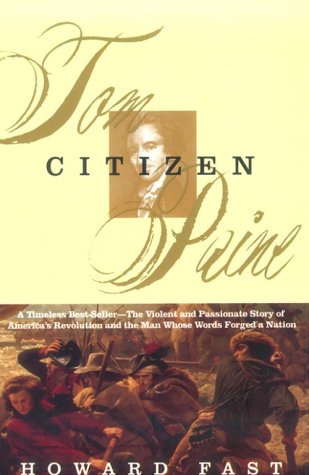
1. Citizen Tom Paine
 
$11.99
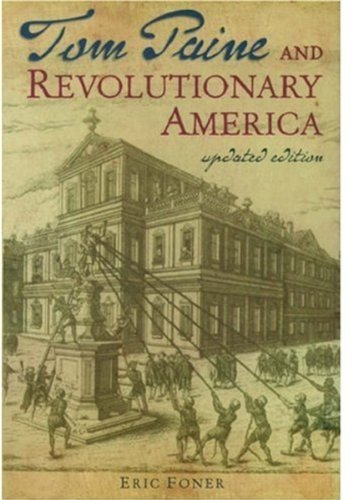
2. Tom Paine and Revolutionary America
$29.95
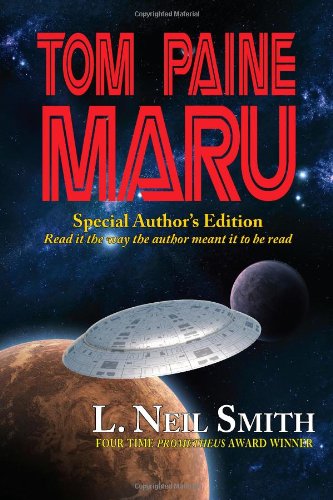
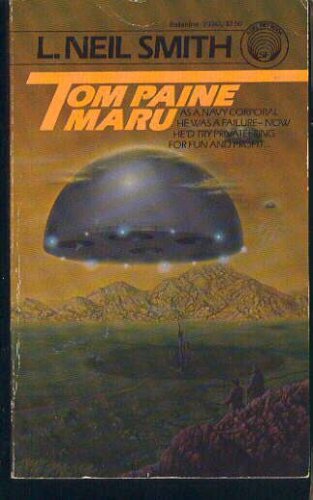
3. TOM PAINE MARU (Del Rey Books)
4. Tom Paine: Voice of Revolution
$13.98
5. 46 Pages: Tom Paine, Common Sense,
$29.85
6. Political Writings: Including
 
$9.95
7. Citizen Tom Paine
$16.30
8. Tom Paine
$4.28
9. The Trouble with Tom: The Strange
$10.20
10. The Pearl of Kuwait
$11.80
11. Tom Paine: A Political Life (Grove
 
12. CITIZEN TOM PAINE
 
13. Citizen Tom Paine: A Play in Two
 
14. Tom Paine and Revolutionary America
 
15. Citizen Tom Paine
 
16. The Selected Works of Tom Paine
 
17. Tom Paine: America's Godfather
 
18. The picture story and biography
 
19. Citizen Tom Paine
 
20. The living thoughts of Tom Paine;

1. Citizen Tom Paine
by Howard Fast
Paperback: 348 Pages (1994-05-05)
list price: US$13.50 -- used & new: US$8.10
(price subject to change: see help)
Asin: 080213064X
Average Customer Review: 4.5 out of 5 stars
Canada | United Kingdom | Germany | France | Japan
Editorial Review

Book Description

Among Howard Fast's historical fiction, Citizen Tom Paine-one of America's all-time best-sellers-occupies a special place, for it restored to a generation of readers the vision of Paine's revolutionary passion as the authentic roots of our national beginnings. Fast gives us "a vivid picture of Paine's mode of writing, idiosyncrasies, and character-generous, nobly unselfish, moody, often dirty, frequently drunken, a revolutionist by avocation"-Library Journal
... Read more

Customer Reviews (8)

3-0 out of 5 stars CITIZEN TOM PAINE-REVOLUTIONARY HERO
Howard Fast, as a part of a series on the American revolution, has written an interesting historical novel based on the exploits of the famous English-born American Revolutionary hero, Tom Paine. Thomas Paine is probably most well-known for his pamphlet COMMON SENSE which did much to galvanize the lower classes in American to support, even if haphazardly, the fight for independence. In fact, the part of the book concerning the distribution of the pamphlet is its most interesting part. If you like drama, history and an engaging, if sullen and unkempt,character this book is for you.

If Leon Trotskywas considered by many to be the "prince of pamphleteers" for his efforts on behalf of the Russian Revolution and socialism then Tom Paine can rightly be regarded as the "prince of pamphleteers"for his efforts on behalf ofthe American and French Revolutions (and its offshoot- the pro-revolutionary English radical movement of the 1790's) and plebian democracy.

Tom Paine, like many important revolutionaries in their time, had an impact on more than one revolutionary movement and therefore justly earned for himselfan honored place in plebian democratic history much to the chagrin of some later historians of these movements. In an age when sales of printed matter were small his tracts sold in the hundreds of thousands and those purchases were not merely for the coffee table at a time when money was dear. That alone helps defines the impact of his work.

Tom Paine, like other revolutionary leaders, has suffered through the ups and downs of reputation depending on the times. His Age of Reason, theconsummate tract in defense of 18th century popular deism, led to a steep decline in his reputation for most of the 19th century, an age in America of religious piety. Even the revolutionary abolitionist John Brown was driven by a religious furor. Paine has fared better lately, in an age that is much more secular and which is not shocked by deist conclusions. Paine also comes in handy as an ally when democratic rights are, like now, under full-scale attack in the name ofthe `war on terrorism'. Let me conclude by saying this, if a closet-Tory likeFounding Father John Adams can look pretty damn good in comparison to today's bourgeois politicians then Tom Paine can rightly take his place as a Founder in the pantheon of revolutionary heroes.


5-0 out of 5 stars Stirring, tragic historical novel
For those who need a refresher, Paine was the American revolutionary who helped transform a disorderly and often frightened collection of rebellious colonists into a nation with his series of pamphlets, beginning with the famous Common Sense.

When we first meet Paine, he is a frustrated loser on the verge of middle age, unable to break free of the class system that traps him in menial jobs in London. He forces his way into the office of Benjamin Franklin, the minister from the "colonies," who kindly recommends that he emigrate to America. When Paine, who tells Franklin that he "writes a little," comes to Philadelphia, he haltingly finds his true talent at last: as a propagandist. As the colonies hurtle towards revolution, it is Paine who roars the truth in his little pamphlets, giving courage and meaning to the efforts of the rebels.

For the first time in his life, this shambling, lonely, often drunk man is truly alive. Encouraging, exhorting, burning with anger and determination, Paine plays his vital role without thought of personal gain or a plan for the future. Before reading this novel, I hadn't realized how powerful the Tory forces were in America, especially in Philadelphia, nor how many folks simply sat on the sidelines during the war, wishing the whole mess would just go away. At the war's lowest point, Congress hightails it out of Philadelphia (then the capital) and begins talk of sacking George Washington.

Paine took personal responsibility for saving Philadelphia (the capital) from a Tory takeover, an action that may well have saved the country--but at the cost of making powerful enemies. Paine's passion and sacrifice for the cause sets the stage for the tragic second act of the book. Now a throughly committed revolutionary, Paine doesn't know what to do with himself after the American Revolution comes to an end.

He is once again a wanderer, but now he has a reputation to uphold. The only real satisfaction he can find is as a revolutionist, on the run from the authorities. He returns to England and tries to spark an uprising there. Eventually, disillusionment sets in. Paine learns that his desire to change the world is not enough.

Paine then becomes caught up in the French Revolution and is lucky to escape with his head. Falsely accused of atheism for some of his writings in France, Paine lives out his remaining years in America, despised by the very country he helped to create.

While not a jolly tale, Citizen Tom Paine is a compelling, gripping read. Fast himself was a radical, but this novel is no propaganda piece for radical politics. Instead, Fast examines with clear eyes and a compassionate heart the tragedy that befalls a creative man who can't be content with the temporizing and sorry realities of everyday life. This is a timeless story of idealism, its triumphs, and its limitations.

4-0 out of 5 stars Don't Know Much About History?
Let's play word association. Thomas Paine. Did you say Common Sense? So did I. In fact, that's about all I knew of Paine before picking up Howard Fast's piece of historical fiction about the revolutionary. It's not surprising that this should be what Paine is best remembered for. The "small book" appears to have been a bigger hit than the Da Vinci Code and was read by people across the intellectual spectrum. Paine became known to American soldiers and militiamen as "Common Sense". Paine was perhaps America's first motivational speaker.

There is more to Paine than Common Sense, however, and Howard Fast does a marvelous job leading us up to the point that Paine writes his masterpiece and beyond to his eventual demise and ridicule until his death. Along the way, Paine wrote a series of "Crisis" papers that picked up where Common Sense left off and re-inspired discouraged fighters. It is to Paine that we owe the line "these are the times that try men's souls." Paine later tried to become a revolution mercenary, trying his hand (unsuccessfully) in England and (arguably more successfully) in France. He was so well received in France that he became a deputy to the National Assembly.

A better historian -- or high school student -- would probably already know all of this about Paine. If you fall into that category, Citizen Tom Paine may be a waste of time. But if your knowledge of this gruff, intelligent, less-than-handsome revolutionary is as shallow as mine was, Citizen Tom Paine is a worthwhile read that has become a classic piece of historical fiction.

5-0 out of 5 stars Tom Paine - a Founder for the Common Man
The Tom Paine who Howard Fast creates in his excellent historical novel Citizen Tom Paine is not a traditionally sympathetic character. He is a course peasant with a chip on his shoulder, full of self-pity, usually rash, and often drunk, dirty, and mean. Yet through all of that, a fierce, pure light shines, that makes him the most compelling of characters, and an unlikely inspiring hero. Fast writes of him, "in the unshaven, hook-nosed, wigless head, there was something both fierce and magnificent, a grinding savagery that might be sculptured as the whole meaning of revolution, unrest and cruelty combine with a deep-etched pattern of human suffering and understanding." This Paine is good only for revolution, a continually lonely wanderer, who says that the world is his village, and wherever freedom is not, there he will be. He is the prophet of the age of the common man, old "Common Sense". And in the end, despite all that he contributed to liberty and his fellow citizen of three nations, he is forsaken by all to die alone, and even his bones are given no rest.
Fast surrounds Paine with a great cast of historical personages - Franklin, Washington, Jefferson, Burke, Blake, Marat, Robespierre, and Bonaparte among others - all men that Paine knew and moved among. They are all bit characters here, though. Whatever their worldly greatness, in Citizen Tom Paine they serve only to provide background to this great monolith of peasant philosopher revolutionary. Likewise, Fast convincingly shows us the world's first two great democratic revolutions, but only as they are viewed through the fierce eyes of Tom Paine. (This view is not entirely the one that you may have studied in school.) Everything else in this novel fades into the background as it keeps a tight focus on this amazing, sad man, who always had the courage of his convictions, no matter what price must be paid.
Paine is arguably the most neglected of America's founders. His frank writings on religion in his book The Age of Reason made him a pariah in his last days in America, and blackened his name here for over 100 years. Howard Fast has done an excellent job of rescuing Paine from that unfair obscurity, and presenting him as a complex, troubled, but fiercely honest hero for the common man. When I first read this book over twenty years ago, it gave me a new hero, and I have since read Paine's works and biographies, so I would say that Fast did his work well. Read it yourself to discover the brilliant character that Fast created, and then go out and discover the Tom Paine of history. Neither will disappoint you.

Theo Logos

5-0 out of 5 stars Transports the reader back to that time
First of all I found this book a pleasure to read.Howard Fast is an amazing writer.Reading the book I found myself carried back to the time of the revolution.Not only do you follow Tom Paine around, but you get peeks at Washington, Jefferson, Franklin, and Napoleon.Reading a historical novel like this shows these historical figures as real people - brings them to life just as if they lived in your neighborhood.True, they are fictionalized but it seems that the author did his best to conform to the known facts.I have tried a number of writers of historical fiction and find that Howard Fast is among the best.What a pleasant way to become acquainted with history! ... Read more


2. Tom Paine and Revolutionary America (Updated Version with a New Preface)
by Eric Foner
 Hardcover: 326 Pages (2005-09-30)
list price: US$71.50 -- used & new: US$11.99
(price subject to change: see help)
Asin: 0195174860
Average Customer Review: 4.0 out of 5 stars
Canada | United Kingdom | Germany | France | Japan
Editorial Review

Book Description
Since its publication in 1976, Tom Paine and Revolutionary America has been recognized as a classic study of the career of the foremost political pamphleteer of the Age of Revolution, and a model of how to integrate the political, intellectual, and social history of the struggle for American independence.Foner skillfully brings together an account of Paine's remarkable career with a careful examination of the social worlds within which he operated, in Great Britain, France, and especially the United States. He explores Paine's political and social ideas and the way he popularized them by pioneering a new form of political writing, using simple, direct language and addressing himself to a reading public far broader than previous writers had commanded. He shows which of Paine's views remained essentially fixed throughout his career, while directing attention to the ways his stance on social questions evolved under the pressure of events. This enduring work makes clear the tremendous impact Paine's writing exerted on the American Revolution, and suggests why he failed to have a similar impact during his career in revolutionary France. And it offers new insights into the nature and internal tensions of the republican outlook that helped to shape the Revolution.In a new preface, Foner discusses the origins of this book and the influences of the 1960s and 1970s on its writing. He also looks at how Paine has been adopted by scholars and politicians of many stripes, and has even been called the patron saint of the Internet. ... Read more

Customer Reviews (5)

2-0 out of 5 stars In depth study of Tom Paine
Tom Paine's Common Sense was one of the most influential writings of the American Revolution.Eric Foner covers this period of Paine's career in 30 pages.The rest of this tome is dedicated to the founding of new political systems in Pennsylvania and controversies surrounding the establishment of the Bank of North America.Although these topics are of interest to scholars, they were of limited interest to this more casual reader.I found much of the book tedious and difficult to wade through.It would probably be great for those with a thirst for rarely documented parts of early American history.Probably this would not be a good choice for those with a more casual interest in this period.

5-0 out of 5 stars Tom Paine Who?
While the book provided considerable insite into other Radical revolutionary leaders it provided little, other than the writings of Paine, on Paine himeself. I was hoping for some insite into his reasons and thought process which developed into the concepts he outlined in his writings. In this I was disapointed. However I would recommend this book for the missing history it provided, history missing from school curricuium. An omission I feel is damaging to educating in this country

4-0 out of 5 stars TOM PAINE-INTERNATIONALIST REVOLUTIONARY DEMOCRAT
If Leon Trotskywas considered by many, like George Bernard Shaw, to be the "prince of pamphleteers" for his efforts on behalf of the Russian Revolution and socialism then Tom Paine can rightly be regarded as the "prince of pamphleteers"for his efforts on behalf ofthe American and French Revolutions (and its offshoot- the pro-revolutionary English radical movement of the 1790's) and plebian democracy.Mr. Foner centers his biography of Tom Paine on the meaning of his key works Common Sense, The Rights of Man and the Age of Reason and the influence they had on the plebian masses in the Age of Revolution. These are Paine's classic arguments for plebian democracy the expansion of the capitalist market and popular deism. . This, in itself, makes the book worthwhile reading. Make no mistake, Paine is no socialist but as an agent of the plebian democratic movement- when and where it counted- we can claim him for our own.

Mr. Foner also gives a rather detailedpicture of Pennsylvania prior to and during Tom Paine's entrance on the political scene there to help set framework for the impact of his propaganda, especially Common Sense, on the developing American national liberation struggle against England. Tom Paine, like many important revolutionaries in their time, had an impact on more than one revolutionary movement and therefore justly earned for himself an honored place in plebian democratic history much to the chagrin of some later historians of these movements. In an age when sales of printed matter were small his tracts sold in the hundreds of thousands and those purchases were not merely for the coffee table at a time when money was dear. That alone helps defines the impact of his work.

Tom Paine, like other revolutionary leaders, has suffered through the ups and downs of reputation depending on the times. His Age of Reason, a consummate tract in defense of popular deism, led to a steep decline in his reputation for most of the 19th century, an age in America of religious piety. Even the revolutionary abolitionist John Brown was driven by a relgious fervor. He has fared better lately, in an age that is much more secular and which is not shocked by deist conclusions. Paine also comes in handy as an ally when democratic rights are, like now, under full-scale attack in the name ofthe `war on terrorism'. Let me say this-if a closet-Tory likeFounding Father John Adams can look pretty damn good in comparison to today's bourgeois politicians then Tom Paine can rightly take his place as a Founder in our pantheon of revolutionary heroes.

4-0 out of 5 stars Paine: One of America's first Public Intellectuals
Paine was a latecomer to pre-revolutionary America, arriving in November, 1774. But he had already been somewhat involved in struggles against oppressive conditions in Great Britain, where he had become acquainted with Benjamin Franklin. Having paid his way to America (not arriving as an indentured servant), Paine quickly became a key figure in revolutionary Philadelphia through his writings for a newspaper, his position being secured by a letter from Franklin, and through the publication of "Common Sense," perhaps the most influential and widely read pamphlet of the times. The author makes clear that Paine did not accept the commonly held view that the balanced government of Great Britain involving monarchy, nobility, and commoners was the ideal form. In "Common Sense," he denounced the entire idea of hereditary monarchy and advocated for republican government with near universal voting rights, of course, only among free, white men. In his scheme, the main element of government should be a unicameral legislature, eschewing the notion of conflicting class interests. He made clear that there were no valid reasons to not seek independence.


Philadelphia had been dominated by the merchant elite in the time before Paine's arrival, but the impending conflict with Great Britain began to unleash new social forces. A considerable portion of the book is devoted to exploring the conflicting interests of merchants, farmers, artisans, and laborers in Philadelphia and the colonies. The formation of a local militia was especially upsetting to the status quo, as the militiamen, originating from the lower orders of society, demanded recognition for their sacrifice. The issuance of paper money by colonial governments to finance the war resulted in rampant inflation. Inflated, free-market pricing versus traditional "just" prices became a controversial issue, which was intertwined with claims of producers withholding or monopolizing products. Attempts to control prices met with little success.Debtors were less concerned with that inflation (except for higher prices) than were merchants and master craftsmen who advocated for private banking based on tight credit. The author notes that Paine, while a republican, was an advocate for free commerce. He backed the Philadelphia merchant, Robert Morris, in establishing a bank in Philadelphia in the early 1780s. That controversy foretold the many banking controversies that have occurred throughout American history.


The author follows Paine as he returned to Great Britain and revolutionary France in 1787. The "Rights of Man" and a sequel became as influential in Great Britain among artisans in the early 1790s as had his earlier pamphlet in America. He had to escape to France to avoid prosecution for denouncing the crown and advocating taxing the nobility and ending their state pensions. Paine was celebrated by one faction in revolutionary France and was elected to the new National Convention, even though he spoke little French. His failure to support the execution of Louis XVI landed him in prison for a year when the Jacobins seized power from more moderate forces. Paine's tract on deism "The Age of Reason," begun while incarcerated, was, in part, an attack on Christianity and its reliance on "revelations and miracles." But as the author says, "In America, far more critics of society spoke the language of revivalist Protestantism and Christian perfectionism than of deist rationalism." Paine's arguments were far better received in France with a secular, anti-clerical tradition.


Paine returned to American in 1802, but his anti-religious views did not sit well with clergy and devout followers. Many of his former friends, including Jefferson, would have nothing to do with him. He died nearly alone in 1809. This book is hardly a conventional biography of Paine. Its intent is to understand the social and political environment in which Paine was able to exert influence. Much of what Paine had to say was not necessarily original, but he had a direct manner of writing that made his views accessible to all social layers. The author also notes that Paine's radicalism did not have the class element that was a part of the radical critique of the industrial revolution in later years. In Paine's view commerce was a unifying social force, not one that created capitalists and a working class at profound odds. Paine is a somewhat obscure and forgotten man. His peripatetic nature, his limited years in the colonies, and his not holding any significant political office - all serve to relegate Paine to a secondary role, at least in perception. But the author contends that Paine had substantial influence in American thought, even if subtle and not well recognized.

4-0 out of 5 stars Paine in the context of his time.
I had bought this book because I wanted to learn more about Tom Paine. Paine is one of those historical characters who keeps popping up on the edges of discussion, and about whom I knew very little. I became a lot more aware of him through my media studies, given that he was one of the first radical figures to use media effectively as a weapon.

In any case, this isn't a biography of Paine, and assumes that the reader already knows (or isn't interested in) many biographical details. The book is more about Paine's reception by the society of the time, with a focus on issues such as the role of artisans, balanced government, republicanism, and free markets. It tracks how Paine was received as political pamphleteer not only in the revolutionary US, but also in the UK and revolutionary France.

I think that the book would have meant a lot more to me if I'd already had more background, but the chapter notes did a good job of pointing me to the best books for further reading. ... Read more


3. TOM PAINE MARU (Del Rey Books)
by L. Neil Smith
Mass Market Paperback: 288 Pages (1984-07-12)
list price: US$2.75 -- used & new: US$29.95
(price subject to change: see help)
Asin: 034529243X
Average Customer Review: 5.0 out of 5 stars
Canada | United Kingdom | Germany | France | Japan

Customer Reviews (2)

5-0 out of 5 stars Times were tough...
Corporal Whitey O'Thraight came from a harsh planet, a planet that sent him, and the rest of the crew, to look for a better planet.But the Asperance's first voyage is its last when just a few hours after landing most of his people are killed by the savages (who are living in their version of the Middle Ages).It seems he has the choice between being burned at the stake or just tortured.
But then he is freed by the crew of the Tom Paine Maru.And then things get dangerous.
A great book, kind of a sequel to The Venus Belt. It can stand alone, all you have to do is read enough of it to get the basic background.Set in The Probability Broach universe, so lots of surprises and a interesting setting.

5-0 out of 5 stars You will renew your enjoyment of L. Neil Smith
While set in the Other world of Freedoms and Personal Rights. It will catch you up on the families you first meet in the "The Probability Broach". It will open your mind if you would allow it to, making youlook around and say why are we not more like that. ... Read more


4. Tom Paine: Voice of Revolution (Milton Meltzer Biographies Series)
by Milton Meltzer
Library Binding: 176 Pages (1996-10)
list price: US$20.00
Isbn: 0531112918
Canada | United Kingdom | Germany | France | Japan

5. 46 Pages: Tom Paine, Common Sense, and the Turning Point to American Independence
by Scott Liell
Hardcover: 174 Pages (2003-03)
list price: US$18.95 -- used & new: US$13.98
(price subject to change: see help)
Asin: 076241507X
Average Customer Review: 4.0 out of 5 stars
Canada | United Kingdom | Germany | France | Japan
Editorial Review

Book Description
Thomas Paine, a native of Thetford, England, arrived in America's colonies with little in the way of money, reputation, or prospects, though he did have a letter of recommendation in his pocket from Benjamin Franklin. Paine also had a passion for liberty in all its forms, and an abiding hatred of tyranny. His forceful, direct expression of those principles found voice in a pamphlet he wrote entitled Common Sense, which proved to be the most influential political work of the time.

Ultimately, Paine's treatise provided inspiration to the second Continental Congress for the drafting of the Declaration of Independence. 46 Pages is a dramatic look at a pivotal moment in our country's formation, a scholar's meticulous recreation of the turbulent years leading up to the Revolutionary War, retold with excitement and new insight. ... Read more

Customer Reviews (14)

3-0 out of 5 stars Could have been a third as long
Thomas Paine's _Common Sense_ was a brilliant piece of political propoganda, providing a reason for the disaffected colonists to engage in treason against the British crown.His argument: that it is "common sense" that a continent cannot be ruled by an island, that the colonists' rights have been abused and abrogated, and that the person responsible for the perceived wrongs was King George III, captured the hearts and minds of the Americans of his generation.Liell's analysis of _Common Sense is excellent, and had he concentrated only on these points, the book would have merited five stars.

But Liell, a member of the Thomas Paine National Historical Association, could not stop there.He goes on to detail the spread of the pamphlet and to provide a biography of Paine.These parts (nearly 2/3 of the book) dragged, and served to dilute what otherwise is an excellent analysis of a seminal turning point in America's history.To be fair, some may find the biography fascinating - I thought it was out of place, awkward and not nearly as incisive as those parts that dealt with the actual pamphlet itself.

3-0 out of 5 stars If I can filter out all the glorification of Thomas Paine, it's a book worth reading.
I'm reading this book called "46 Pages" and it's intended to be a critical look at the essay by Thomas Paine: Common Sense. Common Sense, for all intents and purposes, was a 46-page pamphlet that questioned the legitimacy of a monarchial government, and the right for people to represent themselves. It was historically significant because it was a major impetus in getting the independent movement going. Just 6 months after it's release, the Declaration of Independence was written and signed.I'm enjoying the bits and pieces of history and the fact that this historically crucial bit of writing is being put into context. BUT... the majority of the book is a glorified "I love Thomas Paine" treatise.

No man is so wonderful in and of himself. People are great because they do great things. But this book is presuming that Thomas Paine was essentially a saint because he was one of the first to put in writing this idea of independence. But does that make him a saint? Not when you consider the fact that he took another man's thoughts and theories and with his permission, put it into pamphlet format.

So if I can filter out all the glorification of Thomas Paine, it's a book worth reading. About 46 pages of it, that is.

5-0 out of 5 stars A valuable addition to the history of the Revolution
In the year 1763, at the height of the First British Empire, an American colonist's greatest pride was to be the subject of an English king.For fifteen years thereafter, the ill-conceived policies of imperial ministers strained the bonds linking colonies and parent country to breaking point.Yet, even after the bloodshed at Lexington, Concord and Bunker Hill, those bonds stubbornly refused to break.

By 1775, Americans were prepared to fight for their rights, and did so.But the great majority could not bring themselves to throw off the glittering mantle of the British Empire.King George III embodied the venerable heritage that was part of their identity, and few dared speak against their monarch in public--even the leaders of the Continental Congress.The enemies of America were "ministerial" enemies: a group of corrupt men in Whitehall had misled the king and stifled the complaints of his loyal American subjects.The king himself could not be a party to such injustice; if he could, everything they'd been taught to believe would be wrong.Willing satellites of the British sun for a century and a half, Americans now began to fear they were in captive orbit around a black hole.For most, it was simply too much to accept.

In the early days of 1776, Thomas Paine published "Common Sense," severing the colonists' nostalgic ties to their ancestral nation with sudden finality.That a political pamphlet, in a matter of months, could profoundly change the course of history was stunning to those who witnessed its impact at first hand.It is no less so today.In "46 Pages," Scott Liell explains how and why an Englishman accomplished what no American of the time could.He explores the critical events in Paine's background and the evolution of his radical beliefs.He isolates the compelling lines of thought radiating from the groundbreaking pamphlet, and demonstrates how they utterly effaced colonists' lingering notions of their system of government.Countless Americans picked up "Common Sense" believing themselves the dutiful children of an enlightened and glorious monarch.They put it down again seething with anger and contempt.Paine showed the colonists that what they had taken as day was in fact night; but after reading his words, they did not lament the realization.Their former beliefs exposed as idolatry, they were willing to part with them at last.

The author goes on to trace the powerful effects of "Common Sense" on its diverse audience: the Founding Fathers in Congress, the generals and common soldiers of the Continental Army, the average farmer in his field and tradesman in his shop.With force and clarity, he illustrates its decisive importance in convincing the colonists that their true interest, and best chance of securing their rights, lay in independence from Great Britain.Before "Common Sense," America had been fighting with one hand tied behind her back.From now on, her course would be clear, her energies focused.

Mr. Liell's account is engaging, scholarly and thoroughly illuminating.On the road to a true understanding of the American Revolution, "46 Pages"is an essential part of the journey.

4-0 out of 5 stars Great narrative history
I had not thought much about Tom Paine since I read Howards Fast's novel about him while I was in college.Someone recommended this book to me and within the first chapter I remembered what I loved about Paine's story then. Liell's book is as well paced and well written as fast's even though it is a non-fiction work.One warning: five minutes after you are done with "46 pages" you will be going to Amazon to plunk down your cash for a volume of Paine's great writing. All in all an inspiring telling of a fascinating tale in American history.

2-0 out of 5 stars 46 pages never seemed so long
"46 Pages" unfortunately refers to the length of the Revolutionary War era pamphlet, "Common Sense," rather than this book about said pamphlet.Unfortunate because Liell could have made his basic point in 46 pages, or even much less.

As it is the book is pretty short, but we get the idea of Liell's thesis quickly - "Common Sense" sparked a change in the way Americans thought about their relationship with England.Before, Americans sought rights within the British system, after they wanted a whole different system.Further, "Common Sense" helped Americans think about a republican form of government rather than an independent government based on the British model.Good point.Now, if you want to read it again stretched over about 150 pages, pick up this book.

Liell runs into trouble in part because he's not sure what he wants to do with his book.There's a little bit of Gary Wills' "Lincoln at Gettysburg," a little bit of Richard Brookhiser's short biographies of the founding fathers, and a little bit of a grade-school text book.The combination does not achieve what any of its component parts succeed at.

Wills' book on Lincoln's speech explores its historic context, analyzes its every phrase, and then describes the effect it had on American thinking during and after the Civil War.A glaring absence of Liell's book is much analysis of the language of "Common Sense."He touches on it, emphasizing that it was written to be understood not just by the framers but also by common farmers, but we don't really come away with much appreciation of the actual language of the pamphlet.

Liell probably would have been better off writing a straight biography of Thomas Paine.Again, Paine's biography is touched on, but his life is glossed over.This may be because Liell is aiming at a very general audience and is afraid of being offensive.For instance, Liell mentions in passing that after the Revolution, Paine wrote against organized religion in Europe, but doesn't really explain Paine's views.Though the brief story goes on to discuss how Paine was imprisoned in France for his views, and was almost a victim of the Reign of Terror,I almost got the sense that Liell was avoiding Paine's more controversial positions out of fear of a modern reign of terror that reacts poorly to evidence of founding fathers' anti-religiosity.

Another glaring absence is "Common Sense" itself.The book's very title tips us off that the pamphlet is a short work; it could easily have been included as an appendix.Instead, the book reviews much of what anyone who knows what "Common Sense" is probably already knows.With our curiosity piqued, the end of the book would have been an opportune time to read the work, probably for the first time.

Devoid of in-depth biographical information, textual analysis and "Common Sense" itself, "46 Pages" is left with the same basic point repeated over and over again. Despite its brevity, the book therefore moves slowly to a scattered conclusion about "other founding fathers" (all of whom had already been discussed), and an epilogue about Paine's later life that hints at, but does not explore, what seems like a truly interesting story.
... Read more


6. Political Writings: Including the Debate Between Sieyes and Tom Paine in 1791
by Emmanuel Joseph Sieyes
Hardcover: 288 Pages (2003-09)
list price: US$34.95 -- used & new: US$29.85
(price subject to change: see help)
Asin: 0872204316
Canada | United Kingdom | Germany | France | Japan
Editorial Review

Book Description
The abbé Emmanuel Joseph Sieyès (1748-1836) distinguished himself as the chief theoretician of the French Revolution—and as a revolutionary constitutional and social theorist in his own right—through his rigorously analytical theory of representative government and its corollary, the representative character of social life in general. He expressed the essence of his thought in a series of three pamphlets published in the months leading up to the meeting of the Estates-General in 1789. This volume presents all three essays—Views of the Executive Means, An Essay on Privileges, and What Is the Third Estate?—in their entirety. The third essay, in a new translation by Michael Sonenscher, is followed by Sieyès's 1791 newspaper debate with Tom Paine on the merits of monarchy versus republicanism. Elucidated by Sonenscher's insightful Introduction, these texts will fascinate anyone interested in the history of the French Revolution, the history of social and political thought, or the origins and character of modern liberalism. ... Read more


7. Citizen Tom Paine
by Howard Fast
 Paperback: Pages (1946)
-- used & new: US$9.95
(price subject to change: see help)
Asin: B000NX92O4
Canada | United Kingdom | Germany | France | Japan

8. Tom Paine
by John Keane
Paperback: 672 Pages (1996-04-18)
list price: US$20.65 -- used & new: US$16.30
(price subject to change: see help)
Asin: 0747525439
Canada | United Kingdom | Germany | France | Japan

9. The Trouble with Tom: The Strange Afterlife and Times of Thomas Paine
by Paul Collins
Hardcover: 256 Pages (2005-10-19)
list price: US$24.95 -- used & new: US$4.28
(price subject to change: see help)
Asin: 1582345023
Average Customer Review: 4.0 out of 5 stars
Canada | United Kingdom | Germany | France | Japan
Editorial Review

Book Description

Paul Collins travels the globe piecing together the missing body and soul of one of our most enigmatic founding fathers: Thomas Paine.

A typical book about an American founding father doesn’t start at a gay piano bar and end in a sewage ditch. But then, Tom Paine isn’t your typical founding father. A firebrand rebel and a radical on the run, Paine alone claims a key role in the development of three modern democracies.In death, his story turns truly bizarre. Shunned as an infidel by every church, he had to be interred in an open field on a New York farm. Ten years later, a former enemy converting to Paine’s cause dug up the bones and carried them back to Britain, where he planned to build a mausoleum in Paine’s honor. But he never got around to it. So what happened to the body of this founding father?

Well, it got lost. Paine’s missing bones, like saint’s relics, have been scattered for two centuries, and their travels are the trail of radical democracy itself. Paul Collins combines wry, present-day travelogue with an odyssey down the forgotten paths of history as he searches for the remains of Tom Paine and finds them hidden in, among other places, a Paris hotel, underneath a London tailor's stool, and inside a roadside statue in New York. Along the way he crosses paths with everyone from Walt Whitman and Charles Darwin to sex reformers and hellfire ministers—not to mention a suicidal gunman, a Ferrari dealer, and berserk feral monkeys.

In the end, Collins’s search for Paine’s body instead finds the soul of democracy—for it is the story of how Paine’s struggles have lived on through his eccentric and idealistic followers.
... Read more

Customer Reviews (10)

5-0 out of 5 stars How to teach history!
Moncure Conway might have been the most fascinatingcharacter ever created for a historical fiction, for this book is both about him as well as Tom Paine. In fact, the book is almost incidentally about Tom Paine when he was alive. The focus is on Tom Paine, dead.
The book is well written, often very funny, and would be my textbook of choice if I were teaching high school or college history.
All-in-all, it's a book that is hard to put down!

2-0 out of 5 stars Boooooring
The first section of the book is about Paine's final years and his body and what happened to it. Interesting stuff. This is what the blurbs in Entertainment Weekly and elsewhere said.

But then the author seems to get way too into all the connections between so-and-so and seems to really forget that he was writing about Thomas Paine. So so-and-so met Walt Whitman, and they both knew H.D. Thoreau, and Thoreau knew so-and-so...then all of a sudden, fast forward to this religious pacifist and a nutty pseudo-doctor and...

By page 130 I began thumbing through page after page looking for a mention of Paine. There's tons on the popularity of the toilet in the late 1800s, and on phrenology and on women's rights (ok ok, so the Paine tie-in there is that some early feminists used "Common Sense" as a springboard for other progressive ideals, including feminism and abolitionism, etc.).

Honestly, the majority of the book fails, in my mind, to remain interesting in relation to Paine. Extensive research into esoteric pseudo-science and the invention of the water closet may be interesting, but when I pick up a book about the strange afterlife and times of Thomas Paine, I expect there to be a bit more of a connection to Thomas Paine.

No?

5-0 out of 5 stars Not all who wander are lost: An exhilarating, fascinating diagonal trip through history.
This very readable book put me in mind of James Burke's wonderful Connections, but centers around the mortal remains and intellectual legacy of Thomas Paine. I love the usual sort of history, but these "diagonal" journeys, going off in strange directions, really help pull history together and illuminate the oddities that are usually left out. Whether or not we arrive at any definite place, the trip is well worth it.Looking at history as a purposeful march from there to here leaves out so many fascinating might-have-beens. We so often end up looking at earlier times merely as a prelude to ours, not seeing the perspective of earler generations as their chaotic, multi-sidedstruggle for their own present and future.

This is not for everyone: I find that many of my favorite books are lambasted by reviewers outraged that the author has not given us a clear and definitive answer to the identity of Shakespeare or Perkin Warbeck, the guilt of Lizzie Borden, the fate of the Princes in the Tower, but rather has tossed about ideas and possibilities. Perhaps it is too scary to contemplate that there may never be a final answers.This is not a biography of Paine, it begins with his final, ailing years and death. It is not for those who want a crisp, linear narrative.

Paul Collins jumps between past and present as he tracks his subjects.This is a risky strategy, and I was often surprised to find myself in another era. On the whole, I think it worked very well - it created a vivid impression of the layers of history and the disappearance of the past.In some ways, it is a metaphor for history writing: conjuring what no longer exists.

Collins moves around England and America trying to resolve the mystery of the fate of Paine's body. At the same time, he traces Paine as seen by later generations: the "author" of a posthumous autobiography, whose publisher employed John Brown before he went to Kansas and thence to Harper's Ferry. Along the way, Collins tells us about formerly famous people who are at best footnotes in our time; the invention of the indoor toilet; the function of the rag-and-bone man; a corpse as property; and a great deal about phrenology. This last topic is developed sympathetically at great length, stressing its original purpose as an aid to self-improvement.

The reader who is not familiar with Paine should at least read a good encyclopedia article, but a full biography is probably not necesary.

A mind-bending and thought-provoking book.The book is not really scholarly, that is, discussions of ideologies are informative but not in depth.In lieu of a bibliography or notes, the author has sections discussing the sources for each chapter, often imparting more fascinating tidbits along the way.An index would have been nice.

For those who like the juggling of ideas and possibilities, I recommend Who Wrote Shakespeare? by John F. Michell, The Perfect Prince by Anne Wroe, Forty Whacks by David Kent and Royal Blood by Bertram Fields.

5-0 out of 5 stars A Hilarious and Gruesome Chase through History
For the last part of his life, and since his death in 1809, Founding Father Tom Paine has not gotten his share of respect.His _Common Sense_ of 1776 sold thousands of copies and incited the colonists to a willingness to fight for their liberty.It does not, surprisingly, mention George III by name, but is a broader rejection of rule by royalty.Paine's great problem, however, was that he promoted liberty also from what he thought of as the vengeful and imaginary God of the Bible.He was blasted as an atheist during his lifetime and afterwards, although that label was not true; like many of the most famous Founding Fathers, he was a deist, but infamy came to him since he was outspoken in his rejection of the Judeo-Christian God in his book _The Age of Reason_.Paine did a huge amount for the cause of American liberty, but at his funeral there were only six mourners, and his monument was desecrated thereafter.And then Paine became one of the liveliest of corpses.In _The Trouble with Tom: The Strange Afterlife and Times of Thomas Paine_ (Bloomsbury), Paul Collins has dug into mountains of forgotten lore and examined the lives of one oddball after another who laid claim to Paine's bones, or to his desiccated brain.Collins is a wonderful storyteller, with a charming dry wit to tell us about this macabre journey, but also about his difficulties and triumphs as he hunts the modern locales where parts of the story took place.His account lurches from present to past and back, but Collins eventually clears up the temporal confusions which are part of the fun of the ride.

Paine's corpse was transported by a friend from New York to New Rochelle to be buried in the unconsecrated corner of a farm there, which happened to be near a cottage Paine once owned.Ten years later, the site had lost its marker, but a group of men found it late one night and started digging.They were a crew headed by Englishman William Cobbett, a failed clerk and marine who had become a pamphleteer.He hated Franklin and Jefferson, and especially Paine, but upon reading Paine again years later, became a fan, and wanted his remains: "These bones will effect the reformation of England in church and state," he boasted.Paine's remains, however, failed to be much of an inspiration or a money-getter.They remained in Cobbett's house, and at his death proved an enigma for the estate auctioneer who indignantly said he never dealt in human flesh.Eventually, they were pursued by Moncure Conway, a Virginian who had originally been a defender of slavery, became an itinerant Methodist minister, became inspired by Emerson, and went to Harvard, eventually becoming a Unitarian preacher in England.But Conway eventually realized as he sought whatever was left of Paine that as the remains traded hands, bits and pieces were being kept by previous owners, or taken away as curios by souvenir seekers.The body had become impossibly scattered.

But not entirely scattered.While most of the bits of Paine are gone forever (which has not prevented apocryphal reports of their turning up in all sorts of places), a few secure specimens remain, notably a piece of his brain the size of an India-rubber eraser.It was deposited eventually in a bust of Paine, perched ungainly upon an obelisk, which was put upon the site of Paine's original burial plot near his cottage.Well, not the plot itself, which has been covered over by sidewalk, and no longer near Paine's cottage, which has been moved away, and the monument itself had to be moved because of a road-building project... and on and on until it is hard to understand just what we can make of the past.This is the point of Collins's amusing book.Cultural memory, like individual memories, is faulty: "We forget _all the time_.Every moment gets thrown out like so much garbage."And so have been thrown out all the bits of Paine, and among the scatterers have been a very peculiar cast, with each of which Collins romps while introducing us.There's Orson Fowler the phrenologist and his collection of plaster heads.There is the crusading physician Edward Bliss Foote who irrepressibly insisted on educating Americans about sex, thus earning the first attempted indictment by moralist Anthony Comstock.You will be introduced to the Muggletonians ("They were the world's laziest cult, and assumed that anyone meant to join them would eventually find them somehow.") and to the psychics who enabled Tom Paine to keep writing long after his death.You will be informed of at least some of the rules of that most confusing of games, Mornington Crescent.It is a jubilant jumble, ghoulish and hilarious, but also a thought-provoking meditation on history and memory.

4-0 out of 5 stars Documented Ephemera (ironic, no?)
This is book is info-tainment of the highest level. It has an NPR quality that some might find unfortunate (you can almost hear Tortoise playing in between some of the paragraphs and chapters), but it works. It succesfully strikes a balance between Mr. Collins' more memoirish SIXPENCE HOUSE and NOT EVEN WRONG with the historical oddities of BANVARDS FOLLY.

As other reviewers have mentioned, THE TROUBLE WITH TOM is not just a mystery about where the remains of Tom Paine ended up. It also connects how the ideas of Tom Paine affected people and their works from the enlightenment to rationalism with how ideas, histories, and even corporeal remains are lost through time.

To accomplish this Collins lays out the articulation of a legacy through the hisotories of forgotten people and the specific conditions of the time. He remains wry yet enthralled as he follows one path to the end and then returns to an earlier one.

This skipping back and forth in the story may frustrate some, but for those who become involved in the book it should inspire a nervous feeling that something twenty pages ago was important (an admirable trait in a mystery). The literary, political, and scientific giants become entangled in trivial ways that one would dismiss were it not for Mr. Collins' apparent research (I dare someone to impeach his facts). At times the trivia threatens to overwhelm the search, but they are the immediate results of inquiries that do eventually lead to the physical remains of Tom Paine.

Even when the hunt (and the book) ends at the most logical starting point that one could possibly think of, the long road he took to get there doesn't seem wasted. How else would he, and by extension I, have learned about the history of British hedges, octagonal houses, or earth closets? Through it all he conveys his awe at what is forgotten, what is remembered, and the fact that some of it is documented. This book is no document, but it made me want to wade through old records like deer through tall grass. I am unfortunately too lazy and careless to be allowed to do so. Instead I await Mr. Collins' next book.
... Read more


10. The Pearl of Kuwait
by Tom Paine
Hardcover: 320 Pages (2003-03-03)
list price: US$24.00 -- used & new: US$10.20
(price subject to change: see help)
Asin: B000HWYR5A
Average Customer Review: 4.5 out of 5 stars
Canada | United Kingdom | Germany | France | Japan
Editorial Review

Book Description

He's California surfer Cody "Cowboy" Carmichael, and his life is forever changed when he meets Private Tommy Trang at boot camp. Trang is not your typical American patriot--his mother was a Saigon prostitute, his father a dead U.S. marine, and Trang's heart soon belongs to a sixteen-year-old Kuwaiti princess trapped behind the lines when the Iraqis invade her country. Together, the two marines are ready to wave the American flag all the way to Baghdad, or at least into occupied Kuwait, to rescue Princess Lulu. During the exciting, moving, and often hilarious account of these two AWOL marines sneaking through the Iraqi lines, the mellow Carmichael gets to know the heart of Pvt. Tommy Trang, and discovers a new brand of patriotism that is gripping, contagious, and as deep as life itself.
A powerful first novel by an award-winning writer, The Pearl of Kuwait is Romeo and Juliet meets Lawrence of Arabia. Tom Paine has created an enthralling, joyful, and original story with the classic ingredients of love and war.
... Read more

Customer Reviews (6)

5-0 out of 5 stars an almost magical travel story
Wow, this book was great! The Los Angeles Times called it "a straight-ahead adventure tale in the vein of HUCKLEBERRY FINN" and they were so right. Trying to remember back to High School English and the terms for Mark Twain-style novels...pastoral, perhaps? Whatever it is, this book is a gem. I don't normally read novels about the Marine Corps, but this is SO much more than just the USMC in the 1st Gulf War (OOORAH!!). It's a lovely, slightly mythical narration of the adventures (or mis-adventures) of two unexpectedly AWOL marines. There's a Kuwaiti princess to rescue, a mythical pearl, camel racing, beduoins...it's a great travel yarn that has the war as an often distant backdrop. Made me think about patriotism, etc without ever really getting preachy. The narrative style is very innocent and genuine. Private Carmichael (formerly a stoner-surfer from CA) tells his story faithfully and openly. Very wonderful. I'm so glad I picked it up. I'd love to see this novel in an English class...lots of meaty things to sink ones teeth into. Also, I'm sure there's a lot of meanings behind the rock and roll lyrics that Carmichael thinks of throughout the story. Great fun!!

5-0 out of 5 stars Fear and Loathing meets Catch-22
The book promises a rollicking adventure of story after story; it delivers with the whipcrack of hilarity reserved for a Tarantino movie.

The prose is based on attitude, not on literary style, and the surfer style speech is not so different from A Clockwork Orange in that you KNOW you are in a different world.Don't fault the story premise for a style of writing you may not be used to, and in fact, find annoying at times: the same way Chaucer wrote - he couldn't help it!

Rarely do I read a book and laugh out loud, but this one was a pleasure in that it was light and funny and had sexy Arab babes, daring adventures, macho stupidity, confusing culture clashes like KFC meets Felafel Bell but it is funnier than Hell.

The characters reminded me of T.C. Boyle's book Water Music, another underrated adventure story, in that they don't move, they bounce from place to place, like Kerouac on Ecstasy.

2-0 out of 5 stars Dumb and Dumber in the Gulf War
Like, this is the story of jarhead Marine Cody Carmichael, a former stoner-surfer dude from Huntington Beach, his main man Tommy Trang, and their wild adventures in like Saudi and Kuwait both before and after the beginning of the Gulf War of 1991!They have a lot of really cool adventures, like, rescuing the babe Kuwaiti Princess Lulu, and going AWOL, and meeting a nasty oldSaudi colonel dude, and riding camels . . . it's so cool!They even almost get a chance to like, knock off Saddam!It doesn't quite work out but that's okay because they had like so many other cool adventures, and his main man the grinning Tommy Trang is like this amazing dude and they slap each other high fives a lot whenever anything totally, like, excellent happens!

The above is a pretty fair rendition of the prose style contained in this novel--which is told in the first person by Carmichael--and if you found your eyes glazing over by the end of the paragraph, imagine reading three hundred and ten pages of it.In case you missed the point, Carmichael is a moron.This pretty much ruins the novel, which is too bad, particularly since there's the outline of a pretty good story in here.

Yes, they do rescue a Kuwaiti Princess after she tries to drown herself in the Gulf.After the war begins, they go AWOL so that they can go to Kuwait to rescue her from the Iraqis.Along the way they meet many unusual Arabs, encounter bizarre customs, and have some truly remarkable adventures.Remarkable, unfortunately, to the point of almost being unbelievable, and almost unbelievable because the narrator, simple-minded as he is, is incapable of putting them in perspective.How nice it would have been for him to have had offered an explanatory note once in a while, or even to comment on how surprised HE was at some of these goings on.But nope, all we get is child-like, wide-eyed wonder, expressed in the voice of a buffoon.

Here are some examples of the profundities:" . . . Trang and me were discovering these Arab folk were way different from us Americans, and it was kind of a bummer."Wow."And it was so cool, and put me right into the ancient past with caravans and all, and I looked down at my own robe, and thought:Cool!Cool!Cool!"How revealing."Anyway, that song [American Band] kind of cracked me up, because we were sort of an American band, heading to the town of Kuwait, and maybe we would even get a chance to teach the locals to party American-style!"This is what passes for enlightenment.

It's a shame.Because there really is a good story in here trying to get out, and at least the hint of a theme as well, having to do with Americans imposing their values on other cultures.But as presented here, the story comes across as a Scooby-Doo cartoon, with the wit and intelligence to match.Don't believe the hype.Huckleberry Finn this ain't.

5-0 out of 5 stars Destined to be a classic
Tom Paine's first novel is a picaresque tale of adventure set in the first Gulf War.Tommy Trang and Cody Carmichael are two Marine corps privates AWOL on a mission: to rescue a Kuwaiti princess (hence the title), assassinate Saddam, or die trying.The novel can be read on many levels:an adventure story, a romance, an inquiry into Arab culture, and an exploration of the warrior mentality that makes our armed forces tick. His humor reminds me of both Tom Wolfe and Tom Robbins.Many was the time I had to stop reading I was laughing so hard.There are a few scenes, such as the camel race in chapter two, that are destined to be classics.But this book is more than just a comedy; it has some moving insights into the conditions faced not only by our American soldiers, but also the plight of the Iraqi soldiers forced to fight for Saddam.The novel puts a human face on war, and I would recommend it to anyone wanting to better understand the dynamics of our current situation in the Arab world.

5-0 out of 5 stars Rock the Casbah
Try reading this book with the TV news in the background and your head will spin.Tom Paine has grounded his story so deep in the sand of the Middle East that we are happyto take this wild ride with our Marine guideCody "Cowboy " Carmichael and his buddy and muse Tommy Trang. This is a book for when my buddies ask if I've read anything good lately I can say, "Have I got a book for you."It's every boy's fantasy of war: guns, guts, glory, and girls. And you can read without guilt because it's so much more.Like "The Adventures of Huckleberry Finn," the adventures are merely the engine for digging out deeper truths.Paine's two Marines Cody and Trang are unable to do anything by the book but carry the Bill of Rights in one pocket and a heart in the other.They believe the two things can change the world along with an occasional act of heroism.It's a recipe for life and for a great story. ... Read more


11. Tom Paine: A Political Life (Grove Great Lives)
by John Keane
Paperback: 576 Pages (2003-01-21)
list price: US$20.00 -- used & new: US$11.80
(price subject to change: see help)
Asin: 0802139647
Average Customer Review: 4.5 out of 5 stars
Canada | United Kingdom | Germany | France | Japan
Editorial Review

Book Description

"More than any other public figure of the eighteenth century, Tom Paine strikes our times like a trumpet blast from a distant world." So begins John Keane's magnificent and award-winning (the Fraunces Tavern Book Award) biography of one of democracy's greatest champions. Among friends and enemies alike, Paine earned a reputation as a notorious pamphleteer, one of the greatest political figures of his day, and the author of three best-selling books, Common Sense, The Rights of Man, and The Age of Reason. Setting his compelling narrative against a vivid social backdrop of prerevolutionary America and the French Revolution, John Keane melds together the public and the shadowy private sides of Paine's life in a remarkable piece of scholarship. This is the definitive biography of a man whose life and work profoundly shaped the modern age. "Provide[s] an engaging perspective on England, America, and France in the tumultuous years of the late eighteenth century." -- Pauline Maier, The New York Times Book Review "It is hard to imagine this magnificent biography ever being superceded.... It is a stylish, splendidly erudite work." -- Terry Eagleton, The Guardian
... Read more

Customer Reviews (6)

5-0 out of 5 stars One of the great visionaries of civic democratic society, and quite a character at that
This is the kind of biography that makes reading history worthwhile. The writing style is intelligent and clear, marshalling innumerable facts and interesting anecdotes.It gives us the full scope of Paine's remarkable life - a man who was one of the intellectual midwives at the birth of the era of democratic revolution.

He fought for free political expression as a citizen of three countries in the throes of revolutionary change: born in England where he fought against monarchy, moved to America where he became a writer of inspirational tracts for independence, and finally, made citizen of France during the violence of the Revolution where he argued, at great risk to himself, to spare the life of King Louis XVI.If his positions seem contradictory they actually reflect a philosophy of consistant political moderation.

Secondly, this biography is a story about the struggle to realize ideas against great odds.Everywhere he went he was fortunate to escape death at the hands of his murderous foes.In spite of these threats, Paine fought tirelessly for his ideals.

Thirdly, the author gives contempory meaning to Paine's goals.Paine was against religious literalism because he saw the adherence to strict doctrine as an obstacle to extablishing a civic society in which people could live together harmoniously.
This position was a cause of much suffering for Paine at the end of his life as his anti-traditional ideas incited deep personal hatred.Without needing to conclude whether he was misguided or not, suffice to say, the difficulty he tried to tackle remains with us today...in the headlines.And I don't think we've come all that far in solving the problem he recognized.That he saw its importance at the inception of modern civic society makes him a visionary of the highest importance worthy of our respect whether we agree with the totality of his ideas or not.

3-0 out of 5 stars Keane's Good Friend Tom Paine
An interesting biography, heavily- if not well- researched.Partisan, but Keane does manage a bit of perspective. The main problems come with the background.There is both too much - I for one could do without the often inaccurate disquisitions on eighteenth-century England - and too much WRONG. Keane seems to think that Britain and America were at war in 1787, and that Adam Smith visited Paris at that time (p.284-5).Hobbes is both more and less than a 'philosopher of counterrrevolution.'
Furthermore, it seems a man only had to bump into Paine for Keane to count him a 'close friend'.What was the extent of Paine's friendship with Goldsmith (this is interesting) and with Burke (very important)?
I get the impression that Keane did all his research for the book and had no grounding in the subject before.But it's an engrossing read for all that.

5-0 out of 5 stars A book for all times
As I read this book, I couldn't help but think, where is the Tom Paine of our time?The insights that Tom Paine had are needed today more than ever.

5-0 out of 5 stars Yankee Doodle, the quintessence, a dandy
Crackerjack biography of Old Tom (Paine) in the four stages of his life, from his early years in England til Ben Franklin advises him to reach America, the period of _Common Sense_ and the American Revolt, then the _Rights of Man_ and the French Revolution, and finally his return to America, where the reputation of the _Age of Reason_ caught up with him, and his great early popularity was replaced with the jibes of those in a suddenly religious republic, whose liberties were won by more secular sorts (cf. Gordon Wood's book on the Revolution, such as Paine. It is a sad ending to a magnificent tale for a true champion of freedom, one who brought the democratic idea to a republican experiment in constitutions. The phenomenal nature of the sales of his books, whose profits he renounced in the name of his cause, is an episode almost world-historical in its seminal influence. Paine's trek is also a classic snapshot of the 'classic' liberal in his revolutionary phase, and the subtleties of great tomes politcal philosophy seem prefigured in the sheer horse-sense of this man who saw the gist of it all, and somehow at a glance. Witness his instinctive in the spectral course of the French Revolution from the Girondins to the Terror to the dungeons, which he survived. It may finally be that his reputation has recovered at last its nineteenth century shadows where the truest of patriots was consigned.

4-0 out of 5 stars Strong biography of a decidedly modern revolutionary.
I will admit that I was not immediately enamored with this book.The luciferous introduction on Keane's predecessors in Paineite biography was engaging enough, but I found his systematic, nit-picky demolition of each work to be just plain egotistical.In Keane's eyes, each previous biography "failed" or "floundered" for various reasons, thereby opening a window for his own, earth-shattering tome on the subject.Granted, it has become common practice for authors to "justify" their reasons for writing "yet another biography on _______" in the preface of their books, but this sort of self-serving, hypercritical overview left me with a seriously bad taste in my mouth. I seriously worried that the 540 pages that followed would be tinctured with the same sort of pomposity - thankfully that was not the case.


The book is a solid biography, and I can very well see Paine enthusiasts flocking to this as one of the best biographies ever written about him.As this is the only biography of him I've read, I'll reserve my judgment on that question, but I will admit that it is an exceptional study of a peculiar man.What the general public knows of Paine is often just his authorship of Common Sense, but of course there was so much more.He penned not one but three of the best-selling books of the 18th century, and, arguably, he initiated modern political thought on the subject of democratic republicanism.Paine was born an Englishman but for most of his life considered himself a "citizen of the world," which prompted a major change in how we view national citizenship - no so much as a gift from the state, as was the 18th century perception, but rather a promise from it to preserve certain rights indigenous to its people.Yet despite his cosmopolitan leanings, Paine managed to ostracize himself from all three countries in which he declared citizenship - England, France and America - thanks to his revolutionary ideals and his fervent insistence on airing his views publicly regardless of their popularity.He would eventually face public execution in both England and France - the story of his brush with death in La Luxembourg prison during the French Reign of Terror is decidedly spine-tingling - but would survive both to end up back in America, ostracized by the generation that remembered him, and nearly forgotten by the generation that followed.


Keane doesn't devolve into hero-worship, despite several initially-worrisome hyperbolic descriptions of him as "the greatest American revolutionary."Instead, the author deals with each of Paine's failings in a forthright manner.Paine was certainly a man driven by ego, though certainly an ego unaffected by cares for money, power, or public approbation.To put it simply, he just knew he was right, and he would never back down from any of his arguments, regardless of their popularity.Even his most unpopular anti-Christian sentiments displayed in the Age of Reason could not be moved, despite the efforts of many to make him recant on his deathbed.As for Paine's legendary alcoholism, Keane suggests it was just that - a legend.According to Keane, Paine never drank to excess when in social situations.He only drank himself into stupors later on in life when the pain of gout and bedsores became unbearable.This may or may not have been the case - I lean towards may not - but in the end it is of comparatively little importance when calculating the worth of a man whose ideas have arguably shaped many of our own modern ideas on government and civil rights.


All told, the biography earns four stars from me on a scale of five.The rating falls short of the final star more because of style than substance.Keane's prose is certainly readable, and in most cases enjoyable, but it was a bit dry and academic for my tastes in several places.On top of that there was some strange editorial snafus, including several instances of sloppy repetition and an imprecise policy of when and when not to translate from the original French.In one chapter Keane includes an entire paragraph of French extracted from a letter (p. 405), with no accompanying translation, and yet in the next he feels it necessary to include a parenthetical translation of the decidedly uncomplicated Dissertations sur les Premiers Principes de Gouvernement as, surprisingly, or not, "Dissertations on the First Principles of Government" (p. 423).


Regardless of my editorial trifles, the book is strong and well recommended to anyone interested in picking up a book on the life and works of Tom Paine.You'll find his life, in many respects, reads like an adventure novel, and his ideas on government and society are surprisingly, shockingly, modern. ... Read more


12. CITIZEN TOM PAINE
 Hardcover: Pages (1943)

Asin: B000GP7M1E
Canada | United Kingdom | Germany | France | Japan

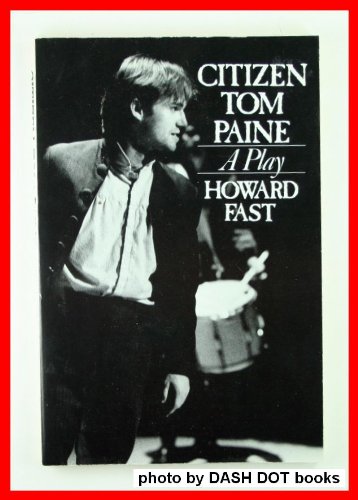
13. Citizen Tom Paine: A Play in Two Acts
by Howard Fast
 Paperback: 119 Pages (1986-04)
list price: US$1.98
Isbn: 0395414997
Average Customer Review: 4.0 out of 5 stars
Canada | United Kingdom | Germany | France | Japan

Customer Reviews (1)

4-0 out of 5 stars Don't confuse Play and Novel
Don't confuse "Citizen Tom Paine: A Play in Two Acts" and another book by same author, "Citizen Tom Paine."The novel, first published 1943, reprinted 1983, was used to derive his 1986 play.Regrettably, Amazon once listed them here as the same book, and some sellers are still listing the novel here under the ISBN for the play.So BEWARE.
The image shown is the cover of the play with with Richard Thomas as Paine in the 1985 Williamstown season.The play is about 100 pages with an afterword by Howard Fast.
Tom Paine is portrayed as a, or the, major player in helping bring Americans to the cause of liberty against England, and as a powerful but misunderstood player on the world stage. ... Read more


14. Tom Paine and Revolutionary America
by Eric (Tom Paine) Foner
 Paperback: Pages (1977)

Asin: B000OKP0ZQ
Canada | United Kingdom | Germany | France | Japan

15. Citizen Tom Paine
by Howard Fast
 Hardcover: Pages (1943)

Asin: B000NOXU5U
Canada | United Kingdom | Germany | France | Japan

16. The Selected Works of Tom Paine and Citizen Tom Paine
 Hardcover: Pages (1946)

Asin: B000GLCDVM
Canada | United Kingdom | Germany | France | Japan

17. Tom Paine: America's Godfather
by W.E. Woodward
 Hardcover: Pages (1946)

Asin: B000FSR8UM
Canada | United Kingdom | Germany | France | Japan

18. The picture story and biography of Tom Paine (The Library of American heroes)
by Grace Neff Brett
 Unknown Binding: 142 Pages (1965)

Asin: B0007E040U
Canada | United Kingdom | Germany | France | Japan

19. Citizen Tom Paine
by Howard Fast
 Hardcover: Pages (1943)

Asin: B000OLAVAE
Canada | United Kingdom | Germany | France | Japan

20. The living thoughts of Tom Paine; (The living thoughts library)
by Thomas Paine
 Unknown Binding: 178 Pages (1946)

Asin: B0007IYOS4
Canada | United Kingdom | Germany | France | Japan

  1-20 of 100 | Next 20
A  B  C  D  E  F  G  H  I  J  K  L  M  N  O  P  Q  R  S  T  U  V  W  X  Y  Z  

Prices listed on this site are subject to change without notice.
Questions on ordering or shipping? click here for help.

site stats