e99 Online Shopping Mall

Geometry.Net - the online learning center Help  
Home  - Authors - Parker Robert B (Books)

  Back | 21-40 of 100 | Next 20
A  B  C  D  E  F  G  H  I  J  K  L  M  N  O  P  Q  R  S  T  U  V  W  X  Y  Z  

click price to see details     click image to enlarge     click link to go to the store

$3.93
21. Thin Air (Spenser)
 
22. Promised Land
$27.78
23. Trouble in Paradise (Jesse Stone
$3.49
24. Family Honor (Sunny Randall)
$2.50
25. Paper Doll (Spenser)
26. Spare Change
$17.81
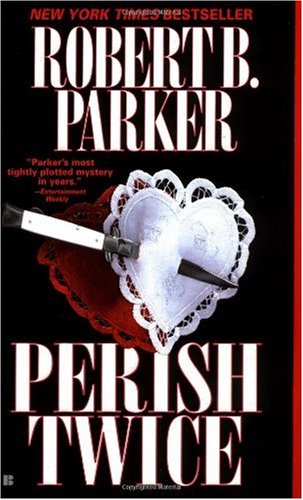
27. Perish Twice
 
28. Wilderness: A novel
$2.69
29. Hush Money (Spenser Mysteries)
 
30. Laguna Heat
$6.40
31. Poodle Springs
$4.00
32. Bad Business
$4.01
33. Double Play
$3.95
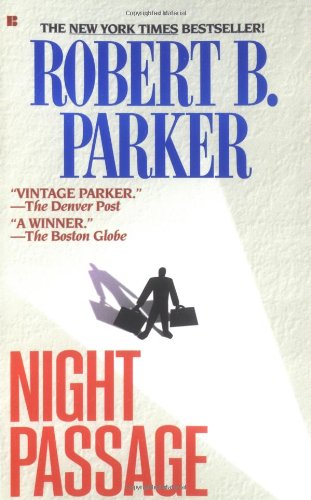
34. Night Passage
35. Now & Then
$1.47
36. Back Story (Spenser)
 
37. All Our Yesterdays
 
38. Ceremony
 
$168.00
39. Early autumn: A Spenser novel
 
40. Mortal Stakes

21. Thin Air (Spenser)
by Robert B. Parker
Paperback: 304 Pages (1996-04-01)
list price: US$7.99 -- used & new: US$3.93
(price subject to change: see help)
Asin: 0425152901
Average Customer Review: 4.0 out of 5 stars
Canada | United Kingdom | Germany | France | Japan

Customer Reviews (20)

4-0 out of 5 stars How well do any of us know one another?
When Spenser agrees to help his friend Frank Belson (a cop) when Belson's wife - Lisa St. Claire - goes missing, and try to track her down - do him a favor, so to speak.Among the first things that Spenser discovers is that Lisa St. Claire is not her name.Apparently she has lived a rather checkered past - Spenser worries that telling Belson this will not be a favor at all.Finally following a trail to Proctor, well North of Boston,Spenser calls on Chollo (from L.A.) to come East and lend his assistance, since Proctor is mostly Latino and Spenser hopes Chollo's presence will help grease the wheels, so to speak.Things quickly go from bad to worse and before he knows it, Spenser goes from a simple job of tracking down a missing wife, to overthrowing a local government.

Definitely an edge-of-your seat book, this one alternated between Spenser's POV and Lisa's - the chapters where we hear Lisa's voice are all in italics and, unlike the main body of the book, stated in third person rather than first - which definitely fits in with the concept, as her abductor dehumanizes her by constantly filming her and playing back the films in her room.It was an interesting way to differentiate between the characters and I think it worked nicely.

This was a great chapter in the Spenser series - too bad I didn't get it reviewed in the proper order.It ended up falling in between the seats in my husband's car en route from the hospital one day and I just found it there a couple days back.So, here you go.Enjoy!

4-0 out of 5 stars RICK SHAQ GOLDSTEIN SAYS: "SPENSER MAKES DO WITHOUT HAWK!"
This is another installment of private investigator Spenser, who once again rubs elbows with criminals and cops alike. No one can successfully intermingle with good guys and bad for the greater good than Spenser. With my favorite sidekick "Hawk" unavailable because he's in Burma ("What can "Hawk" be doing in Burma?""Better not to know", says Spenser. "Gives us deniability."), When police honcho Frank Belson's wife disappears into "Thin Air" he turns to Spenser for help. As the mystery unfolds, Spenser needs to call in some favors from some of his acquaintances from the wrong side of the law from Los Angeles to Boston. To fill Spenser's need for a Spanish speaking trigger man, Los Angeles mob boss Vincent Del Rio, lends him cold as ice, deadly as a mountain lion, "Chollo". For local Boston "cred", boss man Joe Broz, authorizes Spencer to use his name.

During the hunt for Mrs. Belson, many surprises come out of the woodwork, such as her name was Lisa St. Claire, or was it? Her resume isn't what it said it was, and this all leads Spenser through a history of prostitution, alcoholism, and more, and leads his associates to a show down in the Hispanic turf wars in the barrio.

Throughout this story, Spenser peppers the reader with his famous snappy banter, such as: "Henry Cimoli had been a ranked lightweight until WilliePep urged him into the health club business by knocking him out in the first round of both fights. It was a lesson in the difference between good and great." In describing Homicide Commander Martin Quirk: "He was always quiet, except when he got mad, then he was quieter." In describing a lush cop: "with a lot of broken blood vessels in his cheeks, and an ugly red vinyl hairpiece on top of his head. It didn't match his sideburns, but it probably wouldn't have matched anyone's sideburns except maybe Plastic Man's." And in describing himself: "I took a shower and put on one of the terrycloth robes the hotel provided. It fit me like a hot dog casing on a knockwurst."

For the addicted Spenser fan, you can't leave this out of your collection. For the about to be acquainted fan of Spenser, this is a good place to start.

4-0 out of 5 stars fun in the car
excellent type of book-on-tape for those long drives in the car.spenser is great fun.

4-0 out of 5 stars Solid Entry in the Spenser Series
THIN AIR isn't a great novel, but it's an entertaining book by one of the best crime writers alive.The plotline is simple: Frank Belson's new wife has gone missing and he asks Spenser to help find her.During his investigation, Spenser discovers that Belson's wife has quite a number of skeletons in the closet.

This novel is relatively predictable, but it's a fun read because of Parker's remarkable level of skill with language and dialogue.THIN AIR is relatively original because Hawk isn't in it, and also because Spenser has an interesting new Latino sidekick.The result is a storyline that seems relatively fresh and funny.

If you like Parker's work, you should enjoy THIN AIR, although I would recommend earlier entries in the Spenser series if you're looking for something genuinely great.

5-0 out of 5 stars Catharsis, Cathexis, What's Next-us?Purgative Pushes to Personality Paradise
When a great writer dramatizes trapped helplessness, I'm ready to eject.I almost squirmed out of reading # 22 in the Spenser series.But, this being the 27th novel I would have read in this 34 book series, I pushed like a Navy Seal through the first couple italicized segments of the kidnaping and ensuing situation, using the "hang in there" ropes provided by the characters' depth of commitment in returning Lisa St. Claire to the safety she had earned hard, by Frank Belson's side as his wife.I began clutching to hope for Frank to keep faith that Lisa wouldn't have left him willingly.I'm glad Parker didn't push the potential of dark tragedy of a soul drop like that.He worked the question just enough to rush the realism, then allow it to simmer under the diligence of "Keep the faith, baby."

I won't go into detail about why Frank turned over the search to Spenser, and why Spenser went to Chollo instead of Hawk, for the first time in a rescue partnership.And, yeah, I'm asking, "What was Hawk doing in Burma?"

In THIN AIR Pearl had progressed to standing on the dining table during meals, and Susan gave a humanity renewing surprise over a Mexican dinner more suitable in volume to Spenser.Dialogue scenes were evenly effervescent, with just the right amount of fizz to counter the interjections of ongoing Italicized segments.I was intrigued with the subtle shifts in patterns-of-psychosis of Lisa and her captor, as each seemed to be enduring an individual "cathexis" ... New word, probably brought into psychological jargon through the same sewer-line-purge-tank as "catharsis" ... Look up the original meaning of that one! "Cathexis" was brought into the plot by Madeline St. Claire, the current plot's previous psychiatrist for Lisa, as a sample of Lisa's uneven vocabulary expansion through reading a plethora of self-help books (too many, too indiscriminately, according to Madeline).

Lisa's attempts to retain a recently seated kernel of healthy self served as an effective drama for exposing the visceral levels of retention-and-resurgence of psychological growth.

Dictionary entry for Nexus: 1 - a connection.2 - a connected group or series.3 - the central and most important point. -ORIGIN Latin, from nectere 'bind'.

A bad nexus would ultimately require a cathexis.Get yours here!

Throughout the plot, I was led by the nose with curiosity about how and if Frank and Lisa would be reunited, hopefully at that central and most important point, which I was guessing would be a clean type of Love (considering Spenser's Romantic soul).

Also found another key passage in THIN AIR, which exposed another appeal of this series:

>> "You big with the bad guys, Spenser.You got Santiago helping you, Mr. Del Rio helping you, now this guy Broz, that I don't know, he's helping you. You sure you are a good guy?""No," I said. I'm not sure." <<

A nice collection of profound quotes could be lifted out of THIN AIR, from Spenser's ruminations discriminating the good in bad guys.Another collection of artistic quotes could be lifted from Spenser's observations of physical settings, weather machinations, and environmental pathos.I'll speak this softly and with conviction, "This is Good Literature."

After finishing this novel, I saw not only why Parker brought Chollo in as Spenser's partner instead of Hawk: The nationality fit the situation.I also saw Parker, a WASP macho male, chef and sensitive guy, as a literary ambassador for the menage of sub-cultural minorities which came to the fore through Media Massages and marked-up messages, from the mid 1970's to the present time.Purposely or not, Parker evolved and designed Spenser for the job of providing missing links between good and evil, and connecting lines of cultural differences, allowing polarities to cathexis, gradually purifying their "acts."We ain't there yet, but Spenser's a good scout.

This was primely-done detective fiction, with trailing ridges of psychological plummets and literary finesse carefully eased out of Spenser's closet ... Pandora's Box? ... Soap Box?

Whatever. THIN AIR was an emotionally weighty yet magical entry in this series, a fuzzy-wuzzy-wabbit pulled out of a deep and dark, very hard hat.Get it.Breathe, one, two, three.

Who is Alice in Wonderland?

Linda Shelnutt ... Read more


22. Promised Land
by Robert B. Parker
 Mass Market Paperback: Pages (1993-01)
list price: US$4.99
Isbn: 5555435266
Average Customer Review: 4.0 out of 5 stars
Canada | United Kingdom | Germany | France | Japan
Editorial Review

Book Description
Spenser is good at finding things. But this time he has a client out on Cape Cod who is in over his head. Harvey Shepard has lost his pretty wife -- and a very pretty quarter million bucks in real estate. Now a loan shark is putting on the bite.

Spenser finds himself doing a slow burn in the Cape Cod sun. The wife has turned up as a hot suspect in a case of murder one...the in-hock hubby has 24 hours before the mob makes him dead...and suddenly Spenser is in so deep that the only way out is so risky it makes dying look like a sure thing.

"Spenser is the sassiest, funniest, most-enjoyable-to-read private eye around today." (The Cincinnati Post)Download Description
Spenser is back.The fourth novel featuring the wisecracking boxer-turned private-detective finds him investigating a marriage in turmoil, a shady business deal, a nefarious loan shark and, of course, a murder.The real charm of the book, however, is Spenser himself, his inimitable wit, his keen grasp of human nature, his love of food and good beer, and his reluctant but capable fists. ... Read more

Customer Reviews (18)

3-0 out of 5 stars The Case of the Run-Away Wife
Robert B. Parker has written a series of detective novels featuring "Spenser". Parker finished Raymond Chandler's "Poodle Springs" and wrote a novel that continued Chandler's "The Big Sleep". In Chapter 1 Spenser is working on his new office when Harvey Shepard hires him to find his run-away wife. Spenser explains the philosophy of wives who run away (Chapter 2). The details describe the Boston locale. Chapter 3 describes the drive to Hyannis and this city. Spenser meets Hawk at Shepard's house; are there complications? Spenser meets Millie the daughter. The Chief of Police gives Spenser a lead to the Silver Seas Motel where he learns something (Chapter 5).

Does Chapter 6 remind you of Chandler? Telephone bills and credit card receipts tell of a person's habits. One address is watched, and Pam Shepard is seen. [Too easy?] Spenser learns about Pam's friends in New Bedford (Chapter 8). [Parker could use language that Chandler could not forty years earlier (Chapter 9)] When Spenser returns to Harvey he learns more about his problems. [Would Marlowe refuse to report to a client?] Chapter 12 has a new complication for Spenser. There is shocking news in Chapter 14, and just the right amount of satire. The conversations and details date this book (Chapter 15). Harvey Shepard explains his problems (Chapter 17). Spenser comes up with a scheme to save the Shepard's from their foolishness (Chapter 20).

There is subtle satire in the meetings (Chapter 21). Spenser psychoanalyzes his clients (Chapter 22). The deal is arranged (Chapter 23). Spenser meets with the police (Chapter 24). Spenser discusses things with Susan in a restaurant! [Who could be listening?] Everything goes according to the plan (Chapter 26). There is a happy ending to this story in Chapter 29. This story has a good plot but seems incredible in parts. Some of the characters seem like cartoon characters. Raymond Chandler's Marlowe was a trouble-shooter for the very wealthy. Spenser is a down-market version but perhaps more interesting for that.

4-0 out of 5 stars Another Key Spenser Novel
PROMISED LAND is the fourth Spenser novel, and definitely one of the better ones.The plotline deals with Spenser trying to find a runaway wife, only to discover that the husband who hired him has some very serious problems of his own.

This novel is important for two reasons.First, it introduces the character of Hawk, who would later become a key figure in the series.Second, this is the first novel to fully define the parameters of Spenser's relationship with his girlfriend, Susan Silverman.This book is therefore a must read for fans of the Spenser series.

PROMISED LAND has a relatively strong plot with an exciting conclusion.But this is also the first Spenser novel with a big philosophical component.Many of the characters have long, thoughtful dialogues about the nature of love, commitment and marriage.While many of these exchanges are interesting, most of them are overlong and struck me as stilted and unrealistic.I knock off a star for this reason.

You can read the Spenser novels in any order, but I personally believe the earlier ones should be read first.So my advice is to read this novel, along with GOD SAVE THE CHILD as your first Spenser books.

Highly recommended.

4-0 out of 5 stars Strong prose, well written
The prose is well-written, the characterizations are vivid and the whole story fits together like a hand in a glove.That said, much of the book is filled with rhetorical politicalization - which, admittedly, was much the topic of the day - that became a bit thick at times.I don't know many people who actually hold conversations like those held in the book.Again, although I lived through those times, I was very young - so maybe people DID talk like that back then.Anyway, the constant rhetoric rubbed me the wrong way after awhile, reducing my enjoyment of the story after awhile.

However, I love the way Robert Parker describes characters and actions, and I love Spenser's internal dialog.Hawk was an awesome new character and I hope we run into him again.Despite its faults, this was a book that I enjoyed reading overall, and recommend to anyone who enjoys PI novels with a bit of intelligence behind them.

*disclaimer* written in the middle of the night under the influence of medications that make me stupid dumb*

5-0 out of 5 stars It isn't all Braising Bullets and Bad Ape Booze.The P.I. guy runs a Jazz/Blues scene.Ya gotta have moaning melancholy ...
Ya gotta have moaning melancholy ... and ... and ... thoughtful, teaching t'ings.

For me, this # 4 in Parker's Spenser series was a key novel, a turning point for honing purpose and direction for future offerings.With PROMISED LAND, the baseline ingredients were set.It almost seemed to me as if, in writing the early parts of this plot, Parker had scrambled to the top of a mountain and surveyed the territory he had acquired in his first three books."I've clearly opened something successfully long-term here," he might have concluded."What do I want to do with it.Where do I want to take it."

A third into the plot of PROMISED LAND, a short paragraph from Spenser's narrative soured a trumped-up deal, like flat beer worn down:

>> Living around Boston for a long time you tend to think of Cape Cod as promised land.Sea, sun, sky, health, ease, boisterous camaraderie, a kind of real-life beer commercial.Since I'd arrived no one had liked me, and several people had told me to go away.Two had assaulted me.You're sure to fall in love with old Cape Cod. <<

Of course Hawk's arrival to the series, as many reviews have eloquently heralded, was highly effective and welcome, though I had anticipated a "love at first sight" First Meeting between Spenser and Hawk.As I thought about it, though, I was impressed with the thematic effect of Hawk being introduced as someone not yet integrated, but long significant in Spenser's life.As Spenser explained more than once here:

"I've known him a long time."

Yet, it wasn't until "now" that the relationship between these two machismo (in the detoxified, good sense of the term) males seeded and began growing into ... a black-and-white-Knight ... chess set ... a pair of large oak trees ...

Well, okay, since these guys were self-mobile (and too cool) maybe I should get off the mangled-metaphor kick, and be trite-but-right in terming them Super Heroes.But, in fact, they were more like genetically pure, human males, evolved beyond ape without losing the pheromones.

One of my favorite paragraphs in the Spenser novels (those which I've read so far) was in PROMISED LAND, and has this line in it:

>> There ain't all that many of us left, guys like old Spenser and me. <<

The paragraph from which that line was lifted, and the way it played from the previous scene, brought a moan of acknowledgment up from the soul, tears to the eyelids.If that statement was spirit-level-true in 1976 when the book was copyrighted, how much truer (and more devastating) would it be today.

One of the ingredients noted above, which came through here as a commitment in the Spenser series, was that it was going to deal dramatically with various sociological and psychological issues (which definitely related to machismo, etc.).The seventies were the "Time" in which both those fields of study of human behavior had come into prime, in a growing acknowledgment from the masses.In the early seventies, I was fresh out of college (actually I was weathered, withered, and wilted, but still wide-eyed), breaking in the graduate psychology and philosophy seminars I had worked through, becoming acquainted for the first time, along with the rest of the world, with the differences among those idealized "-ologies"; becoming intimately acquainted with the unique definitions and uses of each.

Self-help books had just begun bulging commercial bookshelves, bombing and bumbling outward into the cultural scenes.

It might be interesting to note, though, that to recommend therapy to anyone in that era wasn't as "old hat" as it is today, when probably 70% of the US population has at least considered that option, if not been decades into such a Freudian deal of paying a professional "ear" (similar to a private "eye") into which to pour personal woes dredged up from the toes.And now we have Winfrey, Dr. Phil, and scuds of Prozac pills.Who woulda thunk?Burp.Overdosing has become a constant; not a constant threat, just a constant.

Sometimes it appears to me that, since the time of that primal-pivot-70's era, the human -ologies have become polluted by the very seas of social ills they were instigated to cure.Unfortunately, instead of a cure, maybe we've had a nurturing of the complicated foolishness we humans have imposed upon ourselves (pushed `n packed into our cases of emotional baskets).

But, in PROMISED LAND, Spenser's descriptions of how that "system" was supposed to work are "Right on!" from my perspective.

He quoted from Robert Frost as advising, in essence, that a man must get behind his Father's sayings, must evaluate them for himself, must begin drawing his own conclusions about who he is and what he wants his (personal) world to become.The implication there (in this novel's plot) was that when personal worlds were in working order, The Greater World, "The Causes," would become moot points (Thank God, or Whomever!); or, at least, would become functioning, well-oiled, strongly founded points of sanity and security.

Interestingly, Susan was using the Frost quote (I had flashed to the talk-show host instead of the poet) to explain one of the social issues brought out in this novel with such painful, yet cheer-inducing clarity, that of the budding of militant Feminism, its time of seeding, rooting, and blossoming ... barbs, thorns, and machine guns ... with roses and truth crushed, bruised, brutalized, omitted or deleted.Susan was using the Robert Frost (with bite) line to show how woman, especially housewives, needed to "come of age" or to begin evaluating what they were taught by parents, often through eons-concretized, self-perpetuating-auto-behaviors, more than through specific words, phrases, or beliefs.

What I liked about Susan in this one was that she could realize she was wrong; be hit upside-the-head (symbolically) by Spenser; then come up to speed, without wasting a split-second feeling foolish.Once she got that she was off base (maybe mildewed) in her thoughts; she slipped into a quick and total, "Oh, I see," and began skipping to the true tune without missing more than a few beats.She may have been entertainingly outspoken and opinionated, but she didn't allow herself to stay stuck or stale.

Moving on into the plot, I want to mention that the points were beautifully "telling" (and very well taken by me) which Parker made around the murder of the old guard at the bank (which I might type as "Old Guard" to pile on more meaning).

There was also a good amount of tension between Spenser and Susan here, a cool (and hot) dancing-around-issues on how to be "together," all of which played beautifully off the sociologically-wounded-married-couple in this plot, intriguingly named Pam and Harvey Shepard.

I've noticed in a few interesting comments in Spenser's blog on Amazon, comments from housewives (I'm proud to say I am one, by choice) wondering why Parker doesn't like their "breed."Actually, in this novel, I felt that The Housewife, Pam Shepard, was a heroic figure, used well fictionally to expose the type of growth possible through gutsy choices, when they continued to move onward instead of to solidify into militant ignorance (thanks to Spenser).

I also enjoyed the clarity here of what Spenser felt about anyone (man, woman, or in-between) suddenly dropping responsibilities to children, and skipping out on Walk About (to "find" oneself).

Parker exquisitely laid bare the various sides of sociological and psychological issues as they played into his individual characters and their ongoing lives.His brand of "analysis" (soul searching), expressed amazingly clearly in this novel, I could get behind.It allowed a person to responsibly go beyond whatever may have been blocking his/her life from "doing its (True & Intended) thing."

PROMISED LAND was the absolute perfect title for this novel.Parker's rhythm and stride had arrived (though the first 3 novels were perfect in their own right); he was committed to dance and stretch through what evolved into 3 decades with Spenser, Susan, and Hawk.(Possibly his publishers had begun realizing Parker's unique potential by then and were wisely clamoring for continuation.)

As I've said in previous reviews of this landmark series (see my two-part Listmania); it is one of the best treatises I've found on our US cultural evolution, from perspectives including and beyond the various -ologicals.To have that worked seamlessly into the high entertainment of a mood-rich detective series is a steal on steel.

What I dread more than "guys like us" (Spenser and Hawk) going extinct, is the day when no one will be able to comprehend, let alone remember, who they were, what they stood for.

Who ... was ... John Galt?

Learn this.Know it.Remember it.

Or else!

Or, our species will not be worth the Sacred Fertilizer (my term for Holy Sh...) we're churning out with too many "-isms" and not enough sense; with too much seeking of "safety in numbers" (though I believe in the necessity of our well-trained military, and am beyond thankful for their dedication, diligence, and expertise) and not enough singularity of sanity.

With Respect (and hope) for our species, a respect which sometimes flickers and dims, but my Rose Tints still work,

Linda Shelnutt

5-0 out of 5 stars Promised Land
Any of Parker's books are excellent, I usually read then in less then 3 days. Promised Land is just another excellent read, you won't be disappointed. ... Read more


23. Trouble in Paradise (Jesse Stone Novels (Hardcover))
by Robert B. Parker
Hardcover: 324 Pages (1998-11-01)
list price: US$22.95 -- used & new: US$27.78
(price subject to change: see help)
Asin: B0002MJDXQ
Average Customer Review: 3.5 out of 5 stars
Canada | United Kingdom | Germany | France | Japan
Editorial Review

Amazon.com
Robert Parker's Trouble in Paradise imagines an old-fashioned tough guys' world where most of the women are summed up by their figures and the men are measured by their ability to intimidate. Chief Jesse Stone of Paradise, Massachusetts, is Parker's hero again in this sequel toNight Passage.When he's not thinking about what his girlfriends look like under their clothes, Stone's touring his beat, hanging out at the Gray Gull Hotel bar to get intelligence on local thugs, or interrogating teens about their destructive pranks.But he has a vulnerable side, too, and Parker adds new layers of depth and complexity to his latest series character.Jesse's still reeling from his divorce.He and his ex-wife, Jenn, are not entirely ready to let go.In fact, Jenn has followed Jesse east from L.A. and is suffering in the Boston climate as one of the anchors on the local news. Romance with Jenn is further complicated by Jesse's ongoing attraction to attorney Abby Taylor and his emerging relationship with realtor Marcy Campbell.

Jesse's domestic troubles are gradually overshadowed, however, when ex-con Jimmy Macklin arrives in town. Macklin plans to pull "the mother of all stickups" on the ritzy Stiles Island in Paradise Harbor.He has figured out that the Stiles Island bridge, with its underpinning of utility cables and pipes, is a veritable lifeline to the mainland, and he's gathered a rogues' gallery of professional crooks and killers to help him take the bridge and make the island into a thieves' paradise.The one problem: Macklin never figured that Paradise, Massachusetts, would have a police chief as tough and resourceful as Jesse Stone.

As usual, Parker's stark and facile prose perfectly complements the masculine sufferings of his hero, and the action of the novel unfolds with an effortlessness that intimates a craftsman at work.With Parker's Spenser safely canonized as a detective fiction legend, Jesse Stone's unfolding world offers a welcome new addition to Parker's ouevre. --Patrick O'KelleyBook Description
Robert B. Parker and his legendary Spenser series have long been considered the ne plus ultra of detective fiction. But the critics' praise for Jesse Stone's debut in Night Passage proved there was room for an addition to the Parker literary canon. "A novel as fresh as it is boldParker's sentences flow with as much wit, grace, and assurance as ever, and Stone is a complex and consistently interesting new protagonist. His speedy return will be welcome" (Newsday).Stiles Island is a wealthy and exclusive enclave separated by a bridge from the Massachusetts coast town of Paradise. James Macklin sees Stiles Island as the ultimate investment opportunity: all he needs to do is invade the island, blow up the bridge, and loot the island. To realize his investment, Macklin, along with his devoted girlfriend, Faye, assembles a crew of fellow ex-cons --all experts in their fields--including Wilson Cromartie, a fearsome Apache. James Macklin is a bad man--a very bad man. And Wilson Cromartie, known as Crow, is even worse.As Macklin plans his crime, Paradise Police Chief Jesse Stone has his hands full. He faces romantic entanglements in triplicate: his ex-wife, Jenn, is in the Paradise jail for assault; he's begun a new relationship with a Stiles Island realtor named Marcy Campbell; and he's still sorting out his feelings for attorney Abby Taylor. When Macklin's attack on Stiles Island is set in motion, both Marcy and Abby are put in jeopardy. As the casualties mount, it's up to Jesse to keep both women from harm.Filled with "light, shade, texture, and complexity" (The Boston Globe), Trouble in Paradise is the work of a master. ... Read more

Customer Reviews (59)

5-0 out of 5 stars Trouble in Paradise
I was very pleased with my purchase and there were no problems with delivery and the product came in a timely manner.

5-0 out of 5 stars A strong second showing for Jesse Stone
Jesse Stone is a great character and this book is a strong second showing for him."Trouble in Paradise" begins with Jesse on one of his midnight insomniac rambles.When a homosexual couple has their house burned down, he discovers that some teenaged trouble-makers had a hand in it.Determined to set things right, he uses some less-than-honest tactics to get them to confess.While it seems to set one of the boys on the right track, a pair of brothers from a rich family have their parents threaten first to sue for wrongful arrest and when that doesn't work, their mother tries to have Jesse removed from his position.

Also, a career crook named Macklin and his girlfriend have come to town and are planning the heist to end all heists - they plan to clean out Stiles Island, a rich community connected to Paradise by a bridge over the harbor.Never one to plan small, Macklin decides to isolate the island and rob all the homes, businesses and the bank.Can Jesse find out what is happening in time to stop it?

Well-plotted, intricate and engaging, this book is what a police procedural/thriller is all about.Don't miss it!

5-0 out of 5 stars Flamingo Blood Rains Thin in Paradise
TROUBLE IN PARADISE, # 2 in Parker's Jesse Stone series, is a quietly seething thriller with explosives to boom.In this type of deep plot action, here's how one chapter should end and the next one begin:

Chapter ending:

>> When the police car was halfway across, the bridge began to ripple.The ripple turned into a heave.And, as the sound of the explosion came rolling into the real estate office, the bridge went up and the police car went with it, somersaulting slowly in among the pieces of the disintegrating bridge.One of its doors blew away and the hood tore off, and the car languidly turned over and planed onto the gray harbor and disappeared....<<

Next chapter beginning:

>> "Exploded?" Jesse said on the radio."Twenty calls at least, "Molly said."At least five people said there was a police car on the bridge when it went." <<

I'm thinking that the above quote would be all I'd need to read in a review, to decide to pick up this novel.As I read the above passage, arriving at it through a steady-speed-progress from the beginning of the book, my first question, after being impressed with the explosive clarity of Parker's syntax, was, "Did Jesse's two patrolmen survive that percussion and splash?"

Of course I won't tell you what happened before or after the bridge appeared to take a short flight toward heaven then slammed into hell.

Temperature-rising-subplots twined perfectly from Macklin's gang's preparatory machinations to Jesse's personal and professional life's percolation.Various relationship scenes provided entertaining psychological miasma for wading through balsamic sex-pot stews.Jenn was showing daily as a TV weather girl in Jesse's territory, working to keep him while dating openly on the side.Since that didn't keep her busy enough, she attacked Kay Hopkins, a well-heeled, town snob-lady who had caused Jesse grief.Kay's nose slipped from its upward slant as blood spewed from Jenn's landed fist.What does Jesse do with that?

What caused that cowgirl episode was a previous scene which was even more entertaining than Jenn's fist action which landed her in jail.In that earlier scene, Jesse deftly dealt with a group of town snobs (including the Hopkins) and their lawyer.The situation opened in Jesse's office, appearing to be featuring Jesse's tail caught between a lid and a pot.Fear not.Jesse turned the rip-tide with finesse wrought hot.Loved it!

As if those perks in a work of fiction weren't enough, TROUBLE IN PARADISE introduced a "Crow" bad guy, honor-coded-predator, who could be Hawk's dark twin.

This Jesse # 2 had all I could hope for in an engrossing escape read, with an ending firing on all cylinders in Parker's redemption repertoire.(For a true short account featuring redemption and transitions to paradise, see This is Someone's Loved One: An Undertaker's View)

(My review is up of # 1, NIGHT PASSAGE. I enjoy reading Parker's series in order, though I have skipped around at times.See my Spenser Listmania for sequences and blurbs.)

Getting ready to order DEATH IN PARADISE, # 3 Jesse Stone,
Linda Shelnutt

4-0 out of 5 stars NOT SPENSER BUT JUST AS GOOD


Read most of Robert B. Parker's work down through the years and finally ventured into the Jesse Stone novels. Very good writing, lifelike and interesting characters, with Stone being unlike Spenser and more what I would expect Parker himself to resemble.

Though I like Jesse Stone, easy guy to emphasize with, cannot say I find common ground with him. On the job he is professional and proficient, yet off the job he drinks too much and womanizes too much and cannot get off the dime with his ex-wife. I guess one reason I cannot find common ground with Jesse is that most ex-husbands could not have the love for their troubled ex-wife as does he, when the ex-wife seems unwilling or unable to make a decision whether or not she wants a life with him. Jenn Stone represents a huge problem to both him and herself, and re-marriage is pretty much proven not to be a good idea. Be interesting to follow Jesse and see how he matures to handle all the trouble that will certainly follow from these wrinkles in his personal life.

With all the other reviews listed you need nothing from me as to plot, but I will say that this one seems more like one from either Dutch Leonard or Ed McBain. Certainly no insult meant, only meant as a compliment to the writing genius of Robert B. Parker.I like this book and the Jesse Stone character.Real joy to read.

Read and enjoy, I know I will!

Semper Fi.

2-0 out of 5 stars Feels like a screenplay
This is book #2 in the Jesse Stone series from Robert Parker.In the first book, "Night Passage," newly divorced Jesse Stone is an L.A. cop with a drinking problem, trying to get away from the pain of a failed marriage and a cheating spouse.He lands the top job of police chief in the coastal hamlet of Paradise, MA, just a stone's throw (pun intended) from Boston.Stone has been hired by the city council precisely because he is a drunk.Unbeknownst to him, the city council is crooked and wants a police chief who will "go along to get along."When Stone arrives in town and is tougher and smarter than they bargained for, he finds his first task is to clean up the crimes not of the citizens, but of the government that employs him.

In this book, we find Stone a year later still at the helm of the Paradise P.D. with his ex-wife, Jenn, in town as the newest TV weather forecaster at a Boston station.When career criminal Jimmy Macklin assembles a team of four other ex-cons to isolate and rob the nearby wealthy island community of Stiles Island, it's up to Stone to stop them while grappling with his ongoing feelings for ex-wife Jenn.

I've now read almost all the books in the Sunny Randall series, and two books in the Jesse Stone series.As such, I've given myself ample opportunity to decide whether I like Mr. Parker's novels.Unfortunately, I've ultimately concluded that I don't.

Part of my dislike is the style.A reviewer of a separate Parker book said that it read like a screenplay, and I have to strongly concur.That perfectly describes Parker's style.There is a sparseness to the prose and dialog in Parker's books that just don't lend themselves to enjoyable reading - dialog consists mostly of single sentences back and forth where the characters' utterances are never described using any verb other than "said."And by never, I mean just that: never.If you don't believe me, pick up one of his books and thumb to any page at random and look at the dialog.It's as though Parker made up his mind early on that he wasn't going to waste time coming up with various clever verbs to describe the act of speaking, merely to add variety.It isn't necessarily bothersome, but it is a distinctive part of his style.The prose is likewise sparse and rarely does Parker spend extraneous adjectives describing people or scenes.

Second, these novels are neither mysteries nor suspense because it is almost always obvious how the plot will be resolved long in advance of the final pages.I think it is more accurate to describe the Stone series as crime novels because all we really have is Jesse Stone either stopping a crime in progress or solving one that's already occurred.

Third, call me a prude but there is just too much promiscuity in these novels.I don't think human beings are psychologically wired to be able to have casual sex with same care they'd give to picking out a paperback at a supermarket checkstand.I almost expect Stone to say "what was your name again?" when he crawls out of the sack with his latest recreational partner.Characters that treat sex as a recreational pastime seems to be a recurring aspect of Parker's novels in both the Sunny Randall and Jesse Stone series.

Fourth, Stone's relationship with his ex-wife is tiresome and frustrating, paralleling the relationship between Sunny Randall and her ex.Parker drags these never-resolving relationships on for book after book after book until we're ready to slap the main characters and - as my dad used to say - tell them to "poop or get off the pot."After about the first book, the soap opera ceases to be interesting and simply becomes irritating, like a dripping faucet on a stainless steel pan.

All in all, I can envision Parker's books primarily as fodder for TV scripts.Indeed, Parker's Spencer series of novels were the basis for the "Spencer for Hire" TV series starring Robert Urich.Tom Selleck starred as Jesse Stone in the movie adaptation of "Stone Cold," the fourth book in the Jesse Stone series.And that about sums up my feeling about these books in general: pulp fiction that isn't very cerebral and lends itself better to lackluster TV series and movies than a gripping read.

At this juncture, I'm going to turn my attention to a few Spencer novels to see if they are markedly different from the Randall or Stone series.If not, I'm afraid I'm largely through with Mr. Parker's offerings. ... Read more


24. Family Honor (Sunny Randall)
by Robert B. Parker
Paperback: 338 Pages (2000-11-01)
list price: US$7.99 -- used & new: US$3.49
(price subject to change: see help)
Asin: 0425177068
Average Customer Review: 3.5 out of 5 stars
Canada | United Kingdom | Germany | France | Japan
Editorial Review

Amazon.com
Let's get this settled right away: Sunny Randall is nothing like Spenser. True, she's a private eye in Boston with good connections to the cops, and she also knows a lot of bad guys. And yes, she happens to have a trusty sidekick named Spike, and a close friend who could easily be related to Susan Silverman, (Spenser's long-term companion). Oh, did I mention the cute dog? Aside from that, though, there's absolutely no similarity between this new series from Robert B. Parker and his long-running Spenser books. Just because the case Sunny is working on--finding a missing 15-year-old girl who has run away from her very rich parents--sounds similar to the Spenser favorite Thin Air doesn't mean Parker is repeating himself here. Think of it as more like a homage, the kind of thing the author took on when he agreed to finish Raymond Chandler's Poodle Springs. Only in this case it's a homage to himself--but what the hell.

Written specifically with Parker's good friend actress Helen Hunt in mind, Family Honor is all in good fun. At one point, a no-nonsense nun looks down at Sunny's bull terrier, who is lying on her back begging for a tummy rub. "What's wrong with this dog?" Sister said. "It is a dog, isn't it?"

Parker is so good that with one hand tied behind his back he can create characters that are more memorable than most writers can even when pounding away with both fists. In just a few short pages, he tells us all about Sunny's career as a painter--and about the complicated relationship between her cool policeman father and her irritating pseudo-feminist mother. Parker even makes a direct dig at Spenser (who, before turning to private investigating, had a short and fairly unsuccessful career in the boxing world). When the runaway girl questions Sunny's ability to protect her from dangerous criminals--"you're a girl like me, for crissake, what are you going to do?"--Sunny replies, "It would be nice if I weighed two hundred pounds and used to be a boxer. But I'm not, so we find other ways." Exactly. --Dick AdlerBook Description
The author of the bestselling Spenser novels introduces a heroine unlike any other-private eye Sunny Randall. She's street-smart, sexy, and suddenly thrown into a Boston mob war where high-stakes politics and low-down killers conspire to make Sunny's first case her last.

"Robert B. Parker has another winner...Sunny can hold her own with Spenser."-Boston Globe "Sharp and funny." -Washington Post

"Sleek and seductive...one of the best."-Publishers Weekly ... Read more

Customer Reviews (110)

5-0 out of 5 stars "You Wouldn't Understand," she said - Rachel Wallace.This novel is Spenser's Reply.
FAMILY HONOR lived up to its title as the pilot for this delightful series which felt at first like Spenser was toning himself into a female roar heard round the literary arena, while extending his slant on gangster Vs cop family backgrounds (in which neither is all bad or all good) in this Juliet and Romeo romance.

I hadn't thought I'd be able to get into a female private eye series by Parker, especially after having become addicted to his 34 Spenser novels.But FAMILY HONOR was a perfect appetizer with appealing percolation.I don't doubt that Parker can carry both his new series (see my review of NIGHT PASSAGE, Jesse Stone # 1).

It didn't take more than a few chapters for Sunny to split off from the long-wrought, well-writ Spenser mystique and into her own, as a full character... maybe with Spenser speaking into her ear as an angel from an alternate reality, for a while.I enjoyed the slips connecting to Spenser, i.e., how Sunny might deal with a particular hairy situation if she were a 200 pound, male boxer.In humorous yet realistic contrast to Spenser and Hawk types, Parker dramatized what a small female can do to compensate for not being a testy, taut, towering gorilla-with-gonads, in a plot which will had me smiling.I'm excited about this series; I enjoyed the upbeat feeling of this first offering in it.I relished hearing Randall use Spenser's trademark words in dialogue, like "some more" and "eek."

Reading the first few chapters of FAMILY HONOR I kept seeing Spenser in high heels, noting how uncomfortable they were, and wondering where/how to effectively house a big enough gun on a 115 lb, 5'4" body... as he seemed to be having great fun adapting to this recent female incarnation, shaking out the form and personality.Of course, that image alone got me grinning.By the time the intense ending called up, I was liking Sunny Randall every bit as much as Kinsey Millhone (Sue Grafton's P. I.).

For this unique pilot, Parker designed a stylish, italicized prologue in third person observation of Sunny and Rosie, accomplishing an artistic, literary feel, giving a light-touch, sensitive contrast to chapter one opening into a first person narrative style with Sunny telling her own story in the classic private eye genre mode.

The included cultural icons of cooking, dress, habits, and thinking were precisely on target with the copyright date of 1999, when the Great Chefs TV episodes were running hot and heavy, with their long-handled saute pans being shook (contents were no longer stirred on TV) above gas-lit burners on commercial grade stoves, featuring Spike, Sunny's gay, tough-guy chef friend.

The plot here gave hints of EARLY AUTUMN (# 7 Spenser) and CEREMONY (# 9 Spenser) as Sunny took in a young teen, Millicent Patton, runaway, hooking daughter of her clients.Enlightening entertainment was easily obtained through Sunny's ways of dealing with and drawing out this young human lost in the sump and shrug of a lack of love.

A few quirky questions came to mind as I began reading this novel:

What might Rachel Wallace (# 6 SPENSER, Looking for Rachel Wallace) say about Spenser's (Parker's) ability to understand being female, if she were to read FAMILY HONOR.And what would she think about macho if she had read all 34 Spenser novels.Can novels help us understand that which we would have to stretch outside our bodies and into another form to get?I'd say they can, especially if penned by Parker.

Rachel Wallace may have to give the gauntlet on this one.Spenser understands.

Yet... can testosterone ever fully comprehend powerlessness...

Maybe any person who has ever been depressed, grieved loss of a loved one, or desperately wanted something he couldn't have, for whatever reason, has the capacity to comprehend the initial feeling of hopelessness which sometimes comes at those times of leached strength and slow coming answers.We each have a spirit, though, which seems to believe that morning comes daily.Parker has made a good case that sunny weather can dog the footsteps of storms.

Linda Shelnutt

3-0 out of 5 stars More Sassy than Sunny
This is the first book I have read by Robert B. Parker so I cannot compare his newly minted heroine, Sunny Randall, to his previous protagonists or previous books.

Sonja "Sunny" Randall is a 35-year-old chip off the old block.Like her father, she was a cop, but then left to become a private detective.She's tough and beautiful, but frankly there is little about her disposition that seems to evoke her nickname.She's actually a rather abrupt individual who is a little too much of a smart alec to be truly endearing.Her wit is clever, but often a bit abrasive and she prefers witty one liners to deep thought.After a while, the one-liners become tiresome and seem to be mostly a way for Sunny to cover up her own issues with a fiesty shell.She's a loner - in fact, it's what led her to leave the police department for private practice, and it's a large part of what led her to divorce her husband of 9 years, Richie, with whom she remains good friends.Her constant companion is Rosie, a miniature bull terrier who Sunny seems to like much better than most people, particularly children.

The plot of this book centers around Millicent Patton, the 15-year-old daughter of a wealthy Boston banker and his socialite wife.When Millie runs away from home, Sunny is hired by Millie's parents to find her and bring her back home.It isn't long before Sunny catches up with Mille, but when she finds out what drove Millie out of the house in the first place, she has a decision to make: should she return Millie to her parents or not?The plot weaves the lives of Millie, Millie's parents, and Sunny directly into the middle of Boston's organized crime, and what starts out as finding a runaway teen ends up being an elusive contest to keep them both from getting killed.

I still haven't decided if I really like Sunny Randall.She's just a little too fearless and flippant for my tastes.Also, Parker's writing style is rather terse.He seems to prefer language that spurts rather than flows, with prose that is often truncated.In fact, I don't think I've ever read a novel in which so many sentences had less than 10 words in them.It's OK for periodic busts of dialog, but as a steady diet in narrative and dialog, it isn't really my cup of tea.I often found myself feeling as though two or three sentences should have been joined by commas or some other punctuation besides periods.

There isn't generally a whole lot of suspense here, as Parker reveals the answers slowly throughout the book rather than taking us breathlessly to the final few pages for the climax and resolution.

Although it's nice to have discovered a new author in this genre, I'm not sure I can count him among my favorites.I will say this: he certainly beats James Patterson, but that isn't saying a whole lot these days with Patterson churning out mediocre books like a drive through window.

If I were to award a letter grade, I'd give this book a B-.I'd also recommend starting with this book since it is the first in the Sunny Randall series, and the other books sort of build chronologically with many of the same characters appearing over and over again, such as Sunny's friend Spike, her ex-husband Ritchie, her sister Elizabeth, and her friend Julie, not to mention several repeat appearances by member's of Boston's underworld.If you like this book, continue on in the Sunny Randall series.If not, you'll probably want to pick something else since I'm now on my 3rd Sunny Randall book and have found the style of each to be essentially the same.

5-0 out of 5 stars The master at work
If you thought Parker was good, you don't know how good he is until you read this one. The confrontation in the restaurant is the best scene I have read in a mystery. Hold your breath!

4-0 out of 5 stars Sharp, witting and entertaining...
Family Honor by Robert B. Parker is the first in his Sunny Randall series, and like all of Parker's books, it's sharp, witty and entertaining.

Sunny Randall is a young and pretty cop-turned-private eye who is just getting over a divorce. Her former husband, Richie Burke, comes from a Boston mob family.Although they still love each other,the cop-mob conflict got in the way (Sunny's cop father kept trying to put Richie's father in jail).Sunny is hired by a prominent Boston couple whose 15 year old daughter has run away.The father has political aspirations but when Sunny starts digging, it turns out that the daughter has many reasons to not wish to return home.Sunny finds herself in the middle of a mob war that involves the Italian Mafia trying to move in on the Irish Mob.

I don't think that anyone writes dialogue as sharp as Parker.Sunny is actually a female Spenser, and while Spenser has one sidekick (Hawk), Sunny is surrounded by a host of oddball characters.In addition to Richie, there is Spike (her gay bodybuilding friend), her therapist/friend Julie and her dog, Rosie.Sunny needs the assistant of all her friends while trying to solve this mystery and stay alive at the same time.

As a Spenser fan, I'm not sure how close Parker comes to the success of his Spenser series with Sunny Randall.However, I definitely plan to read more.

4-0 out of 5 stars Sunny is sentimental and deadly even when not dressed for the role
Sonya (Sunny) Randall is the daughter of a retired cop, ex-wife of Richie who is the son of a mobster, beautiful, yet capable of deadly force and a private investigator in the Boston area. She is also a painter and pursuing a degree in the fine arts. The parents of Millicent Patton, a fifteen-year-old girl who has run away from home, hire her. Sunny immediately realizes that all is not well in the Patton household, as there seems to be no great concern or passion in her parents regarding her disappearance.It is also clear that Millicent is probably hooking to stay alive, as there is very little else that she can do.
Although she is reluctant to seek his aid, Sunny asks Richie to help her locate Millicent, which turns out to be rather easy. Once Millicent is found, Sunny finds herself becoming a parent to Millicent and when two men arrive at Sunny's apartment, she blows one away with a shotgun while dressed in nothing but a silk robe that flows in awkward and revealing ways. There are many characters in the story, Spike the gay man who dresses like a dandy but is as deadly as a venomous snake. Mobsters and vicious killers are everywhere, and she actively seeks out their assistance, talking with then as an equal. Sunny also makes friends with cops, eventually having intimate relations with one.
While she is female, Sunny shares many characteristics with Spenser; one of Parker's other great P. I. characters. She is sentimental and emotionally entangled much beyond what her job requires. Spike is very similar to Hawk of the Spenser series, a dear friend who stands by her even in the face of danger and without pay. Nevertheless, the combination of similarities and differences makes it a great story worthy of the Parker tradition of deadly sentimentalists.
... Read more


25. Paper Doll (Spenser)
by Robert B. Parker
Paperback: 288 Pages (1994-04-01)
list price: US$7.99 -- used & new: US$2.50
(price subject to change: see help)
Asin: 0425141551
Average Customer Review: 4.5 out of 5 stars
Canada | United Kingdom | Germany | France | Japan

Customer Reviews (22)

4-0 out of 5 stars One of the Better Spensers
I've read most of the Spenser novels, and I find them great entertainment.The problem, however, is that most of the later ones pretty much follow the same formula, and ultimately end up being quite predictable.Still, Robert Parker is a good enough writer that I enjoy nearly all of his books, even though I find them pretty much by-the-numbers at this point.

PAPER DOLL is a murder mystery that has a couple of decent twists, and I was genuinely surprised by the identity of the culprit.Some of the characters, such as the corrupt U.S. Senator, are on the cartoonish side, but that's a minor complaint.The dialogue and descriptions are top notch, and you can finish this novel in one or two sittings.

In short, PAPER DOLL is a fun diversion, although not a spectacular effort.If you want a great Spenser book, you may want to try one of Parker's earlier novels, such as GOD SAVE THE CHILD, EARLY AUTUMN, or THE JUDAS GOAT.

4-0 out of 5 stars Overblown a bit
For the most part I liked this detective novel from the Spenser series very much.It has a good plot, which both Amazon and other reviewers have hashed and rehashed.The characters are good, as is the atmosphere.Perhaps the best element is the dialogue.Parker writes good dialogue, in the line of Westlake or Block.

What I didn't like was the fact that Parker feels compelled to stop all action dead to lay in what every character was wearing, even though most of the details have nothing to do with the action.Some of this is necessary, I suppose, but it should be part of the flow.Ditto for house furnishings and paintings on the wall.Ditto for drinks and food.I should add that too many writers have this same flaw.Prune, Ernest, prune, as Gertrude Stein advised Hemingway upon reading one of his early stories.

Mystery writers would do well to study the prose of Agatha Christie, Rex Stout and a few other masters of the genre.The reason we read mysteries is the plot, the puzzle, the atmosphere, not to know what color necktie a man is wearing, or what brand of scotch he drinks, or what furniture company made the couch in a room where nothing of significance happens.

4-0 out of 5 stars Boston favorite
The answers to Boston murders aren't always in Boston.When Spenser identifies an Emerson quotation,Loudon Tripp decides that he would be an appropriate investigator.Tripp's wife, Olivia Nelson, had been murdered at Louisburg Square, not an ordinary address for a crime scene.Grief causes a kind of denial to set in.Tripp claims that everything in the family's life was perfect.Having no leads, Spenser decides to go to the victim's hometown.He learns that her father is still alive.The private investigator's relationship to the police officer assigned to the murder case is complex and interesting.

Spenser's travels, his way of putting together clues are of substantial interest to the reader.Parker's description of the actors is apt.The change of scene is fun.This is more intricately plotted than many Parker books and the care taken is all to the good.

5-0 out of 5 stars Another winner in the Spenser series
When a prominent member of the community is murdered, Spenser is hired by her husband when he feels the police are not making headway quickly enough.Spenser quickly discovers that there is very little to discover (the police are leaning toward the "random psycho" theory), so he begins to do research into her past, finding there a tangled web of lies.He grabs an end of the web and starts to pull.

Like usual, this does not earn him any friends.

What he finds out is by turns shocking and tragic.This was a great book with a terrific twist to it that I just did not see coming at all and I can't even begin to give any more details about the plot without spoiling it.A strong recommend from me.

5-0 out of 5 stars Color Crayons & Paper Dolls.Tigers Beware.
Push a Pin into the perfection balloon.What is marriage ... what are styles of domesticity ... to a wealthy WASP, to a liberated couple like Spenser and Susan, to a good-guy gay cop, to a State Senator, to an aging wealthy southerner.

The concluding scene in DOUBLE DEUCE, # 19 in the Spenser series, catered a surprising twist to Susan and Spenser's attempts at traditional homemaking.That close was as refreshing to the double S as a storm-brought rainbow.The choice carried in DD's final chapter surfaced in silent style into the thematic structure of PAPER DOLL, # 20 in the Spenser series.

To Loudon Tripp seeking the private eye to find his wife's killer, Spenser answered the "small problem" of his having been dismissed from the police force:

"I am trustworthy, loyal, and helpful, but I struggle with obedient."

Who was Olivia Nelson?

She was Loudon Tripp's murdered wife.Was she Harriet to Ozzie, or did she have a small problem.

Spenser's gum shoe stuck in southern muck as he researched the past of a double identity with no indemnity.While thus stuck, the P.I. endured a dual whap to his knee caps by a fake constable.The gum was seared off by BAD-knight-Quirk to the rescue (YEA!), in a scene to write about to a homemaker or a troubleshooter, maybe even a troublemaker, whichever would apply, or lie right.

In the early 90's what did we cook, what did we say, what did we wear, what books did we read.See here.Hear ye.(...)

Readers have commented that they feel this series is anti-gay.One might not hold that opinion after reading PAPER DOLL, in which Lee Ferrell was introduced and featured with compassionate clarity, as a young gay cop working for Quirk.As wouldbe expected, the repartee scenes between Ferrell and Spenser popped.The corn, no pron, was light, fresh, sensitive and free (relatively).

In Alton, South Carolina, 1948 a child was born, bearing a tale and a trail of a "sister" of doom.Was there room at the Inn?Spenser stayed there, and learned the song, "one way ... or the other."

The opening scene of chapter sixteen provided a collection of guffaws from the way Spenser dealt with an auto paused to tail his travels. If that passage doesn't do that, it's possible you've lost your Proof of Existence Papers.Would you then be a paper doll?I'd rather be me.Since the breakout of loveable dogs in DOUBLE DEUCE, Parker had been warmly elevating the dog's life, and I relish it that introduction to the series, but don't know if I'm ready to be one, if I have a choice!

In addition to dogs, another Spenser "signature" was continued and repeated from DOUBLE DEUCE, that of how a character holds a whiskey glass.Note an example of that on page 237 of the mass market paperback.Might this signature be a continued tribute to Erin Macklin (who held her whiskey glass "with both hands")?Also note how Lee Ferrell held his glass in a few spots in this one.That, possibly more than Spenser's "adoption" of the gay cop, was telling of Ferrel's status, as it developed through an amber-filled glass.

The conclusion of the murder in this one was a switch.For me, it worked, stretching contemplation space in the part of my brain which ruminates Parker's tweaking of what makes a good guy/gal good and a bad guy/gal bad.

Parker gave a perfect clue to the murderer, but I didn't get it until the plot told me.

"The words hung in the room, drifting like the dust of ruination."

That wasn't the clue, nor was it the preface to comeuppance for the killer.It was just a line I quite liked.As always, there were several.

Holding books with both hands,
Linda Shelnutt ... Read more


26. Spare Change
by Robert B. Parker
Paperback: 304 Pages (2008-03-02)

Isbn: 1842432621
Average Customer Review: 4.0 out of 5 stars
Canada | United Kingdom | Germany | France | Japan
Editorial Review

Book Description
Boston P.I. Sunny Randall joins forces with the most important man in her life-her father-to crack a thirty-year-old case.

Hi Phil,
You miss me? I got bored, so I thought I'd reestablish our relationship. Give us both something to do in our later years. Stay tuned.
Spare Change


When a serial murderer dubbed "The Spare Change Killer" by the Boston press surfaces after three decades in hiding, the police immediately seek out the cop, now retired, who headed the original task force: Phil Randall. As a sharp-eyed investigator and a doting parent ("You're smart. You're tough. You, too, are a paradigm of law enforcement perfection, and you're my kid"), Phil calls on his daughter, Sunny, to help catch the criminal who eluded him so many years before.

Sunny is certain that she's found her man after interviewing just a handful of suspects. Though she has no evidence against Bob Johnson, she trusts her intuition. And she knows the power she has over him-she can feel the skittishness and sexual tension that he radiates when he's around her-but persuading her father and the rest of the task force is a different story.

When the killer strikes a second and third time, the murders take a macabre turn, as the victims each eerily resemble Sunny. While her father pressures her to drop the case, Sunny's need to create a trap to nab her killer grows.

In a compelling game of cat-and-mouse, Sunny uses all her skills to draw out her prey, realizing too late that she's setting herself up to become the next victim. ... Read more

Customer Reviews (40)

1-0 out of 5 stars What's happened to Parker's writing ability?
He used to be able to write - good plots, tight dialog, believable characterizations, good reads. In this and others of his recent books - inane dialog, stupid plots, cardboard cutout characters, really boring, predictable reads. Lucky thing I borrowed this - if I had paid for it I'd really have been annoyed. It's a waste of time.

4-0 out of 5 stars Sunny's search for Self intersects with Spare Change serial killer's Search for Meaning
"Spare Change" is in the Sunny Randall setting; however, it can not be read exclusive of the Robert Parker universe; you have to read all the Sunny Randall books, and it would help if you have read some of the more recent Jesse Stone novels and were familiar with the Spencer world; all these worlds intersect here as Sunny begins to finally understand her motivations and needs while working with her father, Phil, on a cold serial killer case that has been re-opened, when the murders begin again.

20 years ago, the Spare Change killer froze the Boston area with terror.Victims were random, found in relatively public places, but always out of sight, and always found with three coins by their bodies.The killer wrote letters to Phil, somewhere between yearning and taunting.Suddenly, the killings stopped - and stayed stopped for 20 years.No clue to the killer was ever found.Then they started again.Phil is brought back in to assist, and he brings in Sunny as well.Along with our old friends from the Spencer novels - Quirk, Felton and Healy - a frantic race is begun to catch the killer before he kills again.

When a killing at the Public Gardens enables the police to question everybody in the area, one man seems to Sunny's intuition to be overly interested in the killings - Bob Johnson.As she learns more about him, she becomes convinced he is the killer.Then she receives a letter.Can she discover what she needs to put him away - before he kills her next?

The Sunny Randall books are a mixture of thriller and self-help/discovery as Sunny tries to understand her desire to both love her former husband, Richie, while at the same time not allow him to control her life.She cannot live with or be married to him, but she cannot let him go either, and as it turns out, even though he has remarried, he apparently cannot let her go either.They begin a very cautious courtship in this book, as he and his new wife separate.

As part of the series - and as part of the world that Parker has created - this is a good, solid book.Standing by itself, it would be very confusing to most people, so I would not recommend it to someone who is not familiar with the three series of books mentioned before.

5-0 out of 5 stars Spare Change
I love and have read all of Robert B. Parker's books.I especially like the interaction between Spencer and Hawk.Easy to read and always interesting.

5-0 out of 5 stars I love Robert B. Parker!
As I enjoy all Robert B. Parker's books I was tickled to get this one promptly and am ready for the next!

5-0 out of 5 stars Good Read
I say "read". Actually I listened to this on CD. It is athouroughly enjoyable story filled with wry and wit. It even has a good ending. This is a keeper. ... Read more


27. Perish Twice
by Robert B. Parker
Hardcover: 293 Pages (2000-10-02)
list price: US$23.95 -- used & new: US$17.81
(price subject to change: see help)
Asin: B00006G9KX
Average Customer Review: 3.5 out of 5 stars
Canada | United Kingdom | Germany | France | Japan
Editorial Review

Amazon.com
What mystery fan hasn't heard by now that Robert B. Parkercreated his Sunny Randall series expressly for good friend Helen Hunt, with aneye toward the actress playing the petite blonde investigator on the silverscreen? Although the series has been touted as a radical departure for Parker (awoman in the lead, by gum!), so strongly do Boston PI Sunny and her cohortsresemble Boston PI Spenser and his pals that the movie's casting director mightprefer a blond-wigged Robert Urich. But Parker's quick quips, droll wit, andstaccato dialogue are all on display in the latest Randall novel, PerishTwice, so in spite of the reworked characters, there's still plenty toenjoy.

When radical feminist Mary Lou Goddard hires Sunny to protect her from astalker, Sunny accepts the case with some reluctance. After all, Goddard detestsRosie, Sunny's bull terrier, canine vacuum, and stakeout companion ("Rosie wasin the passenger seat, staring out the side window, alert for the appearance ofa strange dog at whom she could gargle ferociously."). It doesn't take Sunnylong to track down and confront Lawrence Reeves, a particularly pestilentialhuman being. But pestilence is no excuse for murder, so when Reeves and GretchenCrane, one of Goddard's colleagues, are both found dead, Sunny dives into themurky waters of Boston's prostitution industry, where Reeves was a client andGretchen was trying to unionize the workers. Politics and sexuality can be anasty tangle, and the unraveling threads lead straight to mobster Tony Marcus'sdoor. Tony may appreciate Sunny's sharp wit, but business is business:interference can--and does--lead to a bullet with her name on it. And as if allof this weren't enough, Sunny's sister and her best friend are in the throes ofnasty divorces. Luckily, the leap from PI to marital counselor is well withinSunny's abilities.

While there's no doubt that rabid Parker fans will snap up anything the authorturns out (and with reason), Perish Twice may be more appealing to newreaders, for whom Sunny's charm will carry none of the uneasy echoes of privateinvestigators past. --Kelly FlynnBook Description
Spenser creator Robert B. Parker returns with his newest heroine, Boston P.I. Sunny Randall, coming to the aid of three very different women in three very dangerous situations. One is for business. One is for a friend. One is for family. And all could be fatal... ... Read more

Customer Reviews (2)

2-0 out of 5 stars Not up to par
I applaud Parker's efforts to develop new characters outside of the Spenser series, but this book fails to engage or provide any of the interest or suspense present in that body of work.You have to write what you know I suppose, but the parallels between Sunny and Spenser are too strong not to see this as an extension of the same character (same job, same city, same philosophies).The problem with this book is that most of the surrounding characters and flat and innane.The only engaging characters (The Burkes) get little development.If you are looking for a departure from the Spenser series, put this one aside and read Parker's excellent perspective of the Earps and Tombstone in "Gunman's Rhapsody" or one of his Chandler novels.

5-0 out of 5 stars Great read.
I loved this book and found the characters vivid and interesting, including Sunny.To all the naysayers, don't compare Sunny Randall with Spenser.This is apples and oranges.Both characters are work spending my hard-earned money to read about. ... Read more


28. Wilderness: A novel
by Robert B Parker
 Unknown Binding: 243 Pages (1979)

Isbn: 0440093287
Average Customer Review: 4.0 out of 5 stars
Canada | United Kingdom | Germany | France | Japan

Customer Reviews (9)

5-0 out of 5 stars Not a Spencer novel
When I first picked up this book I was disappointed that this was not a Spencer novel, as I read it my disappointment soon ended, a great read and probably one of his finest written books spencer or no spencer.It will not dissapoint.

2-0 out of 5 stars I'm amazed at all these people who eat up substandard works
I've read many of parker's books like most of the people who have given review but I can't believe the high rating that they all have given this poor book. "The best of his non-Spencer books?" Are you people insane? If you think this poorly written, flat charactered, meandering novel is better than the Sunny Randall stuff or the masterpiece "All our Yesterdays," you're crazy. The first half of the book has an interesting moral dilemma as well as fairly believable interaction between the characters and the second half is a decent romp through the forest after the killers, but most of the book fell very short of the mark. I agree with the other reviewer that Janet is at first detestable and then turns unbelievable. The other two don't do much for me either. Also, much of the dialogue sounds forced and scene explaining the bolt of a gun is just maddening.If you want a good non-Spencer book, pick up "All Our Yesterdays," and if you want Parker doing the "survival in the forest thing," pick up the Spencer book "Pastime" and enjoy. This book is mostly junk

5-0 out of 5 stars Best of the Non-Spensers
Easily Parker's best non-Spenser work, and possibly his best overall.More suspense than you might think Parker capable of delivering.Written at the peak of his talents.A shame he hasn't come back to this genre.

5-0 out of 5 stars A good read -- but where is the rest of it?
This is by far the best of Parker's non-Spenser novels. I enjoyed reading it tremendously. It is too bad Parker hasn't seen fit to follow it up with sequels. This book doesn't deserve the obscurity it has been forced to endure.

5-0 out of 5 stars loved and remembered
My son and I read the Parker books.I asked him if he remembered a book written years ago--I could not rememeber the name but remembered the plot.He helped me find the title, Wilderness, and we have ordered the book.Welook forward to reading it again.Suspense in woods is excellent! ... Read more


29. Hush Money (Spenser Mysteries)
by Robert B. Parker
Paperback: 336 Pages (2000-04-01)
list price: US$7.99 -- used & new: US$2.69
(price subject to change: see help)
Asin: 0425174018
Average Customer Review: 3.5 out of 5 stars
Canada | United Kingdom | Germany | France | Japan
Editorial Review

Amazon.com
Twenty-five years and 26 books into the Spenser series, Hush Money dishes up another solid installment that is sure to fulfill the cravings of Parker fans new and old. This time Spenser and his buddy Hawk are helping a couple of troubled friends (i.e., they're working without a fee). The first case involves the denial of tenure for Professor Robinson Nevins. While tenure meetings are always closed-door affairs, Nevins assumes that the recent suicide of graduate student Prentice Lamont (who some claim was having an affair with Nevins) ruined his chances for a coveted permanent position. Spenser and Hawk cut a brawl-strewn path through the members of the tenure committee on their way to the surprising truth of the Nevins case. The other investigation pits Spenser against the unknown stalker of K.C. Roth. Spenser's girlfriend, Susan, has known K.C. for a while, and while the PI finds Ms. Roth a bit melodramatic, he's always eager to help a damsel in distress. The only problem is that after he's apparently resolved the case, K.C. begins a little stalking of her own--of Spenser.

The book is driven by the controversies surrounding political correctness that Parker always loves to confront, and it's fun to watch Spenser struggle (a little) to resist K.C.'s advances.It's also a (slightly disturbed) pleasure to see Spenser and Hawk address some academic hypocrisy with their own special brand of reasoning. Not a mystery for the cozy-loving palette, Hush Money's literate, tough-guy dialogue shows why Parker is the rightful heir to the throne of Chandler. --Patrick O'Kelley Amazon.com Audiobook Review
Sometimes a detective's life is all work for no pay. As a favor to his buddy Hawk, Spenser agrees to investigate a man unjustly denied tenure. Then Spenser's girlfriend, Susan, asks Spenser to help stop a stalker. Plenty of work, sure, but all done pro bono. "Two cases at a time. I thought about having 'Master Sleuth' added to my business cards." As the cases unfold, Spenser (and Hawk) charm and batter their way past policemen, stockbrokers, hit men, white supremacists, an unstable woman, and a stuffy tenure committee. Author Robert B. Parker tells a good story, but his real strength is in his dialog--the rhythm of which Burt Reynolds captures perfectly. A fantastic reader, Reynolds uses a wide range of voices and accents to bring Parker's characters to life. (Running time: 9 hours, 6 cassettes) --C.B. Delaney Book Description
Spenser has his hands full when he takes on two cases at once. In the first, a high-minded university might be hiding a killer within a swamp of political correctness. And in the other, Spenser comes to the aid of a stalking victim, only to find himself the unwilling object of the woman's dangerous affection.

"One of the great series in the history of the American detective story!"--The New York Times

"Spenser can still punch, sleuth, and wisecrack with the best of them."--Publishers Weekly ... Read more

Customer Reviews (76)

4-0 out of 5 stars Double the action
Spenser takes on two cases in "Hush Money," both as favors and both free.First Hawk comes to him with a request to help out a man named Robinson Nevins, who believes he was denied tenure inappropriately.Apparently a rumor was started that Robinson was responsible for the suicide of a young man; the rumor being that they were romantically linked and when Robinson broke it off, the young man (Lamont Prentice) killed himself.When Spenser begins to investigate, however, he quickly uncovers evidence that not only was the death not a suicide, but also that Lamont was running a blackmail ring where he would threaten to out closeted homosexuals unless they paid.

Secondly, Susan asks Spenser to help a friend of hers - KC - who is being stalked.Spenser has to discover who is stalking KC while at the same time fending off her ever-increasingly obsessive advances.

Plenty of twists and turns make this quite a story.The despicable Amir Abdullah made for some great comedy relief at times - at least I got a lot of laughs out of him.I'm not certain he was meant to be funny, but I found him to be.

4-0 out of 5 stars Twist and Turns
Very good book.Lots of action twists, moral turns, ethnic turns, action and a tidbit of the human side of Hawk.Typical Parker with multiple plots, subplots and a . . . motivated woman.

4-0 out of 5 stars We learn some of the history of Hawk
While this Spenser novel follows the same formula as the others, there is one significant difference. In this one, we learn much more about the enigmatic Hawk. When he encounters a man that tried to sexually abuse him as a child, Hawk roughs him up, an action that puzzles Spenser. Hawk explains, describing some of the events of his youth and how he became a boxer. There is less wisecracking in this story as there is in some of the others, which is unfortunate. The best Spenser novels are those where he interacts with officers Quirk and Belsen, which seems to bring out the best in wisecracking repartee.
Spenser is once again the noble crusader, risking his life to help a friend, in this case Hawk. The man who took Hawk off the streets has a son who was denied tenure at a university. Believing it to have been unfair, the man denied tenure goes to Hawk, who goes to Spenser. This begins a trek into the undercurrents of gay life and the hypocrisy of so many of those who consider it a scourge of civilization. There is also a second plot line that has a woman very aggressively pursuing Spenser in an attempt to get him to engage in sex. Like the gallant man he is Spenser maneuvers the situation so that Susan is given the opportunity to deal with it. Which is does, in a manner that impresses Spenser.
This is not the best Spenser novel, parts of the plot are a bit too exaggerated. Nevertheless, it is very good, and is one that I will probably reread in a few years.

5-0 out of 5 stars The Young & The Jaded. Minors & Minorities Seethe in Stereotype City. Compulsion, Coercion, Connivance, Corruption.
This one began with a smoothly captivating, yawning weather "report" brought to the reader through the ambiance of a baseball game singing over radio waves.Spenser was bemoaning the contrast of slower ages passed, when a sports announcer could linger leisurely around springtime baseball news, between sudden screams of stand-up-and-cheer, bat cracking action.But, that day, as Spenser narrated, the radio voice was sliding so fast through a long list of ads, the endless promotions threatened to overrun notice of ongoing fly-balls busting and bursting through air.

A few of the early chapters took off slowly, mesmerizing-ly, with Spenser's sensual briefs of weather reports giving lazy home-runs to the sleepy emergence of spring, as money was extorted subtly in underplots.

Loved the way Parker posed Spenser slipping into such a still mode of respect as to consciously quiet his breathing as Hawk opened an accounting of a childhood experience with one of the suspects who had triggered a brief loss of control in Hawk's steel-studded cool.

The dual cases in HUSH MONEY, one a favor for Hawk, the other a favor for Susan, were a switch from the usual focus on a single client case, which has been the deal in the 7 Spenser novels I've read, with each additional one making me more glad I have around 26 left to read, with Parker still penning posh.The alternation of cases was a tantalizing treat of contrasts, especially as I wondered if a connection might emerge between them, even though the way each was introduced would, in "reality" cause them to have no cross over, no bleeding through, as it were.

Well, except that in the real world serendipity and synchronicity exist. And in fiction there's always the Right Brain at work, which causes authors to slip in amazingly cohesive, subtle themes which they weren't aware of as they were writing, maybe weren't aware of after the book was published and selling for a few decades.Then a sneaky reviewer comes along and sees a shiny silk thread woven through the words, visible only after the activation of some type of predestined ray to The Spectrum of Light, brought into reality by a time-release "code" built into the Laws of Physics during Day Two of Implementation of The Plan of The Genius.

Okay, all right.This is a P.I. novel.It isn't sci fi.But.Physical Reality is.Sci fi.It's the best sci fi in the evolution of life.What I'm v-rooming and v-rooming and v-rooming to say is that two totally disconnected cases which a detective is working simultaneously, whether in fiction or in reality, might have Right Brain, serendipitous connections.And, I, of course, having written a series of sci fi novels, with a couple of stand alone sci fi mss in progress, have a brain which looks around every fictional word for clues to the glue which connects seemingly unrelated happen stances.

So.For a time in my reading of HUSH MONEY I admit to having wondered if a seemingly nice, quiet lady in the gay (was he?) professor's case may have actually been the stalker in the "rescue me" conniving female case.

Most readers expect that, in the world of The Novel (feel very free to read my review of James A. Michener's book of that title) sub plots will religiously cooperate toward a tied-together denouement, ultimately joining with the main plot in an ever twisting vine of cranial convolutions contrived within the mind of the author.

The main theme of this novel, under which all the machinations play, seems to be a dramatization of sexual variations among various levels of human purity and pollution, with these variations brought into a cross-stitching pattern laid over stereotypes and sub-cultural demands, with the saffron thread of hypocrisy overcoming all within a tight weave of labyrinth proportions.

It was amazing how Parker brought out the admirable and the putrid within multiple types of sexual exchanges among multifaceted characters.But, KC Roth took the cake of the conniving female.As Parker described her, she had so many layers of contrivances, if they were all peeled away, nothing would be left.And yet, Spenser found a simple, natural a way to "save" KC from her "rescue me" contrived cries.However, after that didn't last, Spenser had to call in Susan, the "Big Gun," who played a few extraordinarily delightful scenes in this one.

The reader is required to make do with only one cooking scene rearing a fry pan and pasta pot in HUSH MONEY, but what an entry!My menu of it would drool in describing, "Black Bean Linguine, with the beans olive-oil-sauteed with garlic cloves, laced with Sherry, finished with fresh cilantro."

Yep, "Leftovers R Us." Given his perpetual ability to take whatever ingredients are at hand and gourmet the heck out of them, Spenser began joking about his new catering business taking over his not having a single clue to chew.

Spenser again ran through his evolving ethics of "to kill (in cold blood but with `just cause') or not to kill."And he made no bones about Hawk's willingness to kill (without a license, sans cultural sanction) human vermin.As usual, creativity won, and Spenser found ways of less bloodletting to solve injustices and end problems, which sometimes required more than one application of solutions.With two cases to juggle in HUSH MONEY the plots became so convoluted I wasn't sure how/if they interconnected, except to make the point that race, color, creed, and sexual persuasions had nothing to do with a person being a pig, or human with integrity (I don't mean to denigrate the cleaner species).

Layers upon layers of excellent pig interviews exposed their stench so plainly the pages reeked (entertainingly, of course).With that setting established in stinky spades, when a real human being stepped into a session with Spenser the fresh air was so evident my eyes literally widened (and quit watering).I was hugely impressed that Tommy (David) Harmon seemed so absolutely real.I've met only a small number of people like him in my life.Every word of dialogue in that interview refreshingly set David aside and above, but one reply stood out.It was David's reply to Spenser's repeated ease-setting promise that, in his line of business he wouldn't get far if he blabbed heavy secrets divulged in an interview.

Spenser said: "I can avoid mentioning your name."

Harmon replied: "If I said it, I'm responsible for it."

Being responsible for everything one has ever blabbed or written, wow.Given my overboard spontaneity, and foot-in-mouth tendency, I've had some tough chewing eating certain words I've spewed without proper clues.Ohhhh.Myyyyyy.

I'll conclude by quoting my nephew Lonnie, with his adorable 5 years-old voice still speaking clearly in my mind nearly 40 years later. He had been spouting off at the mouth into my tape recorder for several minutes when he stopped suddenly, face glowing, and grinned around the words, "Shut my mouth."

Linda G. Shelnutt

5-0 out of 5 stars hush money
Typical Spenser. witty, hard nosed, careing, and plenty of other characters to play off of. Keeps you turning the pages ... Read more


30. Laguna Heat
by Robert B. Parker
 Hardcover: Pages (1985-09)
list price: US$15.95
Isbn: 5551158144
Canada | United Kingdom | Germany | France | Japan

31. Poodle Springs
by Raymond Chandler, Robert B. Parker
Paperback: 1 Pages (1990-11-01)
list price: US$7.50 -- used & new: US$6.40
(price subject to change: see help)
Asin: 042512343X
Average Customer Review: 3.5 out of 5 stars
Canada | United Kingdom | Germany | France | Japan

Customer Reviews (19)

3-0 out of 5 stars A Pleasant Read
"Poodle Springs" is not Raymond Chandler's best work.It is not Robert B. Parker's best work, either.It doesn't quite have the edge of the usual Marlowe, or the wit of the usual Spenser.

Having said that, Chandler and Parker are both quite talented and capable authors.Either of them could make a cereal box interesting!So you could do a lot worse than spend a few hours with "Poodle Springs."It is a quick, fun read.The mystery itself is not mind-bending, but it does keep you guessing for a while.

I would have given the book four stars, such is my respect for both authors.However, a pet peeve.Parker fans are, no doubt, well aware of Parker's penchant for angst-filled relationships, where the parties love each other desperately - even perfectly - but cannot live together.And forget being married!In Parker's world, marriage risks crushing the vibrant soul of the hero every time.This was an interesting theme, maybe, when Parker first explored it with Spenser and Susan Silverman.

But since then, he has included it in every book series he's touched.The pattern is the same every time, and it has gotten quite tedious.As annoyed as I was to see it reappear in the Sunny Randall and Jesse Stone novels, at least those series are purely Parker's domain to use as he wishes to explore his marriage issues.But to impose his peculiar hangup on Chandler's work here in "Poodle Springs" is to, I think, overstep his bounds.And I say this as a devoted Parker fan who owns every one of his books.

3-0 out of 5 stars Decent Marlowe mystery completed by Parker 30 years after Chandler's death !
Chandler is best known for his half dozen private-eye Philip Marlowe novels, written during the 40's and 50's.(Chandler also authored numerous screenplays and short stories...)Marlowe is a hard-boiled, handsome but tough-guy detective who solves crimes in no frills mysteries in the vein of his fictional contemporaries Sam Spade and Mickey Spillane."Poodle Springs" arose from four chapters penned by Chandler himself prior to his death (in 1959), and then c