e99 Online Shopping Mall

Geometry.Net - the online learning center Help  
Home  - Authors - Patchen Kenneth (Books)

  1-20 of 100 | Next 20
A  B  C  D  E  F  G  H  I  J  K  L  M  N  O  P  Q  R  S  T  U  V  W  X  Y  Z  

click price to see details     click image to enlarge     click link to go to the store

$17.91
1. Collected Poems (New Directions
 
$3.70
2. Selected Poems
$8.30
3. The Memoirs of a Shy Pornographer:
 
4. The journal of Albion Moonlight
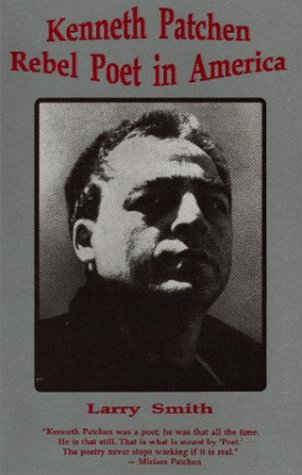
5. Kenneth Patchen: Rebel Poet in
 
6. What Shall We Do Without Us; The
$13.57
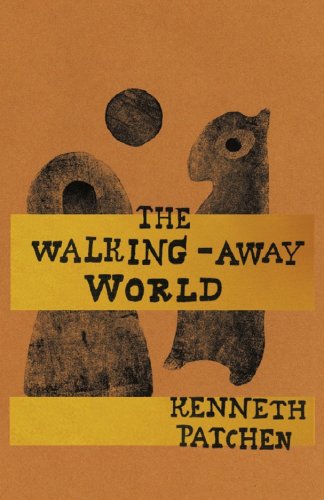
7. The Walking-Away World
 
8. The dark kingdom [by] Kenneth
 
9. MEMOIRS Of A SHY PORNOGRAPHER.
 
10. Patchen's Lost Plays
 
11. Selected Poems By Kenneth Patchen
 
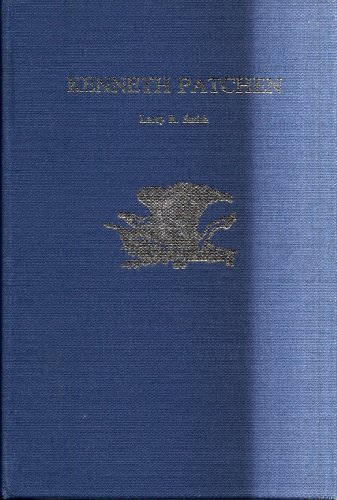
12. Kenneth Patchen (Twayne's United
 
13. PATCHEN: MAN OF ANGER & LIGHT
 
14. Journal of Albion Moonlight
 
15. Kenneth Patchen: Painter of Poems
 
16. The Love Poems of Kenneth Patchen
 
17. Selected Poems by Kenneth Patchen
 
18. Tribute to Kenneth Patchen
 
19. The Love Poems of Kenneth Patchen
 
20. Tribute to Kenneth Patchen

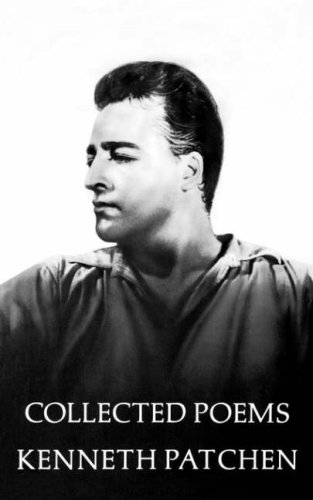
1. Collected Poems (New Directions Book)
by Kenneth Patchen
Paperback: 516 Pages (1969-10-01)
list price: US$25.95 -- used & new: US$17.91
(price subject to change: see help)
Asin: 0811201406
Average Customer Review: 4.5 out of 5 stars
Canada | United Kingdom | Germany | France | Japan
Editorial Review

Book Description
Patchen, Collected Poems. The great poet's complete poetry. ... Read more

Customer Reviews (6)

1-0 out of 5 stars A regrettably poor poet, seek out the prose works instead
The poet Kenneth Patchen is a fascinating figure. He was a conscientious objector in World War II, the "good war" even many pacifists would refuse to have stayed out of. He was unconnected to academia, writing highly personal poetry without quotation of other works or allusions to the canon. And he was an eclectic figure, the poet-as-loner one moment and a collaborator with jazzmen in poetry recitals the next. Yet, for all the fascinating details of his biography, his poetry is overwhelmingly disappointing. This volume of "collected poems", really a selection of material from 1936 to 1967 that leaves quite a bit out, shows the wild inconsistency of his entire career.

In the poetry of World War II, pacifist prophecy is in the spotlight, and it is often as troublesome to the reader as Ezra Pound's work of the same era. In the "The Stars Go to Sleep So Peacefully", the first poem selected from "An Astonished Eye Looks Out of the Air" (1945), written long after the U.S. was dragged into the war and the Final Solution was underway, Patchen calls the Allies "little fools ... in haste of money". That he afterward adds the eloquent lines "Love is impaled on a million bayonets" doesn't mean the reader forgets about his peculiar view on this war. In "The Way Men Live is a Lie", from the same volume, a diatribe against supposedly greedy generals looking for profit--which due to its considerable use of profanity I cannot quote here--is again followed by general pacifist sentiments that would be unobjectionable if not for what came before.

The war poems could be left aside if the rest of the material were good--as, for example, is often done with Pound. But he other themes make for embarassing verse. Patchen deeply loved his life Miriam, writing numerous love poems to her. These, however, are usually doggerel worthy of shy high-school note passing. Take, for example, the poem "For Myriam" (1942): "O the world is a place of veils and roses / when she is there / I come to her in wonder / ... And there is nothing cruel or mad or evil / Anywhere."

This last poem features furthermore one of Patchen's most tired trope, the filler "O". Almost every poem of his contains this, e.g. "O the eagle empties his terrible eye upon them", "O the beautiful again...", "O the wonderful wonderful wonderful", "O green birds / that sings the earth to wakefulness", "O she is as lovely-often as every day". Patchen the poet had no skill in naturally flowing poetry, everything is full of ridiculous rhetorical exaggeration.

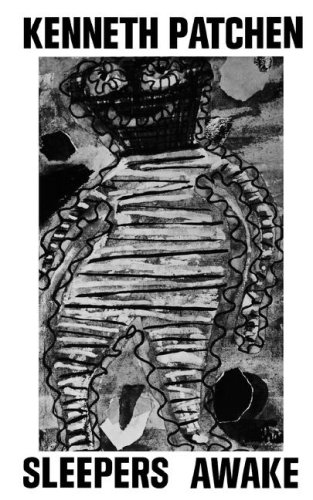
Patchen's prose works, THE JOURNAL OF ALBION MOONLIGHT (published by New Directions) and SLEEPERS AWAKE (long out of print, but available at many libraries) are much less problematic than his poetry.

5-0 out of 5 stars Criminally underappreciated poet of exceptional sincerity honesty and power
Kenneth Patchen is a one of a kind poet.He wrote two or three poems worth all the musty little university poetry journals put together.His sincerity is brutally sweet when he's sweet, and brutally cruel when he's angry.Every word shivers with ethical and political commitment but without sentimentality and cheap moralism.He makes Ginsberg's howls look like squeaks, and the university poets look like conmen.He makes Bukowski seem flower-scented.He's unlike anything else.That he's forgotten proves that the contemporary world of poetry is a sham and a crime.

5-0 out of 5 stars My favorite poet--angry, honest, original, beautiful.
Kenneth Patchen is by far my favorite poet. This is a brave statement coming from a reader/literature buff who prefers poems that are far more traditional in form and meter. While I respect and admire all creative forms of poetry (I myself shamelessly admit to being a lousy poet, which is probably why I read more of the stuff than I write), I have always had a higher interest in poets who follow rhyme-schemes because I always figured that this type of poem was more difficult to write. To follow a certain pattern and meter throughout a poem, and yet to still successfully make your statement and evoke emotion is a powerful example of creativity and ingenuity. Give me Yeats and Donne over blank-verse any day.

Having said that, I must confess that Patchen was a poet who always wrote to the beat of his own drum. He rarely used traditional form or meter, yet in steering away from traditional schemes, he managed to create his own rhyme and forms in brilliant wordplay that have since been copied by never replicated. Plus, the raw, honest emotion (often rage) and powerful, offbeat images that Patchen constantly creates only get better with each read. It is difficult for me to describe the man's work except for the title I have given this review. Do not expect traditional poetry in any shape of the imagination. But do expect beauty and honesty in all the themes that Patchen explores, whether he is describing life for all of its beauty, darkness, or sadness.

In other reviews I have written for this site, I have felt the need to expand into lengthy prose in order to promote to work I was writing about. I do not feel the need to do that here, as Patchen is better known than the previous writers and artists who I have reviewed (indeed, if you are reading this, it probably means that you're a fan of Patchen's anyway). Having said that, it is a pity that he is not included in more anthologies and that he is not studied more in English classes. There is something here for everyone, and the questions and comments that he evokes about life and society are not to be missed.

I shall conclude with one of my favorite poems by Patchen, to demonstrate the raw emotion and themes that he creates with his unusual form and dynamic images. Thankfully, this volume includes this particular poem and others like it with similar haunting beauty.

"If We Are To Know Where We Live"

"I came to the house. It was dark.
It was hell standing there.
No one answered my knock.

WHAT ARE THEY DOING IN MY HOUSE

I tapped on the window. I banged on the door.
They pulled the shades. They threw the heavy bolt.

But I knew that they wanted
And I saw what I was not to see
And I heard what I was not to hear.

They wanted to murder the thing within the house.
I saw my own face with the knives about it.
I heard my own screams as they tortured me.

And I was everyone. We all stood there."

Hopefully, this poem has proven any point that I've tried to make. If you love poetry or are just beginning to dive into the world of literature, Patchen is an important, often overlooked writer who you simply should not miss.

5-0 out of 5 stars PATCHEN: Poet As A Falling Star.
Kenneth Patchen is a great poet and a very special case. Like all the modern English language poets born before World War I, he inherited an almost over-ripe English with roots descending deeply into two thousand years of European culture. It is the English that made such a rich medium for Pound, Eliot, Stevens, Williams, Aiken and others. But what separates Patchen clearly from almost all of his peers is that though he embraced this language, he rejected almost all the traditional forms and prosody in using it. Most of Patchen's peers recognized his astonishing poetic gift, but criticized him harshly for his rejection of traditional form. Patchen created forms spontaneously or out of his private deep reflections and as his writing developed he began to incorporate non-academic, colloquial, and even something like post-modern language into his writing as well. Patchen's rejection of traditional form was not simply a matter of temperament, though he was by nature very individualistic and scornful of conformity, even anarchistic, though highly self-disciplined; the rejection was in essence his rejection of the civilization that was still insisting on these forms. Patchen was looking for a way to break through and away from the nightmare corner that this civilization had painted itself into. He had no confidence in the culture that Eliot morned the loss of. For Patchen this culture had created its own demise and Eliot was only part of its corruption. But Patchen was later also very reserved toward the Beat poets and their
"penny-a-line vulgarity." Patchen appeared between the worlds of the early (classical-rooted) modern and the post-modern like a falling star that amazed everyone who saw it, experienced it, but no one knew what to do with the experience. By the time Patchen died the English language had become so deeply corrupted by political propaganda and commercialism that it was a minor miracle that Allen Ginsberg had been able to write Kaddish and Bob Dylan had been able write Desolation Row. The chance for Patchen having some real influence on literary culture passed before most people saw how badly he was needed. It isn't that he wasn't noticed, the star of Patchen staggered many people. He was the favorite American poet (and prose fiction writer) of Henry Miller, he was the favorite poet of jazz great Charlie Parker and blues harp master Tony Glover. For his incredible wife/muse/best friend, Miriam, he was the love poet without equal (and that may be a fact). He is my favorite American poet and I could never repay the comfort and richness he gave to my troubled youth. There are many who love Patchen deeply. The problem is that when there was opportunity to do so, America did not welcome him, to its lasting shame. Academia's reception of him, where he remains a mere footnote, is part of that shame. What happened to Patchen is similar to what happened to Herman Melville in America. (The greatest American novel, Pierre or, the Ambiguities, is still largely unrecognized.) And if any reader thinks I am exaggerating, then I challenge anyone to spend a few months with this volume, The Collected Poems Of Kenneth Patchen, and then say that they did not find some of the most beautiful and profound poems in the English language.

5-0 out of 5 stars Poet/Artist of Many Voices
Kenneth Patchen, 1911-1972, was born in Ohio, fought in WWII, and spent the rest of his life invalided by spinal disease.His was a powerful, angry voice that could sing some of the most beautiful love poems of the past century.His art was violent and primitive; usually he incorporated poetry into his painting.His strongest influence was William Blake, e.e. cummings was a mentor. He moved easily among the San Francisco poets, a contemporary of Lawrence Ferlinghetti of the famed City Lights Book Store.He was truly a poet's poet and never compromised his art.

I don't know if was influential; he certainly didn't care.His public, his peers sought him; never the other way around.I read once that he wrote "naked poetry."The following poem is an excellent example of his wondrous way with words, the beauty, the anger and the savagery all in a few short stanzas.

The dove walks with sticky feet

Upon the green crowns of the almond tree,

Its feathers smeared over with warmth

Like honey

That drips lazily down into the shadow...

Anyone standing in that orchard,

So filled with peace and sleep,

Would hardly have noticed the hill

Nearby

With its three strange wooden arms

Lifted above a throng of motionless people

---Above the helmets of Pilate's soldiers

Flashing like silver teeth in the sun. ... Read more


2. Selected Poems
by Kenneth Patchen
 Paperback: 145 Pages (1957-06)
list price: US$10.95 -- used & new: US$3.70
(price subject to change: see help)
Asin: 0811201465
Average Customer Review: 3.0 out of 5 stars
Canada | United Kingdom | Germany | France | Japan

Customer Reviews (1)

3-0 out of 5 stars Wonderful... in parts.
Kenneth Patchen, Selected Poems (New Directions, 1957)

Selected by the New Directions staff after Patchen's death, Selected Poems was meant to introduce a new generation to the poet and novelist the back cover calls "the most compelling force in American poetry since Whitman." (One wonders what Allen Ginsberg, whose "Howl" had been published by New Directions two years previous, had to say about that.) The collection does a good job at introduction, and does an even better job at showing the inconsistency of Patchen's poetic work.

Even those readers who have never attempted creative writing themselves are likely to have had at least one English teacher try and hammer "show, don't tell" into their heads. Patchen's contemporary and fellow New Directions poet William Carlos Williams put it even better: "no ideas but in things." Marshall McLuhan called this immutable rule "the medium is the message." Patchen understood this, and his best work in this collection shows it in breathtaking style, especially in a collection of short prose pieces from The Famous Boating Party towards the end of the book that are worth slogging through the first hundred pages. However, the majority of those first hundred pages show Patchen forgot it, and regularly, in his fervor to write tepid, ineffectual antiwar poems. It's hard to imagine the same guy wrote the painfully awkward

He who can come to his own formulation
Shall be found to assume mastery
Over the roads which lead
On the whole human event
("The Climate of War")

also wrote the jaw-dropping

Sword on the wind, black knuckles of a thief, is this
King to be left here like a cast-off dog? the bloated
tongues of flies licking the juice of is saving wounds?
("Red Wine and Yellow Hair")

As the above section from the uniformly wonderful "Red Wine and Yellow Hair" hopefully makes evident, when Patchen is on his game, he is very, very on his game. Every once in a while, especially towards the end of the book, something rises out of the stew of didacticity and smackes the reader right between the eyes. And those moments are well worth the cover price of this book. I just wish there had been more of them. *** ... Read more


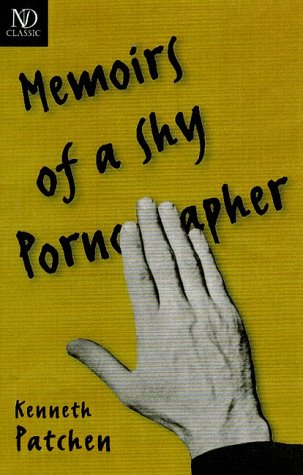
3. The Memoirs of a Shy Pornographer: An Amusement (New Directions Classics, 879)
by Kenneth Patchen
Paperback: 242 Pages (1999-06)
list price: US$14.00 -- used & new: US$8.30
(price subject to change: see help)
Asin: 0811214117
Average Customer Review: 5.0 out of 5 stars
Canada | United Kingdom | Germany | France | Japan
Editorial Review

Book Description
Can you imagine why a pornographer would be shy? Are you satisfied with the state of (a) World Society (b) your soul (c) American writing? Are you in the habit of reading books that could have been written by anybody? Do you really want the truth? Do you know how angels learn to fly? What would you feed a green deer? Do you think a profound social message can be conveyed by a book that is comic in character? When Kenneth Patchen's comic masterpiece, The Memoirs of a Shy Pornographer first appeared in 1945, these questions were asked on the dust jacket. They have never seemed more relevant. The hilarious saga of Alfred Budd of Bivalve, New Jersey-a Candide-like innocent and part-time pornographer, written with what Diane DiPrima called Patchen's "tender silliness," should inspire a new generation of readers ... Read more

Customer Reviews (8)

5-0 out of 5 stars Memoirs is a good read, but even better the second time!
I was lent this book years ago and loved it. I couldn't remember the name of the book or the author until I saw it at a friends house, I immediatly placed my order on Amazon! This book holds alot more space in my mind now that I have read it a second time! Kenneth Patchen pulls me out of a often subdude life into his high detail fantasy world of absolute chaos!

5-0 out of 5 stars He Fondled Paper
testing it for weight and resiliency, loving it as one who loves potential. He taught me that "Reality begins in the dream." What an odd man, to know these things in an age when the pride of knowing belied its limitations.

5-0 out of 5 stars A great tale of love, both sacred and profane
This book has two plots reflecting themes that run throughout much of Patchen's work: the absurdity of the "profane" civilized world and the importance of focusing on the "sacred" or natural world to bring meaning, order, and purpose to human existence. The device Patchen chose for the first theme is that of censorship of erotic content in literature. It is from this that the book derives its title. When this book was written in 1945, books were often published in the US with ellipses substituting for erotic content. The beginning of the book tells the story of a first novel of innocent love, called The Spool of Destiny, written by Albert Budd of Bivalve, New Jersey. An unscrupulous editor changes the book's name to The Spill of Desire and substitutes **** and . . . . for Albert's innocent words throughout the text in such quantity that the book must be published overseas. Albert becomes a best-selling pornographer who everyone wants to meet and make love to.

About half-way through the work Albert meets and falls in love with another innocent, Priscilla, and the story moves from the profane life of New York society to a sacred love that works miracles and heals all wrongs. This is the most moving part of the book and Patchen's best portrayal of this mystical, transformational love that inspires so many of his poems. I think many readers might give up this book in the first half and miss this gem of prose writing embedded in the second half.

If you like Patchen's poetry, you must read this book. If you haven't read Patchen before, stop whatever you are doing and either read this book or a book of his poetry. He is truly a great American author and this is his most approachable novel. This review is dedicated to Miriam, Kenneth Patchen's wife and inspiration, who died in 2001.

4-0 out of 5 stars But even so. . .a fine book
I have always liked Kenneth Patchen poetry.This novel has a wonderful title.I would almost have to read it solely on the basis of the title. It is not the greatest prose I ever read but it was a very engaging tale. I have to admit that the whole time I was reading it I kept thinking tomyself I bet Bob Dylan read this book.A lot of the names and imagery wasreminiscent of the lyrics of Dylan.Since Patchen came first it stands toreason that he bore an influence on Bob Dylan.It is a very enjoyable readfor anyone that likes surrealic prose.Patchen was always an outstandingpoet and this book more than reveals his gift for writing prose.

5-0 out of 5 stars One of my favorite books of all time.
Maybe a bit arcane (1945 issues for 1999) but I've never read a sweeter or more charming book. ... Read more


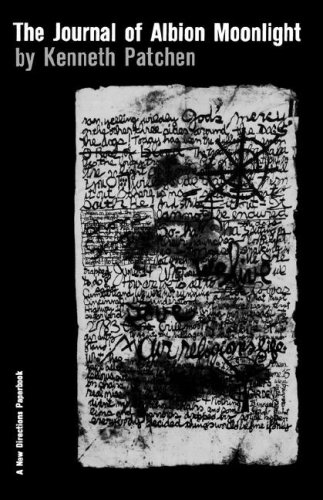
4. The journal of Albion Moonlight (A New Directions paperbook)
by Kenneth Patchen
 Unknown Binding: 313 Pages (1961)

Asin: B0007DNYZI
Average Customer Review: 4.5 out of 5 stars
Canada | United Kingdom | Germany | France | Japan

Customer Reviews (12)

5-0 out of 5 stars Great Art As A Plea And A Warning.
Kenneth Patchen is among the great artists of the 20th century who have been largely rejected by academia at its own peril. He is one of the handful of artists who gave me as a teenager strength to push on in a spiritually dying society.
I believe that it is no doubt convenient, but misleading, to refer to the Journal Of Albion Moonlight as a novel because to do so could blind the prospective reader to one of its essential qualities. I think it is better to say that it is a reflection by Patchen on the novel art form; and it is a reflection on a novel suggested in The Journal but never written because the novel form per se simply can not contain or reveal Patchen's vision. The Journal is a sort mirage of a novel that turns out to be something quite different when approached closely. What Patchen offers is a tremendous original work that rejects the novel as an art form and the civilization that created it. In the book we are in a sort of poetic vision of the world as a place where World War II never ends, it is like a dream from which one can not awaken. Throughout the book the narrator is constantly creating and de-creating his narrative, he is constantly drawn away from it by things he needs to say to the reader that clash with the very idea of a fictional narrative because what he wants at bottom is to obliterate the gulf between art and life, he wants to wake up from the nightmare of history. For Patchen, conventional literary art is too readily used as a means by the world to remain blind to itself. Instead of approaching this problem by creating a very realistic work, in a conventional sense of that term, which to him would only be the maximal deception, he creates a very 'unreal' work that taps into the the deep recesses of the readers resistance. He never lets the book take a form that can be used by the reader as a means of distraction from his own consciousness. The book is constantly directing the reader's consciouness back into the reader so there is a sort of dialogue going on between the reader and the narrator and in the course of this extended exchange the 'novel' is never written. This dialogue is a sort of nightmare and this nightmare is a reflection of the world itself.
Patchen had no confidence that art would be willingly used to actually change the condition of the world. He was quite aware that even radical art such as Melville's monumental Pierre or The Ambiguities was simply ignored by America, rendered into a safe and harmless subject of scholarly study rarely finding its way off the library shelves. Patchen wrote his book during the early years of World War II and he feared deeply that the human race had descended hopelessly into darkness. He thought that art had no chance of meaning anything in the face of this unless it was so impacting that it could eat away at the black corrosionthat was consuming human feeling and consciousness. In a way The Journal is Patchen's attempt to create a dream-like experience so intense that it could force the reader to wake up into the reality of life. (He wrote another great work actually called Sleepers Awake that is very unfortunately out of print.) This is a rather sizable challenge, but the The Journal is a tremendous and amazing book if you allow yourself to openly experience it and not wonder why it is not like a conventional novel. It is not a novel at all. It is a visionary poetic plea and a fiery warning to humanity to turn from its self-destructive insanity. The book is as relevant as it was in the 40's. But like Melville, Patchen is mostly ignored by America because he always refused to turn his light away from its corruption. Patchen has been championed by Henry Miller, Kenneth Rexroth, Charlie Parker and Tony Glover who saw him for the genius and courageous man that he was. He is, outrageously, an academic footnote. But like the Melville who wrote Pierre, Patchen will have his day whether it be in this world or another.

3-0 out of 5 stars Moonlight revisited
Recently came across a copy of Albion's Journal, signed and dated by his wife Miriam. So this made the re-reading more personal, somehow. I work as a bookpricer for a Friends of the Library group; someone donated the book to us.
I'd read Albion Moonlight once or twice before, never in its entirety (an intriguing impossibility -- unless you are fond of lists, and outlines of possible books, and marginalia to the max).
The journal as a journal pretty much disappears as a structure after about 50 pages -- but then later comes back -- and goes away -- and the dates proceed for a while, then sort of recycle. May to June and on, but you never get past August. And then you're back, somehow, to May again.
Taken as a whole, the work seems more an artifact, or art object -- even a stunning one -- but also then something to look at and admire for its conception, rather than read. That's true of the last half or possibly as much as two-thirds of the work.

Yet, all in all, I enjoyed meeting again with Albion and his rag-tag gang. The book is probably more over-hyped than any other "literary" title I've ever come across -- nonetheless, it remains engaging.
I've read plenty of other "odd" novels, not always with pleasure. (OK, I'll confess, I seek them out.) I didn't care much for Nabokov's "Pale Fire" -- but loved many of Julio Cortazar's parables and novels, including "Hopscotch." Gunter Grass' "Dog Years" remains an all-time favorite. Neither of those have much to do with traditional, progressive narrative time-lines. Yet that's very much part of what makes each one, in very different ways, effective.
However, Patchen's rejection of narrative, or distaste for it, a love and hate affair working through the journal -- for me, this got very wearying.
Moonlight is hilarious, did I say that? It has parts which are uproarious, and at places it is shockingly funny -- disturbingly so. These often very brief sections may be where it's most effective.
But there's plenty of vile stuff, too. And and and ... is he preaching against murder or advocating it? Again and again he explains how he seeks to murder "murder." Then he says he lied. Or that God (Roivas) made him lie when he said that. And so on.
Patchen plays with making as many contradictory statements as possible, then makes contradictory statements about contradiction itself. This same sort of perverse persistence goes on with other themes and literary tropes. Often what makes the work live is the wild inventiveness present, but the invention then dies away with this tedious repetitiveness.
So -- read with caution, but do read.

4-0 out of 5 stars Patchen Destroys "Books"
This "novel" is more of a primitive, surreal, hallucinatory, dream-like rage against WW2 & mankind's hatred in general than a standard book. Form gets tossed out the window, and this does make the book a bit of a struggle at times, but that's just the point. It shouldn't be easy to understand another man's feelings & it isn't easy getting Patchen's. This book is definately not for everyone, and I'd almost say "read the last half of the book first if you wanna get it from the get-go." It took me a few weeks to read this, reading several other things while mulling over parts of this "journal", but I'm glad I stuck with it & kept thinking about it. It's a very powerful work that crackles like a thundercloud. Just don't expect a straightforward novel. That ain't what this is...

5-0 out of 5 stars This is the BOOK.
If all of the other books in the world were to disappear one night, this would suffice to entertain and to educate for the rest of time.

5-0 out of 5 stars Utterly Mind Altering
Borrowing a copy of this book from a friend, i read in awe.This book has changed my way of thinking, living, and my entire belief system.It must be read by anyone seeking the answers of some of life's toughest questions. ... Read more


5. Kenneth Patchen: Rebel Poet in America
by Larry Smith, Harry Redl
Hardcover: 316 Pages (2000-03-25)
list price: US$25.95
Isbn: 0933087608
Average Customer Review: 3.5 out of 5 stars
Canada | United Kingdom | Germany | France | Japan
Editorial Review

Book Description
This is the much awaited authorized biography of American writer and artist Kenneth Patchen (1911-1972). Smith has completed an earlier critical study KENNETH PATCHEN (Twayne) and a video docu-drama KENNETH PATCHEN: AN ART OF ENGAGEMENT (1989). Here this American rebel artist stands exposed as a person of great strength and perseverence. His and wife Miriam's story is one of the great love stories in American literature. ... Read more

Customer Reviews (3)

5-0 out of 5 stars An Homage To Patchen
This is a work of much labor that obviously went straight tothe sources for information and really investigated the history that prompted such powerful poetry and fiction. Patchen is a heroic example of a person who maintained his pacifist stance when the world around him was exploding and brought his beautiful vision to Earth. This biography is written with a kind of tenderness and honesty that Patchen valued above all else. Thanks Larry Smith for this labor of love.

4-0 out of 5 stars An Essential Biography
Despite what Brian Beatty says,and his review is full of factual inaccuracies and personal bias, this is a strong book, and an essential work of scholarship on an important American writer. Smith has done his homework and delivered a memorable biography. Read it and see.

2-0 out of 5 stars Patchen deserves better...
As I've written elsewhere (in Rain Taxi, a review of books, to be exact), Smith's biography hardly does justice to the memory of poet Kenneth Patchen.Besides claiming Baudelaire is a Spanish poet(!), Smith practically ignores Patchen's energetic, highly individual work in favor of detailing the poet's politics and undeniably painful medical history, which is not how any poet of Pathcen's talents would want to be remembered.What's more unfortunate than Patchen's record of ill health is that his poetry and novels and art continue to be overlooked after his death - just as they were during his difficult life.If ever an American poet deserved critical reconsideration, it's Mr. Kenneth Patchen.Before you spend your good money on this self-published socio-political diatribe, please purchase every Patchen book that remains in print.Then buy second copies to give as gifts.Fans of e.e. cummings, one of Patchen's many writerly pals, should really enjoy Patchen's work. ... Read more


6. What Shall We Do Without Us; The Voice and Vision of Kenneth Patchen
by Kenneth Patchen
 Hardcover: 24 Pages (1984-09-12)
list price: US$25.00
Isbn: 0871568438
Average Customer Review: 5.0 out of 5 stars
Canada | United Kingdom | Germany | France | Japan

Customer Reviews (1)

5-0 out of 5 stars Patchen's Picture Poems
Opening this book to any of the three dozen prints it contains is like (at least to those of us whom excessive exposure to workaday prose and to overlapping error-messages threatens to render prematurely senile) suddenlyremembering what it was like to be a kid sitting in a tree, dangling yourlegs, and singing any old song you felt like singing irreverently.Patchen's colorful figures and backgrounds and words remind me of Kandinskyand Klee and maybe even of the boy Wm. Karlos Williams must have been. Thisis art that makes me smile and gently reminds me to pick my battles, tellthe truth, and, while there's still time, gaze long and selfishly andirresponsibly at the night sky. ... Read more


7. The Walking-Away World
by Kenneth Patchen
Paperback: 304 Pages (2008-07-28)
list price: US$19.95 -- used & new: US$13.57
(price subject to change: see help)
Asin: 0811217574
Canada | United Kingdom | Germany | France | Japan
Editorial Review

Book Description
The wonderful picture-poems of Kenneth Patchen, long out of print, are being brought back into one generous volume—cryptic creatures quipping quirky quotes and all.

The singular work of Kenneth Patchen has influenced poets, artists and political activists for decades. New Directions is proud to launch a Patchen revival beginning with omnibus editions of his unique compositions.

Kenneth Patchen's last words to New Directions founder James Laughlin were "When you find out which came first, the chicken or the egg, you write and tell me." Answering his own question comes Patchen's "picture-poem." The Walking-Away World reissues three of his picture-poem classics: Wonderings, But Even So, and Hallelujah Anyway. Inspired by the "illuminated printing" of William Blake, Patchen worked in a spirited fervency with watercolor, casein, inks, and other media to create absurdly compelling works. His entire process was a simultaneous fusion of painting and poetry: neither the poem nor the painting preceded one another. Each picture-poem is inhabited by strange beings uttering everything from poignant poetic adages to cheeky satire. One confides, "I have a funny feeling / that some very peculiar-looking creatures out there are watching us," which sums up the suspicious joys of The Walking-Away World. ... Read more


8. The dark kingdom [by] Kenneth Patchen
by Kenneth (1911-1972) Patchen
 Hardcover: Pages (1948)

Asin: B000OFCJ4Q
Canada | United Kingdom | Germany | France | Japan

9. MEMOIRS Of A SHY PORNOGRAPHER.
by Kenneth. Patchen
 Hardcover: 242 Pages (1945)

Asin: B000OKBYNS
Canada | United Kingdom | Germany | France | Japan

10. Patchen's Lost Plays
by Kenneth Patchen
 Paperback: Pages (1977-11)
list price: US$3.95
Isbn: 0884961176
Canada | United Kingdom | Germany | France | Japan
Editorial Review

Book Description
drama ... Read more


11. Selected Poems By Kenneth Patchen
by Kenneth Patchen
 Paperback: Pages (1957)

Asin: B000J2PFW2
Canada | United Kingdom | Germany | France | Japan

12. Kenneth Patchen (Twayne's United States authors series ; TUSAS 292)
by Larry R. Smith
 Hardcover: 195 Pages (1978-02)
list price: US$13.95
Isbn: 0805771956
Canada | United Kingdom | Germany | France | Japan

13. PATCHEN: MAN OF ANGER & LIGHT and A LETTER TO GOD ByKenneth Patchen
by Henry Miller
 Paperback: Pages (1946)

Asin: B000NRAYGA
Canada | United Kingdom | Germany | France | Japan

14. Journal of Albion Moonlight
by Kenneth Patchen
 Hardcover: Pages (1946)

Asin: B000P0RMK6
Canada | United Kingdom | Germany | France | Japan

15. Kenneth Patchen: Painter of Poems
by Kenneth Patchen
 Paperback: Pages (1970)

Asin: B000GRBU0G
Canada | United Kingdom | Germany | France | Japan

16. The Love Poems of Kenneth Patchen (The Pocket Poets Series; 13)
by Kenneth Patchen
 Paperback: Pages (1960)

Asin: B000LQVZA2
Canada | United Kingdom | Germany | France | Japan

17. Selected Poems by Kenneth Patchen
by Kenneth Patchen
 Paperback: Pages (1958)

Asin: B0014JJE12
Canada | United Kingdom | Germany | France | Japan

18. Tribute to Kenneth Patchen
 Unknown Binding: 61 Pages (1977)

Isbn: 0901111805
Canada | United Kingdom | Germany | France | Japan

19. The Love Poems of Kenneth Patchen
by Kenneth Patchen
 Paperback: Pages (1965)

Asin: B000VDPPQK
Canada | United Kingdom | Germany | France | Japan

20. Tribute to Kenneth Patchen
 Paperback: 62 Pages (1977-05)

Isbn: 0901111791
Canada | United Kingdom | Germany | France | Japan

  1-20 of 100 | Next 20
A  B  C  D  E  F  G  H  I  J  K  L  M  N  O  P  Q  R  S  T  U  V  W  X  Y  Z  

Prices listed on this site are subject to change without notice.
Questions on ordering or shipping? click here for help.

site stats