e99 Online Shopping Mall

Geometry.Net - the online learning center Help  
Home  - Authors - Sargent Pamela (Books)

  1-20 of 100 | Next 20
A  B  C  D  E  F  G  H  I  J  K  L  M  N  O  P  Q  R  S  T  U  V  W  X  Y  Z  

click price to see details     click image to enlarge     click link to go to the store

$3.50
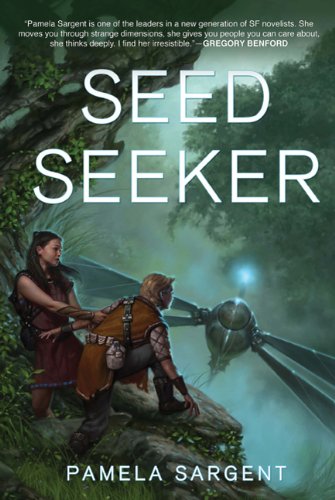
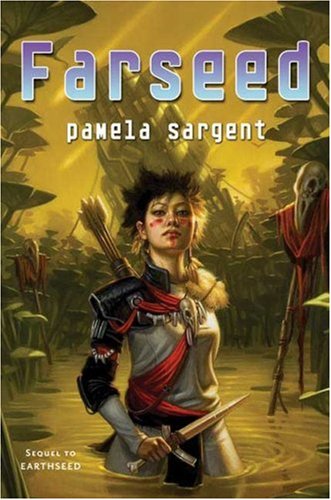
1. Farseed (Seed Trilogy)
$0.01
2. A Fury Scorned (Star Trek The
$14.73
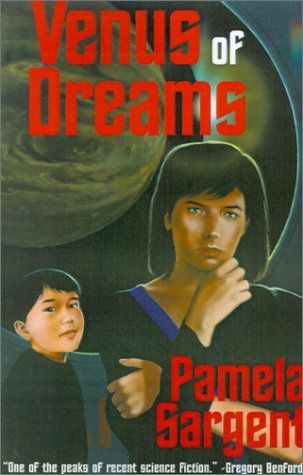
3. Venus of Dreams
$0.39
4. Climb the Wind: A Novel of Another
 
5. The Work of Pamela Sargent: An
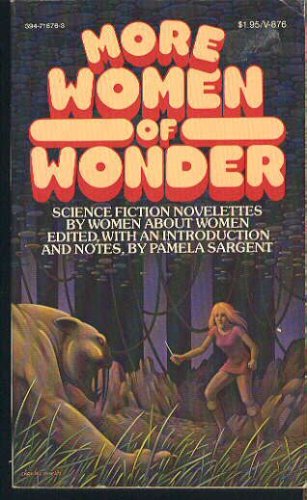
$8.00
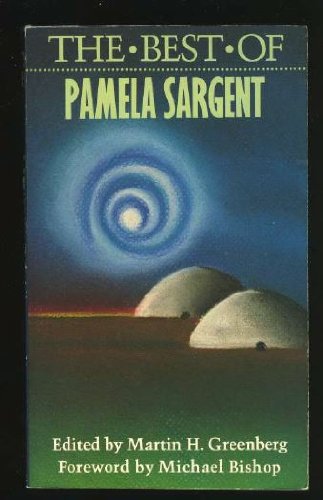
6. The Best of Pamela Sargent
$16.29
7. Thumbprints
$68.25
8. Behind the Eyes of Dreamers and
 
9. The Best Of Pamela Sargent
 
$5.95
10. The Work of Pamela Sargent: An
 
11. The Work of Pamela Sargent: An
$9.95
12. Biography - Sargent, Pamela (1948-):
 
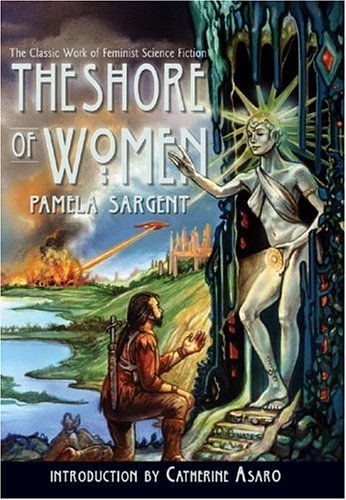
13. Shore of Women,the
$0.32
14. Child of Venus
15. The New Women of Wonder
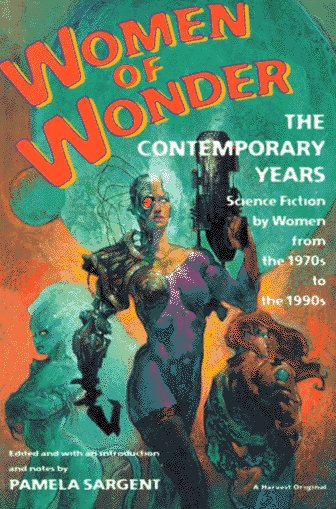
16. Women of Wonder V41
 
17. BIO-FUTURES - Signed
$7.03
18. Nebula Awards 29: SFWA's Choices
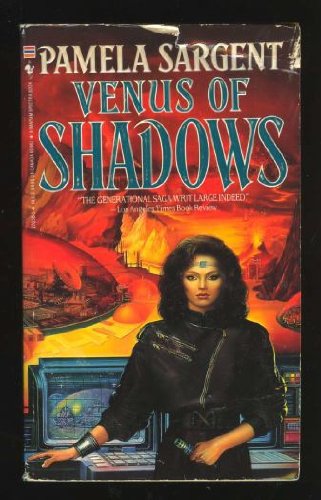
19. VENUS OF SHADOWS (Venus of Dreams)
 
$1.00
20. Nebula Awards31: SFWA's Choices

1. Farseed (Seed Trilogy)
by Pamela Sargent
Hardcover: 288 Pages (2007-03-06)
list price: US$17.95 -- used & new: US$3.50
(price subject to change: see help)
Asin: 0765314274
Average Customer Review: 4.0 out of 5 stars
Canada | United Kingdom | Germany | France | Japan
Editorial Review

Book Description
Centuries ago, the people of Earth sent Ship into space. Deep within its core, it carried the seed of humankind. More than twenty years have passed since Ship left its children, the seed of humanity, on an uninhabited, earthlike planeta planet they named Home. Zoheret and her companions have started settlements and had children of their own. But, as on board Ship, there was conflict, and soon after their arrival, Zoherets old nemesis, Ho, left the original settlement to establish his own settlement far away. When Hos daughter, sixteen-year-old Nuy, spies three strangers headed toward their village, the hostility between the two groups of old shipmates begins anew and threatens to engulf the children of both settlements. Can the divided settlers face the challenges of adapting to their new environment in spite of their conflicts? And if they do, will they lose their humanity in the process? ... Read more

Customer Reviews (4)

4-0 out of 5 stars A Long Awaited Sequel to Earthseed!
Pamela Sargent is a name that many fans of science fiction will recognize--this veteran SF author has been around for decades contributing her work to the genre.But it's been quite a while since she's been seen on the young adult shelves--so it was with equal parts delight and excitement I discovered her 1983 title, Earthseed, was being reprinted and that the second book in what is now going to be a trilogy had been released.For new readers to this trilogy, I highly recommend starting with Earthseed before cracking open this book.

For readers who hoped this book would pick up seamlessly with the lives of Zoheret and Ho and the others from the first book--there may be some initial disappointment.This book is set about twenty years after they arrive on the planet they call Home and is more about the children of the original characters than the characters themselves. The original settlement has become somewhat complacent and unwilling to venture beyond its safe borders--while Ho's separated group has gone a different direction, struggling to survive on the alien planet. Nuy, Ho's daughter is sixteen when strangers come from the settlement after so many years of isolation.The resulting clash between groups is violent and shattering for Nuy--she must decide who to side with and what she wants for her life.In the end both groups must make choices and the colonists whether the price of giving their people a future on the planet is worth the risk.

Those who haven't read the first book may be able to follow the story well enough to enjoy it, but it really works best as a follow up to Earthseed.Pamela Sargent delivers a good, solid SF read here--something that's been missing from YA and children's collections in recent years.As the Science Fiction Chronicle quote states, her work here is reminiscent of the better Heinlein juveniles--and that's meant in a good way.Sargent offers strong female protagonists, thought provoking scenarios and a wonderfully imaginative picture of what colonizing a new planet might be like.It's not light reading--there's a fair amount of violence and killing that goes on, and Ms. Sargent doesn't shy away from those harsh realities.It's also a fairly mature read, though the sexual content is overall light--I'd probably recommend this for 7th grade readers on up.

I'd like to give this book five stars, as I'm so happy to see Ms. Sargent back in YA and giving new life to this series, but I didn't think it was quite a five-star book even so.Firstly, it really feels like a middle book in a trilogy--readers are best off tackling the book before it to understand what went on and who the older characters are.There are also bits and peices about the Ship that hint at things to come, but will mean little to a reader who has only read Farseed. Secondly, I did find that the book dragged a little in Part II of the story.Here, Ms. Sargent brings readers up to speed on the progression of the settlement, the dynamics of day to day living, and the growing restlessness of the younger population.It's necessary to do so, but the result is that after the previous section on Nuy and her life and her current predicament, it slows down the story noticably.Given all that, it's really a minor quibble, as the book moved along at a fast clip overall. I'm very much looking forward to see what the author has in store for the third book.

If you like your SF funny or set in futures full of aliens and galactic empires this probably won't be your cup of tea. But if you enjoy exploring the possibilities that the future can offer in YA storytelling, you might want to check this trilogy out.If you like Ms. Sargent's work, you might also want to look for "Invitation to the Game" by Monica Hughes and Sylvia Engdahl's "Journey Between Worlds" which has just been reprinted for 2007.

Happy Reading! ^_^ Shanshad

2-0 out of 5 stars Not Earthseed
I read "Earthseed" as a teenager and loved it. It was a story my middle school students loved too. They always wanted more and I did too.I looked forward to reading "Farseed" and discovering the fates of the characters after almost 20 years.

"Farseed" is not about the characters introduced and explored in "Earthseed". It is about a teenage girl who is abused as a girl and must find strength to look past the biases of her childhood to help people she was taught to hate.

The story introduced in this second part of the trilogy is boring, hard to read, and not a good follow-up to the first tale. This story drags to the ninth degree and makes me feel really disapointed in the author and the fate of a story introduced in the stunning first book.

5-0 out of 5 stars A fascinating story of survival and struggle evolves
This fine sequel of EARTHSEED requires no prior familiarity to prove enthralling for newcomers to Sargent's fantasy world. Over twenty years have passed since Ship left its children on an uninhabited, Earth-like planet named Home, and Zoheret and her companions have had their own children. Two groups of old shipmates make separate encampments and soon hostility breaks out and threatens their fragile new world. A fascinating story of survival and struggle evolves, highly recommended for any teen audience interested in solid characterization and involving science fiction.

5-0 out of 5 stars fantastic science fiction
Ship was created to find worlds that could contain human life and seed these orbs with humans.One of the first worlds to fulfill the requirement is Home where Ship deposited colonists.The colonists make up two groups.One segment led by Ho settles in the warm south while the rest headed by Zoheret moved into the coastal north.The people of the south lost much of their technology and devolved into a more\primitive lifestyle,while the Northerners built domes and relied on the technology brought from earth.

Ho's teenage daughter Nuy sees three strangers approach from the north.She brings them to their village, but Ho assumes they bring death so he kills them and exiles his offspring.A year passes with the second generation Northerners wanting to know what happened to their compatriots. At a town hall meeting Leila a second generation person wants to send a second expedition to the South and she is supported by the settlement so they go south to find out the truth.When they camp for the night, Ho sends his forces to attack them killing two of the campers.Leila insists on continuing and soon meets Nuy, who wants to save both groups from her out of control parent.

Two groups, one primitive and one advanced, battle for control with some in power (on both sides) preferring the status quo.It takes the female adventurers from both sides to demand change and go against the status quo established by the original landing party.Pamela Sargent has written a fantastic science fiction novel that shows how humans adapt to new environs.FARSEED is enjoyable and exciting as readers will care what happens to the colonists especially the heroic offspring.

... Read more


2. A Fury Scorned (Star Trek The Next Generation, No 43)
by Pamela Sargent, George Zebrowski
Mass Market Paperback: 275 Pages (1996-11-01)
list price: US$5.99 -- used & new: US$0.01
(price subject to change: see help)
Asin: 0671527037
Average Customer Review: 3.0 out of 5 stars
Canada | United Kingdom | Germany | France | Japan
Editorial Review

Book Description
With their sun about to go nova, the people of Epictetus III face annihilation. Although the U.S.S. Enterprise™ has come to lead the rescue operation, there is no way to evacuate a population of over twenty million, leaving Captain Picard to make an agonizing decision. Should he try to salvage the planet's children, its greatest leaders and thinkers, or its irreplaceable archeological treasures? No matter what he decides, millions must be sacrificed -- unless another solution can be found.

With time running out, Data proposes a revolutionary scientific experiment that could save all of Epictetus III, or doom both the planet and the Enterprise as well.

Download Description
With their sun about to go nova, the people of Epictetus III face utter annihilation. Although the "U.S.S. Enterprise" TM has come to lead the rescue operation, there is no way to evacuate a population of over one hundred million, leaving Captain Picard to make an agonizing decision. Should he try to salvage the planet's children, its greatest leaders and thinkers, or its irreplaceable archeological treasures? No matter what he decides, millions must be sacrificed -- unless another solution can be found. With time running out, Data proposes a revolutionary scientific experiment that could save all of Epictetus III, or doom both the planet and the "Enterprise" as well. ... Read more

Customer Reviews (10)

1-0 out of 5 stars Star Trek fans have good imaginations.......but.......
I, like other Star Trek fans, have a sound ability to suspend reality and enjoy fantasy.If the plot isn't that exciting, you can usually get into the character development.My problem with this book is that I was faced with a ridiculous plot:Enterprise creates a worm hole through syphoning off power from a soon-to-go Nova sun, to allow the nearby doomed planet, with its 20 million residents, to then move through (yes, the entire planet!) to safety several light years away and a new, more stable sun.And yes, all this is an experiment that Data pulled out of his positronic rear end.There are then 'teaser' plots that don't go anywhere: ancient civilisation that had abandoned the planet previously, despite having some clever stabilisation control in the middle of the sun; writings of the ancients (that disappointingly are never interpreted through a failure of its archeologists to locate a Rosetta Stone equivalent); dolphin-like creatures who 'might' be ancients, studied by a cult-like group dwelling under the ocean; a completely unconvincing child hostage scene that is resolved in a poorly described narrative 'blip'; and a strange reference to Federation politics overtaking the traditional 'doing the right thing'.From a character-development perspective, the only point of recall was Worf admiring the scenery of the planet - snooze.My kingdom for a Batleth swinging, Daktagh wielding warrior!

This novel really didn't gel at all with me, and truly seemed like Star Trek pulp.Would only recommend people read this, if they want to fill "Novel No# 43" to complete a gap on their bookshelf.

3-0 out of 5 stars STNG #43 A Fury Scorned - Interesting but with faults!
"A Fury Scorned" is the first novel in the Star Trek genre by Pamela Sargent and George Zebrowski.As Star Trek fiction goes, this novel is a fairly decent one and this writing team has proven that they can write some fair to midland type Star Trek novels since this novel was published.

The overall premise proves to be a fairly interesting one, where this novel falters is in the pacing and the execution of the plot setup.There were times within the story that the pacing was just too slow and the story somewhat stuttered, which detracted from the overall experience of the book.

The cover art for this novel is pretty much the same standard fare for the majority of the novels published at the time when this one was.

The premise:

Captain Picard and crew find themselves faced with Epictetus III and one of Captain Picard's toughest dilemmas' ever; the planet's star approaching nova and too few ships available to evacuate the population of over twenty million inhabitants.As has happened many times before, Data proposes a radical new scientific experiment which "may" save the entire planet and its population...

What follows from there is an interesting story but one that is ultimately non-engaging due to "quirks" within the plot setup and execution thereof and the pacing.

I would recommend this novel as it is part of the line of all Star Trek The Next Generation novels for those that wish to read all of them but to the casual fan, this may be one to pass up on for it is not a "great" example of Star Trek fiction, but it is also ultimately not the worst either.{ssintrepid}

4-0 out of 5 stars ST-TNG:A Fury Scorned
Star Trek-The Next Generation:A Fury Scorned written by Pamela Sargent and George Zebrowski is a Captain Jean-Luc Picard and the crew of the U.S.S. Enterprise save-the-planet book.

Faced with a population of twenty million and who and what to choose to evacuate Captain Picard and crew are facing steep odds.A dying sun, soon to go nova, threatens the planet Epictetus III and all that inhabits this planet.The U.S.S. Enterprise crew must come up with a solution or all will be lost.

Running out of time, Data proposes a revolutionary solution to this ever growning concern... a wormhole.But, not just any wormhole, no sir... a wormhole big enough for a whole planet.I know it sounds quite farfetched, but this is scifi and anything is possible. But will this novel experiment work? Can the U.S.S. Enterprise be saved?Only time will tell and the answers are in the ending of this book.

For action-adventure this is a good book as the narrative flows and it makes for a rather quick read.Captain Picard's trust in Lt. Commander Data and a solution that is highly experimental and weigh in the balance.But, this book will engage the reader till the end.This is not the best written book in the TREK universe, but it sure isn't the worst either.

5-0 out of 5 stars It fit the Mold Perfectly
This book is great for any Trek fan out there. What makes this such a great book is the fact that it places the lives of millions of people on the shoulders of one man. Just comprehending such an awesome idea ismind-boggling. It resurfaces a "worst-fear" scenario in the mindsof many people, myself included. For an author to do that in a"typical" sci-fi novel is very bold. Quite a captivating read.

3-0 out of 5 stars How did they make that wormhole again?
Ok, lets not kid ourselves. This is a good, solid Star Trek story, but it isn't brilliant, nor is it original. This book is just another Enterprise-saves-the-planet affair, only this time (wait for it...) theplanet gets sent through a wormhole. That's right.

If this were possible,wouldn't it be mentioned before in Star Trek? As it is Data's'revolutionary scientific experiment' seems a little farfetched andridiculous. It does manage to keep your interest though, and it didn't takeme too long to read. I think the best bits were the part where that pieceof the planet breaks off and the actual crossing through the wormhole.

Iwill admit that once I managed to forget about the absurdity of the wholewormhole thing, I did enjoy this book, although I still think there are alot of better save-a-planet books (Death of the Princes, Last Stand, DoubleHelix #1...)

I think people who like that kind of pioneering/scientificStar Trek book will probably go for this. I give it 'average' - threestars. ... Read more


3. Venus of Dreams
by Pamela Sargent
Paperback: 480 Pages (2004-09-20)
list price: US$21.95 -- used & new: US$14.73
(price subject to change: see help)
Asin: 0759230609
Average Customer Review: 4.5 out of 5 stars
Canada | United Kingdom | Germany | France | Japan
Editorial Review

Book Description
Iris Angharads, a determined, independent woman, sets herself one massive goal: to make the poison-filled atmosphere of Venus hospitable to humans. She works day and night to realize her dream, with only one person sharing her passion, Liang Chen. It seems impossible to make Venus, with its intolerable air and waterless environment, into a paradise, but Iris succeeds. And in doing so, she also creates a powerful dynasty, beginning with her first born, Benzi Liangharad. ... Read more

Customer Reviews (7)

5-0 out of 5 stars Iris on Venus forever
A wonderful story that will take you far away on a trip you'll never forget. The story spans the life of Iris Angharads, a Venus pioneer. We meet Iris when she's a girl and see her growing into an adult quartered into her career, her woman's love, her mother's love, and her family duties. Pamela, as the great writer she is, is able to make us not only feel for Iris but also even understand her hardest decisions. The contrast between where Iris comes from and where she goes hinging on the Cytherian Institute is remarkably thought, conceived, and described. That story of a free woman guided by her creed and fighting for her desire will never leave you.

4-0 out of 5 stars Complex and Unforgettable
I first read this book 5 years ago and in that time have probably re-read it about 9 times.

This and the other books in the trilogy are very very well-written and I highly recommend them all to anyone who likes their fiction to be well-planned and well-rounded. Although people may not like me for it, I'm going to have to compare this trilogy to Star Trek in that the technology is very outlandish and barely even theoretically possible, but it does fit together rather well and makes a good story. And that's really all that matters. I will say for the politics and religion in the books, though, they're very realistic and it's very easy to find parallels in modern day society.

All in all, this book and the other two are very very good and I would highly recommend them to anyone who can appreciate a book filled with science, politics, religion and personal drama all rolled into one unforgettable series.

4-0 out of 5 stars Good, solid, enjoyable sci fi
I've settled Mars many times in my sci fi reading; it was a new adventure to settle Venus. "Venus of Dreams" is the Venusian analogue of Kim Stanley Robinson's "Red Mars" (which I also recommend): a realistic and entertaining story of what it might be like to make a new planet habitable for humans, including the science, the politics, and the individual human drama.

Iris Angharads is from the Plains Nomarchy in what used to be the United States. As a child, she dreams of working on the Venus Project instead of taking over the communal farm run by her mother. She and her significant others struggle with issues of ambition, family commitments, and what is worth sacrificing in order to attain your dream.

4-0 out of 5 stars Especially poignant given September 11
I too read this book -- several years ago, now.Its description
of the Islamic Imams was perhaps the only introduction to Islam
I had ever really had.Its treatment of the historical
uneasiness between the Islamic and Western worlds, even if done
in fiction, is especially poignant in a post September 11 world.

I too hope the sequal gets published.

4-0 out of 5 stars Complex worlds, societies & characters in a great story
I've just finished my third reading of VENUS OF DREAMS.I suppose that the fact I've found a third reading exciting says something about the quality of Pamerla Sargent's writing (or maybe about the quality of mymemory?).As a member of that tribe which looks for realistic scienceunderlying SF storytelling, I was very satisfied with that aspect ofSargent's story.Her exploration of ideas of social organization are verywell-fleshed and believeable, and her characters are richly detailed.Ieagerly await the opportunity to read the other two volumes of the VENUSseries, VENUS OF SHADOWS - now out-of-print, and the forthcoming CHILD OFVENUS.

It's sad that the first two volumes of her Venus series areout-of-print.One of the terrible legacies of the Reagan era is the taxlaw revisions that make it more worthwhile for publishers to let mosttitles go out of print after only one year.I despair of finding a copy ofVENUS OF SHADOWS.I am, however, delighted to see that the final volume,CHILD OF VENUS, is scheduled for publication early next year.Hopefully,if sales of CHILD are as good as they should be, the publisher will reprintthe entire series. ... Read more


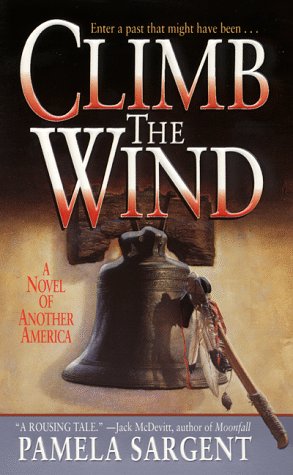
4. Climb the Wind: A Novel of Another America
by Pamela Sargent
Mass Market Paperback: 497 Pages (1999-10)
list price: US$6.99 -- used & new: US$0.39
(price subject to change: see help)
Asin: 0061058084
Average Customer Review: 3.0 out of 5 stars
Canada | United Kingdom | Germany | France | Japan
Editorial Review

Book Description
The Civil War is finally over and a weakened America is struggling to rebuild. The white man is sweeping across the continent, driving native peoples on the prairies and plains from their lands. But time is about to stand still, the map of history rewritten . . .

Something is wrong out West. The Buffalo Soldiers sent to subdue the Cheyenne are deserting and joining their former enemy. The Sioux are leaving their reservations in hordes. And armed bands of Apaches have been sighted riding east of the Mississippi!

Lemuel Rowland, formerly Poyeshao, a son of the Seneca, has spent his life learning the white man's ways. A Washington bureaucrat, he must now choose between his successful career and his ancient heritage, for the dreams of his native people are about to come true. An obscure Lakota chief, inspired by visions of a female soothsayer and armed by a foreign spy, is uniting the Indian nations into an awesome fighting force that will thunder eastward and try to reclaim all of America for its peoples.

As a loyal employee of the United States government, it is Rowland's job to stop these renegade warriors--but he wants them to win! And what will it mean for America--and her future history--if they do? ... Read more

Customer Reviews (6)

4-0 out of 5 stars Bad history - but a good story
Most "Indians Win" AH's are at best house-of-cards constructions and this one - while better than most - is no different. So if I told you I had problems galore with the history in this book, you'd probably not be surprised. But If I told you it doesn't make a darn bit of difference to the story, you might be.

Pamela Sargent is an excellent writer. I found the characters all to be believable, their actions all made sense, given the circumstances, and the book is just a darn good read.

But the AH - Oy!

To begin with, the actual POD is at best diffuse. It seems to be set back a few years prior to the events of the story (Crazy Horse, for example, seems to have a different wife on this ATL, which led to Touch-the-Clouds not having to save his life because of his OTL wife's ex). But other events change as well, most notably Grant steps out in front of a carriage and dies in the middle of his term (Schuyler Colfax becomes President).

But the _actual_ difference seems to be that visions are real, and can convey useful information.

Sargent realizes that in order to have any chance of winning, the Indians have to face a much reduced enemy. And she arranges things so that rebellion breaks out in the South again (Colfax is a lot more heavy handed with them than Hayes would have been), Texas and California break away as "autonomous republics," and eventually much of the U.S. is in some form of rebellion. So, much of the army is busy putting down those rebellions - and much of the rest is unsure just whose orders they should be obeying.

I just can't bring myself to believe this, though. The U.S. falls apart entirely too easily (I especially can't see California just breaking off like it does. The vast majority of its population was very pro-Union). Rebellions just seem to break out here and there for no real reason (though it is the time of the great Railroad Strike, I admit).

OTOH, while the Indians win their territorial integrity by the end of the book (and the United States has become more of a NATO-style alliance than anything else) I do admire that she's left the future more or less undecided. That the Indians will keep their freedom is not a given and many of the Indians are upset with all the changes they had to make - all the things they had to lose - to win this war. It's pretty much going to be such that if the Indians do keep their freedom, their culture(s) are going to change at least as much as if they don't.

But anywho, it's a great story. So put your disbelief-suspenders on "high" and read the book.

3-0 out of 5 stars Interesting history, weak character
With the American Civil War over, the Union turns its attentions toward the west, toward the territory of the Lakota and the gold of the badlands. In our history, the result was the genocidal attacks on the Sioux and the horrors of Wounded Knee. But what if the Native Americans of the plains had united--if the Crow had fought with the Sioux and Cheyenne rather than scouting for Custer? And what if the Sioux had been able to secure more modern weapons--Chinese rockets and better rifles? In CLIMB THE WIND, author Pamela Sargent addresses these questions.

The real hero of the novel is Russian Grigor Rubalev. He knows of American betrayal having suffered it when the U.S. bought Alaska and promptly ignored their promises to the Russian inhabitants. And he's read of the Mongol victories over the far more numerous and better armed Chinese. Could the Lakota chief Touch-The-Clouds be a later-day Gengis Khan? Touch-The-Clouds' mystic visions of Indian warriors in the streets of Eastern cities seems to indicate this possibility, and Rubalev is willing to do anything to make this victory possible.

From the reader perspective, it is unfortunate that Sargent choses Seneca Lemuel Rowland as her protagonist. Rowland, an ex-soldier, is disenchanted with his life and wants to help the Sioux against the never-ending string of treaty violations that they have suffered. But he sees no alternative. If the Sioux fight, they will lose. If they fail to fight, they will lose. Rowland doesn't believe Rubalev's vision. Even when the plains Indians slaughter Custer and his entire force, Rowland knows that the result can only be more suffering.

Sargent's selection of the genocide of the Native Americans as her setting for an alternate history is a good choice--the result in our own world was so horrible that almost anyone would want an alternative. The history is also familiar to most Americans, increasing its marketability (try selling an alternate history of Bactria after Alexander's death and see how important this is). Best of all, Sargent's story-telling and descriptions of Lakota customs is compelling. Although I found the first half of CLIMB THE WIND to be slow going and Rowland far too passive for a good protagonist, the novel still makes interesting reading.

1-0 out of 5 stars Confusing
The major reason I didn't like this book is that there are too many characters.The plot was also confusing,so much so that I didn't even finish reading the book.

2-0 out of 5 stars Badly convergent AH
Though the idea of Souix and others rallying against the genocidal US, the creation of the book lacks in a good Point of Divergence from Our Time Line. In other words, Ms.Sargent uses fiction characters to push along the Souix to do one thing or another that will make them victorious. Then,after the US endures a cabalic despotism in Washington,that is put down bythe Souix, the world reconverges with Our Time Line, which is very unlikey.The last passage makes a mockery of the Ghost Dance. Rent it from yourlibrary.

2-0 out of 5 stars A great idea poorly executed.
What a waste.A promising idea that never comes close to maturity.You keep waiting for the characters to gain depth or for the descriptions and action scenes to climb above the level of a park brochure as you wadethrough page after page after page.Some of the sections are simplyboring.The idea is clever but never truly works.The appearance ofhistorical figures within an alternate history tale is usually one of thehigh points of the reading but does not offer a pay off here.Most of themwalk briefly across the stage and disappear.The main characters are twodimensional and unconvincing.The reader never really cares what happensto thembecause they are cardboard cut outs without any real emotionalanchors to give them depth.The action scenes are awkward and slow and theclimatic battle that is foreshadowed throughout the first three quarters ofthe novel never materializes.I was extremely disappointed. ... Read more


5. The Work of Pamela Sargent: An Annotated Bibliography and Guide (Bibliographies of Modern Authors No 15)
by Jeffrey M. Elliot
 Paperback: 80 Pages (1987-11)
list price: US$9.95
Isbn: 0893704946
Canada | United Kingdom | Germany | France | Japan

6. The Best of Pamela Sargent
Paperback: 322 Pages (1987-12)
list price: US$9.00 -- used & new: US$8.00
(price subject to change: see help)
Asin: 0897332415
Average Customer Review: 5.0 out of 5 stars
Canada | United Kingdom | Germany | France | Japan

Customer Reviews (3)

5-0 out of 5 stars Classic Sargent
Pamela does it again with this collection that demonstrates once and for all her ability to write in almost every genre. She has never been a "hard" science fiction writer nor delved in fantasy as far as I know.She seems too rational, too logical to indulge in such ridiculousness.

Indeed, her characters seem possessed of such qualities as these.The stories range from everyday happenings to alien encounters and the best things about them are they are short enough to be read at one setting while being good enough to be thoroughly enjoyed.Great collection.

5-0 out of 5 stars Superb - a master at work
I'll say it again:Pamela Sargent is the most underrated writer in the world.Notice I did not say "science fiction writer" because she visits other genres. (Her biography / novel of Ghengis Khan was incredible.) I first encountered Pamela Sargent in the mesmerizing "Shore of Women" then went on to read the Venus Series and all her previous works.

This is one of her earliest but all the elements are present:The interesting story, the time (not too distant future), the interplay among characters separating the wheat from the chaff, the logical progression of current trends.The subject is particularly timely today with all the wild stories over cloning. (Idential twins are clones - should they be allowed?) The twins are cloned for a reason and without giving away the plot it involves reactions to them and the exploration of space for habitation.

5-0 out of 5 stars a collection of one of the best
Pamela Sargent very very rarely lets me down with her science fiction.I was luckily enough to just find this collection of her short stories and read it through in only two days.The vast majority of the stories areexcellent -- well written and populated by enticing characters. Well worththe time and money if you like strong but realistic female characters. ... Read more


7. Thumbprints
by Pamela Sargent
Hardcover: 345 Pages (2004-10-01)
list price: US$25.95 -- used & new: US$16.29
(price subject to change: see help)
Asin: 1930846290
Average Customer Review: 5.0 out of 5 stars
Canada | United Kingdom | Germany | France | Japan
Editorial Review

Book Description

This eclectic group of short stories traverses time, place, and genre to deliver vivid accounts of captivating worlds, both real and imagined. By weaving together the historical and the fantastic, the stories in this collection produce fascinating narratives that remain deeply human. The startling title story, “Thumbprints,” explores the darker side of the book business when a literary agent goes too far to ensure that his author’s fees are paid in full. “Erdeni’s Tiger,” a historical drama, features a young wife in twelfth-century Mongolia who must master the spirit world to save her tribe. “Climb the Wind” revisits Mongolia in a modern-day setting as the country’s military past haunts its current inhabitants.
... Read more

Customer Reviews (2)

5-0 out of 5 stars Sargent's newest collection distinctive as a thumbprint
Pamela Sargent is one of the most gifted writers of speculative fiction and fantasy working today.Her readership is privileged to have this new collection out now, showcasing twelve fine stories. "Thumbprints" spans early work such as the classic love story "If Ever I Should Leave You," right up to the brand-new title tale, a black comedy of literary bad manners.There are several stories from her "Mongolia" tapestry, including the modern-day "Climb the Wind" and the Genghis Khan tales "Erdeni's Tiger" and "Spirit Brother."There is a new "Venus" tale, the prequel "Venus Flowers at Night".There are tales of familiar family dynamics in strange situations -- "Amphibians," "Gather Blue Roses" -- and strange futurities driven by familiar human frailties -- "Originals," "Shrinker."Most of all, there's heart and soul, for Sargent prefers to tell us about people, rather than technology.Sargent's distinctive voice is alive in these stories, and endlessly expressive.

5-0 out of 5 stars Exciting and mystical tales
Pamela Sargent is one of today's most imaginative and talented fantasy writers. Thumprints is an anthology of twelve of her short fiction pieces -- each of which is a minor gem of creative story telling. Some of the tales take place in twelfth-century Mongolia; one in present day Mongolia; one follows a charcter from Sargent's "Venus" trilogy; a title story that delves just how far a nearly demonic literary agent will go to ensure that his fees are paid; and several more. Exciting and mystical tales, steeped in the resonance of culture and defying prediction until the last page is turned, Thumbprints is highly recommended, especially for fans of Sargent's other works.
... Read more


8. Behind the Eyes of Dreamers and Other Short Novels (Five Star First Edition Science Fiction and Fantasy Series)
by Pamela Sargent
Hardcover: 224 Pages (2002-02)
list price: US$24.95 -- used & new: US$68.25
(price subject to change: see help)
Asin: 0786238798
Canada | United Kingdom | Germany | France | Japan

9. The Best Of Pamela Sargent
by Pamela; Greenberg, Martin H. (editor) Sargent
 Hardcover: Pages (1987)

Asin: B000S9K78I
Canada | United Kingdom | Germany | France | Japan

10. The Work of Pamela Sargent: An Annotated Bibliography and Literary Guide.(Review) (book reviews): An article from: Utopian Studies
by Kristine J. Anderson
 Digital: 4 Pages (1998-03-22)
list price: US$5.95 -- used & new: US$5.95
(price subject to change: see help)
Asin: B00098EY28
Canada | United Kingdom | Germany | France | Japan
Editorial Review

Book Description
This digital document is an article from Utopian Studies, published by Society for Utopian Studies on March 22, 1998. The length of the article is 1051 words. The page length shown above is based on a typical 300-word page. The article is delivered in HTML format and is available in your Amazon.com Digital Locker immediately after purchase. You can view it with any web browser.

Citation Details
Title: The Work of Pamela Sargent: An Annotated Bibliography and Literary Guide.(Review) (book reviews)
Author: Kristine J. Anderson
Publication: Utopian Studies (Refereed)
Date: March 22, 1998
Publisher: Society for Utopian Studies
Page: 262(1)

Article Type: Book Review

Distributed by Thomson Gale ... Read more


11. The Work of Pamela Sargent: An Annotated Bibliography & Literary Guide (Bibliographies of Modern Authors (San Bernardino, Calif.), No. 13.)
by Jeffrey M. Elliot
 Paperback: 144 Pages (1996-06)
list price: US$19.00
Isbn: 0893704962
Canada | United Kingdom | Germany | France | Japan

12. Biography - Sargent, Pamela (1948-): An article from: Contemporary Authors Online
by Gale Reference Team
Digital: 15 Pages (2007-01-01)
list price: US$9.95 -- used & new: US$9.95
(price subject to change: see help)
Asin: B0007SF1I6
Canada | United Kingdom | Germany | France | Japan
Editorial Review

Book Description
Word count: 4423. ... Read more


13. Shore of Women,the
by Pamela Sargent
 Mass Market Paperback: Pages (1987-09-01)
list price: US$4.95
Isbn: 0553268546
Average Customer Review: 5.0 out of 5 stars
Canada | United Kingdom | Germany | France | Japan
Editorial Review

Book Description

Women rule the world in this suspenseful love story set in a postnuclear future. Having expelled men from their vast walled cities to a lower-class wilderness, the women in this futuristic universe dictate policy and chart the future through control of scientific and technological advances. Among their laws are the rules for reproductive engagement, an act now viewed as a means of procreation rather than an act of love. In this rigidly defined environment, a chance meeting between a woman exiled from the female world and a wilderness man triggers a series of feelings, actions, and events that ultimately threaten the fabric of the women's constricted society. Trying to evade the ever-threatening female forces and the savage wilderness men, the two lovers struggle to find a safe haven and reconcile the teachings of their upbringings with their newly awakened feelings.
... Read more

Customer Reviews (12)

5-0 out of 5 stars I have never forgotten this book
The story takes place in a space age era, where women are separated from men by more than just walls:women enjoy the comforts of technology within their highly secured city, while men live like cavemen on the city's outskirts, and worship the women as goddesses.At first I was struck by the very feminist portrayal to this story, however, the story changes when Birana and Arvil meet.Their love is considered forbidden by both societies, one of which would want nothing to do with men, the other putting them in danger once men realize that she is not really a goddess, and this leaves her highly vulnerable.The intelligence, strength and courage of the male protagonist tells the reader that the book is not as feminist as it seems.The characters are so vivid, and their love so grand, that I could not seem to put the book down from page one.I read it years ago, and I still remember it.I highly recommend it, so be sure to grab a copy from your local library.However, fair warning: the erotic scenes, though beautifully written, may not be appropriate for children.

5-0 out of 5 stars Splendid Feminist Dystopia From Sargent
"The Shore of Women" is a richly textured work of feminist science fiction by Pamela Sargent which deserves long overdue recognition as a classic, highly literate example of the genre. It compares favorably to the classical dystopian novel "A Canticle for Leibowitz", as yet another mesmerizing tale set long after a nuclear holocaust. In Sargent's richly imagined future, men are leading primitive lives as hunters and gathers, while women reside in a technically advanced culture comprised of cities equipped with forcefields, death rays and aircraft. Sargent has melded the epic journey with romance, crafting a most unusual futuristic romance novel devoted to her main protagonists, Arvil - whose notions of what it means to be human is radically altered when he meets and falls in love with - Birana, who has been cast out of one of the cities of women. I truly treasure the author's compelling exploration of their relationship from strangers to devout lovers ever respectful of the other's desires and needs. Sargent's compelling work of fiction may be familiar to those familiar with Ursula Le Guin's beguiling exploration of gender in her Hainish series of novels and short stories, but much to her credit, Sargent has created her own fascinating futuristic world to explore the natures of love and of relationships between man and woman. I am delighted that this book is finally back in print courtesy of BenBella Books; this edition includes an excellent foreword by science fiction writer Catherine Asaro.

5-0 out of 5 stars One of the best reads of my life!
This book was wonderful in the way that even years after I finished it, it still makes me think and question the ways of mankind.

Well Done!

5-0 out of 5 stars Refreshing and Satisfying
Pamela Sargent is a prolific writer who unfortunately does not have a vocal support group.Her novels and novellas are not of the type "This is Cronon from the planet Abuzz, stop your atomic testing of be destroyed"They are instead, intelligen far-reaching reveries on the future.In several of her stories she has extrapolated a Mulism planet but this book goes beyond that to a time we can barely fathom.

What happens when a woman in a strictly segregated society commits the ultimate sin - falling in love with a man?The descriptions of the two varying societies and their need for each other is told with a sense of disquiet. And when the lovers finally "find each other" the language approaches a confession. This is a book that can be read again and again on several levels.

5-0 out of 5 stars Intelligent, Imaginative, Beautifully Wrought--And OOP
Pamela Sargent's The Shore of Women works out in persuasively anthropological detail--almost Geertzian "thick description," if you will--a post-apocalyptic world in which women rule with space-age technologies from walled citadels, exiling male children into literal stone age societies of isolated bands clad in animal skins, where lives are nasty, brutish, and short. The violence of Sargent's largely paleolithic male society is mitigated only by its loving devotion to "The Goddess" and her cult, visits to the shrines in which prayer and worshipful communion with the deity transpires, and the occasional "callings" to the enclaves--simultaneously the preeminent male rite of passage and the sole (blind and thoroughly mediated) interaction with the ruling society that enables both worlds to procreate and persist. Within city walls, the master society is strictly bifurcated into elite and masses, in which the custodians of established order replace themselves, presiding over the bought indifference of commoners.

Sargent is a beautifully expressive writer who works out the logic of her story to persuasive conclusions and, along the way, has smart, thoroughly rendered observations to make on societies of women and of men, the humanistic origins of religion, small group interactions under duress, the transformation of nomadic bands into sedentary cultures, the possible retreat of civilization from its points of greatest advancement, a variety of contemporary feminist political ideas, and more. At times, The Shore of Women brought to mind a host of antecedents, including A Canticle for Leibowitz, Lord of the Flies, The Golden Bough, Greek and Roman mythology, captivity stories from 17th and 18th century prisoners of American woodland Indians, the writings of Margaret Meade and other classic anthropologists, and other possible references, but without seeming directly dependent on any. Its principal characters, the inquisitive newly "called" man Arvil and the cast-out woman Birana, are beautifully developed and pass through punctuated sequences of change and unfolding awareness. A third point of view is provided by Laissa, who as the daughter of one of the "Mothers of the City" progresses on her own surprising journey of discovery... ... Read more


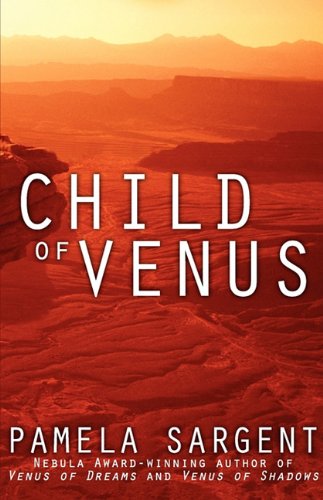
14. Child of Venus
by Pamela Sargent
Paperback: 512 Pages (2002-08-01)
list price: US$7.99 -- used & new: US$0.32
(price subject to change: see help)
Asin: 0061058092
Average Customer Review: 3.5 out of 5 stars
Canada | United Kingdom | Germany | France | Japan
Editorial Review

Book Description

The project--the terraforming of Venus--was begun centuries ago. And generations more will come and go before the planet's surface has been fully habitable.

There are those, however, whose patience has grown dangerously thin.

Mahala Liangharad is a true Child of Venus--conceived from the genetic material of the cult leaders who brought chaos and horror to this planet in transition. To some, she should never have been born; others see her as the future. Now catastrophe looms once more, and it is she who must ensure that there is a future for her flawed, star-travelling kind...even if her great destiny tears her brutally away from everything she has ever known and loved.

... Read more

Customer Reviews (3)

2-0 out of 5 stars Boring!
I so enjoyed 'The Shore of Women' and had high hopes of a good read with 'Child of Venus'. No such luck. I did manage to finish it, although I found myself skipping and skimming much of it. Just plain boring. Never got into any real action at all, much of it was simple rambling and thoughts on paper. Maybe if I had read the first two in the trilogy, but even then I just don't think this book works well. I just can not recommend it. Try something by Sheri S. Tepper instead--or read 'The Shore of Women'.

4-0 out of 5 stars A walk down memory lane
As an original reader of the first two books, it'd been a long time since I'd walked the aisles of Venus.It's fairly amazing to me that I'd still, from time to time, search on 'Sargent' to see if she'd ever written the third book.The pleasant surprise at seeing she had can not be overstated.

What was also exhilarating to me was how-- prodded reflectively by the author-- I was able to recall the first two novels read nearly a decade and a half ago.That alone was worth the trip.However, to be frank, the book is a *good* read.

How to describe it?It is a character novel. Specifically, a novel on the entirety of the protagonist's Mahala's life-- her choices, the people with whom she interacts, etc.It's interweavon nicely with a science fiction thread dealing with the fate of Venus, the Habbers, Earth and, ultimately, all of humanity.

As such, it's a good thing that Sargent's strength in this novel is the fine, yet gentle literary tapestry of characters, future 'plausible' science, and, quite frankly, leveraged strength wrought from the legacy of the first two novels.

If anything, the weakness in the books-- borne out in the closing 50 or so pages-- seems to be the cause of the delay in writing the third book (12 years? 13 years?): namely, how to end it.After all, the trilogy, at least from a Sci Fi standpoint, is about terraforming venus. of course, I'm not going to divulge that here.

bottom line?It's a good read.If you haven't read the first two books, SHAME ON YOU.Get them.Read them all.Enjoy them.

5-0 out of 5 stars Good Ending for the Series
Finally!! Years ago, a friend found "Venus of Dreams," at a bookstore and bought it for me. I enjoyed the story that unfolded about a girl named Iris. Her dream was to become a part of the terraforming of Venus and she see's this dream come true as an adult. Iris ultimately pays the price for her dream of transforming Venus, when the planet itself claims her life. The second book, "Venus of Shadows," is by far the best of the series. Sargent weaves an excellent story (as always) by using Iris's decendants (in particular, Risa, Iris's daughter) to tell of both their personal desires as well as the desire to breath life into Venus itself. Again, there are hard prices to pay for these desires. The last and final book, "Child of Venus" wraps up the entire tale. Again, Iris's decendants are still terraforming Venus, amid all the troubles and turmoil that existed from the previous books. Normally I would have given this book Four Stars. But, I gave the book "FIVE STARS" partly because - it was actually a very good and interesting book. But mainly because I read the first book when I was about 21 or so, and I'm now 36. I guess I'm just grateful that the last book was published during my lifetime. Pamela Sargent has been one of my favorite authors since I read "Venus of Dreams." I've read many of her other books and find them all extremly interesting and well written. I hope to read more of her work in the future. ... Read more


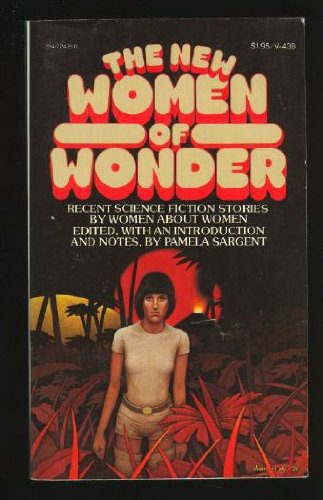
15. The New Women of Wonder
by Pamela Sargent
Paperback: 363 Pages (1978-01-12)
list price: US$3.95
Isbn: 0394724380
Canada | United Kingdom | Germany | France | Japan

16. Women of Wonder V41
by Pamela Sargent
Paperback: 285 Pages (1974-12-12)
list price: US$4.95
Isbn: 039471041X
Canada | United Kingdom | Germany | France | Japan

17. BIO-FUTURES - Signed
by Pamela (as editor) Sargent
 Mass Market Paperback: Pages (1976)

Asin: B000GRI5UO
Canada | United Kingdom | Germany | France | Japan

18. Nebula Awards 29: SFWA's Choices For The Best Science Fiction And Fantasy Of The Year (Nebula Awards Showcase)
Paperback: 320 Pages (1995-04-15)
list price: US$17.00 -- used & new: US$7.03
(price subject to change: see help)
Asin: 0156001195
Canada | United Kingdom | Germany | France | Japan
Editorial Review

Book Description

Each of the Nebula winners and finalists featured here displays its own (often highly idiosyncratic) excellence. This volume, which represents the best of 1993, includes offerings from Harlan Ellison, Kim Stanley Robinson, and Lisa Goldstein.
... Read more

19. VENUS OF SHADOWS (Venus of Dreams)
by Pamela Sargent
Mass Market Paperback: Pages (1989-12-01)
list price: US$4.95
Isbn: 0553270583
Average Customer Review: 4.0 out of 5 stars
Canada | United Kingdom | Germany | France | Japan

Customer Reviews (3)

2-0 out of 5 stars Disappointing (as so many sequels are)
I really enjoyed "Venus of Dreams," about the beginnings of human settlement of Venus, and I immediately ordered the sequel, "Venus of Shadows." I gave up on it after about 200 of its 600+ pages. It takes a long time for the story to get off the ground, both literally and figuratively. Much of the early part of the book is review of the previous book. There's little new science or technology (at least as far as I got), just some details about the domes on Venus. And I found the main characters flat and uninteresting. Malik is strikingly handsome; Risa is good at mediating conflicts; they both have trouble with intimacy; and I didn't care. Bummer.

Read "Venus of Dreams." Skip "Venus of Shadows."

5-0 out of 5 stars Great Reading - Pamela Does It Again!
Venus of Shadows is the second book of the Venus Series. This book goes further than just science-fiction and transforming Venus into a habitable world. It deals with many situations and obstacles that ordinary peopledeal with each day, proving that wherever mankind goes, his age-oldproblems will always follow him. The story is extremely well written,highly interesting and will captivate the reader. I've been waiting a longtime for the next novel to be published and I'm very excited that it willbe out soon!

5-0 out of 5 stars A rich, engrossing hard-sf *and* sociological adventure.
I re-read this book about the colonization of Venus, the high hopes and hard trials of the colonists, and the obstacles laid on their pathsnot only by Nature but by human evil as well, in one night after having read it thefirst time long ago. It has stayed with me. It is even better than thefirst one in the series. It's so believable in its depiction of the wonderand tragedy of the settling of a difficult world and the founding of a newsociety that's almost scaring. Its characters are believable human beingswith no black villains or pure-white heroes, their life and their societyfeel so significant that I lost track of the fact that they were fictionalpeople living on a fictionalized world. I am eagerly waiting for Ms.Sargent to write the sequel. ... Read more


20. Nebula Awards31: SFWA's Choices For The Best Science Fiction And Fantasy Of The Year (Nebula Awards Showcase)
 Paperback: 352 Pages (1997-04-01)
list price: US$19.00 -- used & new: US$1.00
(price subject to change: see help)
Asin: 0156001144
Average Customer Review: 4.0 out of 5 stars
Canada | United Kingdom | Germany | France | Japan
Editorial Review

Book Description

The prestigious Nebula Awards are the Oscars of science fiction and fantasy, the only SF awards bestowed annually by the writers' own demanding peers, the Science-fiction and Fantasy Writers of America. Just as the Nebula Awards honor only the finest science ficiton and fantasy, the Nebula Awards series showcases only the best of the ballot, offering as well fiction and nonfiction not collected elsewhere and a dazzling selection of essays written expressley for each volume. No other best-of-year anthology represents the achievement of the Nebula Awards so well. Nebula Awards 31 is, as Publishers Weekly said of a previous volume, "essential reading for anyone who enjoys science fiction."
... Read more

Customer Reviews (1)

4-0 out of 5 stars Worth it for "Think Like a Dinosaur" alone
This is the last volume of Pamela Sargent's stint as the Nebula anthology editor, which is unfortunate because she excels at editing these types of varied story collections (such as her Women of Wonder series). There's more work involved in editing a volume like this than you might think--given a limited amount of space, trying to cover an award that is for novels as well as short stories, one must carefully pick and choose. It will be interesting to see who SFWA finds to replace her.

Now as for the material itself:

"Solitude," Ursula K. Le Guin -- I am not a big Le Guin fan-in fact, you could say that I dislike most of her work excluding the Earthsea books. So, when I say that I enjoyed a Le Guin story then it must be special indeed. "Solitude" is a story of culture, one alien to our own. Le Guin posits a world in which past overpopulation has led present society to become the ultimate introverts. Not only do the women live apart from the men (as seen in many feminist SF stories in the past), but they live apart from each other. But it is the method of the story, putting a young child in the place of the observer, in which Le Guin achieves something new here.

"Death and the Librarian," Esther Friesner -- Except for the early part, in which the chameleon-like nature of Death is revealed, this story plods along. When it comes down to the talking heads at the end, I was ready to toss it across the room. Sure, Friesner can write welt enough, but this doesn't have anything Nebula-worthy to it. A disappointment.

"Alien Jane," Kelley Eskridge -- A nice SF tale, taken from the pages of Oliver Sacks, or at least, that is the way it reads to me. Well done, with a satisfying ending.

"Think Like A Dinosaur," James Patrick Kelly -- I haven't road a story this good in a long time! This is the kind of tale that can only be done in SF. Basically a study of what "true" matter transportation would be like, including what the hard choices would be. The result is the best short story I have read in two years.

"The Lincoln Train," Maureen F. McHugh -- An alternate history story with its jumping off point being the survival of Lincoln, except as a handicapped president. The concept is interesting, and the story has a nice moral center, but there was nothing that truly thrilled me here.

"The Resurrection Man's Legacy," Dale Bailey -- A baseball SF tale, reminiscent of Bradbury in its nostalgia and feeling. I was never a Bradbury fan, especially of his warmed over reminisce s of the 5O's, plus I dislike the reverence people give to sport (as opposed to games), so this one really didn't stand much of a chance with me.

"You See But You Do Not Observe," Robert J. Sawyer -- Physics and Sherlock Holmes? Okay, so it was a cute idea, but this is a best of the year. I trust that Sawyer's novel, which did win the Nebula, was much better.

"Enchanted Village," A.E. Van Vogt -- A story from the Grand Master, possibly a little long for the result, but at least it is a result worth reading for. A spaceship crashes on Mars, leaving one lone survivor, who finds a deserted Martian village. The Village may be able to provide for him, but only if he can somehow teach it his needs. Good ending.

"Old Legends," Gregory Benford -- A memoir and essay about SF's role in society, especially American government policy, this was entertaining and enlightening. Benford's goal in this essay is to justify the long held claim by SF fans that stories lead to science just as much as science leads to stories. While I have my doubts about SF's influence today (especially in these times of endless Star Trek novels), Benford shows that it was a very powerful force in the not-so-distant past.

"The Narcissus Plague," Lisa Goldstein -- Cute idea--what if there was a virus that, when you caught it, all you could do was talk about yourself? I liked the conceit, and the story showed promise, but the ending was disappointing.

"Last Summer at Mars Hill," Elizabeth Hand -- A nicely told tale of death and unknown beings. Its power comes not from the fantasy element, but from the portrayal of the characters, each well-drawn and believable. The writing and characterization was so well done that I really wanted to like this story more, but it lacked that sense of the fantastic that I expect from a fantasy story. Great mainstream work, I just want more in my fantasies.

Overall, this was a very rewarding volume. Of the stories, Kelly's "Think Like A Dinosaur" was such a gem, that I will likely be recommending it for years to come. The other highlight was Benford's essay. ... Read more


  1-20 of 100 | Next 20
A  B  C  D  E  F  G  H  I  J  K  L  M  N  O  P  Q  R  S  T  U  V  W  X  Y  Z  

Prices listed on this site are subject to change without notice.
Questions on ordering or shipping? click here for help.

site stats