e99 Online Shopping Mall

Geometry.Net - the online learning center Help  
Home  - Authors - Theroux Paul (Books)

  1-20 of 100 | Next 20
A  B  C  D  E  F  G  H  I  J  K  L  M  N  O  P  Q  R  S  T  U  V  W  X  Y  Z  

click price to see details     click image to enlarge     click link to go to the store

$12.50
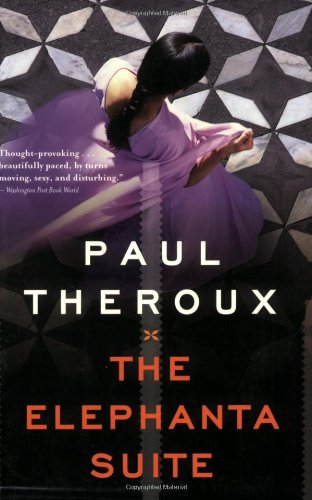
1. The Elephanta Suite: Three Novellas
$12.94
2. Old Patagonian Express, the
$8.21
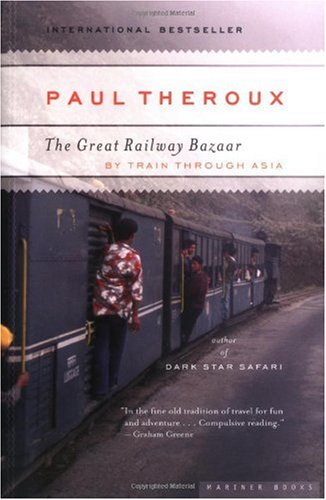
3. The Great Railway Bazaar
$5.45
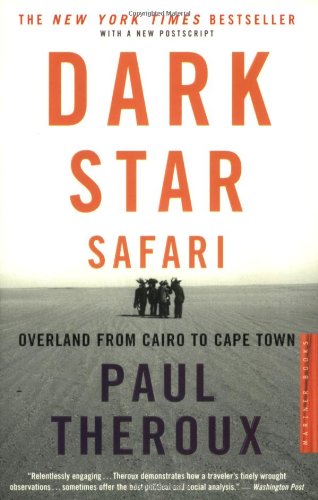
4. Dark Star Safari: Overland from
$7.98
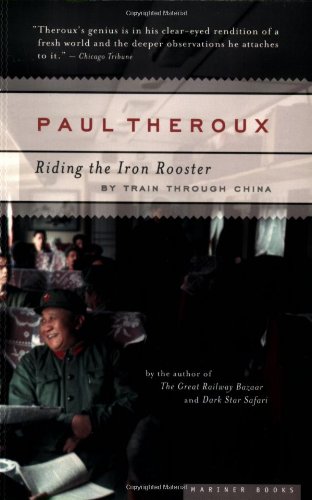
5. Riding the Iron Rooster: By Train
$0.01
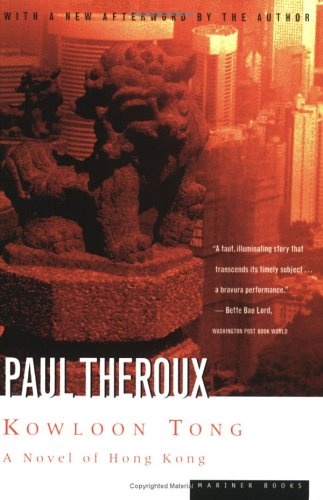
6. Kowloon Tong: A Novel of Hong
$8.99
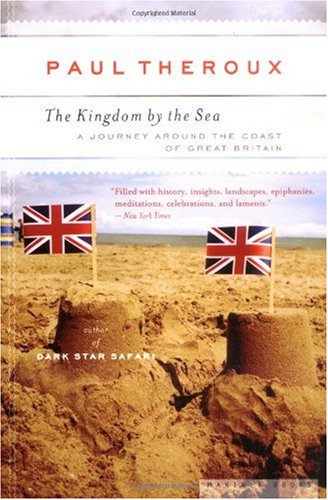
7. The Kingdom by the Sea: A Journey
$8.25
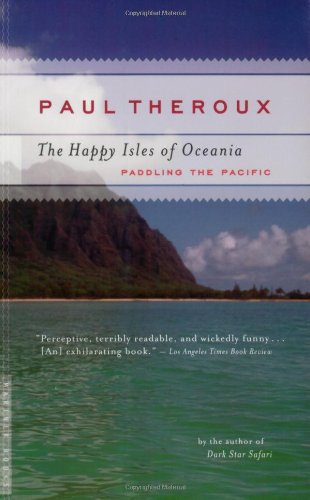
8. Happy Isles of Oceania: Paddling
$6.00
9. WORLDS END + OTHER STORIES
$1.18
10. Blinding Light: A Novel
$9.19
11. The Happy Isles of Oceania: Paddling
$1.74
12. My Other Life
 
13. The great railway bazaar.
$24.44
14. Theroux: Collected Stories
$3.97
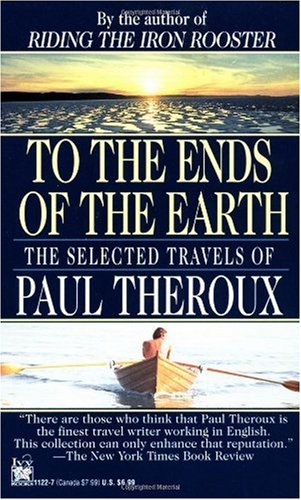
15. To the Ends of the Earth
$9.16
16. Fresh Air Fiend: Travel Writings
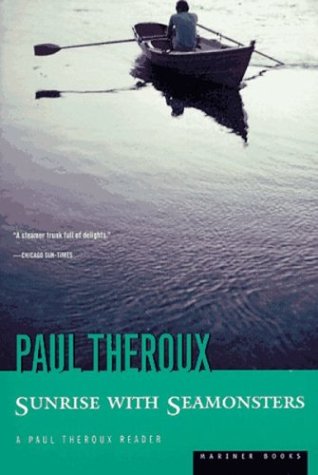
$1.99
17. Sunrise with Seamonsters
$10.00
18. Strangers Ourselves: The Adventures
$4.67
19. Paul Theroux: The Collected Stories
 
20. Jungle Lovers

1. The Elephanta Suite: Three Novellas
by Paul Theroux
Hardcover: 288 Pages (2007-09-26)
list price: US$25.00 -- used & new: US$12.50
(price subject to change: see help)
Asin: 0618943323
Average Customer Review: 4.0 out of 5 stars
Canada | United Kingdom | Germany | France | Japan
Editorial Review

Book Description
A master of the travel narrative weaves three intertwined novellas of Westerners transformed by their sojourns in IndiaThis startling and satisfying book captures the tumult, ambition, hardship, and serenity that mark todays India. Therouxs characters risk venturing far beyond the subcontinents well-worn paths to discover woe or truth or peace. A middle-aged couple on vacation veers heedlessly from idyll to chaos. A buttoned-up Boston lawyer finds succor in Mumbais reeking slums. And a young woman befriends an elephant in Bangalore.In these pages, we also meet Indian characters as singular as they are indicative of the countrys subtle ironies: an executive who yearns to become a holy beggar, an earnest young striver whose personality is rewired by acquiring an American accent, a miracle-working guru, and more.As ever, Therouxs portraits of people and places explode stereotypes to exhilarating effect. The Elephanta Suite urges us toward a fresh, compelling, and often inspiring notion of what India is, and what it can do to those who try to lose--or find--themselves there. ... Read more

Customer Reviews (17)

5-0 out of 5 stars Excellent
I enjoy reading fiction that depicts modern day India. This group of three novellas is right up there with the cream of the crop. There's nothing romanticized about the India depicted here. As you read, you really get the feeling, "This is probably the way India really is." There were many times when I wondered to myself, "How does someone become such a sharp observer as Theroux is?"

I was amazed both at Theroux's command of the language, andhow extremely sharp he is at bringing out the telling detail that really gives you the feel of the place and the person described. There are a lot of unsavory characters here. And yet Theroux describes them so well that I always felt their humanity and got a clear sense of why they were doing what they were doing. That put me in touch with their humanity and created a sense of sympathy, in most cases. Though there were one or two slime bags that I could never like, though, thanks to Theroux's genius, I could understand them.

I was amazed by this book. If you are interested in modern day India as well as enjoy just plain masterful writing, then you will treasure this book.

2-0 out of 5 stars Depressing
I've read several of Paul Theroux's non-fiction books and have generally liked them. However this fiction novel (actually 3 separate stories) just left me depressed...

5-0 out of 5 stars Different views of reality
The Elephanta Suite encompasses three novellas;two are good and the middle one (Gateway to India) is masterful.This is not a book for those with politically-correct attitudes who want to see the best in every locale and who feel uneasy with references that other countries may include the bad and the ugly along with the good.

But I suspect, Theroux knows whereof he speaks.His Indian characters are sometimes sly, obsequious, jaded, and insular.Sometimes they shine above their American counterparts.But, as his Boston lawyer -- Huntinger -- mulls, "There is always an Indian surprise."In other words, visits to India -- the REAL India, not the glossed over ones in some fictional endeavors -- WILL change the visitor, getting them in touch with a more authentic self and in some cases, introducing serenity.

Theroux implies that we Americans may be creating a monster, through our passion for outsourcing (which creates an entire subculture of manipulation), and the "English lessons" which take away the particular politeness and charm of those who live in India.(Compare:"What is your good name?" with "Who are you?") Our desire to promote change may very well change us in the process.

You'll meet some fascinating characters in these novellas -- the Jain Indian lawyer (the Jain don't believe in killing, including fleas and fungi) who may not be who he appears;the stalking InfoTech man who gets what's coming to him;the wealthy Americans who would rather remain in their spa environment than discover India as it is.You won't easily forget these characters.And you, too, may be changed by a careful reading.

5-0 out of 5 stars Globalization turned on its head
It isn't often that a novella is anchored to a backdrop of economic globalization. Put that together with Theroux's consummate ability to weave one wonderfully descriptive tale after another and you've got magic.

For years, Theroux has been castigated by a variety of critics who've claimed that he is everything from a racist to a crank engaged in creating stylized and unflattering caricatures of peoples in far-off lands. "Elephanta Suite" proves that the author is an equal opportunity character assassin, as adept at exposing the self-deceptions of an American dealmaker in Mumbai as he is the boorish Indian with a newly-formed American accent feeding off of an Electronics City call center. Theroux is damning or sympathetic to all walks of life throughout this breezy read, which once again highlights his ability to create a genuine, almost palpable impression of a given moment, whether it be the claptrap Indian motorcoach rambling through the countryside or the too-quiet alley at dusk where a crisply uniformed young girl permits herself to be exploited.

Of the three tales that Theroux masterfully weaves, "The Gateway to India" is by far the most moving, and thought-provoking. I happened to read much of it while in Manila, and, experiencing the stark contrast between the gleaming shopping meccas and financial district of Makati and the street urchins hawking their wares vehicle-by-vehicle during rush hour, the undercurrent of the unfair bargain and sometimes mutual unease between contractor and contractee in globalization (see Theroux's vivid juxtaposition of the word "spat" at the top and bottom of page 100) made this story's central character all the more distasteful. Yet Theroux takes us from that emotional spot and transports us to another part of India - both geographically and spiritually - where comfort can be found under the stars and reverie envelops the reader. "The Gateway to India"walks us through an expatriate's metamorphosis in heart-wrenching and ultimately, somewhat sympathetic fashion, with rich prose and ironies to be savored.

Theroux has not lost his touch.

1-0 out of 5 stars Truly dumb . . .
It is full of "stick-man" characters, strange and unreaslitic dialogue,
odd scenarios, unbelievable characters.A total waste of time and money. ... Read more


2. Old Patagonian Express, the
by Paul Theroux
Paperback: 432 Pages (1999-06)
list price: US$15.60 -- used & new: US$12.94
(price subject to change: see help)
Asin: 0140249796
Average Customer Review: 4.0 out of 5 stars
Canada | United Kingdom | Germany | France | Japan
Editorial Review

Book Description
Starting with a rush-hour subway ride to South Station in Boston to catch the Lake Shore Limited to Chicago, Theroux winds up on the poky, wandering Old Patagonian Express steam engine, which comes to a halt in a desolate land of cracked hills and thorn bushes.But with Theroux the view along the way is what matters: the monologuing Mr. Thornberry in Costa Rica, the bogus priest of Cali, and the blind Jorge Luis Borges, who delights in having Theroux read Robert Louis Stevenson to him. ... Read more

Customer Reviews (31)

5-0 out of 5 stars From Boston to Patagonia by Train
Note: I made some immature Mormon angry because of my negative reviews of books that attempted to prove the Book of Mormon, and that person has been slamming my reviews almost as fast as they are posted.

So, your "helpful" votes are appreciated. Thanks, and note that a short review is not necessarily a bad review if it leads you to a great book.

From Boston to Patagonia by train. What an adventure. As I wrote in my review of the "Great Railway Bazaar," treat yourself to traveling the easy way and read one of Paul Theroux's books.

Peter Mathiessen described the "Old Patagonian Express" perfectly: "Sharp-eyed, honest, and exceptionally well-written...an implacable landscape, conveyed through a series of marvelous encounters."

5-0 out of 5 stars Another Wonderful Travel Expose by the Inimitable Theroux!
Terrific in every way, as all of Theroux's travel books are! Not a word too many, and not an insight overlooked in this adventure through the Americas. Wonderful, beautiful, and a treasured book in my library.

4-0 out of 5 stars Take a trip
One of Theroux's best train trips. You can really feelthe shifting landscapes as he moves through the latitudes...

4-0 out of 5 stars "The journey, not the arrival, matters; the voyage, not the landing."
In 1979, Paul Theroux departed from his childhood home in Medford, Massachusetts, and began his train journey from the East Coast of the United States to Patagonia, on the southern tip of Argentina.A seasoned traveler, fluent in Spanish, Theroux brings to life his trip through the northern and southern hemispheres, traveling without a schedule and observing his fellow passengers on the train and people at stops along the way.

In Texas he is astonished at the contrasts between Laredo on the Texas side of the Rio Grande and Nuevo Laredo across the border in Mexico, commenting on society and governments. Traveling through Mexico and Guatemala, he observes the poverty of the Indians and their lack of opportunities.In El Salvador he attends a soccer game and gets caught up in the melee and riots which follow it.In Costa Rica, the cleanest country he has visited, he finds himself stuck on the train with Mr. Thornberry, a New Hampshire tourist so boring that Theroux cannot wait to escape him--only to have Mr. Thornberry "save his life" by offering him a place to stay upon his arrival in Limon.In Panama he meets the "Zonians," from the Canal Zone, and in Cali, Colombia, he meets a married "priest" who cannot tell his devout mother in Belfast that he has "left" the church to marry and have children.

Throughout his trip, Theroux reads classics, particularly enjoying Boswell's Life of Dr. Johnson and Edgar Allen Poe's The Narrative of Arthur Gordon Pym, both of which provide ironic reference points for his own journey.For literature lovers, the most fascinating section occurs in Buenos Aires, where Theroux spends many days visiting blind writer Jorge Luis Borges, who persuades Theroux to read to him.Ironically, one of Borges's favorite novels is The Narrative of Arthur Gordon Pym.As Theroux takes notes on his meetings with Borges, he becomes Borges's Boswell.

More an observer than a participant, Theroux has an unfortunate air of superiority about what he sees and hears.Sparing little sympathy for American and German tourists, he rarely gets excited about his surroundings, expressing genuine emotion only when he talks with three boys, ages ten to twelve, who live in a doorway and scavenge for food because their rural families have abandoned them.Theroux's self-congratulatory attitude gets a bit wearisome, but the picture of Central and South America, thirty years ago, and the section with Borges are unparalleled.With beautiful, carefully observed prose and a great ear for dialogue, Theroux's Patagonia Express is a landmark travel memoir.nMary Whipple

5-0 out of 5 stars you can forgive Paul Theroux
A remark that one reads often about Paul Theroux is that he is grouchy, critical of the people he meets, and generally unpleasant.Some readers seem to suggest that this makes him a worse traveller, not being pure-of-heart or sufficiently open-minded.On the other hand, some others suggest he is worth reading as a travel writer precisely because he's not afraid to tell-it-like-it-is.I think it is likely that both of these ideas are wrong.

When Paul Theroux writes a travel book, he is not a journalist writing simply to produce a faithful depicition of the places he visits.He is not a social crusader writing in order educate the reader about the lives of the poor or to stimulate the reader to see the richness of life outside of North American.He certainly not an egotist like Thomas Friedman who writes in order to put himself in a positive light.He is simply an intelligent man who has enough humility to try to write down what he has experienced without drawing too many clumsy conclusions or false symmetries. When he writes that he didn't like a certain person sleeping in his train compartment, he doesn't expect the reader to sympathize with either him or the unpleasant companion.I don't think he means to argue that his dislike has any special significance beyond the fact that it was part of the travel story that he is telling.I like the fact that when Theroux narrates an encounter with someone in his travels he doesn't smooth out the details to make the encounter unambiguously positive or negative.For example, when he describes meeting Jorge Borges, the Argentine writer, he clearly admires Borges' memory and sensitivity and yet he doesn't avoid commenting on Borges' stuttering and his clowning smile.And yet again I don't think Theroux's remarks are meant to be cynical or knowing.When he tells-it-like-it-is he is not trying to steer an intellectual or moral high road and he is not valiantly trying to see past illusions.I believe that when he writes down a conversation or encounter he intends only to include his side as one of the characters in his story.

Theroux has the patience to travel by train across a hemisphere and, thankfully for this reader, he has the patience to delay the moment when the mind can no longer calmly observe and rashly commits itself to streamlined answers and silly pet theories about what one sees and what it 'really' means.His books are, to me, humble because in them he shows us moments when he feels superior and they are wise because he doesn't try to step outside of his story to engage in falsely-wise pronoucements.

It doesn't matter whether Paul Therous is a 'good' traveller or not.Few travellers have the writing ability to produce any sort of record of their travels anyway, whatever their nature.The reason one ought to read Paul Theroux is be reminded of what the world and oneself can look like through the eyes of an ardent traveller who just happens to love books a bit more than he loves people. ... Read more


3. The Great Railway Bazaar
by Paul Theroux
Paperback: 352 Pages (2006-06-01)
list price: US$14.95 -- used & new: US$8.21
(price subject to change: see help)
Asin: 0618658947
Canada | United Kingdom | Germany | France | Japan
Editorial Review

Book Description
Now a classic of the travel genre, The Great Railway Bazaar chronicles Paul Theroux's adventures by rail from Victoria Station in London to Tokyo Central, told with his signature wry observations. ... Read more


4. Dark Star Safari: Overland from Cairo to Capetown
by Paul Theroux
Paperback: 496 Pages (2004-04-05)
list price: US$15.95 -- used & new: US$5.45
(price subject to change: see help)
Asin: 0618446877
Average Customer Review: 4.0 out of 5 stars
Canada | United Kingdom | Germany | France | Japan
Editorial Review

Book Description
In Dark Star Safari the wittily observant and endearingly irascible Paul Theroux takes readers the length of Africa by rattletrap bus, dugout canoe, cattle truck, armed convoy, ferry, and train. In the course of his epic and enlightening journey, he endures danger, delay, and dismaying circumstances. Gauging the state of affairs, he talks to Africans, aid workers, missionaries, and tourists. What results is an insightful meditation on the history, politics, and beauty of Africa and its people, and "a vivid portrayal of the secret sweetness, the hidden vitality, and the long-patient hope that lies just beneath the surface" (Rocky Mountain News). In a new postscript, Theroux recounts the dramatic events of a return to Africa to visit Zimbabwe. ... Read more

Customer Reviews (62)

4-0 out of 5 stars Nkosi Sikelele Africa
I read this book while driving from Johannesburg to the equator and back. It was therefor very immediate for me. I normally find Paul Theroux a bit tedious but certainly not this one. His desciptions are compelling and he brings to life all the awful, sad things about Africa.I fear that this beautiful continent, with it's wonderful people will never be able to overcome their problems.

5-0 out of 5 stars dis goode and bitter book, mon
mon, dat Paul Theroux--he like de old friend commin to your door after longtime and you be wonderin "which one showed up, mon--de Jekyll or de Hyde?"de Jekyll, oh my stars, mon, he be de followin:bitter, cantankerous, unforgivin, ruthless in he shrewd assessments, mon, of de characters of de characters (all over de world, not just de Africa) he meets and not so much interviews but interrogates.nothin escape dis Jekyll's scrutiny.no wonder he such long long friends wich de nasty but brilliant V.S. Naipaul--annodder writer you need read, methinks.

however, mon, de Mr. Hyde in de Mr. Paul, he be a poet of de first water, mon--de flights of he prose soar de stratosphere:descriptions of de sunsets, de trenchant perceptions about world aid to Africa, his sensa humour, mon--i like to smoke one blunt wich dis guy, mon.

but he a dangerous guide; you have he cadences in your pumpkin-noggin for de LONG time.like de words of dat ticklish-pricklish friend i tell you about.

you mun go read de Theroux, mon.read anyting by he.but dis be one de best of a very heavy canon.

peace, mon.

5-0 out of 5 stars Dark Star Safari
After reading Theroux's observations about Africa from the 60's and current years, I better understand the harm that the foreign aid givers are doing to African's motivation to be self sufficient!

2-0 out of 5 stars Through the mud, dirt, and and indifference of Africa...
This book feels like it was written by a sadist for the benefit of armchair masochists.Theroux sounds like he was a ganja-smoking hippie living and working in Africa back in the 60s, so he is taking a nostalgic bad trip down memory lane.He decides to travel from one end of the continent to another, but eschews the comfort, speed, and safety of flying to be able to go by every other grimy, stinking, dangerous conveyance imaginable.Kind of like a dirty African version of "Planes, Trains and Automobiles".The more ugly and uncomfortable the travel is, the more he seems to enjoy it.He tells us how many African countries have sunk further down into poverty, laziness, and ill health since his last visit, and he blames this deterioration in great measure to the efforts of various do-gooders, such as pious missionaries and pompous foreign aid workers.He reminds one of Rush Limbaugh's characterization of the creation of an American dependency class by ill-founded welfare programs.This may be true, but it is depressing reading for a person looking for an enjoyable travel book.

Fortunately, Thoroux doesn't take his wife or any family members on this painful, ugly journey.He seems to be following a philosophy made famous by Greta Garbo in one of her movies: "I vant to be alone!"He took great pleasure in being out of touch and unreachable during most of this trip.He succeeded in this effort, and it wouldn't be a great loss if this book received the same fate.

4-0 out of 5 stars An Arrogant Prick Does Africa
This is the second book I read by Paul Theroux. "The Happy Isles of Oceania" was the first. So having come back for more, I guess you can say I knew what to expect, and wasn't completely turned off by Theroux's incredible ego and his arrogantly judgmental style. Theroux is basically an arrogant prick who is completely full of himself. He looks down upon just about everyone he encounters, from safari hunters, to aid workers and missionaries (agents of virtue, as he sarcastically calls them), politicians, diplomats, petty bureaucrats, and the poor villagers he meets along the way. Theroux routinely jabs at middle class workers who choose to fly from African city to African city, rather than risk the unpredictable, dangerous, and filthy buses, minivans, taxis, and trains to do their traveling, as he is doing. Apparently it never occurs to Theroux that these people are not writers on a month-long safari looking for a story. They're just foreign aid workers, politicians, doctors, lawyers and other professionals looking to live their life with the least amount of hassle. Ironically though, he is consistently drawn to quiet, unassuming charity workers humbly laboring in some of the most remote parts of the world, completely cut off from the amenities of modern day existence in most Western society.

But if you can get past all that, you will definitely enjoy his cynical, yet incisive and fair observations on life in the Africa of today - everything from simple life in backwoods villages, the misery of large, dirty, crime-infested urban centers, as well as the political, social, and economic situation. His observations on the effects of over forty years of foreign aid (rivaling those of colonialism in many ways), which fosters dependence and underdevelopment, are especially sharp and saddening at the same time. I will definitely be coming back for more.
... Read more


5. Riding the Iron Rooster: By Train Through China
by Paul Theroux
Paperback: 480 Pages (2006-12-08)
list price: US$15.95 -- used & new: US$7.98
(price subject to change: see help)
Asin: 0618658971
Average Customer Review: 4.0 out of 5 stars
Canada | United Kingdom | Germany | France | Japan
Editorial Review

Book Description
Paul Theroux, the author of the train travel classics "The Great Railway Bazaar" and "The Old Patagonian Express", takes to the rails once again in this account of his epic journey through China. He hops aboard as part of a tour group in London and sets out for China's border. He then spends a year traversing the country, where he pieces together a fascinating snapshot of a unique moment in history. From the barren deserts of Xinjiang to the ice forests of Manchuria, from the dense metropolises of Shanghai, Beijing, and Canton to the dry hills of Tibet, Theroux offers an unforgettable portrait of a magnificent land and an extraordinary people. ... Read more

Customer Reviews (1)

4-0 out of 5 stars Along for the ride
The book, like a long train trip, gets tiring after a while, but Theroux loves traveling this way. His observations of the people, land and culture are well worth reading. ... Read more


6. Kowloon Tong: A Novel of Hong Kong
by Paul Theroux
Paperback: 256 Pages (1998-07-06)
list price: US$13.95 -- used & new: US$0.01
(price subject to change: see help)
Asin: 0395901413
Average Customer Review: 2.5 out of 5 stars
Canada | United Kingdom | Germany | France | Japan
Editorial Review

Amazon.com
Paul Theroux, whose inveterate globe-trotting marks him as one of the most restless writers working today, lands us in the Far East with this novel of personal lives swept up in the handover of Hong Kong from Britain to China. But the end of Colonial rule is perfectly unwelcome for Neville Mullard and his mother Betty, who run a textile factory that's been in the family for 50 years, and who have spent a lifetime insulating themselves from the Chinese culture that's all around them. Now, the shadowy and dangerous Mr. Hung wants to buy the business, and he won't take no for an answer--whether or not the Mullards want to sell. Theroux, the author of several travel books, has few equals when it comes to the portrayal of exotic cultures, a skill that makes this one of the first great novels of the Hong Kong handover of 1997.Book Description
Ninety-nine years of colonial rule are ending as the British prepare to hand over Hong Kong to China. For Betty Mullard and her son, Bunt, it doesn't concern them - until the mysterious Mr. Hung from the mainland offers them a large sum for their family business. They refuse, yet fail to realize Mr. Hung is unlike the Chinese they've known: he will accept no refusals. When a young female employee whom Bunt has been dating vanishes, he is forced to make important decisions for the first time in his life - but his good intentions are pitted against the will of Mr. Hung and the threat of the ultimate betrayal. ... Read more

Customer Reviews (30)

3-0 out of 5 stars A pre-97 Hong Kong thriller
Set in the year or two just before the British handover, this book really brings back that strange period of a few years when noone knew quite what was going to happen. Would the Chinese move in with their tanks 1 month early just to make a point? Would capitalism in Hong Kong end? Would the progress made under the British be rolled back and the province absorbed into the mother country without trace? Well of course none of that happened (at least not yet).

As usual Theroux's characters are vivid and his style matter-of-fact yet very informative. I would have liked a bit of a happier ending but I guess that just reflects the chances of a happy ending for HK at that time. Also the mainland Chinese are portrayed as somewhat pantomime villains. This work doesn't quite stand out like his travel books but still definitely worth reading.

5-0 out of 5 stars One of Several Essential Books on Hong Kong for Visitors
This Hong Kong classic is both a great read and a great help for Westerners planning to live in, or visit Hong Kong.I first read it when I lived there in the late 90's, even began reading it on the Star Ferry when it came out in early 1997. Bunt is an old "Hong Kong Belonger", British, lives atop Victoria Peak ("the" address to have), has a factory in the district of Kowloon Tong, and has a pretty easy life thanks to the protection of British rule and law in a region better known for dictatorships.But all that is coming to an end, with Britain handing over Hong Kong to China. The Chinese military bureaucrat Hung arrives to force Bunt to sell the Chinese Army his business - the Red Army wants to start making some cash, and Bunt is bewildered and soft due to his life in the colony and can't cope well.The harshness of Hunt and the fuddy-duddyness of Bunt are well-drawn depictions of actual Hong Kong types.The ending is very Hong Kong.Also very Hong Kong are the myriads of other types depicted here - Chinese, British, American.The Chinese bigot yelling "Gweilo!" Bunt's horrible mother yelling "Chinky-Chonk!"The American trying to buy a new nationality to avoid paying US taxes.Many of the anecdotes and scenes perfectly capture the harsh underbelly of the place which has its origins in the tragic influx of all those millions of Chinese refugees fleeing China to the safety of then-British Hong Kong and the huge insecurities that created.This is a book to read both before you go AND after you've lived there for a year, many of the subtler aspects of the book will be revealed to you.One thing the book the makes no concessions to is the important concept in Chinese culture of "Face" - there is nothing more importatnat than NOT losing face in China, so warts-and-all books like this are not appreciated.But the book is written for any readers who like a good read to contain accuracy of description rather than a tourist bureau spin account.The book was banned in the People's Republic for just this reason (minor shades of Tiannamen Square!)There are also several in-house jokes which will become apparent after you've been in Hong Kong awhile - for example the placing of a factory in the district of Kowloon Tong, a subtle comment on how awful that residential district was to live in - locally reffered to as "exclusive" (this is "face" at work again), it sat under the final landing path of the international airport which was next door!

If you're going to Hong Kong, also consider reading the other *Hong Kong classics* most expats have on their shelves:Jan Morris's *Hong Kong* has loads of information on Hong Kong up to 1997, including an important account of the tragic influx of all those millions of Chinese refugees fleeing China for Hong Kong, how that situation vastly overcrowded the place and made for a pressure-cooker atmosphere, and how even today it is embarressing for Hong Kong Chinese to talk about (again, it causes loss of "face").Great info on the British days, too, and evocative descriptions of the wonderful hill-hiking Hong Kong has to offer (don't miss Plover Cove!).

Bo Yang's *The Ugly Chinaman and the Crisis in Chinese Culture* is a fascinating account by a Taiwanese journalist of the stultifying effect many aspects of Chinese culture has had on the Chinese - especially the worship of the past during imperial times that led to the near-death of critical thinking.The author relates this legacy to many of the unpleasant "underbelly" - side of things in day-today Hong Kong
life - the rude crowds, bad public behaviour, spitting, etc.Though that may sound harsh, it actually helped me to appreciate things Chinese better knowing the tragic origin of these things.I appreciated more the great aspects of China - the poetry of Li Po, the classic novels Story of the Stone, etc - because of Bo Yang's book.Sadly, Bo's book is also banned in China proper.

Timothy Mo's novel *The Monkey King* is a great account of an eccentric Hong Kong Chinese family - I felt I met these people again and again while living there.

National Geographic's video *Hong Kong* is a must see portrait of the real Hong Kong - not some tourist bureau fantasy but a remarkable look into the millions of refugees who escaped to Hong Kong after the Chinese revolution.

The film *China Box*, by a local Hong Kong boy who made it to the West, is essential for potential expats - watch it for the *depiction* of the city, which is perfectly rendered.The story is a little so-so, but if you're going to live there, watch the visuals.This is what Hong Kong looks like.The depiction of the young Chinses refugee (played by Gong Li) being ridiculed for her bad accent buy older, "more established" refugees is harrowingly accurate.

Lastly, check out Austin Coate's classic, *Myself A Mandarin*, a memoir of a colonial judge in the 1950's trying to sort out the culture clashes between British Law and Chinese sensibilities.

If you're going to live in Hong Kong, ALL these books are even more illuminating read a second time after you've lived there a year.

2-0 out of 5 stars A cobbled piece of fiction
Paul Theroux's Kowloon Tong (meaning nine-dragon pond, a district in Hong Kong) is a novel of Hong Kong on the verge of the 1997 handover. Written against the historical backdrop of handing a free Chinese city back to a totalitarian Chinese state, Kowloon Tong is far less glittering from the inevitably rip-roaring story for the global media, it is a piece of cobbled (opportunistic, maybe) fiction.

Neville "Bunt" Mullard was born and raised in Hong Kong, went to the posh Queen's College, and inherited the almost-monopolizing Imperial Stitching Company, which manufactured badges sewn on breast pockets of sports-jackets from his late father and his partner Henry Chuck. At 40, Bunt was not married, devoid of friends, frequented bars and brothels, but felt the pressure of his dead brother, dead father, and the late avuncular Chuck hovering near him at work.

A pathetic mama's boy, Bunt lived a life that synchronized with his mother's, so confining and dull. She knew so much (too much) about his life, his daily routine and his where about that he deliberately contrived to create secrets (the topless bar and an affair with an employee Mei-Ping) and manipulated his mother's mood.

As the British prepared to hand over Hong Kong to the Chinese motherland, the much-talked-about upheaval did not concern the Mullards, who lived nonchalantly at the Peak (a rich-and-famous, on-top-of-the-city neighbor which afforded panoramic view of the city and was away from, say, 95% of the colonial population). They executed their social fares with the small band of Brits at the Cricket Club, the English tea ritual at the Hong Kong club, outings to horse races by taxi, and lived as if the city and majority of its inhabitants (meaning the Chinese) didn't exist. The Cantonese was such grating noise that was remotely similar to any human speech. The Chinese food made them retch.

When a Mr. Hung, who spoke perfect English with an American accent, on behalf of the Chinese People's Liberation Army (soon to station in Hong Kong), offered 9 million to purchase the building of Imperial Stitching, the Mullards' world of insouciance was jolted. Through a series of minatory gestures that might have attributed to the missing employee Ah Fu and janitor Woo, for the first time in their life the Mullards learned the truth of the colony's prospect-smiling but threatening and know-it-all Chinese officials behind a system of bribes and disloyalty.

I have to applause to Theroux's keen eye on the geographical and cultural details of Hong Kong that are usually accessible to those who live in the city, the natives. His effort in nailing down the Hong Kong Chinese to the root is admirable and formidable-the inveterate trait to look after family, to not to say the thing that was no the heart, to say "I don't know" when you knew, to not to show feelings and emotion and (this is my favorite) to mob the exit on arrival in any transportation mean as if it was a panicky evacuation under an emergency. That's Hong Kong, in addition to all the incessant noise-the clanking of trams, the beeping of cell phones, and the ubiquitous charivari of Cantonese conversations that sounded like a hair-pulling argument, serenaded the city.

The book also deftly captures Hong Konger's despondency of the uncertain future. For over 100 years, under the British governance, Hong Kong stood as the only Chinese society that lived an ideal never experienced and realized at any time in the history of any Chinese society. The colony, which practiced capitalism, provided a stable home for refugees from turbulent events of Chinese history such as the Cultural Revolution and the Great Leap Forward. Inhabitants of Hong Kong were those who fled the Communists in 1949 and their descendants. Thus in the proximity of 1997, a taut atmosphere hovered over the colony as everyone tried to secure an escape route, which usually manifested in the form of a foreign passport, a green card, a relative in Canada, or a marriage of convenience. Theroux has astutely seen to this political tension in his novel.

What infuriates me about this book and thus makes it a cobbled piece of fiction is the puerile plot. Theroux portrayed the Hong Kong Chinese women as some of the most naïve and gullible and stupidest species of the human. Women were constantly abased, manipulated, used, and sexually abused. As a native of Hong Kong, I could vouch that the chance of an affair between a foreigner and a factory worker is infinitesimal. The affair itself was stuck in a deadlock and the characters that involved in the affair were one-dimensional. Betty Mullard's ruler-ver-subject attitude toward the Hong Kongers was also snobbish and obnoxious. If the Chinese were really so out-of-focus and were like riddles to her, why couldn't she at least try to know the Chinese people? It was true the British were rulers and the Chinese the subjects, but what infuriates me is the arrogance on her part, not knowing she was in Hong Kong, where the majority was the Chinese people.

It occurred to me toward the end that the stitching company and its fate might have served as a symbolism of Hong Kong but I prefer not to give away. The ending was disappointing and ambivalent. It is a cobbled piece of fiction that astutely delves in the significance of the historical backdrop but sacrifices the backbone of the story. Readers will learn more about the culture of Hong Kong but disappoint at the story. 2.5 stars.

1-0 out of 5 stars Riding the Iron Rice Bowl
Theroux's early travel writing places him firmly alongside Lewis and Newby; his middle period novels only a little below Greene. This novel, however, makes 'Nobel House' seem well-researched and insightful.

The plot of Kowloon Tong is loose and although the novel is thankfully short, Theroux seems to anticipate his reader's ennui with the whole concept well before the middle of the book. It is the sort of thing you would expect of someone who'd paid a fortnight's vist to the Territory to stay with friends who didn't go out much.

The characterisation of both the English and Chinese is wholely unbelievable and the energy and 'vividness' of Hong Kong which has always been unconnected with ownership of the place is totally lacking.

Clearly a piece of opportunism on the part of his publisher, which Theroux should be ashamed of himself for going along with.

5-0 out of 5 stars Highly evocative of Hong Kong I knew
I first read Kowloon Tong while living in Stanley, Hong Kong, just a few months before the Hand-over.I have found its rendering of attitudes of expatriates and chinese by far the most accurate account of the Hong Kong I experienced on a day to day basis.Theroux is equally fair (and equally blunt) about British, Chinese and American residents in Hong Kong - I encountered the boorish behaviour described here everyday - that was Hong Kong, a place where people went to make money, or to escape from China (or both).Not everyone, of course, was like Bunt and Hung, but these are recognizable types.
The plot is that of Graham Greene thriller, with the sarcasm of Evelyn Waugh and Gore Vidal thrown in.I should add that I find many of the comments on this page highly evocative of the Hong Kong I knew, too - the novel was banned in China and was a painful read for some Hong Kong British, Chines and Americans I knew (especially the types well-described here -chiefly long-term residents).The detached reader should enjoy a good read that's also highly accurate in its description.
The Hong Kong I knew was about the most un-literary place on the planet."Criticism" of Hong Kong was thought of as a pamphlet from the Tourist Bureau, an announcement from the Government Publicity Office, or the Website of a company wanting to do business in China.But that is not what novelists do. ... Read more


7. The Kingdom by the Sea: A Journey Around the Coast of Great Britain
by Paul Theroux
Paperback: 368 Pages (2006-06-01)
list price: US$14.95 -- used & new: US$8.99
(price subject to change: see help)
Asin: 0618658955
Average Customer Review: 2.5 out of 5 stars
Canada | United Kingdom | Germany | France | Japan
Editorial Review

Book Description
After eleven years of living as an American in London, Theroux set out to travel clockwise around the coast of Great Britain to find out what the British were really like; the result is this perceptive, hilarious record of the journey. ... Read more

Customer Reviews (3)

5-0 out of 5 stars An affectionate look at a changing landscape
Paul Theroux's travel book soften being out strong opinions in readers- particulrly those who have visited a place he has written about. Many of the most critical seem to focus on a few details and miss the overall tenor of the piece.

As Theroux makes quite clear in this book, he loves the English seacoast, and he met many warm people along the way. At the same time, he unflinchingly relates every detail of his experience, every rude comment, every unpleasant encounter. As he notes, most travel writing is boring; we went to Egypt, we saw the pyramids, et cetera. What makes for interesting reading is the minutia, the detail that makes my trip different from your trip. My England is nothing like Theroux's, but then, I wasn't there for 17 years, I didn't tour the coast, and I am not Paul Theroux.

I recently re-read "Kingdom", while thinking about a bicycle tracing some of the ground covered by Theroux, and what struck me was how much there was that Theroux truely liked about his trip, the things he saw, and the people he met. The more unpleasant encounters only served to make the pleasant ones more so.

"Kingdom By The Sea" is for me, at least, a thouroughly enjoyable tour, a look into the British and into Theroux, and as always, a terrific piece of writing by one of the modern masters.

1-0 out of 5 stars Fine writer gets trapped in bad plan
Theroux's interesting but illstarred plan was to meet the English by travelling around the coast, on foot and by train. Real English, real conversations. He was twenty years too late. About a month into this disaster it's becoming obvious that even the lower middle class have abandoned the gray, chilly English coastal towns for cheap jumbo jets to sunny climes. The old resorts have become God's Waiting Room and battlegrounds for the skinhead urban poor. Chapters go by without him seeing a child, or a real family, only potty old people who hate foreigners. These aren't "the English." Poor Theroux. Read his fine book on China instead.

2-0 out of 5 stars A Kingdom Not Entered.
I found "The Kingdom by the Sea", read by William Hootkins, snooty and offensive.Its picture of the British is projected right out of the jerkish Theroux's psyche, and does not represent the way one sees a country if one wishes to UNDERSTAND it, which is to see it as it is through the frame of mind of the inhabitants, and with transcendent human sympathy and a great deal of imagination.One goes to another country, first of all, to learn something about ONESELF.

Britain is a country to love, not to hate.Having lived there a year, in 1977-8, it still has my heart, and my embarrassed admiration as an American.

This is the second Theroux audiobook I have found a failure, the first being his book on Latin America.

- Patrick Gunkel (Woods Hole, Massachusetts) ... Read more


8. Happy Isles of Oceania: Paddling the Pacific
by Paul Theroux
Paperback: 528 Pages (1993-10-19)
list price: US$14.95 -- used & new: US$8.25
(price subject to change: see help)
Asin: 0449908585
Average Customer Review: 3.5 out of 5 stars
Canada | United Kingdom | Germany | France | Japan
Editorial Review

Book Description
"Possibly his best travel book...an observant and frequently hilarious account of a trip that took him to 51 Pacific Islands."
TIME
Renowned travel writer and novelist Paul Theroux has been many places in his life and tried almost everything. But this trip in and around the lands of the Pacific may be his boldest, most fascinating yet. From New Zealand's rain forests, to crocodile-infested New Guinea, over isolated atolls, through dirty harbors, daring weather and coastlines, he travels by Kayak wherever the winds take him--and what he discovers is the world to explore and try to understand. ... Read more

Customer Reviews (49)

5-0 out of 5 stars I feel so lucky to have found Paul Theroux
Before starting to read PT's travel books, I had to search for a book to read and I started many which I ended up throwing away after reading a hundred or so pages and I decided to give up on writing negative reviews as a result.Then I read Dark Star Safari and now I want to read all of PT's books.

Theroux mentions so many different things during his travels that it is difficult to tell you just what the books are like, except to say that while reading, it feels like you are there witnessing these people and places with him.I will give just one example from Oceania which I found great fun to read, namely his description of Dame Cath Tizard's way of eating.He wrote, "She scraped food onto her fork, but before she heaved it she nudged more onto the fork with her thumb.And after she ate the forkful she licked her thumb.Once I caught her grinning at me, but she was not grinning.She was trying to dislodge a bit of food that had found its way between her teeth, and still talking and grinning, she began picking her teeth.Having freed the food from her teeth, she glanced at it and pushed it into her mouth.(while talking of her being chosen governor-general)...Her finger was in her mouth, fishing for bits of trapped lamb sinews... And she slurped the food off her finger, and then began scraping the plate...." I'm not saying I have the greatest table manners myself, but I simply revelled in reading this description.

I can understand that there are many people who wouldn't like reading him and who would disagree with Paul Theroux's views.I am saying I find his writing thoroughly entertaining and relaxing because I like to see the world the way it really is, the beautiful as well as the ugly, and this book satisfies my curiosity about much of the South Pacific.

5-0 out of 5 stars Terrific reading
I find Paul Theroux's travel books to be a delight to read, and Happy Isles of Oceania is one of my favorites.Reeling from a split with his wife, PT begins his journey on a book tour in NZ and Australia, and then travels around much of Oceania.He kayaks and camps on most of the islands, and makes many discoveries about the various people and cultures.Most notable is the natives' consistent use of the ocean as a toilet and a garbage dump.He hikes in NZ's southern alps; explores the Aussie bush; attends the unusual Yam-festival in the Trobriands; meets the King of Tonga; insults a politician from NZ; plays Robinson Crusoe for a week; contracts a disease; gets stung by jellyfish; makes friends; drinks kava; wonders what drew Robert Louis Stevenson to Samoa and Paul Gaugain to Tahiti; and visits a Hawaiian island that few are allowed on.If you like PT's other travel books, you'll love this one.If you haven't read any, this is a great one to start with.

4-0 out of 5 stars A 20/20 view of Oceana
This is a good read.Theroux gives it to us straight.I found it refreshing to read the good and the bad of all the islands and I strongly disagree with two of the previous reviews.This is not about Theroux's children and wife and if he does whine his melancholy only enriches his experience.

I did not have high expectations for this book as I picked it up at a library sale for a quarter and a friend of mine that had lived in Tonga said he disagreed with Theroux's perception of that Island.After reading the section on Tonga I felt it interesting, humorous and I felt as if I had been there myself and would have experienced it as Theroux did, the outsider "Palangi", not as my friend did with a two year Peace Corps stint.

Theroux likes some places he visits and dislikes others.I would not have believed anything else and would not have wanted to read a superficial treatment of the area.Not every island is a paradise, certainly not American Somoa but he does reveal the paradise of the Cook Islands, The Marquesas, and the fascination of Easter Island.

Theroux may not be the perfect person but he is very nearly the perfect travel writer and I very much enjoyed seeing Oceana through his eyes.

1-0 out of 5 stars A dismal whinge
This book is a prolonged snivel about the pain of voluntarily going to places the author then found tacky, hostile or boring. By his own account he had not a moment's pleasure from his travels until he reached Hawaii, where it was all American and OK and Not Foreign. The only puzzle is why he did not at a much earlier stage of the trip get on a plane and go there direct; presumably he'd taken an advance from his publisher and had to deliver a book of some sort. The whole thing carries a moral for modern travellers: if you can't engage constructively with the places you go to, then please, please, stay at home - that way you'll be happier, the foreign people will be happier, and you won't needlessly contribute to airline CO2 emissions.

4-0 out of 5 stars On the whole, a satisfying read
To be honest, it took me a while to get into this one. I found the sections on Australia and New Zealand uninteresting and somewhat disorderly, and not any way as compelling as what was to come. The book took off as soon as he hit the north-eastern coast of Australia, camping on the beaches around Cookstown etc., and his subsequent journey to the Trobriands, and on across the pacific. The portrayal of the characters was really excellent, and I found myself sharing in Theroux's humiliation at the hands of the islanders, escpecially the teasing he endured from the children in the Trobriands, frightening really.
Like my title suggests, this was a pleasant enjoyable read. ... Read more


9. WORLDS END + OTHER STORIES
by Paul Theroux
Hardcover: 211 Pages (1980-08-22)
list price: US$9.95 -- used & new: US$6.00
(price subject to change: see help)
Asin: 0395294533
Average Customer Review: 3.0 out of 5 stars
Canada | United Kingdom | Germany | France | Japan

Customer Reviews (1)

3-0 out of 5 stars "I came, I saw, I was disappointed"
Paul Theroux is a very talented writer.He writes excellent stories, he's written some good novels, and he used to write good travel books too.I've enjoyed plenty of them over the years.Who am I ?I am just a reader out there in small town Massachusetts who's had a few experiences in life and who likes to read books about faraway places, or maybe about the human comedy.I'm not a hot-shot critic.I can't expound on the literary qualities of this or that writer with the expertise gleaned from English departments, because I didn't attend any courses in those English departments.But life is in the eye of the beholder.As Mr. Theroux has grown older, his view of life has become more and more pessimistic.Nothing gives him pleasure, everything leads to disappointment, failure, and frustration.He sees many people trying to make up for the nature of his world through lies, delusions, and retreat.He has become a man who sees only the garbage on the beach of life.All relationships must end badly in this world---they are disappointing right from the start usually.The maggot of indecision and betrayal always appears, it can be squeezed and ejected from under the skin as in the story "White Lies", but never avoided.Your closest friends and heroes will fall short of your expectations, your loves will fade, and nothing can replace them.Life---in these stories---is indeed a rotten, desperate situation.But at least, Theroux can write about it, tear it apart, and send it out in sad, unpleasant little pieces. Even if it's your old friend and mentor, you can turn on him and publish a whole book telling us what a rat he always was.Maybe he was.If I ever met Mr. Theroux, I'd make like "Roadrunner" and disappear in a flash, rather than risk winding up a crabbed, contemptible suburbanite in some story.

OK, these are my remarks.If you've read this far, then I can tell you that taking into account these feelings of mine, there are some excellent stories in this collection, though some are not up to his usual high standard."The Odd-Job Man", about an American academic in England, "The Greenest Island", a long story about an inexperienced American youth in Puerto Rico, and "Clapham Junction", a short but powerful story about the depths of human foibles stand out.Personally, I think you'd do better with "The Consul's File" or with some of the earlier novels.If you already know Theroux and like his style, you'll probably find this collection excellent.I find his view of the world too jaundiced, too cynical, too negative.The brightest day, the happiest moment, the most beautiful scene always carries a vague menace and the seed of major failure.I agree that it is possible, but always ??? ... Read more


10. Blinding Light: A Novel
by Paul Theroux
Paperback: 448 Pages (2006-06-01)
list price: US$14.95 -- used & new: US$1.18
(price subject to change: see help)
Asin: 0618711961
Average Customer Review: 2.0 out of 5 stars
Canada | United Kingdom | Germany | France | Japan
Editorial Review

Book Description
From the New York Times best-selling author Paul Theroux, Blinding Light is a slyly satirical novel of manners and mind expansion. Slade Steadman, a writer who has lost his chops, sets out for the Ecuadorian jungle with his ex-girlfriend in search of inspiration and a rare hallucinogen. The drug, once found, heightens both his powers of perception and his libido, but it also leaves him with an unfortunate side effect: periodic blindness. Unable to resist the insights that enable him to write again, Steadman spends the next year of his life in thrall to his psychedelic muse and his erotic fantasies, with consequences that are both ecstatic and disastrous. ... Read more

Customer Reviews (11)

3-0 out of 5 stars Illuminating darkness?
This is a very dark novel. Perhaps Theroux is mocking himself. It's not that he only wrote one successful travel book as his 'hero' did, but perhaps he sees all his writing of that type as really just one document. Well, Mr Theroux I refuse to dismiss your travel writing the way your 'hero' seems to dismiss his. Even blame it for blocking further advancement. And I have read quite a few of your novels - not that I really liked any of them much, except 'Millroy the Magician' that is.

I didn't enjoy this book at all. I wouldn't recommend it either. But I have given it three stars rather than the two I was leaning towards because I just refuse to dismiss those travel writings. If the intention was to cast them in a poor light, to denigrate them and the achievment in them - well, I just refuse to do that.

Can writers successfully write both travel books and novels? Yes they most assuredly can. Try two favourites of mine, for example - W H Hudson and Rabindranath Tagore.

other recommendations:
'Millroy the Magician', 'My Secret Life' - Theroux - plus any of his travel books
'A Crystal Age', 'Green Mansions' - WH Hudson - plus any of his travel writings (such as 'Afoot in England')
'The Home and the World' - Tagore - plus any of the short story collections

1-0 out of 5 stars Blinding Light: A Novel
Not up to Paul Theroux's usual cleverness as writer.Very disappointing.

1-0 out of 5 stars Skip it!
Ugh. Slow. Self-obsessed, self conscious, and not worth the time to read it. First quarter of the book was promising, but then descended into tiresome descriptions of various sexual fantasies of the author (and yes, I am referring to both Paul Theroux and the main character of the book). The latter half of the book read more like a mild version of Penthouse Forum and less like a satire. I would have been MUCH happier picking up Lolita by Nabokov and rereading it than spending time on this drivel.

1-0 out of 5 stars I guess he got too old
I am an avid reader of Theroux's travel writing, and have only read one of his fiction novels, "My Secret Life", which I enjoyed.I picked this book up at a book exchange while traveling in Mexico, and was delighted at my good luck.I tend to agree with the other negative reviews, this book did not live up at all to the other writing of this literary icon.I really can't figure out why he made all these references to real life "celebrities", the sex scenes were rather boring, the only thing he sort of nailed was the datura experience.Maybe he is losing it in his old age?

3-0 out of 5 stars Good, But Too Long (In the Middle)
Paul Theroux is known as a descriptive writer, and much of the work is good - if that style of writing is to your taste.

The middle of this book is too long and drawn out, and frankly the drug-induced sexual encounters became tedious.I couldn't wait for them to end - perhaps I was being held prisoner in a similar way to Steadman's girlfirend Ava.

The tail end of the book was a little more enjoyable - bear in mind, however that this is not a thriller, and the end is somewhat predictable.If the editor had removed about 60 pages from the middle of the book it would have been a great read.

My Advice:Read the start, proceed through the middle until it bores you, then fast forward to the end. ... Read more


11. The Happy Isles of Oceania: Paddling the Pacific
by Paul Theroux
Paperback: 528 Pages (2006-12-08)
list price: US$15.95 -- used & new: US$9.19
(price subject to change: see help)
Asin: 061865898X
Average Customer Review: 3.5 out of 5 stars
Canada | United Kingdom | Germany | France | Japan
Editorial Review

Book Description
In this book, Theroux takes a trip in and around fifty-one Pacific Islands. From New Zealand"s rain forests to crocodile-infested New Guinea, over isolated atolls, through dirty harbors, daring weather and coastlines, he travels by kayak wherever the winds take himand what he discovers is a world to explore and try to understand. ... Read more

Customer Reviews (5)

1-0 out of 5 stars Yes - he should have stayed home
It's been some years since I read this book but it still comes back loud and clear - what a bitter person he was. He "toured" the South Pacific right after he got divorced - and he distrusted and hated everybody. The book was published as we (me, wife and 2 teenagers) we sailing thru the SoPac in our sailboat - and having a wonderful time with the people, the islands, the beautiful environment - where people were happy and environmentally concerned - and this was 1991-1995. We loved it all and he was a bitter fool to miss it all.

2-0 out of 5 stars Theroux should've stayed home....
Good grief, if I wanted a tale filled with hours of tooth-gnashing hatred and bitter invective I can just go to work. It's certainly not the sort of atmosphere I enjoy when reading a travelogue to try and escape my workaday existence.

I understand that the South Pacific is not the ideal place, but it is depressing to read Theroux' constant struggle to express any sense of joy in his travels or the people he meets along the way.

For an alternative, more light-hearted, still realistic take on the South Pacific with far less spleen, I highly recommend Tony Horowitz' "Blue Latitudes".

5-0 out of 5 stars A wonderful travel journal of a non-tourist !
Theroux is a master observer with a keen eye and a sharp wit.In this book he delves deep into Polynesia and Oceana and it's characters and culture.

He uses a collapsible kayak that he packs from place to place to help him get away from the troubles in his life.Along the way, he has plenty of encounters.The result of which is a funny and interesting look behind the scenes and in out of the way places at the way people on these islands live, what they believe and how they go about their lives.

It's a great read, and has inspired more than a few of my own adventures !

4-0 out of 5 stars Kayaking the South Pacific
Paul Theroux is a great travel writer, and among my favorite books is his look inside China in "Riding the Iron Rooster." This book, however, centers on his adventures paddling his way around the South Pacific. Among the places Theroux visits are Fiji, Samoa, Tahiti, the Marquesas, and Easter Island; in all, he travels among fifty some islands, from large areas to tiny islets without habitation. Using a traditional form of transport to the area (well, an updated version anyway), he covers a huge area of water and land that few people (except those native to the area) ever see.

His reporting style is the true measure of his worth: Theroux has an unflinching eye for both the beauty and the horrors of the places he visits. You won't get a romanticized version of these locations (no Peter Mayle here), but you will learn a lot about the people and places of the South Seas. His traveling style is fearless, and this is apparent from many of the adventures he chronicles in this volume. Theroux sets out to meet the people of the islands without knowing what their response to him might be, and it is not always a welcoming one.

I highly recommend any of Theroux's books, including his novels. However, it's in his tales of travel in which his true skills shine. His gift to readers is that he reports the truth as he sees it (good and bad), and he isn't afraid to make you uncomfortable. The adventure will not be what you expect but you will enjoy it all the same. In "The Happy Isles of Oceania," his unflinching eye will take readers to fascinating places they are unlikely to visit on their own, and it makes for some unbelievably wonderful reading.

5-0 out of 5 stars Engaging and Entertaining Armchair Traveling!
I purchased this books as background research for a project and fell into it completely. Theroux's attention to detail is magnificent, and his delivery of information and insight throughout his travels makes for an interesting and satisfying read. I recommend this book to anyone who dreams of seeing the Pacific Ocean isles but for monetary reasons probably never will get the chance.Theroux puts you there with him on his journey, and it is definitely worth the trip. ... Read more


12. My Other Life
by Paul Theroux
Paperback: 464 Pages (1997-09-15)
list price: US$15.00 -- used & new: US$1.74
(price subject to change: see help)
Asin: 0395877520
Average Customer Review: 4.0 out of 5 stars
Canada | United Kingdom | Germany | France | Japan
Editorial Review

Amazon.com
Prolific and popular writer Paul Theroux turns himself on his ear in My Other Life, the "story of a life I could have lived had things been different," as told by another Paul Theroux. The book, arranged in sections that resemble stories more than chapters, traces a life that at times looks quite a bit like Theroux's real one; at other times not at all. He treads the familiar ground of his Peace Corps days in Africa that some readers will recall from My Secret History. The story then careens through Singapore, London, marriage, writing, family, and divorce. And it is not only Theroux who is a walking contradiction in this work; other characters explore the notion of two lives, giving the sections a unifying subject and a resounding theme.Book Description
In the Washington Post Book World, Sven Birkerts called this exuberant novel "a complex and gripping work of invention and confession . . . I understood again how the prose of a true writer can bring us to a world beyond." The book spans almost thirty years in the life of a fictional "Paul Theroux," who moves through young bachelorhood in Africa, in and out of marriage, affairs, and employment, and between continents. It's a wry, worldly, erotic, and deeply moving account of one man's first half century - "among the strongest things Theroux has ever written" (New York Times Book Review). ... Read more

Customer Reviews (23)

5-0 out of 5 stars For Theroux, A Turning Point
Over the past 30 years, I have had the pleasure of reading (and in some cases, re-reading with relish) eleven of Paul Theroux's works. "My Other Life" represents his crowning achievement.

Although the preface to "My Other Life" states that "the man is fiction, but the mask is real," Mr. Theroux has experienced enough vicissitudes in life (some painful, as we all do) not to have some real life lessons drip onto the page, even if attributed to a fictional "Paul" or another character entirely. This "novel", if it can be called that, takes the form of a chronological mirror image of the author's real travels and family life, but with the second half decidedly more introspective (mask or no mask), so much so that the reader begins to view the real Paul Theroux with a sense of newfound respect for having come to terms with the rougher side of his life, having eventually made sense of it, and having moved on. Put another way, there is less cantankerousness and more humanity in "My Other Life" than in earlier works.

Yet "My Other Life" never bogs down in navel-gazing; it is simply too entertaining for that. The reader is served up a triple mix of the author's always-exquisite writing style, trademark drollness and some bittersweet vignettes with occasional (self-) analysis to ponder.

Aside from the question of "Who is Paul?", "My Other Life" offers some delicious tales to be savored in their own right: a mysterious woman living a life of seclusion on the English coastline (with a terrific twist ending); the now-famous (in Britain, infamous) episode of a very commanding and somewhat supercilious Queen and suffering Prince Philip at a dinner party; and the author's return to his hometown of Medford, only to end up hanging out with an academically-challenged clique of low-lifers years removed from Theroux who have no idea who he is and who fracture the King's English in a vernacular the author conjures beautifully.

"My Other Life" demonstrates more than any other of Theroux's works why he is one of America's most gifted writers of the last century. 5+ - Highly Recommended.

5-0 out of 5 stars A brutal eye that's both merciless and entertaining
Although at his worst Theroux can be glib and spooky (as he is in the title piece of this collection), at his best he writes with a melancholy tenderness about his children; about the euphoric escapes from England that can lead to the long loneliness of travel; about the city of London in all its fog and drizzle and smoky winter dusks.

In "Lady Max" the most enigmatic character is a vengeful Lady Bountiful who advances Theroux's literary prospects by mentioning his name to powerful friends and taking him for instructive strolls along the Thames. They walk along the Embankment in the damp air, "next to the whitish, depthless water," while Lady Max points out the church where William Blake got married.

They also visit the Tate and pass a set of "big flat Motherwells, all black shapes like moth-eaten shadows", a description almost as thrilling as Theroux's evocation of Anthony Burgess writing a phrase of music and the way he "took out his fountain pen and drew on a napkin a stave of parallel lines, then rapidly, like hanging fruit on these lines, he inscribed a series of notes."

Women fall into two types (or stereotypes) in My Other Life: black-haired and petitely exquisite on the one hand; and on the other, fair-haired, stocky, and hard to impress.

But men are invariably evoked with a brutal eye: Ian Musprat, the struggling young author of The Dogflud Chronicles, has "flecks of vol-au-vent pastry on his tie and fingers"; his eyes are bloodshot; the knot on his tie "yanked small". And when Theroux flies to England to have dinner with the Queen, he writes a savage but very funny cameo of a "bossy, buttocky" flight attendant who is "male, wet-eyed, twitching to be noticed." Later, at the royal dinner, Prince Philip is portrayed as a cold man, clearly embittered by a long married life of privileged uselessness, a man exacting a lackey's revenge with his "mirthless, barking laugh."

An often brilliant book about writers and the writing life, My Other Life is both merciless and entertaining.

4-0 out of 5 stars A strange mixture of autobiography and fiction
This book is a strange mixture of autobiography and fiction; an "imaginary memoir" as the author explains in the book's preface: "This is the story of a life I could have lived had things been different". Each chapter is a self-contained short story (or short memoir if you like), and it's often tantalizing to imagine what is real, what is an exaggerated version of the truth and what is pure fantasy. It is probable, for instance, that Theroux met the Queen, but less likely that he found himself briefly alone with her and experienced a burning and reckless desire to touch her, indeed to burst into tears and cry on her shoulder. These sorts of fantasies make My Other Life an often humourous read but there are flashes of whimsy, nostalgia and regret as well.
Some of the chapters are short and epigrammatic; the longer chapters are more satisfying, particularly "The Queen's Touch" (mentioned above), "Poetry Lessons" and "Lady Max". They all feature the typical Theroux trademarks: ironic detachment verging on superciliousness, fluid writing style with clever use of dialogue, and sly humour. He's a page-turner as well: the plots are subtle but compelling, you're drawn into the stories, wanting to know what is going to happen next, yet the tales are not plot-driven and so there is plenty of time for reflection.
In "Poetry Lessons", Theroux recounts a tale that combines poetry with a small intrigue involving a rich, untalented benefactor to whom the narrator is drawn to for his wealth and power yet repelled by his (and his wife's) uncritical vulgarity. The benefactor wants Theroux to teach him how to write better poetry, but it soon becomes obvious that not only does this benefactor lack talent, he also lacks any literary intelligence or worldliness (he asks "which war?" when Theroux mentions the War Poets). Theroux takes artful delight in pointing out to the reader this stooge's solecisms and paucity of literary knowledge.
"Lady Max", again, satirizes the rich and powerful: Theroux feels contempt for the eponymous and vaguely reptilian woman but is strangely drawn into her world, without, apparently, being corrupted by it.
"The Queen's Touch" is very funny, despite its overall tone of quiet desperation. Her Majesty comes across as a rather detached but thoughtful lady, with an aura of wise serenity, while her husband is ridiculed for his intense irascibility:
"This was a man who knew how to express boredom. In order to show me how utterly uninterested he was he worked his mouth, savouring, tasted something foul, pulled a face, then made an effort of swallowing... his relentless negativity and unhelpfulness baffled me."

There is much pleasure to be derived from Theroux's prose: he is a skilful writer: succinct, ironic, with a great gift for a turn of a phrase. My Other Life combines his skill at fiction and non-fiction, and the thought that some of the described events may have actually happened provides us with a frisson of delight.

3-0 out of 5 stars The first words that come to mind are...
...self-indulgent...But that would be too harsh and can't go without explanation.

The book is essentially 456 pages of Theroux (fictional or autobiographical, it doesn't matter) whining...about his writing or lack of it, about his poverty and lack of success as a writer, about people he doesn't like or doesn't understand (usually those with more money or success than himself). You get the idea.

After the first hundred pages or so, I knew where the whole thing was going: this 'novel' (better defined as a collection of loosely related short stories) serves to convey an oblique account of the steady disintegration of Theroux's marriage and how he comes to grips with it and gets on with his life afterwards. He takes his time getting to the point, though, and this hurts. Meanwhile, he spends a great many words complaining about the English, directly or indirectly. Which is perhaps the book's only truly entertaining irony, as he writes in such a very British way that I hardly heard his (allegedly) 'American' voice until very late in the book. Even then, he frequently used accidental Britishisms...no American writer would write 'Cocoa Puffs' and then feel obliged to explain that it was a breakfast cereal, and no American would note that a man 'has a sport' when he means to say that he works out regularly.

Conspicously lacking amid this whine-fest are any solid recollections of his success stories (again, whether fictional or autobiographical, the result is the same). We never hear about the joy of landing a publishing contract, of having a book turned into a movie, of the satisfaction of shepherding his children toward adulthood, of his great travel experiences and sexual flings. We only hear about the bad parts. He was underpaid here; he was underappreciated there. His sexual escapades almost always end in inept frustration. This went wrong, that was miserable, this fell apart, on and on. Taken at face value, one wouldn't know from this book what a success Theroux has really been (even the fictional version).

However, it does have it's good moments. Technically, the writing is excellent, especially when he turns his attention to describing a scene in physical detail - the train ride to Moyo, and the depth of detail in Medford come readily to mind. There are a few very nice chapters, especially in the second half of the book. 'Forerunners' is charming and very clever, if heavily telegraphed, and 'George and Me' is right on. 'Medford - Next 3 Exits' almost worth the price of the book.

I'm still scratching my head over the TIME review blurb on the cover "...a seriously funny novel," as the humor in this book is "minuscule," as Paul's Uncle Hal might say.

I give it three stars, but don't recommend it.

3-0 out of 5 stars He Might *Say* It's Not *Him*, But...
But only in a post-structuralist sort of way.The self-consciousness makes this otherwise finely-written book uneven; it's a collection of memoir essays collected in a pastiche, actually, Theroux's version of *The Benny Poda Years* (or vice-versa).And after a while, one grows a little tired of the "fiction" pose in BOTH narrators'lives--after all, autobiography itself has a lengthy and healthy legacy of inspiring the Reader's suspension of disbelief. ... Read more


13. The great railway bazaar.
by Paul Theroux
 Hardcover: 342 Pages (1975)

Isbn: 0241891868
Canada | United Kingdom | Germany | France | Japan

14. Theroux: Collected Stories
by Paul Theroux
Paperback: 672 Pages (1998-07-01)
list price: US$19.00 -- used & new: US$24.44
(price subject to change: see help)
Asin: 0140274944
Average Customer Review: 4.5 out of 5 stars
Canada | United Kingdom | Germany | France | Japan
Editorial Review

Book Description
Written over a period of twenty-five years, the more than sixty stories in this volume are funny and sardonic, sensuous and evocative, streaked with terror and cruelty. Richly varied in tone and subject--ghost story, murder mystery, sexual farce, political satire, culture-clash parable--all glow with Paul Theroux's intelligence, elegance, and ironic wit; with his marvelous sense of place; with his ear for dialogue; and with his tragicomic vision.Theroux's canvas stretches from London to South-east Asia, Boston to Paris, Africa to Eastern Europe, Moscow to the tropics. He portrays colonials, migrs, diplomats, students, would-be writers, academics, and children. Many are trapped in alien situations or loveless relationships, or are overwhelmed by larger cultural tremors. Full of suspense and the unexpected, this first major retrospective of Theroux's short fiction is "a welcomed second chance to read some of his best work" and confirms his reputation as "an irresistible storyteller" (Chicago Tribune). ... Read more

Customer Reviews (5)

4-0 out of 5 stars Around the world and the human psyche
From troubled marriages ("World's End," "You Make Me Mad") and families ("After the War"), from Africa to Malaysia to London, The Collected Stories by Paul Theroux covers a lot of physical, political, social, and emotional territory. Whether he is writing about the past, present, or future ("Warm Dogs") or as the first-person or omniscient narrator, Theroux describes places, people, and events colorfully yet coolly, as though as a writer he is not part of the world or life portrayed.

Parts I, II, and III are mostly discrete, unrelated stories covering a wide range of places, people, and themes. Unhappy marriages and relationships, also found in Parts IV and V, are the topic of many Theroux stories. "World's End" begins with, "Robarge was a happy man . . ." and ends with, ". . . he knew now they were all lost," with a subtle revelation of disloyalty and the realization of distrust in between. In "A Political Romance," love and life come full circle; bloom, discontent and stagnation (". . . in thirty years he would be--this hurt him--the same man, if not a paler version"), and renewal ("Lepska, I love you"). "What Have You Done to Our Leo?" uncovers a woman's perfidy and a man's naivete, assumptions, and developing understanding ("Her laughter was coarse, that stranger's laugh that fitted the new image that Leo had of her."). A rarity in fiction, the older couple of "You Make Me Mad" knows each other too well, yet clearly not well enough. "Sinning with Annie" takes a quirky look at an arranged marriage between two children from the perspective of the adult, prudishly westernized husband. "Words Are Deeds" starts with what appears to be a potentially exciting and risky erotic adventure that resolves quickly into bitter reality ("I hate that tie").

Set in the recent past, "The Imperial Icehouse" is an agonizing story about time that evokes its slow movement along with its decisive moments. "The sounds of the horses chewing, the dripping of the wagon in the heat; it was regular, like time leaking away" ties the preceding procession of the melting ice to the denouement, when "Mr. Hand raised his whip and rushed at John Paul . . . The ice was not larger than a man, and bleeding in the same way." In "After the War," the teenaged stranger masters the master of the house, opening the door for the man's unhappy family; " . . . the child . . . without warning arched his back in instinctive struggle and tried to get free of the hard arms which held him"--perhaps an allegory for what happened to colonial nations after the war. In the future of "Warm Dogs," a couple finds that is the children who possess them.

The stories in Parts IV and V are narrated by a fictional career Foreign Service officer who serves in Ayer Hitam, a backwater Malaysian village, and then London. A memorable exception is "Fury," the story of an expatriate American woman in which the narrator does not appear until after the shocking if not surprising climax.

These stories reveal Theroux's skill as a storyteller. They are recounted so vividly and objectively that they seem to be memoir, not fiction. The reader feels both the narrator's fascination and boredom with his surroundings and acquaintances and senses his emotional detachment and occasional rebelliousness. In particular, small and remote as it is, Ayer Hitam becomes a bottomless well of characters and stories, from the somewhat senile Sultan, the proud Japanese businessman who turns hatred to his advantage, the shaman who commands the tiger, and the anthropologist who gets too close to her subject to the feverish American who sees the ghosts of a local man's relatives. The narrator indulges in a few stories about his own lovers, but these are among the weakest tales. In these stories, Theroux is at his best when the voice he uses is most detached from the characters and their stories and at his weakest when his narrator loses his detachment by associating himself too closely with the group. For example, when he writes, "We rather disliked children; we had none of our own," his narrator loses the outsider status that gives these stories their believability, interest, and even poignancy. At times, however, this objective perspective is too observational and cold, for example, "She saw me and sat forward to let me kiss her, and she lingered a fraction as if posing a question with that pressure." The narrator's point of view is that of a raconteur rather than that of the person experiencing people and events; he writes about what he observed, not about what he felt or feels. Even during his erotic encounters, the narrator is ever the Foreign Service official, ready to observe and report.

As with any short story anthology, some of The Collected Stories are haunting and memorable, while others are almost instantly forgettable. Generally, I prefer the earlier stories to Diplomatic Relations (i): The Consul's File and Diplomatic Relations (ii): The London Embassy because they are less constrained, more inventive, and yet more real. While not a great short story writer like John Cheever, Paul Theroux is certainly a master storyteller who conceives stories worth telling.

4-0 out of 5 stars All over the map, and worth the trip
I picked up The Mosquito Coast by Paul Theroux years ago, and it was the first book I read by which I judged the movie by the book.Through the years came other books, most notably The Old Patagonian Express, which ends where I live, in Argentina.The discussion of Theroux's time with the indomitable Jorge Borgesalone was worth the price of the book. When I recently saw Collected Stories at the yearly Buenos Aires Book Fair I quickly picked it up, happily returning to all things Theroux for awhile.
Collected Stories takes us from Malaysia, to Africa, to London, and gives glimpses, almost photo like, of the lives of people Therouxknew, or invented, along the way.So convincing were his embassy stories that I looked up his biography online to see if he actually worked in one.Theroux is often the narrator of his tales, starts strong with a number of good first lines, and to me writes convincingly when his character is a woman. Although the stories vary in quality, the collection shows a master storyteller. The book contains many, many stories, yet for me a general theme stands out.
As I read the book, I began noting the different topics discussed. Theroux deals with affairs, a drinking problem, murder, deceitful friendships, leaving a spouse, deception, a loss of hope, and a resignation of what life has become for the characters.Though not every story was a downer, a human resignation, an inability to resolve life's problems, resonated throughout the book, and I found myself hoping for something nice to happen...to somebody.As well, Theroux has the ability to make interesting the lives of characters whose internation