e99 Online Shopping Mall

Geometry.Net - the online learning center Help  
Home  - Authors - Tolstoy Leo (Books)

  Back | 21-40 of 100 | Next 20
A  B  C  D  E  F  G  H  I  J  K  L  M  N  O  P  Q  R  S  T  U  V  W  X  Y  Z  

click price to see details     click image to enlarge     click link to go to the store

$2.58
21. Resurrection (Dover Giant Thrift
$17.29
22. Three Tolstoy Plays: Redemption,
$7.05
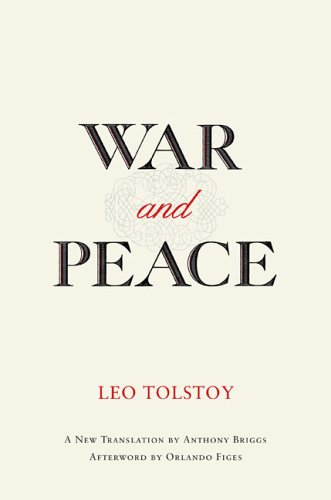
23. War and Peace (Oxford World's
 
24. Tolstoy's writings on civil disobedience
$7.46
25. Sayings of Leo Tolstoy (Duckworth
$13.11
26. Love and Hatred: The Tormented
 
27. War and Peace
$22.58
28. The Resurrection
 
29. Anna Karenina : Two Volume Set
$7.91
30. A Confession and Other Religious
$19.95
31. What I Believe
$2.39
32. Anna Karenina
$12.99
33. The Devil (Large Print)
$18.45
34. The Kingdom of God is Within You
 
35. Anna Karenin - Two Volumes [ Anna
$13.99
36. The Gospel In Brief: [EasyRead
$32.95
37. Resurrection
$1.00
38. War and Peace
$18.99
39. Resurrection
$10.65
40. The Cossacks and Other Stories

21. Resurrection (Dover Giant Thrift Editions)
by Leo Tolstoy
Paperback: 416 Pages (2004-03-08)
list price: US$5.00 -- used & new: US$2.58
(price subject to change: see help)
Asin: 0486432165
Average Customer Review: 3.0 out of 5 stars
Canada | United Kingdom | Germany | France | Japan
Editorial Review

Book Description

Tolstoy's novel of spiritual regeneration recounts the sins of a young Russian nobleman and his attempts in later life to redress those transgressions. A panoramic view of Russian social life at the end of the 19th century, Resurrection pointedly articulates the author's contempt for the social injustices of the world in which he lived.
... Read more

Customer Reviews (1)

3-0 out of 5 stars Deep, heavy, and moralistic
Maybe the first modern novel. In `Resurrection' Tolstoy delves down deep into the disturbed psyche of his protagonist as he struggles with his decisions, his culture, and his beliefs. Like all of Tolstoy's works the book is as deep and the prose is heavy. There are times that the book reads more like a tract than a novel and there is a moral to every story. The book is interesting, too, in that I've wondered how much personal history Tolstoy wrote into it. Readers of Troyat's biography will see many familiar scenes played out here from Tolstoy's early days as a rich dandy to his later `resurrection' as a spiritual nomad.

Not quite up to par with `Anna' or `War and Peace' but a good book and a must for fans of the Great One. ... Read more


22. Three Tolstoy Plays: Redemption, The Power of Darkness and Fruits of Culture
by Leo Tolstoy
Paperback: 252 Pages (2005-04-01)
list price: US$26.95 -- used & new: US$17.29
(price subject to change: see help)
Asin: 1417917709
Canada | United Kingdom | Germany | France | Japan
Editorial Review

Book Description
1910. Russian author, considered one of the greatest of all novelists. Tolstoy's major works include War and Peace and Anna Karenina. Contents: Redemption; The Power of Darkness; and Fruits of Culture. See other titles by this author available from Kessinger Publishing. ... Read more


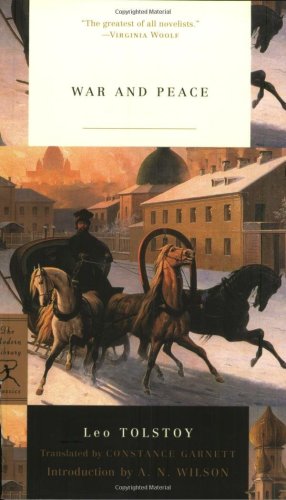
23. War and Peace (Oxford World's Classics)
by Leo Tolstoy
Paperback: 1392 Pages (1998-06-25)
list price: US$12.95 -- used & new: US$7.05
(price subject to change: see help)
Asin: 0192833987
Average Customer Review: 4.5 out of 5 stars
Canada | United Kingdom | Germany | France | Japan
Editorial Review

Book Description
In Russia's struggle with Napoleon, Tolstoy saw a tragedy that involved all mankind. Greater than a historical chronicle, War and Peace is an affirmation of life itself, `a complete picture', as a contemporary reviewer put it, `of everything in which people find their happiness and greatness, their grief and humiliation'.Tolstoy gave his personal approval to this translation, published here in a new single volume edition, which includes an introduction by Henry Gifford, and Tolstoy's important essay `Some Words about War and Peace'.Download Description
Tolstoy's classic, complete and unabridged. ... Read more

Customer Reviews (283)

5-0 out of 5 stars Exactly what I was looking for
I had been putting off reading War and Peace for over 45 years because my early attempts were with terrible translations.After looking at reviews of different translations, I decided to try once more with the Maude version.It is very readable and I appreciate the notes in the back and the character list in the front.It reads like the great novel it is supposed to be.I only wish I had discovered it earlier, but I am enjoying it now!

5-0 out of 5 stars Should I Buy This or Pevear and Volokhonsky's Translation?
Unless you are completely stressed out over $10, buy the new Pevear and Volokhonsky's translation. The main reason is that the Oxford version has little analysis. If it had offered a bit more, it would be a good buy but it is mostly just the text. Usually they contain an excellent analysis section, but it is not inclued here, So I give the nod to the newer translation by Pevear and Volokhonsky.

Count Lev Nikolaevich (1828-1910), more widely known abroad as Leo Tolstoy, is recognized as one the greatest novelist in the modern era. War and Peace is a superb piece of literature that most serious readers should read at least once. Many read it twice or more. All of the fiction is excellent and never dull. The non-fiction parts seem a bit strange and the reader can skip those parts. Once the reader gets past the first few pages, the reading is relatively simple and compelling. It contains excellent prose that one might associate with Tolstoy's writing, and it is only the length that discourages the reader. This was a seven day read, cover to cover, including two 300 page days - each day about the same as a complete regular novel such as "Saturday." It is not for the faint of heart.

War and Peace is a bit of an odd novel being so long. Tolstoy goes beyond a simple novel as Anna Karenina or The Cossacks. He tells a historical tale plus he injects approximately 100 pages of his own non-fiction comments about society and war. Tolstoy's non-fiction comments ruin the book to a degree. Instead of the best novel ever written, Tolstoy's political ideas - which the reader can skip - tend to tarnish the book as a piece of literature. One feels that he should have been able to integrate his ideas into the actions of the characters rather than giving the reader long lectures on history and politics in the middle and at the end of a wonderful story (as Dostoevsky integrates his ideas on religion and morality into the dialogue). Otherwise, it is probably one of the best novels ever written.

I like Pevear and Volokhonsky's work and have bought and read three of their other works and have looked at the Oxford version very closely. All the translations, such as Oxford (Maude) and Modern Library Classics (Garnett), are good and very similar in overall quality. For example, turn to the beginning at the start of section 11. The present book uses numbers while Pevear and Volokhonsky's use Roman numerals. What other differences are there? The present book says two people "value" their friendship while Pevear and Volokhonsky says they "cherish" their friendship. Not much different. Reading on the same page, the two turn to talk to each other in Maude while in Pevear and Volokhonsky's work one speaker pulls up their chair. One would have to know Russian and consult the original text to know if the "chair" is more accurate, but overall one gets a better or a more complete picture of the events from Pevear and Volokhonsky. So, spend the extra $10. and get the newer version with the better hard cover as a bonus.

Great read: 5 stars if you have the fortitude, and worth the effort.

5-0 out of 5 stars A good read
...is how my mother, a great reader all her life (86 years, 82 reading) described War and Peace when she saw me with it.And that is exactly what it is.Don't be put off by the length, it's quite possible to pick up and put down.It maintains its power and vividness of scene and character however long you leave it alone.The war scenes are as gripping as the peace scenes, and there is a great deal to learn from Tolstoy, even us, even now.Constance Garnett's translation is a lovely one, into easy English, modern but not too modern.Final suggestion:I got a paperback version first and - it - will - show - the - wear - before you're done, no matter what.I am getting a hardcover to keep around.

5-0 out of 5 stars The Best
The best book I've ever read.The only challenge is the length, but the pages fly by.Even at the end you don't want it to be over. Absolutely incredible breadth of war, Russian society, and life.

5-0 out of 5 stars Brilliant
A truly amazing work.Although it took me quite a while to finish, it was worth the effort.Don't be daunted by it's size.While the book is long, the story and the characters are so engaging that, when I reached the end, I only wished there was more.Tolstoy is a master of characterization and seems to be writing about people he has known for years rather than those he himself invented.I may pick it up again in a few years.There is nothing else like it. ... Read more


24. Tolstoy's writings on civil disobedience and non-violence
by Leo Tolstoy
 Unknown Binding: 400 Pages (1967)

Asin: B0006BOX7O
Canada | United Kingdom | Germany | France | Japan

25. Sayings of Leo Tolstoy (Duckworth Sayings Series) (Duckworth Sayings Series)
Paperback: 64 Pages (1995-09-01)
list price: US$13.00 -- used & new: US$7.46
(price subject to change: see help)
Asin: 071562671X
Canada | United Kingdom | Germany | France | Japan
Editorial Review

Product Description
This series collects together the best-known aphorisms, epigrams and reflections of a wide variety of figures from antiquity to our own age: humorists and novelists, poets and philosophers, politicians and playwrights. ... Read more


26. Love and Hatred: The Tormented Marriage of Leo and Sonya Tolstoy
by William L. Shirer
Paperback: 400 Pages (2007-06-26)
list price: US$17.95 -- used & new: US$13.11
(price subject to change: see help)
Asin: 141656750X
Average Customer Review: 4.0 out of 5 stars
Canada | United Kingdom | Germany | France | Japan

Customer Reviews (2)

4-0 out of 5 stars love and hatred: The tormented marriage of leo and sonya tolstoy
All things are releative, and as above so below. The differences between Leo and Sonya are essentialy the diferences between every contmplative life and every pragmatic existence. So for married couples who have little in common Shirer's complilation and comentary is an exercise in marriage survival.It would be nice if he could have given considerable more insight into the "Love" aspect of his title, but we're talking about a writer famous for "The Rise and Fall of the Third Reich" so may he thought Love was given its fair share?

4-0 out of 5 stars the classic "he said - she said".
Perhaps the best way to describe the reciprocal feelings of Leo and Sonya Tolstoy is to quote from their own diary entries. He said: "Nobody will ever understand me." She said: "He has never taken the trouble to understand me, and does not know me in the least." It was a marriage that reached to the highest heights, and sank to the lowest depths... over and over again in each direction. And anyone wanting to know more about it should not neglect Shirer's excellent book. By seesawing between the extensive diaries of these two "lovers" Shirer takes the reader right into the eye of the storm... one of the most amazing things about this tumultuous marriage is the extensive and meticulous documentation of the participants. And the author's collation, skillful narrative sense and endnote pages show that he was well acquainted with the extenuating circumstances of these two lives trying to live as one. The latter half of the book is to be commended for its appropriate emphasis on the disastrous influence of Chertkov, the disciple who became the usurper of Tolstoy's most profound devotion. In my opinion, this rift named Chertkov gradually became the uncrossable chasm that irreparably separated Leo and Sonya. During this time, Tolstoy's alliance with his daughter Sasha further alienated husband and wife, and Shirer covers this development with great insight. It's all here... from the peace, courtship, and high hopes of Yasnaya Polyana to the final conflict, rejection and despair of Astapovo.

Shirer knew this was to be his last book, and it was. After such a prolific and successful career (14 books and 52 years), to devote his last energies to such a work must imply that he took a special interest in the subject matter. It shows. All of the other books of his I've read have been excellent, and this one is no exception. ... Read more


27. War and Peace
by Leo Tolstoy
 Unknown Binding: Pages

Asin: B00005X4GE
Canada | United Kingdom | Germany | France | Japan

28. The Resurrection
by Leo Tolstoy
Audio CD: Pages (2005-03)
list price: US$34.98 -- used & new: US$22.58
(price subject to change: see help)
Asin: 1596441348
Canada | United Kingdom | Germany | France | Japan
Editorial Review

Book Description
Leo Tolstoy stands tall among the great Russian novelists ofthe nineteenth century. Tolstoy based Resurrection, the last of his novels,on a true story of a philanderer whose misuse of a beautiful young orphangirl leads to her ruin. Fate brings the two together many years later andthe meeting awakens the man's moral conscience. Anger, intimacy,forgiveness and grace result. While the situation of Tolstoy's plot isalien to most people, his nuanced treatment of mortal life is familiar toall. Later in his life Tolstoy confessed that he earlier had seduced twoyoung girls for his pleasure. Perhaps his own deeds and their horribleconsequences motivated him to write this novel with special passion. It isa particularly moving tale. Tolstoy's Resurrection is marvelous in thefullest sense of the word - a story so improbable that it must be amiraculous achievement. ... Read more


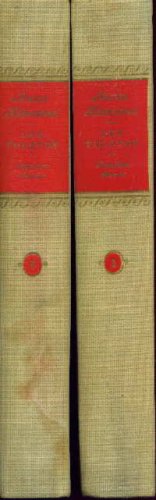
29. Anna Karenina : Two Volume Set : Volumes 1 & 2
by Leo Tolstoy
 Hardcover: Pages (1939)

Asin: B000OM1KN0
Canada | United Kingdom | Germany | France | Japan

30. A Confession and Other Religious Writings (Penguin Classics)
by Leo Tolstoy
Paperback: 240 Pages (1988-01-05)
list price: US$14.00 -- used & new: US$7.91
(price subject to change: see help)
Asin: 0140444734
Average Customer Review: 4.5 out of 5 stars
Canada | United Kingdom | Germany | France | Japan

Customer Reviews (5)

5-0 out of 5 stars A great man's realizations
To read this is to reveal the logic of a great thinker's enlightenment about the real science of Christ's thinking and healing even if under the cloud of domination of an establishment and state church. He was brave to write it out to the extent of his excommunication in 1905. It is a thought opener. Pertinent in thie time of growing spirituality and questioning of religion. Frederick R. Andresen, Author of "Walking on Ice, An American Businessman in Russia," over sixteen years in Russian business, six years in residence.

4-0 out of 5 stars Tolstoy's ideal version of himself
There are at least three Tolstoys. There is the Tolstoy whose mind and capacity for creation, whose ability to observe human life and transform it into the highest form of Literature- this is the first Tolstoy. The second Tolstoy is Tolstoy the man of appetite, the sinner who not only endlessly forced himself upon his wife but who took tens of peasant women for his own pleasure. The third Tolstoy is the would- be- saintly Tolstoy of the 'Confession'. This is the Tolstoy who longs for simplicity in life, for renunciation of wealth and sensual pleasure, for a kind of Christian- like total Love and Devotion to others.
It is true that Tolstoy's greatest works were created before he wrote 'The Confession' And it is true that as his age his physical powers diminished somewhat. But both of those Tolstoys remained with him all his life even if in diminished form. And this third Tolstoy this holy character who nonetheless made his wife and some of his childrens' life a torment, he too persisted with Tolstoy to the end.
Is this to say that the great man was a hypocrite? Yes, and more strongly 'no' He was an enormously complicated human being and a very great creator of Literature.
If however to be judged in terms of his relations to the closest people in his life, sainthood would certainly have to be denied him.

5-0 out of 5 stars A Search Unfulfilled
This book includes some of Tolstoy's essays written during his time of deep internal spiritual struggle.Upon his renunciation of a life of aristocratic wealth and worldly pleasure, Tolstoy longed for the sense of true peace that he saw in the peasant class.Thus he embarked upon a search for meaning and happiness through a life of simple faith, manual labor, and poverty.He formulated his own Christian philosophy based on Christ's Sermon on the Mount stressing the existence of the Kingdom of God within the human heart, civil disobedience, and total pacifism.This "law of love" is explored deeply in confessional form throughout the works in this collection.Although this particular approach to living the life in Christ ultimately did not cultivate in Tolstoy the deep inner peace that he yearned for, I feel that many of his ideas can be beneficial to people both within the Church as well as not.Regardless of the validity of his doctrine, it cannot be denied that this is an authentic, genuine, and very human confession of a man searching for God and the meaning of life on earth.Although I personally disagree with many of Tolstoy's points, I still hold his Confession to be a universal work that deserves a fair exploration by all who have ever felt a similar need for inner peace and true reconciliation with God.

4-0 out of 5 stars Leo's crisis of faith...
This is a very interesting book.Penned by one of the greatest writers in history, "A Confession..." by Leo Tolstoy provided me with great insight into his life, work, and relationships.I read this for a religion class in college and ended up keeping it.It is rather short and easy to read.Of interest to those who are seeking truth and those who have found it.It is fascinating to follow him thru his early religious experience, falling away from the church, and coming back to a unique faith in the end.Recommended.

4-0 out of 5 stars Not as good as I had hoped
Tolstoy was a tremondous writer and intense human being.I approached this work expecting a great deal, and while it was certainly very much worth the effort, it was not as good as I hoped it would be.

After acheiving fame, fortune, artistic achievement, family and everything else that most people long for, Tolstoy had a philosophical crisis in which he searched for the meaning of life.This is his chronicle of his despair and search, which ultimately ended in his acceptance of a unique brand of Christian socialism (not to mention ascetisim, vegetarianism, pacifism, etc.,).However, I thought much of the book, especially its sections on philosophy, to be rather poor in quality: either too simplisitc or complex but very poorly worded and expressed.While this book is ok, if anyone wanted to know Tolstoy's later philosophy of life I would recommend his later short works of fiction such as The Devil, the Kreutzer Sonata, and the Forged Coupon.They are masterpeices, while this work is simply interesting. ... Read more


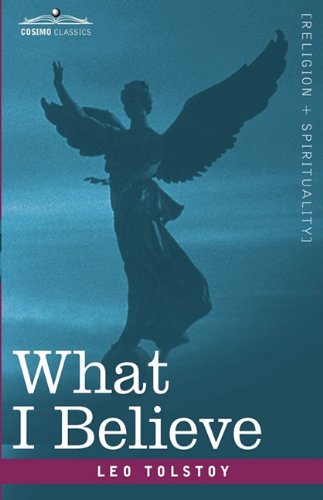
31. What I Believe
by Leo Tolstoy
Paperback: 248 Pages (2007-09-01)
list price: US$19.95 -- used & new: US$19.95
(price subject to change: see help)
Asin: 1602067228
Average Customer Review: 2.5 out of 5 stars
Canada | United Kingdom | Germany | France | Japan
Editorial Review

Book Description
Originally published in 1885, What I Believe is part of series of books by novelist Leo Tolstoy that outline his personal interpretation of Christian theology. After a midlife crisis at age 50, he began to believe in the moral teachings of Christianity, while rejecting mysticism and organized religion. He believed that pacifism and poverty were the paths to enlightenment. His precepts of nonviolence even influenced Mohandas Gandhi.Students of religion, political science, and literature alike will gain new understanding from the ideas presented in this book. Students of literature will get to understand more deeply one of the greatest novelist in history, while those interested in religion and politics can see how Tolstoy's philosophy came to influence the world at large. Russian writer COUNT LEV ("LEO") NIKOLAYEVICH TOLSTOY (1828-1910) is best known for his novels War and Peace (1869) and Anna Karenina (1877). ... Read more

Customer Reviews (2)

1-0 out of 5 stars Apology for Pacifism
Tolstoy complains theologians transformed the commands of Christ into meaning commands that could be practically followed by man in the world.

Out of respect for the same theologians he then goes on to downgrade Christ's command to "love one's enemies" into his practical doctrine of pacifism.

Tolstoy confidently asserts that this liberating work has corrected 1,800 years of misinterpretation of Christ's teachings by Christendom.And to think that I erroneously thought the mystery of God was revealed in Christ rather than in Tolstoy!In case we aren't as quick as he is in coming to this conclusion, Tolstoy levels the playing field by dismissing the divinity of Christ.

His judging of scripture, correcting its errors and editing its content, tacitly suggests that in his own opinion "What I Believe" has now completed the New Testament Cannon.

I conclude by suggesting that it would have been time more well spent if he invested it in completing "War and Peace" rather than in writing this book.

4-0 out of 5 stars Eye opening
If you love learning about world religion and looking for insight into why religion today is what it is, this is a wonderful comparative literature that is truly well researched, though out, and controversial.It was a really hard book to find, banned for many years.It is the book that inspired Gandhi to become the man that changed India.It explores the personal stuggles of Tolstoy and is not his characteristic writing style.Easy to read and very understandable.It is a thought provoking and wonderful book. ... Read more


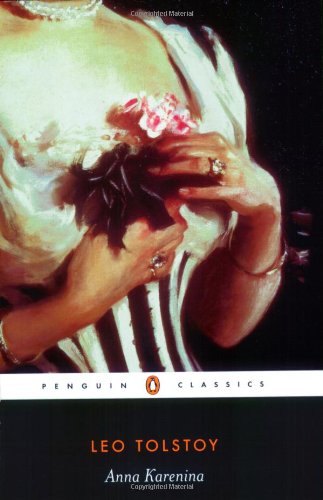
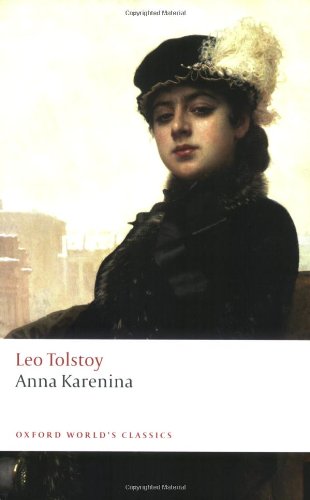
32. Anna Karenina
by Leo Tolstoy
Kindle Edition: 864 Pages (2004-03-30)
list price: US$2.99 -- used & new: US$2.39
(price subject to change: see help)
Asin: B000FC1C8W
Average Customer Review: 5.0 out of 5 stars
Canada | United Kingdom | Germany | France | Japan
Editorial Review

Book Description

Anna Karenina, also Anglicised as Anna Karenin, is a novel by the Russian writer Leo Tolstoy, published in serial installments from 1873 to 1877 in the periodical Ruskii Vestnik ("Russian Messenger"). Tolstoy clashed with its editor Mikhail Katkov over issues that arose in the final installment. Therefore, the novel's first complete appearance was in book form.

Widely regarded as a pinnacle in realist fiction, Tolstoy considered this book his first true novel. The character of Anna was likely inspired, in part, by Maria Hartung (1832-1919), the elder daughter of the Russian poet Alexander Pushkin. Soon after meeting her at dinner, Tolstoy started reading Pushkin's prose and once had a fleeting daydream of "a bare exquisite aristocratic elbow," which proved to be the first intimation of Anna's character.

Although most Russian critics panned the novel on its publication as a "trifling romance of high life," Fyodor Dostoevsky declared it to be "flawless as a work of art." His opinion is seconded by Vladimir Nabokov, who especially admired "the flawless magic of Tolstoy's style" and the motif of the moving train, which is subtly introduced in the first chapters (the children playing with a toy train) and inexorably developed in subsequent chapters (Anna's nightmare), thus heralding the novel's majestic finale. According to a recent poll of 125 contemporary authors, published in a book entitled The Top Ten, Anna Karenina is the greatest novel ever written

... Read more

Customer Reviews (1)

5-0 out of 5 stars The Kindle edition is NOT the Pevear and Volokhonsky translation
For those of you that have a Kindle and are wanting to purchase the new Pevear and Volokhonsky translation of this wonderful novel, DO NOT download this edition, no matter what the synopsis says. I downloaded the sample on my Kindle and compared it to the print edition and found that they were completely different.

... Read more


33. The Devil (Large Print)
by Leo Nikolayevich Tolstoy
Paperback: 132 Pages (2007-01-03)
list price: US$12.99 -- used & new: US$12.99
(price subject to change: see help)
Asin: 1425068898
Canada | United Kingdom | Germany | France | Japan
Editorial Review

Product Description
Immersed in deep philosophical and moral reflections, the work focuses on the theme of self-discovery. The story stems from Tolstoy’s personal experiences and is transformed into a great work of fiction with the author’s creative imagination.Download Description
Eugene Iretnev had everything he need to succeed in life; an admirable education at home, high honours when he graduated in law at Petersburg University, and connections in the highest society through his recently deceased father. His one downfall was his love and sexual affair for a peasant woman. Once married, he tried to discontinue his "meetings" with the peasant woman, but found it to be impossible to live with... He must kill one of them... his wife or the peasant woman... or maybe himself. This great story is written with two alternate endings. Please Note:This book is easy to read in true text, not scanned images that can sometimes be difficult to decipher.The Microsoft eBook has a contents page linked to the chapter headings for easy navigation. The Adobe eBook has bookmarks at chapter headings and is printable up to two full copies per year.Both versions are text searchable. ... Read more


34. The Kingdom of God is Within You & What is Art? (New Edition)
by Leo Tolstoy
Paperback: 572 Pages (2007-06-04)
list price: US$18.45 -- used & new: US$18.45
(price subject to change: see help)
Asin: 1594627819
Average Customer Review: 5.0 out of 5 stars
Canada | United Kingdom | Germany | France | Japan
Editorial Review

Book Description
The present volume contains two contrasting treatises. The firstisreligious, and shows in CountTolstoysearnestandeloquentmannerthemeaningof Christ's words which he takes for his text, - TheKingdomofGodiswithin you". The outward forms of religion, however helpful they may be to somesouls, are not essential; the superstitionswithwhichFaithsometimesclothesor masks herself may or may not be uplifting; but thefoundationofChristianity is the truth contained inChrist'swords, hissimple, plain, undogmatic commands and prohibitions" ... Read more

Customer Reviews (1)

5-0 out of 5 stars A philosophy of life explained with intensity
Leo Tolstoy writes with passion and with white hot intensity.

In this work, which had a profound influence on Gandhi and Martin Luther King, he sets forth his vision of Christianity, which differs markedly from the versions presented by the prevailing denominations of his day: the Roman Catholic Church and the Russian Orthodox Church.

For Tolstoy, the central message of Christianity is contained in the Sermon on the Mount, in which Christ expressed the "eternal ideal to which mankind instinctively aspires, showing at the same time the point of perfection to which human nature in its present stage may attain. . . . The ideal is to bear no malice, excite no ill-will, and to love all men."

Love is at the core of all things. The precept of love as set forth by Christ in the Sermon is not a commandment as such, but the expression of the very essence of the doctrine of Christianity. According to Tolstoy, this doctrie holds that the essence of the soul is love.

He who follows this doctrine recognizes the divine love within himself and becomes capable of loving all men and all things.

Tolstoy expands outward from the Sermon on the Mount to a complete philosophy of life not so much focused on an afterlife nor extensive devotional practices, but rather on the practice of love, non-resistence to evil and pacifism or non-violence.

His is an impassioned critique against the order of society of his day, both in Russia and elsewhere in the world--including the major religions as they are currently practiced. Tolstoy is prescient in his anticipation of World War I (which happened not long afer he died) and the wars and revolutions of the Twentieth Century.

Tolstoy's arguments are compelling, and his reasoning is intense. Surely he is one of the most brilliant writers one can ever read both in his essays and non-fiction and his great novels. One may not agree with him nor be able to put into practice what he professes, but one cannot deny the spellbinding and convincing quality of his arguments in this short book.

This facsimile edition of Charles Scribner's Sons 1900 edition is very attractive, and reading it provides something of the feel of reading an old book. It opens with a photo of Tolstoy himself plowing a field on his estate with a plough pulled by two mules. ... Read more


35. Anna Karenin - Two Volumes [ Anna Karenina ]
by Leo Tolstoy
 Hardcover: Pages (1901)

Asin: B000IPTTC2
Canada | United Kingdom | Germany | France | Japan

36. The Gospel In Brief: [EasyRead Edition]
by Leo Nikolayevich Tolstoy
Paperback: 212 Pages (2007-12-20)
list price: US$13.99 -- used & new: US$13.99
(price subject to change: see help)
Asin: 1427013705
Canada | United Kingdom | Germany | France | Japan
Editorial Review

Product Description
Challenging the Christian church of the late nineteenth century Russia, Tolstoy comes up with the fusion of four Gospels. With forceful brevity he asserts that the teachings of Jesus provide an ultimate solution to problems of mankind in this tumultuous world. This revolutionary work challenged the long-held official-church doctrines and made Christianity a way of life. Exceptionally stimulating! ... Read more


37. Resurrection
by Leo Tolstoy
Hardcover: 562 Pages (2002-10)
list price: US$32.95 -- used & new: US$32.95
(price subject to change: see help)
Asin: 0735102864
Average Customer Review: 4.5 out of 5 stars
Canada | United Kingdom | Germany | France | Japan
Editorial Review

Book Description
Resurrection (1899) is the last of Tolstoy's major novels.It tells the story of a nobleman's attempt to redeem the suffering his youthful philandering inflicted on a peasant girl who ends up a prisoner in Siberia. Tolstoy's vision of redemption achieved through loving forgiveness, and his condemnation of violence, dominate the novel.An intimate, psychological tale of guilt, anger, and forgiveness, Resurrection is at the same time a panoramic description of social life in Russia at the end of the nineteenth century, reflecting its author's outrage at the social injustices of the world in which he lived. This edition, which updates a classic translation, has explanatory notes and a substantial introduction based on the most recent scholarship in the field. ... Read more

Customer Reviews (29)

5-0 out of 5 stars A "Regular People" Review
Tolstoy did not believe in art for arts sake.Had he of, this could have been truly amazing.However it still does not dissappoint.This is a good introduction to Tolstoy even though it doesn't compare to the wide variety of characters in Anna Karenina or War and Peace, It still showcases Tolstoy's habit of touching on the current social and political issues of the time when it was written (and strangly many of them still hold true today).If you can stand to be lectured a little- pick this up...and keep me updated!

5-0 out of 5 stars Resurrection
One of the great novels written by Leo Tolstoy in 1899, who, by then was already past his prime when he wrote "Anna Karilina" as well as "War and Peace". This novel differed from the previous novels he wrote in that Tolstoy focused on the sufferings of the people and description of the underground movements that existed side by side with the aristocratic class. This was unlike the novels that he wrote before, when he wrote mainly about the aristocratics.

The novel takes us to the Prince Nekhlyudov, who seduced a servant girl called Katusha(sometimes referred as Maslova) many years ago and is now shocked to see her being tried for murder on a trial which he himself is part of the jury. Katusha is no longer the innocent, loving maid that she was many years ago but is now a detestable prostitute. At once Nekhlyudov feels guilty, since his seduction was the cause of all that Katusha went through later, a baby conceded by Katusha but was soon lost. Soon Katusha's life began to fall apart. She drifted on the streets and became a prostitute. While at the same time Nekhlyudov, who once was a virtous young man and denounced private property, is now leading a degraded life.

And this is where the novel starts. As the unlikely encounter in the trial soon crossed the two people's lives once again. Later Katusha was send to Siberia for poisoning on a blatant error on the part of the juries. So decided Nekhlyudov that he needed to follow her for a chance at redemption. Thus began the resurrection for not only Nekhlyudov but also Katusha, a resurrection that would lead both of them into a new, better lives.

Tolstoy attacked the existing social order poignantly in this novel. Especially the Orthodox Church and the wealthy upper class. Tolstoy rebuked the two sides for treating the lower class people unhumanely, locking them up instead of changing the existing society to accomodate more equality. Tolstoy also placed a lot of emphasis on the moral issues concerning mankind and the society in general. Stating in the end of the book the "Heaven on Earth" that he would like to see.

Another aspect is that this book touches all kinds of people from all classes. From the palace of a countess to the jails in Siberia, and from government officials to desperado revolutionaries. Tolstoy's depiction of the suffering with peasants and revolutionaries are really deep. And almost everything that Tolstoy writes in this book seems to relate to some sort of moral ties, not only did Nekhlyudov and Katusha change in this book, but also many other characters involved with Nekhlyudov, they are changed mostly to the worse side, we see how a society can truly alter, and even destroy, some people who started out guileless but turned corrupt.

In conclusion, this was truly a classic book exploring deep into the psychialogy of each individuals with its emphasis on the power of human redemption and its blunt attacks on the existing social order. A brilliantly woven tale indeed.

3-0 out of 5 stars Deep, heavy, moralistic - all the things we love about the Count
Maybe the first modern novel. In `Resurrection' Tolstoy delves down deep into the disturbed psyche of his protagonist as he struggles with his decisions, his culture, and his beliefs. Like all of Tolstoy's works the book is as deep and the prose is heavy. There are times that the book reads more like a tract than a novel and there is a moral to every story. The book is interesting, too, in that I've wondered how much personal history Tolstoy wrote into it. Readers of Troyat's biography will see many familiar scenes played out here from Tolstoy's early days as a rich dandy to his later `resurrection' as a spiritual nomad.

Not quite up to par with `Anna' or `War and Peace' but a good book and a must for fans of the Great One.

5-0 out of 5 stars "My business is to do what my conscience demands of me."
Resurrection (1899) is the last of Tolstoy's great novels and unlike the previous War and Peace and Anna Karenina the architectural lines are fairly unique. Whereas in the previous novels attention is continually shifted from one hero to another, in Resurrection Tolstoy follows Dimitri Nekhlydov step by step, drilling to the core of his thoughts, commenting on his actions, analyzing his motives, evincing his engendered acts, and verbalizing the purging of his soul that inexorably manifests into a non-Christian regeneration process. Tolstoy hardly lets Nekhlydov out of sight for an instant: his conscience continually demands of him to atone for his sin. Interwoven with the flow of the story is Nekhlydov's painful realization of the demoralization that develops into such perfect madness of selfishness.

If it had not been for the Doukhobors, who was accused of fighting against the spirit of God by the Orthodox Church, Tolstoy might never have finished the novel, the idea for which had been suggested to him ten years previously in order to raise fund for the sect. A nobleman, namely, Dimitri Nekhlydov, serves on a jury and recognizes the prostitute on trial for theft and poisoning a merchant as a girl he had seduced and loved when he was a young man. Katusha (Maslova), who is a yellow-card prostitute sanctioned by the government, has a checkered fate. She is wrongfully convicted as the jury inadvertently left out the phrase "no intent to take life" in the verdict. She is found not guilty in the theft but guilty of administering a powder and is sentenced to hard labor in the outlandish Siberia.

As Nekhlydov embarks on the campaign to appeal for Katusha and do her justice, in the depth of his soul he becomes so conscious of all the cruelty, cowardice, and baseness - not only of this particular action of his but of his whole idle, dissolute, selfish and complacent life. The dreadful veil that has all this time, for ten years, conceals from him his sin, and the whole of his life, dictated by the religious sophisms, begins to wobble. He has to confront with his entire being that the faith of his is farther than anything else from being the right thing.

One can gauge the progress of Nekhlydov's awakening by Katusha's attitude toward him. Ten years of prostitution has not completely extinguished the spiritual spark in her. This can be proven by the merchant's trust in her, the truth behind the poisoning of which she was accused, her behavior with a breath of equanimity at the trial toward the real culprits, the attitude of her fellow prisoners, and the outburst in which she would not allow Nekhlydov to gain his salvation at her expense.

When Nekhlydov witnesses the cruelty of the government officials who put duties and responsibilities of office above humanity and the sufferings of the innocent people who have not in the least transgressed against justice or committed lawless acts but merely because they are an obstacle hindering the officials and the rich from enjoying the wealth they amass from the people, he repents of his selfishness and a spiritual resurrection dawns on him. Simplicity of the explanation seems very overwhelming: the officials can insensibly ill-treat others without feeling any personal responsibility for the evil they do because they are completely devoid of not only compassion but the chief human attribute, that is, love and pity for one another.

As Nekhlydov becomes the mouthpiece for the innocent in Siberian prison, in whom Tolstoy expresses his own deepest aspirations and views on aspects of human existence. Nekhlydov's ambitious and heroic search to discover the purpose of life not only has become readers' striving, rekindled Katusha's love for him, but also unites with Tolstoy's ideals. Through the convoluted relationship between Nekhlydov and Katusha, Tolstoy treats the themes of love, passion and death with such compelling sincerity that one's heart is infected by pity and compulsive need to crusade against cruelty, injustice and repression.

Resurrection is psychologically superb in the treatment of one man's thoughts and feelings, which stem from a study of his physical being. Tolstoy deftly builds up this "dramatis personae" line upon line, and through which he turns a highly critical eye on the law, the penal system and above all, the Church. He ridicules the usual sophisms that so inveterately dictate his hero's life, that the enlightened ones plunge the people into greater darkness with their hypocrisy and heresy. Line by line Tolstoy sets up Nekhlydov's awakening in which he must overcome the laborious path of expiation stimulated by a voluntarily moral desire to repent. This very teaching brings Tolstoy at loggerhead to the Church, whose practices of deceit and delusion Tolstoy vehemently rejects with utter intransigence.

Resurrection gives us a vision that is beyond the historical reality of the given time period. A literary masterpiece it is, Tolstoy propagates his faith and moral ideals through his hero. Resurrection is an ultimate achievement of literary power that accentuates life of people in Russia.

2004 (43) ©MY

5-0 out of 5 stars Responsibility
In the prison yard the name called out was Maslova.Her story was a common one.She was an orphan raised by maiden ladies of the land-owning class.She was spoiled and declined offers of marriage.

The nephew of the old ladies, a prince, came to stay with them when the girl was sixteen.Five months later she knew she was pregnant.The ladies let her leave pursuant to her own request.Her baby died in a foundling hospital.

Katusha as she then was called moved from position to position.By this time Katusha could go into service or enjoy the easier life as a resident of a house.Katusha Maslova chose the life of chronic sin as Tolstoy characterizes the situation.She lived this way for seven years.

Prince Dmitry Ivanovich Nekhlyuda, her seducer, was summoned to serve on the jury in criminal court.The prisoners were brought into the courtroom.The third prisoner was Maslova.The prince thought to himself, no it cannot be.He wondered, whether Katusha Maslova recognized him.

Maslova's attorney asserted that she had been led into a life of debauchery by a man who remained unpunished.Viewing her, Nekhlyudov believed that Katusha was certainly the same person she had been in her youth.Nekhlyudov felt she was innocent of both the theft and poisoning charges.

The jury made a mistake in writing out its findings for the court.As to Maslova, what was omitted was a finding negating an intent to take a life.Her sentence, therefore, was penal servitude in Siberia.

The President of the court advised Nekhlyudov to speak with the advocates to correct the mistake.Nekhlyudov felt that since he had something to do with Maslova getting on the wrong path, he must take measures to correct her situation.Once he realized that he was bad, others were no longer so disgusting to him.

Marriage with Missy, a member of his class, no longer seemed so probable.Nekhlyudov came to see that the persons being tried in the law courts were not the evil-doers he had previously supposed.Indeed, he himself was a deceiver and a rake and no one was trying to punish him.He told the procurator he wanted to follow and marry the prisoner Maslova.He stated that he now considered all judging useless, immoral.

Maslova dealt with her pain by the trick of disassociation.Nekhlyudov's initial words to her centered on his wish for forgiveness.Nekhlyudov expected Katusha Maslova to be pleased.She was not.Furthermore, it seemed she was not ashamed of her position.She is a convict and he is a gentleman andprince.She does not believe he really wants to marry her.

The prince tries to put his affairs in order to enable him to travel to Siberia if necessary.He rents the land from one estate to the peasants for a nominal rent.Maslova's position of appeal to the Senate is denied.As Nekhlyudovprepares his things to follow Maslova and the prisoners to Siberia, he perceives that he has lived through something very hard and very joyful and that he has experienced an inner change.

The description of the procedures used in the transport of prisoners are as fascinating now as when written since, inter alia, the camps of the Czar were the predecessors of the camps of Stalin.The theme is the blindness of the upper classes to the suffering of those below them.

Maslova is allowed to join the political prisoners and thereby escape the harassment of the general convicts.Maslova values and admires the political prisoners.Nekhlyudov comes to change his mind about the revolutionists, (they were being treatedharshly, as if in time of war).

Through the prince's efforts, Maslova's sentence to hard labor is commuted to exile.Maslova seeks to release Nekhlyudov from his self-imposed task by marrying another person, one of the political prisoners. ... Read more


38. War and Peace
by Leo Tolstoy
Kindle Edition: Pages (2007-12-10)
list price: US$1.25 -- used & new: US$1.00
(price subject to change: see help)
Asin: B00114LIFA
Canada | United Kingdom | Germany | France | Japan
Editorial Review

Book Description
War and Peace centers broadly on Napoleon’s invasion of Russia in 1812 and follows three of the best-known characters in literature: Pierre Bezukhov, the illegitimate son of a count who is fighting for his inheritance and yearning for spiritual fulfillment; Prince Andrei Bolkonsky, who leaves behind his family to fight in the war against Napoleon; and Natasha Rostov, the beautiful young daughter of a nobleman, who intrigues both men. As Napoleon’s army invades, Tolstoy vividly follows characters from diverse backgroundsâ€"peasants and nobility, civilians and soldiersâ€"as they struggle with the problems unique to their era, their history, and their culture. And as the novel progresses, these characters transcend their specificity, becoming some of the most movingâ€"and humanâ€"figures in world literature.

Formatted for Amazon Kindle. ... Read more


39. Resurrection
by Leo Nikoleyevich, Tolstoy
Paperback: 548 Pages (2007-04-03)
list price: US$18.99 -- used & new: US$18.99
(price subject to change: see help)
Asin: 1434610047
Canada | United Kingdom | Germany | France | Japan
Editorial Review

Product Description
Translated by Mrs. Louise Maude ... Read more


40. The Cossacks and Other Stories (Penguin Classics)
by Leo Tolstoy
Paperback: 480 Pages (2007-01-19)
list price: US$18.00 -- used & new: US$10.65
(price subject to change: see help)
Asin: 0140449590
Average Customer Review: 5.0 out of 5 stars
Canada | United Kingdom | Germany | France | Japan
Editorial Review

Book Description
Tolstoy’s powerful semiautobiographical stories based on his time spent in the Russian army—the latest in our series of fresh new Tolstoy translations

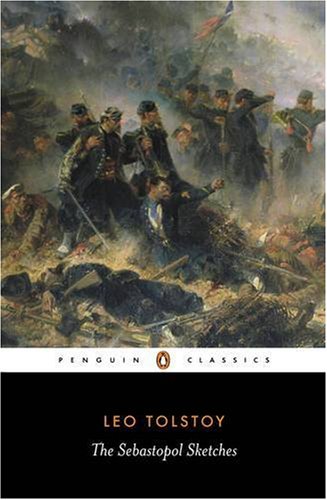
In 1851, at the age of twenty-two, Tolstoy joined the Russian army. The four years he spent as a soldier were among the most significant in his life and inspired the tales collected here. In “The Cossacks,” Tolstoy tells the story of Olenin, a cultured Russian whose experiences among the Cossack warriors of Central Asia leave him searching for a more authentic life. “The Sevastopol Sketches” bring into stark relief the realities of military life during the Crimean War. And “Hadji Murat” paints a portrait of a great leader torn apart by divided loyalties. In writing about individuals and societies in conflict, Tolstoy has penned some of the most brilliant stories about the nature of war. ... Read more

Customer Reviews (1)

5-0 out of 5 stars Excellent But A Bit Slow to Start: A Pivotal Work for Tolstoy
Tolstoy is recognized as one of the leading writer of novels, and he was a leading Russian writer of the 19th century. He wrote three monumental works including War and Peace, Anna Karenina, and the novella The Death of Ivan Ilych." Two were written by Tolstoy at his peak around 1865 to 1980, and Ilych was written in 1886 before Tolstoy started to lose his interest in fiction.

Based on his younger days as a soldier, he wrote four novels or novellas: The Raid (1835), Wood-Felling (1855), The Cossacks (1863), and the last was Hadji Murat, written between 1896 to 1904.

The Cossacks was written just before Tolstoy's peak as a fictional writer or artist, and the writing is acknowledged as an important work for Tolstoy and an important work of Western literature, marking the rise of an important new writer.

The story is about a young and wealthy Russian nobleman, Olenin, who joins the army as an officer cadet and goes to the Caucasus, leaving Moscow life behind. In this story Tolstoy explores the universal theme of a young man falling in love with a woman of a different cultural background. The young woman is called Marianka, and the mystery of the story is will the relationship develop? Will they get married and will he settle in the Caucasus. Will Marianka and her family accept him, or is he simply a short term novelty in the community?

Olenin, who is an army officer, lives in a Cossack community with a Cossack family. He spends a lot of his spare time hunting in the local woods, having discussions with the natives, going to parties with the natives, drinking, etc. It gives Tolstoy the framework to explore his well known themes: "man, society, and nature." The novel contains many beautiful descriptions of the forests and the plants and animals, along with descriptions of the native people and their social customs.

This is an excellent novel. It has some good characters and they display a range of emotions. The first third of the novel is a bit slow and contains many non-fictional comments on the Caucasus, but then as the story develops, the reading becomes much more compelling and the element of drama increases. This is a good novel but it is far less complex and shorter than Anna Karenina.

The Penguin version comes with two other stories: "The Sevastopol Sketches" and "Hadji Murat." I was somewhat neutral about the last story - although it is based on real events - because it lacks a strong central protagonist. Because of that weakness, I preferred the more complex novel, The Cossacks, which has the strong character Olenin.
... Read more


  Back | 21-40 of 100 | Next 20
A  B  C  D  E  F  G  H  I  J  K  L  M  N  O  P  Q  R  S  T  U  V  W  X  Y  Z  

Prices listed on this site are subject to change without notice.
Questions on ordering or shipping? click here for help.

site stats