e99 Online Shopping Mall

Geometry.Net - the online learning center Help  
Home  - Authors - Updike John (Books)

  1-20 of 100 | Next 20
A  B  C  D  E  F  G  H  I  J  K  L  M  N  O  P  Q  R  S  T  U  V  W  X  Y  Z  

click price to see details     click image to enlarge     click link to go to the store

$11.91
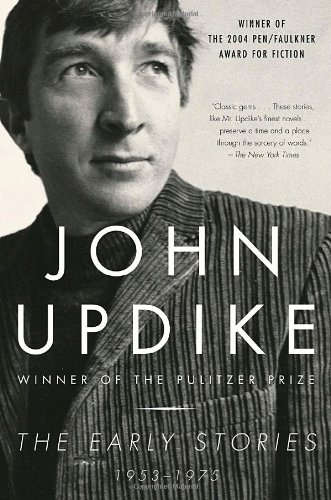
1. The Early Stories: 1953-1975
$19.95
2. Due Considerations: Essays and
$4.76
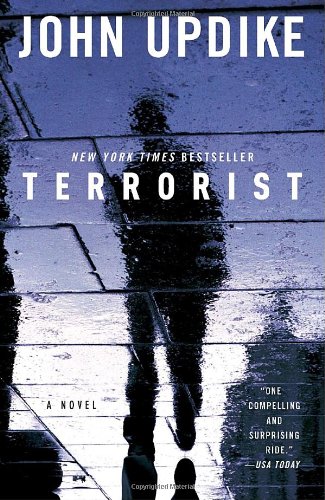
3. Terrorist: A Novel
4. Terrorist
$18.42
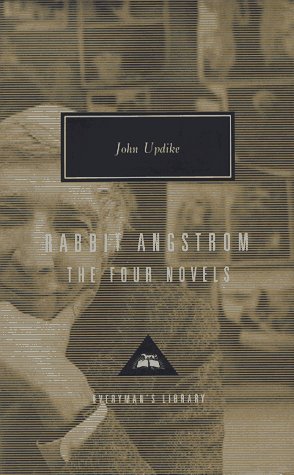
5. Rabbit Angstrom : The Four Novels
$3.48
6. Self-Consciousness
$7.95
7. Couples
$7.67
8. Brazil
$8.75
9. Rabbit Novels Vol. 1
10. Collected Poems: 1953-1993
$1.93
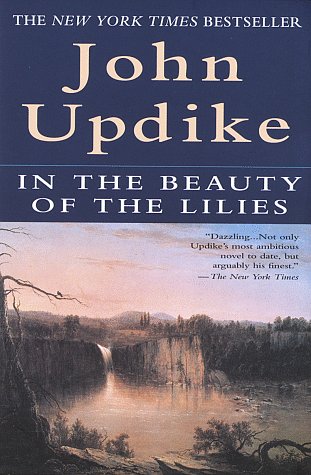
11. In the Beauty of the Lilies
$1.35
12. Gertrude and Claudius
 
13. The Other John Updike: Poems,
$0.66
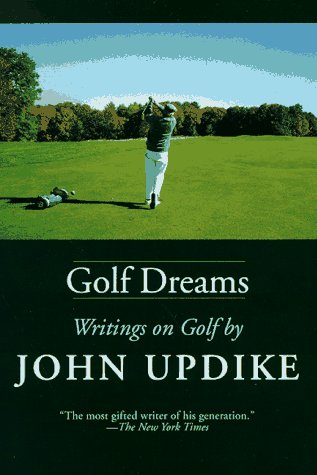
14. Golf Dreams
$10.49
15. Rabbit Novels Vol. 2
 
$16.47
16. The Widows of Eastwick
$17.55
17. The John Updike Audio Collection
$8.90
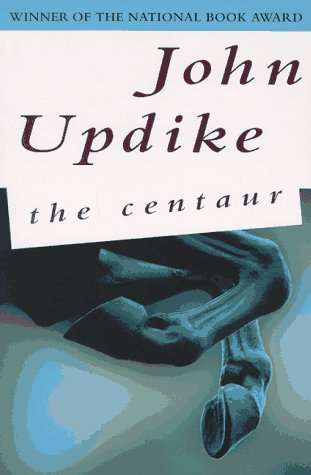
18. The Centaur
$11.76
19. Conversations With John Updike
 
$269.18
20. Picked-Up Pieces

1. The Early Stories: 1953-1975
by John Updike
Paperback: 864 Pages (2004-09-28)
list price: US$19.95 -- used & new: US$11.91
(price subject to change: see help)
Asin: 0345463366
Average Customer Review: 4.5 out of 5 stars
Canada | United Kingdom | Germany | France | Japan
Editorial Review

Book Description
“He is a religious writer; he is a comic realist; he knows what everything feels like, how everything works. He is putting together a body of work which in substantial intelligent creation will eventually be seen as second to none in our time.”
—William H. Pritchard, The Hudson Review, reviewing Museums and Women (1972)


A harvest and not a winnowing, The Early Stories preserves almost all of the short fiction John Updike published between 1954 and 1975.

The stories are arranged in eight sections, of which the first, “Olinger Stories,” already appeared as a paperback in 1964; in its introduction, Updike described Olinger, Pennsylvania, as “a square mile of middle-class homes physically distinguished by a bend in the central avenue that compels some side streets to deviate from the grid pattern.” These eleven tales, whose heroes age from ten to over thirty but remain at heart Olinger boys, are followed by groupings titled “Out in the World,” “Married Life,” and “Family Life,” tracing a common American trajectory. Family life is disrupted by the advent of “The Two Iseults,” a bifurcation originating in another small town, Tarbox, Massachusetts, where the Puritan heritage co-exists with post-Christian morals. “Tarbox Tales” are followed by “Far Out,” a group of more or less experimental fictions on the edge of domestic space, and “The Single Life,” whose protagonists are unmarried and unmoored.

Of these one hundred three stories, eighty first appeared in The New Yorker, and the other twenty-three in journals from the enduring Atlantic Monthly and Harper’s to the defunct Big Table and Transatlantic Review. All show Mr. Updike’s wit and verbal felicity, his reverence for ordinary life, and his love of the transient world.


From the Hardcover edition. ... Read more

Customer Reviews (13)

5-0 out of 5 stars The Magnificent Skill Of John Updike
It would have been all but impossible for most of us to have gathered even the majority of these stories together to read, spread out as they were through anthologies that spanned multiple decades, and that makes it all the more satisfying to linger over these gems from the mind of a man I really think is in the top five American writers of the twentieth-century. There are no bad stories collected here and more than a dozen I'd dub as deserving literary immortality for their capacity to represent the pulsebeat of an era for generations yet to come. A richly-composed, well-chosen anthology that is a great gift for John Updike to give his readers, and a true monument to his dedication to the short story art form. This book will help define the legacy of a man of letters, imagination, and spirit. Early Stories is simply a great read.

5-0 out of 5 stars An essential collection, and in a class by itself
Many of these stories were originally published in short story collections (The Same Door, Museums and Women, Problems) that are long out of print and difficult to find.That alone makes this worth owning.Then there is the fact that this represents the collected work of an indisputedly talented and influential writer coming strong out of the gate and finding his voice, at a remarkably young age, before settling into a career and a life.

It is fascinating to observe this evolution and growth, as it happens over two decades, as he moves from, say, "Friends from Philadelphia", which is literal and straightforward, to the Barthelmesque (I don't if that's a word, but it should be) "Problems", which is self-reverential and self-mocking, yet also darkly funny, hinting as it does at the way life has affected the artist and his work.There is the longer "Pigeon Feathers", the (very) short "Eclipse", and the effortlessly brilliant "How to Love America and Leave It at the Same Time".Not to mention the Maple stories (which I'd already read intheir collected form in Too Far To Go), the classic "A&P", and about, oh,80 or 90 others, not all of them gems, or even successes, but fascinating and worth reading nonetheless.Add to this the fact that you can observe, through Updike's writing, the country moving from Mid-Century domesticity to Sixties' upheaval and Seventies' rudderlessness and confusion, and you have a truly indispensable collection.

There is also the added bonus of Updike's introduction, in which he reveals his life at the time (married and a father early in his twenties), who escaped to an office to write during the day so he could support his family by selling these stories to the New Yorker.An unexpected, and unexpectedly normal, glimpse of the author and his workings, it's an insight which gives me a new appreciation for these stories and how and why they came to be.

Lastly, don't be daunted by the heft and bulk of this tome, and don't be afraid to pick and choose which stories you read, and in what order...they have a way of staying with you long after you're done reading them.

5-0 out of 5 stars Great Collection
I had never read anything by John Updike before I bought this collection, and I've enjoyed every story in it. I found his characters to be extrememly human and his stories thought-provoking.

5-0 out of 5 stars Sex, Godiva chocolate, and Updike's Early Stories
This is the single greatest collection of short stories ever assembled.Period.Let me know if you find one better than this.

5-0 out of 5 stars Everyday brilliance
I never much liked Updike's short stories until I started writing short stories myself.Many of the complaints people have with Updike are legitimate.He is usually light on plot.There is virtually no physical action--no fistfights, no murders, no sobbing confessions.But that, to me, is part of Updike's genius.

He always takes the difficult road.He doesn't simply have a husband cheat on his wife; instead, he has the husband worry that he will cheat on his wife, and then he considers the implications. I disagree with critics who accuse Updike of being unemotional.His stories are tangles of pure emotion.

My favorite story in the collection is "Packed Dirt, Churchgoing, A Dying Cat, A Traded Car."It's set up as a series of essays that eventually carry the reader into a story about the author's dying father.It feels like a compilation of random events until you get ot the last line, and then you realize that everything is connected, everything has a purpose.It may be the most beautiful ending I've ever read.(The second most beautiful ending is in "The Happiest I've Been.")

Updike is not for everyone.If you like simple, straightforward stories, read Tobias Wolff (he is amazing in a totally different way).But if you're interested in a world vivid with details--a world with no easy questions, let alone answers--try Updike.

One caveat: read slowly--the magic is more in the words than the paragraphs. ... Read more


2. Due Considerations: Essays and Criticism
by John Updike
Hardcover: 736 Pages (2007-10-23)
list price: US$40.00 -- used & new: US$19.95
(price subject to change: see help)
Asin: 0307266400
Average Customer Review: 5.0 out of 5 stars
Canada | United Kingdom | Germany | France | Japan
Editorial Review

Book Description

John Updike’s sixth collection of essays and literary criticism opens with a skeptical overview of literary biographies, proceeds to five essays on topics ranging from China and small change to faith and late works, and takes up, under the heading “General Considerations,” books, poker, cars, and the American libido. The last, informal section of Due Considerations assembles more or less autobiographical pieces—reminiscences, friendly forewords, comments on the author’s own recent works, responses to probing questions.

In between, many books are considered, some in introductions—to such classics as Walden, The Portrait of a Lady, and The Mabinogion—and many more in reviews, usually for The New Yorker. Ralph Waldo Emerson and the five Biblical books of Moses come in for appraisal, along with Uncle Tom’s Cabin and The Wizard of Oz. Contemporary American and English writers—Colson Whitehead, E. L. Doctorow, Don DeLillo, Norman Rush, William Trevor, A. S. Byatt, Muriel Spark, Ian McEwan—receive attentive and appreciative reviews, as do Rohinton Mistry, Salman Rushdie, Peter Carey, Margaret Atwood, Gabriel García Márquez, Haruki Murakami, Günter Grass, and Orhan Pamuk. In factual waters, Mr. Updike ponders the sinking of the Lusitania and the “unsinkable career” of Coco Chanel, the adventures of Lord Byron and Iris Murdoch, the sexual revolution and the advent of female Biblical scholars, and biographies of Robert Frost, Sinclair Lewis, Marcel Proust, and Søren Kierkegaard.

Reading Due Considerations is like taking a cruise that calls at many ports with a witty, sensitive, and articulate guide aboard—a voyage not to be missed.

... Read more

Customer Reviews (3)

5-0 out of 5 stars Pure and simple Genius
You'll laugh out loud and at times want to cry.I've read the Rabbit series twice now and suspect I'll be going back to More Matter soon enough.Updike is an American treasure, end of story.

5-0 out of 5 stars Is there anything this Grand Master cannot do?!
This one man literary university seems to out-do even himself, as he reviews a vast assortment of mostly literary works, this time delving into such items as 2 books on the Lusitania sinking, a Turkish Nobel winner (yet still Mr. Updike is an also ran in this contest), lots of foreign authors, most notably perhaps McKeon's "Atonement", and tons more. As always, not a wasted word, so even someone like this reviewer can appreciate and even follow everything written here. Nice to see his comments often intersect with my own thoughts on occasion. And the great thing about this author's review collections is you can always check into them whenever you get the urge, and can "brush up" on simply vast realms of great writing, knowledge, and even fun!

5-0 out of 5 stars The Master Speaks
The master speaks in this latest collection of what Updike calls his freelancing. What a pleasure to survey literature from his perspective. Beautiful language, fascinating views of technique in others' writings, and brilliant, poignant comments on so many times and places in the American experience. Like a modern day Hawthorne, or a latter day Edmund Wilson, we hear the master novelist review recent literature and the times with an extraordinary eye for the moral and aesthetic values of our literary times. As Updike knows full well, he's been lucky in his chosen profession; many are called but few are chosen to stay self-employed as fiction writers over such a long, illustrious career. A member of a vanishing breed in the inditer tribe, we are fortunate to enjoy the mature reflections of this senior scribe.
Rabbit Angstrom : The Four Novels : Rabbit, Run, Rabbit Redux, Rabbit Is Rich, Rabbit at Rest (Everyman's Library) ... Read more


3. Terrorist: A Novel
by John Updike
Paperback: 320 Pages (2007-05-29)
list price: US$14.95 -- used & new: US$4.76
(price subject to change: see help)
Asin: 0345493915
Average Customer Review: 3.5 out of 5 stars
Canada | United Kingdom | Germany | France | Japan
Editorial Review

Book Description
John Updike has written a brilliant novel that ranks among the most provocative of his distinguished career. Terrorist is the story of Ahmad Ashmawy Mulloy, an alienated American-born teenager who spurns the materialistic, hedonistic life he witnesses in the slumping New Jersey factory town he calls home. Turning to the words of the Holy Qur’an as expounded to him by the pedantic imam of a local mosque, Ahmad devotes himself fervently to God. Neither the world-weary guidance counselor at his high school nor Ahmad’s mischievously seductive classmate Joryleen succeeds in deflecting him from his course, as the threads of an insidious plot gather around him.

“One compelling and surprising ride.”–USA Today
“The startlingly contemporary story of a high school student . . . whose zealous Islamic faith and disaffection with modern life make him a pawn in the larger conflict between Muslim and Christian, East and West. They also make him a powerful voice for Updike’s ongoing critique of American civilization.”
–Time

“A chilling tale that is perhaps the most essential novel to emerge from Sept. 11.”
–People (Critic’s Choice) ... Read more

Customer Reviews (134)

5-0 out of 5 stars Can't Put This Book Down!
John Updike's novel, Terrorist, is not what I expected because it is so entertaining, informing, well-researched, and so identifiable in the post September 11, 2001 world. I could see this adapted into a great film starring Julie White (Tony Winner) as Terry Mulloy who is the mother of a devout Muslim son, Ahmad Mulloy. She was married to Egyptian citizen who abandoned her and his son. Ahmad becomes devout practicing Muslim much to the discontent of his liberal, artistic bohemian mother. When Jack Levy, the married guidance counselor, enters the picture, he sees a boy with so much potential that Ahmad would rather get his CDL license than continue his education. THe author provides quite a clear picture of the characters. I could see Jorylee played by Jurnee Smollett, the African American female, who takes an interest in Ahmad despite her boyfriend named Tylenol. Ahmad even visits Joryleen's church and they talk about religion. Ahmad is still involved at the Mosque with the Iman. His Irish Catholic mother allows him to worship and does not try to get him to convert. Ahmad is searching for a father figure maybe in the Iman at the MOsque but certainly not Jack Levy who becomes involved with Terry. I keep envisioning Jack Levy as actor Judd Hirsch in my imagination. A well-written paints a picture of New Jersey life. New Prospect, New Jersey is truly fictional but it could be Newark, Paterson, Irvington or any of the other cities and suburbs combined. Jack Levy works as a guidance counselor and tutors students to get to Ivy League schools. I am totally impressed and with awe in Updike's writing style. Until now, I have never read an Updike book and this one is one of my favorite novels of all time.

3-0 out of 5 stars A good effort, but not what you expect from Updike
I read this book with great anticipation.I have always been a huge fan of John Updike.Enough so, that I feel awkward writing a lukewarm review of one of his novels.As always, Updike has beautiful style and structure and poignance.Where I think he fell short is in conveying the main character's feelings and motivation.

The ability to convey the depth and many facets of a character has always been a strength of Updike and there are glimmers of that here in the minor characters.But, the portrayal of Ahmed and Mr Levy just don't ring true.This novel hinges on an American teenage muslim's move toward extremism.By its nature, that process is difficult and conflicted but we get very little of that with Ahmed.He accepts violence with almost no motivation or conflicting feelings and barely a second thought until the end and then his change of feeling is just as remarkable.The manipulation on the part of Ahmed's mentors is captured well, but what about Ahmed's sense of being manipulated - it is almost absent.

I think this was the case of a character that Updike just could not relate to.Few of us can relate to suicide bombers, I suppose, but with as many nonfiction works out there that examine this subject I feel a writer of Updike's talent could have made this character ring true.

This would be a two star review if it were not for the fact that it really was entertaining to read.The writing is elegant and the construction is good, but this is not Updike at his best.

5-0 out of 5 stars A Great Book
For the better part of my adult life when asked who my favorite author is I have reflexively answered 'John Updike'.Its an easy answer really when I consider the pleasure his novels, short stories and essays have provided me over the years. He was the first author that resonated with me after college (when one's truly formative reading for pleasure years are borne ) and Updike, and the idea of Updike -a modern man of letters in a digital age- was never far away.All was good, but then one day I realized that since the late 90s I had not read any of his newer novels. No matter how much I like and respect an author, I still gravitate towards subject matters that interest me and after the terrific'In TheBeauty of The Lilies', I hadn't kept up as much with his more recent work.

That is, until 'Terrorist'.

Reading Terrorist gave me the rush that drew me to Updike all those many years ago. It displays all his genius and exemplifies why he is our greatest living author.Like the Rolling Stones newer albums ( see: A Bigger Bang) it made me think: this is still better than anyone else, and here is an artist doing things on their own terms.

Terrorist has everything you'd expect from an Updike novel:succinct characterization, social commentary and the trademark power of descriptions of people, places and things that other writers can only envy. There is a gem on every page and I echo Ian McEwan words on Updike saying that 'he is a great master of the fine print of existence'.

But what makes Terrorist different than just about any other Updike book is that it is- get this, a ' thriller'. It has the kind of plot that is usually reserved for the books people read at the airport with the raised letters on the cover. If you're like me and have wondered why 'literary' writers avoid action packed plots, and conversely why most action writers are so inept at deeper themes, wonder no more. This book captures both styles perfectly and manages to do both better than anyone else.

For some reason in recent years it has become slightly fashionable to question Updike and to try implant chinks in his literary armor. Who knows why- it might be inevitable youthful rebellion or maybe just old fashioned jealousy that energizes these critics. Whatever the reason when you finish Terrorist, you'll realize how silly any such backlash towards someone that writes so well -and about so many things- really is.

In the end, Terrorist is vintage Updike set around the most important topic of the 21st Century.I am glad I read it and was reminded of why I was so attracted to this gifted artist's voice in the first place.

Five stars. Read it.

4-0 out of 5 stars Not his best
But still high quality literary exercise from one of the greatest writers of the last half century.A couple of surprises from John, but you know you'll get real character development, and a little bit of liberalism, New Yorker style.

4-0 out of 5 stars Realistic Fear
Updike does a great job of putting us inside the mind of a McVeigh-like Arab-American and the damage homegrown terrorists in this country might accomplish.The plot is very realistic and the book would be worthy for the desk of intelligence analysts, counter-terrorist experts, and local, state and national leaders.The ending isn't "Hollywood" enough, so don't look for this title to make it as a film project, but the book does suck you into the plot and holds your attention, right to the end.Very well done. ... Read more


4. Terrorist
by John Updike
Paperback: Pages (2007-06-30)

Isbn: 0141030925
Average Customer Review: 3.5 out of 5 stars
Canada | United Kingdom | Germany | France | Japan

Customer Reviews (134)

5-0 out of 5 stars Can't Put This Book Down!
John Updike's novel, Terrorist, is not what I expected because it is so entertaining, informing, well-researched, and so identifiable in the post September 11, 2001 world. I could see this adapted into a great film starring Julie White (Tony Winner) as Terry Mulloy who is the mother of a devout Muslim son, Ahmad Mulloy. She was married to Egyptian citizen who abandoned her and his son. Ahmad becomes devout practicing Muslim much to the discontent of his liberal, artistic bohemian mother. When Jack Levy, the married guidance counselor, enters the picture, he sees a boy with so much potential that Ahmad would rather get his CDL license than continue his education. THe author provides quite a clear picture of the characters. I could see Jorylee played by Jurnee Smollett, the African American female, who takes an interest in Ahmad despite her boyfriend named Tylenol. Ahmad even visits Joryleen's church and they talk about religion. Ahmad is still involved at the Mosque with the Iman. His Irish Catholic mother allows him to worship and does not try to get him to convert. Ahmad is searching for a father figure maybe in the Iman at the MOsque but certainly not Jack Levy who becomes involved with Terry. I keep envisioning Jack Levy as actor Judd Hirsch in my imagination. A well-written paints a picture of New Jersey life. New Prospect, New Jersey is truly fictional but it could be Newark, Paterson, Irvington or any of the other cities and suburbs combined. Jack Levy works as a guidance counselor and tutors students to get to Ivy League schools. I am totally impressed and with awe in Updike's writing style. Until now, I have never read an Updike book and this one is one of my favorite novels of all time.

3-0 out of 5 stars A good effort, but not what you expect from Updike
I read this book with great anticipation.I have always been a huge fan of John Updike.Enough so, that I feel awkward writing a lukewarm review of one of his novels.As always, Updike has beautiful style and structure and poignance.Where I think he fell short is in conveying the main character's feelings and motivation.

The ability to convey the depth and many facets of a character has always been a strength of Updike and there are glimmers of that here in the minor characters.But, the portrayal of Ahmed and Mr Levy just don't ring true.This novel hinges on an American teenage muslim's move toward extremism.By its nature, that process is difficult and conflicted but we get very little of that with Ahmed.He accepts violence with almost no motivation or conflicting feelings and barely a second thought until the end and then his change of feeling is just as remarkable.The manipulation on the part of Ahmed's mentors is captured well, but what about Ahmed's sense of being manipulated - it is almost absent.

I think this was the case of a character that Updike just could not relate to.Few of us can relate to suicide bombers, I suppose, but with as many nonfiction works out there that examine this subject I feel a writer of Updike's talent could have made this character ring true.

This would be a two star review if it were not for the fact that it really was entertaining to read.The writing is elegant and the construction is good, but this is not Updike at his best.

5-0 out of 5 stars A Great Book
For the better part of my adult life when asked who my favorite author is I have reflexively answered 'John Updike'.Its an easy answer really when I consider the pleasure his novels, short stories and essays have provided me over the years. He was the first author that resonated with me after college (when one's truly formative reading for pleasure years are borne ) and Updike, and the idea of Updike -a modern man of letters in a digital age- was never far away.All was good, but then one day I realized that since the late 90s I had not read any of his newer novels. No matter how much I like and respect an author, I still gravitate towards subject matters that interest me and after the terrific'In TheBeauty of The Lilies', I hadn't kept up as much with his more recent work.

That is, until 'Terrorist'.

Reading Terrorist gave me the rush that drew me to Updike all those many years ago. It displays all his genius and exemplifies why he is our greatest living author.Like the Rolling Stones newer albums ( see: A Bigger Bang) it made me think: this is still better than anyone else, and here is an artist doing things on their own terms.

Terrorist has everything you'd expect from an Updike novel:succinct characterization, social commentary and the trademark power of descriptions of people, places and things that other writers can only envy. There is a gem on every page and I echo Ian McEwan words on Updike saying that 'he is a great master of the fine print of existence'.

But what makes Terrorist different than just about any other Updike book is that it is- get this, a ' thriller'. It has the kind of plot that is usually reserved for the books people read at the airport with the raised letters on the cover. If you're like me and have wondered why 'literary' writers avoid action packed plots, and conversely why most action writers are so inept at deeper themes, wonder no more. This book captures both styles perfectly and manages to do both better than anyone else.

For some reason in recent years it has become slightly fashionable to question Updike and to try implant chinks in his literary armor. Who knows why- it might be inevitable youthful rebellion or maybe just old fashioned jealousy that energizes these critics. Whatever the reason when you finish Terrorist, you'll realize how silly any such backlash towards someone that writes so well -and about so many things- really is.

In the end, Terrorist is vintage Updike set around the most important topic of the 21st Century.I am glad I read it and was reminded of why I was so attracted to this gifted artist's voice in the first place.

Five stars. Read it.

4-0 out of 5 stars Not his best
But still high quality literary exercise from one of the greatest writers of the last half century.A couple of surprises from John, but you know you'll get real character development, and a little bit of liberalism, New Yorker style.

4-0 out of 5 stars Realistic Fear
Updike does a great job of putting us inside the mind of a McVeigh-like Arab-American and the damage homegrown terrorists in this country might accomplish.The plot is very realistic and the book would be worthy for the desk of intelligence analysts, counter-terrorist experts, and local, state and national leaders.The ending isn't "Hollywood" enough, so don't look for this title to make it as a film project, but the book does suck you into the plot and holds your attention, right to the end.Very well done. ... Read more


5. Rabbit Angstrom : The Four Novels : Rabbit, Run, Rabbit Redux, Rabbit Is Rich, Rabbit at Rest (Everyman's Library)
by John Updike
Hardcover: 1552 Pages (1995-10-17)
list price: US$32.00 -- used & new: US$18.42
(price subject to change: see help)
Asin: 0679444599
Average Customer Review: 4.5 out of 5 stars
Canada | United Kingdom | Germany | France | Japan
Editorial Review

Book Description
When we first met him in Rabbit, Run (1960), the book that established John Updike as a major novelist, Harry (Rabbit) Angstrom is playing basketball with some boys in an alley in Pennsylvania during the tail end of the Eisenhower era, reliving for a moment his past as a star high school athlete.Athleticism of a different sort is on display throughout these four magnificent novels—the athleticism of an imagination possessed of the ability to lay bare, with a seemingly effortless animal grace, the enchantments and disenchantments of life.

Updike revisited his hero toward the end of each of the following decades in the second half of this American century; and in each of the subsequent novels, as Rabbit, his wife, Janice, his son, Nelson, and the people around them grow, these characters take on the lineaments of our common existence.In prose that is one of the glories of contemporary literature, Updike has chronicled the frustrations and ambiguous triumphs, the longuers, the loves and frenzies, the betrayals and reconciliations of our era.He has given us our representative American story.

This Rabbit Angstrom volume is comprised of the following novels: Rabbit, Run; Rabbit Redux; Rabbit is Rich; and Rabbit at Rest. ... Read more

Customer Reviews (22)

2-0 out of 5 stars Rabbit Angstrom: The FourNovels
It's great to have the four Rabbit novels as a collection in one book.HOWEVER, the type in this collection is lighter than normal, making it difficult to read and the weight of the printed pages is very flimsy.Had I to do it over again, I would buy the four Rabbit novels individually from used book sellers.

5-0 out of 5 stars "Reduxing Rabbit"
Like other readers I read the Rabbit novels as they were first published. I won't dwell on the story linesand spoil yourreading. They are poignant, crisplywritten stories well worth reading and rereading, with Updike's poetic touch on the narrative and excellent dialogue. I first read the books as sheer entertainment, and indeed these books will entertain you, even as they jog your senses with the saga of their tragic anti-hero. On rereading the novels the entertainment was still there, but I focused on deeper meaning. The Rabbit novels inimitably get you thinking about yourself and whether you learned from mistakes, yours or others. The delight about any novel and these in particular is that you can pause, ponder, rewind, or fast forward if you are bored. I was never bored with these books. And whatever your age, neither will you.

5-0 out of 5 stars When a novel becomes a friend
There is always that sad feeling at the end of a great character-based novel. It's as if you just got to know and love someone and they vanish. This series is spectacular for so many reasons, but I particularly love how well I know Rabbit by now (I'm in the 3rd book), as if he were a friend of many years. Updike does an impressive job of weaving details throughout the entire series that makes the reader understand, and believe.

4-0 out of 5 stars a labor of love...
as a primarily non-fiction reader, i was drawn to the rabbit series by the NYT list of top fiction novels of all time.. I decided to give Mr. Updike a try, and lugged around this behemoth of a series!

updike's novels are interesting especially when you consider the historical context of the times in which they were written. for example, his references to sex and overt sexual language were highly controversil at the time of his writing.

Reading the series allows you a seat of the passenger train of the 60s, 70s, and 80s, each which their overriding "isms". An enjoyable read.

4-0 out of 5 stars I did it!
I have to admit it: finishing this 1500 page tome, which consist of the four Harry (Rabbit) Angstrom novels, each longer than the one before it ("Rabbit Run," "Rabbit Redux," "Rabbit is Rich," and "Rabbit at Rest"), gave me a sense of accomplishment.Updike is a truly great writer, but his prose can be ponderous at times, particularly in "Rabbit Run."Some of these characters, including Rabbit himself, can be quite frustrating, especially over the course of four books.

Updike's placement as one of the greatest American writers of the last half of the twentieth century, stems from, I believe, his descriptive abilities, whether it be describing the flora in a garden, typical patter on a golf course, sexual scenes, or an angioplasty procedure. The books are spaced ten years apart in time, and Updike does a nice job setting each in the context of its time, although I'm not so sure these novels work as a "time capsule" in that the characters are only peripherally involved in, or concerned with, the seminal events of those eras.Most of the characters don't really change all that much, with the notable exception of Janice, Rabbit's wife, whose character blossoms with each consecutive book.Rabbit, himself, always remains sex and death obsessed, understandably more of the latter as he grows older.He does grow on the reader, though, even after making one poor choice after another.In "Rabbit at Rest," we finally see Rabbit have a relationship based on pure love: that with his grand-daughter Judy.

If you're interested, I reviewed each book separately on this web-site, giving "Rabbit Run" three stars, and the other three books four stars.I believe that consolidating all four into a single volume was worthwhile, since there are so many references to past incidents of which which the reader would not be aware, unless s/he has read the prior Rabbit novel(s).Based on the events that are recalled, sometimes it seemed as if Rabbit has spent his life in a cave, only to emerge every ten years for a few months to experience some traumatic event chronicled in the four books that comprise this series.

Updike's introduction is very interesting, in that he's surprisingly revealing about his sources and inspiration.He even provides self-critique and analysis, which is quite rare amongst authors of this caliber. ... Read more


6. Self-Consciousness
by John Updike
Mass Market Paperback: 288 Pages (1990-05-28)
list price: US$6.99 -- used & new: US$3.48
(price subject to change: see help)
Asin: 044921821X
Average Customer Review: 4.5 out of 5 stars
Canada | United Kingdom | Germany | France | Japan
Editorial Review

Book Description
Self-Consciousness

One of our finest novelists now gives us his most dazzling creation -- his own life. In six eloquent and compelling chapters, the author of The Witches of Eastwick and the wonderful Rabbit trilogy gives us an incitingly honest look at the makings of an American writer -- and of an American man.

Here is Updike on his childhood, on ailments both horrible (psoriasis) and hilarious (his experiences at the hands of a dentist), on his stuttering, on his feelings during the Vietnam War, on his genealogy. and on that most elusive of subjects, his innermost self. What emerges is a fascinating, fully formed portrait -- candid, often very, funny, and always illuminating.

John Updike ... Read more

Customer Reviews (7)

5-0 out of 5 stars Memoirs
After reading this I'm surprised Mr. Updike isn't covered with skin cancer.

I've enjoyed most all of Mr. Updike's fictional works. This is my first of his non-fiction. Recommended.

4-0 out of 5 stars A Brilliant Homecoming
This is a beautiful book. From its extraordinary opening, as Updike returns to his childhood home, to its lucid and moving discourse "On Being a Self Forever," this book stands as one of Updike's most brilliant achievements.The memoir is structured, not as a chronological narrative of his life, but as a series of meditations on phases of his experience where Updike's search for the core of his own identity keeps criss-crossing with his search for a settled sense of meaning in the modern world.The writing is subtle, ironic, self-deprecating, utterly honest and luminous.The book itself is best seen, I think, as a worthy successor to a long line of works beginning, perhaps,with Wordsworth's The Prelude while it echoes the confessional voices of Augustine, on the one hand, and Robert Lowell on the other.

1-0 out of 5 stars The Twists and Turns of Narcissm
How does one become a writer? Well, from Updike's perspective all you need is some mindless ambition, coupled with a merely technical understanding of literature and writing.If one is to be great, then one must follow Updike's formula on creativity which is: the more unintelligible the better, and to the extent that the reader is frustrated and baffled, made to feel insecure and dumbfounded by an empty metaphor is the extent to which your novel succeeds.An author, Updike leads us to believe, sits high above in the stratosphere, writing tome upon tome of messianic goodness for the edification of the ignorant flock, who can't help but be awed by said author's transcendent knowledge.Updike is obviously on another level.Perhaps if I develop a megalomaniac delusional sense of self I could write just like him.That would be groovy.

5-0 out of 5 stars Wonderful evocation of formative years
John Updike is arguably, with Saul Bellow, the greatest of living authors writing in English. This volume exemplifies his strengths. His evocation of growing up in middle-America is often quite beautiful. Yet this book is not a memoir in the conventional sense of a chronological account, but more of series of scenes and reflections from a full and satisfying life. Updike's moving account of his struggle with psoriasis and his marital difficulties is personal without degenerating into the narcissism of so much second-rate autobiography, even if he pays slightly more attention to his rakish period in the 1970s than we might strictly wish to know.

Updike writes poignantly but with resolution of his lonely status as a liberal writer in the 1960s who did not lose his ideals as a liberal Democrat, in the traditional sense of that term, and thus who abjured the descent into extremism and anti-anti-Communism of many of his contemporaries. To have believed that the Vietnam War was imprudent and prosecuted by morally dubious means, yet known the noble cause that was at stake in it - namely, preventing a country from falling to a ferocious Communist tyranny - won Updike few friends and lost him many, yet his stance was an honourable and principled one.

The final chapter of the book is, for me, the best. Updike writes particularly well of his liberal religious faith, which almost amounts to fideism. One can admire his honest wrestling with such questions without sharing his conclusions, and admire even more the quality of writing and personal reflection here expressed.

5-0 out of 5 stars From one Shillingtonian to another...
One of the main regrets of my five years in Shillington (ages 12-16) was that I did not realize that I was walking in the footsteps of one of the greatest authors of all time.John Updike's autobiography, especially as it concerns Shillington, was like reading a bit of my own life.He was an alter boy at the church that is behind my old Miller Street home. I was a busboy at the restaurant that used to be his doctor's office that used to be a house.He used to walk up New Holland Avenue to the cemetary, passing number 39, which would years later be a home (apartment) to me.The hallowed halls of Governor Mifflin Jr. High, where I labored from 7th to 9th grade, were once the halls of the old high school that Mr. Updike once passed through.I wonder if we shared the same locker?The old movie theater, in which I saw my first movie alone, still holds a special place in my history.But through my many walks up and down Philadelphia Avenue, I am saddened by the fact that I was never drawn to number 117.My visits to Shillington in the past decade have been unfortunately too brief, and even before reading Mr. Updike's autobiography I have wanted to return to retrace my old footsteps.However, the walk up and down Philadelphia Avenue will include a stop, a reverential pause, at number 117, the shadow of my life in Shillington. ... Read more


7. Couples
by John Updike
Paperback: 480 Pages (1996-08-27)
list price: US$14.95 -- used & new: US$7.95
(price subject to change: see help)
Asin: 044991190X
Average Customer Review: 4.0 out of 5 stars
Canada | United Kingdom | Germany | France | Japan
Editorial Review

Book Description
Couples is the book that has been assailed for its complete frankness and praised as an artful, seductive, savagely graphic portrait of love, marriage, and adultery in America. But be it damned or hailed, Couples drew back the curtain forever on sex in suburbia in the late twentieth century. A classic, it is one of those books that will be read -- and remembered -- for a long time to come. ... Read more

Customer Reviews (20)

5-0 out of 5 stars Take their wives, please
I don't think anyone reads John Updike books to feel good about themselves, unless they want to feel glad that they are not the people in his novels.His characters are constantly flawed, strewn with cracks, by turns petty or manipulative or simply ignorant, doing things out of self-interest or boredom and seeming to not understand the consequences of their actions, or knowing them full well and doing it anyway because they just don't care.Which, in all honesty, is what makes his books worth reading.Couples is the story of a small town and the yes, couples that live in bored upper class leisure in the town and how they interact.That's pretty much it and yet it remains strangely fascinating, even though all Updike really does is play them off each other in as many permutations as he can manage until he runs out of pages.At the time I think the book was considered shocking for its frank depiction of infidelity and at times it does seem like all anyone in the town is interested in is sleeping with as many other people as possible.Yet it's not the act itself that matters, but the reasons why they do it.Beceause they're bored or they're not in love anymore or they feel constricted, because they want to get a reaction, or maybe convince themselves that they can still react.The action, as it is, tends to center around Piet, who is married to Angela but seems to still enjoy playing the field and it's what he does that drives what there is of the plot.Much like Updike's Rabbit, he's not a role model but an extremely flawed human being who does callous things and convinces himself that he's doing them out of kindness.But he just fits in with the rest of the town's couples, who drift through their days trying to find some sort of excitement amidst all the sameness, dinner parties, basketball games, vacations, lounging around to avoid the notion that they're just killing time.Not every character is as well drawn, and telling some of the minor characters apart can be difficult at times.But the main ones linger and resonate, in all their loves and foibles, their jealousies and their loyalties.Updike's prose remains as sharp as ever, he rarely builds to explosions of excitement but instead moves it along in tiny charges, creating little waves that over time become devastating.Sometimes he gets a bit carried away with the descriptive metaphors but that's par for the course for him, it's his style.His dialogue is especially good, even when it's being elusive, it can suddenly shift to cutting and raw and the best scenes are the ones with all the couples together as they dance and dart around each other, revealing by not revealing.The bits between the stronger characters, like Piet and Freddy Thorne, go to another level entirely.It's not a happy book, more about people existing and making the wrong choices, and how those poor choices can come back to haunt them.These days the idea of the suburban life only hiding a miserable bored existence fraught with infidelities is nearly a cliche but Updike's prose and viewpoint still elevate it.You may not like his character but you'll feel like you know them, for better or for ill.

4-0 out of 5 stars The Dissatisfactions of Marriage (4.3*s)
Set in fictional Tarbox, MA in the early 1960's, this book of 1968 was certainly a risqu and revealing look at marriage in a small suburban community at a time of increasing sexual awareness and openness. Looking back, the sexual content is actually rather mild, but, more importantly, it seems that the type of communities and lifestyles that Updike describe have been swallowed up by vast, numbing suburbs, where traffic is terrible, wives work, and neighbors are strangers.

Yet, the book is a keen look at the dissatisfactions of marriage. Most of the couples knew or suspected that unfaithfulness was occurring among themselves, but they seemed to understand, if only subconsciously, that infidelity was or could be an outlet for the limitations of a spouse. The central character is home remodeler Piet Hanema, married to the sublime, but unapproachable, Angela, who seems to be happiest when in the arms of his latest lover. Updike's entry into this world is at the point when the Whitman's move in: he a professor and Elizabeth, or Foxy, a tall, winsome beauty who is also pregnant. Their old home on the coast requires extensive renovation providing the opportunity for Piet and Foxy to start a complicated relationship that that has community-wide consequences.

The book is a challenging read containing Updike's typical complex descriptions of various scenes, etc. And the interactions of the various couples, usually at some sort of party, while revealing and sometimes insightful, do get tedious. The author hardly advocates this sort of group infidelity. In fact, there is a pervading sense of sadness about the book as many of the couples go their own way, their problems resolved or not. It is a simplification to label this book as one primarily about"wife swapping." For one, that is wrong, and secondly it is about people trying to find some happiness or connectedness in their lives.

5-0 out of 5 stars an excellent insight into what we can become...
This novel explores a time and place close in history and yet so very far away in terms of lives lived then and as they are today. Perhaps this 1968 observational work set amongst the middle classes went some way to reweave some moral fibre into society. The characters are intelligent and witty and yet somehow feckless and tawdry. Sex is the common currency and boredom their disease, someone ultimately has to get sick enough as to jolt a sense of awareness and re-evaluation into this disaffected group of people.
This is only time I have read a historic work of a well educated cast and somehow managed to feel both morally and intellectually superior.
An Updike classic and well worth a look, recently serialised as a two part play by the BBC so watch out for upcoming sales of that recording, stars Amanda Donohue as Foxy.

4-0 out of 5 stars No Regrets AboutMissing This Scene
John Updike is one of our great novelists. This certainly explains why I have read and enjoyed SEEK MY FACE, GERTRUDE AND CLAUDIUS, and MEMORIES OF THE FORD ADMINISTRATION, as well as the lesser VILLAGES, in recent years. Further, my shelves carry ten additional Updike novels in hardcover. All of them, even the sly BECH books, were terrific reads. So why did this Updike novel take me nearly two months to finish?

I suppose the ambitiousness of COUPLES is the cause. In contrast to, say, GERTRUDE AND CLAUDIUS, which tells of the story of a certain prominent couple, COUPLES tells the story of a not-small group (18 characters) of upper middle class New England suburbanites and their sexual shenanigans.

In this very close-knit group, there are two-sets of two married couples (eight people altogether) who swap mates. Further, there is a character who has a quickie with a swapper, as well as three lovers among the wives, whose husbands don't play. Here, two of the husbands may be gay while another is a stiff and unlikable associate professor who is conveniently away during the day.

In COUPLES, Updike tells us everything there is to know about this intense and incestuous group, whose members, but for their sexual adventurism, are very average and even annoying. (One interacts pretentiously using French phrases. Another is sour and a high-ball nihilist.)

Maybe in these jaded times, roughly 40 years after the events in COUPLES, the sexual revolution that these characters embody is simply not very involving. Indeed, my reaction to these couples after our two-month journey together is not amazed interest but the impression that their lives are sad, unrewarding, and claustrophobic.

Even so, COUPLES, is like other Updike's novels in the astonishing lyricism of his prose.

3-0 out of 5 stars A Couple Things
I might have to ammend my review later, because I only finished the book a few hours ago and I'm still trying to take it all in.I might ramble on a little bit, fumbling towards the truth as Foxy more or less says in her last letter to Piet.I'll also admit that I could never finish "Rabbit, Run" because I couldn't stand Rabbit and the miserable world he created for himself.

And in large part the many couples of "Couples" also create their own miserable situations, although I'm still trying to figure out WHY.I suppose a lot of it was wanting to try something new because they were bored with their current mate and wanted a change of scenery or a new adventure.The whole book revolves around the games these couples play as they dance and fornicate their way through the early 60s in suburban Tarbox.

There were far too many couples in this book, so that I could never remember who was married to who and who was sleeping with who and who had slept with who.The saving grace of John Irving's similar "158-Pound Marriage" is there were only two couples to deal with, which was not only easier to keep track of, but I bet it was probably more realistic than thinking half the town is prowling around having affairs.I'm not sure if the statistics would back me up on that or not, but somehow I doubt infidelity was THAT rampant.I like to think the author exaggerated the problem a bit for the sake of making his point about marriage and sex.

Another reviewer mentioned the "hard-won sympathy" for Piet, but I never saw him as sympathetic once he got involved with Foxy.I'm being a prude again here, but anyone who has an affair with a woman who's seven months pregnant will NEVER be sympathetic in my view, no matter how the author tries to redeem him or come up with reasons, although I don't think Updike really had many reasons for why Piet needed to have every woman he ever met.His parents died, he's afraid of death, his wife is untouchable seem to be the justifications, but none would excuse Piet's insatiable appetite for infidelity.

Anyway, in having read a good chunk of "Rabbit, Run" and "Couples", Updike seems to have a great talent at creating characters who may be dull or unpleasant but they are real and multi-faceted.Now days most of the women would be minivan-driving "soccer moms", although in modern times they would probably also have real jobs, which no one except Angela really seemed to have in the book.Tarbox really isn't all that different from all the subdivision communities in America today, so the book is still applicable I think.

I could have done without the stream-of-consciousness writing that cropped up in many scenes involving Piet--it just gave the narrative a sort of choppy, manic feel at times.I liked the descriptions and unlike other reviewers, I didn't feel it was excessive.The sex talk by today's standards isn't too graphic, but it's still not something you probably want your kids reading.The writing style is challenging, but if you can muddle through you'll feel better about yourself.

When all's said and done, this is not the kind of book I could "enjoy" and I doubt you could either.Updike's dreary view of humanity is not what anyone can find very uplifting or motivational.But it was an intriguing, enlightening book, the kind that made me ask myself questions about the world.That made it worth the read for me, even if I haven't answered all those questions to my satisfaction yet.

If you're ready to accept a challenge, read this book. ... Read more


8. Brazil
by John Updike
Paperback: 272 Pages (1996-08-27)
list price: US$13.95 -- used & new: US$7.67
(price subject to change: see help)
Asin: 0449911632
Average Customer Review: 3.5 out of 5 stars
Canada | United Kingdom | Germany | France | Japan
Editorial Review

Book Description
They meet by chance on Copacabana Beach: Tristao Raposo, a poor black teen from the Rio slums, surviving day to day on street smarts and the hustle, and Isabel Leme, an upper-class white girl, treated like a pampered slave by her absent though very powerful father. Convinced that fate brought them together, betrayed by families who threaten to tear them apart, Tristao and Isabel flee to the farthest reaches of Brazil's wild west -- unaware of the astonishing destiny that awaits them . . .

Spanning twenty-two years, from the mid-sixties to the late eighties, BRAZIL surprises and embraces the reader with its celebration of passion, loyalty, and New World innocence.

"A tour de force . . . Spectacular." -- Time

"Updike's novel, as tender as it is erotic, becomes a magnificently wrought love story . . . . Beautifully written." -- Detroit Free Press


From the Paperback edition. ... Read more

Customer Reviews (25)

2-0 out of 5 stars Never takes off
Perhaps Updike has read too many adulatory reviews of his work proclaming things like 'Updike is a master, he can do anything he wants'. He took a short trip to Brazil and wrote a novel about it. Unfortunately, this is a challenge too far for the granddaddy of American letters. His use of the Tristan and Isolde myth to create a tale of two young lovers: a lithe, poor street boy and a privileged girl is full of wistful cliches about glistening sand, Marxist politics and mahogany tight skins entwining in feral sex. Updike's Brazil fails to convince as his portraits of East Coast America do. The reality is far more complex and wilder than can be done justice by Updike's polished pen.

4-0 out of 5 stars Magical - for a while
This is John Updike's retelling of the Tristan and Iseult story, set in exotic Brazil and minus the love potion. Tristao and Isabel fall in love at first sight on the sex-drenched beach of Copacabana. They escape into the jungle as her father attempts to separate them; he is successful and they end up living separate, middle-class lives - until Tristao dies, which brings Isabel to him again. The first half of the novel is excellent: Updike is very comfortable with the adolescent nature of his two main characters, and he captures their spirit well. Once they get into the jungle, however, and become prisoners of Isabel's father's henchmen, the book loses some of the magic it so easily exhibited before. An admirer of Updike's work in general, I place this novel among his lesser works - no where near his worst, but far from his best as well.

1-0 out of 5 stars Apocalypto
I've read a number of Updike's books and I can honestly say this is the worst I've read.This has to be one of the worst books I've ever read, period.It's only made worse by the author's stellar track record otherwise.

For a story that's supposed to be a retelling of "Tristan and Isolde"--a precursor to "Romeo and Juliet"--this book is as romantic as a night at a strip club and as tragic as wearing two different socks.From my count Isabel fathers 5 children whose father is most likely NOT Tristao.That tells you all you need to know about the romance.As for the tragedy, both characters had less personality than a Brazil nut, so why should I care?By page 200 I'd have killed one of them myself if it meant an end to this horrible book.

Here's a summary of the plot:Tristao is black.Isabel is white.They meet on a beach in Rio.They go back to her uncle's place so she can lose her virginity.Over the next few months they have sex a bunch more times.When her father gets upset about their relationship, they run off to Sao Paolo and have lots more sex on a sort of honeymoon.She's captured by hired goons and he spends two years making Volkswagen Beetles until he rescues her and they go off into the wilderness where he becomes a gold miner and she proceeds to have sex with anyone who will pay--and in the process fathers the first two children who are likely not Tristao's.He finds a big gold nugget that brings heat down on them so they flee into the jungle.(Here the story really begins to go off the rails.)Their two children are taken away by hostile natives and never seen again.Then Tristao and Isabel are captured by some kind of warrior-missionaries and Tristao is enslaved to make canoes while Isabel becomes the head warrior-missionary's third wife.She gives birth to her new husband's child--who is mentally challenged--while having relations with the guy's second wife all while Tristao continues to toil away for the next three years.She finally goes to see a shaman so she can free Tristao by switching races with him.So now she is black and he is white.They head back towards civilization, having a lot of kinky sex on the way.Eventually they return to her father in Brasilia, who seems to convince himself that his daughter just got a really great tan in the jungle.Tristao becomes a middle-manager in a textile factory.Isabel becomes a docile wife, giving birth to the one child who might be Tristao's.Then she grows bored and has a fling with a tennis instructor, giving birth to twins who are definitely not Tristao's.(He maybe has a few flings of his own in the meantime.)And then after a dozen years one of them goes on a walk and dies.The end.

That's what the story is, more or less.You talk about the societal issues and allegories and whatnot, but what I described above is the actual content of the story.It's not about love; it's about SEX.These two people are faithful to each other only until someone else walks by.It's not tragic, unless you think (like I do) how much better off these two would have been never having met.The plot itself becomes ridiculous and the last 50 pages tedious.

I am actually feeling in quite a funk now as I write this.This book surpasses disappointment to a level of utter revulsion.You can say I'm a prude or a simpleton, that I don't GET it, in which case we'll have to agree to disagree.I have no use for this book and I deeply regret wasting time to read about two people for whom I have nothing but contempt.If this is any kind of portrait of the human spirit...it's better not to contemplate that thought.

1-0 out of 5 stars 0 Stars if I Could...
As many of the other reviewers have already stated, this is a terrible book by a writer we have come to expect much more from. As I read through this novel, I felt myself hoping that I would hurry up and finish it, it was so awful. The story of Tristao and Isabel is unconvincing and comes across as a poor attempt to write a novel that many others have already done, much more successfully. The attempt to venture into magical realism is a complete and utter failure. The only strength of the novel lies with the depictions of poverty in Rio and at the mining camp the two lovers escape to. I dislike this novel so much that I wonder if I can write anything coherent about it. Suffice it to say that you should pass on this book and hope that Updike never attempts something like this again.

1-0 out of 5 stars just awful...
i was hoping to be whisked away on a garcia marquez-typefantasy journey, but instead i got some simplistic and idealistic brasil from some old timer. blech. ... Read more


9. Rabbit Novels Vol. 1
by John Updike
Paperback: 640 Pages (2003-11-04)
list price: US$18.95 -- used & new: US$8.75
(price subject to change: see help)
Asin: 0345464567
Average Customer Review: 5.0 out of 5 stars
Canada | United Kingdom | Germany | France | Japan
Editorial Review

Book Description
The first and second novels in John Updike’s acclaimed quartet of Rabbit books–now in one marvelous volume.

RABBIT, RUN

“Brilliant and poignant . . . By his compassion, clarity of insight, and crystal-bright prose, [Updike] makes Rabbit’s sorrow his and out own.”
–The Washington Post

“Precise, graceful, stunning, he is an athlete of words and images. He is also an impeccable observer of thoughts and feelings.”
–The Village Voice


RABBIT REDUX

“ ‘Great in love, in art, boldness, freedom, wisdom, kindness, exceedingly rich in intelligence, wit, imagination, and feeling–a great and beautiful thing . . .’ these hyperboles (quoted from a letter written long ago by Thomas Mann) come to mind after reading John Updike’s Rabbit Redux.”
–The New York Times Book Review


“Updike owns a rare verbal genius, a gifted intelligence and a sense of tragedy made bearable by wit. . . .A masterpiece.”
–Time ... Read more

Customer Reviews (1)

5-0 out of 5 stars The best edition for these novels
Twenty years from now, the Rabbit novels will be one of a host of books read in college gender studies classes to represent the postwar alteration of American marriage and family. It is rather amazing to read of cocktail-swilling couples seeing society dropouts appear on the scene, and then adopting some of the more selfish behaviors for their own. Also, the frank depictions of male-female lives--the various restricting gender roles, is illuminating. I personally found it quite remarkable to read the depictions of life from the early '60s onward--people riding the bus, when divorce was still shocking and far more damaging, how the hippie movement filtered into the middle American lives and tempted men and women to move on.

These are classic American novels, capturing the mood and sentiment in the way only the best fiction can: so that it is all "made up" by the author, but feels realer than reality. These novels are models of realist fiction, my favorite kind. ... Read more


10. Collected Poems: 1953-1993
by John Updike
Paperback: 416 Pages (1995-07-04)
list price: US$22.00
Isbn: 0679762043
Average Customer Review: 4.5 out of 5 stars
Canada | United Kingdom | Germany | France | Japan
Editorial Review

Book Description
Now in paperback, John Updike's dazzling collection of poetry--as varied as the 40 years in which they were written--including nearly every poem from his five previously published collections, and more than 70 new poems and his light verse. ... Read more

Customer Reviews (3)

4-0 out of 5 stars Upright Updike
A poem is a poem is a poem, right? Wrong. At least to me poetry is something that comes from within, something that's born perfect, something that doesn't need the craftsman. I know I'll draw a lot of criticism from the school of thought that swears by crafted poetry, but no, that's not mycuppa.

John Updike has always passed this touchstone test of mine, moreso in this collection. True, not all pieces in this volume are spontaneous,but thanks to his respect for poetry, he has segregated his poems from his"light verse." In his own words, "In making this collection,I wanted to distinguish my poems from my light verse.My principle ofsegregation has been that a poem derives from the real (the given, thesubstantial) world and light verse from the man-made world of information -books, newspapers, words, signs. If a set of lines brought back somethingto me something I actually saw or felt, it was not light verse. If it tookits spark from language and stylized signifiers, it was."

The factthat Updike understands the thick line between poetry and prose in verse,doesn't make his poems and verses any less interesting. In fact, it adds totheir character.

5-0 out of 5 stars A wonderful collection with diverse style and subjects
I really love the variety in this collection.He writes about science, travel, nature, and much much more.Each poem is quite different from the others.This variation makes each poem unique and very interesting.

5-0 out of 5 stars Everyman's Poet
John Updike has accomplished a great deal in his career, but his poetry cuts to the heart of his obessions/teachings/observations on life.What a wonderful collection to behold.He makes one appreciate how poetry canonce again speak to the heart as well as the mind.I highly recommend thisexcellent collection for poetry lovers and non-poetry lovers alike. ... Read more


11. In the Beauty of the Lilies
by John Updike
Paperback: 512 Pages (1997-01-21)
list price: US$15.95 -- used & new: US$1.93
(price subject to change: see help)
Asin: 0449911217
Average Customer Review: 3.5 out of 5 stars
Canada | United Kingdom | Germany | France | Japan
Editorial Review

Amazon.com
When Clarence Wilmot, a Presbyterian clergyman, loses his faith and becomes an encyclopedia salesman, he opens the saga of one American family's twentieth-century relationship with God and all things religious. Book Description
"IT WILL LEAVE YOU STUNNED AND BREATHLESS. . . . With grand ambition, [Updike] not only tracks the fortunes and falls of an American family through four generations and eight decades but also creates a shimmering, celluloid portrait of the whole century as viewed through the metaphor of the movies."

--Miami Herald


"AN IMPORTANT AND IMPRESSIVE NOVEL: a novel that not only shows how we live today, but also how we got there. . . . A book that forces us to reassess the American Dream and the crucial role that faith (and the longing for faith) has played in shaping the national soul."

--The New York Times


"STIRRING AND CAPTIVATING AND BEAUTIFULLY WRITTEN . . . [This] new novel displays a depth and a narrative confidence that make one sigh with sweet anticipation. This is the Updike of the Rabbit books, who can take you uphill and down with his grace of vision, his gossamer language, and his merciful, ironic glance at the misery of the human condition. "

--The Boston Globe


"AWESOME . . . Updike's genius, his place beside Hawthorne and Nabokov have never been more assured, or chilling."

--The New Yorker


"POWERFUL."

--The Atlanta Journal Constitution ... Read more

Customer Reviews (29)

5-0 out of 5 stars The Prism of Religion
The back cover of one edition of this book enthusiastically describes it as the story of the 20th century in the US "seen through the prism of the movies." But I'd argue that the movies definitely take second place to religion as the driving force of American culture in Updike's view--and that certainly hasn't changed since this novel was written. "In the Beauty of the Lilies" is the story of religion in the life of a family--first for the brooding minister Clarence, who suddenly loses all faith on a totally ordinary summer afternoon at home. Clarence's son Teddy, the most "ordinary" character in the book, will never forgive God for abandoning his father and for the consequences his family suffered as a result. The third generation is Alma, formerly Essie, a movie star in the age of glamour, with her touching faith in a child-like father God watching over things. But God lets her son Clark wander off into the territory of false religion with catastrophic results.

I liked this book a lot--Updike's erudite writing is always a pleasure, and his insights into our so-called godless society, where religion permeates everything, were very astute. The "Teddy" story was a bit slow moving, perhaps deliberately, for it is followed by the meteoric rise--and fall--of his daughter's career. As for the story of Clark, we know what's coming, and we read on with growing dread towards the inevitable conclusion. An extra bonus was the very realistic rendering of Paterson NJ in the early 20th century and the painful silk workers' strike. Updike based this section of the book on the fine research of Steve Golin, a historian I know well. This novel is well worth your while.

4-0 out of 5 stars A REALLY good read
This book is beautifully written and well researched by both Mr Updike and his staff.

John Updike is an artist, he creates pictures with words the way a painter creates pictures with brushes and colors. A painter sees a leaf in a certain light, grabs a piece of paper and tries to capture it using brush strokes and a variety of different colors. John Updike sees a leaf then captures it perfectly with his descriptive words. He uses words the way a painter uses his pallet, shading and coloring, with strong emphasis here and a light touch there the pictures come to life, dazzlingly. One reads a passage then gazes off into the distance visualizing what he has written, soaking up the ambience, the atmosphere of the piece,hearing the noises, smelling the smells, feeling the chill or the warmth, feeling the thrill as of galloping hooves when the story picks up pace. Its all there in this book.

Passages such as:-

"What had been a picture postcard in Basingstoke, where the hemlock boughs were bent low over the sidewalks and the chickadees hopped in the tracery of grapevines and Locust Street chimed from end to end with the scraping of snow shovels, was in New York an icy ashy slush the traffic churned with broken chains and angry claxons. Yet there was for Essie also something secretive and radiant about the storm's aftermath here, like light and cool morning air sneaking in across the windowsill.Spots of pure snow were still tucked in on fire escapes. Dirty plowedsnow was mountainously heaped along the curbs, burying the trash cans, and people had worn a narrow wobbling path like a forest trail, carrying their expensive parcels and wearing their expensive clothes."

and :-

"The next morning, in the heavy dew, Luke told the children to stay in the Temple and went out, into swale in the lower right hand meadow where a thicket of little gamble oaks grew, with an M-16 he had fitted with a telescopic sight. When, at seven thirty, the orange yellow school bus came along the macadamized road, Luke from about a hundred fifty yards away shot out the two tires on his side.It was a crisp November morning, with the foretaste of winter in the wind and the sky overhead as blue as lupine and the leaves of the little oaks turning a papery khaki color.In his telescopic sight with the rifle steadied on a low branch, he could see beautifully. He could see the bus driver, a plump bleached blond in an ochre suede jacket roll down her window to look at her front tire; he could see the glint on the chrome edge of her side mirror.He could see as he swept the rifle in a gentle arc, the little faces cramming up against the windows in curiosity. The windows made their faces look dirty. Their mouths were open making a shrill noise he couldn't hear. When he took out the back tire and swept the sight back, the faces had all disappeared - ducked down, he guessed- so he took out a few of the windows for goodmeasure."

make the book worth reading.

The tone of the book is cynical.Mr. Updike is 75yrs old this year, he is scratching the surface of American life with the advantage of age. I do not agree entirely with his point of view (or Nietzsche`s) "God is dead." To my mind there is a higher power whatever its name or gender, something greater than ourselves and that power can be positive, (good) or negative, (bad). Something that was there before the big bang and overrides everything with the law of checks and balances whatever we creatures do here on this extraordinary planet or in space.

The message of the book is that religion is stardust like the movies, both are fake. He is telling us to be aware there is no Wizard of Oz. Clarence rejected one fantasy but clung to another. Clark, his great grandson, at the end of the book was cognizant of both.

The book is arranged to be read in 4 sittings with its long paragraphs sometimes stretching two or three pages; it is hard to find a natural break to put the book down and indeed if you do put the book down for a few days it is difficult to remember the characters when you pick it up again.The book is divided like The Bible, it is a book of books, but lacking in chapter and verse.It would have been easier to read if each book had had chapters. The author did not want the reader to put the book down until the end of each individual book. Also a helpful addition for the reader would have been a map of the family tree at the front for easy reference.

Another nit I am picking (albeit a minor one) is that beautiful as the writing is, some of the similes grate. For instance:-

"....while stretched out at full length on heliotrope sheets in a dress of scarlet satin slit it seemed, all the way up her immense white thigh, like a white caddy fender without a fin."

What?`Like a slash in a crimson curtain hiding a bordello,' might have been more apt.

Or

"Essie felt armored in pretense, formless and safe behind her face like the rich filling of a stiff chocolate."

Or

"The numbered side streets were like rows and rows of books that some day she would read."

I somehow imagined the author struggling with these, it broke the spell a little.

Finally, I doubt whether the words "fantastic" and "stunning" were used as common adjectives in the fifties, it would more likely have been "wonderful" or "marvelous."

Altogether, minor nits; but together they have lost the book a star.


5-0 out of 5 stars Where Updike's Flowers Grow
The plot of "In the Beauty of the Lilies" is as ambitious as the title itself, and in the hands of a lesser author, I daresay the story would've run out of steam by page 30.But this is Updike, an author who could write riveting and gorgeous VCR instruction manuals.

The book's scope is grand.It follows in intricate detail the pulses and patterns of an entire family through four generations, giving us not just a powerful look at the evolution of the family, but of the country in which they live.The balance between the two is delicate, but Updike's sparkling prose never loses its focus.Although the details of America's growing pains are ever-present and, even more important, amazingly done, they never overshadow the story of the Wilmot clan, never seem tacked on just for authenticity's sake.

Likewise, Updike's story itself, although it focuses on four individuals from the same clan, effectively utilizes two contrasting symbols that could very easily have become heavy-handed icons: religion and the movies.In fact, the book begins with two simultaneous incidents: a starlet passing out from heat exhaustion in the middle of filming a movie scene, and a pastor -- Clarence Wilmot -- losing his faith in God with equal suddeness.From here, Updike strolls through eighty years like a seasoned tour guide, showing us the bits and pieces that matter as this Wilmot family struggles to find its faith again in a world ever more obsessed with the superficial and unreal.

The book loses some steam in the second part, during the story of Teddy, Clarence's clawless son.This section functions most obviously as a chrysalis, giving the story (and the country) time to mature into something bigger.Updike's compelling writing keeps Teddy's rather uneventful tale from devolving into something mundane, although there are points where it is a bit redundant.

He moves from here, though, into the life of Teddy's daughter, Essie, within whom the book finds its strongest thematic purchase.Bred with a "private God" and an insatiable desire for filmdom's fame, Essie grows into a famous film actress who, amazingly, gets everything she prays for, although she doesn't necessarily pray for everything she gets.

One of the latter things is a son, Clark, who headlines the final part of the book, a tale overtly inspired by the Branch Davidian disaster.In spite of the glaring similarities, the story itself is still well-told (if not, in some parts, a tad hazy) and bristling with import.

Updike's message is not as clear as his vibrant words, but it is certainly as accessible.Flowing through his smooth, well-pieced narrative is a liquid-crystal meaning, a well-stated (never obvious) point about where true faith goes, if it ever goes anywhere at all.It certainly isn't a cliched coincidence that the book's most cinematic (and melodramatic) moment is also its most truly soulful.And for a book with this much spirit (see the last line of Clarence's section), this much tenderness (see the last line of Teddy's section), and this much brutal urgency (see the last line of Essie's section), well, that's saying quite a lot.

4-0 out of 5 stars From Church To The Movies And Back In Four Generations
Among Updike's best works. This is the story of one family thru four generations, from a Presbyterian minister of the early twentieth-century, who loses his faith in God and substitutes that with a fascination for motion pictures, thru his son, a local postmaster, to that man's daughter, an actress who becomes a Hollywood superstar, and finally into the modern era when the actress' son gains heroic infamy for his actions as a radical participant in a cult stand-off reminiscent of the Branch Davidian disaster of 1993. I loved the depth with which Updike infused the passing of time, how he slid era into era and made the inhabitants of each generation seem so in place and representative of their age. This is the kind of book that draws in the curious and converts them to believers in how strong a novel can be as conveyer of a message.However, if there is one weakness here in this tale, it is the way Alma, the main character in the third generation, achieved international fame, and yet Updike seemed to rush thru her rise and merely told of it without letting us feel its culmination. He simply stated that it had come to pass, she was famous, she had starred opposite this major star and that one, but it never felt right, somehow. I don't blame Updike for this, exactly, and think this also serves to point out the weakness of the written word when it is used to describe a visual medium, as was that case. I was also a little saddened by how this novel ended, and felt it was a needlessly dim conclusion to nine decades of involvement with a number of deep-souled men and women. I rated four stars instead of five for this reason and for the facts mentioned in the rise-to-fame section, but In the Beauty of the Lilies was a wonderful book that packed a lot into its pages and I really enjoyed it. It serves to reinforce that John Updike is an American master.

5-0 out of 5 stars Religion more powerful than the movies?
The back cover of this book enthusiastically describes it as the story of the 20th century in the US "seen through the prism of the movies." But I'd argue that the movies definitely take second place to religion as the driving force of American culture in Updike's view--and that certainly hasn't changed since this novel was written. "In the Beauty of the Lilies" is the story of religion in the life of a family--first for the brooding minister Clarence, who suddenly loses all faith on a totally ordinary summer afternoon at home. Clarence's son Teddy, the most "ordinary" character in the book, will never forgive God for abandoning his father and for the consequences his family suffered as a result. The third generation is Alma, formerly Essie, a movie star in the age of glamour, with her touching faith in a child-like father God watching over things. But God lets her son Clark wander off into the territory of false religion with catastrophic results.

I liked this book a lot--Updike's erudite writing is always a pleasure, and his insights into our so-called godless society, where religion permeates everything, were very astute. The "Teddy" story was a bit slow moving, perhaps deliberately, for it is followed by the meteoric rise--and fall--of his daughter's career. As for the story of Clark, we know what's coming, and we read on with growing dread towards the inevitable conclusion. An extra bonus was the very realistic rendering of Paterson NJ in the early 20th century and the painful silk workers' strike. Updike based this section of the book on the fine research of Steve Golin, a historian I know well. This novel is well worth your while. ... Read more


12. Gertrude and Claudius
by John Updike
Paperback: 224 Pages (2001-07-03)
list price: US$13.95 -- used & new: US$1.35
(price subject to change: see help)
Asin: 0449006972
Average Customer Review: 4.0 out of 5 stars
Canada | United Kingdom | Germany | France | Japan
Editorial Review

Amazon.com
Borrowing a phrase from Hamlet for the title of his 1999 nonfiction collection, John Updike may perhaps have been dropping hints about his fictional work in progress. He has, in any case, now delivered Gertrude and Claudius--and his variation on what is arguably the Bard's greatest hit sits very handsomely in the Shakespearean shadows. As its title suggests, this is a prelude to the actual play, focusing not on the sulky star but on his mother and fratricidal stepfather (think of it as a Danish, death-struck version of The Parent Trap). Updike's great achievement here is to turn our customary sympathies on their heads. This time around, Gertrude is a decent, long-suffering wife, whose consciousness happens to be raised to the boiling point by her sexy brother-in-law. And Claudius, too, seems half a victim of this fatal attraction, with a strong neo-Platonic accent to his lust:

The amused play of her mouth and eyes, the casual music of her considerate voice, a glimpse of her bare feet and rosy morning languor were to him amorous nutrition enough: at this delicate stage the image of more would have revolted him.... What we love, he understood from the poetry of Provence, where his restless freelancing had more than once taken him, is less the gift bestowed, the moon-mottled nakedness and wet-socketed submission, than the Heavenly graciousness of bestowal.
Subtract the poetry (and leave in the wet-socket business) and we're not too far from Rabbit Angstrom. As in the bulk of his fiction--and most conspicuously in the underrated In the Beauty of the Lilies--Updike sacrifices artistic firepower when he goes archaic on us. That explains why Gertrude and Claudius gets off to a wobbly start, with the author's medieval diction careening all over the page. But once his narrative gets up to speed, Updike dispenses one brilliant bit of perception after another. Note, for example, Ophelia's teeth, "given an almost infantile roundness by her low, palely pink gums, and tilted very slightly inward, so her smile imparted a glimmering impression of coyness, with even something light-heartedly wanton about it." Who else could make mere dentition such a window into the soul?

Gertrude and Claudius also amounts to a running theological argument, in which men constantly impale themselves on metaphysical principle while the adulterous queen is willing "to accept the world at face value, as a miracle daily renewed." (That would explain Gertrude's snap diagnosis of her neurotic son: "Too much German philosophy.") A superlative satellite to Shakespeare's creation, Updike's novel is likely to retain a kind of subordinate rank, even within his own capacious body of work. Still, it's packed with enough post-Elizabethan insight about men and women, parents and children, to suggest that the play's not the thing--not always, anyway. --James MarcusBook Description
NATIONAL BESTSELLER

“A LIVING, POWERFULLY PHYSICAL WORK . . . UPDIKE IS A SUPERBLY SKILLFUL WRITER.”
–The Wall Street Journal


“WHAT A PIECE OF WORK IS UPDIKE! Our own king of erudition has gone back to the Hamlet story to imagine its inception: its offstage pre-story, when Claudius fell in love with his brother’s queen and that first dastardly deed in the garden was set in motion. Wickedly replete with allusions, weaving the history of ideas with the lustier possibilities of adulterous coupling. . . . There is something delightful about following Updike down this path, seeing his sentiments and sympathies unfold.”
–The Boston Globe

“WITTY . . . FRESH AND MOVING . . . Engrossing enough on its own terms to stand independently of Shakespeare’s play.”
–Time


“[UPDIKE] HAS MANAGED TO CREATE IN GERTRUDE A GENUINELY COMPELLING CHARACTER, a woman who is, by turns, vulnerable and outspoken, daring and naïve. . . . One of his most sympathetic and persuasive female characters.”
–The New York Times

“BRI