e99 Online Shopping Mall

Geometry.Net - the online learning center Help  
Home  - Authors - Updike John (Books)

  Back | 21-40 of 100 | Next 20
A  B  C  D  E  F  G  H  I  J  K  L  M  N  O  P  Q  R  S  T  U  V  W  X  Y  Z  

click price to see details     click image to enlarge     click link to go to the store

$34.38
21. John Updike's Rabbit Tetralogy:
 
22. Fighters and Lovers: Theme in
 
23. John Updike and the Three Great
$9.00
24. The Best American Short Stories
$16.23
25. John Updike and Religion: The
$0.01
26. S
 
27. The Elements of John Updike
$20.15
28. Seek My Face
$7.50
29. The Witches of Eastwick
 
30. Picked-Up Pieces
 
$2.51
31. The Same Door, Short Stories
 
$14.00
32. The Carpentered Hen
$195.00
33. John Updike: A Bibliography of
$4.85
34. Licks of Love: Short Stories and
$13.00
35. Poorhouse Fair
$7.19
36. Rabbit at Rest
$5.95
37. John Updike's "A & P": A Study
$17.85
38. Rabbit Run
$3.62
39. Too Far to Go
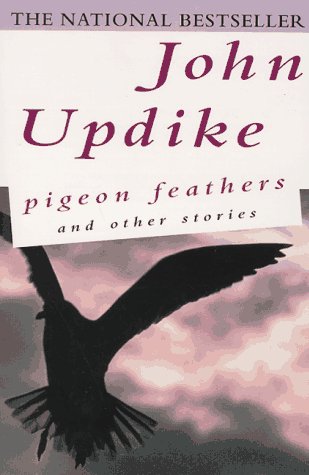
$8.00
40. Pigeon Feathers

21. John Updike's Rabbit Tetralogy: Mastered Irony in Motion
by Marshall Boswell
Hardcover: 253 Pages (2001-02)
list price: US$39.95 -- used & new: US$34.38
(price subject to change: see help)
Asin: 0826213103
Average Customer Review: 5.0 out of 5 stars
Canada | United Kingdom | Germany | France | Japan

Customer Reviews (2)

5-0 out of 5 stars Impressive
It is really hard to overstate the importance of Marshall Boswell's critical achievement here.His goal is to explain Updike's literary vision in constructing the Rabbit tetralogy, "a dialectical vision" which he calls "an interdependent matrix of ethical precepts, theological beliefs, and aesthetic principles-less a creed than a versatile formal device; it is, in effect the scaffold on which Updike has built the entire tetralogy" (p. 3).That goal is what distinguishes this book from the only other text wholly devoted to a discussion of the tetralogy, editor Lawrence Broer's Rabbit Tales: Poetry and Politics in John Updike's Rabbit Novels (Tuscaloosa, AL: University of Alabama Press, 1998).That work, helpful in isolated essayists' insights, lacks the coherent analysis and penetrating structural insights of the whole Rabbit mega-novel which make Boswell's book so valuable.Indeed, it seems fair to say that henceforth no commentator on the Updike tetralogy will be able to avoid coming to terms, up or down, with Boswell's carefully-wrought interpretation.
The four chapters analyzing the four Rabbit novels are really excellent examples of careful reading translated into readable prose.Students and general readers will find much of value in those chapters, each novel taken on its own terms, but also as expressions of the overall tetralogy vision.The Introduction lays out in careful detail the assumptions Boswell brings to this task.The key interpretive assumptions are taken from Kierkegaard and theologian Karl Barth-Kierkegaard providing the philosophical concept of mastered irony which presumes an author's vision "emerges indirectly via the unresolved tension produced by the interplay of that thematic dialectic" (p.4), and Barth providing the theological metaphysics of the "dialectic of evil, the concept of `something and nothingness,' [and] the argument for a serenely unproveable God."According to Boswell, "An unsettling Manichaean vision, Barth's dialectical theology appeals to Updike for its worldliness and its intellectually elegant explanation for the presence of evil" (16).
Those who dissent from this reading will likely do so at the point where Boswell assumes that the vision of the Rabbit tetralogy represents the entire Updikean picture of personal human experience as religious.Withal, a very impressive book, indeed.

5-0 out of 5 stars Essential reading
This is essential reading for anyone interested in John Updike.Boswell summarizes the Rabbit books, Updike's best work, and presents a dynamic analysis of their importance.Updike doesn't just build characters, says the author, but presents the inner mystery of the human condition from a cosmic, really a theological, viewpoint. ... Read more


22. Fighters and Lovers: Theme in the Novels of John Updike
by Joyce B. Markle
 Hardcover: 205 Pages (1973-11-01)
list price: US$30.00
Isbn: 0814753620
Canada | United Kingdom | Germany | France | Japan

23. John Updike and the Three Great Secret Things: Sex, Religion, and Art
by George W. Hunt
 Hardcover: 232 Pages (1985-05)
list price: US$2.98
Isbn: 0802835392
Canada | United Kingdom | Germany | France | Japan

24. The Best American Short Stories of the Century (The Best American Series)
Paperback: 864 Pages (2000-04-20)
list price: US$19.95 -- used & new: US$9.00
(price subject to change: see help)
Asin: 0395843677
Average Customer Review: 3.5 out of 5 stars
Canada | United Kingdom | Germany | France | Japan
Editorial Review

Amazon.com
At age 67, the perennially youthful John Updike may at last qualify as something of an elder statesman. But the Best American Short Stories annual--whose greatest hits package Updike has now assembled--is almost a generation older, having commenced publication in 1915. This staying power allows the hefty Best American Short Stories of the Century to perform double duty. It is, on the one hand, a priceless compendium of American manners and morals--a decade-by-decade survey of how we lived then, and how we live now. Yet Updike very consciously avoided the sociological angle in making his selection. "I tried not to select stories because they illustrated a theme or portion of the national experience," he writes in his introduction, "but because they struck me as lively, beautiful, believable, and, in the human news they brought, important." In this he succeeded: the 55 fictions that made the grade are most notable for their human (rather than merely historical) interest.

So who got in? There are a good number of cut-and-dried classics here, including Hemingway's "The Killers," Faulkner's "That Evening Sun Go Down," and Philip Roth's acidic spin on religious connivance, "Defender of the Faith." In other cases, major authors are represented by relatively minor works. Yet it's hard to quibble with the inclusion of Willa Cather, F. Scott Fitzgerald, Tennessee Williams, J.F. Powers, Eudora Welty--particularly when you take into account that their second-tier creations are fully the equal of anybody else's masterpieces. And the final third of the book really does constitute an honor roll of contemporary American fiction, with brilliant entries by Saul Bellow, Donald Barthelme, Raymond Carver, Tim O'Brien, Bernard Malamud, Cynthia Ozick, John Cheever, and Vladimir Nabokov. (For the latter, Updike actually succumbed to his own idolatry and bent the rules for admission--but nobody who reads the hallucinatory "That in Aleppo Once..." will regret it.) It goes without saying that fiction fans will be complaining about the editor's sins of omission well into the next century. But no matter how you slice it, this remains an elegant and essential advertisement for the short form. --James MarcusBook Description
Since the series' inception in 1915, the annual volumes of The Best American Short Stories have launched literary careers, showcased the most compelling stories of each year, and confirmed for all time the significance of the short story in our national literature. Now THE BEST AMERICAN SHORT STORIES OF THE CENTURY brings together the best -- fifty-six extraordinary stories that represent a century's worth of unsurpassed achievements in this quintessentially American literary genre. This expanded edition includes a new story from The Best American Short Stories 1999 to round out the century, as well as an index including every story published in the series. Of all the writers whose work has appeared in the series, only John Updike has been represented in each of the last five decades, from his first appearance, in 1959, to his most recent, in 1998. Updike worked with coeditor Katrina Kenison to choose the finest stories from the years since 1915. The result is "extraordinary . . .A one-volume literary history of this country's immeasurable pains and near-infinite hopes" (Boston Globe). ... Read more

Customer Reviews (42)

5-0 out of 5 stars Short Story Group
I am part of a short story group that meets weekly.We read two stories each week.We've read the first 12 stories so far.I can't tell you how much I am enjoying this opportunity to sample authors that "somehow" I completely missed even though I have a master's degree in language arts.Even if I don't care for a story, I am glad to sample the writing.It also gives me an opportunity to decide which artists to delve further into.An example:After reading Willa Cather's Double Birthday I am now reading My Antonia.

3-0 out of 5 stars Notwhat I really wanted
Only unknown authors to me. I was expecting some works by Edgar Allan Poe, O. Henry and/or Agatha Christie (maybe I ordered the wrong volume!). Also, some of the stories are quite dull and end as if the author didn't know how to end it! Quite disappointing!

4-0 out of 5 stars A good effort
I read "The Best American Short Stories of the Century" to get a broad overview of the contemporary American short story genre. John Updike edited the collection. The introduction, written by Updike, is an interesting essay on the difficulties inherent in assembling any best-of collection. I suppose I would have liked to have read more of his thoughts on the form, its progress over the century and perhaps its place in contemporary fiction rather than his struggle in selecting pieces. But taken together with the forward, written by co-editor Katrina Kenison, the two essays offer an interesting look into the fickleness of publishing tastes and how those tastes can be influenced by only a few people. It makes the current consolidation of the publishing world seem slightly less troubling.


In any event, there are many people I would have included in the collection that are absent--John Edger Wideman comes quickly to mind, and Latino writers seem strikingly absent. And similarly, though I would not even pretend to know all that one needs to know to authoritatively assemble a collection with such a presumptuous title, I would nonetheless exclude more than one or two pieces that were included in the anthology. But as I reflect on the collection, it occurs to me that it was written more for the general reading public and less for a person interested in the diversity of the form and its practitioners. There are some great stories in the collection, however, I suspect that it more closely represents a particular writer's tastes than a true overview of the form.


The most interesting pieces for me were those written by writers who I associate with other genres. Robert Penn Warren's "Christmas Gift" is a beautifully raw and sensual story. And although it has been some years since I've read Warren's work, my vision of him was always that of a country gentlemen poet living the gentlemanly life in semi-rural Connecticut. The "Christmas Gift" rivals Faulkner or O'Connor in the evocation of the rough-knuckled rural life. The language of the piece and the structure of the lines felt fresh and new. The images were so unique and evocative that I must make a point not to mimic them in my own writing. The opening paragraph is wonderful, his attention to the details of the place and its people comes out with poetic precision that is at once authentic for the place and yet far, far above the circumstances of anybody involved. In this sense it brought to mind Steinbeck (another writer who didn't make the cut) yet his prose seemed even more carefully measured.


I have always admired E.B. White's essays and now, after having read the short story, "The Second Tree from the Corner," I have come to appreciate his abilities as a fiction writer. It has inspired me to track down some of his fiction--other than that written for children, though those stories are also good. "The Second Tree from the Corner" was somewhat unexpected. It's a decidedly non-country story--a far cry from many of the essays I have read. Its protagonist is a patient who is undergoing therapy--another surprise. However when I think about many of his essays, even the most well known essays written at the height of the war, essays that were intended to bring some measure of comfort to a society and culture that could not escape the general sense that they were indeed fighting for their very survival, I still find in these essays a certain sense of existential angst, of an uncertainty that seems thoroughly modern and non-sentimental.


When I hear people talk about White's well-known essay, "Once More to the Lake," it seems almost as though the last lines are forgotten. There is so much talk of lake weather, farm-girls, and berry pies that that final line seems to somehow not stick to memory. But what a line--the entire piece is informed by that last line. The last two paragraphs keep the essay from become a simple, shallow reflection on the American way of life. It was almost as though, despite the Nazis and the Imperial Japanese Emperor, White could not help but feel almost desperately modern. When he wrote, "As he buckled the swollen belt, suddenly my groin felt the chill of death," he rescued the essay from the slash pile of Americana.


And just as he rescued "Once More to the Lake," he may have condemned "The Second Tree from the Corner." Though it is a good short story, it is not at all the warm and fuzzy piece that some may expect from White. And again, in the story White waits to put the last nail in the emotional structure of the piece, which could until the final line go in any one of a number of directions. The final direction of the piece is not nearly as comfortable as it perhaps could be. He closes: "He crossed the Madison, boarded the downtown bus, and rode all the way to Fifty-second Street before he had a thought that could rightly have been called bizarre."


We never discover the nature of his bizarre thoughts, we are left to fill them in with our own interpretation of the strange, never the less, the piece is far from conclusive or comforting.


Similarly, I was impressed with Elizabeth Bishop's "The Farmer's Children." Again I am familiar with her essays and of course her poetry, but I had never before read one of her short stories.


There were also stories by writers whom I have never before read, at least as far as I can remember. Susan Glaspell's 1917 story, "A Jury of her Peers," was impressively fresh and full of a very modern sense of feminism. Grace Stone Coates', "Wild Plums," was an emotionally complex story about class in the early years of the Great Depression.


I did not find what I wanted in the collection--that is, an overview of the contemporary American short story form. I suspect that there is no easy or fast way to come to such an understanding. Maybe that has something to do with the nature of the short story, like the personal essay it is a constantly shifting form, something that responds quickly to contemporary pressures, but also somehow stays true to its form as laid down by Chekhov (or in the case of the essay, Montaign).


I did find some things I did not expect in the collection. And thought I confess that I did not like some of the stories in the and found myself questioning why they were included at the expense of other writers, it was a worthwhile read.

4-0 out of 5 stars Very Well Done
To reduce the boredom of exercise I decided to listen to audio books.Short stories work well as I'm inclined to keep moving until the end.

This audio CD collection is very good and really well done.Many of the stories are read by their authors.The sound is crisp and clean, and (with rare exception) the diction fluid and natural.The stories themselves are varied and high-quality.

One thing to note, though, is that the audio version does not contain all the stories from the print version.That may seem obvious, but if you are expecting to hear one or anther of the stories from the book, know that the CD set only includes 22 stories.

5-0 out of 5 stars Grand American tales of the nineteen hundreds
The quintessential in the American short story is represented in this collection of fiction.I am reading these tales both for the pleasure they bring me and as a means of studying the craft of masters in a field I hope to enter. As part of my fiction class at the University of Iowa, I have read "Janus" and "Where are you going, Where have you been?" (Beattie and Oates).

These two tales explore the psyches of two women: one a successful married realtor obsessed who owns an artistic bowl that assumes a character of its own and, the other, a young girl who becomes a victim of her and others' obsession with her beauty.

Lesser-known authors are represented alongside the giants of American literature.Points of view representing various walks of life, ethnicities, languages and periods of time abound in the volume. For my own pleasure and out of curiosity, I have read "Zelig," a tale about a lonely man obsessed with saving his money, torn between his new home in America and his native Russian village (Rosenblatt).

Ann Beattie, Joyce Carol Oates and Benjamin Rosenblatt are authors whose works I have relished so far from the collection, and because the stories are so intricately woven, I find myself re-reading them, delaying the pleasure awaiting me in the remaining fifty plus tales. ... Read more


25. John Updike and Religion: The Sense of the Sacred and the Motions of Grace
Hardcover: 290 Pages (1999-12)
list price: US$24.00 -- used & new: US$16.23
(price subject to change: see help)
Asin: 0802838731
Average Customer Review: 4.0 out of 5 stars
Canada | United Kingdom | Germany | France | Japan

Customer Reviews (4)

4-0 out of 5 stars Critic's Comments on Dust Jacket
"John Updike has said that 'religion created Greek literature anddied within its embrace.'Another religion may or may not have createdUpdike's works, but this volume of essays shows that the embrace islong-standing, seductive, many-sided, and by no means moribund.Withobvious affection and clarity of vision, these crtics have hugged theUpdikean shore very well indeed."Anthony C. Yu, University ofChicago Divinity School.

4-0 out of 5 stars Critic's Comments on Dust Jacket
"From an abundant but contradictiory world as it is, John Updike hasin fifty books recorded in prodigious detail 'an intense radiance we do notsee.' That underglow is explored in these fifteen thought-provoking essaysabout the religious dimension of his work.Some essayists protray histhemes as Lutheran, Barthian, or Kierkegaardian, but all see this work as alifelong Pilgrim's Progress, with Updike a pilgrim who is sometimes inmotion upwards, but at other times only watches while God moves inexorablytoward him."Doris Betts, author of "Souls Raised from theDead" and "The Sharp Teeth of Love."

4-0 out of 5 stars Updike's Confrontation
James Yerkes is the editor of a wonderful collection of essays dealing with the topic of faith in a delightfully down-to-earth manner. John Updike and Religion: The Sense of the Sacred and the Motions of Grace (Eerdmans, $24). That longwinded title may scare away Updike admirers who fear wadingin the dark waters of academic posturing. They need not worry, for the bookis a relatively breezy read, with only a semi-occasional wandering intoverbosity. For instance, Yerkes (who teaches religion at Moravian Collegein Bethlehem, Pa.) writes about Updike in the light of having watched andenjoyed the Jack Nicholson film, As Good As It Gets. Nothing stuffyhere.

James A. Schiff writes that for Updike, "God permeates everyaspect of human life so that his presence is felt in and around households.Updike doesn't state his beliefs in so many words, preferring--as mostartists--to "suggest that the possibility of there being somethinggreater beneath the physical surface." As Updike wrote in AssortedProse, "Blankness is not emptiness; we may skate upon an intenseradiance we do not see because we see nothing else."

Schiff sees Godpresence in Updike's writing, although "beneath the surface, pushingthrough, as well as above the world, providing light and hope."

Ifyou share an enthusiasm for Updike, be sure to check out editor Yerkes'excellent Web page called "The Centaurian" devoted to Updike.

4-0 out of 5 stars Impressive resource on Updike's religious views
The editor and contributors do a fine job documenting and interpreting Updike's religious insights using his own words from a wide range of his writings and interviews.It's one of the best resources for literaryscholars as well as Christian-minded readers.All will have theirspiritual values reinforced and their faith deepened and challenged,enriched, and inspired by this instructive introduction to this giftedProtestant writer and observer of American culture.It also has acomprehesive bibliography. ... Read more


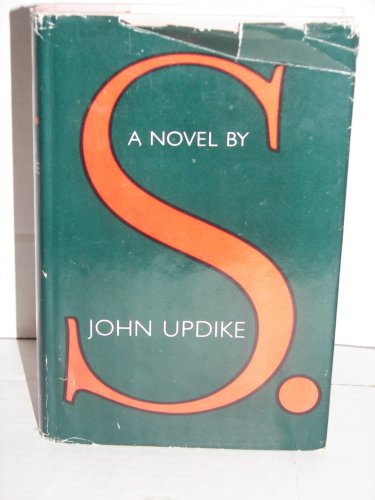
26. S
by John Updike
Mass Market Paperback: Pages (1989-08-29)
list price: US$6.99 -- used & new: US$0.01
(price subject to change: see help)
Asin: 0449216527
Average Customer Review: 3.5 out of 5 stars
Canada | United Kingdom | Germany | France | Japan
Editorial Review

Book Description
S. is Sarah Worth -- doctor's wife, North Shore matron, loving mother, and now (suddenly!) ardent follower of a Hindu religious leader known as the Arhat. As this brilliant and very funny novel opens, Sarah is fleeing the confinement of her suburban life to become a sannyasin (pilgrim) at her guru's Arizona ashram.

In the letters and audiocassettes that Sarah sends to her husband, daughter, mother, brother, best friend -- to her psychiatrist and her hairdresser and her dentist -- master novelist John Updike gives us a witty comedy of manners, a biting satire of life on a religious commune, and the story -- deep and true -- of an American woman in search of herself.


From the Trade Paperback edition. ... Read more

Customer Reviews (13)

2-0 out of 5 stars One woman's supposed search for spiritual awakening
_S_ is a series of letters by Sarah Worth, the wife of a philandering doctor, to her husband, her daughter, her mother, and others.Sarah even sends taped messages to her friend, Midge, not realizing that Midge was less than trust worthy.Sarah is bored with her sterile marriage and plans to seek solace and spiritual renewal in an ashram in Arizona, but discovers that life there is no different from her upper middle class life in New England.The people in the ashram are just as false, belligerent and mercernary as those on the outside.Even the Arhat, the spiritual leader with whom she invests much trust and admiration, and with whom she has an affair, is phony.By the end of the novel, Sarah becomes totally disillusioned.

_S_ is supposed to be a satire on Hawthorne's _The Scarlet Lettet_.Updike alludes to various charaters in _S_ and those in the Hawthorne classic.I suppose that Sarah's "scarlet letter" is the blame she will incur as the villainous wife who deserts her husband.Although Updike's book has some occasional humor, in as much as Sarah's self-discovery is unexpected and somewhat ironic, I found the book replete with with cliched situations and one-dimensional characters, none of whom I particularly cared for.That we read the novel only from Sarah's point of view is not necessarily a bad thing, if only Sarah were not such an insipid character.

4-0 out of 5 stars Updike- The Master of Ridicule
One theme shines throughout Updike's novels- ridicule.The author has a gift for being able to expose the weaknesses, faults and insecurities of people, and he does it in a very comical way.In this novel, the main recipient of ridicule is a New England woman in her 40's going through some sort of midlife crisis.Though the main character gets her fair share of mockery, none of Updike's characters escape in a positive light.Each character is entertainingly scoffed at through the clever style of writing.The new age, Eastern religious cult which the main character joins, is shed in a light that is not only negative, but likely very accurate.The way the book was written was truly creative, with the entire bulk of the book being in the form of letters written by the main character.It would be hard to put together a decent story completely from only one person's perspective, especially when told through the written letter.Expect a creative, enjoyable smear campaign against every character and every belief.This scorn produces a good read.

4-0 out of 5 stars A woman of independent means
Written in the form of letters, Updike in this novel satirizes the excesses of the materialistic world while showing that a woman can overcome these excesses (that she is a part of) and make a totally different life for herself. Sarah Worth divorces her wealthy husband and joins a Hindu ashram in the southwest. In her letters to friends and family she reflects on her past, especially what she had to do (the style rituals, healthy skin potions she lathered herself with, the importance of being her rich husband's trophy wife) as it compares to her simpler life in the ashram.

But all is not rosy there, either, as it too roils in its own hypocrisies as it generally rips off the people who go there. Sarah rises up against this and runs off with their illegal funds. She escapes her naivety, though the townspeople in which the ashram is located are upset with her actions and are still blinded by their gullibility. Updike wrote this novel in response to the charge that he had never written about a "strong" woman. Sarah Worth (ah, the importance of names) is a "worthy" answer to this accusation. This book, as others by Updike, has a strong connection to Hawthorne's SCARLET LETTER.

4-0 out of 5 stars A NOTEWORTHYWORK - A BIT DIFFERENT
This is probably not Updike's best work, but it is different and I personally feel it is always good when a known author puts his or her self out to be examined.I did find this book to be the funniest of Updikes work, but perhaps my sense of humor is slightly off center.The book is cerainly a satire and is rather cruel and a bit vendictive when it comes to the current human condition, feminism, new age stuff, et al.The format, a series of letters and communications is quite readable and you almost get the feeling of snooping on someone elses life. I do feel it is a good work and do feel those who enjoy Updikes work owe it to themselves the read.

3-0 out of 5 stars Enjoyable Updike
"S." is the story of a lonely woman named Sarah Worth, trapped in a thankless marriage who one day escapes to an Arizona ashram while not knowing which part of her life to live. Her confusion and angst leads her into a sordid relationship with the village's Arnat (leader), duplicity with the organization's questionable fund-raising, and difficult friendships with her peers in the ashram. I found this to be a very interesting look at the desire of one woman to shed her old skin and begin anew, although at the same time not knowing exactly how to do so. Sarah is sort of a metaphor for trapped women everywhere; confused and comedic, she leaves her old self with reluctance, all the while questioning her decisions. The outcome is accurate to her character, while still mysterious enough so the reader isn't sure if her whole journey was worth it in the first place. The book overall is light reading, but great fluff entertainment nonetheless. Updike is at his comedic best here, while still covering everything in the beautiful, pesudo-technical language that has become his trademark. If you would like to learn more spiritual terminology while getting to know a loveably neurotic character I recommend this book, but not if you want something to really make you think. ... Read more


27. The Elements of John Updike
by Alice. Hamilton
 Hardcover: Pages (1970-01)
list price: US$6.95
Isbn: 0802833551
Average Customer Review: 5.0 out of 5 stars
Canada | United Kingdom | Germany | France | Japan

Customer Reviews (1)

5-0 out of 5 stars The Best (though dated) Book on Updike
The Elements of John Updike is the best study of John Updike's fiction that I have yet read.It is profound and very different from other studies in the depth and attention it pays the author and his writing.I have yetto read another book that so perfectly integrates all the diverse elementsof his nature, the poetry, the fiction, the nonfiction, the studious natureand development of his fierce intelligence.

It is a shame that the bookis now out-of-print. I hope that it will one day be updated and expanded,or at least reprinted, as it is still very much relevant, despite the factthat it covers only his origin through Couples.Still irreplaceable in itscomprehension of the man who is quite possibly America's greatest livingauthor.

By the way, this book is written by Alice and Kenneth Hamilton(Amazon seems to have forgotten one of them). ... Read more


28. Seek My Face
by John Updike
Hardcover: 288 Pages (2002-11-12)
list price: US$23.00 -- used & new: US$20.15
(price subject to change: see help)
Asin: B000C4SKIS
Average Customer Review: 4.0 out of 5 stars
Canada | United Kingdom | Germany | France | Japan
Editorial Review

Amazon.com
A meditation on art, aging, and memory, John Updike's Seek My Face is the fictional equivalent of a PBS documentary on postwar American art. Seventy-nine-year-old Hope Chafetz, a painter of merit but, most importantly, wife to two major American artists, allows a young journalist named Kathryn to interview her for an online magazine. Having expected perhaps a two-hour talk over coffee, Hope is dismayed to find that her guest has brought sheaves of questions, a tape recorder, and the kind of scrupulous attention to detail--even sexual detail--that Hope would rather avoid. She gives an entire day to Kathryn, who, like memory itself, seems oblivious to Hope's need to eat, rest, or breathe fresh air.

Seek My Face draws on the story of Lee Miller and Jackson Pollock, the model for Hope's first husband. These are the best parts of a slow, sumptuous, and intricately detailed novel that lacks any significant action except in retrospect. Hope's second husband is depicted as an amalgam of Andy Warhol, Roy Lichtenstein, Claes Oldenburg, and Wayne Thiebaud--a useful survey of the period, but not compelling characterization. One can sense the author folding in important art-historical points and details toward the end, like last-minute ingredients in a cake that may be too heavy to rise. Readers who stay with Hope and Kathryn through the day, however, will be rewarded with a gorgeous, resonant, and almost antimodern ending. --Regina MarlerBook Description
John Updike’s twentieth novel, like his first, The Poorhouse Fair (1959), takes place in one day, a day that contains much conversation and some rain. The seventy-eight-year-old painter Hope Chafetz, who in the course of her eventful life has been Hope Ouderkirk, Hope McCoy, and Hope Holloway, answers questions put to her by a New York interviewer named Kathryn, and recapitulates, through the story of her own career, the triumphant, poignant saga of postwar American art. In the evolving relation between the two women, the interviewer and interviewee move in and out of the roles of daughter and mother, therapist and patient, predator and prey, supplicant and idol. The scene is central Vermont; the time is the early spring of 2001.


From the Hardcover edition. ... Read more

Customer Reviews (23)

5-0 out of 5 stars So alive, even on a dull and rainy afternoon
SEEK MY FACE, an extraordinary novel that takes place on one long rainy afternoon in New England, ranks (for me, at least) with the greatest novels taking place on a single day: Nadine Gordimer's THE LATE BOURGEOIS WORLD, Saul Bellow's SEIZE THE DAY, and Philip Roth's brilliant evocation of a snowy afternoon, evening, night and its following bright winter morning--including breakfast--in THE GHOST WRITER.

After breakfast in THE GHOST WRITER, Hope Lonoff, the revered writer's wife, runs away from the revered writer (in Roth's memorable words) "on her doomed search for a less noble calling..."

Another Hope is the calm and graciously introspective woman painter at the center of the Updike novel.

Prodigious, subtle, intelligent, tender, alive, and emotionally precise, SEEK MY FACE is, like THE GHOST WRITER, a marvel. I learned so much about painting,painters, women artists, and growing old while I was reading it and I feel so grateful to Updike for writing it.

1-0 out of 5 stars WTF?
This is the first book in my 50+ years of life that I have not been able to finish.It just rambles on. Maybe if I knew more about Jakson Pollack it would have been more interesting, but I doubt it.

5-0 out of 5 stars The Master Describer at Work Again!
Updike is master writer of vast intelligence and fantastic insight into human relationships.

Here are some of my favorite quotes I pulled out of "Seek My Face,"

"She and Zack came to the sunstruck, wind-raked flats and filled the forsaken old farmhouse with the sound of their voices, augmenting the warmth of their bodies with that the woodstove, whose heat parched their skins and hair in its close vicinity but died halfway upstairs to the cold bedroom."


"As the sun warms the mountains these wasps of vapor are stirred into visibility above the valleys.Violet tinged panes had seemed thinned, like the skin of an old person; at a blast of wind from a certain angle a window vibrates like a harp being stroked."

"His airs, his vanity got worse after the `Life' article, and the world showed signs of coming around to his naïve overestimation of himself. Collapses would occur sometimes at one of the dinner parties she so carefully constructed, sometimes on a trip to New York, where the sense of spotlight on him, of bright lights and fortunes to be made as post-war prosperity seeped into the art market."

"Kathryn lifts her chin, her opaque protuberant eyes flash like those of the predator on the scent.She wants Hope's analytic mood to keep expanding, but already the effort has embarrassed the older woman with its immodesty."

"Outside the thin-paned windows, birds cannot be seen, a hush has thickened the air.The small shreds of cloud have grown flat lead-blue bottoms and white tops shaped like cauliflowers."

"She sees, walking past windows, that the sky, this morning so blank and pure a blue, is closing down, the scattered white clouds expanding to crowd out the spaces between them, packing themselves tightly as gray flag stones, with something vaporous arising even in the chinks, so that the sunlight leaking through is tremulous, like the shuddering reflections from the windows of a passing train."


5-0 out of 5 stars New York School
Things trail us from place to place.Hope wantedto have an old chair of her grandmother's.She was raised as a Quaker in Ardmore.Now she is seventy nine and is wearing soft Birkenstocks.The sixties had been a great release.

Zack's pictures became famous and his drinking terrible.Zack had been a westerner.Zack McCoy had not liked to be interviewed.He had been coached on what to say.He had been self-indulgent and, even, self-educated.Clem used Zack to make a name in art criticism.He really had very little talent.Benton had been his teacher.The rich had made pets out of the European artists, Mondrian, Max Ernst, Duchamp.

At Bryn Mawr Hope's childhood interest in art had been revived.In 1942 Hope moved to New York City to be an artist.She attended Cooper Union.In the 1940's Hope and her artist friends despised the mural style.(Some of it has aged well.)Hope feels at times she has wasted her life.Her husband, Zack McCoy, didn't go through any of that.At their place on Long Island he simply went out to the barn and painted.The Cedar Tavern at University Place was a meeting place for the artists.Peggy Guggenheim had promoted Zack's work.Hope had been attracted to Zack, not to his art.

Hope has a fear of being thought stupid about all the new technology and is shy in the presence of a young interviewer about the working of the devices in her kitchen.Hope's current place is a farmhouse in northern New England, a sort of train arrangement with its attached barn.Zack and Hope were married in 1945 by a Congregational minister.Zack used industrial enamel paints for his work.In action, painting for Zack had a tempo.His way of working did produce failures.Hope remembers some incidents with shame.Alcoholics have a way of making the world assume the burden of their misbehavior.

Zack got his power of concentration from his mother.Hope foundered in Zack's shadow.Women didn't count for much in the world of macho painters.The couple hit each other when work was blocked and for other reasons.At the time of his death Zack was drinking a case of beer a day and Hope was in Europe.

The book's format is Hope being interviewed.Hope's later husbands also were connected to art.Guy Holloway was a pop artist and Jerry Chafetz had been a collector.Guy was half English.Their baby daughter was named Dot and Guy did his Benday series around the time of her birth.

The book draws upon the lives of actual artists to create a sense of verisimilitude.Updike's use of the material is masterful.

3-0 out of 5 stars Loved, loved, loved the ending!!!!!
In tone, in subject-matter and in meaning, the last ten pages of Seek My Face stand apart from the novel that came before them. It was almost as if the ever-reliable Mr. Updike took the main character from the novel, wrote her into a short story that concerned her childhood, and then placed the short piece into the longer prose offering, separate but unequal. The tender "memory" of the main character as a child in a long-gone America of the early twentieth-century, interacting with her endearing Quaker grandfather, was more touching than the tale of the character's having lived thru the highs and lows of the twentieth-century American art scene. I HAD to mention that. The story at the end, the woman's memory, meant more to me as a reader than everything else in the novel, a work I at times enjoyed a lot and at other times found myself bored with nearly past tolerance.

I'm a fan of John Updike. I've read most of his short stories and a half-dozen of his novels. But if I knew going into this book what I know now for having been from one side of it to the other, I'd read just the ending. But hey, if you're someone with an interest in the history and figures of American art from the 1940's to the 1970's, you'll probably get more out of Seek My Face, than I did. ... Read more


29. The Witches of Eastwick
by John Updike
Paperback: 320 Pages (1996-08-27)
list price: US$14.95 -- used & new: US$7.50
(price subject to change: see help)
Asin: 0449912108
Average Customer Review: 3.5 out of 5 stars
Canada | United Kingdom | Germany | France | Japan
Editorial Review

Book Description
In a small New England town in the late 1960s, there lived three witches Alexandra Spoffard, sculptress, could create thunderstorms. Jane Smart, a cellist, could fly. The local gossip columnist, Sukie Rougemont, could turn milk into cream.

Divorced but hardly celibate, content but always ripe for adventure, our three wonderful witches one day found themselves quite under the spell of the new man in town, Darryl Van Horne, whose hot tub was the scene of some rather bewitching delights.

To tell you any more, dear reader, would be to spoil the marvelous joy of reading this hexy, sexy novel by the incomparable John Updike. ... Read more

Customer Reviews (21)

3-0 out of 5 stars Updike's foray into magical realism
In the interests of full disclosure, I'll make note of my own biases up front. I have always loved Updike's "Rabbit" tetralogy, although at times I found some of it implausible.I have always considered Updike a master of English prose, with a tendency to overwrite at times.The only other book I had previously read by him, other than the four "Rabbit" books, is "The Coup," which I enjoyed.I didn't see the film version of the book under review.I have never been a fan of magical realism, of which genre this book is an example.And I had no interest in reading the book when it first came out.So, why did I read this book, twenty-three years after its publication?Primarily because Harold Bloom, a critic for whom I have the utmost admiration, listed it among the books in the "Western Canon."Now, having finished the book, I am somewhat befuddled as to why Bloom did so.I think the Rabbit tetralogy deserved inclusion in the "Canon," but not this book.

This book belongs squarely in the magical realism camp.The fact that the three principal characters are witches and thus have magical powers is never explained; it is simply taken for granted, not only by the author but by the townspeople of Eastwick as well.The book is otherwise a very realistic portrayal of a New England town in the late 60s-early 70s, complete with its prejudices and political divisions.The minor characters are especially well drawn.Updike's mastery of English prose is, at times, at its height here.So, unfortunately, are one of his worst faults as a writer, which became apparent as far back as "Rabbit, Run": the tendency, whenever there is a lull in the action, or when the author seems uncertain as to where to go with the plot, to "pad" the novel with verbal descriptions of just about anything--of foliage, of living rooms or other interiors, of marinas or beach walkways--anything to keep the reader engaged until there is some action.The effect, on this reader at least, is soporific; I found myself struggling to stay awake.This flaw is nearly fatal in the first fifty or so pages of the book; I found myself waiting and waiting and waiting, just for something to happen.

After I finished the book, I found myself scratching my head wondering what the magical realism aspect (i.e., the witchery) added to the story--a question I ask myself with almost all works of magical realism--and my answer was, practically nothing.The basic story, about three women approaching middle age, all divorced or unhappily married and sexually adventurous, who suddenly take an interest in a mysterious and rather crude rich man who takes over an old mansion in the town, could easily have been told "straight."The witchcraft was little more than a distraction.Tennis balls that turn into birds in midair, feathers suddenly appearing in the mouths of women the witches don't like, thunderstorms suddenly appearing to drive people off a beach--all were annoyances that we could well have done without.The only time the witchcraft seemed essential to the plot was a crucial episode in which the witches use their powers to kill off a basically innocent young rival for the rich man's affection.Even this wasn't really necessary; if they wanted to kill her, they could have used poison.

So why am I giving this book three stars?For one thing, because I admire daring and risk-taking in an author, and this was a risky undertaking, for which Updike deserves respect.Moreover, once one gets into the book, it's not a bad read.And when Updike is good, as he often is here, he is very very good.Nevertheless, if you have never read Updike before, don't start here; read the Rabbit tetralogy.

4-0 out of 5 stars Creative use of "witch-has-sex-with-devil" stereotype.
I quite like the film and thought the book would be similar. The book is in fact much better than the film. I love Updike's modernisation of historical stereotypes of witches and witchcraft - maleficium, familiars, witches' marks, the devil. I love its historical period that is so obvious, yes not cringeworthy as some other books set in recent history can be. While the film is set in the 1980's (check out those perms) the book seems to be set in the late 60's - early 70's with references to Vietnam and Pop Art.

Updike's powers of description and similie are really gorgeous, I can visualise so well with this book I feel like I'm there. I wonder if it is particularly appealing and interesting to me because he describes nature so well? The sudden little magical occurances in the story are also unexpected and then pleasantly surreal. In addition, the witches' powers are not the usual stuff that you now expect from TV or film like Charmed or The Craft. I was interested to see how Updike handled female characters, him being a man and all, and they actually seem quite convincing to me. I don't think think the story is misogynist.

In this age of do-good modern witchcraft it is initially confrontational to read a book about witches where ethics is not a high priority in magic, yet it is also refreshing in a way. "The Witches of Eastwick" reminds me of the spell books by Valerie Worth in its general amorality and, I think, also of her particular, unusual aesthetic. I found that I couldn't wait to get back to it whenever I had to put the book down for other pressing duties. Also, while some fiction drives me mad with its implausibility, in this case it doesn't, and that is possibly because Updike's writing is so attractive that I don't need the story to be completely believable. Maybe potential to succumb to belief is peculiar to the mind of the beholder?

3-0 out of 5 stars Different from movie
I loved the movie so much that I decided to read the book thinking that the books are normally better than the movie, so I thought the book would be awesome, unfortunately I was sadly disappointed. The book is very different from the movie and I felt that the supernatural aspect was somewhat lacking. The way the characters are portrayed in the book are not only physcially different than that of the movie, but also emotionally different. The 3 withces are mean and spiteful and the book seems to drag on about their boring lives. The bookalso mentions nothing of Darryl Van Horne being the devil and his character is somewhat lacking to say the least. I think I was totally spoiled by the movie because Cher, Pheiffer, Sarandon, and Nicholson brings alot more life to the characters than the book did.

5-0 out of 5 stars Real Witches!
As other reviewers note, Updike does spend a lot of time on details; that is what I love about this book.The little details make the book real to me, then Updike throws something so tiny yet unbelievable (Sukie turns milk into cream for her coffee) into the mix.That just knocks my socks off!Of course there is plenty of Updike's neurosis about adultery, his conflict about God and religion, commentary on bourgeois mores.I just love his decriptions of the Lenox mansion, the insufferable wives of the witches' lovers, their spells made up of household items.I love how he describes Alexandra's Algerian brocade jacket and Sukie's suede skirt.The characters seem like so many of my mom's friends when I was growing up - women without husbands sort of befriending each other (divorcees and widows are a threat to married women).I don't have any scholarly discussion to add - it's been done here already.Just wanted to chime in about how much I love this book.

2-0 out of 5 stars Disappointed with the book.
I loved the movie. That's why I bought the book. The movie is fantastic, the book is disappointing. I will not be reading any other books by Updike. He is verbose, slow to read and wanders of tangents. ... Read more


30. Picked-Up Pieces
by John Updike
 Paperback: Pages (1976)

Asin: B000OPZNBC
Canada | United Kingdom | Germany | France | Japan

31. The Same Door, Short Stories
by John Updike
 Paperback: 241 Pages (1981-08-12)
list price: US$7.95 -- used & new: US$2.51
(price subject to change: see help)
Asin: 0394747631
Average Customer Review: 4.0 out of 5 stars
Canada | United Kingdom | Germany | France | Japan

Customer Reviews (1)

4-0 out of 5 stars Interesting collection
Although not his best collection of short stories, this one has a few gems, among them, "The Happiest I've Been," about a college student home for Christmas break, watching his past and future merge in his home, at a party and in his car.For this story alone, the book is worth picking up. ... Read more


32. The Carpentered Hen
by John Updike
 Hardcover: 84 Pages (1982-02-12)
list price: US$16.95 -- used & new: US$14.00
(price subject to change: see help)
Asin: 0394523946
Canada | United Kingdom | Germany | France | Japan

33. John Updike: A Bibliography of Primary & Secondary Materials, 1948-2007
by Jack De Bellis, Michael Broomfield
Hardcover: 608 Pages (2007-09)
list price: US$195.00 -- used & new: US$195.00
(price subject to change: see help)
Asin: 1584561955
Canada | United Kingdom | Germany | France | Japan

34. Licks of Love: Short Stories and a Sequel, "Rabbit Remembered"
by John Updike
Paperback: 368 Pages (2001-11-27)
list price: US$14.00 -- used & new: US$4.85
(price subject to change: see help)
Asin: 0345442016
Average Customer Review: 4.0 out of 5 stars
Canada | United Kingdom | Germany | France | Japan
Editorial Review

Amazon.com
If John Updike had never published anything but short stories--if the novels, essays, verse, and reams of occasional prose vanished into thin air--he would still be a presence to reckon with in American letters. Having said that, it's only fair to point out that his 13th collection, Licks of Love, is one of the master's patchier efforts. He has lost none of his notorious fluency, and even the duds are enlivened by lovely stabs of perception. But in several tales ("The Women Who Got Away," "New York Girl," "Natural Color"), Updike seems perversely bent on proving his detractors right, serving up familiar narratives of adultery and '60s-era swinging. There's no reason why lust and rage shouldn't dance attendance on this randy genius's old age. But he's already written about the art of extracurricular canoodling at such length that these entries are bound to seem like retreads.

That's the bad news. The good news is that the rest of the collection is a sheer delight. "My Father on the Verge of Disgrace" explores some fascinating Oedipal outskirts, even as the narrator's first cigarette takes on a theological accent: "It was my way of becoming a human being, and part of being human is being on the verge of disgrace." In "How Was It, Really?" Updike unveils the real dirty secret of old age, which is not the persistence of erotic appetite but the inevitable, appalling failure of memory. Best of all, he returns to two of his longest-running franchises, with admirable results in both cases. "His Oeuvre" revives that Semitic doppelgänger Henry Bech for one more lap around the track, and finds the author making intermittent fun of his own fancy prose style. Harry Angstrom is, needless to say, beyond hope of resurrection. But in a 182-page novella, "Rabbit Remembered," Updike brings back his survivors for a superb, surprising curtain call. The author's present-tense notation of American life (whose paradoxical epicenter is, as always, Brewer, Pennsylvania) remains as mesmerizing as ever. And despite his death, the putative hero is everywhere, as his illegitimate daughter returns to the unwilling bosom of the Angstrom clan: "A whiff of Harry, a pale glow, an unsettling drift comes off this girl, this thirty-nine-year-old piece of evidence." Wallowing in this unexpected bonus, Updike fans should steel themselves for a single pang of regret: this is likely to be the last Rabbit he will pull from his hat. --James MarcusBook Description
“A TOUCHING, ELEGIAC COLLECTION OF STORIES about infidelity, about the weight of family, about the dwindling of years, about the heart and other organs. . . . [Updike] works so slowly and carefully that you rarely see the emotional punches coming.”
–Newsweek

“THESE STORIES SHARE A THEME OF RETROSPECT AND A BITTERSWEET TONE OF FORGIVENESS. . . . Updike, who has found in Rabbit an indispensable, if unlikely, vehicle for his truest insights into the mysterious of manhood, the promise of American life and the operations of divine grace, could no more pass up the opportunity for a further Rabbit report than Rabbit himself could forgo a bowl of macadamia nuts. . . . His observations eddy and swirl into the main stream of his narrative, swelling it with life.”
–The New York Times Book Review

“ ‘RABBIT REMEMBERED’ IS A THING OF RICH SATISFACTION. . . . IMPOSSIBLE TO FORGET . . . Throughout the collection are passages of stylistic certainty and bittersweet intimacy.”
–The Boston Sunday Globe


“OUTSTANDING WORK . . . We always suspected that Updike would try to pull one more Rabbit out of his hat. Now, some 10 years after the death of everybody’s favorite Updike character, Updike has done just that, and with great success. . . . ‘Rabbit Remembered’ ranks with his best work.”
–The Star-Ledger

“GLIMMERING . . . SEDUCTIVE . . . JOHN UPDIKE HITS HIS STRIDE”
–Entertainment Weekly
... Read more

Customer Reviews (13)

4-0 out of 5 stars Rabbit would be proud, almost (4 *s: the Rabbit effect)
At the end of Rabbit at Rest, Harry Angstrom, aka Rabbit, had enough: his declining health, his little mutt of a wife Janice, and his wimpy, cocaine-snorting son Nelson. But life went on for others, and in "Rabbit Remembered," the predominate part of this collection, the author allows a window into their lives ten years after Rabbit's demise.

The influence of Rabbit has hardly disappeared. Rabbit's childhood friend Ronnie Harrison and a meathead in Rabbit's view has married Janice. Rabbit's suspicion that an affair with Ruth years ago produced a child proves correct as Annabelle Byer presents herself at Janice's front door ten years after Harry's death. And Nelson has righted himself by becoming a mental-health counselor, though his marriage to Pru has disintegrated. There are issues to be worked out, but Harry's optimism seems to pervade these characters far more than at the end of Rabbit at Rest. There are several contentious scenes, but there is a refreshing ability and willingness to look issues in the eye that was not necessarily present in Rabbit's day.

"Rabbit Remembered" is the reason to buy this book. But for those unfamiliar with the Rabbit series, it could have little meaning with the countless references and assumptions concerning the previous books, especially the last one. The other stories in the book pale in comparison. The themes that Updike likes to engage - marriage, obsession, infidelity, regret, etc - seem better suited to novels than short stories. Somehow snippets of these themes are not satisfying.

3-0 out of 5 stars Updike offers up One More Rabbit for the Fans
When future historians try to understand the Sexual Revolution of the latter twentieth century, they will probably find no more useful documents than the fiction of John Updike, whose obsession with sex, particularly the adulterous variety, is unparalleled in modern literature.In Updike's world, pick any four couples and you've got yourself seven adulterers and one weirdo - quite a different Pennsylvania from the one this reviewer lives in.

In this mixed volume of fiction, "The Women Who Got Away", "New York Girl", "Natural Color", the Bech story "His Oeuvre" and the surprising "Scene From the Fifties" all revolve around marital infidelity and the burgeoning sexual revolution.Updike's obsession with adultery leads one to suspect that the writer suffered from post-coital remorse, and tried to come to grips with his own indiscretions by implying that they are symptomatic of the culture, and so not really his fault.The stories invariably show how tawdry these encounters are, how irresponsible he recognizes them to be, and how paranoid the perpetrators become, all to convince someone (His family?His mistress? His readers?His Maker?) that it really wasn't all that much fun."Let me off easy," he seems to be saying, "I've already suffered enough."

"Rabbit Remembered" is the real class of this collection, and a worthy capstone to the Rabbit series, but readers unfamiliar with the four novels preceding shouldn't expect to get much out of it.Recapitulations of the events from the prior novels are often pretty brief, giving the barest review of the facts and skipping all the emotional fallout.The focus is on the late Harry "Rabbit" Angstrom's son Nelson, and the changes that take place in his life when his unbeknownst half-sister Annabelle shows up at his mother's house.

Fans of Updike's work will surely appreciate this one last entry into the Rabbit franchise, even if there isn't much else to recommend this volume.Those new to Updike should start anywhere but here; the adultery-go-round of the first dozen stories is sure to leave a bad taste in the mouths of most readers, and the redeeming qualities of "Remembered" will be wholly opaque to the uninitiated.

5-0 out of 5 stars Fine read
Updike writes transcendent prose, this is why I always defer to his books. This short story collection also includes a gift, the epilogue to the epic Rabbit series, which was a formative part of my modern reading education in the 80s. As Augustus commanded Rome, so Updike commands English language and expression; his metaphor and tone transport. All the stories center on love and take place in the Northeast.They are authentic and heartfelt, if at times a little similar in downbeat tone.

For this version of my review, I will to concentrate on "Rabbit Remembered", which touches on the depth of "Brother Grasshopper" from a previous short story collection, I forget which."Rabbit Remembered" focuses on Nelson, Janice, and Nelson's new sister, adult, Anabelle.Anabelle is Harry's illegitimate daughter from Ruth. She's more than that: Harry enters everyone's mind in both grim and charitable recollections through Anabelle, who is less destructive, endearing almost.I'm glad for this conclusion because I don't remember "Rabbit at Rest" that clearly, but this somehow brings the definitive American series full closure.

3-0 out of 5 stars Disappointing
Shortly after I read the four Rabbitt novels - recently; yeah, I'm a bit behind the times - I bought this to read the "sequel". While many of the stories in this book are excellent, the Rabbitt sequel should never have been published. It left a bad taste in the back of my mind, after having devoured all four "real" Rabbitt novels in just a few weeks. This sequel is trite, useless, and does not help the legacy of that poignant character. If you enjoyed the Rabbitt novels, don't feel that you need to read this.

1-0 out of 5 stars Proof that Updike is WAAAAAAY Overrated
This collection features 12 short stories and a novella which is an epilogue to the "Rabbit" saga.

First, the 12 stories range greatly in quality. Two of them are very good: "The Cats" and "My Father on the Verge of Disgrace" are quite fine, and well worth your while if you happen to be in a bookstore where you can sit down with a copy and read them ;>

The other 10 are almost worthless, at times the obsession Updike has with the theme of adultery made me think I was reading a bad parody. The Bech story (and I enjoyed the Bech nooks) is notable only for its mediocrity.

As for the much anticipated "Rabbit" epilogue, I was very disappointed. The novella follows the actions of Harry Angstrom's son Nelson (Rabbit of course died in the last book). What surprised me about this novella was its homophobia. It has nothing to do with the plot, is unbelievable given the politics and age of the characters, and added nothing to the book.

After closing the book, I wondered why I had picked it up in the first place. Updike is considered a fine writer by many, and one can see a few glimmer of this in a few pages, but this collection should never have been released. ... Read more


35. Poorhouse Fair
by John Updike
Paperback: 176 Pages (2006-06-01)
-- used & new: US$13.00
(price subject to change: see help)
Asin: 0141188480
Average Customer Review: 4.0 out of 5 stars
Canada | United Kingdom | Germany | France | Japan
Editorial Review

Book Description
THE POORHOUSE FAIR was John Updike's first full length novel, published four years after he graduated from Harvard. It concerns the events surrounding a fair put on by members of a poorhouse and is an allegory about charity. Short and succinct, it speaks to those fears all of us have of growing not old, but dependent.

"Since the successful poetic novel--for lack of a more precise term--has long been the most rarefied form of prose fiction, John Updike, the poet and short story writer, has done a startling thing in his first novel...by producing, with almost academic precision, a classic, if not flawless, example of one." --Whitney Balliett, writing in The New Yorker ... Read more

Customer Reviews (6)

4-0 out of 5 stars Beautifully Written, But Dull
John Updike's first novel takes place at a home for the elderly (the poorhouse).Published in 1958, the novel takes place in the near-future and chronicles the struggle between the elderly "inmates" of the poorhouse and the new director, Connors.Connor is a relatively young man, and he's hated by the poorhouse residents, especially when compared to the previous director, the loveable Mendellsohn.This hatred seems to stem from mutual distrust and miscommunication.

The action takes place on the day of the annual fair, when the residents sell crafts and other goods to the local townspeople.The fair has always been the residents favorite day, although a burden they simultaneously resent.When the fair goes less then well, the residents revolt, albeit in rather passive ways, against their new leader, further delineating the lines between them.

Updike's greatest asset as a writer has always been his love of language and that gift is present even here, his first novel.Unfortunately, the novel lacks the stronger narrative drive he subsequently developed in novels such as the Rabbit series.At times, the novel is confusing and almost free-form in nature.This situation is particularly pronounced in the final third, when the townspeople converge on the poorhouse, introducing a multitude of new characters and stories.

Although brilliantly written, the novel is sluggish at times.At less than 200 pages, it nevertheless took me a relatively long time to struggle through.In the end, I appreciated many qualities of the book, but frankly I didn't really enjoy it.Recommended primarily for Updike completists.

4-0 out of 5 stars One heck of a debut
I read this book about 15 years ago and just finished rereading it tonight. Have to say it has as much mystery and meaning as Melville, although the dialogue at the end got to be confusing and exasperating. Did I miss something big here? Regardless of some of my frustration with the confusing dialogue and shifting scenes, this book shows an author who is so good he understands the dynamics of growing old - before he even approaches old age. A real power struggle also is at play here between young and old and is one that doesn't seem to get resolved at the end. The author certainly shows his genious not just through description and dialogue - traits that bloom with his later works - but also with his discussion of past presidents as well as God - a theme that pleasantly revererates through his work. Found Hook's and Conner's dialogue about God and faith as a sort of preview for the debate of this subject in a later work - Roger's Version. Not one of his easiest books, by any means, but probably a good intro to his overall work.

4-0 out of 5 stars A slim wonder from a 26 year old -- I hate him!
No, just kidding. I don't hate him; I'm thankful that he's still with us and sharing his words.

In his first novel, we see John Updike about to bloom unto a wonderful writer and most of his themes are here in this slim book: growing old, facing death, thinking about Man and God. I should be able to delve deeper into the themes but I don't read for grand themes, frankly. I read Saul Bellow for the comedy of intellectuals struggling with daily life; I read Iris Murdoch to be among smart folks who seem so damned dumb; and I read Philip Roth for the jolt of the smut from people who should be nicer and holier. That said, I read Updike for the gorgeous language and his mission to catalog the world he sees, like some monk on a mission. Nature is gift to show us how small we are and Updike is here to record everything that catches his gleeming eye.

'The Poorhouse Fair' at first feels like a trifle but it expands after you put the book down. Not to be a jerk, but after reading this book I felt I was watching a commercial for a paper towel expanding, gaining heft and becoming richer after being dipped in a glass of water. Silly, but that's how I feel. Read The Poorhouse Fair, put it down and then read 'Of the Farm' and then get cracking on the Rabbit novels. When you're done with those, we'll talk about 'Couples', and 'Towards the End of Time', and ...

4-0 out of 5 stars old men and beautiful prose
Who but Updike could write a novel about a bunch of grumbling, poor old men and make it a thing of beauty.This is one of Updike's most poetic works, a world completely saturated in self-absorbed imagery, causing thebook to writhe with life even though all the characters are either very oldor pathetic.Surprisingly there is no adultery in this novel(!), but it isstill easily recognizable as Updike by the nature of the gloom and doomobservations.Althought the plot itself was a little weak, it seemedreally to make no difference; the plot is merely the background which isthere simply to showcase the richness and boldness of Updike's prose.

3-0 out of 5 stars no page turner, but still entertaining
This was the first Updike book that I have read, and it was worth reading.Don't expect any drastic plot elements to emerge-they don't.Instead, it's just a nice small book with some very interesting and sometimesbeautiful portraits of older persons.At points, Updike's style is grating(conversation becomes especially confusing at the end), but it's still agood read, especially if the reader is interested in older persons. ... Read more


36. Rabbit at Rest
by John Updike
Kindle Edition: 480 Pages (2004-04-22)
list price: US$8.99 -- used & new: US$7.19
(price subject to change: see help)
Asin: B000FC1LYW
Average Customer Review: 4.5 out of 5 stars
Canada | United Kingdom | Germany | France | Japan
Editorial Review

Amazon.com
It's 1989, and Harry "Rabbit" Angstrom feels anything butrestful. In fact he's frozen, incapacitated by his fear of death--and in the final yearof the Reagan era, he's right to be afraid. His 55-year-old body, swollenwith beer and munchies and racked with chest pains, wears its bulk "like aset of blankets the decades have brought one by one." He suspects that hisson Nelson, who's recently taken over the family car dealership, isembezzling money to support a cocaine habit.

Indeed, from Rabbit's vantage point--which alternates between a winter condo in Florida and the ancestral digs in Pennsylvania, not to mentiona detour to an intensive care unit--decay is overtaking the entire world.The budget deficit is destroying America, his accountant is dying of AIDS,and a terrorist bomb has just destroyed Pan Am Flight 103 above Lockerbie, Scotland. This last incident, with its rapid transit from life todeath, hits Rabbit particularly hard:

Imagine sitting there in your seat being lulled by the hum of the big Rolls-Royce engines and the stewardesses bring the clinking drinks caddy... and then with a roar and giant ripping noise and scatteredscreams this whole cozy world dropping away and nothing under you but blackspace and your chest squeezed by the terrible unbreathable cold, that coldyou can scarcely believe is there but that you sometimes actually feelstill packed into the suitcases, stored in the unpressurized hold, when you unpack your clothes, the dirty underwear and beach towels with the merciless chill of death from outer space still in them.
Marching through the decades, John Updike's first three Rabbit novels--Rabbit,Run (1960), RabbitRedux (1971), and Rabbit Is Rich (1981)--dissect middle-class America in all itsdysfunctional glory. Rabbit at Rest (1990), the final installment and winnerof the Pulitzer Prize, continues this brilliant dissection. Yet it also develops Rabbit's character more fully as he grapples with an uncertain future and the consequences of his past. At one point, for example,he's taken his granddaughter Judy for a sailing expedition when his firstheart attack strikes. Rabbit gamely navigates the tiny craft to shore--andthen, lying on the beach, feels a paradoxical relief at having both saved his beloved Judy and meeting his own death. (He doesn't, not yet.)Meanwhile, this all-American dad feels responsible for his son's full-blown drug addiction but incapable of helping him. (Ironically, it's Rabbit's wife Janice, the "poor dumb mutt," who marches Nelson into rehab.)

His misplaced sense of responsibility--plus his crude sexual urges and racial slurs--can make Rabbit seems less than lovable. Still, there's something utterly heroic about his character. When the end comes, after all, it's the Angstrom family that refuses to accept the reality of Rabbit's mortality. Only Updike's irreplaceable mouthpiece rises to the occasion, delivering a stoical, one-word valediction: "Enough." --Rob McDonaldBook Description
The winner of two Pulitzer Prizes and several other accolades for his dry, sulky novels chronicling the life of ex-basketball player "Rabbit" Angstrom, John Updike has become a legendary American author. He turns out the flaws in his characters and relationships, simultaneously affirming their worth. Rabbit at Restis the fourth of five John Updike Rabbit novels, all of which focus on their central character Harry Angstrom.In Rabbit at Rest, Harry Angstrom has acquired heart trouble, a Florida condo, and a second grandchild. His son, Nelson, is behaving erratically; his daughter-in-law, Pru, is sending out mixed signals; and his wife, Janice, decides in mid-life to become a working girl. As, though the winter, spring, and summer of 1989, Reagan's debt-ridden, AIDS-plagued America yields to that of George Bush, Rabbit explores the bleak terrain of late middle age, looking for reasons to live. John Updike was born in 1932 in Pennsylvania and has published more than 30 novels plus works of poetry, short stories and essays. John Updike is only one of three Americans to win two Pulitzer Prizes (the others are Booth Tarkington and William Faulkner).He has won many other prestigious literary awards. RosettaBooks is proud to publish the complete Rabbit set Rabbit Run, Rabbit Redux, Rabbit is Rich (National Book Award, Pulitzer Prize), Rabbit at Rest (Pulitzer Prize) and Rabbit Remembered.Download Description
Rabbit at Restis the fourth of five John Updike Rabbit novels, all of which focus on their central character Harry Angstrom.In Rabbit at Rest, Harry Angstrom has acquired heart trouble, a Florida condo, and a second grandchild. His son, Nelson, is behaving erratically; his daughter-in-law, Pru, is sending out mixed signals; and his wife, Janice, decides in mid-life to become a working girl. As, though the winter, spring, and summer of 1989, Reagan's debt-ridden, AIDS-plagued America yields to that of George Bush, Rabbit explores the bleak terrain of late middle age, looking for reasons to live. ... Read more

Customer Reviews (42)

4-0 out of 5 stars It does not end with 'They all lived happily ever after'
I suppose I am a sentimental soul. But I wanted a different kind of ending, one in which everything is brought together and in which the hero looks back at his life with a sense of satisfaction- leaving us the wisdom of what he has learned in it.
But what I want is irrelevant to what Updike provides.
Instead of Harry Angstrom being in some way set in life as a semi- retired fifty- five year old we see him a snowbird still unable to make a real peace with his wife Janice. We witness his going towards death in graphic description of his two - heart- attacks. We feel his disappointment at his son's Nelson going off the rails with his coke habit- ruining the family business in the process. We see then something of the same kind of 'screwed-up-ness' that has characterized Harry's life throughout. We also get as with Updike usually exact descriptions of time, place, the American world as a liberal might read it towards the end of the Reagan years. America seems to be falling apart with Harry.
There are moments of grace as when Harry having his first attack while sailing manages to get his granddaughter safely back to shore. And if anyone wishes to know what a heart- attack feels like this work might really be of help. But somehow the whole sense of Harry's not having grown into a larger character than he was at the outset disturbs. Perhaps Updike is too exact here, too realistic, too mercilessly accurate. But I would have liked to see Harry become something more like Updike himself a hero who has grown with the years , and leaves the world much wiser than when he first became conscious he was in it.

5-0 out of 5 stars The end of a great series
The fourth and last of the Rabbit novels. Still another ten years have gone by, and the happiness that Harry felt throughout most of the previous volume now means that the piper must be paid - and Harry "Rabbit" Angstrom pays with his health: the old ticker is about ready to give out. The Toyota dealership that has brought him wealth and good times is about to be lost, thanks to his son Nelson's embezzling the company to pay for his drug addiction; only his wife Janice's financing scheme saves the agency. Much in this novel parallels things in the first in the series (RABBIT, RUN), thus giving the series a circular format with all the loose ends tied up. Harry runs away again, twice, in fact, this time making it all the way to Florida as he'd hoped to do in the first book. This time he makes it only to die after playing in a pick-up basketball game, Harry's sport that made him a hero in high school. Harry's last words to his troubled and troublesome son, spoken only in his mind as he drifts in and out of consciousness are, "Maybe. Enough." The Rabbit tetralogy is a major contribution in modern American literature. I'm convinced that a hundred years from now anyone wanting to learn what middle-class life was like during the last half of the 20th century will do no better than read John Updike's four Rabbit novels for the answer. A truly amazing accomplishment.

5-0 out of 5 stars Shallow Harry
So you want to know how others see us? Why the rest of the world thinks we're ready for the pickin'? Have we passed our prime---- hey, when did the lights go out on that shinning city on the hill-----why are all our cars foreign?Like some space-age implant that can read your thoughts, John Updike chronicles the minute by minute thoughts of an ordinary, 56 year old white American man living in small town USA in 1989. To the extent that his character is representative---you talkin' to me--- these musings go a long way to explain the American condition. It's not a pretty picture. Fortunately, it is one that is constantly changing.
The Harry of 1989 is not someone you'll like; but he is someone you'll recognize. He is a TV watching, sports talking, women abusing, fast food eating, scene stealing, over-the hill, over-weight, foul mouthed, ex-high-school-jock, who plays golf because he can't play tennis, can't run, thinks Frank Sinatra can't sing, and most children, especially his, are more or less disposable. Harry's rueful meanderings may sometimes skew but never derail an amazing investigation as it negotiates a dizzying web of issues with subtlety and polish, not to mention prescience. This is John Updike at his very best. His sense of the ridiculous ---recommended equipment for any serious seer----co-exits with the certitude that however you may view the world today, time marches on, people die,babies are born, perspectives change.

5-0 out of 5 stars Brilliant -- But Not Always Enjoyable
As a woman a couple of generations younger than Updike, Roth, et al, I've always avoided the Big Boys, assuming (with some paranoia) that they intended to exclude me from their audience.Having recently been astonished by Roth's Everyman, I decided to give Updike a try, and started with the last novel in his famous quartet.

There is no denying that this is a brilliant novel.Updike places his reader squarely in the head of Rabbit Angstrom, and there is not a single false note in the book.And the clarity of the prose is breathtaking -- you get the sense that every word was perfectly chosen to communicate precisely what Updike wanted to communicate.

But, for this reader at least, the first 300 pages or so often filled me with an uncomfortable icky-ness.I could understand Rabbit, but I didn't identify with him.In fact, the character I identified most with was his ten year old granddaughter. Rabbit's causal references to his wife-swapping in the Carribean thirty years ago, or to the tingle in his a--hole caused by his heart medication, made me squirm.I just didn't want to know that much about Dear Old Dad, or Grandpa, or whatever.

The last 100 pages, however, were so luminous, so pure, that the squirmy-icky feeling fell away, and the distance I felt from the character receeded.I suddenly understood all of those facile book jacket accollades -- "Crowning Achievement" and "Great American Novel" and the rest.I'd been converted, despite all my resistance.

There are some other things about the book that are simply amazing.The book was set in 1989 and published in 1990, and Updike captures that time with unbelievable precision.Throughout the book, however, I had a strong feeling that Updike was foreshadowing 9/11 -- it's almost as if Rabbit could see it coming.In fact, if this book had been written after 9/11 instead of twelve years before, I almost would have found the foreshadowing a little too heavy handed.I'd love to ask Updike about that -- or, more precisely, I'd love to listen in on someone else's conversation with Updike on that subject, because, quite frankly, in his brilliance and judgmentalism and dismissiveness toward women, he still scares me.

5-0 out of 5 stars Rabbit's escape act winds down
Harry Angstrom, known as Rabbit, has basically slid through life ignoring or avoiding the consequences of his appetites, mostly for food, drink, and women. Though married for thirty-three years to Janice and a parent, Rabbit has never invested much effort or time in his family. He, like a lot of athletic stars, has the mentality that any difficulties that he has created or encounters can be reversed at the last minute.

But now at age fifty-five, in semi-retirement in a Florida condo, Rabbit, is forced to confront his whiney son Nelson, who, though now the manager, seems to be stealing from the family car dealership, and his own overweight condition and heart problems. The visit by Nelson, his wife Pru, and their kids from PA quickly turns acrimonious and, worse, triggers a heart event in Harry as he is sailing with his young granddaughter in the Gulf. The scene shifts back to PA, where life continues on a path that is more disquieting, even frightening, than Harry is used to, including an ill-advised dalliance with Pru.

Updike turns up his powers of observation in this book concerning all manner of detail concerning scenery, places, history, thoughts, etc. Rabbit has finally become reflective, as he reminisces about past affairs and changes in his life, though he still cannot come to grips with his dislike of his son. The pace of the book can be slow with long descriptions of an outing to Florida amusements, medical procedures, drives through the old neighborhoods where Harry grew up, or his drive to Florida in one of his last acts of escape. But the richness of description is ample compensation.

Harry can be annoying in his indulgences and indiscretions, yet for all of his shortcomings, he is an appealing character, relying on his good nature, geniality, and physicality. Fifty-five seems early to have a life's accounting, especially for someone who seemed so above normal limitations, but then again maybe he wasn't. It certainly was a pleasure to know Harry through the years.
... Read more


37. John Updike's "A & P": A Study Guide from Gale's "Short Stories for Students" (Volume 03, Chapter 1)
Digital: 31 Pages (2002-07-23)
list price: US$5.95 -- used & new: US$5.95
(price subject to change: see help)
Asin: B00007EIE5
Canada | United Kingdom | Germany | France | Japan
Editorial Review

Book Description

Term paper due tomorrow? Need to cram for a test? Or just looking for the best information about a favorite literary work?

Turn to "Short Stories for Students" to get your research done in record time. Brought to you by Thomson Gale--the world's leading source of literary criticism and analysis--this e-doc contains: plot summary; character analysis; author biography; an overview of the story's themes, style, and historical context; a compendium of in-depth critical material; study questions; suggestions for further reading; and much more.

Why choose "Short Stories for Students"? Because no other source offers so much in such a compact package. Trust the experts: Thomson Gale--and "Short Stories for Students."Download Description

Term paper due tomorrow? Need to bone up for a test? Or just looking for the best information about a favorite literary work?

Turn to "Short Stories for Students" to get your research done in record time. Brought to you by the Gale Group--the world's leading source of literary criticism and analysis--this e-doc contains: plot summary; character analysi