e99 Online Shopping Mall

Geometry.Net - the online learning center Help  
Home  - Authors - Van Gulik Robert (Books)

  1-20 of 100 | Next 20
A  B  C  D  E  F  G  H  I  J  K  L  M  N  O  P  Q  R  S  T  U  V  W  X  Y  Z  

click price to see details     click image to enlarge     click link to go to the store

$6.75
1. Poets and Murder: A Judge Dee
 
2. The Red Pavilion
 
$4.19
3. The Emperor's Pearl: A Judge Dee
$5.33
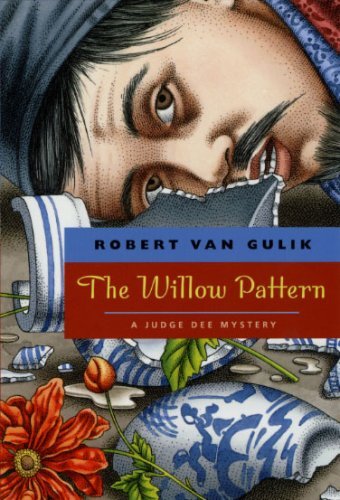
4. The Willow Pattern: A Judge Dee
$5.00
5. The Lacquer Screen: A Chinese
$3.99
6. The Chinese Bell Murders: A Judge
$6.72
7. The Monkey and the Tiger: Two
$6.75
8. Judge Dee at Work: Eight Chinese
 
9. Haunted Monastery
$7.00
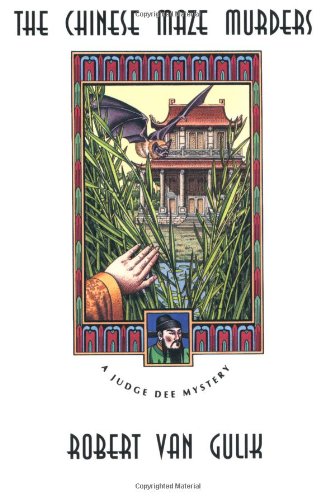
10. The Chinese Maze Murders: A Judge
$3.98
11. The Chinese Lake Murders (Judge
$4.47
12. Celebrated Cases of Judge Dee
$23.88
13. The Chinese Lake Murders: A Judge
$6.94
14. Murder in Canton: A Judge Dee
$100.00
15. Robert Van Gulik: His Life His
$0.80
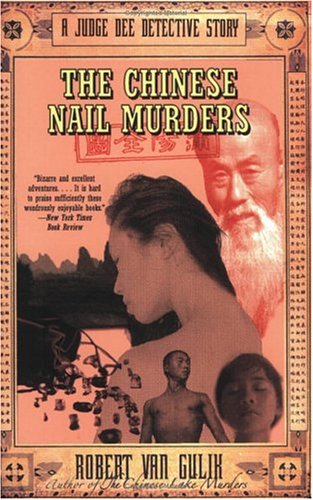
16. The Chinese Nail Murders (Judge
17. Assassins et poètes
$10.57
18. The Chinese Nail Murders: A Judge
$7.42
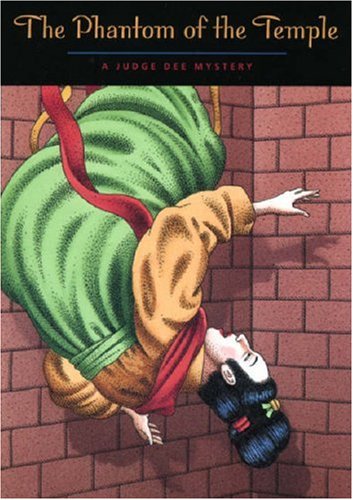
19. The Phantom of the Temple: A Judge
$9.95
20. Biography - van Gulik, Robert

1. Poets and Murder: A Judge Dee Mystery (Gulik, Robert Hans Van, Judge Dee Mystery.)
by Robert van Gulik
Paperback: 184 Pages (2005-11-01)
list price: US$12.00 -- used & new: US$6.75
(price subject to change: see help)
Asin: 0226848760
Average Customer Review: 3.5 out of 5 stars
Canada | United Kingdom | Germany | France | Japan
Editorial Review

Book Description

Master detective Judge Dee sets out to solve a puzzling double murder
and discovers that complicated passions lurk beneath the seemingly
tranquil landscape of academic life. A student has been murdered; a
beautiful poetess is accused of whipping her maidservant to death; and
further mysteries lie in the shadows of the Shrine of the Black Fox.

"The China of old, in Mr. van Gulik's skilled hands, comes vividly alive
again."--Allen J. Hubin, New York Times Book Review

"If you have not yet discovered Judge Dee, I envy you that initial
pleasure . . . the discovery of a great detective story. For the
magistrate of Poo-yan belongs in that select group headed by Sherlock
Holmes."--Robert Kirsch, Los Angeles Times

"Pleasing as a cup of jasmine tea."--Parade of Books

Robert van Gulik (1910-67), a Dutch diplomat and an authority on Chinese
history and culture, drew his plots from the popular detective novels
that appeared in seventeenth-century China.

... Read more

Customer Reviews (2)

3-0 out of 5 stars Good for Background Material
This isn't the kind of book to pick up if you're looking for an intricate mystery full of twists and reversals, or for a thriller that will keep you eagerly turning the pages in a rush of excitement and dread. Good ol' Judge Dee doesn't really have to knock himself out too much to solve this problem; the clues and confessions practically come crawling and whimpering to him.

But if you're interested in a different setting than usual, this might be your...um...cup of tea. It's set in a China of hundreds of years ago, with a society that's different from the West in many of its attitudes but all too similar in basic human fears and needs.

The characterization is not too deep, but you can find a good amount of material here about customs and clothing and buildings and food. The period details, in other words, are really more important than the plot.

This is a good tool for a fantasy role-player doing some research for her next character. Or, if you only have a couple of hours and you need something to read, this slim little volume is not a bad choice. Just don't expect to be blown away in wonder.

4-0 out of 5 stars The strength of this book lies not in the story...
As far as plot goes, this book isn't all that great. Van Gulik wrote his Judge Dee stories in his spare time and apparantly didn't have a lot of it.What makes this book worth reading, though, is the impecable recreation ofclassical Chinese society and Confucian social structure.That being keptin mind, this book is a worthy read. ... Read more


2. The Red Pavilion
by Robert van Gulik
 Hardcover: 182 Pages (1964)

Isbn: 0434825565
Average Customer Review: 4.5 out of 5 stars
Canada | United Kingdom | Germany | France | Japan

Customer Reviews (3)

5-0 out of 5 stars Omcpleting my collection of a classic Mystery series
The Judge Dee mysteries were a collection of 15 classic mysteries set in China based on a real magistrate and written by a Dutch scholar of Chines cuture. They are classic mysteries as well as excellent intros to Chinese culture. I am glad it was so easy to replace the books in the series that I had lost, taken from me by a friend. Easy and painless with excellent serice and easier thatn using a bookshop.

4-0 out of 5 stars Judge Dee will keep you guessing
One of the most interesting things about Van Gulik's Judge Dee books is that the Judge is usually juggling three or four mysteries at once. Your brain definitely stays awake as he shifts his attention from one to the other. "The Red Pavilion" takes place on "Paradise Island", a town in which the main industry is the selling of pleasure--sort of a Las Vegas of ancient China. Between current murders and murders of the past, the Judge has his hands full, and with only one of his usual four assistants he is a busy guy.

I enjoyed the interesting characters of the various courtesans, bouncers, businessmen, and mysterious beggars no end. His Excellency is not beyond making a guess at a solution and then proving himself wrong, which is quite refreshing in detective novels. If you like detective novels combined with ancient culture, you may well enjoy these books.

4-0 out of 5 stars Oriental sleuth cracks tough case
Oriental sleuth Judge Dee, based on a historical character, is brought to life in 'The Red Pavilion'. While Judge Dee shares many traits with traditional quirky Western detectives, this novel has a definite Chinesefeel. The cultural interplay is very interesting, and allows for differentscenarios than the typical mystery. A nice change of pace. ... Read more


3. The Emperor's Pearl: A Judge Dee Mystery
by Robert van Gulik
 Paperback: 192 Pages (1994-08-15)
list price: US$12.00 -- used & new: US$4.19
(price subject to change: see help)
Asin: 0226848728
Average Customer Review: 4.5 out of 5 stars
Canada | United Kingdom | Germany | France | Japan
Editorial Review

Book Description

Imperial China, T'ang dynasty, seventh century A.D.—home of imperial magistrate and detective Judge Dee. A near mythic figure in the Chinese consciousness, Judge Dee distinguished himself as tribunal magistrate, inquisitor, and public avenger. Long after his death, accounts of his exploits were celebrated in Chinese folklore. Van Gulik's popular Judge Dee stories, often based on actual cases, offer a vivid insight into life in traditional China.

The time is 699 A.D. The place is Poo-yang, a large flourishing district in Kaingsu Province, where Judge Dee must investigate two deaths—the heart failure of a rower in the annual boat race and a murder committed in a deserted and possibly haunted country estate. Folklore surrounding the River Goddess, the lost Emperor's pearl, and the cultivation of herbs plays a role in the mystery, as does the beautiful, mute, mad wife of a wealthy merchant.

"Here is a classic detective story, as crisply paced as if it were set in present-day New York, and far more exciting than many that are."—R. Schwartz, St. Louis Post

". . . attractive editions that include the author's extremely amusing pen-and-ink chinoiseries."—April Bernard, Newsday

"If you have not yet discovered Judge Dee and his faithful Sgt. Hoong, I envy you that initial pleasure which comes from the discovery of a great detective story. For the magistrate of Poo-yang belongs in that select group of fictional detectives headed by the renowned Sherlock Holmes."—Robert Kirsch, Los Angeles Times

"The title of this book and the book itself have much in common. Each is a jewel, a rare and precious find."—Atlanta Times

Robert Van Gulik (1910-67) was a Dutch diplomat and an authority on Chinese history and culture. He drew his plots from the whole body of Chinese literature, especially from the popular detective novels that first appeared in the seventeenth century.
... Read more

Customer Reviews (8)

5-0 out of 5 stars Excellent
All the "Judge Dee" books I have read are good.Some better than others, sure, but I like them all.Intelligent, well written, humane, and even sometimes with a touch of humor.A good mystery is worth a lot and these books by Gulik are certainly that.

5-0 out of 5 stars The Emperor's Pearl
ROBERT VAN GULIK HAS THE ABILITY TO HOLD YOU IN SUSPENSE FROM BEGINNING TO END. HIS KNOWLEDGE OF THE AREAS OF CHINA AND THE PEOPLE HELP ONE TO IMMEDIATELY ENTER INTO THE STORY AS IF YOU ARE ACTUALLY THERE. I HAVE READ ALL OF JUDGE DEE MYSTERIES AND WISH THERE WERE MORE.

4-0 out of 5 stars Judge Dee at his best
More than half a century ago, Robert Van Gulik translated an ancient Chinese detective novel about a real-life Chinese magistrate named Dee Jen-Djieh who lived around 700 A.D.; evidently he had so much fun that he decided to write a few more Judge Dee mysteries of his own."The Emperor's Pearl" is among his better ones.On the night of the dragon boat races in Poo-Yang district, the drummer of the boat favored to win the race collapses; turns out he's been poisoned.Judge Dee is called in to investigate, and finds out he has not one murder on his hands, but a whole string of deaths involving a missing domino, a malevolent river goddess, and the theft of the Emperor's Pearl, still unsolved after a hundred years.With the help of his trusty seargeant Hoong Liang and a lady wrestler named Violet Liang (no relation), Judge Dee unravels the tangled mess and puts everything to rights.

Unlike the classic Chinese detective novel which reveals in the beginning whodunit and focuses instead on how the crime was solved, "The Emperor's Pearl" is more like a contemporary novel in which we have to wait for the end for the resolution.There are some interesting plot twists and turns and enough surprises to satisfy the most diehard mystery fan.It's too bad Van Gulik didn't bring back the formidable Violet Liang in a subsequent novel; she's a delightful invention who's worth a book all by herself.

4-0 out of 5 stars Enjoyable, classical mystery in Tang dynasty China
The annual boat race is a popular tradition in many Chinese cities near rivers and lakes. The festival provides an opporunity for feasting and betting, but in some cases it's an outgrowth of an older tradition. The capricious river goddess will not give good harvests unless celebrated once per year. When a drummer on one of the boats collapses and dies, the old folks are happy--they say that the Goddess claimed her sacrifice.

Suspecting human guilt, Judge Dee investigates--and finds complex stories of greed and passion, plus the legendary theft of an Imperial treasure a century ago.

This is an enjoyable mystery in the classical style--investigation of a puzzle.The story combines eternal human passions--greed, fear, lust--with he exotic culture of China 14 centuries ago.The characters are colorful, the investigation solid, and humor understated--what else would a mystery fan want?

--inotherworlds.com

4-0 out of 5 stars Satisfying mystery in exotic setting
Judge Dee, a magistate in 7th century China, is forced by the weather to stop at a remote mountain monastery.There, while the storm rages, Dee observes suspicious behavior and hears stories of ghosts and vague accusations of murder.

The investigation shows the judge many secrets, some personal and some criminal, places him in danger of his life, and exposes to the reader the religions and manners of ancient China; surprisingly modern in some respects and almost unimaginable in others.

In the end, Dee's perception of human motivations as well as his logical mind allow him to redress injustice, improve the lives of several young people, and give the reader a solid solution to intellectual puzzles.

A mystery in the classical sense, this concentrates more on the plot than on characters, and gives a well-integrated lecture in history.
--[...] ... Read more


4. The Willow Pattern: A Judge Dee Mystery
by Robert van Gulik
Paperback: 192 Pages (1993-10-01)
list price: US$10.00 -- used & new: US$5.33
(price subject to change: see help)
Asin: 0226848752
Average Customer Review: 5.0 out of 5 stars
Canada | United Kingdom | Germany | France | Japan
Editorial Review

Book Description

As Judge Dee copes with the administration of the plague-ridden Imperial Capital, he must also bring his skills to bear on the mystery of two seemingly unconnected murders that could mean the extinction of the city's oldest, most aristocratic families.

"All the charm, cruelty and fragile magic of China in the Tang Dynasty."—Chicago Sun-Times

"A tense and exotic mystery."—Publishers Weekly

Robert van Gulik (1910-67) was a Dutch diplomat and an authority on Chinese history and culture. He drew his plots from the whole body of Chinese literature, especially from popular detective novels that appeared in the seventeenth century.


... Read more

Customer Reviews (3)

5-0 out of 5 stars I love a mystery told well and this is one of those.
I've gotten hooked on the Judge Dee Mysteries.I was always a fan of the Charlie Chan movies and to find a series of books that are more authentic and set in ancient China is a real treat! Written so well and captivatingly.

5-0 out of 5 stars Judge Dee & Old Chinese Justice
Published in 1965, the historical mystery, The Willow Pattern, A Judge Dee Mystery by Robert van Gulik, portrays 7th century AD China and Judge Dee, the Lord Chief Justice in China's Imperial Capital. The author, a Dutch scholar writes in the manner of a traditional 18th century Chinese writer of 7th century Chinese mystery stories. Although historically Judge Dee was a magistrate in the Tang Dynasty, the stories are set in the Ming Dynasty. The antecedents of this popular mystery series is only the first complications the reader meet. Judge Dee (probably based on a real character) is an intelligent and canny Confucian Magistrate who always delivers impartial and fair justice to all. Populist hero Judge Dee and his justice are not always in line with the Imperial Rule justice. But Judge Dee's justice always solved the crimes and sends the evildoers to their doom.

But, justice did depend on Judge Dee and how he alone decided to investigate, interpret the facts, interpret the law, pass judgment and decide the sentence (if any) based on his judgment and knowledge of the case. There was no appeal after Judge Dee declared the verdict. Fair, impartial justice under the old Confucian system in China was solely dependent on the judgment of the magistrate. The mystery story, The Willow Pattern illustrates how arbitrary Chinese justice can be under the old Confucian system. Ordinary citizens of China were regulated differently from the nobility. Women were, of course even lower in status than ordinary citizens. The ability to defend their life with deadly force, a natural law that we take for granted in America, is illustrated in The Willow Pattern, "Women of the underworld sometimes carry an iron ball of about the size of a large egg in the tip of each sleeve. Since the law forbids ordinary citizens to carry daggers or other cutting weaponson their person, on the penalty of a flogging, those women have developed a special art of fighting with loaded sleeves."The "loaded sleeves" were considered deadly weapons. The people accepted their place in life since it was the will of heaven that the rulers had a mandate to rule. When they had a bad master they understood that they were expected to accommodate the situation as their fate. Speaking of a bad man (Yee) who was their master, Cassia explains, "He was a bad man, but he was our master. Heaven willed it so."Justice was also the will of heaven so when it was not arbitrary that was a blessing but not to be counted on.

The story here occurs during a time of plague and Judge Dee rules alone in the Imperial City and wears many different hats. He must administer and safeguard the city's food stores, manage the military (normally separate from civilian control) and deal with the disposal of the plague victims. Judge Dee also investigates charges of wrongdoing, conducts inquests concerning suspicious deaths and arbitrates civil affairs. He also prosecutes, defends, adjudicate and oversee sentencing of criminal cases. Judge Dee is also concerned with finding the causes of the plague, the plague sanitation problems and trying to ameliorate the conditions in the Imperial City. Justice in China during a state of martial law is also harsh with no mercy under Judge Dee. Under Judge Dee's rule when the hungry, poor men and women attempt to raid the granary for food, they are slaughtered by the military. Military iron-shafted arrows launched by the soldiers' crossbows are no match for the unarmed civilians. Judge Dee rationalizes that 30 dead men and women saved thousands of people from starving. Judge Dee does not investigate if there was a better way to deal with the hungry crowd.Floggings and beheadings are also considered rational steps for controlling the unruly crowds.

The fact that justice for all was not an ideal realized in old China escaped Judge Dee's discernment. The safeguards built into the Chinese justice system (ring a gong if something's wrong)do not always lend themselves to practical living. The pressures of Chinese life in old china for the poor to conform to the governments mandate to fulfill the will of heaven take their toll. His Confucian training and way of life does not leave room for the possibility of justice not being blind in a society mandated by heaven. "High up here in your palace, my lord, you know very little indeed about the kind of justice meted out by the minions of the law to us, the poor."In the end Judge Dee does mete out fair, impartial and creative justice and just desserts for the evil doers. But, even with Judge Dee heroics, justice in old China is not always assured or just for everyone.

A fun read on any level that you care to take it!

5-0 out of 5 stars Great!
This book is great! I have read it 4 times! ... Read more


5. The Lacquer Screen: A Chinese Detective Story (A Judge Dee Mystery)
by Robert van Gulik
Paperback: 194 Pages (1992-12-15)
list price: US$12.00 -- used & new: US$5.00
(price subject to change: see help)
Asin: 0226848671
Average Customer Review: 3.0 out of 5 stars
Canada | United Kingdom | Germany | France | Japan
Editorial Review

Book Description

Early in his career, Judge Dee visits a senior magistrate who shows him a beautiful lacquer screen on which a scene of lovers has been mysteriously altered to show the man stabbing his lover. The magistrate fears he is losing his mind and will murder his own wife. Meanwhile, a banker has inexplicably killed himself, and a lovely lady has allowed Dee's lieutenant, Chiao Tai, to believe she is a courtesan. Dee and Chiao Tai go incognito among a gang of robbers to solve this mystery, and find the leader of the robbers is more honorable than the magistrate.

"One of the most satisfyingly devious of the Judge Dee novels, with unusual historical richness in its portrayal of the China of the T'ang dynasty."-—New York Times Book Review

"Even Judge Dee is baffled by Robert van Gulik's new mysteries in The Lacquer Screen. Disguised as a petty crook, he spends a couple of precarious days in the headquarters of the underworld, hobnobbing with the robber king. Dee's lively thieving friends furnish some vital clues to this strange and fascinating jigsaw."-—The Spectator

"So scrupulously in the classic Chinese manner yet so nicely equipped with everything to satisfy the modern reader."-—New York Times

Robert Van Gulik (1910-67) was a Dutch diplomat and an authority on Chinese history and culture. He drew his plots from the whole body of Chinese literature, especially from the popular detective novels that first appeared in the seventeenth century.

... Read more

Customer Reviews (1)

3-0 out of 5 stars The Lacquer Screen : A Chinese Detective Story (A Judge Dee
This is one of the first chronological detective adventures of Judge Dee. The judge is visiting one place and gets involved in several murder cases.It follows the classical structure: independent plots in the traditionalChinese detective story style. The lacquer screen is presented as asupernatural object but Dee manages to return it to everyday world. A bookrecommended for the Van Gulik followers. ... Read more


6. The Chinese Bell Murders: A Judge Dee Detective Story
by Robert Van Gulik
Paperback: 288 Pages (2004-08-01)
list price: US$13.95 -- used & new: US$3.99
(price subject to change: see help)
Asin: 0060728884
Average Customer Review: 5.0 out of 5 stars
Canada | United Kingdom | Germany | France | Japan
Editorial Review

Book Description

Meet Judge Dee, the detective lauded as the "Sherlock Holmes of ancient China"

Fans of Alexander McCall Smith's No. 1 Ladies' Detective Agency series will thrill to this reissue of the first volume in Robert van Gulik's classic Chinese Murders series. The Chinese Bell Murders introduces the great Judge Dee, a magistrate of the city of Poo-yang in ancient China.

In the spirit of ancient Chinese detective novels, Judge Dee is challenged by three cases. First, he must solve the mysterious murder of Pure Jade, a young girl living on Half Moon Street. All the evidence points to the guilt of her lover, but Judge Dee has his doubts. Dee also solves the mystery of a deserted temple and that of a group of monks' terrific success with a cure for barren women.

... Read more

Customer Reviews (6)

5-0 out of 5 stars very fun read, very unrealistic
I have read all the Judge Dee mysteries at least twice, and really love them.However, I have just read a number of books on China and discover that van Gulik has purposefully mislead readers to make ancient Chinese justice just like Western justice and rather appealing.The truth is almost the exact opposite.

If you are interested, a standard history of china by harvard professor John Fairbank and Merle Goldman, China A History, explains that the Chinese justice system was openly corrupt (corruption did not have to be secret - it was and is the accepted way), relied on torture of both plaintiff and defendent, had noconsistent laws, no equal punishments for the same offence (everything was based on class and kinship status) and bascially was just like modern Communist law: it was a vehicle for the state to control behavior.The goal was not 'justice' in the Judeo-Christian sense but state control.

Also like Communist China under Mao, imperial law relied on collective punishment to terrorize the populace.The entire population was divided into groups of ten and one hundred families, and if anyone in the whole group was condemned, the entire group could be executed.For serious offenses against the state, thousands of families could all be executed.

Van Gulik is always showing citizens bringing disputes before the court.In reality, this was never done (as both sides could be tortured and both sides had to pay the court and both sides had to bribe the court).Instead, people relied on their village elders or clan heads to rule on disputes, as the court system was too dangerous.

Most of the ideals that Van Gulik gives to Judge Dee of fairness, protecting the weak against the strong etc. are Christian values that go back to the Jewish Bible (God creating all men equal, protect the weak and the stranger, equality before the law etc).They are antithetical to Chinese values from imperial to modern times.It is very important not to pretend that foreign cultures are the same as we are...or that our values are universal.They are very special treasures that we should be incredibly grateful for.

The Judge Dee books also mention women's tiny feet at times, but he never tells the reader that until 1900, all upper class and middle class women in China had their feet broken and maimed leading to their being crippled for life, unable to walk normallyeuphemism - binding their feet).From the 19th century, this custom of torturing and crippling women spread among the peasants also.10% of girls probably died from this treatment.

Van Gulik prominently features 'courtesans' and 'prostitutes.'A more accurate term might be slaves or sex slaves.

We are often told that China was 'more advanced' than the west until modern times.In truth, they were most comparable to ancient Rome, a cruel and despotic slave-owning culture with admirable roads and art.But Rome at least had rule of law, something China never had.

So, enjoy Judge Dee - but take it for what it is, bascially a fun Western mystery story set in a lovingly recreated period piece, kind of like most Hollywood movies - great costumes, great settings, fun plots, endearing characters - all basically unrealistic.

5-0 out of 5 stars A Wonderful Read
The Judge Dee Mystery Series by Robert Van Gulik are paperbacks that I keep after I read them. In fact I have purchased every one that Amazon offers.These are superb Asian-flavored legal mysteries, impressive because of the historical accuracy and insights about the Chinese character given by Van Gulik. In this book one of the cases the Judge solves (there are 3 different cases) is the mystery surrounding the death of a young girl on her wedding night. Needless to say Judge Dee gets to the bottom of the murder and solves all 3 mysteries. It's important to note that Judge Dee-Jen Dijeh (630-700 A.D.) was a real Magistrate known for his wisdom in China, and his stories became a part of the folklore of China. Robert Van Gulik was fascinated by the tales of this judge and wrote a fictionalized series featuring the Judge in the early 1950s. If you enjoy well crafted myteries that are full of wit, clever plot devices, action and adventure as well as great descriptions of food and culture, you'll love all the Judge Dee Books just as I do.

5-0 out of 5 stars superb Asian-flavored legal mysteries
Rebeccasreads highly recommends THE CHINESE BELL MURDERS in which Judge Dee solves the mystery surrounding the death of a young girl, where all the evidence points to the guilt of the deceased lover. on her wedding night.

Judge Dee-Jen Dijeh (630-700 A.D.) was a Magistrate known for his wisdom & wit in China, & his stories were a part of the local folklore. Robert Van Gulik, who had a historian's interest in China in the early 1950s, was fascinated by the tales of this judge, & finally collected & fictionalized them into four volumes.

The wit, ingenuity, & genius of Judge Dee is well reflected. Remember the old tales of King Solomon the Just -- well, give them an Asian flavor, a touch of Old China -- & you get Judge Dee.

All of Judge Dee's books are most pleasurable - - worthy of 10 stars!

5-0 out of 5 stars The best of the Judge Dee Mysteries
The Chinese Bell Murders is another of the classic Judge Dee mysteries authored by Robert Van Gulik.This book, along with the Chinees Maze Murders, is probably the best of the Judge Dee books.

The plot of this story involves three disparate events, a rape/murder, shenanigans in a Buddhist temple where women with fertility problems are apparently giving birth due to divine interventions, and a corrupt businessman who is involved in a bloody family feud.Along the way, Judge Dee and his assistants have an encounter with the bell that is the title of the story.Van Gulik ties up everything in a tidy package that is engrossing and gives the reader an insight into ancient China.

What is impressive about this book is the historical accuracy and insights about the Chinese character given by Van Gulik, no doubt due to his service in the Dutch foreign service and his credentials as a Sinologist.The Buddhist influence in T'ang Dynasty China and the corruption of monks was a constant problem and Van Gulik is not complimentary in his portrayal, which is similar to the unfavorable portrayals of Buddhism by Chinese writers throughout history.Also, the corruption of businessmen in China and the conflict between northern and southern China is well portrayed.Only a Chinese or somebody who is familiar with China can understand the nuances and conflict.

As one of the original five Judge Dee books (this one is the second book in the sequence), the detail and the plot are very much in line with the famous Chinese stories of the day, albeit in a more compact form.This lends authenticity and makes these stories better than the later Judge Dee stories, which are still good.

5-0 out of 5 stars Murder and Mayhem in Ancient China
Yet another strong entry in Robert Van Gulik's series about a crime solving Imperial Magistrate in seventh-century China.In this book, Judge Dee has taken up a new posting in the large and flourishing district of Poo-yang on China's east coast.The district seems prosperous and relatively crime free, so the judge's retinue consisting of his faithful retainers Sergeant Hoong, Ma Joong, Tao Gan and Chiao Tai are all looking forward to an easy posting.But contrary to all expectations, the team has to deal with several crimes in the district soon after arrival.A young girl has been raped and murdered with her killer absconding and the judge is also asked to look into a long series of crimes committed by one of Poo-yang's wealthiest merchants Lin Fan by one of his victims who may have her own hidden agenda....To make matters more complicated, the judge soon learns that the monks in the wealthy Buddhist temple in the area may be preying upon unsuspecting women and cheating them of large sums of money by promising them that they will be able to conceive a child by offering prayers and money at the temple!This may seem like an overwhelming series of problems, but Judge Dee with the help of his assistants is able to clear up the various crimes with his usual flair and wisdom.Enormously entertaining, both for its wealth of historical detail about ancient China as well as for its finely plotted mysteries.Highly recommended for fans of the series and even those who are just looking for a good mystery read. ... Read more


7. The Monkey and the Tiger: Two Chinese Detective Stories
by Robert Hans Van Gulik
Paperback: 152 Pages (2005-04-01)
list price: US$12.00 -- used & new: US$6.72
(price subject to change: see help)
Asin: 0226848698
Average Customer Review: 5.0 out of 5 stars
Canada | United Kingdom | Germany | France | Japan
Editorial Review

Book Description

The Monkey and The Tiger includes two detective stories, "The Morning of the Monkey" and "The Night of the Tiger." In the first, a gibbon drops an emerald in the open gallery of Dee's official residence, leading the judge to discover a strangely mutilated body in the woods--and how it got there. In the second, Dee is traveling to the imperial capital to assume a new position when he is separated from his escort by a flood. Marooned in a large country house surrounded by fierce bandits, Dee confronts an apparition that helps him solve a mystery.


... Read more

Customer Reviews (1)

5-0 out of 5 stars Excellent murder mysteries set in Ancient China
Judge Dee is an imperial magistrate who travels the country solving mysteries and murders. Not content merely to judge cases as they come to court, Judge Dee investigates crimes himself.

This book comprises of two short stories. In the first one, Judge Dee is upset to discover murder in his own home.It starts when he is watching a troop of monkeys playing in his garden and one of them drops an expensive emerald ring.Examining it, Dee realises the ring is encrusted with blood.When Judge Dee stumbles over a mutilated body hidden in his garden he decides to find out who is responsible. With the help of his assistant Tao Gan, Dee set out to investigate a nest of pawnbrokers, thieves and vagabonds.

In the second story, Judge Dee is travelling to the capital in order to receive a promotion thanks to his solving of the Chinese Nail Murders.Unfortunately the weather is fierce: Dee is separated from his staff and takes refuge in a large isolated country house.Here he finds that the family a mourning a young dead girl, seemingly a victim of a heart attack.The theft of 40 shining bars of gold, however, leads Dee to think there is more to the story.Beset by bandits, ghosts and superstitious hosts who believe that their troubles are foretold by the almanac and therefore immutable, Dee sets out to solve the mystery.

Judge Dee was practising in the 7th century but the writer, Robert Van Gulik, was a Dutch diplomat living in China in the early 20th Century.Interested in Chinese history, he decided to write a series of detective novel based old Chinese stories. Beautifully written, each Judge Dee story is a pearl of literature.The English is beautiful yet modern, easy to read yet evocative of the China that existed over 13 centuries ago. ... Read more


8. Judge Dee at Work: Eight Chinese Detective Stories (Judge Dee Mysteries)
by Robert van Gulik
Paperback: 184 Pages (2007-04-15)
list price: US$12.00 -- used & new: US$6.75
(price subject to change: see help)
Asin: 0226848663
Average Customer Review: 5.0 out of 5 stars
Canada | United Kingdom | Germany | France | Japan
Editorial Review

Book Description

The eight short stories in Judge Dee at Work cover a decade during which the judge served in four different provinces of the T’ang Empire. From the suspected treason of a general in the Chinese army to the murder of a lonely poet in his garden pavilion, the cases here are among the most memorable in the Judge Dee series.
... Read more

Customer Reviews (4)

5-0 out of 5 stars The legendary Judge Dee
Indeed, during China's glorious Tang Dynasty (AD 618-960) - the golden age of China, under the reign of Empress Wu Tzi Tien, there was a great judge whose actualnative name was Pao Kung (Judge Dee). He was compassionate and full of wisdom and many well-known cases were judged and solvedby him and his loyalsubordinates. Sometime Justice Pao Kung would commence his judgement at night in his magistrate under candlelight which surely added mystery and awe to the solemn occasion. One of his most celebrated cases was the judgement of a murdered baby prince in which the murderess substitited the corpse with the body of a civet cat...!Legend had it that Magistrate Pao or Dee (as translated by Van Gulik) was born inside a coffin of her deceasedmother and therefore half of his face was black and the other half white. Reputedly,he had the supernatural ability to converse with gods and departed souls in the Spirit World which would assist him in delivering judgement. Judge Dee was revered and respected by the throne as well as high officials and he travelled a great deal from province to province to supervise difficult to solve cases. The late Robert Van Gulik had translated many cases of the famous Judge Dee and derived most of his stories from the files of the Tang Dynasty archives and then embellished them somewhat for excitement and drama. Even today, in the tea houses of China, professional storytellers would enthrilled their audience with stories of Justice Pao...! When I was growingup in the then British Malaysia in the 1950s, I had listenedto an oldstoryteller, under a bean oil lamp, telling exciting tales of Judge Dee.He would charge a penny each from the audiencePresently, Ihave had read many of his translations by Van Gulik- notably the Chinese Murder Series which are now classics and give both the Western and Oriental readers an insight into the lives and times of the glorious Tang Dynasty. Justice Pao or Judge Dee was an honest official, incorruptible, learned, a good homicidal investigator and judge of human characters. His judgments, as translatedby Van Gulik, is firm and without the slightest error. I urge readers of mysteries and crimes to read the translated works of Judge Dee - never a dull moment and please go for them to while away your time...Cheers.

5-0 out of 5 stars Judge Dee Short Stories
Dutch diplomat Robert van Gulik wrote the Judge Dee mysteries (in English!) to introduce the West to the Chinese version of the mystery story, which arose centuries before the English detective story.Judge Dee is an actual historical person, a magistrate of the seventh century during the T'ang dynasty, who was renown in China for his ability to solve crimes.In Judge Dee at Work, van Gulik presents us with eight short stories each of a single case (the novels, in the Chinese tradition, involve 3 intertwined cases) that take place throughout the judge's long career (magistrates were usually moved to a new post every three years).A table at the back of the book, places each case and all the novels within the timeline of Judge Dee's life.

I have read about half the novels and this book of short stories, and I have enjoyed them all.Early on, Judge Dee employs three different men to be his lieutenants, and they do much of the legwork for him.However, Dee is also very hands-on, going to the crime scenes and sometimes even going about in disguise.In some of the short stories here, he solves the mystery on his own.van Gulik has created a good detective in Dee; he is very, very smart, fair, compassionate to victims and stern with criminals.The cases are varied and interesting, and difficult to solve. I especially like the setting of ancient China.van Gulik really seems to know the era he is writing about, and he brings it alive through the actions and dialog of the story.There is no exposition here.If we need to know the differences of Taoism to Buddhism, we find out through a conversation of Dee with a monk or other character.That really makes the stories glide along.Sometimes a choice of phrase seems a little odd or modern for the setting, and I assume that arises from the fact that van Gulik was Dutch writing about China in English.In any event, these quirks become rather fun and don't detract at all from the stories. van Gulik also made illustrations in the traditional Chinese style of the time, and they add to the stories.I am very glad I have found the Judge Dee mysteries, and Judge Dee at Work is an excellent way to meet the judge and his world.You will be glad you did.

5-0 out of 5 stars Wonderful Chinese detective stories - 7th Century style!
I first became aware of the Judge Dee stories after reading the short story "He Came with the Rain" in a historical mystery collection.I loved the story so much that I promptly went to Amazon.com to find moreJudge Dee novels and stories.This collection of eight short stories isparticularly interesting as it covers about 20 years in Judge Dee's careerthrough several of his postings.The stories are extremely interesting,both for the wealth of historical detail as well as the actual mysterycontent.Judge Dee as a District Magistrate is the leading civilianauthority but I found stories such as "The Red Tape Murder"particularly interesting when he clashes with military authorities.Thisgives Dr. Van Gulik the opportunity to introduce snippets about ancientChinese history, particularly about the clashes with Korea and the Tartaroffenses on China's Western borders.This is a period of Chinese historywhere very little is known - almost a sort of Chinese Dark Ages - so it iswonderful to learn more about that time, also about the social customs ofthe era, which I found surprisingly modern, with the exception of theaccepted practice of polygamy!If you are interested in historical mysteryfiction, I would highly recommend the series.Also try the Sister Fidelmaseries about a mystery solving nun in Dark Ages Ireland - it is equallyatmospheric!

5-0 out of 5 stars Sketches of the Judicial Life: China,Seventh Century
The wonderful thing about these stories is the sense of time and place which comes through in all of them.We find ourselves easily transported to seventh century China, and the world of a highly organisedempire, withits representative in the various cities which serve as venues for thestories, the Magistrate, in the person of Judge Dee.

Robert VanGulick's picture of Chinese life, crafted from his own extensive study ofChina, both underpins and overlays these elegant detective stories.Thoseinhabiting these stories are truly the inhabitants of the places: walkingthrough the streets,eating at the restaurants, working in the Tribunal,and interacting with all classes of their highly stratified society.

The characters are well developed, from Judge Dee himself to his variouscolourful assistants and lieutenants, who do most (but not all) of theTribunal's leg work.Criminals, victims, witnesses, and others along theway complete the fascinating tableaux.

There are references to thevarious Judge Dee novels at the beginning of each story providing a contextwithin the magistrate's career. Numerous line drawings by the author gentlyilluminate the stories. ... Read more


9. Haunted Monastery
by Robert Van Gulik
 Audio Cassette: Pages (1986-06)
list price: US$21.95
Isbn: 9998915775
Average Customer Review: 4.5 out of 5 stars
Canada | United Kingdom | Germany | France | Japan

Customer Reviews (7)

5-0 out of 5 stars Mystery with History!
The Haunted Monastery is a different kind of mystery! I read this book when it first came out in English in 1961. I also read all the other Judge Dee murder mysteries about that time period.

Through surfing Amazon.com, I found out at least sixteen of the series were reprinted in the recent past; so I am rereading them 38 years later! This book, The Haunted Monastery, is set in the Chinese Ming period, and the plates of costumes and customs are representative of the Ming era.

Judge Dee actually lived from A.D. 630 to 700, but the stories in this series of books are fiction.

The writing in The Haunted Monastery is easy to read, but the mystery is complicated. Clues to who the murderers might be are given in several of the pictures. And it is fun to try to guess who did what and why.

The author is an expert on Chinese culture and history. He was a Dutch Diplomat who lived in China.

From the stories and the plates, one learns about Confucian and Tao ethics and philosophy. I am finding the entire Judge Dee series delightful reading. I am enjoying them even more now than I did in the past!

5-0 out of 5 stars Looking forward to it
I just ordered this because I loved the TV movie "Judge Dee and the Monastery Murders" from 1974. I understand it was based on this book. If that's the case I'm sure this will be a great read. If you haven't see the movie you should as it has a great cast with Khigh Diegh, Mako, Irene Tsu, James Hong, Soon-Tek Oh, Keye Luke, and many others. The movie is very well done. Unfortunately it is not available on VHS or DVD. You will have to catch it on TV when it is telecast. I haven't seen it in years myself, so I keep hoping to find it on DVD. Let me know if you see it somewhere.

4-0 out of 5 stars One of Judge Dee's Best
Let's face it; Robert Van Gulik may be an expert on 7th century China, but he isn't exactly a Pultizer-Prize winning author.His writing style is somewhat plain and simple and you'll never be knocked out by his glowing literary descriptions.What he does manage to do, though, is bring this long-lost era to life with his interesting characters and his cultural and historical know-how while telling an enjoyable tale along the way.While some of his longer books are bogged down by too many characters and too much detail, The Haunted Monastery is virtually perfect.Judge Dee and one of his assistants are stuck in a gloomy monastery on a stormy night.The place is rumored to be haunted, and while the threat of harmful spirits lingers in the background, the judge must solve three seemingly unrelated mysteries which all tie together in the end.Dripping with atmosphere and good, interesting characters, this is a fast and enjoyable read which is perfect for a rainy night or a cold winter's day.

5-0 out of 5 stars A Night Of Terror And Mystery
An unexpected storm forces Judge Dee and his three, (yes three!) wives to seek shelter at a Taoist monastery. The wives go straight to bed but the Judge must pay his respects to the abbot before joining them. Thus begins a frantic night of murder and mayhem during which Judge Dee, suffering from a bad head cold, must solve a series of murders, rescue a maiden in distress and arrange for the villain to meet his just deserts, bringing together two sets of star-crossed lovers along the way. "I should give up being a magistrate and become a match-maker!" he grumbles. One of the best of the series.

3-0 out of 5 stars This is a slow slow descriptive descriptive shallow shallow.
If I were just learning how to write this would be a prefect example. Forty five percent of the book is description. Who cares if Judge Dee has three or four hairs growing out of the mole on his face? And evidently he prefers girls with bushy eyebrows.

Other than that it could be a decent mystery if it did not drag on and on. This may be due to the story being a little too short to publish; it took up three cassettes. The mystery its self is O.K. there is no last minute butlers to show up and confess. Evidently this is part of some Judge Dee series. So someone must like his style.

The story takes place in a monastery where Judge Dee just happens to be passing during a storm and need a place to stay with his three wives.He whiteness some impossible things and meets some mysterious people. ... Read more


10. The Chinese Maze Murders: A Judge Dee Mystery (Gulik, Robert Hans, Judge Dee Mystery.)
by Robert van Gulik
Paperback: 336 Pages (2007-04-15)
list price: US$13.00 -- used & new: US$7.00
(price subject to change: see help)
Asin: 0226848787
Average Customer Review: 4.5 out of 5 stars
Canada | United Kingdom | Germany | France | Japan
Editorial Review

Book Description

Poisoned plums, a cryptic scroll picture, passionate love letters, and a hidden murderer with a penchant for torturing and killing women lead Judge Dee to the heart of the Governor’s garden maze and the answers to three interwoven mysteries. The Chinese Maze Murders represents Robert van Gulik’s first venture into writing suspense novels after the success of Dee Gong An, his translation of an anonymous Chinese detective novel from the sixteenth century.
... Read more

Customer Reviews (8)

5-0 out of 5 stars Judge Dee never disapoints
I am never disapointed in Gulik's judge Dee.I like all his books about this eccentric wise man.

5-0 out of 5 stars very fun, very unrealistic
I have read all the Judge Dee mysteries at least twice, and really love them.However, I have just read a number of books on China and discover that van Gulik has purposefully mislead readers to make ancient Chinese justice just like Western justice and rather appealing.The truth is almost the exact opposite.

If you are interested, a standard history of china by harvard professor John Fairbank and Merle Goldman, China A History, explains that the Chinese justice system was openly corrupt (corruption did not have to be secret - it was and is the accepted way), relied on torture of both plaintiff and defendent, had noconsistent laws, no equal punishments for the same offence (everything was based on class and kinship status) and bascially was just like modern Communist law: it was a vehicle for the state to control behavior.The goal was not 'justice' in the Judeo-Christian sense but state control.

Also like Communist China under Mao, imperial law relied on collective punishment to terrorize the populace.The entire population was divided into groups of ten and one hundred families, and if anyone in the whole group was condemned, the entire group could be executed.For serious offenses against the state, thousands of families could all be executed.

Van Gulik is always showing citizens bringing disputes before the court.In reality, this was never done (as both sides could be tortured and both sides had to pay the court and both sides had to bribe the court).Instead, people relied on their village elders or clan heads to rule on disputes, as the court system was too dangerous.

Most of the ideals that Van Gulik gives to Judge Dee of fairness, protecting the weak against the strong etc. are Christian values that go back to the Jewish Bible (God creating all men equal, protect the weak and the stranger, equality before the law etc).They are antithetical to Chinese values from imperial to modern times.It is very important not to pretend that foreign cultures are the same as we are...or that our values are universal.They are very special treasures that we should be incredibly grateful for.

The Judge Dee books also mention women's tiny feet at times, but he never tells the reader that until 1900, all upper class and middle class women in China had their feet broken and maimed leading to their being crippled for life, unable to walk normallyeuphemism - binding their feet).From the 19th century, this custom of torturing and crippling women spread among the peasants also.10% of girls probably died from this treatment.

Van Gulik prominently features 'courtesans' and 'prostitutes.'A more accurate term might be slaves or sex slaves.

We are often told that China was 'more advanced' than the west until modern times.In truth, they were most comparable to ancient Rome, a cruel and despotic slave-owning culture with admirable roads and art.But Rome at least had rule of law, something China never had.

So, enjoy Judge Dee - but take it for what it is, bascially a fun Western mystery story set in a lovingly recreated period piece, kind of like most Hollywood movies - great costumes, great settings, fun plots, endearing characters - all basically unrealistic.

5-0 out of 5 stars A favorite Judge Dee mystery

Judge Dee is a very busy magistrate in "The Chinese Maze Murders." At one point in his whirlwind of activity he wearily tells his trusty lieutenants he can't believe "that it is only one week since we arrived here in Lan-fang!" Indeed, even before Judge Dee and his three wives, children, household and judicial assistants, and four carts can arrive in the border city that is his new assignment, they are accosted by ruffians. Then, in Lan-fang, they discover a strongman and his brigade in control of the city, and the judge must use his wits and his four loyal men to depose the outlaws. As Judge Dee maneuvers to exert his rightful authority, he reckons with the inheritance issues of a recently deceased governor whose property includes a hundred-mile maze; investigates a locked-room murder of a renown general; and searches for a missing, possibly kidnapped young girl. Not to mention attending to his normal tribunal duties on the bench and defending against imminent attack by foreign soldiers whose leaders sense an opportunity to seize Lan-fang. When does Judge Dee get to sleep? As the author himself notes, "The magistrate is a permanently overworked official."

Robert Van Gulik wrote a series of Judge Dee mysteries in the mid 1900s. "The Chinese Maze Murders" was first published in 1957, and, true to the author's intent, it "gives a general idea of Chines court procedure" in the 7th century. In fact, a real crime-detecting "Judge Dee" existed: Ti Jen-chieh (630-700 AD). Before Van Gulick authored these and other fictional exploits of "Judge Dee," he translated an 18th-century Chinese novel entitled, "Celebrated Cases of Judge Dee." The three main crime plots in "The Chinese Maze Murders" are borrowed from 16th-century collections according to Van Gulik.

"The Chinese Maze Murders" is an intricate weave of suspense, excitement, shrewd puzzle detection, political intrigue, and human psychology. Certain sexual themes and the judicial tortures and executions described in the book designate this a mystery for mature readers.

It's good to see a new edition being released. The attractive, colorful art work on the cover is an eye-catcher, while the black and white illustrations throughout the text remain those the author himself drew to punctuate the story. A nice copy to own, read and re-read.

4-0 out of 5 stars chinese culture fan
This book, offers a glimpse into chinese culture, which is the reason I enjoyed it.

4-0 out of 5 stars Learning about China through detective stories
I like detective stories and detectives, from Sherlock Holmes to Wallander. However, I have grown tired of the usual Western settings, and fed up with squalor for squalor's sake, or even for the sake of proving one's literary talents.When I came across in an Italian translation the French novels by the Tran Nhut sisters, I realized that detective novels can be an effective means for learning about new cultures, countries, ages, civilizations. I quickly came to suspect that the Tran Nhut's main investigator, mandarin Tan, was a variant of an original sleuth, but who was he? Well, I soon found out by reading an interview with the Tran Nhut sisters, who candidly refer to Rober van Gulik's Judge Dee. Van Gulik's style is quaint and amazingly precise in the description of buildings, furniture, and vegetation. One does have the feeling of having left the slums of any Western city for good, no longer is the depressed reader led to identify with an even more depressed character like Henning Mankell's Kurt Wallander. Judge Dee is consciencious, high minded, and rather inscrutable. He is often busy with many other administrative and political problems, crime being only one sector of his multifarious duties. The whole of Imperial China opens up for us in this novel, including a contrast between Taoism and Confucianism. ... Read more


11. The Chinese Lake Murders (Judge Dee Mysteries)
by Robert van Gulik
Paperback: 224 Pages (1979-08-15)
list price: US$10.00 -- used & new: US$3.98
(price subject to change: see help)
Asin: 0226848655
Average Customer Review: 4.5 out of 5 stars
Canada | United Kingdom | Germany | France | Japan
Editorial Review

Book Description

The Chinese Lake Murders describes how Judge Dee solves three difficult cases in A.D. 666, shortly after he has been appointed magistrate of Han-yuan.

"[Robert van Gulik] deftly interweaves three criminal cases involving exotic yet universally recognizable characters, then has his Judge Dee provide a surprising yet most plausible solution."--New York Times Book Review

Robert Van Gulik (1910-67) was a Dutch diplomat and an authority on Chinese history and culture. He drew his plots from the whole body of Chinese literature, especially from the popular detective novels that first appeared in the seventeenth century.

... Read more

Customer Reviews (5)

5-0 out of 5 stars Wonderful! Suspenseful & Colorful.
I usually read mysteries set in the 20s-40s with a female heroine. I picked this up randomly and LOVED it! My copy is not the one shown here, but it is the 1960 version. My copy has illustrations of the town and the boat which were very helpful. This story taught me a lot about ancient China - fascinating - without being didactic at all! There were several mysteries wound into this one little book so there was plenty to keep you entertained. It was very suspenseful. I also learned some life lessons from Judge Dee. :)

5-0 out of 5 stars Wonderful Entry in Judge Dee Series
The third novel in Robert Van Gulik's historical mystery series about a crime-solving Imperial District Magistrate in seventh-century China, sees Judge Dee transferred to the small town of Han-Yuan, along with his family and assistants - Sergeant Hoong, Ma Joong and Chiao Tai. Han-Yuan is only sixty miles from the imperial capital; however it is a small town cut off from most of the world as it surrounded by mountains.The town lies on the shore of a mountain lake which town locals whisper, holds mysterious, even supernatural forces.The novel opens with Judge Dee attending a banquet in his honor on a flower-boat - a floating house of prostitution.At the end of the evening, the judge discovers a famous local courtesan lying dead in the lake water!The suspects are many, since all of Han-Yuan's prominent citizens were attending the party and most of them had a plausible reason for wishing this courtesan dead.Judge Dee has to sort through confusing clues and his task is made more complicated by the sudden disappearance of a new bride and her husband, the violent death of a local carpenter and the suspicions that Han-Yuan may be a center for political unrest!The judge is able to sort through all the confusion and the realization that these multiple crimes are all inter-connected, with his usual blend of wisdom and sagacity.Judge Dee is a very interesting character and the novel itself paints a wonderfully evocative picture of ancient China with its complicated rituals of love and marriage and precise social order that governed everyone's life.The mystery itself is interesting, though perhaps a little too twisty; however, the ending is genuinely powerful and completely plausible.A must-read for fans of the series!

4-0 out of 5 stars A brilliant way to learn about ancient China.
This is only my second Judge Dee mystery, and although I can't compare it to others by the same author, I am definitely hooked on the series. Robert van Gulik offers a unique avenue into thinking about Tang dynasty China(7th century A.D.) and serves up wonderful escapist fiction at the sametime. Judge Dee is a conscientious and clever magistrate faced with thebrutal murder of a beautiful courtesan who has complicated political andeconomic connections. As Judge Dee goes about solving the crime, we learnabout pleasure boats, prostitution, what people wore (and didn't wear),insurgencies against the empire, and the necessity of a pot of hot teawhenever the going gets rough. The author was a Dutch diplomat and scholarof Chinese jurisprudence whose mysteries are tailor-made for thehistorically and culturally curious.

5-0 out of 5 stars jytjty
teyjjytyj

3-0 out of 5 stars What happened to the illustrations!!!?
One of Van Gulik's better efforts in the "Judge Dee" series, but seriously flawed by the almost entire omission of Van Gulik's original illustrations.Since I have seen previous and subsequent volumes publishedby the University of Chicago which do contain the drawings, I have no ideawhy this curious dearth exists.Judge Dee fans, be warned; there are twoother volumes in the series which likewise are lacking this importantstory-telling device. ... Read more


12. Celebrated Cases of Judge Dee (Dee Goong An) (Detective Stories)
Paperback: 237 Pages (1976-06-01)
list price: US$8.95 -- used & new: US$4.47
(price subject to change: see help)
Asin: 0486233375
Average Customer Review: 4.5 out of 5 stars
Canada | United Kingdom | Germany | France | Japan
Editorial Review

Book Description

Authentic 18th-century Chinese detective novels. Dee and associates solve 3 interlocked cases: The Case of the Double Murder at Dawn, The Case of the Strange Corpse, and The Case of the Poisoned Bride. 9 illustrations.
... Read more

Customer Reviews (11)

5-0 out of 5 stars A Unique Detective Novel
During the later years of the Second World War, Robert Van Gulik translated an interesting and a unique detective novel entitled "Celebrated Cases of Judge Dee (Dee Goong An)," which was written by an anonymous author in the eighteenth century. The novel drives the readers to experience three mystery crime cases of Judge Dee, an important district magistrate in the ancient Chinese culture during the seventh century. There are three crimes that were solved during the course of the detective novel, which were the case of "The Double Murder at Dawn," the case of "The Strange Corpse," and the case of "The Poisoned Bride." The investigations of the cases in the book were carried out by Judge Dee himself; he later solved those crimes throughout the novel.

There are thirty chapters in the novel with the addition of the "Translator's Preface," which the translator pointed out the difference between the Western and Chinese novels, described the five main characteristics of Chinese detective stories, gave a historical background of a Chinese detective novel, "Dee Goong An," and its three mystery cases, and he discussed the history of a pre-modern Chinese judicial system and a real-life Judge Dee of seventh century. In addition to the book, there is a short "Interlude" section between the fifteenth and the sixteenth chapters where it is written as a single scene of a theatrical play in which the readers have to use their minds to figure out which characters of the novel that the actors represented based on their psychological analysis (p. VI-VII). Throughout Celebrated Cases of Judge Dee, one can understand a pre-modern Chinese judicial system in the seventh century by looking at how did Judge Dee approached three murder cases, how did he solve these cases, and what were the outcomes.

"Celebrated Cases of Judge Dee" explores three murder cases of Judge Dee in the seventh century China. In the novel, Judge Dee solved the murder cases independently from one another during the corresponding time period.But the cases did not come to the judge at the same time. The first case called "The Double Murder At Dawn" came to Judge Dee just before the convening tribunal when an old man by the name of Koong Wan-deh approached the judge with a case of the murders of two silk merchants. Judge Dee approached this first case with a careful investigation as he had followed the strict Chinese code. However, there were rising complications because the judge could not quickly solve the case because he did not find a real criminal. The second case, "The Strange Corpse," did not come to Judge Dee because the murder had occurred a year earlier. He came across it when he was disguised as a physician in a home of the widow with her "dumb" daughter and her mother-in-law. Because of the little girl who had "lost the power of speech," Judge Dee became suspicious of the situation with the widow and her daughter, and he soon made it a case to investigate them (p. 34-41). Judge Dee approached this second case with a discreet and a careful investigation and the help of his trusted lieutenants. The final case called "The Poisoned Bride" came to Judge Dee after the murderer of the first case was caught. This case Judge Dee approached with careful and prudent attention because the murder occurred in a high status household during a wedding ceremony. In each of these three cases, Judge Dee used his complex tactics of harsh accusation, threats, and tortures as means to achieve the solution of his murder cases.

Unlike the judges of the modern era, the judges of the pre-modern China acted as detectives and investigators to solve the crimes. It is very rare for a judge of modern times to go out either in disguise or use his official status to find clues for the murder and to catch criminals. Then again, the novel of "Celebrated Cases of Judge Dee" revealed the actions of the judge of ancient times. According to the translator Robert Van Gulik, "it was in his function of judge that the district magistrate displayed his talents as a detective" (p. IX). With three murder cases in the book, Judge Dee solved them like a skilled detective would, but he had an advantage to which he had resources in his investigations, not available for the modern-day detective, which included a small number of trusted lieutenants and constables, the use of torture, the influence of the local authorities, and the guidance of dreams and ghosts.

The outcome of these three cases had doomed the lives of the criminals and favored the career of Judge Dee, which was evident in the final chapter of the novel. Obviously in the end, Judge Dee was very pleased with his judicial and detective work. While the duties of a judge and a detective were not yet separated, it would have appeared that they were the most important duties in a pre-modern Chinese judicial system during the seventh century.

By looking at how did Judge Dee approached three murder cases, how he solved these cases, and what were the outcomes in the Celebrated Cases of Judge Dee, a pre-modern Chinese judicial system of the seventh century is understood. The novel drives the reader to understand how the detective-like duties of a pre-modern judge in seventh century China helped an important figure like Judge Dee to solve crimes in his district.As shown in the book, one can observe that the actions of the judge had interesting qualities in such a way that not any modern judge could do.The novel explored three murder cases of Judge Dee and the usefulness of his detective skills led him to solve the tricky as well as the dangerous crimes.

The murder cases of Judge Dee and his adventures in Robert Van Gulik's translation of "Celebrated Cases of Judge Dee" were a great read and an interesting perspective of judicial court and a pre-modern Chinese culture during the seventh century.

5-0 out of 5 stars I just love thee Dee
I own all the judge Dee books and I enjoy reading them every once in a while.

5-0 out of 5 stars Interesting , Vivid ,Cannot stop reading once u have started
I am a Chinese and found the author has translated this book in a very professional way even i myself was amazed by the whole bench of Chiese Classical Books being used as references . This book precisely described the background , culture and state of mind of the people living in the Tang Dynasty .It is a good Chinese detective book , i just cannot stop reading .Hope u will enjoy this book too .

5-0 out of 5 stars Different detective
For the reader that enjoys detective books this is a must- especially if he/she prefers an historical context. Robert van Gulik, a diplomat familiar with oriental culture writes with talent and methodically- for a good detective story to be developed it is required. The only critisism that one might say is that there are some anchronisms as faras the chinese culture but they do not affect the stories. The Judge is a very intersting person that the reader sympathises with. Enjoy it.

5-0 out of 5 stars Dee Goong An
This book and the fiction that Mr. Van Gulik wrote after 1945 are definitly not your run of the mill detective stories.The author, trained and serving as a diplomat in the orient, has a profound knowledge of Tang Dynasty China, its cutoms and traditions.My wife and I began reading them almost thirty years ago, a still "binge" every five years or so on the series.

Van Gulik used Dee Goong An as, I supect, a vehicle for his diplomatic traing and deeper understanding of the Chinese.The man writes in a scholarly, traditional, and slightly pedantic style that in no way obscures the charm of his subject.As a contempory review observed all of the "frail beauty and cruelty of the Tang's" are preserved. You must understand this, because Van Gulikattempts to recreate the genre accuratly.This is notable due to the idosyncrasies of our western detective mystery style, and the vast differences with their asian peers.

Fair to note that Mr. Van Gulik was a noted sinophile, and lived and died there.The preface and appendices are worth re-reading and the stage is then set for the rst of the series.Try to read this one (Dee Goong An) first! These are as follows:

1950 Chinese Bell Murders 668 AD
1952 Chinese Maze Murders 670 AD
1959 Chinese Gold Murders 663 AD
1960 Chinese Lake Murders 666 AD
1961 Chinese Nail Murders 676 AD
1962 Lacquer Screen 663 AD
1963 The Emperor's Perl 668 AD
1964 The Red Pavilion 668 AD
1965 The Monkey and the Tiger 666 AD
1965 The Willow Pattern 677 AD
1966 Phantom of the Temple 670 AD
1966 Murder in Canton 681 AD
1967 Judge Dee at Work 663 - 670
1967 Necklas and Calabash 668 AD
1968 Poets and Murder 668 AD

As with any serial literary undertaking not all of these books are of the same quality as Dee Goong An.Yet they are all worth reading again and again. ... Read more


13. The Chinese Lake Murders: A Judge Dee Detective Story
by Robert Van Gulik
Paperback: 224 Pages (2005-02-15)
list price: US$12.95 -- used & new: US$23.88
(price subject to change: see help)
Asin: B000H2ML3A
Average Customer Review: 5.0 out of 5 stars
Canada | United Kingdom | Germany | France | Japan

Customer Reviews (1)

5-0 out of 5 stars superb Asian-flavored mystery
Rebeccasreads highly recommends THE CHINESE LAKE MURDERS as by far the best among the four Judge Dee Chjines Murder Mysteries. This time Dee brings to book a gang involved in embezzlement of government funds. Side by side he also investigates the murder of a girl who dies on her wedding night.

Judge Dee-Jen Dijeh (630-700 A.D.) was a Magistrate known for his wisdom & wit in China, & his stories were a part of the local folklore. Robert Van Gulik, who had a historian's interest in China in the early 1950s, was fascinated by the tales of this judge, & finally collected & fictionalized them into four volumes.

The wit, ingenuity, & genius of Judge Dee is well reflected. Remember the old tales of King Solomon the Just -- well, give them an Asian flavor, a touch of Old China -- & you get Judge Dee.

All of Judge Dee's books are most pleasurable - - worthy of 10 stars! ... Read more


14. Murder in Canton: A Judge Dee Mystery
by Robert van Gulik
Paperback: 216 Pages (2004-09-15)
list price: US$13.00 -- used & new: US$6.94
(price subject to change: see help)
Asin: 0226848744
Average Customer Review: 3.0 out of 5 stars
Canada | United Kingdom | Germany | France | Japan
Editorial Review

Book Description

Brought back into print in the 1990s to wide acclaim, re-designed new editions of Robert van Gulik's Judge Dee Mysteries are now available.

Written by a Dutch diplomat and scholar during the 1950s and 1960s, these lively and historically accurate mysteries have entertained a devoted following for decades. Set during the T'ang dynasty, they feature Judge Dee, a brilliant and cultured Confucian magistrate disdainful of personal luxury and corruption, who cleverly selects allies to help him navigate the royal courts, politics, and ethnic tensions in imperial China.  Robert van Gulik modeled Judge Dee on a magistrate of that name who lived in the seventh century, and he drew on stories and literary conventions of Chinese mystery writing dating back to the Sung dynasty to construct his ingenious plots.

Murder in Canton takes place in the year 680, as Judge Dee, recently promoted to lord chief justice, is sent incognito to Canton to investigate the disappearance of a court censor. With the help of his trusted lieutenants Chiao Tai and Tao Gan, and that of a clever blind girl who collects crickets, Dee solves a complex puzzle of political intrigue and murder through the three separate subplots "the vanished censor," "the Smaragdine dancer," and "the Golden Bell."

An expert on the art and erotica as well as the literature, religion, and politics of China, van Gulik also provides charming illustrations to accompany his engaging and entertaining mysteries.
... Read more

Customer Reviews (4)

3-0 out of 5 stars Disappointing End to an Enjoyable Series
Everyone who has read the entire Judge Dee series knows that while the writing is only fair, the settings and characters make all of these books a pleasant read.Unfortunately Murder in Canton, the last book in the Judge Dee series, is a poor way to end the adventures of this Chinese version of Sherlock Holmes.

The mystery itself is somewhat muddled and so uninteresting that I found myself nodding off during parts of the book.I ended up skimming through several parts of the novel and by the end I couldn't even remember who some of the suspects were!I have to say that even though the author basically uses the same plots over and over during this series, this particular book just didn't hold my interest.

Another disappointment was the fact that Ma Joong, one of Judge Dee's assistants, was completely absent from this book.He was always the funniest character in the series and he was sorely missed in this novel.

If you're like me and you enjoy reading a series in its entirety (I've actually read all of the Judge Dee books twice), then you should give Murder in Canton a try; just don't expect to be overwhelemed, because this is by far one of the weakest books in an otherwise good series.

2-0 out of 5 stars good concept, but not very well written
I was intrigued by the concept of a detective mystery set in Tang Dynasty China.Unfortunately the author hasn't mastered the essentials of writing a really good novel.The characters didn't feel believable, the dialogue is stiff and unnatural, and the plot is slow-moving and contrived.

4-0 out of 5 stars A great read!
Judge Dee is an imperial magistrate who travels the country solving mysteries and murders. Not content merely to judge cases as they come to court, Judge Dee investigates crimes himself.

Now Chief Lord Justice, Judge Dee is sent undercover to the city of Canton.His job: to find out what happened to the Court Censor.Was he murdered or has he disappeared for other reasons?Dealing with practised and conniving Imperial Court intriguers, Dee finds the case complicated as a host of foreigners are involved including a mysterious Arab with a curved sword and an exotic belly dancer.Undaunted, and with the help of his officers, the loyal Tao Gan and Chiao Tai, Dee sets out to unravel the case.

Judge Dee was practising in the 7th century but the writer, Robert Van Gulik, was a Dutch diplomat living in China in the early 20th Century.Interested in Chinese history, he decided to write a series of detective novel based old Chinese stories. Beautifully written, each Judge Dee story is a pearl of literature.The English is beautiful yet modern, easy to read yet evocative of the China that existed over 13 centuries ago.

4-0 out of 5 stars Another chapter in a unique series
This book is part of Van Gulik's unique series of Judge Dee novels which chronicle the cases investigated by the famous magistrate of classical Chinese detective stories. A staple of the Judge Dee stories are the multi-layered plot and accurate historical details of ancient Chinese culture and practices and this book does not disappoint in both areas.

In this chapter of the series, Judge Dee is assigned to the city of Canton to investigate the disappearance and subsequent murder of a Chinese noble. Numerous side plots are thrown into the mix, involving a blind cricket-catcher and mysterious Arabian assassins. All of which the Judge slowly unravels using ingenuity and plain, old-fashioned deductive prowess which is the highlight of all the books in the series. ... Read more


15. Robert Van Gulik: His Life His Work
by Janwillem Van De Wetering
Paperback: 149 Pages (1998-07)
list price: US$12.00 -- used & new: US$100.00
(price subject to change: see help)
Asin: 156947124X
Average Customer Review: 5.0 out of 5 stars
Canada | United Kingdom | Germany | France | Japan

Customer Reviews (2)

5-0 out of 5 stars One interesting character writing about another one
Van de Wetering (a Dutch)is a very interesting author of quite unique"mysteries", set in a very everyday Amsterdam and also writesinterestingly about his experiences with Zen Bhuddism. Van Gulik was aDutch diplomat (before, during and after WW II), and a scientist working onChinese history and culture who could play old Chinese instruments andmastered calligraphy - and who wrote mysteries in an old Imperial Chinesesetting. Gulik is clearly one of Van de Wetering' s "heroes" andhe is very aptly portraited as an interesting person living in interestingtimes and doing interesting things.

5-0 out of 5 stars Unieque life of an extraordinary thriller-writer by another!
Robert Hans van Gulik was a Dutch diplomat, a Sinologist -look it up! - a poet, musician, zoologist: and above all the author of the famous Judge Dee sequence of thrillers, set in T'ang China. Janwillem van de Wetering is a writer and ex-monk with a passionate interest in the East, and the ideal person to write Gulik's life - he died in 1967. Yet this book is out of print! PLEASE SOMEONE REPRINT IT SOONEST!! ... Read more


16. The Chinese Nail Murders (Judge Dee Mysteries)
by Robert van Gulik
Paperback: 220 Pages (1977-11-15)
list price: US$9.00 -- used & new: US$0.80
(price subject to change: see help)
Asin: 0226848639
Average Customer Review: 5.0 out of 5 stars
Canada | United Kingdom | Germany | France | Japan
Editorial Review

Book Description

Judge Dee and his four helpers solve the murders of an honored merchant, a kindly boxing master, and a paper merchant's wife, whose corpse has no head. They succeed in spite of strong pressure on Judge Dee from higher-ups to bring his investigation, which has temporarily generated unrest among the populace, rapidly to an end or face dismissal and serious punishment. The case of the headless corpse is based on a thirteenth-century Chinese casebook; the nail murder, one of the most famous motifs in Chinese crime literature, is first described in the same text.

"So scrupulously in the classic Chinese manner yet so nicely equipped with everything to satisfy the modern reader."--New York Times

Robert Van Gulik (1910-67) was a Dutch diplomat and an authority on Chinese history and culture. He drew his plots from the whole body of Chinese literature, especially from the popular detective novels that first appeared in the seventeenth century.

... Read more

Customer Reviews (2)

5-0 out of 5 stars A unique work and superbly readable
Written close to 40 years ago (first published in 1961), this book is part of Van Gulik's Judge Dee series which chronicles the cases investigated by the famous magistrate of classical Chinese detective stories.

A stapleof the Judge Dee stories are the multi-layered plot and accurate historicaldetails of ancient Chinese culture and practices and this book does notdisappoint in both areas. Unique and superbly readable, this seriesdeserves a place on the shelf of every mystery fan. One small note: Thisnew version seems to have omitted the chinese-style illustrations found inthe original printing - probably due to the (very low-key) nudity that thepublishe