e99 Online Shopping Mall

Geometry.Net - the online learning center Help  
Home  - Authors - Walpole Horace (Books)

  1-20 of 100 | Next 20
A  B  C  D  E  F  G  H  I  J  K  L  M  N  O  P  Q  R  S  T  U  V  W  X  Y  Z  

click price to see details     click image to enlarge     click link to go to the store

1. The Prime Minister of Taste: A
$16.10
2. Letters Of Horace Walpole
$4.40
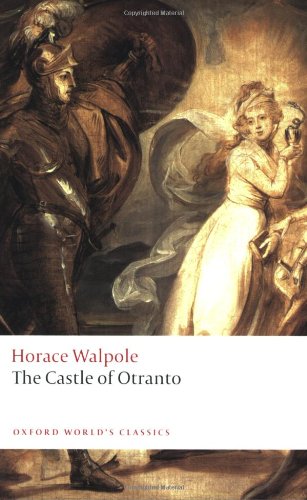
3. The Castle of Otranto: A Gothic
 
$57.97
4. Horace Walpole's "Miscellany"
 
$60.99
5. Memoirs of King George II: The
$6.16
6. Three Gothic Novels: The Castle
$1.07
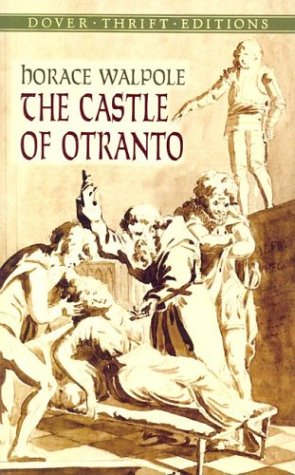
7. The Castle of Otranto (Dover Thrift
 
8. The Letters Of Horace Walpole
 
9. Horace Walpole Memoirs & Portraits
 
$31.95
10. Horace Walpole and the Unconscious:
 
$125.00
11. The Yale Editions of Horace Walpole`s
$42.71
12. Letters Of Horace Walpole To The
 
$125.00
13. The Yale Editions of Horace Walpole`s
$8.41
14. Hieroglyphic Tales (Dodo Press)
 
15. Horace Walpole (Bollingen series,
 
$85.74
16. The Yale Editions of Horace Walpole's
 
17. The correspondence of Horace Walpole,
 
$149.95
18. Horace Walpole: 1717 - 1797 And
$13.99
19. The Old English Baron / The Castle
 
20. The letters of Horace Walpole,:

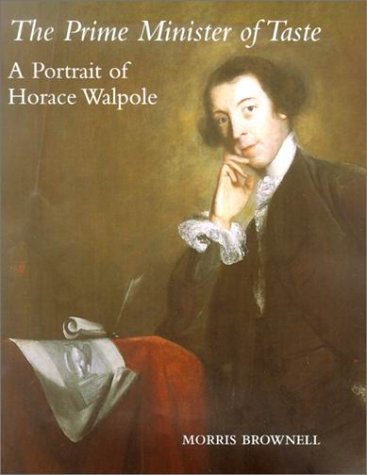
1. The Prime Minister of Taste: A Portrait of Horace Walpole
by Morris Brownell
Hardcover: 364 Pages (2001-05-01)
list price: US$65.00
Isbn: 0300087160
Average Customer Review: 3.5 out of 5 stars
Canada | United Kingdom | Germany | France | Japan
Editorial Review

Book Description
In this intriguing book, Morris Brownell offers a fresh account of thecareer and influence of Horace Walpole (1717-1797), the great English man of letters andart historian. Rejecting both the traditional view of Walpole as a trifling collector ofcuriosities and the more recent assessment of him as a sober social historian andconnoisseur, Brownell argues that Walpole grew to become a serious patron, collector,and historian of the arts—the Prime Minister of Taste.

Drawing on vast Walpole archival materials and on his astonishing forty volumes ofletters, Brownell describes the formation of young Walpole's taste and interest in thevisual arts. Brownell argues that England's leading portrait engraver, George Vertue,converted Walpole from Grand Tour taste in painting to a life-long study of Englishportraits. The book discusses the significance of Walpole's collection of Englishhistorical portraits and French portraits of the ancien régime, and it analyzes Walpole'sfascination with portraiture, comparing the painted portraits Walpole collected and wroteabout to the literary portraits he penned in his letters. Walpole's passion for the art ofportraiture was not the trifling pastime he pretended, Brownell says; in fact it was thesource of his greatest literary achievement—a gallery of literary portraits of the Englisharistocracy as fine as the painted portraits of Reynolds and Gainsborough. ... Read more

Customer Reviews (2)

3-0 out of 5 stars A Very Narrow Biography
I bought the book thinking it a biography of Horace Walpole.A biography it is, but in a very narrow sense.It almost exclusively deals with Walpole's acquisition of art and the pieces themselves.I saw no discussion of his terms as MP. Also, nothing about his authorship of 'The Castle of Otranto' or the memoirs of George II and George III all of which are still in print today.Very little about his friends outside of art collecting.If your looking to find out about this specific portion of Walpole's life then the book is well written and thorough with many photographs of the pictures in his collection.A general biography it is not.

4-0 out of 5 stars Brownell Pleases the Palate with Prime Minister of Taste
This biography of Walpole is written by the foremost expert on Horace Walpole, Professor Morris Brownell.

There are interesting anecdotes, witty analogies and rare photographs and illustrations of the English commentator, Horace Walpole and his life and times.

This book is a must-have for anybody interested in English history, literature and monarchy, ... Read more


2. Letters Of Horace Walpole
by Horace Walpole
Paperback: 224 Pages (2004-06-30)
list price: US$24.95 -- used & new: US$16.10
(price subject to change: see help)
Asin: 1419129910
Canada | United Kingdom | Germany | France | Japan
Editorial Review

Book Description
Well, West, I have found a little unmasqued moment to write to you; but for this week past I have been so muffled up in my domino, that I have not had the command of my elbows. But what have you been doing all the mornings? Could you not write then?--No, then I was masqued too; I have done nothing but slip out of my domino into bed, and out of bed into my domino. The end of the Carnival is frantic, bacchanalian; all the morn one makes parties in masque to the shops and coffee-houses, and all the evening to the operas and balls. Then I have danced, good gods! how have I danced!Download Description
Well, West, I have found a little unmasqued moment to write to you; but for this week past I have been so muffled up in my domino, that I have not had the command of my elbows. But what have you been doing all the mornings? Could you not write then?--No, then I was masqued too; I have done nothing but slip out of my domino into bed, and out of bed into my domino. The end of the Carnival is frantic, bacchanalian; all the morn one makes parties in masque to the shops and coffee-houses, and all the evening to the operas and balls. Then I have danced, good gods! how have I danced! ... Read more


3. The Castle of Otranto: A Gothic Story (Oxford World's Classics)
by Horace Walpole
Paperback: 176 Pages (1998-07-16)
list price: US$8.95 -- used & new: US$4.40
(price subject to change: see help)
Asin: 0192834401
Average Customer Review: 3.5 out of 5 stars
Canada | United Kingdom | Germany | France | Japan
Editorial Review

Book Description
First published pseudonymously in 1764, The Castle of Otranto purported to be a translation of an Italian story of the time of the crusades. In it Walpole attempted, as he declared in the Preface to the second edition, `to blend the two kinds of romance: the ancient and the modern'. He gives us a series of catastrophes, ghostly interventions, revelations of identity, and exciting contests. Crammed with invention, entertainment, terror, and pathos, the novel was an immediate success and Walpole's own favourite among his numerous works. His friend, the poet Thomas Gray, wrote that he and his family, having read Otranto, were now `afraid to go to bed o'nights'.The novel is here reprinted from a text of 1798, the last that Walpole himself prepared for the press. ... Read more

Customer Reviews (31)

3-0 out of 5 stars Powerful whimsy
This review refers to the Oxford World's Classics edition, edited by WS Lewis, with a 26-page introduction and eight pages of endnotes by EJ Clery. There is a select bibliography and a chronology of the author, Horace Walpole. Importantly, the book includes both the first and second editions' title-pages and prefaces.

The first edition, "The Castle of Otranto: A Story, translated by William Marshal", was published in December 1764 (but marked 1765 on the title-page). It's preface tried - and succeeded for awhile - to give the impression that the tale had been "found in the library of an ancient catholic family in the north of England" and had been "printed at Naples ... in the year 1529. ... The style is the purest Italian."

The style was instead the purest Walpole and he quickly confessed; so that in the rapidly-issued second edition of 1765 (the book was an immediate hit), the revised preface became, as EJ Clery makes clear, "a manifesto for a new type of writing", and the title-page was amended to "The Castle of Otranto: A Gothic Story".

The inclusion of the adjective into the story's title is fundamental to the book's reputation as being the well-spring of much (all?) that followed in subsequent western literature that effected to underscore its credentials with a Gothic - or Gothick - motif. One could argue that that includes 90% of western literature (as much Thomas Pynchon as Stephen King), but this is going too far; for as Walpole himself makes plain in his second preface, his work was an attempt to marry imagination with nature, fantasy with reality, and that he had progenitors in the essay: "That great master of nature, Shakespeare, was the model I copied."

The story itself - a tale of lordly tyranny, supernatural horror, and family feuding that would have interested Shakespeare himself in its dramatic possibilities - is told over five chapters, barely one hundred pages in total, and so can be read in a few hours. As the excellent introduction relates, Walpole himself thought the story a piece of whimsy, and did not attempt to savagely repudiate the criticisms raised about both the style of writing and about the narrative itself. He was aware of the novella's power, however, in creating a new species of romance.

The work today is as much read for its historic relevance than for its terror and sublime effects, but both of these aspects recommend it.

3-0 out of 5 stars Probably better in its day


This book, like Pamela for feminist literary history, is important due to the fact that it was the first gothic novel ever written. The voice is a good one for the story, deep, reverant, dramatic; the writing is of excellent breed as well. With that said, however, so much has been ripped-off from this novel, and into novels that we've already read, that the story itself comes off as a bit cliche, not to mention ridiculous. Although the hyperbole of the novel is based off sybolic intentions, the best that one can say about this piece is that it lit a torch for future great novels--not that it's so much a great novel on its own two feet. Worty of reading if you care about the history of novels in general, but if you're looking for a great gothic novel this shouldn't be a first choice.

3-0 out of 5 stars Walpole's Castle: More Historical Then Entertaining
When Horace Walpole published THE CASTLE OF OTRANTO in 1794, his reading public was unprepared for what was to them a floodtide of unrestrained emotion.It had only been recently that the concept of "sensibility" in writing had been in vogue. In novels of this type (later popularized by Austen) the protagonist, usually a well-born female, would be subject to a non-stop series of emotional excesses like fainting, weeping, and otherwise losing all restraint. And lying behind this relatively recent vogue of sensibility lay a much longer tradition of its polar opposite: the damming of all feeling in favor of a carefully controlled harmony between man and nature. With THE CASTLE OF OTRANTO, this harmony cracked into innumerable pieces that manifested themselves into what was soon to become staples of the genre: unexplained supernatural phenomenon, dark and dank castles that hinted at the equally dark and dank recesses of the human psyche, and a series of images that exploded into a cacophony of sound and sight.

The story is slight both in plot and theme. The evil Manfred, the usurping ruler of Otranto, plans to marry his weakened son solely to ward off a prophecy that suggests that unless he has male heirs, he will be deposed. Just before the nuptuals between his son and Manfred's choice for him, Isabella, a colossal helmet comes crashing down, crusahing his son to pieces. This tragedy does not deter Manfred as he then plans to marry the lovely Isabella himself. Isabella, aided by the peasant Theodore, helps Isabella escape. Theodore is captured, but the ghost of the previous owner of Otranto, Alonso appears and incredibly blasts his own castle to pieces, leaving Isabella to marry Theodore. Even for a nonsense story, the plot does not hold water. Further, the writing style is inexplicably formal, with all events, both mundane and preternatural, narrated in a pseudo-classic manner that fits in well enough in the Augustan mode but seems ill-suited to this new genre of emotional excess.Still, THE CASTLE OF OTRANTO is significant in that for those who care to learn the where and the how of the horror genre, then Walpole's innovative surge of novelistic emotion is a good place to begin.

4-0 out of 5 stars Lovely, trashy early novel
The Castle of Otranto isn't the best novel you'll ever read, since its characters are more like "types" than living human beings.That said, it's a breezy example of an early novel, before the Victorians got hold of the form and made the books longer and more "respectable."This is one of the books that Jane Austen's gothic-novel-obsessed character Catherine Morland (in Northanger Abbey) would have read to scare herself out of her wits.For that reason alone it's worth reading--to understand what types of books Jane Austen herself was reacting to when she wrote her books.

Also, it's worth reading simply because the story begins with a character being killed by a giant helmet.What a great, fun, gloriously trashy way to begin a book!

Horace Walpole, incidentally, was the son of the prominent 18th century politician Robert Walpole, who is satirized in John Gay's "The Beggar's Opera" and in a number of works written by Jonathan Swift and Alexander Pope.Perhaps fortunately, however, the father had passed away before his son wrote this book.

3-0 out of 5 stars A strangely epitomizing expression of gothic literature
I read this book back in May, 2005, as part of my Gothic Lit. class.It's not a book I'd read again strictly for pleasure, but there is a strange quality to it that beckons me to read it again.

While a fairly absurd and not-very-frightening book (at least to modern readers), this book is worth reading as it seems to contain every element that is a staple of gothic fiction -- and why not? It's the first, after all.

After the class and a little thought, I lean toward considering the following elements to be the staples of "true" gothic stories:

1. Numinous (frightening and awe-inspiring) supernatural elements (one could say that should be drawn loosely from real-world beliefs, but I won't make that stipulation myself)

2. Excessive violence (not necessarily blood/guts/gore, but something that leaves you thinking "that wasn't called for")

3. Sexual perversion (not necessarily anything explicit, just hints at something "not right" -- this element makes things both more exciting and more menacing)

4. Madness

5. Helpless hero (necessarily useless, but overwhelmed, unable to accomplish everything and/or take an active approach to the problem)

6. Social injustice (a challenge to "life as usual")

6. Religion gone wrong (a bleaker, maybe questioning look at religion and religious beliefs)

The surprising thing is that it does this while remaining a fairly tame book.It's excessive violence is performed off-camera, as does the majority of its supernatural elements.Manfred's desire to leave his wife on the basis that their marriage is actually incestuous in order to marry his late son's fiance was sufficiently disturbing to me but far even from X-rated.Manfred is flighty and prone to a kind of mania.The hero is vastly overwhelmed, stays on the defense, and is unable to save the one thing most important to him.At the heart of the novel are pointed social and religious questions/commentary.

One of the things that has fascinated me with this book is the retellings it has inspired in The Old English Baron and The Castles of Athlin & Dunbayne.Both of those are significantly less gothic than Otranto (especially Castles, which is not gothic at all), but are better retellings of the core romance between the hero and his love.

All in all, I'd recommend this work to anyone interested in gothic literature.I'd also recommend The Old English Baron and The Castles of Athlin & Dunbayne (especially the latter) as better retellings of the romance in the book. ... Read more


4. Horace Walpole's "Miscellany" 1786-1795 (Yale Studies in English)
by Horace Walpole
 Hardcover: 216 Pages (1978-09-10)
list price: US$65.00 -- used & new: US$57.97
(price subject to change: see help)
Asin: 0300021054
Canada | United Kingdom | Germany | France | Japan

5. Memoirs of King George II: The Yale Edition of Horace Walpole`s Memoirs (Yale Edition of Horace Walpole's Memoirs, Vols 1-3)
by Horace Walpole
 Hardcover: 840 Pages (1985-03-11)
list price: US$160.00 -- used & new: US$60.99
(price subject to change: see help)
Asin: 0300031971
Canada | United Kingdom | Germany | France | Japan

6. Three Gothic Novels: The Castle of Otranto; Vathek; The Vampyre (English Library)
by Horace Walpole, William Beckford, John Polidori
Paperback: 512 Pages (1968-12-30)
list price: US$11.95 -- used & new: US$6.16
(price subject to change: see help)
Asin: 0140430369
Average Customer Review: 4.5 out of 5 stars
Canada | United Kingdom | Germany | France | Japan

Customer Reviews (3)

4-0 out of 5 stars Early Gothic Novels by Walpole, Beckford, and Polidori
I was new to the Gothic genre when I first encountered this Dover publication some years ago. At that time I considered the plot for The Castle of Otranto (1764) by Horace Walpole to be farfetched, almost ludicrous. The mystical Oriental tale, Vathek (1782), by William Beckford seemed endless. Only the short story titled The Vampyre (1819, by John Polidori) met my expectations.

My opinion today is quite different. I have gradually become familiar with Gothic literature, and I now appreciate just how innovative these three stories were, and to how great an extent these tales influenced later writers. I give four stars to this collection.

The eighteenth century was clearly a period of philosophical and scientific progress.And yet, many readers were immediately intrigued and entertained by the supernatural, bizarre elements in The Castle of Otranto. Hundreds of authors subsequently imitated Walpole's Gothic style. Although many of these later stories had little literary merit, the Gothic novel remained immensely popular for the following century.

Today, it is true that the supernatural aspects in The Castle of Otranto may be overworked, the dialogue is often stilted, and the plot relies too much on coincidences. Nonetheless, The Castle of Otranto remains quite entertaining and suspenseful. The lengthy introduction by Sir Walter Scott (included in the 1811 edition) illustrates the remarkable impact of "this new species of literary composition".

William Beckford's Vathek is so original that it hardly fits even the Gothic genre. Beckford, a noted scholar of early Arabian literature, provided more than fifty pages of explanatory end notes. For some reason he first published Vathek in French. Later it was translated and published in English without his approval. I still find Vathek to be overly long, but this time I was intrigued with its mystical Arabian Nights motif, its chilling characters, and its vivid portrayal of evil.

In an introduction to The Vampyre the author John Polidori claimed (possibly to increase sales) that Lord Byron had created the plot at the same literary soiree in Geneva in which Mary Shelley produced Frankenstein. Lord Byron disputed Polidori's claim and produced his own notes from that famous gathering. Regardless, The Vampyre is fascinating short story.

E. F. Bleiler edited this collection and provided a lengthy, interesting introduction to three authors that were instrumental in developing the Gothic novel.

5-0 out of 5 stars Gothick Terror, Oriental Decadence, Romantic Vampyres...
This volume is an excellent introduction to four
works of the Gothic mindset, which hit England at
the end of the 1700s and lasted on into the early
Romantic period, all the way up to the late decadence
of the 1890s, winding up in Robert Louis Stevenson's
THE STRANGE CASE OF DR. JEKYLL AND MR. HYDE (1886),
Oscar Wilde's THE PICTURE OF DORIAN GRAY (1891), and
Bram Stoker's DRACULA (1897).
These are four of the earliest of this Gothic genre.
The volume includes Horace Walpole's THE CASTLE OF
OTRANTO (Christmas Eve, 1764); William Beckford's
VATHEK (1786); John Polidori's VAMPYRE (1819); and
a Vampire Fragment by Lord Byron (1819), "which was
published at the end of MAZEPPA in 1819."
The list of Gothic NOVELS (rather than stories)
in chronological order which make the grade are:
Horace Walpole's CASTLE OF OTRANTO (1764), Clara
Reeve's THE CHAMPION OF VIRTUE (1777), William
Beckford's VATHEK (1786), Ann Radcliffe's THE
MYSTERIES OF UDOLPHO (1794), Matthew Gregory Lewis's
THE MONK (1795), Mary Shelley's FRANKENSTEIN (1818),
John Polidori's VAMPYRE (1819), Charles R. Maturin's
MELMOTH THE WANDERER (1820).
There are excellent introductions to each of the
writers and their works at the beginning of the book.
In speaking of THE CASTLE OF OTRANTO, Bleiler says:
"This novel has been called one of the half-dozen
historically most important novels in English. The
founder of a school of fiction, the so-called Gothic
novel, it served as the direct model for an enormous
quantity of novels written up through the first
quarter of the 19th century....It was probably
the most important source for enthusiasm for the
Middle Ages that suddenly swept Europe in the later
18th century, and many of the trappings of the early
19th century Romantic movement have been traced to
it. It embodied the spirit of an age."
There is included a series of impressive "Notes"
to the novel VATHEK: An Arabian Tale.The novel
begins in an interesting fashion: "Vathek, ninth
caliph of the race of the Abassides, was the son
of Motassem, and the grandson of Haroun al Raschid.
From an early accession to the throne, and the talents
he possessed to adorn it, his subjects were induced to
expect that his reign would be long and happy.His
figure was pleasing and majestic: but when he was
angry, one of his eyes became so terrible, that no
person could bear to behold it; and the wretch upon
whom it was fixed instantly fell backward, and
sometimes expired.For fear, however, of depopulating
his dominions and making his palace desolate, he but
rarely gave way to his anger."
And here is a sample bite from John Polidori's
VAMPYRE: "There was no colour upon her cheek, not
even upon her lip; yet there was a stillness about
her face that seemed almost as attaching as the life
that once dwelt there: --upon her neck and breast
was blood, and upon her throat were the marks of teeth
having opened the vein: -- to this the men pointed,
crying, simultaneously struck with horror, "A
Vampyre! a Vampyre!"

4-0 out of 5 stars A great primer for those interested in early Gothic fiction
This is a fabulous collection representing the beginning of Gothic fiction. Otronto is the very first such work, and is a perfect illustration of the basic themes and plotlines predominant in Gothic. Although not themost polished work of fiction, it's often so bad it's funny, and definitelyworth reading. The other stories are much more professional, albeit a bitdrier reading. I'm especially fond of Vathek, as it more clearly representsfear fiction as it was to become. Dr. Polidori's piece is particularlyintersting as he was a physician and present at the famousghost-story-telling session(s) of Byron and the Shelley couple.

On thewhole, this collection is the ideal glimpse into the genre at itsrudimentary level. ... Read more


7. The Castle of Otranto (Dover Thrift Editions)
by Horace Walpole
Paperback: 128 Pages (2004-03-19)
list price: US$2.50 -- used & new: US$1.07
(price subject to change: see help)
Asin: 0486434125
Average Customer Review: 4.0 out of 5 stars
Canada | United Kingdom | Germany | France | Japan
Editorial Review

Book Description

One of the first, great Gothic novels, and one of the most influential books in literary history, this thrilling tale abounds in adventure, suspense, and supernatural occurrences. In a realm where a villain reigns, mysterious events aid in fulfilling a prophecy that spells doom for the ruler and justice for the rightful heir.
... Read more

Customer Reviews (8)

2-0 out of 5 stars the humble beginnings of gothic fiction
Here it is: the novel that created the gothic fiction genre and paved the way for such works as Frankenstein, Dracula, The Monk, Melmoth the Wanderer, The Shining and Alien (to name just a few).Yet, comparing The Castle of Otranto with the works it helped inspire is like comparing the Wright Brothers' airplane with a Boeing 747.Walpole's novel is certainly an important step in the right direction, yet it clearly lacks many of the features of gothic fiction developed by later writers.There's no real sense of mood or atmosphere, no wickedly evil villain (Manfred comes off like a wishy-washy used car salesman), and little suspense or drama.

At times this novel reads more like a parody of gothic fiction rather than its earliest example.It's filled with fainting ladies, noble princes in disguise, miraculous reunions, graveyard rendezvous, hereditary curses, etc.While some parts are interesting and engaging, sometimes the story feels like a novelization of a Disney movie, that is: trite, contrived and very predictable.Honestly, I wanted to like this book, and kept hoping that a silver lining would emerge at some point.It never did, and this book never rose above the level of just being okay.

Unless you're really interested in learning more about the origins of gothic fiction, I would recommend reading something else.

2-0 out of 5 stars It may have it's place as the first Gothic, but it's still bad
This mess of a book, a semblance of ideas inspired largely by Shakespeare is nothing less than throw-away trash. This book is an inspiration to the art of cheesy writing, with silly visuals (a Monty Python opening involves a large helmet falling from the sky and crushing a weakling boy on his wedding day) and horrid dialog "Alas! Help! Help!" this book had me both laughing and bewildered.

Remember two things when considering this book, Walpole published it himself (we call that "vanity press" now) and he didn't take credit for it! He published under pseudonym and claimed it was a translation of an ancient text, thus twice distancing himself from it. Only after it sold did he admit he wrote it, then claimed his own genius. Though, as a new work, critics that found a translation interesting soon realized this "modern" work was in fact, bad. And it still is today.

Let me quote Clive Barker "Burn this book."

It's bad, really, really, bad.

3-0 out of 5 stars Free SF Reader
A nasty accidental death is not a good thing to have happen on your
wedding day, particularly when it happens to the guy you were going to marry.

After this unfortunate event, the father of the dead groom decides
he needs to marry the now did not quite make it to widowed woman. There are financial reasons, for this, of course.

Plenty of supernatural and other sorts of suspense follow.


4-0 out of 5 stars Setting the Tone
"The Castle of Otranto" by Horace Walpole, is regarded as the first novel of the gothic genre.Indeed its short and simple story is filled with the supernatural, and what must nowadays count as caricatures for characters.The charm of the story lies within its historical relevance and what it brought to future stories within that genre, not in the story itself.

Immediately the reader is introduced to the tyrannical prince of Otranto, Manfred, as he is about to marry his sickly son to the princess Isabella in a quest to secure his claim to the throne he may not be entitled to.When Manfred's son Conrad is struck dead, with no witnesses to his ghastly death, Manfred is at a total loss.He strikes upon the idea of marrying the young princess Isabella for himself; when he proposes the notion to Isabella, she is frightened and repulsed and runs away, seeking sanctuary within the castle's monastery.Then ensues Manfred's stalking of Isabella while trying to get out of his marriage to his extremely pious wife Hippolita, while all about the castle the servants and ruling family keep having dreadful visions.

In the end these supernatural visions serve to bring justice to the rightful heir, a young man who unwittingly helps Isabella escape from Manfred's clutches only to fall in love with Manfred's daughter, Matilda.The theme is that of the sins of the father being visited upon the children (even generations later) and is not a new theme in modern literature, but an interesting choice and one that works with the supernatural means Walpole employs to bring it about.While "The Castle of Otranto" is a watershed in the gothic genre, it is by far not the best or most notable work of that period; yet without the blueprint laid meticulously out by Walpole, such greater stories may never have been written.

4-0 out of 5 stars Leading the Way
Everything that can be said is almost certainly expressed in the comprehensive introduction to this fine edition.
I will attempt to review it anyhow as I enjoyed this literary, pioneering work immensely and hopefully my pale (in comparision to Walpole's and his peers) words might incite others to enjoy the first(claimed to be by many anyhow) gothic book written.

I am going to provide a brief synopsis although one has been provided in hopes of conveying how big and active the plot is of this novel. Manfred, Prince of Otronto prepares for his son' wedding day, but suddenly his son is crushed by a giant helmet. Not confident his wife would provide him with another male heir to carry on his line Manfred decides he wishes to marry his passed son's fiancee, Isabella. Fearing a marriage to tyrannical Manfred Isabella flees with help of the peasant Theodore, and finds sanctuary with the monk Jerome.
As Manfred tries to convince Jerome to bless his marriage to Isabella(and grant divorce from his wife)emmisaries from Isabella's family arrive at the castle. There is question of the legimitacy to Manfred's claim to the princedom of Otronto it seems and the rightful heir is Isabella's father one of the reasons Manfred is so keen on a marital union between the families. This all happens in the first fifty or sixty pages, and even as summed up I failed to really express how much takes place in this little book. Let's just say this is a dense plot, so much happening in so little time.
I tried to finish this book in time to post my review ofr it on Halloween, but The Castle of Otronto is not a book that can be called a fast read, nor is it a book you wish to skim pages on.
Walpole successfully blended romance and supernatural suspense leading the way in a genre of fiction that is still emulated and popular to this day.
The Castle of Otronto is a great Gothic novel and it is also a great novel period. ... Read more


8. The Letters Of Horace Walpole
by William Hadley
 Hardcover: Pages (1948)

Asin: B000UIF5AC
Canada | United Kingdom | Germany | France | Japan

9. Horace Walpole Memoirs & Portraits
by Matthew Hodgart
 Hardcover: Pages (1963)

Asin: B000PYGOSI
Canada | United Kingdom | Germany | France | Japan

10. Horace Walpole and the Unconscious: An Experiment in Freudian Analysis (Gothic Studies and Dissertations)
by Betsy P. Harfst
 Hardcover: 264 Pages (1980-08)
list price: US$31.95 -- used & new: US$31.95
(price subject to change: see help)
Asin: 040512645X
Canada | United Kingdom | Germany | France | Japan

11. The Yale Editions of Horace Walpole`s Correspondence, Volume 20: With Sir Horace Mann, IV (The Yale Edition of Horace Walpole`s Cor)
by Horace Walpole
 Hardcover: 602 Pages (1960-09-10)
list price: US$125.00 -- used & new: US$125.00
(price subject to change: see help)
Asin: 0300007043
Canada | United Kingdom | Germany | France | Japan

12. Letters Of Horace Walpole To The Countess Of Ossory
by Horace Walpole
Hardcover: 692 Pages (2007-07-25)
list price: US$64.95 -- used & new: US$42.71
(price subject to change: see help)
Asin: 0548039933
Canada | United Kingdom | Germany | France | Japan

13. The Yale Editions of Horace Walpole`s Correspondence, Volume 33: With the Countess of Upper Ossory, II, 1778-1787 (The Yale Edition of Horace Walpole`s Cor)
by Horace Walpole
 Hardcover: 587 Pages (1965-09-10)
list price: US$125.00 -- used & new: US$125.00
(price subject to change: see help)
Asin: 0300007159
Canada | United Kingdom | Germany | France | Japan

14. Hieroglyphic Tales (Dodo Press)
by Horace Walpole
Paperback: 52 Pages (2007-10-19)
list price: US$10.99 -- used & new: US$8.41
(price subject to change: see help)
Asin: 1406560014
Canada | United Kingdom | Germany | France | Japan
Editorial Review

Book Description
Horace/Horatio Walpole, (1717-1797), more commonly known as Horace Walpole, was a politician, writer, architectural innovator and cousin of Lord Nelson. His Letters are highly readable, and give a vivid picture of the more intellectual part of the aristocracy of his period. He was born in London, the youngest son of British Prime Minister Robert Walpole. He was educated at Eton College and King's College, Cambridge. Following his father's politics, he was a devotee of King George II and Queen Caroline, siding with them against their son, Frederick, Prince of Wales, about whom Walpole wrote spitefully in his memoirs. His father was created Earl of Orford in 1742. Horace's elder brother, the 2nd Earl of Orford passed the title on to his son, the 3rd Earl of Orford. When the 3rd Earl died unmarried, Horace Walpole became the 4th Earl of Orford. In 1764, he published his Gothic novel, The Castle of Otranto, setting a literary trend to go with the architecture. From 1762 on, he published his Anecdotes of Painting in England, and in 1785 he published his Hieroglyphic Tales. ... Read more


15. Horace Walpole (Bollingen series, 35. The A. W. Mellon lectures in the fine arts)
by W. S Lewis
 Unknown Binding: 122 Pages (1960)

Asin: B0007EECSA
Canada | United Kingdom | Germany | France | Japan

16. The Yale Editions of Horace Walpole's Correspondence, Volume 45: Complete Index: Volume II, Constantine to Grazing (The Yale Edition of Horace Walpole's Correspondence)
by Horace Walpole
 Hardcover: 564 Pages (1983-08-11)
list price: US$125.00 -- used & new: US$85.74
(price subject to change: see help)
Asin: 0300027133
Canada | United Kingdom | Germany | France | Japan

17. The correspondence of Horace Walpole, with George Montagu, esq., ... [et al.]
by Horace Walpole
 Unknown Binding: Pages (1837)

Asin: B00087IQWO
Canada | United Kingdom | Germany | France | Japan

18. Horace Walpole: 1717 - 1797 And France (Studies in British History)
by Rex A. Barrell
 Hardcover: 648 Pages (1991-07)
list price: US$149.95 -- used & new: US$149.95
(price subject to change: see help)
Asin: 0773497374
Canada | United Kingdom | Germany | France | Japan

19. The Old English Baron / The Castle of Otranto (Eighteenth-Century Literature Series) (Eighteenth-Century Literature Series)
by Clara Reeve, Horace Walpole, Laura L. Runge
Paperback: 271 Pages (2002-01)
list price: US$14.00 -- used & new: US$13.99
(price subject to change: see help)
Asin: 0967912121
Average Customer Review: 4.5 out of 5 stars
Canada | United Kingdom | Germany | France | Japan
Editorial Review

Book Description
Clara Reeve's early gothic novel, The Old English Baron (1778), is paired with Horace Walpole's The Castle of Otranto (1764), the work that inspired it.Hers is the story of Edmund, the peasant-hero, who discovers his rightful heritage through mysterious portents, and whose loyalty and integrity are put to the test in bringing the villain to justice.With an emphasis on probability and domestic virtue, The Old English Baron plays an important role in the transformation of the gothic genre.While the Castle of Otranto initiates a tradition of horror, with violent deaths, tyrannical power and tragic doom.The Old English Baron redirects the gothic towards homosocial bonding, paternal goodness and, ultimately, sentimental domesticity.The College publishing edition includes a substantial introductory essay on historical and literary contexts, with additional "links" or short essays situated throughout the text, exploring subjects such as chivalry, younger sons, women and law, anti-Catholicism, gothic architecture, and the supernatural.The appendix includes eighteenth-and nineteenth century reviews of both novels. ... Read more

Customer Reviews (3)

4-0 out of 5 stars Otranto: A Criticism
Horace Walpole's The Castle of Otranto offers a delightfully gothic story of a man's lust for power. Manfred, the prince of Otranto, spends the course of the novella attempting to continue his bloodline. His son Conrad is a sickly adolescent who is mortally injured by the supernatural in the first pages of the story; the incident prohibits him from marrying the lovely princess Isabella. Manfred resolves to divorce his barren wife Hippolita and marry Isabella to produce the heir he needs. Theodore, a young peasant recently accused (unreasonably) of Conrad's death, aids Isabella in her escape from the castle. As Isabella escapes, Theodore is rediscovered by the king and promptly imprisoned. The stage is set for a wide array of strange occurrences.
The rest of the story yields many discoveries, such as Theodore's birthright, Manfred's motives for choosing Isabella, the identity of the silent knight, and the true meaning of the prophesy, "That the castle and lordship of Otranto should pass from the present family, whenever the real owner should be grown too large to inhabit it." (176)
The story does a marvelous job of keeping the keen reader astonished and engaged. Though the language complicates the dialogue at times, the back and forth provides for a fast-paced and enjoyable tale of self-destruction. While many of Walpole's uses of the supernatural are antiquated, the story's effect is not lost. Anything it loses in suspense it compensates for with its plot, providing a complex yet plausible web of relationships. Piety, greed, integrity, vengeance, cruelty, and the other themes of the novella keep the reader thinking throughout the text, while not being overwhelming. A short and pleasant read, The Castle of Otranto offers an insight into human nature, as well as into gothic literature.

5-0 out of 5 stars A Challenging Thought-Provoking Read
The Castle of Otranto was an unbelievable, but, nonetheless, interesting novel. Throughout the story, ghosts emerge, mythical curses become reality, and other "weird" things happen. However, the weirdness of the story makes the plot more interesting for the reader. The story's outlandish events that also starkly contrast the scholarship of the writing.

The plot, although fairly developed, was at times startling and unexpected. Many times in the novel, various events occurred that the reader never thought would take place. As the story unravels, the plot becomes the major source for much of the character development. Therefore, the reader begins to understand the characters mainly through their interactions with one another.

In my opinion, the character who was almost fully developed was Manfred. Through observing his interactions with other people, the reader sees Manfred as being manipulative and ruthless when it comes to getting his way. Manfred will destroy virtually anyone who defies his will. He becomes even more tyrannical as the story progresses, and Manfred doesn't admit to his own faults until the very end, when much is already in devastation.

Most of the women in the book are passive and submissive. Look at Hippolitha! Too many times, Hippolitha tolerates the insolence and negligence of her "beloved" husband. Likewise, Matilda is very obedient towards her father. For most of the novel, Matilda is reluctant to defy her father's will. Although there were instances in which Matilda displayed hints of rebellion, these moments were fleeting.

Overall, I would say that this book was a good novel. Once you get used to the Old English language, the sophistication of the plot and the Gothic eeriness of the setting will make The Castle of Otranto an intellectually stimulating read.

5-0 out of 5 stars Reading Rainbow's #1 pick
This book is the essence, and one of the first pieces of Gothic literature. It set the standards of cursed families, haunted castles, and other supernatural events in the genre.
A cursed and selfish king tries to continue his lineage against all odds. In each terrible plan of his, he only digs himself deeper in trouble with the supernatural.
This book is not a quick thriller because the plot is very complex and the language sometimes difficult to understand. The reader may have to reread again and again just to understand what is progressing in the story.
Most characters are characterized very well, both directly and indirectly, and seem to fit a certain stereotype. There is a hero, a tyrant, an obedient wife, and a couple women to be won. This furthers shows why this book set the standard for the Gothic genre. I would definitely recommend this book but it should not be taken lightly.
... Read more


20. The letters of Horace Walpole,: Fourth earl of Orford
by Horace Walpole
 Unknown Binding: Pages (1906)

Asin: B00085BA2O
Canada | United Kingdom | Germany | France | Japan

  1-20 of 100 | Next 20
A  B  C  D  E  F  G  H  I  J  K  L  M  N  O  P  Q  R  S  T  U  V  W  X  Y  Z  

Prices listed on this site are subject to change without notice.
Questions on ordering or shipping? click here for help.

site stats