
|
Help |
| Home - Authors - Weber David (Books) | |
e99 Online Shopping Mall
|
|
Help |
| Home - Authors - Weber David (Books) | |
| 1-20 of 98 | Next 20 |
click price to see details click image to enlarge click link to go to the store
| 1. Out of the Dark by David Weber | |
 | Hardcover: 384
Pages
(2010-09-28)
list price: US$25.99 -- used & new: US$12.50 (price subject to change: see help) Asin: 0765324121 Average Customer Review: 
Canada | United Kingdom | Germany | France | Japan |
|
Editorial Review Product Description The Galactic Hegemony has been around a long time, and it likes stability--the kind of stability that member species like the aggressive, carnivorous Shongairi tend to disturb. So when the Hegemony Survey Force encountered a world whose so-called "sentients"—"humans," they called themselves—were almost as bad as the Shongairi themselves, it seemed reasonable to use the Shongairi to neutralize them before they could become a second threat to galactic peace. And if the Shongairi took a few knocks in the process, all the better. Now, Earth is conquered. The Shongairi have arrived in force, and humanity’s cities lie in radioactive ruins. In mere minutes, more than half the human race has died. Master Sergeant Stephen Buchevsky, who thought he was being rotated home from his latest tour in Afghanistan, finds himself instead prowling the back country of the Balkans, dodging alien patrols and trying to organize scattered survivors without getting killed. And in the southeastern US, firearms instructor and former Marine Dave Dvorak finds himself at the center of a growing network of resistance—putting his extended family at lethal risk, but what else can you do? On the face of it, Buchevsky’s and Dvorak’s chances look bleak, as do prospects for the rest of the surviving human race. But it may well be that Shongairi and the Hegemony alike have underestimated the inhabitants of that strange planet called Earth… Q: Out of the Dark is an expansion of the novella you wrote for the Warriors anthology. What made you decide to turn the story into a full length novel? Weber: There were several reasons, really. One was that I really liked the story and felt that in the novella I’d been forced to neglect too much of the rest of what was happening elsewhere on the planet in my concentration on Stephen Buchevsky, Mircea Basarab, and Romania. A second reason was that Tom Doherty really liked Out of the Dark and thought it would make a good expansion, possibly even the first book in a new series. A third reason was that it let me write “near-future” science fiction, which I don’t usually get to do, and that was a lot of fun. Q: Out of the Dark is a detailed account of resistance to an alien invasion, with multiple battle scenes from multiple viewpoints. How do you approach writing these scenes? Weber: I think the first requirement for writing a battle scene from multiple viewpoints is to know what happens in the battle. The second requirement is to know the characters who are going to provide your viewpoints. Generally, before I start writing the actual scene, I know basically how a battle is going to progress but don’t know all of the details. And since the characters that provide my viewpoints often appear only in “their” battle scene, I don’t know all the details about them before I start writing the scene, either. I do have to have a general feel for who they’re going to be and what their background is, just as I have to have the “skeleton” of the battle firmly in mind, but it’s still pretty general. And if it’s a land battle, especially, I have to have the terrain nailed down very firmly before I begin writing, as well. Q: One of the families in Out of the Dark, the Dvoraks, survives the invasion because of a hidden compound in the backwoods of North Carolina. Any personal inspiration for that? Do you have a secret survivalist cabin hidden away somewhere? Weber: No, I don’t have a secret survivalist cabin hidden away somewhere. Sometimes I wish I did. The location for the Dvorak/Wilson cabin is pretty close to someplace I spent several summers back in my late teens, which was…let’s just say it was “several decades” ago and leave it at that. I’ve always loved that area, and I decided I’d go back there for the book. As for the characters, there are bits and pieces of quite a few people—including my own family—in the Dvorak and Wilson families. I’m a South Carolina boy, after all, and I’ve been hunting in several of the places touched on in the book. As far as the Dvorak & Wilson Indoor Shooting Range is concerned, let’s just say that my real-life brother-in-law and I share a lot of the proprietors’ interest in firearms. You could sort of think of it as a wish fulfillment in an alternate universe, in that respect, at least.Q: Many of your science fiction novels—Honor Harrington, the Safehold Saga, and now this new offering—feature aliens of some kind. Do you believe in alien life? Weber: I think the existence of alien life has to be pretty much inevitable given the size and scope of the physical universe. And I think that anywhere there’s life, there’s the potential for intelligent life to arise. I don’t know how high probability an event intelligence represents, and I don’t think we can know that until and unless we have some comparative intelligences to look at. At the moment, everything we think about intelligence life is conditioned and constrained by our limitation to a one-planet, single-species perspective. We can speculate, we can argue probabilities, and we can belabor one another over the virtues of competing theories about the evolution of alien intelligences, but we simply can’t know. As far as I’m aware, we still can’t put a finger on the point in the development of the human species at which one can say “This is where intelligent life began.” Until we can do that in our own case, and until we’ve been able to look at the track record of some other intelligent species, meaningful speculation on the frequency with which intelligent life arises — and, even more, on how that intelligence may be similar to or different from our own — is really impossible. And, frankly, I think that the probability of two intelligent species encountering one another at roughly the same level of technology is low unless both represent expanding interstellar civilizations. How long has each of the species been a tool-user? How rapidly or slowly has their technology advanced? Did someone during the equivalent of their Roman Empire develop the scientific method and kick off their species’ industrial revolution 2,000 years earlier in their home world’s evolution? How “inevitable” has the pattern of our own technological development been, and how might some other species’ development differ from the pattern ours has followed? Because of the distances involved on the interstellar scale, I think meetings between intelligent species are going to be rare. And I also think most of them are going to be the equivalent (only more so) of cannon-armed Europeans encountering hunter-gatherer societies or perhaps pre-iron civilizations in the New World. The latter, in some ways, is what happens to the Shongari in Out Of the Dark, actually. With a twist, of course.Customer Reviews (106)
| |
| 2. A Mighty Fortress (Safehold Book 4) by David Weber | |
 | Hardcover: 720
Pages
(2010-04-13)
list price: US$27.99 -- used & new: US$7.98 (price subject to change: see help) Asin: 076531505X Average Customer Review: 
Canada | United Kingdom | Germany | France | Japan |
|
Editorial Review Product Description Customer Reviews (104)
| |
| 3. In Fire Forged: Worlds of Honor V (Honor Harrington) | |
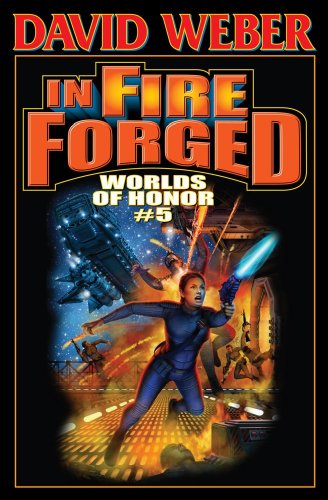 | Hardcover: 400
Pages
(2011-02-01)
list price: US$26.00 -- used & new: US$17.16 (price subject to change: see help) Asin: 1439134146 Canada | United Kingdom | Germany | France | Japan |
|
Editorial Review Product Description Praise for the hottest series in military science fiction: “Nobody does space opera better than Weber, and his heroine, Honor Harrington . . . like a fusion of Horatio Hornblower, Robert A. Heinlein and Tom Clancy. . . .” —Publishers Weekly (starred review) “[At All Costs is] a fast-paced tale that brings together all the elements developed in previous books, and pushes them a good way along toward an ultimate conclusion. . . .” —Booklist (starred review) “Brilliant! Brilliant! Brilliant! . . . unequivocally superb!” —Anne McCaffrey on Weber’s Echoes of Honor “Great stuff . . . compelling combat combined with engaging characters for a great space opera adventure.” —Locus | |
| 4. Mission of Honor (Honor Harrington, Book 12) by David Weber | |
 | Hardcover: 600
Pages
(2010-06-22)
list price: US$27.00 -- used & new: US$14.63 (price subject to change: see help) Asin: 1439133611 Average Customer Review: 
Canada | United Kingdom | Germany | France | Japan |
|
Editorial Review Product Description She's prepared to do anything, risk anything, to stop it, and she has a plan that may finally bring an end to the Havenite Wars and give even the Solarian League pause. But there are things not even Honor knows about. There are forces in play, hidden enemies in motion, all converging on the Star Kingdom of Manticore to crush the very life out of it, and Honor's worst nightmares fall short of the oncoming reality. But Manticore's enemies may not have thought of everything after all. Because if everything Honor Harrington loves is going down to destruction, it won't be going alone. Customer Reviews (57)
| |
| 5. Off Armageddon Reef by David Weber | |
 | Mass Market Paperback: 800
Pages
(2008-01-02)
list price: US$7.99 -- used & new: US$3.94 (price subject to change: see help) Asin: 0765353970 Average Customer Review:
Canada | United Kingdom | Germany | France | Japan |
|
Editorial Review Product Description Customer Reviews (144)
| |
| 6. By Heresies Distressed (Safehold) by David Weber | |
 | Hardcover: 496
Pages
(2009-07-07)
list price: US$27.99 -- used & new: US$10.65 (price subject to change: see help) Asin: B003GAN3TQ Average Customer Review: 
Canada | United Kingdom | Germany | France | Japan |
|
Editorial Review Product Description Customer Reviews (71)
| |
| 7. Torch of Freedom (Honorverse) by David Weber, Eric Flint | |
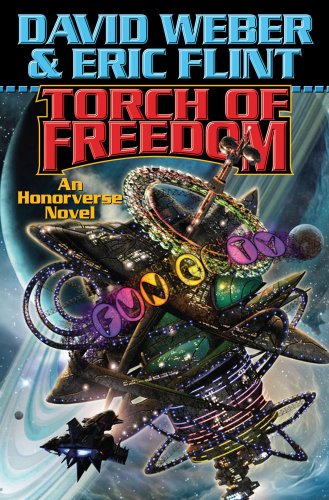 | Hardcover: 608
Pages
(2009-11-17)
list price: US$26.00 -- used & new: US$13.67 (price subject to change: see help) Asin: 1439133050 Average Customer Review:
Canada | United Kingdom | Germany | France | Japan |
|
Editorial Review Product Description Queen Berry of Torch was one of the targets of the unknown assassins. The former head of the Ballroom slave liberation organization, Jeremy X—now one of Torch's top officials, but still considered by many the most dangerous terrorist in the galaxy—calls in some past favors owed to him. In response, a security officer from Beowulf arrives in Torch to take charge of Queen Berry's security—a task made doubly difficult by the young monarch's resentment of bodyguards and the security officer's own growing attachment to her. Meanwhile, powerful forces in the Solarian League are maneuvering against each other to gain the upper hand in what they all expect to be an explosive crisis that threatens the very existence of the League itself. Customer Reviews (27)
| |
| 8. By Schism Rent Asunder (Safehold) by David Weber | |
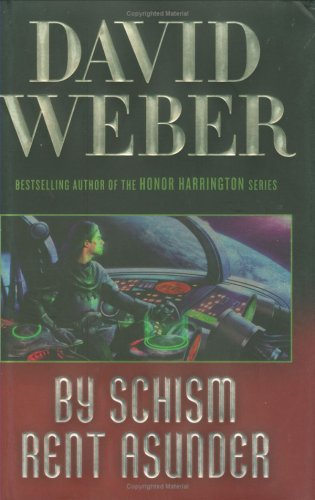 | Hardcover: 512
Pages
(2008-07-22)
list price: US$25.95 -- used & new: US$6.42 (price subject to change: see help) Asin: B002XULY32 Average Customer Review:
Canada | United Kingdom | Germany | France | Japan |
|
Editorial Review Product Description Customer Reviews (91)
| |
| 9. The Armageddon Inheritance by David Weber | |
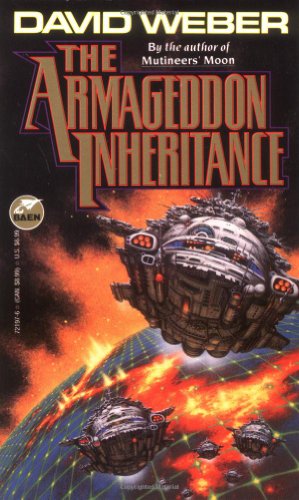 | Mass Market Paperback: 352
Pages
(2004-12-28)
list price: US$6.99 -- used & new: US$2.97 (price subject to change: see help) Asin: 0671721976 Average Customer Review: 
Canada | United Kingdom | Germany | France | Japan |
|
Editorial Review Product Description Customer Reviews (31)
| |
| 10. At All Costs (Honor Harrington #11) by David Weber | |
 | Mass Market Paperback: 912
Pages
(2007-09-25)
list price: US$7.99 -- used & new: US$4.01 (price subject to change: see help) Asin: 1416544143 Average Customer Review:
Canada | United Kingdom | Germany | France | Japan |
|
Editorial Review Product Description What price victory? The war with the Republic of Haven has resumed . . . disastrously for the Star Kingdom of Manticore. Admiral Lady Dame Honor Harrington, Steadholder and Duchess Harrington, the single victorious Allied commander of the opening phase of the new war, has been recalled from the Sidemore System to command Eighth Fleet. Everyone knows Eighth Fleet is the Alliance's primary offensive command, which makes it the natural assignment for the woman the media calls ?the Salamander.? But what most of the public DOESN'T know is that not only are the Star Kingdom and its Allies badly outnumbered by the Republic's new fleet, but that the odds are going to get steadily worse. Eighth Fleet's job is to somehow prevent those odds from crushing the Alliance before the Star Kingdom can regain its strategic balance. It's a job which won't be done cheaply. Honor Harrington must meet her formidable responsibilities with inferior forces even as she copes with tumultuous changes in her personal and public life. The alternative to victory is total defeat, yet this time the COST of victory will be agonizingly high. Customer Reviews (100)
| |
| 11. The Mexican Frontier, 1821-1846: The American Southwest Under Mexico (Histories of the American Frontier) by David J. Weber | |
 | Paperback: 440
Pages
(1982-06-01)
list price: US$26.95 -- used & new: US$21.00 (price subject to change: see help) Asin: 0826306039 Average Customer Review:
Canada | United Kingdom | Germany | France | Japan |
|
Editorial Review Product Description The book is essential reading for all who are interested in the history of the West and the Southwest. The late Ray Allen Billington praised the book as "meticulously prepared, sparklingly written, and brilliantly interpreted. Its perspective will affect all writing on western history for a generation to come." Customer Reviews (1)
| |
| 12. Hell Hath No Fury (BOOK 2 in new MULTIVERSE series) by David Weber, Linda Evans | |
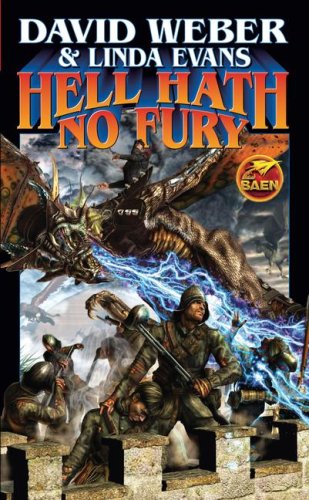 | Mass Market Paperback: 685
Pages
(2008-06-24)
list price: US$7.99 -- used & new: US$4.27 (price subject to change: see help) Asin: 141655551X Average Customer Review:
Canada | United Kingdom | Germany | France | Japan |
|
Editorial Review Product Description War between the universes is the last thing responsible leaders on either side want. But the fury of their respective populations, xenophobic fear of the unknown, and cries for "justice" (or vengeance), are all driving both sides towards the brink. And unscrupulous, power-hungry men—and Arcana and Sharona alike—have agendas of their own. The fuse has been lit, and a war stretching across the universes, fought between dragons, spells, and crossbows and repeating rifles, machine guns, and artillery is erupting in white-hot rage and fury. Where it will end—and how—no one knows Customer Reviews (31)
| |
| 13. The Excalibur Alternative by David Weber | |
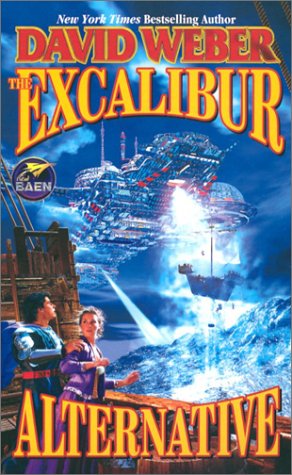 | Paperback: 346
Pages
(2003-01-01)
list price: US$7.99 -- used & new: US$3.00 (price subject to change: see help) Asin: 0743435842 Average Customer Review:
Canada | United Kingdom | Germany | France | Japan |
|
Editorial Review Product Description Customer Reviews (35)
| |
| 14. Storm from the Shadows (Disciples of Honor) by David Weber | |
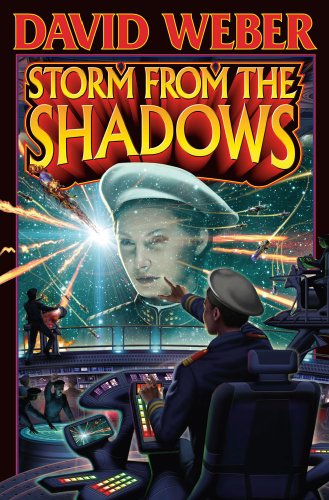 | Mass Market Paperback: 1104
Pages
(2010-04-27)
list price: US$8.99 -- used & new: US$5.22 (price subject to change: see help) Asin: 1439133549 Average Customer Review:
Canada | United Kingdom | Germany | France | Japan |
|
Editorial Review Product Description Customer Reviews (92)
| |
| 15. Heirs of Empire (Dahak series) by David Weber | |
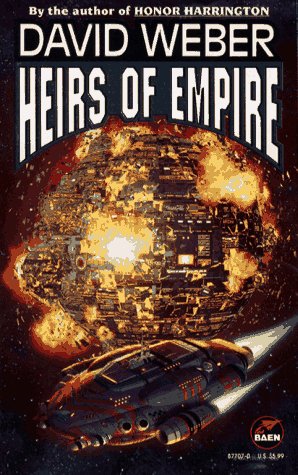 | Mass Market Paperback: 544
Pages
(2002-01-02)
list price: US$6.99 -- used & new: US$3.44 (price subject to change: see help) Asin: 0671877070 Average Customer Review:
Canada | United Kingdom | Germany | France | Japan |
|
Editorial Review Product Description Customer Reviews (30)
| |
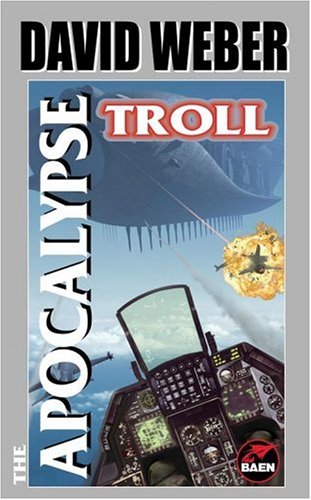
| 16. The Apocalypse Troll by David Weber | |
 | Mass Market Paperback: 416
Pages
(2003-01-01)
list price: US$7.99 -- used & new: US$0.99 (price subject to change: see help) Asin: 0671578456 Average Customer Review:
Canada | United Kingdom | Germany | France | Japan |
|
Editorial Review Product Description Customer Reviews (51)
| |
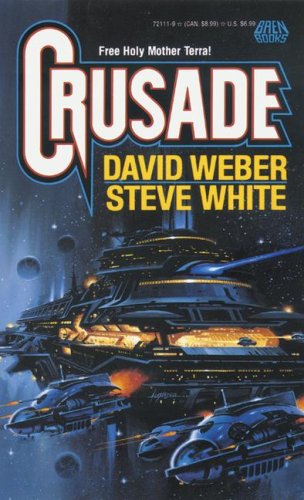
| 17. Crusade by David Weber, Steve White | |
 | Mass Market Paperback: 432
Pages
(1992-03-01)
list price: US$7.99 -- used & new: US$4.23 (price subject to change: see help) Asin: 0671721119 Average Customer Review:
Canada | United Kingdom | Germany | France | Japan |
|
Editorial Review Product Description Customer Reviews (22)
| |
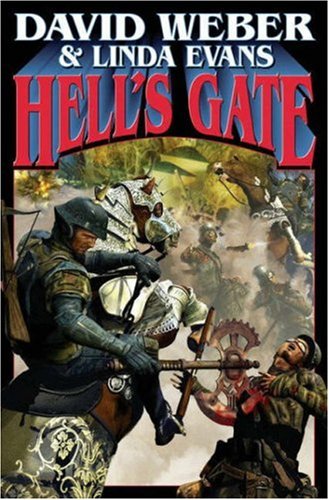
| 18. Hell's Gate (BOOK 1 in new MULTIVERSE series) by David Weber, Linda Evans | |
 | Mass Market Paperback: 1248
Pages
(2008-04-29)
list price: US$7.99 -- used & new: US$4.34 (price subject to change: see help) Asin: 1416555412 Average Customer Review:
Canada | United Kingdom | Germany | France | Japan |
|
Editorial Review Product Description Customer Reviews (73)
| |
| 19. The Stars at War II (Bk. 2) by David Weber, Steve White | |
 | Hardcover: 1056
Pages
(2005-07-05)
list price: US$27.00 -- used & new: US$14.63 (price subject to change: see help) Asin: 0743499123 Average Customer Review:
Canada | United Kingdom | Germany | France | Japan |
|
Editorial Review Product Description Customer Reviews (7)
| |
| 20. Racial Frontiers: Africans, Chinese, and Mexicans in Western America, 1848-1890 (Histories of the American Frontier) by Arnoldo De León | |
 | Paperback: 160
Pages
(2002-09-18)
list price: US$21.95 -- used & new: US$19.75 (price subject to change: see help) Asin: 0826322727 Average Customer Review: 
Canada | United Kingdom | Germany | France | Japan |
|
Editorial Review Product Description De León depicts a U.S. West populated by settlers anticipating opportunities for upward mobility, jockeying for position as they adapted to new surroundings, and adjusting to new political and economic systems. Minority groups discarded unworkable political traditions that had followed them from their homelands and sought to participate in a democracy that they trusted would see to their well-being. Many embraced capitalism in preference to the economic systems they had left behind but refused to give up their cultural traditions. The result was a U.S. West of many colors. Known as a skilled writer, De León tells countless stories of the lives of men and women to guide the readers through his narrative. Personal histories and revealing quotations illustrate the struggles and victories of the newcomers, enriching our understanding of the settlement of the trans-Mississippi West since the middle of the nineteenth century. Customer Reviews (1)
Under De Leon's model, the American West is not only viewed as an actual In place of celebrating obvious successes in early race relations in the In referring to whites, or "Anglos" as Dr. De Leon sometimes calls them, he Pale, olive, or brown skinned whites? Or is it just anyone who qualifies as a The author makes much of the frontier lynching of minorities and does his best De Leon concentrates on the extremes in a turbulent and violent period of | |
| 1-20 of 98 | Next 20 |

 Out of the Dark, Military SF with a twist
 Tedious - can I live to see this story die?