e99 Online Shopping Mall

Geometry.Net - the online learning center Help  
Home  - Authors - Zola Emile (Books)

  1-20 of 100 | Next 20
A  B  C  D  E  F  G  H  I  J  K  L  M  N  O  P  Q  R  S  T  U  V  W  X  Y  Z  

click price to see details     click image to enlarge     click link to go to the store

$4.95
1. Nana
$8.41
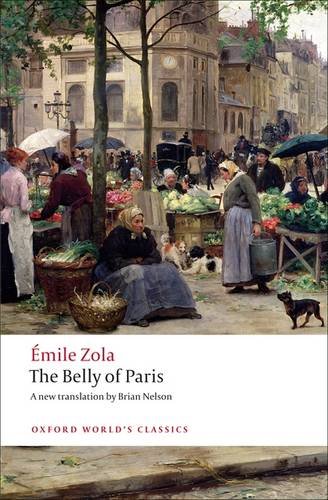
2. The Belly of Paris (Oxford World's
$4.13
3. Nana (Barnes & Noble Classics
$2.51
4. Nana (Thrift Edition)
$19.65
5. The Dreyfus Affair: "J`Accuse"
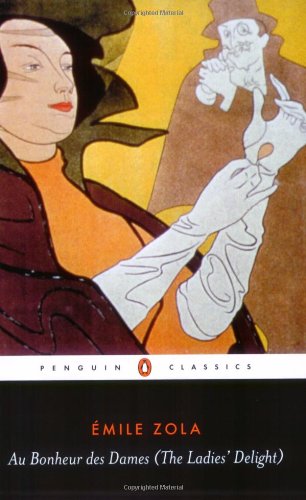
6. The Ladies' Paradise (World's
$19.90
7. Emile Zola: Therese Raquin (French
$6.17
8. Therese Raquin (Oxford World's
$10.00
9. The Masterpiece (Ann Arbor Paperbacks)
$12.54
10. Nana (La Collection Francaise
$1.49
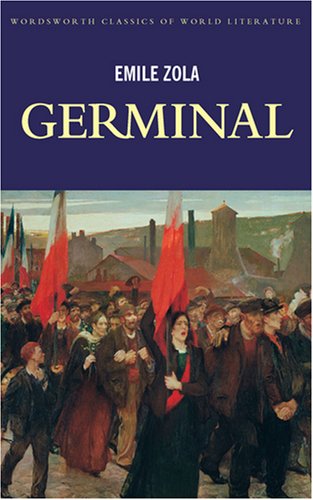
11. Germinal (Oxford World's Classics)
 
$11.97
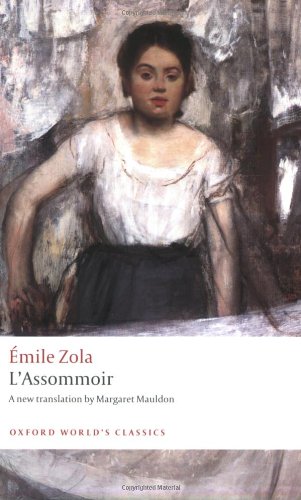
12. L'Assommoir (World Classics)
$3.88
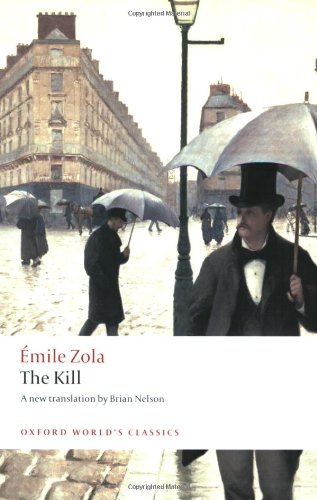
13. The Kill (Oxford World's Classics)
$16.26
14. Money (Rougon-Macquart)
 
15. La Debacle (Garnier-Flammarion)
16. The Kill
$7.90
17. For a Night of Love (Hesperus
$3.00
18. Pot-Bouille (Everyman's Library)
$14.53
19. The Joy of Life (Rougon-Macquart)
 
20. Collected Works of Emile Zola

1. Nana
by Emile Zola
Mass Market Paperback: 530 Pages (2000-06)
list price: US$11.95 -- used & new: US$4.95
(price subject to change: see help)
Asin: 2266072986
Average Customer Review: 4.5 out of 5 stars
Canada | United Kingdom | Germany | France | Japan
Editorial Review

Book Description
Nana opens in 1867, the year of the World Fair, when Paris, thronged by a cosmopolitan elite, was a perfect target for Zola's scathing denunciation of hypocrisy and fin-de-siecle moral corruption. In this new translation, the fate of Nana--the Helen of Troy of the second Empire, and daughter
of the laundress in L'Assommoir--is now rendered in racy, stylish English. ... Read more

Customer Reviews (19)

4-0 out of 5 stars Read L'Assommoir first
Zola's novels follow each other:L'Assommoir, Nana and (to a lesser extent) Germinal.I read all three, and found them to be excellent!Actually, I liked Germinal the best, L'Assommoir second, and Nana not so much.Nana was worth the trouble to read, however.Her story reminded me of Anna Nicole Smith ... different time, different place, different situation; same thing.(Even their names are similar; can make one from the other!)

5-0 out of 5 stars Oooooooh Nana..The original Paris party girl!
"Sex is like money; only too much is enough." John Updike

Emile Zola was a writer way ahead of his time, and I mean WAAAAY ahead. Talk about a salacious, racy novel! I can't imagine an American author before the mid-20th century penning such prurient prose like Zola's "Nana" which was published in 1880: "... she wished to share her last piece of pear, and held it out to Nana between her teeth, and their lips touched as they finished the fruit in a kiss." Long before Anais Nin, Holly Golightly, and yes even Paris Hilton there was Zola's "Nana" a young, gorgeous, voluptuous vixen who makes little Ms. Hilton look like a Carmelite Nun. She uses sex as her main weapon of choice to manipulate, exploit, and then eventually destroy her many suitors (and believe you me, there are many!):

"Her wish was to possess everything merely to destroy it. Never before had she felt so strongly the power of her sex."

When we are first introduced to Nana in the beginning of the story, she is employed as a comedic actress and is the talk of all of Paris for her stunning beauty and unassertive charm. However, acting is not where Nana makes all of her hard earned dough, on the contrary, she lives a queen-like existence only by openly operating as a high-class prostitute. There isn't a whole lot of plot to Nana's story, which isn't that big of a surprise when it comes to Emile Zola's style. Most of the chapters are essentially short tales describing all the different ways Nana's male conquests make complete idiots of themselves while under her spell. And trust me folks, when they do, she enjoys every second of it! Her disdain for the male sex just continues to build and build with seemingly every page turned, and despite her playful, engaging, superficial appearance to the Paris elite (which just can't seem to get enough of her); internally not only does she abhor men, she's out to destroy and also "pollute them" (as she so eloquently puts it).

There is no doubt about it, reading "Nana" was for me, quite a unique and enjoyable experience. I couldn't believe what I was reading at times, it was extremely lewd and suggestive, especially if you take into account when it was written. Zola definitely was a man with quite a lot of courage and distinctiveness, and this novel is one small example of why. He does have a tendency to be a bit long-winded and overly descriptive, but so do I, so I'm not complaining just making note of it for the rest of you out there. This is a tough book to put down once you get into it, mostly because of how humorous the story is, especially the character of Nana herself. You just can't wait to see what crazy, comical scene was awaiting her next. As much as I loathed her, I still couldn't lose interest in her story no matter how hard I tried. There is something about Nana you can't help but like and despite all of her many shortcomings and sins, you still can't help but to admire her independent and spirited nature. She was what she was, and she made no pretensions or excuses about it. She is a user who is used, a thief who is stolen from, an abuser who is abused, etc... etc...

And this is just a small peek into the life of one of the most fascinating femme's in fiction... You definitely need to pick this one up!4.5 STARS


An important aside; one of my main (but very few) knocks about the novel is that the first chapter is tough to get through. It not only is a tad boring, but Zola introduces us to so many different characters right off the bat (ala Dostoevsky), that it's difficult to remember so many names and nicknames so quickly (if you don't have an amazing memory, then I suggest having a pad of paper and pen in hand to take notes).

3-0 out of 5 stars A review of the translation
The book is wonderful, of course. I found the "Britishism" in the translations to be a distraction: "bloody" this, "Old Chap, " Upon my word, old chap, etc."
That said, as I read more English translations from French, and Russian, (and other reviews of French to English novels) this seems to be a generic problem. I forget now which translation contained the "Blimey!" I don't know the solution, but it makes me wish again that I had learned French.
I would say, if you can find another translation of this fine novel, do so.

5-0 out of 5 stars Hypnotizing
Zola is perhaps the best pure writer I've ever read. By this I mean thebeauty and flow of his writing independent of all other considerations is unmatched.And this is in translation; he can only be better in the original French.Stunning.

Through the rise and fall of Nana's life Zola offers a beautifully drawn look at the upper and lower classes of Parisian society in the 1870s(?).

I've read 6 or so Zola novels, and this is my favorite so far.

4-0 out of 5 stars Cortesana astuta
Nana es todas las mujeres en una sóla persona. La complejidad del mundo femenino del siglo XIX es precisamente lo que retrata la historia de esta cortesana. Nana tuvo el mundo en sus manos a punta de utilizar lo que se denominan "estrategias femeninas". En este libro no quedan bien parados ni hombres ni mujeres. Porque al fin y al cabo, las motivaciones, sin importar el género, son las mismas. Hombres y mujeres son prisioneros de su ambición. Y si se mira sin apasionamientos, Nanas existen en CANTIDAD en el mundo de hoy. ... Read more


2. The Belly of Paris (Oxford World's Classics)
by Emile Zola, Brian Nelson
Paperback: 320 Pages (2008-01-06)
list price: US$14.95 -- used & new: US$8.41
(price subject to change: see help)
Asin: 0192806335
Average Customer Review: 3.5 out of 5 stars
Canada | United Kingdom | Germany | France | Japan
Editorial Review

Book Description
'Respectable people... What bastards!'Unjustly deported to Devil's Island following Louis-Napoleon's coup-d'etat in December 1851, Florent Quenu escapes and returns to Paris.He finds the city changed beyond recognition.The old Marche des Innocents has been knocked down as part of Haussmann's grand programme of urban reconstruction to make way for Les Halles, the spectacular new food markets. Disgusted by a bourgeois society whose devotion to food is inseparable from its devotion to the Government, Florent attempts an insurrection.Les Halles, apocalyptic and destructive, play an active role in Zola's picture of a world in which food and the injustice of society are inextricably linked.The Belly of Paris (Le Ventre de Paris) is the third volume in Zola's famous cycle of twenty novels, Les Rougon-Macquart.It introduces the painter Claude Lantier and in its satirical representation of the bourgeoisie and capitalism complements Zola's other great novels of social conflict and urban poverty. ... Read more

Customer Reviews (6)

3-0 out of 5 stars Big fat novel marred by cub-scout editing
Not Zola's best work by a long shot, but mostly a good read.The many pages of description, though typical of the era and of Zola's late style, end up feeling overindulgent.I read this book in small portions, and found myself frequently bored and even agrieved by the endless word-pictures of mountains of produce and hoards of marketers.It felt as though I'd hired Zola as a guide to Les Halles only to find him pesky and insistant, always tapping me on the shoulder and urging me to look at all the colors and smell all the odors and hear all the babble.The story ended up more interesting as a period piece than as literature.But it's entertaining and worth the effort.

But I owe no thanks to the editors.This edition as so full of typos, misprints, and other errors, sometimes more than one per page, that I have to question whether the translation itself is scholarly.A greater work might have sent me to the French to double check the translation, but this book just isn't worth the effort.

If you're considering where to start with Zola, look first to L'Assommoir or Therese Raquin.They are more rewarding.

4-0 out of 5 stars An underrated work
This novel, the third in the Rougon-Macquart series, is a great example of what Zola does best. Through his minute attention to descriptive detail, he creates a setting based on historical fact, peoples it with an ensemble cast of realistic characters, and before we know it we are entangled in their lives as if we were one of the neighborhood. In this case the neighborhood is Les Halles, the huge marketplace of Paris, and the cast is composed of fish mongers, butchers, bakers, vegetable sellers, and street urchins. The two main characters are Lisa Quenu (born Lisa Macquart, daughter of Antoine Macquart), and her brother-in-law Florent. Florent, a Republican who's had some trouble with the law, seems to be an embodiment of Zola's feelings toward the revolutionary movement of the time, both positive and negative. Lisa, who runs a butcher shop with her husband, represents the moderate French citizen of the era, far more interested in the comforts and challenges of everyday life than in the events of the world outside her own immediate surroundings. While Florent entertains grandiose Utopian visions of a socialist France, politics is the last thing on Lisa's mind. Her main concern is keeping up the appearance of relative prosperity, thereby winning her family a bit of social status within the neighborhood.
Depending on which edition you read, this book is either titled The Belly of Paris or The Fat and the Thin. The second title refers to two types of people in the world. On the most obvious level it could simply refer to the division between the Haves and the Have-Nots. But Zola explores the dichotomy on a deeper level, separating mankind into those who are concerned foremost with creating a comfortable life for themselves, preoccupied only by the immediate world around them (The Fat) and those who have an outward concern toward the world, life, and humanity as a whole, living a life of sacrifice--whether deliberate or not--because of a devotion to a higher cause, whether it be political conviction, art, or some other calling (The Thin). Zola doesn't pick sides, but rather points out the strengths and foibles of both types. This novel is not a masterpiece, and it won't have the kind of profound effect on you as some of Zola's better books (Germinal, La Terre, L'Assomoir). It is an engaging read, however, and can certainly stand as a worthy sidekick alongside Zola's greatest works.

4-0 out of 5 stars A Decent Novel, But Not Zola's Best
This novel ties the main character Flaurent with the Rougon-Macquart family through marriage of his half brother. Flaurent is a runaway convict, who lives in his half brother's shop, which is a part of the big Parisian market. Flaurent is a former school teacher, who had had no interest in politics, but once, during the coup d'etat in December of 1851, while walking along the street came under police fire and had his hands smudged in dead woman's blood. That is how he got sentenced to hard labor. There is a sharp contrast between him and most of the other characters in the novel...

The novel is somewhat draggy at times and gossips with squabbles take up lots of passages, but one must bear in mind that in the Rougon-Macquart epic Zola was trying to create the broadest possible picture of the French society under Napoleon III. That is why, besides the Parisian market, the epic narrates about: big shops defeating small ones ("Au Bonheur des dames/Ladies Paradise"), miners ("Germinal"), the stock exchange ("Argent/Money"), etc.

3-0 out of 5 stars Like the curate's egg: good in parts
Zola is a great author and any of his stuff is worth reading. This book breaks new ground in its portrayal of the lives of the "little people" of Paris, its detailed descriptions of food and, most of all,its use of a city district - rather than human beings - as its maincharacter. Zola himself had great affection for it. You feel his nostalgiafor his difficult early days in the capital. But ultimately the bookdoesn't quite gell. The famous descriptions, while being jewels inthemselves, actually get in the way of the action. The plot could have beenmore sharply focused and, perhaps the most curious thing of all, the mainhuman character, Florent, is only a member by marriage of theRougon-Macquart family which the cycle of novels is about. The"real" member of the family, Lisa, has a remarkably peripheralrole. Also, the book could have been made a lot shorter. But it is stillrewarding for the reader because, after dealing with provincial intrigueand the capital's fat cats in his first two novels, Zola takes his firststab at portraying the people that were ultimately to make his reputation:the "lower orders".

3-0 out of 5 stars An excellent Zola plot, but style was not translated.
The plot for the "Belly" is excellent for those who appreciate Zola's subtle twists of fates and corruptible society.Many books by Zola have been amply translated with little lost of the style incorporated by Zola. However, in painting the markets of Paris, Zola incorporates a stylesimilar to literary landscaping utilized by James F. Cooper (highlydetailed).The translation does not flow as an artist brush on a canvas,it becomes tedious at times leaving me to skim over rather quickly, whichis rare.Overall, it was worth reading, but not worth going to pains toget to it. ... Read more


3. Nana (Barnes & Noble Classics Series) (Barnes & Noble Classics)
by Emile Zola
Paperback: 496 Pages (2006-02-01)
list price: US$6.95 -- used & new: US$4.13
(price subject to change: see help)
Asin: 1593082924
Canada | United Kingdom | Germany | France | Japan
Editorial Review

Book Description

Nana, by Emile Zola, is part of the Barnes & Noble Classics series, which offers quality editions at affordable prices to the student and the general reader, including new scholarship, thoughtful design, and pages of carefully crafted extras. Here are some of the remarkable features of Barnes & Noble Classics:
New introductions commissioned from today's top writers and scholars Biographies of the authors Chronologies of contemporary historical, biographical, and cultural events Footnotes and endnotes Selective discussions of imitations, parodies, poems, books, plays, paintings, operas, statuary, and films inspired by the work Comments by other famous authors Study questions to challenge the reader's viewpoints and expectations Bibliographies for further reading Indices & Glossaries, when appropriateAll editions are beautifully designed and are printed to superior specifications; some include illustrations of historical interest. Barnes & Noble Classics pulls together a constellation of influences—biographical, historical, and literary—to enrich each reader's understanding of these enduring works.

One of the founders of literary naturalism, Émile Zola thought of his novels as a form of scientific research into the effects of heredity and environment. He created characters, gave them richly detailed histories, and placed them in carefully observed, precisely described environments, and his readers watch as they wriggle and thrash toward their inevitable destinies.

In Nana, the characters are a prostitute, who rises from the streets to become what Zola calls a “high-class cocotte,” and the men—and women—whom she loves, betrays, and destroys. Among the novel’s many ironies is the mutual envy felt by Nana and those around her. She yearns for their material possessions, while they admire her apparent independence and sexual self-confidence. And despite the chaos Nana causes, Zola imagines her as being essentially “good-natured,” a stupid, vain but beautiful creature who can’t help drawing people into her web.

Not surprisingly, Nana’s portrait of a decadent world in which a prostitute amasses great wealth and power provoked protests from “polite society,” and it became one of Zola’s most controversial works. Today it is regarded as his masterpiece.

Luc Sante is the author of Low Life, Evidence, and The Factory of Facts and coeditor, with Melissa Holbrook Pierson, of O.K. You Mugs: Writers on Movie Actors.
... Read more

4. Nana (Thrift Edition)
by Emile Zola
Paperback: 352 Pages (2006-12-29)
list price: US$5.00 -- used & new: US$2.51
(price subject to change: see help)
Asin: 0486452395
Canada | United Kingdom | Germany | France | Japan
Editorial Review

Book Description

French realism's most beguiling femme fatale, Nana crawled from the gutter to ascend the heights of Parisian society, devouring men and squandering fortunes along the way. Her corruption reflects the degenerate state of the Second Empire and her story — a classic of French literature — is among the first modern novels.
... Read more

5. The Dreyfus Affair: "J`Accuse" and Other Writings
by Emile Zola
Paperback: 244 Pages (1998-02-17)
list price: US$22.00 -- used & new: US$19.65
(price subject to change: see help)
Asin: 0300073674
Average Customer Review: 4.5 out of 5 stars
Canada | United Kingdom | Germany | France | Japan
Editorial Review

Book Description
When French authorities accused Jewish Army captain Alfred Dreyfus of espionage in 1894, the resulting anti-Semitic controversy bitterly divided France and its intellectual world. This book is the first complete edition in English of the pivotal contribution of French novelist Emile Zola to the Dreyfus affair. His impassioned writings represent a classic defense of human rights and a searing denunciation of fanaticism and prejudice, as significant today as when they were written. ... Read more

Customer Reviews (2)

5-0 out of 5 stars COMPLETE COLLECTION OF ZOLA'S LETTERS DURING DREYFUS AFFAIR
Emile Zola is today the most well known "fighter" in the war to clear Alfred Dreyfus' name in what became known as the Dreyfus Affair in 1890s France.This book compiles Zola's letters (public and not) during this period, with the most famous being J'Accuse, one that earned him a conviction along with stiff fines that eroded his fortune.

Zola is very passionate in Dreyfus' defense, though his passion never leaves behind a devastating logic that made it so difficult to ignore.This is an amazing defense of religious freedom and justice, against prejudice and hatred.Zola manages to weaken, in time, two of the most powerful institution in France at the time: the military and the church.Ten years later the military would no longer play as significant a role in French life, and by 1905 France would pass the law separating Church and State.

After reading the letters, one is filled with Zola's enthusiasm and idealism.Makes one want to go fight injustice and make this a better world.There are very few books about which this can be said.

4-0 out of 5 stars HISTORY
This is an excellent presentation of historical events by a contemporary. ... Read more


6. The Ladies' Paradise (World's Classics)
by Emile Zola
Paperback: 480 Pages (1995-12-21)
list price: US$11.95
Isbn: 0192831801
Average Customer Review: 5.0 out of 5 stars
Canada | United Kingdom | Germany | France | Japan
Editorial Review

Book Description
The Ladies Paradise (Au Bonheur des Dames) recounts the rise of the modern department store in late nineteenth-century Paris. The store is a symbol of capitalism, of the modern city, and of the bourgeois family: it is emblematic of changes in consumer culture and the changes in sexual
attitudes and class relations taking place at the end of the century.This new translation of the eleventh novel in the Rougon-Macquart cycle captures the spirit of one of Zola's greatest works. ... Read more

Customer Reviews (16)

4-0 out of 5 stars The Epitome of Consumer Culture
Zola's The Ladies Paradise is a fine translation from the French original.The author is right on target when it comes to consumer culture in nineteenth century France.He predicted well, how big businesses would swallow up the mom-and-pop shops, and create a need for material possessions.The character of Denise was one of strong ambition in a time when women had less than half a chance of leading an independent life outside of an andro-centric culture.Denise is a young heroine in her own right, rising up from poverty to become a strong voice in the world of the department stores.She has to fight vicious rumours and unwanted affections to make it to the top with out sacrificing her own beliefs.I highly recommend Zola's The Ladies Paradise.

5-0 out of 5 stars Classic novel for this century
The Ladies Paradise written in the nineteenth century rings true of today's consumerism. Emile Zola examines in this socialistic novel the effects of consumerism on customers and employees. The customers who are women are drawn to the items that are displayed on the tables. Octave Mouret, the storeowner, knows what women desire and sets forth to use it to bring in profits. The lace, stockings, velvet are feminine fabrics that entice women to spend money, even if they don't have it.

As a retail employee, I have dealt with customers who don't have the money to buy the items but want to get it. I am a customer who buys what is displayed because I think it is going to be an investment. I can relate to small stores like Uncle Baudu's. Businesses like his struggle to stay afloat amongst corporate expansion. They entice clients with their sales and bargains--things that I look for when I shop. Small stores can provide what the big stores don't have. One way or the other, the consumer can get some sort of balance. Working at both a community store and a corporate store, one thing that matters most to customers is service. Customers want to be treated with respect and they expect sales associate to be enthused and answer their questions; even if it is trivial.

Denise Baudu, a simple country girl, arrives in Paris to get a job at her uncle's drapery shop. To her disappointment he doesn't have a job for her because his store is losing customers to the Ladies Paradise. The mall provides goods that are cheaper than the small shops and have a selection of fabrics not only from the mother country, but imported from Asia. He suggests to his niece that she get a job there.

The store fascinates her but she does feel some betrayal towards her uncle. Her uncle's business, along with the small stores, are struggling to stay afloat. With the expansion of the mall, these stores are forced to close because they can't compete with them. Uncle Baudu's hopes of his business staying for the long haul are shattered.

Denise is at first, shy and awkward. She is the target of cruel and malicious slander from the employees including assistant buyer Madame Aurelie. Zola unfolds the lives of the sales employees. The money they make in retail isn't sufficient to support them. The women take to prostitution. Claire has three men supporting her material needs. Pauline befriends Denise and suggests that she get herself a lover to support her financially. Denise doesn't take that advice because it is not in her interest to be a prostitute. She is determined to keep herself and her family together without falling apart which makes the women envious of her.

The novel is centered around an actual person Aristide Boucicaut who founded Le Bon Marche which remains today at the center of Parisian culture. Denise is believed to be the model of his wife Marguerite. Zola puts into a social perspective that exists til this day.

5-0 out of 5 stars Under the Wheels of the Juggernaut
THE LADIES' PARADISE is a sequel to POT LUCK (POT-BUILLE), which I read last year. Both have Octave Mouret as a central character. In the earlier novel, he was a young salesman on the make, both in his profession and with the young women in his apartment building. At the end of POT LUCK, he marries the owner of a successful drapery establishment. At the start of PARADISE, his wife has died; and Octave has entered on an expansion program from drapery into a department store named the Ladies' Paradise that threatens all the other shopkeepers selling clothing and accessories in the area.

Enter Denise Baudu, a country girl from Normandy, who moves to Paris with her two brothers after one of them has gotten in trouble back home. Her uncle runs a store called Au Vieil Elbeuf, selling drapery and flannels, but is unable to give her room or a job because business is threatened by the presence of the Ladies' Paradise across the street. Denise finds a job at the Paradise at the risk of angering her relatives.

Salesgirls at the Paradise live in a dormitory on the top floor of the department store. Room and board is part of the job, plus a token wage and commissions on sales over quota. Little does Denise know she had entered into a whirlwind of gossip and backbiting. She is made fun of by her fellow workers, but Mouret resists getting rid of her because he is drawn to her. At one point, however, two of Mouret's "spies" in management come upon Denise and a young salesman from her region who has sheepishly fallen in love with her and kisses her hand as head axe-wielder Bourdoncle watches. Denise is promptly dismissed.

As Denise finds another position in a less profitable store than the Paradise, the focus turns more to Mouret, who did not know of her dismissal. Mouret plans a large-scale expansion of the store and calls upon Baron Hartman (in real life, Baron Haussmann) to allow him frontage on the new boulevard being cut through the neighborhood.

One day, Mouret runs into Denise on the street and asks her to consider returning to the Paradise, which is just as well as the store where Denise had started to work was going under. To sweeten the offer, Mouret makes her an assistant buyer in the new children's wear department. With her enhanced status, Denise is now winning admiration from her co-workers, though some backbiters remain. In the meantime, Mouret's passion for her is growing -- despite Denise not encouraging it in any way.

There are several set pieces in the novel which are a feature of Zola's fiction. They come under the heading of giant mechanisms that grind people down. In GERMINAL, it was a coal mine; in POT LUCK, an apartment building; in HUMAN BEAST, railroads; and in THE BELLY OF PARIS, the food market at Les Halles. In every Zola novel, there are scenes showing off some giant mechanism at work crushing people under it like the wheels of a Juggernaut. In PARADISE, these scenes are highly successful sales which show a crush of frenetically spending customers and overwhelmed sales clerks as Mouret keeps "pushing the envelope" of what is possible in the apparel business. Even wealthy shoppers who came "just to look" are caught up in the frenzy and leave the store having committed themselves to buy more than what they could afford.

The owners of neighboring shops feel that the Paradise is like a hungry beast that strives to devour their businesses and put them out in the street. Which is exactly what happens. Denise's cousin Genevieve dies of consumption after her lover Colomban -- the main hope of Au Vieil Elbeuf -- runs away to chase a slutty Paradise shopgirl who is one of Mouret's cast-offs, and who doesn't even want him. Aunt Baudu follows her daughter soon after. When as the result of a series of sharp moves, Mouret buys their properties, the shopkeepers are evicted; and Uncle Baudu goes to a nursing home, completely dazed and broken.

Eventually, Denise and Mouret do hook up, but on Denise's terms. The novel ends as they announce their upcoming marriage.

I have found that the ten or so Zola novels I have read have been of a uniform high quality, such that I have difficulty recommending one over the other (though I have a particular fondness for NANA). THE LADIES' PARADISE is an excellent read and paints a fascinating picture of life in the emerging Paris department stores of the late 19th century.

4-0 out of 5 stars The Ladies Paradise
After reading the book for an art class I was suprized to find out that I actually enjoyed the book, it had quite a twist to the department store/love story. I think Zola's description of the scenes were wonderful and helped me use my inmagination better. I would reccomend this book to anyone who likes learning about Paris bourgeous life and the mechanical system of the department stores. Definitly a good read.

5-0 out of 5 stars Amazing insight into modern life-essential reading
any one who has started a business or has worked in a business should read this book. It clearly outlines all marketing principles, sales psychology and the benefits of being in distribution rather then production. Amazing. Grow your mind and read. ... Read more


7. Emile Zola: Therese Raquin (French Texts)
by Brian Nelson
Paperback: 224 Pages (2004-07-20)
list price: US$20.00 -- used & new: US$19.90
(price subject to change: see help)
Asin: 1853992879
Average Customer Review: 5.0 out of 5 stars
Canada | United Kingdom | Germany | France | Japan
Editorial Review

Book Description
A gothic tale of murder and adultery, Thérèse Raquin was denounced as pornography on its publication in 1867. "Putrid literature" was how Louis Ulbach described the novel in a contemporary review. Zola defended himself against these attacks in his preface to the second edition, in which he outlined his aim to produce a new, "scientific" form of realism. The novel marks a crucial step in Zola's development and is a major early work of Naturalism.

In his introduction to Thérèse Raquin, Brian Nelson places the novel in its cultural, intellectual and artistic contexts, and compares Zola's scientific aims with his actual practice in this work. The scientific status of Naturalist fiction remains problematic; in the final analysis it is influenced by literary models and conventions. Zola's powerful mythopoeic imagination does much to counteract the mechanistic view of humanity the novel was intended to embody. The myth of the fall is, indeed, fundamental to Zola's Naturalistic vision. ... Read more

Customer Reviews (1)

5-0 out of 5 stars Therese
I read the english version of this book and was completely satisfied. It kept me drawn in throughout the entire book, which is must for me. I stayed focused and was happy with the amount of detail Zola provides. I was so pleased with the english version, so I decided to try the french verson!!! ... Read more


8. Therese Raquin (Oxford World's Classics)
by Emile Zola
Paperback: 256 Pages (1999-01-28)
list price: US$10.95 -- used & new: US$6.17
(price subject to change: see help)
Asin: 0192836765
Average Customer Review: 4.0 out of 5 stars
Canada | United Kingdom | Germany | France | Japan
Editorial Review

Book Description
This new translation is based on the second edition of 1868, and includes the important `Preface', in which Zola defended himself against charges of immorality. ... Read more

Customer Reviews (20)

4-0 out of 5 stars Early Zola tale of obsession, paranoia, and narcisism
Emile Zola's `Therese Raquin' is a tale of obsession, paranoia, and narcisism.In modern parlance, this would be called a psychological drama.The tale relates a love triangle among the working poor in Paris in the 1860s.The title character, Therese, is unhappily married to Camille, a man whom she cannot stand and finds a bore.They live together in Paris with Camille's mother.Camille could be described as a mama's boy.A weekly get together with several local friends to play dominoes turns into a passionate affair between Therese and one of the friends, Laurent.Ultimately Laurent murders Camille (with Therese's support and blessing) and eventually takes his place as Therese's husband.Both Therese and Laurent become obsessed with their vile crime and feel the hot breath of Camille's spectre watching them at every turn.Their passion for each other eventually turns to rage, despair, and hate.There is almost no dialogue, virtually all of the text describes the thoughts, impulses, and emotions of the protagonists as they proceed from unbridled passion to rage, fear, and insanity.This work predates Zola's Rougon-Macquart series and is a good tale, if far below the level of the best of this series.Unlike Zola's best novels, this story offers the reader little insight into life in France prior to the destruction of the Second Empire.With very small tweaks, this tale could easily be set in New York City in the 21st century.Other reviewers state that this is a dark tale, which is true, although I think that this is often overstated.Zola certainly has a well earned reputation for writing dark novels, although I think that this is relative to a 19th century audience.Some of the subject matter on prime time TV in the US (like Law and Order SVU) makes this novel appear tame.This is definitely not a `feel-good' novel.Overall, this is a good, not great, novel.For someone approaching Zola for the first time, this would not be a bad place to start.A must read for any serious fan/student of Zola of course.

5-0 out of 5 stars A Tale of Two Murderers
The novel "Therese Raquin" certainly stands as one of the monuments of Emile Zola's famed Rougon-Macquart series, as well as one of the foundations of nineteenth century literary naturalism. Zola depicts a sordid murder with all the pretensions of a scientist, eager to dissect two pathological personalities as wholly determined by a complex of sheer will, heredity, and environment. Yet, the author also dresses up the narrative with the trappings of sensationalism. Laurent and Therese, the two murderers, are revealed as being not cold-hearted beasts, but fully-conscious humans, wracked throughout the book by a crescendo of increasingly horrific emotions that communicate their guilt, both before the reader and themselves. The reader is pushed remorselessly through a curtain of emotional blood to the grim tale's last line, and the certainty of his two murderer's fates do not at all interrupt one's own fascination with the depiction of their twisted psyches. Leonard Tancock's translation is first rate, from first to last, and his introduction provides a valuable preface to understanding Zola's intentions and technique. The cloise, suffocating environment of the story provides, in conclusion, the most important character of the novel, since it is this environment that is largely responsible for pushing the two murderers to the wall, and for determining their ultimate fate.

4-0 out of 5 stars Powerful
***Spoilers** Therese Raquin is the story of a bored woman who, in tandem with her lover, drowns her milksoppy husband and must suffer the moral consequences of doing so.Zola's psychologically astute novel gives a realistic account of the hallucinations and hauntings that result from the murder. Mme. Raquin, paralyzed and made mute by a stroke, must silently abide her son's murderers.She provides the book's greatest horror, but also its satisfying conclusion, as she watches the two come to a fate worse than the guillotine. This is the first Zola book I've read, and it was good enough for me to consider starting his dauntingly large Rougon-Macquart cycle.

Sidenote:I read the recent translation, which I advise other readers to avoid.I compared it to a 60's edition and found the more recent translation to be flat.Also, the translator couldn't decide whether to use the footnotes to provide historical perspective or literary interpretation.The footnotes also unnecessarily appear mid-sentence, instead of at the end of sentences, which I found to be distracting.

5-0 out of 5 stars If you're thinking of committing adultery...
This was Zola's first masterpiece. I think it's one of the most disturbing tales of adultery I've ever read. A woman named Therese is trapped in a dull marriage to her sickly cousin Camille. She takes his robust and sexy friend Laurent as her lover, and soon they plot Camille's death. The three of them go out on a boat for a leisure row on the river, and when they reach a secluded spot, Laurent throws Camille into the water. He drowns. Therese and Laurent overturn the boat to make it look like an accident, and they swim to shore calling for help. Their plan works. They marry. they should be happy, right? No, they aren't, because the murder and death of Camille haunts their guilty conscience until they nearly go mad. The ending to this extremely grim tale is terrifying and tragic, and morally correct. It will shake you to your very soul. There's a film adaptation of this book starring Kate Nelligan. This is one of those rare cases where the movie is even better than the novel. It's the most haunting thing I've ever seen. It was the most emotionally powerful thing I've ever, ever seen on screen. I think it made me have an anxiety attack haha.

David Rehak
author of "Love and Madness"

4-0 out of 5 stars Bold and full of suspense
"Therese Raquin" has all the right ingredients where living terror tales are made up of. Comprised of characters of freakish nature (sicky pale, childish, pasty face husband, the kind but naive doting mother, the cruel and good for nothing handsome lover, the plain, boring ugly uninspiring neighbours and of course the dangerously oppressed Therese herself)and their gray depressing surroundings, Zoladescribes the realistic scene of the poor in France.In the story, a young woman who has to endure a socially/mentally deprived environment in her husband and mother in law's house begins an affair with her husband's childhood friend. Frustrated at their slim chance of a better future, both decide to kill Therese's husband to pursue their happiness together.But is the poor man really dead? Or isn't he..... Ironic, full of suspense, shocking psychology and ugly side of human psychics, Zola has managed to link each of complex human emotion with psychological terror into his tale.If you think this is another simple tale of adultery, you're definitely missing out a lot. Treat yourself to a night of terror and give this a chance! ... Read more


9. The Masterpiece (Ann Arbor Paperbacks)
by Emile Zola
Paperback: 368 Pages (1968-10-01)
list price: US$17.95 -- used & new: US$10.00
(price subject to change: see help)
Asin: 0472061453
Average Customer Review: 4.0 out of 5 stars
Canada | United Kingdom | Germany | France | Japan
Editorial Review

Book Description

This controversial novel, set in the art world of Paris, has been read as an attack on the Impressionist painters who had been Zola's friends
... Read more

Customer Reviews (14)

4-0 out of 5 stars YThe Masterpiece
An easy and enjoyable read. Vividly evokes the atmosphere of late-19th century bohemia in Paris,

4-0 out of 5 stars Superb
Given that Zola lived through the whole period of when the Impressionists turned the Salon's on their heads this is almost a biographical piece. For the various characters Zola merely drew from his friends that he would frequent the cafes and bars with. The lead character, Claude, is primarily based on Manet and Cezanne - both of which wouldn't forgive him doing so. Zola wasn't too enamoured with the impressionist and post-impressionist movements, this attitude he uses to great effect when depicting the derision with which the artists work was met. The opening piece which Claude has displayed in the Salon is in effect Manet's "Le Dejeuner Sur l'herbe" (1963).
The book opens with Claude finding a woman drenched on his doorstep, Christine. She has just arrived in Paris and through one thing and anotherbecomes lost and shelters from the rain in Claude's doorway. She is the impetus for the figure in his painting. The story unfolds with their romance, Claude trying to get his artwork accepted by the art intelligensia, succumbing to the desire to paint THE painting, etc.
A number of characters share the stage, again most likely based on artisans that Zola knew: architects, artists, writers, critics.
The book conveys quite well what it must have been for them all struggling to get a toehold and make an impression on the Paris art scene.
The tone of the book is somewhat bleak but Zola captures the Paris of the late 1800's well. I've never been to Paris but for those that have, the book is replete with names of various streets and districts across the city.
This was the first Zola novel I've read. Being an artist this book obviously struck a chord with me. It is well written and I'd certainly recommend it to anyone who enjoys art, particularly from this period.

3-0 out of 5 stars Bohemian Life during the Second Empire
It is an interesting study of the painter's tormented soul. It is hardly the heredity that made Claude Launtier the way he was, because we know from the novel "l'Assomoir/the Drum Shop" where he was coming from, but rather the decadent environment of the Second Empire. The novel abounds with examples of grotesque and tasteless art trends at that time, not only in painting, but in sculpture and literature as well. An interesting thing is that this is the novel with a character whom Zola modeled after himself, namely the writer Pierre Sandoz, whose Spanish ancestry alludes to Zola's foreign (Italian-Greek) ancestry. The interesting thing happens on Claude's funeral, where only two of his relatives show up; their names are not reveiled, but one can easily figure out from the description that they were Sidonie Rougon from "La Cur(e')e/the Kill" and Octave Mouret from "Pot-Bouille/Pot Lock" and "Au Bonheur des Dammes/The Ladies' Delight". The fact that Octave, unlike Sidone, stayed throughout the funeral process of the relative he hardly knew and showed his gratitude to all the funeral presentees, who knew Claude intimately, is a vivid display of his diplomatic skills, that enabled him to become the owner of a large store.

4-0 out of 5 stars Not quite a masterpiece, but close
L'Oeuvre (aka The Masterpiece) tells the story of Claude Lantier, a gifted but unorthodox artist scratching out a bohemian existence in Paris. Claude's innovative painting style is years ahead of its time. It frustrates him that he is not getting the acceptance from the cultural establishment that he feels he deserves. Determined to create a masterpiece that will earn acclaim in the annual Paris salon exhibition, he becomes obsessed with his art, abandoning his friends, his family, and his sanity.
This is the 14th book in Zola's Rougon-Macquart series, and one of Zola's most autobiographical novels. Claude is a surrogate for Zola's childhood friend Cézanne, and Claude's best friend Pierre Sandoz stands in for the author himself. Zola vividly depicts the bohemian lifestyle of his young adulthood in Paris. Claude, Sandoz, and their gang of artist friends struggle to make their fortunes as painters, writers, sculptors. They enjoy each other's camaraderie, encouraging and challenging one another over drinks in a cafe where they debate the meaning and value of art. The reader can't help but share in the excitement of their contagious determination to change the world. As an artist myself, I found Zola's vivid description of the annual salon exhibition--the submission process, the back room politics governing the selection of works, the opening day festivities--particularly fascinating. As the young men grow up, they drift apart somewhat and begin to lead more settled, adult lives. Claude's love interest, Christine, takes on a larger role in his life, and becomes an equally prominent character in the novel. Zola delves deeply into the dynamics of Claude's marriage, and the toll his art takes on the relationship.
The least interesting scenes of the book are the extensive descriptions of the "masterpiece" itself. The specifics of the work don't add much to our understanding of the artist's obsession. Though this book engages the reader from the beginning, it falters towards the end as it becomes more and more divorced from reality. In order to prove a point about the intrinsic inseparability of art and artist, Zola exaggerates Claude's compulsion until it defies believability. Despite these few complaints, overall this is an excellent novel and a great window into the artistic world of Paris at a time when exciting changes took place. Zola fans will find it a valuable read, as will anyone interested in the art world of turn-of-the-century (last century, that is) France.

4-0 out of 5 stars Sacrifice on the altar of canvas
"The Masterpiece" is, on the one hand, Emile Zola's depiction of Paris's community of avant garde artists in the 1860s and 1870s, but more thematically it is the story of a man who believes passionately in his unorthodox artistic vision and gives everything he's got to realize his "masterpiece" only to get nothing, not even the self-satisfaction of completion, in return.This is the situation of Claude Lantier, Zola's protagonist, a demon of the palette who is so obsessed with the perfection of his art that his wife, who has chosen to suffer poverty with him, laments that she is only his mistress, that he is truly married to the painted women on his canvases.

Claude's temperamental, dour personality is based loosely on that of Zola's own friend Paul Cezanne, a pioneering postimpressionist who achieved a level of fame and respect nobody in Zola's time could have foreseen, one which Claude is not destined to attain.Indeed, his efforts to forge a new style of painting conflicts with the conventional sensibilities of bourgeois Paris and the eponymous Salon, apparently the sole arbiters of the city's artistic taste.He is increasingly frustrated, but ever more determined, by the ridicule directed by the public at large towards his harshly rendered paintings, displayed in the rejects' gallery."We are the future!...the day will come when we'll kill their Salon stone dead," Claude vows to his circle of sympathetic friends.

Friends are what Claude needs.His two boyhood chums--Pierre Sandoz, a novelist supposed to represent Zola himself, and Louis Dubuche, an architecture student--become financially successful in very different ways (Sandoz by writing a popular series of Zola-esque novels about members of a Parisian family in various strata of society, Dubuche by marrying a sickly heiress), while Claude labors obscurely in an austere apartment, living on a meager stipend from a generous benefactor and making a little extra cash by selling some of his less objectionable paintings to a dealer.He has another friend who is his antithesis of a sort, a traditional painter of genteel portraits named Fagerolles, who wins the money and even the critical acclaim that Claude seeks.

One of the novel's major elements is the intense and beautifully imagined love affair between Claude and a girl named Christine whom he meets on the street one rainy night.Initially his radical art horrifies her, but she easily accustoms herself to it, even modeling for him.Their cohabitation produces a son they name Jacques, whose deformity and retardation seem grotesque implications of their neglect of him.It is not revealing too much to say that Jacques dies at twelve, for it is indicative of Claude's peculiarly callous state of mind that the sight of the dead boy inspires him to complete another canvas--the most attention he has paid to his son in years.

Zola is not the best of the great French novelists of the nineteenth century, but he is arguably the easiest to read and understand; and he is certainly original, having made a conscientious effort to set his style apart from that of his forebears Hugo and Balzac and providing the foundation for the new realism of the twentieth century as practiced by Americans like Frank Norris and Theodore Dreiser.Zola's style, and that of his proteges, is characterized by what seems to be a necessary irony--that a writer who was so successful could be so morbidly fascinated with failure.


... Read more


10. Nana (La Collection Francaise de CPI)
by Emile Zola
Paperback: 540 Pages (2005-06)
list price: US$18.95 -- used & new: US$12.54
(price subject to change: see help)
Asin: 0971336350
Canada | United Kingdom | Germany | France | Japan
Editorial Review

Book Description
From "La Collection Francaise" of Chatterley Press International, this classic French novel, shaped in the tradition of the legendary "Gallimard," is now made available in the United States. ... Read more


11. Germinal (Oxford World's Classics)
by Emile Zola
Paperback: 576 Pages (1998-08-20)
list price: US$8.95 -- used & new: US$1.49
(price subject to change: see help)
Asin: 0192837028
Average Customer Review: 4.5 out of 5 stars
Canada | United Kingdom | Germany | France | Japan
Editorial Review

Book Description
Zola's masterpiece of working life, Germinal (1885), exposes the inhuman conditions of miners in northern France in the 1860s.By Zola's death in 1902 it had come to symbolise the call for freedom from oppression so forcefully that the crowd which gathered at his State funeral chanted 'Germinal! Germinal!'. The central figure, Etienne Lantier, is an outsider who enters the community and eventually leads his fellow-miners in a strike protesting against pay-cuts - a strike which becomes a losing battle against starvation, repression, and sabotage.Yet despite all the violence and disillusion which rock the mining community to its foundations, Lantier retains his belief in the ultimate germination of a new society, leading to a better world.Germinal is a dramatic novel of working life and everyday relationships, but it is also a complex novel of ideas, given fresh vigour and power in this new translation. ... Read more

Customer Reviews (46)

4-0 out of 5 stars Accurate:Captured the Spirit!
This was my first read of Zola, an author who is FAR too unknown in the US.He captured, fully, the essence of a labor dispute.I've been around an industrial area my whole life, and have been through many strikes, plus have been the target of those who don't like you crossing their lines.Zola brought all this to life; he told it just as it really is.Incredible!

5-0 out of 5 stars Germinal is a work of genius by Zola the master of literary naturalism
Germinal was the name of a new month (Feb.-March) created by the leaders of the French Revolution. Zola's novel is given this title. The novel is set in the 1860s dealing with the brutal, harsh, amoral, poverty stricken, violent and cruel world of a French mining town whose name is
"240.
The main character of the novel is Etienne Lantier who is a member of a family featuring in several of Zola's novels in his Roquet-Macquart series dealing with two families charted by the brilliant novelist.
During the novel the reader will become engrossed by the families who toil deep under the surface of the earth. The mine is a symbol of Moloch the rapacious idol who gorges itself on human flesh, lives and love.
The novel is not for the prudish. In its many pages you will be exposed to sex in all its varieties; scatological language; several murders; genital mutilation; several horrible deaths and a strike. You will even see cruelty to animals written with such heartbreaking realism that you will cry over the deaths of the horses Trumpet and Battle and the rabbit
Poland.
You will meet various political and social theories from Marxism to nihilism expressed through the eloquent voices of the characters. You will be invited into the tragic home of the Maheu family and discover there the unforgettable character of La Maheu the indomitable earth mother and her suffering and prepubescent daughter who falls in love with the stranger Etienne. Catherine and her two lovers Chaval and Etienne are indelibly printed in the mind's eye of this reviewer. Miners trapped deep within the earth in a disaster instigated by the anarchist Souvarine lead to scenes which are horrific in their impact.
Emile Zola was a reformer whose novel is a classic which is also a page turner. Each page bristles with his rage at injustice, cruelty and the clash between the classes in France.
What would Zola have thought of the bloody twentieth century of revolution in Russia, two horrible world wars and now in our own century the hell of Middle Eastern warfare and terrorism.?
Germinal reads as if it was written last week since it is alive with all the human emotions. It is one of the best books ever written and will always live. Vive la France! Vive Emile Zola!

5-0 out of 5 stars Readers of the world, unite!
Germinal is a damned good book. A page-turner. Engrossing. Illuminating, too. The proletariat/capitalist conflict is better portrayed here than in any other work of fiction I've come across. One gets a sense of the conditions--granting Zola a degree of literary embellishment--that led to trade unionism, socialism, communism, and anarchism. Zola sides with the workers, as you'd expect, but he is honest about his characters' motivations. They are presented as three-dimensional, not didactic dummies for Zola to ventriloquize through. Zola's characters are so fleshed-out, in fact, that the reader develops a rapport, an emotional investment, with them. Not all make it through the book alive and well, and this is another refreshing bit of truth from Zola. Life is full of calamity, pain, and senseless suffering, but it continues nevertheless. Zola presents this without typical Gallic pretension...a worthy achievement in and of itself. A definite classic.

5-0 out of 5 stars From the Mines to Revolution-A Masterpiece
As an aspiring author of regional fiction ("Suomalaiset: People of the Marsh" ISBN 0972005064)who was raised on liberal politics amidst the boom and bust of Minnesota's iron mines and timber industry, "Germinal's" featured protagonist, Etienne Lantier, strikes a chord with me. There is much about the American labor movement and the plight of American workers to be found in Etienne's story. Though conditions in our factories, mines, and in our forests have markedly improved since the days of children working the coal fields of West Virginia and the iron mines of the Mesabi Iron Range, Zola's prose and his social observations about wealth, capital, and the exploitation of the common man by those in power rings true in 21st century America. A beautifully translated work, succinctly direct, wonderfully cast, with prose that makes you sigh. One of my ten all time favorite novels.

5-0 out of 5 stars The best novel of the 19th Century
This is ?mile Zola's undisputed masterpiece in the Rougon-Macquart novel series. In each of the novels of this series Zola sketches in honest, human detail the life of the working class of 19th Century France; in Germinal, the center of attention is the mining industry of the far north.

The story describes the experience of an ex-machinist, Etienne Lantier (who appears as such in one of the other novels) in the Voreux and other mines around the town of Montsou, situated somewhat near Valenciennes. Starving and looking for a job in a period of industrial crisis, he is introduced to the reader as he arrives at the mine. Etienne soon manages to get a job there, and gets to know the great variety of characters that make up the local mining town. But his deep-felt social activism, combined with his somewhat higher education than the local miners, sets in motion a chain of events that changes both his life and that of the reader forever.

Zola's brilliant description of the reality of the struggle between classes and the effects, positive and negative, that zealous struggle for the improvement of the world can have on individual humans in dire straits is sure to haunt the reader for a long time. The author manages to describe both the miners, in their jealousy, pride, poverty and despair, as well as the local bourgeoisie in their misguidedness, personal issues and the pressures of capitalism with a deep understanding of the human psyche. The interactions between humans under pressure is described in powerful, terse dialogues and evocative passages.

The political and social background of the miners' desperate struggle for a decent living is the general theme of the book, but Zola avoids stereotypes and never clearly takes sides for any particular political position, deftly avoiding preachiness or sentimentalism. The incredible hardship and difficulty of the miners' lives and the degree to which the main characters manage to maintain a sense of dignity is sure to move even the coldest-hearted person, but Germinal is not a Dickens work and tear-jerking is more an effect of the book's quality than the goal of the writer.

Above all, however, Zola's best work is simply an incredibly riveting, exciting, deeply moving and tremendously powerful work of fiction. Read the rise and fall of Lantier, Maheu, Bonnemort, Deneulin, Catherine, Souvarin and the other comrades, and weep. ... Read more


12. L'Assommoir (World Classics)
by Emile Zola
 Paperback: 409 Pages (1999-01)
list price: US$5.95 -- used & new: US$11.97
(price subject to change: see help)
Asin: 2877141276
Average Customer Review: 4.5 out of 5 stars
Canada | United Kingdom | Germany | France | Japan
Editorial Review

Book Description
The seventh novel in the Rougon-Macquart cycle, L'Assommoir (1877) is the story of a woman's struggle for happiness in working-class Paris.At the center of the story stands Gervaise, who starts her own laundry and for a time makes a success of it.But her husband soon squanders her earnings
in the Assommoir, a local drinking spot, and gradually the pair sink into poverty and squalor..L'Assommoir was a contemporary bestseller, outraged conservative critics, and launched a passionate debate about the legitimate scope of modern literature.This new translation captures not only the
brutality but the pathos of its characters' lives. ... Read more

Customer Reviews (27)

4-0 out of 5 stars Depressing
L'Assommoir came up in a Yahoo reading group, I had previously read Germinal and I decided to give this novel a try.L'Assommoir was quite interesting, and rather depressing.Zola did his homework, in a way that reminds me of Nelson Algren.After reading L'Assomoir, I continued on to Nana.I will read additional Zola novels in the future, I am sure, as I get around to them.

5-0 out of 5 stars Fantastic story of Alcohol Abuse
I enjoyed every chapter of this book.It was so depressing at times but it does help to understand this time period in France. My sister couldn't finish it because it was so depressing. I recommend this book for others to see how life can be if any substance is abused especially alcohol.

5-0 out of 5 stars This is the Zola novel to read first.
If you're seeking an introduction to Zola's 'Naturalism' but don't know where to begin among the multitude of his novels, this is the best place to start. "L'Assommoir" (which translates poorly into English as 'the boozer' or 'the beer joint', a lower-class drinking establishment) is the story of the laundress Gervaise and her descent into alcoholism. It is also, more importantly, a brilliant panorama of lower-class Paris during the time of Baron Haussmann's redesign of the city. With a cast of memorable characters and several unforgettable scenes that showcase the extent of Zola's research and his empathy for his characters, this is probably his greatest achievement. It deserves to be considered one of the greatest French novels of the 19th century.

5-0 out of 5 stars touching
i really enjoyed this novel, it has to be zola at his very best.before reading this i had read both 'germinal' and 'nana' and it was very interesting to hear the story of their parents and upbrinings.that's what i love about the rougon-maquart series, you get to do what you hardly ever do with other great novels - keep going!and it's not as if zola was just churning these novels out without thought as to how they stand on their own, pretty much all of the novels in the rougon-maquart series do stand on their own, and are exceptional novels.zola describes the poverty and squallidness of life in the paris slums like a master, and he pulls no punches.when this novel was released there was an outrage due to his filthy language...and it's not just the language of his characters, he uses this vulgar language as his own when telling the story.and he does push it about as far as you can go, which was a brave thing to do if you consider how long ago this book was published.the description of the feast in the laundry was mouthwatering, i honestly felt that i had been sitting at that worktable and gorging myself with them, so immersed was i in his writing.zola goes into much detail when describing the more mundane things in life in those days, washing clothes, ironing, etc... it was a real insight into how they did things back then, and besides the curiosity of a reader a hundred years later, he made it interesting and let us see the work from the eyes of the low paid working class of paris.drunkeness plays a large part in the novel.there is binge upon binge and throughout the book witness the decadence of gervaise and coupou.their ultimate downfall is a tragic one considering where they started, especially coupeu.coupeu's decent into alcoholism was particularly interesting to read as he starts off as more or less t-total, just a drink here and there, for appearances sake.you hear the thought processes of someone in denial, kidding themselves that the drink is doing them no harm.and it's very relevant to this day.for me, the best part of the novel comes later on when gervaise and husband are living in the block of flats.the story of the drunkard who had killed his wife and who battered his young daughter was so touching...and infuriating.there is one point where he brings a whip out on her and it reads so brutally it brought a tear to my eye.the story of that little girl and her character really opened my eyes...all of us are aware of the evils of the world but to be a part of such an evil, and to read it in such detail makes very very powerful writing.another part of the novel i thought very touching was the starvation of gervaise near the end of her novel and especially the point where she finally gets her meal and bursts into tears after sticking a potato in her mouth.don't get me wrong though...this is not a tear jerker, the novel is full of black humour, mostly at 'clip-clop's' expense.the bitchiness of the loreleoux made me angry at times...at others it made me laugh out loud.

an excellent book, certainly one of the best in the rougon-maquart series.i loved it.

5-0 out of 5 stars Poverty and Alcoholism in 2nd Empire Paris
This book describes the lot of the poor working class in Paris during the 1860s, and is the seventh of Zola's 20 volume Rougon-Macquart series.For those new to the writings of Emile Zola, he is considered to be one of France's great literary figures (only Hugo, and perhaps Proust, could be considered in the same breath).Zola generally writes with a very gloomy, gritty style (Naturalism).The Rougon-Macquart series was Zola's effort to explore various aspects (political, economic, and social) of life in France during the 2nd Empire under Napoleon III.In the style of Balzac, all twenty novels are vaguely linked with recurring characters, although there is no need to start with the first and read through all twenty.With one or two exceptions, each novel can be read independently of the others (and this applies to `L'Assommoir').If you have not read any of Zola's novels previously, this is a good place to start.It is a bit shorter than some of his later classics, but will give you a great taste of Zola's style, and it is a bit richer than some of the earlier works in the RM series.

The novel `L'Assommoir' (which, roughly translated from the French, means `The Stunner', a reference to the effects of strong drink), is a story of the plight of the working poor in the Paris slums of the 1860s and of the ravages of alcoholism.The main character, Gervaise Lantier, owns a small but profitable laundry in Paris.The story follows Gervaise's initial success in achieving some level of prosperity, but through a combination of bad (and abusive) relationships, bad luck, and her own indolence and growing alcoholism, her business fails and she descends deeper and deeper into squalor and misery.

Like all of Zola's writings, this is a well crafted novel that paints a clear (if not pretty) picture of the life of the poor working class.There is no happy ending in this story (unlike many of Zola's later works that at least terminate on a hopeful note), so if you are looking for a `feel-good` story, this isn't it.The depth and complexity of the characters in this novel (and in Zola's writing in general) are OUTSTANDING.Nobody writes realistic dialogue, or describes the interactions between characters, better than Zola.While reading this novel, my primary thought was that Zola's characters talked and acted as I would have expect real people to interact.This novel is definitely a social commentary on the plight of the poor, but it does not descend to cliched rantings against the government, the rich, the exploitation of the working class, or of society in general.In many ways, Gervaise is ultimately responsible for her own downfall.The description of the wedding party's visit to the Louvre may be among the best ever written by Zola.

The Oxford World Classics edition is outstanding.There is a lengthy introduction through which the modern reader can better understand this work in both literary and historical terms.There are detailed maps of Gervaise's apartment and neighborhood, and there are extensive endnotes to clarify topical or historical references that may be lost on modern readers.

The bottom line is that this is a monumental work of 19th century literature.Not quite in the same lofty plane as `Germinal' or `La Debacle', but still outstanding (I would give this 4.8 stars out of 5 if I could).This is an engaging story, but one in which the reader gains a fascinating insight into 1860s Paris from the perspective of the working class.You will in turn be entertained, enlightened, and shocked by this novel.It is well worth the money spent to buy it and the time spent to read it. ... Read more


13. The Kill (Oxford World's Classics)
by Emile Zola
Paperback: 318 Pages (2005-02-10)
list price: US$15.95 -- used & new: US$3.88
(price subject to change: see help)
Asin: 0192804642
Average Customer Review: 3.5 out of 5 stars
Canada | United Kingdom | Germany | France | Japan
Editorial Review

Book Description
'It was the time when the rush for spoils filled a corner of the forest with the yelping of hounds, the cracking of whips, the flaring of torches.The appetites let loose were satisfied at last, shamelessly, amid the sound of crumbling neighbourhoods and fortunes made in six months.The city had become an orgy of gold and women.'The Kill (La Curee) is the second volume in Zola's great cycle of twenty novels, Les Rougon-Macquart, and the first to establish Paris - the capital of modernity - as the centre of Zola's narrative world.Conceived as a representation of the uncontrollable 'appetites' unleashed by the Second Empire (1852-70) and the transformation of the city by Baron Haussmann, the novel combines into a single, powerful vision the twin themes of lust for money and lust for pleasure. The all-pervading promiscuity of the new Paris is reflected in the dissolute and frenetic lives of an unscrupulous property speculator, Saccard, his neurotic wife Renee, and her dandified lover, Saccard's son Maxime. ... Read more

Customer Reviews (6)

5-0 out of 5 stars Stick with it...It's worth it...
So I picked up this novel for two reasons: 1) I read Therese Raquin and thought it brilliant, 2) The cover was appealing. This is the first and only novel I've read in the Les Rougon-Macquart series, and, to be honest, I'm not rushing to read any more, but...I'm glad I read this one.

The focus of the story, set in 2nd Empire Paris, revolves around Renee, the daughter of "old money" who marries into "new money": Aristide Saccard and his son Maxime. Aristide is a ruthless financier and Maxime is his dashing but effeminate son. Of course, the young Renee begins an affair with Maxime, an affair that is characterized by her lustful longing for some real connection to life. The affair is quickly regretted by Maxime but becomes an obsession of Renee's...

...And that's when the novel becomes absolutely brilliant. We watch the tortuous descent of Renee into the madness that we all expected to happen, but this madness' climax (chapter 6) is one of the great feats of modern literature.

The setting of this climax is a costume ball of ridiculous extravagance. I can't adequately describe the satirical brilliance of this scene, but its absurdity ratchets up in intensity when Renee enters wearing...not much. I also don't want to spoil it.

To make a long story short, she goes insane, not that we didn't expect it. Why read it? Because this climactic scene is itself an epic of nasty grandeur. Renee manages to be both sympathetic and abhorrent, leaving the reader to ask, "What just happened?"

Don't get me wrong; this novel is boring and overly descriptive at first, but the descriptions slowly become more symbolically meaningful, as, for instance, when Renee's dressing and bathing room takes on the qualities of a vulva. And again I stress, the vividness and symbolism of the climax is INTENSE and marvelous.

I'd recommend this novel for readers with A) patience and B) a keen eye for masterful construction. Otherwise, read the next Dan Brown novel (not that I've actually read anything by him). Oh, and if you're both pornographic and literary minded, thumbs up.

4-0 out of 5 stars Consumption as depravity
First of all, this translation is very readable.If that is your concern in whether to purchase (I'd rather read a bad novel than a good novel in a poor translation), then fear not.As to the novel itself, I have begun reading the Rougon-Macquart cycle in order, so this is my second book.

I found the style of The Fortune of the Rougons carried over into this book, so the text is readable and wellplotted.I still found characterization a bit of a problem.The three main characters - Aristide, Renee, and Maxime - are rendered very well.So are a few supporting characters.For example, we get to know Sidonie Rougon who was only a footnote in the last book.However, most of the other characters are names and positions and not much else.This could be construed as serving Zola's purpose of illustrating the shallow lives of these people, but it can also get to be confusing.

As another reviewer mentioned, there's a lot of decriptive passages relating to furnishings and interiors.Again, these may serve to instill the sense of superficiality, but the descriptions can slow the narrative.However, one description (of Renee's bedroom and dressing room) appears to be a method of commenting on the psychology of her sexual relationship with her stepson rather than just sheer description.I found this an interesting device.

All the characters are bored and, despite having gained immense wealth, which if you read the last book you know was Aristide's all-consuming goal, one gets the feeling it is all for nothing.These people are consumers that make a cloud of locusts look restrained.Despite possessing hundreds of thousands of francs and "rivers of gold," they always seem one wrong step from bankruptcy.The final lines of the book underscore the sheer waste these people's lives represent.

Searching for fulfillment while being morally incapable of attaining it, I couldn't help feeling Zola's characters resonated with present day CEOs and executives behind debacles like the Enron scandal.Zola's depiction of the Saccard family is like turning over a rock and analyzing the squirming, slimy depravity of people obsessed with acquisition, consumers whose appetites are never satisfied.

In a sense, I get the feeling Zola's social criticism of the Second Empire will be a bit like looking at the Decline of Rome.And both speak to modern American culture.

1-0 out of 5 stars The world's greatest author's worst book
First of all, let me say that I love the work of Émile Zola. I have read all twenty novels in the Rougon-Macquart saga, and I have to say that in my opinion this is the worst book in the series. The plot revolves around a love triangle between Aristide Saccard (born Aristide Rougon), his second wife Renée, and his son Maxime by his previous marriage. The story takes place in Paris, as Saccard is undertaking a series of shady dealings to amass his fortune. I've always felt that Zola's brand of Naturalism, with its hyper-realistic accumulation of sensory detail, works better when he's dealing with the lower classes than with rich Parisians. In this book his observational thoroughness takes the form of long detailed descriptions of elegant dinner parties and lavishly furnished mansions. All this opulence goes to illustrate the pervasive greed and decadence of the times, but its still rather dull to read through. I imagine the love triangle itself had some shock value for readers of its time, but not so for today's reader. It's hard to take an active interest in any of the three main characters, since they are all so unlikeable. By unlikeable I don't just mean that they're morally reprehensible; they're also not very interesting. Renée is prone to tedious histrionics. Maxime is an ineffectual bore. Saccard is by far the most interesting of the three, but Zola doesn't give him as much ink as the other two. Zola develops the Saccard character much more fully in the far better novel entitled Money (L'Argent). French history enthusiasts will be interested in Saccard's financial endeavors. At a time when Napoleon III and Baron Hausmann are tearing down neighborhoods to make way for grand boulevards, Saccard uses insider information and a knack for wheeling and dealing to profit from all the destruction. I think this novel should only be read by those completists who want to read the entire Rougon-Macquart cycle. For anyone else, there are so many other far-better Zola books (Germinal, The Earth, L'Assomoir, The Debacle, Pot-Bouille, to name a few); don't waste your time on this one.

5-0 out of 5 stars New Translation Brings the Paris of the 2d Empire to Life
This is the second book in the Rougon-Macquart series of 20 novels that traces 4 generations of a family with a book about each family member. You don't have to read the other books to read one since each stands on its own, but once you start, you may, like me, never be able to stop.

This new translation really helps bring this book to life for the modern reader. Most of Zola's novels were translated when written over a hundred years ago. These original translations are usually the only choice English-language readers have. While good, they are somewhat dated, and a new translation of a Zola novel is an event of great importance. Arthur Goldhammer does a wonderful job of both being true to the time it was written and yet sensitive to the modern reader. There are occasional footnotes to explain some terms, but they are not bothersome nor do they interupt the flow of the work.

In The Kill Zola takes the reader to the Paris of the Second Empire where Napoleon III is transforming the city into a modern marvel. Large, wide, straight new boulevards are being built to provide access to the the heart of the city.

Many people are getting rich in real estate speculation. The protagonist Aristide Saccard, has come to Paris to make a fortune for himself. He knows he can do it if he could just find someone to provide him money to get started. He hears of a rich daughter who needs a husband since she was raped and is pregnant, and strikes a deal with her and her family to a marriage of convenience. With the money he gets from marrying Renee Saccard, he builds a fortune on shady deals and speculation.

Renee is a bored sensualist who takes lovers and attends all the parties she can. She is left to raise Aristide's teenage son, Maxime, another sensualist, who today would be called a Metrosexual. Together, the two explore the sexually liberated world of 19th century Paris and eventually become lovers.

Character development and portrayal are excellent in The Kill. Zola shows us the inner workings of this amoral family and the world in which they travel. Although the ending is a bit weak, the characters and plot are excellently developed.

This is the second time I have read this book and I love the new translation. Not Zola's best work, but a very strong novel worth reading.

4-0 out of 5 stars "This excellent translation...does not show its age at all."
Censored in 1871 when it was published and out of print since the 1950s, this is the first translation of The Kill in more than a century-and the effort was well worth it. It is a novel of a scheming family of three Parisians during France's Second Empire: Aristide Rougon, an ambitious, wicked real estate speculator; his young second wife, Renee, who's vacuous quest for pleasure is in its own way as destructive as her husband's quest for riches; and Maxime, Aristide's son and Renee's son-in-law, an idle rich young man of privilege. No one of the protagonists here are very sympathetic, and their rise and fall-while no surprise to the reader, certainly yields some very engaging and delightful storytelling by Zola.

For those familiar with Paris, the rapidly changing face of the city during tin the 1850s and 60s will be particularly engaging. During this construction boom, vast thoroughfares are being built as masses of homes and buildings are being torn down to remake the Paris into a modern capital. On this level, The Kill works as the story demolition of the ancient city by the unscrupulous movers and shakers of the day. Zola, often described as a naturalist, is a master of description, and thanks to this excellent new translation, the novel does not show it's age at all.

... Read more


14. Money (Rougon-Macquart)
by Emile Zola
Paperback: 348 Pages (2007-03-20)
list price: US$24.95 -- used & new: US$16.26
(price subject to change: see help)
Asin: 1595690638
Average Customer Review: 4.5 out of 5 stars
Canada | United Kingdom | Germany | France | Japan
Editorial Review

Book Description
From the Rougon-Macquart Series: Money (L'Argent): After a disastrous speculation, Aristide Saccard was forced to sell his mansion and to cast about for means of creating a fresh fortune. Chance made him acquainted with Hamelin, an engineer whose residence in the East had suggested to him financial schemes which at once attracted the attention of Saccard. With a view to financing these schemes the Universal Bank was formed, and by force of advertising became immediately successful. Emboldened by success, Saccard launched into wild speculation... --- "Judged by the standard of popularity, 'Money' may be said to rank among M. Zola's notable achievements... This is not surprising, as the book deals with a subject of great interest to every civilized community. And with regard to this English version, it may, I think, be safely said that its publication is well timed, for the rottenness of our financial world has become such a crying scandal, and the inefficiency of our company laws has been so fully demonstrated, that the absolute urgency of reform can no longer be denied." (Ernest Alfred Vizetelly) ... Read more

Customer Reviews (3)

4-0 out of 5 stars White-collar crime in 19th century France
This novel follows the exploits of Aristide Saccard, a financial wheeler-dealer in Second Empire Paris. His former wealth wiped away by investment schemes gone bad, Saccard looks for his next big windfall. Luckily, he meets a neighbor, Hamelin, an engineer with grand designs to develop railroads, mines, dams, and shipping companies in the Middle East. The engineer and the financial wizard join forces to make both their dreams come true. Saccard founds the Universal Bank to fund Hamelin's projects, and it becomes all the rage in the Paris Bourse (stock market). While Hamelin's intentions are noble, Saccard's primary interest in the venture is personal financial gain and self-aggrandizement. In order to push up his company's value, he manipulates figures illegally and lies to his investors.
Saccard is a personification of the greed and opportunism rampant in France at the time, and his unwise investors personify that period's growing mania for financial speculation. It's amazing how relevant the book is to this day. The Universal Bank could just as well be named Enron or Worldcom, and foreign investment in the Middle East is certainly a current concern. Another issue that Zola tackles in this book is anti-Semitism. Though Zola himself was not an anti-Semite, he makes Saccard a hater of Jews in order to depict the mind-set of many Parisians at that time. One of the fu