e99 Online Shopping Mall

Geometry.Net - the online learning center Help  
Home  - Authors - Zola Emile (Books)

  Back | 21-40 of 100 | Next 20
A  B  C  D  E  F  G  H  I  J  K  L  M  N  O  P  Q  R  S  T  U  V  W  X  Y  Z  

click price to see details     click image to enlarge     click link to go to the store

$14.48
21. Therese Raquin (Nick Hern Books
$33.06
22. The Experimental Novel And Other
$21.84
23. La Bete Humaine
$32.41
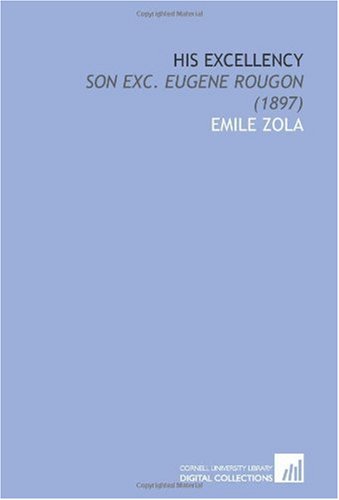
24. His Excellency
 
$0.89
25. Emile Zola (Bloom's Modern Critical
$32.99
26. Three Cities Trilogy: Paris, The:
$7.50
27. The Beast Within (Penguin Classics)
 
$36.14
28. Au Bonheur Des Dames (Folio)
$16.57
29. The Best Known Works of Emile
 
30. Emile Zola: A Biography
 
31. Nana, by Emile Zola, illustrated
 
32. Emile Zola Germinal
$17.29
33. Nana
 
34. Earth
$14.89
35. A Zola Dictionary: the Characters
$25.20
36. La Curée
37. NANA
$10.95
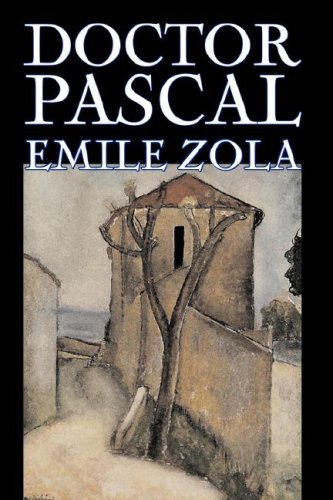
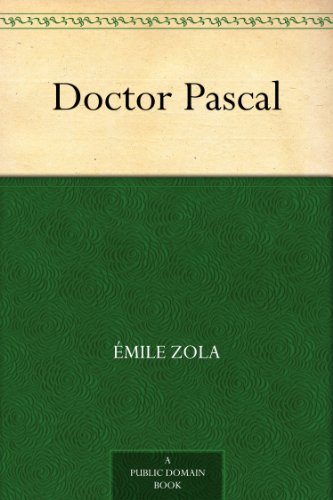
38. Doctor Pascal
 
39. Thelife and times of Emile Zola
$15.95
40. His Masterpiece

21. Therese Raquin (Nick Hern Books Drama Classics)
by Emile Zola
Paperback: 74 Pages (2007-08-30)
list price: US$18.95 -- used & new: US$14.48
(price subject to change: see help)
Asin: 1854599585
Canada | United Kingdom | Germany | France | Japan
Editorial Review

Product Description
In a dingy apartment on the Passage du Pont-Neuf in Paris, Thérèse Raquin is trapped in a loveless marriage to her sickly cousin, Camille. The numbing tedium of her life is suddenly shattered when she embarks on a turbulent affair with her husband’s earthy friend, Laurent. But their passion for each other soon compels the lovers to commit a crime that will haunt them forever.

Thérèse Raquin caused a scandal when it appeared in 1867 and brought its twenty-seven-year-old author a notoriety that followed him throughout his life. Zola’s novel is not only an uninhibited portrayal of adultery, madness, and ghostly revenge but also a devastating exploration of the darkest aspects of human existence.Download Description
A shock of terror alone had made the married pair speak, and avow their crime in the presence of Madame Raquin. Neither one nor the other was cruel; they would have avoided such a revelation out of feelings of humanity, had not their own security already made it imperative on their part to maintain silence.

On the ensuing Thursday, they felt particularly anxious. In the morning, Therese inquired of Laurent whether he considered it prudent to leave the paralysed woman in the dining-room during the evening. She knew all and might give the alarm.

"Bah!" replied Laurent, "it is impossible for her to raise her little finger. How can she babble?" ... Read more


22. The Experimental Novel And Other Essays
by Emile Zola
Hardcover: 420 Pages (2007-07-25)
list price: US$49.95 -- used & new: US$33.06
(price subject to change: see help)
Asin: 0548215871
Canada | United Kingdom | Germany | France | Japan

23. La Bete Humaine
by Emile Zola
Mass Market Paperback: 63 Pages (1999-12)
list price: US$11.95 -- used & new: US$21.84
(price subject to change: see help)
Asin: 2090319224
Average Customer Review: 4.0 out of 5 stars
Canada | United Kingdom | Germany | France | Japan
Editorial Review

Book Description
Did possessing and killing amount to the same thing deep within the dark recesses of the human beast?La Bete humaine (1890), is one of Zola's most violent and explicit works. On one level a tale of murder, passion and possession, it is also a compassionate study of individuals derailed by atavistic forces beyond their control.Zola considered this his `most finely worked' novel, and in it he powerfully evokes life at the end of the Second Empire in France, where society seemed to be hurtling into the future like the new locomotives and railways it was building. While expressing the hope that human nature evolves through education and gradually frees itself of the burden of inherited evil, he is constantly reminding us that under the veneer of technological progress there remains, always, the beast within.This new translation captures Zola's fast-paced yet deliberately dispassionate style, while the introduction and detailed notes place the novel in its social, historical, and literary context.Download Description
Les Rougon-Macquart
En entrant dans la chambre, Roubaud posa sur la table le pain d'une livre, le pâté et la bouteille de vin blanc. Mais, le matin, avant de descendre à son poste, la mère Victoire avait dû couvrir le feu de son poêle, d'un tel poussier, que la chaleur était suffocante. Et le sous-chef de gare, ayant ouvert une fenêtre, s'y accouda. ... Read more

Customer Reviews (14)

4-0 out of 5 stars Murder on the PARIS express meets Tell Tale Heart
This is the first Zola novel I have read and I could not put it down.Though in many instances the author gives very lengthy and detailed descriptions that slow the flow of the novel, the plight of the main characters finds a way to captivate the audience and keep them reading.This book, written in the late 19th century, has all the elements that current suspense fiction is famous for.Murder, cover up, suspicion, adultry, jealousy, revenge; the list goes on and on.

4-0 out of 5 stars Zola meets Dostoevski at Kafka's house
This is one of the most violent novels ever written. As other novels in the Rougon-Macquart series focused on alcoholism or prostitution or politics or the artworld, this novel focuses on murder. It seems that every character here is some kind of murderer, that the entire human race consists either of murderers or potential murderers needing only the right spark to set off their explosions. The setting for Zola's story is the world of the Paris railroad, the neighborhood around the Gare St.Lazare, a fitting environment in which to place people who often seem more like mechanized murder-machines than well-rounded human beings. The power of this novel comes not from its realism but from its strangeness. It is, in its way, as bizarre as anything concocted by Hoffmann or Poe. This is where Zola's Naturalism comes full-circle and meets the Poe-esque terror of "Therese Raquin", Zola's early 'Naturalistic' ghost story. The conjunction gives this novel more of a Modernist feel than we usually find in Zola's work.
I should also mention the prose. The publisher's choice of a Monet 'Gare St.Lazare' painting for the cover of this edition is fitting because Zola's prose here seems to be influenced by his own experience of Impressionist paintings. It seems that Monet and his cohorts taught Zola how to see and describe the modern world in a new way.

5-0 out of 5 stars Trainspotting
Jacques seems like a normal man from the outside, and judged by the standards of his contempraries he is.It's the Second Empire and as Zola has foreseen, the rise of the steam railway has created enormous changes in the fabric of the social order.To analyze this phenomenon more deeply, Zola hit on a lovely idea, to investigate the lives of those who work on the railroad and its linked industries.What he didn't expect was what he came up with, a clear link between sex murder and high speed railways.This link was to give rise within a few years of LA BETE HUMAINE's publication to the so-called "trunk murders."As Jacques realizes, trains make it possible to remove one of the awkward social reasons why men do not kill--because in general it was impossible to remove oneself from one's victim's body fast enough to avert suspicion.You coukd bury the body, but it could still be traced back to you.Now, in the 1880s, really all you had to do was put it on a train and science would steam it away from you at great rates of speed, putting infinite distances between you and your crime.

Agatha Christie took some elements of LA BETE HUMAINE and modernized them a bit in her 1950s thriller THE 4:20 FROM PADDINGTON.Both novels share the same surrealistic image--the murder seen framed in the window of a passing train that you see, so vividly, for one moment only, then it's gone as though it never happened.(Freudians interpret this discomfiture as another version of the so-called "primal scene.")Christie's murderer is a sort of updated Jacques, a man on whom the veneer of civilization is only as thick as his bank account and his convenience.

But, in LA BETE HUMAINE, if you think Jacques is badm wait till you meet up with Severine, the "heroine" of the book, a woman so bad she makes other noir protagonists look like Pollyanna.She is beautiful, selfish, conniving, self-absorbed and yet what makes her tick is her acute understanding of her social position and the way things get done, and undone, by forces we cannot control.The negotiation of such tricky, slippery moral slopes is something that a sociopath can handle with ease.No wonder this novel made such good "noir" movies later on, one by Renoir, one by Fritz Lang.

4-0 out of 5 stars A thriller with depth
In this book, Zola dives headlong into his fascination with "the human beast" by examining the psychology of murder. The novel is also a detailed portrait of the lives of railroad workers. The main character is Jacques Lantier, son of Gervaise Macquart (of L'Assomoir), a railroad engineer who works the line between Paris and Le Havre. Jacques feels a nagging compulsion to kill every woman he's attracted to. Fortunately, up to this point he has been able to control himself, but who knows how long he will be able to restrain the killer inside? Jacques is not the only character with murder on his mind; in fact, everyone in the book seems to be plotting to kill someone. Murder for love, murder for greed, murder for revenge are all represented. Zola has crammed so much violence and suspense into the plot, that on the surface he's written a fabulous piece of pulp fiction. Though the book pushes the boundaries of believability, it's also a fascinating study of human nature. The reader gains a window into the minds of the characters that reminds one of Poe's best tales. Underlying the criminal plot threads is a deeper level of social commentary, scientific inquiry, and philosophical debate. Zola shows how the rise of industrial technology contributes to the moral degeneration and dehumanization of the populace. He portrays Jacques' relationship with his engine as a symbiotic, almost romantic relationship. Meanwhile Jacques' Aunt Phasie and her family operate a crossing/switching station in the middle of nowhere, where their only interaction with the outside world comes in split-second views of nameless passengers being carted off to unknown destinations. While the railroad provides speed and convenience, it also generates social isolation and anonymity. Fans of Zola or readers of classical literature in general will certainly enjoy this book. Even fans of contemporary suspense fiction should find it entertaining and thought-provoking.

5-0 out of 5 stars A Victim of Beastly Instincts
There is something very profound in "La Bete Humaine/The Beast in Man", in spite of the fact that all of its characters have a very superficial mentality. Its scenes recreate very well the atmosphere of the late days of the Second Empire. Jacques Lantier is the main character, but the novel is not at all centered around him or his urge to kill women; only as late as chapter eight he attempts to commit a violent act and it is as late as chapter eleven that he does commit a violent act. The abundance of adultery, police incompetence, two single murders (chapters one and twelve), a multiple murder (chapter ten) both committed purely out of jealousy and an uxoricide committed out of greed all show the living environment and the morale of those days. Definitely, one of the major novels of the Rougon-Macquart series. ... Read more


24. His Excellency
by Emile Zola
Hardcover: 378 Pages (2007-07-25)
list price: US$48.95 -- used & new: US$32.41
(price subject to change: see help)
Asin: 0548195846
Average Customer Review: 3.0 out of 5 stars
Canada | United Kingdom | Germany | France | Japan

Customer Reviews (2)

3-0 out of 5 stars Behind the scenes of Second Empire politics
This is the sixth novel in Zola's twenty-novel Rougon-Macquart cycle. Compared to the other novels in the series, this one falls in the middle of the pack in terms of quality. Eugene Rougon is a powerful minister in Napoleon III's government. Through his own vanity and ambition, and some political maneuvering on the part of his rivals, he is beginning to fall into disfavor with the Emperor and with the public. Rougon won't go down without a fight, however, and this book chronicles his battle to stay on top. At the same time, Rougon becomes romantically obsessed with a beautiful Italian aristocrat who has hidden political motivations of her own. This book offers a fascinating look into the complex inner workings of the government of France's Second Empire. Napoleon III himself is a supporting character in the book. This novel is similar to Zola's work Money (L'Argent) in that it offers us a very well-drawn, strong and ambitious central character with complicated emotional depth, situated in a position of power amidst the historical events of his era. To read this book it helps to have a general knowledge of French history and politics of the time, at least the various wars that were taking place during the Second Empire. The characters make reference to a lot of events, and it can be a difficult read if you don't know the facts behind the story. Those who enjoy Zola's other Rougon-Macquart novels will like this book, as will anyone interested in French history.

3-0 out of 5 stars The complete guide to political intrigue
This book succeeds magnificently as a meticulous blow-by-blow account of a lowly provincial lawyer's rise to the highest level of political power, the people behind him, his fall from grace and his final triumphant return tohigh office. It shows the hollowness and shabbiness behind the glitteringfacade of state power and the motives that drive people to go into politics- in France at least. But as the main character has no other aim thansimply to wield authority over others and is perfectly willing tocontradict all his previous declarations of principle to retain thisauthority, the book tends to leave the reader in a depressed and cynicalstate, and this may be why its sales were among the lowest of Zola'sRougon-Macquart cycle. One might expect the main character, as the eldestson of the legitimate Rougon line, to have something more to offer, but thedryness of the subject chosen is too much for even Zola to overcome. Worthreading as a key part of the Rougon-Macquart cycle, but as a novel in itsown right ..... Zola has much better things to offer. ... Read more


25. Emile Zola (Bloom's Modern Critical Views)
 Hardcover: 292 Pages (2003-10)
list price: US$45.00 -- used & new: US$0.89
(price subject to change: see help)
Asin: 0791076636
Canada | United Kingdom | Germany | France | Japan
Editorial Review

Book Description
Leader of the 19th-century naturalist movement in France, Zola's major works include Germinal and Nana, both part of the Rougon-Macquert Cycle.

This title, Emile Zola, part of Chelsea House Publishers' Modern Critical Views series, examines the major works of Emile Zola through full-length critical essays by expert literary critics. In addition, this title features a short biography on Emile Zola, a chronology of the author's life, and an introductory essay written by Harold Bloom, Sterling Professor of the Humanities, Yale University. ... Read more


26. Three Cities Trilogy: Paris, The: V2
by Emile Zola
Hardcover: 116 Pages (2005-07)
list price: US$32.99 -- used & new: US$32.99
(price subject to change: see help)
Asin: 142191493X
Canada | United Kingdom | Germany | France | Japan

27. The Beast Within (Penguin Classics)
by Emile Zola
Paperback: 464 Pages (2008-01-29)
list price: US$14.00 -- used & new: US$7.50
(price subject to change: see help)
Asin: 0140449639
Canada | United Kingdom | Germany | France | Japan
Editorial Review

Book Description
A superb new translation of one of the most intense and explicit works of the nineteenth-century French master Émile Zola considered The Beast Within—also known as La Bête Humaine—to be his “most finely worked” novel. This new translation finally captures his fast-paced yet deliberately dispassionate style. Set at the end of the Second Empire, when French society seemed to be hurtling into the future like the new railways and locomotives it was building, The Beast Within is at once a tale of murder, passion, and possession and a compassionate study of individuals derailed by the burden of inherited evil. In it, Zola expresses the hope that human nature evolves through education but warns that the beast within continues to lurk beneath the veneer of technological progress. ... Read more


28. Au Bonheur Des Dames (Folio)
by Emile Zola
 Mass Market Paperback: 568 Pages (1971-11)
list price: US$12.95 -- used & new: US$36.14
(price subject to change: see help)
Asin: 2070372421
Average Customer Review: 4.5 out of 5 stars
Canada | United Kingdom | Germany | France | Japan
Editorial Review

Book Description
Through charm, drive, and diligent effort Octave Mouret has become the director of one of the finest new department stores in Paris, Au Bonheur des Dames. Supremely aware of the power of his position, Mouret seeks to exploit the desire that his luxuriantly displayed merchandise arouses in the ladies who shop, and the aspirations of the young female assistants he employs. Charting the beginnings of the capitalist economy and bourgeois society, Zola captures in lavish detail the greedy customers and gossiping staff, and the obsession with image, fashion, and gratification that was a phenomenon of nineteenth-century French consumer society. Of all Zola's novels, this may be the one with the most relevance for our own time. ... Read more

Customer Reviews (6)

5-0 out of 5 stars Vive Zola!
What a great book!In Au Bonheur des Dames, Zola does his usual fabulous job of handing you a slice of 19th century French life between the covers of a book.The book's male protagonist is lackluster--it's hard to see what makes him so alluring to women.However, the fascinating heroine more than compensates for this flaw.Denise Baudu is a departure from any other 19th century female character imaginable, a combination of Mary Pickford and a 20th century career woman.As a student of consumer culture, I also really enjoyed reading the fruits of Zola's research into Parisian department stores, advertising, etc.

3-0 out of 5 stars Parisian history through literature: over-the-top, kitschy, and still interesting
"Au Bonheur des Dames" is about life in and around of the great department stores (grands magasins) that emerged in Paris in the mid-19th century.As the city modernized (built the famous sewers, cleared out the slums and constructed massive boulevards, etc.), new and imposing department stores revolutionized commerce.Au Bonheur des Dames, owned by the rapacious capitalist Octave Mouret, is one such store.The story of the store's growth and social impact is told through the experience of Denise Baudu, a girl from the country who comes to Paris with dreams of succeeding and supporting her younger brothers.She gets a job at Au Bonheur des Dames, and the store becomes the central factor in her life.

The book is not always a great read.The story is wildly over-written.It is melodramatic, cheesy, and even silly.The ending is predictable, and 3/4 of the way through, you know what's coming.But have to to slog through 100 more pages to get there.The passages describing the store's physical appearance and operations can be extremely tedious.Do we really need to know so much about construction practices, commercial accounting mechanisms, how sales are put on, and exactly what items are in stock and why?

Still, "Au Bonheur des Dames" does a fantastic job explicating the birth of the modern department which revolutionized shopping, and it really gives the reader a sense of the transformation wrought to Paris by Napoleon III and Georges Hausmann.

5-0 out of 5 stars Fabulous!
I love Zola and this was no exception.I don't know how he does it-he is never boring.His stories always enthrall me.This is a wonderful book about the beginnings of consumer culture, modern advertising, mass retailing, materialism, the forerunners of today's malls and the forcing out of small specialty shops and the family owned-store in the late ninteenth-century.It has so much relevance today.In addition, you will really like the heroine, Denise.She is lovable and sympathetic throughout the entire book.

And I couldn't help liking Mouret, though he is of course the crass modern villain of the tale.(He was earlier seen in Zola's "Pot Luck".)Although he is a symbol of everything cutthroat and reprehensible about capitalism, I kind of wanted to believe in his optimistic ingenuity and in the developing friendship between him and Denise.Denise seemed to be tempering him with her pragmatic socialism.

At any rate, the intro to the book-here is a SPOILER so don't read on if you don't want to know what happens-anyway in the INTRO,


...which you should NEVER read first, they always give away the ending- said that only the most naive person would believe in the happy ending, that when Mouret marries Denise all's well that ends well.His obsession with her does have obvious parallels to the way he tries to make women feel about certain commodities.Still, I can't resist a good Cinderella story, and it is fun to think of Mouret marrying Denise and bringing her back to Au Bonheur des Dames, on his arm, "all powerful" (no doubt "tout puissant" in the original French).

That will show those snooty shopgirls that even a poor provincial girl can strike it rich!Despite being somewhat sucked in by the "love" story-in my defense Mouret DID seem to respect Denise's noble qualities-I do agree with Zola's critique and criticisms and I really think they're relevant.

This story works on so many levels, as so many of Zola's books do-it's highly entertaining, I mean as entertaining as fun as any contemporary fiction-and it's also historically engaging, morally sound, educational and even has current relevance.Everyone should read him!

4-0 out of 5 stars Not Zola's best, but still a good read
The eleventh novel in the Rougon-Macquart series, this book picks up where the last installment left off. Octave Mouret, featured in Pot-Bouille, also has a lead role in this novel. Through a fortunate marriage to a bride who dies not long afterward, young business man Mouret is left with a thriving department store named Au Bonheur des Dames. Through a natural business sense and a flair for promotion, he builds this store into the grandest mecca for shopping in all of Paris, in fact in the entire world. Soon the store swallows up the neighboring real estate, putting his old-school competitors out of business with his new brand of commerce. A few of the established firms, however, hang on for a grueling battle with this Goliath of retail.
At this point in history, department stores were a new invention, and a few stores in Paris totally revolutionized the way the world did business. Zola captures the excitement of that time. He obviously admires the revolutionary entrepreneurs for their efficiency, ingenuity, and showmanship, but he also laments the fall of the traditional Parisian shopkeeper. As Zola often does, he sets up a conflict between the two opposing philosophies, then brilliantly defends both sides of the argument. He also studies the consumers, and explores the growing obsession with shopping that blossomed among an enlarging middle class with disposable income. The depiction of the workings of the giant enterprise are interesting, and the store is staffed by a host of vividly-drawn characters. The main protagonist of the book is not Mouret, but Denise Baudu, a poor girl from the provinces who comes to Paris to work as a saleswoman. Zola is usually so good at creating realistic characters, warts-and-all, but Denise is so squeaky clean and noble that she comes across as too perfect to be true. She belongs in a melodrama, and the more the book concentrates on her, the more the story devolves into just that. Zola's literary style, Naturalism, calls for an exhaustive accumulation of sensory details. Unfortunately, these details form long, often tedious descriptions of store displays. On the whole, this is a good book, worth reading, though not one of Zola's masterworks. I would recommend reading Pot-Bouille (aka Pot Luck or Restless House). It is a much better novel.

5-0 out of 5 stars This is my favorite novel
Unlike Dickens' tuburcular heroines, Denise, who indeed suffers what Zola called "poverty in a black silk dress," is plucky, and she ultimately breaks the glass ceiling in her own gentle way.She encounters sexual harassment and somehow triumphs.She is a modern woman, perhaps European literature's first truly modern heroine ever.

This book is one of the best ever written, bar none, and it is light years ahead of its time. ... Read more


29. The Best Known Works of Emile Zola
by Emile Zola
Paperback: 464 Pages (2007-09-23)
list price: US$24.95 -- used & new: US$16.57
(price subject to change: see help)
Asin: 1434490440
Canada | United Kingdom | Germany | France | Japan
Editorial Review

Book Description
Included in this edition are "Nana," "The Miller's Daughter," "Captain Burle," "The Death of Olivier Becaille," "The inundation," "Nantas," "Nais Micoulin," and "Mme. Neigeon." ... Read more


30. Emile Zola: A Biography
by Alan Schom
 Hardcover: 303 Pages (1988-05)
list price: US$19.95
Isbn: 0805007105
Canada | United Kingdom | Germany | France | Japan

31. Nana, by Emile Zola, illustrated by Alexander Dobkin
by Emile (1840-1902) Zola
 Hardcover: Pages (1946)

Asin: B000RELXF0
Canada | United Kingdom | Germany | France | Japan

32. Emile Zola Germinal
by L W Tancock
 Paperback: Pages (1970)

Asin: B000PDDU8Q
Canada | United Kingdom | Germany | France | Japan

33. Nana
by Émile Zola
Paperback: 432 Pages (2001-05-31)
list price: US$17.99 -- used & new: US$17.29
(price subject to change: see help)
Asin: 0543894908
Canada | United Kingdom | Germany | France | Japan

34. Earth
by Emile Zola
 Textbook Binding: Pages (1960-06)
list price: US$9.95
Isbn: 0236308637
Average Customer Review: 4.5 out of 5 stars
Canada | United Kingdom | Germany | France | Japan

Customer Reviews (10)

3-0 out of 5 stars Love Zola, but Didn't Enjoy La Terre
I am a huge Emile Zola fan and have read most of his novels.La Terre is without a doubt my least favorite Zola novel.The book is well written, of course, but I didn't like the characters or the story.Having read a lot of Zola, I wasn't shocked by the depiction of the coarse, greedy peasants, but I grew weary of the story after a short while, and had to struggle to finish the book.For whatever reason, I just didn't care what was going to happen on the next page.I never felt like the story was building up to an ending that I cared about.My advice is to read lots of Zola, but to put "La Terre" somewhere toward the bottom of your Zola reading list.

5-0 out of 5 stars Extremely depressing but wonderful reading
Victor Hugo and Zola were alive at the same time.Hugo chose to write about the grander ideas in life.Zola wrote about the people and problems at the bottom of society.This story could be related to almost any family in a rural area. It is easy to get lost in the story. I recommend Zola for everyone to read.

5-0 out of 5 stars "...a great deal of hard work to produce a great deal of poverty."
The connection to the Rougon - Macquart series is Jean Macquart (the brother of Gervaise from "L'Assommoir"), but even though he is the main character in that respect "The Earth" is about so much more.Mainly the human condition told through the lives of the townsfolk and farmers of Beauce.Jealousy, murder, rape, farting, love, blasphemy, birth, longing, violence, cursing, sex it's all here...even a belligerent puking donkey!Yes, Zola's storytelling can sometimes be shocking bordering on vulgar, but so is life.A masterpiece.

5-0 out of 5 stars Sex! Incest! Murder! and...Farming!and...Flatulence?!
You'll find all five in abundance in this book, I kid you not!

I love Zola, and I'm trying to get through all the Rougon-Macquart series.For those of you that don't know, Zola wrote a 20-novel saga about a family under the Second Empire.So far I have read about six.They are all thrilling, exciting, lurid, and wonderful. This one is no exception.It is amazing and I loved it, although it was my least favorite so far among the Zola books I have read so far.(However, in its defense, it was undoubtedly the dirtiest!)The main character is one Jean Macquart, really a very nice and ordinary guy (later to fight in the Franco-Prussian war in Zola's The Debacle, the penultimate of the Rougon-Macquart, which I'm reading now) who becomes a farm hand in the most perverse, twisted peasant village you could ever imagine.

Why is this my least favorite Zola novel so far?Because it's very hard to care about the characters, whereas in some of his other books, such as "L'Assommoir", featuring Jean Macquart's sister Gervaise, or "Germinal", featuring Gervaise's son and Jean's nephew Etienne, the characters were sympathetic and the stories tragic.But almost no one was sympathetic in this book except for Jean.The evil characters were so awful you could barely read about them.I can't give away all the plot twists, but you will delight in the larger than life and humorous characters.They are so wretched!

Everyone is obsessed with one thing-land.(Except the characters that run a brothel and claim they're better than their poor relatives).But land's the thing.How to hold on to it, how to keep from losing it through marriage or disinheritance.The entire family is presided over by a hideous, cruel, and rich matriarch, called La Grande, who is in her late eighties and was born during the Terror, in 1793.She often smiles to herself about how much she enjoys setting her family at each other's throats and inciting their murderous rage. She's deliberately designed her will to cause countless lawsuits between her benefactors!But the major plot centers around the Fouan family, La Grande's brother's family.

Jean falls in love with La Grande's great-niece, Francoise, but there are problems.I can't give anything serious away in case you read this book, which you should if you haven't!You'll love it.It's as exciting as anything from our own time.Don't read the intro, by the way, until AFTER you read the book because the introduction gives away all the major plot points.I truly regret having read it.Read my introduction instead!

Without getting into too much detail, suffice to say a bunch of land disputes come into play, because the nastiest and scariest member of the Fouan family has married Lise, Francoise's sister.He doesn't want Francoise to get married to Jean or anyone for that matter because A., he would lose some of the land he inherited from Francoise's late father, and B., he is obsessed with Francoise and believes his numerous attempts to rape her will eventually succeed.

Meanwhile, everyone is sleeping with everyone, from cousin to cousin to brother and sister; people are slaughtered for their land, everyone is terribly cruel to everyone, and you find out a lot of things you didn't know about the nineteenth-century.For instance, did you know that people found flatulence as funny then as we do now?!Quite the history lesson.

One of the best characters in the book, the eldest Fouan son (called Jesus Christ because of his long hair and beard) can fart at will and always has some stashed up no matter what the occasion.You can't hope to win if you bet him that he can't fart, let's say, six times in a row.He can, no matter what time of day, and keeps getting free drinks on account of it.

There are a lot of graphic sexual scenes.This is foreshadowed by the opening scene, where Francoise mates a bull and cow!Later, animal stories are symbolically repeated with the people.They are "of the earth" and it's "all natural".Here, some of Zola's metaphors were a bit heavier handed than in his other works, and while elsewhere he made me feel terrible and shed tears about the plight of the working class in 19th century France, here he made peasants sound very unsympathetic.

Although one can understand their fears over foreign competition and their desire to have the government protect their produce, it's still hard to understand how that translated into the nastiest people I can ever remember reading about.In Zola's other books he somehow made the poverty more vivid, he made me feel it was directly responsible for people losing their dignity and their ability to live decently.

Here, it's not clear what is going on or how on earth family members would be driven to rape each other, kill each other, and steal from each other.At first their bickering is realistic, then it turns insane.Apparently Zola based his account on reports by priests from the time in these villages, and peasants who had read the book, according to Zola's son in law, tended to recognize their neighbors in the book!(If not themselves, he added, the introduction tells us.) But it still seems exaggerated to me.I still think most peasants wouldn't do what the main characters in this book did.It's an extreme example.

Don't get the wrong idea.You will still love this book although I think if you're going to read one Zola book only read Germinal or l'Assommoir.This book will keep you both laughing and reeling from how crazy and disgusting these peasants are, but it's highly unsympathetic, although I'm not sure Zola intended it to be.

I think, based on what I've read, that he felt that these were the people who were the lifeblood of France, and tried to "naturalize" their lives and make them somehow outside bougeois morality.I'm not sure it quite worked, despite his genius, but it's a great story.I think I'll read more about what he was trying to do later, because it's not always clear.As fans of his novels know, he tries to put forth "scientific" explanations for human behavior but ultimately he is a great artist and his work transcends his pretenses.

Despite the problems with the book, he's still one of the best writers ever: Vive Zola!

5-0 out of 5 stars The second best novel of all time?
This book is a masterpiece. Had Zola not written the awe-inspiring Germinal, this would clearly be his greatest work. Zola does his best writing when he focuses not on Parisian society but rather on the lower classes: the laborers, the peasants, the working stiffs. In this case, his subject matter is the farmers of the Beauce, an agricultural region between Chartres and Orleans. Here, families have cultivated the same plots of land for generations. In fact, land itself is everything to these people, and they will do whatever they can to protect the earth they have, and to acquire as much more as they can before they die. When Old Fouan decides to divide up his holdings among his three children, no one is happy with the portion they receive. Their avarice of earth leads to mutual animosity and eventually to treachery. Jean Macquart, an affable, hard-working farmhand, is, like us, an outsider in this hermetic world, until he falls in love with a farmer's daughter and becomes a participant in their private war.
The scope of the book is wide, and looks beyond the Fouan family to examine political and social issues of the time, including the effect of the impending Franco-Prussian War, the triumphs and failures of modern scientific farming methods, and how the market's regulation of prices damns the farmers to eternal poverty. Zola's description of the agricultural life, its rewards and its hardships, is vivid and moving. He neither romanticizes nor denigrates the farmer's relationship to the land, but rather paints a realistic picture of dirty, exhausting toil that nonetheless has its physical and spiritual rewards.
The book achieves a tremendous range of mood. It's like an emotional roller coaster. There are passages in the book which are downright terrifying. Elsewhere there are moments which are laugh-out-loud funny. Zola obviously had a lot of fun writing the more light-hearted scenes in the book. He includes everything from a farting contest to a vomiting donkey. Overall, however, this novel is a dark portrayal of human greed and selfishness, and the brutal lengths to which people will go to satisfy their hunger for property. This book should be read by all. ... Read more


35. A Zola Dictionary: the Characters of the Rougon-Macquart Novels of Emile Zola;
by J. G. Patterson
Paperback: 276 Pages (2006-07-17)
list price: US$14.99 -- used & new: US$14.89
(price subject to change: see help)
Asin: 1426412142
Canada | United Kingdom | Germany | France | Japan
Editorial Review

Product Description
With a Biographical and Critical Introduction,Synopses of the Plots, BibliographicalNote, Map, Genealogy, etc. ... Read more


36. La Curée
by Emile Zola, Catherine Dessi-Woelflinger
Mass Market Paperback: 528 Pages (2000-03-01)
-- used & new: US$25.20
(price subject to change: see help)
Asin: 2070406245
Average Customer Review: 5.0 out of 5 stars
Canada | United Kingdom | Germany | France | Japan

Customer Reviews (1)

5-0 out of 5 stars J'accuse
A great book full of heartwrenching mellodrama.Greed and incest rear their ugly heads before the backdrop of Haussman's transformation of Paris in the mid 19th century.There is hardly a dull moment in thismasterpiece.I have yet to read more of Zola, but you can bet I've got twoother books by him waiting on my shelf. The story follows an opportunisticprovincial descendant of the Roujon family as he makes his fortune inParis.He heartlessly leaves his first wife to die as he makesarrangements for his second marriage- to a wealthy young woman half hisage.Renee's spirit, already dimmed by a savage rape by a family member isonly tarnished all the more in her extravagant new lifestyle under thenegligent eye of the specuating schemester, Rougon.She falls madly inlove with her efeminate stepson and seals her ruin which concides with theburst of the speculative bubble in Paris real estate. This review was basedon the original French text ... Read more


37. NANA
by Emile Zola
Hardcover: Pages (1927)

Asin: B000P1ZW9I
Canada | United Kingdom | Germany | France | Japan

38. Doctor Pascal
by Emile, Zola
Paperback: 260 Pages (2006-11-01)
list price: US$15.95 -- used & new: US$10.95
(price subject to change: see help)
Asin: 1598180363
Average Customer Review: 4.0 out of 5 stars
Canada | United Kingdom | Germany | France | Japan
Editorial Review

Book Description
This final volume in Zola's twenty-book Rougon-Macquart cycle serves in many respects as an epilogue to the series -- but it's also a fine tale in its own right. Doctor Pascal, approaching old age, looks back on his life and finds himself asking whether he has made the right choices . . .and the answers he finds aren't always what you'd expect. Those who enjoy Zola's better-known novels will find much to appreciate here as well.Download Description
It was a new hell. There were no more violent quarrels between Pascal and Clotilde. The doors were no longer slammed. Voices raised in dispute no longer obliged Martine to go continually upstairs to listen outside the door. They scarcely spoke to each other now; and not a single word had been exchanged between them regarding the midnight scene, although weeks had passed since it had taken place. He, through an inexplicable scruple, a strange delicacy of which he was not himself conscious, did not wish to renew the conversation, and to demand the answer which he expected--a promise of faith in him and of submission. ... Read more

Customer Reviews (4)

5-0 out of 5 stars What a way to end a long 20 book read!
A satisfying end to a literary journey I am so happy I undertook!This book could be read as a stand alone and be equally as fulfilling as well.Wow.Good stuff!

4-0 out of 5 stars More than just an epilogue
This is the final book in Zola's twenty-novel Rougon-Macquart series. While it serves the purpose of an epilogue, it is also an impressive novel in its own right, and stands alone as a great work of literature. Pascal Rougon is a semi-retired physician who devotes most of his time to the study of evolution. An important asset in his research is the cabinet of files he keeps on his own diverse and dysfunctional family, the Rougons and Macquarts. Through detailed descriptions of these family dossiers, Zola reviews the events of the previous nineteen novels. In doing so, he provides us with a "Where are they now?" synopsis of the characters, and thoroughly explains the theories of heredity that underlie the series.
Evolutionary discourse only comprises a portion of the book, however, as most of the novel is devoted to the relationship between Pascal and his young niece Clotilde. In Pascal, Zola creates a very autobiographical character, and allows us glimpses into his private life. Zola fancied himself a scientist, and his novels his experiments. At the time Zola wrote this book he was falling in love with a young mistress of his own. Throughout the book, Pascal, approaching old age, looks back on his life and contemplates its purpose. Zola uses Pascal as a mouthpiece to ponder aloud philosophical issues, like the conflict between knowledge and faith. Can the two coexist, or must one vanquish the other in order for mankind to truly progress? He debates the definition of a life well-spent: Is it better to devote one's time on this earth to work, or to the enjoyment of simpler pleasures like love and family? While many men seek immortality through offspring, Pascal has spent his whole life striving for an intellectual legacy of scientific achievement. As he feels the end of his life drawing nearer, he, like Zola, wonders if he has made the right choice in life.
I would not put this work in the same class as Zola's four or five masterpieces, but it's in the better half of the Rougon-Macquart saga. Those who have enjoyed some of Zola's better-known novels will find much to enjoy in this one as well.

4-0 out of 5 stars To Sum Things Up
Doctor Pascal's story is told here. The novel is more about him and his niece than about his musing on the heredity theory. All his scientific talks show no more than just one side of his personality, because showing that a certain physiological or a psychological anomaly passes either directly or indirectly from ascendants to descendants is a purely scientific task. A novel can show no proofs, only examples of such passing. Thus, Angelique Rougon in "Le Reve/The Dream", Pauline Quenu in "La Joie de Vivre/Zest for Life" and, in particular Jeanne Grandjean in "Une Page d'Amour/A Love Episode" clearly inherited a neurotic illness from their great-grand-mother Adelaide Fouque. And three members of the generation below (sons of Maxime Rougon, Nana and Claude Lantier) died in their childhood of various diseases, which shows complete family degeneracy. A more direct passing would be Gervaise Macquart's ("l'Assommoir/the Drum Shop")addiction to alcohol, which she inherited from her father Antoine, who died of a spontaneous ignition in a drunken stupor. However, there is no explanation either in any of the novels or in the genealogical tree how such phlegmatic and mercenary-minded people as Lisa Quenu and her husband ("Le Ventre de Paris/The Underbelly of Paris") produced such a joyous, generous and selfless daughter Pauline ("La Joie de Vivre/Zest for Life") or how Francois and Marthe Mouret, Adelaide Fouque's grandchildren, who die after losing their sanity ("La Conquete de Plassans/The Conquest of Plassans") and who produced a feeble-minded daughter and a neurotic son, whose disease developed into mysticism ("La faute de Abbe Mouret/The Sin of Father Mouret"), could along with that produce such an vigorous and business-minded son Octave ("Pot-Bouille/Pot Luck" and "Au Bonheur des Dames/"the Ladies' Paradise"). What makes it particularly hard to explain the genetic influence is the fact that family members (especially in late Rougon-Macquart novels) interact with each other little if any. Thus, three Lantier brothers seem totally alien to each other and their parents, Angelique Rougon "Le Reve/The Dream" is brought up under no influence of her mother Sidonie, Helene Grandjean ("Une Page d'Amour/A Love Episode") never has any contact with her brother Francois and Jean Macquart ("La Terre/The Earth" and "La Debacle/The Downfall") with his sisters Lisa and Gervaise. Furthermore, if to look at environment vs. heredity, things turn out to be in favor of the former, because there are characters who undergo a personality change. Thus, Octave Mouret in "Au Bonheur des Dames/The Ladies' Paradise" is a lot different from Octave in "Pot-Boille/Pot Luck", Arstide Saccard in "L'Argent/The Money" from Arstide in "La Curee/The Kill". Therefore, the heredity theory in Zola's novels is portrayed to a much lesser degree than the history of the French society under Napoleon III.

3-0 out of 5 stars Science and reason defeated by pride and passion
What a plot line! After 30 years of scientific and genealogical research,a doctor in his late 50s decides his life is meaningless without children and accepts his 25-year old niece's offer to have his child. He dies of aheart attack, and his mother manages to destroy all his papers except hisfamily tree diagram. This, the last in the 20-book Rougon-Macquart cyclewas described by Zola himself as the summary and the conclusion of hiswork. Intellectually, it is highly adventurous in parts, even by today'sstandards, but it seems to fall flat at the end with its implication thatthe whole point of life is simply to breed and pass on your genes. Youcould say this book is the ultimate hymn to occupational therapy. Howeverlofty a view human beings may have of themselves and their activities, theyare really no different from any other form of life. ... Read more


39. Thelife and times of Emile Zola
by F. W. J Hemmings
 Unknown Binding: 192 Pages (1977)

Isbn: 023640055X
Canada | United Kingdom | Germany | France | Japan

40. His Masterpiece
by Émile Zola
Paperback: 288 Pages (2006-11-03)
list price: US$15.95 -- used & new: US$15.95
(price subject to change: see help)
Asin: 1406916196
Canada | United Kingdom | Germany | France | Japan

  Back | 21-40 of 100 | Next 20
A  B  C  D  E  F  G  H  I  J  K  L  M  N  O  P  Q  R  S  T  U  V  W  X  Y  Z  

Prices listed on this site are subject to change without notice.
Questions on ordering or shipping? click here for help.

site stats